Many parents ask the question, ‘When does teething begin?’
A baby’s first tooth can appear anytime between three and twelve months, they all develop at different stages. Surprisingly though, teething symptoms can appear as much as two to three months before that first tiny tooth does. Signs and symptoms of teething can vary from one baby to the next. My sons both teethed at different stages of their development; one of them started at around 5 months and slowly cut his teeth with lots of gnawing and drooling! The other one didn’t get his first tooth until he was around 11 months old and they just seemed to spring up without any problems. So all babies are different, but you may observe one or all of the following:
Dribbling
You might find that your baby’s vests and tops are suddenly soggy. Fastening on a dribble bib to keep baby more comfortable (and cleaner), and gently wipe baby’s chin throughout the day to stave off chapping. You can pop on a little barrier cream to help prevent their chin from getting sore.
Gnawing
You may find baby always puts their fists into their mouths and gnaws away. They may even give you little nips at your fingers or breast (ouch!) or they may find that they try to put your jewellery in their mouths; you can help relieve the pressure baby feels by giving them teething aids that will help soothe their gums.
Crying
Some babies breeze through teething with hardly a whimper, while others seem to suffer from a good deal of pain — which they feel compelled to share with you in the form of whining, crying runny noses and generally miserable. Talking to your health visitor or doctor about administering pain relievers such as infant ibuprofen can help; also some parents find homeopathic treatments relieve teething symptoms and also some teething gels offer comfort and relief.
Fasting
Since sucking movements can add to the teething pressure or pain, at times your baby may refuse to nurse or eat, or may nurse briefly and then turn away. Keep at it, and don’t worry, it quite often only lasts for a few days.
Waking
Especially when baby’s working on cutting that very first tooth, your baby may fuss during the night as well as during the day, so be prepared for a little extra disturbance and the need for cuddles, it won’t last long.
Doctors tend to disagree on whether diarrhoea and fever may also be signs of teething (though most mums who’ve been through it will tell you they are).
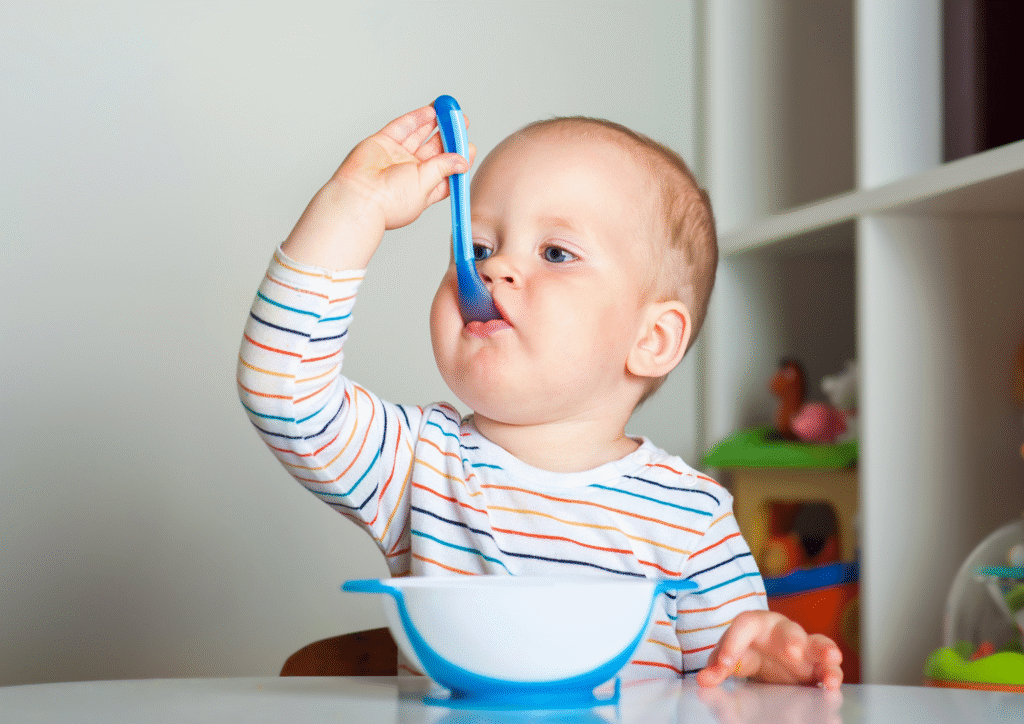
Regardless of the symptoms your baby exhibits, you’ll be desperate to give baby some teething relief. Counter pressure often feels good on the gums, so offer her something to chew on — if it’s icy and cold it can provide a numbing sensation. Try a frozen washcloth; a teething bangle or toy; Frozen fruit cut up into small pieces, strawberries, melon, cucumber and watermelon cut into spears can soothe sore gums and can help to reach the back teeth that start to cut through, Some teething aids I have come across on the high street tend to be quite hard, so shop around to find the most suitable for your baby. If baby is a little older they may find a biscuit may help or a toasted wholemeal bagel (always supervise baby) or offer cold drinks or food. You can also try rubbing baby’s gums firmly with your (clean) finger — they might not appreciate this at first, but will after the pressure begins to ease baby’s throbbing, sore gums.
Aron may have started teething already, but as this is our first experience with a teething baby, we’re not too sure what to look for apart from red gums and rosy cheeks apparently. Without really knowing what to do, when Aron looks seemingly uncomfortable, I place my little finger in his mouth, so he can bite down really hard and try to gnaw my finger off. We ended up buying Aron a couple of [easyazon_link identifier=”B00IN8OJU8″ locale=”US” nw=”y” nf=”y” tag=”motherho0d-20″ cart=”y” cloak=”y” localize=”y” popups=”y”]teethers[/easyazon_link], so that he can use something completely detached from me anytime he wants and I get a break! Unfortunately, he is not quite competent at grabbing objects with his hands and putting them in his mouth yet. So, when he makes a yelping sound, we bring the teether to his mouth and chomps away for a good few minutes. I do wish that Aron could talk sometimes, just so he could tell me what’s bothering him because I can’t tell whether he’s having tummy trouble or he is suffering from raw gums, which don’t look that inflamed, to be honest. I am keeping a close eye on them anyway.
On top of the possible teething trouble, my marriage has taken a bit of a beating too. I feel like I’m not factoring in anytime to spend with hubby, who has been pushing for us to spend one night a week alone together, to recapture that spark that seems to have faded in our relationship. But, at the moment, all I can think about is how I will find the time to work on my blog or do my exercise? What’s wrong with me!? My husband blatantly wants to do something nice for me – most women would wish to have such a doting and attentive husband, yet I don’t seem to have the time for him. At the moment, hubby and I are on totally different pages. He has to commute to and from work and then he doesn’t get home until about 8 pm. He’s so tired that all he wants to do is crash out in front of the TV. 8 pm, for me, is allocated to my website and exercise, as I have no time during the day to do either and I end up lagging behind on the website and/or getting flabby. It’s not important, I know, but somehow I have decided that I need to look after Aron, clean the house, go to playgroup, type, work on the website and exercise, all in a day’s work, otherwise I feel like some kind of failure. I don’t know why I do it to myself, but I have allocated absolutely no time for my husband. It’s not that I don’t love him – on the contrary – I am so comfortable and happy with him that I feel I don’t need to work hard at the relationship.
In all the haze of motherhood, my new found health kick and burning the midnight oil, I decided to arrange a meeting with my best friend this Saturday. But, it had later transpired that hubby and I had already planned to do something together on that day. I had totally forgotten about it! The whole kerfuffle ended up with hubby pouring out his feelings, about how he felt neglected and that I never factor him into my life anymore. This outburst really made me think hard about my priorities. He was even understanding enough to urge me to not change my plans with my best friend, as I hardly see my friends anymore and that just made me feel super guilty. So, I made a mental note to work much harder at the relationship to make hubby happy. He deserves so much more attention from me!
On a lighter note, Aron is growing up really fast. He may not be completely competent at grabbing things and putting them in his mouth yet, but he is developing the motor skills to do just that. If I dangle toys in front of him, he will slowly, but surely, reach out to grab them, and he will successfully hold onto them for a few seconds, but then he ends up dropping them onto the floor. He laughs when he sees my face close up and stares open-mouthed at me when I speak. I can see that he is starting to understand English and Swiss German now (hubby speaks to him in Swiss German when he comes home from work).
We also went to Aron’s weigh-in clinic again and Aron weighed a whopping 7.88kg! He’s grown another 500 grams in two weeks and I am really happy with the steady weight gain, even if he is placed in the 98th percentile in terms of weight for a baby boy of his age, i.e. two babies out of every hundred weigh more than him.
I have also given exercising a real shot again this week and noticed a reduction in my milk supply. I don’t think that exercise has got anything to do with it, but I think it may have something to do with a nasty stomach bug that I had caught the week before and the effects of my milk supply are starting to show now. I wasn’t able to eat for three days and, in turn, reduced the calories I had taken in, which probably impacted on the amount of milk I produced. I tried to feed Aron more than usual and let him suckle at the breast for longer, so those chemicals that tell the brain to produce more milk would kick start again. I really hope it works because I really don’t want to stop breastfeeding now.
A fun fact – Your baby may be eager to stand when s/he is on your lap.
Parenting young children isn’t just about managing schedules and sleepless nights; it’s also about healing from birth, building tools to calm the anxiety that comes with parenting, and reconnecting with yourself amid the beautiful chaos. While paediatricians, lactation consultants, and parent support groups are essential resources, exploring holistic tools like crystal healing has become an increasingly popular practice among millennial parents.
While science hasn’t fully validated the energetic claims made by crystal enthusiasts, many parents say that working with crystals gives them a sense of comfort, grounding, and emotional balance during overwhelming moments. But what exactly is crystal healing and can it really support parents navigating the intense early years?
In this article, we’ll explore how crystal healing works, what the science says, and how parents are using crystals as a complementary form of self-care during pregnancy, postpartum, and beyond.
What is crystal healing?
Crystal healing is an alternative therapy that uses the energetic vibrations of crystals and gemstones to support emotional, physical, and spiritual wellness. Each type of crystal is believed to carry a specific frequency or energy that can interact with the body’s energy field, as some traditions refer to it, or the chakra system.
This ancient practice dates back to civilisations like the Egyptians, Chinese, and Greeks, who used stones like lapis lazuli, jade, and quartz in rituals, healing ceremonies, and daily life, including during pregnancy and childbirth.
In modern parenting, crystal healing is used to help:
Reduce stress and parental anxiety
Support emotional processing during postpartum
Encourage mindfulness during feeding and bedtime routines
Promote patience and spiritual awareness
When raising young children, these benefits can serve as valuable tools in managing overwhelming emotions, finding moments of calm, and restoring inner balance.
The mind-body-spirit approach to parenting
Early parenthood impacts every layer of your life, not just the body recovering from pregnancy and birth, but the mind and spirit. That’s why many postpartum programs and family wellness centres now include holistic modalities like prenatal yoga, meditation, breathwork, and energy healing.
Crystal healing fits well within this integrative approach because it encourages:
Self-reflection during precious quiet moments
Daily ritual and mindfulness (even if just for 30 seconds)
Energetic support during emotional transitions
According to the National Center for Complementary and Integrative Health (NCCIH), about 38% of adults in the U.S. use some form of complementary and alternative medicine, including energy work like crystal healing, as part of their overall wellness [1]. Among millennial parents, this number is even higher.
While crystal healing is not a substitute for medical care or postpartum support, it can provide emotional comfort and a sense of spiritual grounding for parents during challenging transitions.
How crystals may support parents and families
1. Creating mindful moments in chaos
Working with crystals can help establish brief daily routines that ground and centre the mind. Whether it’s holding a crystal during a 2-minute morning meditation, placing one on your nightstand for better sleep, or carrying it during school pickup, these simple rituals promote mindfulness, which research shows reduces parental stress and improves emotional regulation.
2. Providing emotional comfort during difficult days
Crystals can serve as emotional anchors during challenging parenting moments, such as tantrums, sleep regressions, or postpartum mood changes. For many parents, simply holding or seeing a calming stone like amethyst or rose quartz reminds them to breathe, reset, and stay present.
3. Symbolising strength and transformation
Many parents choose crystals that symbolise personal growth and resilience. These physical tokens serve as daily reminders of strength during pregnancy, birth and parenting.
Popular crystals for parents and family wellness
Here are some commonly used crystals that parents find helpful during different stages of their journey:
Amethyst – Often called the “calming stone,” amethyst has long been associated with clarity, peaceful sleep, and emotional balance. Parents use it in nurseries and bedrooms to promote restful sleep for the whole family.
Black Tourmaline – Known for its grounding energy, this crystal is used to clear negative energy, reduce anxiety, and help create a sense of safety—perfect for new parents dealing with protective instincts.
Rose Quartz – The stone of unconditional love and compassion, rose quartz encourages healing from birth trauma, helps with bonding, and supports self-compassion during challenging parenting moments.
Citrine – Linked to joy and energy, citrine may help exhausted parents maintain positivity and find moments of sunshine even on difficult days.
Clear Quartz – This “master healer” is believed to amplify intention and support overall emotional clarity, helpful when making important parenting decisions.
Moonstone – Traditionally associated with fertility, pregnancy, and motherhood, moonstone is beloved by parents for its support of hormonal balance and intuitive parenting.
While the healing power of crystals can’t be proven through conventional science, many parents find comfort and inspiration in their use and that alone can support a positive mindset during challenging phases.
What does the science say?
Scientific studies on crystals are limited, and many researchers consider the effects to be placebo-based. However, that doesn’t mean they aren’t valuable for stressed parents.
A 2001 study published in The Journal of Complementary and Alternative Medicine found that participants who believed in the power of crystals reported feeling better emotionally and physically after handling them, even when given placebo crystals [2].
This points to an essential truth in parenting wellness: belief, intention, and mindfulness matter. If a parent feels calm, grounded, and hopeful when working with crystals during a difficult bedtime routine or postpartum anxiety episode, those feelings are valid and helpful.
Safe tips for using crystals in your family
If you’re curious about incorporating crystals into your parenting practice, here are safe, practical tips:
Choose Intuitively – Let yourself be drawn to a crystal that “speaks” to your current parenting needs. Your intuition often knows what support you need.
Use During Feeding or Pumping – Hold a small crystal while nursing or pumping to create a calming ritual. Focus on your breath and bonding intentions.
Set Family Intentions – Write down an affirmation for your family’s wellbeing, and place your crystal nearby as a visual reminder of your values.
Cleanse Regularly – Crystals are believed to absorb energy. Cleanse them monthly with moonlight, sound, or gentle running water (only if the crystal is water-safe).
Safety First – Keep all crystals out of reach of children under 3 to prevent choking hazards. Never use crystals as teething items or in cribs. Consider placing them on high shelves or in closed display cases.
Creating a crystal practice for busy parents
Morning Reset (30 seconds): Hold a grounding stone while setting your intention for patience before the kids wake up.
Naptime Restoration (2 minutes): Place rose quartz on your heart during a brief meditation while baby sleeps.
Bedtime Ritual: Keep an amethyst on your nightstand to promote restful sleep between night wakings.
Family Crystal Garden: Create a safe display where older children can learn about different stones (supervised and out of reach of toddlers).
Final thoughts
Parenting young children is not just about meeting endless needs; it’s about maintaining your own well-being, finding moments of peace, and discovering what helps you feel whole amidst the beautiful chaos. For some parents, crystal healing offers a gentle way to support that journey through symbolism, ritual, and precious moments of mindfulness.
While crystals won’t cure sleep deprivation or eliminate tantrums, they can inspire calm, deepen mindfulness, and provide emotional grounding when used alongside traditional parenting support and medical care. And in the intensity of early parenthood, those small moments of peace can make all the difference.
Remember: You’re doing a fantastic job, and any tool that helps you feel more centred and supported is worth exploring—whether it’s crystals, meditation, or simply a hot cup of coffee in peace.
[2] French, C. C., et al. (2001). “The crystal ball: Belief in the paranormal and the placebo effect.” The Journal of Complementary and Alternative Medicine, 7(1), 91–95. https://doi.org/10.1089/107555301750164134
Disclaimer: This article is for informational purposes only and should not replace medical advice. Always consult your healthcare provider for health concerns related to pregnancy, postpartum recovery, or your child’s well-being. Keep all crystals out of reach of young children to prevent choking hazards.
*Collaborative feature post*
Supporting feeding and oral skills through play
As a parent, you’re constantly seeking ways to support your child’s development. But did you know that those adorable raspberry sounds your toddler makes already help them build awareness and control around the mouth? In this article, we will discuss what helps with feeding and oral comfort through daily play (and what doesn’t help speech), because it’s a lot easier (and more fun) than you might think!
What you’ll learn in this guide
Oral play and feeding-focused activities can support your child’s ability to eat safely, manage saliva effectively, and develop awareness and coordination around the lips, tongue, jaw, and cheeks. From blowing bubbles to babbling, these small mouth and jaw movements are part of everyday life. And the best bit? Progress doesn’t just happen in therapy rooms; you can nurture it naturally through playful moments at home.
If you’re looking for practical ways to encourage your toddler’s development at home, introducing easy oral motor activities for toddlers can be a fun and practical starting point. Simple games, silly faces, and playful challenges can strengthen the muscles your child uses to chew and swallow—without it feeling like work for either of you. For speech clarity, though, children need to practise real speech sounds and words (ideally with guidance from a speech and language therapist).
The content provided here is for informational purposes only and is not intended to diagnose or treat any medical condition. Always consult your healthcare provider before making decisions related to your child’s health.
Why oral motor development matters for your toddler
Understanding the basics every parent should know
Oral motor skills refer to the movements of the lips, tongue, jaw, and cheeks that support critical functions like eating, drinking, and speaking. These muscles need to be strong, coordinated, and well-controlled for clear speech and safe, adequate feeding.
Struggling to make early sounds like “p”, “m”, or “t” (typically emerging by around 2–3 years)
Having difficulty transitioning from purees to solid foods
Showing frustration during meal times
Experiencing challenges with drinking from cups or straws
Drooling usually reduces markedly by around 18–24 months (with normal variation). If heavy drooling persists beyond the age of 2, have a brief discussion with your GP/health visitor. Playful feeding and oral activities can support comfort and coordination. Please note they aren’t shown to improve speech sounds.
The connection between oral motor skills and overall development
What many parents don’t realise is that oral motor development is intricately connected to your child’s overall growth. Strong oral motor skills support:
Communication Participation: More chances to babble, sing, and chat (speech sounds themselves improve by practising real sounds/words with an SLT)
Nutritional Health: Ability to eat a varied diet safely
Social Skills: Confidence in speaking and eating with others
Sensory Processing: Better tolerance for different textures and sensations
Self-Care Skills: Managing saliva, teeth brushing, and facial hygiene
Play-based strategies that really work
Making development fun and natural
The best way to support oral motor growth at home is by making it playful and pressure-free. Think of it as building strength at the playground, but only for the mouth. Here’s an approach that’s worked wonders with countless families:
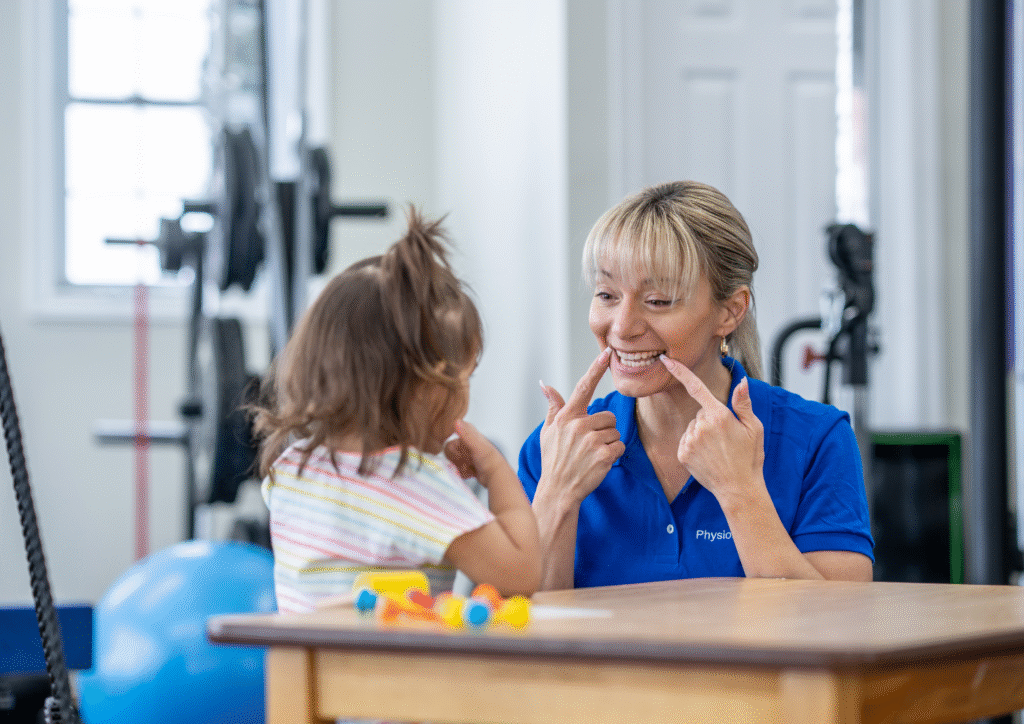
Encouraging your child to blow bubbles, whistle, or use a straw can go a long way in exercising the mouth muscles. Even making silly faces in the mirror, pretending to be animals, or licking yoghurt off the lips helps build control and awareness.
You don’t need special equipment or complicated exercises. Instead, turn snack time into a skill-building moment—biting into crunchy carrots, chewing on chewy foods, or sipping through a straw are all activities that engage the jaw and tongue. The goal is to blend development into your child’s routine so that progress happens naturally.
Important for speech: activities like blowing bubbles, using straws, and blowing cheek puffs are great for feeding/oral awareness, but they don’t improve speech sounds. For clearer speech, focus on practising real sounds and words in play (an SLT can show you which ones to target and how).
Point to note
ASHA clearly states:
“There is limited high-quality evidence supporting the use of oral motor exercises or sensory techniques in the treatment of paediatric feeding disorder–related sensory deficits and swallowing dysfunction in isolation” Paediatric Feeding and Swallowing.
Focus Activities: Musical instruments, complex food textures, pretend play with sounds
Expert insight and professional guidance
When to consult a specialist
If you’re unsure whether your child’s oral motor skills are on track, it’s always a good idea to speak with a speech-language pathologist. They can assess your child’s muscle tone, coordination, and movement patterns and recommend targeted exercises if needed.
According to the American Speech-Language-Hearing Association (ASHA) guidelines, early intervention can significantly impact the treatment of motor speech challenges and related delays. The earlier you identify a need and introduce the right supports, the better the outcomes tend to be. Search for a speech-language pathologist who uses evidence-based approaches rather than controversial nonspeech oral motor exercises.
However, even without a formal diagnosis, engaging in playful oral motor activities can still benefit your toddler’s overall development. They can also make your daily routine more engaging, silly, and full of bonding moments.
Red flags that warrant professional assessment
While home-based play is beneficial, some children may require additional support to develop their oral motor skills. Contact your paediatrician if your toddler:
Often gags on age-appropriate foods
Struggles to chew or swallow safely
Has persistently unclear speech beyond expected age
Avoids using their mouth during play
Shows extreme food texture aversions
Experiences frequent choking episodes
Demonstrates tongue thrust beyond 4 years
Has difficulty coordinating breathing while eating
They may recommend an evaluation or therapy to support more structured progress.
Creating an oral motor-friendly environment
Setting up for success at home
Your home environment plays a crucial role in supporting oral motor development. Here’s how to create spaces that encourage natural practice:
Kitchen setup:
Keep straws of various sizes accessible
Store crunchy snacks at toddler eye level
Have wipeable surfaces for messy play
Organise utensils for independent exploration
Play area organisation:
Dedicate a bubble station with different wands
Create a music corner with wind instruments
Set up a mirror at child height
Keep sensory bins with safe oral objects
Bathroom modifications:
Install a step stool for mirror access
Use fun toothbrushes with different textures
Keep cup options for rinsing practice
Add waterproof toys for bath bubble play
Incorporating technology and modern tools
Apps and Digital Resources
While hands-on play is irreplaceable, some digital tools can supplement your efforts:
Speech therapy apps with oral motor games
Video modelling for tongue and lip exercises
Timer apps for exercise duration
Progress tracking applications
Remember, screen time should complement, not replace, physical oral motor activities.
Nutrition’s role in oral motor development
Foods that build strength
Strategic food choices can naturally support oral motor development:
Jaw strengthening foods:
Raw vegetables (carrots, celery, bell peppers)
Whole fruits with skin (apples, pears)
Meat strips and jerky (age-appropriate)
Crusty bread and bagels
Tongue exercise foods:
Nut butters (spread thin for licking)
Lollipops and ice pops
Yoghurt and pudding
Sticky foods like raisins
Lip coordination foods:
Foods requiring pursing (noodles, string cheese)
Items needing precise lip closure (crackers)
Drinks through various straw sizes
Common challenges and solutions
Addressing typical concerns
“My toddler refuses to try new textures” Start with familiar flavours in new textures. Mix preferred foods with challenging ones gradually.
“We’re always rushed in the morning” Incorporate exercises during car rides or while waiting. Even 2-3 minutes helps!
“My child gets frustrated with exercises” Make it sillier! Turn exercises into games and let them lead sometimes.
“I’m worried we’re not doing enough” Quality over quantity—consistent daily practice of even 5 minutes is valuable.
Tracking progress and celebrating wins
Monitoring development
Keep a simple log of:
New sounds mastered
Foods successfully tried
Improved clarity in words
Decreased drooling
Better mealtime behaviours
Celebrate small victories – every bit of progress counts!
Looking ahead: long-term benefits
Helping your child build strong oral motor skills doesn’t have to feel like a therapy session. With a little creativity and consistency, everyday moments can turn into powerful opportunities for growth. Whether you’re making silly faces at the dinner table or encouraging your toddler to blow out pretend birthday candles, you’re doing more than just playing—you’re helping lay the foundation for lifelong skills in speech, feeding, and communication.
The investment you make in oral motor development today pays dividends in:
Academic success through clear communication
Social confidence in peer interactions
Healthy eating habits and nutrition
Strong self-advocacy skills
Reduced need for future interventions
Frequently asked questions
What are oral motor exercises for toddlers?
They’re playful activities that build feeding-related awareness and control around the lips, tongue, jaw, and cheeks—think bubbles, silly faces, crunchy foods, straws, and sound play. Note: current research does not support these activities for improving speech sounds; for speech clarity, children need to practice real sounds/words (ideally with guidance from an SLT).
At what age should I start oral motor exercises with my child?
You can begin simple oral motor activities as early as 6-12 months with age-appropriate exercises like offering textured foods and encouraging babbling. More structured exercises typically start around 12-18 months when toddlers can follow simple directions and engage in purposeful play. Always match activities to your child’s developmental level and interests.
How often should my toddler do oral motor exercises?
Ideally, incorporate oral motor activities into your daily routine rather than scheduling separate exercise sessions. Aim for 5-10 minutes of focused activities 2-3 times per day, but remember that many everyday activities like eating, drinking, and playing naturally provide oral motor practice. Consistency matters more than duration.
What are signs my toddler needs oral motor therapy?
Signs include persistent drooling beyond age 2, difficulty transitioning to solid foods, unclear speech beyond typical developmental stages, frequent gagging or choking, extreme aversions to certain food textures, an open-mouth posture at rest, difficulty using straws or cups, and tongue thrust beyond age 4. Consult your paediatrician if you notice multiple concerns. Most children have completely lost the tongue thrust reflex by age 4 or 5″ Tongue Thrust: Signs, Causes & Treatment and “It naturally fades by age 4 or 5” How Can Tongue Thrust Affect Speech? How It Can Be Treated – Atlanta Health Partners Paediatric Referral Directory.
Can oral motor exercises help with picky eating?
Yes! Oral motor exercises can help picky eaters by improving their ability to manage different food textures, increasing oral awareness, reducing sensitivity to new sensations, and building confidence with chewing and swallowing. Start with play-based activities before introducing challenging foods to reduce mealtime pressure.
What’s the difference between oral motor exercises and speech therapy?
Oral motor exercises focus specifically on strengthening and coordinating the physical muscles used for speech and feeding. Speech therapy is a broader field, addressing language development, articulation, communication strategies, and cognitive-linguistic skills. Oral motor exercises are often one component of comprehensive speech therapy.
Are there any risks to doing oral motor exercises at home?
When done appropriately, oral motor exercises are safe. However, avoid forcing exercises if your child is upset, never use items that pose choking hazards, respect your child’s comfort level, and stop if you notice signs of fatigue or frustration. Always consult a professional if you’re unsure about a specific exercise.
How can I make oral motor exercises fun for my resistant toddler?
Turn exercises into games, let your toddler choose activities, use favourite characters or toys as models, incorporate exercises into pretend play, offer rewards and praise, make it a family activity, keep sessions short and positive, and follow your child’s lead. Remember, if it’s not fun, it’s not sustainable!
What everyday activities naturally promote oral motor development?
Many daily activities support oral motor development: singing songs, brushing teeth, eating varied textures, drinking from different cups, blowing nose, giving kisses, making animal sounds, laughing and talking, chewing gum (age-appropriate), and playing wind instruments. These natural opportunities are just as valuable as structured exercises.
When should I see improvements from oral motor exercises?
With consistent and playful practice, you may notice small improvements in feeding comfort and participation within 2–4 weeks. Bigger shifts in feeding confidence usually take longer. For speech clarity, progress depends on practising specific sounds/words, an SLT can guide you on what to target and how.
Remember, you’re not alone in this journey. Every parent questions whether they’re doing enough for their child’s development. The fact that you’re reading this and seeking ways to support your toddler’s oral motor development indicates that you’re already on the right track. Keep it playful, stay consistent, and celebrate those small wins – they add up to big achievements!
*Collaborative feature post*
60 best baby business ideas for kid-focused parents
As a parent, you’re always looking for ways to make life better for your little ones, but what if you could turn that passion into a thriving business? Whether you’re a crafty mum, a tech-savvy dad, or just someone with a heart full of ideas, there’s a world of opportunity out there in the baby and kid-focused business world. I’ve rounded up 60 of the best baby business ideas that you can start right from home, making the most of your talents while keeping family at the centre of everything you do.
Let’s dive in!
60 baby business ideas
1. Baby product development
Create innovative products that address common parenting challenges. This can include everything from safer baby gear to eco-friendly products. If you’re wondering how to start a baby product line, begin with market research to identify unmet needs and consider global market trends to ensure your product has potential worldwide.
2. Sell baby products online
Start an ecommerce store specialising in baby products. You can sell a curated selection of items or create your own line. This is an excellent way to reach a wide target market, especially by utilising social media platforms for brand awareness.
3. Baby boutique – retail baby store
Open a boutique that offers a range of baby products, from clothing to toys. Focus on quality and unique items that parents can’t find elsewhere. Baby boutique retail stores can thrive in local markets if you focus on providing top-quality products and creating a warm shopping environment.
4. Baby clothing business
Design and sell baby clothes. This can be through an online store, a physical location, or both. Consider focusing on organic baby clothes or custom designs that stand out in the babywear industry.
5. Baby food brand development
Develop a brand of healthy, organic baby food. You can create your own recipes and sell them in stores or online. The baby food and formula market is highly competitive but rewarding if you offer profitable ideas like subscription services.
6. Baby food cooking instructor
Offer classes to parents on how to cook nutritious meals for their babies. This can be done in person or through online tutorials, providing a valuable service to new parents seeking to give their children the best start in life.
7. Baby furniture and equipment rental
Rent out baby furniture and equipment, such as cribs, strollers, and car seats, to parents who need them temporarily. This is a great opportunity for an eco-conscious business model that minimises waste by promoting the reuse of products.
8. Baby food subscription service
Create a subscription service that delivers fresh, organic baby food to parents on a regular basis. With the rise of online platforms, it’s easier than ever to manage a subscription-based business, and this model ensures a steady income
9. Baby toy maker
Design and create educational and safe toys for babies. This could be a home-based business or something that grows into a larger operation. Focus on educational toys that help in the development of young children.
10. Baby nursery room designer
Offer design services for nurseries, helping parents create the perfect environment for their new arrivals. This niche business can grow through local market presence and brand awareness built through satisfied customers.
11. Baby day care
Open a daycare service that specialises in caring for infants and toddlers, providing a safe and nurturing environment. This is one of the most profitable baby and kid businesses, particularly if you cater to working parents in urban areas.
12. Cloth diaper service
Provide a cloth diaper cleaning and delivery service for eco-conscious parents. This business idea taps into the growing trend of sustainable living and can be marketed effectively with a focus on green parenting.
13. Toy store
Open a store that specialises in high-quality, educational toys for babies and children. Toy stores can thrive by focusing on educational experience and offering products that encourage learning and development.
14. Kids pre-school education
Start a preschool that focuses on early childhood education, helping children develop foundational skills. This business model can be expanded by offering additional services like after-school care or weekend classes.
15. Mobile app aimed at babies and kids
Develop a mobile app that helps children learn and develop through interactive activities. With the rise of mobile devices, this is an area with high demand among tech-savvy parents and young entrepreneurs.
16. Baby proofing service
Offer a service that helps parents make their homes safe for their babies by identifying and removing potential hazards. Baby proofing is an essential service that can be marketed to new parents looking for peace of mind.
17. Kids education materials
Create and sell educational materials, such as books, flashcards, and games, designed to help children learn. This business can expand into online platforms where parents can purchase and download digital content.
18. Baby furniture manufacturer
Manufacture custom or eco-friendly baby furniture, such as cribs, changing tables, and high chairs. This profitable venture caters to a niche market of parents who value quality and sustainability.
19. Baby play space playground
Open an indoor playground designed for babies and toddlers to play safely while parents relax. This business can also offer birthday parties and other special events to increase revenue streams.
20. Baby and kids resale shop
Start a resale shop that specialises in gently used baby and children’s items, offering parents high-quality products at a lower cost. This business can thrive in a local market by offering great deals on top-quality products.
Keeping costs low is crucial. One way to do this is by selecting the best water provider for your business. Utility Bidder can help you find the most affordable water supplier by comparing quotes, allowing you to save money on your water bills. This is especially useful if your shop has a lot of water-related needs, such as cleaning or maintaining products. Implementing water-saving strategies, such as installing water-efficient appliances or conducting a water audit, can further reduce your costs, making your business more profitable.
21. Baby portrait photographer
Offer professional photography services to capture the special moments of babies and young children. For those interested in business ideas involving children, photography allows you to blend creativity with a profitable service.
22. Family entertainer
Become a family entertainer, performing at children’s birthday parties and events with music, magic, or other talents. This business idea for kids provides joy while being a lucrative part-time gig.
23. Kid’s party planner
Plan and organise birthday parties for children, offering everything from decorations to entertainment and catering. This business can thrive in the local market, especially if you specialize in unique or themed events.
24. Scrapbooking
Provide scrapbooking services to help parents preserve their baby’s memories in a creative and personalised way. This is a small business idea that can be marketed through social media platforms to reach a broad audience.
25. Baby product reviewer/influencer
Start a blog or YouTube channel where you review baby products and offer advice to other parents. This is one of the best online business opportunities for parents, allowing you to work from home while sharing valuable insights.
26. Babywearing consultant
Help parents choose and use baby carriers effectively, offering consultations and workshops. This service can be a profitable venture if marketed correctly, tapping into the growing trend of babywearing among new parents.
27. Baby massage instructor
Teach parents how to massage their babies, which can promote bonding and help with issues like colic. This is a valuable service that combines education with practical support.
28. Baby sign language instructor
Offer classes that teach parents how to communicate with their babies using sign language before they can talk. This business idea taps into early childhood education and can be offered both in person and online.
29. Baby swimming instructor
Provide swimming lessons for babies, teaching water safety and helping them get comfortable in the water. This profitable business caters to the need for early swim education and can be expanded into group lessons or private classes.
30. Baby sleep consultant
Help parents with strategies and tips to get their babies to sleep better through personalised consultations. This business model is highly sought after by parents struggling with sleep issues and can be offered remotely.
31. Children’s book author
Write and publish books for babies and young children, focusing on stories that are educational and engaging. This business idea can also extend to creating digital content for online platforms.
32. Baby gift baskets
Create and sell customised gift baskets filled with baby care products, perfect for baby showers or new parents. This business idea can thrive with online business models, where customers can order personalised baskets.
33. Baby proofing products
Design and sell products that help parents baby-proof their homes, such as corner guards and cabinet locks. This profitable idea can be marketed alongside a baby proofing service, offering a comprehensive solution for safety-conscious parents.
34. Organic baby skincare products
Develop a line of organic baby skincare products, including lotions, oils, and bath products. This profitable venture appeals to eco-conscious parents and can be sold through both physical stores and ecommerce stores.
35. Baby sign language books
Write and sell books that teach parents how to use sign language with their babies. This business idea caters to the growing interest in early childhood communication and can be marketed alongside online platforms.
36. Baby sleepwear line
Create a line of baby sleepwear that is comfortable, safe, and promotes better sleep. This business idea can focus on niche markets such as organic baby clothes or specialised sleepwear for babies.
37. Baby sensory classes
Offer classes that focus on sensory play for babies, helping with their development and providing a fun activity for parents and babies to do together. This is a business idea that can be scaled through franchises or online business models.
38. Babywearing accessories
Design and sell accessories for babywearing, such as wraps, slings, and covers. This is a profitable idea that can be marketed online, especially through social media platforms targeting parents.
39. Baby food recipes blog
Start a blog where you share baby food recipes, cooking tips, and nutritional advice for parents. This online business can generate revenue through ads, sponsorships, and selling ecommerce products like cookbooks or meal plans.
40. Baby swimwear line
Design and sell swimwear for babies and toddlers, focusing on comfort and UV protection. This is a great business idea that can be marketed during the summer season or in areas with a warm climate.
41. Baby safety courses
Offer courses that teach parents about baby safety, including first aid, CPR, and home safety. This valuable service can be offered online or in person and appeals to safety-conscious parents.
42. Baby sensory toys
Create and sell toys designed to stimulate babies’ senses and support their cognitive development. This business idea focuses on educational toys that are both fun and beneficial for babies.
43. Baby boutique subscription box
Create a subscription box service that delivers curated baby products to parents each month. This profitable venture taps into the subscription economy, offering convenience and value to busy parents.
44. Children’s fitness classes
Offer fitness classes designed for babies and toddlers to help with their physical development. This business idea can expand into offering parent-child fitness sessions, promoting health and bonding.
45. Baby nutrition consultant
Provide consulting services to help parents ensure their babies are getting the right nutrition, especially when transitioning to solid foods. This business idea is essential for new parents and can be marketed as an educational experience.
46. Baby yoga instructor
Teach baby yoga classes that parents can do with their babies to help with bonding and physical development. This business idea taps into the wellness industry and can be offered through local classes or online sessions.
47. Baby event planner
Specialise in planning baby-related events, such as baby showers, christenings, and first birthdays. This business idea can cater to local events and special events, offering full-service planning.
48. Children’s clothing subscription
Start a subscription service where parents receive new children’s clothing each month, tailored to their child’s size and style. This business model is a great opportunity to offer convenience and fashion to busy parents.
49. Baby carrier designer
Design and sell baby carriers that are ergonomic, comfortable, and stylish. This profitable venture can focus on creating innovative designs that appeal to modern parents.
50. Custom baby name art
Create personalised artwork featuring babies’ names, perfect for nursery decor. This small business idea is popular among parents looking for unique and personalised items.
51. Baby milestone cards
Design and sell milestone cards that parents can use to document their baby’s growth and achievements. This business idea is ideal for creative entrepreneurs who enjoy design and crafting.
52. Eco-friendly baby products
Start a business that specialises in eco-friendly baby products, such as bamboo diapers and organic cotton clothing. This profitable venture appeals to environmentally conscious parents.
53. Baby shoes designer
Design and sell shoes specifically made for babies and toddlers, focusing on comfort and proper foot development. This business idea can cater to a niche market that values quality and craftsmanship.
54. Children’s music classes
Offer music classes for babies and toddlers, helping them develop rhythm and musical skills. This business idea is both fun and educational, making it a hit with parents.
55. Baby feeding products
Develop and sell products that make feeding babies easier, such as ergonomic bottles or spill-proof bowls. This business idea is essential for parents and can be marketed through ecommerce stores.
56. Baby furniture customisation
Offer customisation services for baby furniture, allowing parents to choose colors, designs, and finishes. This profitable venture is perfect for parents who want personalised nursery decor.
57. Baby photography props
Create and sell props for baby photography, such as backdrops, outfits, and accessories. This business idea is great for those with a creative flair and can be marketed through social media accounts to reach professional photographers and parents alike.
58. Children’s party supplies store
Open a store or online shop that specialises in supplies for children’s parties, including decorations, games, and themed items. This business idea can be a great way to tap into the local businesses market, especially by catering to school events and birthday parties.
59. Baby bedding designer
Design and sell bedding for babies, focusing on soft, safe, and hypoallergenic materials. This business idea appeals to parents looking for high-quality, comfortable, and safe bedding options for their children. Emphasising the use of organic materials can set your products apart in the global market.
60. Baby teething toys
Create and sell safe, effective teething toys made from natural materials that soothe babies during the teething process. This business idea can be marketed to new parents who are looking for top-quality products that are both safe and effective. Given the high demand for such items, this can be a profitable venture.
FAQs
1. What business can I start at home with a baby?
If you have a baby at home and want to start a business, consider options like baby clothing business, baby product reviewer/influencer, or baby proofing service. These businesses can be managed from home and allow flexibility around your parenting duties.
2. What are some good business ideas for kids?
For children interested in entrepreneurship, ideas like a lemonade stand, creating a YouTube channel, or offering babysitting services are great starting points. Older kids can explore developing a mobile app aimed at younger children or even writing children’s books.
3. What are the options for women to start a business while they have just had a baby?
Women who have recently had a baby might consider starting a baby boutique, an online baby products store, or offering baby yoga classes. These businesses allow for flexible hours and can often be started with minimal investment.
4. Is it a good idea to start a business educating parents with newborn babies?
Yes, starting a business focused on educating new parents can be very rewarding and profitable. Consider offering baby sleep consulting, baby nutrition consulting, or baby sign language classes.
5. How do I start an online baby product business?
To start an online baby product business, begin by identifying a niche market, such as organic baby clothes or eco-friendly baby products. Then, create an e-commerce website, establish relationships with suppliers, and use digital marketing strategies to reach your target audience.
6. What are some good kid-friendly business ideas?
Kid-friendly business ideas include opening a toy store, starting a children’s music class, or creating baby milestone cards. These businesses cater to the needs of children and can be both fun and profitable.
7. Would a baby store selling different types of products be a good business to start?
Yes, a baby store that offers a variety of products, such as baby clothes, toys, and nursery decor, can be a successful venture. Focus on quality, unique offerings, and excellent customer service to attract loyal customers.
8. How do I make a business for a kid?
To help a child start a business, encourage them to choose something they are passionate about, like crafting, creating videos, or offering a service. Start small, with a lemonade stand or selling handmade crafts online, and gradually build up as they gain experience.
9. How do I start my own business after having kids?
After having kids, consider starting a business that allows for flexible hours, such as an online baby boutique or offering consultation services for new parents. It’s important to balance your time and start with manageable goals.
10. Is baby business a thriving industry?
Absolutely! The baby industry is thriving, with a lucrative market for everything from baby products to services. The demand for innovative, safe, and high-quality baby products is consistently growing, making it a great sector to enter.
Final thoughts
Starting a baby-focused business can be a rewarding way to combine your passion for parenting with a profitable venture. Whether you’re creating products, offering services, or sharing your expertise, there are endless opportunities to make a positive impact on the lives of other parents and their children. With the right idea, a solid business plan, and a bit of creativity, you can turn your love for babies into a successful business. Remember, choosing the right niche, such as eco-friendly products or customised services, and utilising digital marketing and social media platforms effectively, can help you reach your target market and grow your business successfully.
*Collaborative feature post*
Can you take your baby on a cruise? 23 tips you need to know
You’re planning your cruise vacation and it’s such an exciting time, especially when you’re bringing your latest addition to the family. Cruising is a great option for families due to its convenience, variety of destinations, and all-inclusive nature. But, with a baby, you might be wondering whether you can take your baby on a cruise.
The good news is, yes, you can! We have 23 essential tips to ensure a smooth sailing cruise experience with your baby – so buckle up and enjoy the ride!
Cruising with a baby – A complete guide
Cruising with a baby can be a really rewarding experience. Imagine enjoying the beautiful ocean views, exploring new places, and having all your meals and entertainment taken care of—all while spending a great time with your family. However, it’s important to note that bringing a baby on a cruise comes with its own set of challenges. From choosing the right cruise line and itinerary to packing all the necessary supplies and understanding the ship’s amenities, there are several factors to consider. Each cruise line has its own policies and facilities for infants too, so doing your homework is crucial.
The importance of preparation and planning
Planning and preparation are the keys to a successful cruise with your baby because knowing what to expect and having everything you need can make all the difference. This involves understanding the specific requirements and policies of the cruise line, packing all the essential items, and making necessary arrangements ahead of time. Proper planning can help you avoid any last-minute surprises and ensure both you and your baby have a memorable cruise experience.
23 essential tips for taking your baby on a cruise – Understanding cruise policies for babies
1. Verify age restrictions for babies
It’s important to check whether your baby is old enough to ride on the cruise in the first place. Royal Caribbean ships generally require infants to be at least six months old to sail on most of their itineraries, but this age requirement can increase to twelve months for transoceanic cruises or longer voyages.
Disney Cruise Line typically has a minimum age requirement of six months as well, with some exceptions for specific routes. MSC Cruises also has similar policies, requiring babies to be at least six months old for most sailings. These age restrictions are put in place to ensure the safety and wellbeing of the youngest passengers, as cruise ships might not be equipped to handle certain medical emergencies for very young infants.
2. Are babies free to ride or are there additional costs?
Another important factor to consider is the cost of cruise fares associated with bringing an infant. While some cruise lines allow infants to travel for free, others may charge a reduced fare or even the full fare. For example, certain cruise lines might offer free passage for babies under two years old if they are sharing a cabin with two full-fare paying guests. However, additional costs could include charges for items like cribs, high chairs, or babysitting services. It’s important to know what these costs are upfront and budget accordingly. Always ask about any hidden fees or an extra charge that might apply to your infant to avoid any surprises later on.
3. Choose the best cruise lines and itineraries for families with babies
Selecting the right family cruise line and itinerary is important, as some cruise lines are more family-oriented and offer amenities specifically designed for young children. For example, Disney Cruise Line is renowned for its family-friendly atmosphere, featuring character meet-and-greets, kid-friendly dining options, and onboard nurseries. Royal Caribbean is another excellent choice, offering ships with extensive family facilities, including nurseries, toddler play areas, and family staterooms. MSC Cruises also provides excellent options for families, with a kids club and baby care services. When choosing your itinerary, consider shorter cruises or those with more port days to provide a balance of relaxation and exploration.
4. Select the best time of year and avoid peak seasons
Timing your cruise can make a significant difference in your overall experience. To avoid the hustle and bustle of peak travel seasons, consider booking your cruise during the shoulder seasons—typically in the spring or fall. Not only will you experience fewer crowds, but you might also benefit from better deals and more personalised room service. Additionally, the weather is usually more temperate during these times, which can make the trip more comfortable for your baby. Avoiding peak seasons also means you are less likely to encounter sold-out nursery slots or overbooked family activities.
5. Pick destinations that offer baby-friendly activities and facilities
When planning your cruise, choose destinations that provide activities suitable for families with babies. Look for ports of call that offer easy access to family-friendly attractions, such as parks, aquariums, and beaches with calm waters. Destinations like the Caribbean, Alaska, and the Mediterranean often have plenty of options for families. Moreover, some ports offer excursions specifically tailored to families with young children, such as scenic boat rides, gentle nature walks, or visits to animal sanctuaries. Research the ports of call in your itinerary to ensure there are suitable activities and facilities available.
Preparing for the cruise
6. Book a whole family-friendly cabin with enough space and amenities
Choosing the right cabin is essential for a comfortable cruise experience with your baby. Family-friendly cabins come in various configurations, from larger staterooms with additional space to suites with separate sleeping areas. Some cabins are specifically designed with families in mind, offering amenities like bathtubs, cribs, and additional storage space. When booking, enquire about the availability of baby amenities such as cribs, high chairs, sippy cups and bottle warmers. It’s also beneficial to choose a cabin location that minimises noise and provides easy access to elevators and other facilities. A balcony cabin can offer a private outdoor space where you can enjoy some fresh air while your baby naps.
7. Consider the ship’s layout
Larger ships often have more amenities and activities for families, but they can also be more challenging to navigate with a stroller. Smaller ships with fewer guests like Ibiza Yacht Charters may offer a more intimate and manageable experience.
8. Plan your packing
Make a checklist of all the essentials you’ll need for your baby, including nappies, wipes, formula, own baby food, and medications. Don’t forget comfort items like a favourite blanket or toy.
9. Check for onboard guest services
Many cruise lines offer babysitting services or kids’ clubs that can provide a break for parents. Research these options and book any necessary services in advance.
10. Health and safety considerations
Make sure you have any necessary vaccinations and health checks for your baby before travelling. Also, bring a first-aid kit with baby-specific items like infant pain relievers and teething gel.
11. Budget for additional baby-related expenses
Apart from the cruise fare, there are other baby-related expenses you need to budget for. Babysitting services, for example, are not always included in the cruise fare and can be quite costly. Onboard nurseries often charge by the hour, especially during peak times like evenings or late nights. Additionally, you might need to purchase baby supplies such as nappies, formula, and baby food on board, which can be more expensive than buying them beforehand. Excursions are another consideration—while some might be free or included in your cruise package, others could come with additional costs. Make sure to allocate part of your budget for these extra expenses to avoid any surprises.
Onboard the cruise ship
12. Familiarise yourself with the cruise ship’s amenities for babies
Once on board, take the time to familiarise yourself with the ship’s amenities for babies. Many cruise ships offer nursery services where you can leave your baby in the care of trained staff while you enjoy some adult time. High chairs are usually available in the main dining room, but it’s a great idea to confirm this with the cruise line beforehand. Most ships can provide cribs or pack ‘n plays for your cabin—request these items in advance to ensure availability. Check if the ship has baby play areas or baby-friendly activities scheduled throughout the cruise.
13. Learn how to feed your baby on a cruise
Feeding your baby on a cruise can be straightforward with a bit of preparation. If you are breastfeeding, know that most cruise lines are supportive of feeding breast milk in public areas. Bring a nursing cover if you prefer more privacy. For bottle feeding, bring your own bottles and formula, and consider a portable bottle warmer. Most cruise lines can provide hot water or have facilities to help with bottle feeding. In terms of baby-friendly dining options, many cruise lines offer pureed baby food or will puree regular menu items upon request. It’s worth contacting the cruise line’s dining services in advance to discuss your baby’s needs.
14. Understand how to bathe your baby on a cruise ship
Bathing your baby on a cruise ship can be challenging, especially if your cabin only has a shower. Some cruise lines offer baby bathtubs upon request, or you can bring a small inflatable tub that fits in the shower. For younger babies, a sink can also work for quick baths. Make sure to bring baby soap and a soft washcloth. Check with the cruise line ahead of time to see what they can provide and plan accordingly.
15. Plan sleeping arrangements for your baby
Sleeping arrangements are a critical part of ensuring your baby’s comfort on a cruise. Most cruise lines offer cribs or pack ‘n plays, but it’s essential to request them in advance due to limited availability. Consider booking a larger cabin or a suite to have more space for the crib and to create a quiet sleep environment for your baby. Bring familiar items from home, such as your baby’s favourite blanket or stuffed animal, to help them feel more comfortable. A white noise machine can also be helpful to drown out any ambient noise from the ship.
16. Manage nap times and bedtime routines
Maintaining your baby’s nap times and bedtime routines can help ease their comfort. Try to stick to your baby’s usual schedule as much as possible. Plan activities around nap times and create a quiet, dark environment for naps and bedtime. Bringing blackout curtains or clips to secure existing curtains can help darken the cabin. Additionally, portable baby monitors can be useful if you have separate sleeping areas within your cabin. Keeping a consistent routine will help your baby adjust to the new environment and ensure everyone gets the rest they need.
Activities and entertainment
17. Choose suitable shore excursions for families with babies
When planning shore excursions, choose activities that are safe and manageable with a baby. Look for tours that are shorter in duration and have minimal walking or strenuous activities. Beaches, parks, and scenic boat rides are often good choices. Many cruise lines offer family-friendly excursions specifically designed for parents with young children. Ensure that transportation is baby-friendly and that there are suitable facilities at the destination, such as shade and restrooms.
18. Explore onboard entertainment and activities tailored for babies
Cruise ships often provide a range of entertainment options suitable for babies and young children. Look for daily schedules that include baby-friendly shows, interactive play sessions, and storytelling hours. Some ships have characters or mascots that interact with children, providing delightful photo opportunities. Additionally, many cruise lines offer arts and crafts sessions or sensory play areas designed to engage your baby’s senses and keep them entertained.
Tips for a smooth cruise experience
19. Ensure a happy baby on the plane and during the cruise
Travelling can be stressful for babies, but with the right preparation, you can ensure a smoother experience. Bring plenty of snacks, toys, and comfort items to keep your baby occupied. Schedule flights and activities around your baby’s nap times to help them stay rested. Keep a relaxed attitude and be flexible with your plans, adapting as needed to your baby’s mood and needs.
20. Handle baby-related emergencies on a cruise
Be prepared for any baby-related emergencies while on a cruise. Pack a well-stocked first-aid kit with all necessary medications and supplies. Familiarise yourself with the ship’s medical facilities and know how to contact the medical staff in case of an emergency. Keep important contact numbers and your insurance information handy. It’s also a good idea to have a plan for accessing medical care at ports of call if needed.
21. Dealing with seasickness in babies
Babies can experience seasickness just like adults. To minimise the risk, choose a cabin in the middle of the ship where the motion is less noticeable. Keep your baby hydrated and offer small, frequent meals. If your baby shows signs of seasickness, such as fussiness or vomiting, consult the ship’s medical staff for advice. Bringing anti-nausea medication specifically formulated for infants, as recommended by your paediatrician, can also be helpful.
22. Find quiet and calm spaces on the cruise ship
Cruise ships can be bustling and noisy, which might overwhelm your baby. Seek out quiet areas on the ship where you can retreat when needed. Libraries, observation lounges, and certain outdoor decks can offer a peaceful environment. Some ships also have dedicated family lounges or quiet rooms designed for parents with young children. Knowing where these spaces are can help you find a calm spot when your baby needs a break.
23. Special considerations for travelling with a baby with special needs
If your baby has special needs, additional planning is required. Contact the cruise line well in advance to discuss any specific accommodations or services your baby might need. Ensure that medical facilities onboard can handle any emergencies related to your baby’s condition. Bring all necessary medical equipment, supplies, and medications, and have a detailed care plan in place.
Final thoughts
Cruising with a baby can be a wonderful experience with the right preparation and planning. By understanding the cruise line’s policies, packing essential items, and ensuring your baby’s comfort and safety, you can create memorable family moments on your cruise. Happy sailing!
FAQ section
Are babies free on cruises?
It depends on the cruise line. Some cruise lines offer free passage for infants, while others may charge a reduced fare.
Are infants free on cruises?
Similar to the above, some cruise lines allow infants to travel for free, while others may have specific charges. Always check with the specific cruise line.
Can babies go on cruises?
Yes, most cruise lines allow babies on board, but there are often age restrictions, usually requiring the baby to be at least six months old.
Can babies in diapers swim on a cruise?
Generally, babies in diapers are not allowed in the main swimming pools due to health regulations, but many ships have designated baby splash zones where swim diapers are permitted.
Can I bring my baby on a shore excursion?
Yes, you can bring your baby on shore excursions, but it’s important to choose excursions that are suitable for young children and ensure that the activities are safe and comfortable for them.
Can I take a baby on a cruise?
Yes, you can take a baby on a cruise, but be sure to check the minimum age requirements and policies of the specific cruise line.
Can I take a newborn on a cruise?
Most cruise lines require babies to be at least six months old, although some itineraries may have a higher age requirement, such as twelve months for transoceanic voyages.
Can I take my baby on a cruise?
Yes, you can take your baby on a cruise, ensuring all preparations and safety measures are in place according to the cruise line’s policies.
Can my baby use the cruise ship pool?
Most cruise lines do not allow babies in regular pools if they are not potty-trained, but some ships offer baby splash zones specifically designed for infants in swim diapers.
Can you bring a baby on a cruise?
Yes, you can bring a baby on a cruise, but check the cruise line’s policies regarding age, health requirements, and necessary preparations.
Can you bring a stroller on a cruise?
Yes, you can bring a stroller on a cruise, and it’s often recommended for convenience during shore excursions and around the ship.
Can you take a baby on a cruise P&O?
P&O Cruises allows babies onboard, but they must be at least six months old (or twelve months for certain itineraries). Always check the specific requirements.
Can you take a baby on a Royal Caribbean cruise?
Yes, Royal Caribbean allows babies on their ships, generally requiring them to be at least six months old for most cruises and twelve months for certain longer itineraries.
Can you take a child on a cruise?
Yes, children of all ages can go on cruises, but it’s important to check each cruise line’s policies and ensure suitable activities and facilities are available.
Can you take a newborn on a cruise?
Newborns are typically not allowed on cruises until they reach six months of age, with some cruise lines requiring babies to be at least twelve months old for certain routes.
Do babies get sick on cruises?
Babies can get seasick just like adults. It’s important to be prepared with remedies and consult with a paediatrician before travelling.
Do babies pay on cruises?
Some cruise lines charge for babies, while others offer a free or reduced rate. Check with the specific cruise line for their policy.
Do you have to pay for a baby on a cruise?
It varies by cruise line. Some may allow babies to travel for free, while others may charge a fare.
Do you have to pay for toddlers on a cruise?
Yes, typically toddlers are charged a fare, though it may be reduced compared to the adult fare.
How can I bathe my baby on a cruise?
Most cruise ships offer baby bathtubs upon request, or you can use a portable baby bathtub. Some cabins come with bathtubs, but it’s important to confirm in advance.
How do I feed my baby on a cruise ship?
Cruise ships can accommodate baby food and formula. You can bring your own supplies or request assistance from the ship’s kitchen. High chairs are usually available in dining areas.
How much does it cost to take a baby on a cruise?
Costs can vary. Some cruise lines offer free passage or a discounted rate for infants, while others charge a reduced fare. Additional costs may include babysitting services, baby supplies, and excursions.
How old can you take a baby on a cruise?
The minimum age for babies to go on a cruise is generally six months, but some longer voyages may require babies to be at least twelve months old.
How soon can you take a baby on a cruise?
Most cruise lines require babies to be at least six months old before they can travel on a cruise.
How to take a baby on a cruise?
Plan ahead by checking the cruise line’s policies, packing essential items, booking baby-friendly accommodations, and preparing for health and safety needs.
Is a cruise a good idea with a baby?
Cruising can be a good idea with a baby if you choose a family-friendly cruise line, plan thoroughly, and prepare for the unique challenges of travelling with an infant.
Is it safe to take a baby on a cruise?
It is generally safe to take a baby on a cruise with proper planning and precautions. Ensure the cruise line meets all health and safety standards and that you have all necessary baby supplies.
Is it safe to take a newborn on a cruise?
Most cruise lines do not allow newborns younger than six months. For older infants, safety depends on proper planning and ensuring the baby’s health needs are met.
Is it worth taking a baby on a cruise?
Many parents find cruising with a baby to be a rewarding experience, as it can be a convenient way to travel and see multiple destinations while having access to amenities and support.
Is there babysitting on cruise ships?
Yes, many cruise ships offer babysitting services or kids’ clubs where trained staff can care for your baby, usually for an additional fee.
What age can you take a child on a cruise?
Children of all ages can go on cruises, but specific age policies may vary by cruise line. Always check with the cruise line for any age-related restrictions.
What do you need to take a child on a cruise?
Essentials include a passport or birth certificate, travel insurance, baby supplies (diapers, formula, food), a stroller, a car seat, and any necessary medications.
What else should I pack for my baby?
In addition to the essentials, consider packing baby sunscreen, swim nappies, baby wipes, a baby carrier, a portable crib, and comfort items like a favourite toy or blanket.
What to do with a car seat for a cruise?
Bring the car seat if you plan to use it for flights, transfers, or excursions. Some cruise lines may provide car seats for use on shore excursions.
What to take for a baby on a cruise?
Pack nappies, formula, baby food, medications, baby wipes, sunscreen, swim diapers, a stroller, your own travel crib, baby toiletries, and comfort items.
Where will my baby sleep on a cruise ship?
Most cruise lines offer cribs or pack ‘n plays upon request. Verify availability in advance and ensure your cabin has enough space for the baby’s sleeping arrangement.
Why can’t babies go on cruises?
Babies are generally not allowed on cruises if they are under six months old due to health and safety concerns. Some itineraries have higher age requirements.
*Collaborative feature post*
Make money: Stay-at-home mum opportunities to earn now!
Working from home – it’s a phrase that’s become increasingly relevant in our connected world. As more people upskill via online courses and explore ways to get paid from home, the allure to earn extra income from the comfort of one’s own living space has never been stronger. Many are finding ways to earn extra cash and income, looking beyond traditional employment to the digital landscape’s opportunities.
In Britain, various surveys show that 90% of workers in the UK dislike the nine-to-five regime, opting instead for part-time jobs from home. Real work-from-home jobs allow you more control over your hours while avoiding the long commute, which can improve your work/life balance (if there is such a thing!). For those who want to make money stay at home mum opportunities are everywhere, it’s just about finding them because there are so many more ways to make money as a stay-at-home mum from when I started 14 years ago!
The online marketplace has exploded with options for those looking to make money from working at home. Platforms such as Etsy and Shopify have made it simpler than ever for stay-at-home mums to monetise their crafts or curate an online storefront, capitalising on the trend to make money from home.
As businesses increasingly explore remote work opportunities, don’t overlook the role of Artificial Intelligence (AI) in enhancing efficiency and productivity. AI technologies, such as machine learning and automation, are revolutionising various aspects of business operations. For example, companies are leveraging AI-powered Industrial Vision Systems to enhance quality control and streamline manufacturing processes. These advanced systems utilise machine vision technology to ensure high standards and improve operational efficiency. By integrating AI into their workflows, businesses can maintain competitive advantages and adapt to the evolving market demands.
If you’ve just had a baby, The Maternity and Parental Leave Regulations 1999 protects you when you require a career break to look after a newborn. But whether your priorities have changed or you want to take a different career path, It’s time to make money working from home.
In addition to exploring various avenues for earning from home, you shouldn’t overlook the financial perks directly associated with remote work setups. One notable aspect is the potential to claim money back for working from home. For those new to this concept, many governments offer tax relief or reimbursements for employees who work from home, covering expenses such as electricity, heating, and internet usage. This benefit aims to reduce the overhead costs of maintaining a productive workspace within your home.
It’s worth investigating your eligibility for such claims, as it can lead to substantial savings, further enhancing the financial viability of working from home. To make the most of this opportunity, be sure to keep records of relevant expenses and seek advice on how to properly file for these benefits according to your local tax laws.
So, let’s get started on our journey to working from home!
Make money stay at home mum opportunities on top of your main job
Having over one job to supplement your income is becoming increasingly popular in recent times, with one in five workers in the UK – especially within the millennial generation – considering a second or third job.
Over 16 million Brits in the UK use their side job to help cover the cost of living, either through earning per hour, per month or payment in kind (for example, being paid with Amazon gift cards) Either way ‘job loyalty’ appears to be ending as Brits strive to find their dream role to enhance job satisfaction. For most, having an extra income is a necessity with almost a quarter of people in the UK claiming they don’t earn enough monthly income because of inflation rising by three per cent in the last couple of years.
The hustle culture has infiltrated the modern workforce, and even those who primarily earn money working online from home are finding creative side gigs. These ventures range from freelance writing to managing social media accounts, presenting a plethora of opportunities for extra money working from home.
But it’s not always about money. Finding a supplemental job can also be a great way to get your foot into your preferred profession, either by opening doors to a reputable company or by helping you to become your boss.
You can use your secondary role to get into the creative or technical sector as these industries offer more freedom to showcase your skills to companies while enhancing your CV. Graphic designers, Ad creator specialists, website developers, and writers are prominent in the freelance world, with third-party sites like UpWork and Fiverr providing a great platform to gain work and reputation. You can also build your clientele to prepare for transitioning to a full-time business while staying flexible in your work schedule. And you can bid on jobs interesting to you, while not being committed to a particular style of work or client.
Have you done your research?
These days you can work in pretty much any industry, thanks to technological advances, online tools, and more flexible mentalities. However, it is not as straightforward as picking what you want and getting to work. For specific roles, there are legalities to follow to make your part-time business a success. For any source of regular income, you must get your taxes and insurance in order and your trading allowance – initially set up to help eBay sellers – can allow you to turnover up to £1,000 tax-free. Any extra funds earned will be taxable after this tax-free amount.
And don’t forget about insurance. Dog walkers, for example, must take out a dog walking insurance policy to protect themselves if the dog gets hurt on their watch. Childcare is another example of where insurance is a necessity and buying and selling goods, where it is not enough to think about the legal implications of selling the product. You should ensure that the place you store your merchandise is up to standard as well.
If you’re storing goods at home, make sure you have taken out the necessary insurance and made HMRC aware that your home is now a place of business. If you’re storing goods at a storage place, are your goods protected by a third-party venue? You can find storage places around the UK with built-in insurance and protection for your products. Some places, like Shurgard Self-Storage Gypsy Corner, even offer extras like a storage calculator and a virtual tour video where you can look inside the different storage units, so it’s worth researching your chosen sector before you embark upon your business opportunity.
Going into self-employment full-time
You may find that your side hustle is doing better than expected or you are unhappy in your primary job. Setting up a business can be financially draining at the beginning, with eight out of ten new companies ceasing to exist within 18 months. However, with the right idea and strategy, going full-time can be an excellent option for a lucrative work-at-home position. Some advantages are:
You can dictate your work/life balance
Working for yourself can help you control your work/life balance more effectively, including choosing your work hours or being able to delegate tasks to a capable colleague so you can spend more time with the family or work on other areas in the business. You can better prioritise your personal life, which will help you focus on work-related issues with a clearer mind as you divide your time to suit your unique work/life situation.
Pursuing a business idea about which you’re passionate will encourage a healthy mental attitude both in your personal and work life because it won’t feel like you’re doing work, which is a great place to be in life.
“I do consumer research projects, online focus groups and interviews, through companies like Usertribe, Respondent and Angelfish.”
You can choose a business that suits your lifestyle
If you travel a lot or you are stuck at home, then an online business can be easily managed from many locations or the comfort of your own home, as opposed to a business that would need you to attend to customers face-to-face. There would also be fewer start-up costs to think about as you wouldn’t have to fork out for a venue to host your business. Think about your daily routine and fit your business into your lifestyle.
You can earn money from doing something you love
There are lots of small business opportunities out there, but for you to decide to start a business in your field of interest, you must be prepared for this business to take up most of your time.
Make a list of what you’re passionate about and find a gap in the market where you can fulfil a need or a desire. Remember that you are competing with a saturated environment of entrepreneurs from all walks of life, so make sure you have a USP (Unique Selling Point), meaning that you need to offer a unique benefit that stands you out from your competitors.
If you have always wanted to start a cleaning company because there is a shortage of cleaners in your area, research what the current cleaners are doing and try to offer more flexible hours, cheaper rates, or a higher quality of service. Don’t be afraid to get out there and do your market research. If you always wanted to become a yoga teacher, find out whether there is space for your services and offer a more competitive price.
Hearing what your potential customers want from their opinions is an invaluable asset as a basis for what your business will become.
You can choose the people to work within your business
When you’re employed, you may not have a say in who your colleagues are, but when you own your business, you can choose your team and surround yourself with like-minded individuals that not only get you but your business too.
You can give something back to the community
You may enjoy being able to give back to your community by using charitable donations or even creating work for your local area. Nothing will motivate you more than the pride you feel when you can give something substantial back and feel you’re making a difference in this world.
You learn how to manage people
Owning your own business comes with a learning curve and being in this position forces you into a place where you learn to govern the actions of your employees should you have any. You may make mistakes along the way, but you will gain valuable experience.
Starting as a small business and slowly increasing will allow you to see how a company and its personnel operate through the growing stages and its transitions from each step.
“I’ve been teaching English online for the last three years. Always paid in USD which is annoying but I get to spend lots of time with my three year old.”
Ways to make money from home – the best jobs for stay-at-home mums
Embracing the remote work trend, many people are discovering the freedom of earning money by working at home. This section unveils various innovative and practical ways to earn money working from home, opening doors to financial independence without stepping out the front door.
Whether it’s through remote employment, entrepreneurship, or passive income streams, we’ll delve into how stay-at-home parents and aspiring home-based professionals can transform every corner of their residence into a potential source of income.
Go back to studying
Learning a new skill by going back to school or university may send you on a different career path or help you become more qualified in a job where you already work. Either way, it is a chance to increase your income. With certain degrees, you can improve your earning power with your profession by increasing your qualifications, i.e. from a bachelor’s to a master’s to, ultimately, a doctorate. Not all jobs allow for this same progression, but you need to ensure that you are placing your money into your study, which will gain you more return on capital.
If going back to school isn’t a route you wish to take, then consider going back to college to grow your collection of certificates for your chosen field of work. Often, this may be less time-consuming, less expensive, and can help you to earn more money. Plus, you can do all of this online. Reed Courses offers a diverse range of online courses that cater to your career aspirations or personal growth. From digital marketing to project management, you can find a course that aligns with your goals. Explore Reed Courses now and take the first step towards your next big opportunity. Some of them are free!
“I ran a successful eBay business for many years, importing goods from China and selling to the UK.”
Investing in property can significantly increase your rental income and help secure your financial future. Some investors boost their income by using houses of multiple occupations (HMOs), which are rental properties occupied by three or more unrelated people forming one household. Typically, an HMO property will have a shared kitchen, living and bathroom facilities, and the tenant pays for each bedroom separately using different rents. You can find these types of features often through property investment specialists like RW Invest, and this avenue allows you, as an investor, to increase your rental yields and income.
It makes financial sense to live in an HMO. Therefore, young professionals and students are being drawn towards this living. Returns on HMOs across the UK have acted as rivals to traditional buy-to-let properties over the years, although both forms of investment stand as a lucrative cog in the property business.
Investing in property like HMOs is a solid move, but what if you’re not sitting on a pile of cash to get started? If you’re wondering how to make money from real estate with no money, then there are clever ways to get into the real estate game. Think about teaming up with someone who’s got the funds but not the time to manage property. Or, consider a lease option, where you rent a place with the option to buy it later. These ideas can open doors to the property market without needing a big stash of money upfront. Just do your homework and get the details right before diving in.
Taking the leap into real estate investment requires solid knowledge and preparation. Reed Courses offers tailored courses that cover everything from business planning to property management. Equip yourself with the necessary expertise by exploring what Reed has to offer.
“Dog walking, babysitting or minding, proofreadiaing, ghostwriting, market research, social media manager to name a few! And of course, blogging.”
“I’m an ex-journalist so do some freelance writing alongside my blog. I have no childcare so means I fit it in during nap time or late at night, but it keeps me sane amidst the chaos of looking after a four-year-old and two-year-old twins!
The writing industry is probably one of the most prominent part-time work-from-home jobs in the current market and offers excellent financial benefits for those who are good with words. Journalists and PR experts can work in this environment as well, thanks to technological advancements and even work through their maternity leave.
Blogging has exploded in the last twenty years, and if you can find a niche, you’re good at or passionate about, you can stand to make some serious cash from home. A lot of bloggers and small business owners earn passive income through affiliate marketing or creating digital products, so they can earn while they are sleeping or working on the more important parts of their business.
If you’re looking to dive into freelance writing or design, enhancing your skills with specialised courses from Reed can set you apart. if you have a passion for writing and graphic design, or even want to start your own blog but feel you lack the expertise, Reed’s “Level 2 Certificate in Understanding Coding“ or their courses on “Graphic Design“ could equip you with the foundational skills needed to kickstart your journey. These courses are designed with flexibility in mind, allowing stay-at-home mums to learn and grow without compromising their family time.
Whether you’re starting a blog or offering graphic design services, the right course can elevate your work and appeal to a broader client base. Find your next course on Reed here and start your journey to freelance success.
Graphic designers can work during maternity leave and offer their services to small businesses that can’t afford to hire full-time employees. Sign up to sites like Fiverr and UpWork and look for work that you can pick up to build your contact list. You can also write to businesses in your area of expertise and ask if they need help with graphic design for their business.
“Bookkeeping. I worked in accounts in a previous life and considered bookkeeping from home for local self-employed people.”
“I have friends who are brilliantly creative and make children’s clothes and teething necklaces which they sell online. Personally I’m not very talented in that arena, but I make a living blogging and writing content for business websites on a freelance basis. There are loads of websites like peopleperhour and you can use your blog as a portfolio to get you started.”
If you have a skill you can teach or add value by giving people an insight into your life then the best way to make money from home is to set up a blog. A blog is an opinion-based website about pretty much anything you want. Once established, you can earn money through affiliate sales (advertising products or services that are not your own) or sponsored posts, banner advertising, or selling your products.
The more income streams you have, the more successful you will become as a blogger. Some bloggers can earn £1,000s just through affiliate sales via platforms that offer incentives, such as earning a commission when they suggest people sign up to their website. It can become a lucrative job if you have the audience to back you up. I use a platform called Adtraction, which is a great place to get started with earning an affiliate income. You can sign up here to get started (I will earn a commission for suggesting you if you make a sale within your first three months, win-win! :-))
Do data entry
Data entry work is a practical choice for those seeking a straightforward way to earn from home. It appeals particularly to individuals looking for flexible hours with no advanced technical skills. The essence of data entry involves inputting information into databases, spreadsheets, or specific software, making accuracy and attention to detail crucial.
While the work might seem monotonous to some, it offers a reliable source of income, with opportunities available across various industries, including healthcare, finance, and retail. To get started, you need a computer, a reliable internet connection, and basic typing skills. Exploring reputable job boards and freelancing sites can lead you to legitimate data entry jobs, paving the way for a steady, work-from-home career path.
Become a virtual assistant
Becoming a virtual assistant offers a dynamic way to work from home, catering to those who excel in organisation and communication. Virtual assistants provide administrative support to businesses or entrepreneurs from afar, handling tasks like email management, scheduling, social media, and more. This role is perfect for adaptable individuals with a knack for multitasking and a proactive approach to solving problems.
As businesses increasingly move online, the demand for virtual assistants continues to grow, offering flexible hours and the opportunity to work with a diverse range of clients. To succeed, you’ll need strong digital skills, effective communication abilities, and a reliable internet connection. Starting as a virtual assistant can be as simple as setting up a profile on freelancing platforms or reaching out to your network to offer your services, making it a feasible entry point into the digital workspace.
Manage social media accounts
In the vibrant world of social media, where every like, share, and comment counts, managing social media accounts has emerged as a lucrative way to make money from the comfort of your home. This role is perfect for those who live and breathe hashtags and trends and are adept at navigating the ever-changing landscapes of platforms like Instagram, Twitter, and Facebook.
As a social media manager, you’ll have the opportunity to work with brands and individuals looking to enhance their online presence, engage with their audience, and drive their social media campaigns to success. It’s all about crafting compelling content, scheduling posts at just the right time, and analysing engagement to guide strategy adjustments. Whether you’re a creative thinker, a strategic planner, or a trendsetter at heart, managing social media accounts opens the door to a world of possibilities and allows you to turn your digital savviness into a rewarding career or side hustle.
Buying a franchise
Buying a franchise may sound like a lot of work, but it may be more beneficial than you think. If you have attended baby classes with your child in the past, then these classes tend to be franchised, and the great news is that you have the flexibility to run as many classes as you want while taking your little one to work with you too!
“I do a range of things and make a full-time living from home. These include blogging, website testing, completing surveys and studies online and I also used to have an online store selling fashion accessories!”
“I have a friend that makes money from ironing for other people. She finds it relaxing! If there’s something you enjoy doing that others don’t then there may be money to be made!”
You can turn a profit by making easy money working from home being as creative and hands-on as you like, especially with the buy-and-flip market. With a keen eye for bargains and trends, you can snag underpriced apparel and home goods from thrift stores, garage sales, or online marketplaces, then spruce them up for resale. It’s all about spotting the potential in a piece others might overlook.
Whether it’s revamping a vintage jacket or repurposing a rustic coffee table, you add value with a little investment of time and creativity. Then, it’s time to market your finds to eager buyers looking for that perfect, unique addition to their wardrobe or home. With each successful flip, you’re not just making a profit; you’re breathing new life into pre-loved items.
Print on demand
Print on Demand (POD) offers an exceptional route for stay-at-home mums and dads to delve into e-commerce with minimal risk. By creating custom designs that can be printed onto apparel, accessories, or home goods, you can generate extra money working from home. This online store model requires no upfront investment in inventory, making it a fantastic way to make money from home with no money. As you design and list your products online, every sale means earning money.
POD services handle the production and shipping, so you can focus on the creative side and marketing—perfect for those wondering how to make money online working from home. With each unique design sold, you’re essentially making your money make money, and it’s all doable without stepping away from your family duties. Whether you aim to make extra cash or build a steady source of income, POD is a scalable remote job that aligns well with the goal to make money as a stay-at-home mum or dad. Plus, it can be a side hustle idea for stay-at-home mums to complement other jobs, maximising ways to earn extra money while working full-time or managing household tasks.
Selling homemade items
Selling homemade items combines the joy of crafting with the thrill of entrepreneurship. Whether it’s hand-knitted scarves, bespoke jewellery, or even your secret recipe hot sauce, there’s a market out there for products made with love and care. Start by identifying your niche and what makes your creations stand out. Then, consider where to make and sell crafts; online marketplaces like Etsy are great for reaching a wide audience. High-quality photos and engaging product descriptions will help showcase your items. Remember, it’s not just about making sales but also about building relationships with your customers. Share your story and the passion behind your work to truly connect with your audience and turn your hobby into a flourishing business.
Open an in-home daycare
For those with a nurturing touch, in-home day care services provide a pathway to making money for stay-at-home mums. This not only offers a solution to your own childcare needs but also turns your home into a productive, income-generating space.
Starting an in-home daycare could be the perfect blend of passion and profession for those who love being around children. It’s a chance to create a warm, safe space right in your home where kids can learn, play, and grow. Before diving in, you’ll need to tick off a few boxes, like making sure your home is childproof and meets all the safety standards.
Plus, getting the right certifications and licenses is key to making it official. Once you’re all set, you can enjoy the flexibility of running your own business while making a real difference in the lives of children and offering peace of mind to their parents. It’s all about planning fun activities, serving nutritious meals, and giving lots of TLC.
Online customer service support
Many start-ups and established companies require people to connect with their customers and outsource this role to a third party. This way to earn money working at home means you can respond to incoming emails and support requests through online systems and especially social media in your own time or at an agreed schedule.
“I have a number of friends who are VAs (virtual assistant). They do everything from admin to social media scheduling and all from home. Meetings with clients can easily be done through an online conference call.”
There are lots of ways to make money as a stay-at-home mum or dad, like completing surveys for money, becoming a virtual assistant, data entry, or typing work from home, but the above tend to be popular roles to start your work-from-home journey quickly. Look on job boards and don’t be afraid to contact businesses directly to find out whether they accept home-based flexible jobs. You never know, you may encourage a business to open up a brand new remote position just for you!
“I’ve got a friend who marks exams every year. GCSEs. Hard work each year but a nice little earner I’ve been told!”
Pet sitting is the perfect gig for animal lovers looking to earn extra cash while doing something they enjoy. It’s more than just watching pets; it’s about providing a comfortable and safe environment while their owners are away. Whether it’s taking dogs for their daily walks, ensuring cats have their playtime, or simply giving pets the attention and care they need, pet sitting can be incredibly rewarding.
Start by spreading the word among friends, family, and neighbours, or sign up on reputable pet-sitting platforms. Remember, trust and reliability are key in this role, so always communicate openly with pet owners and treat their furry friends as if they were your own. Not only is pet sitting a way to make money, but it also offers the joy of furry companionship, making it a win-win situation.
Another way to make money you might want to consider is babysitting if you have the skills, but you may have to travel to other people’s houses which doesn’t make this a work-from-home situation. However, you can be more flexible with your hours and choose your job to when it suits you.
Rent your car or home
Renting out your car or home can turn your assets into a source of passive income, ideal for those looking to capitalise on resources they already own. With platforms like Airbnb for your home or Turo for your car, getting started is straightforward. For your home, consider renting it out when you’re away on holiday or if you have an extra room that’s rarely used. With your car, think about times it’s often parked unused.
Ensure your belongings are insured and you understand the terms and conditions of the rental platforms. Communicating clearly with renters and maintaining your property or vehicle will ensure a positive experience for both parties. This approach not only helps you make money but also maximises the utility of your possessions.
How to make money in the stock market with little money
Think the stock market is just for the big players with thick wallets? Not at all! Even with a modest budget, you can start investing. It’s like planting a seed and watching it grow over time. Start small with what you can afford—many apps and platforms let you buy fractional shares of bigger companies, so you don’t need the price of a full share to get started. The key is consistency; regularly adding a little to your investment pot can potentially grow into something significant. Remember, it’s not about striking it rich quick; it’s about building up your nest egg bit by bit.
The legalities – how to maximise success within your business
Whether you want to operate as a sole trader or as a limited company, you need to work out the legalities first before setting your business up to run. Below are some things to think about before you start trading.
Create a business plan first
Business plans are necessary to stay on track and help you realise your goals. So, make sure you have your ideas mapped out on paper and use a business plan roadmap to keep you focused on your targets ahead. Don’t be afraid to make changes as you go along, as the business industry is a fickle and ever-changing environment and if you can’t move with the times, you may get stuck with the old and the outdated.
Fail to plan, plan to fail.
Create an audience profile by finding out who would be using your business. Get specific, down to the hair colour so that you can draw up an actual image of a person in your head. Then cater your business for them every time.
Think about your brand identity
How do you want to be identified? Do you have a theme and unique brand colours? What will distinguish your business from other competitors? Have you picked a name? Make sure your business name is unique otherwise, you may be looking at a costly settlement taken out by existing businesses of the same name, which includes legal fees. To minimise the chances of someone else having the same name, launch an investigation. Use a search engine like Google to find similar names to your business idea. Then check using the following websites:
Once you have found your business name/logo, you should protect it by registering it as a trademark.
What is a trademark?
A trademark is any sign which is capable of distinguishing goods or services of one undertaking from those of others. A trademark can consist of letters, numbers, graphics, 3d shapes, sounds, and even smells.
Trademark registration
Investing in registering your business name and logo as a trademark could save your business money and avoid unnecessary costs. Also, you will be able to protect your name from someone else using it too.
The ® mark shows customers and competitors that your name has been trademark registered, which also tells people that you are serious about your business and its intellectual property.
Create your business cards and get out there
Business cards are a great way to get your business out there, especially when you’re out and about.
Include information like your address, phone number, email, and website, but also think about adding a logo, and a corporate message or motto to place a unique stamp on your business. Use the reverse side of the business card to offer something different, like perhaps a quote, image or a calendar for appointments. Your business card should reflect your USP and message, so the design is critical. Keep it relevant, catchy and straightforward.
If you don’t want to go through all that then you can even share e-business cards! Just design on Canva and share away.
Take hold of opportunities to network and find a way to soft-sell your business without sounding too sales-y – you never know when an opportunity might show itself.
How to make money on your money
Navigating the world of finance doesn’t have to be a maze. When it comes to the best way to make money on money, it’s all about making smart choices that work for you. Think of your money as your personal team of workers, where every dollar is an opportunity to earn more.
Whether it’s opening a high-yield savings account, diving into the world of investments, or even starting a side hustle, the aim is to put your money into opportunities that offer returns. It’s like a garden — with the right seeds sown into fruitful ventures, your money can bloom into a lush canopy of wealth. Remember, the goal is to work smarter, not harder, and let your money do the heavy lifting.
You are never too old to start a business
Starting a business can be daunting at any age, but it can be even more intimidating if you’re considering taking the plunge after a change of career, lifestyle or other unforeseen circumstances. As people are continuously facing the prospect of being forced out of their jobs or the market is not as favourable as it once was, more people are biting the bullet and becoming their boss.
But, that’s not to say you have more obstacles within your path than a budding 20-something-year-old entrepreneur that’s fresh off the back of university and ready to take on the world. Making money as a stay at home mum is better suited to the young-at-heart rather than a particular age group, and there are tons of profitable business ideas out there to get you started.
The older you start, the more experience you have in life. If you’re transitioning from a past job to a new business in the same industry, you may also have built up a good reputation and a contact list. Age should not be a barrier to make money online working from home– if you are mentally and physically fit, there should be nothing that stands in your way. The list below of small business owners who became highly successful after the age of 35 should be inspirational enough to start at any age – it’s better late than never!
Vera Wang – started her career as a designer at 40
Stan Lee – Created first comic title, “The Fantastic Four” just shy of his 39th birthday
Gary Heavin – Opened first “Curves” fitness centre when he was 40
Samuel L Jackson – Landed the award-winning role “Jungle Fever” at 43
Henry Ford – Created the revolutionary Model T car at 45
Momofuku Ando – Invented instant ramen at 48
Charles Darwin – Created “On the Origin of Species” at 50
Ray Kroc – bought McDonald’s and made it into a franchise at 52
Harland Sanders – Better known as Colonel Sanders, was 62 when he franchised Kentucky Fried Chicken – he sold it for $2 million 12 years later.
Jamie Spencer – Built a website teaching people to create a blog aged 35
Take a look at this guide to see how seniors are starting businesses and find out how you can make it happen today.
And if you need more tips for making money as a stay-at-home mum or dad, check out YourParkingSpace’s article on The Best Side Hustle and read business owners’ tried and tested tips on how to get started.
As we conclude our exploration of work-from-home strategies, remember that the avenues to make money as a stay at home mum or dad are as varied as they are viable. From monetising a blog to tapping into affiliate marketing, the potential to generate a respectable income from the confines of your abode is both real and rewarding. Don’t give up!
FAQ
Starting out and basic Strategies
Can I get paid for being a stay-at-home mum?
Can you get money as a stay-at-home mum?
How do I make money as a stay at home mum while looking after the kids?
How do stay at home mums make money?
How can a stay at home mum make money?
I’m a working mum and I’m still struggling. What are some quick and easy ways to make money?
For stay-at-home mums looking to earn, consider leveraging your existing skills and finding flexible work that can be done around your childcare responsibilities. Options range from remote jobs and freelancing to starting a small online business. Utilise platforms like Etsy for crafts, or look into remote customer service positions that can offer a steady income.
Online earning opportunities
How can a stay at home mum earn income online especially in West Africa?
As a stay home mum which online work can I do that I will get money every week?
How do I make money online as a stay at home mum or dad?
Should every stay at home mum learn how to make money online?
How can a stay at home mum make money on YouTube?
I’m 30 years old. Mother of 2 girl babies. How can I earn money by working from home?
The internet offers numerous avenues to earn, from blogging and affiliate marketing to online tutoring and freelance opportunities in writing, design, and virtual assistance. Websites like UpWork and Fiverr are great places to start for freelance work, while YouTube can be a platform for those looking to create content. Consider what skills you have that can be offered as services online or what knowledge you can share through a blog or YouTube channel. The best jobs for stay at home mums with no experience
Earning specific amounts
How can a stay-at-home mum make $2000 a month?
What can a sit at home mum do to earn $400 monthly?
Achieving specific income goals, such as making $2000 a month or $400 monthly, can be possible through a mix of freelancing, online sales, content creation, or part-time remote work. The key is diversifying your income streams and consistently looking for opportunities to grow your earnings through different channels.
Creative and freelance work
How could a stay at home mother earn extra money by working from her home computer?
How can I earn more money being a mother?
Mothers with a knack for creativity can find freelance work in writing, graphic design, and other digital services. Platforms like Fiverr, UpWork, and Freelancer.com can connect you with clients needing your skills. Blogging is another path where you can monetise your expertise or interests through affiliate marketing, sponsored content, or your own products and services.
Making money without a job
How can I make extra money while working full time?
How can I make money without working?
How can you make money without working?
How do I make money without working?
How do you make money without working?
For those aiming to make money outside of a traditional job, consider passive income streams such as investing in stocks or real estate, creating digital courses or ebooks, or earning through affiliate marketing on a blog or social media. These avenues require upfront effort but can yield returns over time without active work.
Income on a single income and passive earnings
How to be a stay-at-home mum on one income?
How do you make a passive income?
Living on a single income requires careful budgeting and financial planning. Generating passive income can supplement your household income, through investments, rental properties, dividend stocks, or creating content online that continues to earn over time.
Diversification is key to financial stability, prompting many to investigate how to make your money make money. This might mean investing in stocks, starting a blog, or even creating online courses that align with your professional expertise or personal passions.
Specific roles and opportunities
How to make money from home as a stay at home mum?
How can I make money from home as a mum?
How can stay at home mums and dads make money?
How much money does a foster parent make?
Specific roles such as online tutoring, virtual assistant work, customer service, and content creation are excellent ways for stay-at-home parents to earn. Each role has its own set of requirements and potential earnings, with some offering more flexibility and others requiring specific time commitments. Research and finding a niche that matches your skills and interests are crucial.
*This is a sponsored post which contains affiliate links*
Parenting
Welcome to the parenting section of Motherhood Diaries!
You got pregnant, you beat birth (well done you!) and now you’re looking for help to manage your miracle – we can help!
But why can Motherhood Diaries help you with your parenting peaks and troughs?
Well, I am a mum to five kids (one angel baby). I have two boys aged nine and ten who are at school and I have a toddler lady aged two and a baby girl who’s just 12 weeks.
I’ve been through my fair share of cheeky moments, from jabs to teething to getting the kids off the screens, Motherhood Diaries has a bank of expert articles and stories from other parents to help you through whichever stage you’re at.
Would you like to share your story? Become an MD contributor. We will give you an author profile where you can promote your own blog or business too.
Enjoy parenting and I’ll see you on the other side!
Latest Articles
Browse by categories
Beauty
Breastfeeding
Car seats
Daddies
Education
Family Health
Interior Design
Parents Only
Money
Start & run the business
Sleep
Travel
Featured
Baby travelling list: your checklist for joyful journeys
You’ve recently had a baby. Congratulations! Becoming a new parent is one of life’s biggest joys – and challenges! So, it comes as no surprise that you may want to get away for a few days to de-stress and enjoy quality time with your growing family – you deserve the break!
Going on holiday with the family means that you can just pack up your stuff and leave, paying no further thought about what you need to do, right?
WRONG!
The first time we went on holiday as a family, we ‘went with the flow’ with no baby travelling list and we almost missed our plane, forgot snacks for the journey, and packed so much useless stuff we ended up paying extra for the excess weight in our suitcases.
We also didn’t factor in how long it would take to get to the accommodation and any other vital bits of information we should have ironed out before we left the UK. Cue stress, tantrums, and not a very relaxing holiday. We are never, ever doing that again – EVER!
We needed a holiday to-do list.
To have an enjoyable family experience on holiday, you’ll need to plan like you’ve never planned before because it’s not just you going on holiday now, it’s a whole brood! After many family holidays and too many accrued grey hairs, I have come up with an extensive baby travelling list you can print and check off as you go (scroll to the bottom for the printable) with a foolproof (ish) guide on how to create the perfect family checklist for baby travel, so you’re not just winging it on holiday. So get out your planner, print out the checklist for travel with the baby, and make a note of these packing list ideas because we are going on a holiday!
When can you travel with your baby?
It’s generally advised to wait until your baby is at least a few weeks old before travelling. You can usually start earlier with short car trips, but for air travel, most airlines have their own guidelines – often babies can fly after they’re 2 weeks old. Newborns have developing immune systems, so it’s good to let them strengthen a bit first. Check with your paediatrician before planning any travel, as they can give you personalised advice based on your baby’s health and development.
It might also be a good idea to wait until your baby has received vaccinations, as they are an added layer of protection, especially for air travel or international trips. If your baby is healthy and has no medical issues, travelling becomes easier. But if there are health concerns, you might need to wait longer.
Every baby is different, so while these are general guidelines, your baby’s specific needs might vary. It’s always best to err on the side of caution and consult with healthcare professionals when in doubt.
When you are ready to travel, read on to find out our tips for the ultimate travel packing list for your baby, no matter the type of holiday!
Preparing for the trip – pick your travel destination carefully
This might seem obvious, but the first step is to choose the easiest destination with your baby in mind. For example, you might have a wildly adventurous spirit, but backpacking in the Andes might have to be put on hold for a while! Think about comfort when travelling with a baby. Sleep is extremely valuable and can be scarce when living with a new baby, so try to maximise the chance of everyone getting a good night’s rest because when baby sleeps better you do too.
Choosing a destination where you can easily buy baby supplies, where feeding and nappy changes can happen without too much difficulty, and where you can find a babysitter or child-minding service is certainly advisable.
Pick your accommodation carefully and think about logistics
Once you’ve identified a nice destination, consider which type of housing you’ll choose. There are a few things to keep in mind when you book your place to stay; first, a kitchen or a kitchenette is extremely handy. You know best what food is good for your baby, so being able to prepare it yourself is helpful. A swimming pool is always nice, too, as babies often love the water, although certainly be vigilant when water is involved!
Staying somewhere child-friendly, with changing facilities and high chairs for mealtimes, is really helpful too, while a playground is great for entertaining older kids. Another tip is to bring your baby a favourite toy or blanket to help them feel comfortable in unfamiliar surroundings. It might be worth ensuring that your rental or hotel room has an open view on breastfeeding your child (unfortunately, some places still don’t), and finding places popular with other young families can be fun too.
Make sure your passport is up to date
A few years ago, we had the palaver of renewing my then five-year-old son’s passport, one week before we were scheduled to leave for Switzerland. The passport had only just run out a few months prior, but because we hadn’t checked, it was too late for the premium one-week service.
So, my husband and other son had to set off by themselves the day before, but I had managed, through numerous calls, begging, and parking outside Victoria’s passport office, to retrieve the new passport and fly the next morning, hours before my husband’s sister’s wedding was scheduled to start.
We could have avoided all this if one of us had just checked his passport at least six months before. So, one of the very first tips on organising for the holiday season is to CHECK YOUR PASSPORT! Make sure you have years left before you must renew, and if you don’t, renew it early. You must have at least six months left on your passport to travel anywhere.
Check airline restrictions before leaving
Some countries offer cheap flights during the summer holiday season (you can get cheap flights to Salt Lake City for example) but are there any restrictions imposed by the airline? Are you only allowed to bring one carry-on? Do you have any special bonus features that can be added etc? Best to check this before you’re rushing around at the airport.
Make accommodation/restaurant/local sights reservations as far in advance as possible
You should, ideally, have arranged your accommodation well in advance around your holiday activities, but if you can reserve local hotspots, you reduce your waiting time on holiday. You’re only there for a short period, don’t waste it waiting around.
Opt for direct flights
Some countries have restrictions on travel and therefore only offer travel with stops/changes. For example, North Cyprus is only recognised by Turkey, so getting a flight from London would mean stopping off in Turkey first, changing the aeroplane, waiting for an hour and then finishing the journey to North Cyprus. This is not the best idea when you are carrying a baby and have overtired kids who feel the need to run around and burn their legs.
Find direct flights, so your kids have the option to sleep or burn their energy on the plane without having to change the destination. It was too much aggro for us, so we now fly to South Cyprus and take the cab ride over to North Cyprus when we land. Also, if you don’t have accommodation sorted already, it may be worth looking for holidays that come with flight and hotel together, so you can save money and hassle when you get to your destination.
Hire a car to keep you moving on holiday
When you get to your destination, you will want to ensure you are making the most of your holiday with the kids. Instead of staying put in one place, hire a car before setting off, so it is ready for you when you land. Then you can set off and enjoy your holiday with the kids from the offset. Plus, you can play games in the car to keep the kids occupied while you journey to reach your destination.
Or consider hiring an RV or caravan
Recreational vehicles, or as the North Americans call it, RVs, are motor vehicles or trailers that are equipped with living space and amenities that can be found in a home. RVs and caravans are cheaper and you can pretty much travel wherever you want. You don’t have to worry about accommodation costs because your RV or caravan has you covered.
You can control your living costs on holiday and spend more time outside seeing the world. If you buy an RV or caravan, then you have the added benefit of having a home away from home. Renting an RV specifically for a holiday is quite cheap and you can find some great deals online. Plus, if your toddlers have a hissy fit, no one will be around to see it.
Find out about transportation from the airport to accommodation and getting around
You should be able to Google the journey or call the accommodation and ask for the easiest and quickest way to the destination.
Depending on where you go, it’s best to make sure you have all the documents that will allow you to travel and stay at your destination. If you’re having your holidays in the Maldives then you’ll only need your passport, but if you’re travelling from the UK to the US, for example, you’ll need an additional valid visa to be allowed into the country.
Google places to visit or purchase a guide on the country/town that you are visiting
Make sure you hire a good local guide as well if you can. A local’s perspective will be the most accurate for that area, but do your research and ask for references. A guide could help you make the most out of your holiday by taking you away from touristy areas. You’d be able to bring back unique gifts for the family or you could catch some great snaps for unique holiday cards to friends and family.
Find out when local shops and facilities are open and plan your time accordingly
Some shops are not open at the weekend, or there are very few shops available. So, make sure you know what’s available to you when you arrive.
Consider self-catering accommodation
To avoid sitting silently in the dark with your spouse in the hotel room as your child has a fitful time falling asleep, you can opt for self-catering accommodation. You can spread out, bring groceries in, and feel at home.
Children go to bed in their bed, in their room, with doors closed, and lights out. Downstairs, in another room, Mum and Dad can have their own ‘me’ time!
Allow for plenty of time, because you’ll still probably end up being late.
Travelling with kids will take longer than travelling alone because you don’t account for last-minute toilet trips, temper tantrums, and hungry tummies. As my boys were so young the very first time we travelled, I also had to make sure I breastfed my youngest for at least an hour before we flew long distances, so he would sleep for the best part of the journey. So, we doubled the time to get ready, i.e. four hours before we would have to leave rather than two hours. Although that’s not to say we still got there on time!
Time to create a baby travelling list!
Now you’ve sorted out all the accommodation and logistics, it’s time to prepare the travel packing list for babies!
What are the baby travel essentials?
While certain things, like nappies and baby food, et cetera, can be purchased at your holiday destination, there are other essentials for travelling with a baby that you don’t want to buy upon arrival. So here is our top travel with baby packing list for up to 12 months old.
Nappies take up a lot of space in a suitcase so use vacuum packing bags to reduce the size!
Travel equipment for babies 0-12 months – What to pack in your baby’s suitcase
Packing for a holiday with a baby up to 12 months old requires a bit of planning to ensure you have all the essentials. Here’s a checklist for travelling with a baby to help you:
Nappies and Wipes: Pack enough nappies for the duration of the trip, plus extras for emergencies. Don’t forget a good supply of wet wipes.
Changing Pad/Mat: For hygienic nappy changes on the go.
Feeding Supplies: If you’re breastfeeding, bring a nursing cover, a breast pump if you use it, and breast pads. For bottle-feeding, pack bottles, formula, and a bottle brush. If your baby is on solids, include baby food, spoons, burp cloths and bibs.
Clothing: Pack enough outfits for each day plus extras. Include layers for different weather conditions and a few comfortable sleeping outfits.
Sleeping Gear: A portable travel crib or bassinet, plus any familiar bedding like a special blanket or sleep sack. Also, pack a baby monitor to monitor baby at night
Health Kit, which includes a baby thermometer, baby pain reliever (consult your paediatrician), saline nasal drops and a nasal aspirator, any prescription medications, plasters and antiseptic cream
Bath Items: Baby soap, shampoo, lotion, and a few washcloths. A small, foldable baby bath if necessary.
Sun Protection: Baby-safe sunscreen and a hat for sunny destinations.
Gear: A lightweight stroller, rain cover, baby carrier or sling, and car seat for travel by car or plane
Entertainment: A few of your baby’s favourite small toys, books, and a teething toy.
Emergency Information: Write down your baby’s health information and emergency contacts.
Miscellaneous: Dummies (if used), nightlight for unfamiliar rooms and plastic bags for soiled clothes
Selecting appropriate baby luggage
Selecting the right luggage for travelling with a baby is important to maximise convenience. Choose a bag that is large enough to carry all the baby’s essentials but not too bulky or heavy to handle. Remember, you might also be carrying the baby, a stroller, or a car seat before you board.
Also, look for a bag with multiple compartments and pockets. This helps in organising baby items such as nappies, clothes, feeding bottles, and toys. Select a bag made from durable materials that can withstand rough handling, especially if you plan to travel frequently. Quality zippers and strong seams are important to prevent breakages. Include shoulder straps, backpack-style, or a bag that can attach to your stroller. Ergonomic support is important to prevent strain on your back and shoulders. Make sure you can wipe clean and even machine wash the materials of the suitcase too.
If you will carry bottles or food, an insulated pocket is helpful to keep these items at the right temperature. Some baby bags come with a foldable changing pad, which is handy for nappy changes on the go and can be travel-friendly to fit in an overhead compartment or under the seat in front of you. Make sure there are no small, chokeable parts.
Organising baby clothes for easy access – layer up
There’s no point donning your kids in thick winter coats and fashionable woolly jumpers if you’re then having to go through the torturous process of adding and taking away layers while in an uncomfortable position, like a plane seat or a moving vehicle. Remember that you will only have to replace the underlay with something more suitable.
Layering up is more effective at keeping the cold away and a lot easier to manage. Dress them in easy-to-add and take-away layers so that the kids stay comfy whatever the weather.
Baby packing list for road trip – must-have car seat features for safety during travel
Choose the right size: Make sure the car seat fits your child’s size, as per the updated R129 car seat regulations. There are seats for tiny babies that face the back of the car (Group 0), and there are ones that can grow with your child (Group 1 2 3)
Safety harness: Look for a car seat with a 5-point harness. It’s the safest choice because it straps your child in at their shoulders, hips, and between their legs, spreading the crash force evenly.
Protection from side crashes: Find a car seat that has good protection from side crashes. This usually means it has extra padding or special foam around your child’s head and sides.
Easy to install: Make sure the car seat is easy to put in correctly. Some car seats have LATCH/ISOFIX systems that make it safer to install than using seat belts.
Adjustable for comfort: Especially for babies, being able to change how they sit is important to keep their airways open, especially on long journeys. Having an adjustable headrest is good as your child grows.
Comfy padding and easy to clean: Long trips can be tough, so look for a car seat with enough padding that lets your child breathe. It’s also helpful if the covers can be removed and washed easily.
Air travel ready: If you plan to fly, get a car seat that’s approved for use on aeroplanes by the FAA.
Safety certification: Check for a certification from the Juvenile Products Manufacturers Association (JPMA). It means the car seat meets safety rules.
Expiration date and history: Car seats don’t last forever, so check the expiration date. Be cautious with used seats if you don’t know their history; they might have been in an accident or be missing important parts.
Portable baby carriers for on-the-go comfort
Travelling with a baby under 12 months can be an exciting adventure, and using portable baby carriers and slings can make it easier for both you and your little one. Here are some simple tips for using these handy helpers while you’re on the go:
Pick the right carrier: There are different carriers and slings out there, like soft ones, wraps, ring slings, and meh dais. Choose the one that feels comfy for both you and your baby. Some babies like being snuggled close, while others want more space to wiggle.
Practice at home: Before you hit the road, practice using the carrier or sling at home. It helps you get the hang of it and makes sure your baby is secure and comfy.
Hold your baby right: Make sure your baby is sitting in the carrier correctly. Their hips should be in a spread-out position, with their knees higher than their bottom (like an M-shape). You should see their face, and their airway should be clear to avoid any problems with breathing.
Comfort comes first: Monitor your baby’s comfort. They should be snug but not squeezed too tight in the carrier. Check for any red marks or signs that they’re not happy.
Keep your baby close: One of the great things about using a carrier or sling is that you can bond with your baby while you travel. Take breaks to snuggle and play with them during your trip.
Sun protection: If you’re out in the sun, consider a carrier with a sunshade or use a light cloth to shield your baby from direct sunlight.
Travel light: When you’re on the move, it’s best to keep things simple. Choose a carrier that’s easy to fold and won’t take up too much space in your bag or stroller.
Stay hydrated: Both you and your baby can get warm in the carrier, so make sure to drink enough water. Offer your baby breastmilk or formula when they need it.
Baby-friendly spots: When planning your trip, think about places that are baby-friendly. Look for places with changing stations and quiet spots for nursing.
Safety first: Always be aware of your surroundings and make sure your baby is securely fastened in the carrier or sling. Avoid situations where your baby’s head might get bumped or jostled.
Check weight limits: Check the weight limits of your carrier or sling to make sure it’s suitable for your baby’s size and age.
Ask for help: If you’re new to using a carrier or sling, ask experienced parents or join babywearing groups for advice.
Use a baby carrier if you are flying. It’s such a hassle being without your pram. You can certainly take it with you but if you have a baby carrier you don’t have to worry as much and you’ll have free hands. Plus it may also help them sleep well.
Here are some simple tips for packing feeding supplies like bottles, formula, and snacks when you’re travelling with a baby under 12 months:
Bottles
Bring extra bottles: It’s always a good idea to pack more bottles than you think you’ll need. Babies can be unpredictable with feeding.
Pre-fill with water: If you use powdered formula, you can pre-fill bottles with the right amount of water before leaving. Just add the formula when it’s feeding time.
Use insulated bottle bags: These are handy for keeping bottles warm or cool, especially on longer journeys.
Sterilising: If you’re worried about keeping bottles clean, bring some bottle sterilising tablets or a portable steriliser. You can also use boiling water to sterilise bottles if needed.
Formula
Pre-measure formula: Measure out the right amount of formula into separate containers or use single-serving formula packets to make feeding on the go easier.
Check for hot water: If you need hot water to mix with formula, make sure you have access to it. Many cafes and restaurants can provide hot water.
Carry a formula dispenser: These are small containers with compartments to hold pre-measured formula servings. They’re super convenient for quick and mess-free bottle preparation.
Snacks
Pack baby snacks: Bring along some baby-friendly snacks like crackers, baby cereal, or fruit pouches. These can be a lifesaver when your baby gets hungry between meals.
Easy-to-clean bibs: Have some easy-to-clean bibs on hand for messier snack times.
Keep snacks handy: Have a small snack bag within easy reach, so you don’t have to dig through your luggage when your baby needs a snack break.
Variety is key: Pack a variety of snacks to keep things interesting for your baby. Different textures and flavours can be a real treat.
General tips
Check TSA rules: If you’re flying, check the Transportation Security Administration (TSA) rules for carrying liquids and baby food. There are usually exceptions for baby formula, breast milk, and baby food, but it’s best to be informed.
Take your time: Feeding on the go can be tricky, so don’t rush. Find a comfortable spot when you can, and take your time feeding your baby.
Stay hydrated: Remember to stay hydrated yourself, especially if you’re breastfeeding. Travelling can be exhausting, so keep a bottle of water for yourself too.
Plan for spills: Pack some extra baby clothes in case of spills. Babies have a way of making messes, and it’s better to be prepared.
Check baby’s comfort: Make sure your baby is comfortable during feeds. If it’s too hot, find some shade, and if it’s cold, have a blanket handy.
The best travel packing list for baby and toddler years – from 12 months to preschoolers
One very ‘memorable’ trip from London to North Cyprus was possibly one of the worst five hours of my parenting life (the boys were 13 months old and 28 months old at the time). We experienced so much turbulence in an over-packed plane, which was hot and sticky, and we had forgotten one of the most important unwritten rules when travelling with toddlers – ‘Snacks… and lots of them!’
This, unfortunately, included their bottles, bottle warmers and sippy cups, which had somehow disappeared on the long walk from the airport to our seats. So, we had to resort to offering our boys sips of water from our small bottles, which, because of the turbulence, would spill all over their clothes, sometimes while I was breastfeeding my little one to sleep – cue the screaming and lots of glares from other passengers. Then we had the arduous task of taking off their thick jumpers and replacing them with more suitable clothing, while they were squirming in their seats.
So here are some tips on how to pack for a baby over 12 months:
Nappies: Pack enough nappies for each day of your trip, plus some extra, just in case. Don’t forget wipes and nappy cream.
Clothing: Bring a few changes of clothes for your little one. Be prepared for changes in weather by including both warm and cool outfits.
Blankets: A soft blanket for comfort and warmth during naps and bedtime.
Bottles and sippy cups: For toddlers, sippy cups for water, milk, or juice. Apart from the obvious reason of keeping your children hydrated, during long train and/or plane journeys, bottles and sippy cups can also help to equalise pressure in the ears. The sucking and swallowing technique can be used during take-off and landing to prevent any discomfort. I would go one step further and advise you to revert to a bottle, even if your toddler has upgraded to a sippy cup because bottles are that much more effective at equalising pressure in the ears than sippy cups.
Snacks: Pack a variety of snacks that your child likes, such as crackers, fruit, and small treats.
Baby food: For older toddlers, snacks and easy-to-eat meals like cereal bars or pouches of yoghurt. Foods which release energy slowly and take a long time to eat will cause less hassle and keep the tummy full for longer. I would steer clear of sweets because once kids have that sugar rush, good luck keeping them in their seats! I find raisins, wholemeal bread with peanut butter, crisps, and homemade, low-sugar banana cake go down as a real treat during travel.
Toys and entertainment: Bring favourite toys, books, and activities to keep your child entertained during the trip. There are several kid-friendly and educational plane games available for your device (Some mobiles and tablets can be switched to aeroplane mode for the flight).
Baby toiletries: Include baby shampoo, soap, and lotion. For toddlers, bring child-friendly toiletries.
First aid kit: A basic first aid kit with items like plasters, antiseptic wipes, and any specific medications your child may need.
Child car seat: If you’re driving, you’ll need a car seat suitable for your toddler’s age and size.
Travel potty: For potty-trained toddlers, a portable potty can be a lifesaver during bathroom breaks.
Child-proofing items: If you’re staying in accommodation that’s not child-proofed, bring some safety items like outlet covers and cabinet locks.
Travel stroller: Consider a lightweight, compact stroller for easier manoeuvring during your trip.
Toddler utensils and bibs: If your toddler is eating solid foods, bring toddler-sized utensils and bibs.
Travel bed or portable crib: For bedtime, a travel crib or bed for toddlers is handy.
Travel high chair: A portable high chair can be useful during meal times.
Swim gear: If you plan on swimming, pack swim nappies, a swimsuit, and water-friendly toys.
What to pack for your baby in a carryon bag / baby travel checklist – aeroplane: Pack certain items like food into small Tupperware containers. Each child can get a small rucksack that has their favourite toy, a book/colouring book with some crayons, and a nappy.
Health and safety on the road – What to pack when travelling with baby
While you certainly shouldn’t overthink when travelling with a baby, there are some safety tips you should keep in mind. Consult a doctor about preventive medicine for your child when travelling abroad too.
Get vaccinated if required
One important item to check off your summer holiday to-do list is to get vaccinated if the country you’re visiting requires you to. This is important, especially when you have children. Make sure you’re fully protected before you leave.
First aid and wellness essentials
When you’re packing for a toddler whose middle word is danger, you need to consider a decent first aid kit to ensure they’re protected during journeys. Include antibacterial wipes and hand sanitiser in your kit too because you will want to try and minimise any chance of your kids getting sick on holiday. Imagine the stress of dealing with sick children, it’s just not worth it.
In my kit, I also include a travel thermometer to check body temperature for fever, liquid Paracetamol like Calpol (but make sure it’s not over 100ml as that’s the max amount you can take on holiday with you if you’re carrying it in your hand luggage) and some plasters because my kids like to run into things now and again. Antiseptic wipes and sting treatment are important too to dab on broken skin and any bites the kids (and you!) might catch on holiday.
Research into the local area’s water supply and food
Is the water contaminated? Not everyone has an elaborate water system where you can drink from the tap. In North Cyprus, drinking water needs to be bought and bottled up. If you drink their local water, you will live with stomach issues for the duration of the trip.
Packing list for baby beach vacation – Travel packing lists for mum, baby and toddler
Below is a packing list with baby in mind for a beach holiday, distinguishing between babies under 12 months and those over 12 months.
Mum’s packing list for a baby beach holiday (under 12 months):
What to pack for travel with baby – Sun protection
Sunscreen (for babies over 6 months, consult your paediatrician)
Lightweight, long-sleeved clothing to cover delicate skin
Baby travel checklist – baby beach gear
Baby beach tent or sunshade for a shady spot
Portable baby crib or bassinet with a sunshade (if napping on the beach)
Beach blanket or playmat
Baby-friendly beach toys (buckets, shovels, and moulds)
Baby carrier or sling for easy transport
Feeding supplies
Baby food or snacks (if your baby has started solids)
Baby-friendly drinking water
Sippy cup or baby bottle
Baby food utensils (spoon, bowl)
Bibs and baby wipes for easy cleanup
Nappy essentials
Swim nappies ahttps://fixr.co/event/over-30s-daytime-clubbing-80s-90s-classics-tickets-tickets-390354689?lang=en-USnd nappies (bring extra for sandy situations)
Biodegradable diaper bags
Changing pad or mat
Baby-safe nappy cream
Baby clothing
Baby swimsuit or swim shirt with UV protection
Extra baby clothes, including lightweight onesies and hats
Baby beach shoes or booties to protect tiny feet
Baby hygiene
Baby shampoo and soap
Baby powder (to help remove sand)
Baby-safe insect repellent (if needed)
Baby nail clippers (to prevent scratches)
Baby’s first aid kit:
Baby-safe sunscreen (for babies over six months)
Baby pain reliever or fever reducer (consult your paediatrician)
Baby plasters and antiseptic wipes
Baby thermometer
Toddler packing list for a baby beach holiday (over 12 months):
All the above essentials:
Continue to pack all the items listed above for babies under 12 months.
Swim gear:
Swim floats or water wings (if your toddler uses them)
Toddler-sized swim goggles
Swim toys and floats appropriate for older babies and toddlers
Toddler feeding supplies:
Sippy cups or spill-proof bottles
Toddler-friendly snacks and finger foods
Toddler utensils and plates
Travel-friendly high chair or booster seat (if needed)
Inflatable beach toys (if suitable for your toddler’s age)
Packing for older children
Sarah Anderson, a mum, says, ‘Kids come with baggage of their own and sometimes you find yourself knee deep in clothes, activity books, and crayons melted on your shirt from the less than generous seat space provided on the plane.
Everyone now carries their own hand luggage. I am not a suitcase or a bag rack. If you have hands and feet, you can carry your luggage.’
Try luggage storage
The last thing you need when travelling with a newborn baby is to be dragging luggage around as you explore cities, museums, parks, and sites. If you find yourself in this situation, maybe your hotel is far away from where you want to stay, or you have to check out early, or you’re stopping through somewhere – finding a place to store a bag (or a travel stroller) can be life-changing.
If you choose to go on a city trip, you should know there are many options available. For instance, you’ll easily find luggage storage in London with a luggage storage app called Nannybag*; at all the major sites and transport hubs around the city (such as Victoria Station, for example), there will be nearby places to drop your item off for a cheap price, and it’ll be safely stored.
Nannybag* is a collaborative luggage storage network that enables business and leisure travellers to safely store luggage all around the world for a few hours or more. Working with local businesses, including shops, restaurants, and hotels, travellers can use the Nannybag website or app to book the left luggage service that suits them best and enjoy their stay 100% hands-free!
If you’re over the limit, then it would be a lot easier to remove items at home rather than at the airport. And, if you don’t have any place to put your excess items at the airport, they’ll throw them away!
Put all liquid items under 100ml in plastic bags
Make sure you add to your checklist when travelling with baby that items you travel with should be under 100ml. Anything over 100ml needs to be in the suitcase, otherwise, they should be in plastic bags and easy to take out of your hand luggage. The airport supplies these plastic bags.
Make sure all valuables go in hand luggage
If they’re not the airport’s definition of restricted items, then they can sit in your hand luggage, so they are always with you. List all the valuables you are bringing with you, so you make a quick check when you leave. Also, if anything goes missing, you’ll be able to hand over the list to the local police or your insurance company.
Vacation packing list for baby – buy your mini toiletries and sun lotion at duty-free
Build into your travel with a baby checklist the items you’ll buy at the airport. You only need travel-sized and they’re cheaper too!
You can check out Wanderlust15.com, which contains lots of inspirational articles to make sure you get the best out of your holiday.
Tire the kids out as much as possible before the flight.
Use the airport as your playground – if you’ve got two hours to spare then resist putting them to sleep and run them ragged. Find a children’s area and let them use it for two hours, or if the airport doesn’t have one, let them walk everywhere and look at everything. My boys would love using the escalators as their number one airport activity, travelling up and down until they got bored.
Travelling with baby packing list – dealing with emergencies and illness
Dealing with emergencies and illness while travelling with a baby and older kids can be worrisome, but being prepared and staying calm can help. That list of emergency contacts you created before you headed on the trip? Keep this list easily accessible!
Make sure you have travel insurance that covers medical emergencies for the entire family. Keep a copy of your policy and emergency contact numbers handy. If any family members need regular medication, ensure you have enough for the trip and carry a copy of the prescription with you. Check if the medication is allowed in the country you’re visiting.
If travelling internationally, carry vaccination records for your kids, especially for infants who may need certain vaccinations. Learn about health risks in your travel destination and take necessary precautions, like vaccinations or insect repellent if needed.
Keep everyone well-hydrated, especially in hot or humid climates. Bring reusable water bottles and refill them regularly and ensure your kids get enough rest. A tired child is more vulnerable to illness. Stick to regular sleep routines as much as possible.
Encourage healthy eating, but also let your kids enjoy some local treats. Be cautious about food safety, especially for babies who should avoid certain foods. Teach your kids the importance of washing hands regularly, especially before eating and after using the restroom.
In crowded places, use safety measures like child leashes or wristbands for younger kids to avoid getting separated. Familiarise yourself with the local healthcare system, including nearby clinics and pharmacies.
Keep open communication with your older kids about safety rules and what to do in case of an emergency. Create an emergency plan with your family. Discuss where to meet if you get separated and what to do in different situations.
If an emergency does happen, stay as calm as possible. Your calmness will help reassure your kids. Don’t hesitate to seek local help if needed. Most places have hospitals or clinics, and locals are usually helpful in emergencies.
Remember, the best way to deal with emergencies is to prevent them. Be cautious, stay informed, and prioritise your family’s health and safety.
Making memories and enjoying the journey
Creating lasting memories and enjoying your family holiday, even with a baby, is absolutely possible. Here are some tips to help you maximise the experience:
Flexible schedule: Be flexible with your itinerary. Babies can be unpredictable, so allow some downtime for naps and breaks. My husband and I always take turns giving each other short breaks, even if it’s just a quick walk around the airport without the kids or sitting in a vacant seat on the train for 15 minutes. You will be surprised at how much a quiet break calms you down enough to face the music again. When it came to nappy changes, we changed both boys at the same time, one after the other, so we were always mucking in together (and this helped our older one to toilet train too.)
Take lots of photos: Capture the moments with photos and videos. Don’t forget to be in some of the pictures yourself.
Create a travel journal: Encourage older kids to keep a travel journal where they can draw, write, or paste souvenirs. This helps them remember the trip.
Try local food: Explore local cuisine as a family. Even a baby can safely enjoy some local flavours.
Celebrate milestones: If you’re travelling with a baby, celebrate their milestones on the road. It could be their first beach experience or their first taste of new food.
Explore nature: Nature activities like hikes, picnics, or beachcombing are great for family bonding and making memories.
Embrace cultural experiences: Engage with the local culture. Attend local events, visit museums, or try traditional crafts.
Stay mindful: Be present and enjoy the little moments. Watch the sunset together, build sandcastles, or have a family game night in your accommodation.
Include baby in activities: Find baby-friendly activities that everyone can participate in. For example, bring the baby to the beach and let them feel the sand and water.
Share stories: Share stories and experiences from the trip during meals or bedtime. Encourage your older kids to share their thoughts and favourite moments.
Relax and enjoy: Don’t let perfectionism get in the way of enjoying the trip. Things may not go exactly as planned, but that’s part of the adventure.
Connect as a family: Use the holiday as an opportunity to bond as a family. Spend quality time together and cherish the moments.
Make it special: Create traditions or rituals unique to your family trips. It could be a special meal, a family dance, or a goodbye ceremony to your destination.
Keep a positive attitude: Attitude matters. Approach challenges with a positive mindset, and your family will remember the trip as a fun adventure. So much easier said than done, I know. But travelling itself is stressful and there’s no need to add to the already increasing blood pressure. Don’t worry too much about a broken routine, spillages on clothes or leaked nappies. These things just happen. Just breathe, count to ten, and tackle one problem at a time with a big smile and lots of patience. You might look like a Stepford parent, but you’ll be surprised at how you can make yourself believe that you’re the king/queen of the parents when you adopt this relaxed approach. And, guess what! It will rub off on the kids too. Now, who doesn’t want more relaxed kids on holiday? 🙂
Final things to check off before you go
You’re packed and ready to go and now all that’s left is to have fun! But, have you cleared up the final tasks in the house before you go?
Pay off all bills and schedule automatic payments
You don’t want to be smacked with a hefty bill when you come back. So one of the most important things to do before going on holiday is to make sure you’re sorted money-wise first.
Make sure there are no dirty dishes about and clean up the fridge and any rubbish
Add to your holiday list a clean house otherwise you will come back to something new growing in your kitchen.
Go through all your items and throw out things you don’t need
This is the perfect chance for a decluttering session. Put away things you don’t need and start packing the things you need.
Hold all mail, newspapers, and packages
Unless you want people to know you’re not home?
Consider having someone look over your home
If you have a friendly neighbour, have a quick chat with them about looking over the property whilst you are gone. If they spot anything unusual, they can either call your emergency numbers or the police directly. It pays to be nice to your neighbours!
Add an email autoresponder
It’s all about time management and automation. Set up your email autoresponder so people know you’re not available for work or you will check emails less frequently than usual. That way they won’t think you’re ignoring them.
Unplug and switch everything off
There is no need to pay for electricity and water when you’re not even at home.
Check your tickets, and make sure they contain the correct information
People have been turned away at the airport because of a simple typo in their name. If you spot any incorrect information, get onto the airline and be nice. They are there to help smooth over any issues with your travel documents.
Pack chargers and fully charge electronics – don’t forget the necessary adaptors!
If you have kids flying with you on a long-haul flight, you will need your technology friends to help pass the time. Make sure they are charged, so you don’t run out of battery before you get to the destination.
Find out about your credit/debit card fees from your bank before you leave
Part of your holiday prep should be to check out how you’re going to pay for everything. Some banks allow you to make international transactions without a fee attached and some don’t. Make sure you find out whether your banks charge you.
Heading to a communal event like a beer festival or New York’s Oktoberfest? Check whether you can pay with your card and what the fees would be to pay for alcohol abroad.
Remember that family holidays are about making memories and spending time together. Even with a baby in tow, you can create beautiful memories that will last a lifetime.
Free printable baby travel checklist – baby packing list
Click on the image below to get the full version for printing/pinning!
Checklist for travel with baby FAQs
What to bring for a baby when travelling?
Other questions asked were:
What does my baby need to travel?
How do you pack a baby bag for travel?
Check out the article above for more information on what to pack when travelling with your baby.
Can you travel the world with a baby?
Absolutely, you can travel the world with a baby! It might seem a bit daunting at first, but with some planning and flexibility, it’s totally doable.
What month can you travel with a baby?
Other questions asked were:
How old should a baby start travelling?
When to travel with baby?
When can we travel with baby?
Can you travel with a baby?
You can start travelling with a baby pretty early on, but many parents wait until the baby is a bit older for convenience and health reasons. Here’s a simple breakdown:
Under 3 months: It’s usually best to wait a bit. Newborns are still developing their immune systems, so it’s a good idea to limit exposure to crowds and new environments. Plus, you’re still getting into your own rhythm with the new baby.
3-6 months: This can be a good time to start travelling. Babies at this age are more settled into a routine and aren’t yet mobile, which can make things easier. They also sleep a lot, which is helpful when travelling.
6-12 months: This is a popular age for travelling with a baby. They’re often more adaptable and still not too mobile, making it easier to manage on the go.
12 months and up: Once they start walking and becoming more active, it can be more challenging, but it’s still totally doable with some extra planning and patience.
*This post is sponsored by Nannybag. Links marked with a ‘*’ are affiliate links which means I may earn a small commission if you click through to buy at no extra cost to you.