Infertility affects one in eight women globally. It is a growing health issue, but fortunately, modern medicine has provided solutions that were simply not available 50 years ago. However, due to the increasing price of egg donation and other IVF treatment in the UK, people with infertility issues must think outside of the box to achieve their dream of becoming parents. This often means travelling abroad to find a suitable solution. Thankfully, due to wider availability of reproduction technologies and growing competition among IVF clinics, travelling for egg donation abroad has become easier than ever, with many people going abroad in search of safe, affordable and successful egg donation treatments.
In our guide, we recommend the top five European destinations for egg donation treatment in Europe. In our guide, we consider the following essential factors:
Cost of treatment
Quality of treatment including success rates
Travel and accommodation costs
Local fertility laws
Get an insight into your fertility with an accurate at-home test and check your female hormone levels from the privacy of your own home. Code below!
Spain is one of the most popular European destinations for egg donation treatment. There are nearly 200 IVF clinics in Spain, of which half reports to the European Society of Human Reproduction and Embryology (ESHRE), the fertility industry’s principle governing body. Spain is often chosen by British and German patients, mainly due to the limited availability of NHS-funded treatment and the high cost of private treatment in their respective countries.
Cost of Treatment:
The average cost that couples pay for egg donation is EUR 6,495, including standard IVF lab procedures and donor costs.
Quality of treatment (success rates):
Spanish clinics are widely known to use cutting edge reproductive technologies and equipment. The average egg donation success rate according to ESHRE’s latest figures is 55.6%. Many Spanish clinics hold ISO and other accreditations confirming the quality and safety of treatments they offer. Some clinics submit their egg donor success stories and rates to the Spanish Fertility Society (SEF).
Travel and accommodation costs:
A number of budget airlines provide direct flights from the UK to popular Spanish cities such as Madrid or Barcelona. The cost of living in Spain is lower than in the UK, so food and accommodation should be reasonably priced.
Local Fertility Laws:
Spanish law and regulations tend to be supportive of patients going through egg donation treatment. For example, IVF, Pre-implantation Genetic Diagnosis (PGD) and egg donation treatment are all legal in Spain. Anyone can be treated regardless of their marital status and sexual orientation. However, in Spain donors are anonymous.
2. The Czech Republic
The Czech Republic has approximately 30 IVF clinics that provide egg donation treatment, of which approximately 20 reports to ESHRE.
Cost of Treatment:
Egg donation treatment costs approximately EUR 4,550 per cycle which includes standard IVF lab procedures and donor costs.
Quality of treatment:
The average success rate for IVF with donor eggs is 46.8% according to ESHRE. The Czech Republic is heavily regulated by its governing body, the Czech Society for Assisted Reproduction (CSAR).
Travel and accommodation costs:
The Czech Republic has five international airports and very affordable accommodation options.
Local Fertility Laws:
Egg donation and sperm donation are both legal, although embryo donation is not. Women can undergo IVF up to the age of 48. Czech clinics are obliged to ensure the anonymity of the egg donor, sperm donor and intended parents.
Get a comprehensive picture of your hormonal health without the need for clinics or appointments. Easy testing, free shipping, and fast results.
There are 44 IVF clinics in Greece that provide egg donation treatment. Greek IVF clinics are becoming increasingly popular due to the country’s patient-friendly IVF regulations. The majority of clinics have English speaking staff, or provide English translators, making this a popular destination for UK patients.
Cost of Treatment:
The price for egg donation ranges from EUR 4,500 to 6,000, including standard IVF lab procedures and donor costs.
Quality of treatment:
The average success rate of IVF with donor eggs is 51% in Greece. These impressive success rates are due to the country’s long heritage in fertility treatment, and the extensive experience of doctors and embryologists.
Travel and accommodation costs:
Most budget airlines fly direct to Greece from the UK, and hotels are among some of the cheapest in Europe, ranging from 20-70 Euros per night.
Local Fertility Laws:
Single people are permitted to have IVF, but it is currently illegal for same-sex couples to do so. However, they can be treated as single women. It is legal to transfer two embryos for patients who are under 35, and three for women over 40. There are no limits when it comes to embryo storage, however, if you already have frozen embryos, you need to use those before you can freeze more. The maximum age for IVF recipients in Greece is 50.
4. Cyprus
Cyprus is a gorgeous island country in the Mediterranean Sea, 400 miles south of Turkey. Cyprus has about 10 egg donation clinics and is a popular destination for patients from Europe, Asia and Africa. The island is divided into South and North Cyprus. The most popular destination tends to be the northern region where there are more donors and treatment tends to be more affordable.
Cost of Treatment:
Egg donation ranges between EURO 4,500 and 6,000 and includes standard IVF lab procedures and donor costs.
Quality of treatment (success rates):
Egg donation success rates vary from 59% to 75%. Make sure you check with the clinic as success rates do vary quite considerably. Due to stringent regulations, the quality of treatment across Cyprus is generally high. However, it’s worth pointing out that historically some clinics in Northern Cyprus do not follow international recommendations. In 2016, the Ministry of Health introduced a new law which required IVF clinics to adhere to a series of strict regulations. Few clinics applied due to the heavy restrictions imposed on them. Before you book, it’s worth asking the clinic if they have been certified under the new laws introduced in 2016. Also, find out if the doctor carrying out your treatment has been certified. Again they should have been issued a certificate by the Ministry of Health.
Travel and accommodation costs:
Larnaca and Paphos are the two international airports in Cyprus, with British Airways, Easy Jet and Ryanair all flying there.
Local Fertility Laws:
Egg donation is anonymous in Cyprus and available to unmarried couples, same-sex couples and single people. The maximum age of a female donor egg in North Cyprus is 55, however from the age of 45, recipients must be screened and from 50 more tests will be required. In South Cyprus, the maximum age is 48.
Get an insight into your egg reserve with LetsGetChecked's Ovarian Reserve test.
There are approximately 31 IVF clinics in Ukraine offering IVF and egg donation treatment. Some of them also offer surrogacy programs. If you’re interested in travelling to Ukraine, consider the following:
Cost of Treatment:
Egg donation treatment in Ukraine is as low as 4600 Euros, with frozen egg donation even cheaper. Ukraine is currently one of the most affordable European destinations for IVF, without compromising on quality and safety.
Quality of treatment (success rates):
IVF clinics require a license to operate, provided by the Ministry of Healthcare of Ukraine. Every three years, the clinics are inspected to ensure they comply with all the regulations. It is recommended you find a clinic with an ISO certification. Clinics submit their success rates to the Ukrainian Association of Reproductive Medicine and to ESHRE. According to ESHRE, the average donor egg success rate is 56.2% which is high compared to the international average (50,3%)
Travel and accommodation costs:
Ukraine is the most affordable destination when it comes to accommodation, travel and food costs.
Local Fertility Laws:
There is no specified age limit for IVF treatment, but the majority of clinics do not accept patients older than 51. Ukrainian law states that embryo sex selection is not legal except for medical reasons. Ukrainian clinics do not cater to same-sex couples. However, single women can have IVF. There is no law specifying the maximum number of embryos that can be transferred. However, clinics usually transfer no more than two embryos at a time.
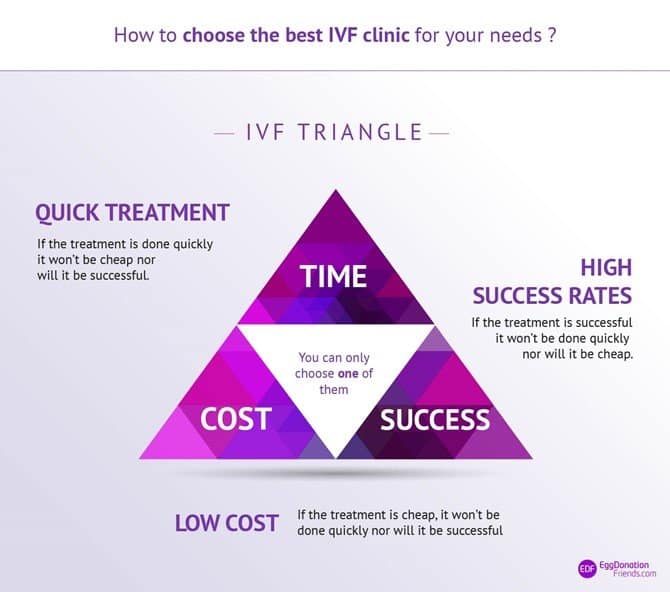
So there are our top five recommended destinations for egg donation treatment! Now you might be wondering, which is the best for you? Check out our IVF Triangle infographics below to help you make the right decision.
LetsGetChecked can help you understand your hormonal health with their female fertility testing options. Collect your sample from home and you'll receive accurate results within 2-5 days of the lab receiving your sample
Women have an equal role in gender selection before conception
Conception is that moment when the final standing male sperm beats the vying sperm in the race to fertilise the female egg (ova) and kickstart pregnancy. If the winning sperm contains a ‘Y’ chromosome, that baby will become a boy. Alternatively, if the sperm contains ‘X’ chromosomes, the baby will become a girl.
Many sources claim that you can maximise your chances of conceiving either a boy or a girl through fad diets and certain fancy positions and that getting the baby boy or girl you want is, ultimately, down to pure luck. Plus, if you wanted to find out whether these diets and conceivable positions worked, you would typically have to wait until the 20-week ultrasound scan to catch a glimpse of your baby’s parts – and, even then, it’s not 100% accurate.
But, what if a company from America has come forward and not only claims that they can, with over 90% accuracy, offer gender determination of baby from the date of conception but also claim that women have an equal role in gender selection of their baby before conception has even begun?
Get an insight into your fertility with an accurate at-home test and check your female hormone levels from the privacy of your own home. Code below!
Urobiologics’ hypothesis – women’s hormonal environments can determine gender
A company called Urobiologics extensively researched 100% natural, non-invasive methods of gender selection and post-conception gender determination, and they have finally proven that there is a way. The answer lies within the woman’s hormonal cycle.
Dr Kuldeep Verma, Chief Scientist of Urobiologics, believes that women play an equal role in gender selection. Just like there are two different types of sperm, ‘X’ and ‘Y’, there are two different types of hormonal environments which alternate in every menstrual cycle. Urobiologics advise couples that if they want to have a boy, they conceive in the ‘boy cycle’, and if they want to have a girl, they conceive in the ‘girl cycle’. And these tests are believed to be over 90% accurate. But, how do they work?
The PreGender Preconception Test Service (for Gender Planning Before Pregnancy)
Dr Kuldeep Verma is vehement that couples do not need to play a game of chance and end up with multiple babies of the same gender. There are no pH hoaxes, no acidic or alkaline douching, no gender dieting, charts, calendars or moon theories to follow. Using the PreGender Preconception Test, couples are only required to submit mid-cycle urine samples, which can be mailed from most countries without the need for travel. Urobiologics then identifies the alternating uterine hormonal environments by testing the urine samples (you cannot identify the cycle by testing the blood or saliva.) And, Dr Verma is so confident of the test’s success that Urobiologics will refund couples double if they do not get their planned boy or girl using his program. The woman’s hormones will do everything that is needed to determine the gender of the baby.
“I completed my family through preconception advice from Urobiologics. I got my son last week. It is amazing that simply by conceiving in the cycles recommended by them one can get the baby they wanted. As I didn’t go for any other test, scepticism kept me occupied all the time during pregnancy; now I am a stronger believer in this technology”
Gloria Hu, Netherlands, 11.02.2012
Get a comprehensive picture of your hormonal health without the need for clinics or appointments. Easy testing, free shipping, and fast results.
The science behind the PreGender Preconception Test
Ovulation creates two types of hormonal environments in the uterus. These environments alternate in consecutive menstrual cycles. The sperm then ‘determines’ the gender, yet the hormonal environment of the uterus in that cycle appears to ‘influence’ the expression of the baby’s sex characteristics. So, if there is a ratio of more testosterone to oestrogen in one cycle, the environment will favour the conception of a boy. If there is a ratio of more oestrogen to testosterone in the alternate cycle, the environment will favour the conception of a girl (and select the ‘X’ chromosome bearing sperm). Urobiologics will then guide the couple via a conception plan on when and how they should conceive. The process of conception then ‘locks’ the environment and that the environment would stay the same until the baby is born or miscarried.
Urobiologics believe they can prove that the above steps work and that the result will allow for gender-specific conception to be possible naturally if one conceives in the appropriate menstrual cycle.
The above diagram shows the alternating ‘boy’ and ‘girl’ cycles after testing two urine samples. If conception occurs in ‘Cycle 3’, the boy phase is locked for nine months. Some pregnancy test kits can detect pregnancy six days before the expected period date. However, Urobiologics’ second test, The FirstGender Test, can detect the gender of the baby from the date of conception and there is a 90% chance that it would be a boy because conception occurred in a boy phase.
The below diagram shows some examples of the process the PreGender Test uses to conceive the gender of choice:
The FirstGender Test Service (for Gender Detection after Pregnancy)
Dr Kuldeep Verma’s company uses unique technology to evaluate the gender of the baby by testing a mid-stream sample of the expecting mother’s urine (for two resting periods pooled into one bottle). The test can be administered from as early as five weeks up to the twentieth week of pregnancy, and with an expected accuracy of 95%. More information on the process used can be found on Urobiologics’ website.
What is the scientific basis of the early FirstGender Test?
If the mother is carrying a boy, her urine will contain more testosterone than of a mother’s urine who is carrying a girl. Through several developed procedures, Urobiologics compares the sample with that of a mixed sample from several women who have delivered girls or confirmed they are carrying girls through amniocentesis or CVS test. If the sample matches, then Urobiologics are reasonably confident that the baby is a girl
“You ensure conception, we ensure gender”
Dr Kuldeep Verma, Urobiologics
Get an insight into your egg reserve with LetsGetChecked's Ovarian Reserve test.
Urobiologics claim they are the first ever company to determine gender by testing urine and have put in thirty years of extensive work on developing unique technology for gender selection and determination.
Urobiologics believe they can detect gender as soon as the woman has confirmed a positive pregnancy test.
No procedure can ever be 100% accurate. Urobiologics believe their test results are 95% accurate as long as directions are followed for sample collection and storage carefully.
Urobiologics have currently filed two patent applications worldwide.
If you have any more questions on the FirstGender test, please visit Urobiologics’ website for Frequently Asked Questions.
Isn’t Urobiologic’s PreGender Test just a natural way of creating Designer Babies?
No, because you are not genetically modifying the baby through invasive methods; you are simply selecting the cycle in which to conceive and then letting nature take its course. This process may work well for couples who already have multiples babies of the same gender.
How do I order a test?
The PreGender Test can be ordered over the phone or through the website.
Urobiologics will mail the urine sample materials along with a prepaid ship-ready UPS or FedEx envelope so that you can mail the samples back to them.
You collect two urine samples separately for two cycles near ovulation and ship both samples together.
A full plan is then discussed as to which cycle you are advised to conceive, as well as how to conceive.
No additional testing is required for six months.However, Urobiologics do recommend to take two tests any time after six months to reposition the family planning effort. This is because undetected conception may temporarily lock the hormonal environment and disturb the sequence.
If conception is a problem, Urobiologics recommend customers to go for Intra-uterine Insemination (IUI) but in an appropriate cycle. IUI is a more natural alternative to IVF, as IVF involves a lot of hormonal injections and may cause an imbalance to the natural hormone set up in a particular cycle, ultimately causing low success rates.
Customers are offered a 10% discount (on the combined price) when buying both the PreGender and FirstGender test (please refer to the fee table below). Customers are also offered a double refund warranty and entry into the ‘Live Chart’. More information on these benefits can be found on Urobiologics’ website.
Customers can contact Urobiologics by calling toll free at 1-877-HE-OR-SHE (1-877-436-7743) or direct at 313-574-7500 in the USA or through email: drverma@urobiologics.com
“Not only has Urobiologics got extremely high success rates but Dr Verma is so helpful and supportive. I found out yesterday that the pre and post-gender test had worked for me when other techniques failed. Dr Verma guided me in which cycles to conceive to get me a girl. Interestingly, I conceived in the desired cycle, and the post-con sample test also confirmed a girl. Finally, after two correct boy reports by Urobiologics, my ultrasound was very clearly a girl. If you are reading this, I know how desperate you are to have a baby girl/boy. Please try it; you can only imagine how happy I am, I want you to experience it too.”
Emma Hine, UK, 19.05.2011
Whether you are planning for your first baby or you have boys, and you would like a daughter (or vice versa), Urobiologics offers a PreGender Test so you can successfully conceive a baby of your desired gender. However, a caveat must be inserted here that the sex of the baby should not matter more than his/her health and well-being, and that all babies are miracles regardless of whether they end up as boys or girls!
If you are planning a family would you want to know the gender of your baby before conceiving? Share with us in the comments below!
LetsGetChecked can help you understand your hormonal health with their female fertility testing options. Collect your sample from home and you'll receive accurate results within 2-5 days of the lab receiving your sample
*Links marked with a ‘*’ are affiliate links which means I may earn a small commission on qualifying purchases
The Rewards of Egg Donation: Giving the Gift of Life
So many people dream of starting a family of their very own. Yet for many couples, starting a family with traditional methods is not an option. In fact, 1 in 8 couples has difficulty conceiving a child. Due to any number of fertility struggles, these hopeful parents turn to donor eggs.
Just as there are many reasons for using donor eggs, there are just as many for choosing to be an egg donor. Because of these generous donors, many couples can start the families they’ve always wanted. If you have ever wondered about who can become an egg donor, continue reading and visit donoreggbankusa.com/our-egg-donors/donate-eggs for more information.
Get an insight into your fertility with an accurate at-home test and check your female hormone levels from the privacy of your own home. Code below!
Donating your eggs is akin to giving the gift of life to families in need. However, there are several factors needed to determine whether you’ll be accepted as a donor candidate.
You must be between the ages of 21 and 32
You must be tobacco and drug-free
You must be free of sexually transmitted diseases
You must be in good emotional health and must meet with a psychologist to undergo a mental health screening
You must be available for approximately four months
You must be prepared to self-administer injectable medications
Even if you meet the basic requirements above, egg donation is not for everyone. It is important to weigh your reasons for becoming a donor with as much information as possible. Also, it’s a good idea to have an outlet for your questions and speak with people who have experience in the process, like a previous donor or egg bank staff member. When deciding whether to donate, take everything into consideration, including what drew you to egg donation in the first place. The decision to help a couple struggling to conceive is ultimately your choice and no one else’s.
What’s involved in egg donation?
Get a comprehensive picture of your hormonal health without the need for clinics or appointments. Easy testing, free shipping, and fast results.
To begin, you’ll undergo drug tests, blood tests, psychological and medical history examinations, as well as evaluations regarding professional and educational histories. If you pass these examinations, you’ll move onto the egg retrieval stages of the process.
Your doctor will prescribe self-administered injectable medications to help stimulate your ovaries to produce mature eggs. During this stimulation stage, you’ll report to a clinic for blood work and monitoring of your body’s response to the medications.
When your ovaries are ready, your doctor will instruct you to administer a “trigger” shot to stimulate your ovaries to release the eggs. In a simple outpatient procedure known as egg retrieval, your eggs are removed from each follicle with a thin needle. This procedure is performed under a light anaesthetic. Recovery is relatively easy for most women. However, common side effects are cramping, light bleeding, or constipation.
Get an insight into your egg reserve with LetsGetChecked's Ovarian Reserve test.
When becoming an egg donor, feelings of joy to anxiety are all normal. The process of donating eggs for someone else’s family can make you anxious. You may feel joy you’re contributing to a couple who just want to have a family.
You may experience sadness, confusion, or nervousness at the legal implications. No matter what emotions you are feeling, allow yourself to work through them and remember your reasons for choosing to become an egg donor. It’s incredible to think loving and hopeful parents will be able to cherish the amazing gift of life because of you.
What do donors receive in return?
For many women, the choice to become an egg donor is rooted in their innate sense of giving. They are giving life, the unbreakable love for a child, a family’s future, and the little moments of joy children bring their parents.
A more material benefit from egg donation is the monetary compensation for your time and effort. Depending upon the number of cycles you complete, the financial benefit can be quite significant.
No matter what draws a woman to become an egg donor, everyone should be aware donors and recipients have legal rights, which are discussed in their entirety during the screening process. It’s important to fully understand the egg donation contract and consult an attorney if you’re unsure of what you’re signing.
LetsGetChecked can help you understand your hormonal health with their female fertility testing options. Collect your sample from home and you'll receive accurate results within 2-5 days of the lab receiving your sample
If you’re still considering becoming an egg donor – and you fit the criteria above – the next step is to begin the application process. Less than 10% of all candidates are accepted as donors; however, if you are not, it’s clear you have a very giving heart and value for a strong family bond.
*Collaborative feature post
*Links marked with a ‘*’ are affiliate links which means I may earn a small commission on qualifying purchases
What to eat to increase your chances of getting pregnant
They’re often unaware though that even before pregnancy nutrition is fundamental and can increase the likelihood of pregnancy, sometimes making the difference between “trying-to-conceive” and dancing the little dance of the positive pregnancy stick.
This is as true for the father-to-be as well. It takes 2½ – 3 months to develop fully-mature, ready-to-be-ejaculated sperm and roughly the same amount of time for an egg to mature for ovulation. Maturing essential nutrients are required for all the cell DNA replication and gene transcription that’s being carried out. If both partners follow a healthy diet they can be assured that when their sperm and egg finally meet they’ll be carrying all the correct genetic information and that they’re tough enough to finish the journey.
Get an insight into your fertility with an accurate at-home test and check your female hormone levels from the privacy of your own home. Code below!
Of course, even when actively trying to get pregnant, many women won’t realise they actually are until they miss their period. At this stage, a possible 3 weeks down the line of foetal development, there has already been a massive multiplication of cells with the early stage foetus now burrowing into the uterine lining. Consequently, nutrition is important at this stage, not only for foetal health but to also help make the uterine lining receptive and nurturing.
7 Vital Nutrients When #TTC:
Folate / Folic Acid* The neural tube is the precursor to the central nervous system and one of the first things to develop in the embryo. Folate is crucial for this, with many health providers recommending that the mother supplement with folic acid before and during pregnancy. Some women, however, are unable to fully absorb Folic Acid and may need a revised supplement called Methyl-Folate. If you repeatedly miscarry, this may be the reason why. Many studies have shown that vitamin B12 is vital for the same reasons. Consequently, ensure that your daily multi-vitamin has a spectrum of B vitamins including folic acid and B12. Additionally include yeast products, pulses, leafy green vegetables and whole grains in your diet.
Get a comprehensive picture of your hormonal health with no need for clinics or appointments. Easy testing, free shipping, and fast results.
Iodine Along with folate iodine is crucial in the development of the early central nervous system, specifically with regard to brain development. This is borne out by research showing that low levels in pregnancy are connected with many mental health issues in the child such as cretinism, ADHD and autism. Many multi-vitamins provide a baseline level but ensure your diet also contains fish, seafood, seaweed and dairy products.
Zinc Zinc is regularly linked with male fertility and sexual health. It is crucial for cell division, relevant in the synthesis and maturation of sperm. Luckily it is an easy mineral to find in a whole food diet, in abundance in seafood and asparagus (maybe explaining their reputation as aphrodisiacs) but also in eggs, fish, whole grains, lean meat and seeds and nuts.
Get an insight into your egg reserve with LetsGetChecked's Ovarian Reserve test.
Omega 3 This polyunsaturated oil is not only important for the ready synthesis of sex hormones but is also recommended to increase sperm quality and count. Readily found in oily fish but also flaxseeds, walnuts and pumpkin seeds.
Anti-oxidants Anti-oxidants are important when cell multiplication is happening rapidly such as with sperm synthesis or foetal growth. There are many of them which include selenium, coenzyme Q10 and vitamins E and C. Whole grains, seeds and nuts are good sources of selenium and Vitamin E whilst Vitamin C can be found in abundance in all fruits and vegetables. Co-enzyme Q10 can be found in fish, sesame seeds, broccoli and eggs.
LetsGetChecked can help you understand your hormonal health with their female fertility testing options. Collect your sample from home and you'll receive accurate results within 2-5 days of the lab receiving your sample
Protein Again this nutrient is the basis for sex hormones but is equally needed for sperm creation and cellular replication. Obviously, there are many sources of protein but look for quality sources such as lean meats, eggs, fish and dairy which will help you to obtain all the essential amino acids whilst also providing sources of vitamins and minerals.
So, making sure your kids eat right doesn’t start at the kitchen table. Your children’s nutrition starts 3 months prior to even the twinkle in their father’s eye.
* Just to clarify Folic Acid is the synthetic form of the vitamin, folate is that which is found in food sources. Folate requires less conversion by the body and is more bio-available, methylated-folate even more so.
*Links marked with a ‘*’ are affiliate links which means I may earn a small commission on qualifying purchases
How To Become An Egg Donor For Infertile Couples
It is a sad fact that millions of people are affected by infertility. While some of these people will opt for fertility treatments, others will choose adoption. Of course, these are perfectly viable options for couples who are struggling to conceive, but there is nothing more satisfying than having a child of your own. With this said, assisted reproduction is helping couples and individuals achieve their lifelong dream of having a baby. So, let’s dive in and learn a little more about egg donation and pregnancy.
Get an insight into your fertility with an accurate at-home test and check your female hormone levels from the privacy of your own home. Code below!
The egg’s journey through the female’s uterus is treacherous and long, so, many of the eggs will not survive. There are several factors that can affect the female’s ability to get pregnant, including the pH of the acidic vaginal secretions, tubal blockage, infections, and diseases. The male can also play a part in this process, as well. Medical conditions such as cystic fibrosis and diabetes can cause testicular failure. Heavy alcohol and illicit drug use can also affect the number or shape of the sperm.
Most women dream of becoming pregnant and giving birth to a healthy baby, but some will have obstacles standing in their way. Healthy, fertile women can volunteer to donate their eggs to help make the infertile woman’s dreams come true.
Egg Donation Programs
Once you decide to donate your eggs, you will need to find a suitable program that offers this service. Do your research, because not all of these programs are reputable and some offer higher compensation than others. The best way to find an egg donation program is through careful research or recommendations from friends. Look for a program that has been established for at least 10 years. While you are researching, be sure to perform a search inquiry on how to donate your eggs to these programs.
Get a comprehensive picture of your hormonal health without the need for clinics or appointments. Easy testing, free shipping, and fast results.
While you are helping infertile couples and individuals make their dream come true, you will also be receiving a healthy reward. In fact, first-time egg donors receive between $6,500 and $10,000 for their dedication and effort. You will receive at least $6,500 for your first cycle and the compensation will continue to increase with each subsequent cycle. The compensation is enough to attract some women to these programs but it’s very important for women to also be connected for humanitarian reasons. It’s extremely rewarding to help someone achieve their dreams.
Most egg donation programs will offer reimbursement for all related expenses, such as ground transportation, hotel, and airline tickets. Just make sure you keep all of your receipts because you will need to submit them along with the reimbursement request at the end of your last cycle.
Get an insight into your egg reserve with LetsGetChecked's Ovarian Reserve test.
To be considered as an egg donor, you will need to meet certain qualifications and requirements. First of all, you will need to be at least 21 years of age and no older than 30. You also must be healthy and mentally stable to become a donor. Donors must be non-smokers, responsible and reliable. Women who utilise illicit drugs and are heavy alcohol drinkers will be omitted right away. Donors with special qualifications such as higher educational degrees or special talents can receive higher compensation. Remember that it is crucial, to be honest when you are applying to the program.
Once you are selected, you will be required to undergo an initial psychological and medical screening. A physician will medically clear you after you pass these screenings, then you will be required to go through a legal process.
It’s important to carefully consider donating as an option if you pass the above criteria because your selfless act is a gift of a lifetime to a couple in need. However it’s a complex and important process, so you make sure that you are at peace with your decision.
LetsGetChecked can help you understand your hormonal health with their female fertility testing options. Collect your sample from home and you'll receive accurate results within 2-5 days of the lab receiving your sample
*Links marked with a ‘*’ are affiliate links which means I may earn a small commission on qualifying purchases
Why people are seeking fertility treatment abroad instead of the UK
With as many as 1 in 4 pregnancies ending in miscarriage and approximately 3.5 million people in the UK finding it difficult to conceive, it is not surprising that fertility support specialists are frequented daily by couples seeking alternative treatment to get their babies. Unfortunately, with the NHS threatening to cut fertility funding and with many Clinical Commissioning Groups (CCGs) reducing the number of cycles they offer people – or even cutting them completely – couples face difficulties in the UK, pushing them to seek fertility treatment abroad, despite NICE’s 2013 recommendations that all women aged 40 or under who have not conceived after two years, should have access to a minimum of three cycles.
Get an insight into your fertility with an accurate at-home test and check your female hormone levels from the privacy of your own home. Code below!
The online research project was conducted between August 2016 and February 2017 and took findings from 241 people who had either undergone fertility treatment or were considering it. The survey respondents shared their views on the current state of fertility treatment in the UK and the factors that motivated them to travel abroad for treatment. Fertility Clinics Abroad and Fertility Network UK hope that their findings will highlight some of the key issues that the fertility industry in the UK face today and inform the Government, CCGs in England and Wales, Scottish NHS Boards, private and NHS funded fertility clinics and health professionals of how the public perceive UK fertility treatment.
The survey hopes to act as a catalyst to improve fertility care, treatment standards, and best practices. Below is a breakdown of the research’s key findings and how people have been affected with difficult fertility treatment provisions that the UK impose.
Cost is the driving factor for pushing people out of the UK
The media has painted a negative picture of the core issues surrounding the fertility treatment provisions in the UK, namely highlighting long waiting lists, inconsistent access to NHS funded treatment, low supply of donor eggs and the heavy cost of private fertility treatment.
However, it was without doubt that lack of NHS funding for fertility treatment and the spiralling cost of private treatment were the main drivers behind people seeking fertility treatment abroad. 76% of respondents felt that private fertility treatment was very expensive, with nearly 80% stating that it was twice as expensive as they were willing or able to pay.
Get a comprehensive picture of your hormonal health with no need for clinics or appointments. Easy testing, free shipping, and fast results.
The survey found that most respondents sought IVF using their own eggs and that they were willing to pay between £1,000 and £5,000 for treatment. However, in the UK, IVF can often exceed £10,000, including additional expenses. This issue of ‘hidden costs’ has yet to be challenged and, because of the high fees, 62% resorted to using their life savings, which affected their ability to fund pensions, pay for educational fees or support other family members.
Some even had to re-mortgage their houses or sell personal belongings to fund their fertility treatments. Some respondents sought help from family and friends, secured bank loans, used credit cards, or started a crowdfunding campaign to find the funds available to pay for their treatments. With the lack of funding available, some people who experienced secondary infertility thought that these high fees were unacceptable. It is unsurprising then that 58% would go abroad because the treatments on offer are generally cheaper.
Why people are being driven to seek fertility treatment outside of the UK
60% of the respondents in the survey had already had treatment in the UK, and the majority of those felt it was either passable or substandard, with 44% believing the standard of care was average. Only 3% of the respondents said that the treatment they received was excellent.
The survey found that people were worried about the lack of person-centred care in the NHS, which uses a ‘one size fits all’ approach. 36% said that the service and aftercare were poor and 35% said that the long waiting lists and a lack of egg donors were some of the major reasons to find fertility treatment aboard. 65% also pointed out that access to free NHS treatment depends on where you live.
While there are many positive factors for staying in the UK, i.e. the convenience of not having to travel (33%) and being near friends and family (17%), people felt more like a statistic rather than an individual, with only 7% saying that the standard of treatment in the UK is high and that there are good service and aftercare available (3%).
Get an insight into your egg reserve with LetsGetChecked's Ovarian Reserve test.
As a result, 93% of the respondents said they would consider travelling abroad for fertility treatment and those that have already received treatment abroad, would consider it again. 50% believe that foreign clinics can offer higher success rates and 46% would consider travelling abroad upon positive recommendations from other people. It is said that there are also shorter waiting lists and more access to egg donors, which seems to be the opposite of what is happening in the UK.
There are also fewer restrictions placed on people, for example not basing access to treatments on Body Mass Index. People felt that the NHS is paralysed by bureaucracy, which directly impacts waiting times, as well as offering no special consideration for older women who have a limited time window to conceive. Women in their 40s felt there were more opportunities for them abroad with more clinics catering to their age group.
Where are people going for treatment?
Over 60% of respondents had an interest in having their treatment in Spain, with 43% wanting to travel to Greece, 41% to the Czech Republic, and 29% to Cyprus. Over twenty other countries were mentioned in the survey across the world, with some surprising countries including Tunisia, Nigeria, and South Africa.
The barriers to seeking fertility treatment abroad
There were several barriers found in seeking fertility treatment abroad, with 45% saying that travel was the most inconvenient option. 30% were worried about the lack of regulations compared to the UK and 33% were concerned about the language barrier. Some respondents included factors like being away from friends and family and the lack of performance figures related to fertility success, with the perception that cheaper may not necessarily mean better results.
LetsGetChecked can help you understand your hormonal health with their female fertility testing options. Collect your sample from home and you'll receive accurate results within 2-5 days of the lab receiving your sample
How to encourage fertility treatment access in the UK
73% of respondents felt that having a centralised database of performance figures by country would help them to decide which destination would be better suited for their fertility journey. 62% felt that there should be more organisations dedicated to providing advice and resources for people considering treatment abroad. Respondents also wanted GPs and health professionals to provide more information and funding support from the Government, with more detail required on success rates abroad.
The current cost of fertility treatment in the UK, as well as the lack of free or reduced cost of treatment by the NHS, are no doubt the main factors for driving people away from the UK. The excessive cost of private treatment is attracting people to countries like Spain or Greece where the cost is up to 50% cheaper.
The fact that people are re-mortgaging their houses or using their life savings, shows how far people will go to pay for treatment. To keep people in the UK, there needs to be shorter waiting lists, more access to funding and NHS care, a higher number of anonymous egg donors and a better standard of personalised care because the ‘one size fits all’ approach offers very little aftercare and support to those who have forked out a large amount of money to receive the treatment.
Even with the key factors of not travelling abroad boiling down to the inconvenience of travel and being away from support networks, 93% of people would still consider going abroad, which shows us how much needs to be changed regarding the standard of fertility treatments in the UK.
*Links marked with a ‘*’ are affiliate links which means I may earn a small commission on qualifying purchases
The process of egg donation for In Vitro Fertilisation (IVF)
Getting pregnant is not always as simple as some couples make it out to be. Some can conceive at the drop of a hat, whilst for others it takes months, even years to get that big fat positive. And for thousands, the only chance of getting their baby is through medical intervention, such as In Vitro Fertilisation (IVF).
However, even some couples may not find this option very practical, as their medical history proves egg fertilisation to be a challenge. IVF costs a lot of money and if you are trying everything in your power to get pregnant and sadly it is not happening for you, you may feel that it is risky to put all your eggs in one basket.
Of course, there are always lots of natural pathways to follow to increase your chances of getting pregnant, like a healthy diet or even a restful holiday to calm the mind and soul. But if, medically, you are still struggling to conceive then following the egg donor route may provide you with increased chances of getting pregnant via IVF, using viable eggs from a third-party source.
Get an insight into your fertility with an accurate at-home test and check your female hormone levels from the privacy of your own home. Code below!
Growing Generations, a company dedicated to supporting families through egg donation, gestational surrogacy and parental education, have created a helpful infographic that lists out the process of egg donation and its effect on IVF success rates and other aspects of pregnancy. The process may seem difficult to understand at first, but it is quite straightforward as you will see below.
Get a comprehensive picture of your hormonal health with no need for clinics or appointments. Easy testing, free shipping, and fast results.
Egg donation is a common fertility treatment option offered for couples following the IVF route who find themselves unable to fertilise the sperm with their own eggs. So, an egg is donated from either a known or unknown third-party source, to help with fertilisation during IVF. Egg donation is intended for parents who have the following characteristics or conditions:
Over 40+
Premature ovarian failure
Poor egg quality
history of a genetic disorder
Family type needing an egg donor such as single males and gay couples
The success rates are quite high with eggs that are 30 years old or younger, with 70% of pregnant parents having a live birth on their first attempt, 88% on their second attempt and 98% on their third attempt.
Get an insight into your egg reserve with LetsGetChecked's Ovarian Reserve test.
The journey starts with parents selecting their egg donor where they can search for their donor online, using search filters including physical appearance, blood type, ethnicity and state/region. Recipient parents can browse the egg donor’s profile which includes photos, a personal bio and video, health history, education history, family and genetic history, genetic screening and fertility testing. Once the parents have made their choice, the donor is contacted to make sure that both parties are comfortable to proceed with the journey.
Psychological and Genetic Screening
Within two weeks of selecting a donor, a psychologist is called up to meet with the donor and evaluate whether she is psychologically suited to being an egg donor. The evaluation also includes an interview with personality testing. The parents can then review the genetic report and request a Geneticist to go through any of the questions.
Medical Screening
Within three to four weeks, a physician then examines the donor’s complete medical and medication history as well as any prior surgeries or donations. Blood tests will be taken to check hormone levels and screening tests will be conducted to check for any infectious diseases. A pelvic ultrasound will also be administered to gather information about the viability of the donor’s ovaries to ensure a less risky and safer egg donation process for the parents.
Legal Contracts
Within four to six weeks, depending on the parties’ response time, legal contracts will be drawn up to protect the rights of both the egg donor and the recipient parents.
Medical Protocol and Egg Retrieval
Parents can opt for a ‘fresh’ cycle, which means that the egg donor and the intended mother (or gestational carrier) will sync their menstrual cycles. The egg donor will then go through her medical protocol while the intended mother’s uterine lining is prepared and monitored for optimal embryo implantation.
Another option, which is quite common today, is to go ahead with the egg donor’s retrieval of her eggs, where embryos will be created and frozen ready for implantation.
To retrieve the eggs the egg donor administers hormone fertility medication to stimulate the ovaries to produce, ideally, 10 to 20 mature eggs. Typically, one to two eggs is produced per menstrual cycle. The donor is put under twilight anaesthesia and a Transvaginal Ultrasound Aspiration is conducted, where the physician guides a thin, suctioning needle into the ovary to retrieve the mature eggs. The donor returns home 1 – 2 hours following the procedure.
LetsGetChecked can help you understand your hormonal health with their female fertility testing options. Collect your sample from home and you'll receive accurate results within 2-5 days of the lab receiving your sample
Once the donor’s eggs have been retrieved, the frozen sperm is thawed and used to fertilise the eggs in a lab. Five to six days afterwards the embryo is implanted into the intended mother’s uterus. Ten days later a blood test is performed to determine whether the mother is pregnant.
Pregnancy
The mother or gestational carrier then follows the normal maternity procedures under personal obstetric care.
The process of egg donation needn’t be a taboo or complex subject when you’re struggling to conceive. If you think that egg donation sounds like a viable option to help you get pregnant, then visit the Growing Generations’ website here and find out how you can increase your chances of conceiving now.
If you’re interested in reading more articles about how to increase your chances of getting pregnant, check out our preconception articles here.
*Collaborative featured post
*Links marked with a ‘*’ are affiliate links which means I may earn a small commission on qualifying purchases
The conception plan – Journey to getting my girl – Part 2
It has been a while since I agreed to take Urobiologics up on their offer to review their two tests of gender selection and determination. It has been no secret that I would like to try for a baby girl and, even though I have made it clear to friends and family that I will not be distraught at all if I end up with a third boy, the opportunity to plan for a girl was too good to refuse.
I am currently working with Urobiologics, who are the first in the field to claim that women have alternating boy-girl specific menstrual cycles and can effectively help a couple to scientifically plan for a baby of a specific gender through non-invasive gender selection, i.e. based on a discovery that the uterus sorts out the X and Y chromosome-bearing sperm, depending on whether she is in a boy or girl cycle during conception (patented).
Get an insight into your fertility with an accurate at-home test and check your female hormone levels from the privacy of your own home. Code below!
These days they have become so confident of their success that Urobiologics are asking couples for the proposed name of the baby in advance. And, the success rate is high, at 92%! So, after being approached twice, I have now decided to go ahead and try for my baby girl, named Poppy (Read Part 1 – Introduction here). As I said, if it doesn’t work, it doesn’t work. But, there’s no harm in trying if all I need to do is send off my urine samples, right?
After a bit of a hullabaloo with trying to send my urine samples legally overseas, i.e. Royal Mail didn’t accept them at first. But, when I tried a second time, it was returned to me because the lab address was incorrectly written. This delayed my tests by two months. UPS finally delivered my samples to Urobiologics and the company got to work straight away, processing my samples and generating my own unique conception plan, to advise in which cycles I could successfully conceive a girl. An email was sent out to me two days later with the test results.
The test results and the conception plan
LEYLA PRESTON Trying to conceive girl after two boys
Proposed name of the baby in advance – Poppy
Length of cycle: short, 23 to 26 days
1st PreGender sample collected – 03/06/16 – indicated a boy phase
According to the results my cycles were alternating and, since then, I have been sent updated conception plans in every girl month, to ensure that I conceive during the right dates.
So, my updated file is:
Period Start Date – 07/07/16 – Boy phase started
Period Start Date – 03/08/16 – Girl phase started, received conception plan
Period Start Date – 27/08/16 – Boy phase started
Period Start Date – 20/09/16 – Girl phase started, received conception plan
Period Start Date – 17/10/16 – Boy phase started
Period Start Date – 12/11/16 – Girl phase started, received conception plan
Period Start Date – 09/12/16 – Boy phase started
Period Start Date – 07/01/17 – Girl phase started, received conception plan as follows:
Probably ovulate on 21/01/17
No sex on 16/01/17 and 17/01/17 to allow sperm to mature
Sex on 18/01/17 and 20/01/17 is very important – maximum chances of conception. Urobiologics warn that conception can happen late in a cycle as well.
Therefore, continue sex on – 22/01/17, 24/01/17, 26/01/17, 28/01/17… until period commences. Leaving one day in between is required for sperm maturation.
I must say that the plan looks quite daunting! At the moment (it’s now 19/01/2017) hubby is knocked out with the flu, so we will have to see if we can still salvage this month.
Get a comprehensive picture of your hormonal health without the need for clinics or appointments. Easy testing, free shipping, and fast results.
Urobiologics has advised me not to worry about the exact day of ovulation, odd/even days, or Chinese charts etc, but to keep things simple and stress-free. According to them, the ovulation test which basically hints that LH (luteinising hormone) surge and the ‘actual release of the egg’ are two separate events and can vary in every case. They can be a week or more apart, which is why Dr. Shettle’s 0+/-12 concept failed and caused frustration in millions of women.
Urobiologics’ plan covers all variations and has the highest conception rate, so they warn not to get wrapped up in these old ideas. I am not on the pill, so I have an external-synthetic-hormone-free uterus, which will increase my chances of conceiving in specific cycles and delivering a trouble-free baby.
Some couples can conceive easily within specific gender cycles, leading to more girls or boys. One couple in Michigan gave birth to their 13th boy, despite Urobiologics’ warning that the 13th would be a boy also if they didn’t go through the PreGender Test. The couple continued on their own and when the company heard about the 13th pregnancy through media, they immediately started announcing that the 13th boy is coming, without performing any test. This turned out to be true in June 2015.
Urobiologics warns couples not to depend on chemical contraceptives (gels and douches etc), because these may fail especially in sensitive cases. They strongly advise to use condoms in opposite phases from day 1 until they start their period. They do not believe in any safe zones in such cases because the uteral environment may be so cosy that the life of the sperm can be extended beyond the norms and the sperm deposited in the safe zone can cause conception later.
Urobiologics also warn against gender diet plans as they tend to raise male/female hormones in the body and will interfere with the natural potential to have the girl/boy (Click here for more information.) They especially advise women not to get any medication for ‘raising the chances of conception’. Although medicines are available, they are not good for gender selection because physicians are not aware of how much these types of medicine alter the natural redox environment in the uterus, which plays an active role in sperm selection. Therefore, if you are trying to conceive a boy or a girl, these kinds of medicine should be avoided.
Get an insight into your egg reserve with LetsGetChecked's Ovarian Reserve test.
The day I confirm my pregnancy, I will start collecting new urine samples for the FirstGender test because Urobiologics can find out the gender of the baby as soon as I take a pregnancy test, with around 96% accuracy. Certain pregnancy test kits can detect pregnancy six days before the expected menstrual date. Their FirstGender test can detect the gender of the baby three days before the expected period date and onwards up to 20th week. The FirstGender test report is more accurate for couples who have taken the PreGender Preconception test because they know in advance what is coming.
Urobiologics are constantly working on their tests to ensure maximum accuracy
Urobiologics’ techniques to find the difference between two cycles have improved tremendously in the recent months, which means couples can be more confident in their choices to get the baby that they are planning for. Due to their dedication in this field, the PreGender conception program has turned out to be almost guaranteed to get the baby of the desired gender. Urobiologics are proud to call themselves ‘The Brahma’ in the field of gender planning and have been selected as one of the top 50 innovators to present this new concept at 2016’s New England Venture Summit in Boston on 7th December. You can read more about this summit here.
What to expect in the feature series, “Journey to getting my girl’
I finally have my girl – Did the conception plan work?
LetsGetChecked can help you understand your hormonal health with their female fertility testing options. Collect your sample from home and you'll receive accurate results within 2-5 days of the lab receiving your sample
N.B – It is important to note here that I am receiving a free PreGender Test and FirstGender Test in return for reviewing my journey to getting a girl. I am fully aware that there may be a chance that I could get a boy and I am 100% happy if this is in fact the outcome. Gender planning can be a great idea if you have multiple boys or girls in the family and you are trying for a particular gender. But, I do not think this decision should be taken lightly. As long as the baby is 100% happy and healthy, this should be the most important reason for trying again.
*Links marked with a ‘*’ are affiliate links which means I may earn a small commission on qualifying purchases
Introduction to conceiving a girl – Journey to getting my girl – Part 1
It’s no secret to close friends and family that I want to have another baby. I am one of four children and my dream is to have a large brood myself. A lot of people did think I was crazy for wanting another when I had two boys in such quick succession (they’re fifteen months). But, ever since one of my mummy friends had a baby daughter, I haven’t been able to quieten my womb – it wants a baby girl.
And, since we can’t pre-order baby girls, there is a strong likelihood I’ll end up with another boy, which isn’t bad, of course. The boys would get another best friend and, as long as my baby was 100% happy and healthy, I wouldn’t mind having a teeny tiny baby to hold again. But, if there was a small chance I could get my princess, would I take it?
I don’t want to take invasive measures and I also don’t believe a lot of that mumbo jumbo on the net about what to eat and how to position yourself to conceive, in the likelihood that I’ll increase my chances of having a girl by 0.02%.
A couple of years ago, a doctor from Michigan approached me via Motherhood Diaries, with an interesting new discovery who claimed that just like there are two kinds of sperm (which actually determine the gender), women have alternating boy-girl specific menstrual cycles (which select the gender). His data suggested that 92 out of 100 couples got their dream babies if they conceived within the appropriate cycle.
This success rate makes me believe that the uterus may be sorting the X and Y chromosome-bearing sperm, depending on the type of cycle the woman is in and, therefore, then selects the gender of the baby.
But, most importantly, the process is administered through non-invasive methods, such as urine testing, and boasts a whopping 92% success rate. At the time, I was knee-deep in two babies and experiencing utter turmoil, so the thought of having another baby was far, far from my mind. A couple of years on and I am now all ears.
Get an insight into your fertility with an accurate at-home test and check your female hormone levels from the privacy of your own home. Code below!
Urobiologics, headed by Dr Kuldeep Verma, researched into the area of non-invasive methods of gender selection and post-conception gender determination. They found that women housed two different types of hormonal environments, which alternate in every menstrual cycle. Urobiologics call each cycle the ‘boy cycle’ and the ‘girl cycle’. So, evidently, if the couple wants a boy, they conceive in the ‘boy cycle’, if they want a girl, they conceive in the ‘girl cycle’. The 92% success rate is the highest in the gender selection industry, far better than 37% for IVF! The company is so confident of their success that, in recent times, they even ask for the proposed name of the baby before starting the tests.
So, I have named my future baby girl ‘Poppy’.
So, how are these urine tests so accurate at determining the cycle?
Urobiologics offer two types of tests, the first is the PreGender Preconception Test, where the female mails in two mid-cycle urine samples collected from two consecutive cycles, in order to determine which favours the boy or girl cycle.
First-month urine sample – any 2 nights between the 13th to the 17th day after the start of your period – in one separate bottle
Second-month urine sample – any 2 nights between the 13th to the 17th day after the start of your period, in a separate bottle
Get a comprehensive picture of your hormonal health with no need for clinics or appointments. Easy testing, free shipping, and fast results.
Both bottles are shipped through couriers. It is legal to ship urine samples across international borders under the ‘exempt human specimen’ clause shown on Urobiologics’ website. The samples are kept at room temperature, which actually makes them easier to test and process over time.
If there is a ratio of more testosterone to oestrogen in one cycle, the environment will favour conception of a boy. If there is more oestrogen to testosterone in the alternate cycle, the environment will favour conception of a girl.
Urobiologics then guides the couple when to try and conceive. And, if you don’t conceive the first time, Urobiologics will keep emailing you your conception plan in every desired cycle until you conceive at no extra cost. When conception occurs in a particular cycle, the process locks the existing environment until the female gives birth or the baby is miscarried.
So, when the couple calls Urobiologics and lets Dr Verma know they have successfully conceived, Urobiologics is aware of the gender already. The female then collects a urine sample for three nights, in preparation for the FirstGender test, which determines the gender of the baby.
The following graph provides a better understanding of this new concept:
Get an insight into your egg reserve with LetsGetChecked's Ovarian Reserve test.
The FirstGender Post-conception Test can detect the gender of the baby as early as 3 days before the expected menstrual date onwards with a 96% accuracy. So, there is no need to wait until the 20-week scan then!
Why I decided to go for it and get my girl
I have nothing to lose and everything to gain. If it doesn’t work, it doesn’t work. But, the 92% success rate, plus the fact that I only need to send urine samples in and conceive within the girl cycle means that I am not putting my body under any undue risk to get my princess. So, from this point onwards, I am going to be documenting my journey and will be living proof of whether Urobiologics’ guidance gets me my baby girl. I have already sent my two samples in and I am now waiting for my chart, which I will then publish in my second post in the series.
So, here is what to expect in the feature series, ‘Journey to getting my girl’
Introduction – this post and the first of the series.
I finally have my girl – Did the conception plan work?
LetsGetChecked can help you understand your hormonal health with their female fertility testing options. Collect your sample from home and you'll receive accurate results within 2-5 days of the lab receiving your sample