Should you really eat for two during pregnancy?
If you’re pregnant, grab your free pregnancy pack now – details inside!
The worse advice that your mother can give you while you are pregnant is to tell you to eat for two. Get back you mad washer woman, back to the middle ages when everyone was starving to death and eating for two meant having two turnips instead of one for your evening meal. Never ever, ever eat for two whilst you are pregnant, unless you want to be the size of two people giving birth to Nellie the elephant.
The human body is simply amazing. During pregnancy it starts to secrete hormones that try to ensure optimal growth for the baby even during times of want. Human Placental Lactogen (HPL) is a polypeptide hormone secreted by the placenta in pregnancy. Its function is to regulate the mother’s metabolic rate so that the energy needs of the baby are constantly supplied. As the placenta and baby grow, more HPL is secreted with maximum levels found at term.
With HPL on the case, there is no need to eat for two. Even during those annoying times when there are no ginger biscuits left on your supermarket shelf, HPL is busy releasing fatty acids from your butt so that you will not starve whilst waiting for the harassed assistant to open the box. While you are being fobbed off with metabolising boring fatty acids, HPL is feeding your baby lots of yummy glucose instead, obtained from a secret emergency supply kept in the liver.
I have to admit, it is very tempting to eat for two in pregnancy. If you are going to look like the side of a bus anyway then what is the use of not feeding your face whilst you have a jolly good excuse? What is wrong with comfort eating? It makes you feel a little better about giving up sole use of your body for nine long months. The answer is very simple. Eating for two makes big fat babies who are more difficult to get out!
If your BMI (Body Mass Index) goes above 30 in pregnancy then you are seen as high risk and those lovely birth center doors will close in your face when you arrive in labour. When on the labour ward you run the risk of the cascade of intervention that hospitals are so fond of. They may not be able to get an epidural in due to all the back fat and you are more likely to end up with a caesarian section with general anaesthetic putting you at very high risk of bleeding. Is that extra cream bun really worth it?
Www.painfreelabour.blogspot.co.uk
Image courtesy of [name of the image creator] at FreeDigitalPhotos.net
If you’re pregnant, grab your free pregnancy pack now – details inside!
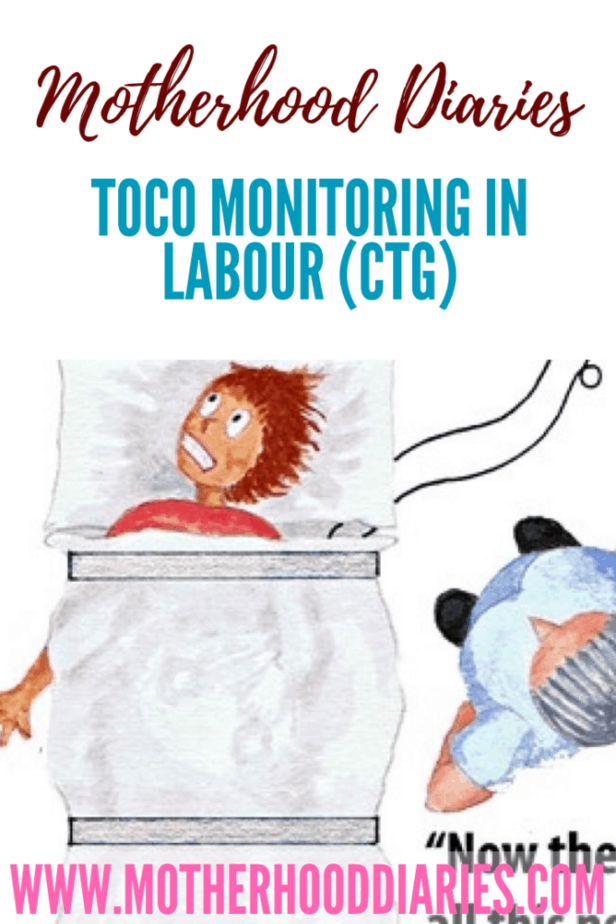
Toco Monitoring in Labour (CTG)
If you’re pregnant, grab your free pregnancy pack now – details inside!
I have been thinking about VBACs, i.e. Vaginal Births After Caesarean. There is a very strong argument for allowing women wanting a VBAC to give birth at home or in a midwifery-led birth centre. Within the medical constraints of hospital care offered in the UK a home/birth centre birth would be strongly contraindicated and not encouraged.
If you think about it for a moment, a home/birth centre birth seems the perfect place for a VBAC. In my experience, most caesarean sections are performed when a woman fails at bringing on labour and during fetal monitoring, the baby is seen to be distressed by the long labour on the toco monitoring machine when measuring contractions. There are physiological reasons for this.
Going into hospital can be a stressful event, adrenalin will be secreted when a person is under physical or mental stress. Adrenalin (the hormone secreted by stressed people) attaches itself to the uterine cervix and prevents it from opening normally. So, when stress is a factor within active labour, expected progress will not be made due to the actions of adrenalin. The contractions will have to become stronger in order to pull up on a resisting cervix. How will this help someone having a VBAC? It will make a uterine rupture much more likely.
At home/birth centers however, a woman is much more likely to remain calm and in control. If she follows the advice on relaxation techniques then she will not secrete adrenalin and the cervix will be free to dilate. The contractions will not have to become stronger, as the cervix will not resist, and so they will remain at normal contraction levels. The first stage of labour, if conducted under the methods taught in my blog, will be pain-free.
When in hospital, a woman having a VBAC has to be continuously monitored (CTG reading) to detect any early signs of uterine rupture. She will most likely be confined to a bed with only brief breaks to visit the loo. Staying upright during labour helps the uterus work with gravity so that the contractions do not have to become strong. Lying down during toco monitoring will make the contractions become stronger and so will cause pain. The fact that she is not mobile will also impact on the descent of the rotating baby into the complicated anatomy of the birth canal.
At home/birth centre, a woman is free to move around and relax as her body dictates. She can eat and drink anything she chooses according to her body’s needs. She can remain upright and have the power of gravity which will encourage bringing labour on, rather than hindering it. The contractions will remain normal as her environment and mental state will be in harmony with her labour, instead of placing obstacles in the path of normal progress.
With the element of a pain-free first stage of labour, a home/birth centre birth can become a real option with all the benefits working toward encouraging normal progress. The only element that will prevent women from seeking out pain-free labour is FEAR. The fear of litigation. The fear that women are irresponsible little tykes that are all too willing to put their babies at risk. Hospitals will not support home/birth centre births for VBAC. But. They may support birthing on a labour ward that usually has at least one pool to birth in. Water births are so nice and gentle that no extra stress will be put on the scared uterus causing it to rupture, the contractions can remain normal. The midwife is still listening in every 15 minutes to the baby’s heartbeat on the fetal heart monitor, which will detect any adverse changes. Mobile CTG monitors are the latest thing at the moment – you can walk about or sit on a birth ball or even get in the pool as they are waterproof. The only trouble is they tend not to work very well and you will be constantly bothered by a midwife trying desperately to regain a lost signal!
Why using toco monitoring in labour for a VBAC is a bad idea:
- Lying down on a CTG machine will cause the contractions to become painful as they work against gravity.
- The pain will cause stress that will hold the cervix closed, which will make the contractions become stronger.
- Not moving about in labour will slow the normal rotation of the baby.
- Not eating in labour will prevent enough carbs from being available to fuel a contracting uterus, causing labour to slow down or stop.
- If it slows down or stops, a drip may be started that will put extra stress on the scared uterus.
Everything we do in the hospital seems to be against helping women to achieve a VBAC. I know of a young lady who recently turned up at her local birth centre and was asked to leave as she was high risk. She calmly told them that she was going to labour in their pool and refused to leave. She had a normal delivery in their pool. Another I met was planning a home birth after a previous CS.
Let’s start a campaign today to allow women VBACs within a home/birthing centre setting. Let me know what you think?
www.painfreelabour.blogspot.co.uk
If you’re pregnant, grab your free pregnancy pack now – details inside!
Pain Free Labour
Pain Free Labour Books on Amazon
The international best-seller Dean Koontz captured the essence of why we accept painful labours so easily when he wrote:
“Fear is the engine that drives the human animal. Humanity sees the world as a place of uncountable threats, and so the world becomes what humanity imagines it to be.”
In our dark dank past women were exploited. No surprise there then. They were not even allowed an education so that they could say “Hey, stop exploiting me you patriarchal society you”. We have had to fight tooth and nail for our relative freedom. The only battle that has yet to be won in the civilised world is childbirth.
Fear of childbirth has been instilled in us for hundreds of years. Doctors have made money out of us by keeping us in fear so that their services are needed to provide a medical model of care to help us birth. Early midwives were burned as witches so that women would turn to the medics in their time of need.
There are people on this planet that believe that the world is flat. Despite all the evidence to support a spherical earth, they still do not believe. Despite Aristotle, one of the first European thinkers to propose a round earth in 330 BC, who proved it by doing the math. Despite pictures from space that showed the awesome ROUND earth, they refuse to believe. “The world becomes what humanity imagines it to be.”
Modern health care follows blindly the belief in painful labours as the norm. There has been no research that I know of to support this belief. Within the UK we pride ourselves on offering evidence based practice and yet there is no evidence that uterine smooth muscle is designed to cause the sensation of pain when contracting normally. Yet we continue to believe.
Perhaps women want painful labours. Perhaps fear is the engine that drives the human animal. Perhaps we only feel comfortable when something we believe in comes true. Any other outcome would be too hard to accept, too big a paradigm shift for us to relate to.
Well tough. Get with the plan. Pain Free Labour has begun to seep into our belief system concerning childbirth. Midwifery led birthing centres are springing up all over the UK. Women are having pain free labours during the first stage when taught how to approach labour. Relaxation techniques are being learnt in parent craft sessions to keep women from entering the stress/pain cycle often seen in labour.
We are being allowed to learn the truth about labour now in the UK only because the strain on the NHS from medicalised care has become too much. A calm pain free labouring woman in a pool is cheap compared to a theatre full of expensive equipment and staff. The caesarean section rate has reached an all-time high. We have lost faith in our innate ability to labour naturally.
Two out of four of my labours were pain free. If I had not experienced this phenomena then I may well have been one of the supporters of offering elective caesarean sections for maternal choice. As a midwife I have helped countless women to have a pain free labour. As an author, I have explained in detail why uterine smooth muscle was never designed to cause the sensation of pain during a normal contraction.
So, who will join me in supporting the massive shift that we need in our belief system that will enable women to labour as nature intended; with medical support on standby if needed? Who will be brave enough to swim against the tide and face the wrath of humanity when one of their “uncountable threats” is removed leaving them uncertain and afraid? Who will take a leap of faith in order to free women from the last of society’s manacles holding us down? Who, maybe you?