The legislation surrounding paternity leave is due to change with the aim of encouraging a greater participation by Dads in child rearing and to allow families greater flexibility in who stays at home with the baby. The Government estimates that 4-5% of Dads will exercise their new right to longer Paternity leave. But what exactly are the changes and how will they affect you?
Currently the law allows Dads (or the partner of the Mum, male or female) to the right of 2 weeks off work, paid at the statutory rate of £123 per week. For those whose babies are born on or after 3rd April 2011 this will change to allow the Dad the right of up to 6 months additional paternity leave.
Sounds great- but where’s the catch?
The additional Paternity leave comes from the Mother forfeiting her right to some or all of the last 26 weeks of her maternity leave and a number of conditions must be satisfied in order to qualify.
Additional Paternity Leave (APL) Eligibility
Must have been continuously employed by the same employer for 26 weeks at the end of the ‘relevant’ week which is the 15th week before the expected week of birth
Must still be employed by the same employer at the start of the additional maternity leave
Must be the father of the child or married to or the civil partner of the mother or adopter of the child
Must have or expect to have the main responsibility for the upbringing of the child (apart from the Mother) i.e. not be out on the golf course while on Paternity leave!!
The Mother must have been entitled to maternity leave, Statutory Maternity Pay (SMP) or Maternity Allowance (MA)
Before the Dad can commence his APL the mother must have returned to work (or her SMP or MA must have finished)
So you can tick all the boxes, what do you need to do now to get your leave? Here’s the boring legal mumbo-jumbo.
You must give your employers eight weeks notice, in writing, of your intention to exercise your right to APL and inform them of the expected week of the child’s birth (the due date that was on the MATB1 certificate), actual date of birth and the proposed start and end dates of the leave.
Leave must be taken continuously and has to be a minimum of 2 weeks up to a maximum of 25 weeks. The earliest it can be taken is when the baby is 20 weeks old.
When requesting the leave a declaration must also be included stating:
The purpose of the leave is to care for the child
That he is the husband, partner or civil partner of the mother and that
He expects to have the main responsibility for the upbringing of the child (apart from the Mother)
It must also include a statement from the Mother including:
Her name, address and NI number
The date she intends to return to work (or the date her SMP or MA will expire)
That the employee satisfies the conditions as stated in the leave notice and is to her knowledge the only person claiming APL for the child
Her consent to the processing of her information in the declaration
Your employer has the right to request to see the child’s birth certificate and the details of the Mothers employer or her business address if she is self employed, probably so they can check that she has returned to work and isn’t still claiming maternity leave whilst you intend to claim paternity leave!
So what rights will you have while on Additional Paternity Leave? Well, the regulations set out that all the terms and conditions of employment stay the same, with the exception of remuneration (pay – it is at the employer’s discretion if they want to pay higher then Statutory Paternity Pay, which is £123 a week). You have the right to return to work, an option of an early return to work (although 6 weeks’ notice is normally required) and a right to 10 keeping in touch (KIT) days. You would also have the right to be consulted in the same way a woman on maternity leave does if there was a risk of redundancy whilst on APL.
So on a positive note, the updated regulations give Dads a greater opportunity to be at home with their baby during the early, formative weeks and a chance to create stronger bonds as a result of extended paternity rights. But the disincentives are that men are often the highest earners in a family and must have satisfied the lengthy criteria to apply for the leave. But at least it’s a step in the right direction considering paid Paternity leave has been around for 8 years.
Natalie Maltby (NCT Chair of Cheshunt and Broxbourne District Branch)
For as long as I could remember I had played with dolls lovingly; dressing them, bathing them, hugging them, rocking them to sleep in the cradle Grandma bought me for Christmas in 1973. First, there was Ben, a funny doll who for some reason I decided was a boy. He had one eye that was stuck and never closed when you lay him down and a strange collection of blue ‘boy’ clothes but I loved him and I took him everywhere. Admittedly he was often upside down, semi-naked and rather grubby but he was my baby nevertheless. Then came Tiny Tears. She was perfect (although the hairstyle looking back on it was decidedly seventies and not in a funky way) with blue eyes and a Clara bow mouth complete with hole for you to put her dummy in whenever your maternal instincts told you she needed extra soothing. When we used to go to Little Chef on the many long motorway journeys to and from various relatives or house hunting for the latest move, I would always give Ben and Tiny Tears the sticker rewards that they gave you for eating up all your food and I would have the lolly. We were a team, me and my ‘babies’ and we took care of each other.
Now, of course, I did all the normal big girl things as I grew up; bike rides, school discos, tentative snogs at the youth club leading to disastrous relationships at the student union bar. I even managed to get a degree and find a job and Tiny Tears and Ben were left languishing at my parents’ house wondering if anyone would cuddle them again! I never forgot them and most significantly whenever there as a clear out and my mother asked what she could throw or give away that I no longer wanted to be stored in their house and not mine, I never gave up on them. That is because whilst concerts and smart restaurants are fun and spending all your money on shoes is great for a while, ultimately it was not what I wanted. I always wanted to be a Mum. It is not a lofty ambition, it won’t be remembered for the works of Einstein or Gandhi but it was my strongest and most burning desire. I will not apologise for that.
So when the time came for a good man to come into my life and a lovely wedding, followed by a lovely home, it was not long before the talk of starting a family became more than just talk and so we began ‘trying’. I was already 29 at this point and my husband was over 30 so I hadn’t been completely obsessed with parenthood prior to that. Now though everything felt right. However, everything wasn’t right. Far from it and despite the initial thrill and a whole lot of smugness at getting pregnant the first month of trying, we were soon to begin a very hard journey to parenthood. 8 weeks into my first pregnancy and only 4 weeks since that joyful positive test, I started bleeding. A few spots quickly turned into a full on bleed and before we knew it we were in the early pregnancy unit of UCH being told there was no heartbeat and a blood test would confirm that I had indeed miscarried.
So home we went, sad and empty but still with an element of optimism thanks to the cheerful blasé attitude of the staff and all our friends telling us that we would be pregnant again in no time and there really was nothing to worry about. Months went by. We took temperatures, we peed on sticks, we analysed every twitch of my cycle and of course, we shagged like rabbits. Quite a shock to my husband to have me initiating sex every night I can tell you! In the beginning, I think he rather liked the ‘trying’. But excited optimistic sex can quickly become desperate, needy, necessary sex and months later with no sign of another pregnancy, the strain very definitely took its toll. How we survived that year and the many that were to follow in our quest to become parents is still a wonder to me. It is to our very great credit that we kept talking and sharing and shouting and sulking and finding ways to cheer each other up because we did it together. We quickly realised that no one else understood what we were going through as well as each other. So no matter what anyone else said we always had someone we could turn to and they always agreed and they always said the right thing. We finally admitted defeat and went to the GP who started with some very simple tests, a smear, a sperm test, some hormone level blood tests, etc. All came back normal and as is so often the case, within a month of talking to the GP, I found myself pregnant again. This time we only had a week of optimism and once again I was bleeding, waiting for hours at the early pregnancy unit of UCH and yes, ‘we are really sorry but there is no heartbeat’. In fact this time there was nothing at all so it was highly likely it had been a chemical pregnancy that had never formed a sack or proper embryo.
Now the depression really kicked in. I was a woman obsessed. I was made redundant and as my husband was earning good money I begged him to support me as I went freelance and cut down my hours. I took vitamins and minerals, I bought every book, read every article, I tried acupuncture (ouch!) and finally reflexology. Now for me reflexology probably saved me. It gave me a release. An hour a week my brain stopped whirring, took a break and totally switched off and knowing I was able to turn my brain off like that whenever I wanted to keep me sane. I couldn’t look at babies having been the first to cuddle or coo whenever one came near me. I used to be great with kids, everyone said so. ‘Give her to Charlotte, she knows what to do’ was always what the friends and relatives would say when one of the cousins was whining or crying. And I did, I soothed, I laughed, I made up great games and they loved me. Not now. Now I was grumpy Aunty Charlotte who doesn’t like kids and does not want to hold your baby and would rather go now thank you very much.
I couldn’t watch TV or films if there was any hint of happy families, childbirth or pregnancy. I remember Rachel in Friends was pregnant at the time and I used to weep every time my once favourite show came on. My husband had to physically hold me back one day when we walked past a heavily pregnant woman in a hospital gown standing outside the maternity unit having a smoke with her other child in a pushchair beside her. Me! Who never raises her voice to anyone and would rather die than confront a situation and yet here I was ready to scream in a total stranger’s face because she had what I wanted more than life itself and she didn’t seem to value or appreciate it.
Life itself. That became really difficult. I don’t just mean when there were babies to face or emotional triggers to deal with. I remember my mother telling me to just ‘pull myself together; it’s not the be all and end all’. In fact, I remember how much that hurt as acutely now as it did then. Actually, unless you have been through this, you have no idea how very much it is the be all and end all. A woman is totally driven by her hormones and what stage of her cycle she is at. It dictates whether you feel like dancing or not, which clothes you feel comfortable in, what you fancy eating, whether you are happy or sad, grumpy or reasonable. Do I like what I see in the mirror today? Am I spotty? Does my tummy hurt? And I had particularly rubbish periods so it really did dictate my every move and that was before I cared about when I was due on and whether I was going to be pregnant or not. Now it truly affected EVERYTHING. And one day I found myself in a total panic because what if I could never have a child? What if there was no hope? What would there be for me if I was ever going to be a Mum? I couldn’t bring myself to think the worst but I certainly knew in my heart that at that point I could not see how I was going to live.
This pain went on for another 2 and a half years until a friend of mine said, ‘Enough’s enough. You can’t deal with this on your own anymore. You need help’. She was right. It was the time I took back control. I went to my GP and poured my heart out and he said he would refer me to the specialists at UCH and I should be in their care within the month. He was right. On my 33rd birthday I was sat in front of a consultant in the reproductive medicine unit and for the first time, my husband and I had someone telling us they would help. No, we didn’t have to give up, no it was not crazy for this to be terribly important and yes there were resources available who would help us to be parents. There was even a therapist if we wanted. First, they wanted to do tests, more bloods and lots of scans. Then they would try Clomid then they would try IVF. Nothing seemed to be wrong apart from one slightly raised hormone level indicating I was further down the path to menopause than someone of my age would normally be. Possibly all my eggs were a bit old and so they were either too damaged to be fertilised or if they did manage that part they were definitely not able to sustain a pregnancy. Miscarriage is actually a marvellous thing. No, I have not lost the plot, it really is. Your body is that clever that it can tell from a tiny bunch of cells that something minute is not right. It saves you the considerably more agonising heartache of possible stillbirth or a lifetime of caring for a very poorly child by realising this ‘flaw’ at once and rejecting the pregnancy quickly and efficiently at a very early stage. Well, that’s how it worked in my case and none of my failed pregnancies ever lasted more than 8 weeks. I can only talk from my experience and in the end, I realised that the rather brusque nature of most of the medical staff was not because they didn’t appreciate what you were going through but rather than they knew the stats and the NHS are all about the stats. The truth is at least 1 out of 4 pregnancies miscarry and they are invariably followed by perfectly healthy normal babies being born within months or years to the same couple. They saw this with their own eyes day after day. Convincing me, however, took a while! So I began my first course of Clomid, had the most horrific period (had to make an excuse to take an early lunch from my latest client who fortunately only was 20 minutes bus ride from my house) to go home with my coat tied around my waist covering the evidence that I had bled everywhere and needed to completely change my clothes but 4 weeks later there we were staring at a positive pregnancy test. It was now 4 years since we had started our journey to parenthood and we were now cynics. So we waited terrified until the 8-week scan to see if there was going to be a heartbeat and this time there was! We were advised to still be cautious which we promised we were whilst secretly looking at each other with nothing but joy in our eyes. A couple of weeks later they checked again and all was well. Our bean was growing nicely and it was time to be discharged from the RMU and be ‘normal’ antenatal patients. And so we were until the 20-week scan revealed by cruel coincidence that I was Grade 4 placenta praevia, high risk of haemorrhaging and would certainly have to have a caesarean. Indeed I bled at 28 weeks and again at 29 weeks and then had the riot act read to me about how I should live in the hospital and if I was going to insist on going home I had to have someone with me 24/7 in case I bled out and died! Marvellous!
I woke up on the morning of May 17th, 2005 with a warm wet sensation and indeed I was haemorrhaging. A lot of blood later (which my poor mother scrubbed and mopped whilst trying to take her mind off the fact that her only child was in surgery and she had no idea if she or her first grandchild were ever coming out), a tiny little boy was delivered. He weighed 1669g (3lbs 10oz), had an initial Apgar score of 3 but he was alive and he was alright. I first saw him as I awoke from my anaesthetic on a Polaroid picture. He had a sunken chest, brown shiny skin and I had absolutely no idea what he looked like for a week after he was born when they took the eye protectors off him and peeled off the CPAP device that was squishing his nose and cheeks but keeping him breathing! 10 years later from when we first started ‘trying’, my son is nearly 7 and my daughter (born after 3 further miscarriages) is nearly 3. They are perfect and we are parents in every sense of the word. We are tired, exasperated, happy, silly, bored of Cbeebies, fed up of Peppa Pig but everything is exactly as we dreamed it would be. I am a Mum and my son; well naturally I called him Ben.
Charlotte Young
Member of Stansted and District NCT Branch
This post is from the UK
Plagiocephaly – Prevention and Awareness using the Mimos Pillow
Sudden Infant Death Syndrome (SIDs)
SIDs, more commonly known as cot death, is the leading cause of death in children between one month and one year of age. Ample research has gone into finding what is the leading cause of SIDs, of which new risk factors have come to light. These mainly include excessive layering or atmospheric heat, maternal smoking during pregnancy and after delivery, and placing babies on their front for sleeping (Prone Decubitus position).
Back to Sleep’ Campaign to Combat SIDs
The United States of America launched a ‘Back to Sleep’ campaign which was supported by The National Institute of Child Health and Human Development (NICHD) at the National Institute of Health. Its aim was to encourage parents to place their infants on their backs when sleeping (Supine position) to reduce the risk of SIDs. As a result, reported cases of SIDs have declined by more than 50%.
Plagiocephaly and the Tummy Time Initiative
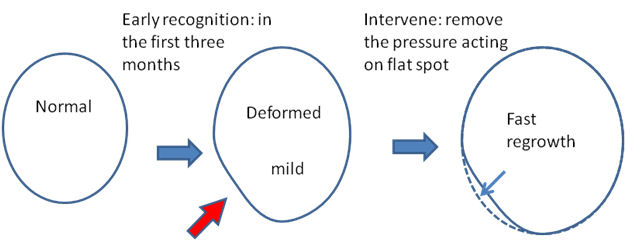
However, it was medically noted that babies’ soft heads started to suffer from constant high-pressure spots when sleeping on their back in one position. Over time, this could result in the flattening of the skull, or Plagiocephaly, otherwise known as Flat Head Syndrome. Adjustments needed to be made to make it possible to apply the ‘Back to Sleep’ initiative without causing cranium deformation. Thus, in 2000 a new campaign begun, sponsored by the American Academy of Paediatrics (AAP), ‘Back to Sleep – Tummy Time to Play’, this encouraged parents to place their babies on their tummy for a minimum of 30 minutes a day. Although there are several factors that may cause the foetal head to alter before and during birth (Macrosomia, Macrocephaly, multiple pregnancies, Uterine Myomas, Bicornuate Uterus, instrumentation of the birth etc.,) generally these are resolved within the first six weeks of life. However, babies tend to opt for a favourite sleep position that feels comfortable, sometimes because the neck muscles have developed a tightness which causes the head to tilt and/or turn to one side (Torticollis). Parents can rule out Torticollis by systematically doing neck exercises as part of a routine. The head position should be rotated alternately to one side and to the other every time the infant goes down to sleep during the day. It is also advised that the child’s orientation should be changed in the cot, so they do not always turn their head toward the same side. Babies that sleep on one side have a higher tendency to develop Plagiocephaly and this causes flattening of the affected area due to the constant pressure from gravity. Figure 1 below shows that early recognition and intervention by removing pressure off the affected flat spot can aid for best improvement and regrowth.
Figure 1: Early Recognition and Intervention for Best Improvement
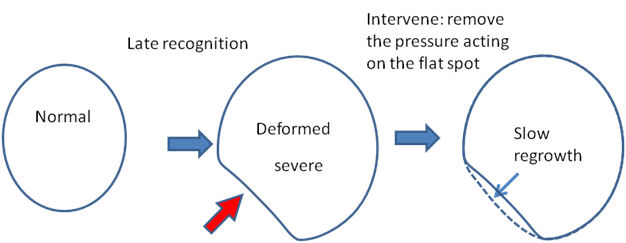
The result, if severe, can easily be identified by visually observing the baby’s head from the top/central view, as can be seen in Figure 2 below. If parents are unsure, they should consult their GP.
Figure 2: Reduce Improvement with Late Intervention
Current Treatment Available for Plagiocephaly
Positional Plagiocephaly is a topic of concern for worried parents and the lack of information available to prevent the onset of Plagiocephaly at an early stage. Currently, there is no scientific proof that babies with Plagiocephaly will develop any neurological disorders, but they may encounter physiological problems later on in life. Presently the NHS views this issue as ‘cosmetic’ and the flattened head, either Plagiocephaly or Brachycephaly, will correct itself over time. Many private medical companies are now offering helmets to correct the severe deformation. This treatment is costly, at £2,000, and the affected child would need to wear the helmet for twenty-three hours a day for at least six months as babies’ skulls harden as they grow older. The treatment is said to be most effective between four and twelve months old. With private treatment being expensive, most parents are struggling to find the money to aid alteration of the cranium and many parents are becoming increasingly distressed that the permanent physical appearance might affect their child’s self-esteem and confidence as they grow up, with some cases reported of flat head babies going on to develop a skewed ear or have one eye socket appear larger than the other. There is no NHS funding for Plagiocephaly prevention or treatment at this time, as the NHS simply advises “tummy time” during the day and new positions during play. Parents are also advised to switch the baby between a sloping chair, sling and flat surface so there is not constant pressure on one part of the head.
Prevention of Plagiocephaly using the Mimos® Pillow
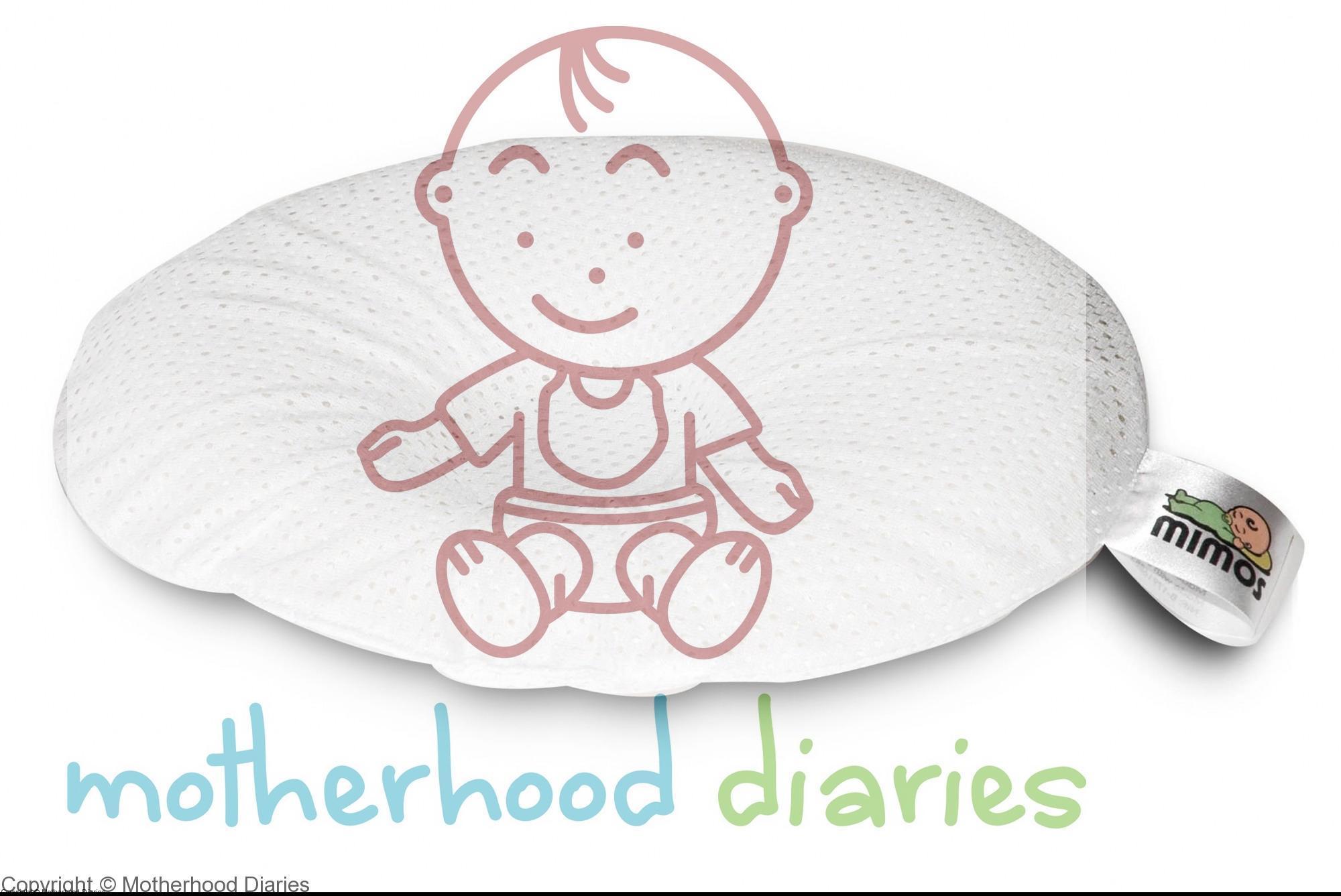
Figure 3: MIMOS – Safe Baby Pillow to remove constant pressure from the baby’s soft skull.
The Mimos® Pillow (Figure 3 above) has been created to allow babies to still sleep on their backs and the safe pillow works to distribute the pressure to prevent Plagiocephaly occurring in the first place. Low and Low Limited is creating awareness for parents to use the Mimos® Pillow as a prevention tool from birth to avoid Plagiocephaly, severe cases of which would later need to be corrected by the helmets. Minor positional Plagiocephaly can improve over time with repositioning, tummy time and massage therapy, and the Mimos® Pillow is designed to prevent skull flattening and allow the baby’s head to grow normally and round out to its natural shape. The pillow can be used from birth and there are different sizes available depending on age and Cranial Perimeter. Sizes range up to XXL and can be used up to a maximum of 18 months old. This can vary depending on the baby’s head size and physical development.
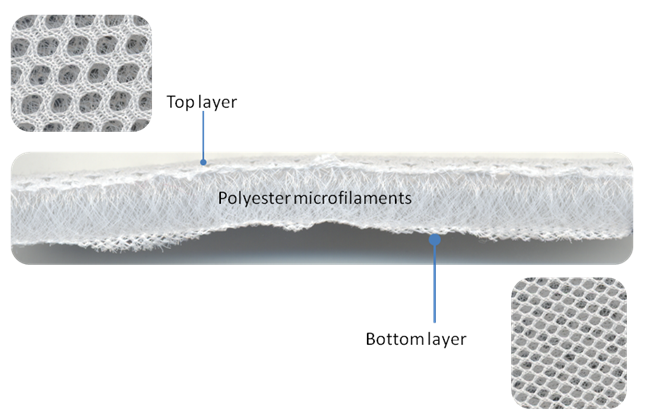
Figure 4:100% 3D spacer fabric and provides balance support for pressure relief as well as regulation of heat and moisture.
The Mimos® Pillow is a Class I Medical device regulated by the CE Health Authority and is TUV certified to be safe to use with babies. There is enough air flow through the body of the pillow to allow the baby to breathe normally, even when the baby lies face down on the pillow. The Mimos® Pillow has been specially engineered to distribute pressure evenly across a wider area of the baby’s soft skull during sleep and rest periods. Its unique oval shape gently cradles the baby’s head in the centre and helps to encourage free rotation of the head and neck. It is made of 100% 3D spacer fabric, as shown in Figure 4, and provides balance support for pressure relief as well as regulation of heat and moisture. The Mimos® Pillow is used to make the parents’ life easier as all they would have to do is place the baby on the pillow without worrying about the location of the deformity. As long as the headrests within the pillow cavity, the pressure on the head will be massively reduced as the weight is distributed over a larger area of the contact. If parents are unsure as to whether their child is suffering from Plagiocephaly, Low and Low Ltd offer a Craniometer to measure the deformities index, together with the monitoring.
Figure 5: Aidan, my son, sleeping on the Mimos® Pillow.
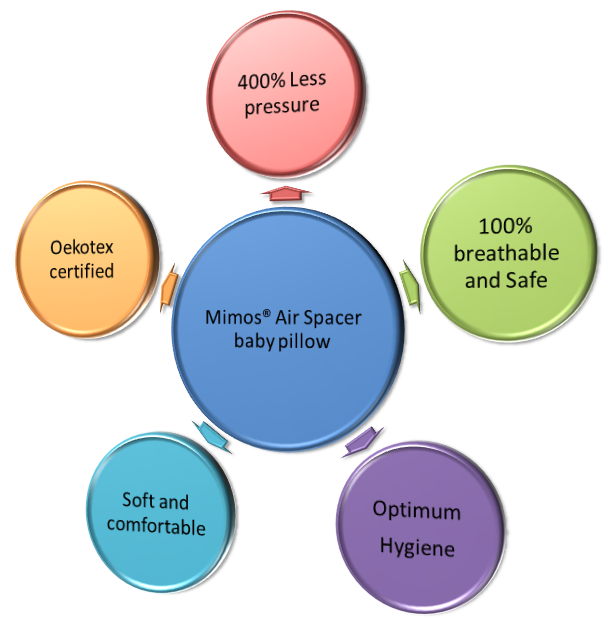
Benefits of the Mimos® Pillow
400% less pressure for prevention of positional deformations of the head
Breathable and safe
Allows free rotation of the head and neck
Soft, light and comfortable.
Machine washable and hygienic
Oekotex 100 Class 1 certified safe for direct contact with baby skin.
Figure 6: Benefits of the Mimos® Pillow
If you would like more information on the Mimos® Pillow, please visit www.mimospillow.co.uk.
If you have found this post helpful or interesting, please share, tweet or pin!
This post is from the UK
Never miss a new post!
Don’t forget to tailor your preferences, so you just get the posts you want to read!
The birth of your baby is one of the most intimate and precious times of your life. So why would you add a virtual stranger to the mix as an additional birth partner or ‘doula’?
What if you think about it this way? Would travelling to a faraway land seem less daunting if you had the support of a guide who’d been there before? Would stepping into the unknown feel more comfortable if you had someone’s hand to hold? Would running a race be easier going if you had someone to cheer you on? Would listening to a foreign language be more informative if it was interpreted by a translator?
Well, to me – as a trainee doula – these are just a few of the ways I could answer the question that I’m asked at least once a day: ‘what does a doula do?’
What Does a Doula Do?
By hiring a doula to support your labour and birth you are hiring a guide, a comforter, a coach & cheerleader and often a translator. In many instances there’s a lot more involved – massage, meditation and suggestions for positions to labour in to name a few.
Just by being with you and offering a reassuring presence, from the onset of labour until you are settled with your new arrival, can go a long way to allaying many of the concerns that women have: I don’t know who the midwife on duty will be, how will my partner drive me to the birth centre/hospital while I’m having contractions in the back seat, what if I panic, what if he panics, I don’t want to be afraid…?
Of course, in an ideal world and in many traditional societies across the world (and historically in our own) it would be the role of the experienced women of the community to attend to you during your labour and birth; among them your grandmother, mother, aunts and sisters. However, for many reasons that’s rarely the case today.
For many couples, the decision to hire a doula comes from the desire to create a more nurturing and natural environment for their birth. The statistics back this up, for example a study undertaken in 1993 (Mothering the Mother, Klaus et al) showed that having a doula present at birth:
Shortens first-time labour by an average of 2 hours
Decreases the chance of caesarean section by 50%
Decreases the need for pain medication
Helps fathers participate with confidence
Increases success in breastfeeding
Choosing a Doula
Of course each doula will work differently, each bringing a different set of experiences, training and philosophy with them but what unites every doula registered with Doula UK – the non-profit association of doulas in the UK – is the dedication to “enable a woman to have the most satisfying and empowered time that she can during pregnancy, birth and the early days as a new mum. This type of support also helps the whole family to relax and enjoy the experience”.
Of course it’s sensible to look at a doula’s background and qualifications to see that she has the experience that you feel you need to offer the support you are looking for. More importantly, however, it is essential that you check that her approach and personality is in line with yours.
My Philosophy
For me, it is about creating and helping to maintain a safe and relaxed environment for you and your birthing partner (if you have one already) to be yourselves and to be together whilst being fully supported, encouraged and empowered to make the choices that feel right for you and your baby.
I feel that it is my role to act as an advocate and facilitator for the type of birth that you hope for, whilst giving you the strength to be at peace with however things turn out on the day. Coming from a holistic therapy background (massage & reiki), I believe that this requires a holistic approach; that reaches your mind, body & spirit.
It’s about what and how you think…“I know my body is strong enough and wise enough to carry and deliver this baby.” It’s about how you prepare…“I am aware of and have practised natural birthing techniques and have the support I need in place.” And it’s about how you feel…“I am excited and relaxed about bringing new life into the world and know that I have nothing to fear.”
To achieve this, I will do all I can to encourage you to:
Be present – to focus on the here and now, not worrying about the past or the future
Listen to what has heart and meaning – to cut through to what is really important
Speak your truth – to ask for what you need
Be open to the outcome – whatever that might be Broader Context
Before we go back to the original question, let’s put all of this into a wider context. Maternity services across the country are becoming more and more overstretched; it is not unusual for women see a different midwife for each antenatal check and in many cases midwives are attending to more than one labouring woman at any one time. Add to this the distinct possibility of shift changes part way through your labour bringing a new face and personality into the mix and you have a pregnancy and birth full of strangers.
So, why would you add a virtual stranger to the mix as your doula? If you’re still not sure, you might rephrase the question to this: If you had the opportunity to handpick someone to be with you throughout your labour, someone who would be there as support for you and your partner from the first contraction through to after the baby is born, would you?
This post is from the UK
Aidan’s birth story
I had a quiet second pregnancy, the total opposite to my first pregnancy with Aron, who used my insides like a punching bag, 24 hours a day. Aidan was different – he was quiet, like he was sleeping for most of the day, and even some days I would worry, poking and prodding my bump just to get a reaction out of him. So when my due date came and went, I wasn’t at all surprised or concerned. However, the conditions of my birth were going to be different to that of my first pregnancy. Aron’s birth was traumatic and I ended up with an emergency caesarean after his heart rate had dropped to 54 beats per minute during active labour. I had also suffered a small placental abruption after 3 days of back labour, 7 days after Aron’s due date. The result was intense panic attacks for about 6 months after the birth and, as soon as I had felt that life was back to normal, I found out that I was pregnant again with Aidan. I was immediately offered a date for an elective caesarean (C Day) and, unless I went into labour naturally within 9 days post-due date, then I would be back on that operating table and my baby would be yanked out of my belly again. So I willed my relaxed and quiet baby every day from 37 weeks to give me a sign that he was ready to come out.
C Day was fast approaching and I wasn’t anywhere near natural labour – I had experienced some regular tightening, which had started occurring every ten minutes at around 40 weeks, but there was no other sign that labour was imminent. Up until my due date, I had gone to the hospital for regular heart monitoring due to reduced fetal movements – I knew at the back of my mind nothing was wrong because my baby was a quiet baby. He didn’t want to be bothered and he didn’t want to be prodded, but because of previous complications, everything had to be checked. Three days before the said ‘elective’ caesarean I was called in to my pre-clerking appointment where I was hooked up again to a heart monitor. This time Aidan was restless and I saw the consultant umm and ahh at the CTG, pointing to the peaks and troughs of Aidan’s heartbeat. After many, many hours of waiting and pacing the halls of the hospital, the CTG was signed off as acceptable and I was sent to discuss my caesarean with the anaesthetist who would be conducting the epidural and the spinal block. He started talking to me about what would happen during the procedure and I hyperventilated a little inside. Thoughts of my previous birth were flashing before my eyes. Blurred images of medical staff running around my hospital bed, sounding the alarms and rushing into theatre was all I could think about and I felt my blood pressure start to rise. Oh great! They’re going to take my blood pressure and think I have pre-eclampsia. ‘Calm down, calm down!’ I was telling myself. Funnily enough, my blood pressure was recorded as a little high that day…
The day before C Day, uncomfortable and restless, I went to Tesco to do a spot of shopping with my husband and son, and during a brief visit to the toilet, I had a bloody show. I started getting excited – was this it? Am I going into labour, albeit quite slowly as I hadn’t felt any pain yet? As soon as I saw my husband, I told him and he quite calmly told me to call the hospital who had advised me in my pre-clerking appointment to inform them of any progress relating to labour, however large or small. We arrived at the maternity ward for the umpteenth time and had to wait an hour before we were, yet again, hooked up to the CTG. I was contracting every ten minutes but the contractions were not painful. After the CTG we waited for around 6 hours and then we were transferred to the evening ward, where we waited for a further three hours, before being hooked up to the CTG again. I was told in my pre-clerking appointment that I was to have no food 12 hours before my caesarean, which was scheduled for 8am. It was dangerously veering towards that time and I already hadn’t eaten for 6 hours. I sent hubby out to grab me whatever he could and at 12am I managed to stuff myself before taking my tablets in preparation for C Day. It wasn’t until 3.30am that we were seen by a doctor who examined me and told me that my cervix was really far back and there was no way that I was in labour. Any hopes for a VBAC (Vaginal Birth After Caesarean) were rapidly vanishing before my eyes. I stayed overnight at the hospital and hardly slept as I was so anxious at the thought of impending surgery and I had no idea what to expect. My last caesarean was such a blur and everything was so rush, rush that all I remembered was being held down by the anaesthetist and my husband to stop me from punching the blue screen down and running out of that room. And now I was voluntarily walking back into that situation!? Was I crazy? You would think that a major operation scheduled for a few hours away would scare my baby out of my body and into my arms, but sadly not… I had no more will left and finally gave in to the fact that I was having this baby the Julius Caesar way.
I must have slept because I woke up at 7am, scared and starving. I stared at my belly, like I was expecting Aidan to knock and tell me he was ready to come out, but nothing. What is it about boys and being statistically “overdue”? I know due dates are only 5% accurate, but it was now 9 days after my due date, and I was impatiently waiting for my fateful operation only a few hours away, yet this baby had no desire to come out. In fact, no pain whatsoever indicated that he was coming anytime soon.
7am turned into 8am, which turned into 9am. I hadn’t felt Aidan move and I was famished. My husband had arrived shortly after 9 and couldn’t believe that I hadn’t been carted off to theatre yet. In fact, no one had come to see me and I was becoming dangerously impatient. At that point a midwife came in and told me there had been a mix up and that I was scheduled to have my caesarean at a hospital an hour away. I really hadn’t expected her to say that and I couldn’t believe that anyone, at this stage, would have the gall to even say it to me. Not only had I waited over 9 hours to be seen after documenting my bloody show, but I hadn’t eaten for over 12 hours, on instruction from the consultant who waltzed in at 3.30am and rather casually told me that I was nowhere near ready to give birth naturally and that, if I wanted to (!), I could stay overnight to prepare for the c section in 5 hours’ time. Hubby was so angry and walked off out of the room, leaving me speechless and wondering what I was going to do next. I was told that I couldn’t even eat otherwise I would have to wait until the next day for my operation. I was told that I needed to pack my things and get ready to leave for a hospital I had never been to before. Hubby came back and told me that he had complained about the whole situation and that he was totally surprised by the lack of communication, at which point a consultant came in and told me that a caesarean had been scheduled for 10.30 (half an hours’ time) and I was to get ready now. I was so confused and so taken aback at these sudden turn of events that I just put on my blue gown in silence and walked to the theatre room quietly, accompanied by a midwife and hubby trawling behind me with all the bags.
The moment I had entered the theatre room, all thoughts of previous events had vanished. The room seemed much, much bigger and the operating table seemed tiny. I glanced over at my name on the whiteboard and noticed ‘Level 3/4’ under my name. I only knew what that meant because I was a Level 1 caesarean last time, i.e. a crash caesarean. I hadn’t noticed any of the high-tech computers before and couldn’t believe how many members of the medical team there were, most of them being women.
The medical staff introduced themselves to me and everyone was perfectly sweet and nice. I noticed music from a radio was playing in the background. I was told to sit down on the bed, so that the anaesthetist could explain the procedure of the epidural to me, which was going to be administered first. I knew the lady was trying to calm me down as she told me to bend over the pillow they gave me and slouch my back. ‘Don’t worry this is the hardest and most painful bit’. Really? The hardest bit is sticking a needle in my back whilst I still have control over my legs and bladder? No, my dear, the hardest bit is getting me to lie back down on that table and willingly allow the surgeon to stick that blue screen up and slice me open. That’s the hardest thing to do, not a needle in my back! But I kept quiet and I breathed in and out deeply and, my goodness, I wasn’t expecting the sting! In hindsight, she was right, it was the most painful bit…
I felt the painkillers work almost instantly as I was guided to lie down on the table and sprayed with cold water all over my body. I wanted to be absolutely sure that the painkillers had numbed my pain senses before they cut me open, so I kept telling them to spray until I couldn’t feel it anymore. I looked over at one of the medical team and told her to, “Please be sure and spray again,” and she had told me that she hadn’t stopped spraying the whole time. They were ready to begin…
The blue screen went up and everyone started shuffling around the table, talking amongst themselves. Someone was holding my hand and talking to me on my right hand side and hubby was given a chair to sit down next to me on the left. He was talking to me about something, I couldn’t remember, I kept staring at him and I suddenly felt cold and tired. The lady on the right holding my hand noticed I was shaking and told me that my blood pressure would start to lower, which was perfectly normal, and inserted something into my drip which woke me up a bit. I kept thinking about coffee. I remember why I thought about coffee in that instance, when the blue screen went up. During my first caesarean, when everything was so crazy around me and I was so scared for mine and Aron’s lives, this man – the anaesthetist – was so fantastic in calming me down that I wanted to send him something afterwards. During the whole traumatic process of Aron’s birth, he kept talking to me about going for a coffee because I hadn’t touched a drop throughout the whole of Aron’s pregnancy. “How does that sound, eh? A nice big cup of coffee after everything, where you can sit with your new baby and drink in peace,” he smiled at me. If he and hubby were not in that room that day, I would have succeeded in knocking that blue screen down and who knows what would have happened then. I will never forget that… So there I was, thinking about coffee, and staring at my husband and this lady talking to me about something to do with cameras and taking pictures. The lady even showed hubby a picture on her camera which prompted him to start taking pictures himself. I had no energy to argue or tell him to not document this situation, but I, somehow, felt quite relaxed and kept thinking about what my baby would look like. The pressure on my belly wasn’t so strong either, not like last time, when I felt the medical staff rearranging my insides. But this time round, I felt some pressure, but not much. What a difference the spinal block makes!
I heard the surgeon say, “Ooh, we woke him up,” and, “He’s a big ‘un,” and asked me if I wanted to see him. Of course I want to see my baby, let me see my baby! They brought the blue screen down for just a moment and this big beautiful dark-skinned baby boy came into view, with this amazing head of dark brown hair.
Such an overwhelming wave of emotion came over me that I don’t believe there are words in the English dictionary to describe it. A mixture of, perhaps, relief, love and pride washed over me instantly and I couldn’t hold back the tears. There are three very memorable moments, which I pin down as the happiest moments in my life – my wedding, having Aron placed in my arms after a traumatic 3 days of labour and birth, and the above picture, seeing Aidan held out in front of me, so relaxed and so, so beautiful. He looked so developed and his skin was perfect, like he’d had a nice scrub before he decided to meet his mum and dad.
Aidan started roaring – not crying – roaring. He was a beautiful beast at 9lbs 7oz and was taken to the room to be cleaned up, weighed and checked over. He was given an APGAR score of 9 and looked fit and healthy.
Aidan was handed over to me and it was the first time in the whole 9 months that I had realised that I was a mother of two baby boys. I married my husband in September 2009 and by March 2012 I was a wife and mother of two boys – within three years!
I handed Aidan over to hubby, so I could wipe away my tears of happiness and hubby proudly cuddled Aidan, taking a mental picture of his beauty and whispering how we were going to give Aidan and his older brother, Aron, the best that we could, even if it meant working day and night. I waited a further twenty minutes to be stitched up and we were then told that we were ready to go. I thanked everyone for taking Aidan out in one piece and for making this procedure a much more relaxed event for hubby and I. Everything was so different to last time for all the right reasons. The midwife, once back at the maternity ward, warned me that there might be some issues breastfeeding for the first time and that I was to encourage skin-to-skin contact for at least half an hour first before trying, so as not to feel dejected if breastfeeding wasn’t successful. Haha! No family member of mine has ever had an issue with eating! As soon as I placed Aidan on my chest, he started rooting for milk and as soon as I was left alone in the ward, he started feeding.
That night, Aidan didn’t leave my chest and I didn’t sleep, even though I was so tired. I kept staring at my new baby and told myself that there would be plenty of time to sleep later. Right now, I wanted to enjoy my beautiful baby boy who gave me such a perfect second birth, even if he was taken out whilst he was asleep.
Aidan Giray Preston, my quiet baby, so strong and content, was born on Thursday 5 April 2012, at 12.01pm and weighed in at a healthy 9lb 7oz. Aidan, you have not only made hubby and I the happiest people in the world, but Aron has never been so proud to be your older brother. You have given him a friend for life. Welcome to our family!