In July 2012 our lives took a different turn. My son and daughter-in-law were expecting their first child and I was looking forward to having a new baby granddaughter. Nothing could have prepared us for what was to come.
It was a straightforward pregnancy and birth. She was born at term at Crowborough Birthing Centre but it was immediately apparent she was very ill and was transferred to Tunbridge Wells. Her little body was covered in petechiae (red blood spots) she had an enlarged liver and spleen, low platelets, low birth weight, seizures, jaundice, microcephaly…….. and more. She was diagnosed with congenital Cytomegalovirus (CMV), a common virus, harmless to most people, but devastating to a developing baby. In the coming weeks, we had to come to terms with the knowledge that she is severely mentally and physically disabled, blind and medically fragile.
I knew a bit about CMV, I was a Teacher of the Deaf and had worked with a severely disabled child for nearly two years. What struck and horrified me was how little the professionals knew about CMV and its devastating consequences. In the neonatal unit, none of the doctors or nurses had ever seen it. The GP had to look it up. Midwives, health visitors, sonographers, audiologists, friends, family, people in the street – had never heard of it.
Congenital CMV is the most common birth disorder in the UK. Around 1 in 150 babies in the UK are born with the virus and around 1 in 5 of these children – 900 every year – will develop serious, permanent problems such as deafness, blindness, cerebral palsy, mental and physical disabilities and seizures. As CMV is a relatively unknown condition, it is a common misconception that it is rare. In fact, it is more common than Down’s syndrome, Toxoplasmosis, Spina Bifida or Cystic Fibrosis.
About 60% of the population has been infected with the virus at some time, with symptoms no more severe than the common cold. It is easily transmitted through close contact with bodily fluids such as urine, saliva or blood. It is only dangerous to those with a weak immune system or when passed from the mother to her unborn baby. It is tested for in pregnancy in the USA and Europe but not in the UK – other than for those undergoing IVF treatment. There is no cure, no vaccine.
Anti-viral drugs such as Ganciclovir and Valganciclovir can be used to treat newborns with severe symptoms. Research indicates that, if given in the first month of life, it may help the baby retain some hearing or slow the progression of the hearing loss. It cannot repair the damage already done. However, the drug is very toxic as it weakens the immune system, attacking the white blood cells that fight infection and causing damage to the kidney and liver. It is not a simple solution.
It is the leading cause of non-hereditary Sensori Neural Hearing Loss (SNHL) in children. CMV infection can only be confirmed in babies in the first few weeks and that has made it difficult to estimate the proportion of SNHL that is attributable to CMV. Studies define SNHL in children differently so this also complicates the estimation of the full magnitude of the effect of CMV on the incidence of hearing disabilities. It is generally estimated that about 25% of hearing loss in children by 4 years of age is likely to be a CMV-related hearing loss. Some research has this as high as 60%.
Universal Neonatal Screening alone is unlikely to identify the majority of cases of CMV-associated SNHL due to the large proportion of affected children who have hearing loss that has its onset in later childhood or progressively increases over time. Deafness caused by CMV is sensori neural and may affect one or both ears. In half of the children, their hearing will get worse over time. The virus may cause unilateral deafness, particularly in asymptomatic children, but these children can go on to develop deafness in the other ear. Sometimes the hearing will fluctuate. Research is underway to try to understand how CMV affects hearing and how this damage may be prevented. The progressive nature of SNHL suggests that there is a chronic infection in the central nervous system that continues to be active through early childhood.
Many children who appear to ‘only’ have a hearing loss as a result of CMV infection often have additional difficulties. Their sensory integration system may be damaged affecting balance (vestibular) and they may have little sense of individual joint position and movement (proprioception). They may have hyperactivity, sensitivity to sound and vision, sleep problems, behaviour issues, dyspraxia, poor muscle tone, autistic tendencies, high pain threshold or no sense of fear.
CMV is complicated and no two children are affected in exactly the same way.
My granddaughter continues to fight all that life has thrown at her. Yes, she has cerebral palsy, epilepsy, chronic liver disease, is blind, has scoliosis of the spine and is vulnerable to infection. Most children are not so severely affected, she was unlucky. But she is a happy bunny, we have found what makes her smile and even chuckle – she is an absolute delight and we love her to bits.
So …. What can we do?
Raise awareness
The US government agency, the CDC (Centre for Disease Control), published statistics on women’s awareness of conditions affecting children versus the actual occurrence of those conditions. This demonstrates that the condition with the highest incidence (CMV) had the lowest awareness rating!
Condition
Women’s Awareness
Incidence per year in the US
CMV
14%
5500
Fetal Alcohol Syndrome
97%
5000
Down’s syndrome
83%
4000
Spina Bifida
79%
3000
HIV/Aids
98%
200
There are no similar statistics for the UK but it is likely that they are similar or worse.
Learn about prevention and take simple hygiene precautions
As a child carrying CMV infection may show no symptoms, pregnant women should
Avoid sharing cutlery, drinks or food
Avoid kissing babies, toddlers, and small children directly on the mouth
Wash hands regularly, especially after changing nappies and coming in contact with bodily fluids
CMV Action – CMV Action is a UK charity that has been set up to raise awareness of the virus, campaign for better prevention measures within the health service and encourage research into a CMV vaccine. It offers advice and support to anyone affected by Congenital CMV and helps ensure they receive the best care possible. It puts families in touch with each other and provides a personal support service for each of its members. It also offers information and resources for professionals. www.cmvaction.org.uk
The international best-seller Dean Koontz captured the essence of why we accept painful labours so easily when he wrote:
“Fear is the engine that drives the human animal. Humanity sees the world as a place of uncountable threats, and so the world becomes what humanity imagines it to be.”
In our dark dank past women were exploited. No surprise there then. They were not even allowed an education so that they could say “Hey, stop exploiting me you patriarchal society you”. We have had to fight tooth and nail for our relative freedom. The only battle that has yet to be won in the civilised world is childbirth.
Fear of childbirth has been instilled in us for hundreds of years. Doctors have made money out of us by keeping us in fear so that their services are needed to provide a medical model of care to help us birth. Early midwives were burned as witches so that women would turn to the medics in their time of need.
There are people on this planet that believe that the world is flat. Despite all the evidence to support a spherical earth, they still do not believe. Despite Aristotle, one of the first European thinkers to propose a round earth in 330 BC, who proved it by doing the math. Despite pictures from space that showed the awesome ROUND earth, they refuse to believe. “The world becomes what humanity imagines it to be.”
Modern health care follows blindly the belief in painful labours as the norm. There has been no research that I know of to support this belief. Within the UK we pride ourselves on offering evidence based practice and yet there is no evidence that uterine smooth muscle is designed to cause the sensation of pain when contracting normally. Yet we continue to believe.
Perhaps women want painful labours. Perhaps fear is the engine that drives the human animal. Perhaps we only feel comfortable when something we believe in comes true. Any other outcome would be too hard to accept, too big a paradigm shift for us to relate to.
Well tough. Get with the plan. Pain Free Labour has begun to seep into our belief system concerning childbirth. Midwifery led birthing centres are springing up all over the UK. Women are having pain free labours during the first stage when taught how to approach labour. Relaxation techniques are being learnt in parent craft sessions to keep women from entering the stress/pain cycle often seen in labour.
We are being allowed to learn the truth about labour now in the UK only because the strain on the NHS from medicalised care has become too much. A calm pain free labouring woman in a pool is cheap compared to a theatre full of expensive equipment and staff. The caesarean section rate has reached an all-time high. We have lost faith in our innate ability to labour naturally.
Two out of four of my labours were pain free. If I had not experienced this phenomena then I may well have been one of the supporters of offering elective caesarean sections for maternal choice. As a midwife I have helped countless women to have a pain free labour. As an author, I have explained in detail why uterine smooth muscle was never designed to cause the sensation of pain during a normal contraction.
So, who will join me in supporting the massive shift that we need in our belief system that will enable women to labour as nature intended; with medical support on standby if needed? Who will be brave enough to swim against the tide and face the wrath of humanity when one of their “uncountable threats” is removed leaving them uncertain and afraid? Who will take a leap of faith in order to free women from the last of society’s manacles holding us down? Who, maybe you?
Getting Past Distrust: Pregnancy after a Miscarriage
No woman wants to hear “miscarriage” after a positive pregnancy test, and if it happens to you it can feel like your world has shattered. More than once can be unbearable, where sadness and questions evolve into fear and despair. What I would suggest is worse than the initial loss of your child, is the continual fear of losing a new pregnancy.
Seemingly unavoidable feelings of guilt, questions of what went wrong, and fear of this “being it for you” can swamp your mind. No matter the number of consolations, the love is shown, and the reassuring words from medical staff, it can be hard to turn off the voice in your head that says something is wrong.
A painting I created after my first miscarriage to help with my grief
The fact is that approximately 1 in 3 of all pregnancies ends in miscarriage but that most of those happen in the very first weeks of pregnancy. Until the 1970s women simply couldn’t be sure they were pregnant until much later when symptoms would start to show which meant most would consider it a late period. This is one of the reasons why, at least here in the UK, women are told that unless they have had 3 consecutive miscarriages there is little need for more tests. This can feel frustrating and upsetting but the truth is the chance of being someone who has a recurrent miscarriage is 1%, and hence you have a 99% chance of everything being fine. Even so, the first weeks of pregnancy can feel like weeks of waiting, weeks of fear, and weeks of detachment rather than joy.
I suffered two miscarriages in just 10 months. I didn’t think I would feel worse the second time around, but it was a new and different pain. Thoughts of blame, of what I could’ve done differently, of grief, and the mental images circled me like demons in the night. I told my husband I did not want to try again for at least a year; I couldn’t face sex or pregnancy as in my mind they only led to one situation: fear, blood and loss.
Without trying I became pregnant 3 months after my second miscarriage. I couldn’t feel happy about it, and for a long time struggled to think about it at all: I didn’t want to take prenatal vitamins, tell anyone, or read about babies because that would make it real. My distrust caused me to disconnect, to protect myself from the harm another loss might do me. It took a long time for these feelings to fade, and it had a lot to do with the weeks gradually adding up. At 12 weeks I just felt able to tell our parents, but no-one else. At the scan seeing my child still didn’t feel real.
I had to eventually force myself to take small steps and allow myself to grieve whilst embracing the joy of this new time in my life. I still probably don’t act like most mums-to-be by getting excited about clothing or toys but I am gradually accepting their presence. Despite my distrust and concern, I had to let go or risk never truly bonding with my growing child. I had to hope and believe that I could be one of the 99% that my child would come out of me healthy and happy, screaming at being naked and suddenly surrounded by people.
I can’t say it is easy to forget, it’s not and miscarriage is one of the hardest things a person can go through; it is also something not everyone will understand. However, in the same way that you can ruin your life by constantly thinking about death, we can’t let miscarriage destroy your experience of pregnancy or children. There is hope, no matter the situation, and even if the worst were to happen, there are options.
Allow yourself to grieve. If you have the time, give yourself time in the same way you would for the loss of a parent, a sibling or a friend. You may not have seen them, held them, named them, but if they were real to you your grief is real. Do whatever you need to do to process, to memorialise, and to work out life after this loss.
Finally, allow yourself to hope. It may sound silly but a phrase that helped my husband and I smile a little was “Well, at least we know your little ones can swim.” It was enough to make us laugh. Sometimes we are all too quick to look at the worst case scenario, but instead why not look at the positive stats. You can be the 99% who never have to go through this again. You can keep trying and end up with a child in your arms. You can become the parent you always wanted to be. You can hope for the best and enjoy what you have right now. Try hope.
If you have any questions, please feel free to contact me.
According to the NHS Choices website [Thyroiditis], postpartum thyroiditis is caused by a problem with the immune system but only happens in women who have recently given birth. A vast majority of postpartum women will experience the symptoms of an overactive thyroid (hyperthyroidism) followed by a period of underactive thyroidism (hypothyroidism). However, it isn’t always the case that it will occur in this order in all situations. Generally, after twelve to eighteen months, the thyroid should return to normal.
The generic list of symptoms above is just that: a basic, general list. Personal experience and anecdotes from numerous thyroid websites have led me to the conclusion that the symptoms are varied, to say the least! I definitely suffered from some weird and not so wonderful ailments at my worst times.
After the birth of my first child, I experienced hyper followed by hypo symptoms. Thankfully my thyroid gland did rectify itself but I was informed by my endocrinologist that if I was to become pregnant again then my thyroid would not make such a recovery. This became my situation and I now have permanent hypothyroidism. A small price to pay for having Isobel in our lives!
I have found through talking to other new mums that many women are misdiagnosed and sometimes post natal depression is suspected in the first instance. Although obviously, this is a very real illness in its own right; the symptoms of thyroid disorder can very much mimic those of post-natal depression and vice versa. This also happened to me and only because I made my GP aware of my family history of auto-immune disorders, including hypothyroidism, did I receive the appropriatehypothyroidism treatment.This led to an eventual correct diagnosis.
Thyroid Blood Tests
Your body should produce a thyroid hormone called T4 (and also T3 and T2, but T4 does the majority of the work) that has the job of controlling your metabolism (all things to do with growth and brain function). When it is failing, your brain tells it to produce MORE or LESS TSH (thyroid stimulating hormone). If it isn’t producing enough, your brain says “produce more! And, your TSH will be HIGHER. If it’s producing too much, it says “slow down!” and your TSH will be LOW. If they suspect autoimmune thyroid problems they should also test for antibodies.
Thyroid blood tests seem to cause great confusion and the ‘normal’ ranges which the blood results are measured against, vary from surgery to surgery and consequently laboratory to laboratory. In some areas of the country, the normal range is between 0.5-12.0, in other areas, it is between 0.4-5. Several times I have been informed that my blood test was ‘normal’ although I knew I still didn’t feel well. Recently I was informed that my blood test results showed a TSH reading of 6.24, which is just slightly out of the ‘normal’ range for my GPs’ surgery.
However, I know from personal experience that I function best at around the 1.0 TSH level. I have been advised to continue with my current medication for a few months and then have the blood test repeated. If I had not asked for my results, I may not have been made aware of this until my annual review. I was also told that I should be symptom-free at this TSH level, but that is the reason I went to the GP: I was feeling lethargic and just not myself.
How can the GP recommend what TSH level will result in a feeling of wellness if you weren’t tested when you were fit and healthy? Often you may only be tested for TSH, however, if you have a familial history a good doctor should test: T4, T3, TSH and antibodies. If in doubt, especially post-baby, do go and get checked out at your local GPs’ surgery and request the relevant thyroid blood tests. Don’t be afraid to ask for actual figures of blood test results either and in time you will learn at what level your body functions best.
Have you experienced Postpartum Thyroid Disorder and how do/did you deal with it?
A Baby’s Perspective on “Sleep Training”
“OK, here’s my situation. My Mummy has had me for almost 6 months. The first few months were great – I cried, she picked me up and fed me, anytime, day or night. Then something happened.
Over the last few weeks, she has been trying to STTN (sleep through the night). At first, I thought it was just a phase, but it is only getting worse. I’ve talked to other babies, and it seems like it’s pretty common after Mummies have had us for around 6 months.
Here’s the thing: these Mummies don’t really need to sleep. It’s just a habit. Many of them have had some 30 years to sleep – they just don’t need it anymore. So I am implementing a plan I call it the Crybaby Shuffle.
It goes like this:
Night 1 – cry every 3 hours until you get fed. I know, it’s hard. It’s hard to see your Mummy upset over your crying. Just keep reminding yourself, it’s for her own good.
Night 2 – cry every 2 hours until you get fed.
Night 3 – every hour.
Most Mummies will start to respond more quickly after about 3 nights. Some Mummies are more alert, and may resist the change longer. These Mummies may stand in your doorway for hours, shhhh-ing. Don’t give in. I cannot stress this enough: CONSISTENCY IS KEY!!
If you let her STTN (sleep through the night), just once, she will expect it every night. I KNOW IT’S HARD! But she really does not need the sleep, she is just resisting the change.
If you have an especially alert Mummy, you can stop crying for about 10 minutes, just long enough for her to go back to bed and start to fall asleep. Then cry again. It WILL eventually work. My Mummy once stayed awake for 10 hours straight, so I know she can do it. Last night, I cried every hour. You just have to decide to stick to it and just go for it.
BE CONSISTENT! I cried for any reason I could come up with.
– My sleep sack tickled my foot.
– I felt a wrinkle under the sheet.
– My mobile made a shadow on the wall.
– I burped, and it tasted like pears (I hadn’t eaten pears since lunch – what’s up with that?)
– The dog said “woof” (I should know. My Mummy reminds me of this about 20 times a day. LOL.)
– Once I cried just because I liked how it sounded when it echoed on the monitor in the other room.
– Too hot, too cold, just right – doesn’t matter! Keep crying!!
It took a while, but it worked. She fed me at 4am. Tomorrow night, my goal is 3:30am. You need to slowly shorten the interval between feedings in order to reset your Mummies’ internal clocks.
P.S. Don’t let those rubber things fool you, no matter how long you suck on them, NO milk will come out! Trust me.”
Subscribe here to be updated with new posts. Don’t forget to tailor your preferences, so you just get the posts you want and need!
Plagiocephaly – Prevention and Awareness using the Mimos Pillow
Sudden Infant Death Syndrome (SIDs)
SIDs, more commonly known as cot death, is the leading cause of death in children between one month and one year of age. Ample research has gone into finding what is the leading cause of SIDs, of which new risk factors have come to light. These mainly include excessive layering or atmospheric heat, maternal smoking during pregnancy and after delivery, and placing babies on their front for sleeping (Prone Decubitus position).
Back to Sleep’ Campaign to Combat SIDs
The United States of America launched a ‘Back to Sleep’ campaign which was supported by The National Institute of Child Health and Human Development (NICHD) at the National Institute of Health. Its aim was to encourage parents to place their infants on their backs when sleeping (Supine position) to reduce the risk of SIDs. As a result, reported cases of SIDs have declined by more than 50%.
Plagiocephaly and the Tummy Time Initiative
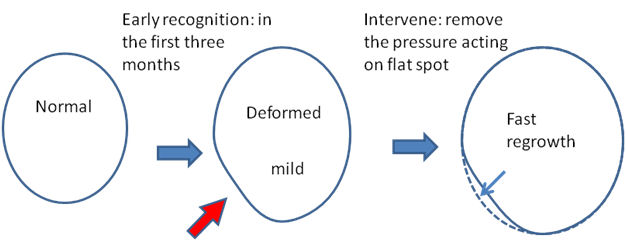
However, it was medically noted that babies’ soft heads started to suffer from constant high-pressure spots when sleeping on their back in one position. Over time, this could result in the flattening of the skull, or Plagiocephaly, otherwise known as Flat Head Syndrome. Adjustments needed to be made to make it possible to apply the ‘Back to Sleep’ initiative without causing cranium deformation. Thus, in 2000 a new campaign begun, sponsored by the American Academy of Paediatrics (AAP), ‘Back to Sleep – Tummy Time to Play’, this encouraged parents to place their babies on their tummy for a minimum of 30 minutes a day. Although there are several factors that may cause the foetal head to alter before and during birth (Macrosomia, Macrocephaly, multiple pregnancies, Uterine Myomas, Bicornuate Uterus, instrumentation of the birth etc.,) generally these are resolved within the first six weeks of life. However, babies tend to opt for a favourite sleep position that feels comfortable, sometimes because the neck muscles have developed a tightness which causes the head to tilt and/or turn to one side (Torticollis). Parents can rule out Torticollis by systematically doing neck exercises as part of a routine. The head position should be rotated alternately to one side and to the other every time the infant goes down to sleep during the day. It is also advised that the child’s orientation should be changed in the cot, so they do not always turn their head toward the same side. Babies that sleep on one side have a higher tendency to develop Plagiocephaly and this causes flattening of the affected area due to the constant pressure from gravity. Figure 1 below shows that early recognition and intervention by removing pressure off the affected flat spot can aid for best improvement and regrowth.
Figure 1: Early Recognition and Intervention for Best Improvement
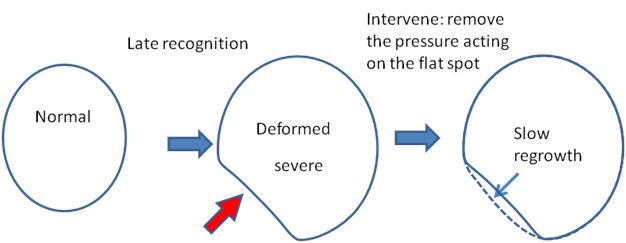
The result, if severe, can easily be identified by visually observing the baby’s head from the top/central view, as can be seen in Figure 2 below. If parents are unsure, they should consult their GP.
Figure 2: Reduce Improvement with Late Intervention
Current Treatment Available for Plagiocephaly
Positional Plagiocephaly is a topic of concern for worried parents and the lack of information available to prevent the onset of Plagiocephaly at an early stage. Currently, there is no scientific proof that babies with Plagiocephaly will develop any neurological disorders, but they may encounter physiological problems later on in life. Presently the NHS views this issue as ‘cosmetic’ and the flattened head, either Plagiocephaly or Brachycephaly, will correct itself over time. Many private medical companies are now offering helmets to correct the severe deformation. This treatment is costly, at £2,000, and the affected child would need to wear the helmet for twenty-three hours a day for at least six months as babies’ skulls harden as they grow older. The treatment is said to be most effective between four and twelve months old. With private treatment being expensive, most parents are struggling to find the money to aid alteration of the cranium and many parents are becoming increasingly distressed that the permanent physical appearance might affect their child’s self-esteem and confidence as they grow up, with some cases reported of flat head babies going on to develop a skewed ear or have one eye socket appear larger than the other. There is no NHS funding for Plagiocephaly prevention or treatment at this time, as the NHS simply advises “tummy time” during the day and new positions during play. Parents are also advised to switch the baby between a sloping chair, sling and flat surface so there is not constant pressure on one part of the head.
Prevention of Plagiocephaly using the Mimos® Pillow
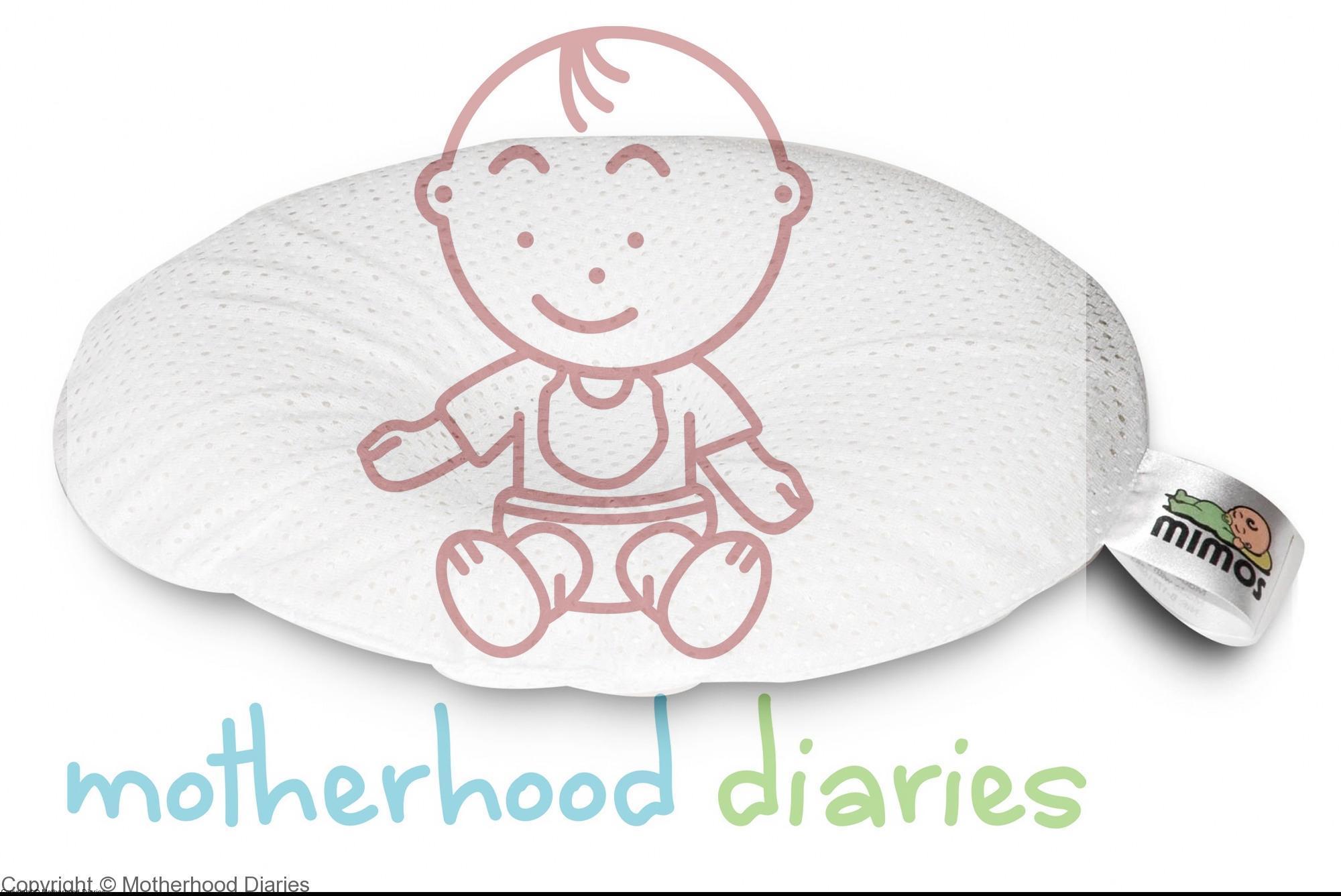
Figure 3: MIMOS – Safe Baby Pillow to remove constant pressure from the baby’s soft skull.
The Mimos® Pillow (Figure 3 above) has been created to allow babies to still sleep on their backs and the safe pillow works to distribute the pressure to prevent Plagiocephaly occurring in the first place. Low and Low Limited is creating awareness for parents to use the Mimos® Pillow as a prevention tool from birth to avoid Plagiocephaly, severe cases of which would later need to be corrected by the helmets. Minor positional Plagiocephaly can improve over time with repositioning, tummy time and massage therapy, and the Mimos® Pillow is designed to prevent skull flattening and allow the baby’s head to grow normally and round out to its natural shape. The pillow can be used from birth and there are different sizes available depending on age and Cranial Perimeter. Sizes range up to XXL and can be used up to a maximum of 18 months old. This can vary depending on the baby’s head size and physical development.
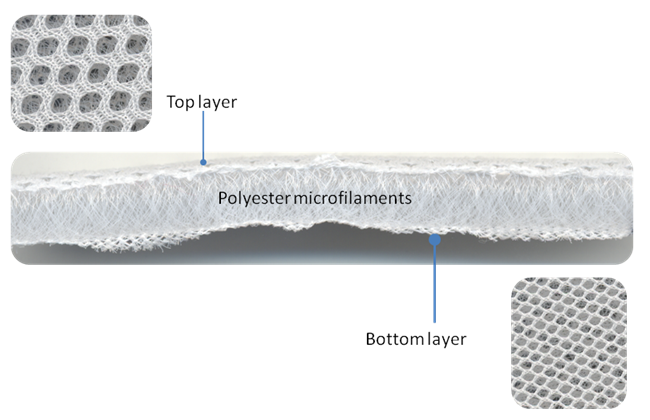
Figure 4:100% 3D spacer fabric and provides balance support for pressure relief as well as regulation of heat and moisture.
The Mimos® Pillow is a Class I Medical device regulated by the CE Health Authority and is TUV certified to be safe to use with babies. There is enough air flow through the body of the pillow to allow the baby to breathe normally, even when the baby lies face down on the pillow. The Mimos® Pillow has been specially engineered to distribute pressure evenly across a wider area of the baby’s soft skull during sleep and rest periods. Its unique oval shape gently cradles the baby’s head in the centre and helps to encourage free rotation of the head and neck. It is made of 100% 3D spacer fabric, as shown in Figure 4, and provides balance support for pressure relief as well as regulation of heat and moisture. The Mimos® Pillow is used to make the parents’ life easier as all they would have to do is place the baby on the pillow without worrying about the location of the deformity. As long as the headrests within the pillow cavity, the pressure on the head will be massively reduced as the weight is distributed over a larger area of the contact. If parents are unsure as to whether their child is suffering from Plagiocephaly, Low and Low Ltd offer a Craniometer to measure the deformities index, together with the monitoring.
Figure 5: Aidan, my son, sleeping on the Mimos® Pillow.
Benefits of the Mimos® Pillow
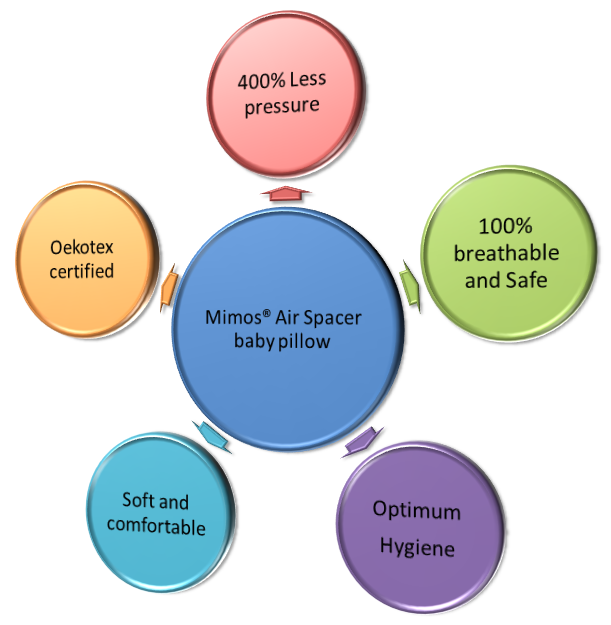
400% less pressure for prevention of positional deformations of the head
Breathable and safe
Allows free rotation of the head and neck
Soft, light and comfortable.
Machine washable and hygienic
Oekotex 100 Class 1 certified safe for direct contact with baby skin.
Figure 6: Benefits of the Mimos® Pillow
If you would like more information on the Mimos® Pillow, please visit www.mimospillow.co.uk.
If you have found this post helpful or interesting, please share, tweet or pin!
This post is from the UK
Never miss a new post!
Don’t forget to tailor your preferences, so you just get the posts you want to read!