Breville blend active recipes – 5 cold busting smoothies
Motherhood Diaries was gifted an awesome Breville Blend-Active Family Pack* to make some awesome blending recipes using the Breville blend active personal blender. It is a nifty little blender that comes with a Breville Innovative Smoothie Blenders recipe book and a selection of bottles you can blend your ingredients in and drink on the go. There are various different sizes of the Breville blend active personal blender smoothie maker to suit people, large and small, and the travel-sized blender is small enough to take with you anywhere.
Each of the blender bottles is made from Eastman Tritan copolyester which is a durable BPA-free, odour, taste and stain-resistant material used for manufacturing sports bottles. It is able to withstand extreme use and repeated dishwasher cleaning.
It’s super easy to use the Breville smoothie maker and create some awesome Breville juice recipes (you can find these Breville recipes below). Just connect the blade to any one of the supplied bottles, fill it with your smoothie ingredients and click it to blend. There is a ‘blend’ button on the front of the blender that, when pressed quickly, the blades burst through the ingredients, and when held down, the blade spins continuously.
I was very impressed that the blender also crushes ice, which meant I could add ice to my smoothies without the fear of them blunting the blades. I love how travel-sized the blender is and the bottles are literally fresh and ready to take away with you wherever you go.
How much does the Breville blend-active family pack cost and where can you buy it?
Pretty much the whole of my family, including my mum, dad and siblings!
Recipes:
So, armed with lots of fruit and veg and, of course, the Breville Blend-Active*, I set about creating five very healthy smoothies, which are perfect for on-the-go and the cold winter months!
5-a-day smoothie
Ingredients
200ml Milk
2 ice cubes
Handful of baby spinach
Large handful of raspberries
1 Apple
1 Kiwi
2 squirts of honey
1 peach
The result
A rich and full-flavoured smoothie, with a berry punch. It certainly felt like I was drinking a meal!
Citrus Smoothie
Ingredients
Juice of half a lemon
Squirt of honey
½ orange
1 kiwi
2 ice cubes
½ Avocado
The result
My favourite of the bunch. I love how the zingy lemon shines through, complemented beautifully by the sweetness of the kiwi and honey.
Cold Busting Smoothie
Ingredients
1 Kiwi
1 Apple
1 Carrot
1 Celery
½ orange
1 tsp grated ginger
½ lemon juice
Couple squirts of honey
Handful of pineapple
Handful of Cherries
Handful of spinach
Handful of blueberries
The result
It’s a great bug-busting, cold-fighting energy drink, which really spruced me up. Perfect after a gruelling workout or as a breakfast smoothie. Be careful not to overdo it on the ginger.
For a bit of protein, you can either make this a chia seed smoothie and add chia seeds or add a dollop of peanut butter which lowers the GI index of the smoothie too.
Green Smoothie
Ingredients
1 Apple
1 Celery Stick
3 inches of cucumber
8 ice cubes
Handful spinach
½ Avocado
Honey to taste
The result
A nice, light and sweet smoothie that feels healthy and is easy on the stomach.
Fruit Milkshake
Ingredients
1 Banana
200ml Natural Yoghurt
20 Blueberries
10 Blackberries
10 Raspberries
½ Mango
The result
Very fresh and sweet. Bananas are just the perfect sweet little alternative to sugar. Make this a smoothie bowl and add some extra nuts and seeds too for that protein and fibre boost as well.
Free Infographic!
I have created an infographic of the smoothie recipes for you to print out and stick to your fridge or pin to your Pinterest board, so you are filled with nutritious goodness every day of the week. Enjoy!
What’s not to like? Let me list the benefits out for you:
You get one travel-sized and very nifty blender with a blade sharp enough to crush ice.
You can collect and fit tons of food ingredients into the 600ml bottle (just check out my ‘Cold Busting Smoothie’ ingredient list and the other Breville juicer recipes!) and the smoothie comes out (excuse the pun) smooth. Add some water for a more liquid-textured smoothie.
What to watch out for:
My belly was full of fruit and veg after the juicer smoothie recipes creation afternoon and I ended up becoming quite bloated and uncomfortable. Perhaps, one smoothie (or two) a day is enough when you can fit as many ingredients into these bottles as I could. Get into the habit of cooking some of the fruits like apple so it’s easier on the stomach.
Other points to note:
The Blend-Active Family Pack* comes with four bottles and can be used to crush ice too. (I know, I’ve already said that).
Also, the instruction manual lists some awesome smoothie recipes of its own (pages 9 to 10), so it’s worth checking those out, along with the tips on how to create great smoothies generally.
How much nutritional value from fruits and vegetables is lost by juicing?
Other questions asked were:
When you blend all your fruits with a blender and drink it what effect does this have on the glycaemic index and why should we care?
Is it better to blend a smoothie than eat whole fruits and vegetables?
Are smoothies and juices just as good as eating whole fruits and vegetables?
Does it really matter if you blend your vegetables?
Does blending vegetables and fruit destroys the fibre. It seems there is no definite and certain reliable answer to this question online?
Will blending vegetables ruin its nutritional value?
If I steam my vegetables and then blend them and drink it will I be getting more nutrition?
Is eating vegetables in the form of a smoothie the same as eating them whole? Do you get the same nutritional value?
Do smoothie blenders kill the nutrients of fruits and vegetables?
Does blending fruit add calories?
Does blending reduce the nutritional content of fruits and vegetables?
Does the caloric value of food change if the food is liquefied or blended?
Does blending increase sugar content of fruit?
Do we absorb nutrients from fruits and vegetables?
When juicing fruits and vegetables some of the healthy fibre is lost. That’s because juicers separate the juice from the pulp and skins (which contain the fibre). As a result, juices can spike your blood sugar in a more dramatic way than if you ate the actual fruit or vegetable. What’s more, you lose some polyphenols and antioxidants which are found in citrus fruits and skins of fruits and vegetables.
When you choose to juice, don’t delay. Drink it straight away so as not to lose the enzyme and antioxidant activity which depreciates over time.
To minimise fibre loss, just add pulp back into the juice.
Does lettuce contain more nutritional value than most fruits and vegetables per kg?
Lettuce is low in fibre but high in minerals like calcium, phosphorous, magnesium and potassium. Romaine lettuce is also high in vitamins C and K, folate and beta carotene which converts into vitamin A in the body. It’s also low in sodium so it’s very nutritional.
Is it true that modern-day industrially grown fruits and vegetables have almost no vitamins, minerals and antioxidants and are therefore unhealthy?
It depends on where the fruit and veg are grown. A landmark 2004 University of Texas study compared what’s now on store shelves to vegetables from 1950 and they saw a decline of 5% to 40% in certain nutrients among 43 types of produce.
Much of what we eat today has lower nutrient levels than when our parents and grandparents were growing up. This is down to mass industrialisation of fruit and veg and much less time devoted to farmland where farmers nurture the crop and provide it with the best love and care through soil, fertiliser and seeds.
Where you can, try to buy organic and stay away from mass-produced fruit and veg which could contain lots of hidden chemicals. Some fruits and veg are waxed so always opt for the unwaxed variety.
How do you use the Breville active blender?
Other questions asked were:
How does Breville blend active work?
See above for how to work the Breville blend active blender.
Is Breville blend active dishwasher safe?
Other questions asked were:
How to clean Breville blend active?
You can add the Breville blender and juicer’s blades, bottles and food processor bowl to the dishwasher for safe cleaning.
Can Breville blend active blend ice?
Other questions asked were:
Does Breville blend active crush ice?
Your Breville active blender can crush ice, but to protect the blades from possible damage, always add a small amount of liquid to the ice before processing.
What bottles are compatible with the Breville blend active?
The Breville blend active bottle 600ml (spare bottle with green lid) fits any Breville blend active blender. Just use the items in the same way you would use the bottles that the Breville Blend Active provides you with.
How long do Breville blenders last?
A Breville personal blender comes with at least a one-year limited warranty if you need to return damaged items, but with proper care your Breville bottle blender should last for at least a decade.
Rating:
5 out of 5 – The Breville blend active blender and blend active bottle are cheap, high quality and super fun to use. I would definitely recommend the Breville Blend-Active Family Pack* to families who want to live healthier and create fun Breville all in one recipes. The pack also comes with more than enough bottles for the whole family to enjoy, so you can count on this blender to be useful for everyone.
Plus the Breville active blend is a quality small kitchen appliance so it doesn’t take up much space at all, even with the Breville blender bottle. We have been using the Breville blender and juicer to make some delicious Breville Blend Active Milkshake recipes and Breville Blend Active protein recipes too, as well as Breville Blender recipes for weight loss. I also want to invest in a juicer cookbook so watch this space..
To find more Breville Juice recipes download the Breville juicer recipe book which is included within the manual here: Breville Blend Active Recipe Book PDF.
*As an Amazon Associate I earn from qualifying purchases
Organix No Junk Lunchboxes Campaign – Join us and say ‘no’ to junk in children’s food.
Children need sustenance to grow properly and excel in life and more parents are jumping on the bandwagon to ensure that children have a healthy and balanced diet from as early an age as possible. However, a survey of mums across the UK, to mark the launch of Organix’s No Junk Challenge Lunchbox Campaign, revealed that over 8 out of 10 mums believe that children’s food options marketed at parents for lunch boxes are often unhealthy, or of limited nutritional value. 87% of fed up mums think the food industry need to provide healthy nutritious food for children and a whopping 97% of parents say that they want to have more healthy options for lunchboxes for their children.
Organix launched the ‘No Junk’ challenge, a campaign to encourage parents to look into fresh natural ingredients and to challenge the food industry to remove the ‘junk’ from children’s food. The No Junk Challenge aims to offer parents advice on how to read ingredients on the back of packets and identify the dirty dozen. These are:
Peaches
Apples
Sweet Bell Peppers
Celery
Nectarines
Strawberries
Cherries
Pears
Grapes (Imported)
Spinach
Lettuce
Potatoes
(Image taken from www.greenhousepr.co.uk.)
Facts about children’s food
The ‘No Junk’ campaign responds to what is found in children’s food:
Official statistics show that one in five children starting school are overweight or obese.
Children’s food brands making health claims are found to be higher in salt, fat and sugar.
Artificial additives are widely used to disguise cheap ingredients.
Nearly half of the best-selling brands are high in fat, salt and sugar (HFSS).
“We know it’s not always easy to make good food choices. So, the Organix No Junk Challenge, with the help of blogger supporters and experts, like the Lunchbox Doctor, aim to help and inspire families to use real ingredients and to try to avoid foods with artificial colourings and flavourings, or foods high in added salt, fat and sugar. Statistically, one of the hardest elements of a nutritionally balanced lunchbox for parents is the veg portion…. Just 1 out of 10 lunchboxes has a vegetable portion in it.” Organix Managing Director, Anna Rosier.
It’s tough as busy parents to fit in being able to provide the best possible nutrition for your children. With tons of media from various sources advertising their brands heavily as decent children’s food, crossed with a busy parent’s daily lifestyle, finding the precious time to shop regularly to maintain children’s 5-a-day portions of fruit and veg can become a challenge. 61% of parents find it difficult to keep lunchboxes varied and interested. So, Motherhood Diaries has teamed up with Organix, the UK’s pioneering food brand, to come up with 5 days’ worth of healthy lunchboxes that are quick and easy to make, yet provide the vital building blocks for children to excel at school, as well as adopt a healthy approach and lifestyle to eating in general. 57% of parents say they need more advice on what should go into a child’s lunchbox, so here is 5 days’ worth of lunchboxes made from one bona fide parent with little time and amateur kitchen tools and skills.
Day 1, Monday
Food
Benefits
Banana
“A banana a day should keep the doctor away,” is the adage that all people should be chanting because a banana’s health benefits far outweigh those of the apple. One banana contains more vitamins and nutrients than their fruit counterparts.
2 x as many carbohydrates as an apple
5 x as much Vitamin A and iron
3 x as much phosphorus
Bananas provide energy because of the abundance of vitamins and minerals they pack – perfect for busy bees at school!
Rich in potassium and natural sugars – potassium is vital for performance and helps the body’s circulatory system deliver oxygen to the brain.
Bananas promote bowel health – Bananas contain fibre and can help stop constipation.
Banana is a “super food” that should form an integral part of a healthy daily regimen.
Bananas contain a chemical called tryptophan which contains a level of protein that helps the mind relax so you feel happier.
2 x as much protein (13 to 20g) as regular yoghurt (5 to 10g). The extra protein leaves kids feeling full and satisfied.
50% less sodium, which means much less salt added to your child’s daily food diet.
Easy to digest because it has less lactose (the sugar in dairy that can sometimes upset kid’s stomachs, i.e. lactose intolerance).
Contains probiotics, which are live bacteria that help improve digestive function and the immune system. Can help reduce side effects of antibiotic treatments.
Greek yoghurt is versatile and can go with many savoury and sweet ingredients. Children love sweet yoghurt and so Greek yoghurt can be complemented with sweet fruits like berries. Add a drop of Manuka Honey and you’ve created a super healthy dessert as a lunchbox treat.
Organix No Junk Pork, Leek & Feta Cheese Sausage Rolls
Pork contains Vitamin B12, which are key nutrients kids need for proper growth and development. Vitamin B12 supports the proper formation of red blood cells and promotes normal brain function.
Helps your child turn food into energy. Children aged 8 and younger require 0.9 and 1.2 micrograms (mg) of vitamin B12 per day. Older children require between 1.8 and 2.4mg a day.
Meat is high in iron, which means there’s less chance of children getting tired and/or feeling anaemic. Younger children need between 7 and 10mg of iron per day.
High in Zinc, an essential mineral that keeps kids’ immune systems working properly and aids in wound healing. Zinc also enables kids to taste and smell properly.
High in protein, which supports normal growth and helps kids maintain a healthy weight.
Leeks are about 90% water, contain dietary fibre, minerals, vitamins A (great for immune system, skin and vision), C (great for cell regeneration, organ health and wound healing) and K (promotes wound healing and building strong bones). Leeks also contain folate and some amounts of the vitamin B complex (B1, B2, B3 and B6), which is great for overall body health.
Feta cheese is high in calcium and contains nearly 140mg, making it one of the best dietary sources essential for healthy development of bones and teeth.
Carrots have a sweet, crunchy taste that kids love.
Carrots are good sources of vitamin B1, B2, B6 and K, biotin fibre, potassium and thiamine.
Improves vision – Carrots contain vitamin A, which the eye needs to function properly, especially at night.
Strong cleansing properties, which can nourish the skin.
Helps to clean teeth after meals, by triggering a lot of salivae that helps to take away stains from the teeth and gums. The minerals in carrots can also help kill germs and prevent tooth damage.
Can be accompanied with a healthy dip like the Greek Yoghurt.
Information and statistics taken from www.healthonlinezine.info.)
Day 2, Tuesday
Food
Benefits
Organix No Junk Sweet Potato, Leek & Goat’s Cheese Mini Quiches
Sweet potatoes are high in vitamin A and C, which is great for vision and the immune system.
Sweet potatoes also contain potassium which helps the heart and muscles to work better.
Sweet potatoes are high in fibre, which is important for the stomach and intestines.
Goat’s Cheese is high in calcium, low in fat and cholesterol, low in sodium and contains a sufficient amount of protein, vitamins and minerals.
The Organix Mini Quiches pack all of the above goodness in one bite-sized, cupcake-sized snack and can provide an interesting alternative to the bog-standard lunch staple, the sandwich.
Salmon is nutrient dense and an excellent source of high-quality protein, vitamins and minerals (including potassium, selenium and vitamin B12).
Salmon is high in omega-3 fatty acids, which contribute to a healthy functioning of the brain, heart, joints and the general body.
Seasonal leaves are high in fibre which prevent constipation and lower cholesterol levels. Kids can feel fuller after lunch.
Frequently eating greens will result in higher blood levels and powerful antioxidants including vitamin C and E, folic acid, lycopene and alpha- and beta-carotene, which help protect the body from damage caused by free radicals.
Sweetcorn is a very popular vegetable because of its sweet flavour.
Sweetcorn is a great source of vitamin B1, B5, C, phosphorus, manganese, folate and dietary fibre.
Organix No Junk Mini Pepper & Sweetcorn Tarts are a calcium-enriched, sweet and savoury snack, which can increase children’s palates and provide a healthy, but filling side, packed full of yummy veg.
Pasta salad with Crème Fraiche and Mixed Vegetables
Add some mixed vegetables of your choice and your children can enjoy a healthy and tasty pasta salad packed full of nutrients.
Pasta provides beneficial carbohydrates, which is a primary source of fuel for a child’s body. Whole-wheat pasta also provides a considerable amount of dietary fibre.
Pasta also contains selenium, manganese, folate (vitamin B9) and Carotenoids, which protect cells and regulates blood sugar.
Pasta is versatile and can go with almost any food ingredient. A variety of pasta dishes can be offered to children as part of their healthy ‘no junk’ lunchboxes.
Mixing vegetable into the pasta salads provides hidden nutrients and overall general wellbeing.
Cucumber Sticks
Cucumbers are known to be one of the best foods for a child’s overall health and rehydrates the body, as well as replenishes daily vitamins.
Cucumbers are 95% water and their skin can be used for skin irritations and sunburns.
Cucumbers have anti-inflammatory properties to help reduce puffiness and relieve bad breath.
Red Grapes
Grapes are sweet, which is why kids love them as a snack in their lunchbox.
Grapes are high in vitamin C, potassium and calcium, making them a great nutrient source, contributing to growth and repair of tissues in the body and aiding heart function and food digestion. Calcium is a critical part of a child’s daily diet, so complementing the sweet snack with some cheddar cheese could help boost their calcium intake.
Parmesan Cheese
Kids love finger food and providing them with grated cheese can offer them great enjoyment during meals.
Parmesan cheese is packed with protein, enabling the body to repair and maintain itself.
Rich in calcium, which is essential for proper growth and development.
Vitamin A rich, aiding good vision, particularly at night.
Grapes and cheese have been a well-known pair for a long time and offering them as a double snack for your children will enable them to open up their delicate palates and expand their knowledge on combinations of foods that go well together.
See above for more information on the benefits of the banana
Organix No Junk Pork, Leek & Feta Cheese Sausage Rolls
See above for more information on the Organix No Junk Pork, Leek & Feta Cheese Sausage Rolls.
Home-made sausage rolls offer a healthy alternative to meat-based products, by mixing almost any healthy ingredient into the minced meat that you create for the filling.
Sandwiches are one of the most common items in every child’s lunchbox due to its versatility, power-giving and nutritional benefits.
There are tons of different fillings you can add to any sandwich, but the nutrient-rich Salmon Cream Cheese and Seasonal leaves sandwich, coupled with the goodness of brown bread will provide your child with a healthy lunched, packed full of vitamins and minerals for their general wellbeing.
Salmon can be cooked in minutes and the cream cheese adds a nice cheesy flavour, which kids love. Shred the leaves if your child is not interested in/doesn’t like salad.
Tomato
Tomatoes are full of vitamins, including vitamins A, C and E.
They also contain flavonoids, which are natural anti-inflammatories, potassium and other salts.
Contain a high volume of water and provides additional hydrating benefits in a child’s lunchbox.
The antioxidant, Lycopene, removes free radicals that can harm children’s body cells.
Kids also love tomatoes, and they’re a lovely juicy snack to eat during lunchtimes.
Added as a special treat for a great source of calcium.
All lunchbox options are offered with water or milk. There are lots of other ways you could dress up a child’s lunchbox by chopping and changing all the healthy ingredients you have at home. If you have a little more time spare, you could use a biscuit cutter to cut the food into little shapes, like stars or fish.
Eats Amazing’s Top Tips for Making Lunchboxes fun:
Cut sandwiches into fun shapes with cookie cutters or a sharp knife. Don’t waste those crusts though – whizz them up to make bread crumbs and freeze until you need them.
For the fruity couscous, I packed it with some added side dishes to make a simple star-themed lunch. I cut tiny stars from raw carrot and sprinkled them over the top of the couscous. On the side I added half an apple with a star cut from the skin to decorate (dip any cut surfaces of apple in orange or lemon juice to prevent browning), stars cut from cheddar cheese and a few more raw carrot stars. I used a reusable silicone cupcake case to hold the portion of cheese, which also added an extra splash of colour to the lunch box. All of the star shapes were cut out using a mini cutter, but a small sharp knife would do the same job.
Use reusable silicone cupcake or muffin cases to hold smaller pieces of food. They’ll help with portion control and add a bright splash of extra colour to your lunch.
Food on a stick is always a hit with children! Try making sandwich ‘kebabs’ with pieces of bread, ham, cheese, cherry tomatoes and crunchy veggies like peppers or cucumber, or use brightly coloured fruit to make a rainbow.
Keep your lunches interesting by varying the contents as much as possible. Write a list of all the foods your children will eat (plus a few new ones for them to try!) and stick it to the fridge for inspiration when you’ve run out of ideas.
Try occasionally swapping sandwiches for pasta, rice or couscous salads. Add shredded meat, veggies and fruit in as many different colours as possible to make it a rainbow salad!
With a bit of imagination, you can turn your leftovers into fun and creative lunches. Turn a jacket potato half into a fun boat with a cocktail stick and ham sail, add pairs of eyes cut from cheese to a pasta salad or cut fun shapes from crunchy veggies such as carrots and peppers and hide them in leftover rice to make an edible treasure hunt!
Top Ten Tips for No Junk Lunchboxes by the Lunchbox Doctor
Provide water rather than fruit juice or squash in your child’s lunchbox. Try adding real fruit to the water for something different e.g. lemon or strawberries. Keep cool with ice-cubes added at the start of the day or freeze the water overnight.
Sweeten natural yoghurt with fruit/fruit purée instead of buying already sweetened yoghurt.
Wholegrain crackers or oatcakes will keep your child going for longer than white bread. Try serving with cheese and grapes or tuna and cucumber.
Calcium is important in kids’ lunchboxes. Include cubes of cheese or yoghurt, and seeds and green veg are also great sources of calcium. Try adding pesto to sandwiches or pasta salad for added calcium.
Protein helps build and repair bodies and comes from animal sources, such as meat, fish and eggs, and plant sources such as pulses and lentils. Include a variety in lunchboxes. For example a hummus dip one day, a boiled egg the next, then a tuna sandwich and a chicken drumstick the day after. You can add an ice pack to keep this cool.
A healthy lunchbox can include salad vegetables as they are but also baked foods with vegetables included, such as sweet potato muffins.
Mini versions of vegetables are great with children – baby beetroots, mini sweetcorn, cherry tomatoes. The size difference is sometimes enough to keep children intrigued.
Soup – add lentils for thickness and protein. These can be served in a mini thermos flask and eaten at school whilst still warm.
Children love the colour. It’s why foods for children are in the colourful packaging. A bento box style lunchbox can make real food look great and appealing. A box containing fresh fruit, vegetables, yoghurt, in sections is likely to get eaten where copious amounts of foil or cling film wrapped components won’t.
Try lunchbox bingo. The idea behind this is that your child can design their own packed lunches but they must be nutritionally balanced. Each day there must be each of the following groups represented in their lunch – protein, carbohydrate, calcium, fruit and drink. You can use the blank menu plan below to get you started. They like the simplicity, and it helps to plan and shop.
Lunchboxes are healthier than free school meals
Six out of 10 mums think a lunchbox is a healthier alternative to school food and more than half would rather their child has a packed lunch, so they know what they are eating and they can ensure quality.
“We know that parents want to give their children good, healthy and nutritious food, and we know that food marketed at parents for their children’s lunchboxes is a particular area for concern among parents across the UK. We want the food industry to take their responsibility seriously to make honest and nutritious food for children to support their health and wellbeing.” Anna Rosier, Managing Director of Organix.
If you would like to provide good food for your family and you want to help Organix and Motherhood Diaries to call on the food industry and government to do more in protecting children’s food, join Organix at www.organix.com/nojunk and join the conversation at #NoJunk.
Notes
The Lunchbox Doctor is Jenny Tschiesche (BSc (Hons) Dip (ION) FdSc BANT, a mother of 2 and one of the UK’s leading nutrition experts. Jenny is the award-winning author of ‘Not Just Sandwiches – 5 Ways to Improve Your Child’s Lunchbox’, and founder of www.lunchboxdoctor.com. Lunchboxdoctor.com is a free information website covering all issues related to providing healthy recipes for kids and advice for parents wanting to create healthy packed lunches. Mumpanel Survey – Conducted during July 2014. It examined the attitudes and eating habits of over 700 mums of children aged 6 months to 5 years, across the UK.
*Sponsored PR Collaboration*
Eye See a Dragon in the Glen (Includes 3D Glasses and Child’s Vision Test) Product Review
Optical Express recently supported children’s charity, Children 1st, to produce a book called, ‘Eye See a Dragon in the Glen,’ which is aimed at detecting early visual problems. Motherhood Diaries was offered the chance to review the visionary book and this is how we got on:
Review:
Optical Express/Children 1st Website and Social Media Links:
Eye See a Dragon in the Glen (Includes 3D Glasses and Child’s Vision Test) Product Review:
A brief insight into my family’s eye history. My dad wears very strong glasses (he’s short-sighted (where you can see things closer to you, but your sight struggles as the object moves further away. The technical term for short-sightedness is Myopia)). My mum is also short-sighted and wears very weak glasses, so she’s not too bad. This has resulted in all 4 of us siblings needing to wear glasses/contact lenses for Myopia, ranging from very weak (my brother) to very strong (my sister).
My husband’s dad is very short-sighted but has recently had laser surgery (which was successful), and his mum has perfect 20/20 vision. This has resulted in my husband and his brother being blessed with perfect vision (lucky them!). However, my husband may suffer slightly from colour blindness, which is the inability or decreased ability to perceive colour differences under normal lighting conditions.
Therefore, it may be inevitable that at least one of our kids will suffer from either myopia (most likely) or long sightedness (where you struggle to see things near to you, but the sight gets better as you look at the object from further away. The technical term for long-sightedness is Hyperopia)). Just to add to the mix, all of my immediate family also suffer from Astigmatism, which is a minor optical defect where our vision is blurred due to the shape of the eye resembling a rugby ball or a doughnut. This means that we end up with two focal points to focus the object’s image on the retina (those who do not suffer from Astigmatism should only have one focal point.)
So, to say that I was glad to receive Eye See a Dragon in the Glen to review is an understatement. It has been weighing heavily on my mind for a while now that Aron may be short-sighted. He holds my phone up very close to his face when he’s watching something, or he stands right in front of the TV (something I am later told is quite normal for kids his age). Also, his eye sometimes turns inwards after he has been focussing on something for too long. Optical Express were very generous in offering me, my husband and two boys an eye test (with an appointment made for my contact lens fittings), which I will be reviewing shortly. But, for now, I felt reassured that I was doing something about my sons’ eyes, even if it was in the form of a book for now.
Eye See a Dragon in the Glen tells the story of a troll hunting in The Highlands and was designed with two visual eye checks to detect vision issues in children from an early age. The checks include a Visual Acuity Test (VAT) to check that both eyes see clearly, and a Suppression Test (ST) with 3D glasses to check both eyes are working well together. The tests were designed, developed and validated by Vision Sciences at Glasgow Caledonian University.
Optical Express jumped at the opportunity of supporting the book, which was introduced as a unique charity initiative by Anne-Marie Cairns, Vice President of Clinical at Optos, and Ken Lewandowski of the Scottish Business Challenge.
“The idea to create a fun and interactive book for children to enjoy that will also help to detect any vision issues early on is a stroke of genius, which is completely aligned with our own mission to improve the standard of eye care across the UK.” John Morgan, Optical Express’ Business Development Director.
Optical Express is supporting the overall aims of the book by funding a large-scale print run and all proceeds from the sale of the book go to Children 1st.
When I first cast my eye over this book, it immediately took me back to a book I used to read as a child, but its name escapes me. It was about a friendly dragon in the forest and I thought this book would be about the same. But, when I turned the pages, I was very impressed with the clever graphics on display, expertly illustrated by one Holly Jameson.
Immediately Aron got to work, trying to phonetically read the title, but not quite understanding why ‘Eye’ was used instead of ‘I’.
Aron followed the wavy pattern of the words on the first page as I read them out slowly. I wondered whether the wavy pattern was designed to test whether the child can follow words that are not in a straight line.
The story starts with a red dragon, Mirren, whose eyes work best in the light and dawn is the time when dragons fly high and the sun is never too bright.
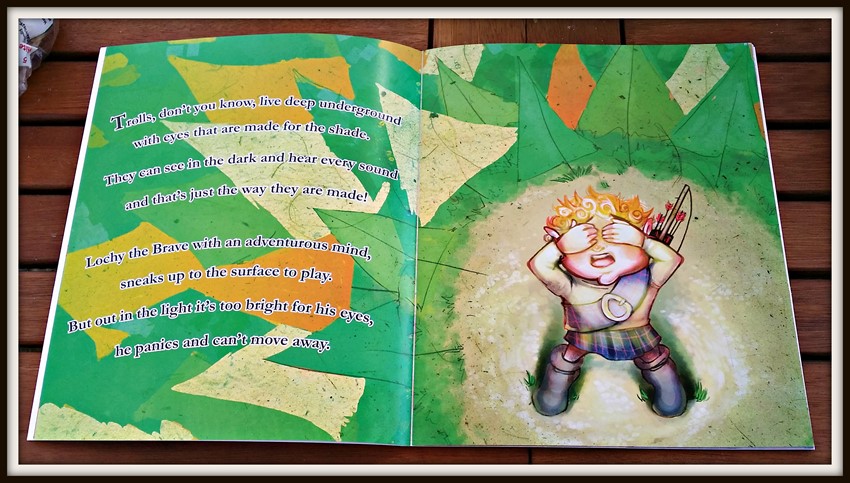
But, Trolls’ eyes are made for the shade as they live deep underground. Lochy the Brave decides to come up to the surface to play, but the light is too bright for his eyes, so he panics and can’t move away.
Aron was very intrigued as to why the light bothered Lochy’s eyes, and asked a series of questions related to the sensitivity of eyes:
‘Why did Lochy’s eyes hurt when he looked at the light?”
“Why did he cover his eyes?”
“Why is the sun so bright?”
“Why do Trolls live underground?”
Ok, maybe not the last question, but a perfectly acceptable question! Aron was actually quite empathetic towards Lochy, explaining that Lochy’s eyes hurt and that he needs to see a doctor. “Ah,” I said, “Well that’s what we need opticians for, to test our eyes so that we can check whether our eyes are hurt. They are doctors for the eyes.”
That sparked off a whole series of questions about opticians… we talked about testing eyes for about 5 minutes before I was able to get Aron to turn the next page, but I was secretly proud that I had sparked Aron’s interest about the health of his eyes and how he needed to look after them. On to the next page!
Mirren the dragon hears Lochy’s’ sad cry and, concerned that Lochy is in trouble, she ushers Lochy to the Eye Clinic at once for his eyes to be seen.
Aron agreed.
“Yes, he needs to go to the Eye Clinic!”
“Why?” I ask.
“Because he needs to check his eyes are not broken!”
That’s one way of putting it…
Mirren assures that even though Lochy can’t see her, help is at hand by a friend that lives far away. Mirren wants to take Lochy away from this glen and count to ten.
I asked Aron to point out the numbers as he counted to ten, which he completed correctly on the page. However, Aron is very proficient with numbers, so whether he can see the print or not is inconclusive. Nevertheless, he enjoyed counting to ten many times over!
Swoosh whoosh POP! Mirren and Lochy arrive at the Eye Clinic and EyeRon gets to work explaining the fun eye exams available. Lochy is still covering his eyes and Aidan is still fixated on the word, ‘POP!’ which he repeats over and over again with a huge grin on his face.
“What makes you happy…?” EyeRon asks.
“Hunting Dragons!” Lochy exclaims, which sends Mirren into a state of terror.
Nevertheless, the tests commence, starting with a fun game counting some broken rings on Mirren’s tummy, complete with some instructions to the parent/carer on how to administer the test to the child.
VAT Instructions to Parent/Carer:
Hold the book normally (30 – 40cm in front of your child).
Cover one of your child’s eyes with your hand.
Ask your child to point (or count) all of the broken rings (Alternatively, point to the rings and ask if they are broken).
Now cover the other eye and repeat the test.
Vision Test Results
“Searching for the Broken Rings.”
This will test the ability to see fine detail. Your child should be encouraged to find the smallest “broken ring” and should do equally well with the right and left eyes. A 3-year-old child should accurately identify 5 or more rings. From 4 – 5 years of age they should see all 7 correctly.
Aron had great fun counting and pointing to the broken rings, which he completed very successfully. He refused point blank for me to cover his eye, so he covered his left eye and then his right eye, following all the instructions I relayed to him. Aidan’s ears pricked up at the sound of Aron’s counting and decided to have a go himself. It was virtually impossible getting him to listen to me explain that I needed to cover one of his eyes before he started counting, so I just left him to it… This lasted for about 5 minutes before we could turn the page.
The next page was by far the most enjoyable page for the boys as they got to use the 3D Glasses supplied at the back of the book to test their colour vision.
ST Instructions
Make sure to put on your 3D Glasses.
Now point to or count the dragons on the test card.
Vision Test Results
“3D Glasses Find the Dragons.”
This test checks that both of your child’s eyes are working well together. All 3 dragons should be visible with the glasses on. (Your child will see only two if his/her eyes are not working as well together).
I wasn’t surprised that the boys had the most fun trying out the 3D Glasses, but I did manage to get them to take the test properly. Aron successfully saw all 3 dragons and I even added a bonus game where if he covered the blue lens the blue dragon would disappear and if he covered the red lens the red dragon would disappear and there would be only two dragons left. Aron was intrigued! So, he took the test over and over and over and over again, even demanding Aidan take the test and yelling orders at him to “Cover the glasses!”
Aidan walked off to test other parts of the flat with the 3D Glasses…
EyeRon was happy that Lochy had completed all the tests and diagnosed that sunglasses were the best option to protect his eyes from the bright light, “to keep your eyes working their best!”
I repeated to Aron that wearing sunglasses during the day when the sun is out will protect his eyes from the bright light and I was happy that the book had delivered that message very well through fantastic illustration and easy to understand sentences.
The book concludes with Lochy realising that his rescuer was Mirren the dragon and he vowed to never go hunting for dragons with the trolls again. So off they went to play together as best of friends now that Lochy’s eyes were protected from the bright light.
What did I like most about Eye See the Dragon in the Glen?
I liked the clear message the book sends to parents and children about the importance of testing vision from an early age. Each page illustrates this message and respective tests beautifully, whilst maintaining that fun factor to keep the child focussed and entertained. The book also offers some very insightful information and guidance on testing your child’s vision at home and what the results may mean.
What to watch out for:
The book offers a caveat that, although its mission is to promote the importance of early vision testing in young children, it should never be used as a substitute for a comprehensive eye examination. Nevertheless, all of us thoroughly enjoyed the book and the lessons we learned were invaluable.
Other points to note:
If you have any concerns regarding your child’s vision you should contact your local optometrist straight away.
Rating:
5 out of 5 for so many reasons, one of which is that the book offers a fantastic way of educating your child on vision testing and invites an interest into looking after their eyes to set them up for the future.
I’d like to thank Children 1st, OneVision and Optical Express for coming up with such a fantastic book to support children’s eye health and I will be supporting them wholeheartedly from now on – well done!
Never miss a new post!
Don’t forget to tailor your preferences, so you just get the posts you want to read!
Many parents ask the question, ‘When does teething begin?’
A baby’s first tooth can appear anytime between three and twelve months, they all develop at different stages. Surprisingly though, teething symptoms can appear as much as two to three months before that first tiny tooth does. Signs and symptoms of teething can vary from one baby to the next. My sons both teethed at different stages of their development; one of them started at around 5 months and slowly cut his teeth with lots of gnawing and drooling! The other one didn’t get his first tooth until he was around 11 months old and they just seemed to spring up without any problems. So all babies are different, but you may observe one or all of the following:
Dribbling
You might find that your baby’s vests and tops are suddenly soggy. Fastening on a dribble bib to keep baby more comfortable (and cleaner), and gently wipe baby’s chin throughout the day to stave off chapping. You can pop on a little barrier cream to help prevent their chin from getting sore.
Gnawing
You may find baby always puts their fists into their mouths and gnaws away. They may even give you little nips at your fingers or breast (ouch!) or they may find that they try to put your jewellery in their mouths; you can help relieve the pressure baby feels by giving them teething aids that will help soothe their gums.
Crying
Some babies breeze through teething with hardly a whimper, while others seem to suffer from a good deal of pain — which they feel compelled to share with you in the form of whining, crying runny noses and generally miserable. Talking to your health visitor or doctor about administering pain relievers such as infant ibuprofen can help; also some parents find homeopathic treatments relieve teething symptoms and also some teething gels offer comfort and relief.
Fasting
Since sucking movements can add to the teething pressure or pain, at times your baby may refuse to nurse or eat, or may nurse briefly and then turn away. Keep at it, and don’t worry, it quite often only lasts for a few days.
Waking
Especially when baby’s working on cutting that very first tooth, your baby may fuss during the night as well as during the day, so be prepared for a little extra disturbance and the need for cuddles, it won’t last long.
Doctors tend to disagree on whether diarrhoea and fever may also be signs of teething (though most mums who’ve been through it will tell you they are).
Regardless of the symptoms your baby exhibits, you’ll be desperate to give baby some teething relief. Counter pressure often feels good on the gums, so offer her something to chew on — if it’s icy and cold it can provide a numbing sensation. Try a frozen washcloth; a teething bangle or toy; Frozen fruit cut up into small pieces, strawberries, melon, cucumber and watermelon cut into spears can soothe sore gums and can help to reach the back teeth that start to cut through, Some teething aids I have come across on the high street tend to be quite hard, so shop around to find the most suitable for your baby. If baby is a little older they may find a biscuit may help or a toasted wholemeal bagel (always supervise baby) or offer cold drinks or food. You can also try rubbing baby’s gums firmly with your (clean) finger — they might not appreciate this at first, but will after the pressure begins to ease baby’s throbbing, sore gums.
Nicola Smith investigates colic and speaks to two local mums who have tried different approaches to dealing with it.
What is colic?
There is no standard definition of colic (and some experts even question its existence). It is usually characterised as crying in a healthy, normally developing baby which is unrelated to pain or hunger, occurring most days or evenings over a period of time. Although crying can occur at any time, it usually gets worse in the late afternoon and evening after feeding, and can affect your baby’s sleep. Crying can be intense and furious. A red face, clenched fists, drawn-up knees or an arched back are other signs. Colic affects up to 20% of babies according to some estimates.
Although it may appear that your baby is in distress, colic is not harmful – your little one will feed and gain weight normally.
How long will it last for?
Colic usually starts in the first few weeks and generally goes by the time a baby is three or four months old.
What are the possible causes of colic?
There is little conclusive evidence on the causes of colic and this is therefore a contentious topic! However some theories are:
An underdeveloped gut
Overproduction of intestinal gases
Sensitivities to certain substances in formula milk or passed on through breastmilk e.g. lactose (natural sugar) or diary. Some other foods that mum eats could aggravate colic
Some babies are just more sensitive to stimulation and cry more than others
There is some evidence of a link between smoking (during and after pregnancy) and colic
Also bear in mind that your baby’s crying may be due to something other than colic. Other possible causes are:
Reflux, caused by stomach contents flowing back up the oesophagus. Speak to your GP if you suspect reflux
Indigestion or wind – exacerbated by the way in which your baby feeds (speed/position)
An overactive let-down (when milk is ejected forcefully from the breast and in great quantity) and/or hindmilk/foremilk imbalance (when a baby consumes large amounts of the watery foremilk produced at the start of a feed and less of the fatty hindmilk). See www.motherandchildhealth.com/Breastfeeding/Becky/too_much.html for more details
It is important to rule out medical causes for crying. If you suspect that your baby is unwell, or if you are worried that their symptoms are caused by something other than colic, see your GP.
Possible ways to relieve colic
Despite many years of research, there is no proven cure for colic, but some measures you can try are:
Ensuring your baby is well positioned at your breast and that she ‘finishes’ the first breast before offering her the second
Always winding after a feed
Anti-colic teats (for bottle feeding)
Different formula (for bottle feeding) – ask your health visitor about different brands
Elimination diets (for mum) if you are breastfeeding. For further details, see www.breastfeedingonline.com/2pdf.pdf and www.breastfeedingonline.com/allergy.shtml. An elimination diet should be embarked upon with care – speak to your GP or health visitor first
The ‘colic dance’ – hug baby and gently sway with your knees bent, alternating back and forward, side to side and up and down
Gentle tummy massage
Carrying baby in a sling, or trying a baby swing
Some babies find sucking very soothing
Reducing levels of stimulation in your baby’s environment
Chiropractic spinal manipulation therapy or cranial osteopathy
Various over-the-counter colic medicines such as Infacol and Colief or herbal drinks and gripe water. Always check with your GP, pharmacist or health visitor before giving your baby any medications
It’s also worth remembering that however bad colic may seem, it WILL eventually disappear.
Looking after you
Perhaps the main problem with colic is how stressed and anxious it can make you feel – especially if your sleep is affected.
If your little one is ‘colicky’ in the evenings, make sure lunch is your main meal of the day and your main source of protein and energy. You’ll need to keep your strength up
Ensure you have support and are able to take a break. Share the crying times if you can
It can be really helpful to talk to parents who have been through the same thing e.g. through online forums such as Mumsnet which can be a great source of support and advice
Try contacting one of the resources listed below who specifically help parents of crying babies
Case studies
Georgina – mum to Felix, aged 3 months
“I don’t think we ever really knew what ‘colic’ was, as there were so many different definitions in books…. But we certainly had several hours of crying each night for no apparent reason. We found it quite wearing, as one of us would have to be up and holding Felix, so dinner was a case of tag team eating at a hundred miles an hour, but we knew it wasn’t going to last forever. We found that swaddling really helped, as did a dummy to help soothe him. Also, ssshhing and patting his back or bottom helped, as well as putting him on his tummy on our arm and swinging him from side to side. I read a book by Dr Harvey Karp called “Baby Bliss” which teaches five ‘s’s’ to stop colic – swaddling, stomach (put them on their stomach or side), ssshhing, swinging and sucking (dummy). They really helped, even though Felix would have hysterics while we were swaddling him. However, once he was bound up, he quickly calmed down.”
Liz – mum to Lucie, aged 7 months
“As a new mum, no one had prepared me for the strange grunting and writhing noises Lucie started to make at three weeks. She would also draw up her legs to her chest – clearly very uncomfortable. I would lay down on the floor next to her Moses basket, unable to sleep through the noise and so worried about her. I was shattered. I tried winding her, but didn’t know when to stop – should I carry on for 20 minutes? What if she didn’t burp?! I tried cranial osteopathy, which helped to correct some stiffness in her neck, but it didn’t really help the colic.
“One evening, to give me some well-needed rest, I booked a night nanny. Jacqui Nancey – a qualified midwife and breastfeeding counsellor – saved me in one night! She taught me a massaging technique to relax all Lucie’s muscles and help the milk go down more easily, preventing gas. It was a routine with a beginning and end, so I knew when to stop. She also encouraged me to warm Lucie’s milk (I was mixed feeding by this stage) – as breast milk is very warm. And to feed in 2oz bursts, with winding in between. In addition, she swaddled Lucie tightly, raised her cot and placed a rolled towel under her bottom so that her legs were slightly lifted – as she would have been in my tummy. Since that point onwards, Lucie has slept through the night, with no more colic symptoms.”
Further information:
www.cry-sis.org.uk (a charity offering support for families with excessively crying, sleepless and demanding babies)
The NCT has produced an evidence based briefing on colic: www.nctpregnancyandbabycare.com/_files/documents/65c82f098344e7a754b24d5e82e2ddfd/NewDigest38EBB-Colic.pdf (or just type ‘NCT colic in babies’ into Google!)
I have been thinking about VBACs, i.e. Vaginal Births After Caesarean. There is a very strong argument for allowing women wanting a VBAC to give birth at home or in a midwifery-led birth centre. Within the medical constraints of hospital care offered in the UK a home/birth centre birth would be strongly contraindicated and not encouraged.
If you think about it for a moment, a home/birth centre birth seems the perfect place for a VBAC. In my experience, most caesarean sections are performed when a woman fails at bringing on labour and during fetal monitoring, the baby is seen to be distressed by the long labour on the toco monitoring machine when measuring contractions. There are physiological reasons for this.
Going into hospital can be a stressful event, adrenalin will be secreted when a person is under physical or mental stress. Adrenalin (the hormone secreted by stressed people) attaches itself to the uterine cervix and prevents it from opening normally. So, when stress is a factor within active labour, expected progress will not be made due to the actions of adrenalin. The contractions will have to become stronger in order to pull up on a resisting cervix. How will this help someone having a VBAC? It will make a uterine rupture much more likely.
At home/birth centers however, a woman is much more likely to remain calm and in control. If she follows the advice on relaxation techniques then she will not secrete adrenalin and the cervix will be free to dilate. The contractions will not have to become stronger, as the cervix will not resist, and so they will remain at normal contraction levels. The first stage of labour, if conducted under the methods taught in my blog, will be pain-free.
When in hospital, a woman having a VBAC has to be continuously monitored (CTG reading) to detect any early signs of uterine rupture. She will most likely be confined to a bed with only brief breaks to visit the loo. Staying upright during labour helps the uterus work with gravity so that the contractions do not have to become strong. Lying down during toco monitoring will make the contractions become stronger and so will cause pain. The fact that she is not mobile will also impact on the descent of the rotating baby into the complicated anatomy of the birth canal.
At home/birth centre, a woman is free to move around and relax as her body dictates. She can eat and drink anything she chooses according to her body’s needs. She can remain upright and have the power of gravity which will encourage bringing labour on, rather than hindering it. The contractions will remain normal as her environment and mental state will be in harmony with her labour, instead of placing obstacles in the path of normal progress.
With the element of a pain-free first stage of labour, a home/birth centre birth can become a real option with all the benefits working toward encouraging normal progress. The only element that will prevent women from seeking out pain-free labour is FEAR. The fear of litigation. The fear that women are irresponsible little tykes that are all too willing to put their babies at risk. Hospitals will not support home/birth centre births for VBAC. But. They may support birthing on a labour ward that usually has at least one pool to birth in. Water births are so nice and gentle that no extra stress will be put on the scared uterus causing it to rupture, the contractions can remain normal. The midwife is still listening in every 15 minutes to the baby’s heartbeat on the fetal heart monitor, which will detect any adverse changes. Mobile CTG monitors are the latest thing at the moment – you can walk about or sit on a birth ball or even get in the pool as they are waterproof. The only trouble is they tend not to work very well and you will be constantly bothered by a midwife trying desperately to regain a lost signal!
Why using toco monitoring in labour for a VBAC is a bad idea:
Lying down on a CTG machine will cause the contractions to become painful as they work against gravity.
The pain will cause stress that will hold the cervix closed, which will make the contractions become stronger.
Not moving about in labour will slow the normal rotation of the baby.
Not eating in labour will prevent enough carbs from being available to fuel a contracting uterus, causing labour to slow down or stop.
If it slows down or stops, a drip may be started that will put extra stress on the scared uterus.
Everything we do in the hospital seems to be against helping women to achieve a VBAC. I know of a young lady who recently turned up at her local birth centre and was asked to leave as she was high risk. She calmly told them that she was going to labour in their pool and refused to leave. She had a normal delivery in their pool. Another I met was planning a home birth after a previous CS.
Let’s start a campaign today to allow women VBACs within a home/birthing centre setting. Let me know what you think?
When thinking about getting pregnant, your mind might turn to physical aspects like improving your exercise routine and getting some healthy eating habits in place. Those are certainly important in the process of preparing yourself for a healthy pregnancy, but they miss a key piece that brings everything together and sets you up for a truly empowered experience.
Without this, everything else is at risk of crumbling when the slightest thing doesn’t go according to plan. When you have this, no matter what your journey looks like, you will have set yourself up for an empowered journey. The glue that holds it all together is Trust. There are 4 key areas where you can cultivate trust so that you can have the best experience possible, even amidst the uncertainties that come with conception and pregnancy.
Trust Yourself
Developing trust in yourself is all about believing in yourself and learning to follow your intuition. This may feel like a big step, and it is, but it is absolutely possible when you have the support to get your there. You have within you an incredible power, and when you begin to tap into that, you start to have a clearer sense of what you want this experience to be like. Learning to trust in yourself and your vision is the first step to cultivating the trust necessary for an empowered experience.
Trust Your Care Providers
This may be the most important advice you ever get about this journey. If you don’t trust the people you chose to take care of you, you set yourself up for a potentially stressful experience. Be sure that you feel comfortable asking any questions that come to mind. You have to feel comfortable asking the questions and you have to feel like you trust their answers. This is important when things are going well so you feel safe and heard if there are any unexpected experiences along the way.
Trust Your Body
Whether conception and pregnancy come easily to you or if it takes more time and energy, trust that your body is capable of taking care of you. This doesn’t always look how you expect it to, and that’s okay. So often the message is to trust others and trust intervention as the first step. It’s great to have those resources when they are needed, but starting with a belief in all that your body is capable of will help you to feel more in control and empowered in any situation.
Trust Your Loved Ones
Throughout this journey, you will likely hear advice from loved ones that may or may not resonate with you and leave you feeling supported. Surround yourself closely with those who you trust most, and feel comfort in being able to lean on them. Trust doesn’t always mean agreement. Seek friends and loved ones with whom you feel comfortable voicing questions and concerns because you know you’ll be received in love and gentle honesty. Having their support will mean the world to you, and they’ll be there to speak their trust in you in moments when yours falters.
This can be an exciting, overwhelming, joyful and confusing time. When you cultivate trust in yourself, your care providers, your body, and your loved ones, you set yourself up for an incredible and empowering journey. No one can predict what this time will be like for you, but when you start with trust, the unpredictability becomes easier to flow with, and you are better able to focus on the beauty of creating life.
When speaking to audiences about fertility I often ask how many people in the room believe that their heart health is directly correlated to their diet. Nearly every hand in the room goes up without hesitation. Then, I ask how many believe fertility is directly correlated to diet. Generally, a few hands go up while the others in the room look around timidly.
While both heart health and fertility are very directly affected by diet the real truth is that a healthy heart means a much more fertile body. Here are 3 ways the health of your heart directly affects your fertility.
A healthy heart means balanced estrogen levels. One of the biggest reasons we have so much heart disease is because of estrogen dominance. Too much of a good thing (estrogen) can get ugly. Estrogen dominance is also a primary cause of infertility. Conditions such as PCOS, endometriosis, and several other infertility diagnoses are caused largely by estrogen dominance. Some estrogen is oxidized in the body and become “bad” estrogen. Consuming very high-quality olive oil on a regular basis can stop this oxidation process and keep your estrogen healthy while reducing phytoestrogenic foods such as soy and flax, as well as checking your personal care products for xenoestrogens can lower estrogen levels.
Your heart is protected by progesterone. Progesterone is a really cool little hormone that many women with infertility don’t have enough of. The biggest reason we don’t have enough progesterone? Stress! Both progesterone and the stress hormone cortisol are made from the same “mother” hormone. If there isn’t enough of that “mother” hormone to make both your body will sacrifice progesterone and make more cortisol. Then, the cortisol makes its home in your progesterone receptors so even the progesterone you do have is unable to do its job. To raise progesterone to make sure you’re consuming healthy fats, and also try adding Camu Camu berry to break up the cortisol and maca to help your body make more progesterone, to your diet.
Your heart must be healthy and very strong to be able to accommodate the huge increase in blood volume that happens during pregnancy. Eat plenty of heart-healthy foods—especially those rich in magnesium and folate, such as leafy greens, and focus on moderate cardio exercise to strengthen your heart.
A healthy heart not only means you have a much higher chance of having a baby, it also means a much higher quality of life. And since heart disease is still the #1 killer of women it makes sense to start paying more attention to this sacred organ now.
For more preconception articles, please visit here
Never miss a new post! Don’t forget to tailor your preferences, so you just get the posts you want to read!
Got multiple babies of the same gender? Here’s an effective natural way to balance your family. Whether you are planning to start a small and balanced family or got multiple babies of the same gender, this new medical discovery offers the only way to fulfill your dream.
I encourage an educated discussion on this topic. The readers are requested to add to the pool of this knowledge rather than derail it by repeating old failed ideas like gender diets or pH manipulation. After investing 30 years into it, we have clear proofs backing what we say here. Questions are welcome and all questions will be answered.
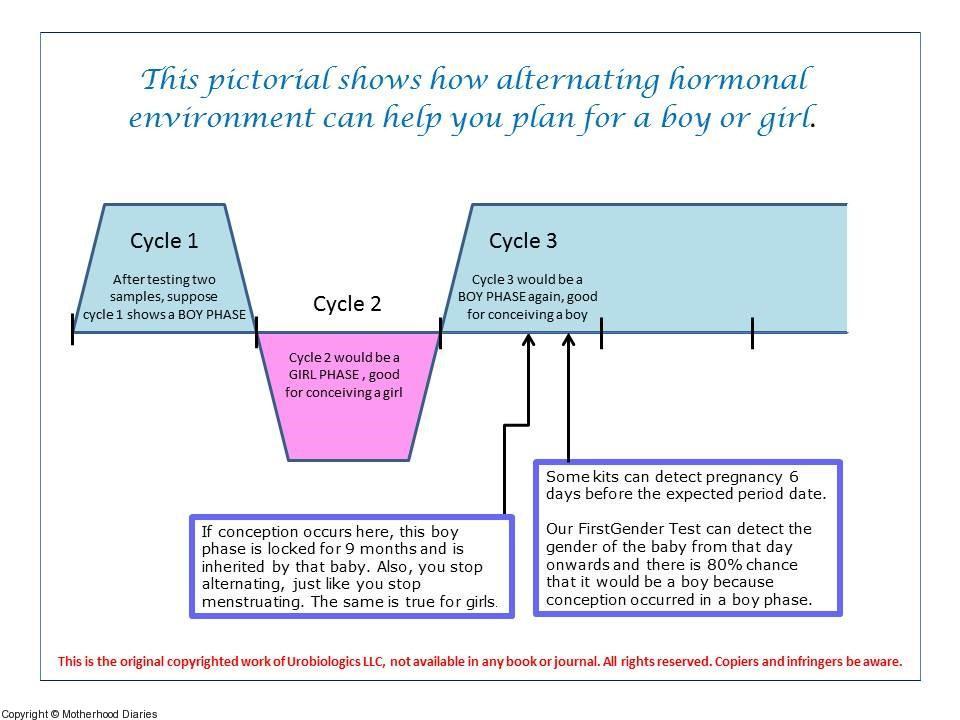
We are the first to discover and prove that women have a pattern of alternating Testosterone / Estrogen ratios between two consecutive menstrual cycles, so that in one cycle this ratio is more than 1.0 and in next one less than 1.0. In simple words, in one cycle she is ready to conceive a boy and in the next a girl. About 90% of our customers have shown this alternating pattern. It is amazing to note that 92 out of 100 couples trying for a boy, for example, are getting a boy simply by conceiving in a boy cycle advised by us and vice versa. We never ask anyone to use any gender diet or any pH manipulating douches, or buy any book or calendar about how to conceive a boy or girl. It is all natural and surprisingly most powerful. The following graph summarizes this concept.
We offer this service as PreGender Preconception test where we test two mid-cycle urine samples from two consecutive menstrual cycles to find this pattern and thereafter keep on advising by sending conception plans in appropriate cycles till you conceive, at no extra cost. Usually, no additional tests are needed for at least six months, unless there is a temporary conception (Please refer to graph above). If you conceive in right cycle, you get the baby you want. It has never been so simple. The days of just keep trying are over.
Get a comprehensive picture of your hormonal health with no need for clinics or appointments. Easy testing, free shipping, and fast results.
Since 92% success rate is the highest in gender planning industry and is proven through the live-charts displayed at our website http://www.urobiologics.com/our_hypothesis.html, we think it is reasonable to assume that women have the inherent power to sort and select X & Y sperm. In these charts, we show customer’s email address along with the case history of tests performed by us, all in advance and as it goes, and as to how did they get their desired babies. Any potential customer can contact any of them to get a feed-back. What better proof do we need? No other company can do that because they know they are selling garbage and they don’t want their customers to talk to each other.
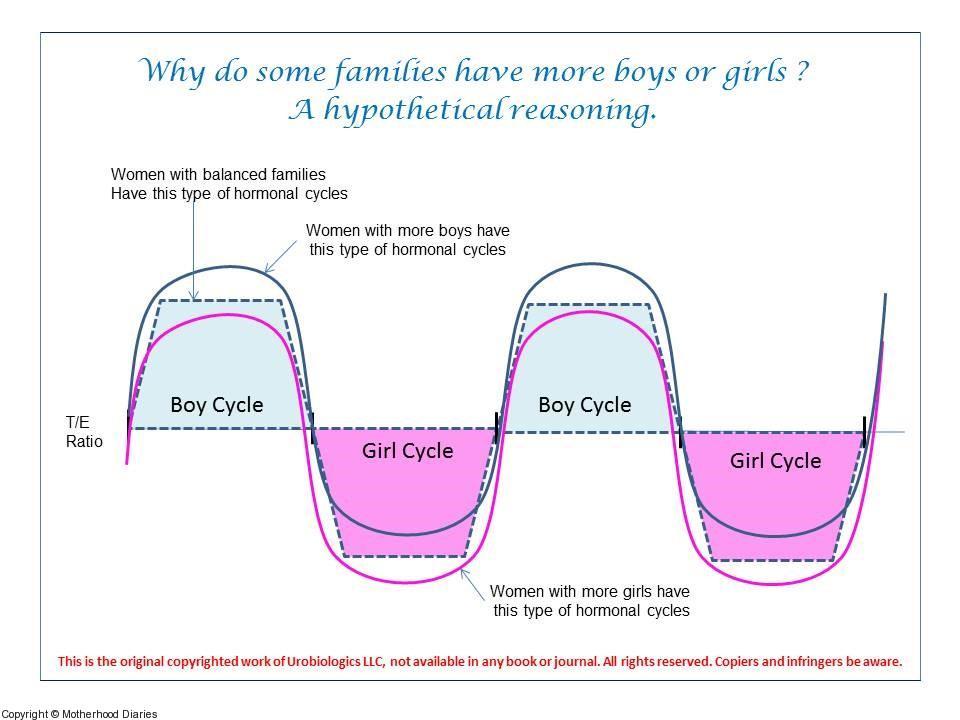
We are also the first to provide a probable scientific explanation as to why certain couples have more boys or girls. In some women, their inherent hormonal pattern is a bit skewed toward one direction, so that they get easily conceived in one cycle over the other. This skew is so powerful that if a couple having, say four boys, keeps trying for a girl on their own and same way, there is a greater chance they end up getting another boy. Our job is to alarm them to avoid conception in boy cycle. Only then they can get a girl. The same is true otherwise. To this we call Gender Specific Natural Conception. The following graph explains this:
We were amazed to learn that a family in Rockford, Michigan, just recently gave birth to a 12th boy. There is no program on this earth which can almost guarantee a girl to them, except the PreGender Preconception test because we will target their conception effort towards girl cycles only.
Get an insight into your egg reserve with LetsGetChecked's Ovarian Reserve test.
Desperate couples have been misled to try various tricks like eating certain foods or douching with certain chemicals or even gels giving them a false hope of conceiving a desired baby. Nothing works. It was OK to try anything when there was no proper technology available, but not anymore. All urine samples are received by mail. You do not have to travel to our lab. After receiving the order, we send urine sample collection materials and prepaid ship ready return envelopes. It is legal to ship urine samples across international borders. We have customers from almost all the countries.
LetsGetChecked can help you understand your hormonal health with their female fertility testing options. Collect your sample from home and you'll receive accurate results within 2-5 days of the lab receiving your sample
For details, click this link: http://www.urobiologics.com/our_hypothesis.html or call toll free 1-877-HE-OR-SHE (1-877 436 7743) or direct 1-313 574 7500 in USA. We understand the readers will have a lot of questions and skepticism. The best is to make a list of questions and write to: drverma@urobiologics.com. All emails will be answered.
*Links marked with a ‘*’ are affiliate links which means I may earn a small commission on qualifying purchases