Someone I know once said to me that becoming a mother for the first time was “a bit of a shock to the system”. At the time I thought it had to be one of the most extreme understatements I had ever heard.
Perhaps one of the strangest aspects of having a live human being come out of your body is its need to stay attached. Not simply to be held but to clamp on to tender nipples and suck like a piranha.
While the last thing I’d want to do is sound negative about the nursing relationship, a relationship that my daughter and I gained so much from, I think it’s a shame that so many women are still going into it with widely perpetuated false expectations. The biggest of these, and I beg to differ with many creators of instructional videos here, is that it doesn’t hurt starting out if you are doing it correctly. If you believe this, then you are likely to believe you are not doing it correctly in the beginning, when in fact you may very well be doing it just fine.
In my experience, succeeding and carrying on for any length of time means walking through the fire. One friend of mine was told by a midwife to ‘grit her teeth until she came down off the ceiling’. If your nipples are bloodied and even oozing, it is generally advisable to stick it out if you want to carry on nursing. Women with breast infections, of course, need to be treated but even then there’s no real break. Nipple shields sound like an answer but they are not. I know of a case where nipple shields led to the baby not stimulating the nipples properly, resulting in the child not gaining weight: it was probably not an isolated scenario.
Aside from the hardcore ‘just rub breast milk on the region’ advice, there are some ways to soothe some initial pain. Safe ointments and cooled pieces of rubber can be placed over the nipple and areola when not feeding. Yet the fact is that the cracking, bleeding and wincing are all too common terrain that we walk over: or that every nursing mother I know has walked over. The heat from coals burning our proverbial feet forges us – in nursing as well as in the rest of life.
My story with nursing begins with some bruises nearly all of us go through at first birth. I’d been torn badly in delivery. My husband had to leave the US to return to England when our daughter was four days old. I was staying at my parents’ house in New Jersey, trying to face the nights alone. One morning at around 5 AM when my daughter was two-and-a-half weeks old, I felt I couldn’t cope with her seemingly endless demand. I gave her some formula I’d received while in the hospital. She drank it straight down. I was euphoric. This meant I didn’t really have to feed her. She seemed to love the formula. There was another, better way, which meant I could concentrate on our relationship instead of being a vending machine that was kicked continually by its one tyrannical customer.
My mother was at first thrilled to see my spirits lift and thought a combination of nursing and formula would help restore my tentative sanity. It soon became apparent that I was very reluctant to put my baby on the breast at all. I wanted an electric pump. I wanted that bottle there between me and the baby. I wanted to see what she got every time. The skin to skin situation was alien, alarming, draining. Even when my breasts were bulging and leaking, the only way I wanted to empty them was with a pump: an activity that I could do at my discretion and within my control.
What I envisioned to cope turned out to be complex and problematic. My daughter was screaming on and off, but mostly on, throughout the nights. I couldn’t tell whether she was taking formula as comfort or out of hunger. She seemed absolutely inconsolable. I was getting away from nursing, and anxious about everything I got or failed to get from the pump.
One friend realised what was happening and told me I wasn’t just using formula as a ‘supplement’ – that I wasn’t keeping nursing in the lead. She said that I had to put my baby back on the breast or I would lose my milk supply and it’s nearly impossible to get it back once it’s lost. It horrified me. I was certain I couldn’t succeed, but I felt that I couldn’t afford to fail either. I wanted to run away from the nursing relationship and yet I was also grieving it – I wanted to hang on to my supply.
I despised the nursing pillows around me. Every time I looked at them they said ‘failure’. Nursing was something other women could do. I couldn’t comprehend my baby’s unfathomable needs – or needing her in return. Then a strange thing happened.
My baby was five-and-a-half weeks old. I took her to her pediatric checkup. Outside in the waiting area was a woman with a toddler daughter. The woman saw me struggling with my distressed newborn and we discussed nursing. She explained that her daughter had been premature and that they’d had a lot of trouble with the feeding. In addition, the woman had to go back to work full time when her baby was tiny. It wasn’t easy, but they kept at it, nursing when they could, pumping breast milk when they couldn’t until the little girl was eleven months old. This struck me as an astonishing accomplishment.
I could see that this mother wasn’t especially privileged or well-educated. She was simply another devoted mother doing whatever she could for her baby. I saw her in a different light than I could have previously. I knew that for all my education, ‘articulate’ speech and my years of travel, she had both stayed put and yet travelled somewhere that I was afraid to go. And this woman was just one of many struggling parents I’d been surrounded by for years, without ever dreaming the half of what they were giving.
Inside the paediatrician’s office was a poster – the kind that either makes a woman feel proud that she is feeding or awful that she is not. It listed all the things that nursing helps prevent: a myriad of diseases. I looked at it in a state of intense guilt and exhaustion. I just wasn’t someone who could breastfeed; it was so unfair that no one understood. But then the last item on the poster’s long list surprised me: ‘loneliness’. Breastfeeding helps prevent loneliness. Loneliness was what I could comprehend. I was so alone. Maybe my baby was too?
I spoke with the paediatrician. He said any breast milk was better than none. He looked surprisingly meek and human for a doctor. His wife had gone through the challenges of nursing and he knew that the early days of establishing it could be very hard. He seemed to think I might recover my supply and arranged for me to speak with the lactation consultant after the checkup was over.
Nursing was, in my mind, the epitome of motherhood and that was part of why I was convinced I couldn’t do it. My life had been predicated for the most part on finding ways to be free and now I was suddenly trying to figure out how to be helplessly tethered. Succeeding at this was beyond me. My mother was with me, appearing calm for my sake. She had breastfed me around the clock for seven months because I’d been very tiny, yet had been dissuaded by her doctor from nursing my younger brother. That was the late ’60s when they knew so much less. It was one of my mother’s deepest regrets.
Now she waited with me for the lactation consultant, Maria. I’d met Maria once before and had spoken to her on the phone. She breezed in and I remembered what she’d said previously; that she had nursed three of her own children and bottle-fed one and that nursing was actually the easier choice once you got the hang of it.
Maria saw that I was wasted by exhaustion. She explained that I could get breastfeeding back but didn’t want me to beat myself up about the whole thing. She expressed her belief that if a baby was being adequately fed and fully loved, that that was hardly abuse. “But if it’s what you really want, put her on every hour and a half to two hours”, she said. “The milk supply will rebound. In the first six weeks, we have milk enough for two babies. It’s just a matter of getting it all moving again.”
I was afraid to believe her. I could hardly pump anything at all sometimes. “But the pump isn’t very effective”, she reminded me. “Put her on”, she said again, “If it’s what you really want.”
Therein began an incredibly frustrating week, with my mother coaxing me on every step of the way. The alternating discouragement and hope were like high seas. At first, my baby didn’t seem particularly interested in or contented with my milk. She would often be hungry again very shortly after I nursed and so I’d give her formula. This was the pattern, breast and then formula. Even in the middle of the night, I’d start heating the formula before putting her on the breast. Then one night she just fell right back asleep after being nursed. I couldn’t believe it. I ran around the house celebrating by myself, heating up plain old milk in the micro, so I could build up my own strength.
I’d been frantically writing all her feeds, the side she was on, the number of minutes, how much of it was breast, how many ounces was the formula. I kept pumping extra and freezing it whenever I could, convinced that my luck couldn’t last. I still didn’t trust my body. Yet to my astonishment, my daughter was seeming more and more content. Maybe it would have happened anyway, but it coincided with increased nursing. The formula seemed to make her gassier than my milk did. I was careful to steer away from the usual culprits that go into a mother’s milk and upset the baby. The best thing was that her diapers were no longer filled with copious dark goo that stank. Her poos were now minimal and light brown and usually smelled something like butter.
I don’t say any of the joys of bonding with a baby are lost on a mother who chooses the bottle as a primary means of feeding her baby. Just that it was magical to wake in the night and cherish lifting my baby, folding her into my arms, tucking her into the breast that had been conditioned to receive her and that she was practised in emptying. To give her what she needed so simply, right from my own body, was now not only painless, it was miraculous. It all seemed so simple at those moments, yet had come so hard. If it hadn’t been for all the help, most of all from my mother, I never would have got it back.
As I became a community volunteer who supported breastfeeding, I saw the spectrum of challenges that mothers go through. There’s one baby’s reflux, another’s determination to hang off the nipple, a mother’s mastitis, illness at birth, fiscal and cultural considerations and much more. But I’ll never forget a woman telling me once that she was taking a dietary supplement that had all the nutritional value of breast milk! I thought, first, you don’t need breast milk at your age. Second, there are well over 100 ingredients that have been identified in breast milk that formula companies could not replicate, and certainly, have not succeeded in making efficiently digestible. Even the iron in formula is a different animal digestion-wise than iron in breast milk.
There are surely cons as well as pros to breastfeeding, but we should not kid ourselves what they are. The initial pressures of nursing a baby can be petrifying, regardless of the degree to which you’ve ‘educated’ yourself beforehand. Some women just seem to spurt milk galore, while others have a supply that expresses more judiciously. Breasts and babies seem to have their individual style and we have to work with what we’ve got if we will carry on with the art of breastfeeding in real life. Yet we are on the whole better equipped to succeed at nursing than we believe. The time we nurse, and whether we nurse, is up to us in our unique physical and psychological circumstances. Perhaps breastfeeding isn’t for everyone but with a better understanding of how to support breastfeeding mothers in all their challenges, it could be the answer for a lot more of us.
Such a fantastic article about the trials and tribulations of feeding her demanding newborn and how Jennifer overcame breastfeeding through sheer hard work. Do you have a story related to breastfeeding, pumping and/or bottle feeding?
Coping with colic
Nicola Smith investigates colic and speaks to two local mums who have tried different approaches to dealing with it.
What is colic?
There is no standard definition of colic (and some experts even question its existence). It is usually characterised as crying in a healthy, normally developing baby which is unrelated to pain or hunger, occurring most days or evenings over a period of time. Although crying can occur at any time, it usually gets worse in the late afternoon and evening after feeding, and can affect your baby’s sleep. Crying can be intense and furious. A red face, clenched fists, drawn-up knees or an arched back are other signs. Colic affects up to 20% of babies according to some estimates.
Although it may appear that your baby is in distress, colic is not harmful – your little one will feed and gain weight normally.
How long will it last for?
Colic usually starts in the first few weeks and generally goes by the time a baby is three or four months old.
What are the possible causes of colic?
There is little conclusive evidence on the causes of colic and this is therefore a contentious topic! However some theories are:
An underdeveloped gut
Overproduction of intestinal gases
Sensitivities to certain substances in formula milk or passed on through breastmilk e.g. lactose (natural sugar) or diary. Some other foods that mum eats could aggravate colic
Some babies are just more sensitive to stimulation and cry more than others
There is some evidence of a link between smoking (during and after pregnancy) and colic
Also bear in mind that your baby’s crying may be due to something other than colic. Other possible causes are:
Reflux, caused by stomach contents flowing back up the oesophagus. Speak to your GP if you suspect reflux
Indigestion or wind – exacerbated by the way in which your baby feeds (speed/position)
An overactive let-down (when milk is ejected forcefully from the breast and in great quantity) and/or hindmilk/foremilk imbalance (when a baby consumes large amounts of the watery foremilk produced at the start of a feed and less of the fatty hindmilk). See www.motherandchildhealth.com/Breastfeeding/Becky/too_much.html for more details
It is important to rule out medical causes for crying. If you suspect that your baby is unwell, or if you are worried that their symptoms are caused by something other than colic, see your GP.
Possible ways to relieve colic
Despite many years of research, there is no proven cure for colic, but some measures you can try are:
Ensuring your baby is well positioned at your breast and that she ‘finishes’ the first breast before offering her the second
Always winding after a feed
Anti-colic teats (for bottle feeding)
Different formula (for bottle feeding) – ask your health visitor about different brands
Elimination diets (for mum) if you are breastfeeding. For further details, see www.breastfeedingonline.com/2pdf.pdf and www.breastfeedingonline.com/allergy.shtml. An elimination diet should be embarked upon with care – speak to your GP or health visitor first
The ‘colic dance’ – hug baby and gently sway with your knees bent, alternating back and forward, side to side and up and down
Gentle tummy massage
Carrying baby in a sling, or trying a baby swing
Some babies find sucking very soothing
Reducing levels of stimulation in your baby’s environment
Chiropractic spinal manipulation therapy or cranial osteopathy
Various over-the-counter colic medicines such as Infacol and Colief or herbal drinks and gripe water. Always check with your GP, pharmacist or health visitor before giving your baby any medications
It’s also worth remembering that however bad colic may seem, it WILL eventually disappear.
Looking after you
Perhaps the main problem with colic is how stressed and anxious it can make you feel – especially if your sleep is affected.
If your little one is ‘colicky’ in the evenings, make sure lunch is your main meal of the day and your main source of protein and energy. You’ll need to keep your strength up
Ensure you have support and are able to take a break. Share the crying times if you can
It can be really helpful to talk to parents who have been through the same thing e.g. through online forums such as Mumsnet which can be a great source of support and advice
Try contacting one of the resources listed below who specifically help parents of crying babies
Case studies
Georgina – mum to Felix, aged 3 months
“I don’t think we ever really knew what ‘colic’ was, as there were so many different definitions in books…. But we certainly had several hours of crying each night for no apparent reason. We found it quite wearing, as one of us would have to be up and holding Felix, so dinner was a case of tag team eating at a hundred miles an hour, but we knew it wasn’t going to last forever. We found that swaddling really helped, as did a dummy to help soothe him. Also, ssshhing and patting his back or bottom helped, as well as putting him on his tummy on our arm and swinging him from side to side. I read a book by Dr Harvey Karp called “Baby Bliss” which teaches five ‘s’s’ to stop colic – swaddling, stomach (put them on their stomach or side), ssshhing, swinging and sucking (dummy). They really helped, even though Felix would have hysterics while we were swaddling him. However, once he was bound up, he quickly calmed down.”
Liz – mum to Lucie, aged 7 months
“As a new mum, no one had prepared me for the strange grunting and writhing noises Lucie started to make at three weeks. She would also draw up her legs to her chest – clearly very uncomfortable. I would lay down on the floor next to her Moses basket, unable to sleep through the noise and so worried about her. I was shattered. I tried winding her, but didn’t know when to stop – should I carry on for 20 minutes? What if she didn’t burp?! I tried cranial osteopathy, which helped to correct some stiffness in her neck, but it didn’t really help the colic.
“One evening, to give me some well-needed rest, I booked a night nanny. Jacqui Nancey – a qualified midwife and breastfeeding counsellor – saved me in one night! She taught me a massaging technique to relax all Lucie’s muscles and help the milk go down more easily, preventing gas. It was a routine with a beginning and end, so I knew when to stop. She also encouraged me to warm Lucie’s milk (I was mixed feeding by this stage) – as breast milk is very warm. And to feed in 2oz bursts, with winding in between. In addition, she swaddled Lucie tightly, raised her cot and placed a rolled towel under her bottom so that her legs were slightly lifted – as she would have been in my tummy. Since that point onwards, Lucie has slept through the night, with no more colic symptoms.”
Further information:
www.cry-sis.org.uk (a charity offering support for families with excessively crying, sleepless and demanding babies)
The NCT has produced an evidence based briefing on colic: www.nctpregnancyandbabycare.com/_files/documents/65c82f098344e7a754b24d5e82e2ddfd/NewDigest38EBB-Colic.pdf (or just type ‘NCT colic in babies’ into Google!)
I have been thinking about VBACs, i.e. Vaginal Births After Caesarean. There is a very strong argument for allowing women wanting a VBAC to give birth at home or in a midwifery-led birth centre. Within the medical constraints of hospital care offered in the UK a home/birth centre birth would be strongly contraindicated and not encouraged.
If you think about it for a moment, a home/birth centre birth seems the perfect place for a VBAC. In my experience, most caesarean sections are performed when a woman fails at bringing on labour and during fetal monitoring, the baby is seen to be distressed by the long labour on the toco monitoring machine when measuring contractions. There are physiological reasons for this.
Going into hospital can be a stressful event, adrenalin will be secreted when a person is under physical or mental stress. Adrenalin (the hormone secreted by stressed people) attaches itself to the uterine cervix and prevents it from opening normally. So, when stress is a factor within active labour, expected progress will not be made due to the actions of adrenalin. The contractions will have to become stronger in order to pull up on a resisting cervix. How will this help someone having a VBAC? It will make a uterine rupture much more likely.
At home/birth centers however, a woman is much more likely to remain calm and in control. If she follows the advice on relaxation techniques then she will not secrete adrenalin and the cervix will be free to dilate. The contractions will not have to become stronger, as the cervix will not resist, and so they will remain at normal contraction levels. The first stage of labour, if conducted under the methods taught in my blog, will be pain-free.
When in hospital, a woman having a VBAC has to be continuously monitored (CTG reading) to detect any early signs of uterine rupture. She will most likely be confined to a bed with only brief breaks to visit the loo. Staying upright during labour helps the uterus work with gravity so that the contractions do not have to become strong. Lying down during toco monitoring will make the contractions become stronger and so will cause pain. The fact that she is not mobile will also impact on the descent of the rotating baby into the complicated anatomy of the birth canal.
At home/birth centre, a woman is free to move around and relax as her body dictates. She can eat and drink anything she chooses according to her body’s needs. She can remain upright and have the power of gravity which will encourage bringing labour on, rather than hindering it. The contractions will remain normal as her environment and mental state will be in harmony with her labour, instead of placing obstacles in the path of normal progress.
With the element of a pain-free first stage of labour, a home/birth centre birth can become a real option with all the benefits working toward encouraging normal progress. The only element that will prevent women from seeking out pain-free labour is FEAR. The fear of litigation. The fear that women are irresponsible little tykes that are all too willing to put their babies at risk. Hospitals will not support home/birth centre births for VBAC. But. They may support birthing on a labour ward that usually has at least one pool to birth in. Water births are so nice and gentle that no extra stress will be put on the scared uterus causing it to rupture, the contractions can remain normal. The midwife is still listening in every 15 minutes to the baby’s heartbeat on the fetal heart monitor, which will detect any adverse changes. Mobile CTG monitors are the latest thing at the moment – you can walk about or sit on a birth ball or even get in the pool as they are waterproof. The only trouble is they tend not to work very well and you will be constantly bothered by a midwife trying desperately to regain a lost signal!
Why using toco monitoring in labour for a VBAC is a bad idea:
Lying down on a CTG machine will cause the contractions to become painful as they work against gravity.
The pain will cause stress that will hold the cervix closed, which will make the contractions become stronger.
Not moving about in labour will slow the normal rotation of the baby.
Not eating in labour will prevent enough carbs from being available to fuel a contracting uterus, causing labour to slow down or stop.
If it slows down or stops, a drip may be started that will put extra stress on the scared uterus.
Everything we do in the hospital seems to be against helping women to achieve a VBAC. I know of a young lady who recently turned up at her local birth centre and was asked to leave as she was high risk. She calmly told them that she was going to labour in their pool and refused to leave. She had a normal delivery in their pool. Another I met was planning a home birth after a previous CS.
Let’s start a campaign today to allow women VBACs within a home/birthing centre setting. Let me know what you think?
It was so much easier than I was expecting. After attending a breastfeeding workshop before my son was born, I was prepared for a long hard battle but the truth was, 10 minutes after he was born I put him to my breast and he latched on. (Yes, I do realise how lucky we were!).
Once it’s established, it’s quite difficult to give up. I always said I’d stop at 6 months but my son is now 7 months and I’m still breastfeeding as it so much more convenient. I can’t find the motivation to go and make up a bottle when the alternative is to simply lift up my top. My stingy side also comes out when I’m in Sainsbury’s about to pick up a can of formula, ‘Six pounds!?!? But breastmilk is free!’ Someone please give me a nudge if you see me feeding through the school gates…
* * * * * *
To be honest, I expected breastfeeding to be simple and straight-forward and for me it was, apart from some pain because of poor positioning from about 3 to 6 weeks. I found it a lovely time of bonding with my babies and so easy to do.
* * * * * *
Apart from at the birth, I forgot to even try to breastfeed my baby in the hospital, until about nine hours after she was born and no midwife came and suggested it to me. Also, I had never heard of having to feed your newborn every hour, sometimes more frequently, which is what my daughter then required for the first couple of weeks. I heard it was going to be difficult and painful, which it was, but no-one talked specifically about what a sweaty wrestle each feed would be, trying to get comfortable with a mountain of cushions, how thirsty you will be, the flash of depression you get with the let-down reflex, and the soaked bed sheets and nightwear. I was also terrified of going out, not knowing when my daughter would want to feed, and not wanting to breastfeed in public. However, for me, these problems lasted only for the first three months, and then something clicked, and I completely and utterly loved it, and carried on until my daughter was fourteen months. I am now expecting another child, and will definitely be aiming to repeat this.
* * * * * *
While I appreciated the fact that there were midwives on hand in the hospital to help us out with breastfeeding, I didn’t realise that it would be a literally ‘hands-on’ experience! We were in hospital for five days (following a C-section) and we had difficulty establishing breastfeeding so, by the time we left, it felt like every midwife in North Hertfordshire had manhandled my breasts.
* * * * * *
I wanted to try breastfeeding my baby, having received great encouragement at one of the breastfeeding workshops. When I was told I’d have to have a Caesarean delivery at 38 weeks because the baby was in breech position, I was really concerned that I wouldn’t be able to because my body wouldn’t be “ready” to produce the necessary colostrum and milk.8
However, I needn’t have worried – after a quick and straight-forward operation, we were taken to the recovery room, I had some tea and toast, and then the midwife showed me how to hold the baby for feeding and helped her to latch on. It was amazing – my daughter seemed to know exactly what to do. I just sat there and let her carry on!! I couldn’t believe how strong her sucking was too!! She sucked away contentedly for about half an hour, she must have been really hungry.
* * * * * *
The first time I left my breastfed baby for an evening, I wasn’t prepared for how full my breasts would become and how uncomfortable. I ended up in the ladies’ toilet of a posh London restaurant, hand-expressing milk into the loo, just to get some relief!
* * * * * *
When I was pregnant both times, I had no milk leakage at all and I was worried that this meant I wasn’t producing milk. However, each time I fed successfully with no problems – the first time around for 2 years, and this time around for 4 months and counting….. I found feeding difficult and painful at first with both girls, though the pain didn’t last as long with my second, only a couple of weeks. It quickly became second nature and so easy, so I was very glad I persevered each time. Also, never rely on sleeping on a towel as a way of soaking up excess milk when you’re in bed – this is all very well until you lie on your back in your sleep and your boobs end up saturating your duvet instead!
* * * * * *
I had no problems with either of the girls, except some minor discomfort at the beginning with my first daughter. I wasn’t sure what to expect but both babies got the hang of latching on straight away, and to be honest, nothing could have been easier. The biggest surprise was how different Lola was to Lily – her feeds were always over within 10 minutes whereas Lily would stay as long as you let her. I worried at first that she couldn’t possibly be getting enough hindmilk, but her growth proved she was.
* * * * * *
At antenatal classes and after the birth the focus is on the mother producing enough milk for her baby. No one warned me you could make too much! It was squirting out everywhere! There’s nothing like waking up with rock-solid breasts! It felt like someone had given me a concrete implant overnight!
* * * * * *
We went through a phase when baby was perhaps 3 months old of suddenly experiencing quite bad pain on let-down, it lasted maybe 30 seconds at the beginning of every feed and was very uncomfortable, fortunately after a couple of weeks it stopped. When baby was 4-5 months old, he would sleep through the night from 8.00 or 9.00pm, which was lovely, but I’d often wake up with very engorged leaky breasts any time between 3.00am and 7.00am which somewhat diminished the ‘baby sleeping through the night’ joy. Expressing milk is not fun especially at 4am and I sometimes resorted to waking him up to feed, which fortunately he never minded. This excess-milk-at-night problem has improved a lot with weaning.
* * * * * *
I was amazed at just how big my boobs would get!!!!
* * * * * *
I had problems with a poor milk supply and had to use an electric breast pump for several weeks to build up my supply. That is a weird experience! Not physically uncomfortable but I now have a certain empathy with cows in milking parlours!
* * * * * *
I breastfed my two children for quite a long time, ten months for the first (and we only stopped then because I was pregnant again and my milk dried up) and fifteen months for the second. I was surprised at the way people’s attitudes changed. Up to six months, everyone was very encouraging and made me feel like I was doing a great thing for my babies but the longer I breastfed, the more frequently I’d hear comments about giving up. Certainly after one year, there was definite disapproval from some quarters. My advice? Ignore everyone and breastfeed for as long as you and your baby want it.
* * * * * *
I was VERY shocked the first time I used a breast pump & discovered that milk doesn’t just come from one hole!!!
* * * * * *
I’ve had two children by C-sections and struggled each time with breastfeeding. I wanted both my children to be breastfed, but both have been mostly bottle fed.
My first born was nasal gastric tube fed in an incubator for the first 7 weeks, therefore, I couldn’t breastfeed and had to express. Those pictures you see in the adverts of women wearing expressing bras and attachments, expressing whilst playing with their baby, holding a conversation on the ‘phone and grinning like they’re in a Colgate advert are lying. In reality, I found it to be nothing remotely like this. I was plugged into the hospital machine, in a windowless room the size of a broom cupboard and smelling of drains, desperately trying to get more than a few drops. I’d be really pleased walking out with an inch worth in a bottle only to be disappointed by a nurse taking it from me with a face as if to say ‘is that it?’ The solution given to me by the hospital breastfeeding counsellor was to express at 5 am in the morning. 5 am!! Were they mad? I tried this a few times, but it tired me out as I was spending 8 am – 11 pm at the hospital, so needed all the sleep I could get. I expressed for 10 weeks before I conceded defeat.
With my son, I breastfed straight away, and although found it far more difficult than I’d read, I was determined to keep going. Two weeks after birth, I got an infection in my section wound that would re-occur for the next four weeks. I was put on strong antibiotics which I was told would be present in my breast milk [albeit safe for the baby]. However, the infection pain and the effect of the medicine forced me to give up.
The Health Visitor in each case was lovely and said that I should congratulate myself on getting that far, whereas my Mum said that it ‘was a shame that I’d given up’ – I was devastated by that comment. I’ve learnt a big lesson on what to say and what not to say to a woman who has tried but couldn’t continue.
* * * * * *
I was shocked at the start that every time I dried myself after a shower – I poured with milk!
* * * * * *
From speaking with my friends, I have found there to be many women who agree breastfeeding is best, but have for one reason or another not been able to. If you are unable to breastfeed, the social stigma can be crushing. I felt embarrassed for not being able to breastfeed and guilty at letting my children down. I felt I got little support and, in my opinion, those who feel strongly about breastfeeding are always critical of those who aren’t, regardless of the situation.
* * * * * *
What surprised me was how much easier it was the second time around. I knew how to attach my baby and didn’t suffer at all with painful nipples as I had with the first – practice makes perfect!
* * * * * *
I was surprised at how much more quickly my new daughter feeds compared to how my older daughter fed when she was a baby – 10-15mins and she’s done – with great weight gain!!
* * * * * *
I couldn’t believe how much my let down reflex hurt or how well my very small boobs fed my 8lb 12oz baby.
* * * * * *
I was also shocked at how much I had to re-learn as I thought it would all come naturally second time around. Instead, I had to call in the NCT breastfeeding counsellor on several occasions to get things established,
* * * * * *
The first time around I suffered from intense pain as a result of the engorgement, so I decided to pump out the excess (which, as I now know, was completely the wrong thing to do, as it just prolonged the cycle!). This time around I only suffered from a mildly painful 2 days of engorgement, as I resisted the urge to use a pump.
I’m also far more relaxed about feeding in public now. With my first daughter, I would make a great palaver of buying those special breastfeeding tops (which look awful), and did my best to disguise my boob when feeding her. This time around, I’m not bothering with those feeding tops (so I’m able to wear nice tops again!), and use a scarf or muslin to disguise my boob. Being calmer about the whole thing has really paid off, and I’m not so panicky about it anymore!
* * * * * *
I was quite shocked at how the midwives just got hold of my nipples and thrust them into Thomas’ mouth! But then after childbirth – I’d lost all dignity anyway!
* * * * * *
I was surprised at how easy it was to breastfeed in public. I was unsure how I would feel about it and after the first few weeks (when I was usually out with other breastfeeding mothers too), I was confident enough to do it anywhere! People would even come up to me and stroke my son, not realising I was feeding! A friend of my husband took a photo of me feeding my son on a park bench and was mortified when a few minutes later he discovered that I’d been feeding him!
I was also surprised that once I had perfected the technique, I could do it in the dark and Thomas just ‘knew’ what to do!
* * * * * *
I wasn’t prepared for how much I would enjoy it and how hard it was to eventually give up.
Do you have any breastfeeding/bottle-feeding home truths you’d like to share?
What’s Trust Got to Do with Healthy Pregnancy? The 4 Steps to Cultivating Trust for Empowered Conception and Pregnancy
When thinking about getting pregnant, your mind might turn to physical aspects like improving your exercise routine and getting some healthy eating habits in place. Those are certainly important in the process of preparing yourself for a healthy pregnancy, but they miss a key piece that brings everything together and sets you up for a truly empowered experience.
Without this, everything else is at risk of crumbling when the slightest thing doesn’t go according to plan. When you have this, no matter what your journey looks like, you will have set yourself up for an empowered journey. The glue that holds it all together is Trust. There are 4 key areas where you can cultivate trust so that you can have the best experience possible, even amidst the uncertainties that come with conception and pregnancy.
Trust Yourself
Developing trust in yourself is all about believing in yourself and learning to follow your intuition. This may feel like a big step, and it is, but it is absolutely possible when you have the support to get your there. You have within you an incredible power, and when you begin to tap into that, you start to have a clearer sense of what you want this experience to be like. Learning to trust in yourself and your vision is the first step to cultivating the trust necessary for an empowered experience.
Trust Your Care Providers
This may be the most important advice you ever get about this journey. If you don’t trust the people you chose to take care of you, you set yourself up for a potentially stressful experience. Be sure that you feel comfortable asking any questions that come to mind. You have to feel comfortable asking the questions and you have to feel like you trust their answers. This is important when things are going well so you feel safe and heard if there are any unexpected experiences along the way.
Trust Your Body
Whether conception and pregnancy come easily to you or if it takes more time and energy, trust that your body is capable of taking care of you. This doesn’t always look how you expect it to, and that’s okay. So often the message is to trust others and trust intervention as the first step. It’s great to have those resources when they are needed, but starting with a belief in all that your body is capable of will help you to feel more in control and empowered in any situation.
Trust Your Loved Ones
Throughout this journey, you will likely hear advice from loved ones that may or may not resonate with you and leave you feeling supported. Surround yourself closely with those who you trust most, and feel comfort in being able to lean on them. Trust doesn’t always mean agreement. Seek friends and loved ones with whom you feel comfortable voicing questions and concerns because you know you’ll be received in love and gentle honesty. Having their support will mean the world to you, and they’ll be there to speak their trust in you in moments when yours falters.
This can be an exciting, overwhelming, joyful and confusing time. When you cultivate trust in yourself, your care providers, your body, and your loved ones, you set yourself up for an incredible and empowering journey. No one can predict what this time will be like for you, but when you start with trust, the unpredictability becomes easier to flow with, and you are better able to focus on the beauty of creating life.
When speaking to audiences about fertility I often ask how many people in the room believe that their heart health is directly correlated to their diet. Nearly every hand in the room goes up without hesitation. Then, I ask how many believe fertility is directly correlated to diet. Generally, a few hands go up while the others in the room look around timidly.
While both heart health and fertility are very directly affected by diet the real truth is that a healthy heart means a much more fertile body. Here are 3 ways the health of your heart directly affects your fertility.
A healthy heart means balanced estrogen levels. One of the biggest reasons we have so much heart disease is because of estrogen dominance. Too much of a good thing (estrogen) can get ugly. Estrogen dominance is also a primary cause of infertility. Conditions such as PCOS, endometriosis, and several other infertility diagnoses are caused largely by estrogen dominance. Some estrogen is oxidized in the body and become “bad” estrogen. Consuming very high-quality olive oil on a regular basis can stop this oxidation process and keep your estrogen healthy while reducing phytoestrogenic foods such as soy and flax, as well as checking your personal care products for xenoestrogens can lower estrogen levels.
Your heart is protected by progesterone. Progesterone is a really cool little hormone that many women with infertility don’t have enough of. The biggest reason we don’t have enough progesterone? Stress! Both progesterone and the stress hormone cortisol are made from the same “mother” hormone. If there isn’t enough of that “mother” hormone to make both your body will sacrifice progesterone and make more cortisol. Then, the cortisol makes its home in your progesterone receptors so even the progesterone you do have is unable to do its job. To raise progesterone to make sure you’re consuming healthy fats, and also try adding Camu Camu berry to break up the cortisol and maca to help your body make more progesterone, to your diet.
Your heart must be healthy and very strong to be able to accommodate the huge increase in blood volume that happens during pregnancy. Eat plenty of heart-healthy foods—especially those rich in magnesium and folate, such as leafy greens, and focus on moderate cardio exercise to strengthen your heart.
A healthy heart not only means you have a much higher chance of having a baby, it also means a much higher quality of life. And since heart disease is still the #1 killer of women it makes sense to start paying more attention to this sacred organ now.
For more preconception articles, please visit here
Never miss a new post! Don’t forget to tailor your preferences, so you just get the posts you want to read!
Got multiple babies of the same gender? Here’s an effective natural way to balance your family. Whether you are planning to start a small and balanced family or got multiple babies of the same gender, this new medical discovery offers the only way to fulfill your dream.
I encourage an educated discussion on this topic. The readers are requested to add to the pool of this knowledge rather than derail it by repeating old failed ideas like gender diets or pH manipulation. After investing 30 years into it, we have clear proofs backing what we say here. Questions are welcome and all questions will be answered.
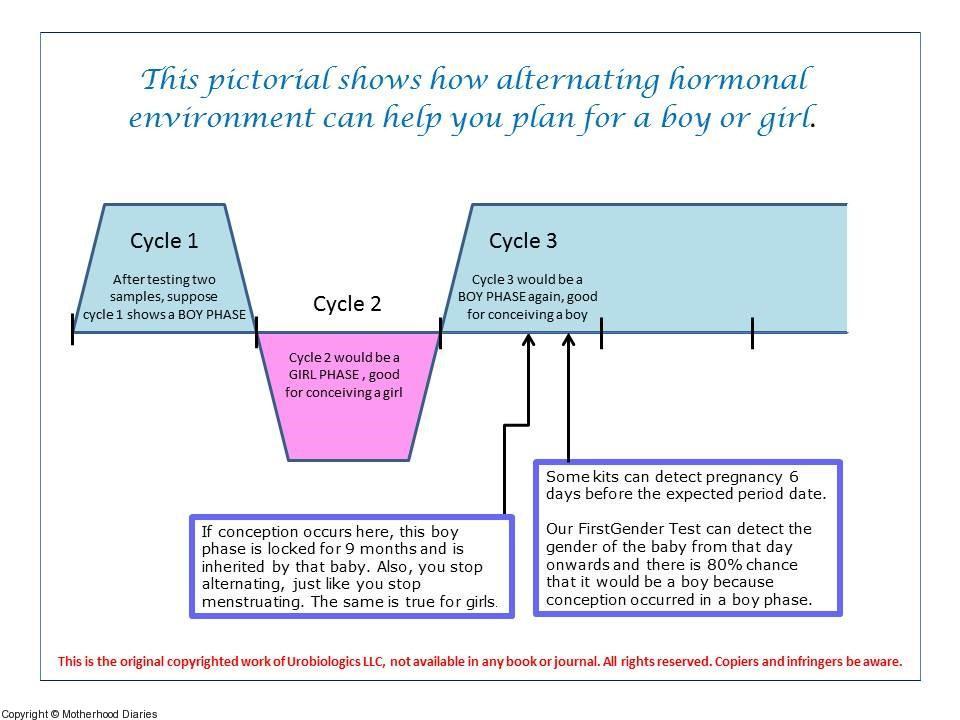
We are the first to discover and prove that women have a pattern of alternating Testosterone / Estrogen ratios between two consecutive menstrual cycles, so that in one cycle this ratio is more than 1.0 and in next one less than 1.0. In simple words, in one cycle she is ready to conceive a boy and in the next a girl. About 90% of our customers have shown this alternating pattern. It is amazing to note that 92 out of 100 couples trying for a boy, for example, are getting a boy simply by conceiving in a boy cycle advised by us and vice versa. We never ask anyone to use any gender diet or any pH manipulating douches, or buy any book or calendar about how to conceive a boy or girl. It is all natural and surprisingly most powerful. The following graph summarizes this concept.
We offer this service as PreGender Preconception test where we test two mid-cycle urine samples from two consecutive menstrual cycles to find this pattern and thereafter keep on advising by sending conception plans in appropriate cycles till you conceive, at no extra cost. Usually, no additional tests are needed for at least six months, unless there is a temporary conception (Please refer to graph above). If you conceive in right cycle, you get the baby you want. It has never been so simple. The days of just keep trying are over.
Get a comprehensive picture of your hormonal health with no need for clinics or appointments. Easy testing, free shipping, and fast results.
Since 92% success rate is the highest in gender planning industry and is proven through the live-charts displayed at our website http://www.urobiologics.com/our_hypothesis.html, we think it is reasonable to assume that women have the inherent power to sort and select X & Y sperm. In these charts, we show customer’s email address along with the case history of tests performed by us, all in advance and as it goes, and as to how did they get their desired babies. Any potential customer can contact any of them to get a feed-back. What better proof do we need? No other company can do that because they know they are selling garbage and they don’t want their customers to talk to each other.
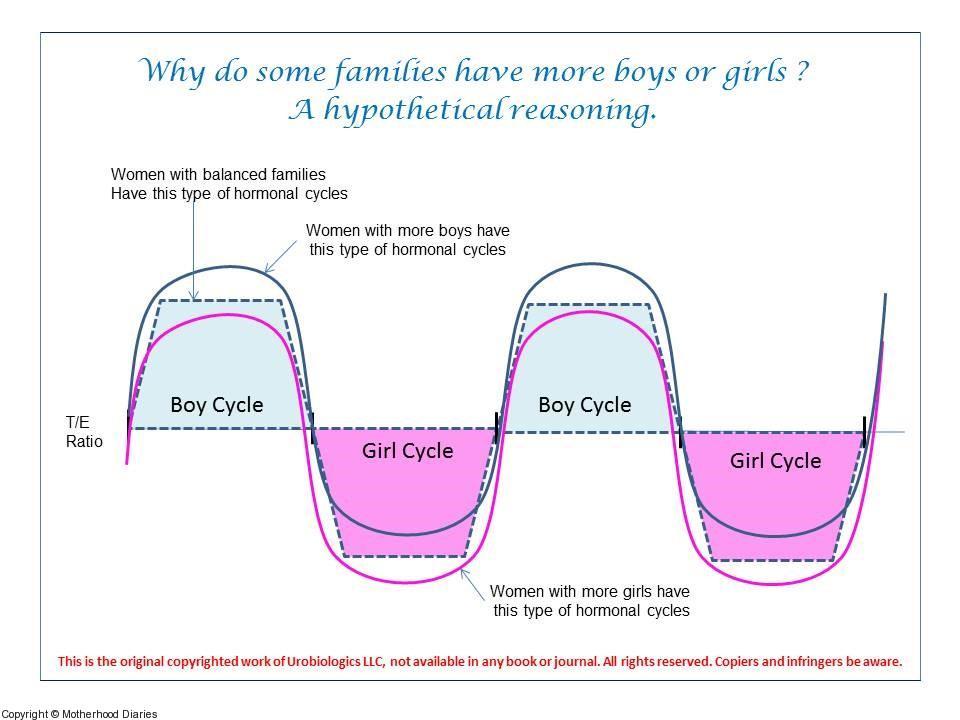
We are also the first to provide a probable scientific explanation as to why certain couples have more boys or girls. In some women, their inherent hormonal pattern is a bit skewed toward one direction, so that they get easily conceived in one cycle over the other. This skew is so powerful that if a couple having, say four boys, keeps trying for a girl on their own and same way, there is a greater chance they end up getting another boy. Our job is to alarm them to avoid conception in boy cycle. Only then they can get a girl. The same is true otherwise. To this we call Gender Specific Natural Conception. The following graph explains this:
We were amazed to learn that a family in Rockford, Michigan, just recently gave birth to a 12th boy. There is no program on this earth which can almost guarantee a girl to them, except the PreGender Preconception test because we will target their conception effort towards girl cycles only.
Get an insight into your egg reserve with LetsGetChecked's Ovarian Reserve test.
Desperate couples have been misled to try various tricks like eating certain foods or douching with certain chemicals or even gels giving them a false hope of conceiving a desired baby. Nothing works. It was OK to try anything when there was no proper technology available, but not anymore. All urine samples are received by mail. You do not have to travel to our lab. After receiving the order, we send urine sample collection materials and prepaid ship ready return envelopes. It is legal to ship urine samples across international borders. We have customers from almost all the countries.
LetsGetChecked can help you understand your hormonal health with their female fertility testing options. Collect your sample from home and you'll receive accurate results within 2-5 days of the lab receiving your sample
For details, click this link: http://www.urobiologics.com/our_hypothesis.html or call toll free 1-877-HE-OR-SHE (1-877 436 7743) or direct 1-313 574 7500 in USA. We understand the readers will have a lot of questions and skepticism. The best is to make a list of questions and write to: drverma@urobiologics.com. All emails will be answered.
*Links marked with a ‘*’ are affiliate links which means I may earn a small commission on qualifying purchases
In July 2012 our lives took a different turn. My son and daughter-in-law were expecting their first child and I was looking forward to having a new baby granddaughter. Nothing could have prepared us for what was to come.
It was a straightforward pregnancy and birth. She was born at term at Crowborough Birthing Centre but it was immediately apparent she was very ill and was transferred to Tunbridge Wells. Her little body was covered in petechiae (red blood spots) she had an enlarged liver and spleen, low platelets, low birth weight, seizures, jaundice, microcephaly…….. and more. She was diagnosed with congenital Cytomegalovirus (CMV), a common virus, harmless to most people, but devastating to a developing baby. In the coming weeks, we had to come to terms with the knowledge that she is severely mentally and physically disabled, blind and medically fragile.
I knew a bit about CMV, I was a Teacher of the Deaf and had worked with a severely disabled child for nearly two years. What struck and horrified me was how little the professionals knew about CMV and its devastating consequences. In the neonatal unit, none of the doctors or nurses had ever seen it. The GP had to look it up. Midwives, health visitors, sonographers, audiologists, friends, family, people in the street – had never heard of it.
Congenital CMV is the most common birth disorder in the UK. Around 1 in 150 babies in the UK are born with the virus and around 1 in 5 of these children – 900 every year – will develop serious, permanent problems such as deafness, blindness, cerebral palsy, mental and physical disabilities and seizures. As CMV is a relatively unknown condition, it is a common misconception that it is rare. In fact, it is more common than Down’s syndrome, Toxoplasmosis, Spina Bifida or Cystic Fibrosis.
About 60% of the population has been infected with the virus at some time, with symptoms no more severe than the common cold. It is easily transmitted through close contact with bodily fluids such as urine, saliva or blood. It is only dangerous to those with a weak immune system or when passed from the mother to her unborn baby. It is tested for in pregnancy in the USA and Europe but not in the UK – other than for those undergoing IVF treatment. There is no cure, no vaccine.
Anti-viral drugs such as Ganciclovir and Valganciclovir can be used to treat newborns with severe symptoms. Research indicates that, if given in the first month of life, it may help the baby retain some hearing or slow the progression of the hearing loss. It cannot repair the damage already done. However, the drug is very toxic as it weakens the immune system, attacking the white blood cells that fight infection and causing damage to the kidney and liver. It is not a simple solution.
It is the leading cause of non-hereditary Sensori Neural Hearing Loss (SNHL) in children. CMV infection can only be confirmed in babies in the first few weeks and that has made it difficult to estimate the proportion of SNHL that is attributable to CMV. Studies define SNHL in children differently so this also complicates the estimation of the full magnitude of the effect of CMV on the incidence of hearing disabilities. It is generally estimated that about 25% of hearing loss in children by 4 years of age is likely to be a CMV-related hearing loss. Some research has this as high as 60%.
Universal Neonatal Screening alone is unlikely to identify the majority of cases of CMV-associated SNHL due to the large proportion of affected children who have hearing loss that has its onset in later childhood or progressively increases over time. Deafness caused by CMV is sensori neural and may affect one or both ears. In half of the children, their hearing will get worse over time. The virus may cause unilateral deafness, particularly in asymptomatic children, but these children can go on to develop deafness in the other ear. Sometimes the hearing will fluctuate. Research is underway to try to understand how CMV affects hearing and how this damage may be prevented. The progressive nature of SNHL suggests that there is a chronic infection in the central nervous system that continues to be active through early childhood.
Many children who appear to ‘only’ have a hearing loss as a result of CMV infection often have additional difficulties. Their sensory integration system may be damaged affecting balance (vestibular) and they may have little sense of individual joint position and movement (proprioception). They may have hyperactivity, sensitivity to sound and vision, sleep problems, behaviour issues, dyspraxia, poor muscle tone, autistic tendencies, high pain threshold or no sense of fear.
CMV is complicated and no two children are affected in exactly the same way.
My granddaughter continues to fight all that life has thrown at her. Yes, she has cerebral palsy, epilepsy, chronic liver disease, is blind, has scoliosis of the spine and is vulnerable to infection. Most children are not so severely affected, she was unlucky. But she is a happy bunny, we have found what makes her smile and even chuckle – she is an absolute delight and we love her to bits.
So …. What can we do?
Raise awareness
The US government agency, the CDC (Centre for Disease Control), published statistics on women’s awareness of conditions affecting children versus the actual occurrence of those conditions. This demonstrates that the condition with the highest incidence (CMV) had the lowest awareness rating!
Condition
Women’s Awareness
Incidence per year in the US
CMV
14%
5500
Fetal Alcohol Syndrome
97%
5000
Down’s syndrome
83%
4000
Spina Bifida
79%
3000
HIV/Aids
98%
200
There are no similar statistics for the UK but it is likely that they are similar or worse.
Learn about prevention and take simple hygiene precautions
As a child carrying CMV infection may show no symptoms, pregnant women should
Avoid sharing cutlery, drinks or food
Avoid kissing babies, toddlers, and small children directly on the mouth
Wash hands regularly, especially after changing nappies and coming in contact with bodily fluids
CMV Action – CMV Action is a UK charity that has been set up to raise awareness of the virus, campaign for better prevention measures within the health service and encourage research into a CMV vaccine. It offers advice and support to anyone affected by Congenital CMV and helps ensure they receive the best care possible. It puts families in touch with each other and provides a personal support service for each of its members. It also offers information and resources for professionals. www.cmvaction.org.uk
The start of a school term can be a huge relief for some parents but, daunting to others. My son Sam started full time school this September and although he is more than ready – being the oldest in his year, as the baby of our family the thought of leaving him all day filled me with dread.
Admittedly, the last two years have taken their toll. The half days in a preschool setting are weak competition. Now, once I drop Sam to school at 8.55am I realise that I don’t have to be back at those playground gates by midday. For the first time in ten years I have my days back.
School is the best place for Sam. Already he is confident with the alphabet and he can comfortably count to 140. Walks through the park, trips to the library, toddler groups have sadly been exhausted. Our fun activities become routine. This dawned on me a year ago when I had another year of a preschool setting to take him through! There was nothing wrong with the nurseries that Sam attended but he has simply outgrown them. It wasn’t unusual for him to want to do something else after lunch.
So, I can honestly say, that as Sam settled into a school routine I too, settled into being temporarily free.
Nothing could have prepared me for what was to come.
I was devastated when Sam came out of school and told me that he was in pain…I had to collect his brother and sister from the Junior’s playground – then walk home! Instinctively, I knew something was wrong. We walk everywhere and he never complains.
Half an hour later, we were home, I was distressed. Chris, my husband, decided to contact our doctor whilst finishing his shift. It was cold and dark and I couldn’t wait for him to come home.
He walked in and told me to get Sam ready ‘quick!’ My other children looked worried and I just did as I was told. Chris couldn’t be seen at the surgery so after explaining the symptoms he was told to take Sam to A&E.
It didn’t stop there. Sam was not responding to antibiotics and had to stay in hospital. He spent two days on a children’s ward and although he is at home with us now he is still off school.
School is where Sam should be but this has taught me a lesson. Children are always the responsibility of the parent and, we cannot simply switch off when they start school all day…
How did you feel when you sent your child to school for the first time?