“OK, here’s my situation. My Mummy has had me for almost 6 months. The first few months were great – I cried, she picked me up and fed me, anytime, day or night. Then something happened.
Over the last few weeks, she has been trying to STTN (sleep through the night). At first, I thought it was just a phase, but it is only getting worse. I’ve talked to other babies, and it seems like it’s pretty common after Mummies have had us for around 6 months.
Here’s the thing: these Mummies don’t really need to sleep. It’s just a habit. Many of them have had some 30 years to sleep – they just don’t need it anymore. So I am implementing a plan I call it the Crybaby Shuffle.
It goes like this:
Night 1 – cry every 3 hours until you get fed. I know, it’s hard. It’s hard to see your Mummy upset over your crying. Just keep reminding yourself, it’s for her own good.
Night 2 – cry every 2 hours until you get fed.
Night 3 – every hour.
Most Mummies will start to respond more quickly after about 3 nights. Some Mummies are more alert, and may resist the change longer. These Mummies may stand in your doorway for hours, shhhh-ing. Don’t give in. I cannot stress this enough: CONSISTENCY IS KEY!!
If you let her STTN (sleep through the night), just once, she will expect it every night. I KNOW IT’S HARD! But she really does not need the sleep, she is just resisting the change.
If you have an especially alert Mummy, you can stop crying for about 10 minutes, just long enough for her to go back to bed and start to fall asleep. Then cry again. It WILL eventually work. My Mummy once stayed awake for 10 hours straight, so I know she can do it. Last night, I cried every hour. You just have to decide to stick to it and just go for it.
BE CONSISTENT! I cried for any reason I could come up with.
– My sleep sack tickled my foot.
– I felt a wrinkle under the sheet.
– My mobile made a shadow on the wall.
– I burped, and it tasted like pears (I hadn’t eaten pears since lunch – what’s up with that?)
– The dog said “woof” (I should know. My Mummy reminds me of this about 20 times a day. LOL.)
– Once I cried just because I liked how it sounded when it echoed on the monitor in the other room.
– Too hot, too cold, just right – doesn’t matter! Keep crying!!
It took a while, but it worked. She fed me at 4am. Tomorrow night, my goal is 3:30am. You need to slowly shorten the interval between feedings in order to reset your Mummies’ internal clocks.
P.S. Don’t let those rubber things fool you, no matter how long you suck on them, NO milk will come out! Trust me.”
Subscribe here to be updated with new posts. Don’t forget to tailor your preferences, so you just get the posts you want and need!
It only takes a period drama on television to remind us of how far society has moved in a relatively short period of time. I watched the first episode of BBC’s The Village recently, and it was shocking to see how a young boy of 12 could be caned on his hand for something as ‘bad’ as being left-handed or not knowing how to write well. It was the norm in 1914 to be beaten if you stepped out of line as a child. It was the norm much later on than that – in the 40’s or 50’s and possibly later still. Thank God we have got rid of that particular style of teaching and that beating or hitting children in schools is a thing of the past.
The cane left but it was replaced initially by verbal abuse. It was considered unacceptable to hit children but perfectly acceptable to belittle them, demean them, tell them that they would amount to nothing and would have no future, an approach that has caused unending damage to generations of children.
As a classical musician and teacher, I experienced this kind of teaching as a student at conservatoire level. In that rarefied environment, high standards were the only thing that was important and teachers could demand these standards whatever the cost to the student. “Call yourself a musician? Your playing is not up to it! Go away and practice” was something I heard a few times. Did this approach get the desired results? I doubt it. Or rather, if someone experiences this teaching approach and did well as a musician, they might have suffered in other ways that were less obvious – out-of-control nerves, sudden phobias or other such things. So it is clear. This kind of negative criticism doesn’t work. It achieves very little in almost all cases. It is unpleasant and bullying. Coming from this kind of cultural background, it is understandable that parents and teachers want to praise their children. Of course, it is natural and praise is essential. You want to acknowledge the effort a child has made, the ability they have shown, their enthusiasm and more. But I feel sometimes that praise can go too far and can be too effusive, which, in a completely different and arguably far less dangerous way, is not good for children either.
What happens if teachers aren’t allowed to say anything that could be considered remotely negative to children? If they can’t let a child know how s/he can improve for fear of upsetting the child and for being seen as too ‘critical’? If everything a child does is wonderful, where is there room for improvement? How will anyone know if they have really excelled? And what if the praise is actually dishonest and the child hasn’t done well but the teacher can’t bring him/herself to be critical or negative or is afraid of stepping out of line themselves, with their superiors who insist a child mustn’t be upset at any cost? To my mind, this is a swing of the pendulum too far the other way and it must be incredibly confusing for a child.
The ideal is somewhere in the middle. Children need to know where they stand and they need boundaries. They need to know that someone else knows when they are putting in the effort, doing well and excelling themselves and they need praise and support for that. They also need to know that someone else knows when they are not putting in the effort and not doing well. They need to know so that they know where their boundaries are and so that they can learn to judge their boundaries for themselves. There are times when children play up and step out of line. This is when they need to be reminded of those boundaries and shown what they are capable of. When I think back to the times when I have been the happiest and have achieved the most as a young person, it was always because an adult believed in me. I knew this without it needing to be spoken, and I automatically raised my game. It felt magical in a way. Children need praise and they need support – it goes without saying. But they also need adults around them who are discerning, who are not just going to hand out ‘lazy’ praise but are prepared to help them know where they stand, help them know their own standards and develop clear judgment of themselves. But above all, what I feel children need is for their adult mentors to believe in them. This way they learn to believe in themselves and anything becomes possible.
Reference: Trotter S (2008). Breastfeeding basics: advice for new mums. Nursing in Practice (September/October 2008) Number 44 – (Children’s health): 23-5.
By Sharon Trotter ¦ Midwife and Mother & Baby Consultant ¦ TIPS Ltd
Despite numerous initiatives to support breastfeeding mothers, breastfeeding rates continue to drop dramatically within weeks of delivery. This appears to be due to lack of confidence and not, as often mentioned breastfeeding technique.
Recent figures published by the Department of Health show that although the initiation of breastfeeding has risen by 7 percent to 77 percent in the past five years, the drop-off rates in the first few weeks of life are alarmingly steep with only 1 percent of mothers still exclusively breastfeeding their infant by six months of age (NHS 2005).
Exclusive breastfeeding during the first six months of life provides for all the nutritional needs of a baby. Half of these needs can still be met by breastfeeding in the period from six to 12 months. From 12 to 24 months a baby will still receive a third of its nutritional requirements from breast milk alone (WHO 2006).
Early drop off in breastfeeding may be influenced by a number of factors. A generation of bottle feeding mothers is partly responsible for eroding the primary skills needed to support and empower women during breastfeeding. Such skills need to be relearned so that women can once again tune into their own instincts and their baby’s needs. New mothers no longer have the luxury of long hospital stays or the support of an extended family to help them establish successful breastfeeding (NPEU 2006).
Breastfeeding technique plays its part; however, confusing diagrams or hands on manipulation can be deconstructive. Successful breastfeeding has more to do with building and sustaining confidence. Cultural issues (such as the association of breasts with sex in western society) also play a part and it will take time for attitudes to change. Such are the issues that the Scottish Government had to pass legislation guaranteeing women’s rights to breastfeed in public (English legislation is set to follow suit shortly) [OPSI 2005].
This is helpful, but we still have a long way to go before breastfeeding is accepted as the infant feeding norm. According to a new telephone poll conducted by Kamillosan one in four top British restaurants ban breastfeeding (Kamillosan 2008a).
Kamillosan also surveyed 3,500 mums across the nation and the survey reveals new mums are terrified at the thought of breastfeeding in public. Thirty-eight percent of mothers prefer to breastfeed in public lavatories than face disapproving glares from strangers. A fifth of mums are so worried about other people’s opinions they opted to leave the baby screaming for milk rather than breastfeed (Kamillosan 2008b).
In fact, the natural bonding experience is ruined for many by negative reactions, inappropriate comments and blatant stares. A staggering 54 percent of breastfeeding mothers say they have been subjected to unwanted attention.
The question remains as to why, with all evidence pointing to a need for consistent advice and ongoing support for breastfeeding, especially in the early days after delivery, mothers are still left wanting? (Dhandapany et al 2008)
Inconsistent advice – is this the biggest barrier to success?
In an online poll, 125 mothers reported their top three breastfeeding problems (Trotter 2008).Eighty percent of those problems were directly associated with conflicting advice. This led to physical difficulties (such as sore nipples, blocked duct, mastitis, thrush and tongue-tie) as well as psychological problems (mainly lack of confidence caused by conflicting advice). When it comes to breastfeeding advice, midwives are the key source of information for new mothers.
A National Childbirth Trust (NCT) survey found that 77 percent of women receive breastfeeding information from midwives during their pregnancy, while 20 percent get information from health visitors and 7 percent from GPs (NCT 2006). Yet, nearly half of the women surveyed said they did not receive as much support as they needed regarding breastfeeding. As a result of this, more than 50 percent of women stopped breastfeeding sooner than they would have liked.
Women who took part in the Healthcare Commission 2007 survey of NHS maternity services were asked about the advice and support they had received from midwives and other healthcare professionals in relation to feeding their baby (breast or bottle) [Healthcare Commission 2007].Almost two thirds of women surveyed felt that they did not receive consistent advice, practical help or active support and encouragement.
NICE guidance for routine postnatal care of women and their babies recommends that all maternity care providers (whether in a hospital or primary care setting) should implement an externally-evaluated structured programme that encourages breastfeeding using the Baby Friendly Initiative as a minimum standard (see Resources)[NICE 2006].
Currently, only 10 percent of women give birth in a fully accredited Baby Friendly hospital. Although breastfeeding rates are considerably higher in such units, there remains a reluctance to implement this standard. This is despite the fact that hospitals with low breastfeeding rates can see these double when they become Baby Friendly. Even hospitals with relatively high breastfeeding rates can see this increase by at least 10 percent with associated savings due to reduced instances of childhood illnesses such as gastroenteritis, asthma and middle-ear infection. A national breastfeeding helpline was launched in February 2008 with a yearly funding of £150,000 (DoH 2008). This service is staffed by trained volunteers from the Breastfeeding Network and the Association of Breastfeeding Mothers who answer calls from their own home. The lines are open from 9.30am to 9.30pm. This falls far short of the 24-hour service breastfeeding mother’s need, as problems are unlikely to be confined to daylight hours. The fact that this service is run by volunteers places undue pressure on women who are likely to be busy with young families of their own. Until provision is made for a fully funded helpline (manned by lactation consultants – possibly as part of the NHS 24-hour advice service) women are unlikely to receive the support they deserve when they need it.
Building confidence is the key to success
As a breastfeeding consultant and author of Breastfeeding – the essential guide, I am all too aware of the common concerns (not necessarily problems) associated with the early days of breastfeeding (Trotter 2004).As already explained, these may include a variety of conditions that must be diagnosed promptly by someone who really understands how breastfeeding works and is able to help correct any aspect of the breastfeeding technique. Central to this process is confidence building. Being a new parent is stressful. Evidence shows that mothers who receive support from someone who believes they can breastfeed will breastfeed for longer (BBC News 2008). Such level of supportive advice from someone mothers trust, together with support from peers (family, friends or breastfeeding support group) is of most help.
Conclusion
It is ironic that the introduction of artificial baby milks in the 1950s, as a way of enticing women into health clinics, has led the trend towards bottle feeding as we know it today (Palmer 1993). The multimillion-pound promotion of these baby milks uses ever more sophisticated marketing techniques to lull parents into thinking that these products are the next-best-thing to breast milk. In reality this could not be further from the truth and the ill effects of widespread formula feeding on infant health and indeed on public health are huge. These include increased financial pressures due to ill-health on our already overstretched health service. This situation will not change overnight, but the more aware we become of the short- and long-term benefits of breastfeeding for mother and baby, the more we will understand the need for effective breastfeeding support to be a top priority rather than an afterthought (NPEU 2006). To achieve this, we must ensure that health professionals are adequately trained. However, it is also essential for support to be targeted more effectively in the early weeks of breastfeeding and for a national helpline manned by lactation consultants to be established.
There are very few difficulties that cannot be resolved and even fewer reasons why women cannot establish successful breastfeeding.
Breastfeeding toolkit:
Health professionals should have access to a Breastfeeding Toolkit in order to provide for the needs of new mums. An example of one such tool is described in an article by Nikki Lee, a lactation consultant. She introduced me to the delights of co-bathing as a tool to assist in the recovery of breastfeeding (Lee 2005).When mum and baby experience skin-to-skin contact in a warm bath, the mother’s levels of circulating oxytocin are raised. Her nipples then become more erect and it is easier for the baby to attach to the breast.
The following advice forms part of my own Breastfeeding Toolkit for new mums. I hope you will find this helpful when supporting new mothers in your care. This is what you may like to suggest:
Surround yourself with positive support and always include your partner
Get help with positioning and attachment from the start – this does not mean “hands on” manipulation of mother and baby but one-to-one explanation and reassurance
Be inventive – there are 360° of attachment so finding the perfect position for you and your baby may take a while and a certain amount of trial and error. You will know when you have achieved this because feeding will be comfortable
Breastfeeding should not hurt – if you are in pain get help from someone who really understands breastfeeding. To have a friend or a breastfeeding counsellor who is experienced in breastfeeding would be a great help at this time. Contact your local breastfeeding association (National Childbirth Trust, Association of Breastfeeding Mothers, Breast Feeding Network or La Leche League) for details of your nearest support group
If your nipples do become sore:
Correct your positioning and attachment to prevent any further damage.
Use a soothing ointment (chamomile, lanolin or similar natural plant-based formulations all work well) to protect them while they heal. Moist healing works twice as quickly than if left dry (Palfreyman et al 2006 & Huml 1999)
Biological nurturing – this is a mother-centred approach. It suggests new ways to hold and cuddle babies and aims to increase the enjoyment of breastfeeding. This can greatly help with positioning and attachment (see Resources)
Listen to a baby’s cues – breastfeeding can only work when it is baby led
Stimulate your breasts – just the smell, sight and touch of your baby will help to do this. This includes co-bathing (see above)
Unrestricted breastfeeding should be encouraged, especially overnight, as this helps to promote and maintain a steady milk supply
It takes around six to eight weeks for the delicate balance of milk supply and demand to be established, so do not be tempted to introduce bottles or formula feeds
During this time I do not recommend expressing as this will not stimulate milk production as well as direct feeding. Expressing also defeats the object when breastfeeding is so convenient
Try not to be separated from your baby – close contact (not necessarily skin-to-skin) greatly helps to stimulate milk-producing hormones
Close contact with dads should also be encouraged. This will help promote a closer bond as you all settle into your new family unit, no matter how big or small
Growth charts used in the UK are based on bottlefed babies so weight gain for your breastfed baby may appear to be slow. These growth charts will be replaced with World Health Organization (WHO) breastfeeding growth charts soon
As long as your baby is waking up for feeds, taking feeds well and having wet and dirty nappies, you can be reassured that they are getting enough milk
It is not unusual for a baby to feed between 12 and 20 times a day in the early weeks. But this will settle down – promise!
Breastfeeding will help you to lose the extra weight your body gained during pregnancy
Breastfeeding is much more than just a way of feeding your baby milk. It provides the emotional and psychological stability your baby needs to become self-confident, relaxed, independent and secure
Above all enjoy breastfeeding – with each feed you will get a rush of endorphins, which are basically “happy hormones”. This makes you and your baby feel good and is nature’s own stress-buster
Department of Health (2008). National breastfeeding helpline launched. Available from: http://nds.coi.gov.uk/Content/Detail.asp?ReleaseID=352806&NewsAreaID=2
Dhandapany G, Bethou A, Arunagirinathan A, et al. Antenatal counselling on breastfeeding – is it adequate? A descriptive study from Pondicherry, India. Int Breastfeed J 2008;4:5.
Healthcare Commission. Women’s experiences of maternity care in the NHS in England. Key findings from a survey of NHS trusts carried out in 2007. Available from: http://www.healthcarecommission.org.uk/_db/_documents/Maternity_services_survey_report.pdf
Huml S (1999). Sore Nipples: A new look at an old problem through the eyes of a dermatologist. Practising Midwife.2 (2).
Kamillosan (2008a). Telephone poll of 100 restaurants to gauge reaction of breastfeeding in public. Available on request from info@kamillosan.co.uk .
Kamillosan (2008b). Online survey of 3500 mothers regarding views breastfeeding on breastfeeding in public. Available on request from info@kamillosan.co.uk
Lee N. Breastfeeding recovery: more tools for the helpers. MidirsMidwifery Digest 2005;15:229-33.
National Childbirth Trust (2006). Midwives top chart for breastfeeding information. Available from: http://www.nct.org.uk/press-office/press-releases/view/13
National Perinatal Epidemiology Unit. Recorded delivery: a national survey of women’ experience of maternity care 2006. Available from: http://www.npeu.ox.ac.uk/downloads/maternitysurveys/maternity-survey-report.pd
NHS Information Centre. National infant feeding survey. 2005 Available from: http://www.ic.nhs.uk
NICE (2006). Postnatal care: routine postnatal care of women and their babies. Costing report. Available from: http://www.nice.org.uk/nicemedia/pdf/implementation_tools/cg37costingreport.doc
Palfreyman SJ, Nelson EA, Lochiel R, et al. Dressings for healing venous leg ulcers. Cochrane Database of Systematic Reviews 2006, Issue 3. Art. No.: CD001103.DOI: 10.1002/14651858. CD001103.pub2 http://www.cochrane.org/reviews/en/ab001103.html. (accessed on 22/5/08).
Palmer G. The politics of breastfeeding. London:Pandora; 1993
Trotter S (2004). Breastfeeding: the essential guide (ISBN: 0954838106). Scotland, TIPS Ltd.
Trotter S (2008).Online poll of top threebreastfeeding problemscarried out between 2007-2008 by www.tipslimited.com Available on request.
World Health Organization. Child and adolescent health and development. 2006. Available from: http://www.who.int/child-adolescenthealth/NUTRITION/infant_exclusive.htm
Letting baby do the work: Biological Nurturing
It was late afternoon on a dark November day and I was at the end of my tether. Week 6 of breastfeeding and I was wincing with pain every time my baby latched on. The doctor had diagnosed thrush and prescribed a cream for me, instructing me to express all feeds until I am ‘better’. Luckily I’m not one to accept things without questioning and this diagnosis rang alarm bells. Surely, if it’s thrush then my baby would also show signs of it? And what would be the point of treating me without treating my baby? Logic kicked in. This can’t possibly be right.
I sat in my pyjamas and pondered what to do. Believe it or not, since giving birth this was the first time I’d not managed to get dressed by lunchtime – things were obviously bad! Fed up with the constant pain when feeding I started to resent my baby as if she was hurting me on purpose. I dreaded every feed. The only option seemed to be to give up breastfeeding.
Thoroughly confused and worried, I decided to call the NCT Breastfeeding line. A counsellor talked me through the problems I was having and she agreed that I shouldn’t accept the doctor’s advice. She suggested that it was a problem with the latch. I’d religiously followed the ‘nose-to-nipple’ mantra – what more could I possibly do?
“Have you tried biological nurturing?” she said.
I hadn’t. It sounded like a washing powder.
Biological nurturing – what is it?
Biological nurturing is often described as a ‘new’ approach to breastfeeding. It wasn’t discussed in my antenatal classes and most people I mention it to have never heard of it. The technique is based on a baby’s natural instinct to search for the breast when hungry – the adorable and relentless ‘pecking’ they do to any shoulder they encounter. Letting your baby search for the nipple by themselves is said to be the best way to get the most natural latch. No need to direct them or tip them this way and that, just let them make their own way towards what they’re after: hence why it’s also called ‘breast crawl’ or ‘baby led attachment’. This newborn instinct is said to lessen from around 6 weeks of age so if you want to try this technique, it is recommended to do it sooner rather than later.
“I did have an experience of this one morning when my baby was about 4 weeks old. We were lying in bed and he was sleeping on my chest, the next thing I know he had wriggled up to my boob, latched on a perfect latch and had a really good feed. I had an over supply of milk for a long time and usually had to express a few ounces before each feed (which also used to choke him at the start), but I was really amazed that this didn’t happen on this occasion. I never realised that this was the biological nurturing method or I would have explored it further. I remember being really amazed at how such a small baby could find his way to food instinctively.”(B, mum to Adam)
The turning point
A couple of hours after my call to the NCT line I settled myself on the bed with my daughter for her feed. I remembered what the counsellor said and took a deep breath. I couldn’t believe it. There was no pain. No tears. No gritting my teeth. My baby had latched on like a dream.
A simple technique
I found the ‘rules’ for getting a good latch in the traditional cradle position really hard to get right. Trying to remember where my baby’s nose was pointing, whether ‘tummy was to mummy’ and where her chin was resting left me tense before I’d even started. Biological nurturing was described to me in a matter of seconds and I didn’t need diagrams.
3 easy steps
STEP 1: Sit back and relax.
STEP 2: Lay baby lengthways down your chest with their head between your breasts.
STEP 3: Allow baby to wriggle to the nipple, guiding and supporting them as necessary.
If it needs a mantra then it’s ‘chest to chest, chin to breast’. The appearance of a good latch is as with other positions: mouth over plenty of the areola, chin to breast and nose clear. Like any method, it does still require a little trial and error. Biological nurturing relies on using a baby’s natural ability to find the breast to maximise the chances of a more natural, more comfortable latch. It is thought that by allowing the baby to attach itself, it increases the chances of it taking to breastfeeding more easily thus avoiding some of the problems that mums can have with feeding in the early days. Of course, with something as personal as breastfeeding, mums find what works for them and their baby. Biological nurturing was something simple that worked for me.
“My baby has a preference for my left boob and I can spend 20 minutes trying to get him latched on my right but with this method he wiggled himself down and latched on perfectly all on his own! He is three weeks old today and last night was one of the best nights we have had as it was so relaxed not fighting each other to get a good latch.”(M, mum to 3-week old)
The science bit
I wanted to write this based on my personal experience rather than trawling through lots of research. However, the ‘science bit’ is fascinating. A baby’s tendency to search for the breast is a ‘primitive neonatal reflex’ (PNR). This is a spontaneous reaction to stimuli that is innate rather than conditioned or taught. Left to do so, a newly born baby has the ability to find its way to the breast within an hour, provided it has not been affected by drugs administered to the mother during labour. Research suggests that the feeding positions recommended for biological nurturing encourage these natural reflexes to emerge. This is how Dr Suzanne Colson, probably the most prolific advocate of the technique, describes the results of early research:
“The key components of BN [biological nurturing] were a range of semi-reclined maternal postures … These appeared to act in synergy …which appeared to maintain close mother/baby body contact enhancing the expression of PNRs, facilitating … infants to find the breast, self attach and feed even whilst asleep”. *
Dr Colson concludes that:
“…[t]his study… challenges the effectiveness of established maternal breastfeeding postures where the focus of consistent advice is skills teaching within a fixed system of positioning and attachment.”
The suggestion is that the more upright positions mothers are taught to adopt, for example with the cradle position, don’t encourage the baby’s natural reflex to latch on in the way a reclined position does. This leads to a question: how can biological nurturing be a practical technique that is flexible enough to suit a mum’s normal everyday routine?
Not as impractical as you might think
Biological nurturing is often discussed as a technique for establishing a latch in the early days and for bonding. The mother must be reclining and skin to skin contact is encouraged. Some advocates overplay this aspect and thus portray the technique as one that is only practical in your own home, in bed and in private. It is therefore often dismissed as impractical. Yet it is a technique that can be used throughout your time breastfeeding. Even though a baby’s natural instinct to root may lessen, you will by that time have established a comfortable feeding position of your own grown out of baby led attachment. When I first tried biological nurturing, I was indeed semi-reclined and semi-clothed – the ‘prime’ conditions according to medical and scientific experts. Following that first attempt, I soon moved to a more upright position, continuing to utilise the principles of letting the baby lead. Who am I to question science, but it still worked!
Can I do it when I’m out and about?
The short and encouraging answer is yes. It isn’t necessary to have skin-to-skin contact or to be semi-reclined. Neither of these would be appropriate in a public place even for the most liberal of mums! Sitting in a chair, I simply placed my baby’s legs either side of one of my legs and aimed her in the direction of the breast on the opposite side of the leg she was straddling. That way she was more or less in a vertical position and easily held. In fact, if left to attach on their own, most babies do adopt this diagonal position. Even with a big and long baby, this position proved immensely comfortable and practical. The key is to use the basic principle of biological nurturing – the baby’s self-attachment – combined with what is practical and works for you in the environment you’re in.
Conclusion
“The bottom line is that you have to be relaxed for breastfeeding to go well and most situations – in hospital, with people watching and barking instructions, sitting up in uncomfy bed, feeling tense, still sore from birth do not encourage this to happen as naturally and easily as it should.” (L, mum to Emily)
Breastfeeding may be a natural process but it isn’t the most natural thing in the world to get right. It’s not easy and no one should ever feel a failure if they struggle with it or decide to stop. Finding a position that is comfortable is vital to success: relaxed mum, satisfied baby, victorious breastfeeding! Biological nurturing proved a simple solution to the particular problems I was having and made breastfeeding click into place when it seemed impossible to carry on. This technique should be added to every mum’s toolbox for successful feeding.
www.breastcrawl.org – includes an amazing UNICEF/World Health Organisation (WHO)/World Alliance for Breastfeeding Action (WABA) film: http://breastcrawl.org/video.htm.
Boy’s blues? What to do about male postnatal depression
Postnatal depression (PND) in women remains an issue not discussed nearly widely enough. Even less discussed is PND in men. Many people don’t even know or think that it exists. However, a study by the Medical Research Council (MRC) in 2010 highlighted how common male PND can be. It claimed that 1 in 5 fathers will have experienced depression by the time their child is 12 years old.
The research
The MRC’s study (Incidence of maternal and paternal depression in primary care, September 2010) was conducted between 1993 and 2007 and involved almost 87,000 families. It looked at both men and women, identifying those suffering with depression and following them through the first 12 years of their child’s life. The study found that parents are more likely to experience depression in the first year after the baby arrives: no real surprise there given the huge upheaval a new arrival brings. What is most interesting about the research is that it points to PND being more common in men than previously thought, suggesting that there can be more to the ‘boys’ blues’ than simply a temporary difficulty in adapting to a life changing experience.
The findings show that PND is most common amongst mothers, with 14% experiencing depression in the first year. More unexpected is the 4% of men found to be experiencing depression in the same period. Going beyond that first year, the study found that 25% of mothers and 10% of fathers suffer depression by the time their child is 4 years’ old.
Postnatal depression – why men?
Why men? Why not? It is widely assumed that PND is connected to hormones and the process of pregnancy and giving birth and therefore affects only women. This is a myth as there are many other contributing factors beyond the influence of hormones. The majority of these factors are common to the experience of mothers and fathers: sleep deprivation, the change in your relationship with your partner, the general stress of looking after a new baby. (Interestingly, if PND is connected to hormones alone then this doesn’t necessarily discount men. Some studies identify the drop in men’s testosterone levels after a baby is born as a trigger for depression. )
For a father, a contributing factor can be the pressure placed upon him to be the ‘hunter gatherer’, providing for his family whilst his partner is at home. In the same way as a woman returning to work, a man is forced to juggle an endless list of competing priorities. This is made worse by factors such as sleep deprivation and, more often than not, the lack of time and space to adjust to their new life. Two weeks of statutory paternity leave is barely a chance to take a breath.
Studies have indicated that the following factors can influence a man’s chance of experiencing PND:
Lack of good sleep.
Changes in hormones.
Personal history of depression.
Relationship stress – with a partner, parents or in-laws.
Excessive stress about becoming a parent or father.
Non-standard family (such as being unmarried or a stepfather).
A lack of support from others.
Economic problems or limited resources.
A sense of being excluded from the connection between the mother and baby.
The sense of exclusion from the mother/baby bond is a significant one, particularly if the father is working full-time. At no fault of either parent, fathers can feel like backseat drivers in the new family dynamic simply because they do not have the same opportunity as the mother to spend time with the baby. Failure at relatively simple tasks such as changing a nappy can leave men feeling not quite the ‘wonder dad’ they hoped they’d be.
Symptoms of PND in men
Symptoms in men can be different to those identified in women. The following are symptoms that researchers claim are specific to the male experience of depression:
Increased anger and conflict with others.
Increased use of alcohol or other drugs; misuse of prescription drugs.
Frustration or irritability.
Violent behaviour.
Losing weight without trying.
Isolation from family and friends.
Impulsiveness and taking risks.
Increases in complaints about physical problems.
Ongoing physical symptoms, like headaches, digestion problems or pain.
Problems with concentration and motivation.
Loss of interest in work, hobbies and sex.
Working constantly.
Increased concerns about productivity and functioning at work.
Fatigue.
Experiencing conflict between how you think you should be as a man and how you actually are.
Thoughts of suicide.
A father suffering from PND won’t necessarily experience all of these symptoms. One alone may be enough to identify that there is an underlying problem.
Clinical disorder or identity crisis?
“What a load of rubbish LOL. I agree there is more pressure on men to provide when they have a family so more stressful maybe but PND? You’re having a laugh.”
Quote from an online forum
Sceptics say that research such as that of the Medical Research Council serves to manufacture yet another social disease. They believe that by defining male PND as a condition, it is medicalising what is essentially an identity crisis. At a time of enormous change, not all men will cope with their situation, whether it is the loss of freedom or sense of responsibility that a baby brings. But is that a clinical disorder? Some say no: it is a normal reaction to life’s upheavals. PND in women is acknowledged as a clinical disorder and a serious one, no less serious than any other type of depression. So where is the difference? Both men and women are affected by hormones and difficult circumstances. Are men simply expected to ‘man up’ and ‘get over it’?
It is the latter expectation that may make it harder for depression to be identified in men and explain why the male postnatal experience is still coming to light. If it’s not a sweeping stereotype, men are less likely to admit how they feel, particularly (studies show) when it comes to feelings of guilt and sadness. They are also less likely to visit a doctor. Women who have suffered from PND say that it’s talking about it that helps them recognise the problem is there and take the first steps towards getting help. Men don’t necessarily give themselves this opportunity to acknowledge the problem and seek treatment.
Depression following the birth of a child is of course on a sliding scale from a general low mood (or ‘baby blues’) to PND to more severe (and thankfully rare) postnatal psychosis. Whether or not men can get PND in the same way as a woman can is not actually the issue here. What is important is the clear need for there to be greater awareness of how men can suffer emotionally and mentally and for that awareness to bring with it greater support.
Finding support
“Parents need to be told about the risks of depression for both mothers and fathers and they should also be told about the signs which they should be looking out for in their partner.”
Rob Williams, Chief Executive, Fatherhood Institute
If male PND is yet to be widely acknowledged as an issue then it is little wonder that support is still limited. Organisations such as the Fatherhood Institute (a fatherhood think-tank) are pressing for fathers to be screened for depression in the same way that women are by health visitors and GPs. For example, the Institute has worked with Surrey Parenting Education and Support to create a tool to provide health professionals with interview questions to evaluate whether a father is suffering from PND. Initiatives such as this demonstrate a growing recognition of the need to put a framework in place for supporting men in the same way as women currently are.
Regardless of whether you are a man or a woman, there are practical steps you should take if you are experiencing any level of depression after the birth of your child:
Don’t be afraid or embarrassed to tell someone how you are feeling, whether that be your partner, friends, a health visitor or GP.
Don’t expect to be able manage everything in the way you did before. If help is offered, accept it.
Get as much sleep as you can, even if a short nap is all you can grab.
Eat well and often to maintain energy levels.
If you suspect your partner is depressed, talk to them and encourage them to seek help from a GP if necessary.
Take some time for yourself and your partner.
Talk to other parents with babies – there’s nothing like support from someone who knows what you’re going through. Problems that feel unique to you are more often than not shared by others.
Familiar advice to the new parent but often not heeded when the demands of a new baby take precedence over all else.
Conclusion
Discussions of PND tend to focus on women and this is reflected in the support services currently available. Regardless of whether postnatal depression in men is a medical condition or a non-medical ‘identity crisis’ there is no argument that the arrival of a child has a significant impact on men and women and neither should be overlooked. If ongoing discussion serves to improve support services and encourages men to seek help then it is a positive step – if not a leap – forward.
I recently asked myself how men prepare themselves for fatherhood. Should they read books? Should they listen to their partners and follow their lead, or should they just act like typical men do and work, work, and work, hoping that all will fall into place eventually?
Well, my wife is 3 months pregnant – I am becoming a father. These sorts of questions have been drifting in and out of my mind for the past 3 months. As my dearest wife has been going through all the highs and lows of pregnancy, I have been left bewildered that men don’t really have a clue what to expect. There is no maternal instinct. There is nothing they can physically feel before becoming a father. Their only hope is to rely on their emotions. Emotions will determine how much they need to prepare and how much they want to prepare. Your pregnant partner has no choice. Does this make it harder for men to bond with the idea of becoming a father? I certainly believe so. I have been emotionally preparing myself since I was old enough to determine who I am and where I came from. My parents separated when I was very young. As a result, my father drifted in and out of my life, like a recurring dream, a dream that regularly appears and you never want it to end but, eventually, you wake up. Although I was blessed with much love, happiness, and health, not having a constant father figure around me has made the thought of becoming a father very important to me. It made me realise at a very young age that my life ambition was to become a father figure and to give my child everything that I never had. Since the day I developed that ambition I have been emotionally preparing myself for fatherhood. So, emotionally, I feel a connection to fatherhood. Does this mean I’m ready to be a father? Certainly not. It is my understanding that you can never truly be ready for fatherhood.
You can only ever be as ready as you are prepared to commit yourself. What do you have to commit to? What is the most important? What is most urgent? After all, if you are expecting a child you have less than a year to prepare for a lifetime! To start committing to the responsibility of fatherhood, men should use the pregnancy period as a stepping stone. During this time the wife/partner is in constant need of care and help. This can be a fantastic learning curve in establishing responsibility and also understanding the magnitude of life growing inside. By going through every step of the pregnancy together you will not only prepare yourself to care for her every need, but you will form an early emotional bond with that ever-growing bump.
What becomes reality during pregnancy is the sudden need for security and protection, not only for the growing unborn baby but also for the weakened and sensitive pregnant partner. Your partner at this stage will become extremely vulnerable, both physically and emotionally. She has to endure an emotional roller coaster of joy, fear and excitement. Once the novelty of knowing she’s become pregnant has worn off, she will go through the daunting thought of what responsibility and pure selfless dedication that lays ahead. Traditionally, once the baby is born, society demands for one parent to sacrifice most, if not all, personal or professional commitments for at least 6 months. Of course, there are the select few people who put ambition and personal gain before nursing a baby. There’s nothing wrong with prioritising ambition and personal success as it is well-known that a successful career may provide more options for your child in the future. However what is more important for a baby? A father/mother figure closely present at all times during those crucial first years? Or will it bear no difference if a Childminder looks after your baby in those early years? Clearly, this is a question of moral opinion. But it is of my personal opinion that one parent should be caring for a new-born baby at all times for at least 6-12 months. Those that have partners will find it easier to establish a suitable balance between sacrifice and personal/professional desire. Unfortunately, those that don’t have partners face an uphill battle to raise a child in today’s money-feasting modern society. They face obstacles far beyond any unwillingness to sacrifice ambition for personal gain.
Of course for the wellbeing of a baby, it is still vital that the parents remain ambitious and career driven. In an ideal world, the parents would strive to balance the care aspect so that the baby benefits from both. I.e. one parent nurtures and one parent provide financial stability. For many traditional family backgrounds, the mother is thought to do the nurturing but today’s modern era has widely proven that fathers can be just as gifted at caring for a baby, right from the beginning. So, what happens to the men/women whose partner puts their careers on hold? What do they have to sacrifice? How does it affect their ambition for success? How do they cope with their career? I will answer this with my own experience later on…
So, with your partner already questioning how good a mother she is going to be, what she has to sacrifice and how she is going to provide for the baby, she also begins to learn about the GOOD the BAD and the UGLY: “LABOUR” and “BIRTH”. Once her mind connects with the pain and torment that awaits her, anywhere from 2 to 40 hours she becomes even more worried. Imagine you are asked to attend an appointment for a lifetime experience. You are thrilled at the prospect. Your heart fills with joy and jubilation. Then you read the small print on the appointment card: “Please note this appointment will deliver the most beautiful thing you have ever seen. However please bear in mind that you must be willing to experience excruciating pain and several days of insomnia.” How would you feel when you find yourself counting down the time until you face D-day?
Ok, let me stop there before you decide to never have a baby. At first glance, the above may read as though I share a very negative and depressive view of pregnancy and childbirth. Absolutely not, it is by far the most amazing, heart-warming and life-changing event you will ever experience. However, the point I am leaning towards is that throughout pregnancy the men often don’t fully realise what a difficult journey your partner embarks upon. Your partner needs extra security and encouragement for what lies ahead of her. The mental strain added by the overwhelming physical changes that constantly evolve for 9 months calls for a strong and positive partner that can protect her feelings and wellbeing at all times. To me that calling marks the beginning of a dad.
Now that your partner feels secure and is well cared for by you, everything is perfect, your families are excited your partner is happy, you’re happy, and lady luck is on the horizon. Both of you go through hundreds of baby names. Warm smiles bright enough to light a room appear when you see her bump grow every month. Soon you find yourself mapping out your future with a little baby. First, there’s the baby room, which houses the baby cot, the baby changing unit, all the little fluffy toys and all the little cute clothes. Then there’s the buggy, the car seat or perhaps even the car you don’t have yet. The nappy changing bin, dishwasher, steriliser, blankets, baby bouncer, nappies, wipes, baby bath, baby health care kit, little cute mittens and little cute hats etc. This is just great. A seemingly endless amount of shopping. And what makes this even more exhilarating is that you don’t feel any guilt for spending money as it’s a purely selfless deed. However, by now some of you may have started to paint a picture of the point I am leading up to with that lovely shopping list. ‘YES,’ you’ve guessed it – the powerful and intimidating word, “MONEY”. I strongly advise all dads to check your finances. Work out what you can afford! If you’re not doing it already then budget your money as this is man’s biggest hurdle of becoming a dad. Take my list for example. You will want to give your child the best there is! So why don’t you go online and gather prices for the best of the best that’s out there? Make a list and sum up the total. WARNING be sure to seek medical advice if your eye sockets are not securely attached to your head as your eyes will not have widened this far before and may drop out. And you might want to sellotape your jaw around your head just to keep it from locking when you see the price list. Whatever total you reach, that is only a little sand corn in a desert of growing financial commitment that you face on your journey through becoming a Dad.
The legislation surrounding paternity leave is due to change with the aim of encouraging a greater participation by Dads in child rearing and to allow families greater flexibility in who stays at home with the baby. The Government estimates that 4-5% of Dads will exercise their new right to longer Paternity leave. But what exactly are the changes and how will they affect you?
Currently the law allows Dads (or the partner of the Mum, male or female) to the right of 2 weeks off work, paid at the statutory rate of £123 per week. For those whose babies are born on or after 3rd April 2011 this will change to allow the Dad the right of up to 6 months additional paternity leave.
Sounds great- but where’s the catch?
The additional Paternity leave comes from the Mother forfeiting her right to some or all of the last 26 weeks of her maternity leave and a number of conditions must be satisfied in order to qualify.
Additional Paternity Leave (APL) Eligibility
Must have been continuously employed by the same employer for 26 weeks at the end of the ‘relevant’ week which is the 15th week before the expected week of birth
Must still be employed by the same employer at the start of the additional maternity leave
Must be the father of the child or married to or the civil partner of the mother or adopter of the child
Must have or expect to have the main responsibility for the upbringing of the child (apart from the Mother) i.e. not be out on the golf course while on Paternity leave!!
The Mother must have been entitled to maternity leave, Statutory Maternity Pay (SMP) or Maternity Allowance (MA)
Before the Dad can commence his APL the mother must have returned to work (or her SMP or MA must have finished)
So you can tick all the boxes, what do you need to do now to get your leave? Here’s the boring legal mumbo-jumbo.
You must give your employers eight weeks notice, in writing, of your intention to exercise your right to APL and inform them of the expected week of the child’s birth (the due date that was on the MATB1 certificate), actual date of birth and the proposed start and end dates of the leave.
Leave must be taken continuously and has to be a minimum of 2 weeks up to a maximum of 25 weeks. The earliest it can be taken is when the baby is 20 weeks old.
When requesting the leave a declaration must also be included stating:
The purpose of the leave is to care for the child
That he is the husband, partner or civil partner of the mother and that
He expects to have the main responsibility for the upbringing of the child (apart from the Mother)
It must also include a statement from the Mother including:
Her name, address and NI number
The date she intends to return to work (or the date her SMP or MA will expire)
That the employee satisfies the conditions as stated in the leave notice and is to her knowledge the only person claiming APL for the child
Her consent to the processing of her information in the declaration
Your employer has the right to request to see the child’s birth certificate and the details of the Mothers employer or her business address if she is self employed, probably so they can check that she has returned to work and isn’t still claiming maternity leave whilst you intend to claim paternity leave!
So what rights will you have while on Additional Paternity Leave? Well, the regulations set out that all the terms and conditions of employment stay the same, with the exception of remuneration (pay – it is at the employer’s discretion if they want to pay higher then Statutory Paternity Pay, which is £123 a week). You have the right to return to work, an option of an early return to work (although 6 weeks’ notice is normally required) and a right to 10 keeping in touch (KIT) days. You would also have the right to be consulted in the same way a woman on maternity leave does if there was a risk of redundancy whilst on APL.
So on a positive note, the updated regulations give Dads a greater opportunity to be at home with their baby during the early, formative weeks and a chance to create stronger bonds as a result of extended paternity rights. But the disincentives are that men are often the highest earners in a family and must have satisfied the lengthy criteria to apply for the leave. But at least it’s a step in the right direction considering paid Paternity leave has been around for 8 years.
Natalie Maltby (NCT Chair of Cheshunt and Broxbourne District Branch)
Plagiocephaly – Prevention and Awareness using the Mimos Pillow
Sudden Infant Death Syndrome (SIDs)
SIDs, more commonly known as cot death, is the leading cause of death in children between one month and one year of age. Ample research has gone into finding what is the leading cause of SIDs, of which new risk factors have come to light. These mainly include excessive layering or atmospheric heat, maternal smoking during pregnancy and after delivery, and placing babies on their front for sleeping (Prone Decubitus position).
Back to Sleep’ Campaign to Combat SIDs
The United States of America launched a ‘Back to Sleep’ campaign which was supported by The National Institute of Child Health and Human Development (NICHD) at the National Institute of Health. Its aim was to encourage parents to place their infants on their backs when sleeping (Supine position) to reduce the risk of SIDs. As a result, reported cases of SIDs have declined by more than 50%.
Plagiocephaly and the Tummy Time Initiative
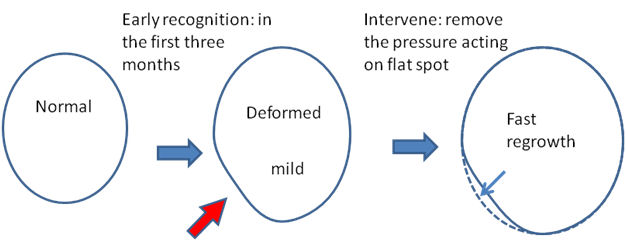
However, it was medically noted that babies’ soft heads started to suffer from constant high-pressure spots when sleeping on their back in one position. Over time, this could result in the flattening of the skull, or Plagiocephaly, otherwise known as Flat Head Syndrome. Adjustments needed to be made to make it possible to apply the ‘Back to Sleep’ initiative without causing cranium deformation. Thus, in 2000 a new campaign begun, sponsored by the American Academy of Paediatrics (AAP), ‘Back to Sleep – Tummy Time to Play’, this encouraged parents to place their babies on their tummy for a minimum of 30 minutes a day. Although there are several factors that may cause the foetal head to alter before and during birth (Macrosomia, Macrocephaly, multiple pregnancies, Uterine Myomas, Bicornuate Uterus, instrumentation of the birth etc.,) generally these are resolved within the first six weeks of life. However, babies tend to opt for a favourite sleep position that feels comfortable, sometimes because the neck muscles have developed a tightness which causes the head to tilt and/or turn to one side (Torticollis). Parents can rule out Torticollis by systematically doing neck exercises as part of a routine. The head position should be rotated alternately to one side and to the other every time the infant goes down to sleep during the day. It is also advised that the child’s orientation should be changed in the cot, so they do not always turn their head toward the same side. Babies that sleep on one side have a higher tendency to develop Plagiocephaly and this causes flattening of the affected area due to the constant pressure from gravity. Figure 1 below shows that early recognition and intervention by removing pressure off the affected flat spot can aid for best improvement and regrowth.
Figure 1: Early Recognition and Intervention for Best Improvement
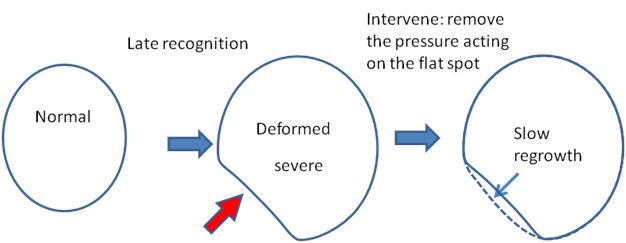
The result, if severe, can easily be identified by visually observing the baby’s head from the top/central view, as can be seen in Figure 2 below. If parents are unsure, they should consult their GP.
Figure 2: Reduce Improvement with Late Intervention
Current Treatment Available for Plagiocephaly
Positional Plagiocephaly is a topic of concern for worried parents and the lack of information available to prevent the onset of Plagiocephaly at an early stage. Currently, there is no scientific proof that babies with Plagiocephaly will develop any neurological disorders, but they may encounter physiological problems later on in life. Presently the NHS views this issue as ‘cosmetic’ and the flattened head, either Plagiocephaly or Brachycephaly, will correct itself over time. Many private medical companies are now offering helmets to correct the severe deformation. This treatment is costly, at £2,000, and the affected child would need to wear the helmet for twenty-three hours a day for at least six months as babies’ skulls harden as they grow older. The treatment is said to be most effective between four and twelve months old. With private treatment being expensive, most parents are struggling to find the money to aid alteration of the cranium and many parents are becoming increasingly distressed that the permanent physical appearance might affect their child’s self-esteem and confidence as they grow up, with some cases reported of flat head babies going on to develop a skewed ear or have one eye socket appear larger than the other. There is no NHS funding for Plagiocephaly prevention or treatment at this time, as the NHS simply advises “tummy time” during the day and new positions during play. Parents are also advised to switch the baby between a sloping chair, sling and flat surface so there is not constant pressure on one part of the head.
Prevention of Plagiocephaly using the Mimos® Pillow
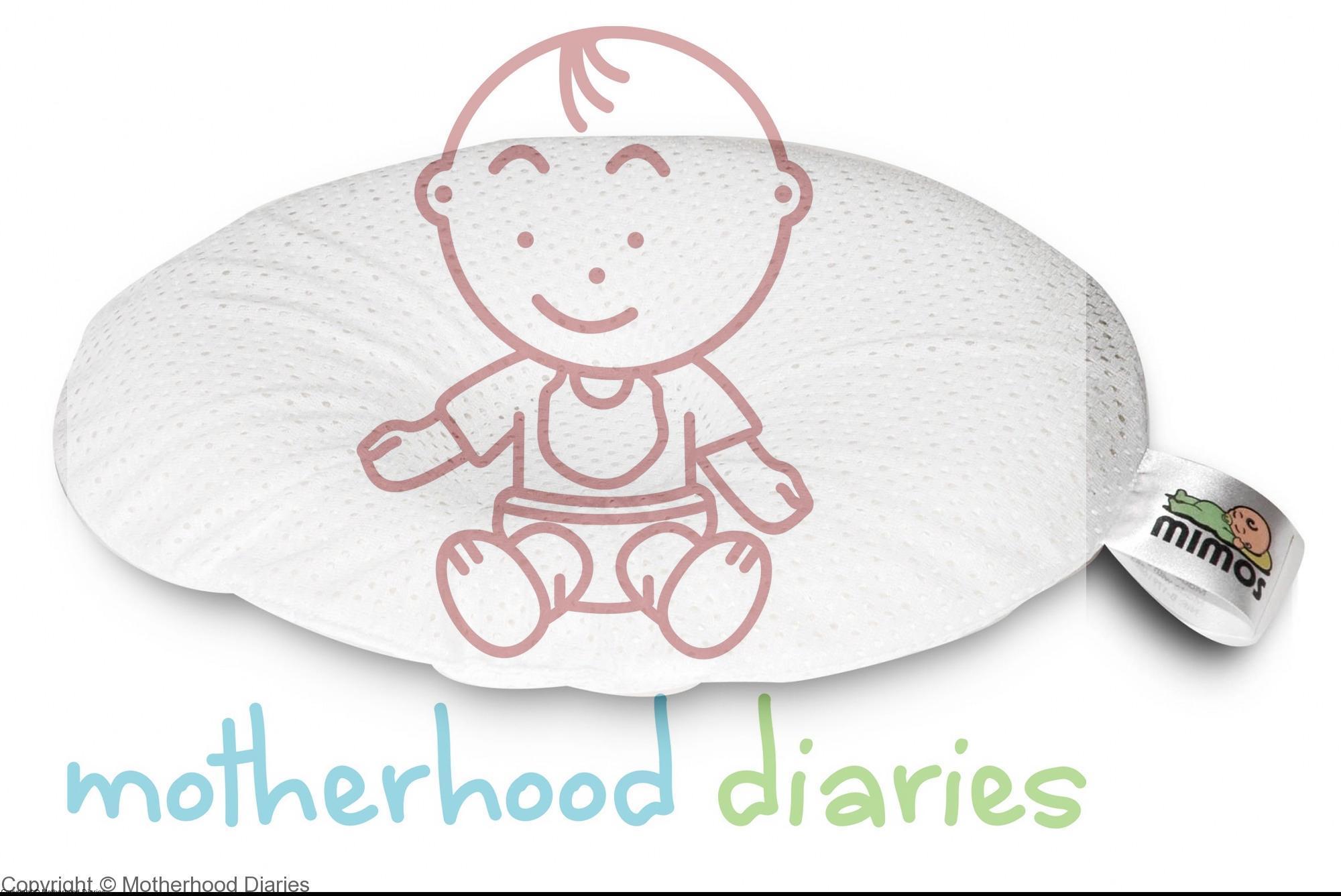
Figure 3: MIMOS – Safe Baby Pillow to remove constant pressure from the baby’s soft skull.
The Mimos® Pillow (Figure 3 above) has been created to allow babies to still sleep on their backs and the safe pillow works to distribute the pressure to prevent Plagiocephaly occurring in the first place. Low and Low Limited is creating awareness for parents to use the Mimos® Pillow as a prevention tool from birth to avoid Plagiocephaly, severe cases of which would later need to be corrected by the helmets. Minor positional Plagiocephaly can improve over time with repositioning, tummy time and massage therapy, and the Mimos® Pillow is designed to prevent skull flattening and allow the baby’s head to grow normally and round out to its natural shape. The pillow can be used from birth and there are different sizes available depending on age and Cranial Perimeter. Sizes range up to XXL and can be used up to a maximum of 18 months old. This can vary depending on the baby’s head size and physical development.
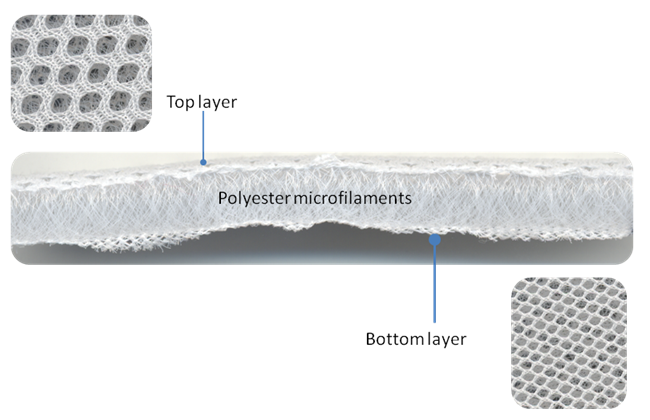
Figure 4:100% 3D spacer fabric and provides balance support for pressure relief as well as regulation of heat and moisture.
The Mimos® Pillow is a Class I Medical device regulated by the CE Health Authority and is TUV certified to be safe to use with babies. There is enough air flow through the body of the pillow to allow the baby to breathe normally, even when the baby lies face down on the pillow. The Mimos® Pillow has been specially engineered to distribute pressure evenly across a wider area of the baby’s soft skull during sleep and rest periods. Its unique oval shape gently cradles the baby’s head in the centre and helps to encourage free rotation of the head and neck. It is made of 100% 3D spacer fabric, as shown in Figure 4, and provides balance support for pressure relief as well as regulation of heat and moisture. The Mimos® Pillow is used to make the parents’ life easier as all they would have to do is place the baby on the pillow without worrying about the location of the deformity. As long as the headrests within the pillow cavity, the pressure on the head will be massively reduced as the weight is distributed over a larger area of the contact. If parents are unsure as to whether their child is suffering from Plagiocephaly, Low and Low Ltd offer a Craniometer to measure the deformities index, together with the monitoring.
Figure 5: Aidan, my son, sleeping on the Mimos® Pillow.
Benefits of the Mimos® Pillow
400% less pressure for prevention of positional deformations of the head
Breathable and safe
Allows free rotation of the head and neck
Soft, light and comfortable.
Machine washable and hygienic
Oekotex 100 Class 1 certified safe for direct contact with baby skin.
Figure 6: Benefits of the Mimos® Pillow
If you would like more information on the Mimos® Pillow, please visit www.mimospillow.co.uk.
If you have found this post helpful or interesting, please share, tweet or pin!
This post is from the UK
Never miss a new post!
Don’t forget to tailor your preferences, so you just get the posts you want to read!
Before I had my babies, I hadn’t met anyone who had successfully breastfed twins and despite what the books may said, I assumed it was something that was nigh on impossible.
During my pregnancy, I often felt a slight sense of sadness that I would not get to enjoy the wonderful intimacy with my babies that comes from breastfeeding. Don’t get me wrong, I’m no BF evangelist, I didn’t manage to feed my first child and struggled with my second. BUT when I did crack it, I loved it and carried on for a year.
But back to the twins, and apart from the usual panics and freak-outs that happen when you discover that the number of children in the household is about to double and you need to prepare for twins, I decided I would make no plans for feeding other than to see what happened when they were born.
Of course, with a twin pregnancy, there are so many other risks like pre-term labour and its associated complications, I felt it would be best to wait and see. I knew that if they were early and needed special care, it might be too much for me to feed them, given the 2 children that I would have at home who would also need me.
Charlie and Beatrix arrived 3 weeks early, after a straight-forward planned C-section. Charlie needed a brief spell in SCBU, and neither showed much interest in feeding. By day 2, the staff were keen to give Beatrix some formula, as she had not fed. My milk hadn’t come in yet and they were concerned by her low blood sugar levels. I insisted she was given this from a cup and she lapped at it like a kitten.
On day 3, my hormones kicked in (but not yet my milk) and I felt quite upset. All attempts to get the babies to latch on were failing and the more man-handling that happened, the sorer my nipples were getting.
A breastfeeding counsellor happened upon me at a vulnerable moment and advised me to use a pump every 2-3 hours, even though Charlie was on a drip in special care so that my body would know I was feeding 2 babies. The prospect of this was exhausting, and I felt sure that when my milk came in, my babies would know what to do and that my supply would regulate itself then. I was too desperate for sleep to consider pumping through that night.
A paediatrician told me off for limiting the time that the babies fed, saying they should be allowed to feed for as long as they want to but with the benefit of hindsight, I knew to ignore this and thus avoid the agonising blistering and bleeding that happened first time around when my darling daughter simply wanted to comfort suck for hours at a time.
We could come home on day 5 and with mum and husband around I could continue feeding the babies myself. In the comfort of my home I attempted to feed them at the same time (using the rugby ball hold) but I found it a) completely indecent and impractical for when out of the house and b) a bit like listening to someone running their nails down a blackboard as they sucked differently and the sensation of them feeding together was altogether unpleasant.
As I recovered from my C-section, my husband did all the getting up and down out of bed in the night to pass me the babies and change nappies. Those first few weeks passed in a complete blur of exhaustion–the babies were so little they needed to feed every 2 hours, each feed with winding and sometimes changing. Both took the best part of an hour and I averaged 3 hours of sleep a night. However, with ongoing help at home during the daytime, I could get a nap each afternoon, which kept me going.
At first, I kept a breast for each baby as Beatrix was better at latching on one side than the other but then she failed to gain weight and my health visitor advised me to swap the side each baby fed from at each feed. That week she gained 9oz, so we concluded I was obviously making full fat on one side and only semi-skimmed on the other!
The response of others to my feeding both babies was one of incredulity, and yes, it has been hard at times but in all honesty, it’s been far easier than you would imagine. For one thing, I can up and leave the house with the children with far less thought than if I had to consider how many bottles I would need. Secondly, feeding myself means that I have been forced to take that time to sit still and put my feet up at regular intervals during the day, which I probably wouldn’t have done had others been able to feed them for me. Most importantly, I have been able to have that special intimate time with each baby individually.
12 weeks on and I’m still breastfeeding my twins. It’s true that I wouldn’t have been able to do it without having plenty of help with the other two children (ages 4 and 2) but I’m hugely proud of myself and would encourage anyone else expecting twins not to rule out breastfeeding.