What you should know before you start your fertility treatment steps
If you have difficulties conceiving, and you have been trying for at least six months to get pregnant, then now may be the time to consider fertility treatment steps. Trying for a baby can be a challenging time, especially if you have been dealing with infertility that are inhibiting your chances of getting pregnant.
So it is essential that you do your research and know what to expect before embarking upon the next stage of fertility treatment. Many couples try to conceive naturally for months or even years before they seek alternative options, by which point they plan and schedule their sex around cycles and ovulation. If you are considering getting in touch with a fertility doctor so that you can discuss fertility treatment options, then it is important to know what to expect.
For many couples, having difficulties conceiving can cause feelings of loss and loneliness, and with infertility still being very much a taboo subject, many suffer alone in this emotional experience. Remember that you are not alone (1 in 6 couples in the UK suffer from infertility), so it is OK to talk to your friends and family about your fertility issues, or obtain infertility support. You may be surprised that many people in your life can relate to your situation. Another couple’s journey through infertility may be different, but below is what you should know before you start your fertility treatment steps.
Get an insight into your fertility with an accurate at-home test and check your female hormone levels from the privacy of your own home. Code below!
Male factor infertility can account for 37% of cases, as opposed to 31% for women, so it is crucial that you don’t blame yourself or your partner for your fertility issues. While these problems may be caused by one individual, it can sometimes be a combination of reasons that have led to you both being unable to naturally conceive together.
Placing the blame on your partner may erode at your relationship, so don’t forget that you’re a team and that you’re in it together. Think of fertility as a journey that you both need to take to get your desired baby.
If you decide to go ahead with fertility treatment, then both you and your partner will need to have your fertility investigated, as this will help the fertility specialist provide you with the best treatment plan going forward.
Get a comprehensive picture of your hormonal health without the need for clinics or appointments. Easy testing, free shipping, and fast results.
When you are trying for a baby, you may find that your entire life is scheduled around cycles, ovulation, periods, and fertility appointments. While it is natural for your focus to be on your fertility treatment and trying to keep on top of all the doctor’s appointments, try not to let fertility treatment control your life.
Of course, it’s challenging to focus on anything else during this time, so find a way for you and your partner to relax and de-stress. This may include going for a long walk, taking a weekend away somewhere remote, or getting into yoga. Stress is a significant factor in inhibiting ovulation, which can reduce your chances of conceiving. So reducing the stress in your life can increase your chances of conceiving.
There are a range of fertility options available
There are many options available to you during fertility treatment, and your fertility specialist will advise you on the best possible treatments for your fertility journey. When people think about fertility treatment, they often assume that the IVF process is the only option available.
However, you may be eligible for other treatments, like egg donation, hormone therapy or Intrauterine Insemination Treatment (IUI). IUI is where sperm is placed inside the uterus hoping to increase the number of sperms that make it into the fallopian tubes to achieve fertilisation. IUI fertility treatment is available in the UK at fertility specialist clinics such as King’s Fertility, which has been helping couples conceive since 1983.
Your medical professional will conduct a fertility test to determine which fertility treatment is right for you.
Get an insight into your egg reserve with LetsGetChecked's Ovarian Reserve test.
How you live your life can have a significant impact on your fertility. While fixing your lifestyle may not be a guaranteed fix, achieving a healthier lifestyle can improve your chances of getting pregnant. If you are overweight, then you should consider reducing your BMI through a balanced diet and regular exercise.
Not only will this improve your overall health, and possibly increase your fertility, it will also make you feel less stressed, which helps to increase your chances of getting pregnant. Adopt fertility boosting foods in your diet like folic acid, calcium, whole grains and zinc and make sure your man is ingesting these vital food groups too!
Unsuccessful treatment doesn’t mean there is anything wrong with you
Fertility treatment isn’t for everyone, and there is not always a guaranteed chance of success. So, if the range of options available to you don’t work, then this doesn’t mean that there is anything wrong with you or your partner. Sometimes there is nothing that can be done about infertility, and there is no real explanation for it. Even though it can be tough to hear that you won’t be able to conceive, it is important not to feel at fault. Think about considering other options like adoption or fostering as there are lots of children out there who are looking for mothers (and fathers) like you to give them a happy home.
Undergoing fertility treatment is a demanding process, so take plenty of time to consider your next steps with your partner, so you are both aware of what to expect throughout the journey. And, remember, if treatment doesn’t work, don’t look to blame each other, but work together as a team. Keep check of your diet and lifestyle and adopt healthy choices to increase your chances of getting pregnant.
LetsGetChecked can help you understand your hormonal health with their female fertility testing options. Collect your sample from home and you'll receive accurate results within 2-5 days of the lab receiving your sample
More specifically, what is infertility, and how do you know whether you are experiencing fertility issues?
Fertility is:
“The quality of being fertile; productiveness.”
“The ability to conceive children or young.”
You may be surprised to learn that fertility issues effect 3.5 million people in the UK – that’s 1 in 6! It seems like a high statistic, doesn’t it, especially when you peg that ratio against the number of people who suffer from diabetes (1 in 17) and asthma (1 in 12). Many of the population go through fertility struggles, and 67% of those find infertility to be more or as stressful as getting divorced. So, taking charge of your fertility can be difficult.
But why?
Well, to understand why fertility causes huge stress on many couples, we must understand where this stress is likely to come from.
Get an insight into your fertility with an accurate at-home test and check your female hormone levels from the privacy of your own home. Code below!
In school, you are taught about contraception to stop you from getting pregnant, and that one day, you will grow up to have children like your mum and dad. You then spend half your life making sure you have safe sex, and then when you are ready to have a child, it is a matter of finding the right person and then trying for a baby.
Easy, right?
Not quite.
Unfortunately, life isn’t as black and white as that. We are not taught in school about what happens after contraception, more specifically about how small the window of opportunity actually is to conceive a child. In fact, most couples have a 15% to 25% chance of getting pregnant in a particular month, and the small window lasts about six days! That percentage doesn’t even take into consideration factors that may affect fertility, so most women who grow up thinking they will become a mum feel a massive blow if they are then deprived of that opportunity.
And, we don’t talk about the cultural pressures that some couples experience too. In African, Chinese or Asian families, there is a huge expectation to become pregnant. And, because fertility is rarely discussed, men and women often suffer in silence, which then sparks a lengthy and isolated struggle about figuring out what to do next and how to get pregnant fast.
In this situation, do you go to a fertility specialist or continue to try conceiving yourself at home? And when you speak to a GP who then refers you to a hospital for further treatment, what next? The dream of being able to have a child drifts away from you, bringing about a sense of failure, shame, and despair. And it’s those sorts of emotions that couples feel when they enter the world of fertility.
My husband and I have struggled with fertility issues too
I paid little attention to my fertility when I was in my twenties, as we seemed to conceive our two boys at the drop of a hat. In fact, I was convinced that my second one was a miracle birth! But, when we tried for our third in our thirties, things massively changed for us. We thought it would be so simple to do the deed and get pregnant soon after – job done!
But, in reality, it took us around three years to get pregnant (we actively tried in the last year, by planning the best time to get pregnant with minute intricacy and using an elaborate fertility calendar) and we finally got pregnant with our little girl, Poppy. She sadly died at 16 weeks due to a PPROM (Premature Prenatal Rupture of Membranes), and it took us a further 14 months to get pregnant with our fourth.
During that time, we had suffered a whole host of emotions because we didn’t factor changes to our fertility after miscarriage. We felt regret at leaving it so late to try for our third and fourth, frustration that I would see my period every month, stress because we had to plan our nights in together around the kids, anger because hubby and I had turned on each other, and pain because we desperately tried to fill the void of our beloved Poppy.
Finally, we experienced relief and received a positive pregnancy result, but it was not a smooth ride to get there. The amount of research I had crammed into those four years were enough to fill a book (watch this space!), and, without receiving medical help to conceive, we got pregnant when I was 37 years old.
We realise now that we suffered from secondary infertility, which means that we were unable to get pregnant or carry a baby to term after having a baby (or two in our case). We had told ourselves that if we didn’t get pregnant in the 15th month of trying after the loss of our baby girl, then we would seek fertility counselling, but we succeeded, and now we are currently awaiting our rainbow baby in a few short months.
We’re not alone
The problem is that infertility is a lot more common than you realise, and these problems create immense pressure emotionally on couples in their personal and work life. Fertility isn’t really understood because it is generally not talked about, which then creates further stress. Women often feel confused, alone and unsure of what is going on or what probable cause of action to take next.
So, why is it so hard to get pregnant?
It may be interesting to note that a significant factor of fertility issues is male factor infertility, which makes up for 37% of reasons couples turn to fertility treatment like IVF, followed by 32% of unexplained fertility cases and 31% of fertility issues coming from female infertility. This actually shows how significant the male’s role is in this whole process, which is probably hugely underestimated because it isn’t spoken about.
And studies show that there is an increasing trend in the prevalence of sperm abnormalities, confirming a link between the male’s age and deterioration of sperm. So age is another factor to watch out for, for both males and females. And it’s interesting that just because the woman carries the baby, in most cases, she may not be the reason for the fertility issue in the first place.
But, I feel for men here. They feel like the one thing they should be able to do is to provide the sperm to make the baby, and when they can’t, they feel shameful. They then retreat into their world of work, and it really becomes a stressful situation for both the woman and the man. And when trying for a baby, they often have the added pressure of having to perform on the clock, which can’t be easy for them either!
Get a comprehensive picture of your hormonal health with no clinics or appointments. Easy testing, free shipping, and fast results.
Couples often then turn to fertility treatment, but this can be a struggle upon itself
You can try to get pregnant for months, if not years, before you finally turn to medical intervention (like TrioFertility) to help. You try to fix the problem by searching for the best fertility treatments and the best clinics using research that you have conducted yourself, but it often becomes a sense of running around like a headless chicken, trying to find a way out of the predicament you are in.
And, the problem is you can’t control this feeling. There isn’t necessarily a fix that will tie up all the loose ends, and this is probably one reason fertility issues can become more stressful than divorce. At least with a divorce, you can chat about it with your friends and family who will understand. But how many times have you spoken to your friends and family about your struggles to have a baby?
Therefore, women and men become very introverted, frightened that you won’t get pregnant, hopeful that you may get pregnant the next month and despair when it doesn’t happen again. And this vicious cycle of emotions feeds the stress and depression that comes along with the need to find fertility treatments because you are trying to put something right, which feels inherently wrong.
Fertility treatments can increase anxiety and stress in a relationship
It is not surprising, then, that 69% of people find pursuing fertility treatments stressful. Fertility treatments can become emotionally, physically, practically and financially draining, especially when you aren’t sure of what to do and where to go to fix this problem of not being able to get pregnant.
Appointments can become expensive and time-consuming, and you can start to feel very distressed and wound up if treatment isn’t working. These knockbacks can place further stress on the relationship, with men often detaching themselves from the situation because they are natural fixers, and they can’t fix this situation. Women like to talk about it but often can’t because it’s hidden grief and they fear what will be said to them if they do speak up. And, if they do, they will likely hear the same words:
“It’s ok, you’ll be fine. You’ll get there.”
But it isn’t fine, and it isn’t ok. Is it?
Which is why some couples stop treatment eventually
Ongoing fertility issues can damage a relationship. Life is held in limbo while you put your all into the treatment cycle, your lives dominated by juggling appointments around personal and work life. And you are often unsure of what will happen next. Sometimes medical staff don’t get back to you, and this whole uncertainty goes back to friends and family potentially not understanding what you are going through and the massive impact this process has on both of your lives.
And, if a particular treatment isn’t working then all that money, hard work and juggling were for nothing. There is this huge lack of control over the whole fertility treatment system, which is why 65% of people often decide to stop treatment. Not because they want to, but because they have exhausted every avenue they knew possible to achieve a pregnancy, and they had no will or money left to carry on.
Get an insight into your egg reserve with LetsGetChecked's Ovarian Reserve test.
Even though IVF makes up 93% of fertility treatment in the UK, it is clear that the way it is being offered to couples is not practical or digestible. There needs to be a hand-holding process that enables you to understand where you stand, what treatments are available, and how you can access the best help along your journey to fertility.
Apricity understands that fertility is not a destination but a journey
Apricity is a virtual fertility clinic that has developed a new way of experiencing fertility while improving your chances to conceive via Artificial Intelligence. Apricity wants to tackle the murky journey through fertility with fresh eyes, starting fertility treatment with the knowledge they now have on the medical side, but with new technology that will empower a new service.
This new approach will allow you to visualise your journey and understand the options you have available through access to educational materials, so you are never kept in the dark again. Apricity offers the following:
Excellence
Apricity wants to deliver first-class treatment to optimise your chances of success. Apricity only hires the best fertility specialists in the field, as they are not a physical clinic themselves or a team of doctors, but they partner with existing fertility clinics whom they select using a meticulous vetting process.
Apricity implements several factors to ensure these fertility clinics have an excellent patient experience rating on the HEFA website of 4.5 stars or more out of 5. They also look at live birth rates, which have to be consistent with the national average as well. Apricity’s partner clinics perform 4,600 embryo transfers in a year, and partners include the Harley Street Fertility Clinic, King’s Fertility, Cheshire Reproductive Medicine, The Doctor’s Laboratory and The Poundbury Clinic.
Apricity has also created a partner network of embryologists, nurses, holistic therapists, counsellors and patient representatives from Fertility Network, which is the leading patient support charity for fertility. All research created is evidence-based (based on the largest fertility database in the world), so you are provided with the best knowledge possible when learning about your personal fertility journey.
Care
Apricity uses the best care possible and will evaluate your chances of success before going through treatment. Apricity work to understand what is the best approach and how to better that treatment throughout your journey.
Empowerment
You often feel like you are drowning in differing advice and what you really need is for someone to say, “Look let’s just talk through where you are at and where you need to go now,” which is what is missing in this fertility world. You are often left on your own to come up with your own solutions, but where do those solutions come from?
They’re not scientifically based, but at the time you think that it’s the best cause of action. Apricity enables you to feel empowered through the whole fertility treatment process. There will always be a doctor in the driving seat, but at least you will feel like you can co-pilot the journey as well, understanding the options available and having clear cut knowledge on each path.
“Sharing your values for support and transparency, Apricity is changing the way fertility is accessed…” Blair McPhee, CEO Fertility Network
Apricity’s app
Apricity has brought out an app which provides you with an all-around experience of your fertility journey. The app offers reminders of what you have to do, notifications and useful documents related to your unique fertility journey. For example, if you require injections at a particular time, the app will remind you.
You will also receive assistance and guidance, as well as notification of appointment reminders, which will help to reduce stress. You will be provided with an overview of your fertility journey, i.e. different phases, a calendar view, day by day reminders, medication and appointment details. There is a vast content database for support and guidance sent at the right time so you won’t feel overwhelmed with too much information and you will know what is going on ahead of the journey.
Fertility advisors are available seven days a week, which means that rather than having to coordinate your own appointments, answer your own questions and liaise with clinics yourself, the advisors are there to hold your hand. They will make sure you receive results and reminders when you should have them and arrange everything with you via the app. A dedicated advisor will be appointed to you, and you can message them with questions or queries you have.
All advisors have received fertility training and are qualified to a nurse healthcare assistant level. They may not answer all your clinical questions (as the actual clinics do this), but they offer that extra support layer the fertility journey is so lacking in the UK.
And the app is continuously developing, using an algorithm which learns from anonymised patient data every time information is added. So, Apricity’s app will become more on point with their support and guidance to you when you need it.
But why Apricity?
“The support and care you receive is priceless, such a good and caring team that goes above and beyond.”
With Apricity you’ll receive all-inclusive packages, which includes bundled together treatment cycles, scans which are arranged locally, and home blood testing kits which means you’ll reduce the number of times you’ll have to attend a clinic. Apricity even offers a scheme with AXA PPP healthcare, which provides a chance for your employer to pay for everything up to a certain amount. You’ll receive a fast-tracked service to treatment so there will be no waiting times and lists.
“I could have not gone through this process without the App.”
So, how do I get started?
Head over to Apricity’s website now and set up your free one-hour consultation, which is part of all the packages Apricity provides. During that call, Apricity will gauge where you are at during your journey and offer a personalised package suitable to your situation. Some factors may affect your chances of fertility treatment, but this will be stipulated by Apricity, who will then refer you to the necessary pre-treatment phase. For example, if your BMI is too high, then you may be referred to a nutritionist to look at your health and set up a plan, which will help you to maximise your chances of a positive result following fertility treatment.
LetsGetChecked can help you understand your hormonal health with their female fertility testing options. Collect your sample from home and you'll receive accurate results within 2-5 days of the lab receiving your sample
Two women I spoke to at length at Apricity’s launch event mentioned how they had given up trying to get pregnant, and I learned a whole different side of fertility – the part where you don’t get the baby in the end. It was sad to hear, but these women finally felt relief letting go of their struggles to conceive. In one woman’s case, she wasn’t able to get an embryo transfer as the lining in her uterus wouldn’t cooperate.
The couple were told that they would never carry a child because her womb was too damaged to sustain a pregnancy. She is writing a book about it and all power to her because there aren’t enough books out there that offer support for couples when the fertility journey doesn’t work. Apricity’s app is there for women when treatments don’t work, by providing support before, during and after treatment. Apricity will provide counselling support whenever needed.
If you are struggling with fertility issues, then please don’t hesitate to contact Apricity to get your free consultation phone call or call +44 (0) 115 824 3928 now.
*I attended a launch event by Apricity, but all thoughts and opinions are 100% my own
*Links marked with a ‘*’ are affiliate links which means I may earn a small commission on qualifying purchases
Top five European Countries for Egg Donation
By Alexsander Wiecki, Egg Donation Friends
Infertility affects one in eight women globally. It is a growing health issue, but fortunately, modern medicine has provided solutions that were simply not available 50 years ago. However, due to the increasing price of egg donation and other IVF treatment in the UK, people with infertility issues must think outside of the box to achieve their dream of becoming parents. This often means travelling abroad to find a suitable solution. Thankfully, due to wider availability of reproduction technologies and growing competition among IVF clinics, travelling for egg donation abroad has become easier than ever, with many people going abroad in search of safe, affordable and successful egg donation treatments.
In our guide, we recommend the top five European destinations for egg donation treatment in Europe. In our guide, we consider the following essential factors:
Cost of treatment
Quality of treatment including success rates
Travel and accommodation costs
Local fertility laws
Get an insight into your fertility with an accurate at-home test and check your female hormone levels from the privacy of your own home. Code below!
Spain is one of the most popular European destinations for egg donation treatment. There are nearly 200 IVF clinics in Spain, of which half reports to the European Society of Human Reproduction and Embryology (ESHRE), the fertility industry’s principle governing body. Spain is often chosen by British and German patients, mainly due to the limited availability of NHS-funded treatment and the high cost of private treatment in their respective countries.
Cost of Treatment:
The average cost that couples pay for egg donation is EUR 6,495, including standard IVF lab procedures and donor costs.
Quality of treatment (success rates):
Spanish clinics are widely known to use cutting edge reproductive technologies and equipment. The average egg donation success rate according to ESHRE’s latest figures is 55.6%. Many Spanish clinics hold ISO and other accreditations confirming the quality and safety of treatments they offer. Some clinics submit their egg donor success stories and rates to the Spanish Fertility Society (SEF).
Travel and accommodation costs:
A number of budget airlines provide direct flights from the UK to popular Spanish cities such as Madrid or Barcelona. The cost of living in Spain is lower than in the UK, so food and accommodation should be reasonably priced.
Local Fertility Laws:
Spanish law and regulations tend to be supportive of patients going through egg donation treatment. For example, IVF, Pre-implantation Genetic Diagnosis (PGD) and egg donation treatment are all legal in Spain. Anyone can be treated regardless of their marital status and sexual orientation. However, in Spain donors are anonymous.
2. The Czech Republic
The Czech Republic has approximately 30 IVF clinics that provide egg donation treatment, of which approximately 20 reports to ESHRE.
Cost of Treatment:
Egg donation treatment costs approximately EUR 4,550 per cycle which includes standard IVF lab procedures and donor costs.
Quality of treatment:
The average success rate for IVF with donor eggs is 46.8% according to ESHRE. The Czech Republic is heavily regulated by its governing body, the Czech Society for Assisted Reproduction (CSAR).
Travel and accommodation costs:
The Czech Republic has five international airports and very affordable accommodation options.
Local Fertility Laws:
Egg donation and sperm donation are both legal, although embryo donation is not. Women can undergo IVF up to the age of 48. Czech clinics are obliged to ensure the anonymity of the egg donor, sperm donor and intended parents.
Get a comprehensive picture of your hormonal health without the need for clinics or appointments. Easy testing, free shipping, and fast results.
There are 44 IVF clinics in Greece that provide egg donation treatment. Greek IVF clinics are becoming increasingly popular due to the country’s patient-friendly IVF regulations. The majority of clinics have English speaking staff, or provide English translators, making this a popular destination for UK patients.
Cost of Treatment:
The price for egg donation ranges from EUR 4,500 to 6,000, including standard IVF lab procedures and donor costs.
Quality of treatment:
The average success rate of IVF with donor eggs is 51% in Greece. These impressive success rates are due to the country’s long heritage in fertility treatment, and the extensive experience of doctors and embryologists.
Travel and accommodation costs:
Most budget airlines fly direct to Greece from the UK, and hotels are among some of the cheapest in Europe, ranging from 20-70 Euros per night.
Local Fertility Laws:
Single people are permitted to have IVF, but it is currently illegal for same-sex couples to do so. However, they can be treated as single women. It is legal to transfer two embryos for patients who are under 35, and three for women over 40. There are no limits when it comes to embryo storage, however, if you already have frozen embryos, you need to use those before you can freeze more. The maximum age for IVF recipients in Greece is 50.
4. Cyprus
Cyprus is a gorgeous island country in the Mediterranean Sea, 400 miles south of Turkey. Cyprus has about 10 egg donation clinics and is a popular destination for patients from Europe, Asia and Africa. The island is divided into South and North Cyprus. The most popular destination tends to be the northern region where there are more donors and treatment tends to be more affordable.
Cost of Treatment:
Egg donation ranges between EURO 4,500 and 6,000 and includes standard IVF lab procedures and donor costs.
Quality of treatment (success rates):
Egg donation success rates vary from 59% to 75%. Make sure you check with the clinic as success rates do vary quite considerably. Due to stringent regulations, the quality of treatment across Cyprus is generally high. However, it’s worth pointing out that historically some clinics in Northern Cyprus do not follow international recommendations. In 2016, the Ministry of Health introduced a new law which required IVF clinics to adhere to a series of strict regulations. Few clinics applied due to the heavy restrictions imposed on them. Before you book, it’s worth asking the clinic if they have been certified under the new laws introduced in 2016. Also, find out if the doctor carrying out your treatment has been certified. Again they should have been issued a certificate by the Ministry of Health.
Travel and accommodation costs:
Larnaca and Paphos are the two international airports in Cyprus, with British Airways, Easy Jet and Ryanair all flying there.
Local Fertility Laws:
Egg donation is anonymous in Cyprus and available to unmarried couples, same-sex couples and single people. The maximum age of a female donor egg in North Cyprus is 55, however from the age of 45, recipients must be screened and from 50 more tests will be required. In South Cyprus, the maximum age is 48.
Get an insight into your egg reserve with LetsGetChecked's Ovarian Reserve test.
There are approximately 31 IVF clinics in Ukraine offering IVF and egg donation treatment. Some of them also offer surrogacy programs. If you’re interested in travelling to Ukraine, consider the following:
Cost of Treatment:
Egg donation treatment in Ukraine is as low as 4600 Euros, with frozen egg donation even cheaper. Ukraine is currently one of the most affordable European destinations for IVF, without compromising on quality and safety.
Quality of treatment (success rates):
IVF clinics require a license to operate, provided by the Ministry of Healthcare of Ukraine. Every three years, the clinics are inspected to ensure they comply with all the regulations. It is recommended you find a clinic with an ISO certification. Clinics submit their success rates to the Ukrainian Association of Reproductive Medicine and to ESHRE. According to ESHRE, the average donor egg success rate is 56.2% which is high compared to the international average (50,3%)
Travel and accommodation costs:
Ukraine is the most affordable destination when it comes to accommodation, travel and food costs.
Local Fertility Laws:
There is no specified age limit for IVF treatment, but the majority of clinics do not accept patients older than 51. Ukrainian law states that embryo sex selection is not legal except for medical reasons. Ukrainian clinics do not cater to same-sex couples. However, single women can have IVF. There is no law specifying the maximum number of embryos that can be transferred. However, clinics usually transfer no more than two embryos at a time.
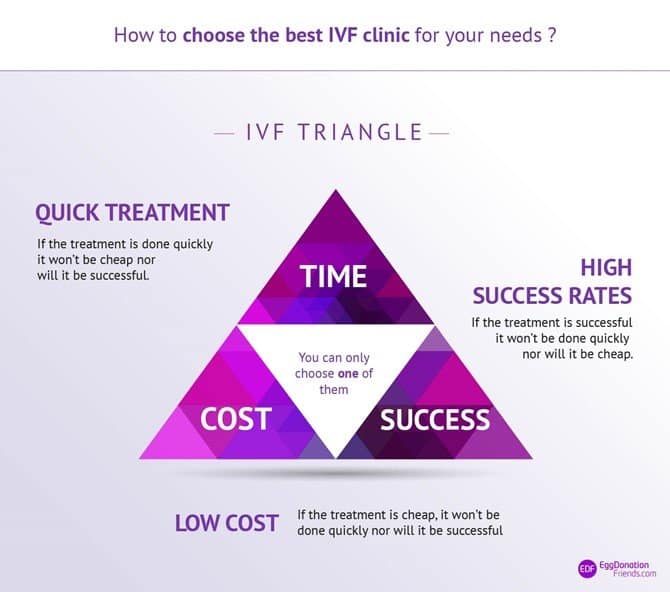
So there are our top five recommended destinations for egg donation treatment! Now you might be wondering, which is the best for you? Check out our IVF Triangle infographics below to help you make the right decision.
LetsGetChecked can help you understand your hormonal health with their female fertility testing options. Collect your sample from home and you'll receive accurate results within 2-5 days of the lab receiving your sample
The Rewards of Egg Donation: Giving the Gift of Life
So many people dream of starting a family of their very own. Yet for many couples, starting a family with traditional methods is not an option. In fact, 1 in 8 couples has difficulty conceiving a child. Due to any number of fertility struggles, these hopeful parents turn to donor eggs.
Just as there are many reasons for using donor eggs, there are just as many for choosing to be an egg donor. Because of these generous donors, many couples can start the families they’ve always wanted. If you have ever wondered about who can become an egg donor, continue reading and visit donoreggbankusa.com/our-egg-donors/donate-eggs for more information.
Get an insight into your fertility with an accurate at-home test and check your female hormone levels from the privacy of your own home. Code below!
Donating your eggs is akin to giving the gift of life to families in need. However, there are several factors needed to determine whether you’ll be accepted as a donor candidate.
You must be between the ages of 21 and 32
You must be tobacco and drug-free
You must be free of sexually transmitted diseases
You must be in good emotional health and must meet with a psychologist to undergo a mental health screening
You must be available for approximately four months
You must be prepared to self-administer injectable medications
Even if you meet the basic requirements above, egg donation is not for everyone. It is important to weigh your reasons for becoming a donor with as much information as possible. Also, it’s a good idea to have an outlet for your questions and speak with people who have experience in the process, like a previous donor or egg bank staff member. When deciding whether to donate, take everything into consideration, including what drew you to egg donation in the first place. The decision to help a couple struggling to conceive is ultimately your choice and no one else’s.
What’s involved in egg donation?
Get a comprehensive picture of your hormonal health without the need for clinics or appointments. Easy testing, free shipping, and fast results.
To begin, you’ll undergo drug tests, blood tests, psychological and medical history examinations, as well as evaluations regarding professional and educational histories. If you pass these examinations, you’ll move onto the egg retrieval stages of the process.
Your doctor will prescribe self-administered injectable medications to help stimulate your ovaries to produce mature eggs. During this stimulation stage, you’ll report to a clinic for blood work and monitoring of your body’s response to the medications.
When your ovaries are ready, your doctor will instruct you to administer a “trigger” shot to stimulate your ovaries to release the eggs. In a simple outpatient procedure known as egg retrieval, your eggs are removed from each follicle with a thin needle. This procedure is performed under a light anaesthetic. Recovery is relatively easy for most women. However, common side effects are cramping, light bleeding, or constipation.
Get an insight into your egg reserve with LetsGetChecked's Ovarian Reserve test.
When becoming an egg donor, feelings of joy to anxiety are all normal. The process of donating eggs for someone else’s family can make you anxious. You may feel joy you’re contributing to a couple who just want to have a family.
You may experience sadness, confusion, or nervousness at the legal implications. No matter what emotions you are feeling, allow yourself to work through them and remember your reasons for choosing to become an egg donor. It’s incredible to think loving and hopeful parents will be able to cherish the amazing gift of life because of you.
What do donors receive in return?
For many women, the choice to become an egg donor is rooted in their innate sense of giving. They are giving life, the unbreakable love for a child, a family’s future, and the little moments of joy children bring their parents.
A more material benefit from egg donation is the monetary compensation for your time and effort. Depending upon the number of cycles you complete, the financial benefit can be quite significant.
No matter what draws a woman to become an egg donor, everyone should be aware donors and recipients have legal rights, which are discussed in their entirety during the screening process. It’s important to fully understand the egg donation contract and consult an attorney if you’re unsure of what you’re signing.
LetsGetChecked can help you understand your hormonal health with their female fertility testing options. Collect your sample from home and you'll receive accurate results within 2-5 days of the lab receiving your sample
If you’re still considering becoming an egg donor – and you fit the criteria above – the next step is to begin the application process. Less than 10% of all candidates are accepted as donors; however, if you are not, it’s clear you have a very giving heart and value for a strong family bond.
*Collaborative feature post
*Links marked with a ‘*’ are affiliate links which means I may earn a small commission on qualifying purchases
How To Become An Egg Donor For Infertile Couples
It is a sad fact that millions of people are affected by infertility. While some of these people will opt for fertility treatments, others will choose adoption. Of course, these are perfectly viable options for couples who are struggling to conceive, but there is nothing more satisfying than having a child of your own. With this said, assisted reproduction is helping couples and individuals achieve their lifelong dream of having a baby. So, let’s dive in and learn a little more about egg donation and pregnancy.
Get an insight into your fertility with an accurate at-home test and check your female hormone levels from the privacy of your own home. Code below!
The egg’s journey through the female’s uterus is treacherous and long, so, many of the eggs will not survive. There are several factors that can affect the female’s ability to get pregnant, including the pH of the acidic vaginal secretions, tubal blockage, infections, and diseases. The male can also play a part in this process, as well. Medical conditions such as cystic fibrosis and diabetes can cause testicular failure. Heavy alcohol and illicit drug use can also affect the number or shape of the sperm.
Most women dream of becoming pregnant and giving birth to a healthy baby, but some will have obstacles standing in their way. Healthy, fertile women can volunteer to donate their eggs to help make the infertile woman’s dreams come true.
Egg Donation Programs
Once you decide to donate your eggs, you will need to find a suitable program that offers this service. Do your research, because not all of these programs are reputable and some offer higher compensation than others. The best way to find an egg donation program is through careful research or recommendations from friends. Look for a program that has been established for at least 10 years. While you are researching, be sure to perform a search inquiry on how to donate your eggs to these programs.
Get a comprehensive picture of your hormonal health without the need for clinics or appointments. Easy testing, free shipping, and fast results.
While you are helping infertile couples and individuals make their dream come true, you will also be receiving a healthy reward. In fact, first-time egg donors receive between $6,500 and $10,000 for their dedication and effort. You will receive at least $6,500 for your first cycle and the compensation will continue to increase with each subsequent cycle. The compensation is enough to attract some women to these programs but it’s very important for women to also be connected for humanitarian reasons. It’s extremely rewarding to help someone achieve their dreams.
Most egg donation programs will offer reimbursement for all related expenses, such as ground transportation, hotel, and airline tickets. Just make sure you keep all of your receipts because you will need to submit them along with the reimbursement request at the end of your last cycle.
Get an insight into your egg reserve with LetsGetChecked's Ovarian Reserve test.
To be considered as an egg donor, you will need to meet certain qualifications and requirements. First of all, you will need to be at least 21 years of age and no older than 30. You also must be healthy and mentally stable to become a donor. Donors must be non-smokers, responsible and reliable. Women who utilise illicit drugs and are heavy alcohol drinkers will be omitted right away. Donors with special qualifications such as higher educational degrees or special talents can receive higher compensation. Remember that it is crucial, to be honest when you are applying to the program.
Once you are selected, you will be required to undergo an initial psychological and medical screening. A physician will medically clear you after you pass these screenings, then you will be required to go through a legal process.
It’s important to carefully consider donating as an option if you pass the above criteria because your selfless act is a gift of a lifetime to a couple in need. However it’s a complex and important process, so you make sure that you are at peace with your decision.
LetsGetChecked can help you understand your hormonal health with their female fertility testing options. Collect your sample from home and you'll receive accurate results within 2-5 days of the lab receiving your sample
*Links marked with a ‘*’ are affiliate links which means I may earn a small commission on qualifying purchases
Why people are seeking fertility treatment abroad instead of the UK
With as many as 1 in 4 pregnancies ending in miscarriage and approximately 3.5 million people in the UK finding it difficult to conceive, it is not surprising that fertility support specialists are frequented daily by couples seeking alternative treatment to get their babies. Unfortunately, with the NHS threatening to cut fertility funding and with many Clinical Commissioning Groups (CCGs) reducing the number of cycles they offer people – or even cutting them completely – couples face difficulties in the UK, pushing them to seek fertility treatment abroad, despite NICE’s 2013 recommendations that all women aged 40 or under who have not conceived after two years, should have access to a minimum of three cycles.
Get an insight into your fertility with an accurate at-home test and check your female hormone levels from the privacy of your own home. Code below!
The online research project was conducted between August 2016 and February 2017 and took findings from 241 people who had either undergone fertility treatment or were considering it. The survey respondents shared their views on the current state of fertility treatment in the UK and the factors that motivated them to travel abroad for treatment. Fertility Clinics Abroad and Fertility Network UK hope that their findings will highlight some of the key issues that the fertility industry in the UK face today and inform the Government, CCGs in England and Wales, Scottish NHS Boards, private and NHS funded fertility clinics and health professionals of how the public perceive UK fertility treatment.
The survey hopes to act as a catalyst to improve fertility care, treatment standards, and best practices. Below is a breakdown of the research’s key findings and how people have been affected with difficult fertility treatment provisions that the UK impose.
Cost is the driving factor for pushing people out of the UK
The media has painted a negative picture of the core issues surrounding the fertility treatment provisions in the UK, namely highlighting long waiting lists, inconsistent access to NHS funded treatment, low supply of donor eggs and the heavy cost of private fertility treatment.
However, it was without doubt that lack of NHS funding for fertility treatment and the spiralling cost of private treatment were the main drivers behind people seeking fertility treatment abroad. 76% of respondents felt that private fertility treatment was very expensive, with nearly 80% stating that it was twice as expensive as they were willing or able to pay.
Get a comprehensive picture of your hormonal health with no need for clinics or appointments. Easy testing, free shipping, and fast results.
The survey found that most respondents sought IVF using their own eggs and that they were willing to pay between £1,000 and £5,000 for treatment. However, in the UK, IVF can often exceed £10,000, including additional expenses. This issue of ‘hidden costs’ has yet to be challenged and, because of the high fees, 62% resorted to using their life savings, which affected their ability to fund pensions, pay for educational fees or support other family members.
Some even had to re-mortgage their houses or sell personal belongings to fund their fertility treatments. Some respondents sought help from family and friends, secured bank loans, used credit cards, or started a crowdfunding campaign to find the funds available to pay for their treatments. With the lack of funding available, some people who experienced secondary infertility thought that these high fees were unacceptable. It is unsurprising then that 58% would go abroad because the treatments on offer are generally cheaper.
Why people are being driven to seek fertility treatment outside of the UK
60% of the respondents in the survey had already had treatment in the UK, and the majority of those felt it was either passable or substandard, with 44% believing the standard of care was average. Only 3% of the respondents said that the treatment they received was excellent.
The survey found that people were worried about the lack of person-centred care in the NHS, which uses a ‘one size fits all’ approach. 36% said that the service and aftercare were poor and 35% said that the long waiting lists and a lack of egg donors were some of the major reasons to find fertility treatment aboard. 65% also pointed out that access to free NHS treatment depends on where you live.
While there are many positive factors for staying in the UK, i.e. the convenience of not having to travel (33%) and being near friends and family (17%), people felt more like a statistic rather than an individual, with only 7% saying that the standard of treatment in the UK is high and that there are good service and aftercare available (3%).
Get an insight into your egg reserve with LetsGetChecked's Ovarian Reserve test.
As a result, 93% of the respondents said they would consider travelling abroad for fertility treatment and those that have already received treatment abroad, would consider it again. 50% believe that foreign clinics can offer higher success rates and 46% would consider travelling abroad upon positive recommendations from other people. It is said that there are also shorter waiting lists and more access to egg donors, which seems to be the opposite of what is happening in the UK.
There are also fewer restrictions placed on people, for example not basing access to treatments on Body Mass Index. People felt that the NHS is paralysed by bureaucracy, which directly impacts waiting times, as well as offering no special consideration for older women who have a limited time window to conceive. Women in their 40s felt there were more opportunities for them abroad with more clinics catering to their age group.
Where are people going for treatment?
Over 60% of respondents had an interest in having their treatment in Spain, with 43% wanting to travel to Greece, 41% to the Czech Republic, and 29% to Cyprus. Over twenty other countries were mentioned in the survey across the world, with some surprising countries including Tunisia, Nigeria, and South Africa.
The barriers to seeking fertility treatment abroad
There were several barriers found in seeking fertility treatment abroad, with 45% saying that travel was the most inconvenient option. 30% were worried about the lack of regulations compared to the UK and 33% were concerned about the language barrier. Some respondents included factors like being away from friends and family and the lack of performance figures related to fertility success, with the perception that cheaper may not necessarily mean better results.
LetsGetChecked can help you understand your hormonal health with their female fertility testing options. Collect your sample from home and you'll receive accurate results within 2-5 days of the lab receiving your sample
How to encourage fertility treatment access in the UK
73% of respondents felt that having a centralised database of performance figures by country would help them to decide which destination would be better suited for their fertility journey. 62% felt that there should be more organisations dedicated to providing advice and resources for people considering treatment abroad. Respondents also wanted GPs and health professionals to provide more information and funding support from the Government, with more detail required on success rates abroad.
The current cost of fertility treatment in the UK, as well as the lack of free or reduced cost of treatment by the NHS, are no doubt the main factors for driving people away from the UK. The excessive cost of private treatment is attracting people to countries like Spain or Greece where the cost is up to 50% cheaper.
The fact that people are re-mortgaging their houses or using their life savings, shows how far people will go to pay for treatment. To keep people in the UK, there needs to be shorter waiting lists, more access to funding and NHS care, a higher number of anonymous egg donors and a better standard of personalised care because the ‘one size fits all’ approach offers very little aftercare and support to those who have forked out a large amount of money to receive the treatment.
Even with the key factors of not travelling abroad boiling down to the inconvenience of travel and being away from support networks, 93% of people would still consider going abroad, which shows us how much needs to be changed regarding the standard of fertility treatments in the UK.
*Links marked with a ‘*’ are affiliate links which means I may earn a small commission on qualifying purchases
The process of egg donation for In Vitro Fertilisation (IVF)
Getting pregnant is not always as simple as some couples make it out to be. Some can conceive at the drop of a hat, whilst for others it takes months, even years to get that big fat positive. And for thousands, the only chance of getting their baby is through medical intervention, such as In Vitro Fertilisation (IVF).
However, even some couples may not find this option very practical, as their medical history proves egg fertilisation to be a challenge. IVF costs a lot of money and if you are trying everything in your power to get pregnant and sadly it is not happening for you, you may feel that it is risky to put all your eggs in one basket.
Of course, there are always lots of natural pathways to follow to increase your chances of getting pregnant, like a healthy diet or even a restful holiday to calm the mind and soul. But if, medically, you are still struggling to conceive then following the egg donor route may provide you with increased chances of getting pregnant via IVF, using viable eggs from a third-party source.
Get an insight into your fertility with an accurate at-home test and check your female hormone levels from the privacy of your own home. Code below!
Growing Generations, a company dedicated to supporting families through egg donation, gestational surrogacy and parental education, have created a helpful infographic that lists out the process of egg donation and its effect on IVF success rates and other aspects of pregnancy. The process may seem difficult to understand at first, but it is quite straightforward as you will see below.
Get a comprehensive picture of your hormonal health with no need for clinics or appointments. Easy testing, free shipping, and fast results.
Egg donation is a common fertility treatment option offered for couples following the IVF route who find themselves unable to fertilise the sperm with their own eggs. So, an egg is donated from either a known or unknown third-party source, to help with fertilisation during IVF. Egg donation is intended for parents who have the following characteristics or conditions:
Over 40+
Premature ovarian failure
Poor egg quality
history of a genetic disorder
Family type needing an egg donor such as single males and gay couples
The success rates are quite high with eggs that are 30 years old or younger, with 70% of pregnant parents having a live birth on their first attempt, 88% on their second attempt and 98% on their third attempt.
Get an insight into your egg reserve with LetsGetChecked's Ovarian Reserve test.
The journey starts with parents selecting their egg donor where they can search for their donor online, using search filters including physical appearance, blood type, ethnicity and state/region. Recipient parents can browse the egg donor’s profile which includes photos, a personal bio and video, health history, education history, family and genetic history, genetic screening and fertility testing. Once the parents have made their choice, the donor is contacted to make sure that both parties are comfortable to proceed with the journey.
Psychological and Genetic Screening
Within two weeks of selecting a donor, a psychologist is called up to meet with the donor and evaluate whether she is psychologically suited to being an egg donor. The evaluation also includes an interview with personality testing. The parents can then review the genetic report and request a Geneticist to go through any of the questions.
Medical Screening
Within three to four weeks, a physician then examines the donor’s complete medical and medication history as well as any prior surgeries or donations. Blood tests will be taken to check hormone levels and screening tests will be conducted to check for any infectious diseases. A pelvic ultrasound will also be administered to gather information about the viability of the donor’s ovaries to ensure a less risky and safer egg donation process for the parents.
Legal Contracts
Within four to six weeks, depending on the parties’ response time, legal contracts will be drawn up to protect the rights of both the egg donor and the recipient parents.
Medical Protocol and Egg Retrieval
Parents can opt for a ‘fresh’ cycle, which means that the egg donor and the intended mother (or gestational carrier) will sync their menstrual cycles. The egg donor will then go through her medical protocol while the intended mother’s uterine lining is prepared and monitored for optimal embryo implantation.
Another option, which is quite common today, is to go ahead with the egg donor’s retrieval of her eggs, where embryos will be created and frozen ready for implantation.
To retrieve the eggs the egg donor administers hormone fertility medication to stimulate the ovaries to produce, ideally, 10 to 20 mature eggs. Typically, one to two eggs is produced per menstrual cycle. The donor is put under twilight anaesthesia and a Transvaginal Ultrasound Aspiration is conducted, where the physician guides a thin, suctioning needle into the ovary to retrieve the mature eggs. The donor returns home 1 – 2 hours following the procedure.
LetsGetChecked can help you understand your hormonal health with their female fertility testing options. Collect your sample from home and you'll receive accurate results within 2-5 days of the lab receiving your sample
Once the donor’s eggs have been retrieved, the frozen sperm is thawed and used to fertilise the eggs in a lab. Five to six days afterwards the embryo is implanted into the intended mother’s uterus. Ten days later a blood test is performed to determine whether the mother is pregnant.
Pregnancy
The mother or gestational carrier then follows the normal maternity procedures under personal obstetric care.
The process of egg donation needn’t be a taboo or complex subject when you’re struggling to conceive. If you think that egg donation sounds like a viable option to help you get pregnant, then visit the Growing Generations’ website here and find out how you can increase your chances of conceiving now.
If you’re interested in reading more articles about how to increase your chances of getting pregnant, check out our preconception articles here.
*Collaborative featured post
*Links marked with a ‘*’ are affiliate links which means I may earn a small commission on qualifying purchases