At what age should a child sleep in their own bed?
We converted our fourth room from an office to the girls’ room, with a gorgeous bunk bed and not much else because the room is tiny. They slept in that room once, favouring our ginormous super king-sized bed and Mummy the radiator instead of sleeping super far away and alone, as my three and five-year-old constantly moan.
The truth is, I’m not in a rush to kick them out, however, I do worry about their independence and ability to self-soothe. However, what happens when you want your bed back, but your child refuses to go? What age should a child sleep in their own bed? And, how do you transition them eventually into their own room?
In this article we will deep dive into the typical ages and stages for transitioning kids to their beds, practical tips for making it smoother, and how to handle any hurdles along the way.
What age should a child sleep in their own bed?
Dr. Mickey Mehta, a pioneer in holistic wellness and over 40 years of professional experience states that until the age of seven, a child’s mirror neurons are like sponges, soaking up every signal around them. And when a child cries out through fear or other bodily need, especially in the middle of the night, the mother’s instant soothing is a comforting presence around the child and the child’s erratic heartbeat comes back to a normal rhythm much quicker than when they are in another room. You can view the clip here where he said this.
And, while studies1 show co-sleeping in the first year has a detrimental effect on sleep patterns later in preschoolers, such as disrupted sleep, more frequent night awakenings and dependency on new parents, as well as of course, safety concerns such as sudden infant death syndrome (SIDS), they did recommend room-sharing but on separate surfaces. They also found a link to more emotional closeness and wellbeing, especially during breastfeeding.
Eventually, we reach a point where it’s time to encourage a bit of independence (for them and us!). But the answer as to when that will be will lie in your child’s indsimbividual development, family dynamics and the culture you grew up in.
Generally, many children move from a cot to a big kid bed between 18 months and 3 years of age and the NHS advises that toddlers aged 1 to 2 years should have a consistent bedtime routine to support healthy sleep habits and get 11 to 14 hours of a good night’s sleep – this includes naps.
Additionally, the Newcastle Hospitals NHS Foundation Trust notes that while co-sleeping is common in many cultures, it’s very important to keep the sleeping environment safe and that your child is safe, ready and comfortable for the transition to their own bed.
Understanding the importance of independent sleeping
Encouraging your child to eventually sleep on their own is a huge milestone which also builds their emotional growth and self-reliance. Independent sleeping helps your child develop self-soothing skills which are responsible for managing stress and anxiety and it also helps them gain confidence to navigate the bedtime routines on their own. And, for parents, this means better quality sleep too and an opportunity to reestablish personal space, which could help with overall family well-being.2
Kids are normally ready to to sleep in their beds around the ages of two to four years, and the bed can be in the parents’ room to help facilitate the transition, although this age can vary on the child and family circumstances. Approach this transition with patience and consider that your child has been nestled comfortably with you, not only in the womb but outside too, so this is a huge learning curve for them as well as for you.
When should a child sleep in their own room?
Determining the right time for your child to transition to their own room is a huge decision. The NHS advises that babies should sleep in the same room as their parents for the first six months to reduce the risk of Sudden Infant Death Syndrome (SIDS).
After this period, many children may be ready to move to their own room between 6 to 12 months, though some parents (like me) may choose to wait until their child is older.3
Some points worth considering when transitioning your child to their own room
Room setup and safety: Make sure the child’s room is safe and conducive to sleep. This includes a comfortable temperature, appropriate lighting, and a crib or bed that meets safety standards.4
Address separation anxiety: It’s common for children to experience separation anxiety during this transition. Gradual steps, such as starting with naps in their own room or spending playtime there, can help ease the process.5
Consider the impact of co-sleeping on sleep habits: While co-sleeping can promote closeness, it may lead to sleep associations that make independent sleeping challenging. So, while transitioning to separate sleeping spaces can promote better sleep habits for both you and your child, be mindful that this may take time.
What are the benefits of your child sleeping in their own room?
Improved sleep quality: Children often sleep more soundly in their own space, leading to better rest for both them and their parents.6
Development of independence and self-soothing skills: Sleeping alone encourages your child to develop self-soothing techniques and promote independence and confidence.
Signs that your child is ready for their own room
Expressing a desire for independence: If your child shows interest in having their own space or exhibits a desire for privacy, this may mean they are ready for their own room.7
Ability to self-soothe: Children who can calm themselves when upset or fall back asleep without parental intervention are often prepared for independent sleeping.
Consistent sleep patterns: A regular sleep schedule and the ability to sleep through the night suggest that your child is ready to transition to their own room.
But, again, remember that every child is unique, so it’s important to consider your child’s individual readiness and family circumstances when making this transition.
Transitioning from a cot to a bed
Moving your child from a cot to a bed is a big step and one that can bring excitement and anxiety at the same time! You can make it a smoother transition by doing up the room to their liking, choosing the right firm mattress and bed, and creating a cosy and welcoming space. Here’s how:
Choosing the right mattress for your child’s bed
A quality mattress is so important to support your child’s growth, comfort, and overall health. The Simba Hybrid Kids Mattress* is a great example, designed to provide a medium-firm feel that supports healthy bone development and proper spinal alignment. This mattress combines Aerocoil® microsprings and high-definition foam, ensuring both comfort and durability, while a breathable, hypoallergenic cover helps create a clean and safe sleep environment8.
In collaboration with Simba, we reviewed the Simba Hybrid Kids Mattress* for our kids’ new bunk bed and so far we have had mixed results with them staying in their room, although it has been a huge improvement. But the girls did mention how comfy their bed was so it’s only a matter of time before I get to sleep like a starfish again and not curled up in the foetal position at the very corner of our bed!
Making the move exciting with the right setup
Involving your child in setting up their new bed can make the transition easier and more fun. They can pick out new sheets (my girls went for Monster High and Unicorns, naturally) and arrange their favourite toys around the room to promote a familiar and cosy atmosphere. Let them explore the comfort of the new mattress and give them some control over their sleep space, so it builds excitement and ownership.
How to encourage your toddler to sleep in their own bed
Transitioning your toddler to sleep in their own bedroom is a significant milestone that requires patience and consistency. Here are some strategies that can help the process:
Don’t rush the process
Allow your child ample time to adjust to sleeping independently. Speak with them about how much of a grown up they are and how exciting it is to have their own space. But listen to their concerns and don’t try to brush them away. They are very real concerns and they deserve acknowledgement.
Make the transition exciting
Involve your child in selecting new bedding or decorations for their bed. Emphasise the ‘big kid’ nature of this big change to make it more appealing and create a positive association with their new sleeping environment, to help them embrace the transition.9
Reward them when they succeed
Implement a reward system to celebrate nights they stay in their own bed. This could include stickers, a small prize, or an extra bedtime story. Positive reinforcement can motivate them to continue sleeping in their own room.
Stay consistent
Establish and maintain a regular bedtime routine, following the same steps each night. Consistency helps your child understand expectations and creates a sense of security.
Teach them to go back to sleep on their own
Encourage self-soothing techniques to help your child feel secure and fall back asleep independently if they wake during the night. This might include having a favourite stuffed animal, blanket or using night lights. You can also use the staggered anxiety ladder approach which I explain more about in this article here.
How do you create a sleep/bedtime routine that works?
Creating a consistent bedtime routine will help your child adjust to sleeping in their own room. The routine includes a predictable sequence of calming activities, which signals it’s time to wind down for sleep.
Tips for creating a bedtime routine:
Set a consistent bedtime: Aim to start the routine at the same time each evening to regulate your child’s internal clock.10
Engage in calming activities: Incorporate soothing tasks such as a warm bath, reading a story, or gentle music to help your child relax.11
Limit screen time: Avoid screens at least an hour before bed, as the blue light can interfere with melatonin production and disrupt sleep.12
Create a comfortable sleep environment: Make sure the bedroom is quiet, dark, and at a comfortable temperature to encourage restful sleep.
Be consistent: Follow the same steps in the same order each night to establish a sense of security and predictability.
FAQs
Q: When should a child sleep in their own room?
In the UK, the NHS advises that babies should sleep in the same room as their parents for the first six months to reduce the risk of sudden infant death syndrome (SIDS).
After this period, many children are ready to sleep independently. However, some experts suggest that between the ages of 2 and 3 is a suitable time to introduce solo sleeping, as children develop greater independence and may be more willing to explore their own space.
Ultimately, the decision should consider your child’s readiness, temperament, and the family’s unique circumstances.
Q: What are the benefits of a child sleeping in their own room?
Sleeping in their own room can help children develop self-soothing skills, leading to better sleep quality. It also fosters independence and confidence, as they learn to manage bedtime routines without parental presence. For parents, this transition often results in improved sleep and personal space, contributing to overall family well-being.
Q: How can I tell if my child is ready for their own room?
Signs that your child may be ready to sleep in their own room include:
Expressing a desire for independence: Showing interest in having their own space or demonstrating a desire for privacy.
Ability to self-soothe: Calming themselves when upset or falling back asleep without parental intervention.
Consistent sleep patterns: Maintaining a regular sleep schedule and sleeping through the night.
Q: What tips can help transition my child to their own room successfully?
Create a positive environment: Involve your child in decorating their room to make it inviting.
Establish a consistent bedtime routine: Follow the same calming activities each night to signal it’s time for sleep.
Gradual transition: Start with nap time in their own room before moving to nighttime sleep.
Provide comfort items: Introduce a favourite stuffed animal or blanket to offer security.
Q: How do I establish a sleep routine for my child in their own room?
Set a consistent bedtime: Aim to start the routine at the same time each evening to regulate your child’s internal clock.
Engage in calming activities: Incorporate soothing tasks such as a warm bath, reading a story, or gentle music to help your child relax.
Limit screen time: Avoid screens at least an hour before bed, as the blue light can interfere with melatonin production and disrupt sleep.
Create a comfortable sleep environment: Ensure the bedroom is quiet, dark, and at a comfortable temperature to facilitate restful sleep. The
Be consistent: Follow the same steps in the same order each night to establish a sense of security and predictability.
Q: How can I transition my child from co-sleeping to independent sleeping?
Communicate the change: Discuss the upcoming transition with your child to prepare them mentally.
Gradual steps: Start by having your child nap in their own toddler bed before moving to nighttime sleep.
Stay close initially: Sit with your child as they fall asleep in their new bed, gradually reducing your presence over time.
Offer comfort items: Provide a favourite toy or blanket to help them feel secure.
Final thoughts
Transitioning your child to their own bed and eventually to their own room is such a major milestone that can positively impact their development. But it requires patience, consistency, and encouragement as your child adapts to change at their own pace. Start with establishing a regular sleep routine, creating a comforting sleep environment, and reinforcing self-soothing skills, so your child feels supported at all times.
The NHS recommends keeping your baby in your room for the first six months to reduce the risk of SIDS, but beyond this stage, the timing of moving them to their own room is flexible, based on their individual readiness and family needs. With benefits like improved sleep quality, increased independence, and the development of healthy sleep habits, independent sleeping can be a rewarding transition for both children and parents.
While this process might come with challenges, approaching it with empathy and flexibility can help your child feel confident in their new routine and set the foundation for lifelong healthy sleep habits.
*We were gifted the Simba Hybrid Bunk Bed Mattress but all thoughts are 100% our own. Links marked with a ‘*’ are affiliate links, which means we may earn a small commission if you click through to buy at no extra cost to you.*
Overcoming mask discomfort when you can’t sleep with CPAP
Sleep apnea is a common sleep problem that affects a lot of people all over the world, and it can really mess with your health. But the good news is, there’s a treatment called Continuous Positive Airway Pressure, or CPAP for short, that works well to help handle sleep apnea.
That said, as transformative as CPAP therapy can be for those who suffer from sleep apnea, its success hinges on the comfort and compatibility of the CPAP mask. And some people find they can’t sleep with CPAP. The mask is the conduit through which pressurised air flows to maintain an open airway. However, not all masks are made equally. CPAP is not easy and there are common complaints that can become a source of discomfort for many users who can not go to sleep, potentially hindering the effective use of CPAP therapy.
In our guide, we talk about how sometimes CPAP masks can be so uncomfortable that you can’t fall asleep or stay asleep. We’ll look at the usual problems people have, like masks that don’t fit right, annoying air leaks, and skin irritation. Is your CPAP therapy keeping you awake at night? We’ll dig into why these things happen and give you some handy CPAP tips for beginners to make things better.
By figuring out what’s causing the trouble and making the right changes, you can make wearing your CPAP mask a lot more comfortable. This way, you can get a good night’s sleep and feel refreshed in the morning.
What is sleep apnea?
Sleep apnea is a pretty common problem where you stop breathing for short periods when you’re asleep. This happens because you’re airway either partly or totally gets blocked.
The most common kind is called obstructive sleep apnea (OSA). It’s where the muscles in your throat relax too much and cause a blockage. There’s also another kind called central sleep apnea (CSA), which happens when your brain doesn’t send the right signals to the muscles that control your breathing.
Good sleep is essential to good health so if you don’t get sleep apnea treated, it can lead to some serious issues. You might feel really tired all the time because of the difficulty falling asleep, have trouble thinking clearly, or even have more serious issues like heart problems.
Are you at risk of sleep apnea?
To figure out if you have sleep apnea, doctors will often need to do sleep studies. A common way to treat it is with something called Continuous Positive Airway Pressure, or CPAP therapy. This treatment helps ease the symptoms and lowers the chances of health problems that can come with sleep apnea.
Understanding CPAP therapy – How CPAP works
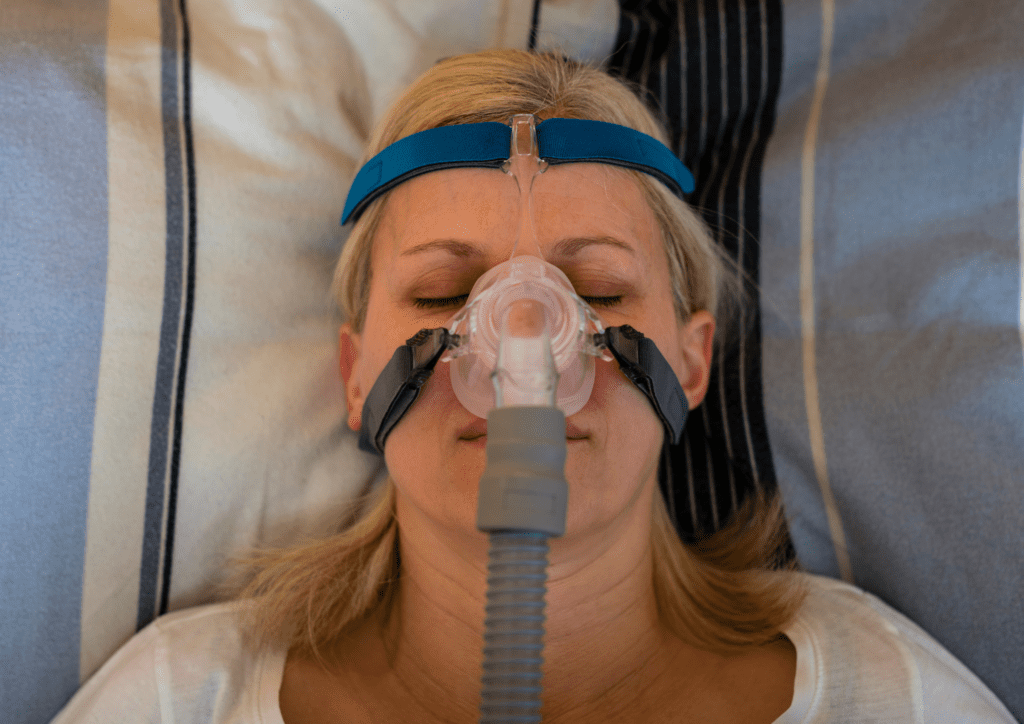
At its core, CPAP therapy involves using a specialised machine that delivers a continuous stream of pressurised air through a mask (like a CPAP mask from CPAP Direct) worn over the nose, mouth, or both.
The main goal of using a CPAP machine is to make sure your airway stays open while you sleep, so you don’t stop breathing like what happens with sleep apnea. By keeping a steady flow of air, CPAP therapy helps you breathe normally during sleep and cuts down the risks that come with untreated sleep apnea. These risks can be things like heart problems or feeling tired during the day.
Getting the basics of how CPAP therapy works is really important. It’s the first step to getting better sleep and feeling good overall.
Benefits of CPAP therapy
CPAP therapy is a really important treatment for people with sleep apnea, and it comes with a bunch of benefits.
What it does is send a steady flow of air into your airway when you’re sleeping. This stops the airway from getting blocked, which is what causes sleep apnea. Because of this, people who use CPAP breathe better when they’re asleep, get more oxygen, and don’t have as many sleep interruptions.
Using a CPAP machine can help you sleep better at night and feel more awake and sharp during the day. Sticking with CPAP therapy over time can help with sleep apnea symptoms and make a big difference in your overall health and happiness. It’s a treatment that can change and improve your life.
Best of all, most of the cost of CPAP treatment is covered on Medicare. So it is very affordable.
Can’t sleep with CPAP? 7 tips for sleep and avoiding common problems
Starting to use a CPAP machine to get better sleep can be a bit tough, and sometimes people find the CPAP masks uncomfortable.
This article lays out the 7 most troubleshooting issues with CPAP tolerance and provides solutions to common issues like fit problems and air leaks. By dealing with these issues, you can be more comfortable and make the most out of this helpful sleep apnea treatment.
1. CPAP machines and masks – which ones are right for you?
When shopping for CPAP, it’s really important to have a CPAP mask that fits just right. The wrong size or style of CPAP mask, i.e. if it’s too tight or too loose, can rub your skin the wrong way, cause sore spots, or let air leak out.
To prevent this, you need to pick a mask that’s the right size and shape for your face. Most masks have straps you can adjust. You want them to be tight enough to stay in place, but not so tight that they’re uncomfortable. Sometimes, you might have to try a few different types of masks to find the one that fits you the best.
Tip – Make small adjustments to your CPAP mask nightly
When you wear a CPAP mask, sometimes it doesn’t fit perfectly right off the bat. It might be a bit too tight, too loose, or just not sitting right on your face. Making small adjustments means you fiddle with the straps or the position of the mask each night, just a little, to get a better fit.
The idea is to find that ‘just right’ spot where the mask is snug but not too tight, and it doesn’t leak air or bug you while you’re trying to sleep. It’s like tuning a guitar – a little tweak here and there until it sounds perfect. In the case of your mask, you’re adjusting it bit by bit for the best comfort.
2. Air leaks
Making sure your mask fits well and doesn’t leak during your therapy is key. If air leaks out of the mask, the treatment won’t work as well, and it might bother your eyes and skin.
To stop this from happening, regularly check your mask for any cracks or damage and adjust the straps so it fits securely.
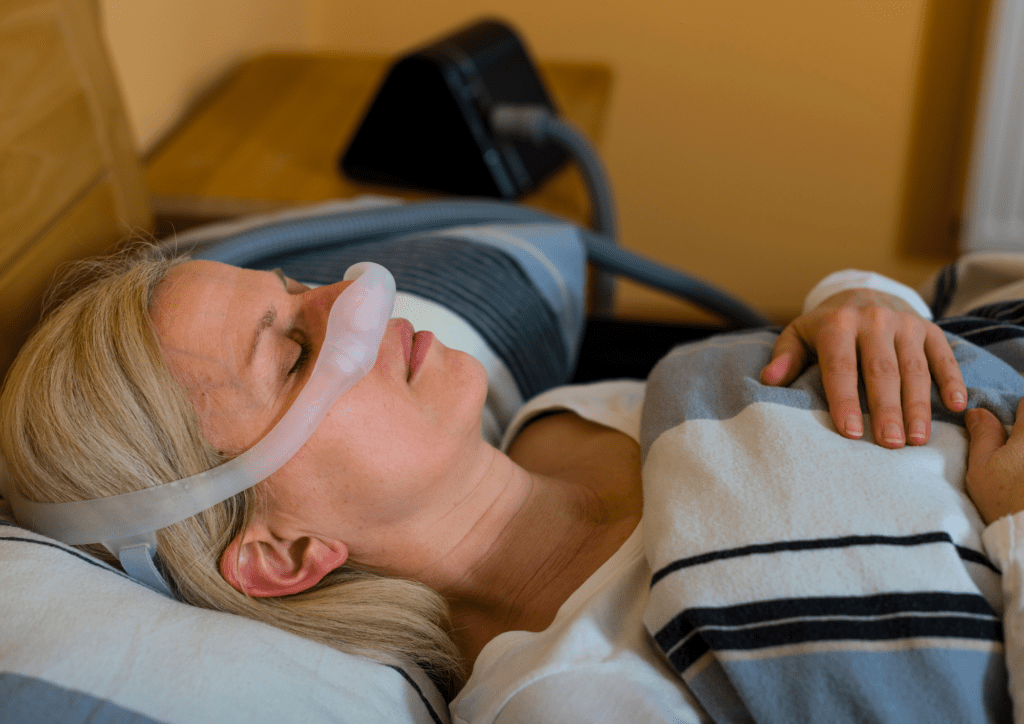
If you still have leaks, think about trying a different kind of mask, like nasal pillows or full-face masks. These might work better for your specific needs and stop the leaks.
3. Dry mouth or nose
The steady stream of air from the CPAP machine might make your mouth and nose feel dry, which can be uncomfortable. To fix this, you can use a heated humidifier with your CPAP machine. This adds moisture to the air and helps prevent dryness.
Some masks have special features that keep the air moist, which is great for avoiding dryness. Also, drinking plenty of water during the day can help keep you from feeling too dry.
4. Claustrophobia
Wearing a CPAP mask might feel weird at first, and it can even make you feel a bit trapped or uncomfortable, which might be why it’s hard to fall asleep with it on or fall asleep right away. You will have trouble getting used to wearing the CPAP mask at the beginning, but there are ways to make it easier to get used to.
One thing you can try is to wear the mask for a little while during the day, and then ease yourself into CPAP slowly, wearing it for longer periods. Practising breathing with the mask on can also help you feel more at ease with it.
If you still feel closed in after trying the mask for a few days, you might want to try a mask with a simpler design or one with nasal pillows. These kinds of masks can feel more comfortable and less in the way.
Tip – Use your CPAP mask every time you sleep
You should use your CPAP mask every single time you go to sleep, whether it’s at night or even during a short nap during the day. The idea is to make sure you’re always getting help from your CPAP machine to keep your breathing steady while you sleep. It’s like wearing your seatbelt every time you’re in a car – it’s just a good habit to keep you safe and healthy. So, whether it’s a full night’s sleep or just a quick snooze on the couch, pop on that CPAP mask to make sure your sleep is as good as it can be!
5. Skin irritation
Wearing a CPAP mask for a long time can sometimes cause skin problems like irritation, redness, or even sore spots. This happens because the mask needs to fit closely to work right, and that can rub against your skin.
To help with this, it’s a good idea to clean the mask regularly using a gentle, skin-friendly soap. This keeps any buildup off the mask that could irritate your skin. Also, using something like mask liners or barrier creams can make a big difference. They act like a cushion between your skin and the mask, cutting down on rubbing and protecting your skin.
Taking these steps can make wearing your CPAP mask a lot more comfortable and lower the chances of having skin issues.
6. Noisy mask
Some CPAP masks can be noisy, making sounds like whistling or air leaks, and this noise can bother both the person wearing the mask and their sleeping partner. It’s important to figure out where the noise is coming from so everyone can sleep better.
Start by checking the mask parts to see if anything is loose or broken. Make sure everything is connected tightly. If there’s still noise after that, talking to a healthcare provider can be helpful. They might suggest different masks that are quieter and more comfortable.
Dealing with a noisy mask right away is key. It not only makes things more comfortable for the person wearing it but also helps create a better sleep environment for everyone.
7. Congestion or nasal issues
People who already have stuffy noses or other nose problems might find it tricky to get used to some types of CPAP masks. This can make it hard to breathe comfortably and affect how well the therapy works.
If this is a problem, trying a nasal mask or nasal pillows might work better if you have a stuffy nose. Also, using a saline nasal spray before bed can help clear uhup the congestion, making sure the air flows smoothly and making the CPAP experience more comfortable.
Choosing the right kind of mask to suit nose issues can help you breathe easier and deal with stuffy nose problems while using your CPAP machine.
Tip – Use AutoRamp on your CPAP machine
AutoRamp is a cool feature on some CPAP machines. When you first put on your mask and turn on the machine at night, the AutoRamp setting starts with a lower air pressure. As you fall asleep, the machine automatically increases the pressure to the level your doctor set for you.
This is great because it makes it more comfortable to fall asleep. See if there’s a ramp setting on your CPAP machine where you don’t have to start with the full pressure right away, which can feel a bit overwhelming. AutoRamp starts gently and then gradually gets stronger as you snooze. It’s all about making it easier to drift off to sleep while using your CPAP.
How to know if CPAP is not right for you
Treating sleep apnea when CPAP masks don’t help is doable with CPAP alternatives, but it’s always good to chat with your doctor for advice on how to sleep with sleep apnea without CPAP. Is your CPAP therapy keeping you awake at night? Here are some other options you can try:
BiPAP therapy
It’s like CPAP but with two pressure levels – a stronger one when you breathe in and a gentler one when you breathe out. Some folks find this more comfy.
Oral appliances
If you can’t get to sleep with your CPAP, you can try oral appliances. Think of these as special mouthpieces that adjust your jaw and tongue position. They work well for a lot of people, especially if your sleep apnea isn’t super severe.
Lifestyle changes
Sometimes losing some weight, quitting smoking, or cutting back on booze can make a big difference.
Positional therapy
If your sleep apnea gets worse in certain sleeping positions, there are ways to train yourself not to sleep on your back.
Surgery
For some, surgery might be the answer, especially if something in your throat or nose structure is causing the problem.
Supplemental oxygen
Adding extra oxygen at night can help, sometimes along with CPAP or BiPAP.
Adaptive Servo-Ventilation (ASV)
New CPAP innovations can help like this fancy new type of air machine mainly for a specific kind of sleep apnea.
Nerve stimulation
There are several new treatment options available now, one of which is nerve stimulation where doctors zap a nerve to help keep your airway open.
Lifestyle adjustments
Not drinking before bed, keeping a regular sleep schedule, and sleeping on your side can also help with sleep apnea. You can also try to prepare your sleep space and create good sleep habits like preparing your sleep area to keep it ambient for sleep.
Alternative therapies
Yoga or acupuncture might give some relief, but they’re more like extras, not the main solution.
Conclusion
If you have sleep apnea, getting comfortable with your CPAP mask is important for the treatment to work well. But sometimes, you might run into problems like the mask not fitting right, air leaks, your nose and mouth getting dry, or skin irritation.
The good news is that these issues can be fixed to make wearing the mask more comfortable and help you stick with the treatment. Don’t let your sleep suffer. It’s all about being patient and trying different things to see what suits you best. And if you keep having trouble, it’s a good idea to talk to a healthcare professional to make sure you’re getting the most out of your treatment.
With the right mask, accurate health information from your doctor, and a few adjustments, you can benefit from this therapy and enjoy a better night’s sleep.
FAQ
I can’t tolerate CPAP. What can I do?
I get it, CPAP machines aren’t for everyone. But don’t worry, there are other ways to tackle sleep apnea. Check out the tips above for when you’re struggling with sleep and check out some troubleshooting issues with CPAP tolerance too.
Why do I sleep with my mouth open with a CPAP?
If you sleep with your mouth open while using a CPAP machine, it could be because of the following:
Habit: Sometimes, it’s just a habit to breathe through your mouth, especially if you’ve done it for a long time.
Nose issues: If your nose is stuffy or blocked, you might open your mouth to breathe easier while asleep.
CPAP pressure: The air pressure from the CPAP might feel too strong, making you open your mouth.
Mask fit: If your CPAP mask doesn’t fit just right, you might open your mouth without realising it.
To help with this, you could try a chin strap to keep your mouth closed, or a full-face mask that covers both your nose and mouth. Also, a humidifier can make breathing more comfortable.
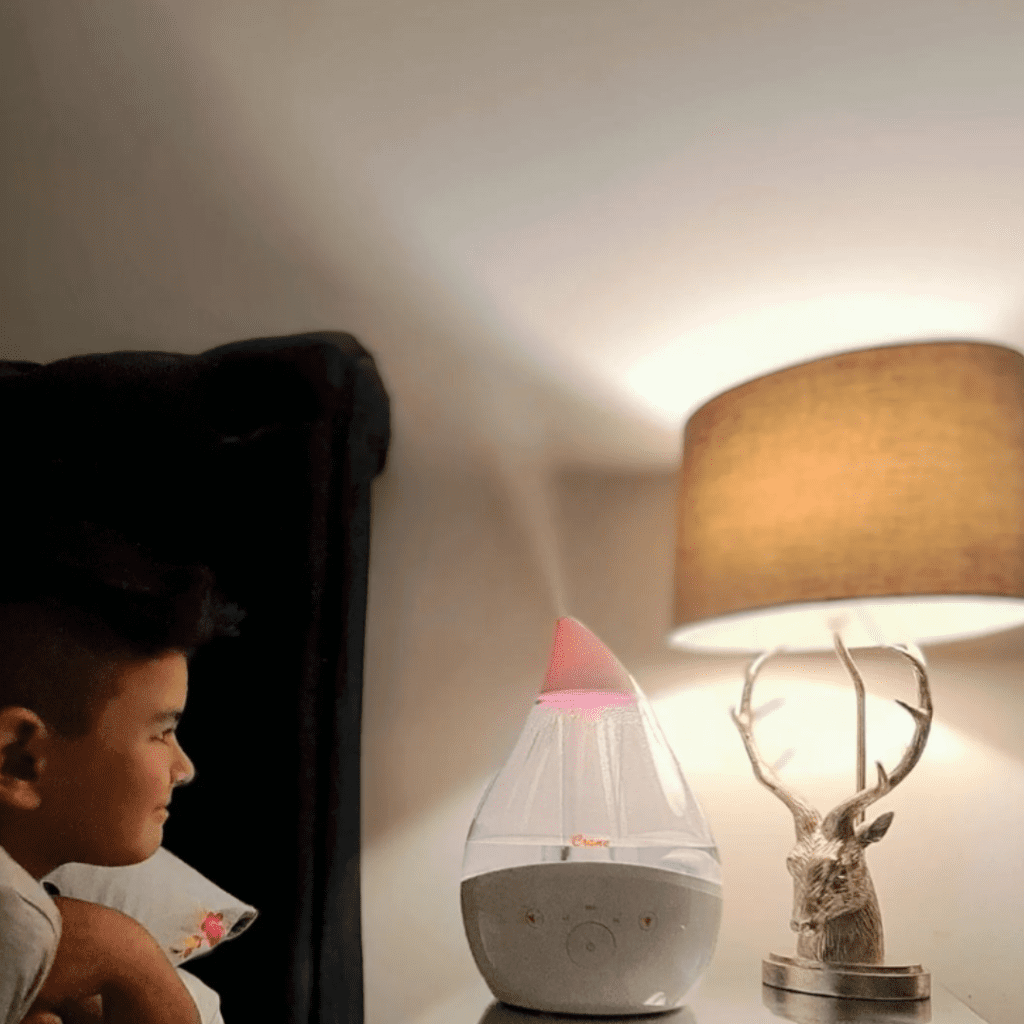
To enhance your sleep environment alongside CPAP therapy, consider incorporating the Crane 2.0 4-in-1 Humidifier into your nightly routine. This innovative device offers more than simple humidification; it emits a soothing ultrasonic cool mist to alleviate congestion and coughs, features a built-in sound machine to drown out background noise for a calmer sleeping atmosphere, and includes an aroma diffuser for the safe use of essential oils, creating a relaxing environment conducive to sleep.
Additionally, its optional nightlight provides a gentle, comforting glow, easing the transition into sleep. By addressing common sleep disturbances, the Crane 2.0 4-in-1 Humidifier complements CPAP therapy, making it an essential tool for achieving a restful night’s sleep. For more details and purchase options, visit the Cheeky Rascals website, and discover how this device can improve your sleep quality and comfort.
How do you wear a full face mask?
Full face masks tend to be a learning curve. Here’s how to do it:
Position the mask: Hold the mask against your face, covering both your nose and mouth. The cushion should fit comfortably.
Adjust the straps: Pull the headgear over your head. There are straps you can adjust to make sure it’s snug but not too tight. You want it just right so there’s no air leaking but it doesn’t press into your skin.
Check the fit: Once the mask is on, turn on your CPAP machine. If you feel air leaking out around the edges, you might need to adjust the straps a bit more.
Get comfortable: It might feel a bit odd at first, but you’ll get used to it. Lying down with the mask on before you turn on the machine can help you get comfortable.
Remember, the key to how to stay asleep for longer is that the mask should feel secure on your face, but not too tight. It’s like finding the perfect pillow – it might take a little adjusting, but once you get it right, you’re all set for a good night’s sleep!
Can CPAP cause insomnia? I can’t get to sleep
Using a CPAP machine can sometimes lead to trouble sleeping, especially when you’re just starting with it. It’s pretty common actually. The feeling of the mask on your face, the sound of the machine, or the sensation of the air pressure – all these things can feel a bit strange and might make it harder for you to fall asleep at first. It’s like getting used to a new pillow or blanket, but a bit more challenging.
But don’t worry too much – many people adjust to it after a while. It’s like getting used to any new thing in your routine. If you continue having trouble sleeping though, it’s a good idea to chat with your doctor or a sleep specialist. They might have some tips to make it more comfortable for you or adjust the settings on your machine. Hang in there, it often gets easier with a bit of time!
What does a CPAP machine do when you stop breathing?
A CPAP machine is like a little assistant that watches over your breathing while you sleep. When you stop breathing, which can happen in a condition called sleep apnea, the CPAP machine jumps into action. It gently pushes air into your airways to keep them open, making sure that your breathing doesn’t stop. This way, you can keep breathing smoothly throughout the night.
Are there any body changes after CPAP?
Yes, using a CPAP machine can lead to some changes in your body, but mostly good ones! When you start using CPAP, you’re likely to notice:
Better sleep quality: You’ll probably sleep better because the CPAP machine helps keep your breathing steady while you sleep. This means you won’t be waking up as much during the night.
More energy during the day: Because you’re sleeping better, you’ll likely feel more energetic and less sleepy during the day.
Less snoring: CPAP can really cut down on snoring, which is a bonus for anyone who shares your bed or your home!
Improved health: Over time, using CPAP can help lower your blood pressure and reduce the risks of heart problems.
Possible side effects: Some people experience dry mouth, nasal congestion, or skin irritation from the mask. But these can often be managed with a little adjustment to the machine or the mask.
Overall, the changes are generally positive and can really improve your quality of life.
Does sleeping with a CPAP cause gas?
Yes, sleeping with a CPAP machine can sometimes cause gas. This happens because a bit of the air from the machine can get into your stomach while you’re sleeping. It’s like swallowing a little extra air, and this can make you feel a bit bloated or give you some extra burps or even a bit of gas.
It’s not too serious, but it can be a bit uncomfortable. If it bothers you a lot, it’s a good idea to talk to your doctor about it. They might have some tips to adjust the machine or change how you use it to help reduce this side effect.
What happens if you don’t sleep with your CPAP machine?
If you skip sleeping with your CPAP machine, especially if you have sleep apnea, a few things might happen:
Back to snoring: You might start snoring again. The CPAP machine helps keep your airways open, so without it, the snoring could come back.
Poor sleep quality: You might not sleep as well. The CPAP machine helps you breathe smoothly, so without it, you might wake up more often during the night.
Feeling tired during the day: Because your sleep might not be as good, you might feel more tired or sleepy during the day.
Health risks: Over time, not using your CPAP can increase your risk of health problems related to sleep apnea, like high blood pressure or heart issues.
So, it’s really important to use your CPAP machine as your doctor advised, to keep all these things in check. It helps you get better sleep and keeps you healthier!
Do you need less sleep with CPAP?
Not exactly. Using a CPAP machine doesn’t mean you need less sleep, but it can make the sleep you get more effective. Here’s the thing: if you have sleep apnea, you might not be getting good, quality sleep. You might wake up a lot during the night, even if you don’t realise it, because your breathing stops and starts.
When you start using a CPAP, it helps keep your breathing steady all night. So, you’re less likely to wake up, and the sleep you get is deeper and more restful. This means you might feel more refreshed and alert during the day, even if you sleep the same number of hours as before. It’s like the difference between having a bunch of short, interrupted naps and one good, long sleep.
Can CPAP make sleep worse?
Yes, sometimes a CPAP machine can make your sleep feel worse, especially when you first start using it. Here’s why:
Getting used to it: The mask and the sound of the machine can feel strange at first. It’s like trying to sleep with a new pillow that you’re not used to.
Air pressure adjustments: The air pressure might not feel comfortable right away. It can take some time to get the settings just right for you.
Mask fit: If the mask doesn’t fit well, it can be annoying. It might leak air, or you might feel like it’s too tight or too loose.
Side effects: Some people get side effects like a dry mouth, a stuffy nose, or irritation where the mask touches their face.
But don’t worry too much. Many people get used to their CPAP machine after a while and their sleep improves a lot. It’s a bit like breaking in a new pair of shoes – uncomfortable at first, but better over time. If you’re having trouble, it’s a good idea to talk to your doctor. They can help adjust the machine or give you tips to make it more comfortable.
Are there any long-term side effects of CPAP machine?
Using a CPAP machine for a long time can have some side effects, but keep in mind that many people use it for years without major issues. Here are a few things that can happen:
Skin irritation: Where the mask touches your face, you might get some irritation or pressure marks. This usually happens if the mask isn’t fitting quite right.
Nose and throat issues: Some folks experience dryness in their nose or throat or even nosebleeds. This is because of the air blowing in all night. Using a humidifier with the CPAP machine can help with this.
Ear problems: Rarely, the pressure from the CPAP machine can cause issues like earaches or sinus problems, especially if the pressure settings aren’t quite right for you.
Claustrophobia: For some, wearing a mask can feel a bit claustrophobic, but different types of masks can help with this feeling.
Remember, while these side effects can happen, the benefits of using a CPAP machine – like better sleep and reduced risk of serious health problems – often outweigh these issues. If you’re having any troubles with your CPAP machine, it’s always a good idea to chat with your doctor. They can help adjust things to make it more comfortable for you.
Why can’t I seem to stay asleep when using CPAP?
Other questions asked were:
Why can’t I fall back asleep with my CPAP machine?
How do I get a good night sleep with my CPAP machine?
Why can’t I sleep with my CPAP machine?
Is sleeping with a CPAP uncomfortable?
Why can’t I stay asleep with my CPAP mask?
You may have sleep apnea but what if you can’t sleep with a CPAP machine? Trouble staying asleep with your CPAP machine can be frustrating, but it’s pretty common, especially when you’re just getting used to it. Check out the tips above for how to make your CPAP mask comfortable and maintain good sleep hygiene.
It’s a good idea to talk to your doctor or a sleep specialist about these issues. They can help you figure out what’s going on and how to make CPAP work better for you. And remember, it often takes a bit of time to get used to CPAP, so don’t get discouraged!
*Collaborative feature post*
5 Ideas for what to do in sleepovers
If your little ones have decided they’d like a sleepover slumber party, don’t panic! Yes, welcoming over-excited children into your home may sound scary, but you don’t have to think of 100 things to do at a sleepover. If you’re organised, there’s no reason it can’t be an awesome slumber party your child won’t forget. Here are ideas for what to do at sleepovers (that can double up as birthday party ideas, too!)
1. Ideas for what to do in sleepovers – don’t take things too seriously
Laughter and even a tiny bit of chaos are what children at sleepovers usually experience. So when thinking about sleepover ideas, have fun in mind.
Invest in fun toys the children can enjoy, like kids riding on Lamborghinis. If you have the space and the money, then riding in kids’ electric cars is one of the most fun things to do at sleepovers and a great way to burn energy, too.
2. Entertainment
If the children are restless, a good sleepover game can include setting up some board games for entertainment. Monopoly is a really fun game and you can assign someone to look after the money (the banker) while everyone competes to build houses/hotels and monopolise the board.
Other fun things to do at a sleepover regarding entertainment could be to rent the kids’ favourite movies and huddle up with a blanket. A movie before bedtime winds children down and sets them in a bedtime mood, whereas an active board game lifts their energies and enthuses them. Ensure the movie finishes at least an hour before bed so the kids’ eyes settle away from the screen. Too much screen time before bed can make kids go the other way.
If the weather is good, let them play in the garden before the movie and dinner so they can burn that excess energy. You can rent a marquee for a party, but, be sure not to overtire them – overtired kids find it very difficult to put their heads down at bedtime – just ask my two Duracell boys!
3. Dinner time
Getting your little ones to sit around the table is an arduous task at the best of times – this task is only made more demanding when they have several friends staying over. However, keeping energy levels high is important, especially when the kids plan to embark on several adventures throughout the evening.
Thankfully, there are a number of easy-to-prepare meals available, many of which guarantee to provide your children and their friends with the energy and nutrition they need. Grilled veggie kebabs and homemade sweet potato chips are easy to make and help keep kids full and occupied while you take 5 minutes’ rest. Or you can make a cheese sauce and lather over some cauliflower and broccoli, which is a winner in our house.
4. Sleeping arrangements
Not all of us are lucky enough to have several spare guest rooms at hand, so for housing extra guests, it’s important to ensure you have enough bedding. Airbeds and sleeping bags are a great idea, and both are easy to assemble and can be positioned around your child’s room to make the best use of space. These cute little Snuggle Pods from LittleLife are brilliant and take up minimal space, so the kids get to sleep together in one room (when one falls asleep, the rest follow like Dominoes).
5. Put a few rules in place
Unless you want to be kept up all night, it’s important to establish a bedtime curfew. If you provide the little ones with an hour’s warning, you’ll find it a much easier task to send them off to bed when the time comes. If not, you may find hours go by while encouraging them to go upstairs.
FAQ
What are things to do at a girls’ sleepover?
Some fun things to do at a girls’ sleepover could involve painting nails or using nail polish to create art projects. You could make it a themed sleepover for girls, i.e. have a spa evening or another agreed project in which everyone could get involved.
Do you have any ideas for what to do in virtual sleepovers?
It doesn’t have to be boring if it’s a virtual sleepover. Some fun things to do in a sleepover that’s online could be:
Show and tell
Play online video games
Group crafts
Online quiz
Play Pictionary or charades
Online dance party
Karaoke competition
What to do at sleepovers in the morning
If it’s a girl sleepover, your children can get ready together by doing their hair and (depending on age) makeup. If the sleepover is for a younger child, getting dressed together, having a morning ritual and eating breakfast together is fun.
What to do in sleepovers at night
Some things to do on a sleepover at night could include:
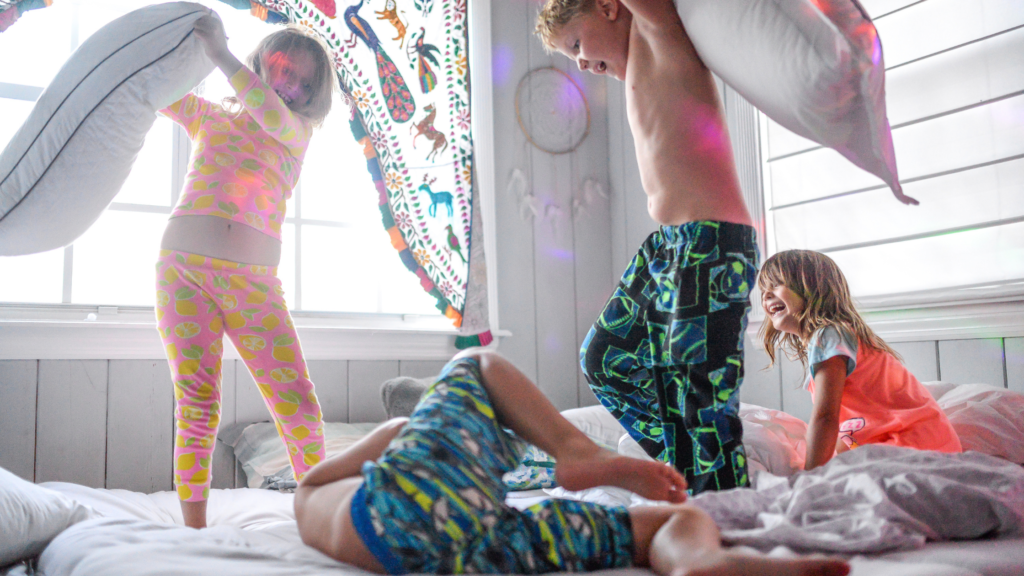
Pillow fight
Chat/gossip
Card games
Having a midnight snack
Listen to music
Sleeping!
What do you do during a sleepover with your best friend?
Whatever you want within reason! This is the perfect time for your child to get to know their best friend, so perhaps encourage them to ask questions that will help them better understand their friend.
What are some crazy things to do at sleepovers?
Not all sleepover games have to be crazy, but if you want some crazy sleepover ideas, here are a few:
One person doing a taste test of what the other guests have put out in front of them – a great example could be different flavours of ice cream
Truth or dare games are always crazy
Obstacle course in the bedroom
What are some games to play at a sleepover?
The fun things to do during sleepovers will change slightly depending on age. A simple gathering around with duvets can be enough for younger kids, but older children may need a few target games to work around. Some great sleepover party games can include:
What are some things to talk about at a sleepover?
Fun things to do in sleepovers always include a good ol’ chinwag amongst friends. The great thing, though, is you can chat about anything, but keep an ear out for any topics which may cause some concern, like adult conversations and bullying. You may learn something about your child you didn’t know before, so let them talk! Some good prompts could be:
Lessons in school
Feelings and emotions
Favourite books/TV shows
Talk about other people
Whatever your sleepover party includes, whether it’s for teens or for tweens, make sure it’s a fun one – and relax the rules a little – a fun sleepover is an experience your child will not forget!
*Collaborative guest post*
SnuzPod 4 Bassinet review
Your baby has finally greeted you after a long pregnancy, but now they bring a whole new set of problems – lack of sleep!
And what every parent wants is the gift of sleep just to get through the newborn haze, rushing hormones, and joyful turmoil.
According to a survey in 2020, Snüz (the company I’m doing the SnuzPod 4 Bassinet review for) found that a staggering 7 in 10 parents lose an average of three hours’ sleep every night in their baby’s first year – the equivalent of missing out on 133 night’s worth of sleep before their baby turns 1! It is no wonder parents are sleep deprived and on the hunt for the very best products to support them in getting more ZZZ’s.
So, how do you get more sleep?
Well, your newborn needs to feel safe and secure during sleep times and the SnuzPod4 bedside crib may be the answer. The SnuzPod 4 is a stylish first bed, keeping the baby close to mum and dad during those precious first few months, while also promising more sleep for the family too.
Read on for an extensive review of the SnuzPod4 bedside baby bed.
Snüz*, the multi-award winning nursery brand and winner of the Queen’s Award for Innovation, have been retailing since 2013 and offering products online since 2016. Today, the Snüz brand is known for creating stylish and contemporary sleep products for today’s modern parents and the SnuzPod reviews have been very positive.
Other products in the Snuz range
SnüzCloud – £29.95
The SnüzCloud is a stylish baby sleep aid that promises more sleep for both baby and parent. With soft plush fabric, four soothing sounds and two light options; the cute and cuddly sleep aid promises to comfort and settle baby day and night.
I forgot about how many times I’d have to change baby throughout the night. So to help with the dreaded night-time nappy changes, the SnüzPouch*, which are award-winning baby sleeping bags, come with a nappy change zip to limit disturbance to the baby and offers an opening at the bottom so baby doesn’t have to be cold or completely undressed for the nappy change.
SnuzPod 4 Bassinet review – what is the SnüzPod 4?
Snüz brought out the SnüzPod4, their fourth-generation bedside crib, which offers parents a chance to be closer to the baby with its removable bassinet and zip up sides for attachment to the bed or as a standalone crib. The new ComfortAir system offers unique air-flow vents, a machine-washable permeable mesh liner, and improved base ventilation designed to regulate your baby’s temperature for a good night’s sleep.
Feed, soothe, and be closer to your baby with SnuzPod⁴ the UK’s Best-selling Bedside Crib! Keeping baby nearby, for a safe bonding experience. With dual-view mesh windows and a half-height zip-down wall for easy access, be by their side through every yawn, wiggle, gurgle and nap.
How much is the SnüzPod 4 and where can you buy it?
UK Delivery costs £4.95 (free on all orders over £50) and you can expect delivery over 2 – 5 working days.
You can also choose Nominated Day Delivery which costs £7.95 and you can select a delivery day of your choice, Monday to Friday.
Next Working Day Delivery is available and costs £8.95. You need to order by 1 pm for next working day delivery.
Deliveries do not take place on weekends or bank holidays and postcode restrictions may apply.
If you live outside of the UK, click here for more information.
SnüzPod 4 size and specs
Suitable from birth to approximately 6 months
Maximum recommended weight of child is 9KG (20lbs)
SnuzPod⁴ crib complies with BS EN 1130:2019
Made using quality sustainably sourced Beech solid wood and plywood
The SnuzPod fits divan, ottoman and framed bed bases. Ensure that the internal dimensions of your furniture are no greater than: 420mm width x 775mm length. The maximum gap between the mattress and the sides and ends should not exceed 30mm.
The SnuzPod4 is suitable for bedside use where the top surface of the adult mattress is level with the top of the zip down wall of the SnuzPod⁴, up to a maximum height of 73cm from the floor.
Includes bed straps which fits divan, ottoman and framed beds
Includes a breathable mattress certified (40 x 75.5 x 3cm). Not suitable for use with a sensor pad.
Complies with BS EN 16890:2017.
ComfortAir mesh liner has been tested to BS 4578 for breathability and air-flow
External size: L100 x 49 x H95 (maximum height)
Product weight: 11.5kg
Requires self-assembly
Mattress cover can be washed according to manufacturer’s instructions.
A waterproof mattress protector must be used.
Removable fabric bag can be hand washed
ComfortAir liner can be washed according to manufacturer’s instructions
WARNING: Stop using the product as soon as the child can sit, kneel, or pull itself up. This product is only suitable for a child who cannot sit up unaided
Main features bullet points
The new SnuzPod 4 has:
Increased air-flow to help regulate temperature
Safety tested to NEW Bedside Crib Standard
FITS MORE BEDS than any other bedside crib
Comes as a standalone bassinet with a rocking stand or can be removed from the stand.
Sides can be unzipped to attach to the bed for easy place and pick up of baby
What is included with the SnüzPod 4?
SnuzPod 4 Bedside Crib
New 3D breathable mattress
How to put the SnuzPod4 together
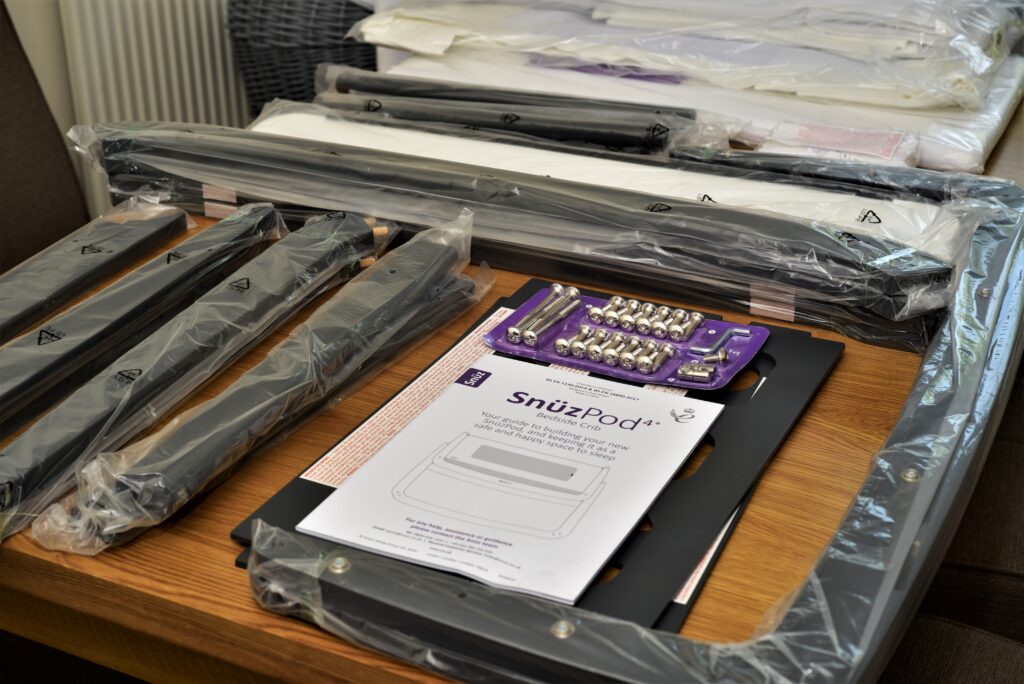
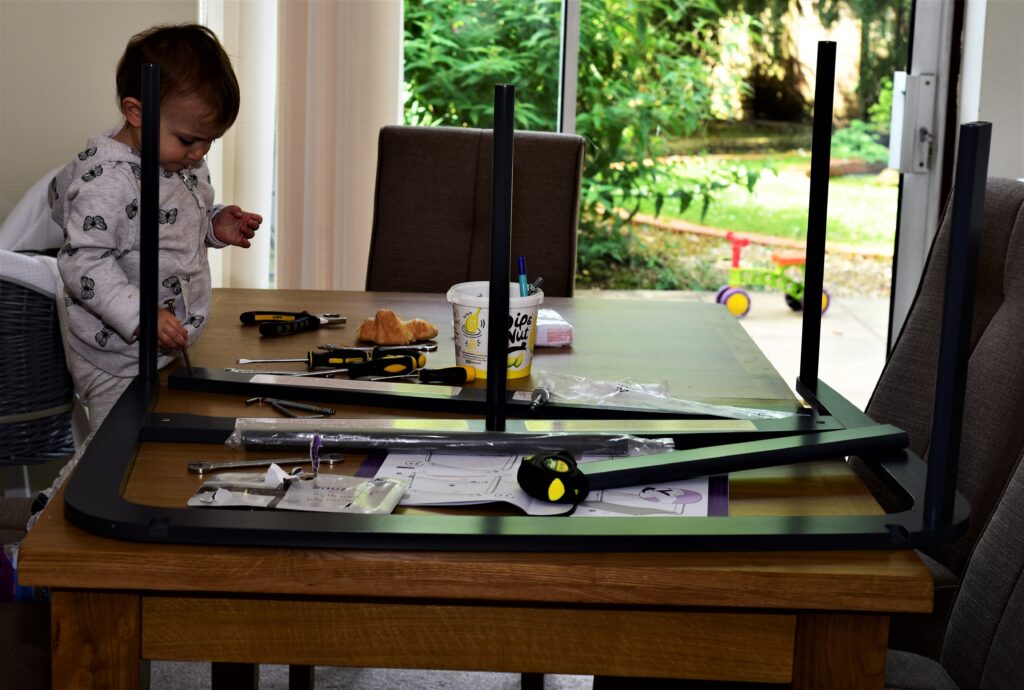
There are quite a few parts so it’s important to read the instruction guide (which you can find here)
Measure your bed
Build the stand
Build the bassinet
Affix the reflux leg (to elevate one side of the bassinet)
N.B.
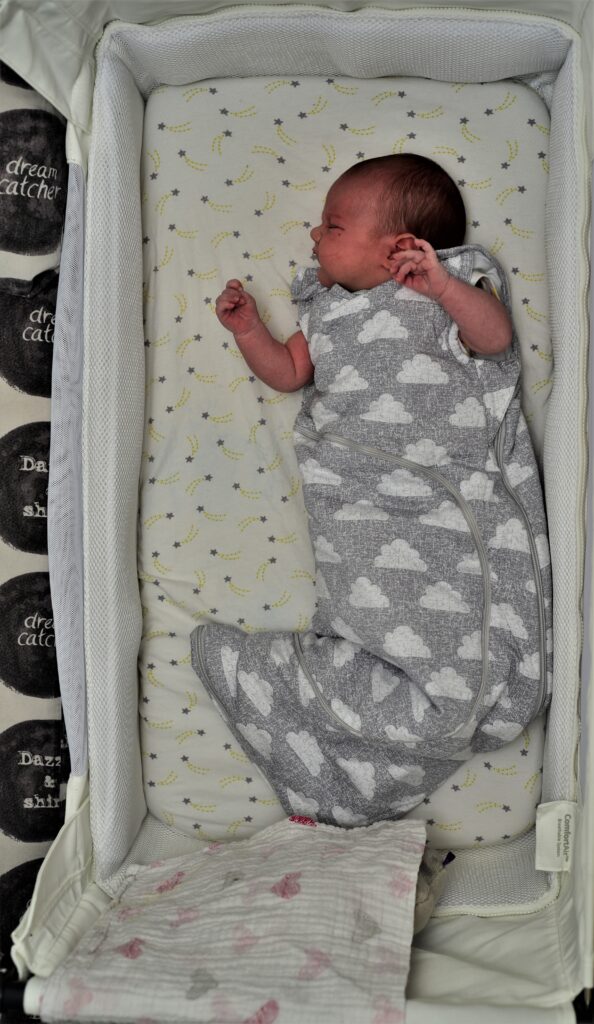
The baby’s head should never be lower than their body in the bassinet
Bedside sleepers should never be used in an incline position
SnuzPod 4 reflux tilt – how to use – The reflux leg may only be used when the SnuzPod4 is used as a standalone crib and where the zip down wall is zipped up / closed
Do not use the reflux leg when baby is asleep
First impressions of the SnüzPod 4
The SnuzPod4 is well built, comfortable, and easy to use. The crib allows for mum to be very close to baby during the night by using the zipped/unzipped and flexible sides. The mattresses are soft and comfortable and the material is breathable and malleable, which you can also take off and clean easily.
Was SnüzPod 4 easy to use/put together?
I had to (well hubby had to) ponder over which parts went where, but after taking a few moments to read the instructions, the build was relatively quick and straightforward. The box contains easy-to-understand instructions that easily explains the process.
The SnüzPod can be used in different ways. Below is more information on how to use SnuzPod 4.
Bedside Mode
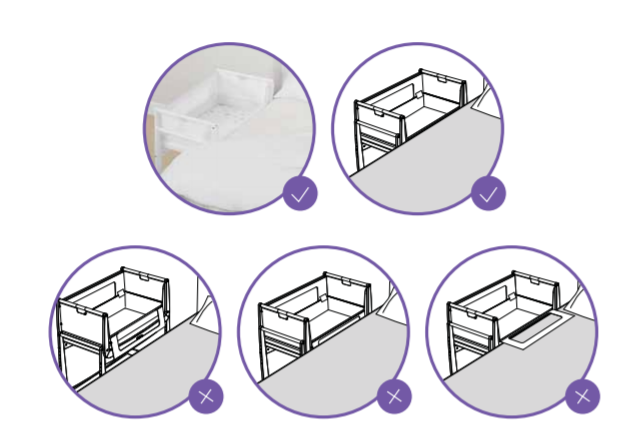
For parents who would like easy access to baby without having to get out of bed, then you can convert the SnuzPod4 into Bedside Mode where you unzip one side so that it rests by the end/side of your bed/mattress. Not all beds are of equal size, so the manufacturers have ensured there is sufficient flexibility to change the resting height of the SnuzPod. This alongside some extra straps to secure the SnuzPod tight to the bed ensures there are no gaps in between and baby is kept safe.
When attached to the bed, the SnuzPod4 has a permanent half-height wall to meet the new bedside crib standard BS EN1130:2019.
To fit the straps to your bed follow the instructions below:
Remove the metal pole from the zip down wall. Leaving the pole in can be hazardous but keep the metal pole attached in the wall furthest away from your bed.
Release the velcro tabs and lower the zips fully.
Fold the zip down wall down, tucking it in between the crib frame and the adult mattress
Ensure your mattress is level with the zip down wall of the SnuzPod4
Tighten straps to secure the SnuzPod4 to your bed.
Ensure the bassinet sits fully down on the stand and is not resting on any part of your bed
Do not over-tighten the strap, as this may cause the stand to tilt. Ensure the stand is flush with the bed frame / base
Check the tightness of the attachment system before each use by pulling the bedside sleeper in a direction away from the adult bed
Tuck any excess strap under your bed base away from babies and children
Ensure there are no gaps between the SnuzPod4 and your bed
During use, always ensure your bedding, sheets, blankets etc do not enter or cover the inside of the crib.
Standalone and lift off bassinet
The second option is to have a standalone and/or lift off bassinet as well as a rocking stand too. The sides can be zipped back up and the pole reinserted to form a standard bassinet for baby to sleep safely in the parents’ same room or in their own nursery.
What is the difference between the SnuzPod 4 and the SnuzPod 3?
So, what is the difference between a Snuz Pod 3 and 4? Below is a chart that shows the difference between the SnuzPod3 and the SnuzPod4.
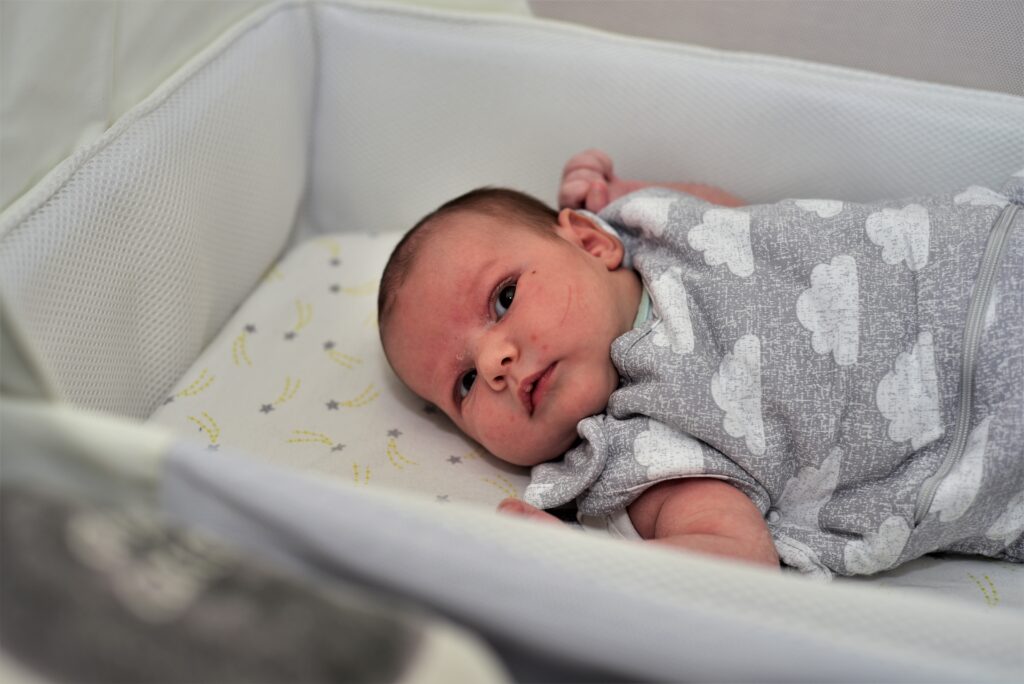
The SnuzPod4 is compact enough to help our newborn feel like she is still in a cocoon when she sleeps, but spacious and breathable enough to not feel too small or claustrophobic. The ComfortAir breathable mesh helps our baby to feel comfortable when sleeping and when placed in the SnuzPod4 already sleeping, our baby continues to sleep well for a few hours. She also seems to enjoy relaxing in the SnuzPod4 while awake too. We’ve placed some black, white and red flashcards inside the SnuzPod4 so that she has something to look at while she’s awake. We always remove these when she is asleep for safety.
So what are the pros and cons of SnuzPod 4? We’ll go through each point in turn.
What are the pros of using SnüzPod 4 baby crib?
The SnuzPod4 is a great first bed for baby. Here are some pros to using the SnuzPod4 as baby’s first bed.
The SnuzPod4 is multifunctional and easy to use.
You don’t have to worry about buying a separate mattress as this comes with. Plus, the mattress is soft and comfortable too.
It’s a ‘3-in-1’ crib, meaning you can use the SnuzPod4 as a standalone bassinet which is rockable or you can attach it to the side of your bed for easy access and closeness, which is also rockable, much like a Moses basket.
The SnuzPod4 comes with a stand and you can gently rock the bassinet too.
The SnuzPod4 is easy to clean with detachable sides
The mesh material means that you can see baby from the side but also baby can breathe easily
The sides are flexible and can be zipped up and down (with good quality zips) This is great for mums like me who don’t have to lift baby out for midnight feeds, you can just slide them over to you.
You have space under the bassinet to store baby’s things – we store her nappy changing stuff so we don’t have to venture far.
It’s easy to build and the materials are premium quality
It’s bigger than a Moses basket, which means baby can use it for longer. It is recommended baby can use the SnuzPod4 for up to six months old, but you may stretch it further depending on the size of your baby.
The stand is foldable, so you can tuck it away when you’re not using it.
What are the cons of using the new SnüzPod 4?
The SnuzPod4 is heavy, so it’s not so easy to move around because of its solid wood frame. It’s tough to transport from room to room for napping.
If you have a bed with a frame that sticks out further than the mattress, then there will be a gap beween the SnuzPod and your bed. This prevents you from using it properly as a co-sleeper, much like other co-sleeping bassinet
The SnuzPod4 is argued to be expensive at £199.95, however the SnuzPod4 is premium quality and highly functional so the price is justified.
What would SnüzPod 4 bassinet be useful for?
The SnuzPod4 is most suitable for parents who prefer to keep baby as close to them as possible during sleeping times and still have the flexibility to convert the bassinet into a standalone crib. I would say it’s the perfect bed for breastfeeding mums because we can slide our baby over to us for their nightly feeds.
Is SnüzPod 4 worth the money?
So, is the SnuzPod4 worth it? Considering the quality of the materials and the overall sleek design, as well as of course its 3-in-1 functionality, the SnuzPod4 is worth the higher end price tag. It’s very well made and will last for many years, so you can pass it down from baby to baby too. Plus you’ll get extras on your first order in the shop too!
The SnuzPod4 is a well-built multifunctional, safe and comfortable medium between a Moses basket and a cot bed, which is large enough to hold baby for at least six months but small enough to feel like a cocoon so baby can sleep comfortably from birth. The 3-in-1 functionality from standalone bassinet to co-sleeper means it suits any parent’s needs, especially breastfeeding mums like me who need easy access to feed. The co-sleeper allows for a peaceful transition so baby isn’t completely woken up every time.
The SnuzPod4 is a fantastic bassinet and I would thoroughly recommend the bassinet as a first bed for your newborn.
4 out of 5
Ease of use
Apart from its heavy weight, which means it’s tricky to move around, the SnuzPod4 is very easy to use. You simply unzip the sides to turn the standalone bassinet into a co-sleeper and you can lift the bassinet out of its stand for easier transportation too.
4 out of 5
Fits the purpose
The SnuzPod4 is a great first bassinet for baby because of the functionality it offers as a co-sleeper. The mesh sides also allows for easy viewing of baby and offer a breathable space for baby to sleep comfortably.
5 out of 5
Style and comfort
The new ComfortAir material helps make the SnuzPod4 a protective but spacious area for baby to sleep in and the mesh sides also offer a viewing port for parents to check in on baby. Apart from the heavy frame, the bassinet is easy to transport and the bed looks stylish and simple.
4 out of 5
Functionality
The SnuzPod4 scores high on functionality because of its 3-in-1 feature of standalone bassinet, rocking bassinet and co-sleeper. The SnuzPod4 is a touch on the heavy side, but all other features are super helpful for parents like me who need easy access to baby throughout the day and night.
4 out of 5
Value for money
A touch on the pricey side at £199.95 but you get what you paid for, which you can see especially with the SnuzPod’s premium materials. Read the terms and conditions on the website for return items should you need to, but there’s always a sale going on, so make sure you check daily for deals.
4 out of 5
Overall rating
Ease of use
Fits the purpose
Style and comfort
Functionality
Value for money
FAQ
How long can baby sleep in Snuzpod4?
Other questions aksed were:
SnuzPod 4 how long does it last?
Your baby can sleep in the SnuzPod 4 from birth up to six months.
Does SnuzPod 4 come with mattress?
The SnuzPod 4 comes with a breathable mattress and washable 3D mesh cover.
Does SnuzPod 4 rock?
As above – It’s a ‘3-in-1’ crib, meaning you can use the SnuzPod4 as a standalone bassinet which is rockable or you can attach it to the side of your bed for easy access and closeness, which is also rockable, much like a Moses basket. The SnuzPod4 comes with a stand and you can gently rock the bassinet too
When did SnuzPod 4 come out?
Other questions asked were:
When was SnuzPod 4 released?
November 2020
Does SnuzPod 3 mattress fit SnuzPod 4?
Other questions asked were:
What size is SnuzPod 4 mattress?
The Snuzpod 3 mattress dimensions are 44 x 80 x 3 cm. The Snuzpod 4 mattress dimensions are 40 x 75.5 x 3 cm. So, no, it doesn’t fit.
Do SnuzPod 3 sheets fit SnuzPod 4?
Other questions asked were:
What sheets fit SnuzPod 4?
What sheets for SnuzPod 4?
What size sheets for SnuzPod 4?
Which sheets fit snuzpod 4?
Yes, SnuzPod 3 sheets can fit the SnuzPod 4.
Is SnuzPod 4 safe?
“The materials have been carefully selected and tested to ensure they are breathable, pose no small parts or sharp edges risks, and have no ties which could pose a risk of entanglement. As of November 2020, all bedside cribs manufactured including SnuzPod4 need to meet the new crib safety standard BS EN 1130:2019.”
The mesh wall can be zipped down to fold over and bridge the gap between your bed and the SnuzPod, and the stand is foldable, but that’s about it. It is recommended that you do not use the SnuzPod in bedside mode, with the walls down as it’s not safe for sleep.
Can you tilt SnuzPod 4?
Other questions asked were:
How to tilt snuzpod 4?
You can tilt the SnuzPod 4 by using the reflux leg provided, however, as with all bedside cribs and in line with safe sleep guidelines, you should always place baby on a flat horizontal surface and only use the reflux tilt while baby is awake. Please make sure the crib is in standalone mode, with the walls zipped up too.
Do you have to attach snuzpod to bed?
Other questions asked were:
How to attach snuzpod 4 to bed?
How to attach snuzpod 4 to divan bed?
You attach the SnuzPod crib to your bed with straps that fit from the crib to the bed frame.
How to wash SnuzPod 4?
You can clean the covers with mild detergent and then allow to fully air dry before use. You can remove and machine wash the ComfortAir liner.
How to dismantle SnuzPod 4?
To dismantle the SnuzPod 4, follow the instructions provided in reverse.
*Price correct on 31 July 2021
Why I decided to try an orthopaedic pillow
For 11 years, I have been working in my home office, sitting in front of a computer for long periods without an orthopaedic pillow. I’ve experienced a crick in my neck in the past year, and my back seems knotted and stiff. Sometimes the pain is intense I suffer from headaches. I know it’s because of my way of life; I do the school run in the car and then I’m at my desk when I have time to work. I run after a toddler monkey and I have two school-aged boys who seem to have bundles of energy. Finding time and energy to exercise is a chore amongst itself and I love my job too much to give up sitting at my desk.
I often dream of a masseur in the office, otherwise, I fear my head will fall off my body. I have voiced my concerns to my family, and they suggested I try an orthopedic pillow for neck pain. I had heard of the orthopedic memory foam pillow many times, but I’ve never really thought about trying an orthopedic support pillow for neck pain. When I got home, I did some research on the different orthopedic neck pillows available for those who suffer from back and neck pain. An article on webmd.com confirmed the pillow you choose to use determines your sleep quality and comfort during the day.
What are orthopaedic pillows?
Orthopaedic pillows are ergonomic and therapeutic pillows to help relieve issues relating to sleep like apnoea, snoring, insomnia, neck arthritis or back pains. It offers you a much better sleep quality and a cosier sleeping experience than normal pillows.
Cervical Support Pillows
My upper back muscles are constantly strained and my bed pillow does nothing to relieve this discomfort.
It turned out that it was because of the improper position of my spine in the cervical region while I was sleeping. My head was at a different level because of the regular pillow, and my neck was crooked. Also, I am one of those stomach sleepers, and this negatively affects me as well. Sleeping on my side or on my back is always uncomfortable.
Cervical support pillow for neck pain
A cervical pillow aims to provide support, and a person can use a cervical support pillow alongside other therapeutic approaches to help relieve neck pain and sort out spinal alignment. A person’s sleeping position may affect the type of cervical orthopedic pillow a person uses however, so make sure you go for the correct one.
But how did I know which one to go for? I wanted actual opinions of people about the type of pillow I needed. For a week, I searched various forums and websites where people shared their feedback on the use of orthopaedic pillows. I found out many other people are suffering from the same problem I had. The orthopaedic pillow really helped relieve headaches and cervical pain for some of them. If changing the pillow did not help, they recommended seeing a doctor because there may be an underlying and more serious issue.
Interestingly, the orthopaedic pillow helps to solve not only neck pain problems but also many other ones. In their reviews, people shared they got rid of snoring, which affected their family life and their health state. Pregnant women claimed the orthopaedic pillow had become their best assistant at night.
When you sleep in the supine position on such a product, your spine and neck are in the right position. When you sleep on your side, the orthopaedic pillow should be more under your neck than your head. Your chin should be kept straight, in a neutral position. The foam padding helps to maintain the correct posture.
Changing your habit of sleeping in a certain position is sometimes very difficult. So you can help yourself with a memory foam pillow. They come in different shapes and sizes.
Your partner’s sleep affects your sleep too. Rattling, insomnia, foul mood, and snoring become a problem for both of you. My husband supported me however and we often discussed his snoring in the evenings and thought about ways to solve the issues as soon as possible.
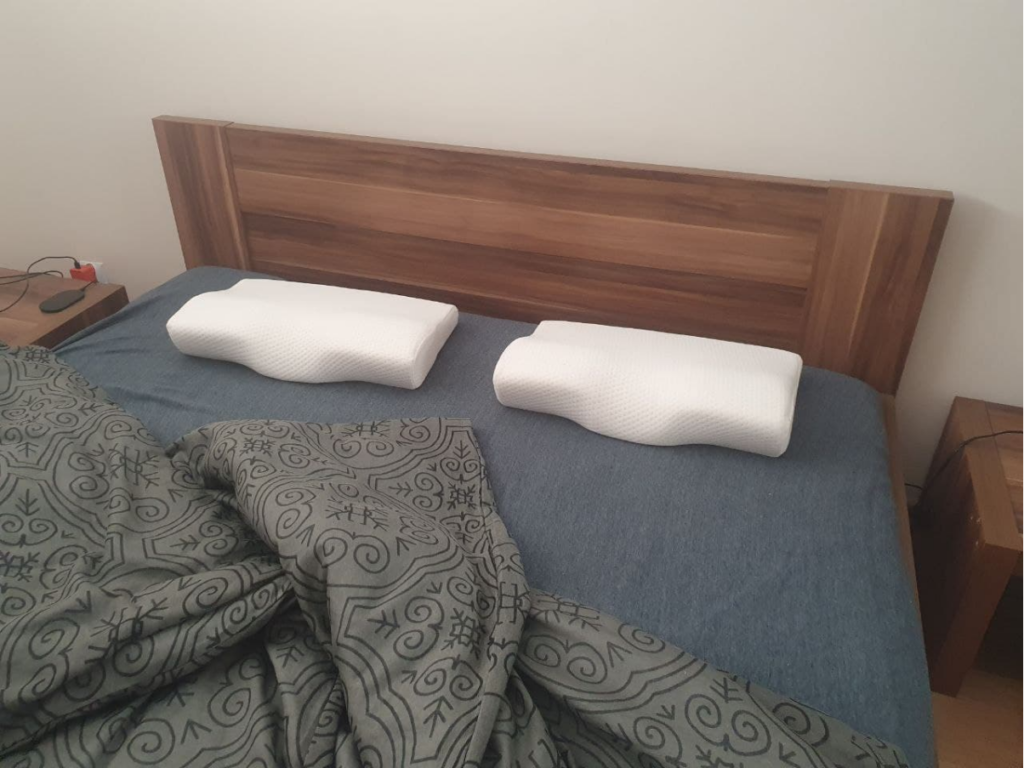
My husband came across an advertisement for the WyPur Irish store, did some research and found the exact information we needed. He then ordered us two orthopedic pillows. In the meantime, I continued to do my research. The package arrived quickly in the UK.
Our sleep has since become a million times better. I pay more attention to my health and my neck has stopped hurting, my headaches have even disappeared. My shoulders are relaxed, so now my day goes by easily. I never thought I could sleep on my back.
The question is, do orthopaedic pillows work? Yes. Orthopaedic can provide you with a good night’s sleep by fixing certain sleep issues you have like bad neck, shoulder pain and sleep apnea to name a few.
What is the best orthopaedic pillow?
Depending on your aches and pains, there are several pillows you can look at. Here are some types of orthopaedic pillows to check out:
Contour memory foam pillows
Luxury bamboo shredded memory foam pillows
Therapy memory foam pillows
Sleep memory foam pillows
Royal therapy memory pillows
Core cervical support pillows
Adjustable memory foam pillows
Orthopedic pillow for legs
Orthopedic pillow for back
Orthopaedic neck pillow for neck support
Orthopedic pillow for side sleepers
Orthopedic pillow for shoulder pain
Check out orthopedic pillow reviews and a dedicated buying guide online for more information on the best orthopedic pillow for you.
Why am I most comfortable when sleeping with a pillow between my knees?
Another question asked was, ‘Do you use a pillow between knees for sleeping sideways? Why? What are the benefits?’
If you sleep on your side, a firm pillow between your knees will prevent your upper leg from pulling your spine out of alignment and reduce stress on your hips and lower back. Pull your knees up slightly toward your chest too for optimal comfort.
What is the purpose of a body pillow?
A body pillow is a long, narrow pillow you cradle between your legs when you sleep on your side. These pillows improve spinal alignment and provide pressure point relief.
What is the function of a neck pillow?
According to an older study, a pillow’s primary function is to provide direct support for the head to minimise pressure in the neck. The support helps to prevent new neck pain from developing and existing neck pain from worsening.
Is it healthy to sleep with a pillow under your head?
Another question asked was, ‘What is the purpose of pillows?’
It is generally recommended to use a pillow if you sleep on your back or side. You need to feel comfortable and pain-free in bed, but if you have neck or back pain, then sleeping without a pillow may be unsafe.
What is the most comfortable pillow design?
The most comfortable pillow design depends on your ailment or sleep issues but a firm or extra-firm pillow is the best pillow to maintain the proper alignment or curve of the head and neck.
Should I use a neck pillow while driving a car?
A car neck pillow can help to reduce fatigue from sore neck muscles and help to improve posture during long commutes. You attach the neck pillow to the adjustable headrest and it can be further adjusted for the best fit.
What makes a bamboo pillow better than cotton?
A bamboo pillow has a higher thread count, which means more softness and durability. Bamboo pillows are more breathable than cotton and can absorb sweat even in the hottest temperatures.