Parenting young children isn’t just about managing schedules and sleepless nights; it’s also about healing from birth, building tools to calm the anxiety that comes with parenting, and reconnecting with yourself amid the beautiful chaos. While paediatricians, lactation consultants, and parent support groups are essential resources, exploring holistic tools like crystal healing has become an increasingly popular practice among millennial parents.
While science hasn’t fully validated the energetic claims made by crystal enthusiasts, many parents say that working with crystals gives them a sense of comfort, grounding, and emotional balance during overwhelming moments. But what exactly is crystal healing and can it really support parents navigating the intense early years?
In this article, we’ll explore how crystal healing works, what the science says, and how parents are using crystals as a complementary form of self-care during pregnancy, postpartum, and beyond.
What is crystal healing?
Crystal healing is an alternative therapy that uses the energetic vibrations of crystals and gemstones to support emotional, physical, and spiritual wellness. Each type of crystal is believed to carry a specific frequency or energy that can interact with the body’s energy field, as some traditions refer to it, or the chakra system.
This ancient practice dates back to civilisations like the Egyptians, Chinese, and Greeks, who used stones like lapis lazuli, jade, and quartz in rituals, healing ceremonies, and daily life, including during pregnancy and childbirth.
In modern parenting, crystal healing is used to help:
Reduce stress and parental anxiety
Support emotional processing during postpartum
Encourage mindfulness during feeding and bedtime routines
Promote patience and spiritual awareness
When raising young children, these benefits can serve as valuable tools in managing overwhelming emotions, finding moments of calm, and restoring inner balance.
The mind-body-spirit approach to parenting
Early parenthood impacts every layer of your life, not just the body recovering from pregnancy and birth, but the mind and spirit. That’s why many postpartum programs and family wellness centres now include holistic modalities like prenatal yoga, meditation, breathwork, and energy healing.
Crystal healing fits well within this integrative approach because it encourages:
Self-reflection during precious quiet moments
Daily ritual and mindfulness (even if just for 30 seconds)
Energetic support during emotional transitions
According to the National Center for Complementary and Integrative Health (NCCIH), about 38% of adults in the U.S. use some form of complementary and alternative medicine, including energy work like crystal healing, as part of their overall wellness [1]. Among millennial parents, this number is even higher.
While crystal healing is not a substitute for medical care or postpartum support, it can provide emotional comfort and a sense of spiritual grounding for parents during challenging transitions.
How crystals may support parents and families
1. Creating mindful moments in chaos
Working with crystals can help establish brief daily routines that ground and centre the mind. Whether it’s holding a crystal during a 2-minute morning meditation, placing one on your nightstand for better sleep, or carrying it during school pickup, these simple rituals promote mindfulness, which research shows reduces parental stress and improves emotional regulation.
2. Providing emotional comfort during difficult days
Crystals can serve as emotional anchors during challenging parenting moments, such as tantrums, sleep regressions, or postpartum mood changes. For many parents, simply holding or seeing a calming stone like amethyst or rose quartz reminds them to breathe, reset, and stay present.
3. Symbolising strength and transformation
Many parents choose crystals that symbolise personal growth and resilience. These physical tokens serve as daily reminders of strength during pregnancy, birth and parenting.
Popular crystals for parents and family wellness
Here are some commonly used crystals that parents find helpful during different stages of their journey:
Amethyst – Often called the “calming stone,” amethyst has long been associated with clarity, peaceful sleep, and emotional balance. Parents use it in nurseries and bedrooms to promote restful sleep for the whole family.
Black Tourmaline – Known for its grounding energy, this crystal is used to clear negative energy, reduce anxiety, and help create a sense of safety—perfect for new parents dealing with protective instincts.
Rose Quartz – The stone of unconditional love and compassion, rose quartz encourages healing from birth trauma, helps with bonding, and supports self-compassion during challenging parenting moments.
Citrine – Linked to joy and energy, citrine may help exhausted parents maintain positivity and find moments of sunshine even on difficult days.
Clear Quartz – This “master healer” is believed to amplify intention and support overall emotional clarity, helpful when making important parenting decisions.
Moonstone – Traditionally associated with fertility, pregnancy, and motherhood, moonstone is beloved by parents for its support of hormonal balance and intuitive parenting.
While the healing power of crystals can’t be proven through conventional science, many parents find comfort and inspiration in their use and that alone can support a positive mindset during challenging phases.
What does the science say?
Scientific studies on crystals are limited, and many researchers consider the effects to be placebo-based. However, that doesn’t mean they aren’t valuable for stressed parents.
A 2001 study published in The Journal of Complementary and Alternative Medicine found that participants who believed in the power of crystals reported feeling better emotionally and physically after handling them, even when given placebo crystals [2].
This points to an essential truth in parenting wellness: belief, intention, and mindfulness matter. If a parent feels calm, grounded, and hopeful when working with crystals during a difficult bedtime routine or postpartum anxiety episode, those feelings are valid and helpful.
Safe tips for using crystals in your family
If you’re curious about incorporating crystals into your parenting practice, here are safe, practical tips:
Choose Intuitively – Let yourself be drawn to a crystal that “speaks” to your current parenting needs. Your intuition often knows what support you need.
Use During Feeding or Pumping – Hold a small crystal while nursing or pumping to create a calming ritual. Focus on your breath and bonding intentions.
Set Family Intentions – Write down an affirmation for your family’s wellbeing, and place your crystal nearby as a visual reminder of your values.
Cleanse Regularly – Crystals are believed to absorb energy. Cleanse them monthly with moonlight, sound, or gentle running water (only if the crystal is water-safe).
Safety First – Keep all crystals out of reach of children under 3 to prevent choking hazards. Never use crystals as teething items or in cribs. Consider placing them on high shelves or in closed display cases.
Creating a crystal practice for busy parents
Morning Reset (30 seconds): Hold a grounding stone while setting your intention for patience before the kids wake up.
Naptime Restoration (2 minutes): Place rose quartz on your heart during a brief meditation while baby sleeps.
Bedtime Ritual: Keep an amethyst on your nightstand to promote restful sleep between night wakings.
Family Crystal Garden: Create a safe display where older children can learn about different stones (supervised and out of reach of toddlers).
Final thoughts
Parenting young children is not just about meeting endless needs; it’s about maintaining your own well-being, finding moments of peace, and discovering what helps you feel whole amidst the beautiful chaos. For some parents, crystal healing offers a gentle way to support that journey through symbolism, ritual, and precious moments of mindfulness.
While crystals won’t cure sleep deprivation or eliminate tantrums, they can inspire calm, deepen mindfulness, and provide emotional grounding when used alongside traditional parenting support and medical care. And in the intensity of early parenthood, those small moments of peace can make all the difference.
Remember: You’re doing a fantastic job, and any tool that helps you feel more centred and supported is worth exploring—whether it’s crystals, meditation, or simply a hot cup of coffee in peace.
[2] French, C. C., et al. (2001). “The crystal ball: Belief in the paranormal and the placebo effect.” The Journal of Complementary and Alternative Medicine, 7(1), 91–95. https://doi.org/10.1089/107555301750164134
Disclaimer: This article is for informational purposes only and should not replace medical advice. Always consult your healthcare provider for health concerns related to pregnancy, postpartum recovery, or your child’s well-being. Keep all crystals out of reach of young children to prevent choking hazards.
*Collaborative feature post*
How to incorporate movement into your life as a busy parent
In today’s fast-paced world, staying active can feel like a luxury, especially for us parents. Between work deadlines, family responsibilities, nappy changes, and social commitments, exercise often takes a back seat. But movement doesn’t have to mean hours at the gym. Even small bursts of physical activity throughout your day can boost your energy, improve your mood, and support your overall well-being.
According to the World Health Organization, adults should aim for at least 150 minutes of moderate-intensity physical activity per week [WHO, 2022]. That’s just over 20 minutes a day. With the right mindset and strategies, you can easily fit gentle exercise into your everyday routine, even when life gets hectic.
Why movement matters
Before we dive into the how, let’s talk about the why. Movement is essential not only for physical health, but also for mental wellness.
A 2021 study published in Frontiers in Psychology found that just 10 minutes of light activity like walking can lead to measurable improvements in mood and alertness [Basso et al., 2021].
Simple ways to add movement to your busy day
You don’t need fancy equipment or a strict workout plan to get moving. Here are practical, no-excuse ideas to help you stay active, even with a packed schedule, whether you’re pregnant, newly postpartum, or managing life with young children.
1. Turn commutes into movement opportunities
If your workplace is within walking or biking distance, try leaving the car at home. If you rely on public transportation, get off one stop early and walk the rest of the way.
Tip: Keep a pair of comfortable shoes with you for quick walks.
2. Take short movement breaks
Set a timer to remind yourself to stand, stretch, or walk every hour. Even 5 minutes of movement can refresh your mind and body.
Try This: Walk during phone calls, do calf raises while brushing your teeth, or stretch between meetings.
3. Use the stairs
Skip the elevator when possible. Taking the stairs builds strength, boosts your heart rate, and takes only seconds.
According to Harvard Health, climbing stairs burns more calories per minute than jogging and helps build leg muscle [Harvard, 2020].
4. Schedule walking meetings
Instead of holding a conference room meeting, consider having a walking meeting. You’ll brainstorm better, get some fresh air, and sneak in extra steps.
Bonus: Walking side by side can lead to more open and creative conversations.
5. Add movement to daily tasks
You can make housework more active by adding intentional movements. Squat while picking up toys, dance while vacuuming, or do lunges while folding laundry.
Tip: Play upbeat music to keep you moving longer.
6. Stretch or exercise while watching TV
TV time doesn’t have to mean total rest. You can do gentle stretches, yoga poses, or bodyweight exercises like squats or planks while watching your favourite show.
Idea: Use commercial breaks as mini-workout intervals.
7. Use apps and trackers
Fitness apps or step counters can motivate you to move more. Set small, realistic goals like 5,000 steps per day, and gradually increase over time.
Research shows that people who use fitness trackers increase their activity by an average of 1,850 steps per day [Bravata et al., JAMA, 2007].
8. Work out in intervals (micro workouts)
Don’t have 30 minutes? No problem. Break your movement into short, high-energy bursts.
Example Routine:
5 minutes of brisk walking
2 minutes of squats
1 minute of jumping jacks
2 minutes of stretching
Repeat once or twice throughout your day.
9. Make movement a family activity
Include your kids, partner, or friends in physical activities. Go for a family walk, dance in the living room, or play tag in the backyard.
Bonus: You’ll bond more while setting a great example for younger family members.
10. Start your morning with gentle movement
Waking up 10 minutes earlier to stretch, walk, or do yoga sets a positive tone for your entire day.
Try This: Do a simple sun salutation flow or a 5-minute walk around the block to wake up your body and mind.
Movement mindset: consistency over perfection
You don’t have to run marathons or lift heavy weights to see results. The key is consistency. Small, repeated actions build powerful habits.
Here’s how to keep going:
Celebrate small wins: Every step counts
Be kind to yourself: Skipped a day? It’s okay. Start fresh tomorrow
Make it fun: Dance, hula hoop, skip rope – anything that gets you moving with joy
Pair movement with routine tasks: Listen to podcasts while walking or do stretches during Zoom meetings
Note for new parents: If you’re pregnant or newly postpartum, always consult with your GP or midwife before beginning any exercise routine. Gentle exercise for busy mums should work with your body, not against it, especially during recovery.
Hydration + movement = better health
Movement and hydration go hand-in-hand. When you move more, your body needs more fluids to support energy, digestion, and temperature regulation.
Tip: Keep a water bottle nearby to sip throughout the day, especially during or after physical activity.
Final thoughts
You don’t need to overhaul your schedule to stay active. By sprinkling movement throughout your day, you’ll support your physical health, boost your mood, and improve your mental well-being.
Movement is not a chore. It’s a gift you give yourself. One stretch, one walk, one deep breath at a time.
References
World Health Organization. (2022). Physical Activity Factsheet. [https://www.who.int]
Basso, J. C., & Suzuki, W. A. (2021). The effects of acute exercise on mood, cognition, neurophysiology, and neurochemical pathways: A review. Frontiers in Psychology.
Bravata, D. M., et al. (2007). Using pedometers to increase physical activity and improve health: A systematic review. JAMA.
5 expert-approved magnesium supplements for pregnancy
Magnesium might not be the first nutrient you reach for on the shelf, but during pregnancy and breastfeeding, it quietly does a lot of heavy lifting. From easing leg cramps to supporting your baby’s development, and helping you finally get some sleep (when you can!), magnesium is one mineral you don’t want to overlook.
Pregnant women typically need 350- 400 mg daily and breastfeeding mums need 310- 320 mg daily. That’s more than non-pregnant women because of the overdrive your body goes into to support both you and your little one.
Most of us don’t get enough magnesium through food alone, although it’s found in leafy greens, nuts, seeds, and whole grains. But between pregnancy cravings, nausea and exhaustion, you’d have to be eating like a saint to hit the mark, and that is tough when you can’t smell food. So supplements can be a great way to ensure you’re getting what you need. Magnesium Glycinate is the preferred form for pregnancy and breastfeeding due to its superior bioavailability and gentle effect on the digestive system.
Why magnesium matters for pregnancy and breastfeeding
During Pregnancy
Reduces leg cramps (affects 5–30% of mums-to-be)
Supports your baby’s growth – especially cell division and bone formation
Helps lower pre-eclampsia risk in high-risk women
Regulates blood sugar (important for reducing gestational diabetes risk)
Promotes better sleep when tossing and turning becomes your nightly routine
While Breastfeeding
Supports milk production (breast milk contains around 3mg magnesium per 100ml)
Boosts recovery and energy levels after birth
Helps regulate mood and stress hormones – big for postpartum wellbeing
Prevents depletion (since magnesium passes to your baby through breast milk)
Eases fatigue and muscle recovery during those sleep-deprived early months
According to Consumer Health Digest, Magnesium promotes relaxation, regulates the sleep cycle, and ensures optimum heart health. High-quality magnesium supplements ensure better absorption, which is particularly important when you’re supporting both yourself and your baby.
Choosing trusted, third-party tested brands ensures you get effective results with safe, scientifically tested natural ingredients – crucial during pregnancy and postpartum.
What are magnesium supplements?
Magnesium supplements fill the gap when your diet doesn’t quite cut it. They usually come in capsules, powders, tablets, or even gummies, with the most common forms being Magnesium Glycinate, Magnesium Citrate, and Magnesium Oxide.
Magnesium glycinate – the gold standard for pregnancy and breastfeeding. It’s well-absorbed, gentle on the stomach, and less likely to cause digestive issues.
Magnesium citrate – good absorption and can help with pregnancy constipation, but may be too much if your tummy is already sensitive.
Magnesium oxide – higher magnesium content, but poorly absorbed and more likely to upset your stomach.
In short, supplements top up your levels so your body can keep doing its 300+ magnesium-dependent jobs, which is everything from muscle relaxation to nerve signalling to heart health.
Safety first
While magnesium supplements are generally safe, always run it past your midwife, GP, or healthcare provider first. This is especially important if you’ve got existing health conditions or are on other medications.
Ensure the supplement contains premium ingredients that are free from artificial additives. Also, check for added ingredients like fillers or preservatives, according to DermSpotlight.
Quick note: don’t go over 400mg a day from supplements. Too much can affect early breastfeeding and upset your digestive system. Food sources are fair game, though because your body knows what to do with those.
Top recommendations for the best magnesium supplements for pregnancy and breastfeeding
WOWMD Magnesium Glycinate: Best Overall Magnesium for Pregnancy
Clean Nutra Mag Genin Magnesium Supplement: Best Magnesium Complex for Pregnancy Concerns
Pure Encapsulations Magnesium (Glycinate): Best for Blood Sugar Regulation During Pregnancy
Doctor’s Best High Absorption Magnesium Glycinate Lysinate: Best for Pregnancy Sleep & Leg Cramps
Nature Made Magnesium Glycinate: Best Trusted Brand for Pregnancy & Breastfeeding
Top 5 best magnesium supplements for pregnancy and breastfeeding
1. WOWMD Magnesium Glycinate
Safe for Pregnancy and Breastfeeding
WOWMD Magnesium Glycinate is a potent supplement designed to ensure the highest absorption rate while being gentle on your stomach. This is especially important when dealing with pregnancy nausea or postpartum digestive sensitivity. These highly bioavailable Magnesium Glycinate capsules deliver a potent 275 mg of Magnesium per serving (3 capsules) and offer an easy way to support relaxed muscles, healthy nerves, bones, and heart throughout pregnancy and breastfeeding.
PRODUCT HIGHLIGHTS
Supports muscle relaxation and reduces pregnancy leg cramps
Promotes heart health and nerve function for mum and baby
Enhances bone density, which is crucial during pregnancy
Usage: Supports Heart Health, Muscle Health, Bone Health, and Provides Energy
Safety: Non-GMO, Clinically-Studied Ingredients, Gluten-Free, No Artificial Additives
Refund Policy: 60-Days
Why it’s ideal for pregnancy andlandscape breastfeeding: Provides approximately 275mg elemental magnesium per serving, fitting within the recommended 350-400mg daily range for pregnancy when combined with dietary sources.
2. Clean Nutra Mag Genin Magnesium Supplement
Safe for Pregnancy and Breastfeeding (Consult Doctor Due to Multiple Forms)
Clean Nutra Mag Genin Magnesium Supplement features five premium forms of magnesium combined with apigenin, L-theanine, and 18 other essential nutrients. This comprehensive formula is designed to enhance sleep quality (desperately needed by pregnant and nursing mums!), reduce stress, support muscle health, and promote overall well-being.
PRODUCT HIGHLIGHTS
Promotes Deep And Restful Sleep (crucial for pregnancy and postpartum)
Supports Calm Focus and Mental Clarity for new mums
Usage: Comprehensive support for pregnancy concerns including muscle cramps, sleep issues, and stress
Safety: Non-GMO, Trusted Ingredients, No Preservatives
Refund Policy: 180-Days
For pregnant and breastfeeding mums: The blend of multiple magnesium forms may be beneficial, but consult your healthcare provider due to the additional ingredients. Vitamin B6 is beneficial for morning sickness.
3. Pure Encapsulations Magnesium (Glycinate)
Safe for Pregnancy and Breastfeeding
Pure Encapsulations Magnesium Glycinate provides a highly bioavailable form of magnesium, ideal for use during pregnancy and breastfeeding. These capsules support metabolic energy (when you need it most!), cardiovascular health, and cognitive function. Magnesium glycinate, the main ingredient, is a chelated form of magnesium known for its superior absorption and gentleness on the stomach.
PRODUCT HIGHLIGHTS
Promotes Bone and Vascular Health for mum and baby
Supports Energy Production during exhausting pregnancy/postpartum
Perfect for pregnancy: Pure Encapsulations is known for clean, hypoallergenic formulas – ideal when you need to be extra cautious about what you’re putting in your body.
4. Doctor’s Best High Absorption Magnesium Lysinate Glycinate
Safe for Pregnancy and Breastfeeding
Doctor’s Best High Absorption Magnesium promotes better sleep, reduces muscle cramps (including those painful pregnancy leg cramps!), and enhances stress management. It supports energy production, maintains healthy nerves, and relaxes muscles to become one of the best magnesium supplements for pregnancy and breastfeeding. This supplement offers a reliable, safe, and effective solution for improved sleep, stress relief, and cardiovascular health.
PRODUCT HIGHLIGHTS
Promotes Muscle Relaxation (essential for pregnancy leg cramps)
For pregnancy leg cramps: This formula is particularly effective for reducing the frequency of nocturnal leg cramps – one of the most common pregnancy complaints affecting 5-30% of expectant mothers.
5. Nature Made Magnesium Glycinate
Safe for Pregnancy and Breastfeeding
Nature Made Magnesium Glycinate helps reduce muscle cramps, promotes restful sleep, and supports bone health, which is all crucial during pregnancy and postpartum. It activates enzymes necessary for energy production and maintaining muscle and nerve functions. It’s particularly effective for improving sleep, reducing stress, enhancing bone density, and promoting relaxation during the demanding months of pregnancy and early motherhood.
PRODUCT HIGHLIGHTS
Promotes Muscle Relaxation
Promotes Nerve Health for mum and developing baby
Supports Heart Health
Independently 3rd Party Tested & USP Verified
PRODUCT SPECIFICATIONS
Brand: Nature Made
Form: Capsules
Quantity: 60 Capsules
Dosage: Consume 2 capsules daily
Ingredients: Magnesium Bisglycinate
Usage: Supports Muscle Relaxation, Heart, Nerve, and Bone Health
Safety: Science-Based Nutrition, Non-GMO, Gluten Free, No Color Added, No Artificial Flavors
Refund Policy: 90-Days
Trusted for pregnancy: Nature Made is the #1 Pharmacist Recommended brand and USP verified, giving you extra peace of mind during pregnancy and breastfeeding.
How do we select the best magnesium for pregnancy and breastfeeding?
We adhere to a thorough and unbiased approach when selecting magnesium supplements suitable for pregnant and nursing mothers. Our recommendations are based on the following crucial factors:
Expert’s recommendations:
We gather suggestions and feedback from obstetricians, midwives, and prenatal nutritionists. We also source product reviews and information about the best pregnancy-safe supplements available in the market.
Pregnancy and breastfeeding Safety:
We prioritise supplements that are explicitly safe for use during pregnancy and breastfeeding, avoiding those with contraindicated ingredients or excessive dosages.
Examine ingredient efficiency:
Our team focuses on supplements that use highly bioavailable and pure forms of magnesium, like magnesium glycinate, which is gentle on pregnancy-sensitive stomachs. This ensures the safety and efficiency of the supplement.
Pricing and benefits
Affordability is essential, especially for new families. We recommend products that are affordable and provide exceptional benefits and premium ingredients for their pricing.
How to choose the best magnesium for pregnancy and breastfeeding
Identify your pregnancy/postpartum health goals
Always focus on your specific needs as a pregnant or breastfeeding mother. Are you dealing with leg cramps? Poor sleep? Stress? Pre-eclampsia risk? Choose accordingly.
Consider your supplement form preference:
Pregnancy nausea can make swallowing pills difficult. Consider the supplement’s form and choose powders or smaller capsules if you’re experiencing morning sickness.
Look for pregnancy-safe ingredients:
Ensure the supplement contains premium ingredients free from artificial additives, and check that all additional ingredients are safe for pregnancy. Avoid products with herbs or additives not cleared for pregnancy use.
Consider the dosage and serving size
Aim for supplements providing 200-300mg per serving, allowing you to adjust based on dietary intake and stay within the recommended 350-400mg daily total during pregnancy (310-320mg while breastfeeding).
Read reviews from other mums:
Trust brands that have positive reviews from pregnant and breastfeeding women, with visible proof of effectiveness for pregnancy-specific concerns.
Check for third-party testing and quality assurance:
Always choose supplements tested by independent labs for quality, safety, and consistent nutrient potency. This is non-negotiable during pregnancy and breastfeeding.
What are the benefits of using magnesium during pregnancy and breastfeeding?
Reduces pregnancy leg cramps
Magnesium supplements significantly help reduce the frequency and intensity of nocturnal leg cramps, which affect 5-30% of pregnant women. Multiple studies show that 300mg of magnesium daily reduces both the frequency and severity of these painful cramps.
Improves sleep and reduces stress:
Magnesium promotes relaxation and helps calm the nervous system, improving sleep quality. This is crucial when pregnancy discomfort or newborn care disrupts rest. It also helps reduce anxiety and stress levels common during pregnancy and the postpartum period.
Supports healthy foetal development
Magnesium plays a crucial role in cell division, tissue growth, and DNA synthesis – all essential for your baby’s development. It’s particularly important for skeletal development and bone formation.
May help prevent pre-eclampsia
Research shows that magnesium supplementation during pregnancy may help prevent pre-eclampsia in women at high risk (those with previous pre-eclampsia, multiple pregnancies, high blood pressure, diabetes, or obesity).
Supports bone health for mother and baby
Magnesium is essential for calcium absorption and bone health. Regular supplementation helps maintain mum’s bone density (which can be depleted during pregnancy and breastfeeding) while supporting baby’s skeletal development.
Regulates blood sugar during pregnancy
Magnesium helps regulate blood sugar levels, potentially reducing the risk of gestational diabetes. This is particularly important as insulin resistance naturally increases during pregnancy.
Supports postpartum recovery
Magnesium aids muscle recovery, reduces postpartum fatigue, supports mood regulation, and helps prevent postpartum depletion—especially important for breastfeeding mothers.
Enhances overall wellbeing
Magnesium supports over 300 biochemical reactions crucial during pregnancy and breastfeeding, including energy production, muscle function, and nervous system health.
Recommended magnesium dosage for pregnancy and breastfeeding
During pregnancy
350-360mg daily (RDA for pregnant women aged 19-30)
400mg daily (RDA for pregnant women aged 14-18)
Some research suggests 300-400mg daily for optimal benefits
Upper limit: 350mg from supplements (additional can come from food)
While breastfeeding
310-320mg daily (RDA for breastfeeding women aged 19-30)
360mg daily (RDA for breastfeeding women aged 14-18)
Remember: Approximately 3mg of magnesium per 100ml passes to baby through breast milk
Important: Always discuss dosage with your healthcare provider based on your individual needs, current magnesium levels, and dietary intake.
Final thoughts
Magnesium supplements prove to be a valuable addition to your pregnancy and breastfeeding health regimen. They help reduce leg cramps, support healthy fetal development, improve sleep quality, reduce stress, and aid postpartum recovery. With numerous options on the market, it’s important to choose the best magnesium for pregnancy and breastfeeding that suits your specific needs.
Our top five recommendations provide premium and effective magnesium supplements specifically suitable for expecting and nursing mothers. When choosing the best magnesium for pregnancy and breastfeeding, be sure to consider factors like ingredient quality (magnesium glycinate is preferred), appropriate dosage, third-party testing, and reviews from other mums.
Always consult your healthcare provider or midwife before starting magnesium supplementation during pregnancy or breastfeeding. With the right supplement and proper guidance, you can enjoy the many benefits magnesium offers during this special time in your life.
Frequently asked questions
How much magnesium should I take during pregnancy?
The recommended daily intake during pregnancy is between 350 and 400 mg, depending on your age. Pregnant women aged 14-18 need 400mg daily, while those aged 19-50 need 350-360mg daily. This includes magnesium from both food and supplements. Always consult your healthcare provider for personalized guidance.
How much magnesium should I take while breastfeeding?
Breastfeeding women need 310-320mg daily (ages 19-30) or 360mg daily (ages 14-18). Since approximately 3mg of magnesium per 100ml of breast milk passes to your baby, maintaining adequate levels is important for both your recovery and your baby’s development.
Can magnesium supplements help with pregnancy leg cramps?
Yes, studies show that magnesium supplementation (300mg daily) significantly reduces the frequency and intensity of leg cramps during pregnancy—one of the most common pregnancy complaints affecting 5-30% of expectant mothers.
Are magnesium supplements safe to use throughout pregnancy and while breastfeeding?
Yes, magnesium supplements are generally safe for long-term use during pregnancy and breastfeeding when taken at recommended doses. However, always consult your healthcare provider before starting any supplement, especially if you have pregnancy complications or are taking other medications.
Which form of magnesium is best for pregnancy?
Magnesium glycinate is the preferred form for pregnancy and breastfeeding because it has high bioavailability (meaning your body absorbs it well) and is gentle on the digestive system—important when dealing with pregnancy nausea or postpartum digestive sensitivity.
Will magnesium supplements cause digestive issues during pregnancy?
Magnesium glycinate is known to be gentle on the digestive system and less likely to cause issues compared to other forms like magnesium citrate or oxide. This makes it ideal for pregnancy when your stomach may already be sensitive.
Can magnesium help prevent pre-eclampsia?
Research indicates that magnesium supplementation may help prevent pre-eclampsia in women at high risk (those with previous pre-eclampsia, multiple pregnancies, high blood pressure, diabetes, or obesity). Discuss this with your healthcare provider if you’re at increased risk.
When should I start taking magnesium during pregnancy?
Many healthcare providers recommend starting magnesium supplementation as early as possible in pregnancy, ideally as soon as you know you’re pregnant or even during preconception. Continue throughout pregnancy and breastfeeding.
Disclaimer: This article is for informational purposes only and does not constitute medical advice. Always consult with your healthcare provider, obstetrician, or midwife before starting any new supplement during pregnancy or breastfeeding. Individual needs may vary based on your health status, medical history, and current medications.
*Collaborative feature post*
5 pregnancy and breastfeeding-safe moisturisers for youth
Skincare isn’t just about having a daily routine. It’s vital for healthy and radiant skin, especially during hormonal fluctuations that occur during pregnancy and breastfeeding. Pregnancy skincare products used to be relegated to a tiny corner of the beauty aisle. Now, a wide range of products are available in almost any store, and the challenge has become deciding which one to use and which is safe for you and your baby.
However, when you have the right products to meet your skin’s specific needs, you can achieve long-term results, which include smoother, clearer, and more hydrated skin. This article will highlight some of the best skincare creams and moisturisers to consider, based on their distinctive advantages and how they can benefit your skin during pregnancy and postpartum.
Key highlights
Our top 5 skincare picks deliver hydration, anti-ageing, and skin barrier support – all safe for pregnancy and breastfeeding
Prioritise products with proven, nursing-safe actives like retinol alternatives, vitamin C, hyaluronic acid, or ceramides
Look for gentle formulations—fragrance-free, minimal irritants, suitable for daily use and sensitive pregnancy skin
Use them in proper sequence (cleanser → serum → moisturiser → SPF) for maximum benefit.
Patch test new products, and choose according to your skin type (dry, oily, sensitive, etc.)
Why choosing the right skincare matters (especially during pregnancy & breastfeeding)
Youthful skin is a matter of selecting the right products to suit your skin type and address specific skin concerns. You can combat the issues of dryness, pigmentation, and sensitive skin with the right product selection. According to the research from Dermspotlight, “Application of the incorrect product may cause irritation, breakouts or aggravation of the already existing concerns.” Being aware of what is good for your skin will save time, money and frustration in the long run.
Zoe Diana Draelos, MD, Board-certified dermatologist, research and clinical professor, says, “Choose products that match your skin type and its specific concerns like dryness, pigmentation, sensitivity because the right formulation protects the skin barrier and speeds improvement, while the wrong product can cause irritation, breakouts or worsen pigmentation.”
We will explore the best skin care products that address various skin issues, including pore refining, hydration, soothing, and dark spot treatment. We will also take a closer look at some products worth adding to your routine.
Ingredients to avoid during pregnancy and breastfeeding
Before we explore the products, here’s what to avoid in your safe skincare routine for breastfeeding moms:
It is crucial to determine your skin type before selecting products. Is your skin dry, oily, combination or sensitive? Knowing your skin type will enable you to choose the appropriate products that won’t clog or even worsen your skin. For example, if you have oily skin, look for products that are oil-free and mattifying. In the case of dry skin, the hydration and moisture-locking ingredients will be additional.
For new and expecting mums: Your skin type may have changed during pregnancy due to hormonal fluctuations. What worked before may need adjusting now.
Key steps in a proper skincare routine
A basic skincare routine involves five key steps that work together to maintain healthy skin:
Cleanse: Start with a gentle cleanser to remove dirt, oil, and impurities.
Tone: Toners balance your skin’s pH and prepare it for the next steps.
Hydrate: Use a moisturiser to replenish moisture and keep your skin soft.
Protect: Finish with sunscreen to shield your skin from harmful UV rays. For nursing moms, use mineral sunscreen (zinc oxide) instead of chemical formulas.
These steps can be adapted to suit your skin’s specific needs, but this structure provides a solid foundation for any skincare routine.
Best skincare products to try (safe for pregnancy and breastfeeding)
Here are the best skincare creams and moisturisers according to Health Insiders that you can try:
1. WOWMD Witch Hazel Pore Perfecting Toner – best for pore refining and balancing
Pregnancy and breastfeeding safe
Toning is a crucial step, particularly for those with large pores or oily skin. The WOWMD Witch Hazel Pore Perfecting Toner is used to refine pores and balance skin by eliminating excess oil without over-drying. Hyaluronic acid, combined with witch hazel, helps to tighten pores, restore freshness to the skin, and maintain a youthful appearance. Ideal for those seeking smoother skin and a more even complexion.
Why it’s ideal for nursing mums: Witch hazel is a gentle, commonly used postpartum and is generally well-tolerated with no harmful ingredients that could transfer through to breast milk.
2. WOWMD Hyaluronic Acid Serum – Best for deep hydration & plumping
Pregnancy and breastfeeding safe
The WOWMD Hyaluronic Acid Serum is the ideal choice for those seeking deep hydration. This serum contains various types of hyaluronic acids that enable it to penetrate the skin at multiple levels. It offers lasting moisturising power, making the skin plump and hydrated. This serum is a good fit if you are seeking an efficient face moisturiser that manages sensitive skin or a serum that helps diminish fine lines.
Perfect for breastfeeding mums: Hyaluronic acid is completely safe during pregnancy and nursing. It’s a naturally occurring substance that provides crucial hydration, essential when breastfeeding, as it increases your body’s water needs.
3. WOWMD Hydro Balancing Gel-Cream – best lightweight moisturiser
Pregnancy and breastfeeding safe
For oily or combination skin, a light moisturiser is necessary, and the WOWMD Hydro Balancing Gel-Cream is perfectly suited for the task. It moisturises but does not leave the skin greasy, and it creates a smooth and balanced texture. It contains plant oils and antioxidants that keep the skin hydrated, calm, and refreshed, making it an excellent option for sensitive skin care.
Safe for your safe skincare routine for breastfeeding mums: This gentle formula contains no harsh ingredients and is perfect for hormonally sensitive postpartum skin.
4. Beverly Hills MD Lift + Firm Sculpting Cream – Best for skin hydration
Note: Consult your doctor if breastfeeding
The Beverly Hills MD Lift + Firm Sculpting Cream provides both instant relief, whether it is a post-workout recovery or calming irritated skin. This cream, reinforced with Acetyl Dipeptide-1, significantly enhances collagen synthesis and skin hydration, providing a refreshing effect. The Beverly Hills MD Lift + Firm Sculpting Cream is formulated to deliver a lifting effect, promoting a tighter and more youthful skin appearance. It achieves this by utilising a blend of peptides, advanced moisturisers, and natural extracts to enhance dermal elasticity and mitigate sagging.
For nursing mums: While peptides are generally considered safe, always consult your healthcare provider before using advanced anti-ageing products while breastfeeding.
5. WOWMD Dark Spot Serum for sensitive skin – best to target pigmentation gently
Pregnancy and breastfeeding safe
Dark spots and pigmentation are one of the most prevalent problems that bother many individuals, especially pregnant women experiencing melasma (the “pregnancy mask”). The WOWMD Dark Spot Serum Sensitive Skin will target the dark spots without irritating the skin. It is loaded with natural extracts and is effective in the removal of dark spots. It lightens the skin, decreases pigmentation, and functions on even sensitive sections of the skin.
Ideal for a safe skincare routine for breastfeeding mums: This formula uses gentle, natural ingredients instead of hydroquinone (which should be avoided during nursing), making it perfect for treating pregnancy pigmentation safely.
How to build a simple routine
Sample AM/PM routine using these products
Here’s how you can incorporate these products into a simple yet effective morning and evening skincare routine:
AM Routine:
Cleanse with a gentle cleanser
Tone with WOWMD Witch Hazel Pore Perfecting Toner
Apply WOWMD Hyaluronic Acid Serum for hydration
Moisturise with WOWMD Hydro Balancing Gel-Cream
Finish with sunscreen for sun protection(use mineral sunscreen if pregnant or nursing)
PM Routine:
Cleanse and tone
Apply WOWMD Dark Spot Serum for Sensitive Skin for targeted treatment
Use Beverly Hills MD Lift + Firm Sculpting Cream if your skin feels irritated or inflamed (check with doctor if breastfeeding)
Hydrate and lock moisture with WOWMD Hydro Balancing Gel-Cream
Tips for layering and patch testing
When using skincare products, it is always advisable to apply them in the order of thin to thick. Begin with toners, and proceed to serums, and then moisturisers. Patch testing on a small area of your skin can be helpful if you are trying new products, so you will not get irritated, particularly if you have sensitive skin.
Extra important for pregnant and nursing mums: Your skin is more sensitive during pregnancy and postpartum due to hormonal changes. Always patch test for 24-48 hours before applying the whole product.
How to choose what works for you
Match products to concerns
Select products that suit your skin’s needs. In case hydration is the issue to consider, the Hyaluronic Acid Serum or the Hydro Balancing Gel-Cream can be chosen. When you have pigmentation or dark spots, the Dark Spot Serum will address that issue.
Loss of firmness: Beverly Hills MD Cream (with doctor approval)
Sensitive skin considerations
For those with sensitive skin, consider using a range of gentle, non-irritating products. The WOWMD Dark Spot Serum and Beverly Hills MD Lift + Firm Sculpting Cream are formulated to calm and soothe the skin, making them ideal for individuals with sensitive skin.
For pregnant and nursing mums: Choose fragrance-free, minimal-ingredient formulas. Your skin may be more reactive during this time due to hormonal fluctuations.
Ultimately, investing time in selecting suitable products tailored to your skin type and concerns can have a lasting impact. The products mentioned above offer tailored solutions to various skincare needs, including hydration, pore refinement, dark spot reduction, and calming care. Begin creating your own personalised skincare schedule and have healthy, radiant skin.
Q: What’s the Results Timeline for These Products?
A: Results can vary, but with consistent use, you may start noticing improvements within 2-4 weeks. For dark spots on the face, it may take longer, up to 6-8 weeks, to see full results. Be patient – hormonal changes during pregnancy and postpartum can affect how quickly your skin responds.
Q: Can You Combine All These Products?
A: Yes, these products work well together as they address different skin concerns. Just ensure you follow the proper layering order and patch test where necessary. All the WOWMD products are safe for pregnancy and breastfeeding when used together.
Q: What to Do If Irritation Occurs?
A: If irritation occurs, discontinue use and consult a dermatologist. It’s essential to patch tests before using any new products, especially for sensitive skin. During pregnancy and postpartum, your skin may be more reactive than usual.
Q: When can I use retinol again after pregnancy?
A: If you’re breastfeeding, wait until you’ve finished nursing before reintroducing retinol. Once you’ve stopped, consult your healthcare provider. Consider bakuchiol as a safe, plant-based alternative in the meantime.
Q: Are these products safe throughout pregnancy and while nursing?
A: Yes, the WOWMD products listed are safe throughout pregnancy and breastfeeding. For the Beverly Hills MD Lift + Firm Sculpting Cream, consult your healthcare provider due to the peptide content. Always patch test and introduce products one at a time.
Baby shower invitations are what we call the opening act of baby showers because they set the stage for everything that follows. Whether you’re calling loved ones to a backyard baby-q or an elegant afternoon tea shower, your invite should pack a punch. Want your guests to RSVP with enthusiasm for your little one’s celebration? Then it’s time to toss out the generic and step into the world of stunning, DIY baby shower invitation ideas.
Know your audience
Understanding your audience when planning the perfect baby shower is like having cheat codes to a great video game. It makes things a whole lot easier (and more fun). Are your invitees trendy millennial parents or laid-back family members? An invite aimed at work colleagues may differ from one crafted for your mum friends from prenatal class. Of course, the invites should be the design you want but if you know your audience, then you can watch the YES RSVPs roll in.
When thinking about baby shower invitation designs, consider familial, cultural, or community norms and tailor each detail to show respect for the guests.
Choose the right colours
Colours speak louder than words. They set the vibe. Imagine sending out neon-green invites for a delicate “Twinkle Twinkle Little Star” theme. Bold, saturated colours shout “co-ed baby shower party time,” while soft pastels whisper “elegant tea party shower.” Choose a palette that pairs well with your nursery theme.
Colours can also stir emotions, so choose wisely depending on your baby shower’s purpose. Vibrant rainbow colours can evoke excitement for a gender reveal party, while muted, neutral tones might be perfect for those keeping baby’s gender a surprise. The aesthetic should not only match the event but also reflect any nursery décor or baby theme you’d like to represent.
As digital solutions like digital invites with RSVP become more popular among busy parents, consider using DIY printable baby shower invitations with RSVP functions to optimise the process seamlessly. These options allow you to match your color palette and nursery theme effortlessly, making modern celebration preparation less like a chore and more like nesting art.
Be precise with baby shower details
Clarity is key for busy parents and family members. Nail down the essential details, date, time, location, registry info, and attire. But don’t stop there. Make it sparkle with something special, like a personalised message about your journey to parenthood or a sweet ultrasound photo. It transforms mere logistics into a heartfelt call to celebrate your growing family.
Additionally, supplying a brief rundown of the baby shower schedule can be beneficial. Include details like “nappy raffle entry” or “bring a book instead of a card” requests. Not only does it set expectations, but it also heightens anticipation for any special activities you have planned, like baby shower games or a gender reveal moment.
Don’t far the font (baby-themed typography)
Fonts can be your best friend or your worst enemy in DIY baby shower invitations. They express personality, convey mood, and communicate whether this is a whimsical woodland creature theme or an elegant garden party. Using Comic Sans for a sophisticated baby sprinkle? Lean towards playful serif fonts for storybook themes and clean sans-serif for modern, minimalist baby showers. Remember, fonts tell your baby’s story, so make sure it’s the right one.
Step up with creative baby shower themes
Think outside the box for your DIY baby shower invitation ideas. A onesie-shaped or baby bottle design? Go for it. Interactive elements like scratch-off gender reveals or detachable registry cards add an element of surprise. Embrace creativity to draw intrigue. Popular themes include “Little Star,” “Safari Adventure,” or “Books for Baby.” Each aspect of the invite should be a reflection of your parenting style, a tantalising teaser trailer for your little one’s debut.
Thoughtful baby shower embellishments make a difference
Ever received a baby shower invite with a tiny ribbon bow or textured cardstock? It’s unforgettable. Embellishments can transform an ordinary invite into something cherished, which is perfect for the baby book! Gold foiling for “Oh Baby,” miniature clothespins, or even baby powder-scented paper can leave a lasting imprint. These touches elevate the experience, making your shower feel major before it even starts.
But remember, restraint is key, especially for DIY projects. Overcrowding a baby shower invitation with embellishments can detract from its elegance. A minimalist splash of luxury, like a single pacifier charm or tiny footprint stamp, can speak volumes. Use embellishments to amplify your baby shower message rather than complicating it.
Stick the landing with RSVP details
Your closing shouldn’t fizzle out. End with a clear call to action that busy parents will appreciate. An RSVP deadline (at least 2 weeks before) helps you plan for the right amount of baby shower favours and food. Include registry information and any special requests like “books instead of cards.” A sign-off that encapsulates the joy of welcoming your little one isn’t just polite – it’s the thing everyone remembers. Wrap it up with a sweet farewell like “Can’t wait to celebrate our little miracle with you!”
There you have it! Craft DIY baby shower invitation ideas that mesmerise expecting parents, delight grandparents-to-be, and, most importantly, get your loved ones to RSVP instead of shelving your shower as a “maybe.” Turn your invitations into coveted keepsakes that’ll have your mailbox (or inbox) brimming with enthusiastic replies from everyone eager to celebrate your bundle of joy!
Pro tip for busy parents: Many online platforms now offer free, printable baby shower invitation templates that you can customise at home – perfect for those late-night nesting sessions when inspiration strikes!
*Collaborative feature post*
What to know about lash serum during pregnancy and beyond
Medical Disclaimer: This article is for informational purposes only. Always consult your healthcare provider before using any cosmetic products during pregnancy or breastfeeding. Individual experiences may vary, and what works for one person may not work for another.
As a mother of four, I have navigated the peaks and troughs of hormonal changes both in pregnancy and postpartum. Finding safe beauty products is critical for me, especially now that I am in my 40s. This comprehensive guide addresses everything you need to know about lash serums to help with that inevitable postpartum hair loss because, sadly, it doesn’t just happen on your head!
The unique postpartum hair loss challenges we parents face
Our hair is thickest during the golden (second) trimester, but then after birth, hair falls in clumps. Many women don’t realise that this often happens with our eyelashes too. I lost a lot with number four and have only seen my hair grow back properly after four years. Not to worry, though. Most women replenish their hair naturally within the first year, but this largely depends on your body, genetics and age. But there are ways to help speed up hair growth (watch this space for a full beauty guide coming soon on how I did this!) Additionally, I recommend checking out my article on red light therapy, which has been extremely helpful for replenishing my curly locks.
Trying a lash serum for the first time is exciting, but it’s also essential to consider whether its safe and effective. For pregnant and breastfeeding mothers, these concerns multiply as hormonal changes affect both lash growth and which products you can use safely.
And not every serum works the same way. Results vary depending on the ingredients and each person’s lash growth cycle. During pregnancy and postpartum, hormonal fluctuations can dramatically impact these results. Some notice fuller-looking lashes within weeks, while others see more gradual changes. Paying attention to application instructions and consistency helps maximise results while reducing the chance of side effects.
However, with the right approach, lash serums can become a simple yet effective addition to a daily routine – even during the demanding months of pregnancy and early parenthood.
In this article, we’ll talk about what lash serums are out there and how to use them safely during pregnancy and beyond!
Essential facts to know before using a lash serum during pregnancy and postpartum
How lash serums work and their benefits
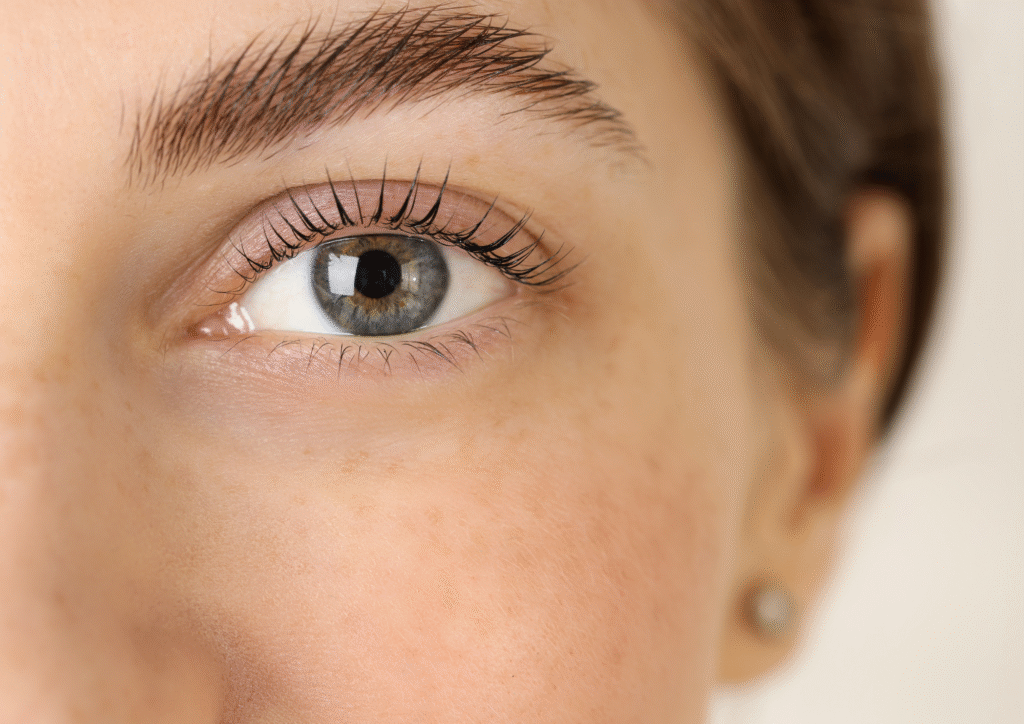
Lash serums are formulated to enhance the appearance of eyelashes by promoting growth and increasing thickness. Cosmetic serums usually work by nourishing the hair follicle, while prescription options containing bimatoprost (a prostaglandin analog) actually extend the natural growth phase of lashes and are clinically proven to lengthen them. However, these prescription serums like Latisse are not recommended for pregnant or breastfeeding women due to potential safety concerns.
Cosmetic serums, which are available over the counter, often emphasise conditioning and strengthening rather than medically altering growth cycles. This difference means results can vary, with some formulas focusing more on overall lash health than dramatic length. A lash serum by ForChics, for instance, is typically compared with other cosmetic options that highlight hydration and resilience. Comparing these side by side reveals how ingredients impact shine, softness, and durability. Choosing between them depends on whether the goal is noticeable growth or simply stronger, healthier-looking lashes. Note: Always verify the pregnancy safety of any specific brand with your healthcare provider before use.
Understanding hormonal effects on lashes
During pregnancy, elevated oestrogen levels can significantly impact lash growth patterns. According to recent studies, many women experience enhanced lash growth and thickness, particularly during the second and third trimesters of pregnancy. However, once you give birth, oestrogen levels plummet, signalling hair follicles to enter the telogen (shedding) phase rapidly.
Many new mothers experience unexpected changes in their hair and lashes. It’s not uncommon to notice your lashes thinning or even eyelashes falling out postpartum. This phenomenon, known as telogen effluvium, typically peaks 3 to 6 months after delivery.
Types of lash serums and key ingredients
There are two main categories: prescription serums and cosmetic serums. Cosmetic serums rely on nourishing ingredients. Common ones include:
Peptides: Support lash strength and reduce breakage.
Biotin: Promotes healthier hair growth.
Castor oil: Provides hydration and conditioning.
Plant extracts: Offer antioxidant and soothing effects for sensitive eyes.
Some cosmetic formulas may also contain prostaglandin derivatives, although in lower concentrations than those found in prescription products. Checking the ingredient list is essential, especially for individuals with allergies or sensitivities.
Pregnancy-safe ingredients to look for
Natural ingredients offer a more organic option for those seeking pregnancy-safe alternatives. Consider incorporating the following ingredients into your lash care routine: Castor Oil: Renowned for its moisturising properties, castor oil nourishes and strengthens lashes.
Safe ingredients during pregnancy and breastfeeding include:
Hyaluronic acid
Collagen
Vitamin E (Tocopherol)
Panthenol
Pumpkin seed extract
Biotin (Vitamin B7)
Potential side effects and safety precautions
While many eyelash serums are well tolerated, side effects can occur. Prescription serums with bimatoprost may cause redness, itching, or darkening of the eyelid skin. In rare cases, they can cause an increase in pigmentation of the iris. Cosmetic serums are generally milder but can still irritate, especially in individuals with sensitive eyes. At the same time, many people incorporate medical grade skincare products into their overall routine, as eye care and skin health often go hand in hand.
To reduce risks:
Apply only to the lash line, never inside the eye.
Use a clean applicator to prevent bacterial contamination.
Discontinue use if persistent irritation occurs.
Consulting an eye care professional is recommended before starting a serum, especially for individuals with pre-existing eye conditions or those considering prescription-strength options.
How to use lash serums safely and effectively during pregnancy and breastfeeding
Preparing your lashes for application
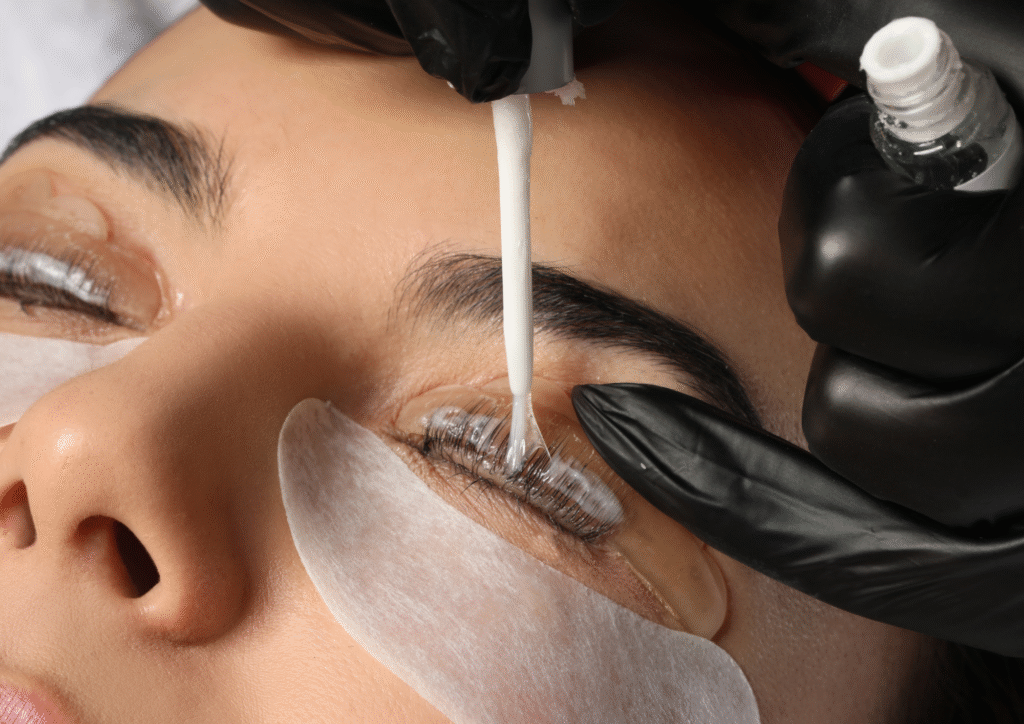
Clean lashes absorb serum more effectively. She should always remove makeup with a gentle makeup remover and wash the eye area thoroughly to clear away mascara, eyeliner, or oils. This prevents buildup that can block the serum from reaching the lash line. Those who wear lash extensions or false lashes require extra care. Oil-based removers can weaken the adhesive, so oil-free cleansers are recommended.
Healthy lashes respond better to treatment. Using a mild lash conditioner can help maintain flexibility and reduce breakage, particularly during the natural growth cycle of your lashes. By starting with clean, conditioned lashes, the serum can work without interference from dirt or product buildup.
Step-by-step guide to applying lash serum
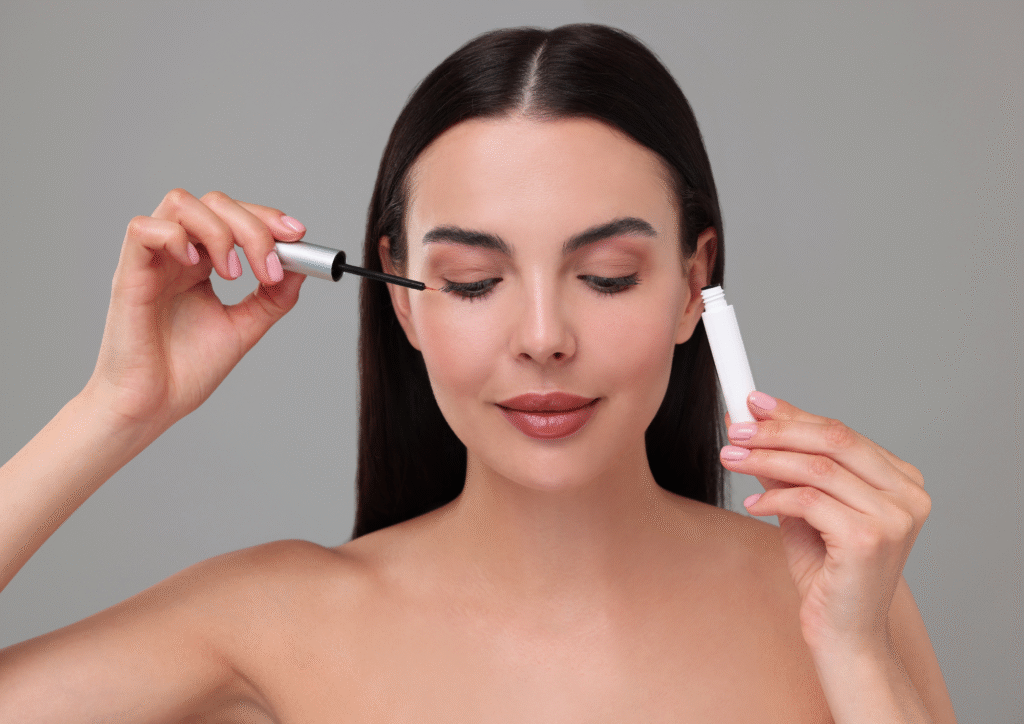
Most lash serums, including options from brands like ForChics, come with a thin applicator brush. Apply a small amount directly along the upper lash line, similar to liquid eyeliner. Only one dip per eye is sufficient, as using more does not expedite results but may increase the risk of eye irritation.
Application should be limited to the upper lash line. The lower lashes do not require direct application, as the serum naturally transfers when blinking. Applying too close to the inner corner of the eye should be avoided to reduce discomfort. After applying, she should allow the serum to dry for at least 90 seconds before using other products. This prevents smudging and ensures the serum fully absorbs into the lash line.
Special considerations for nursing mothers
When breastfeeding, additional precautions ensure both yours and baby’s safety:
Apply serum after the last evening feeding
Wash your hands thoroughly after application
Store products safely away from baby’s reach
Choose formulas specifically labelled as breastfeeding-safe
Managing postpartum lash loss: what to expect
Postpartum hair loss is a regular part of pregnancy and childbirth and won’t affect your baby. But hair that falls out can wrap around your baby’s fingers, toes or other body parts. This rare occurrence is called a hair tourniquet.
Timeline of lash changes
While this issue will likely eventually resolve (1-1.5 years postpartum), understanding the timeline helps manage expectations. Studies show that 68-90% of new mothers experience postpartum hair loss:
During Pregnancy: Enhanced growth due to elevated oestrogen
0-3 Months Postpartum: Initial shedding begins
3-6 Months Postpartum: Many women who have recently had a baby will see noticeable hair loss that peaks after a few months
6-12 Months Postpartum: Recovery and regrowth phase
Nutritional support for lash health
Maintaining a balanced diet with adequate levels of essential nutrients is always crucial for your health — and all the more so when you’re eating for two! Lash loss can be linked to hormonal changes, but it is often more commonly associated with a deficiency.
Essential nutrients include:
Iron (prevents anaemia-related lash loss)
Biotin (Vitamin B7)
Vitamin E
Protein
Omega-3 fatty acids
When to seek professional help
Consult your healthcare provider if:
Lash loss continues beyond 12 months postpartum
You experience sudden, patchy lash loss
Irritation persists after using any lash product
You notice other symptoms like fatigue or weight changes (possible thyroid issues)
Frequently asked questions
Can I use lash serum while pregnant?
Because hormone levels change during pregnancy and breastfeeding, you should use any cosmetic products, including EYELASH AWAKENING SERUM, with caution and always consult with your doctor. Choose serums without prostaglandin analogs and stick to natural, nourishing ingredients.
Is GrandeLash safe during pregnancy?
GrandeLash contains prostaglandin analogs and is generally not recommended during pregnancy or breastfeeding. Many mothers report switching to safer alternatives during this time.
What’s the best pregnancy-safe lash serum?
Some mothers have reported positive experiences with serums like DIME Lash Serum, which has been noted for its effectiveness and safety. Users have reported noticeable improvements in lash length and fullness, with no adverse effects. Other potentially safe options include those containing only peptides, biotin, and natural oils.
Important: Individual experiences may vary. Always consult your healthcare provider before using any lash serum during pregnancy or breastfeeding, regardless of brand claims or user testimonials.
Can lash serum pass through breast milk?
Given the similarities between bimatoprost and other prostaglandin-based compounds found in over-the-counter lash serums, healthcare providers often err on the side of caution and advise against their use during breastfeeding.
How long does postpartum lash loss last?
The shedding should last less than six months. Your hair should regain its fullness by the time your child turns one.
Can I use castor oil on my lashes while breastfeeding?
Pure castor oil applied topically to lashes is generally considered safe during breastfeeding when used in small amounts. However, always consult your healthcare provider first.
Will my lashes grow back after postpartum loss?
Hair loss after childbirth is not permanent. New hair will start growing back as soon as the old hair falls out.
Can thyroid issues cause lash loss after pregnancy?
Yes, thyroid changes are usually also temporary symptoms. These changes within the thyroid glands should resolve once the pregnancy is complete and hormones responsible for hyperthyroidism — human chorionic gonadotropin and oestrogen — return to normal levels.
Is it safe to get lash extensions while pregnant?
Eyelash extensions can be a safe alternative to lash serums during pregnancy. Unlike serums, which commonly contain prostaglandin analogues, eyelash extensions are applied externally.
What vitamins help with postpartum lash growth?
Key vitamins include biotin (B7), vitamin E, iron, and vitamin D. A quality postnatal vitamin can help support overall hair and lash health.
Final thoughts
Choosing a lash serum requires attention to ingredients, safety, and application – especially during pregnancy and breastfeeding. Products containing peptides, biotin, or plant extracts may support healthier lashes. Avoiding harsh irritants helps reduce the risk of side effects. Not every formula works the same for everyone. Considering personal sensitivity, reviewing product details, and setting realistic expectations help ensure a better experience with lash serums.
For new and expecting parents, understanding the hormonal changes affecting lash growth and choosing pregnancy-safe options provides peace of mind while supporting lash health. Remember that postpartum lash loss is temporary, and with proper care and patience, your lashes will recover. Always consult with your healthcare provider before starting any new beauty regimen during pregnancy or while breastfeeding.
Disclaimer: This article is for informational purposes only and should not replace professional medical advice. Always consult your healthcare provider before using any new products during pregnancy or breastfeeding.
*Collaborative feature post*
How to style maternity leggings for every stage of mum life
Motherhood is a whirlwind that begins with a barely noticeable bump and ends with a squishy little baby in your arms. Amongst the changes is an ever-evolving wardrobe where maternity leggings are the comfort-first, style-second (but very much there) answer. Their stretchy fabric hugs your changing belly, the high-waistband gives gentle support, and the pull-on design means you can dash out of the house—or into bed for a nap—without fiddling with buttons. In this article, we will go through how to style maternity leggings for every stage of mum life—from that first tiny bump to postpartum comfort, workdays, and well-earned nights out.
The bump phase — first trimester
In the first few months of your pregnancy, leggings can be your go-to staple when your bump starts to show a little. Opt for high-waisted maternity leggings that provide gentle yet comfortable support to your growing belly. For a more professional work look, style them with an oversized blouse and pair with cute flats. For casual outings, stylish leggings for women work perfectly under a long, flowy top for that cosy yet trendy vibe. Remember to stick to darker shades for a slimmer and sleeker look—and yes, that same pair will still wear beautifully with a cropped blazer once the secret’s out.
Advanced pregnancy — Second trimester comfort chic
Once your belly moves past the tiny bump stage into the more advanced pregnancy phase, leggings continue to serve as trusty companions. Maternity-specific designs offer extra support and stretch. Look for a pair with a generous belly panel. This style accommodates your growing bump and provides necessary back support.
Team leggings with longer tunics or loose-fitting sweaters for a casual yet chic maternity style essential. During the winter, drape a chunky cardigan over your shoulders for warmth (and Instagram-ready layering).
Stick to your usual size—good maternity leggings grow with you, so you rarely need to size up before week 28.
The last stretch – third trimester
Welcome to the grand finale, a.k.a. when your bump has its own postcode. Comfort is now a non-negotiable life goal, but that doesn’t mean surrendering your maternity style. This is precisely where a well-chosen pair of maternity leggings earns MVP status:
Support-first fabric: Seek leggings with a full, over-the-belly panel and light compression to hug that hardworking core. Ribbed or seamless knits stretch over the baby with zero digging.
All-weather layering: In cooler months, cosset your belly in fleece-lined pants, add a chunky cardigan coat, and finish with ankle boots. Warming up? Swap to breathable bamboo-blend leggings and a flowy linen tunic.
Work-to-home hack: Slip a blazer on top of a long tee for Zoom calls, then ditch the jacket at home for instant sofa mode. (A gorgeous beverage is optional but recommended.)
Night-out rebellion: Feeling bold? Leather-look maternity leggings + silk blouse + kitten heels = sartorial mic-drop. It’s the easiest way to prove you’re still stylish, not just “very pregnant.”
Size and shop smart: Stick to your usual pre-pregnancy size; premium brands design extra stretch into the waistband. And always shop with a solid returns window—babies (and bellies) have growth spurts on their own timetable.
A quick reminder on how to style maternity leggings at this stage: think “long + layered.” Start with the leggings, add a tunic that covers the front and back, then top with a statement layer—duster, kimono, cropped denim jacket—so eyes travel up, not solely towards the due-date ticker. Finish with accessories you love and conquer the countdown in comfort and confidence.
Postpartum days — fourth trimester and couch-to-café ease
The fourth trimester is the mysterious bonus level no one quite warns you about. Your body’s healing, your hormones are having daily team meetings without you, and your baby seems to believe sleep is optional. But despite the chaos, you can still feel like yourself again—and yes, leggings are 100% invited to the after-birth party.
This is when your trusty maternity leggings slide seamlessly into the postpartum phase. Go for high-waisted or control-top styles with light compression to support your recovering core.
Style tip: comfort, meet confidence
Pair your leggings with a nursing-friendly top—wrap, button-down or lift-up design—and you’re already halfway dressed. Toss on a statement necklace or earrings (babies permitting), and suddenly you’ve upgraded from “mum surviving” to “mum thriving.”
Need to leave the house for your six-week check-up or a very overdue flat white? Add a structured blazer or oversized cardigan, and boom—smart casual achieved in under 30 seconds. (Bonus points if you’re wearing matching socks.)
Things to note that really matter
Fabric: Choose buttery-soft, breathable blends (think modal or cotton-spandex) that feel kind on sensitive skin and wash well, because yes, bodily fluids still feature heavily.
Size: You might still be in between stages, and that’s completely normal. Some days call for your bump-era leggings; others might prefer postpartum-specific styles. Wear what fits and feels good and doesn’t add to your mental load.
Stretch and go: If you’re still doing midnight feeds or nap-trap Netflix marathons, your leggings will take you from bed to the pram walk and back again without a single “why am I dressed like this?” moment.
And remember—you just birthed a human. If that’s not a reason to rock comfy clothes and still feel fabulous, we don’t know what is.
Active mum life — playground, pilates and everything in between
After welcoming new life into the world, donning the hat of a busy mum with little time for dressing up is a common scenario. However, leggings continue to win with practicality, ease, and style. For this phase of your life, opt for durable maternity leggings that withstand frequent washing well. Wear them with athleisure-inspired tunics, trainers and a fashionable tote for that “active mum” look. Pro tip: Moisture-wicking fabric handles playground sprinting and prenatal yoga.
Mum’s night out — leather-look and little-bit-rebel
At some point, you require a well-earned break and a night out. This is where leather or faux-leather leggings come into play. They bring a bold and edgy feel to your ensemble. Style them with a silk blouse, a tailored blazer, and high heels for that perfect dinner date or girls’ night out outfit. Adding a vibrant clutch or statement jewellery can give your outfit the pop it needs—and nothing says pregnant power like a strut down the high street in glossy faux leather.
On-trend casual maternity outfit ideas with leggings
Look
Pieces to Shop
Why We Love It
Casual Cute
Printed maternity tops + jersey leggings + canvas pumps
Stretchy jumper dresses that transform into tunics over leggings.
Denim jacket for instant structure, even over loungewear.
FAQS about how to style maternity leggings
How to style maternity leggings?
Pair them with a top that covers front and back, add a statement layer (blazer, kimono) and finish with accessories that draw the eye upward.
What to wear with maternity leggings?
Long maternity shirts, tunics, oversized knits, or a maternity dress with leggings for extra warmth.
How to buy maternity leggings?
Check the fabric, belly support style, true-to-sizefit, and return policy. Buy early so you can road-test them before your final trimester.
When to start wearing maternity leggings?
Whenever your regular waistband feels tight, usually around weeks 12–14, but comfort always trumps the calendar.
Does Lululemon make maternity leggings?
Not officially, but many mums size up in the Align range for second-trimester stretch.
Can you wear regular leggings while pregnant?
Yes, if they’re high-rise and stretchy. Waistband extenders can buy you extra weeks.
Can you wear maternity leggings postpartum?
Absolutely—the high panel doubles as gentle abdominal support.
How to style pregnancy leggings for work?
Ponte-knit leggings, a crisp white shirt, a cropped blazer and loafers = polished and bump-friendly.
Do maternity clothes grow with you?
Quality designs have 4-way stretch and elastic panels that adapt for most of your pregnancy.
What are the best maternity workout clothes?
Moisture-wicking tank, high-support sports bra and squat-proof leggings like Beyond Yoga’s Spacedye.
The final stretch
Motherhood is a beautiful, fulfilling journey with its share of challenges. With the right pair of leggings and a dash of styling inspiration, you’ll breeze through each stage—bump, birth and busy-mum life—while feeling supported, confident and undeniably stylish. Love your changing body, celebrate your maternity style, and remember: comfort is queen, but chic never needs to step aside.
*Collaborative feature post*
Pregnancy in the summer: Tips for surviving the heat
If pregnancy in the summer has turned you into a walking lava lamp—complete with 3 a.m. sweat puddles—welcome to the club nobody asked to join. Night sweats, swelling, and relentless heat are common when hormones, higher blood volume, and muggy weather collide. This guide distils the latest science and real-world experience into clear, actionable tips for pregnancy in the summer, covering hydration, cooling strategies, and smart wardrobe choices—so you can safeguard your health (and your baby’s) while temperatures climb.
Let’s dive in. (into a pool, preferably!)
Why night sweats (and heat intolerance) hit pregnant women hard
Rising oestrogen in every trimester nudges your core temperature upward. Right after birth, those levels plunge, sparking even more nighttime perspiration. Progesterone also raises metabolic rate, adding internal heat that your body needs to lose. When humid air slows evaporation and you’re also dealing with postpartum recovery, new-baby stress, and breastfeeding, your internal thermostat works overtime.
During the first and third trimesters, blood volume and metabolism peak, which can lower your heat tolerance. Sudden dizziness, headaches, nausea, or a rapid pulse are early warnings of heat exhaustion, which can escalate to heat stroke.
What to do right away
Hydrate: small sips of water or an electrolyte drink every 15 minutes.
Seek cooler air: move to an air-conditioned room or into the shade; a cool shower can lower your core temperature by about 1 °c.
Rest & elevate: prop feet to improve circulation and reduce swelling.
Loosen clothing: swap to light, moisture-wicking layers.
Monitor: If confusion or a temperature of 38 °c or higher appears, call your midwife or seek emergency care.
Prevention strategies
Schedule errands or exercise before 10 a.m. or after 7 p.m.
Use a broad-spectrum SPF 30+ sunscreen, a wide-brimmed hat, and UPF clothing.
Take short “cool-down” breaks indoors.
Listen to fatigue signals; rest rather than power through.
What to look for in a nightgown that actually helps
You can’t switch off hormones, but you can choose sleepwear that works with them, not against them. Use this short checklist the next time you shop.
Feature
Why you need it in summer
Moisture-Wicking Fabric
Skip anything that feels like plastic wrap. Bamboo, modal, or technical blends whisk sweat away so your skin feels cool and dry—vital for summer pregnancy tips that work.
Breathability
Airflow matters. A loose weave lets excess heat escape instead of trapping it. Check out Cool-Jams nightgowns for those nights when you experience night sweats, allowing you to sleep cool without having to blast the AC all night.
Lightweight Feel
Heavy flannel in July? Hard pass. Choose thin layers (that aren’t see-through unless that’s your vibe).
Flexibility & Movement
Side slits or four-way stretch let you shift positions—feeding, burping, or just getting comfortable—without feeling restrained.
Nursing-Friendly Access
Button fronts, crossover panels, or discreet snaps allow quick, low-effort feeds at 3 a.m. when you’d rather not fumble with tight necklines.
Easy Care
Machine-washable, quick-dry fabrics mean you always have a fresh gown ready—important when night sweats strike on repeat.
Best nightgown styles for hot, sleepless nights
Style
Why it rocks in summer
Sleeveless Bamboo Gown
Ultra-soft, breathable, and moisture-wicking—the MVP if you run warm.
Cotton-Modal Sleep Dress
Holds its shape yet stretches with your changing body; ideal as bump and bust sizes fluctuate.
Short-Sleeve Nursing Gown
Snap-down shoulders plus cooling fabric make late-night feeds straightforward and sweat-minimal.
Adjustable Spaghetti-Strap Gown
Light, breezy, and layer-friendly with straps you can loosen or tighten as your body changes well past your due date.
Keep one or two of these in rotation, and you’ll give your body the best chance to regulate temperature—and your mind the best chance at uninterrupted sleep.
Cool tech and gear worth tossing in your basket
Gadget
Why It’s Handy
Evaporative cooling towel
Snap, shake, drape over neck; drops skin temp in seconds without dripping.
USB neck fan
Hands-free breeze on the school run, farmers’ market, or while folding baby grows.
Gel-filled pillow insert
Pop it in the freezer; slide under your pillowcase for a cool-side-of-the-pillow feel all night.
Insulated 1-Litre bottle
Cold water stays cold for 24 h—no excuses to skip sips.
Pros and cons of a summer pregnancy
The Upside
The Trade-Off
Daylight Hours
Longer evenings make it easier to fit in low-impact outdoor activities—think early-morning walks or sunset strolls that help improve circulation and reduce swelling.
Midday sun can push your body temperature into the discomfort zone. Plan errands and exercise for the cooler hours to avoid heat exhaustion.
Seasonal Produce
Markets overflow with hydrating fruit—watermelon, strawberries, peaches—making good nutrition as simple as a snack bowl.
High humidity can dull the appetite, so keep an eye on calorie and protein intake if you’re feeling less hungry.
Lightweight Wardrobe
Breathable dresses, maternity shorts, and sandals put less pressure on ankles and allow feet to expand without feeling squeezed.
Sandals offer less arch support. If you’re prone to foot pain or swelling, alternate with a supportive pair of athletic shoes.
Social Calendar
Summer barbecues and garden gatherings let you stay connected without winter travel headaches.
Hot venues and crowded patios raise the risk of overheating; have a shady exit plan and drink plenty of water.
Natural Vitamin D
Moderate sun exposure supports calcium absorption for both you and baby—good for bone health.
Balance is crucial; overexposure means requiring extra sunscreen applications and an increased risk of heat intolerance or sunburn.
Simpler Layers
Fewer layers mean fewer laundry loads—helpful when energy dips late in the third trimester.
Air-conditioned spaces can feel chilly against bare arms or legs; keep a light cardigan or shawl handy.
Key takeaway: Summer pregnancy brings genuine perks—fresh food, flexible daylight, and less bulky clothing—but you’ll need to manage heat carefully. Schedule activity during cooler parts of the day, prioritise hydration, and rely on breathable fabrics to keep you and your baby comfortable all season long.
Cons of a summer pregnancy
Higher heat risk
As outdoor temperatures rise, your core body temperature also increases. Because your blood volume and metabolic rate are already elevated, you lose fluid more quickly than you can replace it. That raises the chance of dehydration, heat exhaustion, and, if you stay overheated for too long, heat stroke. Early red flags include dizziness, a pounding headache, or a sudden drop in energy. The fix: pace outdoor time, alternate shade with air-conditioned breaks, and drink plenty of water or an electrolyte drink every hour you’re outside.
Daily sunscreen duty
Pregnancy hormones make the skin more sensitive to the sun, and the summer months bring more vigorous UV intensity. A broad-spectrum SPF 30 (or higher) is non-negotiable to lower the risk of sunburn, melasma, and overheating. Reapply every two hours—more often if you’re swimming or sweating—and pair it with a wide-brim hat and UPF clothing for extra protection.
Humidity-driven fatigue
High humidity stalls sweat evaporation, so your body can’t cool itself efficiently. The result is persistent warmth, sluggish circulation, and a heaviness in your muscles that makes a midday nap feel less like a luxury and more like a survival tactic. Schedule essential tasks early, lean on short rest breaks, and use a fan or air conditioning to keep indoor humidity in check.
On-the-road (or beach-day) safety checklist
Seat-belt 101: Lap belt under the bump, shoulder belt between the breasts.
Keep 2 litres of water and a fold-up sunshade in the boot—traffic jams happen.
Never wait in a parked car without AC, even “just for a minute.”
Pack a handheld fan and SPF top-ups if you’re beach-bound.
Summer risks and fast fixes
Risk
Why It Matters in Pregnancy
Practical Fix
Dehydration
Your blood volume is up to 50% higher than usual, and warm weather pulls fluid away through sweating. Even mild dehydration can raise your heart rate and lower blood pressure, leaving you dizzy or lightheaded.
Drink plenty: aim for 8–12 cups of water a day, and add coconut water or a low-sugar electrolyte drink if you spend more than 30 minutes in the heat. Keep a reusable bottle within arm’s reach and take small sips every 15–20 minutes rather than chugging a litre at once.
Swelling (oedema)
Gravity + fluid retention = puffy feet, ankles, and hands, especially late in the day. Swelling can be uncomfortable and make shoes feel two sizes too small.
Elevate your feet above heart level for 15 minutes, two or three times a day. Slip on graduated compression socks for errands, and load up on potassium-rich foods—bananas, sweet potatoes, spinach—to balance sodium and move excess fluid out of tissues.
Heat-Related Illnesses
Heat exhaustion can arrive quickly when the heat index climbs; unchecked, it can progress to heat stroke, which is a medical emergency for you and baby.
Limit outdoor time when the UV index peaks (roughly 11 a.m.–4 p.m.). If the temperature tops 32 °C / 90 °F, keep activities brief, alternate shade with air-conditioning, and listen for early warning signs—dizziness, nausea, rapid pulse.
Sun Exposure
Pregnancy hormones make skin more reactive to UV light, increasing the chance of sunburn and melasma (“pregnancy mask”).
Apply broad-spectrum SPF 30+ every two hours, wear a wide-brim hat, and choose UV-blocking sunglasses. Lightweight UPF clothing offers extra coverage without trapping heat.
Sticky Sweat & Cabin Fever
Constant humidity makes sweat linger, and staying indoors too long can leave you restless.
Try prenatal water aerobics or lap walking in a pool. Water supports joints, lowers core temperature, and gives you a change of scenery—all in one session.
When to call the pros — red-flag symptoms
Your midwife would rather receive a false alarm call than miss something serious. Ring 111 (or head straight to A&E) if you notice:
Core body temp ≥ 39 °C (102 °F) that won’t drop after cooling.
Dizziness or fainting spells that don’t ease once you sit and sip water.
No sweating even though you feel overheated.
Persistent vomiting, severe headache, or blurred vision.
Reduced foetal movements or a sudden gush of fluid.
Better to check and chill than wonder and worry.
Watch the air, not just the thermometer
UK heatwaves often bring pollution alerts. Download the free UK-AIR or NHS Air Quality app:
If particulate or ozone levels spike, move workouts indoors.
Close windows during peak pollution and run a fan or portable purifier instead.
Cool tips for surviving a summer pregnancy
Park a fan by the bed. Even a tabletop model can enhance airflow and aid in sweat evaporation.
Take a lukewarm shower before sleep. A brief rinse lowers core temperature by as much as 0.5 °C, making it easier to drift off.
Use breathable bedding. Swap synthetics for cotton sheets and a thin muslin blanket; they wick moisture and dry quickly.
Keep backups handy. Stash a spare nightgown and small towel on your nightstand so you can change without a complete wardrobe hunt at 3 a.m.
Time your errands. Run necessary outdoor tasks before 10 a.m. or after 7 p.m., when the heat index is lower and UV exposure drops.
Choose icy snacks. Smoothies, frozen grapes, or a small sorbet serve double duty—hydration and a mild, cooling calorie boost.
Smart Snacking Tweaks
Pair watermelon with a handful of roasted chickpeas for a protein-rich and balanced snack.
Greek yoghurt + berries: hydration, calcium, and a probiotic boost.
Swap salty crisps for edamame with sea salt—this keeps sodium levels reasonable and adds potassium to help combat swelling.
Practice gentle prenatal yoga indoors. It encourages circulation, eases back tension, and can help prevent swelling without adding heat stress.
Book appointments strategically. Schedule antenatal check-ups during cooler parts of the day and ask your midwife or obstetrician for personalised summer pregnancy tips based on your health history.
Beat-the-heat workouts
Sunrise stroll (20 min): still cool, still counts.
Pool laps or prenatal aqua-aerobics (≤ 30 min): joint-friendly, instant chill.
Stationary cycling indoors with a fan: talk-test rule—if you can’t chat, dial it back.
Stop if heart rate soars above ~140 bpm or you feel light-headed.
Mind the mood
Heat plus third-trimester fatigue can crank up anxiety. Two quick tools:
Five-minute box-breathing (inhale 4 s, hold 4, exhale 4, hold 4).
Mindfulness apps like Headspace’s “Pregnancy SOS” track—press play while feet-up. Ask your partner or a friend for a daily “how’s your head?” check-in; small question, big impact.
With these targeted strategies, you can navigate the hottest weeks of the year, keep your body temperature in check, and maintain the energy you need for the final stretch toward meeting your baby.
FAQ – Pregnancy in the summer
Does summer affect pregnancy?
Yes. Higher ambient temperatures make regulating body temperature more challenging, increasing the risk of dehydration and heat exhaustion.
Is being pregnant in the summer harder?
Many women find summer pregnancy challenging due to swelling and heat intolerance; however, implementing smart strategies, such as staying hydrated, using air conditioning, and wearing lightweight clothing, can help ease discomfort.
How to survive being pregnant in the summer?
Stay hydrated, rest during the peak heat, opt for breathable fabrics, and keep indoor temperatures cool.
When do you start feeling hot in pregnancy?
Some pregnant women notice heat surges as early as the first trimester, but they commonly intensify in the second and third trimesters.
What outdoor temperature is too hot for pregnancy?
If heat indexes climb above 32 °c (90 °f) or humidity is extreme, limit outdoor activities to brief periods.
How do I reduce internal body heat during pregnancy?
Drink plenty of water, snack on hydrating foods, rest in air-conditioned spaces, and cool your wrists and neck with a damp cloth.
Is hot weather bad for pregnancy?
Extended exposure without breaks can increase the risk of heat stroke. Listen to your body and avoid overheating.
Tips on surviving a summer pregnancy?
Hydrate, wear sunscreen, use fans, and follow the cool-tips list above for common-sense but practical relief.
Final thoughts
Night sweats, swelling, and heat intolerance are familiar companions during pregnancy in the summer, but they don’t have to define the experience. Prioritise hydration, cool sleepwear and strategic self-care to keep both you and baby comfortable. With the right summer pregnancy tips, you’ll cruise through the season and arrive at your due date feeling confident, calm, and ready for that first cuddle.
Disclaimer
This guide is for informational purposes only and is not a substitute for professional medical advice. Always consult your midwife, GP, or obstetrician about individual health concerns.
Pregnancy is a time of incredible change—your body, wardrobe, and feet will transform, but not always comfortably. One of the biggest challenges expectant mothers face is finding supportive shoes that won’t cramp their style—or their toes. As a mum who’s been through this journey four (and a half) times, I know the struggle of swollen feet, aching arches, and difficulty bending over to tie shoelaces.
I’ve compiled this guide to help you find the best maternity shoes that provide support and style. Whether you’re looking for comfortable shoes for pregnant women, eco-conscious maternity footwear, or stylish shoes for swollen feet, I’ve got you covered. Let’s dive into the best options for every stage of pregnancy!
What type of shoes is perfect for pregnancy? Why you need shoes that provide relief
Swollen feet, arch pain, and balance issues are common challenges during pregnancy. That’s why investing in the right shoes is essential. The best maternity footwear offers practical, stylish options to support your feet throughout the day.
These shoes are crafted with non-slip cushioned insoles and flexible uppers, relieving common pregnancy foot problems while maintaining a stylish look. They also help disperse weight to reduce pressure on your feet. For maternity shoes, you no longer have to sacrifice comfort for fashion.
Follow this checklist for the best maternity shoes:
Do I have enough room in my shoes?
Are the shoes breathable?
Can I put the shoes on easily?
Do the shoes provide arch and heel support?
Are the soles non-slip for stability?
Do they accommodate swelling throughout the day?
Are they made of flexible materials that adjust to foot changes?
Do they reduce pressure on the lower back and joints?
Are they lightweight to prevent foot fatigue?
Can they be worn for long periods without discomfort?
The best shoes for swollen pregnant feet
Many pregnant women experience swollen feet, especially during the third trimester, making finding shoes that fit comfortably challenging. For Mommy provides a selection of the best maternity shoes designed with adjustable straps, cushioned insoles, and breathable materials to ease swelling and discomfort.
Top picks from For Mommy’s stylish maternity footwear collection
Swollen feet, arch pain, and lack of balance can be challenging problems while pregnant. Therefore, you check out For Mommy’s best maternity shoes. This maternity footwear not only solves the foot changes of pregnant women but also addresses weight distribution, reducing pressure on the feet, ankles, and lower back. With cushioned insoles, flexible materials, and non-slip soles, these shoes provide the comfort and support needed for every pregnancy stage—without compromising style. Check out some ideas below:
Isabella – Nude: The perfect footwear for expecting mothers
Designed with a soft inner lining and a flexible upper, the Isabella shoes adapt to the shape of your foot, ensuring comfort throughout pregnancy. The eyelet holes for laces provide non-slip stability, making these shoes fashionable and practical.
Olivia – Off White: The best dress shoes for pregnancy
Pregnancy doesn’t mean sacrificing elegance. Created by leading orthopaedic specialist Dr Mati Nof, the Olivia – Off-White shoes relieve foot pain while offering a sophisticated style. They disperse weight and provide a soft inner lining for extra comfort.
Amelia – Black Velvet: Comfort meets style for pregnancy
The Amelia- Black Velvet shoes are ideal for moms-to-be who want both luxury and comfort. The velvet fabric gives a soft feel, while the support insoles help relieve pressure on swollen feet.
Nova – Red: Stylish and comfortable shoes for pregnancy relief
The Nova–Red shoes provide superior comfort. Their flexible upper section accommodates foot swelling. They also have full-support insoles, offering relief without compromising stability or style.
Nova – Black: Versatile and Comfortable Pregnancy Shoes
For everyday comfort, Nova–Black shoes offer flexibility, foot-molding uppers, and cushioned insoles to keep you comfortable all day. These are perfect for long walks or daily activities, ensuring arch and ankle support.
Factors to consider when buying shoes for pregnancy
When shopping for maternity footwear, keep these factors in mind:
Breathability: Use materials like mesh or soft leather to keep feet cool.
Slip-on Design: Makes it easy to wear without bending over.
Non-Slip Soles: Essential for stability as your centre of gravity shifts.
Adjustable Fit: Accommodates swelling throughout pregnancy.
FAQs
What makes For-Mommy shoes different from regular shoes?
For-Mommy shoes are specifically designed for pregnant women. They feature soft, flexible uppers, cushioned insoles, and non-slip soles to accommodate foot changes and prevent swelling.
Can I wear these shoes post-pregnancy?
Yes! For-mommy shoes are perfect for daily wear, even after pregnancy.
Are the shoes eco-friendly?
Many of For-Mommy’s maternity shoes are made from sustainable materials, offering an eco-conscious choice for moms-to-be.
How can I choose the best footwear?
If you’re unsure about sizing, For-Mommy provides flexible options to accommodate foot changes. Contact their team for assistance.
What are the best shoes for pregnant women to wear with swollen feet?
The best pregnancy shoes for swollen feet are those with a stretchable upper, roomy fit, and supportive insoles to accommodate changes in foot size. Styles like adjustable pregnancy sandals, slip-on sneakers, and cushioned flats help ease discomfort while ensuring breathability and support.
What are the best walking shoes for pregnant women?
The best walking shoes for pregnancy should offer good arch support, cushioning, and a lightweight design to prevent foot fatigue. Options like New Balance Fresh Foam, Nike React Infinity Run, and Brooks Ghost provide excellent comfort and stability for long walks.
While pregnant, can a woman walk in high heels?
Walking in high heels during pregnancy is generally not recommended, as it can affect balance and increase the risk of falls. As your centre of gravity shifts, supportive and stable footwear is a safer choice to prevent strain on your lower back and feet.
Do your feet return to your original size after pregnancy?
For some women, feet return to their original size after pregnancy, but for others, they may remain slightly larger due to permanent ligament loosening. Choosing shoes with flexibility and room for slight size changes can help accommodate this adjustment.
Can I wear barefoot shoes and walk barefoot during pregnancy?
Wearing or walking barefoot can be beneficial for maintaining foot strength and mobility. However, extra cushioning and support are often needed as pregnancy progresses to prevent strain on the arches and joints. If you prefer barefoot shoes, choose ones with adequate padding and grip to reduce pressure and improve stability.
Are Birkenstocks good when pregnant?
Birkenstocks are a great choice for pregnancy as they provide excellent arch support, a contoured footbed, and an adjustable fit to accommodate swelling. Their sturdy sole also help with balance and stability, making them ideal for everyday wear.
What shoes do you wear when giving birth?
For labour and delivery, comfortable, easy-to-slip-on shoes like soft pregnancy slippers, Crocs, or flip-flops are ideal. Hospitals can be cold, so warm, non-slip socks or cosy slip-on shoes with good traction are also recommended.
What is the best shoe to wear on your feet all day?
If you spend long hours on your feet, the most comfortable shoes for pregnancy have arch support, shock absorption, and a cushioned insole. Brands like New Balance, Skechers, and Vionic offer excellent options for all-day comfort.
What are the best shoes to wear during pregnancy?
The best shoes for pregnancy provide support, flexibility, and stability. Look for wide-fit sneakers, supportive sandals, cushioned slip-ons, or orthopaedic loafers to accommodate foot swelling and reduce strain on your lower back.
What are the best running shoes for pregnancy?
Pregnant women who stay active need lightweight running shoes with ample cushioning and arch support. Some great options include Nike Pegasus, Brooks Ghost, and New Balance Fresh Foam, which provide shock absorption and stability.
What are the best sandals for pregnancy?
Sandals with arch support, cushioning, and adjustable straps are best for pregnancy. Birkenstocks, Teva, and OOFOS recovery sandals are great for keeping feet cool and comfortable.
Best slip-on shoes for pregnancy?
Slip-on shoes are convenient and practical for pregnancy. Skechers Go Walk, Allbirds Tree Loungers and Vionic slip-on sneakers offer great comfort, flexibility, and support.
Best loafers for pregnancy?
Loafers with padded insoles and a flexible sole provide an outstanding balance of comfort and style. Brands like Dr Scholl’s, Clarks, and Vionic offer pregnancy-friendly loafers with extra support and cushioning.
Best slippers and cosy shoes for pregnancy?
Memory foam slippers, wool-lined mules, or orthopaedic house shoes are best for at-home comfort. For warmth and support, consider UGG Coquette, Vionic Relax Slippers, or Dearfoams Mama Bear Slippers.
What are the best shoes for pregnancy back pain?
If you experience lower back pain during pregnancy, opt for shoes with strong arch support, deep heel cups, and shock-absorbing soles. HOKA Bondi, Vionic orthopaedic sneakers, and OOFOS recovery sandals are designed to alleviate pressure on the spine and reduce discomfort.
Final thoughts
Choosing the right pregnancy shoes is crucial for comfort, support, and style. For Mommy – Best Maternity, Footwear provides an excellent range of options that cater to swollen feet, foot pain, and weight distribution challenges. Whether you need dress shoes, casual slip-ons, or supportive sneakers, you’ll find a stylish and functional pair throughout pregnancy.
Visit For Mommy – Best Maternity Footwear today to explore the best maternity shoes and enjoy a comfortable pregnancy journey!