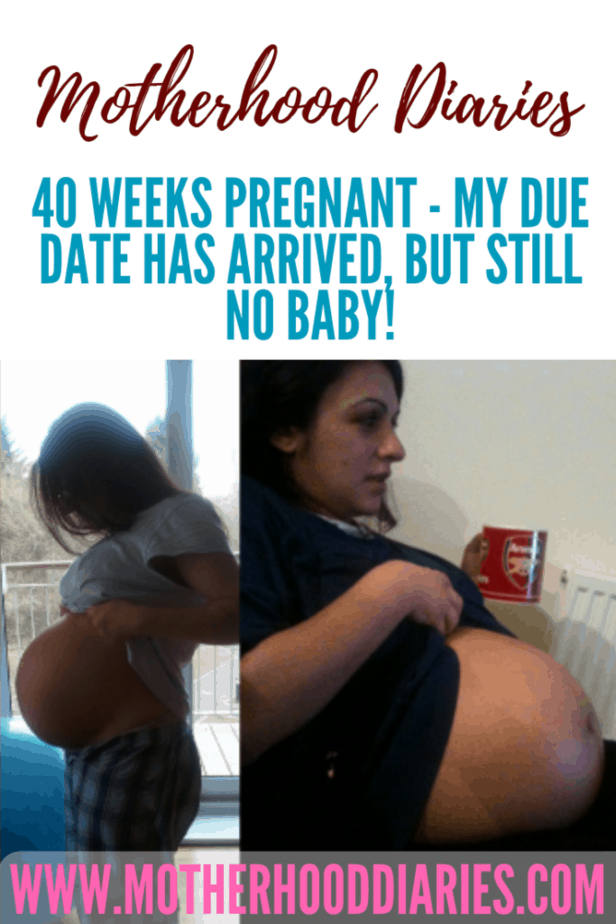
After 2 sweeps, walking up and down a gazillion flights of stairs, travelling the whole of London and drinking far too many raspberry leaf teas and pineapples, not to mention even some DIY acupressure, I finally give birth to my beautiful baby who decided to arrive a week late!!
We were snowed in so instead of going to the birth centre because it was shut we had to head to our nearest hospital, which should have been a 15/20 minute drive away, but it took 45 minutes to an hour because of the snow. I was in so much pain through back pain and contractions that I had to kneel on the back seat with my body over the back of the seats, concentrating on breathing and closing my eyes to centre myself. It was hard.
Please check out Aron’s birth story for the gruesome details if you can stomach it. I do have to warn you that it is not pleasant. A little jealous though as my friend was 9cm dilated when she arrived at hospital and had her baby in a few hours! Everyone is different…
Have you already had your baby (congratulations!), but you’re still receiving pregnancy emails? Just hit unsubscribe at the bottom of your email and sign up to ‘My Motherhood’ posts to carry on with the personalised weekly emails for your baby up to 16 weeks old! Form below:
Not even a sign that the baby is on his way! I’ve started eating tons of pineapple which have given me the runs and I’m walking absolutely everywhere to help the process along. I’m just ready to have this baby now, and I can’t wait to meet little Boxer, but I’m starting to feel very, very uncomfortable.
Boxer is putting a lot of pressure on my bladder when I’m in an upright position. But if that enables him to drop down into my pelvis then so be it. I hope he doesn’t wait too long to come out!
A fun fact – We have reached our due date! Yay!
The science part
Your baby at 40 weeks
Your baby is the size of a watermelon now and weighs around 3 to 4kg, but should be able to still move
Your pregnancy signs and symptoms
If you have swollen feet, try elevating them every day and take weight off your legs. Yoga is great for boosting blood circulation and strengthening the muscles gently
If your swelling becomes severe, contact your midwife/GP without fail to eliminate the possibility of pre-eclampsia
Your next steps
Make sure you sleep on your left side to reduce the risk of stillbirth which has been linked to sleeping on your back – this includes daytime napping too!
If you go over your due date, you may be offered a membrane sweep. If you don’t want to go for something invasive to bring on contractions, click here for some natural ways to induce labour
You should have an antenatal appointment booked at 40 weeks and 41 weeks if you go over your due date.
Note: These are just general ideas of how you and your baby are getting on. Don’t forget that every baby develops differently. If you are concerned about your baby’s development, please consult your doctor or midwife.
Hubby’s mum came over from Switzerland to stay for a week, which is great because I really enjoy her company. We had a quick coffee at Starbucks before we went home to eat and prepare for my midwife appointment. Unfortunately, as soon as we arrived home, we realised we had left her Christmas card on the table at Starbucks and it took me a long time before I could get through to the store to ask them to hold on to the card for us. D’oh, pregnancy brain!
We went to my midwife appointment together at the birth centre and hubby’s mum commented on how cosy the place was.
During the visit, we discussed the hormone oxytocin and its role in stimulating contractions, an essential factor for beginning labour. The midwife emphasised how the intensity of these contractions could signal the start of active labour. She also highlighted the importance of regular intervals in monitoring the baby’s heart rate and movements, known as kick counts, a practice endorsed by the American College of Obstetricians and Gynecologists to ensure the baby’s well-being. The midwife explained the importance of informing the birth centre if I displayed any signs of pre-eclampsia or if I couldn’t feel over ten baby’s movements in a day. I told her there was no danger of that happening as Boxer is so active, especially at night.
The midwife measured my bump and told me I would probably have a baby weighing about 8/12 pounds, which meant I didn’t require a growth ultrasound scan as Boxer was growing a normal rate. OMG! Hubby’s mum explained that hubby was over 9 pounds and he was 2 weeks early. My sisters and brother were all over 8 pounds (except for me, but I was 5 pounds at 3 weeks early, so I probably would have been big if I had come out full-term). She told me not to worry though as he was in the optimal position, which is apparently the best birth position.
As my due date was in a couple of days, she offered to do a sweep to kick-start labour within 48 hours. I joked and said, “Since my mother-in-law is only here until the 15th we should do the sweep!” It was painful and very unpleasant, and the worst thing was she couldn’t find my cervix.
Apparently, it was so far back that this sweep couldn’t be counted as a proper sweep. So she booked me in for another sweep on my due date. She told me it didn’t mean that labour would take a long time to start because my cervix was so far back, but she offered me a sheet containing some natural induction techniques and the role of prostaglandins, which can be naturally released through certain activities. I was quite surprised at some things on the list, to be honest. Below is a list of what was on the sheet:
Slow down, rest/relax more
Yoga–deep squatting
Visualisation
Walking
Freeing yourself
Hug a friend’s/relative’s baby
Sorting out environment/nesting/burst of energy and urge to clean
Eating curry or spicy foods
Relaxing bath – aromatherapy oils as directed by the practitioner
Letting go – glass of wine, massage
Nipple stimulation
Sex (no sheath!)
Orgasm
Eating pineapple
Going to a qualified practitioner for aromatherapy: * using clary sage to encourage labour * lavender for relaxation etc. They can be used as a massage oil, hot compress, on a burner or in the bath
Homeopathy
Cranial osteopathy
Shiatsu
Acupuncture/acupressure/moxa
Reflexology
Herbs – e.g. raspberry leaf tea etc
Sweeping of membranes by midwife
Spend time with your baby – talk to them
I created an infographic too, which you can print off or pin to your Pinterest board.
A glass of wine? Nipple stimulation? I’m not sure I would want to drink any alcohol now that I’m only in the last stages of pregnancy, so I’m surprised the NCT advised this as a natural form of induction. Maybe a bit of alcohol doesn’t affect the pregnancy or the baby? I’m so confused about this part of the pregnancy because there are so many conflicting resources out there. Would you drink alcohol during your pregnancy? And, if so, how much is ok?
After the check-up, my mum-in-law and I took a long walk up into town (one thing I can check off in the natural induction list!) We passed a hairdresser along the way and she got her hair done. I offered to walk back to the flat, get her money, walk back to the hairdressers, then go to Starbucks to collect the Christmas card, and then back to the hairdressers, so I could speed up labour. By the time I got back to the hairdresser, although happy that I had helped the baby along, I was exhausted!
In the evening, hubby came home from work and we all walked back into town for an Italian meal. I looked like a penguin waddling down the street, but at least I slept like a log that night. Pregnancy at 39 weeks is hard!
A fun fact – The baby is the size of a watermelon!
The science part
Your baby at week 39
Your baby at 39 weeks isn’t growing much anymore, but their brain definitely is
Your baby’s skin has turned white/grey and won’t have any pigment until after you have given birth
Your baby is likely weighing around 6 to 9 pounds or around 3 to 4kg
At 39 weeks pregnant – what to expect – your pregnancy signs and symptoms
39 weeks pregnant symptoms include:
Are you going to go into labour today? Maybe tomorrow? It’s any time now you’re in the last stretch of the 3rd trimester!
You may experience more discharge than normal, which should be thin, white and not smell much. If you spot anything that looks like yellow or pinkish (bloody) mucus then you’re having a ‘show’, which is the sticky stuff that plugs up your cervix. Once it comes out, it’s one of the early signs of labour, If you experience any fluid leak, this could be your waters, so contact your doctor immediately.
Your Braxton Hicks contractions may get stronger now
You may also experience lightening and lower back pain as the baby moves down towards your pelvis.
You may feel increased pressure at the bottom of your bump now too, which means more pressure on your bladder and more frequent trips to the loo!
Your next steps. What to do – 39 weeks pregnant.
39 weeks pregnant – symptoms not to ignore. Contact your midwife/GP if you have:
Bleeding from your vagina – spotting when 39 weeks pregnant if in little amounts could be part of your mucus plug or a bloody show. But if you’re bleeding bright red and soaking through a pad, you must contact your hospital straight away
Brown/pink discharge – a pink/brown discharge when 39 weeks pregnant could be a sign of your mucous plug coming away
Headache that won’t go away – a severe headache when 39 weeks pregnant is one sign of pre-eclampsia
Blurry vision, or sensitivity to light
Pain below the ribs
Extreme swelling of hands, feet, ankles and face
Constant tummy pains – cramps when 39 weeks pregnant are normal, but if the pain is intense, you may be in labour
Vomiting when 39 weeks pregnant
Constant diarrhoea – Diarrhoea when 39 weeks pregnant is
Severe itching, particularly at night
A high temperature but with no other cold or flu symptoms
You experience your water breaking (your amniotic fluid). If your water breaks, you need to contact your hospital/healthcare provider straight away for medical advice to monitor your and your baby’s health as labour may be imminent. Babies are rarely born on their due date, so be prepared because you may be giving birth soon.
39 weeks pregnant – baby weight in kg
Your baby is likely weighing around 6 to 9 pounds or around 3 to 4kg
39 weeks pregnant belly
This is what your belly looks like at week 39 in pregnancy
What to eat – 39 weeks pregnant
You should start thinking about your post-pregnancy diet. Eat a variety of at least five portions of fruit and veg each day, plenty of starchy foods like wholemeal bread, pasta, rice and potatoes, protein from lean meat, poultry, fish, eggs, beans pulses and nuts, two portions of fish a week, and dairy foods like milk, cheese and yoghurt.
39 weeks pregnant – white milky discharge
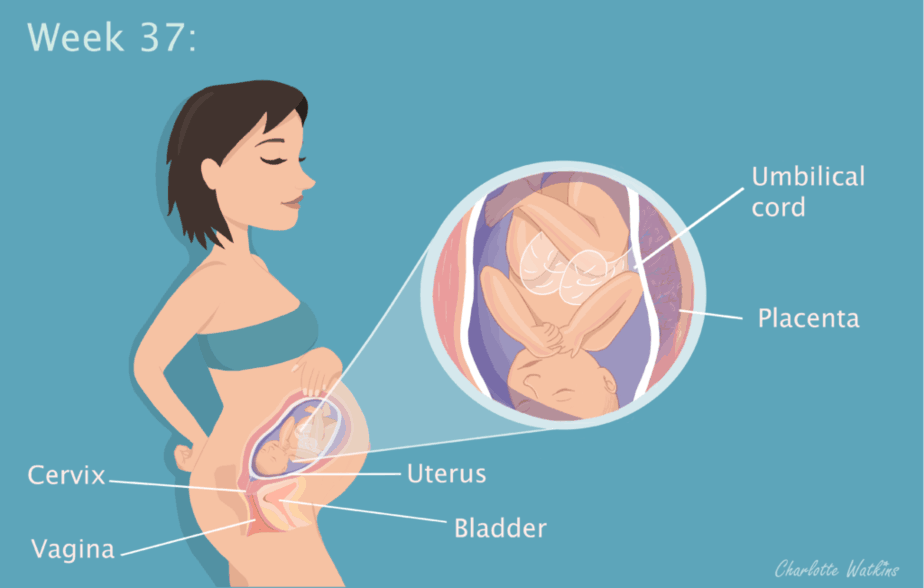
At 39 weeks of pregnancy, the cervix in your uterus is growing thinner and softer to prepare for birth and it will be 10cm wide in dilation and effacement. You may have a lot of vaginal discharge and see a ‘show’, which is the mucus blob plus that kept your cervix closed. This is all part of the first stages of labour.
39 weeks pregnant – baby position
Your baby’s head is probably in the head-down position, ready for birth. If your baby is breech, then you may need to speak to your doctor / ob-gyn about how this will impact your birth choices and whether they can help the baby change positions.
39 weeks pregnant – no signs of labour
If there are no signs of labour, there are things you can do to help speed labour along. However, the baby will come when they’re ready so they’re not guaranteed to work. Check out my article on how to induce labour naturally now.
FAQs
Is 39 weeks pregnant full term?
In the past, a baby born anytime between 37 weeks and 42 weeks was considered full term. Now, a pregnancy is considered full-term at 39 weeks.
What is 39 weeks pregnant in months?
You are at the last stages of the third trimester and almost 8 months and 3 weeks pregnant. Congratulations, your baby is on its way!
Is driving at 39 weeks safe?
It is safe to drive during pregnancy unless you’re feeling too tired or uncomfortable with nausea. Some women experience pregnancy brain so if you feel like your reflexes are impaired, then, if you can, it would be preferable to avoid driving.
What does it mean if you are 39 weeks pregnant and feel depressed?
It is normal to feel up and down during pregnancy because of the emotional and physical pressure on your mind and body. I have written an article on how to help you be more positive during pregnancy here.
But if you feel like your mental health is impacting your life or you’re having negative thoughts that could affect you and your baby, then you need to seek professional help. You may experience prenatal depression and will need to manage this to avoid chances of postnatal depression too. Contact your GP for more information on how you can speak to someone about how you feel.
What can I do if I am 39 weeks pregnant and can’t sleep?
Another question asked was, ‘How to sleep 39 weeks pregnant’
Sleeping at 39 weeks can be difficult because of the big bump. Check out this article for tips on how to sleep while pregnant.
What does it mean if I am 39 weeks pregnant and my baby is not moving so much?
Your baby is filling the womb now and there’s not much space left in your belly, but it doesn’t mean their movements should slow down. If your baby is not moving as much as they were before or if you’re worried about the frequency and pattern of movements, then talk to your midwife or doctor immediately. Don’t delay!
What should you do if you are 39 weeks pregnant and 1cm dilated?
Being 1cm dilated could indicate that labour is on its way or it could still take weeks. Contact your doctor who may advise rest if labour hasn’t started yet, depending on whether you are a high-risk or low-risk pregnancy patient. If you’re high risk, you may be asked to stay in hospital for further examination.
What should you do if you are 39 weeks pregnant and 3cm dilated?
At 3cm dilated you are still in the early stages of labour and may experience mild contractions. Depending on whether you are high risk or low risk, you may be sent home until you are in the active phase (between 4cm and 7cm) or you will be kept in for further monitoring. Speak to your doctor for advice.
Why am I bleeding and cramping at 39 weeks pregnant?
Blood when 39 weeks pregnant could indicate an issue but not always. Contact your doctor ASAP to rule out any concerns over you and baby. Cramping is normal but if it’s accompanied with bleeding or it is intense, again call your hospital straight away.
Why am I cramping and have back pains at 39 weeks pregnant?
Braxton Hicks can become quite powerful in the lead up to birth and can sometimes be mistaken for labour contractions. If your tummy remains constantly hard or the tightenings become regular or painful contact your midwife or labour ward for advice.
I’m 39 weeks pregnant and it’s my first baby. I’m constipated from 2 this morning. What sign is this?
Constipation isn’t necessarily a sign of labour, but as your baby moves down the canal, there is more pressure on your rectum. It is more likely down to the food you’re eating, so make sure you drink enough water, exercise where possible and fill up on fibre and roughage.
Is it safe for a 39 weeks pregnant woman to take antiviral medication because of a suspected flu infection?
Antiviral drugs can alleviate flu symptoms and help you feel better faster, especially while pregnant. Speak to your doctor about the right antiviral medication to take during your pregnancy though.
I’m 39 weeks pregnant. Is it true that I should have stopped taking a calcium supplement since week 35?
You should ask your doctor about this but it is not generally recommended to stop taking calcium as it is an important nutrient, especially in the last trimester. Speak to your doctor about whether you should stop taking a calcium supplement.
Note: These are just general ideas of how you and your baby are getting on. Don’t forget that every baby develops differently. If you are concerned about your baby’s development, please consult your doctor or midwife.
I saw my midwife and she told me that, at 38 weeks plus 2 days, I am 3/5th palpable, which means I’m 2/5th engaged! I had to go home and check what that actually meant, but basically, it means that the baby’s head is split into fifths and so 2/5th of the baby’s head is in my pelvis, which means 3/5th still isn’t. So, the pelvic pain and pressure have definitely started.
She also reckons that the baby is going to be about 7 1/2 pounds, which is great because I thought I was going to give birth to a ten-pound baby! She advised me to buy some pineapple and raspberry leaf tea to speed the process along, so I’ve had my first cup and the tea is gorgeous! I’m flitting back from constipation to diarrhoea so I’m hoping this tea will help regulate things a bit!
By the time I finished my midwife appointment, I was famished and polished off two chicken, bacon and egg sandwiches. My pregnancy appetite has definitely increased since Boxer has dropped down!
If you can identify the early pregnancy symptoms after ovulation day, it’s pretty much the same regarding that initial period pain feeling you get. I have started to feel period-like pains in my lower back and around my tummy. They’re very weak and I don’t feel like I’m going into labour yet, but it’s definitely a new feeling. I can only place them as Braxton Hicks contractions as they can’t be the actual contractions. Whatever they are, they’re definitely getting stronger! My pelvis still hurts too, but the midwife says that is good – it means the pelvis is stretching to let the baby in.
I am also feeling very large and uncomfortable. My belly is a massive round ball and when I sit down I feel like I’m squashing the baby! Most of the time I’m on my hands and knees to keep the baby in the right position, plus it takes pressure off my back, which hurts a lot now. I wonder if this is the start of labour. I read up on the early signs of labour to find out whether my body is gearing up for childbirth.
The time from the second trimester to now has literally zoomed by and I can’t believe I’m almost at the end!
38 weeks pregnant – labour signs and pelvic pain and pressure
I have also created an infographic (below) that goes through 38 weeks pregnant signs of labour in more detail. Click on the image below to print it out or pin it to your Pinterest board.
Well, I am definitely getting something! The twinges and the period-like pains must fall into that category.
Diarrhoea
Well, to be honest, I wake up in the morning and have to go straight away, and in the last couple of days, I’ve had to go twice a day!
Bloody show/extra discharge
Only twice in the past week, I have seen a tiny amount of discharge that has a pinkish tinge. Once right at the beginning and once on Friday. I don’t think this means anything as they were quite small and significant. Remember vaginal discharge is normal, but if it is stained with a pinkish tinge, this could signify a bloody show and might be the start of labour signs at 38 weeks pregnant.
I haven’t really had the urge to spring-clean the house yet. I’m really hoping I do soon as the house needs to be cleaned properly, but I just don’t have the energy to do that at the moment – I sit on my bum all day and type. I keep meaning to walk every day but it is sub-zero temperatures outside and it’s snowing. Really, it’s hibernation weather… I am trying to incorporate exercise so I feel a little bit healthy, especially with all the sugary snacks I’m eating!
The baby drops down
This sign I definitely have. My bump has quite visibly dropped down and I can definitely feel the baby’s head sitting in the pelvic region. The pressure in my pelvis alone is proof enough that there’s an 8-pound baby (or thereabouts) sitting in there!
The cervix starts to open
No idea about this one. I haven’t had an examination yet, but I’m hoping it thins out in time for the birth.
Your waters break
Unless they broke when I was on the loo, I don’t think this has happened to me yet, but I’ve been told that the waters don’t necessarily have to break before labour begins. The waters can break during labour, so I’m not really looking out for this one.
So, right now I am displaying 3 (well 3 1/2 if I count the discharge) out of the 7 signs, so I have a feeling I’ve got about a week left.
38 weeks pregnant – pelvic pain, hard to walk – what do I do?
Other questions I received were ’38 weeks pregnant – lower back pain and pelvic pressure, what do I do?’ and ‘As a pregnant woman who is in the beginning of her 38th week, how could I identify that the baby has come down?’
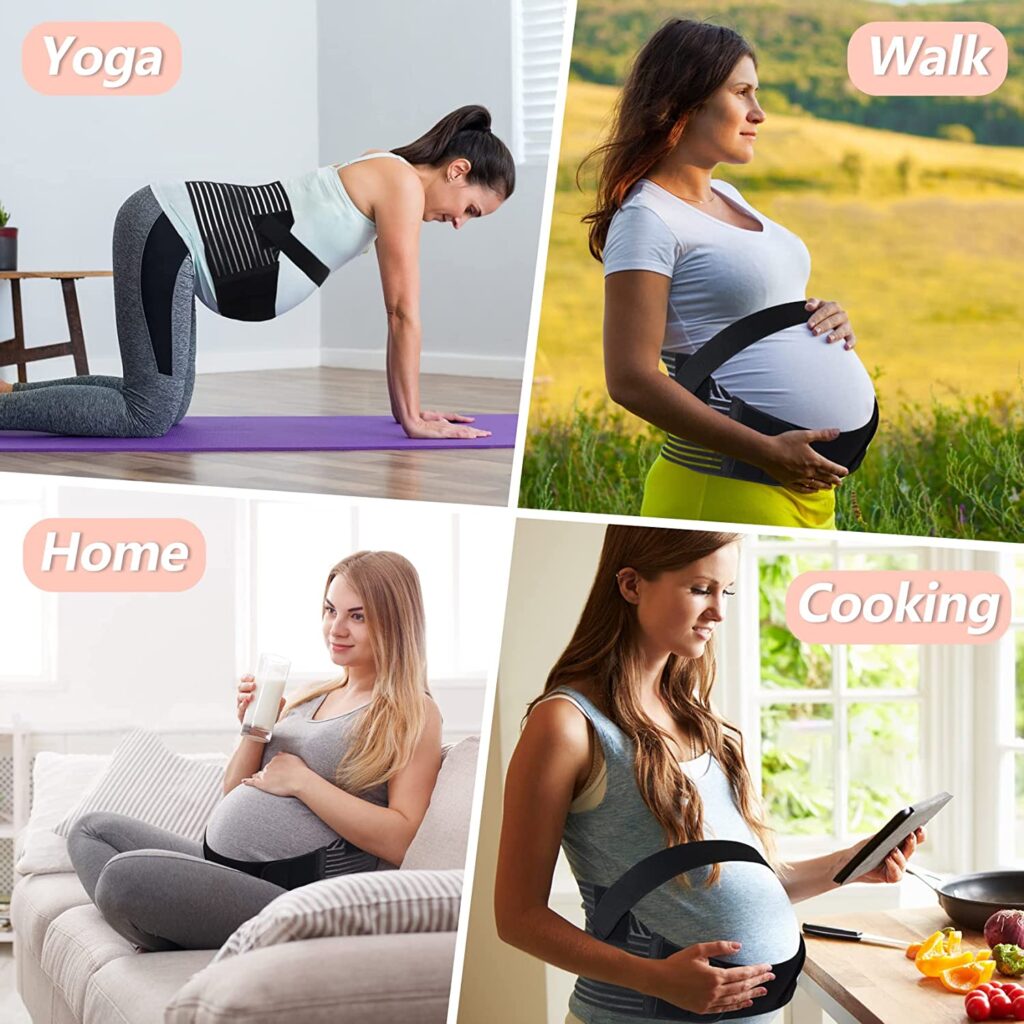
The pelvic pain may be coming from your baby sitting lower down in your pelvis at this stage. This dropping of the baby, otherwise called lightening or engagement, can occur a few weeks before your baby is born, which is why you might notice the extra pressure. This pelvic pressure may even make it difficult for you to walk. If you’re experiencing extreme pelvic pain, speak to your doctor to rule out any other issues. Wearing a supportive belly band can help provide much-needed support.
Can you breastfeed while you’re 38 weeks pregnant?
Yes, you can breastfeed while you’re 38 weeks pregnant. This practice is known as tandem nursing when you breastfeed your older child while being pregnant with your next child. I did it twice. Breastfeeding during pregnancy is generally considered safe for most women. However, it’s essential to be mindful of a few considerations:
1. Nutritional Needs: Pregnancy and breastfeeding simultaneously can increase your nutritional needs. Maintaining a well-balanced diet to support both your body’s demands and your growing baby’s needs is crucial. Make sure you’re eating enough calories and getting a wide variety of nutrients.
2. Uterine Contractions: Nipple stimulation from breastfeeding can cause mild uterine contractions. For most pregnancies, these are not a concern and are generally considered normal. However, if you have a high-risk pregnancy or a history of preterm labour, you should discuss breastfeeding during pregnancy with your healthcare provider to ensure it’s safe for you.
3. Comfort: As your pregnancy progresses, breastfeeding might become physically uncomfortable due to the growing belly, tender breasts, and changes in nipple sensitivity. Finding comfortable breastfeeding positions and adjusting as needed can help manage this discomfort.
4. Milk Supply Changes: During pregnancy, you may notice changes in your milk supply. Many women experience a decrease in milk production, especially during the fourth and fifth months of pregnancy. Additionally, the taste of breast milk can change due to hormonal fluctuations, which might affect your nursing child’s interest in breastfeeding.
5. Communication With Healthcare Providers: It’s important to communicate with your healthcare provider about your intention to continue breastfeeding during pregnancy. They can offer personalised advice and monitor your health so that both your pregnancy and breastfeeding journey go smoothly.
What is the treatment for pelvic pain at 38 weeks pregnant?
Pelvic pain or pressure is common during this stage of the pregnancy but there are some ways to manage it. Start doing pelvic exercises, relax with your hips elevated to take the pressure off your pelvis or take a warm bath. You can also apply a heating pad to your back for twenty minutes. Make sure you take at least a twenty-minute break before you apply the heat pad again.
38 weeks pregnant – sharp pains down below
Another question I received was ’38 weeks pregnant – groin pain when walking. What can I do?’
You may start to experience cramping at 38 weeks in pregnancy in your lower back and crotch pain as you approach labour. Your joints and muscles are now shifting and stretching to prepare for birth so these are signs of labour coming imminently!
Are the sharp pains in cervix a sign of labour?
A similar question asked was ‘What are the types of pain during pregnancy?’ and ‘Is it normal to have cramps at 37 weeks and 5 days pregnant?’
Lightening pain can be the first sign of labour. Some women can even feel their cervix dilating, so if you’re experiencing cervix pain, regular contractions and consistent backache, coupled with any liquid discharge, you might be in the early stages of labour.
Why is crossing your leg harmful for pregnancy?
Sitting with your legs crossed won’t harm your baby but it may cause swelling in your ankles or cause leg cramps. If you do find your legs are swelling and your feet are cramped, elevate your legs on a stool or sit with both feet on the floor.
Do women experience back pain during pregnancy?
A similar question asked was, ‘Why is back pain or discomfort common during pregnancy?’
According to Jana Abelovska (Head Pharmacist) at clickpharmacy.co.uk, back pain is very common during pregnancy, especially during the last trimester. The ligaments in your body naturally stretch and become softer which can put a strain on your lower back and pelvis, and this causes back pain.
Is chiropractic care safe for pregnant women?
Chiropractic care during pregnancy can be a safe way to promote comfort, relieve stress and minimise back pain. However, it is always important to speak to your GP and get advice before you take on any kind of treatment and find someone who specialises in pregnancy before you opt for chiropractic care.
In pregnancy what does 2 cm dilated and 70 effaced mean?
A similar question asked was, ‘What should I do if I am 38 weeks pregnant and 2 cm dilated?’
As you approach your due date, your healthcare provider might start talking about dilation and effacement. These are important terms that help us understand how your body is preparing for childbirth. Let’s break down what they mean in a clear, non-technical way.
When we say you’re “2 cm dilated,” we’re referring to the opening of your cervix. The cervix needs to open from 0 to 10 cm to allow for the baby to be born. Being 2 cm dilated means that your cervix has begun to open, indicating the early stages of labour.
Effacement is about the thickness of your cervix. Initially, your cervix is thick and firm, but as labour approaches, it starts to thin out and soften. This is what we mean by “effacement.” Being “70% effaced” means that your cervix has thinned out to 70% of its original thickness. It’s a crucial step towards getting your body ready for the birth process.
So, hearing that you’re 2 cm dilated and 70% effaced is a sign that your body is making progress towards childbirth. These changes, including effacement, are essential for creating a path for your baby to be born. It’s a natural and important part of the labour process, showing that things are moving in the right direction.
What is having a posterior sunny-side-up baby birth like?
A sunny side up or posterior position means the baby’s head is more likely to get wedged against the pubic bone. When this happens, the pressure is placed on your spine and sacrum and causes a longer and more painful delivery.
Is the TENS unit safe to use during pregnancy?
If applied correctly the TENS machine can be used safely but you mustn’t use it over certain areas in the body which may induce labour contractions like the web space of the thumb, all around the lower half of the leg and ankle and the top of the shoulders. If labour contractions are stimulated then studies show they will stop if the TENS machine is turned off again. Check out this leaflet from Oxford Health for more information on safe use of TENS machines during pregnancy.
38 weeks pregnant – symptoms not to ignore
A headache that won’t go away
Vision changes
Severe swelling in your hands and face
Pain in your right upper abdomen
Your waters breaking
Dizziness
Significant vaginal bleeding
Fever
Trouble urinating or painful urination
Vomiting or severe stomach cramps
A marked decrease in or absence of foetal movements
Contact your doctor straight away for further medical tests if you experience any of the above.
A fun fact – The baby weighs about 7 to 7.5 pounds, and is likely to be between 19 and 21 inches long!
The science part
As your body gears up for the arrival of your baby, it undergoes several crucial changes, thanks in part to a hormone known as relaxin. Produced by the placenta and ovaries, relaxin plays a vital role in preparing your body for childbirth. It works by relaxing the ligaments in the pelvis and softening the cervix, which are key steps towards enabling the cervix to dilate and efface effectively.
This natural process, facilitated by relaxin, is essential for making the birth canal flexible enough for your baby’s passage during delivery.
Your baby at 38 weeks
Your baby at 38 weeks
Your baby is the size of a marrow
They are at full term and can come at any time now
The organs are now all fully formed and ready for life in the outside world
Your baby has likely moved down and their head is engaged.
Your baby is still swallowing your amniotic fluid, which is heading to their intestines and which will result in their first bowel movement (meconium).
Their lungs are still maturing and producing more surfactant, which is a substance that prevents the air sacs in the lungs from sticking to each other once the baby starts to breathe oxygen.
Your pregnancy signs and symptoms
You are probably getting impatient to meet your baby now, and feeling quite a bit of discomfort carrying your big lump of joy around. Not long to go now!
Are you experiencing leaky breasts? That’s liquid gold called colostrum which your baby is ready to feed on when they greet you. Colostrum contains lots of antibodies that protect your newborn. Consider wearing medically reviewed nursing pads in your bra to protect your clothes
You may experience an increase or frequent urination as your baby presses down on your bladder. It’s important to not stop hydrating, even though it’s a nuisance to keep going to the loo now!
You may experience some heartburn or indigestion now that the baby has squashed your organs, You may even experience indigestion too. Prop your head up with a pillow so you’re not fully lying down, to help ease symptoms.
Nausea may still make its presence known. While commonly associated with the first trimester, nausea can persist or return in the late stages of pregnancy for some women. This late-pregnancy nausea can be down to hormonal fluctuations, the pressure of your growing uterus on your stomach, or even a pre-labour symptom for some. If you’re experiencing nausea at 38 weeks, small, frequent meals and staying hydrated can help manage this discomfort. Ginger tea or ginger biscuits are also known to soothe an upset stomach.
If you haven’t already, it’s very important to start exercising your kegel muscles or more commonly known as pelvic floor muscles, so you can retain strength and bladder control after birth.
Lansinoh Disposable Nursing Breast Pads with Blue-Lock core pack of 4 x 60 pads (240 count), 44265/4 – Buy from Amazon here*
Dealing with common discomforts at 38 weeks pregnant
As we near the end of pregnancy, our bodies undergo a variety of changes to prepare for childbirth. Apart from the pelvic pain and pressure many of us feel, there are a few other discomforts you might encounter:
Lightning Crotch: This sharp, sudden pain in the pelvic area can catch you off guard. It feels like a quick zap and is caused by your baby’s movements and position, pressing against the nerves in your pelvis. Though startling, it’s a common experience as your body prepares for labour.
Symphysis Pubis Dysfunction (SPD): Some of us might feel more than just pressure; we might experience deep pain in the front of the pelvis. SPD happens when the ligaments that keep your pelvic bone aligned become overly relaxed – thank relaxin, the hormone that’s helping your body get ready for birth. This can make walking or turning in bed painful.
Round Ligament Pain: If you’re feeling sharp pains or a dull ache on one or both sides of your lower abdomen, it might be round ligament pain. This occurs as the ligaments supporting your uterus stretch to accommodate its growing size. It’s a normal part of pregnancy but can be uncomfortable.
If you’re experiencing any of these symptoms and they’re causing significant discomfort or concern, it’s important to discuss them with your healthcare provider. They can offer strategies to manage the pain and check to ensure everything is progressing normally with your pregnancy.
Remember, every pregnancy is unique, and these symptoms are just some of the ways our bodies tell us they’re preparing for the big day. Always consult your healthcare provider with any concerns you have during these final weeks.
Your next steps
It’s just a waiting game now for those hormones to release and kick start contractions, so you can get your baby out when you’re giving birth
Watch out for early signs of labour, including losing your mucus plug which is one of the first signs that active labour is here
If you haven’t done so already now is the time to think of baby names for your little one!
Continue with your pelvic floor exercises and start right NOW if you haven’t done so already – you’ll thank yourself later.
Keep an eye on your contractions if you feel they have started. If they last more than 30 seconds and are coming every five minutes then make a call to your hospital – your baby is coming!
If you have any aches, pains, bloody show, or if your water breaks speak to your health professional who can provide medical advice on what to do next.
Note: These are just general ideas of how you and your baby are getting on. Don’t forget that every baby develops differently. If you are concerned about your baby’s development, please consult your doctor or midwife. Links marked with a ‘*’ are affiliate links – we may earn a small commission if you click through to buy, at no extra cost to you.
Hubby and I attended a water birth session with hubby at my local birth centre. We watched a very graphic DVD of a woman giving birth in a birthing pool with no pain relief at all. It looked like she was in a lot of pain as the baby was crowning away in full glory (which we saw by the way!) I do have to admit, the woman in the DVD was pretty strong to give birth with no pain relief but the midwife said that it’s more possible than we think to give birth without using any pain medication. She didn’t have any pain relief when she gave birth to her two children and seemed very anti-epidural, claiming that it gave rise to other implications, i.e. you are less likely to push effectively etc.
The woman sitting next to me at the session said that she had a water birth at the birth centre and she didn’t think the pain was as bad as she thought it would be. She had heard loads of horror stories from her friends and went into labour thinking the absolute worst. She also said that she didn’t tear and found that the ability to deliver her own baby felt like she was more in control, thus found the whole process more relaxing. I felt so reassured and was completely sold on the idea of a water birth, especially as I love water.
The midwife gave us a sheet on the various positions that we should think about getting into during labour to aid an easy birth. It was quite graphic and I was surprised to see so many different positions that you could be in! Look away now if you’re squeamish!
In the evening we met up with the couples from our NCT class for a secret Santa dinner at Pizza Express. I was famished so enjoyed a nice three-course meal, complete with dessert. Hubby and I received an amazing Christmas present – a journal of our baby’s first year, so we can record all of our baby’s events. I love journals and diaries so this was a perfect present for me.
Hubby and I bought one of the couples a healthcare set as we had bought one for ourselves and I think that it’s quite useful to have a healthcare set, at least for the first year.
During dinner one of the ladies told me about a woman she had met in the toilet who was pregnant with her second child and she was really tiny in size. Apparently, the woman had put on 35 kilos when she was pregnant with her first child but lost it all because she breastfed for 16 months. That sounds amazing! I want to breastfeed for at least two years, so I’m hoping I will lose all the weight and become skinny too because I am definitely not skinny right now!
I’m not doing much exercise at the moment. In fact, I’m actually acting like a big a lump at home, sitting down and typing all day.
I met my neighbour who lives opposite to us and she has a 9-week old baby. We discussed our pregnancies and her birth and she told me that she had a really long labour, but she didn’t tear because she aimed at panting before she pushed the baby out. Another confirmation that panting works! She did say that she reckoned the lack of exercise during her pregnancy contributed to the long labour, so I’m going to aim to walk a lot more now. She’s really nice and offered me lots of advice. We definitely have to meet up for coffees (after the pregnancy) and talk about mummy stuff from now on.
Hubby bought a cross trainer for the flat, but I’m too scared to use it now. It would be perfect for after the birth though, if I get any time to use it when the baby’s here – obviously after I’ve fed him, changed him and slept a bit…
Your baby is now considered full term and weighs around 3 to 4kg now.
Your baby is ready to be born and in a few weeks time you’ll get to meet them finally!
Your baby’s digestive gut now contains meconium which is a sticky green substance that will form their first poo after birth
Your baby will move further down into the pelvis and ‘engage’.
Your pregnancy signs and symptoms
You might be feeling your baby bearing down now, so you will probably start to feel increased pressure in your lower belly, especially if this is your first baby.
You might notice your bump drop slightly
Are you getting piles during pregnancy? This could be down to the pressure from the bump. Use a cool cloth to ease any discomfort and speak to your midwife/GP for advice
Make sure you are sleeping on your left side as sleeping on your back is linked to an increase in stillbirth. This includes daytime napping and sleeping during the night
Make sure you’ve got your hospital bag packed and ready as your baby can arrive any day now!
Note: These are just general ideas of how you and your baby are getting on. Don’t forget that every baby develops differently. If you are concerned about your baby’s development, please consult your doctor or midwife.
Have you already had your baby (congratulations!), but you’re still receiving pregnancy emails? Just hit unsubscribe at the bottom of your email and sign up to ‘My Motherhood’ posts to carry on with the personalised weekly emails for your baby up to 16 weeks old! Form below:
If you have any questions about her work, please contact Charlotte via her website, Facebook, Instagram or LinkedIn*
36 weeks pregnant – my bump is huge!
I had my midwife appointment this week and I asked my midwife if my bump was too big at 36 weeks pregnant because it’s massive and I can’t see how much bigger Boxer can get with still 4 weeks to go!
The midwife measured my bump and said that it was a perfect size at 36.4cm. Woohoo! I was worried that I was going to give birth to a 10-pound baby. I recorded the heartbeat to send to hubby, which sounded like a little train. Boxer’s heartbeat sounded so lovely and at least I know I am still keeping him alive inside me. I cannot believe that from getting pregnant to now, it has been 36 weeks. I feel like I’ve been pregnant forever.
At the antenatal classes, we had a woman-only session, and the lads went out for a drink to bond and talk about their anxieties as fathers. It was really nice to just talk with the ladies, as we got to discuss the niggles of pregnancy that perhaps our husbands/partners didn’t really understand.
The NCT Counsellor, at the women-only session, talked about perineal massage, which prevents tearing during birth. I’m not sure I want anything to touch me down there, let alone have my husband to massage me! That’s what the water birth is for, right? You’re less likely to tear with a water birth and I’ll just aim to pant hard when I first feel the urge to push, so I let the cervix open up naturally. The NCT Counsellor also stressed doing pelvic floor exercises every day, so in my yoga sessions, I practice those pelvic floor exercises and I really think they’re working actually as I think the baby is front to back now and my bladder feels stronger.
Our last class was all about Caesareans and how and when a woman is expected to have a Caesarean section. The discussion definitely left me scared and wishing I won’t have surgery like that. It’s such a major operation and it can take up to six weeks to heal. It must be difficult if you don’t recover from an operation in the normal way, as you’ll have a newborn baby to tend to.
When I went home that night, I watched a really good DVD called Great Expectations, Laugh and Learn about Childbirth. The DVD is a bit out-dated, but the woman, Sheri Bayles, hosts childbirth classes on the DVD and explains everything so well, from pregnancy to having the baby. And she’s quite funny too! I learned a lot, especially the really useful breathing techniques she claims works like a charm during labour. I’m definitely going to try them out and hope the baby comes down the birth canal rather than the Julius Caesar way!
A fun fact – Your baby weighs as much as a crenshaw melon!
You may feel like your whole body is growing along with your bump. At 36 weeks your bump should measure at around 36cm.
36 weeks pregnant baby
The amount of space in your womb during the 3rd trimester is ever shrinking, but your baby at 36 weeks is still kicking away.
Your baby is getting ready for their first breath of the world’s air when they are born. Their lungs are developed now and ready. However, they are still deflated as they are currently getting oxygen through the placenta (which is why there is no risk of drowning during a water birth)
If they were born now, they’d still be premature, but they could suckle and their digestive system is ready to take in breast milk.
36 weeks pregnant symptoms
Braxton Hicks contractions
Your womb is getting ready for labour now, so you may experience more Braxton Hicks contractions – they can be quite strong and some women mistake them for labour contractions.
Cramps when 36 weeks pregnant
If you are experiencing cramps that as painful as menstrual cramps, this could be early labour. If you’re experiencing something more severe than menstrual type cramps, it’s time to call your hospital!
Swab when 36 weeks pregnant
Some women are screened for Group B strep as part of their routine prenatal care, especially if they’ve had Group B strep before. This isn’t a normal part of the procedure though, so if you’re worried, request a test, which is a swab sample from the vagina and the rectum. If you are Group B strep positive, then your baby will receive antibiotics during vaginal birth to avoid contracting Group B strep.
36 weeks pregnant signs of labour
You may experience the following signs of labour:
Contractions or tightenings
The mucus plug comes away from your cervix, which is otherwise known as a ‘show’ or ‘bloody show’.
You may experience menstrual type cramps or backache
You might have the urge to go to the toilet, which is caused by the baby’s head pressing down on your bowels.
Your waters may break, in which case, call your doctor immediately.
36 weeks pregnant discharge
Another question asked was, ‘Discharge when 36 weeks pregnant’
You may see an increase in discharge as your body prepares for labour. If you see a watery discharge, this may be your waters (amniotic fluid) breaking, blood (a sign of preterm labour) or your mucus plug, which could be blood-tinged. Call your doctor immediately if you have any of these signs.
Leaking a bit when you pee?
Are you leaking a bit of pee when you’re coughing, sneezing or laughing? This is normal, but it means your pelvic floor needs a bit of strengthening. Work on your pelvic floor every day so you can prevent any further leakages when the baby is born.
36 weeks pregnant baby movement
Your baby is gaining more weight every day, so there will be less room to move around in the uterus. This means you may not feel the baby moving around as much. Instead, the baby might twist or stretch, but it is still important to monitor your baby’s movements. If their pattern of movement changes or increases/decreases, call your doctor immediately. Don’t waste time! It’s always better to be safe than sorry and you’re not wasting the hospital’s time.
36 weeks pregnant baby position
Another question asked was, ‘At 36 weeks pregnant, how is the baby positioned?’
The baby at week 36 has moved down and is most likely head down. But if not, your doctor or midwife will apply pressure to your abdomen to turn the baby around from the breech to the head-down position. This is called an external cephalic version.
36 weeks foetus pictures
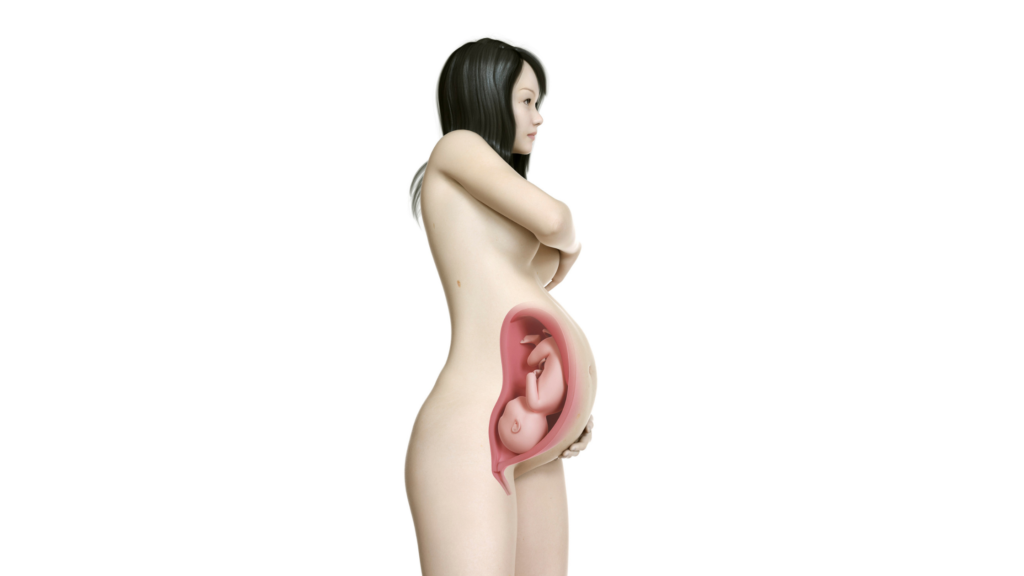
Below is a picture of your bump and your baby at 36 weeks pregnant:
36 weeks pregnant in months
Other questions asked were, ’36 weeks is how many months?’, ‘How many months is 36 weeks?’, ‘Is 36 weeks pregnant 9 months?’, ‘Is 36 weeks pregnant full term?’, ‘How long is 36 weeks pregnant?’ and ‘Is 36 weeks pregnant 9 months?’
36 weeks in months means 9 months exactly but, in pregnancy terms it actually means you’re 8 months pregnant. This is because we count the pregnancy from 4 weeks being the first month rather than 0 weeks, as your baby doesn’t exist until conception at 2 weeks! It’s all very confusing.
36 weeks pregnant symptoms not to ignore
If you experience the following, call your doctor immediately:
Any pain, cramping in your lower abdomen or severe back pain
Severe headaches and tingling/swelling in hands and feet – this could be a sign of pre-eclampsia/high blood pressure
Pain or burning when you pee, or not needing to go to the loo as much. This could be a sign of a UTI.
Itchy hands and feet – this could be a sign of cholestasis, which is a liver condition that occurs late in pregnancy. Itching can also occur in other parts of the body.
Chills, fever, vomiting and/or nausea that won’t go away
36 weeks pregnant nausea
Nausea, vomiting and diarrhoea can be a sign that you’re about to go into labour, so let your midwife or doctor know straight away if you’re experiencing any of these symptoms.
36 weeks pregnant diarrhoea
Another question asked was, ‘Diarrhoea when 36 weeks pregnant?’
Please see above. If you’re experiencing diarrhoea, this could be an early sign of labour.
Spotting when 36 weeks pregnant
1 in 10 women will experience vaginal bleeding during their 3rd trimester. You should tell your doctor immediately if you see any kind of spotting during the latter stages of pregnancy. Severe bleeding could be a sign of placental abruption.
Your next steps – what to do at 36 weeks pregnant
Get in touch with your midwife if you feel a reduction in movements
You’ll feel a bit more pressure on your bladder when the baby drops around this time, but thankfully your lungs will get a rest!
Make sure you are going to sleep on your side when you reach the third trimester because research has shown that sleeping on your back increases the risk of stillbirth. This includes naps during the day and sleeping at night time.
Practice massaging your perineum (the bit between your vagina and anus) in the weeks coming up to birth to reduce the chances of an episiotomy (cutting the perineum) during birth
Have you thought about what kind of pain relief you want during labour? Speak to your midwife, who can explain the different pain relief available.
Now is the time to get your birth plan sorted if you haven’t done so already
From anytime until birth, your mucus plug may come out, which is a collection of mucus that collects in the cervical canal to prevent bacteria or infection from entering your uterus and getting to your baby. As your cervix prepares for labour, you will lose the mucus plug, which is very normal during late pregnancy. It’s a great sign that your baby will greet you soon – just not yet! It needs to cook a bit more yet!
FAQ
Flying when 36 weeks pregnant
“Is it safe to fly during pregnancy? Answer From Tatnai Burnett, M.D. Generally, commercial air travel before week 36 of pregnancy is considered safe if you have a healthy pregnancy. Still, if you’re pregnant, check with your health care provider before you fly.”
“Eat a variety of healthy foods. Healthy foods include fruits, vegetables, whole-grain breads, low-fat dairy foods, beans, lean meats, and fish. Drink liquids as directed. Ask how much liquid to drink each day and which liquids are best for you. Limit caffeine to less than 200 milligrams each day.”
“Wash your hands after you touch raw meat. Make sure any meat is well-cooked before you eat it. Avoid raw eggs and unpasteurized milk. Use gloves or ask someone else to clean your cat’s litter box while you are pregnant.”
“Answer From Tatnai Burnett, M.D. Generally, commercial air travel before week 36 of pregnancy is considered safe if you have a healthy pregnancy. Still, if you’re pregnant, check with your health care provider before you fly.”
Can a pregnant woman give birth at 36 weeks of pregnancy?
Another question asked was, ‘Is 36 weeks pregnant premature?’
“Delivering a baby at 36 weeks, which is known as late preterm, can happen spontaneously or may require induction. A doctor might induce a pregnancy for a variety of reasons, including preterm labor, severe preeclampsia, placental problems, fetal growth restriction, or gestational diabetes.”
https://www.medicalnewstoday.com/articles/322408
Is it safe to induce labour at 36 weeks pregnant?
“The American College of Obstetricians and Gynecologists (ACOG) do not recommend voluntarily inducing labor before 39 weeks gestation unless there is a medical need to do so. Most babies born at 36 weeks are generally healthy.”
https://www.medicalnewstoday.com/articles/322408
I’m 36 weeks pregnant and I seem to struggle with headaches, especially at night. Is it normal?
“Expectant mothers may experience an increase or decrease in the number of headaches. Unexplained, frequent headaches later in your pregnancy could be a sign of a more serious condition called pre-eclampsia, so tell your doctor if this is the case.”
Also, if you have a borderline high pressure (sometimes called prehypertension) then at 36 weeks pregnant, you have a 70% increased risk for birthing a low birth weight baby or even having a stillbirth compared to women with normal blood pressure. So, it’s very important to ensure you seek medical advice when you have unexplained, frequent headaches.A
I am 36 weeks pregnant and my baby is breech. Will I have normal delivery?
“How does a breech baby affect delivery? If your baby presents in a breech position after 36 weeks of pregnancy, your birthing plan will likely change. It’s usually unsafe for a breech baby to be born vaginally due to risks of injury. In most cases, a planned C-section is the safest way to deliver your baby.”
Some pregnant women have given birth vaginally with a breech baby and some babies have turned in the final few weeks of birth, but this is anecdotal. Please consult your doctor for the safest next steps.
Note: These are just general ideas of how you and your baby are getting on and not medically reviewed. Don’t forget that every baby develops differently. If you are concerned about your baby’s development, please consult your healthcare provider or midwife for medical advice.
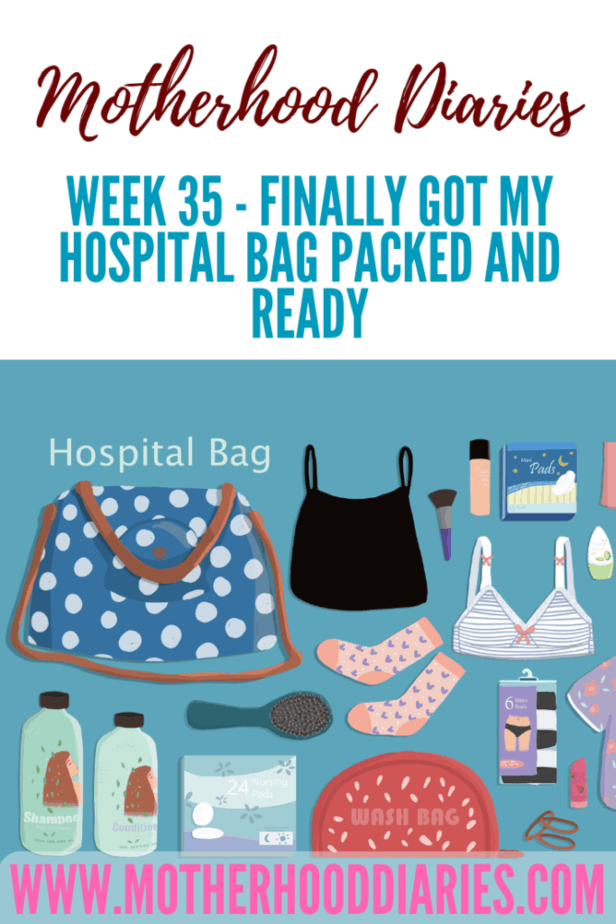
I finally bought my hospital bag and packed it all up nicely. This is what I included (with links to where to buy on Amazon (they’re affiliate links by the way which means I may earn a small commission at no extra cost to you if you buy via that link)):
I also created an infographic of hospital bag options that you can pin to your Pinterest board or just print it out and stick to your fridge to help you prepare your hospital bag. Just click on the image below to make it larger.
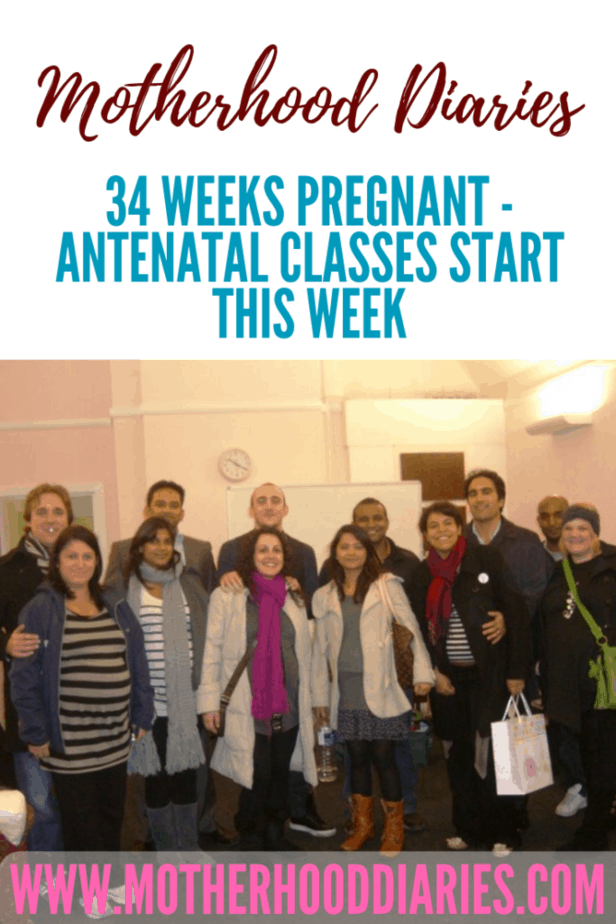
We had our third and fourth antenatal sessions this week, which were very informative. We went around the group and we each shared the names we had thought of for our baby and how we were planning to give birth. Hubby and I said that we were thinking about the name Aron and planning to have a water birth at our local birth centre next door to our flat. People were quite intrigued about the birth centre as they were all planning to give birth at the hospital near to their house. I think we even managed to sway a few couples into taking a look at their local birth centres when they went home.
The NCT counsellor also taught us the BRAIN analysis, which she advised we should always think about when faced with something we question.
BRAIN stands for:
What are the BENEFITS?
What are the RISKS?
Are there any ALTERNATIVES?
What is your INSTINCT telling you?
What happens if you do NOTHING?
I’m definitely going to think about the BRAIN analysis whenever I’m faced with a dilemma.
We also talked about the different kinds of pain relief during labour and hubby and I had to present the TENS machine to the rest of the group which was fun. I even tried out the TENS machine at the class, but I’m not sure it is for me, to be honest. I’m not really a fan of electrical currents. Perhaps I’ll think differently when I’m in pain, though!
We mums got the chance to discuss our pregnancies and bumps without the dads around. My bump definitely looked like the largest of all the bumps and I’m fifth in line to give birth! Maybe I should lay off all the food I’ve been eating…
I’ve noticed that my hands swell up during the day and then the swelling goes down when I go to sleep. I wonder why it goes down when I go to sleep? Someone told me it’s all the water retention from standing up. I don’t mind, as long as it’s not pre-eclampsia!
The baby is also very active when there are lots of people talking in a group, which is why, when I’m at these sessions, Boxer is hula hooping, kicking, stretching and basically doing gymnastics in my belly. I wonder whether he enjoys the noise or he finds it disturbing, I can’t tell yet. But I know he loves it when I stroke him and I’m pretty sure he sticks his bum out when he wants some of mummy’s touch.
I can’t wait to meet our little Boxer. I feel like he has a character already. And, there’s not long to go too! I’m so nervous about the birth, but I just know that, whatever happens, our beautiful bundle of painful joy will light up mine and hubby’s life when he arrives into the new world forever. I can’t wait!
A fun fact – your baby weighs approximately 5.5lbs and is as big as a pineapple!
The science part
Your baby at 35 weeks
Your baby has less and less space to move now. They can still shift and squirm a bit though
You should be able to see their movements on your belly now
Your baby’s lungs are fully formed and ready for breathing in the outside air
Your baby’s central nervous system is also becoming more mature
Your baby’s head may be engaged now as they make their way down your pelvis – you may feel slight ease on your lungs and you be able to breathe better – this is called lightening
Your pregnancy signs and symptoms
Your placenta has grown and is now a quarter of the weight of your baby
Your body is preparing for that first feed by producing liquid gold, colostrum – milk production is on! You may leak a bit of colostrum before birth though.
Are you feeling a little pain with movements? Don’t worry, this is normal as there isn’t much room for the baby to move about
Braxton Hicks contractions may be more frequent too and getting more intense. Take it easy and put your feet up when you can
If your baby is not in the optimum position for birth yet, you can give them a bit of a helping hand by doing a bit of moving yourself. Spend some time on all fours and wriggle your hips to gently encourage baby to turn. Bouncing on a birthing ball may help too.
Have you been experiencing ‘nesting’ yet? You may be going on a cleaning spree in your house in preparation for your new baby. Not all women get it, but it’s a great way to get used to cleaning after your babies constantly!
Your next steps
If you’re still constipated then keep eating fibre-rich foods and drink lots of liquids to help food pass through. There isn’t much room in your digestive tract at the moment, so you need to give it all the help it can get right now!
If you haven’t heard about Group B Streptococcus, your midwife or doctor may talk to you about it. About 25% of women carry GBS and there is a risk that GBS can pass to your baby during labour and cause a potentially fatal infection. If GBS is detected or if you have been previously diagnosed with GBS then you will be tested again. If you go into labour before 37 weeks you should be offered antibiotics from the start of your labour, which has been shown to be highly effective at preventing GBS infection in babies.
Have you been offered a sweep yet? A sweep is a vaginal examination, where a finger is placed inside and makes circular sweeping motions to help kickstart labour. You may be offered a sweep at around 37 to 40 weeks pregnant, but you don’t have to accept it if you don’t want to let nature take its course.
Make sure you keep all your important phone numbers to hand in case labour starts, so you can call your emergency contacts.
Note: These are just general ideas of how you and your baby are getting on. Don’t forget that every baby develops differently. If you are concerned about your baby’s development, please consult your doctor or midwife.
If you have any questions about her work, please contact Charlotte via her website, Facebook, Instagram or LinkedIn*
Have you already had your baby (congratulations!), but you’re still receiving pregnancy emails? Just hit unsubscribe at the bottom of your email and sign up to ‘My Motherhood’ posts to carry on with the personalised weekly emails for your baby up to 16 weeks old! Form below:
34 weeks pregnant – Antenatal classes start this week
I had an appointment with the birth centre and received my new maternity notes. I found out that my due date is actually 12 December so they have given me an extra 3 days to prepare for Boxer. The midwives told me that scans actually predict the due date a few days early and that it’s better to work out your due date from the last day of your period if you have a regular period cycle. The midwife tested my urine again and this time I was completely clear, so it must have been a tampered sample last week.
Hubby and I started our antenatal classes this week. It was quite far away from home, so we had to take two buses to get to the destination. We were the first to arrive at the church where the classes were being held and so we sat down patiently in a large room filled with large chairs and cushions. One by one, the couples started to arrive. There were five couples in total, all about the same age as us and all looking equally as nervous. The NCT counsellor introduced herself and asked everyone to go around the room and introduce themselves to the rest of the group. I was quite nervous so I ended up telling everyone my name, where I was from, where I was giving birth and my family background. I may as well have given them my bra size judging by the looks on their faces as I fed them information overload! Hubby seemed just as uncomfortable as me and his introduction wasn’t much shorter than mine.
The counsellor then asked everyone to get into groups and write a list of what we wanted to learn and what we hoped to gain in the forthcoming weeks at the antenatal classes. Well, I wanted to learn more about what labour was going to be like and how painful it was actually going to be. I also wanted to learn more about breastfeeding too, as I heard that it’s pretty tough to get right the first time, and if you don’t get it completely right you can end up with sore, cracked nipples!
In our first session, we talked about labour and birth and how to cope at home in the early stages of labour. We went through an A to Z list of what we could do to alleviate the pain and relax during those early stages. I’ve created my own personal A to Z list of relaxation techniques that I’m going to try and cover to help with my labour. It was quite difficult to think of them all!
The second NCT session was all about breastfeeding. A breastfeeding counsellor taught us all about how breastfeeding works, i.e. supply and demand of milk – the baby demands the milk and the mother supplies the milk, and whether the baby is getting enough of the milk. We also learned about good positioning and attachment and watched a breastfeeding DVD that showed us how to get the baby to latch onto the breast properly, to prevent sore nipples. This is extremely important, as the baby can get the maximum amount of milk from the breast if they are positioned and latched onto the breast correctly, i.e. getting the hind milk as well as the fore milk. It was a really good session as we also learned about what to expect in the first week. Apparently, we’ll be feeding and changing the baby every 2 – 4 hours! Oh, I can feel the sleep deprivation already…
A fun fact – The baby weighs about 4.7 pounds and measures at around 18 inches long!
Your baby is putting on yet more weight in the form of fat to help regulate their body temperature. The fat will also keep them warm after birth too.
Their bones are still hardening, but your baby’s head will stay soft and separated so that they will be able to slide through the birth canal ready for the outside world
Your baby’s immune system is still developing and will continue to develop after birth. Your body will deliver important antibodies including from your breast milk to support this development
Your pregnancy signs and symptoms
Your uterus is still growing!
Is your vision getting blurry? This is another pregnancy symptom and totally normal thanks to hormones
There may be less tear production too, leaving your eyes dry and tired, especially if you wear contact lenses. You may find wearing glasses for the rest of the pregnancy more comfortable. Make sure to protect your eyes from the sun!
If you’re worried about your change in vision, contact your midwife or GP ASAP as this can also be a sign of preeclampsia.
Your next steps
Remember that what you eat now will shape your baby’s nutrition later. Get into good habits now and you’ll thank yourself later when your baby is here
When packing your hospital bag, think about any snacks you’d like to include and whether you’d like any reading materials too to keep you entertained.
Note: These are just general ideas of how you and your baby are getting on. Don’t forget that every baby develops differently. If you are concerned about your baby’s development, please consult your doctor or midwife.
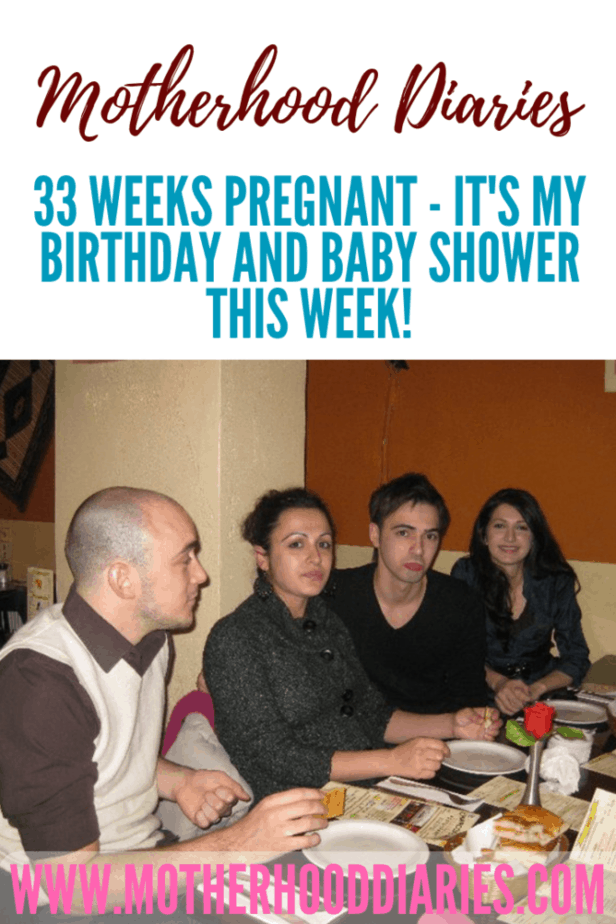
It was my birthday this week! My family and close friends took me out to a nice Turkish dinner at the weekend which was great. I stuffed myself with such great food and enjoyed getting out of the flat for a change, conversing with people other than hubby (no offence to hubby of course!)
I had a double celebration this week which really boosted my mood. My friends and sisters had thrown me a lovely surprisebaby shower, which was so nice of them – I felt so loved. Afew of my friends turned up too and brought me such nice gifts for the baby. We ate plenty of food and enjoyed ourselves with lots of pregnant banter and talk about kids and growing up. The cake was delicious and the party really perked me up – the two celebrations have definitely put me on course for a much better mood.
The flat is coming along nicely now. The flooring is almost complete, which is great so that we don’t have to deal with dusty concrete floors anymore. And, finally, the engineer came to fit the internet which I was particularly happy about as it had got so boring without the internet at home. I didn’t waste any time and immediately got down to work, catching up on literally hundreds of emails. It felt good to work on my second baby (my blog) again. I had to say, I definitely missed blogging!
Ican feel a lot of movement coming from my tummy and I can also feel that Boxer is finding it difficult to shift around in there because of the lack of room.I still have a really strong craving for sugar, but I’ve decided that it’s probably just down to the lack of energy at the moment. I also went through a phase of needing roast dinners, so I had three of those in one day, but that craving went as quickly as it came… I still can’t shake off the need for coffee either. Every time I smell coffee in the air, my nose makes a beeline for where the smell is coming from! I thought people were supposed to go off coffee? I’m the opposite!
I’ve started to plan the nursery now. I took measurements for the room and worked out how much everything would cost – about £200 which is not bad as that includes everything, apart from furniture. I’m definitely going to go with the sky and undersea theme and even bought an undersea mural which is going to look awesome as a border around the room.
I found out that there is a birth centre literally right next to my flat and the rooms are amazing! I was sold the moment I walked into the place. I was given a tour of the centre – there are six rooms, one with a double bed, and each has a birth pool (which is huge by the way), a toilet, a shower and a bath. Each room even has a TV, candles and radio! I’m definitely aiming for a water birth in one of these holistic calming birth centres – I hope Boxer complies!
I went to my new GP to have a check-up with the midwife at a children’s centre down the road from me. They spotted some nitrate in my urine, but they reckon it may be a tampered sample as I am not displaying any symptoms of a urine infection. So they just told me to go home and drink plenty of fluids, including water and cranberry juice. I drink about 2 litres of water a day so I’d be quite surprised if I had a urine infection. The midwife also told me that I needed to make sure the new maternity notes were registered to me before the birth as the birth centre can’t accept another hospital’s notes. Apparently, every hospital has its own way of doing things and their own abbreviations for medical words. So it’s safer if I get new maternity notes from the birth centre that I’m giving birth in. I arranged another appointment at 36 weeks where I may have to take my bloods again if my recent blood test results don’t come through by that time. The unit is going to chase for the results and let me know when they receive it. They also told me that my bump is a nice size at 31cm too. I learned that the size of the bump should roughly be the same as the number of weeks that you are pregnant. It’s a good way to work out where you are in the pregnancy should you ever forget.
A fun fact – The baby is about as big as a pineapple!
You’re still going to feel tightening – or Braxton Hicks contractions – until birth. They aren’t painful but they can happen if you overdo it – so take it easy!
Your baby’s eyes are staying open while they’re awake and they’re starting to coordinate their breathing with sucking and swallowing in preparation for the outside world
Your baby’s bones are hardening too and they’re going through major brain development too for all that learning when they greet the world outside!
Your pregnancy signs and symptoms
You’re probably feeling quite uncomfortable now and overheating quite a bit.
If you’re experiencing headaches that are down to the hormone surges. But, other factors can be stress and dehydration so make sure you’re drinking plenty of water and taking it easy as much as possible. Don’t worry about the extra ladies’ trips – it’s better than getting headaches and a painful UTI!
Baby brain is in full swing now! I experienced pregnancy brain with all four of my pregnancies – it’s quite common!
Start reading up about labour and birth if you haven’t done so already. It’s a good idea to learn about breathing techniques too and start practising them in time for the birth
Also start reading up on postnatal care, like medication, maternity pads, nursing pads. It may be still another month till you meet your baby, but at least you’ll be prepared for a surprise arrival if baby can’t wait until 40 weeks to meet mummy!
Don’t forget to monitor your baby’s movements – any reductions or changes and you need to let your midwife or doctor know ASAP!
Note: These are just general ideas of how you and your baby are getting on. Don’t forget that every baby develops differently. If you are concerned about your baby’s development, please consult your doctor or midwife.