Boost your health with the at-home vaginal microbiome test
Unless you’re itchy or burning down there, you don’t really pay much attention to what your front bottom is doing. However, your vaginal microbiome is a big deal and holds the cakey to your fertility success, pregnancy outcomes and other related diseases. But, how do you know if your vaginal microbiome is happy?
By doing a vaginal microbiome test!
Daye*, an innovative brand that raises the standards in gynae health by creating cutting-edge feminine health products and services, offers a convenient at-home vaginal microbiome test* and a whole heap of information on what to do when you receive the results.
In this article, we’ll discuss the importance of knowing your unique vaginal microbiome and introduce the concept of at-home testing with Daye.
Your vaginal health starts here!
Wait, what’s my vaginal microbiome and what are vaginal microbiome tests?
The term ‘microbiome’ might sound like a fancy scientific word reserved for lab-coated professionals, but in essence, it refers to the community of microorganisms or vaginal microbiota, both friendly and unfriendly, that call our bodies home. Our vaginal microbiome plays a pivotal role in our overall health, influencing everything from our reproductive health to our vulnerability to infections. A vaginal microbiome test takes a swab of your microbiome and can tell you your unique makeup and whether your vagina is in working order.
But, why should you take a vaginal microbiome test?
Before diving into the necessity of a vaginal health test, it’s crucial to understand why it’s important to know your unique vaginal microbiome. This ecosystem consists of various bacterial species, most notably Lactobacillus, which play an instrumental role in vaginal health. An imbalance, often termed as bacterial vaginosis or dysbiosis, can lead to various health issues, as mentioned above.
Your vaginal microbiome is made up of the following:
Lactobacilli
Dancing gracefully in the theatre of your body, Lactobacilli are the unsung heroines of your vaginal realm. These benevolent bacteria produce lactic acid to strike just the right pH balance and your reproductive haven remains flourishing and vibrant, keeping unwelcome bacterial invaders at bay.
Studies show that a vaginal microbiome that is rich in protective lactobacilli bacteria is linked to a lower risk of infections, fertility issues and pregnancy complications.
Anaerobic bacteria
Meet the party animals of the microbial world! These microorganisms are quite the mavericks, dancing around the microbiome without care for oxygen. And they adore settling down in cosy, less acidic nooks, which can often be found in the neighbourhoods of human skin and the avenues of mucosal membranes. A favourite hotspot? The ever-popular vaginal canal!
But, when the rambunctious duo, Gardnerella vaginalis and Prevotella bivia, decide to come into the mix, things can spiral out of control, leading to bacterial vaginosis (BV), the talk of the town in vaginal infections. Awareness is key, however, and spotting these party crashers early can be the first step in keeping the microbiome balanced.
Yeast-like fungi like Candida
A whopping 75% of us ladies have to deal with these tiny troublemakers called Candida at some point and these yeasts chill in many of our vaginal areas without causing a fuss most of the time. But, if they decide to throw a little over-the-top party, it can lead to an infection known more commonly as thrush (or vaginal candidiasis.) It’s central for yeast infections, causing all sorts of itching and discomfort down there.
Mycoplasma hominis and Ureaplasma
Mycoplasma and Ureaplasma are some of the tiniest little organisms that don’t have a cell wall, which means spotting them under a microscope can be tough.
However, they have been spotted at the scene of a few vaginal infections and have even been linked to some specific pregnancy outcomes. But in low numbers, they’re pretty much harmless, just mingling harmoniously with the normal vaginal flora.
Pathogenic microorganisms – Mycoplasma genitalium
Mycoplasma genitalium holds the record for being the tiniest bacteria that can make copies of itself. But if it decides to cause a stir in your microbiome, it can bring along some not-so-fun symptoms like vaginal discharge, a stinging sensation when you pee, pelvic pain, and spotting either after getting frisky or at random times between your periods.
Why is it important to have a balanced microbiome?
The vaginal microbiome is a complex ecosystem and these microorganisms that live in the vaginal playground each play a vital role in maintaining your overall health and wellbeing. Maintaining a balanced vaginal microbiome is crucial for several reasons:
Prevention of vaginal and urinary tract infections
Having a hearty bunch of Lactobacilli is like having a superhero squad down there, keeping the nasty recurrent vaginal infections like thrush and bacterial vaginosis at bay. It could also mean saying goodbye to those annoying urinary tract infections (UTIs).
If you’re expecting a little one, have diabetes, recently took antibiotics, have a weakened immune system or are using the pill, you might be experiencing more bouts of thrush than normal.
Shield against sexually transmitted infections
An abundance of lactobacilli in your microbiome could actually act as a shield against catching sexually transmitted infections, even something as serious as HIV. And get this, animal studies have shown that lactic acid (thanks to our lactobacilli buddies!) can knock out the bacteria behind some nasty STIs, including chlamydia.
Increase fertility and reproductive health
Did you know that if the balance of your vaginal microbiome goes a bit wonky, it might bump up your risk of facing some fertility hurdles or even pre-term labour? That’s not all – some early research even hints that this kind of imbalance might throw a spanner in the works when it comes to successful IVF cycles.
Research has also found a connection between infections caused by Ureaplasma parvum and a higher chance of babies arriving ahead of schedule, not to mention giving the little ones a bit of a tough start with respiratory issues.
Mycoplasma hominis might be behind some early pregnancy losses and even cause trouble during the second trimester. This may explain the reason for my second-trimester loss back in 2017 as it was detected in my own microbiome screening (more on my own results later in the article).
Imbalanced microbiome linked to gynaecological cancers
In the ever-evolving field of medical research, experts are now delving into the potential link between lactobacilli and cervical cancer. Findings suggest it’s important for those with cervical cancer or who have signs of vulvar cancer to know they often exhibit an imbalance in their vaginal flora, marked by a reduction in the beneficial lactobacilli bacteria. While the human papillomavirus is a recognised factor in cervical cancer, the connection between the vaginal microbiome and other gynaecological cancers, like ovarian cancer, remains less clear.
Menopause can knock things out of whack
During menopause, oestrogen levels take a nosedive while follicle-stimulating hormone (FSH) climbs. This seems to push our friendly lactobacilli out of the picture. Many researchers have drawn a line connecting menopause to a higher chance of getting off-kilter down there, probably because of this bacterial shakeup.
What’s more, when Lactobacillus is in short supply, things like vaginal atrophy can pop up, causing thinning, dryness, and inflammation of the vaginal walls. Good news, though! Hormone replacement therapy seems to roll out the red carpet for Lactobacilli and can soothe those pesky vaginal woes. Popping some oral or vaginal probiotics* might also give your vaginal microbiome a much-needed boost during these changing times.
What happened during my at-home vaginal microbiome screening?
At-home Vaginal Microbiome Screening Test Kit from Daye. Purchase here*
I was gifted the At-home Vaginal Microbiome Screening Test Kit* from Daye to check out how my own microbiome was doing and the results were very interesting! Check out the video and step-by-step instructions below:
https://youtu.be/RnbA81jiDaI
There is a small disclaimer before starting out with the kit and that’s to note that the information Daye provides is based on the initial questionnaire you fill out and the screening is designed to help make sense of your unique vaginal microbiome. But it should not be used to replace a medical diagnosis or your regular gynecological appointments. Daye’s platform can connect you with vetted physicians if you don’t currently see anyone for your gynae health.
What did I find out from my at-home vaginal microbiome test?
I have to say, I was pretty surprised at the results!
The at-home vaginal test results came back within three days via email and were very extensive. Here are some results below:
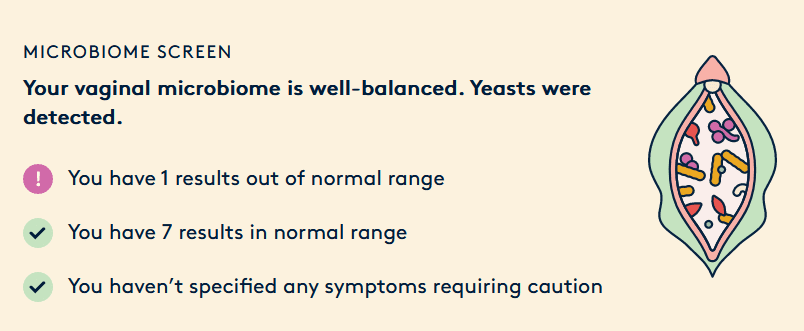
My vaginal microbiome is balanced and abundant in lactobacilli, which is great news, but the test did find some yeast-like fungi out of the normal range that may require further attention. I mentioned in my questionnaire that I had some itching after using the menstrual cup during my period but after a couple of days, it would go. For the rest of the month, I would have no symptoms. Daye did mention that there was no cause for emergency and that my ‘out-of-the-range’ result was a mere 0.1 off the normal range. So I wasn’t concerned.
There were some Anaerobic Bacteria and Mycoplasma/Ureaplasma detected but these were within the normal range. When I delved deeper into the results the rate of detection was 0, so I was confused as to what exactly was detected if the result was 0. Thankfully no Pathogenic microorganisms were detected.
So, what do these results mean?
Anaerobic bacteria detected
Anaerobic microorganisms are found in healthy vaginal microbiomes in various amounts. Studies show that while they are in range, they don’t pose a risk of developing infections.
My microbiome contains a moderate amount of anaerobic bacteria and is abundant in lactobacilli, so this means I have a low risk of vaginal infections (like BV) and other health complications, like infertility, preterm birth and contracting STIs. It is the protective function of the lactobacilli that keeps the anaerobic bacteria at bay and prevents overgrowth that leads to infections – awesome!
Candida detected out of the normal range
Research shows that people with microbiomes abundant in Candida have a high risk of a yeast infection.
This could lead to symptoms like burning and itching in and around the vagina, unusually white thick discharge, and in some cases pain while peeing or having penetrative vaginal sex. Since I have an abundance of lactobacilli I don’t need to replenish them. Instead, I need to reduce the amount of Candida with medication to help restore a balanced flora.
I mentioned in my questionnaire that my menstrual cup sometimes leads to itching after my period so I may need to change my menstrual cup.
Mycoplasma/Ureaplasma detected
My microbiome contains small amounts of bacteria from the Mycoplasma family (Mycoplasma/Ureaplasma). The asymptomatic presence of these bacteria is common and I don’t need treatment as I don’t have relevant symptoms, negative tests for STIs or high bacterial loads. If I do experience any vaginal symptoms, or I’m trying to conceive or pregnant, then I am advised to consult with a specialist for advice on what to do next.
What I found really interesting was the information about how a high-sugar diet could lead to more concentration of Candida in your microbiome and up until last month I had a very high-sugar diet. This month I have been a lot more careful and I’d be interested to find out whether that will make a difference in my microbiome after my period, where I notice the most symptoms.
The other point to note was the detection of the other bacteria which is what could have led to my spotting during my third pregnancy and ultimately a second-trimester miscarriage. Those results had found a UTI and Group B strep but doctors couldn’t advise whether these were related to my miscarriage. But linking this knowledge with the information provided by Daye in the results makes it even clearer that these could have very well been a factor in my pregnancy not being viable.
Do we really need at-home vaginal microbiome tests?
Considering how simple this test was to take, and send and how quickly the results came back, I would say, 100% yes!
Knowledge is power and you don’t have to set doctor’s appointments and endure the long wait at the clinic to give your sample. With Daye, you can conduct the test within the comfort of your home, at your pace, and on your terms.
The test results came back within three days! There’s no more waiting weeks to get your results and then chasing them on the phone. Daye’s results were so quick and the feedback was very detailed, complete with studies and next steps.
Plus, I love the convenience and confidentiality of it all. Discussing intimate health can be quite daunting at a clinic. At least, you can have control over your health narrative at home with an at-home vaginal microbiome test from Daye.
How does testing work? What do I have to do?
It’s very simple, follow the instructions in the video below:
Insert the tampon for at least 20 minutes, making sure to wash your hands first to avoid contamination. Make sure you are ready to take the test by ensuring:
You are over 18
Your last period ended at least five days ago
You haven’t taken any antibiotics or antifungals in the last 30 days
You haven’t had vaginal penetrative sex in the last 24 hours
You haven’t used any vaginally administered meds, creams, douches, gels or similar in the last 24 hours
Place the tampon in the blue pouch provided and follow the instructions to close the pouch
Place the pouch in the freezer with the ice pack
Place the pouch in the kit provided and drop it off at your local post office.
Make sure you are able to post between Monday and Wednesday. If you can’t, leave the tampon and ice pack in the freezer until you are able to drop it at the post office.
You will receive your results very quickly. I received my results within three days!
Sit back and learn all about your vaginal microbiome!
So, what’s next after the vaginal microbiome test?
Learn more about the microbiome by digging into the studies provided in your results and using the dashboard to check your next steps. Depending on your results, you can book a call with a specialist related to the area you have concerns, i.e. sexual health nurses, period and pelvic pain specialists, fertility specialists, nutrition and physical therapists, or a GP. The price and time of the call will be displayed on the page.
Or you can export a PDF of your results to send to your local doctor should you need advice on the next medical steps to balance your microbiome.
If you need to, you can book an STI test online or find an NHS/private clinic nearby, if you receive a negative result.
There is an abundance of knowledge on Daye’s website, so have a browse and learn more about your vaginal microbiome in one place!
Track your vaginal microbiome development over time
Once you learn more about your microbiome, you can take steps to implement the changes, i.e. for me it’s about changing my menstrual cup, finding some over-the-counter medicine to reduce Candida and ditching the high-sugar diet which I’m doing already. I will then retake the test to see if it all worked and if my microbiome is nice and balanced.
Daye also offers the groundbreaking new Period Pain Clinic, which offers specialised gynae care here* If you suffer from period pain and need more tips on how to manage it then check out my article coming up on period pain really soon!
To conclude
Diving into the world of your vaginal microbiome is like flipping open a never-before-read chapter about the intricate wonders of your own body. It’s more than just seeking a healthy balance; it’s about fostering an open dialogue with the vibrant ecosystem that thrives within us, adapting and growing as we do.
Thanks to Daye’s straightforward at-home vaginal microbiome test, you can say goodbye to the long waits and clinical visits that used to be the norm. It’s all about speedy results and unlocking the knowledge you need to step up your health game right from the comfort of your home. How cool is it that tech advancements have made it so we can get this precious insight without any fuss?
For me, it’s about letting go of some cherished habits, like parting ways with my favourite menstrual cup or resisting those sugary treats. Every change, big or small, is a positive leap towards cultivating a microbiome that’s not just balanced but flourishing. And with Daye’s innovative approach, we’re all set to embrace a future where wellbeing is not just attainable, but completely in our hands.
FAQ
Does my microbiome affect my fertility or preterm birth?
Absolutely, your vaginal microbiome can influence both your fertility and the risk of preterm birth. Here’s a bit of detail on how this works:
Fertility
Researchers have found that a healthy microbiome, rich in lactobacilli, can create a favourable environment for conception and a successful pregnancy. Lactobacilli helps in maintaining the vaginal pH at an optimal level, which is crucial in warding off infections and creating a hospitable environment for sperm.
On the flip side, an imbalance in the vaginal microbiome, also known as dysbiosis, can potentially lead to infections and inflammations, which might interfere with the conception and implantation of the embryo.
Preterm Birth
As for the risk of preterm birth, studies have linked vaginal microbiome imbalances to an increased likelihood of delivering before the 37th week of gestation. Bacterial vaginosis, a condition characterised by a decrease in lactobacilli and an increase in diverse anaerobic bacteria, has been associated with a higher risk of preterm birth. The exact mechanisms are still under research, but it seems that infections and inflammation might play a role in triggering premature labour.
So, maintaining a balanced vaginal microbiome is not only important for your overall vaginal health but could also be a significant factor in your fertility journey and the outcome of your pregnancy. It’s always a good idea to consult with a healthcare provider if you have concerns about your microbiome and its potential effects on your fertility or pregnancy.
What is a microbiome test for BV?
Other questions asked were:
Where can I find a BV home test kit or BV screening kit?
A microbiome test for BV, often part of a more comprehensive vaginal health assessment, is a diagnostic tool used to analyse the bacterial composition in the vaginal area. The above at-home vaginal microbiome test from Daye* can also be a bacterial vaginosis home test and if found, offers tips on how to seek specialist advice. Look online for recommendations on the best at-home bacterial vaginosis test for you.
Are athome vaginal pH tests discreet and accurate?
Yes, at-home vaginal pH tests can be both discreet and accurate, provided they are purchased from reputable providers and used correctly. Daye’s microbiome test uses extra security to ensure data is kept private and the packaging comes in a plain kit, so as not to alert others as to what is inside.
Tests are designed to be used at home by yourself, avoiding any potential embarrassment or discomfort that might come with a clinic visit.
Daye’s vaginal microbiome test has been thoroughly vetted and backed by scientific research to ensure the results you’re getting are highly accurate and effective.
Accuracy:
However, it is worth noting that while they can be accurate, these tests are not foolproof. If the results are unclear or you are unsure, it is always best to consult with a healthcare provider for further evaluation. Additionally, a pH test can indicate there might be an imbalance, but it won’t provide a full picture of your vaginal microbiome. Further microbiome testing might be required to pinpoint specific issues or infections.
My yeast infection and bacterial vaginosis test came back negative but I’m still itching and have a smell. What could it be?
I’m not a doctor, but if you’re experiencing persistent symptoms and your initial tests for yeast infections and bacterial vaginosis came back negative, it might be worth considering other potential causes. Here are a few possibilities:
Trichomoniasis: This is a sexually transmitted infection (STI) caused by a parasite. It can cause itching and an unusual smell, among other symptoms. You might want to get tested for this.
Allergic Reaction or Irritation: Sometimes, the products we use, like soaps, detergents, or even the material of underwear can cause irritation or an allergic reaction in the vaginal area. You might want to consider if you’ve used any new products recently.
Hormonal Changes: Changes in hormone levels, which can be caused by various factors including your period, pregnancy, or menopause, can sometimes affect the vaginal environment and cause symptoms like itching. I believe I suffer from this.
Foreign Body: Occasionally, a foreign body like a forgotten tampon can cause symptoms of irritation and a foul smell. If there’s a chance this might be the cause, you should consult your doctor.
Cytolytic Vaginosis: This is a lesser-known condition where there is an overgrowth of lactobacilli bacteria, the “good” bacteria. It’s different from bacterial vaginosis, and it can cause symptoms like itching and burning.
Vulvodynia or Vestibulodynia: These are conditions characterised by chronic discomfort in the vulva area, including itching, burning, and pain. The exact cause is often unknown.
Dermatological Issues: Sometimes, skin conditions like eczema or psoriasis can also affect the genital area and cause symptoms like itching.
Given that your symptoms are persisting, you should try a home yeast infection test kit and reach out to your doctor. They might suggest further tests to pinpoint the exact cause and prescribe appropriate treatment options. It’s always best to consult with a doctor when it comes to health concerns!
The post was sponsored by Daye but all thoughts and opinions are 100% my own. Images are taken from Daye’s website
Exploring prenatal insurance coverage for maternity care
One of the biggest concerns for new parents in the US is the cost of pregnancy and childbirth. According to the Agency for Healthcare Research and Quality (AHRQ), the cost of childbirth in the United States has increased from $8,800 in 2015 to $18,865 in 2023, a ~115% increase. This increase in costs can cause stress for families, especially those who have inadequate prenatal insurance coverage.
Understanding the insurance coverage options available for prenatal, delivery, and postpartum care is important as various insurance plans offer different levels of coverage. In this article, we will explore prenatal insurance coverage and what factors to look for when evaluating plans.
What is prenatal insurance care?
Access and use of prenatal care is vital for a healthy pregnancy. It’s essential to begin prenatal care early in the pregnancy, as it helps identify any potential health issues for both the mother and the baby. A typical pregnancy care regimen includes regular check-ups, ultrasounds, and blood tests.
What does prenatal insurance cover?
With insurance coverage for prenatal care, most plans cover these expenses, but it’s essential to verify and understand the specifics of the coverage. Some insurance plans may require a co-pay or deductible for prenatal care appointments, while others may have a cap on how much they cover, and parents must pay the rest out-of-pocket.
You should compare quotes from different providers, like online quote from Assurance IQ insurance for pregnancy, to understand the different coverage options available. It’s also important to understand how existing medical conditions affect coverage, as some plans may not cover pre-existing conditions or have specific limitations.
Delivery and hospitalisation
The cost of delivery and hospitalisation varies depending on the type of delivery, whether it’s vaginal birth or a caesarean. According to the Centers for Disease Control and Prevention (CDC), the average cost of a vaginal delivery is around $32,000, while caesarean deliveries are around $51,000.
The type of Insurance plans typically cover the hospitalisation and you and your baby’s delivery expenses. However, check if the plan has any restrictions or limitations. Some insurance policies have a waiting period before covering delivery expenses, while some may only cover costs for specific hospitals or providers. Others may require a certain length of stay in the hospital before considering coverage.
It’s important to evaluate and compare different insurance plans to determine which one offers the best coverage options for delivery and hospitalisation expenses. Parents should look for plans that cover the majority of the costs, have little to no waiting periods, and cover a wide range of hospitals and providers.
Postpartum care
Postpartum care is essential for both you and the baby after delivery. This period is usually the first six weeks after childbirth and includes follow-up medical appointments, which may include pelvic exams, postpartum depression screenings, and vaccinations.
Health insurance during pregnancy offers different levels of coverage for postpartum care, with some covering more than others. Make sure to check the specifics of the postpartum coverage before choosing a health plan. Some insurance health plans do not provide any coverage for postpartum care, and those that do may have limitations.
Select a plan that covers all necessary postpartum medical appointments and health services and look out for plans that have additional incentives for postpartum care, such as lactation consultations, wellness programs, and support groups.
Additional factors to consider
Apart from the above, there are other factors to consider when evaluating maternity insurance coverage options. These include the following:
Network and Provider Options: Some insurance plans limit their network of providers. Make sure to select an insurance plan with a broad network of providers.
Cost of Premiums: Premiums represent the regular payments made to a health insurance provider. You can compare the premiums of different plans to find the one that offers the best value for money.
Prescription Drug Coverage: Some mothers may require prescription medication during pregnancy and after delivery. It’s vital to understand a plan’s prescription drug coverage options and any restrictions.
Conclusion
Expecting parents have several options for insurance coverage during the prenatal, delivery, and postpartum periods. It’s essential to evaluate and compare different insurance options to find one that best suits the family’s needs and budget. Quotes from Assurance IQ can be helpful during this process, as well as consulting with a healthcare professional to make sure all important aspects of maternity insurance coverage.
Choosing the right insurance plan can help alleviate the stress of managing pregnancy, delivery, and postpartum care and allow you to focus on enjoying the journey of parenthood.
FAQ
How much is prenatal care with insurance?
Other questions asked were:
How much are prenatal visits with insurance?
Are prenatal visits covered by insurance?
Are prenatal tests covered by insurance?
What prenatal tests are covered by insurance?
Are prenatal ultrasounds covered by insurance?
The cost of prenatal care with insurance can vary depending on the type of insurance plan you have and the specific coverage it offers. In the US, for example, you may be able to get health insurance covering pregnancy through employers, government programs like Medicaid or CHIP (Children’s Health Insurance Program), or private insurance providers. Each plan will have different benefits for maternity and cost-sharing arrangements.
With insurance coverage, prenatal care is more affordable than paying for all medical expenses out of pocket. Insurance plans can cover a portion or all of the costs associated with prenatal care, including:
Doctor’s visits: Regular prenatal check-ups with an obstetrician or midwife.
Lab tests: Blood tests, urine tests, and other screenings.
Ultrasounds: Imaging tests to monitor the baby’s development.
Medications: Prescribed medications relevant to pregnancy.
Hospital stays: In case of complications or labour and delivery.
Be aware of your insurance plan’s specific coverage details, including co-pays, deductibles, and any out-of-pocket maximums. These factors can impact the overall cost of prenatal care with insurance.
If you have insurance, contact your insurance provider directly or review your policy documents to get an understanding of what prenatal care services are covered and what your expenses may be. Some insurance plans may require you to use specific healthcare providers within their network to receive the maximum coverage of healthcare for pregnancy, so you should be informed about your plan’s network restrictions as well.
What insurance should I get if I’m pregnant?
Other questions asked were:
Are prenatals covered by insurance?
how do I get insurance if I already pregnant?
Is prenatal covered by insurance?
Does health insurance cover pregnancy services?
Does health insurance cover prenatal care and other pregnancy services?
Will my insurance cover my pregnancy?
What kind of insurance is best for pregnancy?
Which maternity insurance to buy?
What prenatal care is covered by insurance?
Is prenatal care covered by insurance?
What is considered prenatal care for insurance?
Are prenatal appointments covered by insurance?
If you are pregnant or planning to become pregnant, selecting the right insurance plan is essential to ensure comprehensive coverage for prenatal care, delivery, and postpartum care. Here are some options to consider:
Employer-Sponsored Health Insurance: If you have access to health insurance which covers maternity through your employer, review their plans to see which one offers the best coverage for maternity services. Many employer-sponsored plans include maternity benefits, so check the plan details and compare the coverage and costs.
Medicaid: Medicaid is a government program that provides medical aid for pregnancy to low-income individuals and families, including pregnant women. Eligibility and benefits vary by state, but Medicaid generally offers comprehensive prenatal care and delivery coverage with low or no out-of-pocket costs.
Affordable Care Act (ACA) Plans: Under the ACA, insurance plans are required to cover essential health benefits, including maternity and newborn care. You can explore different ACA plans available in your state’s health insurance marketplace to find one that suits your needs and budget.
Family Health Insurance Plans: If you are married or in a domestic partnership, check if you can be added to your spouse’s health insurance plan. Some family plans offer maternity coverage that includes prenatal care and childbirth expenses.
Special Maternity Insurance Plans: Some insurance companies offer specialised maternity insurance plans that focus on covering pregnancy-related expenses. These plans may provide additional benefits specifically for prenatal, delivery, and postpartum care.
Group Prenatal Insurance Programs: Some states or organisations offer group prenatal insurance programs that cater specifically to pregnant women. These programs can provide cost-effective coverage for prenatal services.
COBRA: If you recently left a job that provided health insurance and you are pregnant, you may be eligible for COBRA continuation coverage, allowing you to maintain the same insurance plan for a limited period, although it can be expensive.
Consider factors such as monthly premiums, deductibles, co-pays, network providers, and coverage limits. Review the plan’s benefits, including prenatal care, delivery, hospital stays, and postpartum care, to make sure your primary care needs during pregnancy are adequately covered.
Enrol in a pregnancy cover health insurance plan as early as possible during your pregnancy to ensure you have coverage for all necessary medical care services. Read the policy documents carefully and contact the insurance provider or a licensed insurance agent if you have any questions or need assistance in selecting the best plan for your pregnancy.
Is maternity insurance necessary?
Other questions asked were:
Is maternity insurance worth it?
Is pregnancy insurance worth it?
Does health insurance cover breastfeeding services?
Are prenatal classes covered by insurance?
Maternity insurance can be highly beneficial if you’re expecting, but whether it is necessary depends on your financial situation, healthcare needs, and the country’s healthcare system you live in. Here are some considerations to help you decide if maternity insurance is necessary for you:
Healthcare System: In countries with universal healthcare or comprehensive maternity benefits covered by the government, maternity insurance might not be needed as much. In such cases, basic prenatal care, childbirth, and postpartum services may be provided at little to no cost. However, even in countries with universal healthcare, some families opt for private maternity insurance for additional comfort and flexibility in choosing healthcare providers and facilities.
Cost of Prenatal Care and Delivery: In countries where healthcare costs are relatively high and maternity care is not fully covered by public programs, having maternity insurance can help offset the expenses associated with prenatal care, childbirth, and postpartum services. The costs can vary significantly depending on the level of care, hospital facilities, and any potential complications during pregnancy or delivery.
Personal Financial Situation: If you have the financial means to cover out-of-pocket medical expenses related to pregnancy and childbirth comfortably, maternity insurance may not be as crucial for you. However, unexpected complications or extended hospital stays could lead to large medical bills, which is where insurance can provide financial protection.
Employer Coverage: If you have employer-sponsored health insurance that includes maternity benefits, it may offer sufficient coverage for prenatal care and delivery. In this case, additional maternity insurance might not be necessary.
Peace of Mind: For many expectant parents, having maternity insurance provides peace of mind, knowing they have financial protection if any unexpected medical situations arise during pregnancy, labour, or postpartum.
Additional Benefits: Some maternity insurance plans offer additional benefits like coverage for prenatal classes, breastfeeding support, or postpartum mental health care services. If these extra benefits are essential to you, maternity insurance may be worth considering.
Will new insurance cover an existing pregnancy?
The coverage of an existing pregnancy by a new insurance plan depends on several factors, including the specific terms and conditions of the insurance policy for pregnancy, the state or country’s regulations, and the timing of when the insurance coverage begins.
Some insurance plans have waiting periods before certain benefits become active. If you become pregnant before the waiting period is over, the insurance plan might not cover the costs related to the existing pregnancy.
Here are some scenarios to consider:
Employer-Sponsored Insurance: If you are switching to a new employer-sponsored health insurance plan and you are already pregnant at the time the new coverage starts, the plan might provide coverage for prenatal care and delivery. Check with the HR department or the insurance provider about any specifics relating to the waiting period and the coverage start date.
Individual or Family Health Insurance Plans: If you are purchasing an individual or family health insurance plan and you are already pregnant, some plans may exclude coverage for pre-existing conditions, including pregnancy. This means the plan would not cover costs related to the existing pregnancy. However, this can vary, and some plans may cover prenatal care and delivery expenses.
Special Enrolment Periods: In some cases, certain life events, such as getting married or having a baby, can trigger a special enrolment period outside of the regular open enrolment period. During this special enrolment period, you might be able to enrol in a new insurance plan that provides maternity coverage even if you are already pregnant.
If you are pregnant and currently without insurance, explore your options for obtaining coverage, such as applying for Medicaid coverage or other government assistance programs, which may provide coverage for prenatal care and childbirth expenses even if you are already pregnant. It’s important to seek coverage as early as possible during your pregnancy to ensure you have access to necessary medical services.
Does health insurance cover infertility treatments?
Health insurance coverage for infertility treatments varies widely depending on the insurance plan, the country you reside in, and the specific benefits offered. In some cases, health insurance that covers pregnancy may provide coverage for certain infertility treatments, while in others, it may not cover any infertility-related expenses.
Here are some key points to consider:
Coverage Varies by Plan: Some health insurance plans include coverage for infertility treatments as part of their benefits package. This may include diagnostic tests, medications, and certain assisted reproductive technologies (ART) like intrauterine insemination (IUI) or in vitro fertilization (IVF).
State Mandates: In some countries, specific states have laws that require health insurance companies to offer coverage for infertility treatments. The extent of coverage and the treatments covered can still vary based on state mandates.
Exclusions and Limitations: Many insurance plans exclude or limit coverage for infertility treatments. Some policies might cover fertility testing and diagnosis but not the actual treatments, while others may impose lifetime or annual dollar limits on fertility benefits.
Employer-Sponsored Plans: If you have health insurance through your employer, check with your HR department or review the policy documents to see if infertility treatments are covered. Some larger employers may offer additional coverage options that include fertility treatments.
Individual and Family Plans: If you have an individual or family health insurance plan, review the policy documents or contact the insurance provider directly to inquire about coverage for infertility treatments.
Medicaid and Government Programs: In some countries, Medicaid or other government assistance programs may provide limited coverage for certain infertility treatments for eligible individuals or couples.
Out-of-Pocket Costs: If your insurance plan does not cover infertility treatments, you would be responsible for all related expenses, which can be significant.
Infertility treatments can be emotionally and financially challenging, so understanding your insurance coverage and exploring all available options is essential in making informed decisions about your fertility journey.
Does pregnancy insurance cover dental?
Pregnancy insurance, also known as maternity insurance or maternity coverage, typically focuses on covering medical expenses related to prenatal care, childbirth, and postpartum care. Dental coverage for pregnant women is not always included in standard maternity insurance plans. However, some insurance plans may offer limited dental coverage for specific pregnancy-related dental issues.
It’s important to note that dental health is crucial during pregnancy because hormonal changes can increase the risk of certain dental problems. Common dental issues during pregnancy include gum inflammation (gingivitis) and cavities. Addressing dental concerns promptly is essential for both you and your baby’s overall health.
If you have a separate dental insurance plan, it may cover routine dental care, such as dental cleanings, check-ups, and treatments for cavities or gum disease. However, not all dental plans cover pregnancy-related dental issues.
If you are pregnant or planning to become pregnant, make sure you prioritise your dental health. Regular dental check-ups and proper oral hygiene can help prevent and address dental issues during pregnancy, contributing to your overall wellbeing and the health of your baby. If you have any specific dental concerns during pregnancy, consult with your dentist or healthcare provider for appropriate advice and treatment.
Does maternity insurance cover the baby?
While maternity insurance primarily covers pregnancy healthcare needs, it often includes coverage for your baby after birth. Once your baby is born, they become a separate individual under the insurance policy, and their healthcare needs are handled differently.
After birth, your baby will usually be added to your insurance plan as a dependent. The insurance policy will have a certain period (usually 30 days to 60 days) during which you can add the newborn to the plan without a separate enrolment process. This is known as the “special enrolment period” for newborns.
Once your baby is added to the insurance plan, their healthcare needs will be covered as per the policy’s benefits, subject to any deductibles, co-pays, and coverage limits that apply. This coverage typically includes well-baby check-ups, vaccinations, and necessary medical treatments.
However, it’s important to note that the specific coverage for your baby under the insurance policy may vary based on the type of plan and the insurance provider. Some insurance plans may have different levels of coverage for paediatric services, so it’s essential to review the policy details and contact the insurance provider directly to understand the specific benefits for your baby’s healthcare.
If you have employer-sponsored insurance, you should consult your employer’s HR department or the insurance provider to understand the process for adding your newborn to the plan and the coverage details. For individual or family health insurance plans, you should contact the insurance company directly to enquire about adding your baby and the benefits for paediatric care.
Are prenatal massages covered by insurance?
Other questions asked were:
Is prenatal massage covered by insurance?
Whether prenatal massages are covered by insurance depends on the specific insurance plan and the policies of the insurance provider. In many cases, prenatal massages are considered as a form of wellness or relaxation therapy and may not be covered by standard health insurance plans.
However, there are instances where certain insurance plans or health savings accounts (HSAs) may offer coverage for prenatal massages if they are deemed medically necessary. For example, if a healthcare provider prescribes prenatal massages to alleviate specific pregnancy-related conditions like back pain, muscle tension, or swelling, there may be a possibility of insurance coverage.
If prenatal massages are not covered by insurance, you may still consider scheduling them as a form of relaxation and stress relief during pregnancy. Just be prepared to pay for the sessions out of pocket if they are not considered medically necessary according to your insurance plan.
Are prenatal vitamins covered by insurance?
Other questions asked were:
How to get insurance to pay for prenatal vitamins?
Is prenatal vitamins covered by insurance?
The coverage of prenatal vitamins by insurance can vary based on the specific insurance plan and the policies of the insurance provider. In many cases, prenatal vitamins are available over-the-counter (OTC) without a prescription, and standard health insurance plans may not provide coverage for them.
Some healthcare providers may prescribe specific prenatal vitamins with higher doses of certain nutrients if you have special dietary needs or medical conditions. In such cases, prescription prenatal vitamins might be covered by insurance.
Even if standard health insurance plans do not cover OTC prenatal vitamins, you may be able to use funds from an HSA or FSA to pay for them. Both HSAs and FSAs allow for tax-free spending on qualified medical expenses, and some plans consider OTC vitamins as eligible expenses.
Some insurance plans with prescription drug coverage may offer a limited selection of prenatal vitamins that require a prescription. In such cases, the specific prenatal vitamins available through prescription coverage might be covered, but it’s essential to check the details of your plan.
Regardless of insurance coverage, prenatal vitamins are essential for the health and development of the baby during pregnancy. If you are pregnant or planning to become pregnant, talk to your healthcare provider about the most appropriate prenatal vitamin regimen for you, and they can recommend the right type and dosage of vitamins to support a healthy pregnancy.
*Collaborative feature post*
NCC Home Learning Nutrition and Health QCF Award Level 2 Overview
Back in the day, when the internet had not been invented yet and being accepted into university was only held for the crème of the crop, it was nigh on impossible for stay-at-home parents or those without wealth to study and build on their CV in their own time. Nowadays, distance learning and home learning courses (recognised and accepted, free or paid), are now readily available for anyone to study in the comfort of their own home, to better their chances of finding work or building on their qualifications. NCC Home Learning provides that flexibility and knowledge in order for Joe or Jane Bloggs to do this.
I was offered the chance to review the NCC Nutrition and Health QCF (NVQ) Level 2 course so I could build on my knowledge of food (my passion) and understand the connection between weight gain and the link to emotional eating. The QCF course, which has now replaced the NVQ qualification, is all about understanding the differences between normal weight, overweight and obesity, and the connection we build between food and our feelings.
Who are NCC Home Learning?
NCC Home Learning is a complete resource for NCC online courses. There are hundreds of NCC resources and home study courses to choose from, whether you are looking to top up your qualifications or embark upon a new career, NCC should have the right course for you. They boast a vast selection of over 350 distance learning courses at home which are accredited by various awarding bodies such as NCFE, 1CB, SAGE, and Ascentis. NCC also offer student support and course tutor phone calls if you require any help or advice during the course. Their homepage provides a link for you to choose your course via industry here.
So, what is the NCC Nutrition and Health QCF Level 2 course about?
“With obesity on the rise and the Foresight Study predicting that by 2050 60% of men, 50% of women and 25% of children will be obese; the time to make a change is NOW and this accredited qualification can help you to achieve that. In one compact course, you can respond to the rising level of obesity across adults and children, and prevent the expected expenditure of £45 billion a year (in 2050) on care, missed working hours and ill-health.
Instead, with only a basic knowledge of this subject, you can almost immediately begin improving the health and well-being of your friends, loved ones and yourself, and most importantly have the chance to add an approved qualification to your CV that will make you stand out from the crowd.” NCC Home Learning
The NCC NCFE Level 2 Nutrition and Health course (QCF) is specific to the UK and tackles problems the NHS has with rectifying the obesity epidemic that is on the rise. (i.e. the proportion of obese adults between 1993 and 2010 had increased from 13.2% to 24.4% among men and 6.4% to 25.1% among women.
The course is split into three concise units and can be completed at your own pace over the course of twelve months. It comes with the full support of a qualified tutor, who will guide you through the entire process, whether you complete it online or by paper.
The course details are:
Qualification Title: NCFE Level 2 Award in Nutrition and Health (QCF) Qualification Number: 501/0038/5 Total Credits: 12
Price: £210.00 (reduced from £280.00)
Course duration: 120 hours
A brief overview of how to navigate the course
You will be provided details of the NCC Home Learning login for your course via email. Once you log in you will be taken to your dashboard and on the left-hand side, you have a folder tree, which allows you to navigate through the course modules.
The course contains 15 modules and an exam at the end to test your knowledge. Each module plunges you straight into a PDF of ‘underpinning knowledge’, which you can download and save to your desktop. Be sure to read the User Guide for all students at the introduction of the course, as it takes you through how to get started, how to access the course with ease, and how to log in and actually go through the course itself. You must read and understand all modules before passing the exam and unlock the course completion certificate.
The NCC Home Learning course website helps those who are unable to attend college or university to build on their CV
With tons of NCC remote classes to choose from, arranged by industry, career, interest, experience and course type, it’s really easy to search for a course from NCC learning you’re really passionate about and build on your knowledge. I would definitely recommend signing up and choosing your course, whether it’s an entry-level teaching assistant or a care diploma level at home course. NCC classes broaden the NCC learning pool and will help you either in your current job, to find a new job or start that business you’ve always been meaning to start. Contact NCC Home Learning directly if you have any questions or require more information on their at-home learning courses.
FAQ
Is NCC Home Learning legitimate?
Another question asked was, ‘Is NCC Home Learning accredited?’
NCC Home Learning is an award-winning education provider with over twenty years experience offering distance learning courses from home. To date, they have delivered training to over half a million learners worldwide.
The NCC certificates offer proof of completion of your NCC courses which you can provide either at the job you’re applying or as proof of expertise in your business or current employment.
How has NCC changed your life?
I’ve applied what I’ve learned in the nutrition at home courses to daily life, making changes to our diet and lifestyle so that we can live our best life as a family.
How do you feel about NCC Home Learning?
NCC Home Learning allows everyone to build on their most important assets – themselves. So I absolutely back NCC Home Learning as a great way for parents to build on their qualifications around their kids so they have a chance against others in vying for that desired hobby/job/role/business.
How does your home study environment and your study habits affect your productivity?
You need to know how and when you like to revise. Everyone is different. For example, I like to get up before anyone else in the morning and write out my task list. If you’re a visual person, you’ll want to stick to bright, colourful text, illustrations and videos/images to help you study. If you prefer to revise audibly then you can use a text to speech software like Word to read out the content in the course. Work out how you want to revise then trial and error until you hit your sweet spot.
*Collaborative feature post*
Reading Chest Review
Research shows that reading with children for just ten minutes per day can make a dramatic difference in how they perform at school. But, finding enough interesting reading material at the right level for your child can be difficult, with few schools changing books daily and few libraries providing a solid selection of reading scheme books.
However, now you can encourage children to develop their love of reading with Reading Chest, an innovative book rental service for primary-aged children learning to read.
Reading Chest offered three months of free access to the Bronze Level Membership as part of our review on Reading Chest, and here are our findings:
Reading Chest, founded by Liz Walker, a former primary school teacher and mother of three, is the UK’s only through-the-post book rental service for reading scheme books aimed at children aged 4 – 9. For a monthly membership fee, children receive regular deliveries of books from Reading Chest’s extensive selection of reading schemes, including Oxford Reading Tree, Project X, Rigby Star and Collins Big Cat. These include both fiction and non-fiction titles.
There is a great selection of reading schemes for children and each delivery comes complete with a pre-paid return envelope, making it easy for even the busiest of parents to provide their children with some great choices for their daily dose of reading.
Monthly membership starts from £9.95 and all new members receive a book bag, a bookmark, a reward chart and stickers. Certificates are available to download from the Reading Chest website and budding literary critics can even see their own book Reading Chest reviews published online! Check to see if you can find a Reading Chest discount code or Reading Chest vouchers online before you subscribe.
Reviewers:
Aron (3 years old)
Review:
I was very excited to receive an offer to review Reading Chest’s service as Aron is a very keen reader, and even though he’s only 3 years old and this service caters for children from 4 years plus, Aron has in fact begun to read. He learned phonics when he was just shy of 3 and can read a lot of the two to four-letter words in the English language. So, I am very keen to build on his reading skills.
To get started, I visited Reading Chest’s website, www.readingchest.co.uk, to sign up. Here is a screenshot of their home page:
Step 1 – Prices & Packages:
When you click on ‘Sign up’, you are taken to a page that shows you the membership offers available – ‘Step 1: Prices & Packages’:
The packages available are:
Bronze Package
Silver Package
Gold Package
You receive an initial delivery of:
4 books
4 books
6 books
How many swaps per month?
2
4
Unlimited Swaps
Based on returning 3 books at a time this will give you up to:
6 books each month
12 books each month
Unlimited amount of books each month
How many book lists can you make?
1
1 or 2
1, 2, or 3
A good supply of books for 1 reader. All books selected will be at the same reading level.
A great supply of books for 1 reader or good to share between siblings at different reading levels.
Unlimited books for 1 reader or good to share between two or three siblings at different reading levels.
Price
£9.95
£12.95
£15.95
I was offered 3 months free for the Bronze Package, so I signed up to the Bronze Package.
Step 2 – Choose a Book Band:
You are then taken to a page where you can choose Reading Chest Book Bands.
As Aron is at the very beginning of his reading journey, I picked ‘Stage 1’, which is the ‘Pink book band’ and then clicked on, ‘Go to the next step!’.
The recommended reading age is 4 – 5 years old. If you are unsure of which band to pick, the page below offers you the chance to look through the sample pages to see if the selected book band is right for your child.
Step 3 – Reading Scheme Selection:
You are given further options to tailor the package to meet your child’s interests.
01 – You can select whether you would prefer to read fiction, non-fiction or both. I selected ‘Both’.
02 – You can tell Reading Chest the reading schemes you would like. All the schemes are selected by default, but you can exclude particular schemes by unchecking the boxes. I just left it on, ‘all schemes selected’.
03 – Your choices above will determine how many books you will be given. The selection I picked will give me 137 books. Sounds like more than enough to me!
Step 4 – Your Details:
Here you’ll get the chance to input all of your details..
Step 5 – Correspondence Details:
You are then asked to fill out your address details, your child’s name (as it will appear on the envelope) and whether you’d like to receive an occasional email newsletter from readingchest.co.uk.
Step 6 – Payment Details:
You get the chance to review your choices here and confirm your selections are correct. You will be asked to enter your credit card details.
Step 7 – You’re done!
Our first delivery should be with us within 2 -3 working days. So, now we wait!
Step 8: We receive our package!
We were very excited when a package came through the post and Aron anxiously ripped open the white envelope (above) to go through all the items in his red book bag.
So, what did we get?
One super cute red book bag for Aron to carry his books in;
One A4 pre-paid envelope;
One bookmark;
One set of stickers;
One reward chart;
Leaflet on Reading Chest, welcoming you to the service; and
4 x books in the pink band. These are:
Tiger’s Family
My Cushion!
Who is it?
Got It!
I placed all of the items in the red book bag provided for Aron, so that he could pick out his lucky first book to read. He brought out the book, ‘Who is it?’
Who is it? – Series created by Roderick Hunt and Alex Brychta – Oxford Reading Tree Scheme
‘Who is it?’ is a very thin book, 8 pages in length, but at this early stage of reading, I can imagine a four-year-olds’ concentration span lasts about five minutes when they’re reading. So, I knew the length of the book wouldn’t bother Aron. At the back of the book, a label was added to let you know what book you are reading, the book band, the scheme and the book’s stock code.
Inside the front cover, there is an address label for ‘Reading Chest’ to remind you this book belongs to Reading Chest and it is not a keepsake. The inside cover very helpfully tells you what to do with your child before reading the book, during reading, and a little bit about the words in the book. More specifically, it talks about how to read the book to your child, ensuring they gain maximum benefit from reading through the scheme, i.e. talk about the words you see and help your child sound out some of the words in the book.
Each of the pages in the book only contains one to three words, with large illustrations above each sentence. This helped Aron grasp what the words meant in relation to the pictures and what the book was about as a whole. ‘Who is it?’ is set at a family and friends gathering, under a lit marquee, and friends and family make shadows using the light and themselves, so the others have to guess what they are. Everyone has a go, including dad, who dresses up as a spaceman.
There is an ‘After Reading’ instruction from Reading Chest to prompt me to ask Aron about what he thought of the shadow game and how dad made himself into a spaceman using household items, such as a colander and some bedding.
We dived into a deep conversation about shadows and throughout the day Aron pointed out his shadows to me whenever he noticed them. He even learned some words in the process!
Tiger’s Family – by Shoo Rayner and illustrated by Jon Stuart – Project X Scheme
Tiger’s Family is another short book, containing twelve pages in total, and the concept is pretty much the same as ‘Who is it?’ The book, helpfully, tells me what I should be doing with Aron before, during and after reading the book and warns me of some tricky words Aron might find during this reading.
Tiger’s Family is about a boy called Tiger and a typical day with his family, who are all aptly named at the beginning of the book. Mum has made some cakes, which all get hurled to the floor as Tiger and his brother runs through the kitchen door. The book very cleverly talks about the varying emotions each member of the family are faced with, i.e. ‘Mum is sad,’ ‘Dad is mad’, and I am instructed to talk with Aron about why mum was sad and whether Aron liked the book. I believe this is to get him to talk about his own emotions and teach him to express himself through words.
Again, each page only has one – four words, to not overwhelm the child during reading, and a lot of the words are repeated to help imprint that word onto the child’s brain.
I was very impressed that Aron already knew how to read the word, ‘Tiger’, but I had to help him with the tricky words that were forewarned in the front of the book. Aron enjoyed sounding out ‘sad’ and ‘mad’ and even acted a little angry when the cakes fell onto the floor.
Got it! – By Charlotte Guillain and Ley Honor Roberts – C. Collins Big Cat Phonics Scheme
Got it! Has 15 pages in total and uses three to six words in a sentence. There are no instructions at the front of the book, but a more detailed instruction sheet at the back entitled, ‘Ideas for reading’, which goes into more detail about how to read to the child and what to discuss with them during and after reading.
Got it! Is about a father and daughter at the beach, trying to catch a crab using a net and tipping the crab into a pot. The daughter then tips the crab back into the pond it came from, with an illustrative final two pages showing the process of how she caught the crab.
I was instructed to read the title and blurb with Aron, focusing on blending the individual words together. I also discussed rock pooling and what we need it for. I asked Aron what he could see in the pictures and he intelligently pointed out the beach, the net, the pot and the crab. He even explained what the daughter was doing, ‘She is catching that crab in the net’.
I wasn’t able to challenge Aron to suggest other words that ended in ck, for example, or to draw a picture of equipment needed for rock pooling, as he isn’t at that stage yet. But, if I keep on with this reading activity at least once every day, it won’t take long for him to widen his vocabulary enough to complete these stages at a later date.
My Cushion! By Alison Hawes and Tania Hurt-Newton – Rigby Star Scheme
My Cushion! Has eight pages in total and uses very simple wording, mainly repeating, ‘My Cushion!’ in various contexts. It contains only two keywords, ‘my’ and ‘no’, which I felt was just enough to help Aron understand and memorise the words properly before moving on.
The book is all about a brother and sister fighting over a cushion, which finally breaks, and mum comes in and exclaims, ‘Oh no! My cushion!’
My Cushion! Was Aron’s favourite book. He wanted to read it about five times before putting it down. I think he related to fighting over something with his brother.
I was instructed to ask Aron why mum was upset at the end of the story and how the children felt during the book. Aron said it was everyone’s cushion, which was actually right, so I couldn’t argue with him on that point. Although, I did mention that too much fighting over something could lead that object to break and then no one could play with it afterwards.
Towards the end of the day, I noticed Aron offer his trains to his brother. Perhaps, the book had left a mark on him to not fight over his toys with his brother? Well, perhaps, just for now…
Sticker chart
I emphasised to Aron that because he had read all four books so beautifully, he was allowed to place four stickers on his reward chart to progress his journey through the reading map. I asked him about which colour stickers we should add to the reward chart when he had successfully completed four pink band books. He answered correctly, ‘pink’, but decided it was more fun to take out all of the stickers and add them to the fridge.
I helped him pick out four pink stickers instead and he took great pride in adding them to his reading map.
After sampling Reading Chest’s first book session, I felt very proud of my son that he had read four books so well, and, most importantly, I felt like Aron had progressed in his reading. I decided to hold onto the books for a couple more days so I could get Aron to read them again before placing three of them back in the pre-paid envelope and sending them back to Reading Chest to swap for three more books.
I really enjoyed the whole service. I felt like I had learned how to be a teacher and not just a parent, and I want to carry this on every day with both of my boys. I believe Reading Chest will make up a valuable part of both of my sons’ reading education and help them expand on their already growing love for books as well as their reading levels, even up to Oxford Reading Tree Level 7 books or Oxford Owl Readers before they get to that stage at school!
The great thing is you can help them to read by yourself and you don’t need to be a teacher to do that. I may even get some alone time if I could leave the kids to read by themselves. One can dream…
What did I like most about Reading Chest’s service?
I liked how simple it was to set up the service and how much I learned about teaching my son to read.
Other books that are great are:
Barney 1 2 3 4 5 Senses
Barney I Love Bugs
Sail Back Dinosaur Bug
What to watch out for:
One book came with a huge fold down the front. Make sure you make a point of this in the sections provided at the back of the pre-paid envelope so you are not charged for the damage. The back of the pre-paid envelope offers you three options when returning the books, i.e.
‘Received the wrong book(s)’
‘Book(s) damaged – sorry!’
‘Book(s) received already damaged’ – This is where I pointed out that the front of ‘My Cushion!’ had a fold down the middle.
Other points to note:
As these books are not yours and they will need to be returned at some point, you have to make an extra effort to not let any little people get their hands all over it. I felt very bad for Aidan, who is only two, because every time he wanted to handle the book, I had to snatch it back off him and take control over his interest.
Rating:
5 out of 5
Reading Chest is a fantastic service and it will not just help Aron to progress with his reading, but also build on our strong mother/son relationship. I just wished Aidan was old enough to join us too.