What does a baby see during their first year of life?
When you meet your newborn for the first time, you can see her clearly, but your baby cannot see you quite so well yet. That’s because your baby’s brand-new eyes will see quite blurry at first, and then develop gradually during her first year of life. By the time she hits her first birthday, she will have eyesight almost as good as yours. If you’d like to view the world through your baby’s eyes, you can check out Vision Direct”s interactive tool here. The tool was designed by Vision Direct to help you understand how your baby’s eyes develop over time, from newborn to 12 months old. You can also input your child’s age and the tool will give you an idea of your baby’s field of vision, depth perception and colour awareness. As you move the slider along, you’ll notice that not only do objects and colours become sharper for baby, but the background will also slowly come into view as well, so your baby starts to develop their peripheral and depth vision over time too.
“We hope that this will help parents understand how their baby’s vision changes during this critical time for development. The tool features helpful tips on how to support your child as they learn to focus, track objects and see colours.” Brendan O’Brien, Vision Direct’s Head Optician and Chief Operating Officer.
Newborn
(A newborn can barely see her own mother in the first few weeks of life and they can only see in black and white).
Unlike your baby’s hearing, which has fully matured by her 1st month, her sight develops more slowly. During the first month of life, a newborn can see shapes, light and movement, but only in shades of grey. At birth, you may notice how small her pupils look, which means that her eyes are very sensitive to light. As her central vision develops she will continue to develop the peripheral (side) vision. Within a couple of weeks, as her retinas develop and get stronger, the pupils will widen, which means more light and dark patterns can enter through the eyes. You will see that your baby will start to pay more attention to objects in front of her too. At about one month, baby can see you a little clearer, but will still prefer brightly coloured objects about three feet away.
2 months old
By 2 months old, your baby will be able to see only the bright primary shades. Don’t be alarmed if you notice your baby’s eyes crossing or wandering around because, in most cases, this is normal and her eyes will eventually correct themselves. Please notify your paediatrician if you start to see baby’s eyes constantly look towards the nose or outwards from the nose.
6 months old
By 6 months, the baby can move her eyes more quickly and is able to follow moving objects, allowing her to develop physically, mentally and emotionally, until, at one-year-old, she can see almost as good as her parents. Her ability to see how far an object is away from her (depth perception) is developing more fully now. She can almost see the world in 3D and so you will probably see her reach out for objects that are both near and far to her. Her colour vision is developing well too, although not to an adult’s capacity just yet.
(A 6-month-old baby can see her mother more clearly now, but everything else in the background is still blurry)
At 6 months, baby can also understand object permanence, which means that she knows that objects continue to exist even when she cannot see, hear, touch, smell or sense them in any way. This is why touching and handling objects are really important for infant development, and it especially encourages her to strengthen and use her eyes.
10 months old
(By 10 months, baby can see in colour and, bar a couple of shades or two, this vision will stay with her when she’s grown up. Baby can also start to see the background more clearly)
By 10 months, baby’s can judge distance quite well at this point and you’ll notice this by the way they can pull themselves up to stand. They have an almost full capacity for a range of colours in their vision and by 12 months, they can almost see as well as us adults, bar a few developments along the way.
Protecting your eye health is for life
Protecting your baby’s eyes should not stop at 1 year old. It is important that you and your family continue to look after your eyes well into adulthood. Make sure you receive regular eye health and prescription checks so that you maximise your chances of good eye health and your sight can last you a lifetime. Make sure that you continue to watch for any signs of eye and vision problems in your baby. This can include an inward or outward turning of eyes, a noticeable delay in not being able to track moving objects well and any other signs you may have picked up on baby’s central, peripheral and depth perception. Whatever inkling or gut instinct you have, notify your paediatrician straight away as eye or vision problems can delay a baby’s development. The paediatrician should be able to help you find age-appropriate activities that you can do with your baby to encourage them to develop their vision. Click here for more information on Vision Direct and stay updated with new articles on eye health, as well as new products and features on Facebook, Twitter and Instagram.
*This post is sponsored by Vision Direct*
*Where I have made references to the baby as ‘her’ or ‘she’, please take that to include all babies and not just females. *
Never miss a new post!
Don’t forget to tailor your preferences, so you just get the posts you want to read!
Haemophilia in Babies: What Are the Signs and Symptoms?
*This post was created in collaboration with Phamax*
Haemophilia is an inherited blood disorder that impairs the blood’s ability to clot. Someone with haemophilia won’t have the clotting factors of an average person and, as such, cuts and scrapes will bleed for far longer than usual. The symptoms associated with this condition can be mild, or they can be severe, but it is important for new parents to be aware of the warning signs of haemophilia, so they will know when to seek urgent medical attention.
Most individuals with haemophilia are diagnosed at an early age, usually by the age of two. However, mild cases might not be diagnosed until adulthood. You might wonder how haemophilia could ever go undetected. After all, if it is inherited from our parents, wouldn’t we all get tested at birth? The fact of the matter is, in some cases, haemophilia might appear to surface out of nowhere.
It may be that the family had forgotten, or may not have known, about ancestors with haemophilia. It is also possible that the gene for haemophilia had been carried by females for generations without presenting itself, as women rarely demonstrate the symptoms of the disorder. The condition might also, on rare occurrences, present itself out of nowhere as a spontaneous genetic mutation. This is the case for roughly 30% of haemophilia cases.
Whatever the case, the prospect of haemophilia is likely to be terrifying to a new parent. We all want the best for our children and, though the idea of your loved one having haemophilia might be concerning, it’s important not to fret. The condition is manageable and your child will most likely go on to live a completely normal, happy life. What is important is that haemophilia is detected at an early age.
Below are a few signs and symptoms of the rare disease to keep an eye out for.
Prolonged bleeding after circumcision
Although circumcision is not common across Europe, if you decide to circumcise your son for religious purposes, this might very well be the first indication of haemophilia in a newborn. Your baby might experience extreme bleeding at this point and it is essential that you obtain medical assistance as soon as possible.
Bleeding relating to teething
Parents of haemophiliac babies have to deal with more than screams and late nights. Baby teeth can be very sharp and infants tend to bite their gums and tongue. If the bleeding doesn’t stop, this can certainly be a sign of haemophilia.
Excessive bruising following falls and bumps
Babies are adventurous and inquisitive. It’s hard to raise one without them experiencing a number of lumps and bumps. Bruises are to be expected, but keep an eye out for extreme bruising, or what is known as ‘bleeding into joints‘. The bruises will usually be a deep purple, swollen and cause your toddler a lot of discomforts. Pay special attention to the ankles, elbows and knees.
Unusual bleeding after vaccinations
To keep your baby happy and healthy, vaccinations are a necessary part of life — and they’re usually forgotten ten minutes after the event. If, however, you notice unusual bleeding after a vaccination that won’t let up, contact a doctor and he or she will help you get to the bottom of the matter.
Unexplained nosebleeds
If you’ve noticed your baby or toddler often experiences unexplained nosebleeds that last longer than ten minutes, this could be a sign of haemophilia. It’s not something to be overly concerned about and, more than likely, your child won’t be experiencing any pain.
Blood in urine
This might be one of the scariest haemophilia signs for a new mother or father to witness. But haematuria (blood in the urine) is a fairly common symptom of haemophilia, with 66% of haemophiliacs claiming they have experienced it at some point.
Emergency symptoms of haemophilia
Once you have had your baby diagnosed with haemophilia, you should keep an eye out for the following symptoms. If you witness them, get in touch with a medical professional as soon as possible. Although no bleeding may be visible, there might be some internal bleeding causing the following issues:
Double vision
Extreme tiredness
Prolonged headaches
Constant vomiting
Neck pain
Confusion, or a similar change in mental state
Slurred speech, or other speaking difficulties
A loss of balance
Facial paralysis
How is haemophilia detected?
A haemophilia diagnosis will begin with your doctor asking questions about your child, his or her health and your family history. Your child will then have to give a blood sample for testing. This test will look at how your child’s clotting factors are missing or at low levels. You should be prepared for a number of tests over time, so your doctor will be able to monitor change in your child’s platelet levels, among other factors. On top of determining severity, a blood test will also be able to identify whether your child has haemophilia A or B.
This might be a challenging time for your family, but eventually, you will become accustomed to the diagnosis and certain adaptations will become second nature. Remember: your child isn’t alone. Though the condition is certainly rare, there are 400,000 people worldwide living with haemophilia. The best thing you can do for your baby at this time is to learn as much as you possibly can about this rare blood disorder. You’ll eventually gain confidence in managing the condition and you’ll realise there is nothing to stop your baby from growing up and being happy, healthy and successful.
*This post was created in collaboration with Phamax*
Unpredictable, irritating, and puzzling, psoriasis is a multifactorial inheritedautoimmune skin condition, where the skin cells multiply up to 10 times faster than normal, resulting in red and white scaling (plaques) when the cells reach the surface and die. Scientists are only now beginning to understand the exact mechanism behind these accelerated skin cells and believe that genetics and environmental factors play a part in this chronic, but a non-contagious skin condition.
You will likely have one or more of the following symptoms if you suffer from psoriasis:
Dry, cracked skin that may start to bleed
Raised red areas of skin with silvery scales (plaques)
These red areas may itch or be sore. You may feel a burning sensation too
Thick, pitted fingernails
If you suffer from psoriasis on your legs, you may experience swelling of your ankles, due to poor circulation. Heels and toes can also become cracked and swollen.
The science behind psoriasis
Doctors are not entirely sure about why some people get psoriasis, but they do know how the disease works. The white blood cells called the T lymphocytes, or T cells, are the cells that go around your body and fight off bacteria and viruses, to stop you from getting sick. But, when someone has psoriasis, their T cells start attacking their healthy skin and their immune system responds by making new skin cells and white blood cells. However, the dead skin and white blood cells cannot shed quickly enough and therefore they build up on the surface and then turn to scales as the skin cells die. The important thing to note here is that psoriasis is not contagious, so you are not at risk of catching it from anyone. Genes are a huge factor here, however, the environment has a part to play too. Certain medicines, feeling unwell, cold weather and stress may trigger off a flare up.
(Image taken from World Psoriasis Day 2015 video on YouTube)
Different treatments work for different people, so it is best to speak to your doctor about what works for your skin. You will either be prescribed some medicine (in the form of a cream, lotion or ointment) or phototherapy. Light therapy includes exposing the affected skin to some natural ultraviolet light. A little sunlight can help to alleviate some skin flares up, however, be mindful that too much sun could make psoriasis worse. Also, keeping your skin – especially your feet – as clean and as fresh as possible is the key to managing psoriasis. For feet, footwear should be light and comfortable throughout the year. During the winter, you should keep your feet as warm as possible, especially if you suffer from poor circulation in the legs.
Can changing your diet help?
Being overweight has also been known to be a factor because psoriasis can break out where the excess skin folds. Some psoriasis suffers have claimed that the infamous paleo diet (where you follow the diet our ancestors had during the Palaeolithic era) is the key to alleviating symptoms of psoriasis. However, results have shown that a personalised diet plan and great exercise works to help keep the body functioning at its best, thus, improving psoriasis symptoms in the long-term.
YouTube is a great way to gain access to lots of information about psoriasis
Head over to YouTube where you can use psoriasis videos to help you understand your skin condition, learn how to treat it, and gain support from other psoriasis sufferers too. Ladies, you can even find a great video on creating a flawless foundation base too!
Track your psoriasis at the touch of a button with MyPso app
When you get a flare up at any point in the day, it may feel like you are not in control of your psoriasis. So, LEO Pharma has created a free psoriasis treating tracking app, where you can log your symptoms and triggers, map your trends and progress and download results, which will help you to see the ‘bigger picture’ of your psoriasis. MyPso also includes practical advice to make small changes that can have a big impact on your skin. Click here to download the app today.
Take the MINDBOOST questionnaire and get psoriasis support today
Psoriasis can be inherently stressful because of the impact it has on your daily life. So, MINDBOOST created a free customised programme that offers you a series of physical and mental exercises that are grouped into three key areas: confidence, mood and focus. Your progress in each MINDBOOST area is shown on its shield. When you have completed all the exercises in a particular area, your shield will be fully boosted. Take the psoriasis support questionnaire here.
Help raise awareness and join the #DiscoverPsoriasis campaign now
There is a lack of knowledge about psoriasis, which means people around the world are suffering in silence. Spreading the knowledge and raising awareness on the effects of psoriasis in both children and adults can mean that patients feel more understood and accompanied. If you want to help increase awareness, join the campaign now, by writing ‘#DiscoverPsoriasis’ somewhere on your skin, take a picture or make a video, and share one of the two below messages to support people with psoriasis:
(Image taken from World Psoriasis Day 2015 video on YouTube)
PSORIASIS IS NOT CONTAGIOUS
2 OUT OF 100 PEOPLE SUFFER FROM PSORIASIS
Are you suffering from psoriasis? How do you alleviate your symptoms? And, please do let us know if you will be taking part in the #DiscoverPsoriasis campaign. Hopefully, we can spread the message to the whole world!
*Collaborative Featured Post*
Subscribe here to be updated with new posts. Don’t forget to tailor your preferences, so you just get the posts you want and need!
A vitamin D supplement a day help keeps the doctor away
The UK is notorious for its fluctuating weather, with rain and sometimes even snow gracing our summer season and dark and dreary days remaining throughout most of the winter. Our sunny days are numbered and this has had a harsh effect on our overall vitamin D levels. Vitamin D absorbs calcium and promotes bone growth, as well as helps to fight cancer, heart disease, depression, and weight gain. So, it is important that we are getting our required daily amount, either through direct sunlight, our diet, or via supplements. Due to our turbulent weather and sporadic sunny days, our best option in the UK is to take a supplement, especially during the autumn/winter period. In fact, new recommendations from the Scientific Advisory Committee on Nutrition (SACN), which are supported by the UK Government, state that everyone in the UK should be taking a daily vitamin D supplement. Rather surprisingly, new survey results* from Vega Vitamins show that 79% of UK adults do not take a vitamin D supplement, despite 47% expressing a concern that they are deficient in Vitamin D.
“During autumn and winter, everyone will need to rely on dietary sources of vitamin D, since it is difficult for people to meet the 10mg recommendation from consuming foods naturally containing or fortified in vitamin D, people should consider taking a daily supplement containing 10 micrograms of vitamin D in autumn and winter.” Government’s landmark statement on 21st July 2016**
However, only 20% of people had heard about the Government’s latest recommendations and 73% believed that they were getting their required amount of vitamin D every day from the food they eat, which is not the case. But, what is even more alarming is that only 10% of parents give their children a stand-alone vitamin D supplement every day – meaning that 9 out of 10 parents don’t!
Why do we need vitamin D?
Vitamin D regulates the amount of calcium and phosphate in the body, both of which are needed for healthy bones, teeth and muscles. Vitamin D also helps to keep the immune system functioning normally and, due to the lack of sunshine and ingesting the required daily amount through diet, most people in the UK are deficient in vitamin D during autumn and winter.
“A healthy, balanced diet and short bursts of sunshine will mean most people will get all the vitamin D they need in spring and summer. However, everyone will need to consider taking a supplement in autumn and winter if you don’t eat enough foods that naturally contain vitamin D or are fortified with it.” Dr. Louis Levy, Head of Nutrition Science at Public Health England.
How much vitamin D should we be getting every day?
The government has recommended that everybody should be getting 10 micrograms (400iu) of vitamin D a day and children should be getting around 7 micrograms (280 IU) per day.
What if you are deficient in vitamin D?
If you find that you are lacking in vitamin D, it is recommended that you take a higher dose daily to build up your vitamin D levels to the required amount. NHS Hertfordshire has produced guidance on those with vitamin D deficiency/insufficiency (you can find the link here), which includes a helpful table (below) on which foods contain vitamin D and the required daily allowance per 100 grams.
Type of Food
Average amount vitamin D per 100 grams
Oily fish
200-400 IU (5-10 micrograms)
Fortified margarine
280 IU (7 micrograms)
Fortified breakfast cereals
120-320 IU (3-9 micrograms)
Red meat
40 IU (1 microgram)
Egg yolk
Approximately 20 IU per egg yolk (0.5 micrograms)
Mushrooms
Small quantities
People at risk of vitamin D deficiency
Daily vitamin D supplement
Infants less than 6 months
May not need supplements as should get adequate amounts from breast milk or infant formula milk. If there is any doubt about mother’s use of supplements during pregnancy and/or breastfeeding, breastfed infants will benefit from vitamin D supplements from 1 month with 340 IU/day (8.5 micrograms/day)
Infants & children 6 months–5 years Unless they are drinking >500ml infant formula per day
280 IU/day (7 micrograms/day)
All pregnant/breastfeeding women
400 IU/day (10 micrograms/day)
People not exposed much to the sun, e.g. confined indoors for long periods, those who cover their skin
400 IU/day (10 micrograms/day)
People aged >65 years
400 IU/day (10 micrograms/day)
Vega Vitamins can provide the whole family with the daily recommended allowance of vitamin D and more
Unfortunately, Vega Nutritionals’ survey shows that the Government’s message has not reached the UK’s population, so Vega Vitamins was launched to offer a range of new vitamin D products that seeks to spread the message to people and to provide easy-to-use vitamin D supplements to suit their individual needs.
“In recent years, vitamin D has been identified as being increasingly important for supporting health at all ages. As sunshine is the main way we get vitamin D and we see little sunshine in the UK, particularly in the autumn and winter months, we are encouraged by the government’s latest recommendations.”
Vega Vitamins use state of the art technology and is based upon clinical evidence so that every member of the family is covered. The range covers sprays, chewable tablets and infant drops, and are available at two different doses – 10 micrograms (400IU) as recommended for everybody by the government, and 50 micrograms (2000iu), which is an intensive dose for adults who wish to supplement at a higher level.
What’s included in the Vega Vitamins range?
Infant-D drops have been specifically developed for babies and toddlers to provide 10 micrograms of vitamin D per drop – RRP £6.95
EveryDay-D 10mg – suitable for children (4+) and adults and is available in a tasty orange spray or as blackcurrant chewable tablets (100s and 500s) – RRP £5.95
Urgent-D 50mg – for adults wanting a higher a dose of vitamin D and is available as a fresh mint spray or as blackcurrant chewable tablets. The Urgent-D chewable tablets were used in a 2016 clinical trial, which showed conclusively that people with insufficient levels can raise their levels to a sufficient amount after using the products for three months*** – RRP £7.95
The EveryDay-D and Urgent-D sprays use unique technology patented by Medlab Australia
“From our studies, we have found that the Medlab/Vega oral spray is hyper-absorbable and that vitamin D appears in the bloodstream in less than 4 minutes, and maybe even as quick as one minute after application. We also found that once in the blood stream, the vitamin D appears to be deployed into virtually all tissues extremely rapidly, particular in individuals who may be insufficient in their blood vitamin D levels.” Dr Luis Vitetta, Adjunct Professor at the University of Sydney Medical School and Director of Medical Research at Medlab Clinical.
You can find these Vega Vitamins online at www.vegavitamins.co.uk and cost between £5.95 and £7.95 depending on the product.
Do you or your children take vitamin D supplements? Which brand do you use and have you noticed a difference in your health since supplementing your required amount with supplements?
—
* Vega Vitamins Consumer Survey, October 2016, 2,005 people surveyed from across the UK
** GOV.UK – PHE publishes new advice on vitamin D. https://www.gov.uk/government/news/phe-publishes-new-advice-on-vitamin-d
*** Witte K. et al (2016) The VINDICATE study J Am Coll Cardiol 67:2593-603
*Collaborative featured post*
Subscribe here to be updated with new posts. Don’t forget to tailor your preferences, so you just get the posts you want and need!
The worse advice that your mother can give you while you are pregnant is to tell you to eat for two. Get back you mad washer woman, back to the middle ages when everyone was starving to death and eating for two meant having two turnips instead of one for your evening meal. Never ever, ever eat for two whilst you are pregnant, unless you want to be the size of two people giving birth to Nellie the elephant.
The human body is simply amazing. During pregnancy it starts to secrete hormones that try to ensure optimal growth for the baby even during times of want. Human Placental Lactogen (HPL) is a polypeptide hormone secreted by the placenta in pregnancy. Its function is to regulate the mother’s metabolic rate so that the energy needs of the baby are constantly supplied. As the placenta and baby grow, more HPL is secreted with maximum levels found at term.
With HPL on the case, there is no need to eat for two. Even during those annoying times when there are no ginger biscuits left on your supermarket shelf, HPL is busy releasing fatty acids from your butt so that you will not starve whilst waiting for the harassed assistant to open the box. While you are being fobbed off with metabolising boring fatty acids, HPL is feeding your baby lots of yummy glucose instead, obtained from a secret emergency supply kept in the liver.
I have to admit, it is very tempting to eat for two in pregnancy. If you are going to look like the side of a bus anyway then what is the use of not feeding your face whilst you have a jolly good excuse? What is wrong with comfort eating? It makes you feel a little better about giving up sole use of your body for nine long months. The answer is very simple. Eating for two makes big fat babies who are more difficult to get out!
If your BMI (Body Mass Index) goes above 30 in pregnancy then you are seen as high risk and those lovely birth center doors will close in your face when you arrive in labour. When on the labour ward you run the risk of the cascade of intervention that hospitals are so fond of. They may not be able to get an epidural in due to all the back fat and you are more likely to end up with a caesarian section with general anaesthetic putting you at very high risk of bleeding. Is that extra cream bun really worth it?
Www.painfreelabour.blogspot.co.uk
Image courtesy of [name of the image creator] at FreeDigitalPhotos.net
10 Insanely Stuffed and Healthy Avocado Recipes You May Not Be Aware Of
Ten of the most insanely stuffed avocado recipes that you may not have had the pleasure of trying. Enjoy!
Avocado is a pear-shaped green fruit with bumpy skin. It’s an incredibly healthy fruit, loaded with nutrients including 20 different vitamins and minerals. It is high in healthy fats and thus it doesn’t contain any cholesterol or sodium. It is also rich in fibre (7% in weight) which is known to reduce blood sugar spikes, aid in weight loss and lower the risk of many diseases. People who consume avocado often tend to be healthier than those who eat it rarely. By healthier, I mean they take in a higher percentage of nutrients and are half as likely to have metabolic syndrome, a known risk factor for diabetes and heart diseases. Avocados also contain antioxidants such as lutein and Zeaxanthin, which are important for eye health. They reduce the risk of cataracts and macular degeneration.
The best thing about avocados is that they can be eaten in any way – from plain to baked – and used in all sorts of amazing recipes. Below are ten insanely stuffed and healthy avocado recipes:
1. Avocado stuffed with quinoa with tomatoes and cheese
Preheat the [easyazon_link identifier=”B01LZUEARP” locale=”UK” nw=”y” nf=”y” tag=”motherho-21″ cart=”y” cloak=”y” localize=”y” popups=”y”]oven[/easyazon_link] to 375 degrees. This recipe ensures nothing goes to waste, and everything is utilised well. You will need and two avocados, a diced tomato, two cups of cooked quinoa, a cup of feta cheese that is crumbled and salt and pepper. Slice the avocados in two halves and gently make crisscrosses in the flesh. Ensure not to cut the outer skin. Scoop the avocado pieces into a bowl, leaving the outer flesh like a bowl. Pour in the cooked quinoa and tomatoes into the pieces and mix evenly. Don’t mix vigorously unless you want it creamier. Fill the avocado shells with the mixture and add the cheese on top. Cook in the oven for ten to twelve minutes until all the cheese has melted. Add some salt and pepper to taste, and then serve immediately.
2. Avocado stuffed with tomato salad
This meal is easy to make and tastes amazing. Simple combine together two chopped tomatoes, 2/3 cup of crumbled feta cheese, two teaspoons of olive oil and parsley, a teaspoon each of red wine vinegar and oregano, 1/3 cup of chopped red onions and salt and pepper to taste. Then spoon the mixture into halved avocados that are pitted and peeled. Serve instantly.
3. Avocado with Bacon
The tantalising taste will simply make you crave more. Into one-half of the avocado, sprinkle some chopped bacon, balsamic vinegar and sea salt. It’s easy to make and calls for an excellent snack instead of junk food.
4. Avocado stuffed with boiled egg
Place two halves of an avocado into a baking pan. You may scoop some of the flesh out to create some more space. Crack an egg into each pit (allowing the white part to spill out). Add your favourite seasoning and salt to taste. Bake until the top is golden. Quite a treat for breakfast.
5. BLT stuffed avocados
Preheat the oven to 400 degrees. Combine sliced tomatoes, spinach leaves, cooked crumbled bacon, mayonnaise, cubed French bread, and some salt to taste. Cut an avocado into halves. Rub the outside of the halves with some fresh lemon juice. Place onto a non-stick baking sheet and stuff them with as much mixture as they can hold. Place in the oven and let cook until the filling has turned light golden brown.
6. Quinoa stuffed avocado
This healthy snack consists of avocado stuffed with quinoa salad. To make the salad, use quinoa, tomatoes, sweet potatoes, red onion and corn. Then stuff the pits of the avocado with the salad. Place in the oven to bake. It makes a great meal for vegetarians.
7. Strawberry salsa stuffed avocado
This cooling taste of strawberry salsa is a great addition for summer time or hot weekends. To make the strawberry salsa, combine strawberries, green onions, lime juice, jalapenos and mint. Stuff half an avocado with the mixture.
8. Avocado salsa
Add some breadcrumbs, lemon juice, garlic, basil and Parmesan cheese to your salsa. Stuff the halves of avocado with this mixture. Then, sprinkle some salt and pepper to taste. Bake in the [easyazon_link identifier=”B01553F52E” locale=”UK” nw=”y” nf=”y” tag=”motherho-21″ cart=”y” cloak=”y” localize=”y” popups=”y”]oven[/easyazon_link] until cooked.
9. Smoky lentils stuffed avocado
Lentils are a great source of protein. When combining with the avocado nutrients, you will just be bursting with health. Mix lentils with some homemade tomato sauce. Stuff avocado halves with the mixture and bake for about eighteen minutes.
10. Grilled avocado with herbs
All you require is an avocado, some herbs, cherry tomatoes, lemon juice, pine nuts and salt and pepper to taste. Mix all other ingredients except the avocado. Then stuff the avocado with the mixture. The avocado should be grilled.
Conclusion
Ways of using avocados in snacks are just limitless. Try the above recipes and if you come up with your own, please comment in the box below with your recipe suggestions.
I hope you enjoy the health benefits of eating [easyazon_link identifier=”B003O3JUJ2″ locale=”UK” nw=”y” nf=”y” tag=”motherho-21″ cart=”y” cloak=”y” localize=”y” popups=”y”]avocados[/easyazon_link]!
Did you like this post? Check out more recipes here!
Bernard Matthews Breadless Lunches – Includes Five Recipes
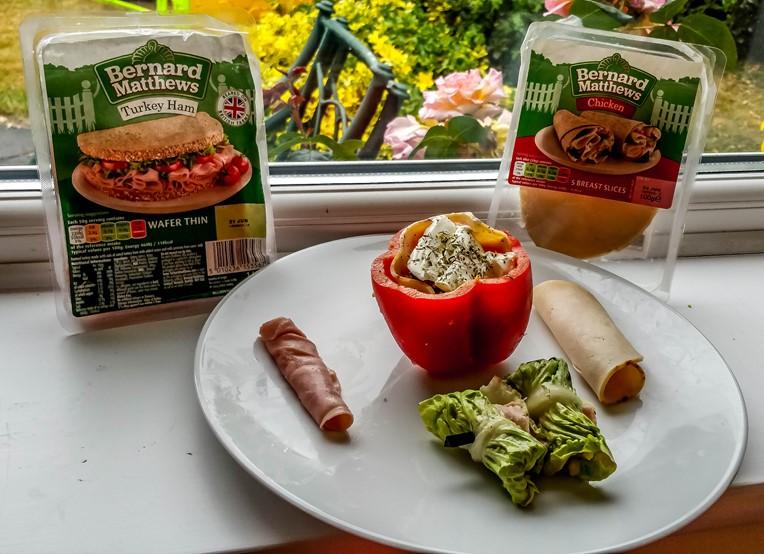
Motherhood Diaries has teamed up with Bernard Matthews to find some unique and creative ways to take the ‘bread’ out of our lunchtime meals. Bernard Matthews has an impressive range of cooked meats, which pair so perfectly with bread. Yet, the catch here is not to use bread or pittas or wraps! The added bonus about not using bread is that ‘breadless lunches’ are super healthy and a great way to add in some extra veg into our diet.
So, here is what I came up with!
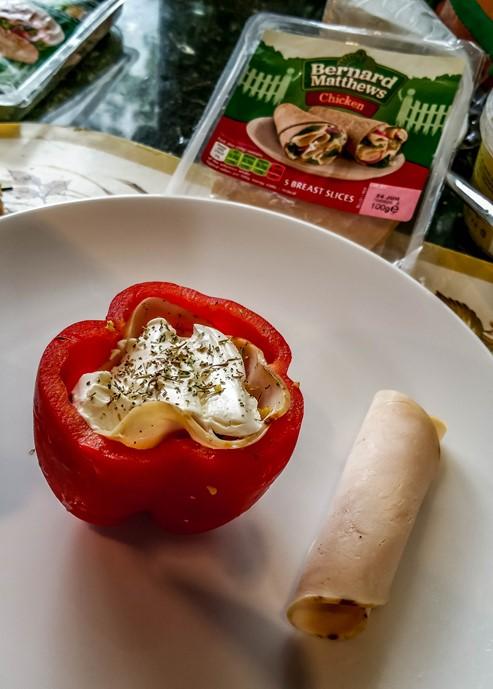
Stuffed Red Bell Peppers with Bernard Matthews Chicken Breast Slices
Crunchy lunchtime snack that contains meat, vegetables and dairy. Surprisingly filling!
Ingredients
Makes 1 Stuffed Bell Pepper
1 Bernard Matthews Chicken Breast Slice
1 Red Bell Pepper, with the top cut off
1 heaped tablespoon of Cream Cheese (Philadelphia works nicely)
2 tablespoons of Moroccan Cous Cous (can be made from scratch or bought readymade)
Sprinkling of Mixed Herbs
Method
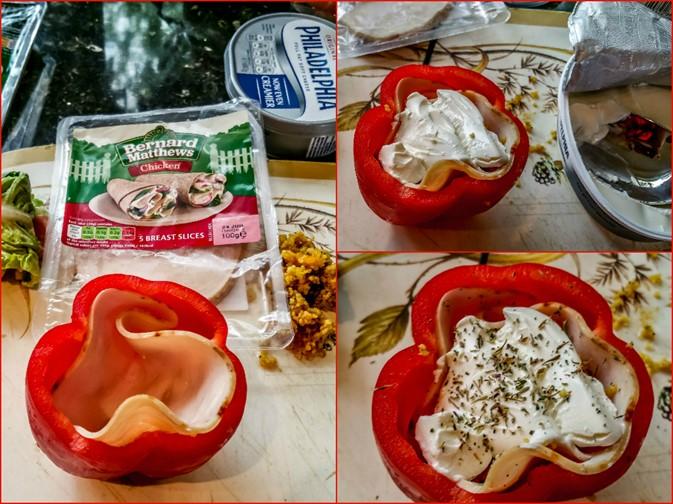
Line the inside of the red bell pepper with the Bernard Matthews Chicken Breast Slice
Fill the pepper with the Moroccan Cous Cous
Add the cream cheese on top of the Cous Cous and sprinkle with mixed herbs
Lettuce Wraps with Bernard Matthews Wafer Thin Turkey Ham
These wraps are much healthier than their bread counterparts and offer just as much flavour at lunch. Plus, you can make as many of these as you want and you don’t have to worry about consuming too many calories because they’re wrapped in lettuce!
Ingredients
Makes 2 wraps
2 Bernard Matthews Wafer Thin Turkey Ham slices
2 Gem Lettuce Leaves
2 tablespoons of light humus
2 skewers (I used small plastic kid-friendly skewers)
Method
Lay one Gem Lettuce leaf as flat as you can
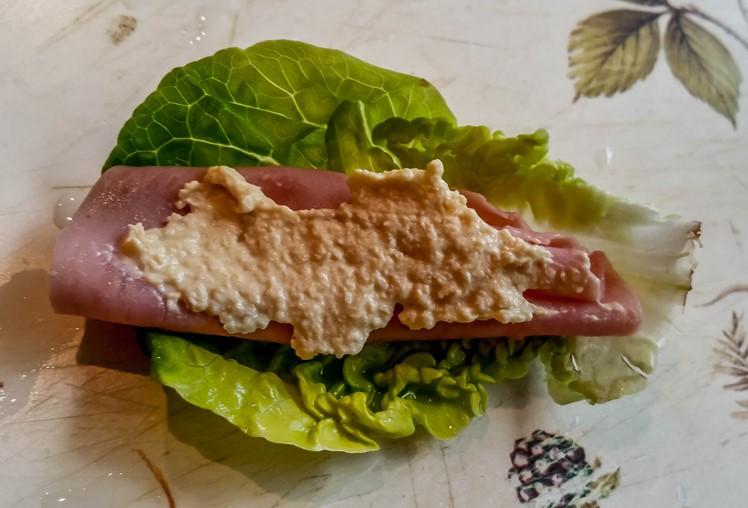
Roll 1 Bernard Matthews Wafer Thin Turkey Ham slice and place along the centre of the leaf
Add the humus to the centre of the ham
Then roll like a wrap!
Turn the leaf so that the root (hard bit) is at the top.
Fold the bottom of the leaf in first and then the sides
Keep rolling until you get to the top
Secure in place with skewers
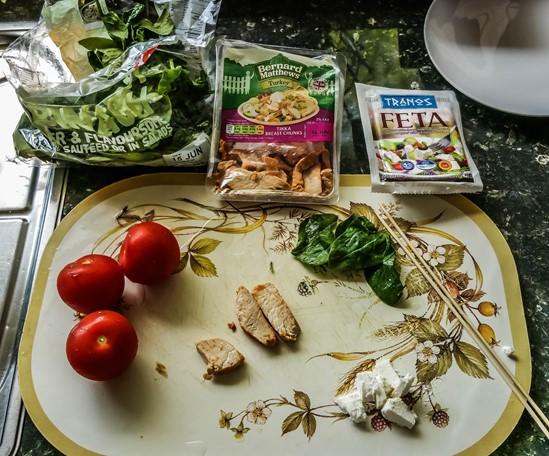
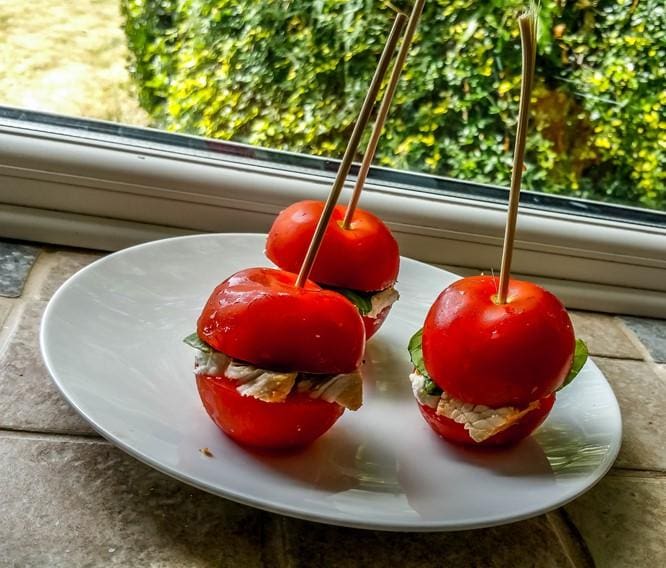
Tomato Burgers using Bernard Matthews Turkey Tikka Breast Chunks
These are awesome – they look just like burgers, but instead of the burger buns, you use tomatoes. Simple and super healthy!
Ingredients
Makes 3 tomato burgers
1 Packet of the Bernard Matthews Turkey Tikka Breast Chunks
3 tomatoes
Block of feta cheese
Handful of spinach
3 skewers
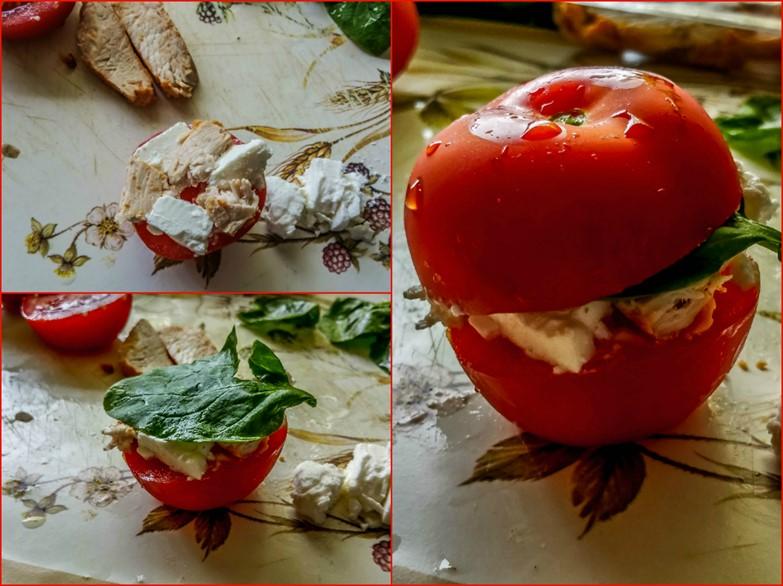
Method
Slice 1 tomato in half and cut a little bit off the bottom half of the tomato, so that it sits in place.
Add the Bernard Matthews Turkey Tikka Breast Chunks and feta cheese on top of the tomato (bottom half).
Top with a couple of spinach leaves
Close with the top half of the tomato and secure with a skewer inserted into the middle.
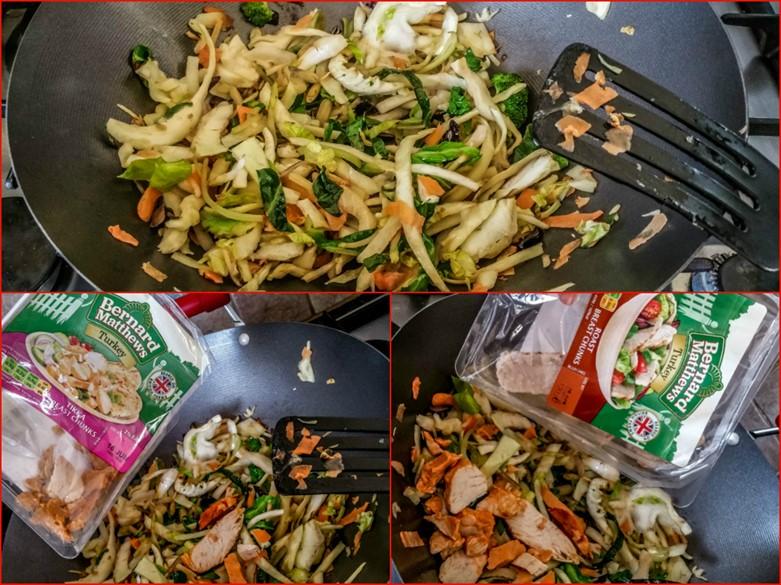
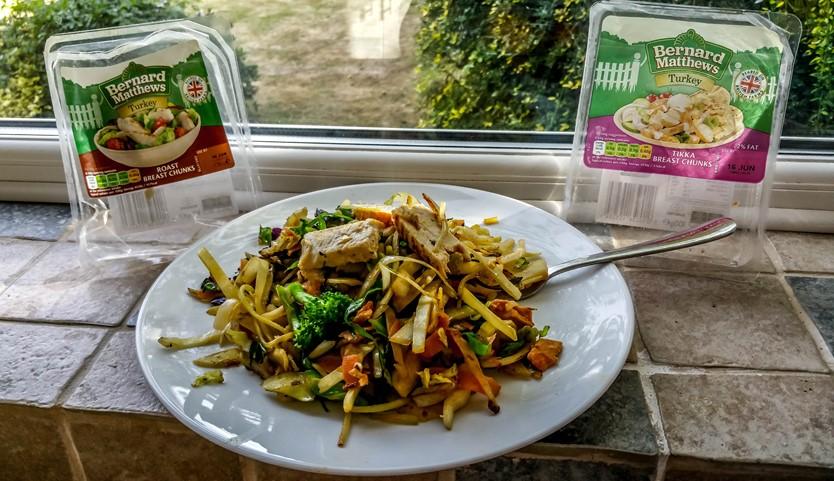
Turkey Stir Fry using Bernard Matthews Turkey Roast Breast Chunks and Turkey Tikka Breast Chunks
You will find no bread in this stir fry recipe, just a super healthy lunchtime meal that packs a lot of punch with half the calories.
Ingredients
Serves 3 – 4
1 packet of Bernard Matthews Turkey Roast Breast Chunks
1 packet of Bernard Matthews Turkey Tikka Breast Chunks
Handful of:
Broccoli
Cabbage
White Onion
Carrots
A little olive oil or sunflower oil for frying
Indian spices for seasoning
1 large wok
Method
Slice all the vegetables thinly
Add a little oil to the wok and fry the vegetables for 3 ½ minutes
Add the turkey and seasoning and fry for a further 1 minute
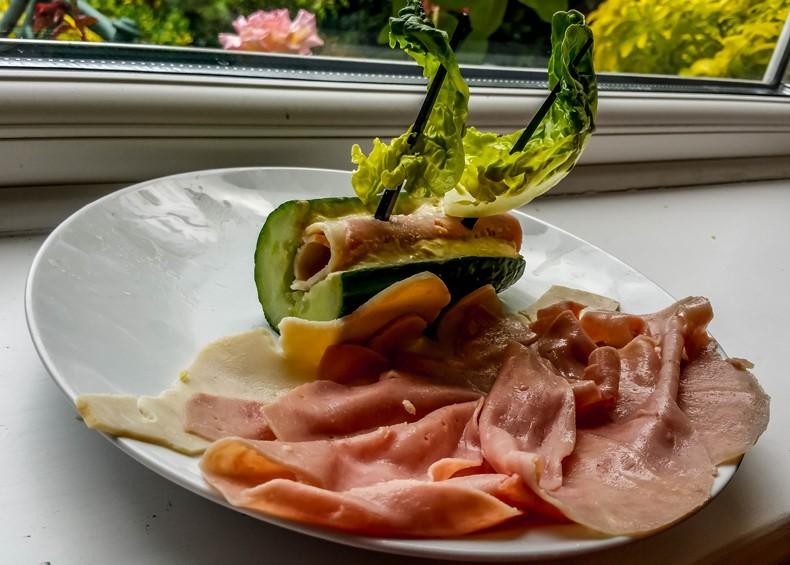
Cucumber Boats using Bernard Matthews Wafer Thin Turkey Ham and Chicken Breast Slices
Kids love these as they look just like boats! Super crunchy and equally as tasty, these cucumber boats provide that all important meat and vegetable lunchtime filling to keep you away from nasties at lunch.
Ingredients
Makes 1
1 packet of Bernard Matthews Wafer Thin Turkey Ham
1 packet of Bernard Matthews Chicken Breast Slices
1 Half Cucumber
1 Tablespoon Humus
2 x Gem Lettuce Leaves
2 x Skewers
Method
Cut a wedge into the cucumber and thinly layer some humus around the inside
Place 1 Bernard Matthews Chicken Breast Slice over 1 Bernard Matthews Wafer Thin Turkey Ham and roll them into a cylinder like shape
Place the roll into the wedge of the cucumber
Spear two gem lettuce leaves with skewers and place on top of the cucumber, piercing the roll
Layer the chicken breast slices and wafer thin ham on the plate to resemble the sea.
So, there you have it! Five different ways to enjoy super breadless lunches with double the health value and half the calories.
Subscribe here to stay on top of new content added to Motherhood Diaries.
Organix conducted a survey to find out how mums encouraged their children to adopt a positive attitude towards food. 76% of mums said that making mealtimes fun for their child was the most important factor and 75% rated offering their child the freedom to play and experiment with their food brought positive benefits in general. Organix have come up with some great finger food products for kids and asked Motherhood Diaries to create interesting ways in which to showcase these finger foods (and other healthy ingredients) in order to kids entertained whilst eating healthy. I had so much fun creating little ‘No Junk’ Lunchboxes for school kids with Organix in a previous project, so I was very excited to receive a new food challenge from them.
Finger foods are a fantastic way of providing a healthy and varied diet for your little one. From the baby’s first stage of weaning to catering towards a growing child’s lifestyle, it’s vitally important to allow kids to take the time to learn about the taste, texture, shape and colour of the food in front of them. Letting them play around encourages a positive response and a healthy attitude towards food, which may, ultimately, reduce problems with fussy eating later on in life.
93% of mums feel it’s important to let a baby play with and experiment with food.
“The introduction of finger foods can develop a little one’s sense of independence, and parents can encourage a positive attitude to food by making mealtimes fun for their child and allowing them to play with and experiment with their food.” Dr. Frankie Phillips, Nutrition Advisor to Organix.
Other benefits of self-feeding include developing hand-eye coordination, fine motor skills and improving dexterity.
93% of mums recognise that the first year of a baby’s life is about fun – playing with food and developing skills.
“… Babies learn through their senses in the first two years of life. So when you introduce a new food to your child, by giving them an opportunity to touch it squish it and rub it between their hands, you are allowing them to use all of the resources they have to learn about that food.” Dr Angharad Rudkin, Psychologist.
86% of mums feel it’s important for babies to handle and play with new foods before they taste it.
Feeling inspired and excited about the idea of exercising my creative juices, especially when it comes to food, I came up with ‘Nursery Rhymes Finger Food’ plates. I have 3 and 4-year-old boys, so my weaning days are over (for now). But, what better way to gain their interest in eating right than by using the art of rhyme!
Here are my creations:
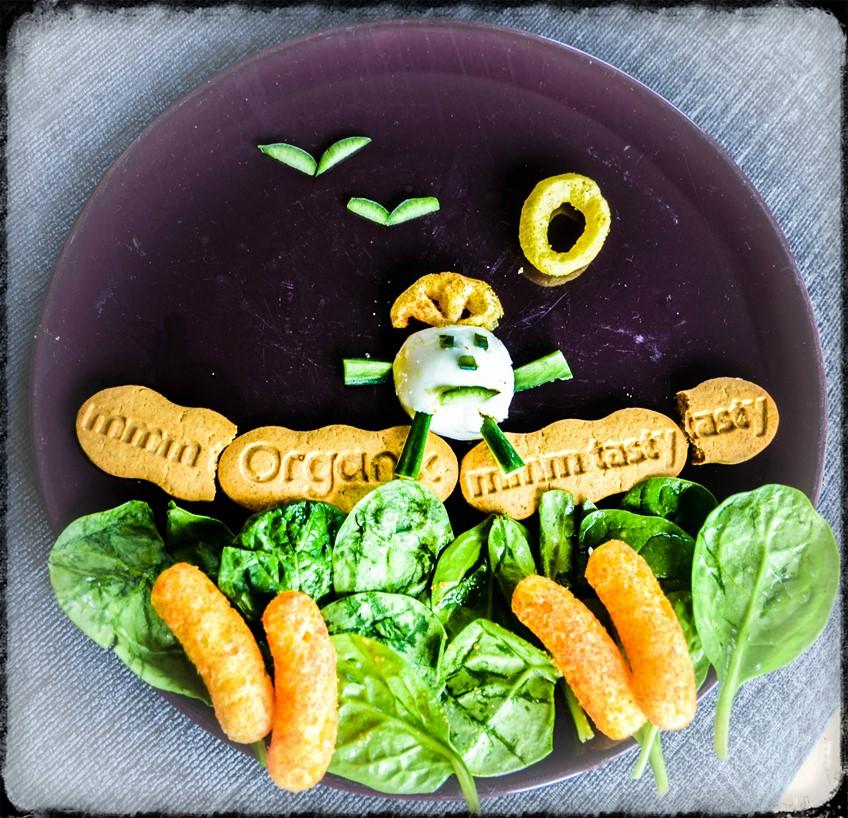
Humpty Dumpty Finger Food Plate
“Humpty Dumpty sat on a wall,
Humpty Dumpty had a great fall,
All the kings’ horses and all the kings’ men,
Couldn’t put Humpty together again.”
How to make the Humpty Dumpy finger food plate
Ingredients
1 slice of Cucumber
Handful of Spinach
1 boiled egg
4 Organix Finger Foods Carrot Sticks
3 Organix Finger Foods Banana Baby Biscuits
1 Organix Finger Foods Tomato Slices
1 Organix Finger Foods Sweetcorn Rings
Method
For the wall
Use 2 Organix Finger Foods Banana Baby Biscuits for the wall, just under the legs.
Break a third biscuit in half and add to each end of the wall.
For the sun
1 Organix Finger Foods Sweetcorn Ring
For the birds
Slice small edges off the cucumber and angle them on the plate to resemble birds (more like a wide ‘V’ shape)
For Humpty Dumpty
Cut a hard-boiled egg in half, lengthways, and place on the plate with the outer part of the egg face up.
Use the rest of the sliced edges of cucumber for the arms and legs. Cut tiny pieces of what’s left of the cucumber edges for the eyes, nose and mouth.
Carefully break 1 Organix Finger Foods Tomato Slice in half and place on the head as a hat.
For the grass
Grab a handful of spinach and place under the biscuit wall, to resemble edges
Use 4 Organix Finger Foods Carrot Sticks, 2 on each end of the hedge, to resemble plants.
Benefits
You can get away with just allowing weaning babies at this stage to enjoy playing with their food and not eating everything on their plate, as their main source of food is still coming from milk. But, when they’re older, you would need to start making sure they ingest a healthy diet too.
Cucumbers
Cucumbers are easy to hold and contain mostly water, so they are perfect as introductory foods during the weaning process. Cucumbers also contain an anti-inflammatory flavonol called fisetin that plays an important role in brain health. Cucumbers can also reduce the risk of cancer, fight inflammation, manage stress and support the digestive system.
Eggs
Eggs are incredibly nutritious and contain Vitamins A, B2, B5, B6, B12, D, E, and K, as well as Folate, Phosphorus, Calcium, Zinc and Selenium.
Eggs are also very high in protein and provides kids with the building blocks they need for hormones, skin, tissues and other parts of the body.
Eggs are super versatile, so you can change them up for babies and make some scrambled eggs, as well as hard boiled, poached or fried eggs, to introduce some fun protein into their diet.
Organix Corn Puffs
Organix Corn Puffs, like the Sweetcorn Rings, are available in a range of four fun simple shapes to help little ones enjoy learning about food. They’re gently baked so while crispy, they melt in the mouth.
Organix Baby Biscuits
Are fun and easy to hold shape, as well as great for little fingers to get to grips with. Banana Baby Biscuits are made from wheat and have no added sugar, artificial flavours or sweeteners
Spinach
Crunchy and relatively tasteless, spinach is a great green herb that kids can really have fun with. Spinach is a good source of essential vitamins and minerals and protects the organs in the body.
You can introduce spinach into baby food from about 6 months, but it’s more fun to leave them raw and in their natural form, so babies can pick up the leaves and have a play first.
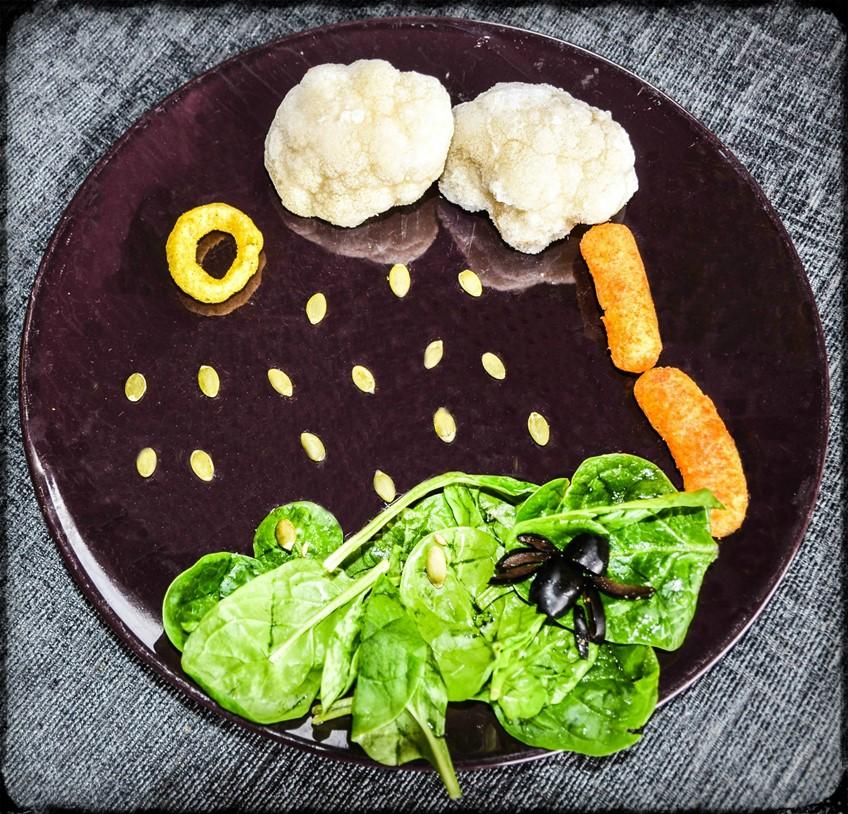
Incy Wincy Spider Finger Food Plate
“Incy Wincy spider climbed up the water spout,
Down came the rain and washed pour Incy out,
Out came the sunshine and dried up all the rain,
And Incy Wincy spider climbed up the spout again.”
How to make the Incy Wincy Spider Finger Food Plate
Ingredients
2 cauliflower florets
1 Organix Finger Foods Sweetcorn ring
2 Organix Finger Foods Carrot Sticks
Handful of pumpkin seeds
Handful of spinach
2 black olives
Method
Thinly slice the second olive to use as the legs of the spider
For the spider
Slice 1 black olive in half, lengthways, for the head and body
For the rain
Sprinkle sunflower seeds on the plate to resemble rain
For the clouds
Place 2 cauliflower florets on the top of the plate, next to each other, for the clouds.
For the sun
1 Organix Finger Foods Sweetcorn Ring
For the grass/field
Group handful of spinach together to resemble grass or field
For the spout
Place 2 Organix Finger Foods Carrot Sticks on top of each other for the spout.
Benefits
Cauliflower
Cauliflower is packed full of phytochemicals, which are said to prevent cancer. Just one cup of cauliflower has Vitamin A, C and calcium.
You should introduce cauliflower into your baby’s diet from around 8 – 10 months, as cauliflower can cause gas and may be a bit difficult for a very young baby to digest.
Pumpkin Seeds
Pumpkin seeds offer tons of health benefits for kids, from improved brain development to getting in some good sleep. Due to their size, it may not be a good idea to introduce seeds too early into a baby’s diet. But, as soon as they’re old enough, seeds in general can provide a much needed boost in vitamins and minerals in their daily intake.
Black Olives
Black olives are a product of the olive tree and offer an array of health and nutritional benefits. They promote general health and are good sources of iron and Vitamin E. They may be an acquired taste for some, but adding some olives to your child’s diet adds variety and a healthy attitude towards less well-known foods in general.
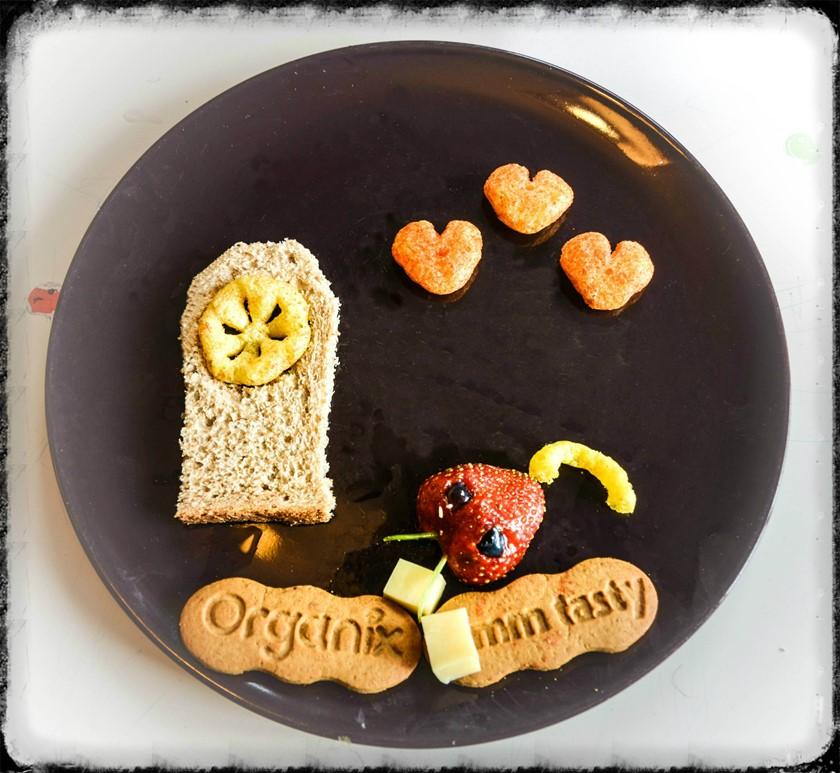
Hickory Dickory Dock Finger Food Plate
“Hickory Dickory Dock,
The mouse ran up the clock,
The clock struck one,
The mouse ran down,
Hickory Dickory Dock, Tick Tock!”
How to make Hickory Dickory Dock Finger Foods Plate
Ingredients
3 Organix Finger Foods Red Pepper Hearts
¼ slice of wholemeal/brown bread
1 Organix Finger Foods Tomato Slice
Half of 1 strawberry
1 blueberry chopped in half
2 small cubes of cheddar cheese
2 Organix Finger Foods Banana Baby Biscuits
½ of Organix Finger Foods Sweetcorn Rings
2 very thin slices of cucumber
Method
For the clock
Divide 1 slice of wholemeal bread into 4, lengthways, and use only 1 of those slices for the clock.
Slice off the crust at the top of the ¼ slice and round the edges
Use 1 Organix Finger Foods Tomato Slice to cut a hole at the top of the bread slice and place the Tomato Slice inside the hole to resemble the clock face.
For the birds
Place 3 Organix Finger Foods Red Pepper Hearts at the top of the plate to resemble birds
For the mouse
Slice 1 strawberry in half, lengthways, to resemble the mouse’s head and body
Slice a blueberry in half and place on the strawberry for the eyes
Thinly slice a cucumber and poke into the top of the mouse’s head for the whiskers.
Cut 1 Organix Finger Foods Sweetcorn Ring in half and place at the end of the strawberry for the mouse’s tail.
Cut two small blocks of cheddar cheese for the mouse’s food.
Place 2 Organix Finger Foods Banana Baby Biscuits under the mouse for the wall/floor.
Benefits
Wholemeal Bread
Bread is a great starter tool for babies just venturing out into the big wide world of food. It is important to note, however, that foods containing wheat, oats and gluten shouldn’t be offered to babies under six months to reduce the risk of allergies. But, from six months, bread can be a fantastic addition to the finger food diet. Wholemeal bread is high in fibre and aids digestion.
Strawberries
Strawberries are pretty, they taste delicious, and the added bonus is that they are part of the fruit family. Strawberries are high in Vitamin C and a good source of calcium, phosphorous and folate. Kids love them.
Blueberries
Another sweet fruit source, blueberries contain a huge amount of nutrients and are referred to as a ‘Super Food”. Blueberries are high in antioxidants and contain fibre, Vitamin A and C.
Cheddar Cheese
Cheese is a great source of calcium and protein, so they keep young teeth and bones strong. Little cubes of cheese can provide great dairy snacks as part of a healthy and varied diet.
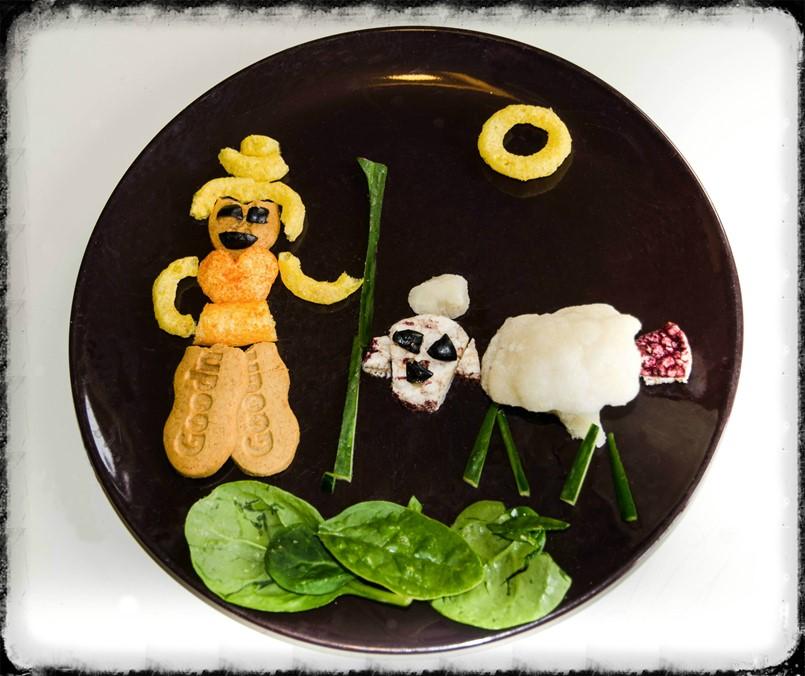
Little Bo Peep Finger Food Plate
“Little Bo Peep has lost her sheep,
And can’t tell where to find them.
Leave them alone and they’ll come home,
Bringing their tails behind them.”
How to make Little Bo Peep Finger Foods Plate
Ingredients
3 Organix Finger Foods Sweetcorn Rings
2 Organix Finger Foods Banana Baby Biscuits
1 Organix Finger Foods Carrot Stick
2 Organix Finger Foods Red Pepper Hearts
Thin slices of cucumber
Handful of spinach
2 blueberries
2 Cauliflower florets
2 Organix Finger Foods Raspberry and Blueberry Rice Cakes
Method
For Little Bo Peep
Place two Organix Finger Foods Banana Baby Biscuits, with 1 end broken off, next to each other but slightly overlapping and angled outwards to resemble legs.
Break off 1 Organix Finger Foods Carrot Stick for the waist
Place 1 Organix Finger Foods Red Pepper Heart, with the pointy end of the heart broken off, above the carrot stick waist for the torso.
Place another red pepper heart on top of the body for the face.
Cut 2 eyes and 1 mouth from 1 of the blueberries.
Break 1 Organix Finger Foods Sweetcorn Ring in half. Break one of those halves in half again. Place one half on the head in an ‘n’ position and add the other 2 pieces on top for the hat.
Break 1 Organix Finger Foods Sweetcorn Ring in half. Place the left arm in a ‘C’ position and the right arm upwards in a ‘U’ shape.
Thinly slice the skin of a cucumber for Little Bo Peep’s staff.
For the field/grass
Lay out a handful of spinach at the bottom of the plate.
For the sun
Place 1 Organix Finger Foods Sweetcorn Ring on the top right hand corner of the plate for the sun.
For the sheep
Break off 1 Organix Finger Foods Raspberry and Blueberry Rice Cake into 1 large piece and 2 small pieces for the face and ears.
Cut a small part of 1 of the cauliflower florets and place on top of the head for the woolly hair.
Slice 3 small parts off a blueberry and place on the face for the eyes and mouth.
Add 1 cauliflower floret next to the face for the body.
Break 1 Organix Rice Cake into 4 small pieces and place 1 of those pieces next to the torso for the tail.
Thinly slice 4 edges of a cucumber and add to the torso as 4 legs.
Benefits
Organix Finger Foods Raspberry and Blueberry Rice Cakes
These wholegrain rice cakes taste great and are the perfect size for little fingers to hold. They are also gentle enough on delicate gums, so babies can really go to town on these chunky circles. They come in six different flavours and all that’s added is the juice from fruit or vegetables.
Other great finger foods out there
Bland pasta, different shapes and textures, including spaghetti
Freeze apple/pear slices for the weaners who are teething
Bell Pepper Sticks
Carrot Sticks
Sweet Potato / Potato mash left on the plate
Avocado, mashed or sliced
Sweetcorn to encourage motor skills
Celery, as they’re firm but high in water
Orange slices, but be sure to take the seeds out
Watermelon (with the seeds taken out)
If you can think of any more, please add your tips in the comments below.
For more advice on finger foods and recipes, you can visit www.organix.com.
You can find inspiration on different finger foods for growing children in the Organix Little Book of Weaning – sign up to download your free copy at www.organix.com/littlebookofweaning.
*Collaborative Feature with Organix*
Quorn – A healthy alternative to meat – plus recipes!
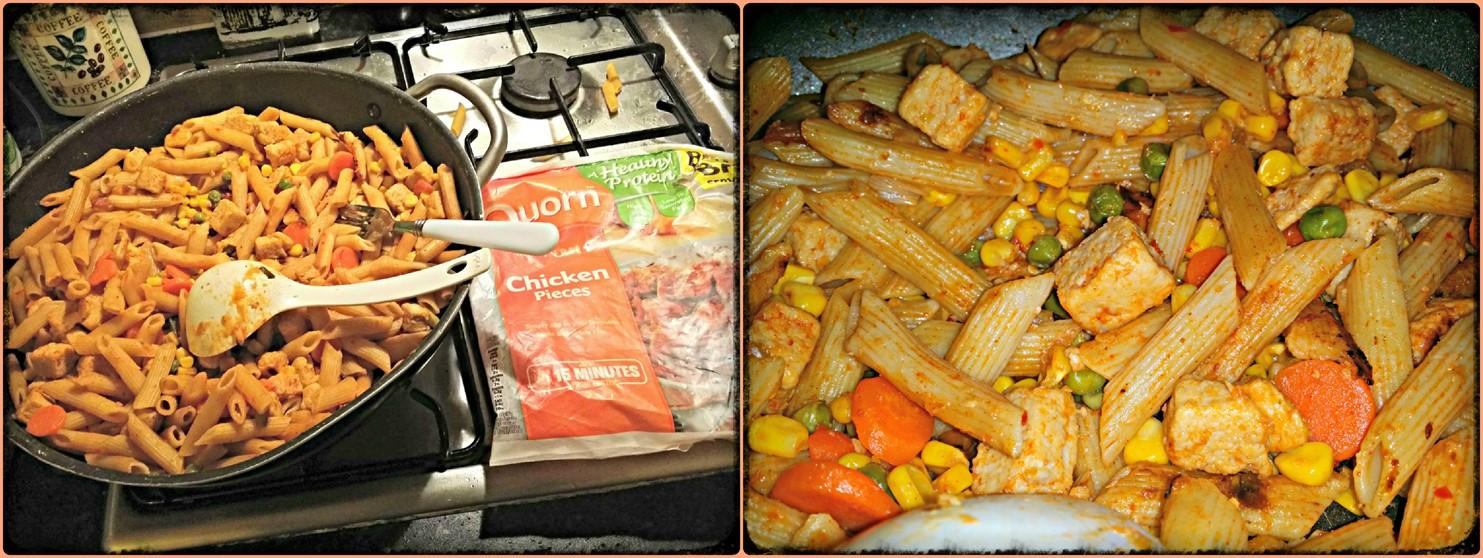
I attended a very tasty Quorn BBQ event back in August and learned so many interesting facts about Quorn’s health value and versatility in general. Like myself, other families are searching for healthy alternatives to meat because we’re fast becoming more educated on the negative impact meat has in our diet (as well as its delicious positives, of course). Meat is high in protein, iron, vitamins and minerals when eaten in moderation. But, a generous meat donation in your food intake does bring some downsides to your health in general. www.livestrong.com state that eliminating meat from your diet might actually help lower your risk of certain health conditions. Meat’s high fat and cholesterol content may increase your risk of high cholesterol and heart disease. So, Quorn was brought in as a suitably healthy alternative, mimicking a meat-like taste and texture, but taking none of its high fat and cholesterol content.
Quorn is made from a plant protein called Mycoprotein that replicates the texture and taste of meat. Mycoprotein is a healthy source of protein and dietary fibre, as well as being low in saturated fat. Protein also helps maintain normal bones and cholesterol levels.
I am a huge fan of those staple sausage roll snacks we Brits get at parties and so I was a little sceptical of replacing the normal beef/pork mince ingredient with Quorn mince. But, the result was simply delicious. In fact, I preferred the Quorn mince sausage rolls, as they felt healthier to eat, but tasted almost identical to the meat version. They are so easy to make when you pair them with Jus Roll pastry (link here for my post on the many versatile uses of Jus Rol puff pastry).
To make the Quorn sausage rolls you simply, mix garlic, salt, parsley, water, cooked onion and, of course, Quorn mince with a Knorr stock pot and egg to formulate the mix. Then roll out the puff pastry, filling little pockets with the Quorn mix. Pop them in the oven for 30 minutes and they come out looking like this!
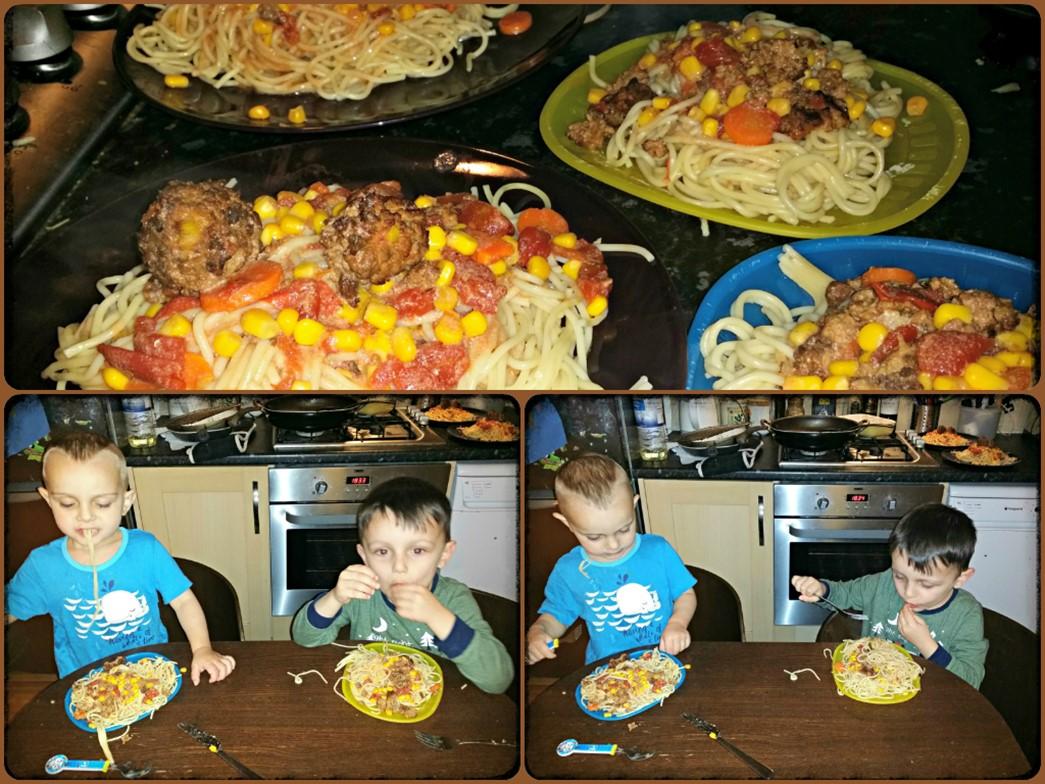
My boys’ all-time favourite meal is anything with spaghetti – I can pretty much slip most “ugh!” vegetables into the spaghetti sauce and they will munch away happily. (Just a side note: I always tell them all the ingredients that are in the sauce, so they get to know the flavours and, hopefully, enjoy them later). I figured the best way to encourage the boys to try Quorn was to shape the mince into something they’d eat with spaghetti.
So, I decided to create Quorn meatballs!
They’re surprisingly simple to make, but you need to add a little more egg than usual to ensure the mix sticks together for the meatballs. The result is a very light version of the regular meatball and a tasty addition to spaghetti (along with a dash of red wine sauce. ;-))