When people ask me what motherhood is like, I always tell them the same thing:
It’s like being thrown into the deep water with your kids and being told to swim.
How? Where to? No idea! But, you have to swim to survive and, most importantly, you need to keep your kids’ heads above water too.
You know, when I first got pregnant, I still had my rose-tinted glasses on and I dreamt of life as a mum with rainbows and sunny days. My kids would be perched on my lap, smiling at me intently and telling me that they loved me all the time. I envisaged leaning over my doting children’s shoulders and pointing to the correct answer in the homework book with a toothy grin, like those composed family pictures you get on the internet or on a postcard. And, of course, my babies would just pop out into my arms during birth and I would fall in love with them instantly.
Everything would be just great.
Well…
I got pregnant – twice – and even though both pregnancies were pretty uneventful, I had an Emergency Caesarean with my first and an Elective Caesarean (not by choice, ironically) with my second.
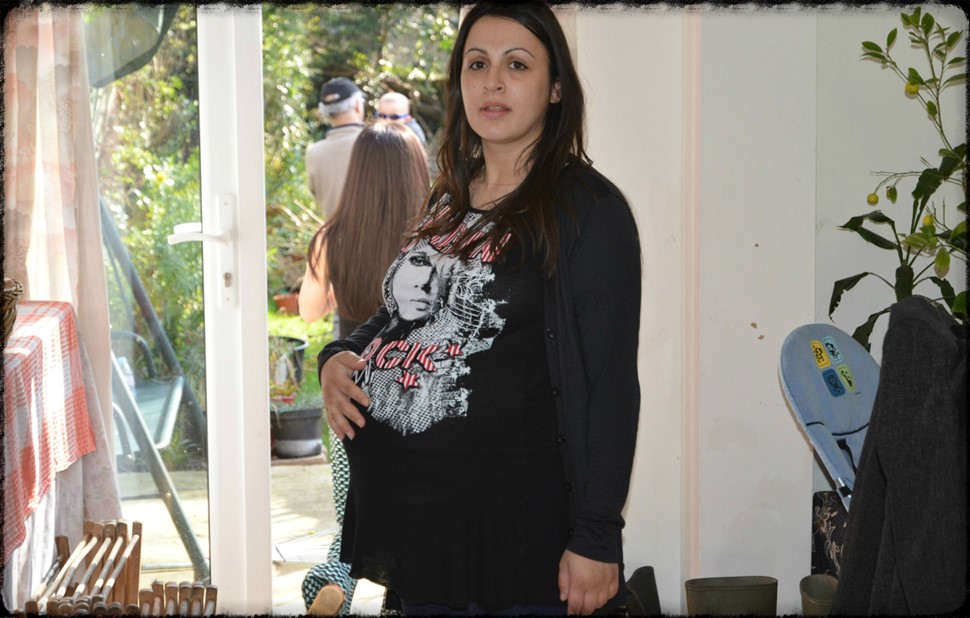
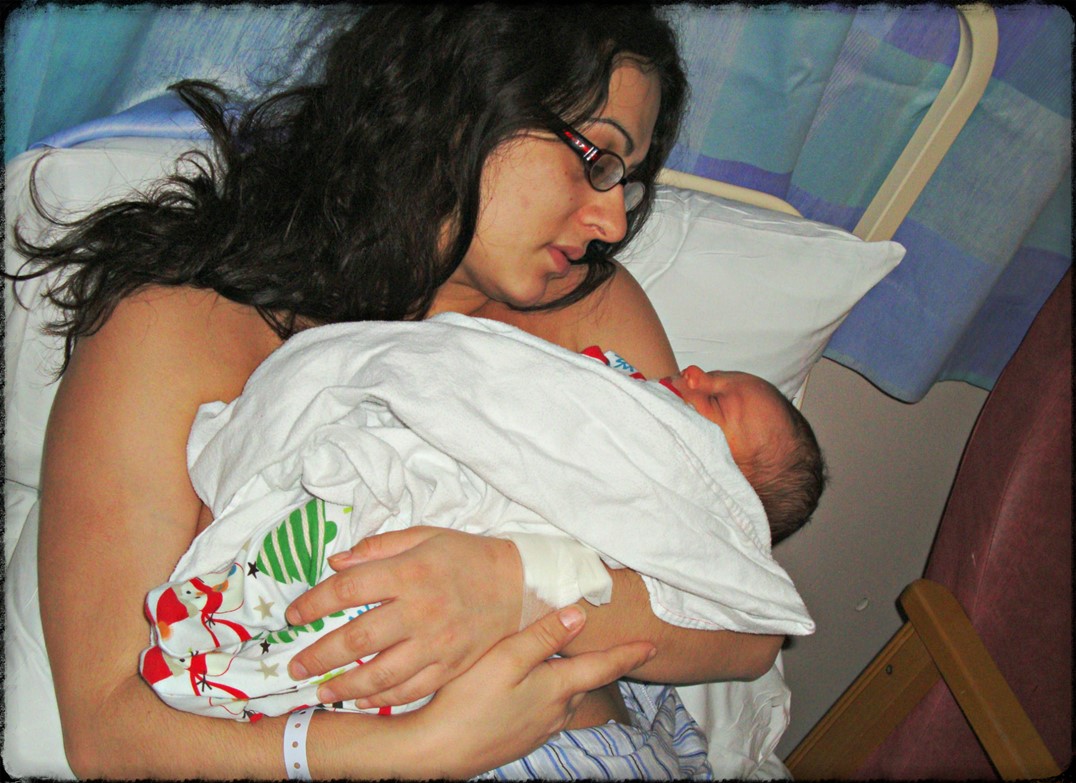
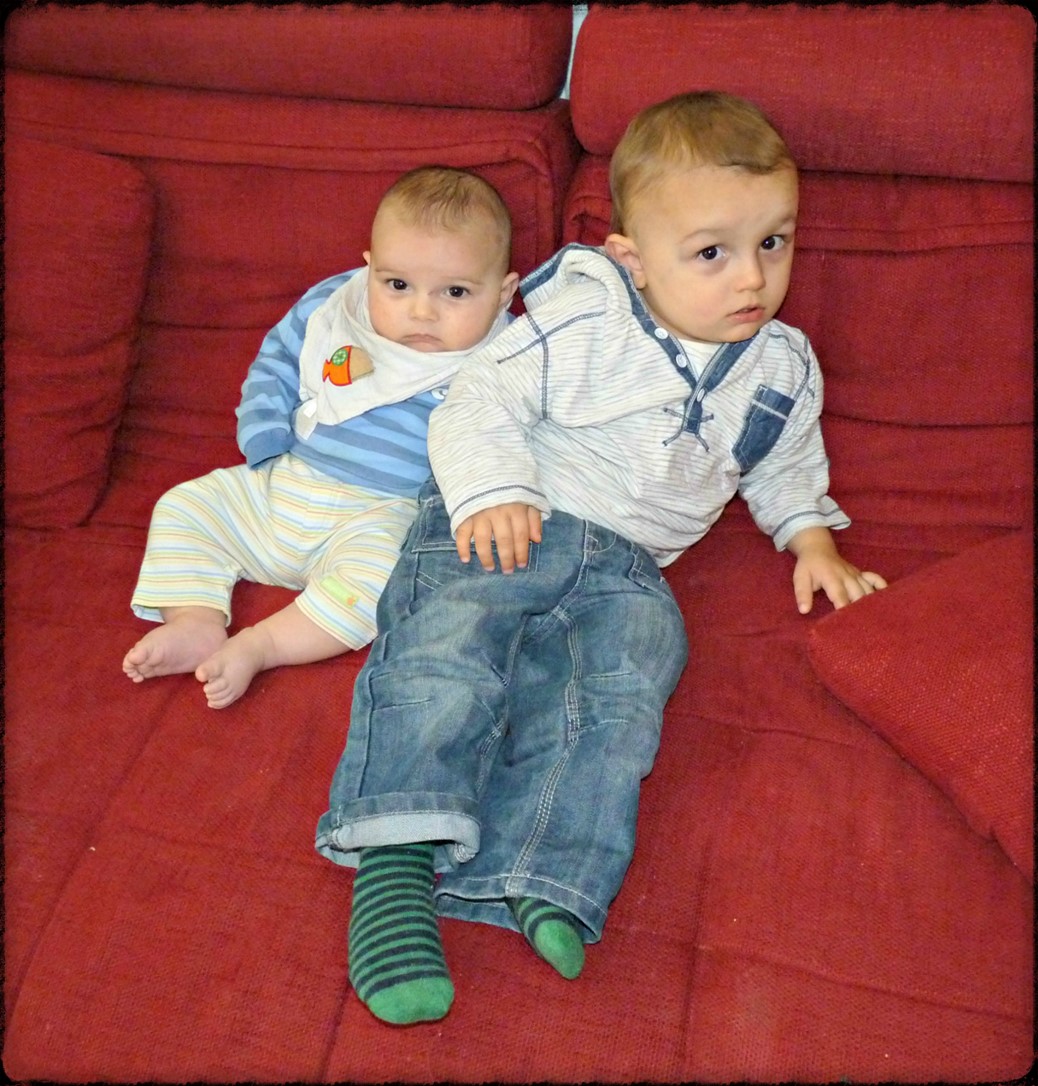
(Well needed rest after 3 days of back labour and an emergency caesarean with my first (Aron, December 2010))(Heavily pregnant with 14-month-old Aron – not easy!)(About to pop – Aidan, April 2012)
Now, I have two beautiful baby boys aged 2 ½ and 3 ½.
So, what is motherhood really like? (for me anyway)
Motherhood is like:
Breastfeeding your hungry baby, whilst changing his nappy and clothes without fully waking him up.
Changing your potty-trained preschooler’s clothes and bed linen in a slick ninja move that doesn’t involve him waking upbecause he’s peed absolutely everywhere. (It takes serious skill to do that, you know!)
Getting into bed after a long, hard day, closing your eyes and sinking into the most comfortable position you’ve ever found yourself in, only to be shaken violently by your preschooler because he’s peed all over his clothes and bed sheets again. Up you get!
Realising that you’ve managed to get the house cleaned, the chores completed and the kids fed, clothed, and entertained on just 3 hours sleep.
Intricately planning a precious slot during the day to attempt a 20-minute workout whilst the kids are occupied with each other and then 10 minutes into the workout, they jump on you and do anything they can to stop you exercising because they need you for something – anything, it doesn’t matter to them.
Trying to get your kids’ attention, to entice them into doing something educational with their time, but they’ve forgotten that you exist and ignore you completely. Then, you receive an important phone call and they start screaming and crying at each other, to the point where the person on the phone asks, ‘Is this is a bad time to talk…?’
Being jumped on, kicked on, hair pulled out and face licked, sometimes all at the same time.
Slaving over a super healthy and nutritious meal for the kids that involved a lot of pre-planning and food shopping, only to be told that they will only eat plain pasta because they just “feel like it!”
Getting used to and drowning out a constant high decibel of noise throughout the day.
Being shouted at, sung to, and, especially, “Mummy!”ed at by two preschoolers. It’s amazing how you can zone out your kids’ voices quite easily sometimes – anything to survive the insanity!
Having everything meticulously prepared and organised for the school run, including uniform, packed lunches, spare clothes, changing bag, and nappies etc. Then, at the last minute, your baby decides to poo just as you’re about to leave and the poo travels all the way up his back. His clothes are ruined and you have to completely change him before you leave. Cue being late, again!
Never being able to keep up with the laundry, especially with a potty trained preschooler in the house. Just pack all the dirty clothes in a bag and watch the bin bags multiply after just a few days. Sigh…
Watching Peppa Pig long after the kids have got bored with it and gone somewhere else to play. Sometimes I don’t realise that I’ve been watching for a whole ten minutes by myself!
Drinking coffee like it’s the elixir of life. Without it, you feel like you’ll slip into a coma and never wake up.
Feeling guilty at night when they’re sleeping soundly because you may have told them off one too many times that day and realised that, in the whole grand scheme of things, it didn’t really matter that they pulled all the books down off the shelf, just as you were about to leave the house and you gave them a good yelling at for ruining your carefully planned schedule. Look at how peaceful and beautiful they are when they’re asleep!
Staying on call throughout the night to ensure your babies don’t scratch their chickenpox or to helpfully ease their snotty, stuffy noses, using all methods necessary AND without waking them up.
Having a long, hard and stressful day, dealing with misbehaving children who categorically refuse to use any other word in the English dictionary other than “NO”. Then, they become angels at bedtime and go to sleep at the drop of a hat when you’ve managed to calm yourself down and just enjoy your children’s presence for a change. Kids can really feel your vibe!
Trying to breastfeed one baby when the other baby is vying for your attention – I don’t just need more than two arms – I need two of me!
It’s a juggling act
Pearls of wisdom that I’ve learned on the job
Mostly anything can be cured by a cuddle from mum (except for real sickness, but it does help with the recovery!)
Whenever my boys are angry, upset, impatient, or just plain aggro, sometimes I just hold them close and tell them that I love them and they ease up almost instantaneously.
Place a dose of Calpol into peppermint tea (diluted down with cooled boiled water) and add a dash of honey and lemon in a bottle for a soothing and super medicinal drink when the boys are sick. I whack on a Thomas and Friends DVD, stick them on the couch and wrap them up in a blanket – they’re in their own little heaven.
Instead of using a nasal aspirator when the boys have stuffy noses, I use [easyazon_link identifier=”B00BBWA0J2″ locale=”UK” nw=”y” nf=”y” tag=”motherho-21″ cart=”y” cloak=”y” localize=”y” popups=”y”]Cussons Mum & Me Baby Bath to Comfort during Bathtime[/easyazon_link]. Their noses are like running taps afterward – easy for me to wipe away.
I puree bits of food that the boys don’t like into either soup, pasta or rice dishes. My eldest doesn’t like meat, but he happily eats it in the tomato sauce with spaghetti. I always tell him though and it doesn’t faze him. Toddler defiance!
When shopping, I give the boys the shopping list and tell them to look out for each item. It’s the easiest and safest method of avoiding tantrums or other cringe-worthy moments.
I am forever training myself to keep my cool as best as I can when the going gets tough and I try to take each step and task one at a time. It’s not fair or safe for the children to constantly experience a stressed-out parent.
Nap when the baby naps. Really! If you have frequent night wakers like me, it’s the only way you’ll survive, honest! Well, that and coffee…
Record all of their first moments, like first steps, first tooth and first holiday etc. You’ll soon forget these important moments during the hustle and bustle of your parenting world.
Don’t compare your children to other children. Every kid develops differently and we all catch up with each other in the end.
Incidentally, don’t make judgments on other mums. They have their own children to worry about and they are doing the best that they can for their kids, even though their choices may not be your first choice. We are all in a secret unwritten community that only us mums can be in because we all understand each other and share common ground. We have all created something truly beautiful – our kids! Let’s celebrate this true miracle together and not against each other.
One day you’ll wake up and they’ll be all grown doing their own thing with their own families, so make sure you enjoy your time together and truly value those special moments. Kids grow up so fast!
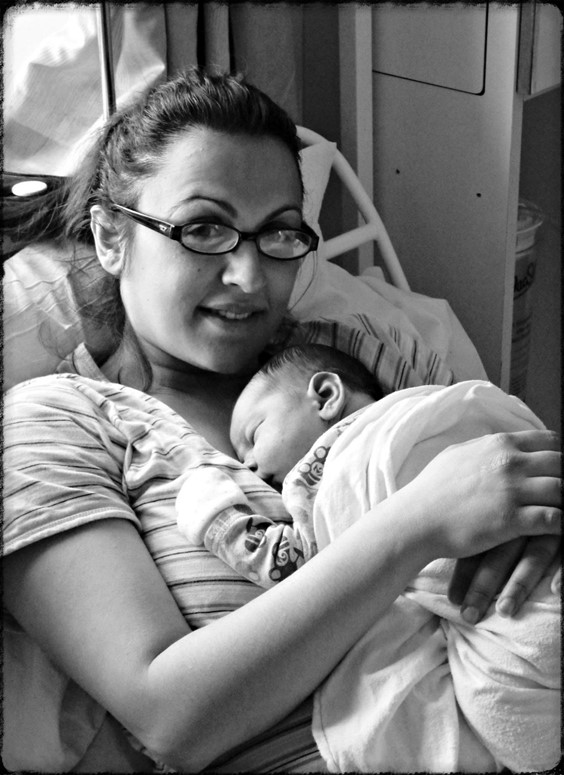
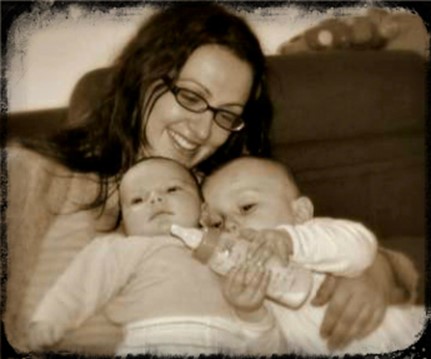
(Getting used to life with two babies)
It’s the best job in the world, but be warned, it’s the toughest job in the world. No one, but, no one can do it better than you because you’re their mum! Don’t ever forget that 🙂
(Proud mum ;-))
I’d love to hear about your realities of motherhood, please comment below and share the wealth!
Two small babies to two big beautiful boys – #PowerOfSoft
When I was pregnant, it felt like I was pregnant forever. I couldn’t wait to cuddle my baby, so I prepared everything in advance, including all of my baby’s clothes, washed and packed neatly in my hospital bag and the large chest of drawers we had bought for our new nursery.
41 weeks later, I got to hold my baby in my arms, his skin was so soft and warm and as I cuddled him to sleep, I felt like the happiest and luckiest mum in the world.
6 months later, I got pregnant again and I wished for sleep as I tried to handle my busy baby, who would cry for my arms at night and I would cuddle and feed him to sleep as I kept my second baby cuddled up in my womb.
My free time diminished and my laundry grew. Then, 42 weeks later, my second baby was in my arms and I had two lots of washing, but double the unconditional love for my two beautiful baby boys.
A hectic routine of washing, cleaning and changing nappies, as well as being on call 24/7, became my everyday life, yet the cuddles stayed consistent. My boys loved me as much as I loved them and we were a strong unit, filled with love, cuddles and unpredictably exciting turmoil.
By day, I would run around the house, completing numerous tasks in one go and being on my babies’ beck and call any time they needed me. By night, we would be calm and peaceful, sleeping together and cuddling each other so tight until my babies would fall asleep and I would carry them back into their cots. They rapidly grew in front of my eyes and I never stopped thinking how unbelievably beautiful they were, so small, yet so full of life.
Time was flying by and my babies were growing bigger, needing my cuddles less and exploring more of the world around them.
I remember the first time my babies had a conversation together. They were in the bath and playing a splashing game. My youngest baby turned to his brother and said, “Now, you splash”. And, from that point onwards, a beautiful friendship grew between the brothers, filled with fun and laughter. My topsy turvy world where I had felt I was sinking and failing most times, evolved into newfound strength and confidence that perhaps I wasn’t too bad of a mother and that all my love and cuddles was transforming my babies into wonderfully sweet and kind human beings.
At 2 ½ and 3 ½ years old, my boys are now strong and confident little men, who both take the world on with everything they’ve got. Yet, they are still my babies and they still need my cuddles and I will always give them my all until the day I die.
Fairy Non Bio #PowerOfSoft
Fairy Non Bio has seen millions of parents’ children grow up and so they understand how quickly time passes and therefore the value of every precious cuddle. They are now encouraging all parents to embrace every moment – especially, for those who are experiencing the beginning of the school term, where many parents will see their child go off to school.
So, Fairy Non Bio is running a campaign to make sure that parents make the most of the time they have with their babies, give them an extra soft cuddle and embrace the #PowerOfSoft. When Fairy Non Bio asked parents what they missed most about those precious pre-school days, a quarter said it was those super soft kisses and cuddles, 43% said it was their child’s and 28% said it was just the constant background noise.
My babies are the still the softest they can ever be, despite not being as vulnerable as they were when they were newborns. My youngest is almost ready for nursery and my eldest is going into nursery in a couple of weeks, so I can still hold onto them as much as I can whilst they are at home. I still remember that wonderful newborn smell and I can almost feel those first few precious moments after I gave birth. Every time I think about those moments, I give my babies an extra special cuddle and tell them I love them. No matter what they do in the future and no matter where they would go, I will tell them that I will always be there to cuddle them whenever they need me, for I will always be their mother and to me they are still The Softest They Can Ever Be.
Fairy’s #PowerOfSoft Campaign Video
https://www.youtube.com/watch?v=M29rpeLka6Q
So, whilst your baby is busy growing and reaching those many little milestones – from their first smile to their first few steps, make sure you make the most of every precious pre-school moment while they are still The Softest They’ll Ever Be.
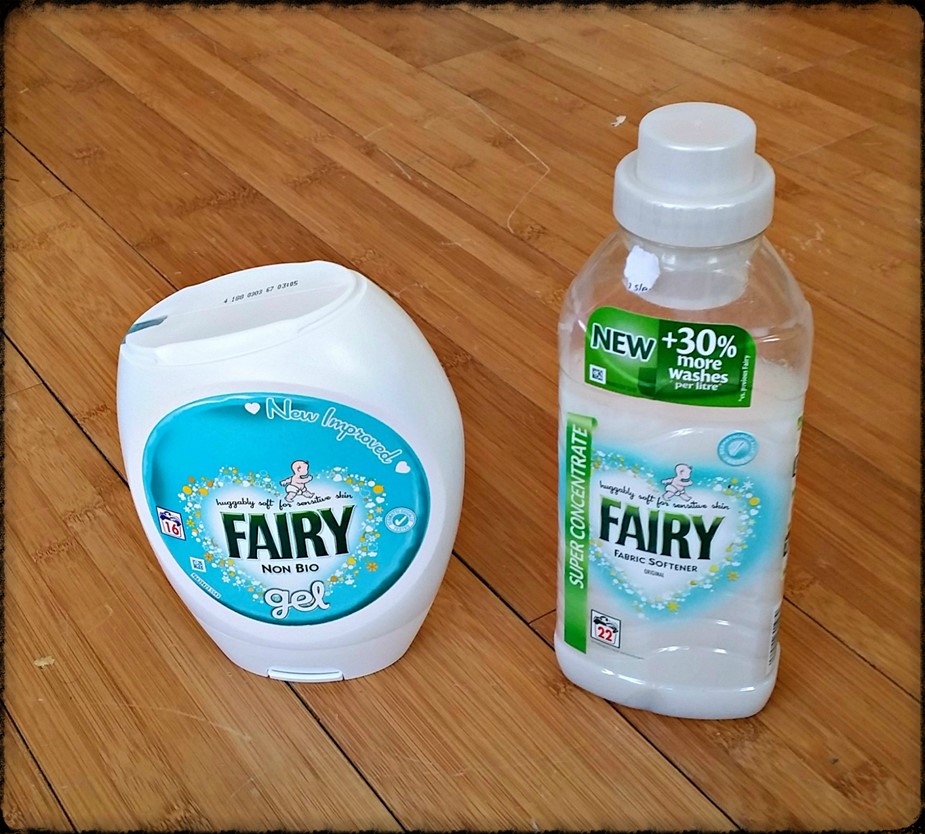
Fairy Non Bio Gel and Fabric Softener
Fairy Non-Bio offered Motherhood Diaries the chance to review their New Improved Fairy Non-Bio Gel and Fabric Softener (containing 30% more washes). I had been washing my babies’ clothes in Fairy Non-Bio for years, so I was glad to review the new and improved version, which smelled delicious.
And, it didn’t disappoint.
The boys’ clothes came out very clean and feeling fresh. Our previous detergent left the boys scratching at night and my youngest has experienced some slight eczema on his chest. But, after washing their clothes in Fairy Non-Bio Gel and Softener, the itching has stopped and the clothes have come out really soft. I would thoroughly recommend Fairy Non-Bio to wash your children’s delicate clothing.
Furthermore, Fairy Non-Bio can completely remove the stench and stain of pee-stained clothing and bedding!
Motherhood Diaries Top 5 Cuddling Tips for Parents
A cuddle can stop your child from having a tantrum
A cuddle can help your child sleep at night
A cuddle reaffirms that bond between you and your child
A cuddle can tell your child in a million different ways how much you love them
A cuddle can make you forget about your problems in a flash.
Disclaimer: This featured post was in collaboration with Fairy Non-Bio.
Organix No Junk Lunchboxes Campaign – Join us and say ‘no’ to junk in children’s food.
Children need sustenance to grow properly and excel in life and more parents are jumping on the bandwagon to ensure that children have a healthy and balanced diet from as early an age as possible. However, a survey of mums across the UK, to mark the launch of Organix’s No Junk Challenge Lunchbox Campaign, revealed that over 8 out of 10 mums believe that children’s food options marketed at parents for lunch boxes are often unhealthy, or of limited nutritional value. 87% of fed up mums think the food industry need to provide healthy nutritious food for children and a whopping 97% of parents say that they want to have more healthy options for lunchboxes for their children.
Organix launched the ‘No Junk’ challenge, a campaign to encourage parents to look into fresh natural ingredients and to challenge the food industry to remove the ‘junk’ from children’s food. The No Junk Challenge aims to offer parents advice on how to read ingredients on the back of packets and identify the dirty dozen. These are:
Peaches
Apples
Sweet Bell Peppers
Celery
Nectarines
Strawberries
Cherries
Pears
Grapes (Imported)
Spinach
Lettuce
Potatoes
(Image taken from www.greenhousepr.co.uk.)
Facts about children’s food
The ‘No Junk’ campaign responds to what is found in children’s food:
Official statistics show that one in five children starting school are overweight or obese.
Children’s food brands making health claims are found to be higher in salt, fat and sugar.
Artificial additives are widely used to disguise cheap ingredients.
Nearly half of the best-selling brands are high in fat, salt and sugar (HFSS).
“We know it’s not always easy to make good food choices. So, the Organix No Junk Challenge, with the help of blogger supporters and experts, like the Lunchbox Doctor, aim to help and inspire families to use real ingredients and to try to avoid foods with artificial colourings and flavourings, or foods high in added salt, fat and sugar. Statistically, one of the hardest elements of a nutritionally balanced lunchbox for parents is the veg portion…. Just 1 out of 10 lunchboxes has a vegetable portion in it.” Organix Managing Director, Anna Rosier.
It’s tough as busy parents to fit in being able to provide the best possible nutrition for your children. With tons of media from various sources advertising their brands heavily as decent children’s food, crossed with a busy parent’s daily lifestyle, finding the precious time to shop regularly to maintain children’s 5-a-day portions of fruit and veg can become a challenge. 61% of parents find it difficult to keep lunchboxes varied and interested. So, Motherhood Diaries has teamed up with Organix, the UK’s pioneering food brand, to come up with 5 days’ worth of healthy lunchboxes that are quick and easy to make, yet provide the vital building blocks for children to excel at school, as well as adopt a healthy approach and lifestyle to eating in general. 57% of parents say they need more advice on what should go into a child’s lunchbox, so here is 5 days’ worth of lunchboxes made from one bona fide parent with little time and amateur kitchen tools and skills.
Day 1, Monday
Food
Benefits
Banana
“A banana a day should keep the doctor away,” is the adage that all people should be chanting because a banana’s health benefits far outweigh those of the apple. One banana contains more vitamins and nutrients than their fruit counterparts.
2 x as many carbohydrates as an apple
5 x as much Vitamin A and iron
3 x as much phosphorus
Bananas provide energy because of the abundance of vitamins and minerals they pack – perfect for busy bees at school!
Rich in potassium and natural sugars – potassium is vital for performance and helps the body’s circulatory system deliver oxygen to the brain.
Bananas promote bowel health – Bananas contain fibre and can help stop constipation.
Banana is a “super food” that should form an integral part of a healthy daily regimen.
Bananas contain a chemical called tryptophan which contains a level of protein that helps the mind relax so you feel happier.
2 x as much protein (13 to 20g) as regular yoghurt (5 to 10g). The extra protein leaves kids feeling full and satisfied.
50% less sodium, which means much less salt added to your child’s daily food diet.
Easy to digest because it has less lactose (the sugar in dairy that can sometimes upset kid’s stomachs, i.e. lactose intolerance).
Contains probiotics, which are live bacteria that help improve digestive function and the immune system. Can help reduce side effects of antibiotic treatments.
Greek yoghurt is versatile and can go with many savoury and sweet ingredients. Children love sweet yoghurt and so Greek yoghurt can be complemented with sweet fruits like berries. Add a drop of Manuka Honey and you’ve created a super healthy dessert as a lunchbox treat.
Organix No Junk Pork, Leek & Feta Cheese Sausage Rolls
Pork contains Vitamin B12, which are key nutrients kids need for proper growth and development. Vitamin B12 supports the proper formation of red blood cells and promotes normal brain function.
Helps your child turn food into energy. Children aged 8 and younger require 0.9 and 1.2 micrograms (mg) of vitamin B12 per day. Older children require between 1.8 and 2.4mg a day.
Meat is high in iron, which means there’s less chance of children getting tired and/or feeling anaemic. Younger children need between 7 and 10mg of iron per day.
High in Zinc, an essential mineral that keeps kids’ immune systems working properly and aids in wound healing. Zinc also enables kids to taste and smell properly.
High in protein, which supports normal growth and helps kids maintain a healthy weight.
Leeks are about 90% water, contain dietary fibre, minerals, vitamins A (great for immune system, skin and vision), C (great for cell regeneration, organ health and wound healing) and K (promotes wound healing and building strong bones). Leeks also contain folate and some amounts of the vitamin B complex (B1, B2, B3 and B6), which is great for overall body health.
Feta cheese is high in calcium and contains nearly 140mg, making it one of the best dietary sources essential for healthy development of bones and teeth.
Carrots have a sweet, crunchy taste that kids love.
Carrots are good sources of vitamin B1, B2, B6 and K, biotin fibre, potassium and thiamine.
Improves vision – Carrots contain vitamin A, which the eye needs to function properly, especially at night.
Strong cleansing properties, which can nourish the skin.
Helps to clean teeth after meals, by triggering a lot of salivae that helps to take away stains from the teeth and gums. The minerals in carrots can also help kill germs and prevent tooth damage.
Can be accompanied with a healthy dip like the Greek Yoghurt.
Information and statistics taken from www.healthonlinezine.info.)
Day 2, Tuesday
Food
Benefits
Organix No Junk Sweet Potato, Leek & Goat’s Cheese Mini Quiches
Sweet potatoes are high in vitamin A and C, which is great for vision and the immune system.
Sweet potatoes also contain potassium which helps the heart and muscles to work better.
Sweet potatoes are high in fibre, which is important for the stomach and intestines.
Goat’s Cheese is high in calcium, low in fat and cholesterol, low in sodium and contains a sufficient amount of protein, vitamins and minerals.
The Organix Mini Quiches pack all of the above goodness in one bite-sized, cupcake-sized snack and can provide an interesting alternative to the bog-standard lunch staple, the sandwich.
Salmon is nutrient dense and an excellent source of high-quality protein, vitamins and minerals (including potassium, selenium and vitamin B12).
Salmon is high in omega-3 fatty acids, which contribute to a healthy functioning of the brain, heart, joints and the general body.
Seasonal leaves are high in fibre which prevent constipation and lower cholesterol levels. Kids can feel fuller after lunch.
Frequently eating greens will result in higher blood levels and powerful antioxidants including vitamin C and E, folic acid, lycopene and alpha- and beta-carotene, which help protect the body from damage caused by free radicals.
Sweetcorn is a very popular vegetable because of its sweet flavour.
Sweetcorn is a great source of vitamin B1, B5, C, phosphorus, manganese, folate and dietary fibre.
Organix No Junk Mini Pepper & Sweetcorn Tarts are a calcium-enriched, sweet and savoury snack, which can increase children’s palates and provide a healthy, but filling side, packed full of yummy veg.
Pasta salad with Crème Fraiche and Mixed Vegetables
Add some mixed vegetables of your choice and your children can enjoy a healthy and tasty pasta salad packed full of nutrients.
Pasta provides beneficial carbohydrates, which is a primary source of fuel for a child’s body. Whole-wheat pasta also provides a considerable amount of dietary fibre.
Pasta also contains selenium, manganese, folate (vitamin B9) and Carotenoids, which protect cells and regulates blood sugar.
Pasta is versatile and can go with almost any food ingredient. A variety of pasta dishes can be offered to children as part of their healthy ‘no junk’ lunchboxes.
Mixing vegetable into the pasta salads provides hidden nutrients and overall general wellbeing.
Cucumber Sticks
Cucumbers are known to be one of the best foods for a child’s overall health and rehydrates the body, as well as replenishes daily vitamins.
Cucumbers are 95% water and their skin can be used for skin irritations and sunburns.
Cucumbers have anti-inflammatory properties to help reduce puffiness and relieve bad breath.
Red Grapes
Grapes are sweet, which is why kids love them as a snack in their lunchbox.
Grapes are high in vitamin C, potassium and calcium, making them a great nutrient source, contributing to growth and repair of tissues in the body and aiding heart function and food digestion. Calcium is a critical part of a child’s daily diet, so complementing the sweet snack with some cheddar cheese could help boost their calcium intake.
Parmesan Cheese
Kids love finger food and providing them with grated cheese can offer them great enjoyment during meals.
Parmesan cheese is packed with protein, enabling the body to repair and maintain itself.
Rich in calcium, which is essential for proper growth and development.
Vitamin A rich, aiding good vision, particularly at night.
Grapes and cheese have been a well-known pair for a long time and offering them as a double snack for your children will enable them to open up their delicate palates and expand their knowledge on combinations of foods that go well together.
See above for more information on the benefits of the banana
Organix No Junk Pork, Leek & Feta Cheese Sausage Rolls
See above for more information on the Organix No Junk Pork, Leek & Feta Cheese Sausage Rolls.
Home-made sausage rolls offer a healthy alternative to meat-based products, by mixing almost any healthy ingredient into the minced meat that you create for the filling.
Sandwiches are one of the most common items in every child’s lunchbox due to its versatility, power-giving and nutritional benefits.
There are tons of different fillings you can add to any sandwich, but the nutrient-rich Salmon Cream Cheese and Seasonal leaves sandwich, coupled with the goodness of brown bread will provide your child with a healthy lunched, packed full of vitamins and minerals for their general wellbeing.
Salmon can be cooked in minutes and the cream cheese adds a nice cheesy flavour, which kids love. Shred the leaves if your child is not interested in/doesn’t like salad.
Tomato
Tomatoes are full of vitamins, including vitamins A, C and E.
They also contain flavonoids, which are natural anti-inflammatories, potassium and other salts.
Contain a high volume of water and provides additional hydrating benefits in a child’s lunchbox.
The antioxidant, Lycopene, removes free radicals that can harm children’s body cells.
Kids also love tomatoes, and they’re a lovely juicy snack to eat during lunchtimes.
Added as a special treat for a great source of calcium.
All lunchbox options are offered with water or milk. There are lots of other ways you could dress up a child’s lunchbox by chopping and changing all the healthy ingredients you have at home. If you have a little more time spare, you could use a biscuit cutter to cut the food into little shapes, like stars or fish.
Eats Amazing’s Top Tips for Making Lunchboxes fun:
Cut sandwiches into fun shapes with cookie cutters or a sharp knife. Don’t waste those crusts though – whizz them up to make bread crumbs and freeze until you need them.
For the fruity couscous, I packed it with some added side dishes to make a simple star-themed lunch. I cut tiny stars from raw carrot and sprinkled them over the top of the couscous. On the side I added half an apple with a star cut from the skin to decorate (dip any cut surfaces of apple in orange or lemon juice to prevent browning), stars cut from cheddar cheese and a few more raw carrot stars. I used a reusable silicone cupcake case to hold the portion of cheese, which also added an extra splash of colour to the lunch box. All of the star shapes were cut out using a mini cutter, but a small sharp knife would do the same job.
Use reusable silicone cupcake or muffin cases to hold smaller pieces of food. They’ll help with portion control and add a bright splash of extra colour to your lunch.
Food on a stick is always a hit with children! Try making sandwich ‘kebabs’ with pieces of bread, ham, cheese, cherry tomatoes and crunchy veggies like peppers or cucumber, or use brightly coloured fruit to make a rainbow.
Keep your lunches interesting by varying the contents as much as possible. Write a list of all the foods your children will eat (plus a few new ones for them to try!) and stick it to the fridge for inspiration when you’ve run out of ideas.
Try occasionally swapping sandwiches for pasta, rice or couscous salads. Add shredded meat, veggies and fruit in as many different colours as possible to make it a rainbow salad!
With a bit of imagination, you can turn your leftovers into fun and creative lunches. Turn a jacket potato half into a fun boat with a cocktail stick and ham sail, add pairs of eyes cut from cheese to a pasta salad or cut fun shapes from crunchy veggies such as carrots and peppers and hide them in leftover rice to make an edible treasure hunt!
Top Ten Tips for No Junk Lunchboxes by the Lunchbox Doctor
Provide water rather than fruit juice or squash in your child’s lunchbox. Try adding real fruit to the water for something different e.g. lemon or strawberries. Keep cool with ice-cubes added at the start of the day or freeze the water overnight.
Sweeten natural yoghurt with fruit/fruit purée instead of buying already sweetened yoghurt.
Wholegrain crackers or oatcakes will keep your child going for longer than white bread. Try serving with cheese and grapes or tuna and cucumber.
Calcium is important in kids’ lunchboxes. Include cubes of cheese or yoghurt, and seeds and green veg are also great sources of calcium. Try adding pesto to sandwiches or pasta salad for added calcium.
Protein helps build and repair bodies and comes from animal sources, such as meat, fish and eggs, and plant sources such as pulses and lentils. Include a variety in lunchboxes. For example a hummus dip one day, a boiled egg the next, then a tuna sandwich and a chicken drumstick the day after. You can add an ice pack to keep this cool.
A healthy lunchbox can include salad vegetables as they are but also baked foods with vegetables included, such as sweet potato muffins.
Mini versions of vegetables are great with children – baby beetroots, mini sweetcorn, cherry tomatoes. The size difference is sometimes enough to keep children intrigued.
Soup – add lentils for thickness and protein. These can be served in a mini thermos flask and eaten at school whilst still warm.
Children love the colour. It’s why foods for children are in the colourful packaging. A bento box style lunchbox can make real food look great and appealing. A box containing fresh fruit, vegetables, yoghurt, in sections is likely to get eaten where copious amounts of foil or cling film wrapped components won’t.
Try lunchbox bingo. The idea behind this is that your child can design their own packed lunches but they must be nutritionally balanced. Each day there must be each of the following groups represented in their lunch – protein, carbohydrate, calcium, fruit and drink. You can use the blank menu plan below to get you started. They like the simplicity, and it helps to plan and shop.
Lunchboxes are healthier than free school meals
Six out of 10 mums think a lunchbox is a healthier alternative to school food and more than half would rather their child has a packed lunch, so they know what they are eating and they can ensure quality.
“We know that parents want to give their children good, healthy and nutritious food, and we know that food marketed at parents for their children’s lunchboxes is a particular area for concern among parents across the UK. We want the food industry to take their responsibility seriously to make honest and nutritious food for children to support their health and wellbeing.” Anna Rosier, Managing Director of Organix.
If you would like to provide good food for your family and you want to help Organix and Motherhood Diaries to call on the food industry and government to do more in protecting children’s food, join Organix at www.organix.com/nojunk and join the conversation at #NoJunk.
Notes
The Lunchbox Doctor is Jenny Tschiesche (BSc (Hons) Dip (ION) FdSc BANT, a mother of 2 and one of the UK’s leading nutrition experts. Jenny is the award-winning author of ‘Not Just Sandwiches – 5 Ways to Improve Your Child’s Lunchbox’, and founder of www.lunchboxdoctor.com. Lunchboxdoctor.com is a free information website covering all issues related to providing healthy recipes for kids and advice for parents wanting to create healthy packed lunches. Mumpanel Survey – Conducted during July 2014. It examined the attitudes and eating habits of over 700 mums of children aged 6 months to 5 years, across the UK.
*Sponsored PR Collaboration*
Eye See a Dragon in the Glen (Includes 3D Glasses and Child’s Vision Test) Product Review
Optical Express recently supported children’s charity, Children 1st, to produce a book called, ‘Eye See a Dragon in the Glen,’ which is aimed at detecting early visual problems. Motherhood Diaries was offered the chance to review the visionary book and this is how we got on:
Review:
Optical Express/Children 1st Website and Social Media Links:
Eye See a Dragon in the Glen (Includes 3D Glasses and Child’s Vision Test) Product Review:
A brief insight into my family’s eye history. My dad wears very strong glasses (he’s short-sighted (where you can see things closer to you, but your sight struggles as the object moves further away. The technical term for short-sightedness is Myopia)). My mum is also short-sighted and wears very weak glasses, so she’s not too bad. This has resulted in all 4 of us siblings needing to wear glasses/contact lenses for Myopia, ranging from very weak (my brother) to very strong (my sister).
My husband’s dad is very short-sighted but has recently had laser surgery (which was successful), and his mum has perfect 20/20 vision. This has resulted in my husband and his brother being blessed with perfect vision (lucky them!). However, my husband may suffer slightly from colour blindness, which is the inability or decreased ability to perceive colour differences under normal lighting conditions.
Therefore, it may be inevitable that at least one of our kids will suffer from either myopia (most likely) or long sightedness (where you struggle to see things near to you, but the sight gets better as you look at the object from further away. The technical term for long-sightedness is Hyperopia)). Just to add to the mix, all of my immediate family also suffer from Astigmatism, which is a minor optical defect where our vision is blurred due to the shape of the eye resembling a rugby ball or a doughnut. This means that we end up with two focal points to focus the object’s image on the retina (those who do not suffer from Astigmatism should only have one focal point.)
So, to say that I was glad to receive Eye See a Dragon in the Glen to review is an understatement. It has been weighing heavily on my mind for a while now that Aron may be short-sighted. He holds my phone up very close to his face when he’s watching something, or he stands right in front of the TV (something I am later told is quite normal for kids his age). Also, his eye sometimes turns inwards after he has been focussing on something for too long. Optical Express were very generous in offering me, my husband and two boys an eye test (with an appointment made for my contact lens fittings), which I will be reviewing shortly. But, for now, I felt reassured that I was doing something about my sons’ eyes, even if it was in the form of a book for now.
Eye See a Dragon in the Glen tells the story of a troll hunting in The Highlands and was designed with two visual eye checks to detect vision issues in children from an early age. The checks include a Visual Acuity Test (VAT) to check that both eyes see clearly, and a Suppression Test (ST) with 3D glasses to check both eyes are working well together. The tests were designed, developed and validated by Vision Sciences at Glasgow Caledonian University.
Optical Express jumped at the opportunity of supporting the book, which was introduced as a unique charity initiative by Anne-Marie Cairns, Vice President of Clinical at Optos, and Ken Lewandowski of the Scottish Business Challenge.
“The idea to create a fun and interactive book for children to enjoy that will also help to detect any vision issues early on is a stroke of genius, which is completely aligned with our own mission to improve the standard of eye care across the UK.” John Morgan, Optical Express’ Business Development Director.
Optical Express is supporting the overall aims of the book by funding a large-scale print run and all proceeds from the sale of the book go to Children 1st.
When I first cast my eye over this book, it immediately took me back to a book I used to read as a child, but its name escapes me. It was about a friendly dragon in the forest and I thought this book would be about the same. But, when I turned the pages, I was very impressed with the clever graphics on display, expertly illustrated by one Holly Jameson.
Immediately Aron got to work, trying to phonetically read the title, but not quite understanding why ‘Eye’ was used instead of ‘I’.
Aron followed the wavy pattern of the words on the first page as I read them out slowly. I wondered whether the wavy pattern was designed to test whether the child can follow words that are not in a straight line.
The story starts with a red dragon, Mirren, whose eyes work best in the light and dawn is the time when dragons fly high and the sun is never too bright.
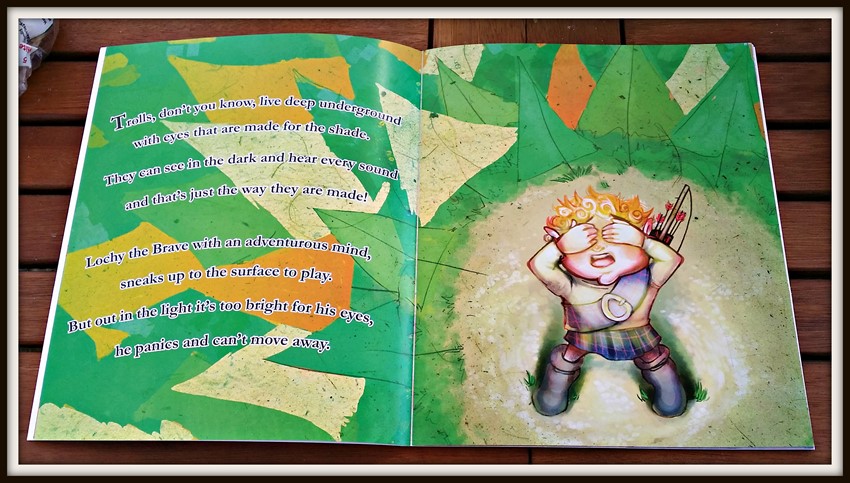
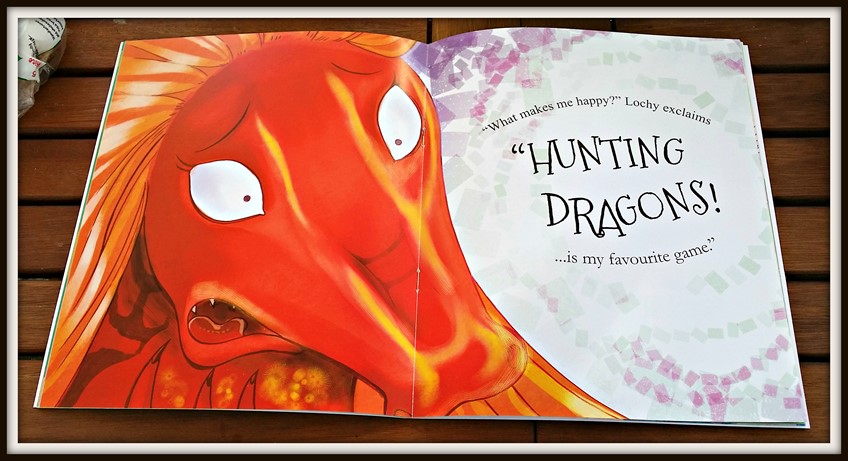
But, Trolls’ eyes are made for the shade as they live deep underground. Lochy the Brave decides to come up to the surface to play, but the light is too bright for his eyes, so he panics and can’t move away.
Aron was very intrigued as to why the light bothered Lochy’s eyes, and asked a series of questions related to the sensitivity of eyes:
‘Why did Lochy’s eyes hurt when he looked at the light?”
“Why did he cover his eyes?”
“Why is the sun so bright?”
“Why do Trolls live underground?”
Ok, maybe not the last question, but a perfectly acceptable question! Aron was actually quite empathetic towards Lochy, explaining that Lochy’s eyes hurt and that he needs to see a doctor. “Ah,” I said, “Well that’s what we need opticians for, to test our eyes so that we can check whether our eyes are hurt. They are doctors for the eyes.”
That sparked off a whole series of questions about opticians… we talked about testing eyes for about 5 minutes before I was able to get Aron to turn the next page, but I was secretly proud that I had sparked Aron’s interest about the health of his eyes and how he needed to look after them. On to the next page!
Mirren the dragon hears Lochy’s’ sad cry and, concerned that Lochy is in trouble, she ushers Lochy to the Eye Clinic at once for his eyes to be seen.
Aron agreed.
“Yes, he needs to go to the Eye Clinic!”
“Why?” I ask.
“Because he needs to check his eyes are not broken!”
That’s one way of putting it…
Mirren assures that even though Lochy can’t see her, help is at hand by a friend that lives far away. Mirren wants to take Lochy away from this glen and count to ten.
I asked Aron to point out the numbers as he counted to ten, which he completed correctly on the page. However, Aron is very proficient with numbers, so whether he can see the print or not is inconclusive. Nevertheless, he enjoyed counting to ten many times over!
Swoosh whoosh POP! Mirren and Lochy arrive at the Eye Clinic and EyeRon gets to work explaining the fun eye exams available. Lochy is still covering his eyes and Aidan is still fixated on the word, ‘POP!’ which he repeats over and over again with a huge grin on his face.
“What makes you happy…?” EyeRon asks.
“Hunting Dragons!” Lochy exclaims, which sends Mirren into a state of terror.
Nevertheless, the tests commence, starting with a fun game counting some broken rings on Mirren’s tummy, complete with some instructions to the parent/carer on how to administer the test to the child.
VAT Instructions to Parent/Carer:
Hold the book normally (30 – 40cm in front of your child).
Cover one of your child’s eyes with your hand.
Ask your child to point (or count) all of the broken rings (Alternatively, point to the rings and ask if they are broken).
Now cover the other eye and repeat the test.
Vision Test Results
“Searching for the Broken Rings.”
This will test the ability to see fine detail. Your child should be encouraged to find the smallest “broken ring” and should do equally well with the right and left eyes. A 3-year-old child should accurately identify 5 or more rings. From 4 – 5 years of age they should see all 7 correctly.
Aron had great fun counting and pointing to the broken rings, which he completed very successfully. He refused point blank for me to cover his eye, so he covered his left eye and then his right eye, following all the instructions I relayed to him. Aidan’s ears pricked up at the sound of Aron’s counting and decided to have a go himself. It was virtually impossible getting him to listen to me explain that I needed to cover one of his eyes before he started counting, so I just left him to it… This lasted for about 5 minutes before we could turn the page.
The next page was by far the most enjoyable page for the boys as they got to use the 3D Glasses supplied at the back of the book to test their colour vision.
ST Instructions
Make sure to put on your 3D Glasses.
Now point to or count the dragons on the test card.
Vision Test Results
“3D Glasses Find the Dragons.”
This test checks that both of your child’s eyes are working well together. All 3 dragons should be visible with the glasses on. (Your child will see only two if his/her eyes are not working as well together).
I wasn’t surprised that the boys had the most fun trying out the 3D Glasses, but I did manage to get them to take the test properly. Aron successfully saw all 3 dragons and I even added a bonus game where if he covered the blue lens the blue dragon would disappear and if he covered the red lens the red dragon would disappear and there would be only two dragons left. Aron was intrigued! So, he took the test over and over and over and over again, even demanding Aidan take the test and yelling orders at him to “Cover the glasses!”
Aidan walked off to test other parts of the flat with the 3D Glasses…
EyeRon was happy that Lochy had completed all the tests and diagnosed that sunglasses were the best option to protect his eyes from the bright light, “to keep your eyes working their best!”
I repeated to Aron that wearing sunglasses during the day when the sun is out will protect his eyes from the bright light and I was happy that the book had delivered that message very well through fantastic illustration and easy to understand sentences.
The book concludes with Lochy realising that his rescuer was Mirren the dragon and he vowed to never go hunting for dragons with the trolls again. So off they went to play together as best of friends now that Lochy’s eyes were protected from the bright light.
What did I like most about Eye See the Dragon in the Glen?
I liked the clear message the book sends to parents and children about the importance of testing vision from an early age. Each page illustrates this message and respective tests beautifully, whilst maintaining that fun factor to keep the child focussed and entertained. The book also offers some very insightful information and guidance on testing your child’s vision at home and what the results may mean.
What to watch out for:
The book offers a caveat that, although its mission is to promote the importance of early vision testing in young children, it should never be used as a substitute for a comprehensive eye examination. Nevertheless, all of us thoroughly enjoyed the book and the lessons we learned were invaluable.
Other points to note:
If you have any concerns regarding your child’s vision you should contact your local optometrist straight away.
Rating:
5 out of 5 for so many reasons, one of which is that the book offers a fantastic way of educating your child on vision testing and invites an interest into looking after their eyes to set them up for the future.
I’d like to thank Children 1st, OneVision and Optical Express for coming up with such a fantastic book to support children’s eye health and I will be supporting them wholeheartedly from now on – well done!
Never miss a new post!
Don’t forget to tailor your preferences, so you just get the posts you want to read!
Many parents ask the question, ‘When does teething begin?’
A baby’s first tooth can appear anytime between three and twelve months, they all develop at different stages. Surprisingly though, teething symptoms can appear as much as two to three months before that first tiny tooth does. Signs and symptoms of teething can vary from one baby to the next. My sons both teethed at different stages of their development; one of them started at around 5 months and slowly cut his teeth with lots of gnawing and drooling! The other one didn’t get his first tooth until he was around 11 months old and they just seemed to spring up without any problems. So all babies are different, but you may observe one or all of the following:
Dribbling
You might find that your baby’s vests and tops are suddenly soggy. Fastening on a dribble bib to keep baby more comfortable (and cleaner), and gently wipe baby’s chin throughout the day to stave off chapping. You can pop on a little barrier cream to help prevent their chin from getting sore.
Gnawing
You may find baby always puts their fists into their mouths and gnaws away. They may even give you little nips at your fingers or breast (ouch!) or they may find that they try to put your jewellery in their mouths; you can help relieve the pressure baby feels by giving them teething aids that will help soothe their gums.
Crying
Some babies breeze through teething with hardly a whimper, while others seem to suffer from a good deal of pain — which they feel compelled to share with you in the form of whining, crying runny noses and generally miserable. Talking to your health visitor or doctor about administering pain relievers such as infant ibuprofen can help; also some parents find homeopathic treatments relieve teething symptoms and also some teething gels offer comfort and relief.
Fasting
Since sucking movements can add to the teething pressure or pain, at times your baby may refuse to nurse or eat, or may nurse briefly and then turn away. Keep at it, and don’t worry, it quite often only lasts for a few days.
Waking
Especially when baby’s working on cutting that very first tooth, your baby may fuss during the night as well as during the day, so be prepared for a little extra disturbance and the need for cuddles, it won’t last long.
Doctors tend to disagree on whether diarrhoea and fever may also be signs of teething (though most mums who’ve been through it will tell you they are).
Regardless of the symptoms your baby exhibits, you’ll be desperate to give baby some teething relief. Counter pressure often feels good on the gums, so offer her something to chew on — if it’s icy and cold it can provide a numbing sensation. Try a frozen washcloth; a teething bangle or toy; Frozen fruit cut up into small pieces, strawberries, melon, cucumber and watermelon cut into spears can soothe sore gums and can help to reach the back teeth that start to cut through, Some teething aids I have come across on the high street tend to be quite hard, so shop around to find the most suitable for your baby. If baby is a little older they may find a biscuit may help or a toasted wholemeal bagel (always supervise baby) or offer cold drinks or food. You can also try rubbing baby’s gums firmly with your (clean) finger — they might not appreciate this at first, but will after the pressure begins to ease baby’s throbbing, sore gums.
Motherhood Diaries recently received a £30 voucher, which couldn’t have come at a better time as my youngest, Aidan, goes through shoes like his dinners, quickly and with no remorse. So, I decided to use them to buy some Clarks my first shoes for Aidan and this is how we got on:
In the Somerset village of Street in 1825, James Clark was busy working at the tannery owned by his brother, Cyrus. Among the sheepskin rugs, the off-cuts and cast-offs were piling up when James had a brainwave: “Slippers!”
And the rest, as they say, is history. A few stitches here and a few years later, the sheepskin slipper was born.
The sheepskin slipper was the very first Clarks shoe and Clarks have been going strong ever since. Clarks stock all kind of shoes, from court shoes and winklepickers to wedge heels, sandals and sneakers.
Clarks rebranded in the noughties to keep up with competition and moved their manufacturing to overseas to maintain their stance in today’s high street.
New technology, state-of-the-art facilities and love of shoes means they’re not only the number one shoe brand in the UK, but they’re also the world’s largest casual and smart shoe company, and the fourth largest footwear company on the planet!
The shoes you can get from Clarks are:
Women’s shoes
Men’s shoes
Kid’s shoes
School shoes
Baby walking shoes and boots
Babies pre-walking shoes and cruising shoes
Reviewer:
Aidan (2 years old)
Which shoes did we pick from the Clarks range and how much did it cost?
Minnow FST Clarks Boys Shoes in Brown Leather. I couldn’t find the shoes on Clarks’ website, most likely because they have been discontinued, but we got the pair for half price and on sale at £17.99! We really liked the Clarks Roamer Craft* and Clarks Converse Crocs shoes, but we ended up going for the Minnow FST Clarks Baby Shoes.
Where can you buy Clarks baby shoes?
In all Clarks* and participating shoe stores in the UK.
The Clarks ‘First Shoes’ range offers different shoes to fit the rapidly growing feet of a baby/toddler.
The ‘Pre-walking’ Range
Clarks’ Pre-walking range* offer shoes for non-walkers, with a firm but gentle heel stiffener to cradle unstable feet. The shoes offer ultra-soft lining, which is easy on a baby’s feet and skin, and fully adjustable rip-tape fastenings to provide a secure fit to allow parents to remove and put on shoes – even with constant motion!
The pre-walker shoes are made of breathable premium leather to ensure the baby’s feet never get too hot or cold. A built-in toe protector combines with soft and squidgy leather for comfort, flexibility, and allowing the baby’s feet room to wriggle and grow.
The sole has strong gripping rubber which helps give confidence with every movement and a strong yet super-flexible sole provides all the support baby will need. Whole and half sizes are available with a range of widths to ensure the perfect fit.
The First Shoes Walking Collection
The First Walkers Collection* offers shoes for the baby who is taking their first wobbly steps. The heel is specially designed for babies learning to walk and features a firm, but gentle heel stiffener to cradle unstable feet. The shoes offer an ultra-soft leather lining, which is easy on baby’s feet and gentle on baby’s skin.
Fully adjustable fastenings provide great security and ensure the best fit and the design that enables parents to open up the shoes easily, putting them on and taking them off with no problems. These first shoes offer contrasting materials, stitched details, on-trend colour and colour combinations to mix and match with the baby’s wardrobe.
The shoes offer breathable, premium leather uppers which mean little feet are never too hot or cold. The toe is soft and squidgy for comfort and flexibility, yet with growing room built-in, allowing baby’s feet to wriggle, wiggle and grow naturally.
The sole is developed to be super flexible while giving all the support wobbly walkers need. Soles also feature strong gripping rubber, giving confidence with every step. Shoes are available in whole and half sizes and a range of widths to ensure the best fit for growing feet.
Both of my boys go through shoes so quickly because they are very active and play outside on multiple terrains every day. So, when I was offered the chance to review Clarks shoes for Aidan, 2 years old, it was very important to find a pair that not only withstood the test of time, but as spring/summer was coming up and there would be days when it could still get cold, I wanted to find a pair that was versatile enough to withstand the test of UK weather too.
It was coming up to that time to measure Aidan’s feet* again, so we ventured to Elephant & Castle’s Clarks outlet store, hoping there would be more variety of shoes on offer than our local store in Stanmore, which is tiny.
It was a bit of a trek to get there, but we had to be at London Bridge for Aidan’s dental appointment anyway, so it was only a 25-minute walk to Elephant & Castle Shopping Centre, where we found the surprisingly big Clarks outlet store quickly.
A very helpful staff member ushered us to sit down by the kids’ shoes and, as Aidan was fast asleep and snoring away after our long journey, the lady quickly measured his feet before he woke up. I was surprised at how much his feet had grown! His left foot was 6 ½F and his right foot was a 6G, so the lady advised us to find a 6 ½F to accommodate both of his feet.
Having a look at the variety of shoes on display, we only found one pair of shoes in a 6 ½ F and I actually really liked them. They were half price at £17.99, so I tried them on Aidan’s feet, they seemed to fit, and I bought them with the vouchers.
So, what are the Minnow FST Clarks Boys Shoes in Brown Leatherlike?
The brown leather Minnow summer shoes have adjustable Velcro fastenings, complete with a full heel cup to easily place the shoes on Aidan’s feet. The shoes’ leather material upper felt strong and sturdy, with attractive stitching detail to add to the quality. The casual summer shoes have open panels and padding to the collar and insole.
These Clarks shoes are very versatile with a lovely brown colour to suit most outfits. Aidan could run about quite easily in these shoes and didn’t seem at all uncomfortable when wearing them.
Sadly Clarks don’t make the Clarks Brown Leather Minnow First Shoes.
What did I like most about Clarks Brown Leather Minnow First Shoes?
The great quality of the leather material on these baby walkers shoes and the open panels ensure the feet breathe inside the shoes. The Velcro fastening made it really easy to slip the shoes on and off my busy boy.
What to watch out for:
I haven’t noticed anything negative about these shoes yet, as they are still quite new. Aidan has been out to the playground, the shops, and in the garden with these shoes and they still look remarkable. There is definitely a great range of quality Clarks shoes for toddlers at a great price, and if you can catch them at half price like we did, you’re onto a winner!
Clarks’ website offers a bank of information* on how baby’s feet grow and the different styles of shoes available, so it’s worth looking and educating yourself on the shoes that are ideal for your baby’s feet.
Rating:
5 out of 5
Great quality shoes from Clarks who seem to be very knowledgeable on how to look after babies’/toddlers’ feet, so I would feel reassured to go back to them and buy the next stage shoes for both of my boys. I am now on the lookout for baby girl Clarks shoes for my daughter!
If you are still struggling with measuring your toddler’s feet, you can contact Clarks’ customer service*. I couldn’t find an email address but they have a live chat service you could use. Prewalker shoes should be correctly fitted and the right size for baby’s feet to grow.
You could go into the store too and have a proper fitting done for free.
*We were gifted the Clarks shoes as part of a 100% honest review – all thoughts and opinions are our own
*Links marked with a ‘*’ are affiliate links which means I may earn a small commission on qualifying purchases
Sleepless nights and children
How to help baby sleep longer at night is a common question. Having been there with each of my three children I can both sympathise and offer my advice to parents on this problem.
Firstly, let’s not forget that demands are natural for very young babies who will be waking up during the night for feeds. Their stomachs are small, and it is normal for them to cry out for something to eat.
What seems to work in settling a baby at bedtime is a bedtime routine. A bath, feed and a story – before tucking them in with a goodnight kiss, will establish the cues that they can later associate with sleep.
Although, many people suggest a favourite toy as a comforter I used my mother’s tried and tested routine of swaddling my children as babies. And, it worked! We are sure that this technique is reminiscent of the womb.
As your baby grows, they will be able to sleep for longer. However, I can recall having problems well into the toddler years – particularly with early rising!
What did I do? I stuck it out! It is so easy to take the less responsible option but, I didn’t want this going on forever. I knew that as toddlers they didn’t need feeds during the night. So, if you are trying to soothe them with a feed, don’t. This will become their aid for sleep. Instead, offer them water instead of milk. You will probably find that the alternative isn’t worth waking up for.
Yet, like me, you may still have a battle on your hands. Cries of dissatisfaction will prevail. But, don’t choose the easy route, or offer yourself as the comfort blanket. Show them that you mean business. I had done my homework during the day – I was sure that naps in the day wouldn’t interfere with their sleep at night and I knew that they wouldn’t be hungry. I would check in, limit the chit-chat and give them a quick kiss. Also, I would say, “It is time for sleep, I love you and I will see you in the morning.”
In the beginning I would do this countless times. But, I would lengthen the intervals. Just as I was ready to give up – silence!
The aim is to teach them to get into the habit of going to sleep on their own.
Now, my children have at least ten hours of sleep each night. And, have been doing this since they were two and a half. I was conscious of the fact that during their school years they would need a good nights’ sleep so it is essential to break bad habits as early as you can.
Subscribe here to stay on top of new content added to Motherhood Diaries.
My parenting journey reads like many others of us who have started down the path of believing the “experts” before realising that their inner voice sings a different song.
Like these others, I too have a sacrificial eldest child who suffered the outrages of feeding schedules, sleep training and tummy time. I have a very different relationship with him to the one I have with the girls and I feel like it will be a long fight for us both to repair the damage of those first few months.
I remember, with absolute horror, leaving Alfie to cry for a few minutes each time he was put into his cot. I remember telling a curious relative that he “needed a few minutes to calm himself” because that is what I had read and the number one best-selling baby author couldn’t be wrong, could she?
By the time Alfie was six months my inner voice had drowned that “advice” and we were really starting to find our feet and trust our instincts with him, mainly due I think to the problems he had with eczema. It was left to us to find answers and to listen to what our boy was telling us and that helped us gain confidence as parents to know what was right for him.
In the last four years we have become parents who are guided by and trust their children: We feed on demand so that the babies have their milk when they want and take as much as they want. We practise Baby Led Weaning which means our children are in control of how much, what, and when they eat. We deal in natural consequences rather than punitive punishments. We allow the children to assess their own risks, usually while Keith supervises and I hyperventilate somewhere out of sight.
Despite all of that, there is one area where we were slow to modify our expectations – bedtime.
The children have long had the freedom to nap as and when they see fit – especially the two girls who have been Velcro babies from birth which has meant they have grown up spending as much time as they want in slings and sleeping when the mood takes them – but bedtimes were always something different.
We wasted hours upon hours in darkened rooms rocking, bobbing, singing, shhhing, patting, in various combinations to achieve the holy grail of Bed Time. The calories we must have burnt sweating under the dead weight of sleeping child. The pulled muscles we suffered trying to lower them into a sleeping position without waking them.
Why?
Because everyone has to have a bedtime.
When you think about bedtimes in the context of Attachment Parenting, bedtimes, like a lot of parenting assumptions actually give some very negative messages to our children and become counter intuitive.
Bedtime means I know better than you when you are tired and need to sleep.
Bedtime means I don’t trust you to make sensible choices.
Bedtime means I deserve some time without you around.
None of which actually holds true for me.
My children know damn well when they are tired. It’s roughly the time they become completely irrational, whine uncontrollably and make me want to punch myself in the head for a little light relief. Incidentally this is exactly the same way I act when I’m tired. The difference is that I recognise these behaviours as tiredness and at least try to remove myself from polite company. If I come from the standpoint that my children, like me, are intelligent enough to recognise their behaviour then maybe my role as a parent isn’t to force them to be tired by 7pm sharp, but to help them recognise what it means to be tired and what they can do to help themselves feel less like the world is ending.
My children also know how to make sensible choices – Except the baby. She has proven to me that her idea of sensible is to actively seek out large drops and throw herself off them with a whoop and hang loose hands. She is never allowed near sharp objects or any sentence starting “I bet you …” – The other children can make sensible choices though, they prove this to me on a regular basis. Given free reign, they don’t stay up until 2am every night, they take themselves off when it suits their body clock. Alfie is an early bird: He’s tucked up by 7pm and wakes before 6am. Esme is a night owl: She won’t sleep before 8.30 and will kick your ass if you try to make her up before 7am.
Do you want to know how many hours we have spent trying to change those facts? Many. Do you know what we achieved? Nada.
Well except to create a new saying.
It goes something like this …
YOU CAN’T OUT-STUBBORN A BATSFORD
Our children are going to bed at the exact same time that they have always gone to bed. The only difference now is that we aren’t taking hours out of our day to try and persuade them otherwise. Instead Esme stays up with us, sometimes on Keith’s back, sometimes “helping” me tidy up until she starts yawning and then with Keith or I will take her to bed for cuddles until she drops off. Alfie wakes up at sparrow’s fart and either plays in his room or goes to the dining table to eat the bowl of cereal Keith has left out for him. Neither of these things involves me wanting to cry with frustration which I consider a win/win.
All of this is possible because I am genuinely blessed enough not to feel like I need “time off” from my children: Perhaps because I am at work every day meaning I always feel like I’m playing catch-up with my family time. I’m also blessed that my evening pastimes don’t involve ritual animal slaughter, getting fall over drunk, chasing the dragon, orgies, or anything I wouldn’t want to explain to my children.
There are plenty of hours when they are asleep for all of that.
I love Attachment Parenting for many reasons, but way up there on that list is the fact that it allows so much more time and energy to be poured into positive activities rather than into battles. Like so many of the realisations Keith and I have come to since we started this journey, the question becomes why the hell didn’t we do this earlier?
How did/do you sleep train your child(ren)? Did it work? Please share your experiences with us by leaving a comment below this post.
Subscribe here to stay on top of new content added to Motherhood Diaries.
If you’d like to share your wealth of experience and knowledge with our community then you can apply to become a Motherhood Diaries’ Contributor here.
Reading Chest Review
Research shows that reading with children for just ten minutes per day can make a dramatic difference in how they perform at school. But, finding enough interesting reading material at the right level for your child can be difficult, with few schools changing books daily and few libraries providing a solid selection of reading scheme books.
However, now you can encourage children to develop their love of reading with Reading Chest, an innovative book rental service for primary-aged children learning to read.
Reading Chest offered three months of free access to the Bronze Level Membership as part of our review on Reading Chest, and here are our findings:
Reading Chest, founded by Liz Walker, a former primary school teacher and mother of three, is the UK’s only through-the-post book rental service for reading scheme books aimed at children aged 4 – 9. For a monthly membership fee, children receive regular deliveries of books from Reading Chest’s extensive selection of reading schemes, including Oxford Reading Tree, Project X, Rigby Star and Collins Big Cat. These include both fiction and non-fiction titles.
There is a great selection of reading schemes for children and each delivery comes complete with a pre-paid return envelope, making it easy for even the busiest of parents to provide their children with some great choices for their daily dose of reading.
Monthly membership starts from £9.95 and all new members receive a book bag, a bookmark, a reward chart and stickers. Certificates are available to download from the Reading Chest website and budding literary critics can even see their own book Reading Chest reviews published online! Check to see if you can find a Reading Chest discount code or Reading Chest vouchers online before you subscribe.
Reviewers:
Aron (3 years old)
Review:
I was very excited to receive an offer to review Reading Chest’s service as Aron is a very keen reader, and even though he’s only 3 years old and this service caters for children from 4 years plus, Aron has in fact begun to read. He learned phonics when he was just shy of 3 and can read a lot of the two to four-letter words in the English language. So, I am very keen to build on his reading skills.
To get started, I visited Reading Chest’s website, www.readingchest.co.uk, to sign up. Here is a screenshot of their home page:
Step 1 – Prices & Packages:
When you click on ‘Sign up’, you are taken to a page that shows you the membership offers available – ‘Step 1: Prices & Packages’:
The packages available are:
Bronze Package
Silver Package
Gold Package
You receive an initial delivery of:
4 books
4 books
6 books
How many swaps per month?
2
4
Unlimited Swaps
Based on returning 3 books at a time this will give you up to:
6 books each month
12 books each month
Unlimited amount of books each month
How many book lists can you make?
1
1 or 2
1, 2, or 3
A good supply of books for 1 reader. All books selected will be at the same reading level.
A great supply of books for 1 reader or good to share between siblings at different reading levels.
Unlimited books for 1 reader or good to share between two or three siblings at different reading levels.
Price
£9.95
£12.95
£15.95
I was offered 3 months free for the Bronze Package, so I signed up to the Bronze Package.
Step 2 – Choose a Book Band:
You are then taken to a page where you can choose Reading Chest Book Bands.
As Aron is at the very beginning of his reading journey, I picked ‘Stage 1’, which is the ‘Pink book band’ and then clicked on, ‘Go to the next step!’.
The recommended reading age is 4 – 5 years old. If you are unsure of which band to pick, the page below offers you the chance to look through the sample pages to see if the selected book band is right for your child.
Step 3 – Reading Scheme Selection:
You are given further options to tailor the package to meet your child’s interests.
01 – You can select whether you would prefer to read fiction, non-fiction or both. I selected ‘Both’.
02 – You can tell Reading Chest the reading schemes you would like. All the schemes are selected by default, but you can exclude particular schemes by unchecking the boxes. I just left it on, ‘all schemes selected’.
03 – Your choices above will determine how many books you will be given. The selection I picked will give me 137 books. Sounds like more than enough to me!
Step 4 – Your Details:
Here you’ll get the chance to input all of your details..
Step 5 – Correspondence Details:
You are then asked to fill out your address details, your child’s name (as it will appear on the envelope) and whether you’d like to receive an occasional email newsletter from readingchest.co.uk.
Step 6 – Payment Details:
You get the chance to review your choices here and confirm your selections are correct. You will be asked to enter your credit card details.
Step 7 – You’re done!
Our first delivery should be with us within 2 -3 working days. So, now we wait!
Step 8: We receive our package!
We were very excited when a package came through the post and Aron anxiously ripped open the white envelope (above) to go through all the items in his red book bag.
So, what did we get?
One super cute red book bag for Aron to carry his books in;
One A4 pre-paid envelope;
One bookmark;
One set of stickers;
One reward chart;
Leaflet on Reading Chest, welcoming you to the service; and
4 x books in the pink band. These are:
Tiger’s Family
My Cushion!
Who is it?
Got It!
I placed all of the items in the red book bag provided for Aron, so that he could pick out his lucky first book to read. He brought out the book, ‘Who is it?’
Who is it? – Series created by Roderick Hunt and Alex Brychta – Oxford Reading Tree Scheme
‘Who is it?’ is a very thin book, 8 pages in length, but at this early stage of reading, I can imagine a four-year-olds’ concentration span lasts about five minutes when they’re reading. So, I knew the length of the book wouldn’t bother Aron. At the back of the book, a label was added to let you know what book you are reading, the book band, the scheme and the book’s stock code.
Inside the front cover, there is an address label for ‘Reading Chest’ to remind you this book belongs to Reading Chest and it is not a keepsake. The inside cover very helpfully tells you what to do with your child before reading the book, during reading, and a little bit about the words in the book. More specifically, it talks about how to read the book to your child, ensuring they gain maximum benefit from reading through the scheme, i.e. talk about the words you see and help your child sound out some of the words in the book.
Each of the pages in the book only contains one to three words, with large illustrations above each sentence. This helped Aron grasp what the words meant in relation to the pictures and what the book was about as a whole. ‘Who is it?’ is set at a family and friends gathering, under a lit marquee, and friends and family make shadows using the light and themselves, so the others have to guess what they are. Everyone has a go, including dad, who dresses up as a spaceman.
There is an ‘After Reading’ instruction from Reading Chest to prompt me to ask Aron about what he thought of the shadow game and how dad made himself into a spaceman using household items, such as a colander and some bedding.
We dived into a deep conversation about shadows and throughout the day Aron pointed out his shadows to me whenever he noticed them. He even learned some words in the process!
Tiger’s Family – by Shoo Rayner and illustrated by Jon Stuart – Project X Scheme
Tiger’s Family is another short book, containing twelve pages in total, and the concept is pretty much the same as ‘Who is it?’ The book, helpfully, tells me what I should be doing with Aron before, during and after reading the book and warns me of some tricky words Aron might find during this reading.
Tiger’s Family is about a boy called Tiger and a typical day with his family, who are all aptly named at the beginning of the book. Mum has made some cakes, which all get hurled to the floor as Tiger and his brother runs through the kitchen door. The book very cleverly talks about the varying emotions each member of the family are faced with, i.e. ‘Mum is sad,’ ‘Dad is mad’, and I am instructed to talk with Aron about why mum was sad and whether Aron liked the book. I believe this is to get him to talk about his own emotions and teach him to express himself through words.
Again, each page only has one – four words, to not overwhelm the child during reading, and a lot of the words are repeated to help imprint that word onto the child’s brain.
I was very impressed that Aron already knew how to read the word, ‘Tiger’, but I had to help him with the tricky words that were forewarned in the front of the book. Aron enjoyed sounding out ‘sad’ and ‘mad’ and even acted a little angry when the cakes fell onto the floor.
Got it! – By Charlotte Guillain and Ley Honor Roberts – C. Collins Big Cat Phonics Scheme
Got it! Has 15 pages in total and uses three to six words in a sentence. There are no instructions at the front of the book, but a more detailed instruction sheet at the back entitled, ‘Ideas for reading’, which goes into more detail about how to read to the child and what to discuss with them during and after reading.
Got it! Is about a father and daughter at the beach, trying to catch a crab using a net and tipping the crab into a pot. The daughter then tips the crab back into the pond it came from, with an illustrative final two pages showing the process of how she caught the crab.
I was instructed to read the title and blurb with Aron, focusing on blending the individual words together. I also discussed rock pooling and what we need it for. I asked Aron what he could see in the pictures and he intelligently pointed out the beach, the net, the pot and the crab. He even explained what the daughter was doing, ‘She is catching that crab in the net’.
I wasn’t able to challenge Aron to suggest other words that ended in ck, for example, or to draw a picture of equipment needed for rock pooling, as he isn’t at that stage yet. But, if I keep on with this reading activity at least once every day, it won’t take long for him to widen his vocabulary enough to complete these stages at a later date.
My Cushion! By Alison Hawes and Tania Hurt-Newton – Rigby Star Scheme
My Cushion! Has eight pages in total and uses very simple wording, mainly repeating, ‘My Cushion!’ in various contexts. It contains only two keywords, ‘my’ and ‘no’, which I felt was just enough to help Aron understand and memorise the words properly before moving on.
The book is all about a brother and sister fighting over a cushion, which finally breaks, and mum comes in and exclaims, ‘Oh no! My cushion!’
My Cushion! Was Aron’s favourite book. He wanted to read it about five times before putting it down. I think he related to fighting over something with his brother.
I was instructed to ask Aron why mum was upset at the end of the story and how the children felt during the book. Aron said it was everyone’s cushion, which was actually right, so I couldn’t argue with him on that point. Although, I did mention that too much fighting over something could lead that object to break and then no one could play with it afterwards.
Towards the end of the day, I noticed Aron offer his trains to his brother. Perhaps, the book had left a mark on him to not fight over his toys with his brother? Well, perhaps, just for now…
Sticker chart
I emphasised to Aron that because he had read all four books so beautifully, he was allowed to place four stickers on his reward chart to progress his journey through the reading map. I asked him about which colour stickers we should add to the reward chart when he had successfully completed four pink band books. He answered correctly, ‘pink’, but decided it was more fun to take out all of the stickers and add them to the fridge.
I helped him pick out four pink stickers instead and he took great pride in adding them to his reading map.
After sampling Reading Chest’s first book session, I felt very proud of my son that he had read four books so well, and, most importantly, I felt like Aron had progressed in his reading. I decided to hold onto the books for a couple more days so I could get Aron to read them again before placing three of them back in the pre-paid envelope and sending them back to Reading Chest to swap for three more books.
I really enjoyed the whole service. I felt like I had learned how to be a teacher and not just a parent, and I want to carry this on every day with both of my boys. I believe Reading Chest will make up a valuable part of both of my sons’ reading education and help them expand on their already growing love for books as well as their reading levels, even up to Oxford Reading Tree Level 7 books or Oxford Owl Readers before they get to that stage at school!
The great thing is you can help them to read by yourself and you don’t need to be a teacher to do that. I may even get some alone time if I could leave the kids to read by themselves. One can dream…
What did I like most about Reading Chest’s service?
I liked how simple it was to set up the service and how much I learned about teaching my son to read.
Other books that are great are:
Barney 1 2 3 4 5 Senses
Barney I Love Bugs
Sail Back Dinosaur Bug
What to watch out for:
One book came with a huge fold down the front. Make sure you make a point of this in the sections provided at the back of the pre-paid envelope so you are not charged for the damage. The back of the pre-paid envelope offers you three options when returning the books, i.e.
‘Received the wrong book(s)’
‘Book(s) damaged – sorry!’
‘Book(s) received already damaged’ – This is where I pointed out that the front of ‘My Cushion!’ had a fold down the middle.
Other points to note:
As these books are not yours and they will need to be returned at some point, you have to make an extra effort to not let any little people get their hands all over it. I felt very bad for Aidan, who is only two, because every time he wanted to handle the book, I had to snatch it back off him and take control over his interest.
Rating:
5 out of 5
Reading Chest is a fantastic service and it will not just help Aron to progress with his reading, but also build on our strong mother/son relationship. I just wished Aidan was old enough to join us too.