Help your child discover the recipe for success and reach their goals and ambitions – Mindscreen Review – Part 9
*This post and the proceeding/subsequent posts in the series are sponsored by Mindscreen – an online mental health and wellbeing tool which guides children towards higher self-esteem, at home or in the classroom.*
In Part 1 of our Mindscreen Self-Esteem Series, I talked about how to spot the signs of low self-esteem in your child by using an online tool called Mindscreen. If you haven’t done so already, please read the following articles in the series first:
In this article, we deep dive into Lesson 8, easyFuture and easyFeedback, the last lesson in the Mindscreen Experience series, which is about giving your child the opportunity to discover their unique “Success Recipe” and its “vital ingredients”. The boys were then invited to complete their Learning Improvement Measurement 3 online statements, which we then reviewed and discussed.
BEFORE YOU START
Please note – you need to purchase the Mindscreen Experience to access these lesson plans. Follow the link below to get 10% off your Mindscreen Package now.
Lesson 8, easyFuture is about giving your child the opportunity to discover the recipe for success and the vital ingredients needed to create that success recipe. What this means is that success comes with a process where all key parts need to be completed before you achieve said success.
It’s important that your child must start with a destination in mind because having a goal keeps them on course, even during the tough times.
I asked the boys to get right into it and turn to their Learner Diaries. Aidan and I have been watching Masterchef, so when I talked about a recipe needing vital ingredients to come out correctly, Aidan called out some elaborate ingredients like spice, citrus and mint.
Aidan was already on the right track because a success recipe is a lot like baking a cake, but we will go into that in a lot more detail later on.
Goals, commitments and destinations
First, I asked the boys to use the back of their Learner Diaries, so they could write ‘success’ somewhere on the page and circle it.
I then asked the boys to find two different colour pens (as we couldn’t find a red pen as advised in the Parent Guide.) I asked the boys to write ‘commitment’ in the other pen colour somewhere on the page too.
I then asked the boys to grab another blank piece of paper. This time I asked them to draw a line down the middle of the page and write ‘Destination’ on the top left and ‘Get There’ on the right.
The boys wrote six to eight cities under destination and were told to leave the other side blank for now.
They were interested to know where this lesson was going because they couldn’t work out what destinations had to do with your success recipe!
The definition of a goal is:
“An object of a person’s ambition or effort or an aim or the desired results.”
Oxford Dicitionary definition of goals
Aidan – “Destination is a goal you want to achieve.”
“Exactly. Your goal is where you want to end up and what you are aiming for,” I added.
So we were going to learn about the success recipe by starting with a destination in mind because having a goal helps us stay on course to get to that destination, even when the going gets tough.
“You start at the beginning of your journey and your goal is your destination. You have to take that journey however hard it is to reach that destination. Your success recipe is the successful way of reaching your destination. You’re going to create your own goals, and find out which career and study options will help you get there. Do you understand how valuable it is to create a success recipe?”
The boys nodded their heads but I wasn’t convinced they fully understood what I meant.
Baking a cake
So we’re going to use an example of baking a cake to illustrate what we mean by your success recipe helping you get to your destination.
You have all the ingredients you need to create a really delicious 3-tiered fancy cake. The cake is your goal and the cake ingredients are those little steps you take to reach your goal. I asked the boys to list out some ingredients needed to make an awesome cake.
Aidan – “Flour, egg, lime.”
Aron – “Apple. You can use anything to make a cake right? You can even use spinach to make a cake!”
Aron – “You can even use broccoli to make a cake!”
Me – “So now tell me, do we need the right quantity of each ingredient to make the cake or can we just throw them all into the bowl? What happens if we have the wrong quantities?”
Aidan – “It will go soggy or hard or it will look horrible”
Me – “What happens if you forget to put one ingredient in the cake, like a pinch of salt. Will it affect the cake?”
Aidan – “No, the cake doesn’t need salt.”
Me – “What happens if you forget to put two or three of the ingredients in the cake?”
Aidan – “It will go soggy or weird.”
Me – “If you forget the basic ingredients like flour or egg, will it still become a cake?”
Aidan – “No, it won’t even be a cake. You need flour and eggs to make a cake. I don’t like chocolate cake so you could leave chocolate out.”
Me – “But what happens if you miss the main ingredient like flour?”
Aron – “You won’t even be able to make a cake. It’s the most important ingredient in the cake!”
Aidan – “It will be a flat weird thing.”
Me – “Now what happens if the cake needs to be baked for a certain period? Does it matter how long it needs to be baked for?”
Aidan – “Yes otherwise it may be undercooked or overcooked.”
Me – “So what happened if we had all the right ingredients and quantities but we only cooked it for half the time?”
Aidan – “It will be undercooked.”
Aron – “It will be flat, it will be dangerous to eat because the ingredients will be raw.”
Me – “What happens if you overcook it?”
Aidan – “It will burn.”
Aron – “You won’t be able to eat it, it will be charcoal.”
Me – “Right! And what about the right temperature? Does that matter?”
Aidan – “Not really.”
Me – “What if it’s on really high heat?”
Aidan – “It will be overcooked.”
Me – “What if it’s on really low?”
Aidan – “It will be undercooked, flat and soggy.”
Me – “So is it true that if you have the recipe, you use all the right ingredients, all the right quantities, you bake it for the right length and temperature, you will have a very successful 3-tier cake?”
Both boys shouted yes.
I told the boys that becoming successful is like baking a cake. You need the right ingredients, the right quantities and it needs to be cooked at the right temperature and length until you get a delicious cake.
How are your skills like the vital ingredients in a cake?
I told the boys we were now going to brainstorm what ingredients they needed to make up their own success recipe and the boys collectively put:
I asked them to write these skills down on a piece of paper, but I was also going to list out the five vital ingredients that will make up a success recipe. If the ingredients they wrote wasn’t one of the five vital ingredients, they wrote it under ‘Commitment’. The vital ingredients went under ‘Goals’.
So what are the vital ingredients for success?
Vision/dream
Goal/plan/aim
Desire
Belief
Action
These goals are key ingredients because if you leave out any one of these, you won’t have your success recipe and you won’t reach your goal.
If you leave out vision/dream you can’t see yourself achieving your dream
If you leave out the goal you won’t have a clear target to aim for
If you leave out desire you will not be motivated
If you leave out belief you will find reasons why you can’t do it
If you leave out action nothing will happen
I then asked the boys to think about their chosen careers and how they could apply these vital ingredients to achieving their goals of being a YouTuber and a police officer.
Aidan struggled a bit with working out what he needed to do but we eventually got there in the end.
We took some time to discuss how the boys could apply these vital ingredients to a plan for success, whenever they were ready to start and implement their success recipe.
Destination – Get there!
The purpose of this exercise was to help the boys discover their clear goals and aims and how they get there was going to help them focus on where they were now.
I asked the boys to raise their hands if they wanted to be successful. Both boys raised their hands.
Everyone wants to be successful at something. I want to be a successful writer, the boys’ dad wants to be a successful photographer, Aron wants to be a successful police officer and Aidan wants to be a successful YouTuber.
I asked the boys to write down one city at the bottom of their list under destination. Aidan wrote London and Aron wrote Dubai. I then told them we’re going to go to those cities right that minute. The boys gasped.
I asked them what their very initial thoughts were.
Aron – “We can’t, we are in lockdown.”
Aidan – “First thought was I wanted to see the Statue of Liberty”
Aron – “Are we actually going to Dubai?”
Aidan – “Are we going now?”
Aron – “When are we coming back?”
Aidan – “How will we get there?”
Aron -“Don’t we have to travel to Asia to get to Dubai?”
Who? When? How? What? Where? Why?
We asked a bunch of questions that used all the main keywords. Who, when, how, what, where and why are keyword questions. When you have all of these six keyword questions you find out enough information to get to where you want to be or what you want to do.
We applied these keyword questions to Aron’s chosen career option which was a police officer.
Aron – “Where do I find the information to be a police officer?”
“Why do I want to become a police officer?”
“How will I be a police officer?”
“When will I get to be a police officer?”
“Where will I work as a police officer?”
“What do I have to do to become a police officer?”
Some other keyword questions Aron could have asked were:
Why do I want to achieve this?
When will I start?
How will I get there?
What will I need?
Who can help me?
Where will I go when I achieve it?
Setting the scene – The Ship Story
I wanted to now set the scene to help the boys understand that sometimes life blows us off course, but having a goal/purpose/direction helps us get back on track after the storm is over.
Me – “You have a small boat. It’s a lovely day, the water is calm and we are going to go sailing in the ocean. How do you feel about sailing the boat in an ocean?”
Aidan – “Scared? Fun?”
Aron – “Terrible.”
Me – “Now imagine that while you are sailing your boat, a storm comes. The waves are massive and the wind is turning you one way then another, knocking you off course. Eventually, the storm dies down, but because you have spun around during the storm, you might now be facing in a completely different direction from the one you originally chose. Do you agree in life that sometimes things are easy? We sail along with little or no effort, but at other times, it feels like we’re in the middle of a storm, being pulled in different directions with little control over our lives?”
Aron – “If you have a compass you can get back to the right path.”
Me – “Sometimes life can be really difficult and sometimes it can be easy. You can use your internal compass, as Aron cleverly pointed out, to get you back to your goal when you’re knocked off the path. Your compass is your focus.”
Aidan – “Why would you get knocked off course?”
Me – “Well sometimes the storm could mean that you are rejected, you don’t get the job you want, someone tells you you’re not good enough. But knowing your goal means you can get back to your original destination. But if you don’t know where you’re going you may continue to sail in the direction that the storm knocked you in but it won’t take you where you need to go, right?”
My goal
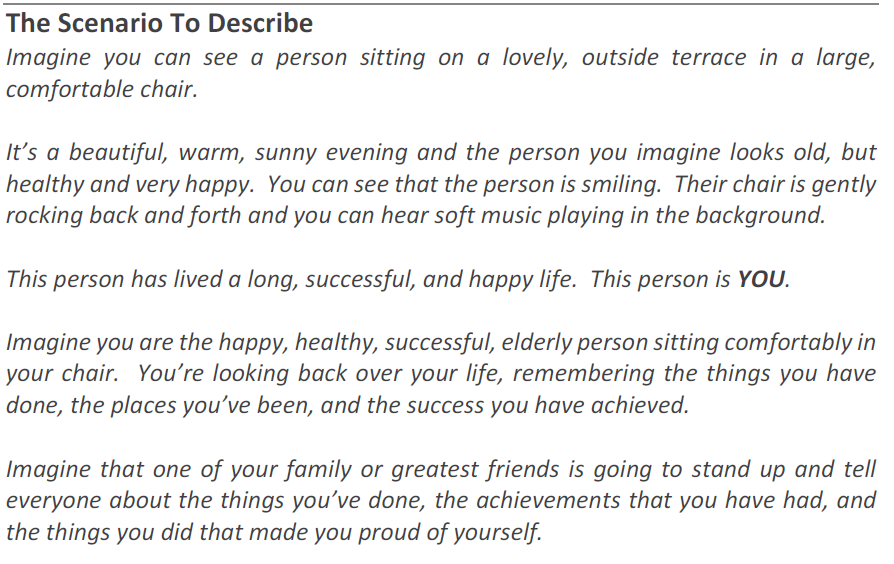
I wanted the boys to visualise another picture I was about to describe and to write down their very first thoughts in their Learner Diaries when I was finished.
I asked the boys what they would want someone to say when they stand up and tell everyone about the things they’ve done.
Aidan – “You have a happy life.”
“Are you rich? Do you have a family?”
The boys found this part really difficult. They struggled to visualise themselves as older and I figured it was because they weren’t old enough to put themselves in adult shoes. I persevered, though.
Aidan focused on a healthy and happy life while Aron focused on having a lovely life.
I told them to imagine that this speech was the very first draft of their life. Throughout their lives, they can expand on this speech, edit it, and add to it whenever they want as they get older.
I reminded them that successful people achieve amazing things because they decided what they wanted to do and they aimed for it. They visualised themselves achieving their dreams and they had a strong desire to succeed. They believed they could achieve it and they took action. These were the key vital ingredients to success.
My Study Choice Insights
The boys were asked to review the subjects they had previously underlined, circled or highlighted. I then asked the boys to turn to their “My Career Choice Insights” and review their previously highlighted career options.
I asked them to think about how their chosen subjects and careers could help them achieve their goals and told them to write their answer in their diary.
The boys struggled with this part and wrote subjects down. I told them to think about the bigger picture but by this point, they were done.
easyFuture
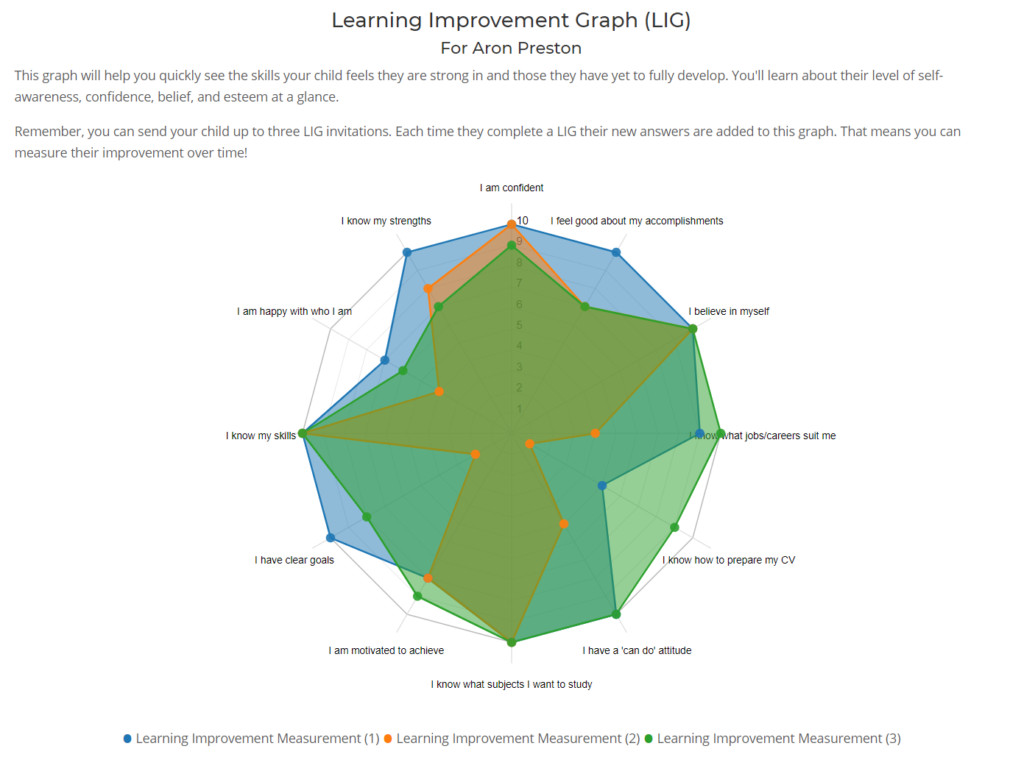
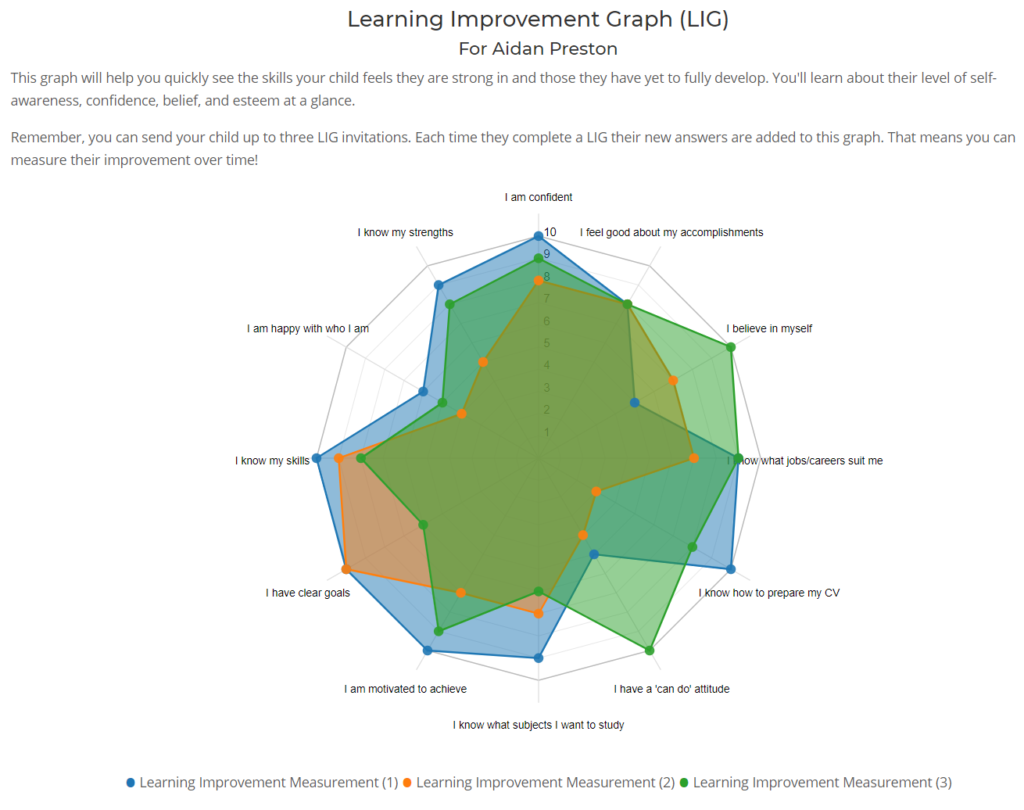
The boys had successfully completed all eight lesson plans and now it was time to complete their Learning Improvement Measurement (LIM) profiles one last time. The objective of easyFuture is to show the boys how much they have learned about themselves and encourage them to keep going, even after the lessons have finished.
The results were interesting and a stark contrast to the last LIM they completed.
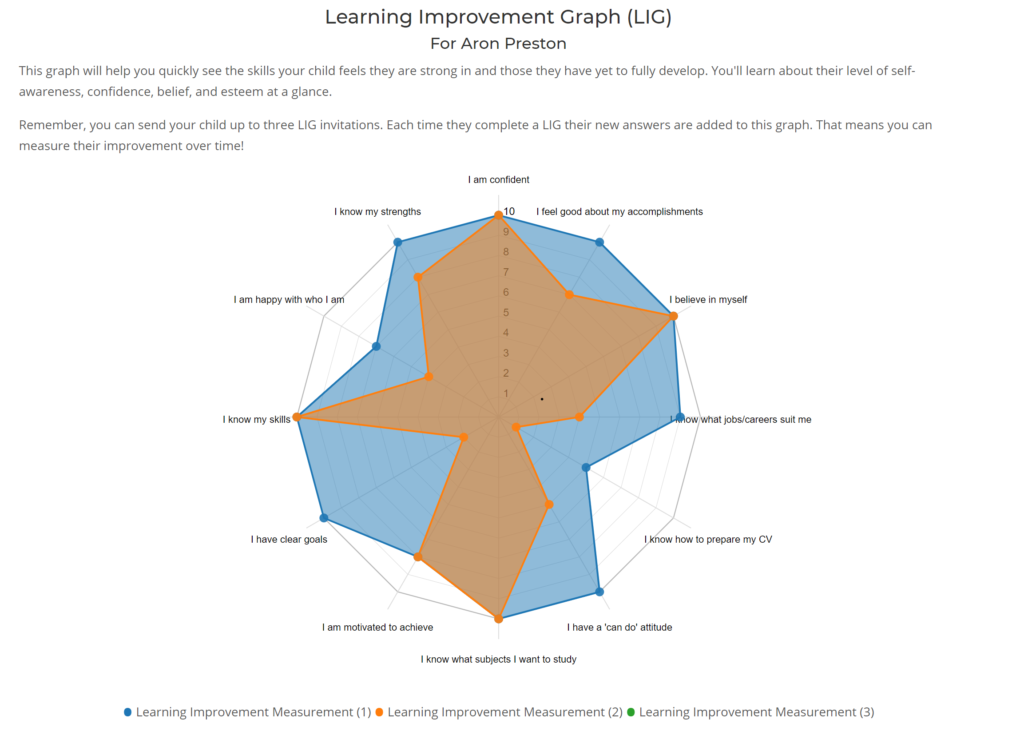
Aron showed a lot more confidence this time, scoring highly in motivation, knowing what subjects he wanted to study, what jobs/careers suited him, and he had more belief in himself. He has remained confident throughout but still struggled with being happy in himself. I asked him why that was and he said he didn’t know. I made a mental note to work on this, but the results were confusing, especially when he seemed confident and motivated to achieve.
He also scored lower in knowing his strengths and I think this was partly down to being overwhelmed with the selection of strengths he learned he had during his Mindscreen Experience. I told Aron that overall the results were still a vast improvement to when he completed his second LIM and that he should be proud of himself for what he has achieved in the last eight lessons. He said Mindscreen did make him feel happy and that he was looking forward to achieving his goals and ambitions.
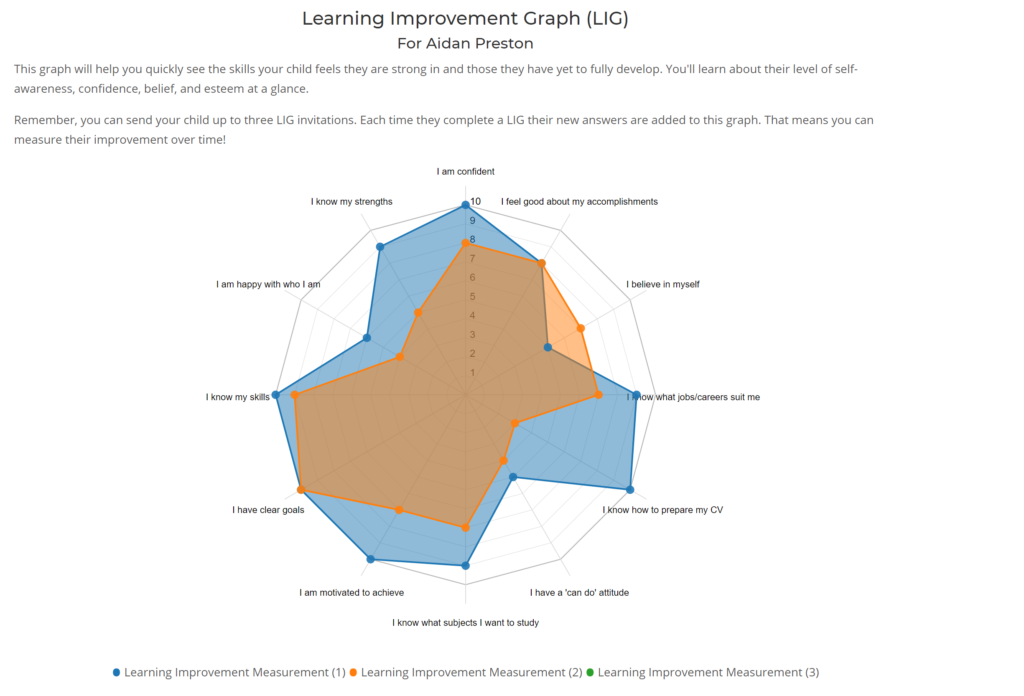
Aidan also saw an improvement in certain areas but also wasn’t too happy with who he was. He still didn’t know what subjects to study and what his clear goals were. But he said he felt a lot more confident this time and he now believes that he can succeed. He also said he knew how to prepare his CV.
I asked Aidan why he wasn’t happy with himself and he said he didn’t like his name or his size. He has taken an interest in diet and lifestyle and I wonder whether this has been down to the TV he watches or his peers at school. I made a mental note to work on building his happiness by spending more time with him on the subjects he enjoys and making him feel big and strong wherever and whenever I can. But this is a difficult subject to tackle as Aidan has always been sensitive to the emotions of others and what people say. So if someone has said something about his name or size, it would be difficult to help him forget.
How did we get on with Lesson 8, easyFeedback and easyFuture?
The very last lesson was an eye-opener for all of us. I think the boys finally understood why it was so important to know what they wanted to do in life and why it helps to have clear goals in mind to become successful. When we complete these lessons again in a few years time it will be interesting to compare the results as the boys are still quite young and haven’t thought about adulthood yet.
How long was the lesson supposed to be?
60 – 80 minutes depending on the number of children. Be mindful that engagement is important so the lesson might last longer.
How long it took us
Almost two hours. It’s a long lesson and the boys struggled with the visualisation part of the session. However, when it came to completing their LIM again, they enjoyed going over their results and even found it interesting that it was better than the LIM 2.
What did I want the boys to learn in this lesson?
Success has a recipe and you need all the vital ingredients to make that recipe a success. If the boys had a destination in mind it will help them search for ways to get here. Goals help them stay on course especially during those tough times and no one can set a goal for them.
They must be in charge of their own goals and dreams. I also wanted the boys to know that study and career choices that support their goals now can help them achieve their dreams more quickly.
What did I learn from this lesson?
I learned that my boys have a lot more complex thoughts and feelings than I thought they would have at their age and that it’s my job to handle these thoughts and feelings carefully, without knocking their confidence. I also learned that my boys are very smart and have a good head on their shoulders. So I’m even more proud of them than I was when we started this Mindscreen journey.
What did we learn from the Mindscreen Experience?
We learned so much! The boys learned that there is so much more to life than just being handed things on a plate. They learned that what they do now will affect what happens to them later and I learned that it’s never too early to get them involved in becoming accountable for their future, as long as you don’t overwhelm them with too much information too early.
Overall, I learned that there are so many steps to helping your child build their self-esteem and confidence that it’s a long road to happiness. But as long we are there to help them achieve what they want in life, offer undivided love and support, then there’s no reason why they can’t succeed.
I loved every moment of the Mindscreen experience and learned so much about my boys, as well as how to build confidence in myself too! The Mindscreen Experience is a fantastic way to bond with your kids while learning about how your children can achieve success later in life.
What’s next?
It’s over to you! I highly urge you to take the Mindscreen experience now with your child and sign up as soon as possible, so you can play a huge part in helping your children build their self-esteem and confidence.
Helping your child build a bank of personal unique skills – Mindscreen Review – Part 5
*This post and the proceeding/subsequent posts in the series are sponsored by Mindscreen – an online mental health and wellbeing tool which guides children towards higher self-esteem, at home or in the classroom.*
In Part 1 of our Mindscreen Self-Esteem Series, I talked about how to spot the signs of low self-esteem in your child by using an online tool called Mindscreen. If you haven’t done so already, please read the following articles in the series first:
In this article, we deep dive into Lesson 4, easySkills, which is about helping your child better understand what their unique skills are and how they use them. Help your child build a personal “bank” of unique skills they “know” they have.
Before you start
Please note – you need to purchase the Mindscreen Experience to access these lesson plans. Follow the link below to get 10% off your Mindscreen Package now.
We’re looking for your child’s unique personal skills and help them discover how to use them.
EasySkills
I introduced the lesson with the purpose of easySkills which is to help the boys build a big personal bank of skills so they know what their unique skills are and how they can use them to choose the correct career path in the future.
My skills
I asked the boys to open their Learner Diaries so they could answer the first question which was:
Think of something you did recently that you really enjoyed
I.e. playing a game, working, following a hobby, at school, developing friendships, learning something new etc. The boys could write their answers either in words and/or pictures.
Both boys picked playing in a football match.
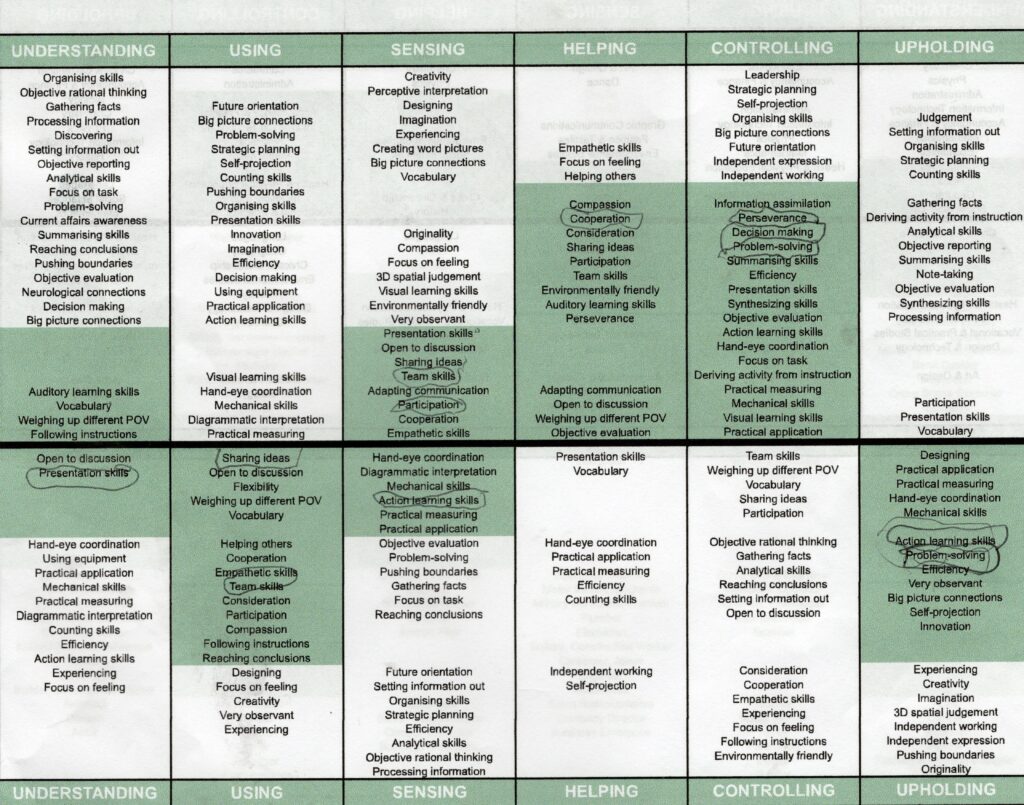
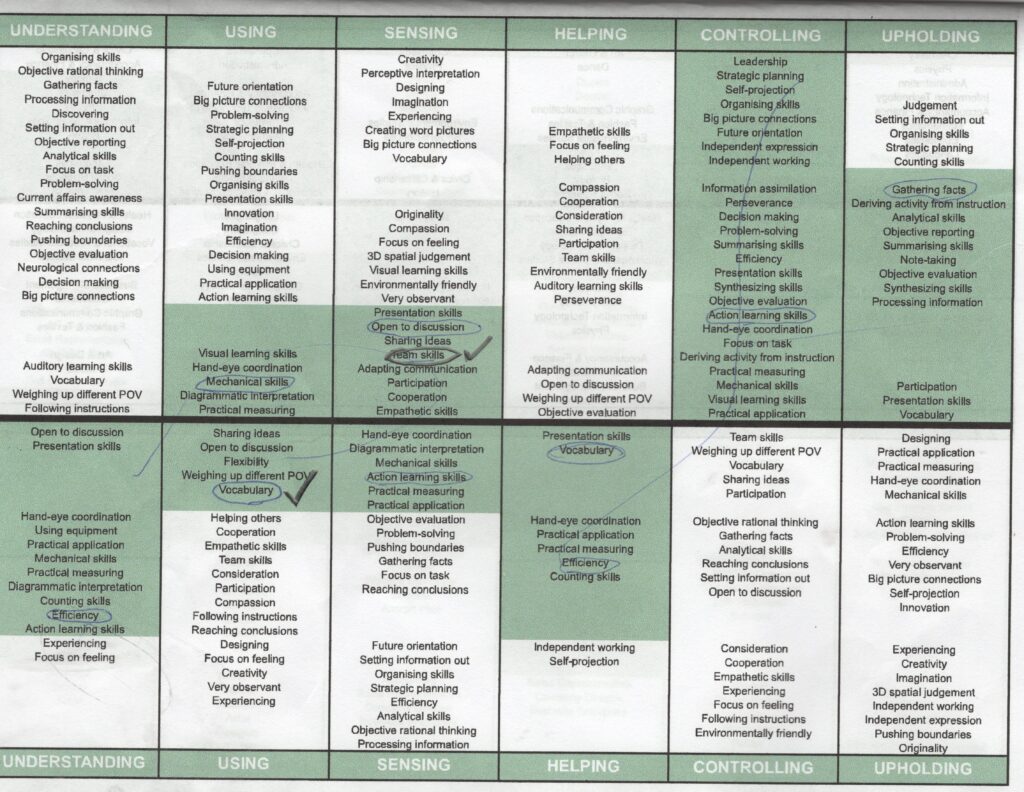
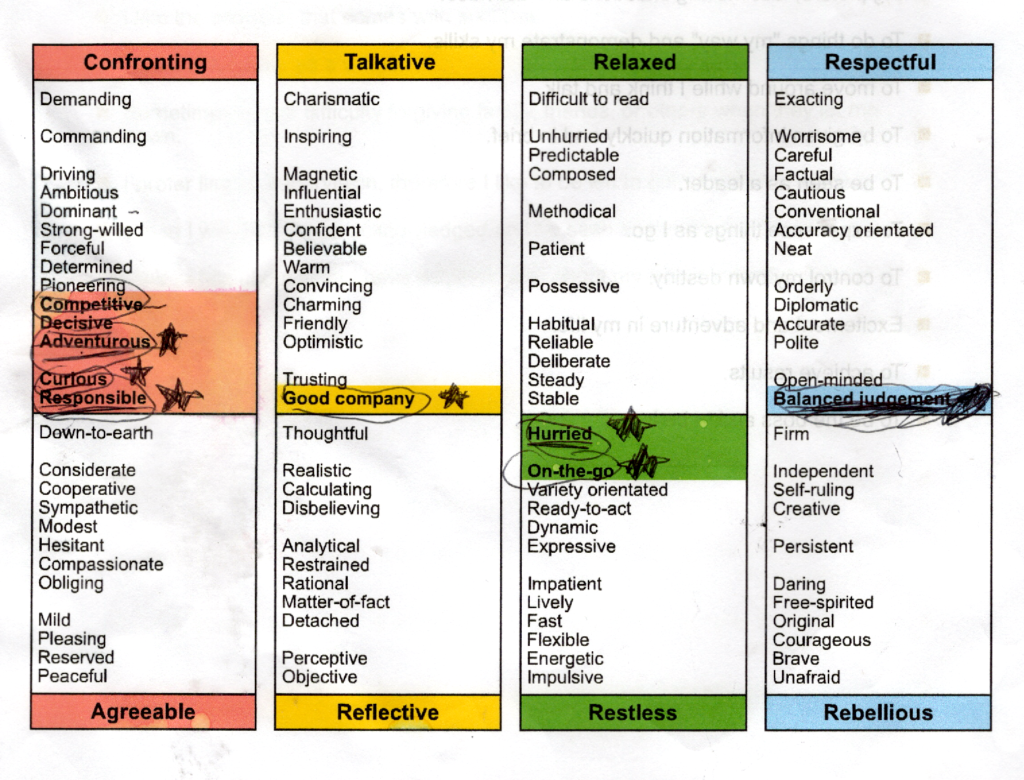
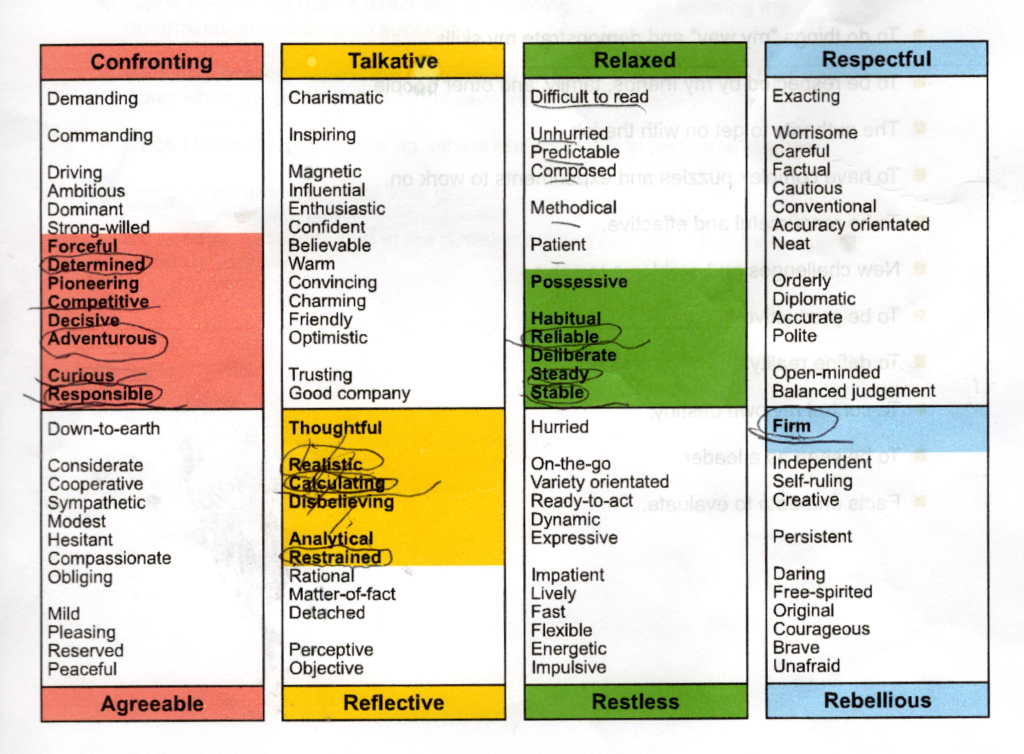
I then asked the boys to turn to the ‘My Skills’ insights page and circle any of the skills they saw in the shaded areas that they used during the activity of playing football. I asked them to try and circle a minimum of one skill from each column.
Aron circled the following:
Aidan circled:
Deep diving into the activity to find out which skills were used
I told the boys that we were going to have an interview, where I asked them some questions about the activity and they were to answer them on the spare piece of paper provided.
I combined the answers as the boys’ answers were very similar to each other.
The questions were:
1. Why did you pick this activity as something you really enjoy?
Skills, goals, tackles, saves. It’s fun. I like running around and kicking a football.
2. What is it that you liked about that activity so much?
Attacking and playing as a team and showing people using easyConfidence to stand to who I am. The intensity.
3. Was it because you used your mind a lot?
Not really. I don’t really think much when I play football.
4. And is it because when you’re losing you want to win?
Sometimes, but I prefer to play with my team so we all win.
5. It is because you want to be the best?
No, I will never be selfish, I would always play fair, I will always play as a team.
6. Did you find ways of moving the ball better?
Yes I can move the ball better now that I practice.
7. Did you learn a new technique?
I always learn new techniques every time I play.
8. Is it because you found ways of moving the ball around better?
Yes, I like moving the ball but I don’t like to be selfish, I pass the ball, so people aren’t annoyed with me.
9. Is it because you learned a new technique in the game and you learned new football skills?
Yes, I want to improve all the time on my football skills and techniques.
“Can you make this the last question please mum?” Aidan pleaded.
easySkills Activity Log
I told the boys that we were now going to go through the skills in their Mindscreen profile and in their Activity Logs they were to write a short description of how they used that skill.
This part of the activity was the longest bit and after going through about ten skills, the boys had enough. We managed to complete the activity log in the second session, but literally ticked through it. Some of the skills Aidan worked through were:
Skill
Definition
Activity
Active learning skills
Learn by doing
New techniques while practising
Adapting communication
Being able to describe what you’re saying so that other people who are different from you can understand
Communicating with sign language
Analytical skills
Being able to think about a situation, study it fully, and understand what the most important things about it are
No I will always follow the rules
Assimilation
Being able to take all the facts and make some sense of them
No I know football very well
Auditory learning skills
Listening to a skill or task being described and being able to learn how to do it yourself, from what you’ve heard
Nope I know all skills and I know how to to di it
Big picture connections
The ability to look at the whole picture from a distance and understand how actions affect the whole
No I make my decisions
Consideration
Being able to take the feelings or ideas of others into account
Yes I communicate
Cooperation
Being willing to work together with others, without wanting your own way all the time
Yes, I’m not selfish
Creativity
Having the ability to frequently come up with new ideas, ways of doing things, develop a solution. Can be in any area: practical, artistic, theory etc
Rabona flick
I asked the boys to pick two of their previously circled personal skills from their “My SKills Insights” page of their own Mindscreen experience® profile and invited them to open their Learner Diaries and complete the following statement:
“Two of the skills I used during the above activity are:”
Aidan picked – “Vocabulary” and “Team Skills”
“You use vocabulary during football?”
“Yes, the coach uses vocabulary when he shouts out football skills.”
“Team skills is where we work in a team”
Aron picked – “Perseverence” and “Participation”
Congrats, boys, these are your two main skills!
I reassured the boys that my two skills may be different to their skills but it didn’t mean they were any better or worse than theirs.
The last part of the activity was to get them to describe how they used these skills while playing football.
Aidan wrote – “Every time in games, the coach shouts out the vocabulary for football and we work as a team.”
Aron wrote – “By never giving up and by joining in.”
I told the boys that people who really enjoy their job are usually happy. That’s because the job they do is in tune with their skills and values and what they are interested in. This happiness on the job is more commonly referred to as “job satisfaction”.
“Why?” Aidan asked.
“Because they use their two main skills and values in their job. If you find a job that uses these skills, you will be happy. If you’re happy doing that job, it doesn’t feel like a job.”
Completing the Learning Improvement Measurement questionnaire for the second time
At the very beginning of the Mindscreen Experience, I invited the boys to complete a questionnaire to find out more about themselves – you can find more about this questionnaire in Part 1 here.
The time had come to complete their online statements again to find out how far they’d come after four lessons.
The results were very interesting – and unexpected!
Aron remained confident, but Aidan’s confidence went from a 10 to a 7.
Both boys seemed to also be less happy with themselves the second time round.
“Why is this, boys? Mindscreen is supposed to boost your confidence, not make it worse!”
“I don’t know what my strengths are anymore,” Aron responded.
“Because when I cry sometimes I say I can’t do it and then my confidence goes down,” Aidan added.
“Why do you tell yourself you can’t do it? The point is to tell yourself you can do it, remember? Self-belief!”
“I don’t even know what a CV means! I’m confused!”
“So, how do we build your confidence then?”
“I will just make it harder because it will give me more confidence. When I say I can’t do it, I can do it when it’s hard,” Aidan said.
“I have no idea what to study,” Aron said.
“That will come, don’t worry about that now. We are working step-by-step to help you figure out what you want to become. You have so much time!”
“I didn’t know what I was doing at the beginning, I just went ten, ten, ten, ten in the last questionnaire and I didn’t know what I wanted. I can’t just do that!” Aidan continued.
“I think now I know a bit more I have less motivation because I don’t know what I want and I’m not in the mood for working at school and at home.”
“I’m bored all the time,” Aron added.
“I don’t want to do school work. But I do want to get star of the week,” Aidan mused.
I don’t have any clear goals except getting star of the week and man of the match,” Aron added.
Oh, gosh! I didn’t realise that I had to work on the boys as much as I did! I think learning about themselves is making them more aware of what they can and can’t do and it may be overwhelming them. For the next four lessons, I’m going to concentrate on taking it a lot slower and not making them feel like they’re overloaded with work.
How did we get on with Lesson 4, easySkills?
The boys really struggled with the last part of the lesson where they had to go through all the skills to find out which of them they used in their football activity. There were 49 skills to go through and the boys’ concentration spans stopped at 10. So we had to do the lesson in two parts where we had to complete the last part of the activity on its own. Aron zoomed through his skills a lot quicker than Aidan and managed to capture the point of the activity. Whereas with Aidan, it was like pulling teeth!
How long was the lesson supposed to be?
30 – 40 minutes with one child or 60 – 80 minutes if you run the “My Skills” activity with two children.
How long it took us
Almost a frustrating two hours because the boys really dragged their heels in the “My Skills” part of the activity.
What did I want the boys to learn in this lesson?
I wanted the boys to learn and discover their skills and to understand how these skills could be used to help them pick out their chosen career/job path later. Knowing about yourself means knowing what you can and can’t do and that could be the difference to a happy professional future.
What did I learn from this lesson?
I received a shock after analysing the boys’ Learner Improvement Graphs to find that some characteristics had gone down. I get the feeling this may be because the boys are becoming more aware of their strengths and weaknesses and it may be overwhelming them a bit. It’s food for thought as to how I tackle the next four lessons, though, so I don’t end up pushing them the other way.
What’s next?
The next lesson we’ll be looking at Lesson 5, EasyStudyChoice, which is about helping your child choose subjects to study that line up with their own skills, personal interests, and what they value. This lesson will help them identify career ideas related to their study choice options.
How to build on your child’s strengths and increase their self-confidence – Mindscreen Review – Part 4
*This post and the proceeding/subsequent posts in the series are sponsored by Mindscreen – an online mental health and wellbeing tool which guides children towards higher self-esteem, at home or in the classroom.*
In Part 1 of our Mindscreen Self-Esteem Series, I talked about how to spot the signs of low self-esteem in your child by using an online tool called Mindscreen. If you haven’t done so before, please read the following articles in the series first:
In this article, we deep dive into Lesson 3, easyConfidence, which provides your child with the opportunity to explore their own strengths and talents and build their self-confidence.
Before you start
Please note – you need to purchase the Mindscreen Experience to access these lesson plans. Follow the link below to get 10% off your Mindscreen Package now.
When you are self-confident you don’t have any doubts about your ability or knowledge to do something. You are certain you can manage any situation by yourself. You have self-confidence in the following areas:
To provide your child with a simple technique to help them present a confident image
To help your child investigate why it’s useful to know about personal strengths and weaknesses
My invisible rope
I got straight into the lesson which was about helping your child learn how their confidence level is displayed through their body language. The idea is to learn to recognise the difference in posture when they are low in confidence versus when they are full of confidence.
If their shoulders are slumped, it shows they have a lack of confidence, if their shoulders are pulled back and the child stands up tall, it shows they have confidence.
I asked the boys to stand.
“Can you show me what lack of confidence or unhappiness looks like, please?”
“Ok, say I want to calculate 31 x 31. Ah, I can’t do this it’s too hard! That is lack of confidence,” Aidan (8) said.
“Ok, great, but can you show me with your body?”
Aidan slumps his shoulders and bows his head. Aron does the same.
“Well done! Now can you show me what self-confidence and happiness look like, please?”
“I can do this, I am ready for it!”
Aidan stands up really tall and pulls his shoulders back.
“Fantastic! Can you tell me what the differences were between the two postures, please?”
“Confidence is when you’re up! You’re ready to do it, and you’re not scared,” Aron (9) said.
“So unconfidence is where you can do it but you don’t think you can, and you don’t give yourself a happy mindset,” Aidan said.
“What about with your body language and not words? Do you know what I mean by body language?”
The boys shook their heads.
“Ok, it means you’re talking with your body rather than your words.”
I showed Aidan an example of me crossing my arms and frowning.
“What am I showing you right now?”
“You’re angry.”
“Exactly. You see? You read my body as angry. My body spoke to you. If I’m doing this, what does it show you?”
I slumped my shoulders and bowed my head.
“Not confident.”
“And what about this?”
I pulled my shoulders back and lifted my head high.
“Very confident.”
“You see? Did you see the difference in my body language?”
“Yeah, so I should be like this,” Aidan said and pulled his shoulders back and stood up very straight, head lifted up high.
“Just by showing someone your body language, you can change the way they look at you.”
“I want to show you a trick. I want you to imagine there’s an invisible rope attached to your chest and there is some invisible force that is pulling it up.”
“I know this. It pulls you up when you’re confident and pulls you down when you’re not confident,” Aron said, smiling.
I demonstrated what I meant.
“If you’re feeling low in confidence, you’re worried, nervous or upset. I want you to think about that invisible rope. Because the way you change your body language will change the way you think.”
“Say you’re passing a group of big boys and you’re nervous and worried. Walking past with the rope up will show you’re confident, right?”
Aidan started talking about bullying and went into a demonstration but I didn’t understand what he was talking about.
I asked the boys to turn to their Learner Diaries and answer the question:
“Think of something you achieved recently and think about how succeeding in this activity gave you a confidence boost.”
“Maths test at school,” Aron replied.
“Well done, Aron. How did this maths test help you boost your confidence?”
“It gave me a confidential feeling.”
“Confidential means private.”
“Oh, a confident feeling.”
Aidan wrote, “I tried to work out 31 x 31 and I thought I didn’t know but then I got confident and I knew the answer.”
Aron wrote, “The maths test at school. It gave me a confident feeling because it looked hard, I felt confident. It felt bedazzling when I finished and passed the test.”
“Well done boys.”
I wanted to show the boys that what their strengths are and what they are good at will help them feel good about themselves. But it’s important that they know what their weaknesses are too, so they can avoid them or, even better, improve on them as well.
I asked the boys to open their Learner Diaries again and brainstorm two questions, by writing their thoughts into their diaries:
It’s good to know about my weaknesses because…
It’s good to know about my strengths because…
Aron wrote, “If you could learn them you can then improve them.”
“I could carry them on and improve them even more.”
Aidan wrote, “It’s a good thing if I get on with my weaknesses. Wrong mistakes are actually better than the real answer because you at least tried instead of showing off.”
“Because I can do what I can do and I can do and be positive because I can do it.”
I asked the boys if they understood why being confident is the key to success. It makes them feel like they can do it, but if they know what their weaknesses are they can use these weaknesses to improve on them.
“Can you tell me one positive reason why it’s important to know about your weaknesses?”
“So you can avoid them in the first place,” Aron said.
“Instead of avoiding them what could you do?”
“You could learn?” Aron continued.
“You could stop running in circles?”
“What about practising and improving on your weaknesses?”
“Because if you make mistakes you can make it better,” Aidan said.
“Knowing other people who may be strong where you may have that weakness, teaming up with them will help you be better too, right?” I continued.
“What if there is a bully and the bully tries to bully someone but doesn’t know how to spell bully?” Aidan said.
“Imagine if a 15-year-old teaches a 3-year-old but can’t spell bully himself,” Aron said.
“Why is he telling a 3-year-old if he can’t even spell bully?” Aidan shrugged.
“Ok, let’s continue.”
“We become what we think about. So that’s why it’s really important to develop positive thoughts about yourself because, boys, you become what you think. So if you have positive thoughts that you will do well, you will do well.”
“What do you think will happen if we have positive thoughts about ourselves?”
“It might go too far and it will stop,” Aron said.
“What about if you have a positive thought about how funny you are?”
“I’m not funny,” Aron said.
“If you said to yourself, ‘I’m funny, I’m going to make people laugh today,’ what do you think will happen?”
“I don’t know.”
“You will make people laugh!”
I reiterated to the boys that we become what we think about.
Positive statements about me
I asked the boys to open their Mindscreen Experience profile to the “About Me” section and tick all the statements they strongly agreed with.
“Why did you sign up with Mindscreen?” Aron asked.
“Because I wanted to learn more about you. What makes you tick. What makes you sad.”
“Do you know more about us now?” Aidan asked.
“I do and it helps me to plan the way I teach you things, so we don’t get upset or frustrated with each other.”
“You teach it really well,” Aron continued.
“Ah, thank you!”
These boys!
Aidan ticked:
Sometimes I resist advice from others because it threatens my desire to control my own future.
I prefer limited supervision, therefore, I like to be left to get on with the job.
I like to be in control of my own destiny and choose my own way in life.
I can be very determined and respect powerful, strong-minded people.
I may get my own way more often if I learn to be less demanding and dominant.
Even if I am young, I think I am capable of making up my own mind about things that affect me.
I play to win. If I have to take a risk to win, I usually will take that risk.
Some people see me as very direct and to the point. I generally like to say what is on my mind, then take action.
Some people see me as direct and demanding. I am just showing my determination and drive to succeed.
When confronted, expect me to stand my ground. In other words, I will not back down when my point of view is different from someone else’s.
I respect people who stand their ground.
Do not ask me to take part in the decision making process if you have already made up your mind.
I asked Aidan why he picked the statements above.
“Because I like being alone and I do my work independently and normally In Year 4 we do it independently, we don’t do pairs very much.”
“I always focus.”
Aron ticked:
I like to have an opportunity to experiment and try new things each day.
I am usually very challenging and consider “my way” to be the best way.
When involved in a disagreement, I am motivated to win.
I sometimes have big visions that seem extreme to other people.
When confronted, expect me to stand my ground. In other words, I will not back down when my point of view is different from someone else’s.
Sometimes I say things just to change the conversation towards something more interesting for me.
I like it when people congratulate me and tell me how important I am and how well I have done.
I respect winners and those who achieve great things.
At times, I get bored when dealing with repetitive or routine activities. I like to try new things.
I like to work and socialise with people who want things done quickly.
I like the attention that comes with success.
When I win, I like to be acknowledged and be seen as the champion.
I like to talk about what I have achieved and about my ambition for the future.
Aron declined to comment on why he chose the above statements.
I asked the boys to look at the statements they ticked and to now underline three statements they thought were the most positive ones and which gave them the biggest confidence.
Aidan selected:
I love adventure and to explore new places
Even if I am young, I think I am capable of making up my own mind about things that affect me.
I respect people who stand their ground.
I asked Aidan why these three statements felt the most positive to him.
“If people are strong I will respect them always. Like a few of my friends make me feel happy because they can back me up when I’m getting bullied.”
“Ok, are you getting bullied at the minute?”
“No, but if I did they will be helpful.”
“The second one because I am happy because I love going to the woods, I can ride the bike, I can make a den out of sticks,” Aidan continued.
Aron selected:
I am usually very challenging and consider “my way” to be the best way.
I respect winners who achieve great things.
I like new and challenging activities.
I asked Aron why he selected these statements.
“Because I always want to find the answer, I like to keep my mind busy and I like to work on really hard things because it keeps my mind busy.”
I then asked the boys to go to their Learner Diaries and write two positive statements that made them feel the most confident.
Aidan wrote – “I love adventure and to explore new places” and “I respect people who stand their ground.”
Aron wrote – “I am usually very challenging and consider ‘my way’ to be the best way.” and “I respect winners who achieve great things.”
I then asked the boys to write down how these positive statements about them would help to build their self-confidence.
Aidan wrote – “I can become more of an explorer and I can be better with my kindness.”
Aron wrote – “So, I would be more confident by thinking about positive things and I can catch myself using them and plan my activities around my strengths.”
I reiterated to the boys so it hit home that their body language shows other people their level of confidence and it is very important to present a confident image. I also advised that knowing what their strengths were and catching themselves using those strengths can help them achieve success, which can ultimately help boost their self-confidence.
“Do you understand that?”
“I’m going to catch myself exploring, respecting people, and then think, ‘that’s great, I’m doing it!'” Aidan responded.
“That’s great, Aidan! We are all different and we all have different strengths – and these statements you’ve picked are your unique strengths.”
How did we get on with Lesson 3, easyConfidence?
Aidan really took charge of this lesson while Aron sat back a bit more and listened. I could see that being self-confident resonated with Aidan a lot because he has this natural tendency to want to be the best and that comes from a great sense of self-belief, which we learned all about in Lesson 2. I enjoyed this lesson because I learned a lot about the boys’ strengths. I was less surprised about Aron’s strengths because he has always been one to take charge and lead the conversation, but pleasantly surprised that Aidan took the reins for once and showed me that he was indeed made of really strong stuff too!
How long was the lesson supposed to be?
30-40 minutes
How long it took us
90 minutes but we engaged a lot in discussion and I deep dived into their unique statements in the About Me section because I wanted to learn more about my babies and what made them tick.
What did I want the boys to learn in this lesson?
I wanted the boys to understand how important body language is and how it can show people their level of confidence. I also wanted them to learn more about themselves by looking at their positive statements and showing how the skills and qualities they have can be played to their strengths. Aidan really engaged this segment of the lesson and was eager to learn about what else he was good at, while Aron seemed to know about himself anyway and paid less attention.
What did I learn from this lesson?
I learned that from reading my kids’ About Me statements, how to describe your child’s strengths and weaknesses is actually very important. Aron is going into Year 6 next year so we’re focusing on getting him ready for the 11+ exams, so it’s important to ask questions like:
What are your child’s strengths in school?
What are your child’s strengths academically?
What are some emotional strengths of a child?
I also learned something which I didn’t expect to learn as a parent. Motivational based parenting, i.e. spinning negative statements into positive ones, for example, “You aren’t good at that,” becomes, “Your strengths are in subject X,” or “Don’t do that,” becomes, “If you do that, this will happen.” I noticed that being armed with these kinds of skills can really change the way your child thinks too, i.e. they become more positive with themselves which builds on their confidence because we’re not bringing them down all the time with passing negative statements.
And what’s the best way to determine your strengths and weaknesses as a parent? Taking the Mindscreen Experience yourself and comparing your own strengths and weaknesses with your child! Also, finding out what motivates your child can help to work towards them building their confidence through their unique strengths.
What’s next?
In Lesson 4 we will be talking about easySkills, which is a great transition from easyConfidence as it will help your child to better understand their unique skills and how they can use them. We are going to build a personal “bank” of skills they “know” they have and learn how to utilise them to pick career choices that will make them happier in the long run.
How to encourage your child to build positive beliefs
*This post and the proceeding/subsequent posts in the series are sponsored by Mindscreen – an online mental health and wellbeing tool which guides children towards higher self-esteem, at home or in the classroom.*
In Part 1 of our Mindscreen Self Esteem Series, I talked about how to spot the signs of low self-esteem in your child by using an online program called Mindscreen. In Part 2 I discussed Lesson 1 of the nine-lesson plan, where I talked about why self-awareness is important to build your child’s self-esteem. I would recommend you read the below once you have read Part 1 and Part 2 first.
In this article, which is the second lesson in the nine-lesson plan, I talk about EasyBelief, which is all about encouraging your child to discover their own beliefs, dispel negative beliefs and build on positive beliefs.
Before you start
You need to purchase the Mindscreen Experience to access these lesson plans. Follow the link below to get 10% off your Mindscreen Package now.
This was a great lesson because the boys were a lot more engaged and therefore I was a lot less frustrated! They seemed interested in learning more about beliefs and how they are formed. So, we got started!
Lesson 2 – EasyBelief
I turned to my parent guide and informed the boys that in this lesson we are going to talk about self-belief and how their beliefs influence them and drive their behaviour.
What is self-belief?
I asked the boys what they thought the word, ‘belief’ meant and both stared blankly at me.
The Oxford dictionary defines ‘belief’ as:
1. ” A feeling that something exists or is true, especially one without proof.”
2. ” A belief in, trust or confidence in.”
“I have evidence that aliens are real.”
Aron (9)
“Oh, really? What’s the evidence?”
Me
“Aliens are people.”
Ok, interesting… let’s move on.
“What about God? People believe in God,” I ask.
“So do I,” Aron responded.
“Ah, but is there any actual evidence? There isn’t actual evidence but believers believe he exists and they live their lives through their belief.”
“There is evidence. He made us,” Aron responded quickly.
I move on quickly from the topic of God and explain to the boys that this lesson was about discovering how beliefs are formed and whether the beliefs they have are either self-limiting or self-enabling.
What is a self-limiting belief?
A self-limiting belief is when you believe you can’t do something or it stops you from doing something. For example, you believe you are too slow to run, so you don’t run. Or you think you can’t draw so you don’t even try. This is a self-limiting belief.
What is a self-enabling belief?
A self-enabling belief is a positive belief that allows or enables you to do something because you believe you can do it.
So, if someone tells you that you can’t draw, but you ignore them and believe you’re actually good at drawing, then this is a self-enabling belief. You encourage yourself to do better.
I told the boys they needed to understand the difference and that their beliefs drive the way they behave.
“So if you believe that people don’t like you then you’ll become antisocial and you won’t want to speak or spend time with anyone.”
“What does antisocial mean?”
Aidan (8)
“You don’t like to socialise or spend time with people.”
“Oh, I thought you meant like social distancing,” Aron replied.
“Well, the word social distancing comes from being close to people when you socialise with them. When you’re talking about hanging around people and socialising with them, there’s no distance between you so the government have asked you to distance yourself socially.”
“Do you understand the difference between a self-limiting belief and a self-enabling belief?” I ask.
“Self-limiting belief is when I tell myself I can’t do something and self-enabling belief is when I tell myself I can do something,” Aron replied.
“Nicely put, Aron! Let’s move on to The Dog Story so I can illustrate what I mean.”
The dog story
The purpose of The Dog Story is to help kids learn how their beliefs are formed and how they influence their behaviour.
I asked the boys to head to their Learner Diaries which is a document to record their findings in the lesson, and think about something they did recently that they believed they were good at and two give me two reasons why they believed they were good at this activity.
Aron wrote – “I am good at drawing.”
… and the two reasons why he believed he was good at this activity was:
“Because I am careful”
“I am neat”
Aidan wrote – “Do a great poster.”
… and the two reasons why he believed he was good at this activity was because:
“I’m stylish.”
“I’m creative.”
I told them the reason for this activity was to show them we become what we believe ourselves to be and some of our beliefs stop us from achieving while others help us to achieve.
“So I want you to imagine that you are a paperboy in this story.” I started.
“What’s a paperboy?” Aidan asked.
“A paperboy is someone who delivers newspapers to houses.
So you’re walking up a driveway towards a house with your papers and a big dog attacks you and bites your bum.”
Aidan gasps “Do you get rabies?”
“No. You feel some pain in your bum and then for the first time you’re having thoughts like, ‘some dogs bite’, or ‘why did this dog bite me?’
Imagine you go up to the next driveway and another dog bites you in the bum again, which is painful.
And your earlier thoughts were, ‘some dogs bite,’ but now this might change to, ‘quite a lot of dogs bite,’ or ‘why are these dogs biting me?’
Now imagine you’re walking up to a third driveway…”
“Oh-oh!” Aidan responds
And another dog bites you and your bum is now very, very painful. You might now begin to believe that all dogs bite. Now you got up to the fourth driveway. And the dog there is slavering, growling and he looks very angry.
Now on your piece of A4 paper, I want you to answer the following questions:
1. What have you begun to believe from hearing this story?
“That dogs bite.” Aidan said quickly
“He’s going to bite me. He’s going to make my bum numb,” Aron added.
2. How will you behave when you see that 4th dog getting angry, growling at you?”
“Run away!” Aidan shouted.
“Ok, so you can see that from this story and from your experience your belief has now been formed that all dogs bite. And the more often you have that thought and that experience and that emotion, the stronger that belief becomes. So the more dogs that bite you, the more you believe that all dogs bite.”
So, here I helped the boys visualise how a belief is formed from their thoughts and experiences and gave them another example.
“Now, imagine being told again and again that you are stupid by another person and they make you think you are stupid.”
“I’m not stupid.” Aidan said.
“I’m just using it as an example, I don’t think you’re stupid at all.”
“Ok, carry on.”
“If someone keeps telling us we’re stupid, we’re going to start to think we’re stupid.”
“No, I would say he is stupid for calling me stupid!”
“I will explode.” Aron said.“I wouldn’t listen to their comments. I know what I’m good at.”
I tell them that is important to understand that a self-limiting belief even if it comes from someone else, can stop the boys from doing or being the best they can be.
“In The Dog Story, the more we think dogs are aggressive. The more we will do what?” I continue.
“We’re going to keep thinking that dogs aggressive,” Aidan replied.
“Well you’re going to avoid them aren’t you? You won’t go anywhere near them. But the reality is that not all dogs are aggressive so this is a self-limiting belief because this belief will make you miss out on the opportunity to play with other dogs.”
“Change dogs to Ayla!” Aidan shouted.
“Ok, say that Ayla is aggressive, then you will start to avoid her and then you’ll miss out on playing with her because you think she’s aggressive. That is a self-limiting belief. It stops you from doing the things that you want to do. Do you understand what a self-limiting belief is now?”
“It’s when somebody says no you can’t do it because you’re stupid and you keep on believing that you are bad at it. It stops you from being yourself, and it stops you from having self-belief.” Aidan said.
“Beautiful, well done.”
I explain to the boys this is why we’re doing this activity, so they can understand the difference between a negative self-limiting belief and a positive self-enabling belief. I asked them to answer the question:
“How did my belief that I am good at this activity affect my behaviour?”
“Well I became more confident,” Aron said.
How do self-enabling beliefs help you achieve what you want in life?
I asked the boys to write down three people who have achieved something that really impressed them. I told them it could be anyone, from sports stars to real people, to a family member or friend.
“Martial because of his goals, Aron because he got star of the week and headteachers awards and mummy because you are mummy and you’ve had so many babies and you look after us. How do you do it!?” Aidan responded.
“Martial because he impresses me that he scored the most goals for Man Utd. My friend because he is the most intelligent in the class. Mummy, because you are the best mum in the world.” Aron said.
Ah, they both picked me as someone they were very impressed with – that really touched my heart!
“Are you an ah-but? Are you living with an Ah-but?”
“What is an ah-bot? Aidan asked.
“Ahhhh… but what?” Aron said with a smile.
There are two types of Ah-buts.
Type 1 – Can you remember a time when you had a really good idea and a voice in your own head said:
“Ah-but I can’t do it. Ah-but I’m not good enough.”
“Has that ever happened to you?”
“That’s just… yeah,” Aidan said, not amused that he didn’t get what Ah-but meant the first time.
“No I’ve never heard of it,” Aron said.
“You can’t think of any time when this happened to you?”
“Erm… I don’t know when! I don’t think I had one,” Aron pondered.
“Sometimes I have an Ah-but situation when I’m starting an article but a voice in my head says ‘Ah-but you don’t have the expertise to write this article.”
Type 2 – The other type of ah-but is when you had a really good idea and you shared it with someone else and that person said:
“Ah-but I don’t think you’re good enough to do it.”
Or,
“Ah-but I don’t think you’ll be able to do it.”
“Has this ever happened to you?”
“No,” the boys shouted in unison.
“Wow, good!”
“So, with those three people you picked, what do you think would have happened to them if they had listened to those Ah-buts? Do you think Martial would have scored that goal if he had listened to the Ah-buts? Do you think Aron would have had all those headteacher awards if he listened to someone who said, “Ah-but you’re not good enough?”
“No, but they wouldn’t listen to the Ah-buts, they’d do it anyway,” Aron said.
I told the boys that successful people in every walk of life achieved their success, including those billionaires that started their businesses and made lots of money because they believed in themselves and their own abilities. They didn’t listen to the Ah-buts. Self-made entrepreneurs, famous footballers, people who are happy in life, they are successful because they didn’t listen to the Ah-buts from themselves or from other people. An entrepreneur is an entrepreneur because he/she believed in their idea and went for it.
“I will never listen to the Ah-buts!” Aron responded.
You have the ability to be a great achiever. In whatever you choose to do. And whatever you believe, this is the whole reason for this lesson boys.”
“Aron, you want to become an illustrator, but if you listened to that Ah-but in your head or from someone else, what would happen?”
“I would say rubbish, I’m doing it! I am going to make a million pounds selling drawings to everyone,” Aidan chimed in.
“That’s right Aidan and why not!”
“Stupid Ah-buts!” He continued.
“In the Champions League, Phil Jones said to Martial that there’s no way you can score a hattrick. You don’t have enough experience. But, guess what. Martial scored a hattrick! Phil jones was stumped.” Aron said.
“Well, there you go! He didn’t believe the Ah-buts.”
I asked the boys to open their Leaner Diaries again and complete the following two statemetns:
Think about something you achieved recently and describe how you overcame the “Ah-buts.”
Think about something you haven’t achieved yet because of the “Ah-buts”. Describe how you can now defeat the “Ah-buts” and succeed.
Aidan wrote, “Scoring a hattrick in the football match.”
“Ok, but, how did you get over the Ah-buts?”
“I ignored it and scored the hat trick,” Aidan replied
“And think about something you haven’t achieved yet because of the Ah-buts and describe how you can defeat the Ah-buts and help you succeed.”
“Nope, whenever anyone has said an Ah-but I ignore it and achieve it.” Aron chimed in.
“Ok, very good Aron.”
I wanted the boys to take away the most important points of this lesson – that their beliefs are formed by their repeated thoughts, experiences and emotions and the more they have that thought, whether it is more painful or pleasurable of an experience, the deeper their feelings and thoughts become, and the stronger their beliefs are.
“And it is really important that you only share your beliefs with those who support you and not criticise you and limit yourself belief.”
Our beliefs can be constructive and they can be destructive
I wanted to talk to the boys about how their thoughts and feelings could either be constructive or destructive.
“Anytime you have a doubt about something, ask yourself this question – is the thought I’m having constructive, i.e. is it helping me or benefiting me, or is it destructive, i.e. self-limiting, so it’s not helping you?”
“I want to have a self-enabling belief,” Aidan said.
It is also vital to recognise when our thoughts and beliefs are destructive and replace them with constructive thoughts.
I told the boys that they can do whatever they put their minds to, so whenever they start to feel a destructive thought coming on, they should try to think of a way to make it constructive, i.e. Replace negative thoughts with something positive.
“I can even do a cartwheel inside a bag,” Aron said.
“I can even jump on the table and land on the ceiling,” Aron continued.
“So, what did you learn from this lesson?”
“I learned that I don’t want to listen to the Ah-buts, and I want to have a self-enabling belief and reach my destiny. I want to ignore what people think I can’t do; I want to be myself and my best,” Aidan replied.
“I have learned that I do not have any Ah-buts and ignore all the people who tell me I can’t do it. Because I can!” Aron said.
“Beautiful, we are done!”
How did we get on with Lesson 2, easyBelief?
I was surprised to see how engaging the boys were in this lesson, especially when Lesson 1 was trying throughout. I was also shocked to see how defensive the boys got when I ask them if they had any self-limiting beliefs and when I talked about the Ah-buts with them. But, as a result, I think I got through that we need to ignore the Ah-buts and believe what we want to believe. Aron has repeatedly told me that thoughts control him, so I hope he now sees that we control our thoughts and not the other way around. Fantastic lesson and I learned a lot about dispelling my own self-limiting beliefs, especially when it comes to tackling long projects at the beginning.
Equally I was surprised to see the inner strength coming from Aidan about reaching his destiny and being what he wanted to be. He showed a lot of energy and vigour in the lesson which comes from his strong desire to succeed. I hope I reinforced that his desire to succeed will enable him to succeed later in life.
How long was the lesson supposed to be?
30-40 minutes
How long it took us?
About an hour but we had a lot of discussion in between with limited distractions, so it didn’t feel too long.
What did I want the boys to learn in this lesson?
The most important part of this lesson is to help the boys understand the power of believing in yourself and when you have faith in yourself to succeed in what you’re doing and you have the belief in yourself that you can do it, you won’t listen to the Ah-buts, whether it comes from your mind or from someone else. I think I hit home not just the importance of believing yourself but why it is important to also believe in others too and don’t become an Ah-but yourself.
How important is believing in yourself?
Is it important to believe in yourself? Yes, absolutely! There are a myriad of benefits to believing in yourself and it’s important to encourage children to do the same.
But, does believing in yourself actually help with being successful? Believing in yourself is the first secret to success because it helps you achieve the goals you set out for yourself, ignoring the Ah-buts who says you can’t do it.
How do you start believing in yourself and your abilities to take on big life-changing goals?
Start small. Find out what’s causing the destructive thoughts and work through the steps above with your child to turn those negative thoughts into positive ones. The importance of self-belief is paramount when it comes to achieving the goals your child sets their minds to. And, they will come across those Ah-buts from everywhere. So arming them with the strength to say they can do it regardless of what others say, is a powerful tool they can use in the future.
Even getting your kids to say to themselves daily, “I believe in myself” can be enough to create a positive outlook for the day.
What’s next?
In Part 4, we will be going through Lesson 3, easyConfidence, which provides your child the opportunity to explore their own strengths and talents to build their self-confidence.
Why self-awareness is important to build your child’s self-esteem – Mindscreen Review – Part 2
*This post and the proceeding/subsequent posts in the series are sponsored by Mindscreen – an online mental health and wellbeing tool which guides children towards higher self-esteem, at home or in the classroom.*
In Part 1 of our Mindscreen Self Esteem Series, I talked about how to spot the signs of low self-esteem in your child by using an online tool called Mindscreen. Mindscreen offers insight into a child’s personality to spot the signs of low self-esteem and offer detailed lesson plans in key step-by-step areas to boost their confidence and ultimately their self-esteem. If you want to learn more about what Mindscreen can offer, please head to Part 1, which I urge you to read first before you continue with this article.
In this article, the first step of the Lesson Plan is to head to the first lesson of the Mindscreen Experience, easyAwareness, which is about helping your child build their self-awareness through discovering more about their unique characteristics.
So, let’s get started!
Please note – you need to purchase the Mindscreen Experience to access these lesson plans. Follow the link below to get 10% off your Mindscreen Package now.
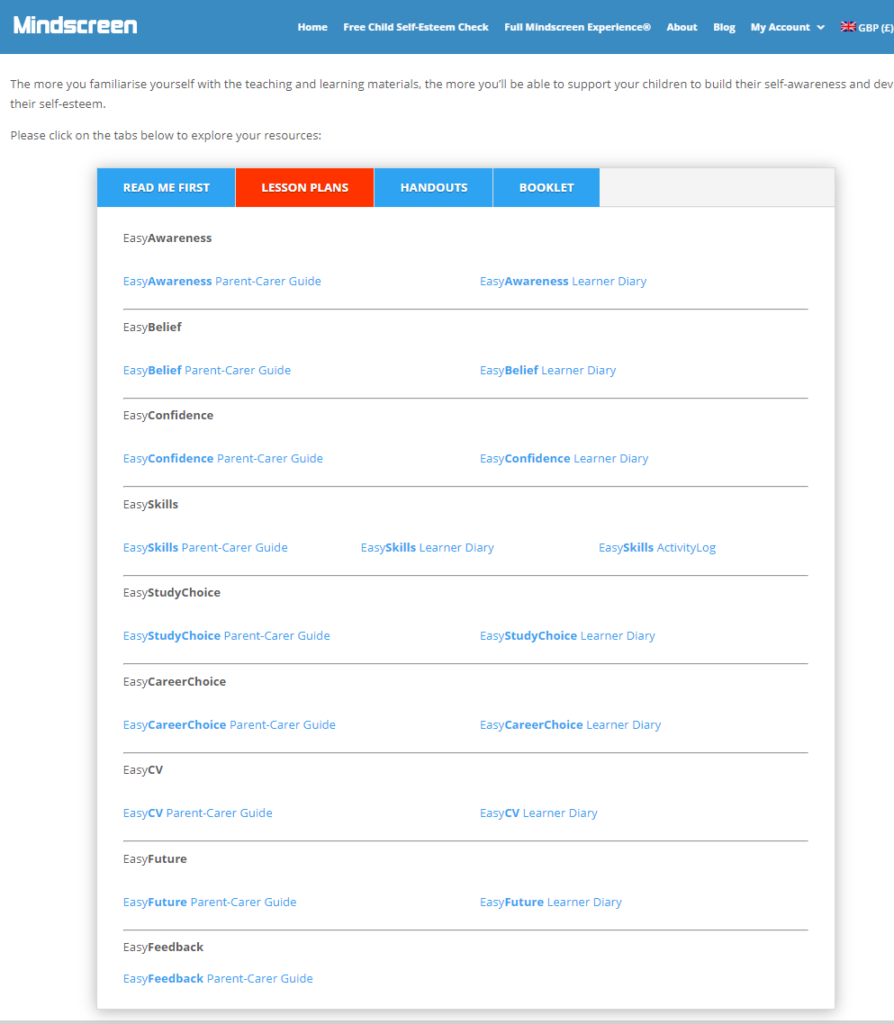
Each lesson plan will have a Parent-Carer Guide which you keep with you to prepare and host the lesson and a Learner Diary for the child to read and fill out during the lesson.
There are nine lessons, which are:
EasyAwareness
EasyBelief
EasyConfidence
EasySkills
EasyStudyChoice
EasyCareerChoice
EasyCV
EasyFuture
EasyFeedback
Each lesson lasts around 30-40 minutes (some last around 60-80 minutes depending on the number of children. If the lesson has a different duration it will specify how long it will take.) The parent guide provides enough detail for you to prepare for your lesson before you start, from detailing the lesson’s objectives to the resources needed and the order in which you take the lesson.
Lesson 1 – EasyAwareness
In this lesson, me and the boys discussed the importance of learning about their personal characteristics to build their self-awareness.
So, let’s get started!
What is self-awareness?
EasyAwareness is the first of the nine lesson plans which is all about providing your child with the opportunity to learn about their personal characteristics and begin building on their self-awareness. We want to help our children become more aware of their own natural behaviour and how others see them too.
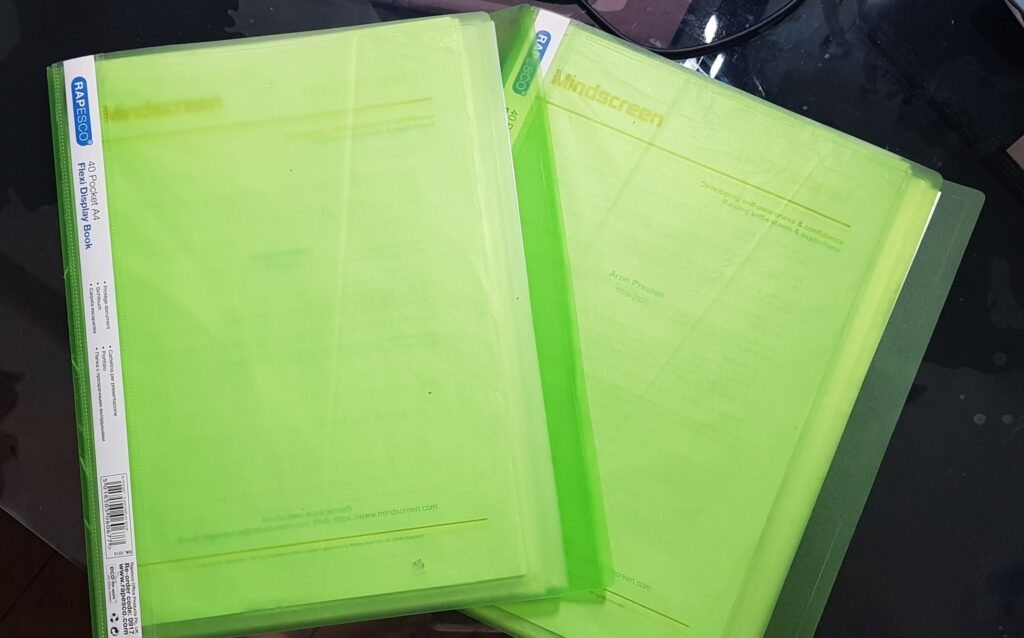
I showed the boys their folders which I created especially for their Mindscreen Experience. Each folder housed their Mindscreen Profiles and Learner Diaries.
The boys were very intrigued by their special green Mindscreen Experience folders and wondered what it had to do with them sitting down and having a lesson with me outside of school hours.
I introduced Mindscreen as the website they used to complete their questionnaire to find out more about themselves.
Aidan (8) chimed in.
“That’s not good, we are going to get reported!”
“Why?” I asked.
“Because people will steal our information!”
Ah! He thought we were going to write about his date of birth, address and phone number! At least he was on the ball with online fraud.
I reiterated the reasons why self-awareness is important, i.e. that finding out about themselves meant learning about natural skills and strengths, as well as weaknesses and building their emotional intelligence so they can build confidence and experience success in life – and this meant learning more about their personality and characteristics.
“But it’s still bad to give away that information.”
“No, Aidan, the information is related to you personally and won’t be shared with anyone else but us, and only if you want to, as well as the owner of Mindscreen who won’t share it with anyone else. The website is protected.”
Aidan sat back with a reluctant look on his face.
“How do I learn about myself?”
“Let me explain so you understand what I mean and I promise you will feel better about it. Paying attention will help!”
The boys stopped messing about with their baby sister and Aidan nodded his head in silence while Aron (9) darted his eyes between us like ping pong balls at a table tennis match.
“I promise you, this lesson is very interesting! Once you start going through your Mindscreen profile you will be shocked at how much you will find out about yourself. And knowing about yourself can help you become great leaders one day! Anything is possible, ok?”
The boys perked up a bit.
I asked the boys if they remembered completing the questionnaire, where they had to drag and drop boxed statements about themselves, with the most like you at the top and the least like you at the bottom, for example ‘I am energetic’, ‘I am fun’, ‘I like people to leave me alone’.
“I am fed up of working all time,” Aidan said.
“Yes, something like that,” I replied.
I opened up my parent guide and read through briefly what I needed to do (Both Mindscreen and I advise that you read and prepare the lesson before you get started, so you don’t waste time faffing about).
Your Mindscreen profile starts with the following:
“Ready, steady, go! Do not wait for a second longer! Start figuring yourself out now, while you are young!
Knowing yourself is vital because it helps you to recognise what you get passionate about and what you love to do. Doing what you love makes you happy! Learning about your own natural skills is important too because later you can choose study and career paths that use your skills! The more you know your strengths, the more your self-confidence and self-belief will grow!
Your Mindscreen experience® profile is UNIQUE TO YOU.
It is full of insights that will help you to better understand:
* Yourself – How your friends, family, and other people see you
* What your dreams and goals are
* What study and career paths you are more likely to enjoy
* What things make you happy and feel fulfilled
Remember, you can learn even more about yourself with these fun Lesson Plans: easyAwareness | easyConfidence | easyBelief | easySkills | easyStudyChoice | easyCareerChoice | easyCV | easyFuture”
Once we talked briefly about their Mindscreen profiles and what it meant for them specifically, I got into the first lesson, EasyAwareness, and showed them where they could find their learner diaries.
I asked them:
“Do you know who you are and what you want?”
“Yes, I’m Aron.”
“Yes, you know your name. But do you really know who you are?”
The boys looked confused.
“Are you aware of how you act and what your characteristics are? Are you aware of how you are different from other people? “
I explained that being different was a good thing and that the importance of self-understanding meant that you could understand yourself better – understand what makes you angry or anxious about things. It is about being aware of your behaviour, your motivations, your emotions, how you feel etc.
Being aware when someone upsets you and how you feel when you’re upset, and understanding why you behave in the way you behave. For example, If you are loud and talking too much and you notice that you may be upsetting people, you are self-aware. If you are doing a skill really well and noticing the results are positive then you are self-aware.
When you are self-aware you can make changes to your actions to better suit yourself and the situation.
“If you are shouting in a room and you can’t see that it’s upsetting others then you are less self-aware or unaware of what you are doing. Does that make sense?”
Both boys nodded.
Aron asked, “Mum, is this crisp-munching annoying?”
“No.”
“See? I’m aware that this crisp munching may be annoying to some, so I am self-aware!”
“Yes!”
I was getting through – yay!
So now I wanted them to open their minds and accept the lesson as an open lesson where we could talk, interact, discuss, and debate what we talked about. Most importantly, I wanted the boys to take in what was going on in this lesson and understand how important it is to be self-aware.
Ultimately, I wanted them to enjoy learning about themselves because it’s supposed to be a fun thing!
I also mentioned that once we talked about being self-aware there were sections in their learner diaries that they could fill out and keep as a record for reference later.
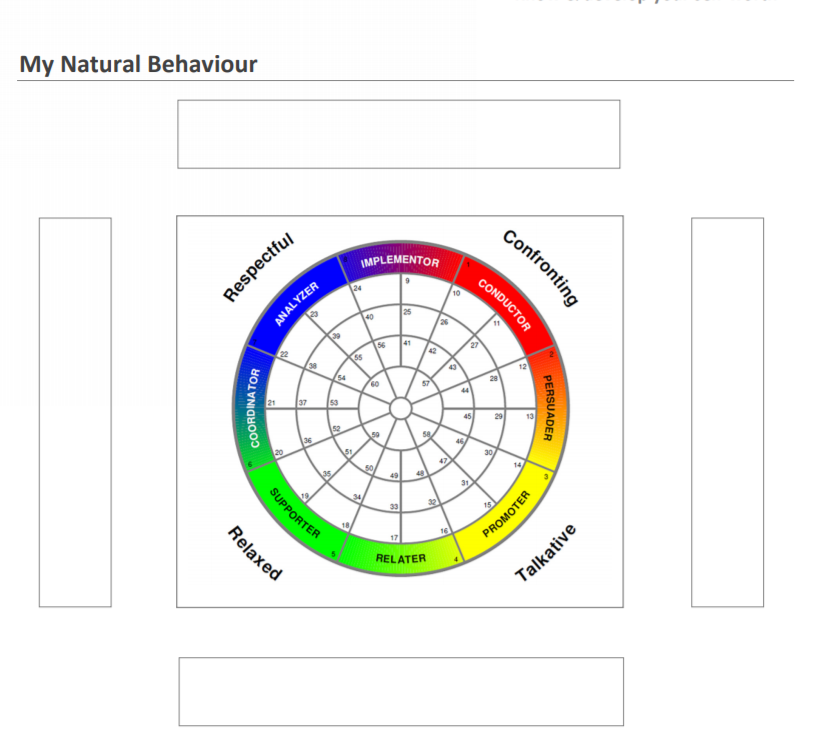
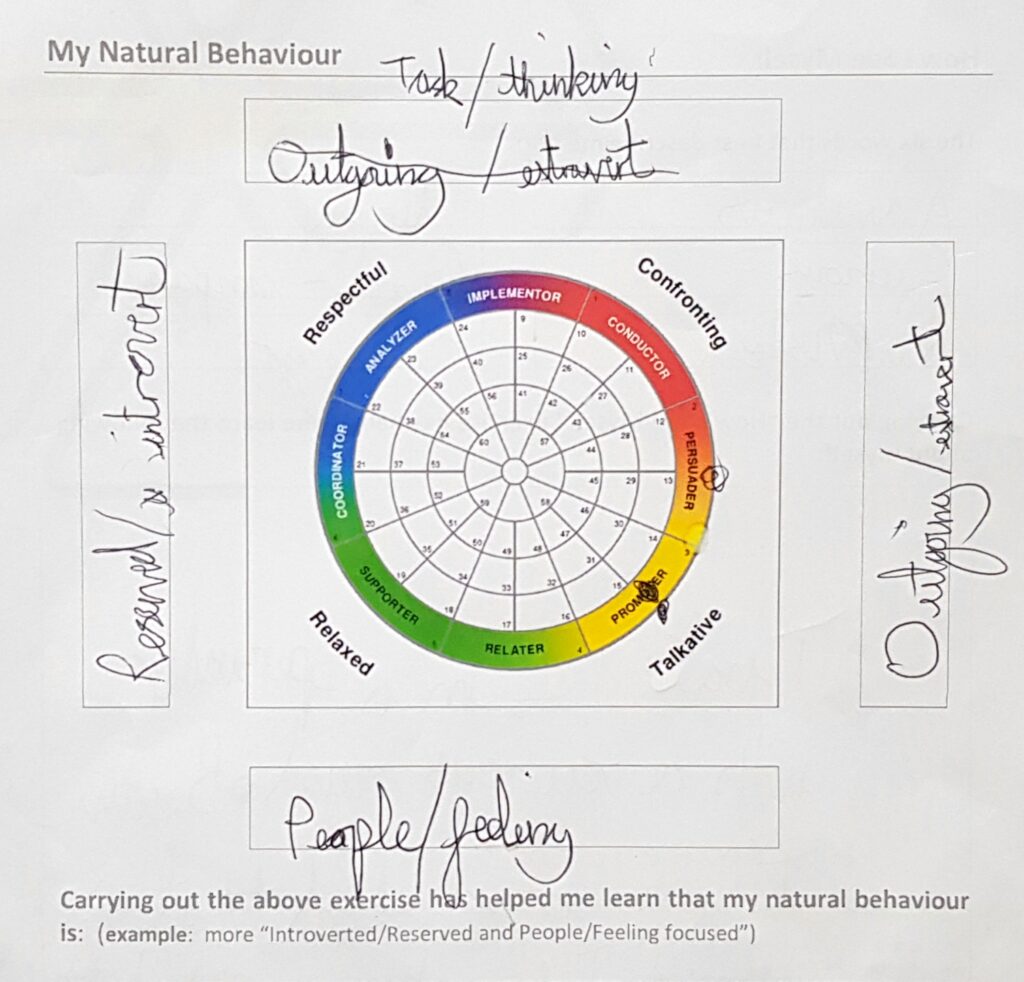
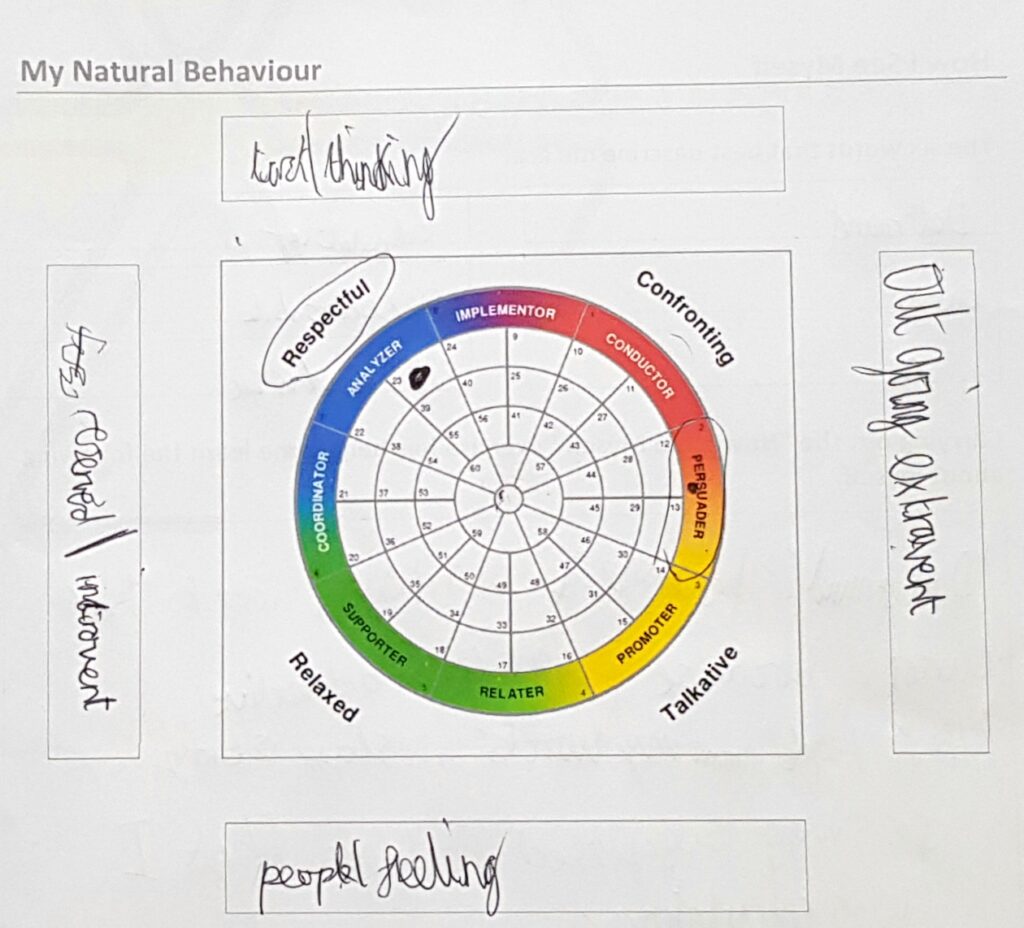
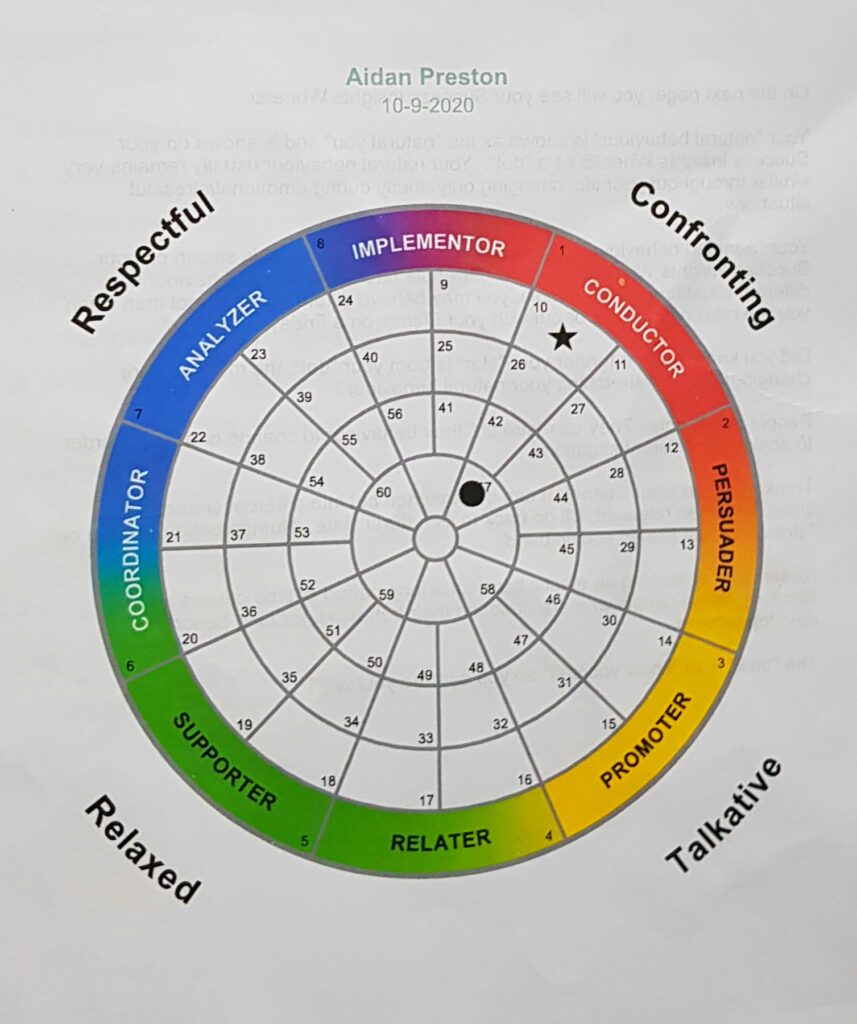
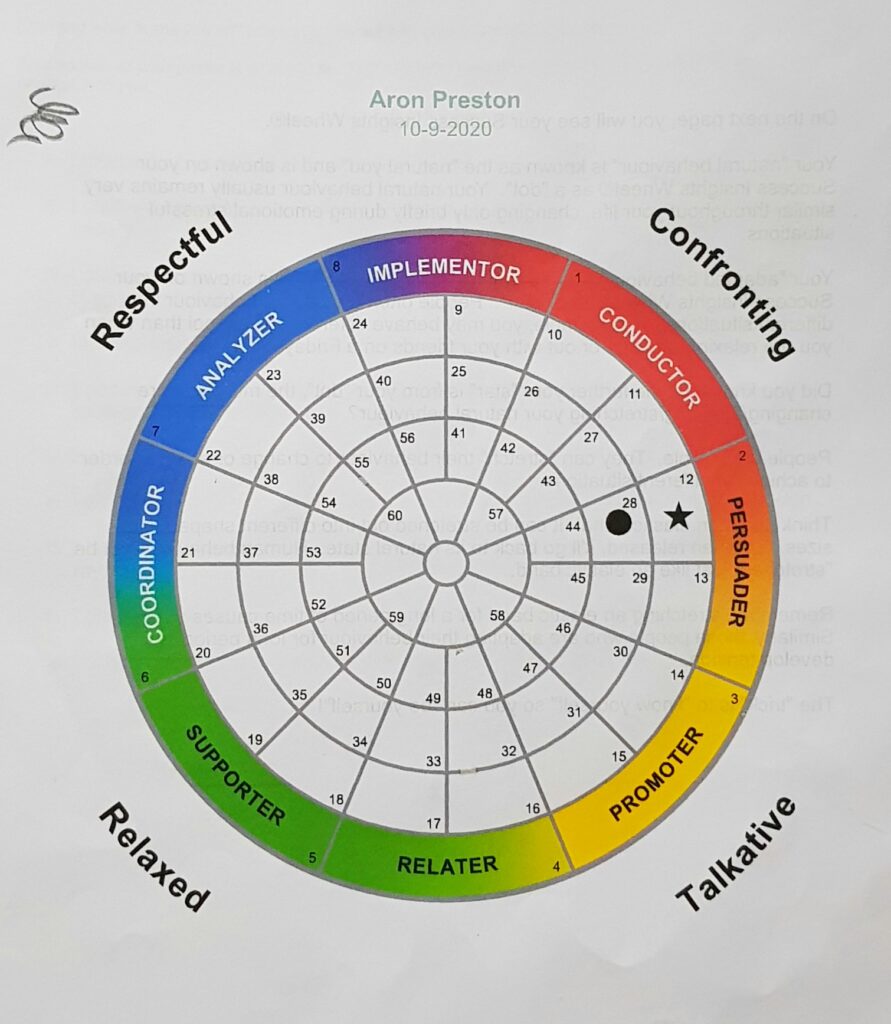
I asked the boys to go to their Mindscreen profiles and look at the “My Natural Behaviour” section.
“So, how do you get to know yourself?” I asked
Both boys stared at me with blank faces.
“Ok. Do you feel you are more reserved or more outgoing? And do you know what I mean when I say reserved and outgoing?”
Aron shouted “Outgoing! I’d rather play in the football match than be subbed.”
“No….”
“I’m outgoing! OUTGOING!” Aidan shouted.
“Reserved means that you’d rather keep to yourself than go out and socialise, for example. If you’re outgoing then you like to spend time with people, go out to parties and socialise that kind of thing.
“What if you don’t like to social distance?” Aron replied.
“Well, everyone should social distance, whether they’re outgoing or not.”
“But if you don’t want to social distance then you’re more outgoing, right?”
“Erm…”
“I don’t really like people, so I guess I’m reserved,” Aidan said
“I have lots of friends, so I’m definitely outgoing,” Aron said
“I have lots of friends!” Aidan cried “So I’m outgoing then!”
“But, even if you have lots of friends you can still be reserved because you may want to keep certain things to yourself and not share everything with your friends.”
“Oh no, now I don’t know what I am,” Aidan said.
“Ok, let’s move on to motivation. What motivates you? Do you know what that means?”
“I feel motivated to quit,” Aidan muttered.
“Ok, what keeps you happy? What makes you want to do the things you do?” I interrupted.
Both boys stared blankly at me again.
“I wake up in the morning and I want to do [blank]. Fill in the word that most applies to you.”
“Roblox,” Aron said.
“Think bigger.”
“Playing on the fields at lunchtime.”
“Think even bigger than that.”
“Being myself?”
“What motivates you in life?”
“Being outside,” Aron replied.
“Ok, we’re getting there. What is it about being outside that motivates you?”
“Playing football, fresh air, being free.”
“Ok!”
Triumph. Aron is motivated by being outside playing football – and being free.
Aidan looked at Aron and agreed that being outside and playing football motivates him too.
I then asked the boys to catch themselves reacting and behaving in certain situations, like when something upsets them, or in a stressful situation, they should note of how they react – catch themselves in the moment
In stressful situations, do you get stressed easily? Are you able to stay calm?
Both boys shouted no.
“Are you happy? Do you feel demotivated? Demotivated means you don’t want to do things.”
“And then ask yourself what caused me to feel this way. What is your current mood? As in your feelings/emotions?”
Aidan responded, “Right, now my feelings are that I want to finish these crisps and go outside.”
I asked the boys to become their own mirror and see themselves clearly.
“But, what if I walk past the bathroom and see myself naked?” Aidan said, looking shocked at Aron.
“Ok, I don’t mean an actual mirror – it’s a metaphor. The metaphor means not a real mirror, a pretend mirror where you are seeing yourself like you are the mirror. Think about what you are like right now. Can you see yourself joking around? What is causing you to feel that way?”
“Ayla [baby sister] is distracting me.”
“Ok, let’s move on to the lesson.”
In the parent guide, the lesson asks you to set the scene in the form of a respected psychologist from years ago, His name is Carl Gustav Jung and he was the first person to describe human behaviour simply. He recognised that, by creating an easy-to-understand behavioural model, people could begin to become more aware of their behaviour.
I told the boys that we will be using this model to help them better understand themselves and to reiterate that different and unique doesn’t mean good, bad, right or wrong. It just means different and unique.
I asked the boys to take out their learner diaries and look at the model that was created. I told them that the fun was about to begin and gave them a pen to get started.
The behavioural model
Aron immediately said, “I am a challenger I would do dangerous challenges like exploring a home where a tiger is.”
I asked the boys to write down ‘Reserved/Introvert’ on the left-hand side of the wheel.
In the right-hand box, I asked them to write ‘Outgoing/Extrovert’
At the top box on the wheel, I asked them to write ‘Task/Thinking’
At the bottom of the box, to write ‘People/Feeling.’
I then asked the boys to place their finger on the centre of the wheel. I again explained what reserved and introverted meant again to ensure they understood.
I asked them to move their finger either to the left if they felt they were more introverted or to the right if they felt they were more outgoing, The further to the end of the wheel they moved their finger, the more reserved or outgoing they were.
It took them ages to figure out what I was trying to say. Eventually, they moved and kept their fingers on the spot while I asked then to think about task/thinking, i.e. they are more task-focused if they liked to think things through, have lists to work through, and tick the tasks off when they are done.
And to move their finger more towards people/feeling if they prefer to be around other people, talk with other people, help other people etc. I asked them to move their finger either to the top or the bottom respectively. I had to remind them to move their fingers to the degree they thought they were either a little or a lot of each.
Aron ended up on the yellow area, i.e. between Outgoing/Extrovert and People/Feeling – right in the Talkative/Promoter section.
Aidan ended up on number 23 in the wheel, more towards the Task/Thinking section, up towards the Analyser/Respectfulblue area.
I asked them to put a dot where they ended up.
The comparison between how you see yourself and what is your natural behaviour and adapted behaviour
I asked them to turn to the “Wheel” page – The Natural & Adapted Me section in their Mindscreen profiles.
I wanted them to see the difference between how they saw themselves and where their questionnaires placed them on the wheel. I explained in the profile that the dot is their natural behaviour, the behaviour they carry with them throughout life, only changing very slightly to adapt to certain situations.
The star is their adapted behaviour. That means the behaviour they change when they are in different environments. For example, when they are at school their behaviour might be different from when they are at home. In a stressful situation, their adapted behaviour might be different from their natural behaviour.
The results were very interesting.
Aidan’s dot was further away from his star but in the same column. If the dot and star are further apart from each other, then Aidan seemed to be stretching his behaviour to adapt himself to certain situations to be more confrontational and controlling than he likely naturally was.
But Aron’s wheel showed no real change in his natural and adapted behaviour. He was who he was, whatever environment he was in.
Aidan shouted, “This is stupid. I am not argumentative!”
“Maybe not naturally, but perhaps you try to be in certain situations?”
“I don’t know, I’m confused! I don’t understand what any of this means!”
The elastic band metaphor
I asked the boys to think about an elastic band. The elastic band can stretch a little bit to adapt its surroundings, perhaps around a pot. But as the elastic band stretches further, what happens?
“It gets longer?” Aidan asked.
“No, Aidan, it will snap if you stretch it too much,” Aron responded
“EXACTLY!”
“It will snap?” Aidan responded looking like he was about to cry.
“Ok, let’s backtrack.”
I picked up the elastic band again and left it slack.
“Who you are is this. Now focus on the stretchiness.”
“I am not an elastic band!”
“No, but I want to imagine that your behaviour is like an elastic band.”
“What? How can my behaviour be the elastic band?”
“Ok,” I sighed.
“When the elastic band is left like this, is there any strain on it? Is it in its normal resting natural self?”
“Yes?” Both boys replied, still confused.
“Ok, so just pretend for a moment that this natural state is your natural behaviour. Your natural behaviour is like this elastic band. It’s not stretched, it’s in its most relaxed self. You are the most comfortable in your relaxed self.”
“Ohhhhhh….kkkkk?”
“Now look what happens when I stretch the elastic band a little bit. Is it ok still? Can it handle this stretchiness?
“It can handle a lot more stretching!” Aron replied
“Ok, so it’s happy to be stretched this much, right? Now, think about your behaviour stretching just a little bit and by that I mean, you’re adapting your behaviour a little bit to suit whichever environment you’re in, like at school or home etc. Makes sense so far?”
“Yes!”
“Now, think about what will happen if I do this.”
I stretch the elastic far to the point it’s very taut now and the boys wince.
“What do you think will happen?”
“It will snap!” the boys shouted.
“Ok, so the further you stretch your behaviour the more strain you are putting on yourself. Can you tell me why?”
“Because we are not being ourselves!”
“BINGO, ARON, BINGO!”
“And what happens when you are not yourself all the time?”
“We get sad because we just want to be ourselves.”
“HURRAH! You get it!”
“You see it’s not a bad thing to adapt your behaviour slightly to different situations because you’re reading the room and you’re responding in a way that helps the atmosphere of that room. For example, if you’re in a serious meeting, you act more serious to reflect the seriousness of the room. You don’t clown around and jump up on the table even if that’s what you want to do.”
“Now, think about when you are with a group of friends and they are all making fun of someone and you make fun of that person too because you want to fit in. But you like that person or you’re a nice person and it makes you feel sad inside.”
I held the elastic band in a very taut position.
“It hurts you inside that you are doing what you’re doing, but you are trying to adapt your behaviour to suit those so-called friends. Can you keep doing that again and again?”
I stretched the elastic band until it snapped. The boys gasped.
“Stretching the elastic band too far causes strain and it can only handle it for so long before it snaps. Sooner or later, you are going to get depressed. You are going to feel like you will snap because you are fighting to not be yourself, but you can’t do that forever. When you pick a job you hate and you have to work at that job every day then you will start to feel anxious, upset and stressed. Eventually, it will damage your health.”
I asked the boys if they’re the same at school as they are at home and what makes them different.
“I am the same,” Aidan replies, “I always act the same”
“Your wheel says different, though.”
“Maybe when you are at school, you’re a bit shyer so you try to act more strong by shouting?” Aron asked Aidan.
“Wow. Very good insight, Aron.” I reply.
“No. that’s not what I’m like.” Aidan replied with his arms crossed “I am number 57! Number 57!”
I look at the wheel and number 57 is in the centre, slightly towards conductor/confronting.
“Your wheel tells me that in some situations you try to be number 10, which is more confrontational.”
So I asked Aidan when he thought he could become a bit more argumentative than normal.
“What about when you’re on a stage and you’re being asked to present something on a stage?”
“I would just run away,” Aidan replied
“Do you think you might be a bit more serious? Confident?”
“No.”
“Why do you think your star and dot are far away from each other?”
“Because it’s rubbish.”
I finish the elastic band analogy by explaining to the boys they cannot change who they are but they can adapt, as long as they don’t try to change themselves for others.
It took us about an hour to get through this part of the lesson!
What did the boys learn about their natural behaviour?
I asked the boys to answer the question in their learner diaries about how this exercise had helped them learn what their natural behaviour was (i.e. were they more introverted, reserved, people/feeling focused?)
Aidan wrote, “I am a balance of implementer and get tasks done.”
Aron wrote “I am a persuader. I am more extrovert.”
How I see myself
I asked the boys to turn to the ‘how I see myself‘ section in their Mindscreen experience profiles and take a look at the highlighted words in each of the columns. These words reflect how they see themselves. I asked them to circle three words in the highlighted areas from each column which are accurate and positive statements about themselves.
The boys had to ask what some of the words meant, but after a while, they highlighted their three words.
Aron selected Competitive, Good Company, and Balanced judgement
Aidan selected Determined, Reliable and Firm
Then I asked the boys who wanted to be ‘Person A’ and who wanted to be ‘Person B’ where Person A looked at Person B’s profile and vice versa.
The boys were to underline six of the words that described how they saw their brother.
Both boys underlined ‘Responsible‘ for each other which I thought was sweet.
Aidan underlined ‘Adventurous’, ‘Curious’, ‘Responsible’, ‘Good Company’, ‘Hurried‘, and ‘On-the-Go’. Aidan explained that Aron was a nice brother and he was always loving and helpful, as well as very polite. He was also very fast and never stopped moving.
Aron picked ‘Responsible’, ‘Calculating’, ‘Reliable’, ‘Stable’, ‘Determined’ and ‘Firm’ for Aidan because he always wanted to be the best and get what he wanted. Competitive because he takes part in everything and always wanted to win. Responsible because you can rely on him and Calculating because he liked maths.
How I describe myself
I asked the boys to write down the six words that best described themselves.
Aidan wrote “Determined, calculating, curious, firm, responsible and realistic”
Aron wrote “Adventurous, curious, responsible, decisive, good company and on the go.”
I reminded the boys that these traits didn’t mean they were bad or weak, but that they made up their unique characteristics, which is a beautiful thing and being different is fantastic.
But the main lesson here is that if they learn more about themselves they can build their self-awareness, and keep these six words in mind so they can catch themselves when they are like that.
This is not just about working out who you are, it’s about catching yourself and how you’re like when you are at school, when you’re with your friends and when you’are at home.
What I’ve learned about how I see myself
I asked them to fill out the last box ‘Carrying out the “How I see myself” exercise has helped me learn the following about myself:’
Aron wrote “That I am a persuader with a curious mind. I’m so shocked that I’m hurried. It makes me feel shocked.”
Aidan wrote “Determined: because I am ready I can do this. Curious: because I want to be a detective. Firm: people mark my words, and I stay strong. I was surprised to learn that I was calculating. I feel happy when I learn new feelings about myself.”
How did we get on with Lesson 1?
I struggled to get their attention for most of the lesson – either they were distracted by each other or their baby sister who was running around pulling things off the shelf. I also found it difficult to get them to sit on the table with me and listen. They already had preconceived views that this lesson was going to be boring and it wasn’t until the last thirty minutes that they got into it and realised that learning about themselves was fun.
How long the lesson was supposed to be
30-40 minutes
How long it took us:
Over 1 ½ hours
I told the boys that I was looking forward to the next lesson, EasyBelief, because I enjoyed learning more about them. I explained that Lesson 2 will be about exploring how their own beliefs are formed and how those beliefs drive their behaviour.
It was tough but I really did enjoy learning more about the boys.
What did I want the boys to learn in this EasyAwareness lesson?
The most important part of this lesson, in my opinion, was that personal awareness is vital for growth and I really wanted to show them why self-awareness is important for professional development too. I also wanted to show them why self awareness is important in leadership, but at eight and nine years old, they would have had no idea what I meant if I had explained it in that way.
Instead, the importance of self-awareness is to learn how to be more aware of their natural behaviour in situations and how external factors can cause their behaviour to adapt, which is fine, as long as they’re not stretching their personalities and causing strain on their mental health. Why is self-awareness so important in mental health? Because we are most comfortable in our natural state and trying to be someone we’re not can damage us in the long run and lower our self-esteem because we may eventually end up thinking our natural behaviour is not good enough.
Why is it important to develop self-awareness? How can it help you balance your thoughts and feelings?
Why should people be aware of themselves? There are many benefits to self-awareness in humans because it can make us more proactive and encourage positive self-development (Sutton, 2016). Self-awareness also allows us to see things from the perspective of others, and practice self-control, as well as lead us to be better at our jobs and become better communicators too.
Why is self-awareness important in children?
If we can teach our children how to be self-aware when they’re young, we can help them to enhance their self-confidence early which is the whole point to this Mindscreen series. The earlier we start, the more chance they have in succeeding in the path they want to choose.
We also need to teach children how self-awareness is important to their personal growth as it can encourage them to be better people all-round.
What does self-awareness allow you to do that less self-aware people can’t?
Being self-aware can help you take better action towards life decisions and goals. Knowing about yourself means you can play to your strengths and improve your weaknesses – or avoid them altogether. Why is awareness important for children? You can help your child nurture their skills and ultimately find the job that’s better suited to them, allowing them more opportunity to succeed and be happy later in life.
What’s next?
In Part 3, we will be going through Lesson 2, EasyBelief lesson plan where me and the boys will explore how their own beliefs are formed and help them to understand how their beliefs drive their behaviour.