Who gets custody of children in a divorce or separation?
When couples separate, who gets custody of children in a divorce? Read on to find out more.
Divorce and child custody – everything you need to know
One of the most critical and emotionally charged decisions parents have to make revolves around child custody and divorce. In the UK, courts use the term, “child arrangements” (instead of “custody” or “access,” which is a United States term) as per the Children Act 1989 which provides the legal framework for resolving child arrangements matters. The Act promotes the principle that the child’s welfare is of paramount importance and custody child arrangements determine where the children will live and who will decide their upbringing.
The wellbeing and stability of the children involved heavily rely on how custody matters are handled. Divorce solicitors play a pivotal role in guiding parents through the legal process and ensuring the best interests of the children are considered.
Divorce is associated with increased identity crises for women, both during and after the separation. A divorce lawyer Scottsdale can help navigate the legal process, allowing women to focus on reclaiming their individuality. In their efforts to be nurturing spouses and caring mothers, many married women lose touch with their sense of self. Even though it may not seem like it at the moment, overcoming this can be a truly rewarding experience. Taking on a new persona has been linked to better psychological and physiological well-being.
Understanding the importance of deciding who gets custody of children in a divorce – What the courts may consider When deciding about custody
Child arrangement decisions significantly impact the lives of the children involved. Their emotional and psychological wellbeing is closely tied to the stability and support they receive from their parents.
A well-structured Child Arrangement Order can provide a sense of security, continuity, and routine for the children during a difficult time of transition. Conversely, poorly managed child arrangements can lead to emotional distress, feelings of abandonment, and strained relationships with parents. It is vital for separating couples to prioritise the best interests of their children and work towards a resolution that fosters a healthy and supportive environment.
Types of custody child arrangements and factors influencing court decisions – joint vs sole custody and legal vs physical custody
Physical custody child arrangements – Joint physical custody vs sole physical custody
Physical custody refers to where the children primarily live after the separation. In some cases, the court may award joint physical custody, allowing the children to spend time with both parents. In other instances, physically one parent may be granted sole custody, and the other may have visitation rights.
Legal custody child arrangements – Joint legal custody vs sole legal custody
Legal custody relates to the authority to make important decisions concerning the children’s upbringing, such as education, healthcare, and religious matters. Like physical custody, you can get sole or joint legal custody, depending on the circumstances and the parents’ ability to communicate effectively.
Factors considered by the court
When deciding child arrangement matters, the court takes various factors into account to determine the arrangement that serves the best interests of the children. These factors may include the child’s age, emotional and physical needs, child support issues, the parents’ ability to provide a stable home environment, any history of abuse or neglect, and the child’s relationship with each parent.
Additionally, the court may consider the preferences of older children if they are deemed mature enough to express their views.
Working on child arrangement issues outside of court
Open communication
Despite the emotional challenges of separation, maintaining open and honest communication between parents is essential. Having a constructive conversation about child arrangements will help each parent understand each other’s concerns and preferences, and reach a mutually beneficial resolution.
Mediation
Mediation is a beneficial alternative dispute resolution method that allows parents to work with a neutral third party when reaching a custody agreement/child arrangement agreement. Mediation can be less adversarial than going to court, promoting a more cooperative approach and preserving a positive relationship between the parents.
Parenting plans
Creating a detailed parenting plan can provide structure to the child arrangement. A parenting plan outlines visitation schedules, decision-making processes, and contingencies for future adjustments if necessary.
Benefits of alternative dispute resolutions
Financially better
Resolving custody issues outside of court through mediation or negotiation can be more cost-effective than lengthy court battles. The financial savings can be better invested in the well-being of the children.
Less conflict
Alternative dispute resolutions often foster a more cooperative and less confrontational environment, reducing conflict and emotional strain on both the parents and the children. This can lead to healthier long-term relationships between parents, which ultimately benefits the children.
Role modelling for children
Opting for alternative dispute resolutions can show the children how conflicts can be resolved amicably. This positive role modelling can shape their understanding of conflict resolution and communication skills, providing them with valuable life lessons.
Dealing with Child Arrangement Orders. Who gets custody of the children in a divorce or separation?
Child Arrangement Orders hold significant weight and are crucial for the wellbeing and development of children during a separation. It’s important to understand the different child arrangements, as well as the factors considered by courts, and explore alternative dispute resolution methods to get help negotiating child custody during your divorce.
To navigate the complexities of child arrangements, you should seek guidance from divorce solicitors at a law firm / child custody attorney who specialise in family law matters. Their expertise can help protect your rights and advocate for the best interests of your children.
Remember, by prioritising open communication, cooperation, and the wellbeing of the children, parents can work towards creating a Child Arrangement Order that fosters a healthy and nurturing environment for their children to thrive.
FAQ
Who gets the kids if we divorce?
Other questions asked were:
Who gets custody of a child in a divorce in Canada?
How is child custody determined in the state of California?
How do I find out who has child custody?
Who takes custody of a 7 year old female child after a divorce?
Who will get custody of child after divorce?
Who gets custody of child in a divorce?
How to get full custody of your child in a divorce?
How to get custody of my child in a divorce?
In divorce who gets custody of child?
Who gets custody of child in divorce?
When determining child arrangements (in the UK, the terms are “child arrangements” rather than “custody” or “access”) in a divorce, the court’s primary consideration is the welfare of the children. The court’s aim is the safeguarding of the child’s best interests, so the outcome will depend on the circumstances of each case.
When deciding child arrangements and who is the custodial parent, the court will take into account several factors, including:
Considering the child’s age and maturity. They may also take the child’s views into account, giving more weight to older children.
The ability of each parent to meet the child’s needs and provide a suitable environment, including their parenting skills, stability and willingness to support the child’s relationship with the other parent
Assess any evidence of domestic violence, abuse, or neglect that may affect the child’s wellbeing and safety.
The court will favour joint custody or shared care arrangements, allowing both parents to be involved in the child’s life. However, if one parent poses a risk to the child, the court may grant sole custody or restricted contact.
My wife and I are getting a divorce. She doesn’t want to have custody over our son, but I don’t want it either. How could I convince her she should have full custody?
Other questions asked were:
What if I don’t want custody of my child post divorce?
What would happen in a divorce case where neither party wanted custody of their children?
If both you and your wife are in agreement that neither of you wants custody of your son, it is important to approach the situation with sensitivity and focus on what is in the best interest of your child. Here are some ideas you can broach with your wife for full custody:
Initiate a calm and respectful conversation with your wife to discuss your reasons for believing she should have full custody. Listen to her perspective and try to understand her reasoning as well.
Emphasise the primary focus should be on your child’s wellbeing. Explain why you believe your wife may be better suited to provide the necessary care and support for your son. Highlight her strengths as a parent and how she can meet the child’s physical, emotional, and educational needs.
If you genuinely believe your wife would be a better custodial parent, be prepared to provide evidence to support your claims. This might include examples of her previous involvement and responsibility in caring for your child, her understanding of his needs, and her ability to provide a stable and nurturing environment.
Discuss the possibility of creating a comprehensive co-parenting plan that outlines the roles and responsibilities of each parent in the child’s life, even if one parent has primary custody. Show your willingness to remain actively involved in your child’s upbringing through visitation rights, regular communication, and joint decision-making.
If you are can’t reach an agreement through direct discussions, you might consider involving a professional mediator. A mediator can help facilitate productive conversations and help you find common ground, ensuring the priority of the child’s best interests.
The final decision on custody will ultimately be made by the court if an agreement cannot be reached between you and your wife, so speak to a family solicitor who can provide you with guidance and help you understand the legal implications of your situation.
From a lawyer’s perspective, why do women get child custody almost 90 of the time? Is there really a bias? What factors come into play when deciding about it?
Other questions asked were:
Do you believe that fathers have a harder time gaining custody of children in a divorce? In other words, are fathers treated as second-class citizens in the eyes of the courts?
Children of divorce. Does the mother always win custody?
Why is it that women are more likely to get custody of a child than men after a divorce?
How often do men receive complete custody of the children in a divorce?
Should mothers get full custody of the children after a divorce?
What percentage of mothers get custody?
What percentage of fathers get full custody?
Why does the mother always get custody?
Mother vs father custody statistics?
What are the chances of a father getting full custody?
Why some dads don’t get primary or custody?
Who is most likely to get the children in a divorce?
Who is most likely to get custody of a child?
Custody decisions can vary depending on the specific circumstances of each case, and general statistics may not reflect individual situations accurately.
Historically, there has been a perception of a bias toward awarding custody to women, but this perception may not reflect the reality of every custody case. The approach to child custody in case of divorce has evolved over time, with an increasing emphasis on the best interests of the child rather than assumptions based on gender.
When determining the child’s custody, the court’s primary consideration is the wellbeing and best interests of the child. Various factors can come into play during custody decisions, which may include:
Parental involvement and relationship with the child. This includes evaluating each parent’s level of involvement in the child’s life, the bond they have formed, and their ability to meet the child’s emotional and physical needs.
Depending on their age and maturity, the court may take into account the child’s preferences regarding custody. However, the weight given to the child’s wishes varies depending on their age and the judge’s assessment of their understanding of the situation.
The court evaluates each parent’s ability to provide a safe and nurturing environment for the child. They will consider factors such as physical and mental health, stability, parenting skills, and willingness to support the child’s relationship with the other parent.
The court takes allegations or evidence of abuse, neglect, or domestic violence very seriously when determining custody.
How can I get partial custody of my child?
Other questions asked were:
How do I get custody of my child after a divorce?
Who gets temporary custody during divorce?
To seek partial custody of your child in the UK, you will need to go through a legal process, which may involve the following steps:
Research and understand the laws of child custody and child arrangements in the UK. This will help you navigate the process and understand your rights and responsibilities and the children’s rights after divorce.
Attempt mediation or negotiation with the other parent to reach an agreement on partial custody. Mediation involves working with a neutral third party who helps facilitate discussions and find common ground. .
If an agreement cannot be reached through mediation or negotiation, you can apply for a Child Arrangements Order from the court. This legal order determines who the child will live with and the time they spend with each parent. You can apply for this order as a way to seek partial custody.
If the case proceeds to court, both parents will present their arguments and evidence supporting their request for partial custody. The court will consider various factors, including the child’s welfare and best interests, parental capability, and the nature of the parent-child relationship. The court will make a decision based on these factors.
If the court grants you partial custody, it is important to adhere to the court’s orders and the agreed-upon visitation schedule. Compliance with court orders is crucial to maintain a positive relationship with your child and avoid potential legal consequences.
Can a non earning mother get custody of her kids if she is opting for divorce?
Yes, in the UK, a non-earning mother can seek custody of her children when going through a divorce. When determining child custody or child arrangements in the UK, the primary consideration is the welfare and best interests of the children involved. They will consider the level of involvement of each parent in the child’s life and the parent’s ability to meet the child’s physical, emotional and educational needs, regardless of the employment or income status, and they will prioritise the child’s overall wellbeing,
In the UK, the court encourages both parents to maintain a meaningful relationship with their children, unless there are factors such as abuse or neglect that could pose a risk to the child’s safety or wellbeing. When considering the types of child custody arrangements involved, the court generally promotes shared parenting and joint custody arrangements when appropriate and in the best interests of the children.
Who gets custody of child if not married?
In the UK, when parents are unmarried and separate, the mother automatically has parental responsibility for the child. Parental responsibility refers to the legal rights and responsibilities that parents have towards their child’s upbringing and welfare. However, it’s important to note that both parents have the right to apply for a Child Arrangements Order from the court to establish custody and visitation arrangements.
If the parents are unable to reach an agreement on child custody, the court will make a decision based on the best interests of the child.
At what age can a father get custody of his child?
In the UK, there is no specific age at which a father automatically gains custody of his child. The key consideration is the best interests of the child, so the court takes into account the factors as mentioned above to make a decision that promotes the child’s welfare.
Can a divorce be finalized without custody?
In the UK, you must organise child custody before divorce (otherwise known as ‘child arrangements’ under the Children Act 1989) because the welfare of the children is the court’s primary concern and they won’t grant a divorce unless arrangements for the children have been made. Child arrangements cover where the child will live and how much time they will spend with each parent.
When filing for divorce in the UK, both spouses are required to submit a statement confirming that appropriate arrangements have been made for the children. The court will review these arrangements to ensure they are in the best interests of the children before granting the divorce.
If the divorcing couple cannot agree on child arrangements, the court may intervene and make a decision based on what it believes is best for the children. If the process of child custody during divorce is taking longer than intended, the court will need to consider the child’s welfare before finalising the divorce.
How does a non-parent/third party custody or guardianship work in the UK?
Other questions asked were:
Can a non-parent get custody?
Unmarried parents and custody decisions – how does it work?
In the UK, non-parent/third-party custody or guardianship is a complex legal matter. It typically arises when someone other than the child’s biological or adoptive parents wants to get legal custody or guardianship rights over a child. Non-parent custody cases often involve situations where the child’s parents are unable or unfit to care for the child, and the third party wants to provide a stable and nurturing environment.
Non-parent custody or guardianship cases are addressed through private law proceedings. The third party seeking custody or guardianship must apply to the family court for a Child Arrangements Order or a Special Guardianship Order. The specific legal process and requirements may vary based on the circumstances and jurisdiction.
Here are two options that can be pursued in non-parent custody cases:
A Child Arrangements Order determines who the child will live with and the time they spend with each person involved. A third party can apply for a Child Arrangements Order if they can demonstrate a significant and ongoing relationship with the child, and it is in the child’s best interests to live with them.
A Special Guardianship Order provides a legal framework for a third party to have long-term care and responsibility for a child, including the ability to make important decisions about the child’s upbringing. This order is sought when it is not appropriate for the child to live with their parents, but they still maintain a connection with their birth family.
How do I request a temporary custody court order?
To request a temporary custody court order in the UK, you would need to follow the steps outlined below:
Collect all relevant information about the child, including their full name, date of birth, and current living arrangements. It is also essential to have documentation and evidence supporting your request for temporary custody, such as any concerns about the child’s welfare or safety.
Seek legal advice from a family law solicitor who specialises in child custody matters in the UK rather than you negotiate temporary custody terms yourself because they will provide you with guidance specific to your circumstances and jurisdiction, explain the legal process, and help you navigate the court system.
Your solicitor or attorney will help you prepare the necessary application documents, which may include a petition or application for a specific type of temporary custody order, such as an Interim Child Arrangements Order. The application will outline the reasons for your request and provide details about the child’s current living situation and your proposed temporary custody arrangement.
Your solicitor will guide you on the appropriate court where the application should be filed. You will need to complete the required forms, pay the necessary fees (if applicable), and submit the application to the court. Keep in mind that each court may have specific requirements or procedures, so it’s important to follow their guidelines.
Once your application is filed, the court will review the case and schedule a hearing. It is essential to attend the court hearing, along with your solicitor, to present your arguments and evidence supporting your request for temporary custody. The court will consider the child’s welfare and best interests when making a decision.
If the court grants your request for a temporary custody order, it is crucial to comply with the court’s orders and adhere to the specified terms and conditions. Failure to follow court orders may have legal consequences and could impact future custody decisions.
*Collaborative feature post*
Is a prenup a good idea when a child is involved?
Ah, the joys of marriage. The flowers, the vows, the prenup…
It may not be the most romantic topic to discuss before tying the knot, but when is a prenup a good idea when a child is involved?
The truth is, a prenuptial agreement may actually be a smart move, especially if there are children in the mix. But don’t worry, we’re not here to rain on your wedding day parade. In fact, we’ve got everything you need to know about prenups when kids are involved and we promise to make it informative and entertaining (because who says legal jargon can’t be fun?).
So grab a glass of bubbly and let’s dive into this important but often overlooked aspect of getting hitched.
What is a prenup in simple terms?
So, what is a prenuptial agreement? First off, let’s get one thing straight: making a prenup is not just for the rich and famous. It can be useful for anyone who wants to protect their assets in case of divorce or separation. And when there’s a child involved, it becomes even more important.
A prenuptial agreement, commonly known as a prenup, is a legal document that outlines the financial and property rights of individuals entering a marriage or civil partnership. In the UK, prenups provide couples with a level of certainty and protection in the event of a divorce or separation. With this in mind, if you are considering a marriage prenup, then it makes sense to speak with a family lawyer in London.
Why get a prenup? The benefits of drafting a prenuptial agreement
A prenup can protect your assets in the unfortunate event you part ways with your partner. You may have built up savings over the years that you want to pass on to your child as an inheritance. You may also have investments you don’t want to split with your soon-to-be ex-spouse in case things go south. A prenup can help ensure these assets are protected and distributed according to your wishes.
However, it’s essential to understand that prenups have several caveats that need to be carefully considered, especially when a child is involved. In this article, we will explore the intricacies of prenups with children and shed light on their significance in ensuring the child’s well-being, financial security, and parental rights.
Understanding prenuptial agreements
While prenuptial agreements are legally binding in the UK, the courts have the power to veto any agreement within the prenup if it is deemed unfair or discriminatory towards any children involved. This means that even though prenups are recognised by UK courts, the goal is to prioritise the child’s best interests and ensure their welfare.
It is crucial to work closely with a family lawyer who specialises in prenuptial agreements and understands the complexities of addressing child-related matters within these agreements. In the following section, we’re going to be looking at some considerations involved when creating a prenup.
Is a prenup a good idea when a child is involved? Here’s how to ensure your child’s well-being is looked after
One of the primary concerns when a child is involved in a prenuptial agreement is to safeguard their wellbeing, financial security, and parental rights. While prenups primarily focus on asset and property division, it’s vital to address the child’s needs and provide adequate provisions to ensure their welfare. This includes considering financial support, inheritance rights, and any specific child support requirements you may have.
By consulting a family lawyer experienced in prenups and child-related matters, couples can create a comprehensive agreement that considers the child’s best interests and future needs.
Be fair
A prenup should be fair and reasonable for both parties involved. It’s not about trying to take advantage of the other person, but rather protecting what you’ve worked hard for.
Child custody
Child custody and visitation rights are critical aspects to consider when drafting a premarital agreement with a child involved. It is important to establish a framework that outlines how decisions regarding the child’s residence, education, healthcare, and overall upbringing will be made.
The agreement should address visitation schedules and any specific provisions for shared parenting. By incorporating these elements into the prenup, couples can create a clear roadmap for co-parenting and minimise potential conflicts in the future.
Be flexible and consider future changes
Prenuptial agreements are not set in stone and can be flexible to accommodate changing circumstances. It’s crucial to understand that as the child grows and circumstances evolve, the prenup may need to be modified to align with the child’s changing needs. For example, adjustments to financial support or custody arrangements may be necessary.
While drafting your prenup, think about how things may change over time – such as having more children, buying the marital property together, or inheriting assets. Make sure your prenup is flexible enough to accommodate these changes.
Emotional considerations – be transparent
It’s important to be open and honest with each other about your finances and any assets you want to protect. This will help avoid any misunderstandings down the line. Remember The best prenup agreements serve both parties fairly, so try to come to an agreement where both parties are happy.
When creating a prenuptial agreement with a child involved, it’s essential to approach the process with empathy, transparency, and guidance. Open and honest communication between the parents is crucial to ensure that the child’s needs and concerns are addressed adequately.
Create an environment where both parents can express their views and work towards a mutually beneficial agreement. Seeking the support of a family therapist or counsellor can also be beneficial in navigating the emotional complexities that arise when discussing prenups with children involved.
How to get started with a prenuptial agreement
Creating a prenuptial agreement in the UK involves several steps. Here’s a general guide to getting started:
Start early: Ideally, you should start discussing the idea of a prenuptial agreement well before your wedding. Leaving it to the last minute could lead to the agreement being rushed, which might make it less likely to be enforced. It can also add unnecessary stress in the lead-up to the wedding.
Discuss with your partner: Have an open and frank discussion with your partner about why you want a prenuptial agreement. Make sure you both understand each other’s financial situation, expectations, and concerns.
Seek legal advice: You should each seek independent legal advice. It’s important that you both have your own solicitors to ensure that your individual interests are represented. Your solicitor will be able to guide you through the process and help you understand the implications of the agreement.
Disclosure of assets: Full and frank disclosure of assets and income is required. Each party should provide detailed information about their financial situation. This includes all property, income, savings, investments, and pensions, as well as any debts.
Drafting the agreement: Your solicitors will help you draft the agreement. It will set out what should happen to each of your assets, property, and other financial resources if your relationship ends. It can also include provisions for any children.
Review and sign the agreement: Once the agreement has been drafted, you should both take the time to review it carefully with your respective solicitors. Once you’re both satisfied, you can sign the agreement.
Regular Review: It’s a good idea to review the agreement regularly, especially if your circumstances change (for example, if you have children or if one of you receives a significant inheritance).
Always consult with a legal professional to get the most current and relevant advice for your situation.
FAQ
What happens if you sign a prenup and get divorced?
In the UK, prenups are generally legally binding. If you sign a prenuptial agreement and later get divorced, the court will look at the agreement as part of the overall circumstances to make sure it is fair and just to both parties.
For a prenup to carry weight in court, the following conditions need to be met:
Both parties received independent legal advice before signing it.
There was full disclosure of assets and financial status from both sides.
Neither party was under pressure or duress to sign it.
The agreement was signed at least 21 days before the wedding.
The agreement should not prejudice the reasonable requirements of any children of the family.
Even if these conditions are met, the court may waive the agreement if it would cause unfairness. The court’s primary aim is to ensure that financial settlement upon divorce is fair.
If you are considering a prenup, then you should seek advice from a family law solicitor at a law firm to understand your rights and to ensure that the agreement is as robust as possible, as well as to ensure the laws are up to date.
How much does a prenup cost?
Other questions asked were:
How much does a prenup lawyer charge?
The cost of a prenup in the UK can vary widely based on various factors, including the complexity of your financial situation, the number of assets to be considered, and the rates charged by different legal professionals.
As a rough guideline, you might expect to pay anywhere from £1,000 to £3,000 for a straightforward agreement. For more complex situations involving substantial assets, businesses, or international considerations, the cost could be considerably higher, possibly ranging from £5,000 to £10,000 or more.
Remember, each party needs independent legal representation, so costs will be incurred on both sides.
While these costs might seem significant, it’s also worth considering them in relation to potential future costs associated with a divorce, which could be far higher, particularly if there’s a dispute over financial settlements. As always, it’s advisable to discuss your individual situation with a legal professional to get a clearer understanding of potential costs and benefits.
Is signing a prenup a good idea?
Other questions asked were:
Is it a good idea to have a prenuptial agreement?
Should you get a prenup?
What are the advantages and disadvantages of prenuptial agreements?
Is a prenup worth it?
Is a prenup good or bad?
Are prenuptial agreements a good idea?
When you shouldn’t sign a prenup?
Should I get a prenup?
When should you consider a prenup?
Does every couple need a prenup?
Prenuptial agreement pros and cons?
When is prenup a good idea?
When should you ask for a prenup?
Is prenuptial a good idea?
Is a prenup a good thing?
Are prenups useful?
What are the downsides to having a prenup?
Would you sign a Prenuptial Agreement? Why is it or is it not a good idea?
Your decision to sign a prenup is highly personal and depends on your circumstances. Here are some reasons you need a prenup:
Protection of assets: If you have substantial assets before the marriage, a prenup can help protect those assets in the event of a divorce.
Inheritance and family gifts: If you are expecting to receive a significant inheritance or family gift, a prenup can ensure that these remain separate from the matrimonial assets.
Children from previous relationships: If you have children from a previous relationship, a prenup can protect their inheritance rights.
Business ownership: If you own a business, a prenup can prevent the business from being divided or sold in the event of a divorce.
Debt protection: A prenup can ensure you are not responsible for your partner’s pre-existing debts, like credit card debt.
Reducing conflict: If a divorce occurs, having a prenuptial agreement in place can make the process smoother and less contentious.
Here are some reasons you wouldn’t want a prenup:
Can create tension: Discussing a prenup can sometimes create tension or discomfort, as it requires contemplating the potential end of the marriage.
May not be deemed fair: If circumstances change significantly during the marriage (e.g., the birth of children, one spouse stops working), the prenup may not be deemed fair at the time of divorce.
Legal costs: Drawing up a prenup involves legal costs, which could be substantial.
Who does a prenup benefit?
A prenup can potentially benefit both parties, but there are particular situations where it might be especially beneficial:
One party has substantially more assets: If one person is entering the marriage with significantly more assets than the other, a prenup can protect those assets from being divided in a divorce.
One party has more debt: If one person is entering the marriage with substantial debt, a prenup can protect the other party from being responsible for this debt in the event of a divorce.
Business owners: A prenup can protect a business so that it does not have to be sold or divided in the event of a divorce.
One party expects a large inheritance or gift: A prenup can ensure that future inheritances or gifts remain separate property.
Children from a previous relationship: If one or both parties have children from previous relationships, a prenup can protect their inheritance rights and can define financial responsibilities.
One party plans to sacrifice their career: If one person plans to put their career on hold or slow their career progression to raise children, a prenup can help ensure they would be financially secure in the event of a divorce.
Where do you sign a prenup?
Prenuptial agreements in the UK are typically drafted and signed in the presence of legal professionals. Here are the general steps involved:
Consult a solicitor: Each party should consult their own independent solicitor. This is to ensure both parties fully understand the terms of the agreement and there’s no undue pressure or influence from one party on the other.
Disclosure of assets: Both parties need to disclose all community property, assets, income, debts, and financial resources.
Drafting the agreement: Once the terms are agreed, a solicitor will draft the prenuptials.
Review and negotiation: Both parties will review the draft agreement with their solicitors and negotiate terms if necessary.
Signing the agreement: After both parties are happy with the agreement, it is signed by both and witnessed, often by the solicitors.
Completion: Each party should keep a copy of the signed agreement.
What’s the best way to initiate the prenup conversation?
Other questions asked were:
When should someone begin the process of a prenup?
Initiating the prenup conversation can be a sensitive task as it deals with the potential dissolution of a marriage even before it begins. But, with the right approach, it can be a constructive and beneficial discussion. Here are some steps to consider:
Choose the right time and place: Select a calm, quiet time when you’re both relaxed and free from distractions. Avoid initiating the discussion during heated moments or stressful periods.
Start early: Don’t wait until the eve of your wedding. Start the discussion well in advance, so there’s plenty of time to understand and negotiate the terms without feeling rushed or pressured.
Be honest and open: Explain your reasons for wanting a prenup openly and honestly. These could be related to your financial situation, business assets, children from previous relationships, or simply wanting to plan ahead.
Focus on the practical: Frame the conversation as a practical matter of financial planning. Emphasise that it’s not a reflection of your commitment to the relationship, but rather a way of preparing for all eventualities.
Show empathy and understanding: Acknowledge the conversation may be uncomfortable or upsetting. Reassure your partner of your love and commitment, and emphasise that your goal is to ensure fairness and transparency.
Encourage questions and discussion: Invite your partner to ask questions, express concerns, and share their views. Encourage them to seek independent legal advice so they can fully understand the implications.
Express mutual benefits: A prenup is not just about protecting your own assets. It can also protect your partner, for example from any debts you have. Discuss the mutual benefits that a prenup can bring.
Remember, a prenuptial agreement should be a collaborative process, so it’s essential to approach the conversation with respect, patience, and openness. It can be a sensitive topic, so don’t be discouraged if it takes several conversations to reach an agreement.
Can you put anything in a prenup?
Other questions asked were:
Will a prenup protect my house?
Do I need a prenup to protect my house?
While prenuptial agreements can cover a wide range of topics, there are certain limitations on what can be included in them.
Typically, prenups address the division of property and spousal support in the event of divorce, separation, or death. They can specify what is considered separate property (owned by one spouse only) and marital property (owned jointly), how debts will be handled, and how assets would be divided in various circumstances.
However, there are a few key restrictions on what can be included in a prenup:
Child custody and support: Courts typically have the final say in matters concerning the welfare of children, including custody and child support. Any provisions regarding these issues in a prenup are usually not enforceable, as the court will make decisions based on what is in the best interests of the child at the time of the divorce, not what was agreed upon in the prenup.
Illegal provisions: Any terms in a prenup that are illegal will not be enforced and could potentially invalidate the entire agreement.
Personal, non-financial matters: While this can vary by jurisdiction, prenups typically cannot enforce terms related to personal, non-financial matters such as household chores, frequency of visits to in-laws, or decisions about child-rearing. These types of clauses are generally not legally binding.
Unfair or coercive terms: If a prenup is deemed to be unconscionable (extremely unjust or one-sided), or if one party was coerced into signing it, it may be invalidated.
Waiver of rights to spousal maintenance: In some jurisdictions, a clause that completely waives or limits spousal support to an unfair amount may be scrutinised or disregarded, especially if it leaves one spouse in a dire financial situation.
What happens if you don’t sign a prenup?
If you don’t sign a prenuptial agreement before getting married or entering into a civil partnership, then the usual laws regarding division of assets upon divorce or dissolution will apply in your jurisdiction without any additional stipulations that a prenup might have provided.
In the UK, if a marriage or civil partnership ends, assets are typically divided based on principles of fairness and need. The court has a wide discretion in deciding how to divide assets, and will take into account a variety of factors, such as:
The financial needs and resources of each party
The age of each party and the duration of the marriage or civil partnership
The standard of living enjoyed by the family before the breakup
The contribution each party has made or is likely to make in the foreseeable future to the family’s welfare
The conduct of each of the parties, if it would be inequitable to disregard it
The court’s primary concern will be to ensure that the needs of any children of the family are met. The absence of a prenup doesn’t guarantee any specific financial outcome in the case of divorce or dissolution; it simply means the court will use its discretion to achieve a fair outcome.
In some cases, not having a prenup may lead to a more favourable financial outcome for one party, while in others, it may result in a less favourable outcome. It all depends on individual circumstances. If you’re contemplating whether or not to have a prenuptial agreement, it is advisable to consult with a legal professional who can provide guidance based on your specific situation.
Would you be offended if a man you’re about to marry asks for a prenup? If so why do you object to him seeking protection in the event of divorce?
Requesting a prenuptial agreement can indeed be a sensitive issue. Some people may feel offended or hurt if their partner asks for a prenup, seeing it as a lack of trust or a sign that the partner is anticipating the relationship to fail.
Others, however, may not take offense and may view a prenup as a practical step for financial planning and protection. They may see it as a way to simplify potential future legal proceedings, to protect individual assets or a family business, to provide for children from a previous relationship, or to shield one party from the other’s debts.
It’s crucial to communicate openly, honestly, and sensitively about the topic, explaining the reasons for wanting a prenup and emphasising that it’s not a reflection on the relationship or a prediction of its failure. Each partner should ideally have independent legal advice to ensure they fully understand the implications.
In the end, whether or not to have a prenuptial agreement is a personal decision that each couple must make based on their unique circumstances and attitudes. It’s a topic that requires careful consideration and respectful communication.
Can you create your own prenup?
While it is technically possible to create your own prenuptial agreement, it is generally not advisable to do so without the guidance of legal professionals. Here are a few reasons why:
Legal expertise: Prenuptial agreements involve complex legal principles, and drafting them requires specific expertise to ensure that the agreement is comprehensive, fair, and enforceable. A legal professional can help to ensure the agreement accurately reflects your intentions and complies with relevant laws.
Full disclosure: Prenuptial agreements typically require full financial disclosure from both parties. An law attorney can ensure that this disclosure is comprehensive and accurately documented.
Independent counsel: It’s generally advisable for each party to have independent legal counsel. This is to ensure that both parties fully understand the agreement and are not under any undue influence or pressure to sign it.
Enforceability: A self-drafted prenuptial agreement may be more likely to be challenged in court, especially if it appears to be unfair, if full disclosure wasn’t made, or if it seems that one party didn’t fully understand what they were agreeing to.
Remember, a prenuptial agreement can have serious implications for your financial future and rights in the event of divorce, separation, or death. It’s therefore generally worth investing in legal advice to ensure that the agreement is correctly drafted and provides the protection you’re seeking.
What should a woman ask for in a prenup?
What any individual – woman or man – should ask for in a prenuptial agreement depends on their unique circumstances, financial situation, and future expectations. Here are a few aspects that are commonly addressed:
Division of assets: How will assets be divided in case of a divorce? This can include assets acquired before the marriage (separate property) as well as assets acquired during the marriage (marital property).
Spousal support (Alimony): Will there be spousal support, and if so, how much and for how long? It’s important to note that some jurisdictions do not allow waiving or limiting alimony rights in a prenup, or they may review such clauses very critically.
Debts: A prenup can protect you from being liable for your spouse’s debt incurred before the marriage.
Inheritance and gifts: You can specify that certain future inheritances or gifts are to remain separate property.
Family businesses and partnerships: If there’s a family business involved, you might want to stipulate that it remains in the family in case of divorce.
Financial responsibilities during marriage: Some couples use the prenup to clarify financial expectations during the marriage, such as how household expenses will be shared.
Retirement benefits: Pensions and other retirement benefits can also be addressed in a prenup.
Sacrifices for the family: If you’re planning to leave your job or reduce your working hours to take care of children, you might want to consider how this will be factored in.
What is better than a prenup?
Whether a prenuptial agreement (prenup) is the best option or if there are “better” alternatives depends on the specifics of your circumstances, your financial situation, and what you’re hoping to achieve. Here are some alternatives to a prenup that people sometimes consider:
Postnuptial agreement: This is similar to a prenuptial agreement, but it’s signed after the couple is already married or has entered a civil partnership. If you didn’t have a prenup but have since decided you want similar protections, a postnuptial agreement might be an option.
Trusts: Trusts can be used to protect certain assets, ensuring they’re passed down as you wish (for example, to children from a previous relationship). This can be more complex and may not cover all the issues a prenup might, but it can be an option for some aspects.
Separate property agreements: In some jurisdictions, couples can make agreements about keeping certain property separate (that is, not mixing it with marital assets). This can sometimes help protect pre-marital assets without a prenup, but it won’t cover everything a prenup would.
Wills and estate planning: Comprehensive estate planning, including making a will, can help ensure assets are distributed as you wish upon your death. However, this won’t help with division of assets upon divorce or separation.
Financial agreement: Some couples find that an informal financial agreement or understanding suffices. However, such agreements might not be legally enforceable, particularly in a divorce situation.
Insurance policies: Some people use insurance policies (like life insurance) to ensure financial security for a spouse in the event of death. This doesn’t cover divorce scenarios, though.
Remember, the right choice depends on your individual circumstances, and each of these options has its own implications and complexities. Therefore, it’s essential to consult with a legal professional before making a decision.
I would like to have a prenuptial agreement but he doesn’t. What should I do?
Navigating a difference of opinion over a prenuptial agreement can be challenging, as it involves sensitive issues related to trust, money, and the future of your relationship. Here are some steps you might want to consider:
Open communication: Initiate an open, honest, and respectful conversation about why you want a prenuptial agreement and what your concerns are. Ensure your partner understands that wanting a prenup does not mean you expect the marriage to fail, but rather, it’s about financial prudence and protection for both parties.
Understand his concerns: Ask him to explain his reservations about a prenup. Is it because he finds it unromantic, sees it as a lack of trust, or has concerns about fairness? Understanding his concerns will help you address them effectively.
Seek professional advice: Consider suggesting that you both consult with legal professionals. Each of you should have your own legal counsel to ensure fair representation. Lawyers can help explain the pros and cons of prenuptial agreements, demystify the process, and help ensure that the agreement is fair.
Consider counselling: A neutral third party, like a relationship counsellor, can provide a safe space to discuss your concerns about the prenup and any other issues that come up in relation to it.
Compromise: Find out what his objections are specifically, and see if there is a way to address those within the agreement. For example, if he’s worried about feeling financially constrained, the prenup could specify conditions under which certain assets become joint property or how your financial life will evolve over time.
Remember, a prenuptial agreement should be agreed upon mutually. Both parties should feel comfortable with the decision and feel that the agreement is fair.
Should you sign a prenup if you have more money?
Other questions asked were:
Does a prenup protect your money?
Can a prenup really protect you?
Whether or not to sign a prenuptial agreement when you have significantly more assets than your partner is a personal decision that depends on a variety of factors, including your comfort level, your financial goals, and the specifics of your situation.
Here are some factors to consider:
Protection of assets: A prenuptial agreement can help protect your assets in the event of a divorce. This can be particularly relevant if you have substantial wealth, own a business, or have significant future earnings potential.
Inheritance and estate planning: If you have children from a previous relationship, a prenuptial agreement can help protect their inheritance rights. This can also be important if you expect to receive a significant inheritance in the future.
Debt protection: A prenup can ensure you’re not responsible for any debts your partner incurs.
Clarity and predictability: A prenuptial agreement can provide clarity and predictability about what will happen financially if the relationship ends.
However, there are some important considerations to keep in mind:
Fairness: A prenuptial agreement should be fair. It’s not designed to leave one party in a financially vulnerable position.
Legal advice: It’s highly recommended that both parties seek independent legal advice before signing a prenuptial agreement. This ensures that both parties understand the agreement and its implications.
Timing: A prenuptial agreement should be done well in advance of the wedding, as pressure or the appearance of coercion could potentially make the agreement invalid.
Mutual agreement: A prenuptial agreement should be mutually agreed upon. Both parties should be comfortable with the terms and feel they’re fair.
How to avoid signing a prenup this time. Prenup ruined my relationship?
Other questions asked were:
What if one party won’t sign the prenup?
If you believe that a prenuptial agreement had a negative impact on your previous relationship and want to avoid signing one in your next relationship, it’s important to communicate this with your partner. Here are a few steps you might consider:
Open communication: Discuss your experiences with your previous relationship and explain why you don’t want to sign a prenuptial agreement this time. Share your feelings about the issue and the impact it had on your previous relationship.
Understand each other’s views: Ask your partner about their views on prenuptial agreements. They might have different opinions or concerns, which are important to understand and respect.
Counselling or mediation: If this topic becomes a point of contention, consider seeking the help of a professional counsellor or mediator. They can facilitate constructive discussions and help you both find common ground.
Legal advice: It might be helpful to consult with a lawyer who can provide insights into alternatives to a prenuptial agreement, such as trusts or wills, that might still address some of your partner’s concerns.
Financial transparency: If concerns about financial matters are driving the desire for a prenup, consider establishing financial transparency in other ways, such as open discussions about assets, debts, and financial goals.
Mutual respect and Understanding: Above all, it’s crucial to approach this conversation with mutual respect and understanding. It’s a sensitive topic that can bring up a lot of emotions, and treating each other’s feelings with care is essential.
Do prenups indicate a lack of faith in your relationship?
While some people might see prenups as indicating a lack of faith in the relationship, it’s not that simple. Prenups can be seen as a practical and responsible step, much like insurance. You hope you’ll never need to use your insurance, but it’s good to have just in case.
It’s important to remember that everyone has different views on prenups, and these views are often influenced by personal experiences and cultural, societal, or family attitudes towards money, marriage, and divorce. Here are a few perspectives to consider:
Practicality and protection: Some people see prenups as a practical measure that protects both parties. They can be particularly important for those entering a marriage with significant assets, those with children from a previous relationship, or those who own a business.
Open communication: A prenup requires open and honest communication about financial matters, which can set a positive precedent for communication within the marriage.
Planning for the unexpected: While no one enters a marriage planning to divorce, the reality is that divorce does occur. A prenup can provide a clear plan for an unexpected situation and potentially alleviate some of the stress and conflict should a divorce occur.
Negative connotations: On the other hand, some people view prenups negatively, associating them with a lack of trust or faith in the relationship. This could stem from the belief that discussing the end of a marriage before it has even started is pessimistic or unromantic.
Pressure and fairness: If one partner feels pressured into signing a prenup, or if the agreement is significantly skewed in favour of one party, it can create resentment or feelings of insecurity.
In the end, whether a prenup is right for a particular couple depends on many factors, including their financial situation, their attitudes towards money and marriage, and their communication about these issues. If you’re considering a prenup, it might be helpful to have open discussions about your motivations, concerns, and what you hope to achieve with the agreement. It could also be beneficial to seek advice from a legal professional and potentially a relationship counsellor to navigate these discussions.
Please be advised that this article is for general informational purposes only, and should not be used as a substitute for advice from a trained legal professional. Be sure to consult a family lawyer/solicitor if you’re seeking advice on getting a prenup with a child involved. We are not liable for risks or issues associated with using or acting upon the information on this site.
*Collaborative feature post*
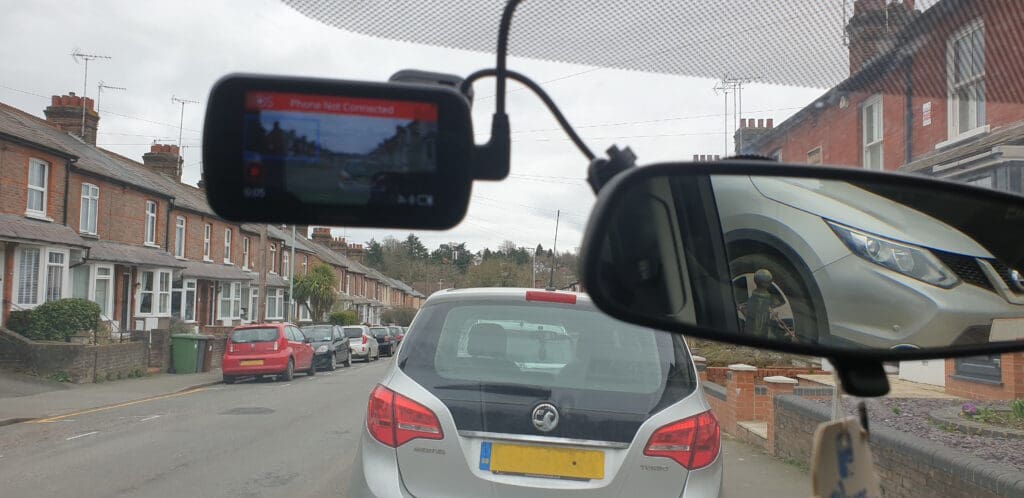
Nextbase 622GW dash cam: The secret weapon for school runs
Picture this.
It’s snowing/raining/sleeting and the roads are unsalted. Hoards of cars weave in and out of few unoccupied parking spaces and traffic is building up on both sides. One narrowly misses the other as both cars compete to push through the open bays. Horns are glaring in unison.
This is a regular morning school run for me, no matter the weather.
Every morning we leave the house at 7.30am to beat the inevitable traffic and we’re on the road until I take my fourth to playgroup around 9.30am.
One particular day felt crazier than normal. It had been snowing yet there were more cars on the road. As we turned a corner, a 4×4 hurled towards us and veered onto our lane. The driver quickly swerved back at a particularly angled part of the road but not before we almost hit the curb on our side. As we ventured further, we had to emergency brake at a car which stopped abruptly in front of us, almost causing the car behind to crash into us – all in the space of five minutes!
When we arrived at the second school run pit stop, a rather rude man with a Tesla blocked us in, then proceeded to eff and blind at me in front of the kids because I told him he was parked on a single yellow line and we couldn’t get out to get to our third stop. He moved his car eventually, but that didn’t stop us from being late.
When we arrived at the third stop, a car behind us reversed onto the road behind and almost got hit by a truck. The noise was enough to wake the other side of the equator. To say I had nervous shock when I got home was an understatement.
Of course it’s not always like this, but the school run can be tiring and chaotic at the best of times. If I had a pound for every time I shouted, ‘Learn to drive!’, or, ‘Indicate!’ at an oncoming car, I wouldn’t need to drive my kids to school anymore, I’d be retiring on an island and I’d have my own school rules! I’ve also uttered, ‘If only I had recorded the license plate,’ many a time.
Well now I can!
Are you tired of the school run turning into a chaotic, stressful mess every morning? Fear not, because I have the solution to all your road rage problems. Introducing the Nextbase 622GW dash cam which has become my new best friend on the road.
The Nextbase 622GW dash cam can provide added safety and peace of mind for parents while driving on the road, by recording footage, providing emergency assistance, and alerting drivers to potential hazards. It can even spot and record those pesky hit and runners while you’re parked and away from your car. #nowheretohide
Read on for the full Nextbase 622GW dash cam review and how it can help you on the school run too.
The Nextbase 622GW dash cam is a high-end dashboard front view camera designed for cars. It is a premium model in the Nextbase range and is equipped with advanced features and technology, including:
4K dash cam video recording: The camera can provide excellent image quality using ultra-high-definition video footage at a resolution of 3840 x 2160 pixels.
Touch screen interface: The camera features a 3-inch touch screen display that allows for easy menu navigation and playback of recorded footage.
Built-in Wi-Fi connectivity: The camera can connect to Wi-Fi networks, enabling users to transfer footage to a smartphone or tablet for sharing or editing.
Emergency SOS feature: In the event of an accident, the camera can automatically alert emergency services and provide precise location sharing.
Intelligent Parking Mode: The dashcam can monitor your vehicle while it is parked, using motion detection to trigger recording if someone approaches or collides with your car.
Alexa built-in: The Nextbase 622GW dash cam has Alexa built-in so you can get directions, play music, make calls, and more, all hands-free.
Image stabilisation: The camera has advanced image stabilisation technology to help reduce camera shake and ensure smooth footage.
Multiple safety features: The Nextbase 622GW dash cam also comes equipped with several safety features, such as lane departure warnings, collision avoidance systems, and driver fatigue alerts.
What do you get in the Nextbase 622GW bundle? Unboxing the Nextbase GW K Dash Cam
The contents of the Nextbase 622GW bundle may vary depending on the retailer or seller. However, typically, the bundle should include:
The Nextbase 622GW Dash Cam which is the main component of the package.
A power cable to connect the dash cam to the car’s power source.
A Click&Go PRO mount for easy installation and removal of the dash cam from the car’s windscreen.
Some bundles may include a rear camera module that can be connected to the dash cam for recording footage of the rear view. Ours was included in this particular bundle.
A MicroSD Card for storing the footage recorded by the dash cam. We received a 256gb U3 microSD card.
A quick start guide that provides basic instructions for setting up and using the dash cam.
Other accessories such as a carry case, screen protector, or cleaning cloth. We also received a sticker to place on the car’s rear or side window to warn other drivers that we are recording around us.
The Nextbase 622GW is a highly advanced dash cam with features that include 4K Ultra HD recording, built-in GPS, Wi-Fi, Bluetooth, and emergency SOS response. It also includes Intelligent Parking Mode for added security and peace of mind. Below are the full specs of the Nextbase 622GW dash cam:
4K Ultra HD (3840 x 2160) resolution at 30fps, 1080p Full HD at 120fps, 720p HD at 240fps
140-degree wide-angle lens with six-layer glass and f/1.3 aperture
3-inch HD IPS touch screen display
Built-in GPS module for location tracking and speed monitoring
Built-in Wi-Fi for easy transfer of footage to a smartphone or tablet
Built-in Bluetooth for hands-free calling and voice control
Emergency SOS response system that can automatically call for emergency services in the event of an accident
Motion detection and impact sensing to automatically record footage when the car is parked
MP4 video format
H.265 (HEVC) video codec
Supports up to 128GB microSD cards (not included)
500mAh Lithium-ion battery
12-24V DC power supply via included car power cable
98mm x 45mm x 37mm height dimensions
Weighs 128g
How to use Nextbase 622GW dash cam
There are a lot of components so make sure you familiarise yourself with the user manual and manufacturer’s instructions so you use the Nextbase 622GW dash cam properly. Below are the steps on how to install Nextbase 622GW dash cam, including the rear camera too.
First, mount the dash cam on your car’s windshield using the Click&Go PRO mount included. Make sure the dash cam is securely attached by pressing the mount firmly against the glass and twisting the base to lock it in place. The ideal location should provide an unobstructed view of the road ahead and not interfere with your driving.
Connect the dash cam to your car’s power source using the included power cable. Route the cable along the edge of the windshield, tucking it behind the car’s headliner and down the side of the dashboard. Connect the other end of the cable to your car’s power outlet, such as the cigarette lighter socket. Attach the dash cam to the mount by sliding it down onto the mount until it clicks into place. The dash cam should turn on automatically when your car starts up.
Use the dash cam’s touch screen interface to adjust the camera settings to your preferences. You can choose options such as video resolution, frame rate, and exposure. Adjust the camera angle to ensure that it is aimed in the right direction and provides a clear view of the road ahead.
The dash cam will start recording automatically when you start driving. You can also manually start and stop recording using the touch screen interface or voice commands.
You can review the footage recorded by the dash cam on its touch screen or transfer it to your smartphone or computer using the built-in Wi-Fi connectivity or Micro SD card.
The Nextbase 622GW dash cam comes with additional features such as Emergency SOS, Intelligent Parking Mode, and Alexa built-in. You can use these features to enhance your driving experience and ensure your safety on the road.
Always make sure to comply with local laws and regulations regarding the use of dashboard cameras while driving.
How to remove Nextbase 622GW dash cam from mount
Here are the general steps to remove the Nextbase 622GW dash cam from its mount:
Before removing the dash cam from its mount, turn it off by pressing and holding the power button until the screen turns off.
Locate the locking mechanism on the Click&Go PRO mount and release it by pulling the locking lever or pressing the release button, depending on the specific model.
Once the locking mechanism is released, gently lift the dash cam off the mount by pulling it upwards and away from the windshield. Be careful not to tug too hard or apply excessive force to avoid damaging the mount or dash cam.
Once the dash cam is removed from the mount, disconnect the power cable from the dash cam’s power socket.
Store the dash cam in a safe place, such as the carrying case provided or protective cover, to prevent damage or scratches.
Other Nextbase 622GW safety features – Extreme Weather Mode
The Nextbase 622GW Extreme Weather Mode is a feature that is designed to improve the image quality of the dash cam when driving in extreme weather conditions such as heavy rain, snow, or fog.
When Extreme Weather Mode is activated, the camera adjusts its exposure and contrast settings to compensate for the reduced visibility and lighting conditions. This helps to enhance the details and clarity of the video footage, making it easier to see and interpret what is happening on the road.
The Extreme Weather Mode also adjusts the camera’s image stabilisation and anti-glare settings to minimise the effects of weather-related issues such as windshield glare, snow or rain accumulation on the lens, or the vibration of the vehicle caused by strong winds or rough roads.
Nextbase 622GW does include a slow-motion feature.
This feature allows you to playback video footage in slow motion, which can be useful for reviewing details of an incident or for analysing driving behavior.
The slow-motion feature on the 622GW can be accessed through the camera’s playback menu, and can slow down footage by up to 10 times the original speed. This allows you to view the footage in detail and identify important information, such as the speed of the vehicles involved or the actions of pedestrians or other road users.
Nextbase 622GW problems
Like any electronic device, the Nextbase 622GW dash cam may experience problems or issues during use. Here are some common problems that users may encounter with the Nextbase 622GW dash cam:
You may experience connectivity issues when trying to transfer footage from the dash cam to a smartphone or computer. This can be resolved by ensuring the Wi-Fi connection is stable and the correct settings are selected.
You may experience errors with the Micro SD card, such as a “card error” message or difficulty reading the card. This can be resolved by checking the card is compatible and properly inserted into the dash cam.
There may be issues with the dash cam’s power supply or battery life. This can be resolved by ensuring the power cable is securely connected and the battery is fully charged.
The Click&Go PRO mount may not stick properly to the windshield or it isn’t securing the dash cam properly. This can be resolved by ensuring the windshield is clean and free from obstructions and that the mount is installed correctly.
The dash cam can overheat in hot conditions or direct sunlight. This can be resolved by parking in shaded areas or investing in a sunshade for the windshield.
There may be issue with the app’s settings in that it hibernates when not in use. We are still trying to resolve this issue with my Android phone.
If you experience any issues with your Nextbase 622GW dash cam, it is recommended to refer to the user manual or contact Nextbase customer product support for assistance.
Nextbase 622GW dash cam best price
The Nextbase 622GW price can vary depending on the retailer, availability, and any ongoing promotions or discounts. It is always recommended to shop around and compare prices from various retailers to find the best deal.
You can check the prices of the Nextbase 622GW dash cam on popular online retailers such as Amazon, as well as the official Nextbase website. You may also want to check for any special deals or promotions during holiday periods such as Black Friday or Cyber Monday.
The Nextbase 622GW dash cam can help parents stay safe on the road in several ways. Here are some ways that the dash cam can benefit parents:
The Nextbase 622GW dash cam records evidence in the event of an accident
The Nextbase 622GW dash cam can record high-quality footage of any incidents that occur while driving, such as accidents or near-misses. This footage can be used as evidence in the event of an insurance claim or legal dispute, helping parents prove their innocence and avoid potential penalties or legal consequences.
The Nextbase 622GW dash cam provides emergency assistance
The Nextbase 622GW dash cam’s Emergency SOS feature can automatically contact emergency services and provide the driver’s location in the event of a severe impact, such as a serious accident or medical emergency.
The Nextbase 622GW dash cam prevents accidents
The Nextbase 622GW dash cam is equipped with several safety features, such as lane departure warnings and collision avoidance systems that can alert drivers to potential hazards on the road and help them avoid accidents.
The Nextbase 622GW dash cam has built-in Alexa
The Nextbase 622GW has Alexa built-in so parents can get directions, play music, make calls, and more, all hands-free without taking their eyes off the road.
Added bonus – The Nextbase 622GW dash cam can monitor inexperienced drivers
If parents are supervising a newly licensed teenage driver, the dash cam can be used to monitor their driving behaviour and provide feedback on areas for improvement.
Are dash cams worth the expense and hassle of installing and what is the best way to setup a dash cam in a car?
Dash cams can be a worthwhile investment for several reasons. They can provide valuable evidence in the event of an accident or other incident on the road, help deter theft or vandalism, and even capture interesting or scenic moments during your travels.
Dash cams are typically easy to install and require minimal hassle. They can be mounted on the windshield or dashboard with a suction cup or adhesive pad and plugged into the car’s cigarette lighter or USB port. Some models may also require hardwiring for more advanced features such as parking mode or continuous recording.
Overall, the benefits of having a dash cam in your car can outweigh the expense and hassle of installation. Just make sure to follow the manufacturer’s instructions and local laws regarding the use of dash cams while driving.
What other dash cams should you consider?
Nextbase is a popular brand of dash cams that offers a range of models with various features and price points. Here are some Nextbase dash cams you may want to consider:
Nextbase 522GW – This is a high-end dash cam with features such as 1440p HD video recording, built-in Wi-Fi, GPS, and Alexa integration.
Nextbase 422GW – This is a mid-range dash cam with similar features to the 522GW but with a slightly lower resolution of 1080p HD video recording.
Nextbase 222 – This is a budget-friendly option with 1080p HD video recording, a compact design, and easy installation.
Nextbase 312GW – This is a popular mid-range dash cam with 1080p HD video recording, built-in Wi-Fi, and GPS.
Ultimately, the best dash cam for you will depend on your needs and budget.
Why choose the Nextbase 622GW dash cam over other dash cams?
The Nextbase 622GW is a highly rated dash cam that is considered by many to be one of the best on the market.
This bad boy is packed with features that will make your daily commute smoother than a baby’s bottom. With its crystal-clear 4K resolution and advanced night vision, you can capture every detail of your journey, no matter how dark or gloomy it may be outside.
But that’s not all – the Nextbase 622GW also comes equipped with intelligent parking mode, which means you can park up and leave your car knowing that it will record any potential incidents while you’re away. So if someone decides to reverse into your vehicle or attempt a break-in, you’ll have evidence at hand to show the authorities.
And let’s not forget about the safety aspect of this nifty device. With its Emergency SOS feature built in, you can rest assured that help is just a button press away should anything go wrong during your travels. Plus, its automatic emergency response notifications mean that should an incident occur while driving alone or with passengers, emergency services will be alerted immediately for rapid response.
The Nextbase 622GW dash cam can also prevent arguments between siblings fighting over who touched who first during the car ride!
So there you have it folks – the Nextbase 622GW dash cam is more than just a camera; it’s a lifesaver for busy families constantly on-the-go during school runs. Protect yourself from reckless drivers and keep calm throughout those hectic mornings with this indispensable gadget by your side.
For a full list of features and specs on the Nextbase 622GW dash cam, visit Nextbase’s website here.
Why will the dashcam screen go black after recording for some time?
There could be a few reasons why a dash cam’s screen may go black after recording for some time:
Many dash cams have a power-saving feature that automatically turns off the screen after a certain amount of time to save battery power. This is a normal function of the dash cam and is designed to prolong the life of the device’s battery.
If the dash cam becomes too hot due to prolonged use or exposure to direct sunlight, it may shut off the screen to prevent damage to the device. In this case, it is recommended to move the dash cam to a cooler location or turn it off for a while to allow it to cool down.
If the dash cam’s memory card becomes full, it may stop recording and turn off the screen. This is a safety feature to prevent the device from overwriting important footage. In this case, you will need to transfer the recorded files to a computer or other storage device to free up space on the memory card.
If the dash cam’s screen goes black after recording for some time and none of the above reasons apply, there may be an issue with the device itself. In this case, contact the manufacturer for assistance or have the device checked by a professional.
How to fit Nextbase 622GW dash cam?
Follow the instructions above to correctly install the Nextbase 622GW dash cam.
Once the dash cam is installed, it should begin recording automatically when you start your vehicle. Make sure to regularly check the dash cam to ensure it is recording properly and that the memory card has enough space to store your recordings.
How long does a 256GB SD card last in a dash cam?
The lifespan of a 256GB SD card in a dash cam will depend on several factors, such as the quality of the card, the type of dash cam, and the frequency of use.
Generally speaking, SD cards have a limited number of write cycles before they start to fail. This means the more frequently the card is written to, the shorter its lifespan will be. Dash cams tend to write data to the SD card continuously, which can put a strain on the card and reduce its lifespan.
Assuming a high-quality SD card and a typical dash cam usage pattern, a 256GB SD card in a dash cam could last anywhere from several months to a few years. However, it’s worth noting that SD cards can fail unexpectedly, so it’s always a good idea to back up important footage regularly and replace the card periodically to minimise the risk of data loss.
How many hours can you record on a 64GB dash cam?
The amount of recording time you can get on a 64GB dash cam will depend on several factors, including the video resolution and bitrate settings of the dash cam. Here are some estimates based on common video settings:
1080p resolution at 30 frames per second and a bitrate of 15Mbps: Approximately 8 hours of recording time on a 64GB card.
1080p resolution at 60 frames per second and a bitrate of 20Mbps: Approximately 5.5 hours of recording time on a 64GB card.
1440p resolution at 30 frames per second and a bitrate of 25Mbps: Approximately 4.5 hours of recording time on a 64GB card.
4K resolution at 30 frames per second and a bitrate of 60Mbps: Approximately 1.5 hours of recording time on a 64GB card.
It’s important to note that these estimates are just rough guidelines, and actual recording time may vary depending on a number of factors such as the specific dash cam model, the temperature and humidity of the environment, and how frequently the dash cam is recording over existing footage (loop recording). Additionally, it’s always a good idea to periodically review and offload footage from your dash cam to a computer or other storage device to ensure that you have enough space for new recordings.
Is 32GB enough for a dash cam?
Whether 32GB is enough for a dash cam will depend on several factors, such as the resolution and bitrate settings of the camera, the frequency of use, and how often you transfer files off the card. Here are some general guidelines:
For a dash cam recording at 1080p resolution at 30 frames per second and a bitrate of 15Mbps, a 32GB card could provide approximately 4 hours of recording time before it becomes full.
If your dash cam records at a higher resolution or frame rate, or if you prefer to set a higher bitrate, then the amount of recording time you can get on a 32GB card will be reduced accordingly.
If you don’t use your dash cam frequently, or if you transfer files off the card regularly, then a 32GB card may be sufficient for your needs.
However, it’s important to note that dash cams record continuously and overwrite old footage once the card becomes full (in a loop recording mode), so you may not have access to all of the footage you’ve recorded if you don’t transfer files off the card regularly. It’s generally recommended to use a card with at least 64GB of storage capacity if possible, to ensure that you have enough space for your recordings and to minimise the need for frequent file transfers.
What is used for Wi Fi on a dashcam and how does it work? Which dashcam models are equipped with Wi Fi?
Dash cams equipped with Wi-Fi use the Wi-Fi module to create a wireless network that can be used to transfer files, adjust settings, and view recordings on a smartphone or tablet.
When you connect your smartphone or tablet to the Wi-Fi network created by the dash cam, you can use a companion app to access the dash cam’s features and settings. Depending on the dash cam model and the features supported by the app, you may be able to:
View live video from the dash cam
Download and view recorded footage
Adjust video settings
Format the SD card
Update the firmware
There are many dash cam models that are equipped with Wi-Fi, including popular brands such as BlackVue, Thinkware, and Viofo.
It’s worth noting that not all dash cams with Wi-Fi have the same features or capabilities, so it’s important to research different models and read reviews to find one that fits your needs.
How do I install a dash cam without a cigarette lighter?
If your vehicle doesn’t have a cigarette lighter or accessory socket, you can still install a dash cam by using a hardwire kit. Here’s how to do it:
Purchase a hardwiring kit for your dash cam. This kit should include a cable that connects to the dash cam, a fuse tap, and a ground wire.
Locate your vehicle’s fuse box. This is usually located in the driver’s side footwell or under the hood.
Find a fuse that is only powered when the ignition is turned on. This is important to prevent the dash cam from draining your vehicle’s battery when the engine is turned off.
Insert the fuse tap into the selected fuse location. The fuse tap should have two slots: one for the original fuse and one for a new fuse. Insert the original fuse into the top slot, and the new fuse (which should be included in your hardwiring kit) into the bottom slot.
Connect the red wire from the hardwiring kit to the new fuse in the fuse tap.
Connect the black wire from the hardwiring kit to a metal ground point in the vehicle. This could be a metal bolt or screw in the vehicle’s frame.
Connect the cable from the dash cam to the hardwiring kit.
Test the installation by turning on the ignition and ensuring that the dash cam powers on.
It’s important to note that hardwiring your dash cam may require some knowledge of your vehicle’s electrical system, so if you’re not comfortable with this type of installation, it’s best to consult a professional or seek help from a knowledgeable friend. Additionally, be sure to check your local laws and regulations regarding the use of dash cams and their installation before attempting this installation.
Can I use a dashcam as a webcam?
In general, most dash cams are not designed to be used as webcams, and their functionality is limited to recording and saving video files to an SD card. However, some dash cam models do have a webcam function that allows them to be used as a live streaming camera.
To use a dash cam as a webcam, you will typically need to connect it to a computer via USB cable and install any necessary drivers or software. The specific steps will depend on the make and model of your dash cam and the software you plan to use for streaming.
It’s worth noting that using a dash cam as a webcam may not result in optimal video quality, as most dash cams are optimised for recording video in a moving vehicle rather than streaming video in real-time. Additionally, dash cams may not have the same features or settings as dedicated webcams, such as autofocus or manual focus, which could impact the quality of the video stream.
If you’re looking for a camera to use as a webcam, it’s recommended to purchase a dedicated webcam that is designed for this purpose, as they typically offer better video quality and more robust features and settings.
Do I have to use WiFi to use a dash cam?
No, you do not have to use Wi-Fi to use a dash cam. Dash cams can typically function without Wi-Fi, and will still be able to record footage to an SD card.
However, Wi-Fi can be a useful feature for accessing and managing dash cam footage. With Wi-Fi, you can transfer files from the dash cam to your smartphone or tablet, adjust settings, and view live or recorded video from the dash cam. This can be especially useful if you need to quickly share footage with others or if you want to check on your vehicle remotely.
If your dash cam doesn’t have Wi-Fi, you can still access the footage by removing the SD card from the camera and transferring the files to a computer or other device. Some dash cams also include a built-in screen that allows you to view footage directly on the device, without the need for Wi-Fi or an external device.
Ultimately, whether or not you need Wi-Fi in a dash cam will depend on your specific needs and preferences. If you value the convenience and flexibility of being able to access footage remotely or transfer files wirelessly, then a dash cam with Wi-Fi may be worth considering. However, if these features aren’t important to you, then a dash cam without Wi-Fi may be a more affordable and practical option.
Why don’t newer cars have dash cams by default?
Other questions asked were:
Why don’t car manufacturers offer built in dash cams as an option?
There are several reasons why newer cars do not typically come equipped with dash cams by default:
Adding a dash cam to a vehicle can increase the cost of the vehicle, and manufacturers are always looking for ways to keep costs down to remain competitive.
Some manufacturers may be hesitant to include a dash cam as standard equipment because they may be held liable for any footage captured by the camera that could potentially incriminate the driver or vehicle owner.
Dash cams can capture footage of people, vehicles, and other objects in the vicinity of the vehicle. Some people may have concerns about privacy and may not want a camera recording their actions or whereabouts.
Different countries and regions have different laws and regulations regarding the use of dash cams. Some countries, such as Russia and South Korea, have laws that encourage or even mandate the use of dash cams, while other countries, such as Austria and Luxembourg, have laws that prohibit the use of dash cams in certain situations.
Despite these factors, the popularity of dash cams has been increasing, and many drivers are now choosing to install them in their vehicles as an aftermarket accessory. As the technology advances and becomes more affordable, it’s possible that we may see more vehicles equipped with dash cams in the future.
Can the camera system on a car be converted into a dashcam type of recording?
In some cases, the camera system on a car can be converted into a dashcam-style recording system, but it would depend on the specific make and model of the vehicle and the type of camera system it uses.
Some newer cars have cameras built into the vehicle that are designed to provide a 360-degree view of the car’s surroundings, or to assist with parking and reversing. These cameras can be repurposed to provide a dashcam-style recording system, but it may require additional hardware and software to capture and store the footage.
Other vehicles may have cameras built into the rearview mirror or windshield that are designed for driver assistance features, such as lane departure warning or forward collision warning. While these cameras may be able to capture footage of the road ahead, they may not be optimised for recording video for extended periods of time, and may not be able to capture a wide-angle view of the vehicle’s surroundings.
It’s worth noting that converting a car’s camera system into a dashcam-style recording system would likely require some technical knowledge and expertise, and could potentially void the vehicle’s warranty or cause other issues if not done properly. If you’re interested in using your car’s camera system for recording purposes, consult a professional or seek guidance from the manufacturer to ensure that the modification is done safely and effectively.
On dash cams, how long can they record before overwriting and how easy is it to delete the recordings?
The amount of time a dash cam can record before overwriting old footage depends on the size of the SD card used, the video resolution and bitrate settings of the camera, and the length of time the camera is in use each day. Dash cams typically have a loop recording feature that automatically overwrites the oldest footage on the SD card once it becomes full.
For example, a 64GB SD card recording at 1080p resolution at 30 frames per second and a bitrate of 15Mbps may be able to record for approximately 8 hours before the oldest footage is overwritten. This time will decrease if the resolution and bitrate are increased or if the camera is used for longer periods of time each day.
To delete recordings from a dash cam, most cameras have a delete function built into the menu system. This function may allow you to delete individual recordings or to format the entire SD card to clear all recordings at once. The exact process for deleting recordings will depend on the make and model of the dash cam, but it should be a straightforward process that can be done using the camera’s built-in controls or a companion app on your smartphone.
Some dash cams also have a “lock” or “protect” feature that allows you to prevent specific recordings from being overwritten during the loop recording process. This can be useful if you want to preserve important footage, such as in the event of an accident. These locked recordings can be deleted manually using the camera’s delete function or by formatting the SD card.
Do dash cameras work when the car is off?
Other questions asked were:
Can I leave a dashcam thats plugged into a 12V power outlet on when I shut my car off and leave it for a few hours?
Most dash cameras are designed to continue recording even when the car is turned off, as long as the camera is connected to a power source that remains active when the ignition is turned off. However, some dash cameras may have a battery or capacitor that provides power for a short period of time after the car is turned off, after which the camera will shut down to conserve power.
The exact behaviour of the dash camera when the car is turned off will depend on the make and model of the camera, as well as how it is connected to the car’s power supply. If the camera is hardwired to the car’s battery or fuse box, it will typically continue to operate even after the ignition is turned off, unless the power supply is turned off manually or the battery is drained.
If the camera is powered by a cigarette lighter or accessory socket, it will stop recording when the ignition is turned off, unless the socket remains active even when the car is turned off.
It’s important to note that if a dash camera continues to operate when the car is turned off, it can drain the vehicle’s battery if left connected for an extended period of time. To prevent this, some dash cameras have a built-in low-voltage cutoff feature that will automatically shut down the camera if the battery voltage drops below a certain level, preventing the camera from draining the battery excessively. The Nextbase 622GW dash cam includes Intelligence Parking Mode which means it continues to record even when the vehicle is parked and turned off. For more information, see above.
Why do we need dash cameras with a GPS function?
Dash cameras with GPS functionality can provide several benefits:
Dash cameras with GPS can record the exact location of the vehicle at the time of recording, which can be useful in the event of an accident or other incident. This information can help to corroborate your account of what happened and may be useful in legal proceedings.
Dash cameras with GPS can also track the speed of the vehicle at the time of recording. This information can be useful in providing evidence of excessive speed or other driving behavior that may have contributed to an accident.
If you frequently drive in unfamiliar areas, a dash camera with GPS can be useful in tracking your route and helping you find your way back if you get lost.
Dash cameras with GPS can also be used as a security feature, as they can alert you if your vehicle is moved without your knowledge or if it is stolen.
Overall, the GPS function in dash cameras can provide additional context and information that can be useful in a variety of situations, including in the event of an accident, during legal proceedings, or for general navigation and security purposes.
Can my car dashcam recordings be used against me?
In some cases, dashcam recordings could be used against you in legal proceedings, depending on the circumstances of the incident being recorded.
For example, if you are involved in a car accident and the other party claims that you were at fault, the footage from your dashcam could be used as evidence to support or refute their claim. Similarly, if you are pulled over by law enforcement and the officer suspects you have committed a traffic violation or crime, footage from your dashcam could be used as evidence in court.
It’s important to note that while dashcam footage can be useful in providing evidence and supporting your account of what happened, it can also potentially incriminate you if you are shown to have committed a violation or crime. As such, it’s important to use your dashcam responsibly and to follow all traffic laws and regulations.
Additionally, there are laws and regulations in place that govern the use of dashcams and the recording of video and audio in public spaces. It’s important to be aware of these laws and to ensure that you are using your dashcam in a legal and responsible manner.
If I record someone on my dashcam running a red light or driving extremely dangerously can they be prosecuted?
If you record someone on your dashcam running a red light or driving dangerously, the footage could potentially be used as evidence to prosecute the driver for traffic violations or criminal offenses.
For the footage to be admissible in court, it would need to be clear and unambiguous, and would need to be properly time-stamped and geotagged to establish the location and time of the incident. Additionally, it’s important to follow all applicable laws and regulations regarding the use of dashcams and the recording of video and audio in public spaces.
If you do capture footage of someone committing a traffic violation or criminal offense, it’s recommended to report the incident to the appropriate authorities, such as the police or local law enforcement agency. They can use the footage to investigate the incident and potentially pursue charges against the driver.
It’s worth noting that dashcam footage is not always definitive evidence of an offense, and that other factors may need to be considered in determining whether an offense occurred. However, in many cases, dashcam footage can be a valuable tool for law enforcement and can help to promote safer driving behaviors on the road.
Do dashcams record sound?
Many dashcams do have the capability to record sound, but not all models have this feature. Dashcams that include a built-in microphone or have a port for an external microphone can record audio along with video. The Nextbase 622GW dash cam can record audio. The camera includes a built-in microphone that can record audio along with the video footage.
The ability to record audio can be useful in certain situations, such as in the event of an accident where there may be disputes about what was said or heard by the drivers involved. It can also be useful for recording conversations or other sounds that may be relevant to an incident.
However, it’s important to be aware of privacy laws and regulations regarding the recording of audio in public spaces. Depending on your jurisdiction, it may be illegal to record audio without the consent of the parties involved. Some dashcams may include a mute or privacy feature that allows you to turn off the microphone to avoid recording audio in certain situations.
If you’re unsure about the legality of recording audio with your dashcam, it’s recommended to consult local laws and regulations or to seek guidance from a legal professional.
*Motherhood Diaries was gifted the Nextbase 622GW dash cam in return for an honest review
Flying solo: A guide to single parent support in Essex
In this article, we discuss single parent support available in Essex and how to get it.
In April 2022, the UK introduced the no-fault divorce, which has made separation quicker, easier and cheaper for couples. As a result, divorce solicitors in Chelmsford and surrounding areas are dealing with many divorce cases faster than ever.
However, many divorcees still have several concerns surrounding the effects of the divorce on their lifestyle, emotions, and finances. As a single parent, the growing concern of managing single parenting and raising children on top of everything else can amplify these concerns.
In this article, we’re going to be looking at what single parent support is available in Essex and how to get it.
The impact of divorce on parents
A divorce brings with it several changes for a person, many of which are financial changes, particularly when you have children. Following a divorce, one or both parents will usually have to find somewhere new to live, which can be financially challenging after the cost of the actual divorce.
A divorce can also be extremely emotionally taxing for parents as they adjust to the single lifestyle again, something many people can take a long time to accept and overcome. With this in mind, there are plenty of resources available to assist divorcees financially and emotionally.
What single parent support is available in Essex?
As a new single parent, it’s difficult to know where to turn for support, so, in this section, we’ll be explaining the single parent support in Essex and how to access it.
Financial support resources
Often, the number one concern for single parents is money – particularly if they are not receiving financial support from the other parent of their child(ren). However, there are a few resources available for financial support and these include:
In most cases, it will take around six weeks for you to receive government benefits and so it’s important that you submit your application as early as possible.
Accommodation
Depending on your circumstances, you may be entitled to housing benefit which helps toward your rent payments. Additionally, you may be eligible to apply for a council flat or house in Essex if you can fulfil a certain set of criteria.
Essential living fund
Many towns in Essex, including Southend-on-Sea, can offer Essential Living Fund grants which provide emergency cash for those who cannot afford the basics such as food, school uniforms and more.
Family Action
If it’s financial assistance you need, then Family Action is your go-to resource. They offer grants to eligible single-parent families which can be used towards things like school uniforms or household bills.
Free childcare
In the UK, all parents are entitled to between 15 and 30 hours of free childcare every week depending on their circumstances – which can be invaluable for single parents in Essex who are looking to enter / re-enter the workforce.
Practical and emotional single parent support in Essex
As well as dealing with financial issues, a lot of newly single parents in Essex feel isolated and unable to cope. Thankfully, there are a few resources available for help as a single parent and we’ll look at some of these here:
Gingerbread
First launched in 1918, Gingerbread provides a wealth of resources for single parents in Essex, including financial advice, legal advice and access to a community of like-minded people. As well as online single parent support, the organisation also holds real life meetups to provide a much-needed social network for many single parents across the UK.
Parents 1st
Next on our list is Parents 1st. Not only do they provide emotional single parent help, but they also offer practical help, like cooking classes and baby massage sessions. So if your little one has been keeping you up at night and leaving you feeling like a zombie during the day, these folks will help get you back to being human again.
The Essex Family Information Service
Some services for single parents include The Essex Family Information Service, which is a one stop shop for all things childcare. This useful resource can help with being a single parent, like offering financial and legal support when needed.
The Fatherhood Institute
An increasing number of single parents are men and The Fatherhood Institute provides a safe space and practical help for single dads, as well as opportunities to connect with others in the same position.
Essex Child and Family Wellbeing Association
This incredible organisation offers a wealth of resources and single mother support to parents in Essex, including education, financial advice and community hubs.
Homestart Essex
Last but certainly not least is Homestart Essex. These guys provide volunteers who can come to your home once a week to provide practical single mum support and friendship for both you and your child/children. It’s basically having an extra pair of hands when things get overwhelming – except these hands come with cookies too!
Social media single parent groups
Many single parents find it helpful to connect with other single parents on social media and via a single parent group such as Single Parents Support Group UK (Suffolk, Essex & Norfolk) can be great for making new friends and sharing tips and advice on single parenthood, as well as things to do in Essex. Joining an online community for single parents may mean that you can consult them for advice when you’re rushed off your feet too.
Find the right support during your divorce
If it’s your first time around, single parenthood can be a scary place. Not knowing where to turn for support can have a very real impact on your physical and mental health.
Finances are usually the priority here and, as well as applying for government benefits, you should consult with a family law solicitor if the parent of your child is refusing to help with child support.
It’s also extremely important to make sure you are receiving the emotional support you need during this time. If you don’t have friends or family you can rely on, the resources listed in this article can provide help and support from people who know exactly what you’re going through.
So grab your coffee, take a deep breath, and remember: you’ve got this!
FAQ
Should I tell my employer that I am getting divorced?
Disclosing personal matters, such as a divorce, to your employer is a personal decision. There is no legal obligation to inform your employer about your marital status or personal life unless it directly affects your work performance or legal obligations.
Here are a few factors to consider when deciding whether you should tell your employer about your divorce:
If you believe that the divorce might affect your work performance, such as needing time off for court proceedings or personal matters, it might be helpful to inform your employer. This can allow for better understanding and potential accommodations if needed.
Consider the culture and supportiveness of your workplace. If you have a positive relationship with your supervisor or HR department, and you believe they would understand and be supportive, disclosing your divorce may provide you with emotional support or flexibility during this challenging time.
It’s important to maintain personal privacy and set boundaries in the workplace. If you prefer to keep your personal life separate from your professional life, you may choose not to disclose your divorce unless it becomes necessary.
If your divorce involves legal or financial matters that may require your employer’s involvement, such as changes to insurance coverage or benefits, it may be necessary to inform your employer to ensure compliance with policies or to seek necessary support.
Consider how disclosing your divorce might impact your emotional well-being. Sharing this information with trusted colleagues or supervisors who can offer support and understanding may ease some of the stress associated with the situation.
What percentage of men win their custody battles?
Determining the exact percentage of men who win custody battles is challenging because it can vary depending on various factors such as jurisdiction, individual circumstances, and the specific criteria used to determine custody. Custody decisions are typically based on the best interests of the child, and the court considers factors such as the child’s relationship with each parent, the ability of each parent to provide a stable environment, and the child’s preferences (if they are of an appropriate age to express them).
Historically, it has been observed that mothers were more likely to be awarded primary custody, while fathers were often granted visitation rights. However, in recent years, there has been a shift towards recognising the importance of both parents’ involvement in their children’s lives, and courts have become more open to shared custody arrangements.
It’s worth noting that the goal of the legal system is typically to promote the best interests of the child rather than favouring one gender over the other. The outcome of custody battles depends on individual circumstances, the arguments and evidence presented by each parent, and the discretion of the judge or mediator involved.
If you are involved in a custody dispute, it’s advisable to consult with a family lawyer who can provide guidance based on the specific laws and regulations in your jurisdiction and help you present the strongest case possible to support your desired custody arrangement.
Are there any single parent christian support groups available in Essex?
Other questions asked were:
Which Christian groups support single mums?
To find single parent Christian support groups in Essex, I recommend trying the following steps:
Conduct an online search using keywords like “single parent Christian support groups Essex” or “Christian parenting groups Essex.” This can help you find relevant local resources, including support groups or organisations that cater to single parents.
Contact local churches in your area and enquire about any support groups or programs they may offer for single parents. Many churches have ministries or support groups specifically tailored to the needs of single parents, and they may provide you with information or referrals.
Check online directories of community organisations or support groups that cater to single parents. Some directories allow you to search by location and specific interests or affiliations, which could help you find Christian support groups in your area.
Get in touch with community centres, social service agencies, or other family-oriented organisations in your area. They may know support groups or programs specifically designed for single parents, including those with a Christian focus.
Seek recommendations from friends, family, or other single parents in your area who may have knowledge of local support groups or resources. They may be able to provide you with valuable information or connect you with relevant contacts.
Remember to verify the credibility and suitability of any support group or organisation you find by researching their background, reading reviews or testimonials, and reaching out directly to enquire about their programs and services.
Additionally, it’s worth noting that the availability and specific details of support groups may change over time, so it’s recommended to reach out to the organisations or groups directly to confirm their current status and offerings.
What single parent group activities can I join in Essex?
Other questions asked were:
What single parent programs can I join in Essex?
Where can I join single parent support groups?
Where can I join single mum support groups?
Where can I join support groups for single mothers?
As above, look for:
Local parenting support groups or organisations that cater to single parents. These groups often organise activities, workshops, and events focused on parenting challenges, personal development, and building a support network.
Playgroups or parent-child activities in your area where you can meet other single parents and provide social interaction for both you and your child. These activities can range from organised playdates, park outings, storytime sessions at libraries, or local community centre events.
Fitness or wellness groups tailored to parents. These groups often offer activities like stroller workouts, yoga classes for parents and children, or walking groups. They provide opportunities to exercise, socialise, and meet other single parents in a supportive environment.
Community centers, local organizations, or churches that may offer group activities or programs for single parents. They might host events, workshops, or support groups that focus on parenting, personal growth, or social connections.
Online platforms or social media groups specifically designed for single parents in your area. These online communities often organise meetups, playdates, or outings for single parents and their children. They can provide a virtual support network and help you connect with other single parents in your local area.
Remember to stay updated with local resources and events by checking community bulletin boards, local newspapers, or online event listings specific to Essex. Additionally, consider reaching out to local organisations or community centres directly for information about ongoing activities or programs that cater to single parents.
What happens if you don’t answer a divorce summons?
In the UK, failing to respond to a divorce summons or petition can have legal consequences. If you don’t respond to a divorce summons, it is generally referred to as “defaulting” or “not defending” the divorce proceedings. Here’s what typically happens:
Progression of the divorce: If you fail to respond within the specified time frame, the divorce process may continue without your input. The court may proceed with the divorce based on the information provided by the other party, assuming you do not contest or defend the divorce.
Financial and child-related matters: If there are financial or child-related matters involved in the divorce, the court may decide in your absence, considering the information and evidence presented by the other party. This may include decisions regarding property division, spousal maintenance, child custody, and child support.
Decree Nisi and Decree Absolute: If the court is satisfied with the grounds for divorce and all necessary paperwork has been filed, they may grant a Decree Nisi. After a period (usually six weeks and one day), the court can grant a Decree Absolute, finalising the divorce. Once the Decree Absolute is granted, the marriage is legally dissolved, and the divorce is complete.
It’s important to note that not responding to a divorce summons can have significant consequences, including potential financial implications and the risk of unfavourable outcomes in matters related to children or assets. If you’ve received a divorce summons, it’s generally recommended to seek legal advice promptly to understand your rights, obligations, and potential outcomes in your specific situation.
This information is a general overview. The specific procedures and consequences may vary and the laws of the jurisdiction in which you live. It’s important to consult with a family law solicitor who can advise based on your particular circumstances and the laws applicable in the UK.
How do you fill in the gap on your resume due to a divorce?
Filling in a gap on your resume resulting from a divorce can be approached in a couple of different ways. Here are a few strategies you can consider:
Honesty and transparency: If you feel comfortable doing so, you can choose to be open and honest about the gap in your resume. You could briefly mention that you took time off to focus on personal matters or family responsibilities during that period. However, keep in mind that you are not obligated to disclose personal information, and it’s important to balance being transparent and maintaining your privacy.
Highlight transferable skills and experiences: Even if you weren’t formally employed during the gap, you may have gained valuable skills or experiences during that time. Consider highlighting any relevant transferable skills, such as volunteer work, freelance projects, or courses you may have taken. Focus on the skills you developed or maintained during the gap, and emphasise how they apply to the roles you’re applying for.
Functional resume format: Instead of using a traditional chronological resume format, you could consider using a functional resume format. This format emphasises your skills and qualifications rather than focusing on specific employment dates. This way, you can highlight your relevant skills, experiences, and achievements while downplaying the chronological gap.
Address the gap in your cover letter: Another option is to address the gap directly in your cover letter. Briefly explain that you took time off for personal reasons, and emphasise your commitment to returning to the workforce and your enthusiasm for the specific role or industry to which you’re applying.
Use professional development activities: If you used the gap to enhance your professional skills or pursue additional education, include any relevant courses, certifications, or workshops you completed during that time. This can show your commitment to professional growth and ongoing learning.
Remember, employers understand that life events, such as divorce, can lead to resume gaps. Focus on showcasing your strengths, skills, and experiences in a way that positions you as a qualified candidate. Ultimately, it’s important to tailor your resume and approach based on your individual circumstances and the specific requirements of the job you’re applying for.
Why do the people blame women after divorce from her husband?
It is incorrect and unfair to place blame solely on women after a divorce or to make generalisations about how people react to divorce. Attitudes and perceptions surrounding divorce can vary widely depending on cultural, societal, and individual factors. It is important to recognise that divorce is a complex and multifaceted issue, and attributing blame to one gender is an oversimplification.
Historically, societal norms and cultural expectations may have influenced attitudes towards divorced women, leading to unfair judgements or biases. However, societal views and attitudes have evolved, and there is growing recognition that divorce is a complex decision that can involve multiple factors and responsibilities.
It is essential to promote a more inclusive and supportive approach to divorce, where both men and women are treated with empathy, understanding, and respect. Divorce is a challenging and emotional process for all parties involved, and it is important to focus on providing support, fostering healthy co-parenting relationships, and promoting the well-being of any children affected by the divorce.
Attitudes towards divorce can vary among individuals, and not everyone will hold negative views or blame women. Society’s views on divorce are continually evolving, and there is increasing awareness of the need for understanding and compassion when discussing and navigating the challenges of divorce.
It is crucial to challenge stereotypes, promote gender equality, and strive for a more fair and supportive environment for individuals going through the difficult experience of divorce, regardless of their gender.
*Collaborative feature post*
How to deal with a break-up during a pregnancy
A breakup can be messy, stressful and heartbreaking under any circumstances, but when you break-up during a pregnancy, your feelings are amplified. In this article, we discuss how to deal with a split when you’re pregnant.
Cry it out
First things first – let it all out. Cry those ugly tears until your eyes are puffy and red. Don’t hold back; this is the time to let yourself feel all the emotions—grief, anxiety, feelings of loneliness, and even that broken heart. It’s a form of emotional release that’s vital for your mental health, especially now. The mix of pregnancy hormones and the stress hormone, cortisol, can amplify your feelings, making this breakup even more challenging.
Ending a relationship is just like grieving a loss, so you must give it the time it needs to grieve through all the relationship issues you had before you can work on letting it go and moving on.
Consider journaling as a way to process these emotions. Writing in a journal can serve as a tangible way to work through denial and move toward acceptance, offering a private space to confront and understand your feelings.
And if anyone asks why you’re crying, just blame it on the hormones!
How to deal with a breakup while pregnant – Treat yourself
Now that you’ve had a good cry, it’s time to treat yourself like the queen you are! Work out what makes you feel good, like indulging in some retail therapy if you can. Whatever makes you feel good about yourself is fair game.
How to get over a breakup while pregnant – Lean on friends and family
When the breakup first happens, feelings of loneliness and overwhelming anxiety may consume you. It’s crucial to seek social support from close friends who feel like family, a single mom who understands your plight, or even a support group for pregnant women going through similar experiences. This support network not only offers a shelter from your storm of emotions but also helps in dealing with the guilt and lack of support you might feel, reminding you that nobody has to face this alone.
As well as being a shoulder to cry on, your support network may help you with finding somewhere to live and coming with you to appointments during your pregnancy if your former partner is not involved. In these moments, gender roles and expectations can further complicate your feelings, so it’s essential to surround yourself with a support system that understands and respects your unique experience.
At this stage, you may also want to consider contacting a solicitor who will help you figure out your rights in regards to financial child support from your ex. More on that below.
How to handle break up during pregnancy – Consider getting legal advice
If your marriage has ended, it may seem a whole other stress to find solicitors for divorce, but it’s important you have as much emotional and legal support as possible behind you during this time, especially if you’re pregnant.
Ways to deal with breaking up during pregnancy – Consider seeking financial support
During the breakup, it’s likely you will have concerns about money. Ending a toxic relationship while pregnant can be messy, but when children are involved, it can get expensive. You may also have a reduced income because of maternity leave, so it’s understandable you’re panicking about the idea of raising a child on a single income.
First, determine if and how much child support you will receive each month from your child’s parent. Next, work out what your earnings will be during the pregnancy and beyond (i.e. will you need to reduce your working hours to look after the baby?)
Finally, speak to your local authority to find out what benefits you may be entitled to. As a single parent, you may be entitled to financial help, which may include Universal Credit, child benefit, council tax reduction, and up to 30 hours of free childcare to help you juggle a baby and work.
Working out how much money you can expect to receive during your pregnancy and after your child is born can really help to reduce any financial fears.
How to deal with a breakup during pregnancy – Slow down and don’t make rash decisions
Relationships when pregnant are difficult as it is, but when you have a break-up, it’s hard to see the wood from the trees. But making big decisions when you’re highly emotional may cause regret later. Save making any life-changing decisions until you have allowed yourself the space and time to grieve and come out the other side.
This also means you should avoid starting a new relationship during your pregnancy as this is often a knee jerk reaction to the thought of coping with a new baby on your own.
How to get over a breakup while pregnant – Establish next steps with your ex
Think about how much – if at all – your former partner is going to be involved with your child. As upsetting as it may be, you will need to speak to your ex and have an honest discussion about what his role will be once the child arrives.
Making arrangements at an early stage between participants to this unborn child can help you avoid stressful conversations and confrontations during a time when you should be enjoying your new baby. If communication between you is difficult, then consider having a friend or family member present to help mediate the conversation.
Avoid negative self-talk
Blaming yourself for the situation you’re in will not help you put in place what you need to function with a baby on your own. Remind yourself every day that it takes two people in a relationship and two parents. Again, draw on support to help you get through each day and find positive affirmations that you can repeat to yourself, so you start to believe that you are a good person!
What to do when you break up while pregnant – Manage your stress safely
In normal circumstances, you may cope with a breakup by having the odd glass of wine, playing sports or taking a trip, but these things rarely go well with a pregnancy.
Managing stress in a healthy way during pregnancy is paramount. Consider speaking to your medical care provider about safe practices for reducing cortisol levels and enhancing your mood. They may recommend light exercises like yoga, which has been shown to help with mood swings and appetite control, potentially mitigating the physical symptoms often associated with stress and anxiety.
Pregnant and breaking up – Focus on your baby-to-be
Directing your attention to the life burgeoning within can be a profound source of strength. Embrace motherhood by imagining the future, building a bond even before birth. This focus can positively impact your immune system and counteract the stress hormone, cortisol, ensuring a healthier environment for both you and your baby. Activities like yoga can be a healthy way to manage stress and promote both physical and mental well-being during this time.
Take some time each day to talk or sing to your little one or start planning for their arrival (like picking out nursery colours). Knowing that you have something positive coming into your life can help ease the pain and also strive to help you move on.
Breaking up when pregnant – Don’t cut contact with your ex completely
Once you’ve sorted out the practicalities of your pregnancy and your baby, you will need to look toward the future for yourself and your child. This will almost certainly involve rethinking your priorities and putting your relationship with your child’s other parent into a new perspective.
If the breakup is still raw, it’s a good idea to minimise contact with your ex, although you will, of course, need to keep lines of communication open in terms of your shared child.
Dealing with a breakup during pregnancy? Stay positive about dating again in the future
A break-up during a pregnancy can also feel like an end of an era. But it can also lead to new beginnings. Don’t rule out relationships altogether. Instead, take your time to heal and focus on your mental health and your baby. If the situation presents itself to meet someone new, go in with an open mind and you may build just as good, if not a better, emotional connection with them. Love may just be on the menu again!
Going through a breakup during pregnancy? Consider therapy
If the waves of anxiety, symptoms of depression, or persistent feelings of sadness and rejection seem insurmountable, maybe even to the point of thinking about suicide, consider therapy.
Mental health problems like major depression, history of depression, or even the onset of symptoms triggered by relationship breakup and pregnancy loss / miscarriage require professional care. A therapist can provide cognitive strategies to manage your emotional and physical responses healthily, possibly including discussions on antidepressants if they’re deemed safe during pregnancy.
Dealing with a break-up during a pregnancy – how to move forward from a breakup while pregnant
While splitting up rarely comes at a good time, a break-up during a pregnancy is probably one of the most painful and stressful. During this time, it’s incredibly important to practice self-care, as stress is harmful to both you and your baby. Leaning on friends and family is helpful, but never be afraid to seek professional help if you feel that you’re not coping as well as you should. Give yourself time to get back to a place where you feel stronger, both mentally and physically.
Remember, dealing with a breakup while pregnant is difficult, but you’re not alone in this and there is a bright future ahead of you and your little one.
FAQ
What rights do I have if my husband and I are breaking up while pregnant with second child?
Other questions asked were:
I’m pregnant and broke up with the father. What rights do I have?
Pregnant and married but husband wants to leave. What rights do I have?
I’m not a divorce lawyer, but if you and your husband are breaking up while you’re pregnant with your second child, there are several rights and considerations of which you need to be aware. The first step is to consult with a legal professional who can advise you on the specific laws and regulations in your jurisdiction. However, here are a few general points to consider:
Custody and visitation rights: You may have the right to seek custody of your children, including the unborn child, and establish visitation rights for the noncustodial parent. The laws regarding custody and visitation can vary, so it’s crucial to consult with a family lawyer who can guide you through the process.
Child support: Both parents have a legal obligation to provide financial support for their children. You may be entitled to seek child support from your husband to assist with the expenses related to raising your children.
Property division: Depending on your jurisdiction’s laws, you may have rights to the division of marital property and assets acquired during the marriage. This could include assets like the family home, vehicles, and other shared possessions.
Legal representation: It’s advisable to consult with a family lawyer who can provide guidance on your specific situation, ensure your rights are protected, and help you navigate the legal processes involved in divorce or separation.
I’m pregnant and want to break up with my boyfriend. How do I go about doing this without causing problems for my unborn child. I’ve received a lot of stress and heartbreak during pregnancy and I don’t think it’s fair on my kids.
Other questions asked were:
How to break up while pregnant?
Reasons to end a relationship during pregnancy?
I’m sorry to hear that you’re going through a difficult time. Leaving a relationship while pregnant may feel like a huge leap into the unknown, but it’s important to prioritise your well-being and the well-being of your unborn child.
Make sure you seek support and have someone you can lean on during this difficult time.
When you’re ready to have the conversation with your boyfriend, try to approach it with a calm and respectful attitude. Clearly express your feelings, concerns, and reasons for wanting to end the relationship. Effective communication can help minimise misunderstandings and conflicts.
If you expect the breakup might be challenging or contentious, consider involving a professional mediator or therapist to facilitate the discussions and help both parties reach a resolution. Mediation can help find common ground and reduce tension during the separation process.
Discuss your expectations and plans for co-parenting after the breakup. Openly communicate your desires for involvement in your child’s life and try to work together to establish a parenting plan that focuses on the best interests of the child.
To fully understand your rights and legal options, it’s advisable to consult with a family lawyer. They can provide you with guidance specific to your jurisdiction and help you navigate the legal aspects related to child custody, visitation rights, and child support.
My husband and I are breaking up while pregnant and living together. How can I get him to stay?
Other questions asked were:
How to prevent relationship breakdown during pregnancy?
I cannot provide relationship advice or guarantee specific outcomes. However, I can offer some general suggestions for communication and fostering a positive environment during this challenging time:
Share your feelings and concerns with your husband openly and honestly. Explain your desire for him to stay and the reasons behind it. Express your willingness to work on the issues and find solutions together.
Consider couples counseling or therapy to encourage communication and work through the challenges. A trained professional can help both of you explore your feelings, improve communication, and resolve conflicts.
Identify shared goals/values that can help you both work towards maintaining a stable and supportive environment for your unborn child. Focus on what you can agree on and how you can cooperate as parents.
If communication becomes difficult or emotions run high, you might consider hiring a mediator, counselor, or family member who can act as a neutral third party. They can help facilitate conversations and find solutions that are in the best interests of everyone involved.
Changing circumstances and emotions during pregnancy can be challenging for both you and your husband. It’s important to give each other space, be patient, and understand that resolving complex issues takes time. Avoid making impulsive decisions and try to approach the situation with empathy and compassion.
I’m having a nervous breakdown during pregnancy due to a failed marriage. Will I harm the baby with all this stress?
Other questions asked were:
Can heartbreak affect pregnancy?
Tips to cope with a relationship breakdown during pregnancy?
It’s natural to worry about the impact of stress on your pregnancy, particularly when facing the emotional turmoil of a breakup. The connection between stress and physical responses in pregnancy, including risks like preterm birth, is well-documented. Seeking immediate support from healthcare professionals is critical—they can assess your situation and may recommend strategies to manage stress, like mindfulness or cognitive-behavioral therapy, which has shown effectiveness in reducing symptoms of depression and anxiety. Remember, managing your stress is not just for your well-being but also for the healthy development of your baby.
Pregnancy can be a stressful time, and it’s understandable that going through a failed marriage can exacerbate those feelings. It’s important to prioritise your emotional well-being, as it can indirectly impact your baby’s well-being. Here are a few suggestions:
Reach out to your healthcare provider and inform them about your current emotional state. They can provide guidance and support, and may refer you to a mental health professional who specialises in perinatal mental health.
Consider seeing a therapist or counsellor who can provide you with the support and coping strategies to navigate through this challenging time. They can help you develop healthy coping mechanisms and provide an outlet for you to express your emotions.
Prioritise self-care activities that help you relax and reduce stress. This could include activities such as taking walks, practicing relaxation techniques like deep breathing or meditation, engaging in hobbies you enjoy, or seeking activities that promote emotional well-being.
Reach out to friends, family, or support groups who can provide you with emotional support during this time. Surrounding yourself with understanding and caring individuals can help ease some of the stress and provide a source of comfort.
If you’re comfortable doing so, communicate your feelings and needs to your healthcare provider, as well as to your loved ones. Let them know you’re going through a difficult time and may need additional support and understanding during your pregnancy.
Is it normal to break up during pregnancy?
Other questions asked were:
What causes break up during pregnancy?
Why couples break up during pregnancy?
Why do couples break up during pregnancy?
Why do relationships fail during pregnancy?
Is it normal for couples to break up during pregnancy?
Do couples break up during pregnancy?
Why do relationships fall apart during pregnancy?
Yes, it is not uncommon for couples to experience relationship challenges or break up during pregnancy. Pregnancy can be a time of significant emotional and physical changes, and it can put strain on relationships. Couples may find that the added stress, financial concerns, or shifts in priorities lead to difficulties in their relationship.
Every relationship is unique, and the reasons for a breakup can vary. It is important to remember that relationships can be complex, and the decision to break up or stay together during pregnancy depends on the specific circumstances and dynamics involved.
If you go through a breakup during pregnancy, it is essential to prioritise your emotional well-being and seek support from healthcare professionals, therapists, or support groups. They can provide guidance and help you navigate this challenging time.
Remember, you are not alone, and seeking support from loved ones, professionals, or support networks can be beneficial in helping you cope with the emotional challenges that come with a break-up during a pregnancy.
Why do I have thoughts of breaking up even though I’m happy with our relationship? Could it be my depression and intrusive thoughts or should I look more into it?
While I’m not a medical professional, it’s not uncommon to experience intrusive thoughts or doubts about relationships, even if you are happy. These thoughts can stem from the negative thought patterns and distorted perceptions that often accompany depression.
If you’re experiencing thoughts of breaking up, it’s helpful to explore these feelings further. Consider the following steps:
Take some time to reflect on your thoughts and emotions. Are these thoughts persistent or occasional? Do they arise in specific situations or triggers? Understanding the patterns and context of these thoughts can provide insight into their origins.
Consult with a mental health professional, such as a therapist or counsellor, who can help you navigate your thoughts and emotions. They can provide an objective perspective and help you explore the underlying causes of your intrusive thoughts.
Share your thoughts and concerns with your partner. They may offer support and reassurance, and together you can explore ways to strengthen your relationship. Honest and open communication can help foster understanding and connection.
Engage in activities that promote self-care and mental well-being. This can include exercise, relaxation techniques, pursuing hobbies, or spending time with loved ones. Taking care of your own emotional health is essential, regardless of the state of your relationship.
Pay attention to your overall mental health and well-being. If you notice that your depression symptoms are intensifying or impacting your daily functioning, it’s important to seek professional help promptly. A mental health professional can provide support and treatment options.
*Collaborative feature post*
Feeling depressed during pregnancy? Here’s what to do now
Pregnancy is a rollercoaster! It is that period in your life when mood swings bounce around from elation to depression (also known as antenatal depression) and you have absolutely no control of the scale. The impact of depression on your pregnancy can sometimes mean crippling loneliness and feeling like the world is crashing down on you. Are you feeling depressed during pregnancy? And, if so, do you know how to seek help?
If you’re pregnant, grab your free pregnancy pack now and receive personalised emails related to your pregnancy week by week – details inside!
Mood swings or depression during pregnancy? How to tell the difference between mood swings and depression
Irritation, gloominess and low self-esteem are other small side-effects of pregnancy and they suck, but it is important to remember that these emotions are the product of the many new hormones shooting through your body to make that beautiful special miracle called your baby. Bad days are bound to happen. I’ve had my fair share of them during all four pregnancies, but they are not permanent.
There are some factors that contribute to depression in pregnancy, so before you book a trip to the doctor, try out the following activities for treating depression symptoms to keep depression away during pregnancy.
Depression during pregnancy – You’re not alone. Let it all out
The best way to deal with problems is to face them head on. The same goes for depression during pregnancy. If you’re going through any mental issues, the best thing to do is talk it out with someone that you trust, like your partner, a family member, a loved one, or a good friend. It helps to speak to someone who is or has been pregnant because they will better understand the feelings you are experiencing and they can offer their tried and tested techniques on how to get through the bad days.
It’s important to note that depression doesn’t feel the same for everyone. I had high anxiety during my first pregnancy but I wanted my child and felt so grateful. Some people feel like the pregnancy is unwanted and some are scared to leave the house for fear of damaging their baby. It’s important to talk about your problems, but know that sometimes your issues may be unique but equally important to you.
Feeling depressed during pregnancy? Take a walk
Sometimes, all you need is some fresh air when you’re caught up at home or at work and cabin fever is taking its toll. Taking a walk can help you relax your mind, body and soul, as well as get the blood pumping in the brain to release those feel-good hormones. This rejuvenation process will help calm your body and release the stress, which will also calm your baby too.
Feeling depressed during pregnancy? Take your mind off the daily troubles and go online
The beauty of the Internet is that you can forget your real life for a few minutes and follow someone else’s online. If you are not much of a surfer (or stalker) then there are other ways to spend your time.
Believe it or not, playing games has various health benefits, including energising oneself and calming the mind. It can boost memory power too, which will benefit the baby. There are various sites that have chat systems in place, so you can chat online. Whether you are playing Solitaire, following a blog, or trying your hand at poker via bitcasino, or even training your brain via an app, choose something that boosts your mood and leaves you feeling like you had a real break from the pregnancy drama.
Feeling depressed during pregnancy? Take care of your diet
Irritation during pregnancy can be down to an improper diet. For example, if you are eating food high in sugar, you may experience energy highs and crashes, hence why you may feel energetic and happy at the beginning and low and tired afterwards. It is important to make sure you’re eating from all the food groups in moderation, too.
Prenatal care is important so ensure you are ingesting nutritious foods, especially fruits and vegetables, which release positive endorphins and drive away depression. Studies show that curcumin has an antidepressant-like effect and can improve mental health. If you are nursing, your baby will benefit from this diet too.
Feeling depressed during pregnancy? Yoga relaxes the soul
Yoga is the master of calm and relaxation. You can Google ‘pregnancy yoga’ and there will be tonnes of YouTube videos and exercises that are easy to follow, so you can practice yoga in the privacy of your own home. Yoga makes you concentrate on your breathing, which relaxes your mind and body. You also get a good stretching workout at the same time too. Ask your GP first before starting any new exercise during pregnancy.
If all else fails and you’re still feeling low, make an appointment with your GP and explain your symptoms. Chronic depression causes severe symptoms that affect daily life, so maybe it’s worth checking whether your depression is down to several other contributing factors, like previous mental health issues or a chemical imbalance in the brain.
Your health care provider can treat these symptoms with either psychological treatments (Cognitive Behavioural Therapy) or pregnancy-safe medication for treating depression (antidepressants). Look for a behavioural therapist in your area too to help get to the source of the depression. Depression during and after pregnancy can affect your whole experience, so treating depression during pregnancy is vital for the health of you and your baby.
It’s also important to research available support in your area to find a clinic which can offer information or even grant funding for support if you don’t have the resources to pay for treatment.
Don’t suffer alone and in silence. Depression during and after pregnancy is common and treatable, so act fast if you think you’re depressed.
Frequently asked questions
What is depression?
Other questions asked were:
What is depression while pregnant?
What is pregnancy depression?
Depression is when you’re feeling low but it lasts for weeks or months and it affects your daily life. You can feel unhappy, have low self-esteem and have little pleasure in doing things you normally enjoy.
I’ve had my baby, but I’m still feeling depressed. What can I do?
Other questions asked were:
What is post-pregnancy depression?
What causes post-pregnancy depression?
It’s quite normal to feel the ‘baby blues’ after giving birth. You’re thrown into a whirlwind of parenthood with a baby who dotes on you to survive. You’re sleep deprived, recovering from birth and you have no idea what you’re doing.
Eventually you will get over the initial drop in mood but it’s important to check whether the depressive symptoms are not ongoing and effecting your daily life. Postpartum depression is different from the baby blues where symptoms of postpartum depression can include
Perinatal depression is when you experience depression while you’re pregnant (antenatal depression) or up to one year after giving birth (postnatal depression (PND).
Why does depression during pregnancy often go unrecognised?
Depression can often go unsuspected because a lot of the pregnancy symptoms involve lack of sleep, hormonal changes and chronic stress. It’s hard to distinguish what is a pregnancy symptom and what is depression.
What are the risk factors for depression during pregnancy?
Other questions asked were:
What factors increase my risk of being depressed during pregnancy?
The following risk factors may suggest an increased risk of depression, especially during pregnancy:
Family history and genetics (can include birth defects, bipolar disorder and mental illness)
Chronic stress.
History of trauma, i.e. intimate partner violence or abuse/neglect of family members
Gender.
Poor nutrition.
Unresolved grief or loss or unresolved depression
Personality traits.
Medication, substance use and addiction (i.e. crystal methadone / crystalline meth / meth crystals
If you are clinically depressed, there is support out there, for example, narcotics anonymous or alcoholics anonymous and mental health services to help treat signs for depression. Head to your GP who can complete a test for depression and take down your health information, so they can refer you to the health care providers who can treat depression.
What are the signs and symptoms of depression during pregnancy?
Other questions asked were:
What are some of the signs of depression during pregnancy?
What does pregnancy depression look like?
What are signs of depression?
The signs of symptoms of pregnancy depression can include:
Feeling sad, low or tearful a lot of the time
Losing interest in things you normally find pleasurable
Feeling irritable and angry
Loss of appetite or eating more than usual
Having negative thoughts, such as worrying you can’t look after the baby
Feeling guilty, hopeless or blaming yourself for the problems you’re experiencing
Difficulty concentrating or making decisions
Why is treatment for depression during pregnancy important?
Not treating depression can lead to dire consequences, like ruined relationships, problems at work, and making it difficult to overcome serious illnesses. Depression can also lead to more fatal situations, like increased risk of suicidal tendencies.
Can depression affect early pregnancy?
Other questions asked were:
Can depression affect pregnancy?
What happens if you get depressed while pregnant?
Does being depressed affect your unborn baby?
Does stress and depression affect pregnancy?
Does pregnancy cause depression?
How does depression affect pregnancy?
Will my sadness affect my baby?
Can crying and stress affect unborn baby?
Why is depression bad during pregnancy?
Does depression pregnancy affect baby?
Does depression during pregnancy harm the baby?
Is depression during pregnancy bad for the baby?
What can happen to the baby if the mother is depressed?
High levels of stress for long periods can cause health problems, like high blood pressure and heart disease. Stress can also increase the chances of having a premature birth or a low-birth weight baby (weighing less than five pounds eight ounces).
How common is depression during pregnancy?
Other questions asked were:
Is it common to get depressed during pregnancy?
Why depression occurs in pregnancy?
Is it normal to get depressed while pregnant?
Is it normal to be depressed in pregnancy?
Does pregnancy depression exist?
Is depression a side effect of pregnancy?
Does depression prevent pregnancy?
More women experience depression during pregnancy than you think because of the hormone changes which affect the brain chemicals, causing depression and anxiety. Sometimes, pregnant women don’t realise they are depressed, but untreated depression can often lead to more chronic symptoms which may require suicide prevention down the line.
What are my options if I’m depressed during pregnancy?
Other questions asked were:
What helps with pregnancy depression?
Look above for tips on how to treat depression during pregnancy.
Does pregnancy depression go away?
Other questions asked were:
Does depression during pregnancy go away?
Does prenatal depression go away?
Sometimes depression can go away on its own, depending on the severity, but most of the time it requires treatment. So, if you’re suffering, don’t delay and contact our GP now.
Does depression in pregnancy cause autism?
Other questions asked were:
Does depression during pregnancy cause autism?
Does prenatal depression cause autism?
This study concluded that women with depression during pregnancy have an increased risk of having a child with ASD, regardless of antidepressant use.
Are antidepressant medications safe during pregnancy?
Other questions asked were:
Do depression pills affect pregnancy?
There is some evidence that shows taking antidepressants during pregnancy or while breastfeeding can lead to birth defects or your baby developing heart defects, spina bifida or cleft lip.
*Written by Samantha Waites*
Do step parents have rights after divorce?
If you are considering divorce or have been through a divorce with step-children involved, you may be worried about your stepparent rights after divorce. You have perhaps already gone through a long process of forming a relationship with a step-child and experienced the self-reflective questions such as how involved should a step parent be and what can I expect of my relationship with a step-child? But do you have legal rights as a step parent? More specifically, do step parents have rights after divorce?
Forming a relationship can be a long road and it can therefore be difficult to learn that, following divorce, step-parents rarely have automatic rights relating to that child. In this article, we look into what you can expect, some actions take and what parenting rights for stepparents look like, as well as looking at options for gaining legal rights.
Marrying into a stepparent role things to consider – who qualifies as a stepparent?
Parental responsibility is given to all mothers and most fathers on the birth of their child. This involves having certain rights and responsibilities for the child. They have a responsibility to protect, home and maintain that child, as well as take care of medical needs, education and discipline.
However, as a step-parent, no matter the level of involvement you have had in a child’s schooling, healthcare, and home environment, you do not have the same automatic rights as biological parents or adoptive parents. Even married stepparent rights in daily life will not hold the same rights as biological or adoptive parents.
How you can gain rights as a stepparent – understanding stepparent rights in joint custody arrangements
If you wish to gain parental responsibility for your stepchild, you can do this by seeking a parental responsibility order with the consent of the biological or adoptive parents. If you cannot agree on matters, then you will be expected to go through the mediation process or take your case to court to gain a court order.
Ultimately, regarding custody and visitation rights, judges are looking at what is in the best interests of the child. If you successfully gain parental responsibility, you will then have the same duties and rights for that child, along with the other parent/s. The final document in the process to request stepparent visitation rights must be signed by all necessary parties in the family court, to formalise it.
What happens in mediation?
If you believe mediation is possible, it’s helpful to know what the process involves. The aim is to settle any disputes between the two parties with the help of an independent third-party mediator. The mediation process typically involves each party stating their case with an opening statement, this is followed by joint discussions on what has happened and what the key issues are. Each party later meets with a mediator separately where they will be given feedback on their position and together come up with practical ways forward.
Joint discussions are resumed with each party’s offers of a resolution. Both sides are presented and when an agreement is reached, both sides sign it. If an agreement cannot be reached, then your case will go to court for a judge to decide on the outcome.
When should I get parental responsibility for my step-child?
It’s important to note that you must still be married to the other parent of your step-child if you want to apply for parental responsibility. If you are already divorced, it is not possible. It is therefore crucial, if you are considering divorce and wanting to ensure obtaining legal rights and responsibilities in relation to your step-child, that you act on this while you are married.
Conflicts with the custody rights of a biological parent – What can step parents not do?
A stepparent can acquire parental responsibility through a formal agreement or court order however, they won’t have that parental responsibility unless the natural parents (or someone who already has parental responsibility) has signed the agreement.
Conclusion
Although the position of step-parent may seem clear cut from the start, there are actions you can take to gain rights to your step-child, but it is critical that you consider your choices before you start divorce proceedings and understand how much control you have over your step children.
Frequently asked questions about stepparent visitation
Do step parents have visitation rights?
If you divorce the child’s biological part you sever all legal rights to see the child. The only exception is if you have officially adopted the child.
What if both biological parents are against stepparent visitation?
You will have no legal right to visit the child.
Can a step parent take away visitation rights from children when they marry the child’s other parent?
No.
Other FAQ
Should step parents be involved in decisions?
Step parents can absolutely be involved privately in decisions of the child via their married spouse. However, if they are going through a divorce then their right is removed unless they have adopted the child.
What are the rights of stepparents in joint custody arrangements?
Other questions asked were:
What about stepparenting custody rights?
What are my stepparent custody rights?
Can stepparents gain legal jurisdiction over a child?
What are the custody rights of stepparents?
Can a step parent get custody of a child?
Do step-parents have visitation rights?
How can you get parental responsibility as a stepparent?
A stepparent can acquire parental responsibility via the court through a formal agreement from the natural parents.
Do step parents have rights if spouse dies?
You don’t automatically get parental responsibility for your stepchild. The responsibility passed to your stepchild’s surviving biological parent.
What is the legal definition of stepchild?
The definition of a stepchild is a child of a previous marriage of either a husband or a wife
What is the legal definition of stepfather?
A stepfather is a man who is married to a child’s mother after the mother divorces the child’s biological father or biological father has died. A step parent only becomes a step parent when they marry one of the biological parents. This doesn’t chase the rights of the step-father unless they choose to adopt the child.
Do step parents have rights to stepchildren?
Other questions asked were:
Does step parent have rights?
Can a stepparent become a legal guardian?
Stepparent adoption vs legal guardianship. Which carries more rights?
Is a step mum a legal parent?
Can a stepmum be a legal guardian?
Is a stepparent a legal guardian?
Is a stepmother a legal guardian?
What rights does a step child have?
Does step father have rights?
Does a step parent have rights to discipline?
Stepparents and discipline – what are my rights?
How does a step-parent get parental rights?
What rights does a step child have?
Can step parents have rights to stepchildren?
Can step parents have rights to stepchildren?
Do step parents have any legal rights?
What are my unmarried stepparent rights?
What rights do step parents have?
What legal rights does a step-parent have?
How can step parents get legal rights?
A stepparent can acquire parental responsibility via the court through a formal agreement from the natural parents. Otherwise, they do not have any automatic legal rights after a divorce.
Will you need to pay child support as a stepparent?
The Child Maintenance Service cannot enforce a stepparent to pay child maintenance. However, a step-parent may be required to pay monthly maintenance for the step-child as part of the financial arrangements after a divorce or civil partnership dissolution.
*Collaborative feature post*
How to be productive at home
I often procrastinate when I should finish a deadline, complete a household chore, or even when I read to the kids before bedtime. Procrastination has been the biggest bane of my life because it has stopped me from completing the productive tasks to do at home and at work.
Staying productive while working from home is difficult when you have several distractions around you and it’s safe to say we all experience procrastination in varying degrees when trying to complete home work. The Internet and social media has made it that much easier to waste time rather than get things done.
This article is mostly geared towards those, like me, who work from home and juggle parenting and work duties, often at the same time. For me, it’s about finding the right balance between household duties and my business, which is divided into six hours between school drop off and pick up, and often a few hours in the evening as well.
I set myself high-value goals which are geared to improving home and work life, and it has taken me almost twelve years to get to a point where I feel like I have achieved some sort of work/life balance now. But how do you become productive at home?
Below are my tips on how to be productive at home and find productive things to do when bored:
What is productivity?
To be productive, we need to know what productivity means. Businessdictionary.com defines productivity as:
“The measure of the efficiency of a person… in converting inputs into useful outputs. Productivity is computed by dividing the average output per period by the total costs incurred or resources (capital, energy, material, personnel) consumed in that period. Productive is a critical determinant of cost efficiency.”
So, in business, productivity basically means how efficient you are at what you are producing and what you receive economically as a result, i.e.output per unit of input. So, the more productive you are at work, the more chances you have of increasing your income value.
What about productivity at home? Being busy vs productive
In simpler terms, productivity means using your time and energy effectively to achieve your goals. You can use your time efficiently as well, but if the tasks you are working on are low value or at the expense of high-value tasks, then doing something doesn’t always mean you are productive. The primary aim of being productive is to know exactly what you should spend your time, energy and attention on to improve yourself and your family around you.
Why does being productive matter? Tips for how to be productive at home
Consider what it would be like if you could achieve all the high-value tasks you needed to complete in a shorter period, so you have more time to spend with your family. Perhaps productivity will allow you to use your energy on the things that make you happier or even work on tasks that will help you improve your work and home life.
Having something productive to do means that you can manage your daily tasks effectively and still increase your health and wellbeing. And at work, being productive means that you can improve your way of living and earn more income to spend on the things that make you happier.
Which remote work tools help work-from-home productivity?
Productivity will be different for everyone. Perhaps you’re working on a business project that will provide you with more income. Or maybe you are looking to manage a clean house, and you need to divide your time between the kids and household duties.
Or, perhaps you have set yourself a goal to spend more time with the kids, and you need to make sure you free up enough hours every day to do this, while still completing your home and work duties. All these can be managed if you are productive enough with your time. So, how can you be more productive?
Using a productivity planner can help you increase your productivity and efficiency. The productivity planner keeps you motivated in achieving your goals, and helps you form good habits to improve your productivity.
Misconceptions of time that make you less productive – How to stay productive at home in your home office
Why is it hard to be productive at home? If you are easily distracted by others and yourself, and you’re constantly browsing on social media or staring out of the window, then this is counterproductive to your work behaviour.
You need to first identify what your habits are, both good and bad, because these habits have a significant impact on your productivity and your general quality of life.
As you can see in my daily Habit Tracker above, I get distracted easily, and I end up not working on a task that I need to complete. I found I work well in 30-minute bursts. So I would focus on 30 minutes of pure work and then I would allow myself 5-10 minutes to procrastinate. It meant that I was still fulfilling my love for browsing the Internet and reading other articles, but not impacting on my time to work on the more essential tasks.
A Habit Tracker will help you set and monitor your habits and generate more effective ones too. Use the Habit Tracker with your Productivity Planner to help you become more productive and make these habits easier to form by monitoring them every day. More on forming habits below.
How to be more productive everyday – outsource the things you can’t/won’t do
I’m a writer first and foremost. I haven’t got time for social media scheduling, so I outsource that to my VA. If you have a business where you favour a certain skill but don’t want to write then outsource it to someone who can write for you.
Scamfighter.net talks about some of the best writing services out there that can help write some of the longer form argumentative essays for your business. Will Martins’ review also offers insight into one of the essay writing services too.
Whatever skill you can’t or won’t do, outsource it so you can focus on the tasks that really matter.
Ways to be productive at home – How to use a productivity planner
Your Productivity Planner can help you set your monthly, weekly and daily goals. These goals help to allocate your time and motivate you to work on the more important tasks so you complete them productively. There should also be space for your to-do list if you’re like me and need a to-do list for absolutely everything, and you cross off these tasks as and when you complete them.
How to be more productive at home
Everyone is different, but following the below tips on what to do when bored at home will boost your health and wellbeing and therefore increase your productivity at home.
How to be productive working at home – Get some sleep
Sleep is key to being productive at home during the day and being at your very best work performance. Set a bedtime and wake time every day, even during the weekends, and stick to them so your body clock automatically shifts to these times.
When are you at your most productive? Are you an early bird or a night owl, like me? Figure out when you work at your best and set dedicated times according to your productivity. Then monitor those times and find out whether, over time, they work for you. To have an effective good night’s sleep, sleep in complete darkness.
Remove electronic devices, including your phone, from the room and keep the room just for sleeping, as the blue light that emanates from these devices will keep you awake. If you use your phone as an alarm clock, consider buying a normal alarm clock, so you don’t use your phone in the bedroom.
I use an eye mask which helps me to sleep in pure darkness. But if you can, invest in blackout blinds, as they help to block out any light coming from the window. Avoid drinking alcohol and caffeine before bed, as they will keep you up and decrease your productivity the next day.
Things to do to be productive at home – Fit in regular exercise
Exercise helps to keep the heart pumping and will keep your mind and body happy and relaxed. I work out from home 30 minutes a day, and this works for me as I also work from home. But if you need extra motivation, perhaps classes are a good way to keep you motivated.
Exercising outside when the weather is nice is a great way to take your mind off your daily tasks and get in some much-needed fresh air, which will help to clear the cobwebs in your head. Studies have shown that if you step outside at the very start of your day, your productivity increases by up to 70%!
Diet is also just as important as exercise. Make sure you’re eating well and getting your 7-a-day. Try to avoid sugary food and drinks as they spike your sugar levels and will cause an energy crash, which is not good for productivity.
How to make yourself productive at home – Practice mindfulness and meditation
Mindfulness and meditation are all about keeping your mind in the present moment, and not wandering off when you need it to focus on your work. It’s a great way to train your brain muscles and help you be more productive in your daily tasks.
This is a slow process, so take your time and keep going – you will reap the rewards later. Headspace is a great way to practice meditation, and I have written more about mindfulness and meditation to reduce anxiety, which you can find here.
How to make your office more efficient – Set up a home command centre
Set up a home office that limits distraction and makes your office space the hub of productivity. For more information on how to set up your home office, check out Forbes’ article here.
How to be productive at home – tips to promote efficiency – Embrace procrastination and use it as a tool
As I’ve mentioned before, I am a huge procrastinator and spend a lot of my time wasting time! So, as mentioned above, I incorporated a technique which works for me, and that is to work on my tasks in 30-minute bursts and then allow myself 5 – 10 minutes to procrastinate.
You will not beat procrastination, the temptation will always be there. So use your time effectively to get all your procrastinating done and then focus your time and energy on getting your projects done in periods which you can manage. Try the 30-minute burst and see if that works for you.
I wear a fitness tracker, so I set 30 minutes on my timer, and my wrist will buzz when I have finished those 30 minutes. Then I get off my seat, and I take a walk around, scroll on my phone, eat some food or schedule in my exercise.
Take your mind off work for those short few minutes, so you are ready to set another 30-minute timer and tackle your tasks.
Also, if you have deadlines and you set them a few weeks in advance, but you sit on that deadline until the last minute, then change your deadline to a shorter period in advance. If I have a deadline coming in a few days, then I make sure I get it sorted in those few days. If I had 3 weeks, I wouldn’t do anything until the last minute!
Tips for staying productive when working from home – use a productivity journal to reach your goals
Start recording your habits and tasks so you know what you’re working on every day. You can set goals, manage your time, and plan your tasks, so you can see what you need to do every day.
At the start of each month, specify what you will work on each month. Then within each week, set goals that will contribute to that monthly goal, and each day work on the goals that will contribute to your weekly goals.
I found since using a productivity planner that I am so much more productive with my work and house duties because I know what my good and bad habits are and I know what I need to do every day, week and month. But there are a few more things you need to think about before you start on the path to productivity success!
How to be productive when working at home – Work out what your goals are and create habits to achieve those goals
What is it you would like to achieve? Are you trying to lose weight? Do you want to clean less and spend more time working on your business? Do you want to spend more time with your family? Be clear with what you want to achieve and note the point at which you want to get to, so you can create habits to achieve your goal.
For example, if you want to lose weight, set times to get to the gym or fit in your workout. If you want to spend more time with your family, then schedule a few hours in the day to purely spend time with the family – make sure you do nothing else in that time.
If you want to clean less and spend more time working on your business, then use my ‘short work-burst’ method and work on your business for 30 minutes and spend 10 minutes cleaning up a certain area of the house. You can use The Organised Mum’s Method where she talks about cleaning an area in your house for just 30 minutes a day, and this works just as well. I use a method similar to this, otherwise I would just end up cleaning all day and spending little time on work.
Use a habit tracker to track the habits you have identified. Each time you have fulfilled a habit, tick it off. Include your bad habits too like I did and cross-check them off when you have successfully not fallen into those bad habits that day.
If you’re stuck for ideas on how to be productive, here are some productive things to do when you are bored at home:
Productive things to do – Improve yourself
As mentioned above, knowing your bad habits are just as important as creating good ones. Know where you need to work on and spend time improving yourself.
Productive things to do – Try something new
Stepping outside your comfort zone is the only way you’ll grow. I try to do that regularly by learning a new skill or trying my hand at something new. I took a leap of faith and started publishing on Amazon and I’m so glad I did! I’ve learned a new skill and I feel like I’ve accomplished something huge.
Productive things to do – Invest in your future
The best investment you can make is on yourself. So carve out some time to learn a new skill. Home learning courses and work towards building your portfolio, which will eventually help you to build on your income too.
Productive things to do – Have fun
Give yourself a break now and again to wind down and forget about tasks and to-dos. Having fun is actually a very productive past-time because it clears the stress and it helps you step away from a task and have a birdseye view of the problem if you’re not thinking about it all the time. Plus, it’s healthy. Balance is key to being productive so have some downtime too.
Productive things to do – Better your health
I’ve noticed that when I eat junk, I am less productive because I feel lazy and I don’t have the energy to get up and get things done. I’ve started exercising again and I feel ike my brain has been given a natural energy boost. Improving your health improves your productivity, so put health at the very top of your to-do list.
Productive things to do – Get organised
I run a tight ship – I have to because I have four kids, triple school runs and a business from which I work at home. So household tasks, work day tasks and work time itself all have their own pockets in which they can’t overlap or be allowed to fall by the wayside. Project management and organisation is the only way I survive the multitude of tasks but it also keeps me ticking. So make sure you get organised, but be prepared to wing it if certain things prop up you haven’t accounted for. It’s also important to think on your feet too.
Productive things to do – Hone your talent
Do you have a particular skill that you could potentially monetise? Then work on honing that talent and becoming an authority in that field. Knowledge is power, especially if you can teach your potential customers something that will help better their own lives.
Productive things to do – Visit the library
If I get writer’s block or lose my mojo because I’ve had a particularly challenging day, then I put my work down and I head to the library. While I’m there I browse the shelves until I find a particular book that reaches out to me. I sit down for a few minutes and I read for a bit. The act of sitting down and tucking into a good book makes me forget about my day and once I’ve put the book down, I’m ready to tackle my tasks again.
Productive things to do – Make a playlist
On Spotify I have a number of playlists that help me get into the mood for whatever I’m doing. I have a playlist all about bettering yourself and a playlist for winning in business. I also have a playlist of workout music to get me into the groove for working out. Playlists are effective at picking you up when you need an extra boost to get started.
Productive things to do – Learn from mistakes
Mistakes aren’t failures, they’re perfect opportunities to learn and do better at succeeding. But if you repeat your mistakes, you learn nothing. Always take your mistakes as experiences and learn from them so you don’t repeat. Remember, without mistakes you won’t know the path to success, so keep trying, even if you fail.
Productive things to do – Create an evening routine
One thing I do to make sure I’m prepared for the next day is to set out clothes for the kids’ school, pack any lunches and basically do anything that doesn’t impinge on the morning routine. Then I get ready for bed by washing my face, applying my skincare and finishing any tasks that can’t spill onto the next day. Only then do I go to bed knowing I’ve done what I need to do.
Productive things to do – Create a morning routine too
First thing I do when I wake up is write down my 5 main productive tasks of the day in priority order. My to-do list also has other home tasks like making sure to fit exercise in and other child-related activities that are important. I consult my to-do list every hour on the hour because it keeps me on task and I make sure I’m not deviating from what I need to do that day. Then I forget the rest for the next day. As long as I’ve completed my five tasks for the day (and even if I don’t) that’s all i’m focussing on, and nothing more.
Productive things to do – Go camping
There is nothing like leaving the materialistic stuff behind and getting back to nature to make you feel you can accomplish anything. Making a fire out of wood or frying an egg on a makeshift tinfoil pan can provide you with the animalistic tools to go out and get what you want. It also helps you shift your focus on what really matters, something we often forget to do when we’re knee deep in our to-dos.
Productive things to do – Watch tutorials
Learn new skills in webinars if you want productive downtime because tutorials can help you become better in the business of what you’re doing. Perhaps you want to learn to become a better chef so you watch tutorials on how to hold a knife. Or you want to write a book so you watch a step by step process on how to write and publish a book. These are all skills you’re learning so make sure your downtime is filled with lots of productive watching.
Productive things to do – Start a bullet journal
A bullet journal is much like a productivity planner in that it helps you set out the goals you want to achieve in the year ahead. First you lay out your index of plans you want to achieve and then you dissect them into monthly, weekly and daily goals. Define your purpose, review your goals and keep it simple and achievable.
Productive things to do – Again set some goals
If you have some free time, set some goals, this time on things you’d like to achieve as a person. It could be a bucket list of things you want to do that’s not related to work.
Productive things to do – Test out new time management strategies
Sometimes what you’re doing isn’t working, so it’s important to keep testing until you hit the magic formula. Keep testing new time management strategies to see what works for you. This also includes the time in the day you’re at your most productive and whether you prefer to work in longer stints than 30 minutes a day. Whatever works for you will be different to the next person, so try to focus on what you’re doing rather than what other people are doing.
Productive things to do – Create a list of travel destinations
You may wonder why creating a travel list is a productive thing to do, but it helps you set goals for where you’d like to travel and allows you to work for them. Plus it’s something fun to look forward to!
Productive things to do – Start planning your days
It’s really important to know what your daily schedule for working from home looks like in advance. So plan what you’re going to do in advance so you can focus on the tasks that offer the biggest reward and leave the less urgent, less important things for later.
Productive things to do – Share your knowledge
It’s always nice to pay it forward and the act of sharing your knowledge with people will make you an authority in your field, which is great for business!
Productive things to do – Build a blanket fort
You may think that building a blanket fort sounds like a waste of time but it’s actually a pretty effective way to shut the outside world out and focus on you in the here and now. Either build a blanket fort on your own and use it as a form of me time or build with friends and family and use it as a bonding exercise. It is a great way to forget about the mountain of tasks you have waiting for you and just enjoy yourself.
Productive things to do – Make a new dish
I’ve mentioned before that change is good for the soul and making a new dish is a great way to build confidence in your culinary skills. Make a new dish, add it to your recipe arsenal and use the accomplishment to boost your productivity at work
Productive things to do – Become a better decision maker
The famous saying, ‘indecision is the number one reason for failure’ could never ring more true because it halts productivity and stops you from getting things done. Become a better decision maker and the best way to start doing this is by making a decision and sticking to it. Go with your gut and decide – your decision is final.
Productive things to do – Go for a swim
Swimming is such a fantastic sport to melt your troubles away. I find that a vigorous front crawl that gets the heart pumping makes me feel alive and strong, so much so that I want to run back to my desk and bash work out. Use the swim to feel strong mentally and physically and then bring that force back to your productivity.
Productive things to do – Go airplane mode
Sometimes going offline means you can focus on the tasks ahead of you because you’re not messing about on the internet or scrolling through social media. It has taken me a long time to force myself to work on my tasks for the dedicated 30 minutes without caving and clicking on a notification that comes up. So I disabled notifications and went airplane mode. Now I don’t get distractions anymore to entice me to stop working.
Productive things to do – Go for a hike
Another productive sport is hiking because it’s get you out into the fresh air which boosts productivity and it gets your heart pumping which boosts your mental health. Hiking helps you forget about your insular world for a moment and enjoy nature and the bigger picture. A good hike should leave you feeling refreshed and ready to tackle your tasks when you get home.
Productive thingso do – Envision your ideal body
One of my biggest goals is to get back to my pre-pregnancy athletic fit weight, but I have been lazy and often resorted to junk food because I haven’t got a goal or I haven’t envisioned how I want to look. I started looking through old photos of me and now I can envision my ideal body which helps me to push through the workout when I haven’t go the mental energy to start. Envisioning your goal helps you map out the steps to success, so that’s what I always do when I’m feeling like i don’t want to exercise. It helps so much.
Productive things to do – Clear out your mental clutter
If you’re constantly asking yourself, ‘How can I be more productive in life?’ Perhaps your mental load is a bit overwhelming and you need to declutter and compartmentalise your to-dos. Start by organising your space around you or venting to someone if you have anxiety. And don’t take on other people’s worries, you have enough to deal with!
Productive things to do – Clean out your junk drawer
If you have junk everywhere, then you will not be very productive at home. Cleaning junk from your space is one of the most vital tips on how to be more effective working from home
Productive things to do – Organise the spices
Another strange one to add to the productivity to do list but the act of organising your spices helps you organise your mind and it boosts you to organise other parts of your life too. Try it and see for yourself.
Productive things to do – Prep your meals for the week
One of my favourite tips to be productive is to prep your tasks in advance, and one of them is definitely meal prepping. It helps me not to waste time on figuring out what to cook every day. I now subscribe to Hellofresh which means I don’t need to waste time figuring out what to cook or go to the shops and waste time figuring out what to buy. I just pick out the recipe card and the exact ingredients and I cook!
Productive things to do – Make backups of everything
I now back all my work to a cloud which means no more hard drives and no more figuring out where everything is. Backups help you access your work easier and if something goes wrong, it doesn’t matter, because you have a copy in the cloud.
Productive things to do – Get your goals in order
One of the most important tips for being productive is to know what your goals are and work toward them every day. Do what I do and just write down 5 tasks you want to complete every day and then just work on those. Leave the rest for another day.
How to be productive working from home – Best productivity tips for working from home from parents
I asked multitasking parents who work from home their top tips on productive things to do moving forward:
“I feel more productive if I put my phone down… I get so easily sucked into irrelevant things on social media that I lose track of what I’m doing and feel like I have to start again. That goes for both work and at home. Once I sit down and just have 5 minutes, I don’t want to get up again 🙂”
” I have been an early bird for as long as I can remember. Before Ted arrived, it wasn’t unusual for me to set my alarm at an ungodly hour – 5 am, sometimes earlier – when I had a specific task to turn around. I don’t have that luxury now… I sometimes have no choice but to work at night, but I always give myself time the next day to review what I’ve produced – because I can’t trust my morning person brain to make anything of quality after 5pm. You might be completely the opposite, so work with your strengths.
” I am definitely more productive if I stop working for regular breaks. I either do some housework, walk the dog, go for a run or swim or simply play the piano or read a book for 5 minutes. I’m much more able to properly focus on what I should be doing afterwards.”
“I am more productive if I chunk similar activities together so I’ll set time aside specifically for social media, schedule writing for a different time etc.”
“I’m more productive when I actually get dressed and out of my pyjamas. I ‘pretend’ I’m actually leaving the house and prepare in the mornings that way. Well, most days anyway!”
“I think a really great way to be productive is to have your to -do list written our and on your clear and clean desk the night before. It means you start the day with absolute clarity of purpose.”
“I recommend a to-do list. Either online using something like Trello or just on paper. It helps to write down everything you need to do and then tick off as you go.”
“Working from home can be distracting when you have a mountain of washing or other household tasks. I often take myself off to a nice cafe with free WiFi so I’m then totally focused on work. A good coffee and slice of cake is a good reward.”
“I make a list the night before my day off so I don’t procrastinate/waste time in the morning deciding what to do. I feel that way I get up knowing exactly what I’ve got to get done!”
“Don’t go for the false economy of not buying some of the productivity tools out there. The money you save not doing so is far outweighed by the increase in time you have if you use them. Tools like Tailwind, Buffer, Missing Letter are a godsend for me. And – have a set time to check your emails. Absolutely DON’T have it open all day distracting you 😂😂”
“Try and set certain tasks up the night before, such as the washing machine or dishwasher! By the time you then come downstairs in the morning, some of your tasks will already be done – resulting in more time for other tasks or a 5 minute sit down.”
Starting something is probably the hardest thing to do, so the only way to start is, well, to start! Use the above tips to be productive at home, grab yourself a productivity pack like I did and start recording your habits.
Plan your goals in your productivity planner and write out your monthly, weekly, and daily goals. Set yourself a target of 30 days to complete your habit and focus on tracking that habit every single day. After a few weeks, you will form your habit naturally as you have focussed on fulfilling that habit. I always feel amazing when I’ve had a particularly productive day.
You just need to find the motivation to start and what better time than to start implementing the ways to be productive now?
FAQ
Do you have any legit sustainable ideas for how to be productive at home?
Other questions asked were:
How to be productive at home when bored?
How can I be more productive at home?
How to feel more productive at home?
How do I make myself productive at home?
How can I be productive at home at work and in life everyday?
How can I be productive at home with nothing to do?
How can I be productive daily?
What productive things to do when bored?
What to do to be productive at home?
What can I do to be productive at home
How to be productive everyday?
What are some fun and productive things to do at home
How to be productive when home alone?
My tips above will help you stay productive at home.
How to be productive at home when depressed?
Depression can sap your motivation to stay productive and even the simplest of tasks can feel like a huge challenge. It’s important to find the source of your depression and consult a professional to help you manage symptoms so you have more of a chance of becoming productive and building a happier you.
How to be productive at home after work?
Other questions asked were:
How can I be as productive as home that I am at work?
You might be completely shattered after work and not want to do anything. This is where organisation is key. Prepare what you need to do the night before and focus on the very important tasks before bed. Get some sleep too so you can function the next day.
How to be productive at home with ADHD
I often tell people I am undiagnosed ADHD because I’ve realised a lot of the challenges I face are symptomatic of someone with ADHD. I thrive under pressure of a million tasks at once but if i don’t’ have a to do list I get overwhelmed and get nothing done. So some tips I can offer which have helped me over the years are:
Just start. Don’t think of your tasks as one big tasks. Just break it up into the very first step and think about the rest later. For example, doing the dishwasher is a huge task. But, just telling yourself to put one plate in the dishwasher is a smaller step to completing that task
Keep yourself free to move around. Working from home is a massive plus for me because I can move my laptop around the house. I sometimes work when I’m cooking! I stand and work, sit on the couch and work, lie on the bed and work, whatever it takes to help my busy mind stay focused.
I schedule in exercise in between work to help break up the day but also burn that excess energy – yes, even the energy after managing four kids – no idea where the energy comes from…
I write all my ideas down as they come otherwise they fade away. I take my phone everywhere with me but not to keep looking at messages which I hardly do. It’s to write down the gazillion ideas I have every day. I don’t give them a moment’s though after that until I dedicate a time on Sunday afternoon to go through them and then prioritise them for tasks to complete as part of my productivity to-do list.
Coffee is my elixir – it gives me life!
I find listening to a self help audible book (my favourite at the moment is, ‘The Magic of Thinking Big’, or boosting music which helps me complete the more mundane of tasks like cleaning. I always watch a show while I’m cooking otherwise I get distracted.
I do work in 30 minutes bursts but if i have hyperfocus mode on I go with it until it shuts off. Sometimes I’ve had hyperfocus mode on for three hours when the kids have gone to bed and I haven’t blinked once. That’s when I’m at my superwoman productivity mode. Nothing stops me when I get into that zone and I have sometimes written books in that time.
Told you, I clearly have ADHD.
How to be productive at home during summer holidays
Summer holidays are tough for productivity because I have to manage four kids’ boredom thresholds as well as other tasks during the day. So I prioritise being productive for the kids and that has resulted in me creating a Screen Free Summer Challenge for them to complete one screen-free activity a day. I also try to pocket tasks into their own special time zone, like cleaning tasks in the morning and once I’m satisfied the kids have done enough they go on the phone and I get work done.
*Collaborative feature post*
The best night lights for kids
Night lights can make a huge difference to a child’s bedroom, especially to those who struggle to sleep at night. The best night lights for kids offer just enough light to chill in the room and play, but are dim enough to help your child drift off to sleep.
So, if you’re thinking about decorating, don’t forget about night lights because while it’s easy to pick out princess wallpaper or superhero rugs, the right night lights can be a mystery for parents. If you’re struggling to find the right bulbs or lamps, this article might help. We’ll go through all the different types of night lights available and how to use them too. So stay tuned on how we chose the best night lights for kids and bundled it all up into this article for you.
Why night lights? Do kids need a night light?
Do kids sleep better with a night light? The truth is, plenty of children struggle to sleep at night because of their fear of the dark, so if yours has been coming into your bed at night because they’re scared, then you’re not alone. A night light can encourage children to sleep alone and help them get more rest.
Night lights come in all kinds of shapes and sizes, with some playing music or offer changing colour options as well. If you’re wondering what to look for in a night light for kids, then don’t worry because we’ve got you covered below!
Are night lights safe for kids?
Light is the signal to the brain to wake up, therefore studies have shown that lights as low as 5 lux (the equivalent of 5 candles burning one foot away) can affect the child’s circadian rhythm (internal clock), which is generally longer or shorter than 24 hours.
To align ourselves with the 24-hour day/night cycle we rely on light to reset our internal clock. So if we introduce a night light into the child’s room, your child’s internal clock may misinterpret the light as daytime and cause wakeful periods at night.
Therefore it’s advised that you shouldn’t introduce a night light into your child’s room unless you either need to move safely around the room or your child is afraid of the dark. Work at eventually removing the night light and promoting a dark room so your child is woken by the light outside and not the artificial light in their room.
What is the best colour night light for sleeping?
Red light is by far the best light for inducing sleep because it doesn’t disrupt your child’s circadian rhythm. So switching from the blue light of a screen to the red light of a night light a few hours before bed will help your child fall asleep faster and easier.
The different types of night lights
So night lights work to help you move around safely, help kids who are afraid of the dark and work to ease them into sleep. But what kind of night lights are there that encompass all these features? Here are some examples below:
LED strips
LED strips are an incredibly versatile lighting solution and can bring a lot of joy to children. Consider adding a warm white LED strip around the mirror to not only bring fun in the room, but brighten up dark areas while getting ready for bed. They’re very versatile and can be added anywhere in the room.
Custom neon signs
What child wouldn’t love to see their name written in lights, especially at night? Custom neon signs can help you personalise the lighting in your child’s room. Whether you decide to spell out their name or light up the first letter, a custom neon sign is the best way to do it.
However, if you’re trying to decorate on a budget and custom neon signs are a little out of your budget, you could try to make your own with neon tubes or a DIY kit. Just turn it off before bed or switch to red light for a soothing light before sleep.
Desk light
As your child grows, they’ll be doing more and more homework independently. But, sometimes they’ll want to read before bed. It’s important for them to have the space to do this that’s well-lit, but also relaxing. If you’re thinking of getting them a desk, make sure you get a quality desk light to go with it.
Some desk lights can even be fitted with colour-changing bulbs which can switch from day to night light, helping them to focus on any artwork or crafting project they might have to do, then switch to bedtime reading mode to induce sleep. Make sure their desk light is easy to move around and doesn’t pose any risks to their well-being – some lamps can get very hot, so always tell your child to be careful.
Projectors
Projectors are devices which project images onto your child’s bedroom to create a relaxing environment to help kids sleep. A good night light projector should work to make your child feel comfortable enough to sleep and can also be used as a decorative piece to transform the room into a colourful room of stars, planets, animals or whatever your child is fond of.
The best night light with projections include the Jozo Nightlight for Kids Star Projector which is a multifunctional rotational starry sky projector night light that calms kids and babies at night. You can also remove the lampshade and it transforms the bedroom into a starry sky. You have a timer function too so the light closes automatically by the set time.
The best projecting nightlights can include an adorable night light projector with soothing tunes like the RTOSY Stars and Moons NightLight and Projector* which offer a beautiful 3D starry night light projection with timer setting, remote control, rotation function, music play, mini built-in speaker, TF card slot with SD card, LED light bulbs and lots of colour options too!
Multi-purpose night lights
Multi-purpose night lights aren’t just night lights – they can also be an alarm clock, a radio or even a humidifier too!
The best humidifier night light combo is A CoolMist Humidifier Night Light which doubles up as a humidifier and a night light – perfect for dry rooms or kids who are a bit congested.
Another multi-purpose nightlight for children includes the Fridababy in Sound Machine Air Purifier And Night Light* which offers a baby sound machine of sleep sounds, a colour nightlight, an adjustable fan and a HEPA filter which removes smoke, odours and pollution from the air.
How to choose a night light for kids
Before you choose a night light for kids you should think about the room in which the night light will sit. A night light can be suited to the room’s theme or to a particular hobby your child likes. For example, if your child likes all things space, you could consider buying some space-themed string night lights to place around the room or even a magical lunar night light with a realistic moon surface. There are so many around these days the only difficulty you’ll have is selecting one for your child.
The best night lights for kids and the baby’s nursery
You could find a a mobile night light that’s perfect for babies and toddlers, but the best nightlights for babies include soft lights and music and a lovely visual aid to help babies drift to sleep. The best night light for babies also include soft material and something which they can squeeze or keep as a pal.
The best night lights for kids in the UK
The best kids night light in the UK according to Amazon UK is the MUID LED Nursery Slug Night Light for Kids*. which is a very cute soothing night light from LumiPets and offers soft colours – it’s the perfect baby lamp, toddler night light or kids night light for bedrooms and nurseries. It has convenient on/off controls that can be operated by the kids and can last up to 15 hours with the rechargeable battery.
The best budget-friendly night light – best value night light
The night light with the best bang for the buck and the best energy-conserving Munchkin Light My Way Night Light* costs just over £20 and provides a comforting glow at bedtime. It’s portable, cord free and lasts up to 20 hours with a 20-minute timer that automatically turns off the light to save energy.
What is the best night light with sound machine?
The best night lights with sound machines include the Hatch Rest Baby Sound Machine Night Light* which is a multi-functional nightlight with sound machine and a time-to-rise alert which you can control from your phone. With the Hatch Rest Night Light and Smart Sound Machine, you can customise colour, brightness, sound and volume level which can be set into programmes based on your family’s sleep schedule.
The best sound machine and night light combo should work hand in hand to help ease your child to sleep with minimal interruptions to their circadian rhythm.
The Sunrise Alarm Clock Wake Up Light* is a simple alarm clock light which gradually increases from 10% to 100% over 60 minutes. The colour changes from red to bright sunlight and then the light will gently dim from 100% to 0% before bedtime.
The best nightlight with timer?
Other questions asked were:
Best night light with timer?
What’s the best for older kids?
The best night light with timer is the LittleHippo Mella Ready*, which is one of the best night lights for kids to help them sleep in. MELLA uses colours and facial expressions to teach your kids when it’s time for bed and when it’s time to wake up. Half an hour before wake up, MELLA will glow yellow. When it’s time to wake up, it turns green.
MELLA also features three sleep sound options and five night light colours to help soothe your child to sleep. It also has three alarm sounds and a silent countdown for timed activities for older children.
Here are some other awarded night lights to look at:
Best touch-based control – Asani Night Light for Kids
The Asani Night Light for Kids* comes with simple fun-to-use touch controls. You can touch the head to turn the lamp on and off and it’s 100% baby safe.
Other night lights to look at:
Cloud b Twilight Unicorn NightLight Soother
JolyWell Nursery NightLight for Kids
Nuby Night Light Fox
GE colourChanging LED Night Light
Amazon Echo Glow Multicolour Smart Lamp for Kids
Jasco Projectables Six Image LED PlugIn Night Light
YogaSleep Travel Mini Sound Machine with Night Light
Pottery Barn Kids Unicorn Nightlight
Easuntec D Dinosaur NightLight
GE Automatic LED PlugIn NightLight
Ikea night light
The best overall night light for affordability
The best night light overall for all budgets is the YuanDian Cute Duck Night Light*. It’s very affordable at just under £20 and is BPA-free and soft to touch. Pinch or tap to switch to the right brightness and you can even toss it around without breaking it.
Our favourite projection night light – The best night lights for kids of all ages
Our favourite night light which we’ve used on the boys is the Lumie Bedbug* which has a fully adjustable lighting specially for bedtime and sleep, a bedside light which avoids stimulation during the bedtime routine and a sunset realistic colour change which naturally fades to off. It’s worked really well on my boys and helped to promote safe and secure sleep.
Getting the best night light for kids is tough, but luckily, the lighting you choose doesn’t have to be forever. You can always swap and change night lights as your child grows and develops, so don’t worry too much – just get started.
FAQ
What is the best night light for a child?
Other questions asked were:
What is the best night light for kids?
Best nightlight for kids?
Best kids night lights?
Best nightlights for kids?
Which is the brightest night lamp?
Best children’s lamp with night light?
What is the best night light for 6 year old?
The best night light for toddler afraid of the dark?
The best night light for child afraid of dark?
What lights are best for children’s bedroom?
The best night light should not interrupt your child’s circadian rhythm by being too bright and work to help your child ease into night time safely without them relying on it too much.
What’s the best with music?
Other questions asked were:
Best night light with music?
Some other cool nightlights for kids that offer music includes the Skip Hop Moonlight Melodies Nightlight Soother Owl* which transforms your child’s room into a sparkling night sky. Extra features include a sound machine which features four melodies and four nature sounds to help keep your toddler or baby sound asleep.
The LumiPets Nursery Bear Night Light* is a cute little LumiPet with nine different soft colours, including the red light for optimum sleep. The LumiPets Bear Kids Night Light is also a great portable night light too and will last all day in the car or on the plane (up to 12 hours of battery life). Little ones can choose from a Lumipets Jumbo Bear Kids NightLight, bunny, owl or unicorn as their best new sleeping animal friend. It comes with an affordable price of just under £40 too.
What colour night light is best for kids?
Other questions asked were:
What colour night light is best for sleeping?
What colour night light is best for toddlers?
What colour night light is best for children?
What colour night light is the best for kids?
What colour LED light is best for sleeping?
What is the best choice of colour to set on an RGB LED lighting as a night light?
Find a night light which has a red or amber light as they don’t disrupt your child’s sleep. The best colour however is red light.
Should you let kids sleep with the lights on?
Other questions asked were:
Are night lights good for children?
Do babies need a light on at night?
Lights can disrupt the circadian rhythm because it sends signals to the brain to stay awake. It’s best to use a red night light and gradually work to take this away when your child is ready and/or no longer afraid of the dark.
Is it safe to use fairy lights in a child’s bedroom?
Other questions asked are:
Can night lights cause fires?
As long as you use LED lights then it should be fine to use fairy lights and keep them on as the bulbs don’t contain filaments that could burn out.
What is the plug in night light for kids?
Other questions asked were:
Best plugin night light?
best plug-in night lights?
A plugin nightlight uses a light sensor cell which automatically switches the light on at dusk and off at dawn via the power source with no need for changing any bulbs.
The Projectables LED PlugIn Night Light* projects a motion image of the northern lights onto the wall or ceiling and uses a dusk-to-dawn sensor to automatically turn the night light on and off for efficiency.
What is the safest night light?
Red lights are the safest lights to use as a night light and LED lights.
Best plush night light?
The best plush night light is the Summer Infant Slumber Buddies* which creates a calm environment and makes for the perfect sleeping buddy thanks to it’s soft plushy feel. It also plays relaxing songs and sounds and can put on a dreamy lightshow. The automatic timer comes with a 15, 30 and 45-minute auto-shut off and has a 3-level volume control.
When should I give my child a night light?
Other questions asked were:
Are there any benefits to night lights for kids?
You should try to help your child sleep without a night light, but if they are afraid of the dark or need some help to build on their sleep hygiene, then a night light can work as a happy medium to helping your child feel comfortable to go to sleep.
*Collaborative feature post*
*Links marked with a ‘*’ are affiliate links which means I may earn a small commission if you click through to buy at no extra cost to you.