Natural skin-safe solutions for kids: NatPat Review
This post is sponsored by NatPat * who have gifted us some products to review during our trip to North Cyprus. All thoughts and opinions are 100% our own.
Quick verdict
Buy this: MagicPatch Itch Relief – genuinely works, stays on and stopped my kids and I scratching immediately. Now a permanent part of our first aid kit.
Accidentally tested and impressed: ZenPatch Mood Calming Patches – our youngest was patched with these by mistake at a funfair/festival and was noticeably calmer than everyone else all evening. Now intentionally part of our toolkit for big emotions and bedtime battles.
Mixed results: Mosquito Patches for Kids – it didn’t prevent bites for us in the Mediterranean, but might work better in less intense mosquito environments or add more to your clothes.
Couldn’t test: SunnyPatch UV Stickers – went clear immediately on the skin so couldn’t use as intended.
Whether you’re jetting off for some winter sun, planning ahead for the summer holidays, or simply want natural solutions in your family first aid kit (like mosquito repellent that doesn’t contain DEET, or chemicals you can’t pronounce or spell), then look no further as NatPat* reached out to Motherhood Diaries about their range of natural, patch-based products for children and we were more than eager to try them.
As a mum of four, with kids ranging from 4 to 15, I had a ready-made testing squad ready to enjoy a sun, sea and sand holiday in July/August. So when we headed to Cyprus on our family holiday (it was super hot!), I packed a selection of their patches and was determined to put them through their paces in real-world conditions.
Here’s my completely honest verdict on each product, i.e. what worked brilliantly, what disappointed, and what I’d recommend to fellow parents no matter the season.
What is NatPat?
NatPat creates sticker and patch-based products designed to help families tackle everyday challenges naturally. Their range includes mosquito repellent patches, UV-detecting stickers, itch relief patches, and allergy relief stickers, as well as magic mood-calming patches, all made with natural ingredients and free from harsh chemicals like DEET.
The great thing about these patches is there are no messy sprays, no direct skin contact (great for children with sensitive skin), and all include fun designs that kids actually want to wear – and kids really do love stickers!
But do they actually work? Let’s get into it.
When will you actually use these products?
One thing I love about NatPat products is they’re not just for summer. Here’s when each product comes in handy:
MagicPatch (Itch Relief): This is a year-round essential. Bug bites from autumn spiders, midges in Scotland, mystery bites that appear overnight; these happen in every season. And you do feel instant relief. This is one product we’d never travel without now.
BuzzPatch (Mosquito Repellent): February half-term in the Canaries, Easter in the Med, summer holidays anywhere warm, autumn half-term in Dubai. If you’re escaping the UK grey for somewhere sunny, mosquitoes will likely be there to greet you.
SunnyPatch (UV Detection): Any sunny destination plus UK summers. Sun damage happens on ski trips too — the UV reflection off snow is brutal. Useful from March onwards when UV levels start rising.
AllergyPatch (Allergy Relief): Tree pollen starts as early as late February, grass pollen peaks in summer, and indoor allergens (dust mites, pet dander) are year-round. If your little one suffers from seasonal sniffles or year-round sensitivities, these could be worth having on hand.
ZenPatch (Mood Calming): School mornings when emotions are running high, long car journeys, visits to the grandparents, homework battles, bedtime wind-down, or any situation where you need to take the edge off big feelings. We accidentally discovered how well these work (more on that below!).
So what did we think?
MagicPatch Itch Relief
Verdict: 5/5 – Genuinely impressed — the clear winner
Of all the products we tested, MagicPatch itch relief stickers were the standout success. These little patches work by using a grid pattern that gently lifts the skin to help reduce itching from bug bites — and honestly, they delivered.
The key takeaway: When my younger two inevitably got bitten on our trip, these patches provided noticeable relief almost immediately. My four-year-old, who would normally scratch a bite until it bled, stopped fussing within minutes of application. The patches stayed on and lasted for days on the top – exactly as promised.
If you’re looking for the best itch relief for children that’s mess-free and chemical-free, MagicPatch genuinely delivers. These are now a permanent addition to our travel first aid kit and I keep a pack at home too for random bites that pop up throughout the year.
Verdict: 3/5 – Didn’t work for our family in Mediterranean conditions
I really wanted to love these. The BuzzPatch stickers use citronella and other essential oils to create a scent barrier that’s supposed to deter mosquitoes for up to 12 hours. They have a pleasant, natural citrus scent that my kids didn’t mind at all and the application couldn’t be easier: just stick them on clothing or nearby surfaces.
The honest truth: They didn’t prevent bites for us. We were in Cyprus during peak mosquito season, and despite applying multiple patches per child (we tried different placements and quantities), everyone still got bitten. All of us, adults and kids alike, came back with multiple bites.
Now, to be fair, mosquito repellent effectiveness can vary hugely depending on location, species of mosquito, and individual body chemistry. Mediterranean mosquitoes are notoriously aggressive, and what works in milder environments might not cut it against the Cyprus varieties. Other families may have better results, particularly in the UK or destinations with less intense mosquito populations.
Bottom line: If you’re looking for the best mosquito repellent for children and prefer a natural, DEET-free option, these might still be worth trying, especially for UK garden evenings, camping trips, or destinations without aggressive mosquito species. But for tropical holidays, the Canaries in winter, or areas known for biting insects, you might want a backup plan.
Verdict: 2/5 – Great concept, couldn’t test properly
The SunnyPatch concept is genuinely clever: UV-detecting stickers that change colour when it’s time to reapply suncream. As someone who’s forever paranoid about UV protection for children, whether we’re on a beach holiday or a ski trip, I was excited about these.
What happened: We couldn’t get them to work as intended. When we applied them to skin, they went clear almost immediately before we’d even gone outside. This made it impossible to use them as a UV indicator since we couldn’t tell when they were changing versus their baseline state.
I suspect there may be specific application requirements I missed, perhaps compatibility issues with certain suncream types, required drying times, or placement considerations. The concept of UV protection indicators for children is fantastic, and I’d love to try these again with clearer usage guidance.
Verdict: Not yet tested — update coming for hay fever season
We also received AllergyPatch stickers, which are designed to provide natural relief from allergy symptoms using essential oils like eucalyptus and peppermint. While we didn’t have a chance to test these during our trip (thankfully no allergy flare-ups!), the concept of having a natural, child-friendly option for seasonal allergy relief is appealing.
For parents seeking the best allergy relief for children without drowsy antihistamines, these could be worth exploring. With tree pollen season starting as early as late February and grass pollen peaking through summer, I’ll be testing these properly and updating this post with my findings.
Verdict: 4/5 – Accidentally tested — and genuinely impressed
Here’s a funny story: one evening at a festival, we were frantically patching everyone up with mosquito repellent before heading out. In the chaos, our youngest ended up covered in the wrong patches, the ZenPatch mood-calming stickers instead of BuzzPatches. We only realised later when we noticed she was by far the calmest person on that entire trip. No meltdowns, no overstimulation, just zen.
The ZenPatch uses a blend of essential oils including Mandarin, Sweet Orange, Atlas Cedarwood, and Lavender, all designed to help calm the nervous system and regulate emotions. According to NatPat, they work by triggering receptors in the nose that send messages to the limbic system (the part of the brain that controls behaviour and emotions), and the effects can last up to 8 hours.
The key takeaway: While our “testing” was completely accidental, the results were noticeable enough that we’ve since used them intentionally. They’re now part of our toolkit for long journeys, overwhelming situations, and those evenings when bedtime feels like a battleground.
Who these are perfect for: If you have a child who struggles with big emotions, gets overwhelmed easily, or just needs help winding down, these could be worth trying. They’re also marketed for children with anxiety, ADHD traits, or autism, though obviously, every child is different and these aren’t a replacement for professional support.
Bottom line: I wouldn’t have believed a sticker could make a noticeable difference to mood, but our accidental experiment suggests otherwise. The fact that they’re 100% natural essential oils (no synthetic ingredients or drowsy side effects) makes them worth having on hand for those moments when everyone, including you, needs to take a breath.
The MagicPatch itch relief stickers are genuinely excellent and something I’ll repurchase again and again. They work, they’re convenient, and they’re gentle enough for even my sensitive-skinned toddler. Whether you’re heading abroad this February half-term, planning your summer holiday, or just want something effective in your medicine cabinet, if you buy nothing else from the range, get these.
The other products didn’t work as well for us in the conditions we tested them in, but that doesn’t mean they won’t work for your family. Natural products can be highly individual, and what failed against aggressive Mediterranean mosquitoes might work perfectly well in the UK or at less tropical destinations.
What I genuinely appreciate about NatPat is their commitment to natural, chemical-free solutions that are safe for children’s sensitive skin. In a market full of harsh synthetic options, having natural alternatives is valuable, even if they require some trial and error to find what works best for your family.
Have you tried NatPat products? I’d love to hear about your experience in the comments below, especially if you’ve had different results with the BuzzPatch or SunnyPatch. Every family is different, and your insights could help other parents make informed decisions!
Disclosure: Products were gifted for review purposes. All opinions are my own honest assessment. This post contains affiliate links (marked with a ‘*’). If you purchase through my links, I may earn a small commission at no extra cost to you.
Affordable snowboard gear for growing kids: What’s worth buying vs. renting
If your child has recently fallen in love with snowboarding, you already know how quickly the costs can add up. Growing feet, sudden size jumps, new interests every season, and gear that feels more complicated than school supply lists. It is completely normal to wonder what you should actually buy and what you can safely rent.
The good news is that with a smart approach, you can build a snowboard setup that keeps your child warm, safe and comfortable without overspending. We are bonafide experts at stretching budgets, and snow gear is no different. Below is a clear, mum-friendly guide to knowing when to rent, when to buy, and how to save along the way.
1. Snowboards: Start by renting
For beginners or younger kids, renting a snowboard usually makes the most sense. Children grow quickly and their ability level can change dramatically between seasons, so renting lets your child try the sport without committing to a board that may be the wrong size in a few months.
When sizing a children’s snowboard, it should reach somewhere between their chest and chin when stood upright beside them. For smaller or newer riders, slightly shorter is fine. Shorter boards are easier to manoeuvre and help build confidence.
Resorts and local shops often offer multi-day or season-long rental packages that cost far less than purchasing a new board. The boards are typically well maintained and chosen to suit beginners, which helps your child learn safely. Some packages even include a mid-season size swap if your child has a growth spurt. It’s worth asking about when you book.
When your child becomes more skilled or starts showing long-term interest, buying can become worthwhile. At that point, you can look for lighter boards sized specifically for kids. Buying secondhand is another smart option as long as the board is still in good condition.
2. Boots: One of the best things to buy
If you are going to invest in one major piece of gear, make it the boots. They affect comfort and control more than anything else your child wears on the mountain. Rental boots are convenient but are often stretched, worn down, or simply not very warm.
A pair of properly fitting boots helps your child stay balanced, reduces fatigue, and prevents those mid-mountain meltdowns caused by uncomfortable feet. Look for boots with supportive cuffs, reliable lacing systems, and a warm liner. Boots should fit snugly but not pinch. Your child’s toes should just brush the end when standing straight, then pull back slightly when they bend their knees into a riding position.
Choose boots with simple closure systems like BOA dials or Velcro straps that children can manage on their own. This makes a real difference when you’re not having to do up laces repeatedly in the cold.
Buying boots also gives you flexibility with fit. Many models have removable liners or adjustable panels that help extend their lifespan as your child grows. Some brands, like Burton’s Grom range, feature “Room-to-Grow” technology that extends the boot by a full size, giving you an extra season’s wear.
3. Bindings: Rent early, buy later
Bindings can easily be rented in the early days. Most rental shops include them with boards and they tend to work perfectly well for beginners.
Once your child starts riding steeper terrain or wants more control, buying becomes more worthwhile. When that time comes, choose bindings that are lightweight and easy for kids to operate on their own. Focus on comfort and simplicity rather than advanced features.
4. Jackets and trousers: Buy these
Snowboarding requires clothing that keeps kids warm, dry and able to move freely. Jackets and trousers designed specifically for winter sports are worth purchasing because they provide the right balance of insulation and waterproofing.
Choose pieces that have room for layers without feeling bulky. Many kids-specific jackets come with extendable sleeves or trouser hems that add an extra season of life as your child grows. These features help stretch your budget and reduce yearly replacements.
Look for a waterproof rating of at least 5,000mm (10,000mm is even better for frequent riders) and reinforced knees and seat. Snowboard-specific trousers usually have extra protection in these areas since snowboarding involves a lot of sitting in snow.
Renting clothing can work in a pinch, but kids usually prefer the comfort and cleanliness of wearing their own. For outerwear like jackets and salopettes, secondhand is a great option. Vinted, Facebook Marketplace, and local secondhand ski groups are brilliant for picking up barely-worn gear at half the price.
5. Base layers and mid layers: Budget-friendly must-haves
Base layers make the biggest difference in warmth. A moisture-wicking top and leggings keep kids comfortable even on long days outside. Cotton is not a good choice because it traps moisture, so look for synthetic or wool blends instead.
A lightweight fleece or thin insulated sweater works well as a mid layer. These pieces are affordable and get used all winter long, not just during snow trips.
Base layers don’t need to be expensive. Shops like Decathlon and even supermarket ranges do perfectly good children’s thermals for around £15-25 a set.
6. Helmets and goggles: Always buy
A helmet is one of the most important pieces of gear your child will wear. Renting might seem easy, but buying provides a far better fit. A properly fitted helmet is safer, warmer and more comfortable, especially for kids who might wear one several days in a row.
Look for helmets with an adjustable fit system. Most have a dial at the back that tightens or loosens the inner harness, allowing for growth. The helmet should sit level on your child’s head, covering the forehead without tilting back. When they shake their head, it shouldn’t wobble.
Goggles are also worth owning. They protect eyes from wind, cold and sun glare. Choose a pair that sits comfortably on your child’s face and fits well with their helmet. Many brands sell helmet-and-goggle sets designed to work together, eliminating the exposed forehead gap that gets painfully cold.
7. Gloves, socks and neck warmers: Small items that matter
These items seem simple but make a big difference in how long your child lasts on the mountain. Waterproof gloves, warm wool socks and a soft neck warmer help keep your child protected against cold weather.
For gloves, make sure they are fully waterproof (not just water-resistant) and well insulated. Snowboarders spend a lot of time with hands in snow. Socks should be merino wool or synthetic blend, calf-length, and not too thick. One proper pair is better than two thin pairs.
They are inexpensive, easy to pack and worth buying new so your child has a reliable set that stays warm and dry.
8. Wrist guards: Worth considering for beginners
Wrist injuries are one of the most common snowboarding accidents. When we fall, our instinct is to put our hands out, and on hard snow, that can mean sprains or fractures.
Wrist guards worn under gloves provide support and protection while your child is learning. Some snowboard gloves come with built-in wrist protection, or you can buy guards separately. They are not essential for everyone, but for beginners or children who tend to fall hard, they are worth considering.
9. What you can skip
Not everything sold in the snowboarding section is necessary. Kids do not need high-end backpacks, avalanche equipment, advanced tuning kits, or racing-specific accessories. Many of these items are designed for advanced riders or backcountry terrain.
Focus on the basics. Warm clothing, a good helmet, comfortable boots and a functional board setup are all most kids need.
10. Saving money through smart shopping
Online shopping can be one of the easiest ways to save money on snow gear. Many retailers mark down last season’s equipment and clothing significantly, especially in late winter and early spring. Past season colours and styles work just as well as current ones for a fraction of the price.
Look for online clearance sections, bundle deals, or end-of-season promotions. Buying jackets or trousers in slightly roomier fits or extendable models can also help them last longer.
The summer months are particularly good for bargains. Snowboard gear is ridiculously cheap off-season as shops want it gone to make room for warm-weather stock.
Secondhand groups, local gear swaps and parent community boards are other great places to find lightly used items for growing kids. Ski swaps, which are events where families buy and sell used equipment, are brilliant for picking up quality gear cheaply.
Some retailers also offer junior trade-in programmes where you return outgrown gear and receive credit towards the next size. Ask at your local shops what’s available.
11. Build a gear strategy, not a collection
The best approach to affordable snowboarding is balance. Renting the high-cost items at first and buying the pieces that affect warmth and comfort helps keep the sport accessible. Once your child commits to snowboarding, you can gradually transition into owning more of the gear.
Kids grow quickly, but smart choices help you stay one step ahead of the next size change. With the right mix of rentals, budget-friendly purchases and a bit of online deal hunting, your child can enjoy every snowy adventure without stretching the family budget.
Quick gear checklist
Rent (at first):
Snowboard
Bindings
Possibly boots (if only going once or twice)
Buy:
Boots (if snowboarding regularly)
Helmet
Goggles
Jacket and snow trousers
Base layers (thermal top and leggings)
Mid layer (fleece)
Waterproof gloves or mittens
Snowboard socks
Neck warmer
Consider:
Wrist guards (especially for beginners)
Frequently asked questions
What age can children start snowboarding?
Most ski schools accept children from around age 4-5 for snowboarding lessons, though some will take younger children if they are physically ready and enthusiastic. The key factors are balance, coordination and willingness to try.
How much does it cost to kit out a child for snowboarding?
With strategic shopping, you can kit out a beginner child for around £150-250, including secondhand outerwear, new boots, helmet and goggles, plus rental board and bindings.
Should I buy snowboard gear a size bigger so it lasts longer?
This is tempting but generally not recommended for key items. Oversized boots affect control and can cause injury. Boards that are too long are harder to manoeuvre and frustrating for learners. Clothing can be slightly roomier, especially with extendable features, but avoid going too big.
Is it worth buying gear if we only snowboard once a year?
For once-a-year holidays, renting the board, boots and bindings usually makes more sense. However, buying outerwear, helmet, goggles and base layers is still worthwhile as these items ensure your child stays comfortable and can be used for other winter activities.
How do I know if rental boots fit properly?
Your child’s toes should just brush the end of the boot when standing straight, then pull back slightly when they bend their knees. There should be no painful pressure points, but the boot should not feel loose. If your child complains about boots within the first hour, take them back and ask to try a different size.
Have questions about getting your family started with snowboarding? Drop them in the comments below. We’d love to help.
*Collaborative feature post*
65 Best gifts for single moms you’ll love on Mother’s Day
Mother’s Day is your day—a day dedicated to celebrating all the hard work, love, and sacrifice you put into raising your children and managing your life, child care and work stress. As a single mom, you wear many hats and deserve to be celebrated on special occasions in a way that makes you feel truly special. Whether you’re looking to treat yourself, drop a hint to your loved ones, or simply get inspired by some gift ideas, here are 65 of the best gifts for single moms that will make your Mother’s Day extra special.
Why you deserve a special gift on Mother’s Day
Being a single mom is no easy feat. You’re the one balancing work, childcare, household duties, and everything in between—often without a break. You juggle it all and still show up with love and strength daily. That’s why this Mother’s Day, you deserve something that’s all about you. Whether it’s a gift that makes your life easier, brings you joy, or gives you a much-needed break, there’s something here that’s just right for you.
How to choose the best gift for yourself
When you’re picking out a gift for yourself, think about what you need or want. Are you craving relaxation? Do you have a passion for gardening? Or maybe you’re a tech-savvy mom who loves the latest gadgets. The best gifts for single moms are those that cater to your lifestyle and bring you a little extra joy or comfort.
Remember, you don’t have to splurge to treat yourself. Sometimes the most thoughtful gifts are simple, personal, and exactly what you need at the moment. Here’s a list of 65 great gift ideas that range from practical to luxurious, all designed to make your life as a single parent a little brighter.
65 gift ideas for single moms on Mother’s Day
Relaxation and self-care single mom gifts
1. Create your Zen den
Transform a corner of your home or garden into a peaceful retreat with a hammock, lounge chair, or cosy cushions. This space can be your sanctuary to unwind after a long day.
2. Indulge in a spa day at home
Pamper yourself with spa gift sets that include bath bombs, luxury skincare products, and aromatherapy oils.
3. Book a massage
Treat yourself to a professional massage to melt away the stress and tension of everyday life.
4. Aromatherapy diffuser
Fill your space with calming scents, like lavender or eucalyptus, to help you relax and recharge.
5. Cosy blankets and throws
Snuggle up with a soft, plush blanket during those quiet moments when you can finally sit down and relax.
6. Scented candles
Light a candle with your favourite scent and create a soothing atmosphere in your home.
7. Personalised robe
Wrap yourself in a luxurious robe that’s personalised just for you. It’s the perfect addition to your self-care routine.
8. Sleep masks and silk pillowcases
Improve your sleep quality with a silky soft pillowcase and a sleep mask that blocks out the light.
Gardening gifts for the nature-loving Mom
9. Enjoy a swing chair
There’s nothing quite like a swing chair to help you unwind in your garden after a day of hard work.
10. Sunlounger
Treat yourself to a sun lounger where you can relax and soak up the sun in your backyard. Depending on the size of the garden, you could go for a 4-Seater Rattan Sofa Set* and invite the family for some alfresco dining. Or you can provide mum with the gift of ‘me’ time on a solo Rattan Sun Lounger* for ultimate relaxation.
My favourite lounging garden item is the good ol’ Swing Chair*. which has to be one of the most sought-after gifts for the gardener mum. There’s nothing quite like a swinging chair to help you relax after a long day of gardening, especially in the sunshine.
Consider adding outdoor kitchens and enhancing the ambience with string lights, an outdoor patio heater*, lanterns, or a fire pit*, creating a warm and inviting atmosphere for evening gatherings. Perfect for lounging!
11. Herb garden starter kit
Whether you’re a beginner or a seasoned gardener, a herb garden starter kit is a fantastic way to bring fresh flavours to your kitchen. Plant stands* are great to house your herbs or for the garden enthusiast who has the space, you can install a garden shed* or even a greenhouse!
12. Decorate with plant pots
Add some charm to your garden with stylish plant pots and markers to keep your herbs and plants organised. Some gardeners don’t need plant markers, but if you’re a novice, you may need to plant the flowers/herbs/veg in your garden. My mum loves planting flowers, so thoughtful gardening gifts for mum would be to organise a British flower delivery and buy her some lovely flowers from the florist. She’s definitely not a novice but Mum might appreciate a raised bed planter kit* to house some of her plants.
13. Upgrade your gardening gloves
Protect your hands with durable yet comfortable gardening gloves
14. Chic watering can
A well-designed watering can make it easier and more enjoyable to care for your plants
15. Garden pruners
Invest in a quality pair of pruners to keep your garden looking its best. Whether you are a beginner or a seasoned gardener, helpful gifts include staple gardening tools. Some great tools to start off with are:
Keep your tools and supplies organised with a garden shed that fits your needs.
17. Raised bed planter kit
Maximise your gardening space with a raised bed planter, perfect for growing vegetables or flowers.
18. Greenhouse kit
If you’re passionate about gardening, a greenhouse kit is a wonderful gift that lets you grow your favourite plants year-round.
Home decor and practical household gifts for busy moms
19. Personalised photo frames
Showcase your favourite memories in custom photo frames that add a personal touch to your home.
20. Custom cushions
Brighten your living space with cushions that reflect your style and comfort preferences.
21. Smart home devices
Make your home smarter and your life easier with devices like a smart speaker or a home security system
22. Stylish shelving units
Organise your space with shelving units that are both practical and decorative.
23. Storage baskets
Keep your home tidy with beautiful storage baskets that hide away clutter.
24. Wall art prints
Decorate your walls with art prints that inspire you or bring you joy.
25. Personalised name signs
Add a unique touch to your home with custom name signs that make your space feel more personal.
26. Indoor plant set
Bring the outdoors inside with an indoor plant set that’s easy to care for and great for air quality.
Entertainment and leisure gifts
27. Streaming service subscriptions
Treat yourself to endless entertainment with subscriptions to Netflix, Hulu, or Amazon Prime (streaming services).
28. Dive into a good book
Get lost in a bestselling book that captivates your imagination.
29. Audiobook subscriptions
If you’re always on the go, an audiobook subscription lets you enjoy books wherever you are.
30. Art supplies
Unleash your creativity with a set of art supplies, whether you’re into painting, drawing, or crafting.
31. Knitting kits
Discover the relaxing hobby of knitting with a kit that includes everything you need to get started.
32. DIY craft projects
Explore your crafty side with DIY kits that are fun and easy to follow.
33. Music streaming subscriptions
Listen to your favourite music anytime with a subscription to a music streaming service.
34. Puzzle and board games
Whether you’re playing solo or with family, puzzles and board games offer a great way to unwind and have fun.
Fitness and wellness gifts
35. Yoga mats
A high-quality yoga mat is perfect for practising yoga or meditation at home.
36. Dumbbells set
Stay strong and fit with a set of dumbbells that allow you to do strength training at your convenience.
37. Resistance bands
These are versatile tools for working out at home and easy to store when not in use.
38. Meditation app subscriptions
Cultivate peace and mindfulness with a subscription to a meditation app that guides you through calming practices.
39. Online workout memberships
Join an online fitness community that offers workout routines you can do from the comfort of your home.
40. Bicycles
Enjoy the outdoors and stay active with a stylish bicycle that’s perfect for your rides around town or in nature.
41. Hiking gear
If you love the outdoors, new hiking gear will make your adventures even more enjoyable.
42. Fitness trackers
Keep track of your activity, sleep, and health goals with a fitness tracker that motivates you to stay on top of your wellness.
Tech gadgets and accessories
43. Wireless phone chargers
Simplify your life with a wireless charger that keeps your phone powered up without the hassle of cables.
44. Stylish phone cases
Protect your phone with a case that not only safeguards but also reflects your personal style.
45. Fitness trackers
Monitor your health and fitness goals with a stylish fitness tracker that suits your needs.
46. Smartwatches
A smartwatch can be a helping hand in staying connected, organised, and informed throughout the day.
47. Bluetooth speakers
Enjoy your favourite music anywhere in your home or garden with portable Bluetooth speakers.
48. Ergonomic office chairs
If you work from home, investing in a comfortable, ergonomic office chair is essential for your health and productivity.
49. Tablet stands
Make using your tablet more convenient with a sturdy stand that’s perfect for hands-free viewing.
50. Portable power banks
Never worry about running out of battery with a portable power bank that’s easy to carry wherever you go.
Fashion and personal style gifts
51. Personalised t-shirts
Celebrate yourself with a custom “Super Mom” t-shirt that’s fun and empowering. It doesn’t have to be a ‘Strong single mom’ shirt, but something that makes you feel capable and strong.
52. Engraved jewellery
Treat yourself to a personalised necklace or bracelet that’s both meaningful and stylish.
53. Makeup sets
Explore new makeup looks with a curated set of your favourite beauty products.
54. Skincare collections
Pamper your skin with a luxurious skincare collection that leaves you feeling refreshed and radiant.
55. Custom handbags
A custom handbag that has a lovely design just for you can be both a practical accessory and a fashion statement. This is also a great idea for Christmas gifts too!
56. Stylish scarves
Add a touch of elegance to your outfits with a beautiful scarf in different colors that complements your style.
57. Trendy sunglasses
Protect your eyes while looking chic with a pair of fashionable sunglasses.
58. Personalised tote bags
Carry your essentials in a personalised tote bag that’s as unique as you are.
Food and drink gifts
59. Gourmet gift baskets
Indulge in treats like chocolates, wine, and cheese that make for the perfect self-care night These make perfect Christmas gift ideas under the Christmas tree too!
60. Air fryers
Enjoy healthier cooking with an air fryer that makes delicious home-cooked meals with less oil.
61. Blenders
A high-quality blender is a kitchen essential for making smoothies, soups, and more.
62. Instant pots
Save time in the kitchen with an Instant Pot that can cook meals quickly and efficiently.
63. Restaurant gift cards
Treat yourself to a night out or a delicious meal at your favorite restaurant using a restaurant gift card.
Start your day with a smile, sipping your coffee from a mug that’s personalised just for you.
65. Coffee subscription boxes
If you love coffee, a subscription box that delivers fresh, gourmet coffee to your door is a delightful treat.
Additional tips for making Mother’s Day special
Celebrate your achievements
Take a moment to reflect on all that you’ve accomplished as a solo mom. This day is about recognising your strength, resilience, and love.
Treat yourself
Whether it’s a small indulgence or a big purchase, choose something that makes you happy. You deserve to feel pampered and appreciated. If you have the money, consider installing a pool in your backyard for the ultimate treat!
Personalise the day
Make this day your own by doing exactly what you want—whether that’s spending time in your garden, enjoying a quiet day at home, or treating yourself to something special.
Final thoughts
Mother’s Day is a time to honour yourself for all the hard work you do as a single mum. Whether you choose something practical, indulgent, or personalised, remember that you deserve to be celebrated. The best gifts are those that make you feel valued and loved, so don’t hesitate to treat yourself to something that brings you joy. Happy Mother’s Day to you—you’ve earned it!
FAQs
What’s the best gift I can give myself on Mother’s Day?
Great Mother’s Day gifts make you feel appreciated and cared for. Think about what you need most—whether it’s relaxation, something practical, or a little indulgence. You deserve it!
I already have everything I need—what should I get?
Even if you have the essentials, consider something unique and personalised. Custom jewellery, a professional photo shoot, or an experience like a spa day can be memorable and special.
What are some practical gifts I should consider?
Practical gifts can make your daily life easier and more comfortable. Smart home devices, ergonomic office chairs, or fitness equipment are great choices that offer long-term benefits.
How can I make this Mother’s Day special for myself?
Celebrate yourself with a day dedicated to doing what you love. Whether it’s spending time in your garden, indulging in a spa day at home, or simply relaxing with a good book, make the day all about you.
What are some good gifts if I’m on a budget?
You don’t need to spend a lot to treat yourself. Awesome gifts can include budget-friendly options like a customised single mother mug, DIY craft kits, or a subscription to a streaming service for some well-deserved entertainment.
What should I get if I live far away from family?
If you’re celebrating on your own, consider gifts that are easy to ship or deliver, like personalised jewellery, cosy blankets, or a subscription service that delivers something special to your door.
What are some thoughtful gifts for myself if I don’t want anything big?
Sometimes, the best gifts are small but meaningful. A personalised item, a relaxing experience, or a simple gesture like a handwritten note to yourself can be incredibly special.
What’s a good gift idea if I love gardening?
If gardening brings you joy, treat yourself to new gardening tools, a herb garden kit, or outdoor furniture that allows you to relax and enjoy your garden even more.
What should I get if I want to focus on comfort?
Focus on gifts that enhance your comfort, like cosy blankets, ergonomic furniture, or luxurious skincare products. These items can make your everyday life more enjoyable.
* Collaborative feature post – Links with a ‘*’ contain affiliate links, which means I may earn a small commission if you click through to buy at no extra cost to you.
How to make a reasonable parenting time holiday schedule
Family travel is a wonderful way to create lasting memories, strengthen family bonds, and expose your child to new cultures and experiences. However, for separated or divorced parents, creating a parenting time holiday schedule can be challenging because the holiday schedule needs to be fair, balanced, and in the best interest of the child. A well-planned parenting time holiday schedule is crucial for ensuring that both parents can spend quality time with their children during special occasions like Father’s Day, Mother’s Day or your child’s birthday.
This article will go through practical tips for creating a holiday schedule that balances time between both parents and also aligns with your child’s best interests. A clear and thoughtful parenting plan can significantly reduce conflicts, and make the holiday experience a smoother and more enjoyable ride for the entire family.
General rules applicable to parenting time
Parenting time, also known as visitation, is the schedule that determines when the child can spend time with each parent. This schedule helps to maintain consistency and stability in the child’s life and prioritises having a meaningful relationship with both parents, which is essential for emotional wellbeing and development. A structured parenting time plan can avoid confusion and conflict, providing a predictable routine for the children.
Court guidelines
Family courts often provide guidelines for creating a parenting time schedule. These guidelines offer both parents the opportunity to spend time with their young children during the holidays. Courts typically consider factors such as the child’s age, school schedule, and the distance between parents’ homes. For example, Wayne County parenting time holiday schedule guidelines in Michigan provide specific recommendations to ensure fairness and balance.
Flexibility and communication
Flexibility and open communication are key components of a successful parenting time schedule. Parents should be willing to adjust plans as needed to accommodate each other’s schedules and the child’s needs. Effective communication can help to conflicts amicably and ensure both parents are on the same page regarding holiday arrangements.
Specific parenting time provisions
Holiday parenting time: key considerations for major holidays
Planning your holiday parenting schedule can be complex, as it involves major holidays such as Christmas, New Year, and Thanksgiving, as well as school breaks like summer break and spring break. Key considerations include making sure both parents celebrate significant holidays with their child and maintain a fair balance of time. Parents should alternate or share specific holidays like Memorial Day, Labor Day, Christmas Day and New Year’s Day to allow both parents to enjoy those special moments with their child.
Scheduling tips: practical tips for creating a holiday budget
Creating a holiday budget will help you manage your expenses, so you can enjoy your vacation without financial stress. For practical tips, consider creating a holiday budget, so you’re financially ready for holiday activities. This includes setting aside funds for travel, gifts, and special events, which can help alleviate financial pressures and allow for more enjoyable and stress-free holidays.
Parenting time when distance is a major factor
Long-distance parenting: challenges and solutions
When parents live far apart, travel arrangements for children can become more complex. This might involve longer stays with each parent during holidays or breaks to reduce the frequency of travel. It’s important to plan ahead and consider factors such as travel costs, time zones, and the child’s comfort during long trips.
Travel arrangements: tips for smart planning
Smart planning can help manage costs and reduce stress. For tips on saving on travel expenses, consider smart planning for travel and accommodation. Booking flights in advance, using comparison websites, and being flexible with travel dates can significantly cut down costs. Additionally, planning activities and accommodations that cater to your child’s needs can make the experience more enjoyable.
Virtual visits: incorporating video calls
In cases where physical visits aren’t possible, virtual visits through video calls can help maintain the parent-child relationship. Regular video calls, online games, and virtual shared activities can bridge the gap and keep the bond strong, so your child feels connected to both parents, even when distance is a factor.
Shared parenting
Co-parenting strategies
Effective co-parenting practices always includes clear communication and flexibility. Parents should coordinate schedules for the school day, school year and family traditions in advance, remain open to adjustments and respect each other’s time and commitments to maximise a cooperative environment.
Holiday swap: alternating holidays
Alternating holidays means both parents get to enjoy special times with the children. For instance, one parent might have the children for Christmas one year and New Year’s the next. This balanced approach helps keep things fair and allows both parents to celebrate important holidays with their children.
Shared parenting benefits: emotional wellbeing
Shared parenting can be a meaningful experience for your child because it provides stability and continuity, which is crucial for development and a more balanced and supportive upbringing.
Parenting coordination
Role of a parenting coordinator: mediation and conflict resolution
A parenting coordinator can help mediate disputes and create a workable holiday schedule. This neutral third party helps resolve conflicts and makes sure both parents agree on the schedule. Mediation and arbitration can provide a structured environment for discussing and resolving disagreements.
Conflict resolution: strategies to handle disagreements
Strategies to handle disagreements include creating a detailed holiday schedule well in advance and agreeing on contingency plans for unexpected events. This proactive approach reduces last-minute conflicts and ensures both parents are prepared for any changes that might arise.
Will shared parenting work for you?
Self-assessment questions
Self-assessment questions can help determine the feasibility of shared parenting. You should start by evaluating your ability to cooperate and communicate effectively and consider factors like mutual respect, willingness to compromise, and the ability to prioritise your child’s needs over personal differences.
Impact on children: stability and happiness
Consider how different schedules can affect your child’s stability and happiness. A consistent and predictable schedule helps them feel secure and reduces anxiety. It’s important to understand the impact of shared parenting on your child’s emotional and psychological wellbeing so you can create an effective parenting plan.
Conflicts between regular and holiday weekends
Resolving conflicts: overlaps between weekends and holidays
Address overlaps between regular weekends and holidays as early as possible. When a holiday falls on a regular visitation weekend, the holiday schedule should take precedence. Provide clear guidelines from the offset on how to handle these situations to prevent conflicts.
Prioritising holidays: when to take precedence
You should outline clear guidelines on when holiday schedules should take precedence over regular parent visitation to help maintain fairness and consistency. Holidays are special times, and giving them priority can ensure both parents can celebrate these occasions with their children.
Making your holiday visitation schedule and implementing and adapting the schedule
Clear communication should be at the forefront of effectively implementing the holiday schedule, as well as a written agreement and regularly reviewing that agreement to account for changes. Both parents should agree to the schedule and sign so they are on the same page.
Adjusting over time and adapting to changes
Changes are inevitable, so it’s important to adapt the schedule as your child grows and family circumstances change, so it remains relevant and effective to your child’s needs.
Legal considerations: compliance with court orders
You must comply with court orders and legal guidelines where necessary. A legally binding schedule provides a clear framework for both parents to follow and helps prevent disputes. Seeking legal advice when necessary to ensure your schedule aligns with court requirements.
Safety and health considerations during holidays
Maintaining health and safety during holidays, especially during travel, is essential. This includes following health guidelines, carrying necessary medications, and making sure your child’s health needs are met.
Emergency preparedness
Being prepared for potential health emergencies is very important. Parents should have a plan in place for medical emergencies, including contact numbers for healthcare providers and a basic first aid kit.
Wrapping up
A well-thought-out holiday parenting time schedule ensures that both parents can enjoy quality time with their children, minimising conflicts and promoting a positive family dynamic. Planning meals, packing smart, and ensuring safety and health precautions will help you enjoy a smooth and enjoyable trip. So be sure to embrace these tips and embark on affordable family adventures that everyone will cherish.
Holiday custody schedule FAQs
General parenting time and custody questions
What is the best schedule for co-parenting?
The best schedule for co-parenting is one that prioritises your child’s needs and ensures that both parents have a meaningful time. Common schedules include alternating weeks, 2-2-3 (two days with Parent A, two days with Parent B, then three days back with the first parent), and week-on/week-off time arrangements for holiday time.
What is the new child custody law in Utah?
As of recent updates, Utah’s new child custody law emphasises equal parenting time and shared responsibilities between both parents. The law ensures children maintain strong relationships with both parents post-divorce.
What is the standard parenting time schedule in Michigan?
In Michigan, the standard parenting time schedule often includes alternating weekends, one weeknight visit, and extended time during summer and holidays. However, the exact schedule can vary based on the court’s determination of the child’s best interests.
When two parents can’t coparent?
When two parents can’t coparent effectively, it may be necessary to involve a mediator or a parenting coordinator to help resolve conflicts. In severe cases, the court might need to intervene to establish a structured parenting plan that minimises interactions between the parents.
What is considered a weekend for custody?
A custody weekend typically starts on Friday evening and ends on Sunday evening, though exact times can vary. Some agreements may extend the weekend to include Friday afternoon to Monday morning.
What is the norm for divorced parents visitation schedules?
The norm for visitation schedules usually involves alternating weekends, one or two-weeknight visits, and split holidays and vacations. The specific schedule can vary based on the child’s age, parents’ work schedules, and other factors.
What does the average person think is a fair parenting time arrangement after separation or divorce? Why do so many moms think standard visitation is fair?
Many people believe a fair parenting time arrangement allows both parents to have significant involvement in their child’s life. Standard visitation is often seen as fair because it provides regular, predictable time for the non-custodial parent while maintaining stability for the child.
Holiday and special occasion questions
What’s the most balanced child custody arrangement you’ve seen for splitting time with kids during the holidays?
A balanced arrangement often involves alternating holidays each year. For example, one parent has the child for Christmas Eve in even years and the other in odd years. Additionally, splitting longer holidays, like winter break, ensures both parents spend time with the child during special occasions.
How are holidays determined per the parenting plan if you have primary physical custody in a divorce case?
If you have primary physical custody, parenting plans typically outlines specific holidays your child will spend with each parent. This might involve alternating holidays (this could include religious holidays with special considerations too) or splitting the holiday itself, ensuring both parents have quality time during these periods.
How do you handle 50/50 custody when one parent with holidays included sometimes has a child up to two weeks? Do you compromise and allow a visit or two?
In 50/50 custody, flexibility is key. It’s often best to allow a visit or two to ensure the child maintains a consistent relationship with both parents, even during extended holiday periods. Communication and compromise can help make these arrangements smoother.
What does this mean in a court order: custody holidays are periods of time that take precedence over but do not break the continuity of the regular parenting schedule?
This means that during holidays specified in the court order, the holiday schedule takes priority over the regular parenting schedule. However, the regular child custody schedule resumes immediately after the holiday period ends.
How do families that share custody 50/50 say 2-2-3 handle holidays?
Ways to divide holiday time between coparents could include a 2-2-3 schedule that oftens alternate holidays to ensure each parent has equal time with the child during special occasions. For example, if one parent has the child for Thanksgiving, the other parent might have the child for Christmas.
If there is no court order, which parent gets custody for the holidays?
Without a court order, it’s up to the parents to agree on a holiday schedule. If an agreement can’t be reached, it might be necessary to seek mediation or a court order to establish a fair arrangement.
How does a 3-4 schedule work in a joint custody order rotating as far as holidays? Both parents will be splitting holidays if mom has the baby for three days on Christmas and dad has New Year’s but New Year’s
In a 3-4 schedule, holidays are typically alternated annually. One parent might have the child for three special days on Christmas one year, while the other parent has New Year’s. The following year, they would switch. This ensures both parents spend significant holiday time with the child.
What if your custody order only addresses a specific year for holiday visits? Do I keep following that order since there are no other orders?
If your custody order only addresses a specific year, it’s best to follow that order while seeking an updated agreement or court modification to cover subsequent years. Consistency with the initial order shows good faith in adhering to legal agreements.
How do I figure out what day to pick up my kids? Court order reads petitioner father shall have custody of the minor children for the spring break holiday in all even numbered years commencing on the Monday after the…
Based on this court order, you would pick up your kids on the Monday following the start of spring break in even-numbered years. It’s important to clarify the exact dates with the other parent or through the court if there’s any confusion.
How do you interpret this visitation schedule: Mom gets 1st, 2nd, 3rd, 4th weekends; Dad has full custody gets the 5th weekend of the month. Does Dad get the 5th weekend since the order was made or of the months that have?
In this schedule, Dad gets the child on the 5th weekend of any month that has a 5th weekend. This means Dad has custody on those extra weekends, which typically occur a few times a year.
What can I do when my child’s mother scheduled a vacation to take our child out of state and the vacation is on my placement time, which she never asked my permission if it is okay to take days away from me?
You should communicate your concerns to your child’s mother and try to reach an amicable solution. If this doesn’t work, you may need to consult an experienced famiy law attorney or seek a court intervention to ensure your child visitation rights are respected.
When it comes to custody and holidays, is Valentine’s Day a holiday the courts consider parents splitting, alternating? Also, how to handle if ex never celebrated a holiday before but now all of a sudden claims to?
Valentine’s Day is typically not a major holiday considered in standard custody arrangements, but parents can choose to include it if they wish. If your ex suddenly wants to celebrate a previously unobserved holiday, communication and compromise are key. It might help to involve a mediator if necessary.
Specific custody arrangements and modifications
Has anyone experienced the week-on/week-off or 50/50 custody arrangement? How is this psychologically for the child?
Week-on/week-off arrangements can work well if both parents live close enough for the child to maintain routines. Psychologically, it can be beneficial as long as both homes provide a stable and supportive environment. Regular contact with both parents can support the child’s emotional well-being.
What are suggestions for modifying child custody for an alternating weekend schedule if Monday drop-offs are removed and weekdays are not an option?
If Monday drop-offs are removed and weekdays aren’t an option, consider extending the weekend visitation to Friday evening to Sunday evening, or Friday after school to Monday morning, if possible. Communication and flexibility are crucial in finding a solution that works for both parents and the child.
How do you think visitation schedules should be decided?
Visitation schedules should be decided based on the best interests of your child, considering factors like each parent’s availability, your child’s routine, and the need for stability. Courts often provide guidelines, but parents should communicate and collaborate to create a workable schedule.
In cases of joint custody, what is the standard schedule for when children spend time with each parent?
In joint custody, a common schedule includes alternating weekends, one or two weeknight visits, and splitting school holidays and vacations. The goal is to ensure that your child has consistent and meaningful time with both parents.
Do most non-custodial fathers get at least one holiday with their kids over the 16 years they pay child support?
Yes, most non-custodial fathers have the right to spend holidays with their children as part of their visitation schedule. Courts typically ensure that both parents have opportunities to celebrate holidays with their kids.
If you’re separated and have 50/50 custody, how much vacation time away from your kid is appropriate?
In a 50/50 custody arrangement, vacation time is usually shared equally or agreed upon by both parents. Typically, each parent might have two to three weeks of vacation time with the child per year, but this can vary based on the agreement and the child’s needs.
In a shared child custody situation, can one parent schedule appointments during the other parent’s time and insist on taking them?
Ideally, parents should communicate and agree on scheduling appointments. One parent should not unilaterally schedule appointments during the other parent’s time without consent. Joint decision-making and respecting each other’s time is crucial.
What is the best shared custody schedule?
The best shared custody schedule depends on the family’s specific circumstances. Common effective time schedules include 2-2-3, week-on/week-off, and alternating weeks. The key is ensuring your child has stability and consistent time with both parents.
How does time spent with a child work if the dad lives 5 hours away? How does the judge schedule visitation days? Does he have to drive every weekend?
If a parent lives far away, visitation schedules might include longer but less frequent visits, such as extended weekends, holidays, and school breaks. The judge will consider the child’s best interests and the feasibility of travel. Parents might share driving responsibilities.
What is your favorite child custody arrangement: Alternating weeks, 2-2-3, 3-4-4-3, or something else?
Different arrangements work for different families. Alternating weeks provide consistency, while 2-2-3 allows for frequent contact with both parents. The 3-4-4-3 schedule offers a balance of stability and time with both parents. The best arrangement depends on the family’s needs and dynamics.
When one parent has sole custody of a child, what is the standard visitation schedule for the non-custodial parent?
The standard visitation schedule for a non-custodial parent typically includes alternate weekends, one weeknight visit, and extended time during summer and holidays. This schedule ensures regular contact while maintaining the child’s routine.
Will my ex get 50/50 custody if he works nights?
If your ex works nights, the court will consider whether a 50/50 custody arrangement is in your child’s best interest. The court aims to create a schedule that ensures your child’s needs are met and that both parents can spend quality time with your child.
What is the maximum amount of time that can be considered overnight for visitation purposes when calculating child support payments in the United States?
The maximum amount of time considered overnight for visitation purposes can vary by state. Generally, any time from your child’s bedtime to morning is considered overnight. Specific guidelines depend on local laws and court interpretations.
Who is the custodial parent with a temporary visitation order: Dad gets 2 days overnight and Mom gets 5 overnights? There’s no documentation on who is custodial or non-custodial.
Without specific documentation, the custodial parent is generally the one with the majority of overnights. In this case, if Mom has 5 overnights and Dad has 2, Mom would typically be considered the custodial parent.
*Collaborative feature post*
Baby travelling list: your checklist for joyful journeys
You’ve recently had a baby. Congratulations! Becoming a new parent is one of life’s biggest joys – and challenges! So, it comes as no surprise that you may want to get away for a few days to de-stress and enjoy quality time with your growing family – you deserve the break!
Going on holiday with the family means that you can just pack up your stuff and leave, paying no further thought about what you need to do, right?
WRONG!
The first time we went on holiday as a family, we ‘went with the flow’ with no baby travelling list and we almost missed our plane, forgot snacks for the journey, and packed so much useless stuff we ended up paying extra for the excess weight in our suitcases.
We also didn’t factor in how long it would take to get to the accommodation and any other vital bits of information we should have ironed out before we left the UK. Cue stress, tantrums, and not a very relaxing holiday. We are never, ever doing that again – EVER!
We needed a holiday to-do list.
To have an enjoyable family experience on holiday, you’ll need to plan like you’ve never planned before because it’s not just you going on holiday now, it’s a whole brood! After many family holidays and too many accrued grey hairs, I have come up with an extensive baby travelling list you can print and check off as you go (scroll to the bottom for the printable) with a foolproof (ish) guide on how to create the perfect family checklist for baby travel, so you’re not just winging it on holiday. So get out your planner, print out the checklist for travel with the baby, and make a note of these packing list ideas because we are going on a holiday!
When can you travel with your baby?
It’s generally advised to wait until your baby is at least a few weeks old before travelling. You can usually start earlier with short car trips, but for air travel, most airlines have their own guidelines – often babies can fly after they’re 2 weeks old. Newborns have developing immune systems, so it’s good to let them strengthen a bit first. Check with your paediatrician before planning any travel, as they can give you personalised advice based on your baby’s health and development.
It might also be a good idea to wait until your baby has received vaccinations, as they are an added layer of protection, especially for air travel or international trips. If your baby is healthy and has no medical issues, travelling becomes easier. But if there are health concerns, you might need to wait longer.
Every baby is different, so while these are general guidelines, your baby’s specific needs might vary. It’s always best to err on the side of caution and consult with healthcare professionals when in doubt.
When you are ready to travel, read on to find out our tips for the ultimate travel packing list for your baby, no matter the type of holiday!
Preparing for the trip – pick your travel destination carefully
This might seem obvious, but the first step is to choose the easiest destination with your baby in mind. For example, you might have a wildly adventurous spirit, but backpacking in the Andes might have to be put on hold for a while! Think about comfort when travelling with a baby. Sleep is extremely valuable and can be scarce when living with a new baby, so try to maximise the chance of everyone getting a good night’s rest because when baby sleeps better you do too.
Choosing a destination where you can easily buy baby supplies, where feeding and nappy changes can happen without too much difficulty, and where you can find a babysitter or child-minding service is certainly advisable.
Pick your accommodation carefully and think about logistics
Once you’ve identified a nice destination, consider which type of housing you’ll choose. There are a few things to keep in mind when you book your place to stay; first, a kitchen or a kitchenette is extremely handy. You know best what food is good for your baby, so being able to prepare it yourself is helpful. A swimming pool is always nice, too, as babies often love the water, although certainly be vigilant when water is involved!
Staying somewhere child-friendly, with changing facilities and high chairs for mealtimes, is really helpful too, while a playground is great for entertaining older kids. Another tip is to bring your baby a favourite toy or blanket to help them feel comfortable in unfamiliar surroundings. It might be worth ensuring that your rental or hotel room has an open view on breastfeeding your child (unfortunately, some places still don’t), and finding places popular with other young families can be fun too.
Make sure your passport is up to date
A few years ago, we had the palaver of renewing my then five-year-old son’s passport, one week before we were scheduled to leave for Switzerland. The passport had only just run out a few months prior, but because we hadn’t checked, it was too late for the premium one-week service.
So, my husband and other son had to set off by themselves the day before, but I had managed, through numerous calls, begging, and parking outside Victoria’s passport office, to retrieve the new passport and fly the next morning, hours before my husband’s sister’s wedding was scheduled to start.
We could have avoided all this if one of us had just checked his passport at least six months before. So, one of the very first tips on organising for the holiday season is to CHECK YOUR PASSPORT! Make sure you have years left before you must renew, and if you don’t, renew it early. You must have at least six months left on your passport to travel anywhere.
Check airline restrictions before leaving
Some countries offer cheap flights during the summer holiday season (you can get cheap flights to Salt Lake City for example) but are there any restrictions imposed by the airline? Are you only allowed to bring one carry-on? Do you have any special bonus features that can be added etc? Best to check this before you’re rushing around at the airport.
Make accommodation/restaurant/local sights reservations as far in advance as possible
You should, ideally, have arranged your accommodation well in advance around your holiday activities, but if you can reserve local hotspots, you reduce your waiting time on holiday. You’re only there for a short period, don’t waste it waiting around.
Opt for direct flights
Some countries have restrictions on travel and therefore only offer travel with stops/changes. For example, North Cyprus is only recognised by Turkey, so getting a flight from London would mean stopping off in Turkey first, changing the aeroplane, waiting for an hour and then finishing the journey to North Cyprus. This is not the best idea when you are carrying a baby and have overtired kids who feel the need to run around and burn their legs.
Find direct flights, so your kids have the option to sleep or burn their energy on the plane without having to change the destination. It was too much aggro for us, so we now fly to South Cyprus and take the cab ride over to North Cyprus when we land. Also, if you don’t have accommodation sorted already, it may be worth looking for holidays that come with flight and hotel together, so you can save money and hassle when you get to your destination.
Hire a car to keep you moving on holiday
When you get to your destination, you will want to ensure you are making the most of your holiday with the kids. Instead of staying put in one place, hire a car before setting off, so it is ready for you when you land. Then you can set off and enjoy your holiday with the kids from the offset. Plus, you can play games in the car to keep the kids occupied while you journey to reach your destination.
Or consider hiring an RV or caravan
Recreational vehicles, or as the North Americans call it, RVs, are motor vehicles or trailers that are equipped with living space and amenities that can be found in a home. RVs and caravans are cheaper and you can pretty much travel wherever you want. You don’t have to worry about accommodation costs because your RV or caravan has you covered.
You can control your living costs on holiday and spend more time outside seeing the world. If you buy an RV or caravan, then you have the added benefit of having a home away from home. Renting an RV specifically for a holiday is quite cheap and you can find some great deals online. Plus, if your toddlers have a hissy fit, no one will be around to see it.
Find out about transportation from the airport to accommodation and getting around
You should be able to Google the journey or call the accommodation and ask for the easiest and quickest way to the destination.
Depending on where you go, it’s best to make sure you have all the documents that will allow you to travel and stay at your destination. If you’re having your holidays in the Maldives then you’ll only need your passport, but if you’re travelling from the UK to the US, for example, you’ll need an additional valid visa to be allowed into the country.
Google places to visit or purchase a guide on the country/town that you are visiting
Make sure you hire a good local guide as well if you can. A local’s perspective will be the most accurate for that area, but do your research and ask for references. A guide could help you make the most out of your holiday by taking you away from touristy areas. You’d be able to bring back unique gifts for the family or you could catch some great snaps for unique holiday cards to friends and family.
Find out when local shops and facilities are open and plan your time accordingly
Some shops are not open at the weekend, or there are very few shops available. So, make sure you know what’s available to you when you arrive.
Consider self-catering accommodation
To avoid sitting silently in the dark with your spouse in the hotel room as your child has a fitful time falling asleep, you can opt for self-catering accommodation. You can spread out, bring groceries in, and feel at home.
Children go to bed in their bed, in their room, with doors closed, and lights out. Downstairs, in another room, Mum and Dad can have their own ‘me’ time!
Allow for plenty of time, because you’ll still probably end up being late.
Travelling with kids will take longer than travelling alone because you don’t account for last-minute toilet trips, temper tantrums, and hungry tummies. As my boys were so young the very first time we travelled, I also had to make sure I breastfed my youngest for at least an hour before we flew long distances, so he would sleep for the best part of the journey. So, we doubled the time to get ready, i.e. four hours before we would have to leave rather than two hours. Although that’s not to say we still got there on time!
Time to create a baby travelling list!
Now you’ve sorted out all the accommodation and logistics, it’s time to prepare the travel packing list for babies!
What are the baby travel essentials?
While certain things, like nappies and baby food, et cetera, can be purchased at your holiday destination, there are other essentials for travelling with a baby that you don’t want to buy upon arrival. So here is our top travel with baby packing list for up to 12 months old.
Nappies take up a lot of space in a suitcase so use vacuum packing bags to reduce the size!
Travel equipment for babies 0-12 months – What to pack in your baby’s suitcase
Packing for a holiday with a baby up to 12 months old requires a bit of planning to ensure you have all the essentials. Here’s a checklist for travelling with a baby to help you:
Nappies and Wipes: Pack enough nappies for the duration of the trip, plus extras for emergencies. Don’t forget a good supply of wet wipes.
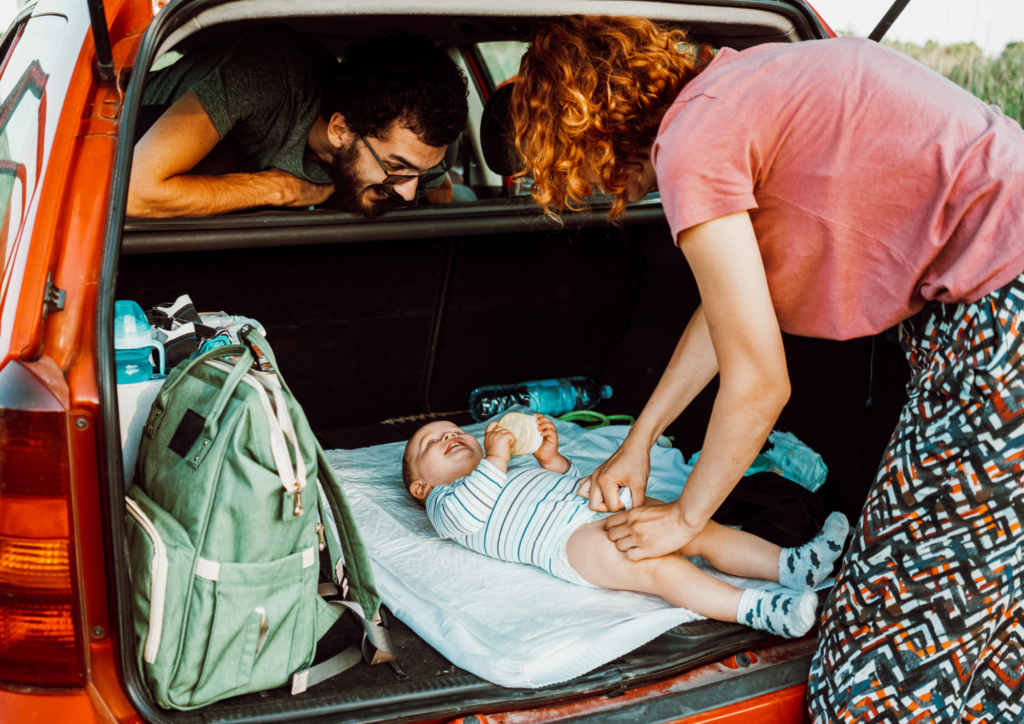
Changing Pad/Mat: For hygienic nappy changes on the go.
Feeding Supplies: If you’re breastfeeding, bring a nursing cover, a breast pump if you use it, and breast pads. For bottle-feeding, pack bottles, formula, and a bottle brush. If your baby is on solids, include baby food, spoons, burp cloths and bibs.
Clothing: Pack enough outfits for each day plus extras. Include layers for different weather conditions and a few comfortable sleeping outfits.
Sleeping Gear: A portable travel crib or bassinet, plus any familiar bedding like a special blanket or sleep sack. Also, pack a baby monitor to monitor baby at night
Health Kit, which includes a baby thermometer, baby pain reliever (consult your paediatrician), saline nasal drops and a nasal aspirator, any prescription medications, plasters and antiseptic cream
Bath Items: Baby soap, shampoo, lotion, and a few washcloths. A small, foldable baby bath if necessary.
Sun Protection: Baby-safe sunscreen and a hat for sunny destinations.
Gear: A lightweight stroller, rain cover, baby carrier or sling, and car seat for travel by car or plane
Entertainment: A few of your baby’s favourite small toys, books, and a teething toy.
Emergency Information: Write down your baby’s health information and emergency contacts.
Miscellaneous: Dummies (if used), nightlight for unfamiliar rooms and plastic bags for soiled clothes
Selecting appropriate baby luggage
Selecting the right luggage for travelling with a baby is important to maximise convenience. Choose a bag that is large enough to carry all the baby’s essentials but not too bulky or heavy to handle. Remember, you might also be carrying the baby, a stroller, or a car seat before you board.
Also, look for a bag with multiple compartments and pockets. This helps in organising baby items such as nappies, clothes, feeding bottles, and toys. Select a bag made from durable materials that can withstand rough handling, especially if you plan to travel frequently. Quality zippers and strong seams are important to prevent breakages. Include shoulder straps, backpack-style, or a bag that can attach to your stroller. Ergonomic support is important to prevent strain on your back and shoulders. Make sure you can wipe clean and even machine wash the materials of the suitcase too.
If you will carry bottles or food, an insulated pocket is helpful to keep these items at the right temperature. Some baby bags come with a foldable changing pad, which is handy for nappy changes on the go and can be travel-friendly to fit in an overhead compartment or under the seat in front of you. Make sure there are no small, chokeable parts.
Organising baby clothes for easy access – layer up
There’s no point donning your kids in thick winter coats and fashionable woolly jumpers if you’re then having to go through the torturous process of adding and taking away layers while in an uncomfortable position, like a plane seat or a moving vehicle. Remember that you will only have to replace the underlay with something more suitable.
Layering up is more effective at keeping the cold away and a lot easier to manage. Dress them in easy-to-add and take-away layers so that the kids stay comfy whatever the weather.
Baby packing list for road trip – must-have car seat features for safety during travel
Choose the right size: Make sure the car seat fits your child’s size, as per the updated R129 car seat regulations. There are seats for tiny babies that face the back of the car (Group 0), and there are ones that can grow with your child (Group 1 2 3)
Safety harness: Look for a car seat with a 5-point harness. It’s the safest choice because it straps your child in at their shoulders, hips, and between their legs, spreading the crash force evenly.
Protection from side crashes: Find a car seat that has good protection from side crashes. This usually means it has extra padding or special foam around your child’s head and sides.
Easy to install: Make sure the car seat is easy to put in correctly. Some car seats have LATCH/ISOFIX systems that make it safer to install than using seat belts.
Adjustable for comfort: Especially for babies, being able to change how they sit is important to keep their airways open, especially on long journeys. Having an adjustable headrest is good as your child grows.
Comfy padding and easy to clean: Long trips can be tough, so look for a car seat with enough padding that lets your child breathe. It’s also helpful if the covers can be removed and washed easily.
Air travel ready: If you plan to fly, get a car seat that’s approved for use on aeroplanes by the FAA.
Safety certification: Check for a certification from the Juvenile Products Manufacturers Association (JPMA). It means the car seat meets safety rules.
Expiration date and history: Car seats don’t last forever, so check the expiration date. Be cautious with used seats if you don’t know their history; they might have been in an accident or be missing important parts.
Portable baby carriers for on-the-go comfort
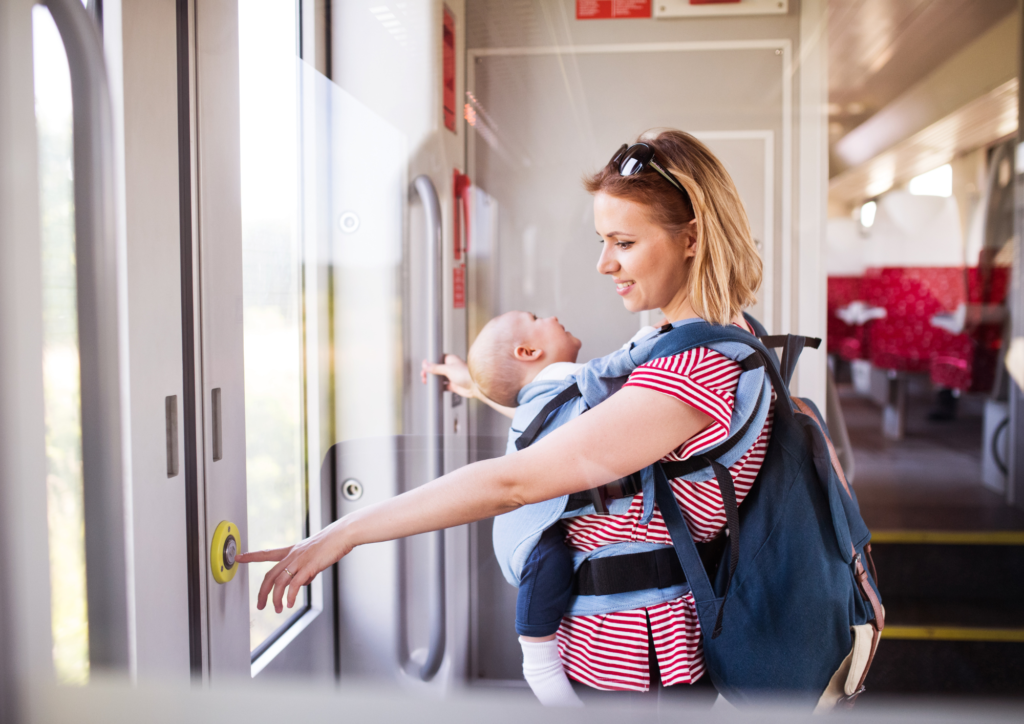
Travelling with a baby under 12 months can be an exciting adventure, and using portable baby carriers and slings can make it easier for both you and your little one. Here are some simple tips for using these handy helpers while you’re on the go:
Pick the right carrier: There are different carriers and slings out there, like soft ones, wraps, ring slings, and meh dais. Choose the one that feels comfy for both you and your baby. Some babies like being snuggled close, while others want more space to wiggle.
Practice at home: Before you hit the road, practice using the carrier or sling at home. It helps you get the hang of it and makes sure your baby is secure and comfy.
Hold your baby right: Make sure your baby is sitting in the carrier correctly. Their hips should be in a spread-out position, with their knees higher than their bottom (like an M-shape). You should see their face, and their airway should be clear to avoid any problems with breathing.
Comfort comes first: Monitor your baby’s comfort. They should be snug but not squeezed too tight in the carrier. Check for any red marks or signs that they’re not happy.
Keep your baby close: One of the great things about using a carrier or sling is that you can bond with your baby while you travel. Take breaks to snuggle and play with them during your trip.
Sun protection: If you’re out in the sun, consider a carrier with a sunshade or use a light cloth to shield your baby from direct sunlight.
Travel light: When you’re on the move, it’s best to keep things simple. Choose a carrier that’s easy to fold and won’t take up too much space in your bag or stroller.
Stay hydrated: Both you and your baby can get warm in the carrier, so make sure to drink enough water. Offer your baby breastmilk or formula when they need it.
Baby-friendly spots: When planning your trip, think about places that are baby-friendly. Look for places with changing stations and quiet spots for nursing.
Safety first: Always be aware of your surroundings and make sure your baby is securely fastened in the carrier or sling. Avoid situations where your baby’s head might get bumped or jostled.
Check weight limits: Check the weight limits of your carrier or sling to make sure it’s suitable for your baby’s size and age.
Ask for help: If you’re new to using a carrier or sling, ask experienced parents or join babywearing groups for advice.
Use a baby carrier if you are flying. It’s such a hassle being without your pram. You can certainly take it with you but if you have a baby carrier you don’t have to worry as much and you’ll have free hands. Plus it may also help them sleep well.
Here are some simple tips for packing feeding supplies like bottles, formula, and snacks when you’re travelling with a baby under 12 months:
Bottles
Bring extra bottles: It’s always a good idea to pack more bottles than you think you’ll need. Babies can be unpredictable with feeding.
Pre-fill with water: If you use powdered formula, you can pre-fill bottles with the right amount of water before leaving. Just add the formula when it’s feeding time.
Use insulated bottle bags: These are handy for keeping bottles warm or cool, especially on longer journeys.
Sterilising: If you’re worried about keeping bottles clean, bring some bottle sterilising tablets or a portable steriliser. You can also use boiling water to sterilise bottles if needed.
Formula
Pre-measure formula: Measure out the right amount of formula into separate containers or use single-serving formula packets to make feeding on the go easier.
Check for hot water: If you need hot water to mix with formula, make sure you have access to it. Many cafes and restaurants can provide hot water.
Carry a formula dispenser: These are small containers with compartments to hold pre-measured formula servings. They’re super convenient for quick and mess-free bottle preparation.
Snacks
Pack baby snacks: Bring along some baby-friendly snacks like crackers, baby cereal, or fruit pouches. These can be a lifesaver when your baby gets hungry between meals.
Easy-to-clean bibs: Have some easy-to-clean bibs on hand for messier snack times.
Keep snacks handy: Have a small snack bag within easy reach, so you don’t have to dig through your luggage when your baby needs a snack break.
Variety is key: Pack a variety of snacks to keep things interesting for your baby. Different textures and flavours can be a real treat.
General tips
Check TSA rules: If you’re flying, check the Transportation Security Administration (TSA) rules for carrying liquids and baby food. There are usually exceptions for baby formula, breast milk, and baby food, but it’s best to be informed.
Take your time: Feeding on the go can be tricky, so don’t rush. Find a comfortable spot when you can, and take your time feeding your baby.
Stay hydrated: Remember to stay hydrated yourself, especially if you’re breastfeeding. Travelling can be exhausting, so keep a bottle of water for yourself too.
Plan for spills: Pack some extra baby clothes in case of spills. Babies have a way of making messes, and it’s better to be prepared.
Check baby’s comfort: Make sure your baby is comfortable during feeds. If it’s too hot, find some shade, and if it’s cold, have a blanket handy.
The best travel packing list for baby and toddler years – from 12 months to preschoolers
One very ‘memorable’ trip from London to North Cyprus was possibly one of the worst five hours of my parenting life (the boys were 13 months old and 28 months old at the time). We experienced so much turbulence in an over-packed plane, which was hot and sticky, and we had forgotten one of the most important unwritten rules when travelling with toddlers – ‘Snacks… and lots of them!’
This, unfortunately, included their bottles, bottle warmers and sippy cups, which had somehow disappeared on the long walk from the airport to our seats. So, we had to resort to offering our boys sips of water from our small bottles, which, because of the turbulence, would spill all over their clothes, sometimes while I was breastfeeding my little one to sleep – cue the screaming and lots of glares from other passengers. Then we had the arduous task of taking off their thick jumpers and replacing them with more suitable clothing, while they were squirming in their seats.
So here are some tips on how to pack for a baby over 12 months:
Nappies: Pack enough nappies for each day of your trip, plus some extra, just in case. Don’t forget wipes and nappy cream.
Clothing: Bring a few changes of clothes for your little one. Be prepared for changes in weather by including both warm and cool outfits.
Blankets: A soft blanket for comfort and warmth during naps and bedtime.
Bottles and sippy cups: For toddlers, sippy cups for water, milk, or juice. Apart from the obvious reason of keeping your children hydrated, during long train and/or plane journeys, bottles and sippy cups can also help to equalise pressure in the ears. The sucking and swallowing technique can be used during take-off and landing to prevent any discomfort. I would go one step further and advise you to revert to a bottle, even if your toddler has upgraded to a sippy cup because bottles are that much more effective at equalising pressure in the ears than sippy cups.
Snacks: Pack a variety of snacks that your child likes, such as crackers, fruit, and small treats.
Baby food: For older toddlers, snacks and easy-to-eat meals like cereal bars or pouches of yoghurt. Foods which release energy slowly and take a long time to eat will cause less hassle and keep the tummy full for longer. I would steer clear of sweets because once kids have that sugar rush, good luck keeping them in their seats! I find raisins, wholemeal bread with peanut butter, crisps, and homemade, low-sugar banana cake go down as a real treat during travel.
Toys and entertainment: Bring favourite toys, books, and activities to keep your child entertained during the trip. There are several kid-friendly and educational plane games available for your device (Some mobiles and tablets can be switched to aeroplane mode for the flight).
Baby toiletries: Include baby shampoo, soap, and lotion. For toddlers, bring child-friendly toiletries.
First aid kit: A basic first aid kit with items like plasters, antiseptic wipes, and any specific medications your child may need.
Child car seat: If you’re driving, you’ll need a car seat suitable for your toddler’s age and size.
Travel potty: For potty-trained toddlers, a portable potty can be a lifesaver during bathroom breaks.
Child-proofing items: If you’re staying in accommodation that’s not child-proofed, bring some safety items like outlet covers and cabinet locks.
Travel stroller: Consider a lightweight, compact stroller for easier manoeuvring during your trip.
Toddler utensils and bibs: If your toddler is eating solid foods, bring toddler-sized utensils and bibs.
Travel bed or portable crib: For bedtime, a travel crib or bed for toddlers is handy.
Travel high chair: A portable high chair can be useful during meal times.
Swim gear: If you plan on swimming, pack swim nappies, a swimsuit, and water-friendly toys.
What to pack for your baby in a carryon bag / baby travel checklist – aeroplane: Pack certain items like food into small Tupperware containers. Each child can get a small rucksack that has their favourite toy, a book/colouring book with some crayons, and a nappy.
Health and safety on the road – What to pack when travelling with baby
While you certainly shouldn’t overthink when travelling with a baby, there are some safety tips you should keep in mind. Consult a doctor about preventive medicine for your child when travelling abroad too.
Get vaccinated if required
One important item to check off your summer holiday to-do list is to get vaccinated if the country you’re visiting requires you to. This is important, especially when you have children. Make sure you’re fully protected before you leave.
First aid and wellness essentials
When you’re packing for a toddler whose middle word is danger, you need to consider a decent first aid kit to ensure they’re protected during journeys. Include antibacterial wipes and hand sanitiser in your kit too because you will want to try and minimise any chance of your kids getting sick on holiday. Imagine the stress of dealing with sick children, it’s just not worth it.
In my kit, I also include a travel thermometer to check body temperature for fever, liquid Paracetamol like Calpol (but make sure it’s not over 100ml as that’s the max amount you can take on holiday with you if you’re carrying it in your hand luggage) and some plasters because my kids like to run into things now and again. Antiseptic wipes and sting treatment are important too to dab on broken skin and any bites the kids (and you!) might catch on holiday.
Research into the local area’s water supply and food
Is the water contaminated? Not everyone has an elaborate water system where you can drink from the tap. In North Cyprus, drinking water needs to be bought and bottled up. If you drink their local water, you will live with stomach issues for the duration of the trip.
Packing list for baby beach vacation – Travel packing lists for mum, baby and toddler
Below is a packing list with baby in mind for a beach holiday, distinguishing between babies under 12 months and those over 12 months.
Mum’s packing list for a baby beach holiday (under 12 months):
What to pack for travel with baby – Sun protection
Sunscreen (for babies over 6 months, consult your paediatrician)
Lightweight, long-sleeved clothing to cover delicate skin
Baby travel checklist – baby beach gear
Baby beach tent or sunshade for a shady spot
Portable baby crib or bassinet with a sunshade (if napping on the beach)
Beach blanket or playmat
Baby-friendly beach toys (buckets, shovels, and moulds)
Baby carrier or sling for easy transport
Feeding supplies
Baby food or snacks (if your baby has started solids)
Baby-friendly drinking water
Sippy cup or baby bottle
Baby food utensils (spoon, bowl)
Bibs and baby wipes for easy cleanup
Nappy essentials
Swim nappies ahttps://fixr.co/event/over-30s-daytime-clubbing-80s-90s-classics-tickets-tickets-390354689?lang=en-USnd nappies (bring extra for sandy situations)
Biodegradable diaper bags
Changing pad or mat
Baby-safe nappy cream
Baby clothing
Baby swimsuit or swim shirt with UV protection
Extra baby clothes, including lightweight onesies and hats
Baby beach shoes or booties to protect tiny feet
Baby hygiene
Baby shampoo and soap
Baby powder (to help remove sand)
Baby-safe insect repellent (if needed)
Baby nail clippers (to prevent scratches)
Baby’s first aid kit:
Baby-safe sunscreen (for babies over six months)
Baby pain reliever or fever reducer (consult your paediatrician)
Baby plasters and antiseptic wipes
Baby thermometer
Toddler packing list for a baby beach holiday (over 12 months):
All the above essentials:
Continue to pack all the items listed above for babies under 12 months.
Swim gear:
Swim floats or water wings (if your toddler uses them)
Toddler-sized swim goggles
Swim toys and floats appropriate for older babies and toddlers
Toddler feeding supplies:
Sippy cups or spill-proof bottles
Toddler-friendly snacks and finger foods
Toddler utensils and plates
Travel-friendly high chair or booster seat (if needed)
Inflatable beach toys (if suitable for your toddler’s age)
Packing for older children
Sarah Anderson, a mum, says, ‘Kids come with baggage of their own and sometimes you find yourself knee deep in clothes, activity books, and crayons melted on your shirt from the less than generous seat space provided on the plane.
Everyone now carries their own hand luggage. I am not a suitcase or a bag rack. If you have hands and feet, you can carry your luggage.’
Try luggage storage
The last thing you need when travelling with a newborn baby is to be dragging luggage around as you explore cities, museums, parks, and sites. If you find yourself in this situation, maybe your hotel is far away from where you want to stay, or you have to check out early, or you’re stopping through somewhere – finding a place to store a bag (or a travel stroller) can be life-changing.
If you choose to go on a city trip, you should know there are many options available. For instance, you’ll easily find luggage storage in London with a luggage storage app called Nannybag*; at all the major sites and transport hubs around the city (such as Victoria Station, for example), there will be nearby places to drop your item off for a cheap price, and it’ll be safely stored.
Nannybag* is a collaborative luggage storage network that enables business and leisure travellers to safely store luggage all around the world for a few hours or more. Working with local businesses, including shops, restaurants, and hotels, travellers can use the Nannybag website or app to book the left luggage service that suits them best and enjoy their stay 100% hands-free!
If you’re over the limit, then it would be a lot easier to remove items at home rather than at the airport. And, if you don’t have any place to put your excess items at the airport, they’ll throw them away!
Put all liquid items under 100ml in plastic bags
Make sure you add to your checklist when travelling with baby that items you travel with should be under 100ml. Anything over 100ml needs to be in the suitcase, otherwise, they should be in plastic bags and easy to take out of your hand luggage. The airport supplies these plastic bags.
Make sure all valuables go in hand luggage
If they’re not the airport’s definition of restricted items, then they can sit in your hand luggage, so they are always with you. List all the valuables you are bringing with you, so you make a quick check when you leave. Also, if anything goes missing, you’ll be able to hand over the list to the local police or your insurance company.
Vacation packing list for baby – buy your mini toiletries and sun lotion at duty-free
Build into your travel with a baby checklist the items you’ll buy at the airport. You only need travel-sized and they’re cheaper too!
You can check out Wanderlust15.com, which contains lots of inspirational articles to make sure you get the best out of your holiday.
Tire the kids out as much as possible before the flight.
Use the airport as your playground – if you’ve got two hours to spare then resist putting them to sleep and run them ragged. Find a children’s area and let them use it for two hours, or if the airport doesn’t have one, let them walk everywhere and look at everything. My boys would love using the escalators as their number one airport activity, travelling up and down until they got bored.
Travelling with baby packing list – dealing with emergencies and illness
Dealing with emergencies and illness while travelling with a baby and older kids can be worrisome, but being prepared and staying calm can help. That list of emergency contacts you created before you headed on the trip? Keep this list easily accessible!
Make sure you have travel insurance that covers medical emergencies for the entire family. Keep a copy of your policy and emergency contact numbers handy. If any family members need regular medication, ensure you have enough for the trip and carry a copy of the prescription with you. Check if the medication is allowed in the country you’re visiting.
If travelling internationally, carry vaccination records for your kids, especially for infants who may need certain vaccinations. Learn about health risks in your travel destination and take necessary precautions, like vaccinations or insect repellent if needed.
Keep everyone well-hydrated, especially in hot or humid climates. Bring reusable water bottles and refill them regularly and ensure your kids get enough rest. A tired child is more vulnerable to illness. Stick to regular sleep routines as much as possible.
Encourage healthy eating, but also let your kids enjoy some local treats. Be cautious about food safety, especially for babies who should avoid certain foods. Teach your kids the importance of washing hands regularly, especially before eating and after using the restroom.
In crowded places, use safety measures like child leashes or wristbands for younger kids to avoid getting separated. Familiarise yourself with the local healthcare system, including nearby clinics and pharmacies.
Keep open communication with your older kids about safety rules and what to do in case of an emergency. Create an emergency plan with your family. Discuss where to meet if you get separated and what to do in different situations.
If an emergency does happen, stay as calm as possible. Your calmness will help reassure your kids. Don’t hesitate to seek local help if needed. Most places have hospitals or clinics, and locals are usually helpful in emergencies.
Remember, the best way to deal with emergencies is to prevent them. Be cautious, stay informed, and prioritise your family’s health and safety.
Making memories and enjoying the journey
Creating lasting memories and enjoying your family holiday, even with a baby, is absolutely possible. Here are some tips to help you maximise the experience:
Flexible schedule: Be flexible with your itinerary. Babies can be unpredictable, so allow some downtime for naps and breaks. My husband and I always take turns giving each other short breaks, even if it’s just a quick walk around the airport without the kids or sitting in a vacant seat on the train for 15 minutes. You will be surprised at how much a quiet break calms you down enough to face the music again. When it came to nappy changes, we changed both boys at the same time, one after the other, so we were always mucking in together (and this helped our older one to toilet train too.)
Take lots of photos: Capture the moments with photos and videos. Don’t forget to be in some of the pictures yourself.
Create a travel journal: Encourage older kids to keep a travel journal where they can draw, write, or paste souvenirs. This helps them remember the trip.
Try local food: Explore local cuisine as a family. Even a baby can safely enjoy some local flavours.
Celebrate milestones: If you’re travelling with a baby, celebrate their milestones on the road. It could be their first beach experience or their first taste of new food.
Explore nature: Nature activities like hikes, picnics, or beachcombing are great for family bonding and making memories.
Embrace cultural experiences: Engage with the local culture. Attend local events, visit museums, or try traditional crafts.
Stay mindful: Be present and enjoy the little moments. Watch the sunset together, build sandcastles, or have a family game night in your accommodation.
Include baby in activities: Find baby-friendly activities that everyone can participate in. For example, bring the baby to the beach and let them feel the sand and water.
Share stories: Share stories and experiences from the trip during meals or bedtime. Encourage your older kids to share their thoughts and favourite moments.
Relax and enjoy: Don’t let perfectionism get in the way of enjoying the trip. Things may not go exactly as planned, but that’s part of the adventure.
Connect as a family: Use the holiday as an opportunity to bond as a family. Spend quality time together and cherish the moments.
Make it special: Create traditions or rituals unique to your family trips. It could be a special meal, a family dance, or a goodbye ceremony to your destination.
Keep a positive attitude: Attitude matters. Approach challenges with a positive mindset, and your family will remember the trip as a fun adventure. So much easier said than done, I know. But travelling itself is stressful and there’s no need to add to the already increasing blood pressure. Don’t worry too much about a broken routine, spillages on clothes or leaked nappies. These things just happen. Just breathe, count to ten, and tackle one problem at a time with a big smile and lots of patience. You might look like a Stepford parent, but you’ll be surprised at how you can make yourself believe that you’re the king/queen of the parents when you adopt this relaxed approach. And, guess what! It will rub off on the kids too. Now, who doesn’t want more relaxed kids on holiday? 🙂
Final things to check off before you go
You’re packed and ready to go and now all that’s left is to have fun! But, have you cleared up the final tasks in the house before you go?
Pay off all bills and schedule automatic payments
You don’t want to be smacked with a hefty bill when you come back. So one of the most important things to do before going on holiday is to make sure you’re sorted money-wise first.
Make sure there are no dirty dishes about and clean up the fridge and any rubbish
Add to your holiday list a clean house otherwise you will come back to something new growing in your kitchen.
Go through all your items and throw out things you don’t need
This is the perfect chance for a decluttering session. Put away things you don’t need and start packing the things you need.
Hold all mail, newspapers, and packages
Unless you want people to know you’re not home?
Consider having someone look over your home
If you have a friendly neighbour, have a quick chat with them about looking over the property whilst you are gone. If they spot anything unusual, they can either call your emergency numbers or the police directly. It pays to be nice to your neighbours!
Add an email autoresponder
It’s all about time management and automation. Set up your email autoresponder so people know you’re not available for work or you will check emails less frequently than usual. That way they won’t think you’re ignoring them.
Unplug and switch everything off
There is no need to pay for electricity and water when you’re not even at home.
Check your tickets, and make sure they contain the correct information
People have been turned away at the airport because of a simple typo in their name. If you spot any incorrect information, get onto the airline and be nice. They are there to help smooth over any issues with your travel documents.
Pack chargers and fully charge electronics – don’t forget the necessary adaptors!
If you have kids flying with you on a long-haul flight, you will need your technology friends to help pass the time. Make sure they are charged, so you don’t run out of battery before you get to the destination.
Find out about your credit/debit card fees from your bank before you leave
Part of your holiday prep should be to check out how you’re going to pay for everything. Some banks allow you to make international transactions without a fee attached and some don’t. Make sure you find out whether your banks charge you.
Heading to a communal event like a beer festival or New York’s Oktoberfest? Check whether you can pay with your card and what the fees would be to pay for alcohol abroad.
Remember that family holidays are about making memories and spending time together. Even with a baby in tow, you can create beautiful memories that will last a lifetime.
Free printable baby travel checklist – baby packing list
Click on the image below to get the full version for printing/pinning!
Checklist for travel with baby FAQs
What to bring for a baby when travelling?
Other questions asked were:
What does my baby need to travel?
How do you pack a baby bag for travel?
Check out the article above for more information on what to pack when travelling with your baby.
Can you travel the world with a baby?
Absolutely, you can travel the world with a baby! It might seem a bit daunting at first, but with some planning and flexibility, it’s totally doable.
What month can you travel with a baby?
Other questions asked were:
How old should a baby start travelling?
When to travel with baby?
When can we travel with baby?
Can you travel with a baby?
You can start travelling with a baby pretty early on, but many parents wait until the baby is a bit older for convenience and health reasons. Here’s a simple breakdown:
Under 3 months: It’s usually best to wait a bit. Newborns are still developing their immune systems, so it’s a good idea to limit exposure to crowds and new environments. Plus, you’re still getting into your own rhythm with the new baby.
3-6 months: This can be a good time to start travelling. Babies at this age are more settled into a routine and aren’t yet mobile, which can make things easier. They also sleep a lot, which is helpful when travelling.
6-12 months: This is a popular age for travelling with a baby. They’re often more adaptable and still not too mobile, making it easier to manage on the go.
12 months and up: Once they start walking and becoming more active, it can be more challenging, but it’s still totally doable with some extra planning and patience.
*This post is sponsored by Nannybag. Links marked with a ‘*’ are affiliate links which means I may earn a small commission if you click through to buy at no extra cost to you.