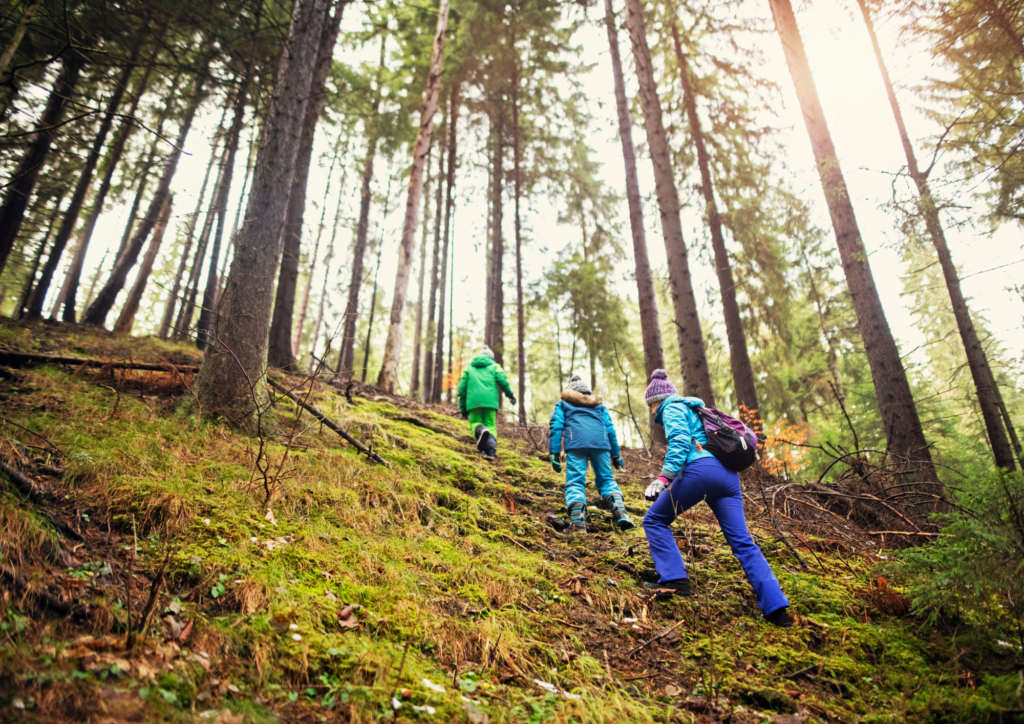
Ah, the great outdoors! There’s nothing quite like the feel of the sun on your face and the wind in your hair, right? But what happens when it’s winter and the weather is cold? How do you entertain kids in cold weather?
If the sun is shining, no matter the weather, then it’s time to bring out some exciting outdoor winter activities for kids. Do you know who needs that natural Vitamin D boost more than we adults do? Our kids!
We frequently struggle to get our kids away from their devices and encourage them to play outside in this age of video games and cartoons, especially during the winter months when cabin fever is at its highest.
So, how do you get them outside?
No fear! We have a list of entertaining outdoor winter games to keep your kids engaged, even when it’s brisk out there. What are your favourite winter outdoor activities for kids? Share in the comments below if we’ve missed yours in our guide.
Why is it important to play outside in the winter?
Playing outside in the winter is essential for child development for lots of reasons. Here are some benefits of outdoor play in the winter:
Improves physical health
Winter play helps children continue their physical activity year-round, maintaining fitness and strengthening immunity.
Exposes kids to more Vitamin D
Shorter and darker days mean less sunlight exposure indoors. Playing outside, even on cloudy days, helps kids get a healthy dose of the sunshine vitamin D, which is essential for bone health and a functional immune system.
Develops skills
Playing on different terrains, especially snowy or icy ones, challenges kids to develop new motor skills and coordination.
Boosts creativity
A change in season transforms familiar surroundings, prompting kids to engage in different play and use their imagination in new ways.
Exposure to varying temperatures and conditions teaches children to adapt and become resilient.
Develops social skills
Group snowball fights, building snowmen, or collaborative winter games can foster teamwork and improve social interactions.
Helps kids appreciate nature
Witnessing seasonal changes first-hand instils an appreciation for nature and the environment.
Improves sleep
Physical activity in the cold can lead to better sleep quality.
Combats cabin fever
Breaking the indoor monotony can reduce feelings of restlessness and provide a change in the environment.
Great for sensory development
The winter environment offers unique sensory experiences, from the crunch of snow underfoot to the feel of cold air, which can stimulate cognitive development.
How to prep for safe outdoor winter play with kids
Although outdoor winter activities are fun, you do need to exercise a bit of extra caution in the winter with kids playing outside. Preparing for safe outdoor winter play with kids needs some planning and awareness so children can stay warm, dry, and injury-free. Here are some tips to ensure safety:
Dress in layers
It’s important to dress in layers during the winter so your temperature is regulated, by adding and taking away garments, especially when you’re walking in cold weather.
You can start with a moisture-wicking layer, like synthetic materials or wool, which can help pull moisture away from the body. Avoid cotton as it keeps moisture in and makes you feel colder.
Then insulate with a middle layer like fleece or wool to trap the warmth. The outer layer can be waterproof and windproof to protect against the snow, rain and wind.
You can add other warm accessories like gloves/mittens, a thick hat that covers the ears, a snug-fitting scarf/neck warmer and waterproof boots.
You need sun protection, even in the winter!
Even during winter, the sun can be intense during family winter walks, especially when reflected off the snow. Use sunscreen on exposed skin and put on sunglasses or goggles with UV protection.
Stay dry
Wet clothes can cool down your body, so have an extra set of gloves and socks, as these tend to get wet first. Change any wet clothing immediately. It’s important you appropriately dress for winter walking, so you can have maximum fun!
Check the weather
Extremely low temperatures and wind chills can lead to frostbite quickly. Limit outdoor play during severe conditions. You don’t need to brave all the seasons!
Set time limits
When it’s very cold, limit the playtime to around twenty minutes with breaks inside to warm up.
Hydrate and refuel
Cold air and physical activity can lead to dehydration, so make sure to drink lots of water and have energy-boosting snacks high in protein.
Make sure your kids are playing in a safe environment
Check the play area for hazards like icy patches, open water, or snowbanks near roads. Teach kids about the dangers of roads, especially if playing near them. If you’re ice skating, ensure the ice is thick and solid. Also teach children to come inside if they feel numbness or if their clothes are wet. Check for signs of frostbite, including pale, gray or blistered skin on the fingers, ears, nose and toes.
Be aware of the signs of hypothermia like shivering, slurred speech, clumsiness, and confusion.
Stay together
Make sure you’re always around the younger kids. For older children, make sure they play outdoor group games and set boundaries for where they can go.
Warm up as soon as you come inside
When coming back indoors, remove all wet clothes immediately. Warm up with blankets and a warm drink. Avoid hot baths or showers right away as they can rapidly change the temperature and shock the body.
How do I get my child to play outside in the winter?
The benefits of spending time outside during the winter far outweigh sitting at home in the warmth and staring at a screen. Dressing appropriately, however, can help motivate your child to go outside if they feel the cold more than others and rewarding them for the effort with fun activities will encourage them to stay outside too.
But, most of the time, it’s the adult who doesn’t want to brave the seasons! And, that’s perfectly understandable! I was like that for many, many years until my then three-year-old refused to step into the car to go to nursery every day. So we walked the 25 minutes to and from nursery, even through the harshest winter months and we barely got sick that year! He single-handedly changed my opinion of the cold.
13 of the best outdoor winter play activities for kids
We all know that outdoor play is essential for children’s development and growth. And what better way to keep your kids entertained while giving them the physical activity they need than with classic outdoor games?
Here are 13 of the best winter activities for toddlers and kids that will have them giggling, running around and having fun under the winter sun:
Things to do with kids outside in winter – Go explore
Your child can be a winter wildlife detective and head out on an outdoor winter nature observation hunt. You can show your child the evergreens in winter where the leaves stay green all year around or find wildlife frozen in time. Outside winter science play not only provides the chance to learn about science for kids, but it also fosters physical health, emotional growth, and a deeper connection to the natural world.
Winter offers unique sensory experiences, from the cold touch of snow to the crunch of frost underfoot. Exploring these sensations can stimulate your child’s curiosity about the world around them.
Help your child to learn about the states of matter by examining how water freezes or melts. They can also explore concepts like insulation, temperature fluctuations, and the principles behind ice fishing.
Fun outdoor winter activities for kids – Go on a winter hike
Go for walks to explore how the neighbourhood or local park changes in the winter. Look for animal tracks in the snow or gather pinecones.
Outdoor activities for kids this winter – Obsta-Course
Have you ever heard of the Obsta-Course? It’s a super fun way to get outside and get moving. Obsta-Course is all about navigating an obstacle course full of challenges like cones, tires, chairs, and other objects you can find around your yard.
It will keep your kids delighted for hours while helping them become more agile and coordinated. Setting a time limit or including money bars in the mix are further ways to make it more difficult. Oh, and if you’re looking for equipment to set up your Obsta Course, be sure to view the range here.
Exciting outdoor winter activities for kids – Tag, You’re It!
Another classic outdoor game for all ages is tag. It’s a simple game where one person is designated as “it,” and then they must tag the other players. The players who aren’t must run away from the person who is before they get tagged.
The tag can be spiced up with variations like “freeze tag”, which requires the player who has been tagged to freeze and stay still until another player unfreezes them. Or you can play flashlight tag at night, similar to regular tag but with a flashlight providing light.
Great outdoor winter activities for preschoolers – Hide and Seek
You can’t go wrong with a game of Hide and Seek. It’s a timeless classic that requires sharp minds and quick reflexes. All you need is an area with plenty of hiding places, such as trees, bushes, or furniture.
One person will be the seeker, who has to count to ten while everyone else hides. The seekers must then find the other players to tag and extricate them. It’s a fantastic game that a small or large group of players may enjoy.
Ideas for winter activities for toddlers – Duck, Duck, Goose
One of the great outdoor activities for toddlers in winter can include the popular game Duck, Duck, Goose. It’s a terrific technique to get kids moving and make them giggle. All you need is a roomy, open location where you may move about.
You start by choosing one player as the goose, who then walks around the circle tapping each person on the head, saying either “Duck” or “Goose”. When they eventually pick the goose, that player then has to chase after the original goose around the circle. If they manage to tag them before they return to their spot, they become the new goose.
Fun winter activities for kids – Capture the Flag
Capture the Flag is an exciting game that yields plenty of physical activity and strategy in a large open space. Divide your players into two teams and assign each team a flag or other item to defend.
Each team must work together to protect their flag while stealing the other’s. The winning team is the first to seize both flags. This game is great for getting kids to work together and strategise in a fun, interactive way.
Outdoor winter activities without snow – Hopscotch
Hopscotch provides a fun twist on running and jumping games. You only need a simple hopscotch board drawn with chalk or other materials.
Players must take turns hopping on one foot to and from each square while trying not to step on any lines. Kids can even build up their skills with some practice by hopping through the course with both feet.
Games and activities to play in the snow – Go for a sled ride – a toddler’s favourite winter activity!
Outdoor snow activities can include an awesome sledge ride. You don’t need a proper sledge. Grab some plastic bags or even a baking tray and make your way down a slippery hill with speed!
Outdoor winter activities for kids at home – Have a winter picnic
A winter picnic can be a magical experience. Choose a location with a beautiful winter view, prepare some hot chocolate in a thermos, grab some snacks, and enjoy a hot picnic outside!
Indoor and outdoor winter activities for kids – Winter crafts for kids
Winter crafts are a delightful way for kids to express their creativity and celebrate the season.
At home activities during the winter can include ice painting with water, food colouring and paper. Simply mix water with the food colouring and freeze in ice cube trays. Once frozen, kids can ”paint” on paper using the coloured ice cubes.
Kids love anything related to family activities, so why not create your own photo frame using wintery materials and stick your favourite family photo inside!
Outdoor winter nature crafts can include stick crafts, creating bird feeders or ice ornaments by freezing water with natural items like berries and leaves inside.
Other winter-themed crafts can include:
Snowflake cut-outs: Use blue or white paper and scissors, fold the paper multiple times and cut out designs to create unique snowflakes. Unfold and admire!
Popsicle stick snowflakes: Grab some popsicle sticks, glue, glitter, and paint. Arrange popsicle sticks in snowflake shapes and glue together. Once dry, paint and sprinkle with glitter.
Paper plate snowman: You’ll need paper plates, coloured paper, markers, glue, and yarn or fabric scraps. Use two paper plates as the body and head of a snowman. Decorate with paper cut-outs for eyes, nose, and buttons. Use yarn for a scarf.
Pine cone trees: Find some pine cones, green paint, small pom-poms, glue, and glitter. Paint the pine cones green and let them dry. Glue colourful pom-poms as ornaments and sprinkle with glitter.
Salt dough ornaments: You’ll need salt dough (made with salt, water, and flour), cookie cutters, and paint. Roll out the dough and use cookie cutters to create shapes. Bake until hard. Once cool, paint and hang as ornaments.
Sock snowmen: Find some white socks, rice, rubber bands, buttons, fabric scraps, and markers. Fill the sock with rice and tie or rubber band sections to create the snowman’s body segments. Decorate with buttons and fabric scraps.
Snow Globe: You’ll need small jars, glycerin, glitter, waterproof trinkets or figurines, and water. Fill the jar mostly full with water, add a drop of glycerin and some glitter. Place the figurine inside and seal the jar. Shake and watch the snow fall.
Winter Wreath: Use a paper plate, tissue paper (blue, white, silver), ribbon, glue. Cut the centre out of the paper plate. Glue crumpled pieces of tissue paper around the ring. Add a ribbon for hanging.
Best outdoor winter activities for kids – Go on a winter scavenger hunt
A winter scavenger hunt is a great nature-themed game and a fantastic way to engage with the chilly season, explore nature, and have some fun outdoors. Hide some items in your yard, a local park, a forest, or a favourite outdoor spot, and give your child a list of things to find. You can also use this readymade scavenger hunt printable.
A checklist of items can include:
Pinecone
Red berries
Animal tracks in the snow
Icicles
Snowman (maybe not one already in your yard)
Something frozen in ice (like a leaf or berry)
A tree with snow on its branches
A bird in flight
A snowflake on black paper (bring along to capture and observe)
Y-shaped twig
Family activities for winter – Explore a winter waterfall
Exploring a winter waterfall with kids can be a magical experience. The frozen landscapes and cascading ice formations can be mesmerising.
Safety first, though! Discuss safety rules with your kids before starting your exploration. For example, never approach the edge of the waterfall or any ice-covered areas without extreme caution. Keep a safe distance, as ice can break unexpectedly.
Also, use trekking poles or walking sticks for additional balance and support.
Final thoughts
Winter activities with kids are not just a fun way to keep your children entertained – they’re vital to their physical and mental well-being.
When the cold sun is shining, there are plenty of outdoor activities in winter. Your backyard or local park can become a world of adventure. So step out into the cold sunshine and create those joyful, memories by playing these fun kids winter activities together.
What are your thoughts on surprising outdoor winter activities, no snow required, that kids can enjoy? What is your favourite outdoor winter activity? Share in the comments below!
*Collaborative feature post*
Magical Harry Potter colouring sheet fun for kids
The colouring pages of Harry Potter and its intricate illustrations inviting the swipe of crayons or coloured pencils, have always been a popular way to engage the imagination and creativity of both children and adults.
And when they feature characters from a much-loved universe such as J.K. Rowling’s Harry Potter colouring sheet fun, they become a magical doorway to a beloved world.
This world encompasses not only the iconic Harry Potter himself but also similar characters from other franchises, thereby enriching the colouring experience manifold.
Through this exploration, we aim to delve deeper into the enchanting world of Harry Potter coloring pages and their charismatic counterparts from other realms.
Loved characters colouring pages
A fundamental appeal of Harry Potter colouring sheets is the opportunity they offer to recreate and re-envision our favourite characters and paint in Harry Potter colours.
They allow us to participate in the Harry Potter universe actively, adding our unique touches, shades, and hues to their lives. And among these, Harry Potter colouring pages stand a class apart.
Harry Potter colouring sheet fun
Harry Potter is more than just a character; he’s a phenomenon, an embodiment of bravery, friendship, and resilience.
Coloring pages featuring Harry open up a fascinating canvas to explore his world and imbue it with our unique artistic interpretations.
One might choose to stick to the movie representations or draw inspiration from the vivid descriptions in the books.
Every stroke of colour brings the boy who lived to life in a unique way, making these colouring pages a delightful experience for Potterheads.
Colouring harry isn’t merely about filling in his glasses and lightning bolt scar. It is also about illustrating the intense battles, the owls of Harry Potter, celebrating hard-won victories, and exploring the nuances of his relationships.
From the robes of Hogwarts to the forbidden forest’s depths, every element offers ample scope for creative experimentation and exploration.
The Pevensie siblings colouring pages
Stepping outside the Wizarding World, we encounter another set of loved characters from the world of Narnia – the Pevensie siblings.
As integral parts of C.S. Lewis’ ‘Chronicles of Narnia’, Peter, Susan, Edmund, and Lucy Pevensie, too, make for compelling subjects in coloring pages.
They represent different facets of human nature and embody the essence of courage, love, and growth.
Colouring pages featuring the Pevensies offer a similar level of excitement and creativity as Harry Potter ones, with the added allure of magical creatures, enchanted landscapes, and battles between good and evil.
You can recreate the magical coronation at Cair Paravel, the wintry landscapes under the White Witch’s rule, or Aslan’s majestic presence – the possibilities are endless.
Percy Jackson colouring pages
In the realm of modern mythology, Rick Riordan’s Percy Jackson stands tall as a character that is widely loved and admired.
A demigod son of Poseidon, Percy’s world is rife with Greek myths, mythical beasts, and perilous adventures.
Colouring pages featuring Percy Jackson and his cohorts from Camp Half-Blood offer a brilliant fusion of the contemporary and the classical.
With Percy Jackson colouring pages, artists can dive into a world of Greek gods and monsters, adding their unique colours to Percy’s vibrant world.
They can explore the vastness of the sea, the harshness of Tartarus, or the splendor of Mount Olympus in their palette.
The environments and scenery colouring pages
While characters form the heartbeat of coloring pages, the environments and sceneries provide an equally compelling backdrop for coloring enthusiasts.
Hogwarts castle colouring pages
The Hogwarts Castle from Harry Potter series isn’t just a building; it’s a character in its own right, holding secrets and stories within its stone walls.
Colouring pages that depict this iconic castle offer immense scope for experimentation.
From the twinkling night sky peppered with stars to the warm, inviting glow of the Great Hall, there’s a wealth of colors waiting to fill this canvas.
Narnia landscape colouring pages
Similarly, the otherworldly landscapes of Narnia provide an enchanting canvas for colouring.
Be it the snowy expanses of the White Witch’s reign or the lush spring under Aslan’s rule, Narnia landscape colouring pages bring forth the beauty of diverse sceneries.
Camp half-blood colouring pages
Camp Half-Blood, with its Greek-infused landscape, is another environment worth exploring through coloring.
Depicting cabins dedicated to different Greek gods and goddesses, the enchanted woods, or the combat arenas, these colouring pages would let your imagination run wild.
Creating personalised magical worlds
Colouring pages offer a tangible means of delving deeper into our favourite stories, letting us recreate these fantastical universes in a way that reflects our imagination.
Personalising Harry Potter’s world
Colouring pages let you add a personal touch to the world of Harry Potter.
You can decide the colours of Hogwarts house crests, the shade of Fawkes the Phoenix’s fiery plumage, or the eerie glow of the Dark Mark. It’s a world shaped by your creative instincts.
Giving new hues to narnia
When colouring Narnia-themed pages, you have the freedom to paint your version of this magical land.
You can decide the intensity of the Narnian winter or the vibrancy of Aslan’s mane. Your colours, your Narnia.
Crafting your version of camp half-blood
With Percy Jackson colouring pages, you can sketch the captivating world of demigods and mythical creatures as you see it.
Whether it’s the sea-green hues of Percy’s world or the fiery shades of Hephaestus’ cabin, you’re the creator of this mythological realm.
Closing remarks
In conclusion, the magic of Harry Potter colouring pages (including characters like Ron Weasley, Hermione Granger, Luna Lovegood, Draco Malfoy, Bellatrix Lestrange, Hagrid, Voldemort, and the famous Hogwarts School) and those featuring similar characters from Narnia or Percy Jackson series is rooted in their power to transport us into these magical worlds, replete with adventure, courage, and enchantment.
Harry Potter colouring book pages provide us the unique opportunity to interact with our favourite characters, landscapes, and themes, and explore them in our unique ways.
They form a tactile bridge between our imagination and the vibrant universes we adore, allowing us to add our distinct hues and shades to the narratives we love.
Whether you’re a Potterhead, a Narnian, or a Demigod, these colouring pages invite you to pick up your colouring tools and dive into an immersive journey of creativity, reimagining, and fun.
So embark on this colouring adventure, as you explore, create, and colourise your own magical worlds. Online there are lots of Harry Potter colouring pages. Which will you choose?
FAQ
Where can I get a Harry Potter colouring pages free printable?
There are several websites that offer free Harry Potter printable colouring pages. Remember when printing Harry Potter colouring sheets free to always respect copyright and trademark laws, and only use these resources for personal and non-commercial purposes. Here are a few suggestions of Harry Potter pictures to print:
Super Colouring: (www.supercoloring.com) This website offers a selection of Harry Potter colouring Pages Free PDF Printables, featuring key characters and symbols from the series.
Hello Kids: (www.hellokids.com) Hello Kids also has a collection of Harry Potter Printable colouring Pages for kids with various scenes and characters from the books and films.
Educational Colouring Pages: (www.educationalcoloringpages.com) This website offers top free printable colouring sheets you can print and colour.
Coloring-Book.info: (www.coloring-book.info) This site has a number of free printable Harry Potter printable colouring pages.
To print a Harry Potter coloring page, click on the image you want to colour. This will open the image in a new tab. Then, use your browser’s print function to print the colouring page.
Remember that websites can change their available content or policies over time, so particular Harry Potter colour pages or series may not always be available.
*Collaborative feature post*
Who gets custody of children in a divorce or separation?
When couples separate, who gets custody of children in a divorce? Read on to find out more.
Divorce and child custody – everything you need to know
One of the most critical and emotionally charged decisions parents have to make revolves around child custody and divorce. In the UK, courts use the term, “child arrangements” (instead of “custody” or “access,” which is a United States term) as per the Children Act 1989 which provides the legal framework for resolving child arrangements matters. The Act promotes the principle that the child’s welfare is of paramount importance and custody child arrangements determine where the children will live and who will decide their upbringing.
The wellbeing and stability of the children involved heavily rely on how custody matters are handled. Divorce solicitors play a pivotal role in guiding parents through the legal process and ensuring the best interests of the children are considered.
Divorce is associated with increased identity crises for women, both during and after the separation. A divorce lawyer Scottsdale can help navigate the legal process, allowing women to focus on reclaiming their individuality. In their efforts to be nurturing spouses and caring mothers, many married women lose touch with their sense of self. Even though it may not seem like it at the moment, overcoming this can be a truly rewarding experience. Taking on a new persona has been linked to better psychological and physiological well-being.
Understanding the importance of deciding who gets custody of children in a divorce – What the courts may consider When deciding about custody
Child arrangement decisions significantly impact the lives of the children involved. Their emotional and psychological wellbeing is closely tied to the stability and support they receive from their parents.
A well-structured Child Arrangement Order can provide a sense of security, continuity, and routine for the children during a difficult time of transition. Conversely, poorly managed child arrangements can lead to emotional distress, feelings of abandonment, and strained relationships with parents. It is vital for separating couples to prioritise the best interests of their children and work towards a resolution that fosters a healthy and supportive environment.
Types of custody child arrangements and factors influencing court decisions – joint vs sole custody and legal vs physical custody
Physical custody child arrangements – Joint physical custody vs sole physical custody
Physical custody refers to where the children primarily live after the separation. In some cases, the court may award joint physical custody, allowing the children to spend time with both parents. In other instances, physically one parent may be granted sole custody, and the other may have visitation rights.
Legal custody child arrangements – Joint legal custody vs sole legal custody
Legal custody relates to the authority to make important decisions concerning the children’s upbringing, such as education, healthcare, and religious matters. Like physical custody, you can get sole or joint legal custody, depending on the circumstances and the parents’ ability to communicate effectively.
Factors considered by the court
When deciding child arrangement matters, the court takes various factors into account to determine the arrangement that serves the best interests of the children. These factors may include the child’s age, emotional and physical needs, child support issues, the parents’ ability to provide a stable home environment, any history of abuse or neglect, and the child’s relationship with each parent.
Additionally, the court may consider the preferences of older children if they are deemed mature enough to express their views.
Working on child arrangement issues outside of court
Open communication
Despite the emotional challenges of separation, maintaining open and honest communication between parents is essential. Having a constructive conversation about child arrangements will help each parent understand each other’s concerns and preferences, and reach a mutually beneficial resolution.
Mediation
Mediation is a beneficial alternative dispute resolution method that allows parents to work with a neutral third party when reaching a custody agreement/child arrangement agreement. Mediation can be less adversarial than going to court, promoting a more cooperative approach and preserving a positive relationship between the parents.
Parenting plans
Creating a detailed parenting plan can provide structure to the child arrangement. A parenting plan outlines visitation schedules, decision-making processes, and contingencies for future adjustments if necessary.
Benefits of alternative dispute resolutions
Financially better
Resolving custody issues outside of court through mediation or negotiation can be more cost-effective than lengthy court battles. The financial savings can be better invested in the well-being of the children.
Less conflict
Alternative dispute resolutions often foster a more cooperative and less confrontational environment, reducing conflict and emotional strain on both the parents and the children. This can lead to healthier long-term relationships between parents, which ultimately benefits the children.
Role modelling for children
Opting for alternative dispute resolutions can show the children how conflicts can be resolved amicably. This positive role modelling can shape their understanding of conflict resolution and communication skills, providing them with valuable life lessons.
Dealing with Child Arrangement Orders. Who gets custody of the children in a divorce or separation?
Child Arrangement Orders hold significant weight and are crucial for the wellbeing and development of children during a separation. It’s important to understand the different child arrangements, as well as the factors considered by courts, and explore alternative dispute resolution methods to get help negotiating child custody during your divorce.
To navigate the complexities of child arrangements, you should seek guidance from divorce solicitors at a law firm / child custody attorney who specialise in family law matters. Their expertise can help protect your rights and advocate for the best interests of your children.
Remember, by prioritising open communication, cooperation, and the wellbeing of the children, parents can work towards creating a Child Arrangement Order that fosters a healthy and nurturing environment for their children to thrive.
FAQ
Who gets the kids if we divorce?
Other questions asked were:
Who gets custody of a child in a divorce in Canada?
How is child custody determined in the state of California?
How do I find out who has child custody?
Who takes custody of a 7 year old female child after a divorce?
Who will get custody of child after divorce?
Who gets custody of child in a divorce?
How to get full custody of your child in a divorce?
How to get custody of my child in a divorce?
In divorce who gets custody of child?
Who gets custody of child in divorce?
When determining child arrangements (in the UK, the terms are “child arrangements” rather than “custody” or “access”) in a divorce, the court’s primary consideration is the welfare of the children. The court’s aim is the safeguarding of the child’s best interests, so the outcome will depend on the circumstances of each case.
When deciding child arrangements and who is the custodial parent, the court will take into account several factors, including:
Considering the child’s age and maturity. They may also take the child’s views into account, giving more weight to older children.
The ability of each parent to meet the child’s needs and provide a suitable environment, including their parenting skills, stability and willingness to support the child’s relationship with the other parent
Assess any evidence of domestic violence, abuse, or neglect that may affect the child’s wellbeing and safety.
The court will favour joint custody or shared care arrangements, allowing both parents to be involved in the child’s life. However, if one parent poses a risk to the child, the court may grant sole custody or restricted contact.
My wife and I are getting a divorce. She doesn’t want to have custody over our son, but I don’t want it either. How could I convince her she should have full custody?
Other questions asked were:
What if I don’t want custody of my child post divorce?
What would happen in a divorce case where neither party wanted custody of their children?
If both you and your wife are in agreement that neither of you wants custody of your son, it is important to approach the situation with sensitivity and focus on what is in the best interest of your child. Here are some ideas you can broach with your wife for full custody:
Initiate a calm and respectful conversation with your wife to discuss your reasons for believing she should have full custody. Listen to her perspective and try to understand her reasoning as well.
Emphasise the primary focus should be on your child’s wellbeing. Explain why you believe your wife may be better suited to provide the necessary care and support for your son. Highlight her strengths as a parent and how she can meet the child’s physical, emotional, and educational needs.
If you genuinely believe your wife would be a better custodial parent, be prepared to provide evidence to support your claims. This might include examples of her previous involvement and responsibility in caring for your child, her understanding of his needs, and her ability to provide a stable and nurturing environment.
Discuss the possibility of creating a comprehensive co-parenting plan that outlines the roles and responsibilities of each parent in the child’s life, even if one parent has primary custody. Show your willingness to remain actively involved in your child’s upbringing through visitation rights, regular communication, and joint decision-making.
If you are can’t reach an agreement through direct discussions, you might consider involving a professional mediator. A mediator can help facilitate productive conversations and help you find common ground, ensuring the priority of the child’s best interests.
The final decision on custody will ultimately be made by the court if an agreement cannot be reached between you and your wife, so speak to a family solicitor who can provide you with guidance and help you understand the legal implications of your situation.
From a lawyer’s perspective, why do women get child custody almost 90 of the time? Is there really a bias? What factors come into play when deciding about it?
Other questions asked were:
Do you believe that fathers have a harder time gaining custody of children in a divorce? In other words, are fathers treated as second-class citizens in the eyes of the courts?
Children of divorce. Does the mother always win custody?
Why is it that women are more likely to get custody of a child than men after a divorce?
How often do men receive complete custody of the children in a divorce?
Should mothers get full custody of the children after a divorce?
What percentage of mothers get custody?
What percentage of fathers get full custody?
Why does the mother always get custody?
Mother vs father custody statistics?
What are the chances of a father getting full custody?
Why some dads don’t get primary or custody?
Who is most likely to get the children in a divorce?
Who is most likely to get custody of a child?
Custody decisions can vary depending on the specific circumstances of each case, and general statistics may not reflect individual situations accurately.
Historically, there has been a perception of a bias toward awarding custody to women, but this perception may not reflect the reality of every custody case. The approach to child custody in case of divorce has evolved over time, with an increasing emphasis on the best interests of the child rather than assumptions based on gender.
When determining the child’s custody, the court’s primary consideration is the wellbeing and best interests of the child. Various factors can come into play during custody decisions, which may include:
Parental involvement and relationship with the child. This includes evaluating each parent’s level of involvement in the child’s life, the bond they have formed, and their ability to meet the child’s emotional and physical needs.
Depending on their age and maturity, the court may take into account the child’s preferences regarding custody. However, the weight given to the child’s wishes varies depending on their age and the judge’s assessment of their understanding of the situation.
The court evaluates each parent’s ability to provide a safe and nurturing environment for the child. They will consider factors such as physical and mental health, stability, parenting skills, and willingness to support the child’s relationship with the other parent.
The court takes allegations or evidence of abuse, neglect, or domestic violence very seriously when determining custody.
How can I get partial custody of my child?
Other questions asked were:
How do I get custody of my child after a divorce?
Who gets temporary custody during divorce?
To seek partial custody of your child in the UK, you will need to go through a legal process, which may involve the following steps:
Research and understand the laws of child custody and child arrangements in the UK. This will help you navigate the process and understand your rights and responsibilities and the children’s rights after divorce.
Attempt mediation or negotiation with the other parent to reach an agreement on partial custody. Mediation involves working with a neutral third party who helps facilitate discussions and find common ground. .
If an agreement cannot be reached through mediation or negotiation, you can apply for a Child Arrangements Order from the court. This legal order determines who the child will live with and the time they spend with each parent. You can apply for this order as a way to seek partial custody.
If the case proceeds to court, both parents will present their arguments and evidence supporting their request for partial custody. The court will consider various factors, including the child’s welfare and best interests, parental capability, and the nature of the parent-child relationship. The court will make a decision based on these factors.
If the court grants you partial custody, it is important to adhere to the court’s orders and the agreed-upon visitation schedule. Compliance with court orders is crucial to maintain a positive relationship with your child and avoid potential legal consequences.
Can a non earning mother get custody of her kids if she is opting for divorce?
Yes, in the UK, a non-earning mother can seek custody of her children when going through a divorce. When determining child custody or child arrangements in the UK, the primary consideration is the welfare and best interests of the children involved. They will consider the level of involvement of each parent in the child’s life and the parent’s ability to meet the child’s physical, emotional and educational needs, regardless of the employment or income status, and they will prioritise the child’s overall wellbeing,
In the UK, the court encourages both parents to maintain a meaningful relationship with their children, unless there are factors such as abuse or neglect that could pose a risk to the child’s safety or wellbeing. When considering the types of child custody arrangements involved, the court generally promotes shared parenting and joint custody arrangements when appropriate and in the best interests of the children.
Who gets custody of child if not married?
In the UK, when parents are unmarried and separate, the mother automatically has parental responsibility for the child. Parental responsibility refers to the legal rights and responsibilities that parents have towards their child’s upbringing and welfare. However, it’s important to note that both parents have the right to apply for a Child Arrangements Order from the court to establish custody and visitation arrangements.
If the parents are unable to reach an agreement on child custody, the court will make a decision based on the best interests of the child.
At what age can a father get custody of his child?
In the UK, there is no specific age at which a father automatically gains custody of his child. The key consideration is the best interests of the child, so the court takes into account the factors as mentioned above to make a decision that promotes the child’s welfare.
Can a divorce be finalized without custody?
In the UK, you must organise child custody before divorce (otherwise known as ‘child arrangements’ under the Children Act 1989) because the welfare of the children is the court’s primary concern and they won’t grant a divorce unless arrangements for the children have been made. Child arrangements cover where the child will live and how much time they will spend with each parent.
When filing for divorce in the UK, both spouses are required to submit a statement confirming that appropriate arrangements have been made for the children. The court will review these arrangements to ensure they are in the best interests of the children before granting the divorce.
If the divorcing couple cannot agree on child arrangements, the court may intervene and make a decision based on what it believes is best for the children. If the process of child custody during divorce is taking longer than intended, the court will need to consider the child’s welfare before finalising the divorce.
How does a non-parent/third party custody or guardianship work in the UK?
Other questions asked were:
Can a non-parent get custody?
Unmarried parents and custody decisions – how does it work?
In the UK, non-parent/third-party custody or guardianship is a complex legal matter. It typically arises when someone other than the child’s biological or adoptive parents wants to get legal custody or guardianship rights over a child. Non-parent custody cases often involve situations where the child’s parents are unable or unfit to care for the child, and the third party wants to provide a stable and nurturing environment.
Non-parent custody or guardianship cases are addressed through private law proceedings. The third party seeking custody or guardianship must apply to the family court for a Child Arrangements Order or a Special Guardianship Order. The specific legal process and requirements may vary based on the circumstances and jurisdiction.
Here are two options that can be pursued in non-parent custody cases:
A Child Arrangements Order determines who the child will live with and the time they spend with each person involved. A third party can apply for a Child Arrangements Order if they can demonstrate a significant and ongoing relationship with the child, and it is in the child’s best interests to live with them.
A Special Guardianship Order provides a legal framework for a third party to have long-term care and responsibility for a child, including the ability to make important decisions about the child’s upbringing. This order is sought when it is not appropriate for the child to live with their parents, but they still maintain a connection with their birth family.
How do I request a temporary custody court order?
To request a temporary custody court order in the UK, you would need to follow the steps outlined below:
Collect all relevant information about the child, including their full name, date of birth, and current living arrangements. It is also essential to have documentation and evidence supporting your request for temporary custody, such as any concerns about the child’s welfare or safety.
Seek legal advice from a family law solicitor who specialises in child custody matters in the UK rather than you negotiate temporary custody terms yourself because they will provide you with guidance specific to your circumstances and jurisdiction, explain the legal process, and help you navigate the court system.
Your solicitor or attorney will help you prepare the necessary application documents, which may include a petition or application for a specific type of temporary custody order, such as an Interim Child Arrangements Order. The application will outline the reasons for your request and provide details about the child’s current living situation and your proposed temporary custody arrangement.
Your solicitor will guide you on the appropriate court where the application should be filed. You will need to complete the required forms, pay the necessary fees (if applicable), and submit the application to the court. Keep in mind that each court may have specific requirements or procedures, so it’s important to follow their guidelines.
Once your application is filed, the court will review the case and schedule a hearing. It is essential to attend the court hearing, along with your solicitor, to present your arguments and evidence supporting your request for temporary custody. The court will consider the child’s welfare and best interests when making a decision.
If the court grants your request for a temporary custody order, it is crucial to comply with the court’s orders and adhere to the specified terms and conditions. Failure to follow court orders may have legal consequences and could impact future custody decisions.
*Collaborative feature post*
Flying solo: A guide to single parent support in Essex
In this article, we discuss single parent support available in Essex and how to get it.
In April 2022, the UK introduced the no-fault divorce, which has made separation quicker, easier and cheaper for couples. As a result, divorce solicitors in Chelmsford and surrounding areas are dealing with many divorce cases faster than ever.
However, many divorcees still have several concerns surrounding the effects of the divorce on their lifestyle, emotions, and finances. As a single parent, the growing concern of managing single parenting and raising children on top of everything else can amplify these concerns.
In this article, we’re going to be looking at what single parent support is available in Essex and how to get it.
The impact of divorce on parents
A divorce brings with it several changes for a person, many of which are financial changes, particularly when you have children. Following a divorce, one or both parents will usually have to find somewhere new to live, which can be financially challenging after the cost of the actual divorce.
A divorce can also be extremely emotionally taxing for parents as they adjust to the single lifestyle again, something many people can take a long time to accept and overcome. With this in mind, there are plenty of resources available to assist divorcees financially and emotionally.
What single parent support is available in Essex?
As a new single parent, it’s difficult to know where to turn for support, so, in this section, we’ll be explaining the single parent support in Essex and how to access it.
Financial support resources
Often, the number one concern for single parents is money – particularly if they are not receiving financial support from the other parent of their child(ren). However, there are a few resources available for financial support and these include:
In most cases, it will take around six weeks for you to receive government benefits and so it’s important that you submit your application as early as possible.
Accommodation
Depending on your circumstances, you may be entitled to housing benefit which helps toward your rent payments. Additionally, you may be eligible to apply for a council flat or house in Essex if you can fulfil a certain set of criteria.
Essential living fund
Many towns in Essex, including Southend-on-Sea, can offer Essential Living Fund grants which provide emergency cash for those who cannot afford the basics such as food, school uniforms and more.
Family Action
If it’s financial assistance you need, then Family Action is your go-to resource. They offer grants to eligible single-parent families which can be used towards things like school uniforms or household bills.
Free childcare
In the UK, all parents are entitled to between 15 and 30 hours of free childcare every week depending on their circumstances – which can be invaluable for single parents in Essex who are looking to enter / re-enter the workforce.
Practical and emotional single parent support in Essex
As well as dealing with financial issues, a lot of newly single parents in Essex feel isolated and unable to cope. Thankfully, there are a few resources available for help as a single parent and we’ll look at some of these here:
Gingerbread
First launched in 1918, Gingerbread provides a wealth of resources for single parents in Essex, including financial advice, legal advice and access to a community of like-minded people. As well as online single parent support, the organisation also holds real life meetups to provide a much-needed social network for many single parents across the UK.
Parents 1st
Next on our list is Parents 1st. Not only do they provide emotional single parent help, but they also offer practical help, like cooking classes and baby massage sessions. So if your little one has been keeping you up at night and leaving you feeling like a zombie during the day, these folks will help get you back to being human again.
The Essex Family Information Service
Some services for single parents include The Essex Family Information Service, which is a one stop shop for all things childcare. This useful resource can help with being a single parent, like offering financial and legal support when needed.
The Fatherhood Institute
An increasing number of single parents are men and The Fatherhood Institute provides a safe space and practical help for single dads, as well as opportunities to connect with others in the same position.
Essex Child and Family Wellbeing Association
This incredible organisation offers a wealth of resources and single mother support to parents in Essex, including education, financial advice and community hubs.
Homestart Essex
Last but certainly not least is Homestart Essex. These guys provide volunteers who can come to your home once a week to provide practical single mum support and friendship for both you and your child/children. It’s basically having an extra pair of hands when things get overwhelming – except these hands come with cookies too!
Social media single parent groups
Many single parents find it helpful to connect with other single parents on social media and via a single parent group such as Single Parents Support Group UK (Suffolk, Essex & Norfolk) can be great for making new friends and sharing tips and advice on single parenthood, as well as things to do in Essex. Joining an online community for single parents may mean that you can consult them for advice when you’re rushed off your feet too.
Find the right support during your divorce
If it’s your first time around, single parenthood can be a scary place. Not knowing where to turn for support can have a very real impact on your physical and mental health.
Finances are usually the priority here and, as well as applying for government benefits, you should consult with a family law solicitor if the parent of your child is refusing to help with child support.
It’s also extremely important to make sure you are receiving the emotional support you need during this time. If you don’t have friends or family you can rely on, the resources listed in this article can provide help and support from people who know exactly what you’re going through.
So grab your coffee, take a deep breath, and remember: you’ve got this!
FAQ
Should I tell my employer that I am getting divorced?
Disclosing personal matters, such as a divorce, to your employer is a personal decision. There is no legal obligation to inform your employer about your marital status or personal life unless it directly affects your work performance or legal obligations.
Here are a few factors to consider when deciding whether you should tell your employer about your divorce:
If you believe that the divorce might affect your work performance, such as needing time off for court proceedings or personal matters, it might be helpful to inform your employer. This can allow for better understanding and potential accommodations if needed.
Consider the culture and supportiveness of your workplace. If you have a positive relationship with your supervisor or HR department, and you believe they would understand and be supportive, disclosing your divorce may provide you with emotional support or flexibility during this challenging time.
It’s important to maintain personal privacy and set boundaries in the workplace. If you prefer to keep your personal life separate from your professional life, you may choose not to disclose your divorce unless it becomes necessary.
If your divorce involves legal or financial matters that may require your employer’s involvement, such as changes to insurance coverage or benefits, it may be necessary to inform your employer to ensure compliance with policies or to seek necessary support.
Consider how disclosing your divorce might impact your emotional well-being. Sharing this information with trusted colleagues or supervisors who can offer support and understanding may ease some of the stress associated with the situation.
What percentage of men win their custody battles?
Determining the exact percentage of men who win custody battles is challenging because it can vary depending on various factors such as jurisdiction, individual circumstances, and the specific criteria used to determine custody. Custody decisions are typically based on the best interests of the child, and the court considers factors such as the child’s relationship with each parent, the ability of each parent to provide a stable environment, and the child’s preferences (if they are of an appropriate age to express them).
Historically, it has been observed that mothers were more likely to be awarded primary custody, while fathers were often granted visitation rights. However, in recent years, there has been a shift towards recognising the importance of both parents’ involvement in their children’s lives, and courts have become more open to shared custody arrangements.
It’s worth noting that the goal of the legal system is typically to promote the best interests of the child rather than favouring one gender over the other. The outcome of custody battles depends on individual circumstances, the arguments and evidence presented by each parent, and the discretion of the judge or mediator involved.
If you are involved in a custody dispute, it’s advisable to consult with a family lawyer who can provide guidance based on the specific laws and regulations in your jurisdiction and help you present the strongest case possible to support your desired custody arrangement.
Are there any single parent christian support groups available in Essex?
Other questions asked were:
Which Christian groups support single mums?
To find single parent Christian support groups in Essex, I recommend trying the following steps:
Conduct an online search using keywords like “single parent Christian support groups Essex” or “Christian parenting groups Essex.” This can help you find relevant local resources, including support groups or organisations that cater to single parents.
Contact local churches in your area and enquire about any support groups or programs they may offer for single parents. Many churches have ministries or support groups specifically tailored to the needs of single parents, and they may provide you with information or referrals.
Check online directories of community organisations or support groups that cater to single parents. Some directories allow you to search by location and specific interests or affiliations, which could help you find Christian support groups in your area.
Get in touch with community centres, social service agencies, or other family-oriented organisations in your area. They may know support groups or programs specifically designed for single parents, including those with a Christian focus.
Seek recommendations from friends, family, or other single parents in your area who may have knowledge of local support groups or resources. They may be able to provide you with valuable information or connect you with relevant contacts.
Remember to verify the credibility and suitability of any support group or organisation you find by researching their background, reading reviews or testimonials, and reaching out directly to enquire about their programs and services.
Additionally, it’s worth noting that the availability and specific details of support groups may change over time, so it’s recommended to reach out to the organisations or groups directly to confirm their current status and offerings.
What single parent group activities can I join in Essex?
Other questions asked were:
What single parent programs can I join in Essex?
Where can I join single parent support groups?
Where can I join single mum support groups?
Where can I join support groups for single mothers?
As above, look for:
Local parenting support groups or organisations that cater to single parents. These groups often organise activities, workshops, and events focused on parenting challenges, personal development, and building a support network.
Playgroups or parent-child activities in your area where you can meet other single parents and provide social interaction for both you and your child. These activities can range from organised playdates, park outings, storytime sessions at libraries, or local community centre events.
Fitness or wellness groups tailored to parents. These groups often offer activities like stroller workouts, yoga classes for parents and children, or walking groups. They provide opportunities to exercise, socialise, and meet other single parents in a supportive environment.
Community centers, local organizations, or churches that may offer group activities or programs for single parents. They might host events, workshops, or support groups that focus on parenting, personal growth, or social connections.
Online platforms or social media groups specifically designed for single parents in your area. These online communities often organise meetups, playdates, or outings for single parents and their children. They can provide a virtual support network and help you connect with other single parents in your local area.
Remember to stay updated with local resources and events by checking community bulletin boards, local newspapers, or online event listings specific to Essex. Additionally, consider reaching out to local organisations or community centres directly for information about ongoing activities or programs that cater to single parents.
What happens if you don’t answer a divorce summons?
In the UK, failing to respond to a divorce summons or petition can have legal consequences. If you don’t respond to a divorce summons, it is generally referred to as “defaulting” or “not defending” the divorce proceedings. Here’s what typically happens:
Progression of the divorce: If you fail to respond within the specified time frame, the divorce process may continue without your input. The court may proceed with the divorce based on the information provided by the other party, assuming you do not contest or defend the divorce.
Financial and child-related matters: If there are financial or child-related matters involved in the divorce, the court may decide in your absence, considering the information and evidence presented by the other party. This may include decisions regarding property division, spousal maintenance, child custody, and child support.
Decree Nisi and Decree Absolute: If the court is satisfied with the grounds for divorce and all necessary paperwork has been filed, they may grant a Decree Nisi. After a period (usually six weeks and one day), the court can grant a Decree Absolute, finalising the divorce. Once the Decree Absolute is granted, the marriage is legally dissolved, and the divorce is complete.
It’s important to note that not responding to a divorce summons can have significant consequences, including potential financial implications and the risk of unfavourable outcomes in matters related to children or assets. If you’ve received a divorce summons, it’s generally recommended to seek legal advice promptly to understand your rights, obligations, and potential outcomes in your specific situation.
This information is a general overview. The specific procedures and consequences may vary and the laws of the jurisdiction in which you live. It’s important to consult with a family law solicitor who can advise based on your particular circumstances and the laws applicable in the UK.
How do you fill in the gap on your resume due to a divorce?
Filling in a gap on your resume resulting from a divorce can be approached in a couple of different ways. Here are a few strategies you can consider:
Honesty and transparency: If you feel comfortable doing so, you can choose to be open and honest about the gap in your resume. You could briefly mention that you took time off to focus on personal matters or family responsibilities during that period. However, keep in mind that you are not obligated to disclose personal information, and it’s important to balance being transparent and maintaining your privacy.
Highlight transferable skills and experiences: Even if you weren’t formally employed during the gap, you may have gained valuable skills or experiences during that time. Consider highlighting any relevant transferable skills, such as volunteer work, freelance projects, or courses you may have taken. Focus on the skills you developed or maintained during the gap, and emphasise how they apply to the roles you’re applying for.
Functional resume format: Instead of using a traditional chronological resume format, you could consider using a functional resume format. This format emphasises your skills and qualifications rather than focusing on specific employment dates. This way, you can highlight your relevant skills, experiences, and achievements while downplaying the chronological gap.
Address the gap in your cover letter: Another option is to address the gap directly in your cover letter. Briefly explain that you took time off for personal reasons, and emphasise your commitment to returning to the workforce and your enthusiasm for the specific role or industry to which you’re applying.
Use professional development activities: If you used the gap to enhance your professional skills or pursue additional education, include any relevant courses, certifications, or workshops you completed during that time. This can show your commitment to professional growth and ongoing learning.
Remember, employers understand that life events, such as divorce, can lead to resume gaps. Focus on showcasing your strengths, skills, and experiences in a way that positions you as a qualified candidate. Ultimately, it’s important to tailor your resume and approach based on your individual circumstances and the specific requirements of the job you’re applying for.
Why do the people blame women after divorce from her husband?
It is incorrect and unfair to place blame solely on women after a divorce or to make generalisations about how people react to divorce. Attitudes and perceptions surrounding divorce can vary widely depending on cultural, societal, and individual factors. It is important to recognise that divorce is a complex and multifaceted issue, and attributing blame to one gender is an oversimplification.
Historically, societal norms and cultural expectations may have influenced attitudes towards divorced women, leading to unfair judgements or biases. However, societal views and attitudes have evolved, and there is growing recognition that divorce is a complex decision that can involve multiple factors and responsibilities.
It is essential to promote a more inclusive and supportive approach to divorce, where both men and women are treated with empathy, understanding, and respect. Divorce is a challenging and emotional process for all parties involved, and it is important to focus on providing support, fostering healthy co-parenting relationships, and promoting the well-being of any children affected by the divorce.
Attitudes towards divorce can vary among individuals, and not everyone will hold negative views or blame women. Society’s views on divorce are continually evolving, and there is increasing awareness of the need for understanding and compassion when discussing and navigating the challenges of divorce.
It is crucial to challenge stereotypes, promote gender equality, and strive for a more fair and supportive environment for individuals going through the difficult experience of divorce, regardless of their gender.
*Collaborative feature post*
Habits to improve mental health in your kids
Your child’s school performance can be hampered by mental health issues that affect their vigour, focus, dependability, mental capacity, and optimism. So instilling habits to improve mental health in your kids is not only beneficial mentally but academically too.
Why is mental health important today?
So, what makes mental health so important? According to studies, depression and anxiety can strengthen the link in lower grade point averages. The decision to drop out of school or college has also been associated with low mental health, with 970 million people impacted worldwide.
Many children claim that mental health issues hamper their studies. According to the American College Health Association’s 2015 survey, the following mental health conditions had a negative effect on a child’s academic performance over the previous year:m
Stress (30% of students)
Concern (22%)
Insomnia (20%)
Anxiety (14%)
Covid19 on a child’s mental wellness
The coronavirus outbreak significantly disrupted many people’s lives and children were among the most impacted, even though the virus disproportionately harmed communities’ physical, social, and economic health worldwide. Children have faced the following difficulties:
Mood swings
Emotional instability
Depression and anxiety
Video game and online game addiction
Increased social media use, which exacerbates negative emotions like comparison, low self-esteem, and body image issues, among others,
Rage, self-isolation, and other distracting emotions.
A lack of drive and a sense of sluggishness
PTSD if exposed to violence within the family
Why is it important to improve your mental health and your child’s?
So, what should be done to improve mental health? Good mental health habits mean that your child can improve their way of living and find the right path that leads them to a positive adulthood. But to achieve this, it’s important to look at your mental health too. To find out the best habits for mental health greatness, please read on.
Tips to boost your mental health
Education experts recognise there is much that can be done to aid children who are experiencing mental health difficulties.
Children have a lot to worry about, including their lessons, buying college research papers, building healthy social connections, participating in extracurricular activities, and so much more. A child’s mental health has an impact on learning and achievement, so the following are some crucial and essential recommendations to help a child’s mental health:
What are the 7 habits for improving mental health in kids?
There are seven main habits that can help to improve yours and your child’s mental health, and practicing these every day can help your child lead a fulfilled life as they move towards adulthood.
1. Eat healthy and exercise (habits that improve mental health – the link between your diet and your mental health)
One of the top habits to improve mental health is to stay active for a mental health wellness boost and enhance your child’s mental health by eating a healthy balanced diet. More studies linking nutrition to mental health are published each year and prove that you can boost your immunity and your mental health with healthy eating.
Poor eating habits can make children feel lethargic and unmotivated, but eating food that is high in fats, fibre, and nutrients can improve your child’s memory, help them sleep better, and give them more control over their stress and anxiety.
So what is the best way to improve your mental health? Children sit in front of screens for extended periods which can harm their mental and physical health. Maintaining an active lifestyle can help your child lower stress and anxiety while boosting their self-esteem, whether it’s through sports, long walks, yoga, going to the gym, or jogging.
2. Get sufficient sleep (habits to improve your mental health)
Getting 8–9 hours of sleep per night is a very important part of the daily habits for mental health. While some psychological or mental disorders may make it difficult to sleep, sleep deprivation can make pre-existing conditions like depression, stress, and anxiety worse.
Healthy sleep duration and quality are supported by good sleep hygiene practices like creating a sleep-friendly environment and scheduling time. Stress can have a detrimental effect on a child’s ability to sleep and maintain good mental health, so try to find the source of their stress and take steps to improve them.
3. Improve your mental health with positive affirmations (how to take care your mental health)
Children can benefit significantly from self-care, anxiety management, positive affirmations, and a problem-solving methodology. It’s critical to instil in their impressionable young minds the habit of finding the positive in every circumstance so they don’t become consumed by self-loathing and pessimistic thoughts.
4. Embrace selfcare habits to improve mental health (Habits to help improve your mental health)
Some very important selfcare habits include your child looking after themselves, which means regular cleaning and self hygiene. Selfcare habits also include mindfulness and meditation to help calm the otherwise noisy brain filled with daily life.
5. Balance screen time with off-screen activities (Habits that encourage good mental health)
How much time do you spend on social media per day yourself? Do you spend time scrolling through your phone when you could be checking off important tasks? Then how can we expect kids to balance their screentime too? We need to set by example and put the phone away when we’re mindlessly scrolling or when we’re supposed to engage with our children.
Excessive screentime is not something you can tackle by yourself. Work together to create bonding activities to boost mental health, stimulate your child’s mind and encourage creativity and imagination, two of which are numbed by excessive screentime use.
6. Foster healthy relationships (Good habits for mental health and happiness)
Having face to face interaction with fellow humans is such an important part of your child’s regular healthy habits for mental health. A lot of children these days are making friends virtually, but unfortunately these friendships do not include the power of human interaction. So much goes into fostering relationships in real life including building trust, bonding and body language.
Encourage your child to step outside and socialise because the power of positive conversation and bouncing ideas/problems off each other is very uplifting and can boost your child’s mental health.
7. Seek professional help (simple habits to protect your mental health)
Part of practicing good mental health habits is to recognise when it gets a bit too much and you can ask for help when needed. It’s difficult to know how psychotherapy can enhance your physical health, for example, if you don’t explore that avenue with your child. If your child is struggling to manage daily activities, then it is important to seek help from a professional before it gets worse.
Other healthy mental health habits
Here are some other ways to promote positive mental health habits:
Get outdoors every day (habits to implement for better physical and mental health)
One study found that accessing the four elements, i.e. fire, earth, water and fresh air every day reduced depression, bipolar disorder and anxiety symptoms and promotes strong habits for good mental health. This is because humans are deeply linked to nature and the environment in which they reside. If the environment is a negative one, this impacts not just a person’s mental health, but their physical health too.
Create a daily routine to help depression
There are a number of reasons why routine is good for mental health. Developing daily good habits for improved mental health means your child can set up values which can help tackle adult issues later too, i.e. hitting goals at work and project managing a family lifestyle. It also encourages kids to set up ambitious goals in which to work towards, so they are always looking forward to something positive and seeing themselves grow, both mentally, physically and academically.
Routines allow us to anticipate what’s next and alleviate anxiety over not knowing what’s going to happen next. Positive tasks in your routine can also establish great skills and promote good mental health. For example, preparing the night before for the next day and going to sleep at a consistent time can promote good physical health hygiene too, which means you’re more relaxed and ready to tackle the day ahead. Reading some mental health books to boost the mind with positivity also helps.
It takes 21 days to form a new habit or routine so stick at it and pick a routine which is achievable and not too difficult.
Which habits endanger mental health?
Healthy, wealthy, and wise habits to help you improve your mental health
When neglected or unacknowledged, mental health difficulties can result in disastrous consequences that can harm not only the person concerned but everyone around them. It is vital for the youth in their formative years to receive support and develop daily habits to improve mental health. The depth of the problem is growing, however, with the mental health market estimating to reach US$19.38bn in the US by the end of 2022.
Establish these habits to improve mental health and stick at it. What are your favourite good habits for mental health? What are some daily habits to improve your mental health?
FAQ
What are some lesser known habits that improve mental health?
Start the day with a gratitude, achievement or affirmation journal or quotes to help boost your day. Create a vision board to help keep you on track for what you want to achieve and show long to someone in your life to pay the positivity forward. Do something that is just for you every day and always invest in yourself.
What are things that improve your mental health naturally? It can be anything, foods, sleep, habits, certain music type, or a physical activity. Just looking for recommendations for how to help improve my mental health?
Other questions asked are:
What are some things that people can do to improve their mental health and or physical health that are basically free
What are some productive self care habits for better mental health
What are 3 stress management habits that will improve mental health
Which ones are the best tips to improve my mental health and why
What daily habits could I practice to improve my overall physical and mental health?
What are few sleep habits that can improve mental health and overall well being
Which 3 habits can transform my mindset and mental health?
How can I improve my mental health? I feel like my mind doesn’t work as sharp as other peoples do. What are the exercises and diets that can improve my brain’s health and sharpness?
What small habits can people adopt to encourage better mental health and wellness?
What things or habits are best for improving mental health clarity sharp mind and healthy well being?
5 tips to improve mental health?
Why is good mental health important?
What is good for the mind?
What are some tips for a better mental health and life?
What are the best things for mental health?
What are some mental health habits?
What habits are good for mental health?
What are 10 ways to improve mental health?
What are 5 mental health habits?
What is the best way to improve mental health?
What are some little habits that can improve your life and mental health?
Lighten up. Sunshine boosts mood. …
Get plenty of sleep. Aim for at least 7 to 8 hours of sleep each night. …
Connect with someone. Talk it out. …
Eat wisely. Eat protein-rich foods at breakfast and lunch. …
*Collaborative feature post with professional writer Charlotte Banks who has a wealth of experience editing academic publications. Her writing experience includes a range of literary writing styles, including essays, case studies, term papers, and presentations. Charlotte spends most of her free time reading and expanding her writing skills.*
Why self-awareness is important to build your child’s self-esteem – Mindscreen Review – Part 2
*This post and the proceeding/subsequent posts in the series are sponsored by Mindscreen – an online mental health and wellbeing tool which guides children towards higher self-esteem, at home or in the classroom.*
In Part 1 of our Mindscreen Self Esteem Series, I talked about how to spot the signs of low self-esteem in your child by using an online tool called Mindscreen. Mindscreen offers insight into a child’s personality to spot the signs of low self-esteem and offer detailed lesson plans in key step-by-step areas to boost their confidence and ultimately their self-esteem. If you want to learn more about what Mindscreen can offer, please head to Part 1, which I urge you to read first before you continue with this article.
In this article, the first step of the Lesson Plan is to head to the first lesson of the Mindscreen Experience, easyAwareness, which is about helping your child build their self-awareness through discovering more about their unique characteristics.
So, let’s get started!
Please note – you need to purchase the Mindscreen Experience to access these lesson plans. Follow the link below to get 10% off your Mindscreen Package now.
Each lesson plan will have a Parent-Carer Guide which you keep with you to prepare and host the lesson and a Learner Diary for the child to read and fill out during the lesson.
There are nine lessons, which are:
EasyAwareness
EasyBelief
EasyConfidence
EasySkills
EasyStudyChoice
EasyCareerChoice
EasyCV
EasyFuture
EasyFeedback
Each lesson lasts around 30-40 minutes (some last around 60-80 minutes depending on the number of children. If the lesson has a different duration it will specify how long it will take.) The parent guide provides enough detail for you to prepare for your lesson before you start, from detailing the lesson’s objectives to the resources needed and the order in which you take the lesson.
Lesson 1 – EasyAwareness
In this lesson, me and the boys discussed the importance of learning about their personal characteristics to build their self-awareness.
So, let’s get started!
What is self-awareness?
EasyAwareness is the first of the nine lesson plans which is all about providing your child with the opportunity to learn about their personal characteristics and begin building on their self-awareness. We want to help our children become more aware of their own natural behaviour and how others see them too.
I showed the boys their folders which I created especially for their Mindscreen Experience. Each folder housed their Mindscreen Profiles and Learner Diaries.
The boys were very intrigued by their special green Mindscreen Experience folders and wondered what it had to do with them sitting down and having a lesson with me outside of school hours.
I introduced Mindscreen as the website they used to complete their questionnaire to find out more about themselves.
Aidan (8) chimed in.
“That’s not good, we are going to get reported!”
“Why?” I asked.
“Because people will steal our information!”
Ah! He thought we were going to write about his date of birth, address and phone number! At least he was on the ball with online fraud.
I reiterated the reasons why self-awareness is important, i.e. that finding out about themselves meant learning about natural skills and strengths, as well as weaknesses and building their emotional intelligence so they can build confidence and experience success in life – and this meant learning more about their personality and characteristics.
“But it’s still bad to give away that information.”
“No, Aidan, the information is related to you personally and won’t be shared with anyone else but us, and only if you want to, as well as the owner of Mindscreen who won’t share it with anyone else. The website is protected.”
Aidan sat back with a reluctant look on his face.
“How do I learn about myself?”
“Let me explain so you understand what I mean and I promise you will feel better about it. Paying attention will help!”
The boys stopped messing about with their baby sister and Aidan nodded his head in silence while Aron (9) darted his eyes between us like ping pong balls at a table tennis match.
“I promise you, this lesson is very interesting! Once you start going through your Mindscreen profile you will be shocked at how much you will find out about yourself. And knowing about yourself can help you become great leaders one day! Anything is possible, ok?”
The boys perked up a bit.
I asked the boys if they remembered completing the questionnaire, where they had to drag and drop boxed statements about themselves, with the most like you at the top and the least like you at the bottom, for example ‘I am energetic’, ‘I am fun’, ‘I like people to leave me alone’.
“I am fed up of working all time,” Aidan said.
“Yes, something like that,” I replied.
I opened up my parent guide and read through briefly what I needed to do (Both Mindscreen and I advise that you read and prepare the lesson before you get started, so you don’t waste time faffing about).
Your Mindscreen profile starts with the following:
“Ready, steady, go! Do not wait for a second longer! Start figuring yourself out now, while you are young!
Knowing yourself is vital because it helps you to recognise what you get passionate about and what you love to do. Doing what you love makes you happy! Learning about your own natural skills is important too because later you can choose study and career paths that use your skills! The more you know your strengths, the more your self-confidence and self-belief will grow!
Your Mindscreen experience® profile is UNIQUE TO YOU.
It is full of insights that will help you to better understand:
* Yourself – How your friends, family, and other people see you
* What your dreams and goals are
* What study and career paths you are more likely to enjoy
* What things make you happy and feel fulfilled
Remember, you can learn even more about yourself with these fun Lesson Plans: easyAwareness | easyConfidence | easyBelief | easySkills | easyStudyChoice | easyCareerChoice | easyCV | easyFuture”
Once we talked briefly about their Mindscreen profiles and what it meant for them specifically, I got into the first lesson, EasyAwareness, and showed them where they could find their learner diaries.
I asked them:
“Do you know who you are and what you want?”
“Yes, I’m Aron.”
“Yes, you know your name. But do you really know who you are?”
The boys looked confused.
“Are you aware of how you act and what your characteristics are? Are you aware of how you are different from other people? “
I explained that being different was a good thing and that the importance of self-understanding meant that you could understand yourself better – understand what makes you angry or anxious about things. It is about being aware of your behaviour, your motivations, your emotions, how you feel etc.
Being aware when someone upsets you and how you feel when you’re upset, and understanding why you behave in the way you behave. For example, If you are loud and talking too much and you notice that you may be upsetting people, you are self-aware. If you are doing a skill really well and noticing the results are positive then you are self-aware.
When you are self-aware you can make changes to your actions to better suit yourself and the situation.
“If you are shouting in a room and you can’t see that it’s upsetting others then you are less self-aware or unaware of what you are doing. Does that make sense?”
Both boys nodded.
Aron asked, “Mum, is this crisp-munching annoying?”
“No.”
“See? I’m aware that this crisp munching may be annoying to some, so I am self-aware!”
“Yes!”
I was getting through – yay!
So now I wanted them to open their minds and accept the lesson as an open lesson where we could talk, interact, discuss, and debate what we talked about. Most importantly, I wanted the boys to take in what was going on in this lesson and understand how important it is to be self-aware.
Ultimately, I wanted them to enjoy learning about themselves because it’s supposed to be a fun thing!
I also mentioned that once we talked about being self-aware there were sections in their learner diaries that they could fill out and keep as a record for reference later.
I asked the boys to go to their Mindscreen profiles and look at the “My Natural Behaviour” section.
“So, how do you get to know yourself?” I asked
Both boys stared at me with blank faces.
“Ok. Do you feel you are more reserved or more outgoing? And do you know what I mean when I say reserved and outgoing?”
Aron shouted “Outgoing! I’d rather play in the football match than be subbed.”
“No….”
“I’m outgoing! OUTGOING!” Aidan shouted.
“Reserved means that you’d rather keep to yourself than go out and socialise, for example. If you’re outgoing then you like to spend time with people, go out to parties and socialise that kind of thing.
“What if you don’t like to social distance?” Aron replied.
“Well, everyone should social distance, whether they’re outgoing or not.”
“But if you don’t want to social distance then you’re more outgoing, right?”
“Erm…”
“I don’t really like people, so I guess I’m reserved,” Aidan said
“I have lots of friends, so I’m definitely outgoing,” Aron said
“I have lots of friends!” Aidan cried “So I’m outgoing then!”
“But, even if you have lots of friends you can still be reserved because you may want to keep certain things to yourself and not share everything with your friends.”
“Oh no, now I don’t know what I am,” Aidan said.
“Ok, let’s move on to motivation. What motivates you? Do you know what that means?”
“I feel motivated to quit,” Aidan muttered.
“Ok, what keeps you happy? What makes you want to do the things you do?” I interrupted.
Both boys stared blankly at me again.
“I wake up in the morning and I want to do [blank]. Fill in the word that most applies to you.”
“Roblox,” Aron said.
“Think bigger.”
“Playing on the fields at lunchtime.”
“Think even bigger than that.”
“Being myself?”
“What motivates you in life?”
“Being outside,” Aron replied.
“Ok, we’re getting there. What is it about being outside that motivates you?”
“Playing football, fresh air, being free.”
“Ok!”
Triumph. Aron is motivated by being outside playing football – and being free.
Aidan looked at Aron and agreed that being outside and playing football motivates him too.
I then asked the boys to catch themselves reacting and behaving in certain situations, like when something upsets them, or in a stressful situation, they should note of how they react – catch themselves in the moment
In stressful situations, do you get stressed easily? Are you able to stay calm?
Both boys shouted no.
“Are you happy? Do you feel demotivated? Demotivated means you don’t want to do things.”
“And then ask yourself what caused me to feel this way. What is your current mood? As in your feelings/emotions?”
Aidan responded, “Right, now my feelings are that I want to finish these crisps and go outside.”
I asked the boys to become their own mirror and see themselves clearly.
“But, what if I walk past the bathroom and see myself naked?” Aidan said, looking shocked at Aron.
“Ok, I don’t mean an actual mirror – it’s a metaphor. The metaphor means not a real mirror, a pretend mirror where you are seeing yourself like you are the mirror. Think about what you are like right now. Can you see yourself joking around? What is causing you to feel that way?”
“Ayla [baby sister] is distracting me.”
“Ok, let’s move on to the lesson.”
In the parent guide, the lesson asks you to set the scene in the form of a respected psychologist from years ago, His name is Carl Gustav Jung and he was the first person to describe human behaviour simply. He recognised that, by creating an easy-to-understand behavioural model, people could begin to become more aware of their behaviour.
I told the boys that we will be using this model to help them better understand themselves and to reiterate that different and unique doesn’t mean good, bad, right or wrong. It just means different and unique.
I asked the boys to take out their learner diaries and look at the model that was created. I told them that the fun was about to begin and gave them a pen to get started.
The behavioural model
Aron immediately said, “I am a challenger I would do dangerous challenges like exploring a home where a tiger is.”
I asked the boys to write down ‘Reserved/Introvert’ on the left-hand side of the wheel.
In the right-hand box, I asked them to write ‘Outgoing/Extrovert’
At the top box on the wheel, I asked them to write ‘Task/Thinking’
At the bottom of the box, to write ‘People/Feeling.’
I then asked the boys to place their finger on the centre of the wheel. I again explained what reserved and introverted meant again to ensure they understood.
I asked them to move their finger either to the left if they felt they were more introverted or to the right if they felt they were more outgoing, The further to the end of the wheel they moved their finger, the more reserved or outgoing they were.
It took them ages to figure out what I was trying to say. Eventually, they moved and kept their fingers on the spot while I asked then to think about task/thinking, i.e. they are more task-focused if they liked to think things through, have lists to work through, and tick the tasks off when they are done.
And to move their finger more towards people/feeling if they prefer to be around other people, talk with other people, help other people etc. I asked them to move their finger either to the top or the bottom respectively. I had to remind them to move their fingers to the degree they thought they were either a little or a lot of each.
Aron ended up on the yellow area, i.e. between Outgoing/Extrovert and People/Feeling – right in the Talkative/Promoter section.
Aidan ended up on number 23 in the wheel, more towards the Task/Thinking section, up towards the Analyser/Respectfulblue area.
I asked them to put a dot where they ended up.
The comparison between how you see yourself and what is your natural behaviour and adapted behaviour
I asked them to turn to the “Wheel” page – The Natural & Adapted Me section in their Mindscreen profiles.
I wanted them to see the difference between how they saw themselves and where their questionnaires placed them on the wheel. I explained in the profile that the dot is their natural behaviour, the behaviour they carry with them throughout life, only changing very slightly to adapt to certain situations.
The star is their adapted behaviour. That means the behaviour they change when they are in different environments. For example, when they are at school their behaviour might be different from when they are at home. In a stressful situation, their adapted behaviour might be different from their natural behaviour.
The results were very interesting.
Aidan’s dot was further away from his star but in the same column. If the dot and star are further apart from each other, then Aidan seemed to be stretching his behaviour to adapt himself to certain situations to be more confrontational and controlling than he likely naturally was.
But Aron’s wheel showed no real change in his natural and adapted behaviour. He was who he was, whatever environment he was in.
Aidan shouted, “This is stupid. I am not argumentative!”
“Maybe not naturally, but perhaps you try to be in certain situations?”
“I don’t know, I’m confused! I don’t understand what any of this means!”
The elastic band metaphor
I asked the boys to think about an elastic band. The elastic band can stretch a little bit to adapt its surroundings, perhaps around a pot. But as the elastic band stretches further, what happens?
“It gets longer?” Aidan asked.
“No, Aidan, it will snap if you stretch it too much,” Aron responded
“EXACTLY!”
“It will snap?” Aidan responded looking like he was about to cry.
“Ok, let’s backtrack.”
I picked up the elastic band again and left it slack.
“Who you are is this. Now focus on the stretchiness.”
“I am not an elastic band!”
“No, but I want to imagine that your behaviour is like an elastic band.”
“What? How can my behaviour be the elastic band?”
“Ok,” I sighed.
“When the elastic band is left like this, is there any strain on it? Is it in its normal resting natural self?”
“Yes?” Both boys replied, still confused.
“Ok, so just pretend for a moment that this natural state is your natural behaviour. Your natural behaviour is like this elastic band. It’s not stretched, it’s in its most relaxed self. You are the most comfortable in your relaxed self.”
“Ohhhhhh….kkkkk?”
“Now look what happens when I stretch the elastic band a little bit. Is it ok still? Can it handle this stretchiness?
“It can handle a lot more stretching!” Aron replied
“Ok, so it’s happy to be stretched this much, right? Now, think about your behaviour stretching just a little bit and by that I mean, you’re adapting your behaviour a little bit to suit whichever environment you’re in, like at school or home etc. Makes sense so far?”
“Yes!”
“Now, think about what will happen if I do this.”
I stretch the elastic far to the point it’s very taut now and the boys wince.
“What do you think will happen?”
“It will snap!” the boys shouted.
“Ok, so the further you stretch your behaviour the more strain you are putting on yourself. Can you tell me why?”
“Because we are not being ourselves!”
“BINGO, ARON, BINGO!”
“And what happens when you are not yourself all the time?”
“We get sad because we just want to be ourselves.”
“HURRAH! You get it!”
“You see it’s not a bad thing to adapt your behaviour slightly to different situations because you’re reading the room and you’re responding in a way that helps the atmosphere of that room. For example, if you’re in a serious meeting, you act more serious to reflect the seriousness of the room. You don’t clown around and jump up on the table even if that’s what you want to do.”
“Now, think about when you are with a group of friends and they are all making fun of someone and you make fun of that person too because you want to fit in. But you like that person or you’re a nice person and it makes you feel sad inside.”
I held the elastic band in a very taut position.
“It hurts you inside that you are doing what you’re doing, but you are trying to adapt your behaviour to suit those so-called friends. Can you keep doing that again and again?”
I stretched the elastic band until it snapped. The boys gasped.
“Stretching the elastic band too far causes strain and it can only handle it for so long before it snaps. Sooner or later, you are going to get depressed. You are going to feel like you will snap because you are fighting to not be yourself, but you can’t do that forever. When you pick a job you hate and you have to work at that job every day then you will start to feel anxious, upset and stressed. Eventually, it will damage your health.”
I asked the boys if they’re the same at school as they are at home and what makes them different.
“I am the same,” Aidan replies, “I always act the same”
“Your wheel says different, though.”
“Maybe when you are at school, you’re a bit shyer so you try to act more strong by shouting?” Aron asked Aidan.
“Wow. Very good insight, Aron.” I reply.
“No. that’s not what I’m like.” Aidan replied with his arms crossed “I am number 57! Number 57!”
I look at the wheel and number 57 is in the centre, slightly towards conductor/confronting.
“Your wheel tells me that in some situations you try to be number 10, which is more confrontational.”
So I asked Aidan when he thought he could become a bit more argumentative than normal.
“What about when you’re on a stage and you’re being asked to present something on a stage?”
“I would just run away,” Aidan replied
“Do you think you might be a bit more serious? Confident?”
“No.”
“Why do you think your star and dot are far away from each other?”
“Because it’s rubbish.”
I finish the elastic band analogy by explaining to the boys they cannot change who they are but they can adapt, as long as they don’t try to change themselves for others.
It took us about an hour to get through this part of the lesson!
What did the boys learn about their natural behaviour?
I asked the boys to answer the question in their learner diaries about how this exercise had helped them learn what their natural behaviour was (i.e. were they more introverted, reserved, people/feeling focused?)
Aidan wrote, “I am a balance of implementer and get tasks done.”
Aron wrote “I am a persuader. I am more extrovert.”
How I see myself
I asked the boys to turn to the ‘how I see myself‘ section in their Mindscreen experience profiles and take a look at the highlighted words in each of the columns. These words reflect how they see themselves. I asked them to circle three words in the highlighted areas from each column which are accurate and positive statements about themselves.
The boys had to ask what some of the words meant, but after a while, they highlighted their three words.
Aron selected Competitive, Good Company, and Balanced judgement
Aidan selected Determined, Reliable and Firm
Then I asked the boys who wanted to be ‘Person A’ and who wanted to be ‘Person B’ where Person A looked at Person B’s profile and vice versa.
The boys were to underline six of the words that described how they saw their brother.
Both boys underlined ‘Responsible‘ for each other which I thought was sweet.
Aidan underlined ‘Adventurous’, ‘Curious’, ‘Responsible’, ‘Good Company’, ‘Hurried‘, and ‘On-the-Go’. Aidan explained that Aron was a nice brother and he was always loving and helpful, as well as very polite. He was also very fast and never stopped moving.
Aron picked ‘Responsible’, ‘Calculating’, ‘Reliable’, ‘Stable’, ‘Determined’ and ‘Firm’ for Aidan because he always wanted to be the best and get what he wanted. Competitive because he takes part in everything and always wanted to win. Responsible because you can rely on him and Calculating because he liked maths.
How I describe myself
I asked the boys to write down the six words that best described themselves.
Aidan wrote “Determined, calculating, curious, firm, responsible and realistic”
Aron wrote “Adventurous, curious, responsible, decisive, good company and on the go.”
I reminded the boys that these traits didn’t mean they were bad or weak, but that they made up their unique characteristics, which is a beautiful thing and being different is fantastic.
But the main lesson here is that if they learn more about themselves they can build their self-awareness, and keep these six words in mind so they can catch themselves when they are like that.
This is not just about working out who you are, it’s about catching yourself and how you’re like when you are at school, when you’re with your friends and when you’are at home.
What I’ve learned about how I see myself
I asked them to fill out the last box ‘Carrying out the “How I see myself” exercise has helped me learn the following about myself:’
Aron wrote “That I am a persuader with a curious mind. I’m so shocked that I’m hurried. It makes me feel shocked.”
Aidan wrote “Determined: because I am ready I can do this. Curious: because I want to be a detective. Firm: people mark my words, and I stay strong. I was surprised to learn that I was calculating. I feel happy when I learn new feelings about myself.”
How did we get on with Lesson 1?
I struggled to get their attention for most of the lesson – either they were distracted by each other or their baby sister who was running around pulling things off the shelf. I also found it difficult to get them to sit on the table with me and listen. They already had preconceived views that this lesson was going to be boring and it wasn’t until the last thirty minutes that they got into it and realised that learning about themselves was fun.
How long the lesson was supposed to be
30-40 minutes
How long it took us:
Over 1 ½ hours
I told the boys that I was looking forward to the next lesson, EasyBelief, because I enjoyed learning more about them. I explained that Lesson 2 will be about exploring how their own beliefs are formed and how those beliefs drive their behaviour.
It was tough but I really did enjoy learning more about the boys.
What did I want the boys to learn in this EasyAwareness lesson?
The most important part of this lesson, in my opinion, was that personal awareness is vital for growth and I really wanted to show them why self-awareness is important for professional development too. I also wanted to show them why self awareness is important in leadership, but at eight and nine years old, they would have had no idea what I meant if I had explained it in that way.
Instead, the importance of self-awareness is to learn how to be more aware of their natural behaviour in situations and how external factors can cause their behaviour to adapt, which is fine, as long as they’re not stretching their personalities and causing strain on their mental health. Why is self-awareness so important in mental health? Because we are most comfortable in our natural state and trying to be someone we’re not can damage us in the long run and lower our self-esteem because we may eventually end up thinking our natural behaviour is not good enough.
Why is it important to develop self-awareness? How can it help you balance your thoughts and feelings?
Why should people be aware of themselves? There are many benefits to self-awareness in humans because it can make us more proactive and encourage positive self-development (Sutton, 2016). Self-awareness also allows us to see things from the perspective of others, and practice self-control, as well as lead us to be better at our jobs and become better communicators too.
Why is self-awareness important in children?
If we can teach our children how to be self-aware when they’re young, we can help them to enhance their self-confidence early which is the whole point to this Mindscreen series. The earlier we start, the more chance they have in succeeding in the path they want to choose.
We also need to teach children how self-awareness is important to their personal growth as it can encourage them to be better people all-round.
What does self-awareness allow you to do that less self-aware people can’t?
Being self-aware can help you take better action towards life decisions and goals. Knowing about yourself means you can play to your strengths and improve your weaknesses – or avoid them altogether. Why is awareness important for children? You can help your child nurture their skills and ultimately find the job that’s better suited to them, allowing them more opportunity to succeed and be happy later in life.
What’s next?
In Part 3, we will be going through Lesson 2, EasyBelief lesson plan where me and the boys will explore how their own beliefs are formed and help them to understand how their beliefs drive their behaviour.