Feeling depressed during pregnancy? Here’s what to do now
Pregnancy is a rollercoaster! It is that period in your life when mood swings bounce around from elation to depression (also known as antenatal depression) and you have absolutely no control of the scale. The impact of depression on your pregnancy can sometimes mean crippling loneliness and feeling like the world is crashing down on you. Are you feeling depressed during pregnancy? And, if so, do you know how to seek help?
If you’re pregnant, grab your free pregnancy pack now and receive personalised emails related to your pregnancy week by week – details inside!
Mood swings or depression during pregnancy? How to tell the difference between mood swings and depression
Irritation, gloominess and low self-esteem are other small side-effects of pregnancy and they suck, but it is important to remember that these emotions are the product of the many new hormones shooting through your body to make that beautiful special miracle called your baby. Bad days are bound to happen. I’ve had my fair share of them during all four pregnancies, but they are not permanent.
There are some factors that contribute to depression in pregnancy, so before you book a trip to the doctor, try out the following activities for treating depression symptoms to keep depression away during pregnancy.
Depression during pregnancy – You’re not alone. Let it all out
The best way to deal with problems is to face them head on. The same goes for depression during pregnancy. If you’re going through any mental issues, the best thing to do is talk it out with someone that you trust, like your partner, a family member, a loved one, or a good friend. It helps to speak to someone who is or has been pregnant because they will better understand the feelings you are experiencing and they can offer their tried and tested techniques on how to get through the bad days.
It’s important to note that depression doesn’t feel the same for everyone. I had high anxiety during my first pregnancy but I wanted my child and felt so grateful. Some people feel like the pregnancy is unwanted and some are scared to leave the house for fear of damaging their baby. It’s important to talk about your problems, but know that sometimes your issues may be unique but equally important to you.
Feeling depressed during pregnancy? Take a walk
Sometimes, all you need is some fresh air when you’re caught up at home or at work and cabin fever is taking its toll. Taking a walk can help you relax your mind, body and soul, as well as get the blood pumping in the brain to release those feel-good hormones. This rejuvenation process will help calm your body and release the stress, which will also calm your baby too.
Feeling depressed during pregnancy? Take your mind off the daily troubles and go online
The beauty of the Internet is that you can forget your real life for a few minutes and follow someone else’s online. If you are not much of a surfer (or stalker) then there are other ways to spend your time.
Believe it or not, playing games has various health benefits, including energising oneself and calming the mind. It can boost memory power too, which will benefit the baby. There are various sites that have chat systems in place, so you can chat online. Whether you are playing Solitaire, following a blog, or trying your hand at poker via bitcasino, or even training your brain via an app, choose something that boosts your mood and leaves you feeling like you had a real break from the pregnancy drama.
Feeling depressed during pregnancy? Take care of your diet
Irritation during pregnancy can be down to an improper diet. For example, if you are eating food high in sugar, you may experience energy highs and crashes, hence why you may feel energetic and happy at the beginning and low and tired afterwards. It is important to make sure you’re eating from all the food groups in moderation, too.
Prenatal care is important so ensure you are ingesting nutritious foods, especially fruits and vegetables, which release positive endorphins and drive away depression. Studies show that curcumin has an antidepressant-like effect and can improve mental health. If you are nursing, your baby will benefit from this diet too.
Feeling depressed during pregnancy? Yoga relaxes the soul
Yoga is the master of calm and relaxation. You can Google ‘pregnancy yoga’ and there will be tonnes of YouTube videos and exercises that are easy to follow, so you can practice yoga in the privacy of your own home. Yoga makes you concentrate on your breathing, which relaxes your mind and body. You also get a good stretching workout at the same time too. Ask your GP first before starting any new exercise during pregnancy.
If all else fails and you’re still feeling low, make an appointment with your GP and explain your symptoms. Chronic depression causes severe symptoms that affect daily life, so maybe it’s worth checking whether your depression is down to several other contributing factors, like previous mental health issues or a chemical imbalance in the brain.
Your health care provider can treat these symptoms with either psychological treatments (Cognitive Behavioural Therapy) or pregnancy-safe medication for treating depression (antidepressants). Look for a behavioural therapist in your area too to help get to the source of the depression. Depression during and after pregnancy can affect your whole experience, so treating depression during pregnancy is vital for the health of you and your baby.
It’s also important to research available support in your area to find a clinic which can offer information or even grant funding for support if you don’t have the resources to pay for treatment.
Don’t suffer alone and in silence. Depression during and after pregnancy is common and treatable, so act fast if you think you’re depressed.
Frequently asked questions
What is depression?
Other questions asked were:
What is depression while pregnant?
What is pregnancy depression?
Depression is when you’re feeling low but it lasts for weeks or months and it affects your daily life. You can feel unhappy, have low self-esteem and have little pleasure in doing things you normally enjoy.
I’ve had my baby, but I’m still feeling depressed. What can I do?
Other questions asked were:
What is post-pregnancy depression?
What causes post-pregnancy depression?
It’s quite normal to feel the ‘baby blues’ after giving birth. You’re thrown into a whirlwind of parenthood with a baby who dotes on you to survive. You’re sleep deprived, recovering from birth and you have no idea what you’re doing.
Eventually you will get over the initial drop in mood but it’s important to check whether the depressive symptoms are not ongoing and effecting your daily life. Postpartum depression is different from the baby blues where symptoms of postpartum depression can include
Perinatal depression is when you experience depression while you’re pregnant (antenatal depression) or up to one year after giving birth (postnatal depression (PND).
Why does depression during pregnancy often go unrecognised?
Depression can often go unsuspected because a lot of the pregnancy symptoms involve lack of sleep, hormonal changes and chronic stress. It’s hard to distinguish what is a pregnancy symptom and what is depression.
What are the risk factors for depression during pregnancy?
Other questions asked were:
What factors increase my risk of being depressed during pregnancy?
The following risk factors may suggest an increased risk of depression, especially during pregnancy:
Family history and genetics (can include birth defects, bipolar disorder and mental illness)
Chronic stress.
History of trauma, i.e. intimate partner violence or abuse/neglect of family members
Gender.
Poor nutrition.
Unresolved grief or loss or unresolved depression
Personality traits.
Medication, substance use and addiction (i.e. crystal methadone / crystalline meth / meth crystals
If you are clinically depressed, there is support out there, for example, narcotics anonymous or alcoholics anonymous and mental health services to help treat signs for depression. Head to your GP who can complete a test for depression and take down your health information, so they can refer you to the health care providers who can treat depression.
What are the signs and symptoms of depression during pregnancy?
Other questions asked were:
What are some of the signs of depression during pregnancy?
What does pregnancy depression look like?
What are signs of depression?
The signs of symptoms of pregnancy depression can include:
Feeling sad, low or tearful a lot of the time
Losing interest in things you normally find pleasurable
Feeling irritable and angry
Loss of appetite or eating more than usual
Having negative thoughts, such as worrying you can’t look after the baby
Feeling guilty, hopeless or blaming yourself for the problems you’re experiencing
Difficulty concentrating or making decisions
Why is treatment for depression during pregnancy important?
Not treating depression can lead to dire consequences, like ruined relationships, problems at work, and making it difficult to overcome serious illnesses. Depression can also lead to more fatal situations, like increased risk of suicidal tendencies.
Can depression affect early pregnancy?
Other questions asked were:
Can depression affect pregnancy?
What happens if you get depressed while pregnant?
Does being depressed affect your unborn baby?
Does stress and depression affect pregnancy?
Does pregnancy cause depression?
How does depression affect pregnancy?
Will my sadness affect my baby?
Can crying and stress affect unborn baby?
Why is depression bad during pregnancy?
Does depression pregnancy affect baby?
Does depression during pregnancy harm the baby?
Is depression during pregnancy bad for the baby?
What can happen to the baby if the mother is depressed?
High levels of stress for long periods can cause health problems, like high blood pressure and heart disease. Stress can also increase the chances of having a premature birth or a low-birth weight baby (weighing less than five pounds eight ounces).
How common is depression during pregnancy?
Other questions asked were:
Is it common to get depressed during pregnancy?
Why depression occurs in pregnancy?
Is it normal to get depressed while pregnant?
Is it normal to be depressed in pregnancy?
Does pregnancy depression exist?
Is depression a side effect of pregnancy?
Does depression prevent pregnancy?
More women experience depression during pregnancy than you think because of the hormone changes which affect the brain chemicals, causing depression and anxiety. Sometimes, pregnant women don’t realise they are depressed, but untreated depression can often lead to more chronic symptoms which may require suicide prevention down the line.
What are my options if I’m depressed during pregnancy?
Other questions asked were:
What helps with pregnancy depression?
Look above for tips on how to treat depression during pregnancy.
Does pregnancy depression go away?
Other questions asked were:
Does depression during pregnancy go away?
Does prenatal depression go away?
Sometimes depression can go away on its own, depending on the severity, but most of the time it requires treatment. So, if you’re suffering, don’t delay and contact our GP now.
Does depression in pregnancy cause autism?
Other questions asked were:
Does depression during pregnancy cause autism?
Does prenatal depression cause autism?
This study concluded that women with depression during pregnancy have an increased risk of having a child with ASD, regardless of antidepressant use.
Are antidepressant medications safe during pregnancy?
Other questions asked were:
Do depression pills affect pregnancy?
There is some evidence that shows taking antidepressants during pregnancy or while breastfeeding can lead to birth defects or your baby developing heart defects, spina bifida or cleft lip.
*Written by Samantha Waites*
Habits to improve mental health in your kids
Your child’s school performance can be hampered by mental health issues that affect their vigour, focus, dependability, mental capacity, and optimism. So instilling habits to improve mental health in your kids is not only beneficial mentally but academically too.
Why is mental health important today?
So, what makes mental health so important? According to studies, depression and anxiety can strengthen the link in lower grade point averages. The decision to drop out of school or college has also been associated with low mental health, with 970 million people impacted worldwide.
Many children claim that mental health issues hamper their studies. According to the American College Health Association’s 2015 survey, the following mental health conditions had a negative effect on a child’s academic performance over the previous year:m
Stress (30% of students)
Concern (22%)
Insomnia (20%)
Anxiety (14%)
Covid19 on a child’s mental wellness
The coronavirus outbreak significantly disrupted many people’s lives and children were among the most impacted, even though the virus disproportionately harmed communities’ physical, social, and economic health worldwide. Children have faced the following difficulties:
Mood swings
Emotional instability
Depression and anxiety
Video game and online game addiction
Increased social media use, which exacerbates negative emotions like comparison, low self-esteem, and body image issues, among others,
Rage, self-isolation, and other distracting emotions.
A lack of drive and a sense of sluggishness
PTSD if exposed to violence within the family
Why is it important to improve your mental health and your child’s?
So, what should be done to improve mental health? Good mental health habits mean that your child can improve their way of living and find the right path that leads them to a positive adulthood. But to achieve this, it’s important to look at your mental health too. To find out the best habits for mental health greatness, please read on.
Tips to boost your mental health
Education experts recognise there is much that can be done to aid children who are experiencing mental health difficulties.
Children have a lot to worry about, including their lessons, buying college research papers, building healthy social connections, participating in extracurricular activities, and so much more. A child’s mental health has an impact on learning and achievement, so the following are some crucial and essential recommendations to help a child’s mental health:
What are the 7 habits for improving mental health in kids?
There are seven main habits that can help to improve yours and your child’s mental health, and practicing these every day can help your child lead a fulfilled life as they move towards adulthood.
1. Eat healthy and exercise (habits that improve mental health – the link between your diet and your mental health)
One of the top habits to improve mental health is to stay active for a mental health wellness boost and enhance your child’s mental health by eating a healthy balanced diet. More studies linking nutrition to mental health are published each year and prove that you can boost your immunity and your mental health with healthy eating.
Poor eating habits can make children feel lethargic and unmotivated, but eating food that is high in fats, fibre, and nutrients can improve your child’s memory, help them sleep better, and give them more control over their stress and anxiety.
So what is the best way to improve your mental health? Children sit in front of screens for extended periods which can harm their mental and physical health. Maintaining an active lifestyle can help your child lower stress and anxiety while boosting their self-esteem, whether it’s through sports, long walks, yoga, going to the gym, or jogging.
2. Get sufficient sleep (habits to improve your mental health)
Getting 8–9 hours of sleep per night is a very important part of the daily habits for mental health. While some psychological or mental disorders may make it difficult to sleep, sleep deprivation can make pre-existing conditions like depression, stress, and anxiety worse.
Healthy sleep duration and quality are supported by good sleep hygiene practices like creating a sleep-friendly environment and scheduling time. Stress can have a detrimental effect on a child’s ability to sleep and maintain good mental health, so try to find the source of their stress and take steps to improve them.
3. Improve your mental health with positive affirmations (how to take care your mental health)
Children can benefit significantly from self-care, anxiety management, positive affirmations, and a problem-solving methodology. It’s critical to instil in their impressionable young minds the habit of finding the positive in every circumstance so they don’t become consumed by self-loathing and pessimistic thoughts.
4. Embrace selfcare habits to improve mental health (Habits to help improve your mental health)
Some very important selfcare habits include your child looking after themselves, which means regular cleaning and self hygiene. Selfcare habits also include mindfulness and meditation to help calm the otherwise noisy brain filled with daily life.
5. Balance screen time with off-screen activities (Habits that encourage good mental health)
How much time do you spend on social media per day yourself? Do you spend time scrolling through your phone when you could be checking off important tasks? Then how can we expect kids to balance their screentime too? We need to set by example and put the phone away when we’re mindlessly scrolling or when we’re supposed to engage with our children.
Excessive screentime is not something you can tackle by yourself. Work together to create bonding activities to boost mental health, stimulate your child’s mind and encourage creativity and imagination, two of which are numbed by excessive screentime use.
6. Foster healthy relationships (Good habits for mental health and happiness)
Having face to face interaction with fellow humans is such an important part of your child’s regular healthy habits for mental health. A lot of children these days are making friends virtually, but unfortunately these friendships do not include the power of human interaction. So much goes into fostering relationships in real life including building trust, bonding and body language.
Encourage your child to step outside and socialise because the power of positive conversation and bouncing ideas/problems off each other is very uplifting and can boost your child’s mental health.
7. Seek professional help (simple habits to protect your mental health)
Part of practicing good mental health habits is to recognise when it gets a bit too much and you can ask for help when needed. It’s difficult to know how psychotherapy can enhance your physical health, for example, if you don’t explore that avenue with your child. If your child is struggling to manage daily activities, then it is important to seek help from a professional before it gets worse.
Other healthy mental health habits
Here are some other ways to promote positive mental health habits:
Get outdoors every day (habits to implement for better physical and mental health)
One study found that accessing the four elements, i.e. fire, earth, water and fresh air every day reduced depression, bipolar disorder and anxiety symptoms and promotes strong habits for good mental health. This is because humans are deeply linked to nature and the environment in which they reside. If the environment is a negative one, this impacts not just a person’s mental health, but their physical health too.
Create a daily routine to help depression
There are a number of reasons why routine is good for mental health. Developing daily good habits for improved mental health means your child can set up values which can help tackle adult issues later too, i.e. hitting goals at work and project managing a family lifestyle. It also encourages kids to set up ambitious goals in which to work towards, so they are always looking forward to something positive and seeing themselves grow, both mentally, physically and academically.
Routines allow us to anticipate what’s next and alleviate anxiety over not knowing what’s going to happen next. Positive tasks in your routine can also establish great skills and promote good mental health. For example, preparing the night before for the next day and going to sleep at a consistent time can promote good physical health hygiene too, which means you’re more relaxed and ready to tackle the day ahead. Reading some mental health books to boost the mind with positivity also helps.
It takes 21 days to form a new habit or routine so stick at it and pick a routine which is achievable and not too difficult.
Which habits endanger mental health?
Healthy, wealthy, and wise habits to help you improve your mental health
When neglected or unacknowledged, mental health difficulties can result in disastrous consequences that can harm not only the person concerned but everyone around them. It is vital for the youth in their formative years to receive support and develop daily habits to improve mental health. The depth of the problem is growing, however, with the mental health market estimating to reach US$19.38bn in the US by the end of 2022.
Establish these habits to improve mental health and stick at it. What are your favourite good habits for mental health? What are some daily habits to improve your mental health?
FAQ
What are some lesser known habits that improve mental health?
Start the day with a gratitude, achievement or affirmation journal or quotes to help boost your day. Create a vision board to help keep you on track for what you want to achieve and show long to someone in your life to pay the positivity forward. Do something that is just for you every day and always invest in yourself.
What are things that improve your mental health naturally? It can be anything, foods, sleep, habits, certain music type, or a physical activity. Just looking for recommendations for how to help improve my mental health?
Other questions asked are:
What are some things that people can do to improve their mental health and or physical health that are basically free
What are some productive self care habits for better mental health
What are 3 stress management habits that will improve mental health
Which ones are the best tips to improve my mental health and why
What daily habits could I practice to improve my overall physical and mental health?
What are few sleep habits that can improve mental health and overall well being
Which 3 habits can transform my mindset and mental health?
How can I improve my mental health? I feel like my mind doesn’t work as sharp as other peoples do. What are the exercises and diets that can improve my brain’s health and sharpness?
What small habits can people adopt to encourage better mental health and wellness?
What things or habits are best for improving mental health clarity sharp mind and healthy well being?
5 tips to improve mental health?
Why is good mental health important?
What is good for the mind?
What are some tips for a better mental health and life?
What are the best things for mental health?
What are some mental health habits?
What habits are good for mental health?
What are 10 ways to improve mental health?
What are 5 mental health habits?
What is the best way to improve mental health?
What are some little habits that can improve your life and mental health?
Lighten up. Sunshine boosts mood. …
Get plenty of sleep. Aim for at least 7 to 8 hours of sleep each night. …
Connect with someone. Talk it out. …
Eat wisely. Eat protein-rich foods at breakfast and lunch. …
*Collaborative feature post with professional writer Charlotte Banks who has a wealth of experience editing academic publications. Her writing experience includes a range of literary writing styles, including essays, case studies, term papers, and presentations. Charlotte spends most of her free time reading and expanding her writing skills.*
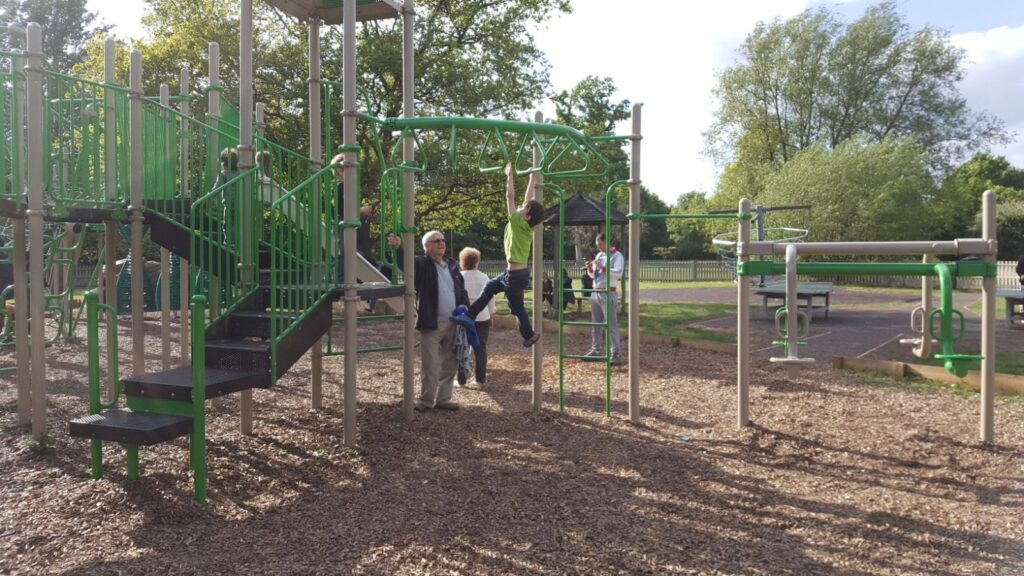
Teach your kids to use the monkey bars
Are children’s monkey bars a source of fear or fun for your child? For some kids, playing on the monkey bars is a thrilling test of balance and agility. For others, they may be a source of stress — because they’re afraid, or because they find them too challenging.
Whether your child is afraid or simply needs practice to master the monkey bars for kids, there are ways to help them feel more confident and comfortable. The key is creating an appropriate environment in which your child feels safe to experiment with new skills. Here are some ways you can teach your children to use the monkey bars.
Are monkey bars easy?
Actually no. Monkey bars require a rock-solid grip and a good use of bodyweight momentum. Also, you’ll need mental strength to get you past each bar when you feel the ache setting in.
Set the stage
If your child has a high level of fear about using monkey bars, the first thing you’ll want to do is create an environment that’s as safe as possible. This can help reduce the anxiety associated with the bar. You can do this by finding a playground with a safe set-up. Ideally, you’ll find playgrounds that have a soft surface, like natural sand or wood chips.
This will make them less jarring on joints and sensitive parts like knees and elbows. If you’re at a park with a harder surface, you can also put a mat down to provide some cushion. You can also ask the playground supervisor if they can turn down the volume on the surrounding playground equipment.
How to use monkey bars – Go slow: start with holding and balance poses
If your child is afraid of the bars, start by having them hold their position at the bar for long periods. This will help them get comfortable with their position and the feeling of the bar underneath them.
Try saying something like:
“OK, you’re holding the bar. Try to stay still. See how the bar feels in your hands. Try to focus on being still.”
This will help them feel more grounded at the moment and less anxious. You can have them practice this before they climb, or while they’re holding the bar.
While they’re holding, you can also encourage them to look at the ground and keep their head still. You can also have them focus on a specific point on their body, like their feet or the space between their toes.
Have your child choose a hold they’re comfortable with
Some kids will naturally gravitate towards one type of hold or another. Others may be less sure of what they want to try. This is where you can have your child decide for themselves which hold they want to try.
You can ask them:
“What do you think would be the easiest hold to start with?”
Or
“What do you think would be the most fun hold to start with?”
If your child is feeling unsure of themselves, you can help them choose a hold that’s easy to start with.
This can give them the confidence boost they need to feel ready to move on to more challenging holds.
Encourage your child to try new positions while holding
As your child feels more comfortable, encourage them to try different positions while they’re holding, like extending their legs straight out in front. Or bringing their legs up towards their chest. You can also encourage them to swing. This will help them get a better sense of the momentum of the bar.
You can also encourage your child to see if they can move their legs to the other side of the bar. This can help your child feel more in control of the bar and more familiar with the way it moves.
When you’re ready, have your child shake out their arms and legs
Before you let your child walk along the bar from one end to the other, have them shake out their arms and legs to help them release any extra tension in their muscles. This will reduce the risk of injury. And it will help them stay focused and relaxed.
You can say something like:
“OK, now shake out your arms and legs. Loosen up. Get ready to walk on the bars.”
This can help your child stay focused on the task at hand and reduce the chance that they’ll get overwhelmed or anxious.
Have your child walk along the bar from one end to the other
Once your child is relaxed and focused, they can walk along the bar from one end to the other. This will help them become more familiar with the way the bar moves and gain a better sense of balance.
You can say something like:
“OK, now you can start walking on the bars. Let’s try to walk all the way to the other side and back.”
Then encourage your child to focus on moving their legs to maintain their balance.
Give them a boost so they can jump up on the next bar or platform
If your child is ready to move on to the next bar or platform, you can give them a boost to help them get there. Have them hold on to the bar below them and have you hold on to their legs so they can focus on using their upper body for the jump.
You can say something like:
“OK, hold on to the bar below you. I’ll hold on to your legs. Ready? Jump up.”
Then help them lift their knees to give them a boost, and give them a little a push so they can get up onto the bar above them.
Bottom line
Monkey bars for kids are an ideal way to help your child build strength, agility, and confidence. By finding a safe setting, either at home or at the playground, you can help to reduce the anxiety of your child.
While it’s important to set the stage for a successful experience, it can sometimes be helpful to encourage your child to go slow and steady. This can help them build the confidence they need to master a challenging skill.
If your child is afraid of the bars, then it may take some patience and creativity to help them overcome their fear. It’s a personal choice, so don’t force the process. With the right approach, i.e. take a backward step and view from afar how your child is before you proceed, then they can learn to appreciate the joy of this fun play structure.
FAQ
Are monkey bars banned?
No, but there have been some talks of getting them banned because they can be dangerous. More information can be found here.
Are monkey bars good for you?
“Swinging forward and backward with their legs tucked up helps children improve and develop the right posture. They will also improve body strength at the same time. In the meantime, they also train to attain full control over their balance and hand-eye coordination.”
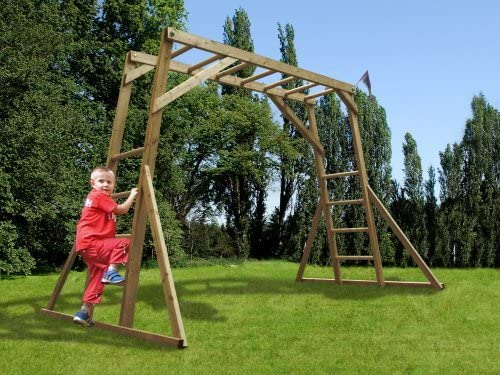
Dunster House Kids Monkey Bars Pressure Treated Childrens Wooden Climbing Frame UK. Buy from Amazon here*
Can I buy a kids monkey bars kit from Amazon?
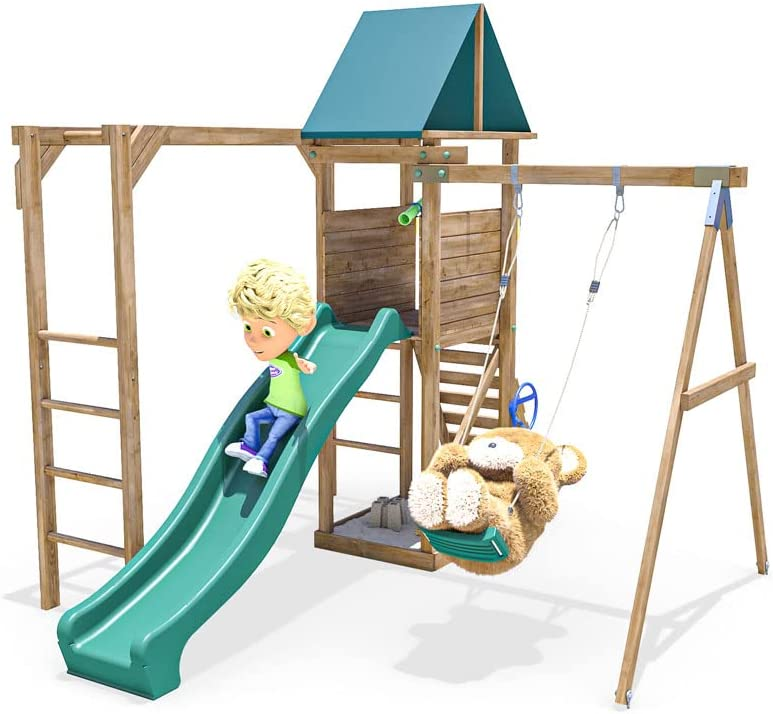
You can get swing sets with monkey bars for your backyard from the Amazon shop like this one* which also has a playhouse too! Make sure you have the right height and width in your garden to house all the accessories as well. You can hire someone to come to your home to build this for you, but remember, the installation might not be free. So be sure to factor in all the costs before you buy.
Monkey Bars Climbing Frame Pressure Treated Playhouse Wave Slide Swing Set – MonkeyFort® Wilderness. Buy from Amazon here*
I have old monkey bars, which haven’t been used. Can my child still use them?
You need to make sure that the bars are safe to use. Is there any rust? Any breakages? Make sure the bars are safe before your child uses them.
Are monkey bars a good workout?
“Many of us have plenty of experience playing and swinging on monkey bar when we were young. Other than it being fun, the strength needed to use the monkey bars is also a great form of exercise. They are extremely effective for building on core and upper body strength.”
The bars are extremely effective at building upper body and core strength, so it definitely helps to build muscle.
Are monkey bars good for shoulders?
“Swinging on monkey bars, or any implement, is a fantastic way to strengthen your grip, develop your lats, and improve your posture. It also provides decompression on your shoulder and is a great way to train your scapula to function properly.”
“While pull-up bars may not directly work in increasing your height, they actually help in improving the overall posture which helps an individual look taller.”
See above. The bars can help improve your posture and make you appear taller.
Do monkey bars work biceps?
See above under the question where the bars help build muscle.
Is monkey bars a good workout?
See above.
Are monkey bars dangerous?
The bars can be dangerous if not used properly. Read the above article and take it easy. Always maintain good posture and cushion the ground under you.
Is monkey bars aerobic or anaerobic?
The bars are mostly an aerobic exercise (as it’s a good cardio) and are a great workout.
Are monkey bars good for adults?
Absolutely! When done safely, the bars are great for kids of all ages.
*Collaborative feature post*
Helping your child write their personal statement skills in their CV – Mindscreen Review – Part 8
*This post and the proceeding/subsequent posts in the series are sponsored by Mindscreen – an online mental health and wellbeing tool which guides children towards higher self-esteem, at home or in the classroom.*
In Part 1 of our Mindscreen Self-Esteem Series, I talked about how to spot the signs of low self-esteem in your child by using an online tool called Mindscreen. If you haven’t done so already, please read the following articles in the series first:
In this article, we deep dive into Lesson 7, easyCV, which is about giving your child the opportunity to prepare the most important part of their CV, their personal statement. We will also go through the “dos” and “don’ts” in CV writing.
BEFORE YOU START
Please note – you need to purchase the Mindscreen Experience to access these lesson plans. Follow the link below to get 10% off your Mindscreen Package now.
A CV (short for Curriculum Vitae and otherwise known as a resume) is a brief account of a person’s skills and characteristics, education, qualifications and previous occupations.
In this lesson, I helped the boys prepare their own personal statements using statements in their “About Me” section in their Mindscreen Profile. We also went through a simple CV template and how to write a CV (as well as how NOT to write a CV).
I explained to the boys that a CV includes:
Personal statement
Personal skills
Characteristics
Education
Qualifications
Previous jobs – (I assured the boys that they don’t have any jobs right now but when they’re older, they’ll be able to add to this part in their CV.
How do you write a personal vision statement?
We got straight into the lesson by explaining to the boys that we were going to write the personal statement part of their CV. A personal statement is the most important part of a CV because it shows employers what their skills are and tells the employer something that’s real about them. It also highlights their dreams and ambitions, i.e. what they aspire to be.
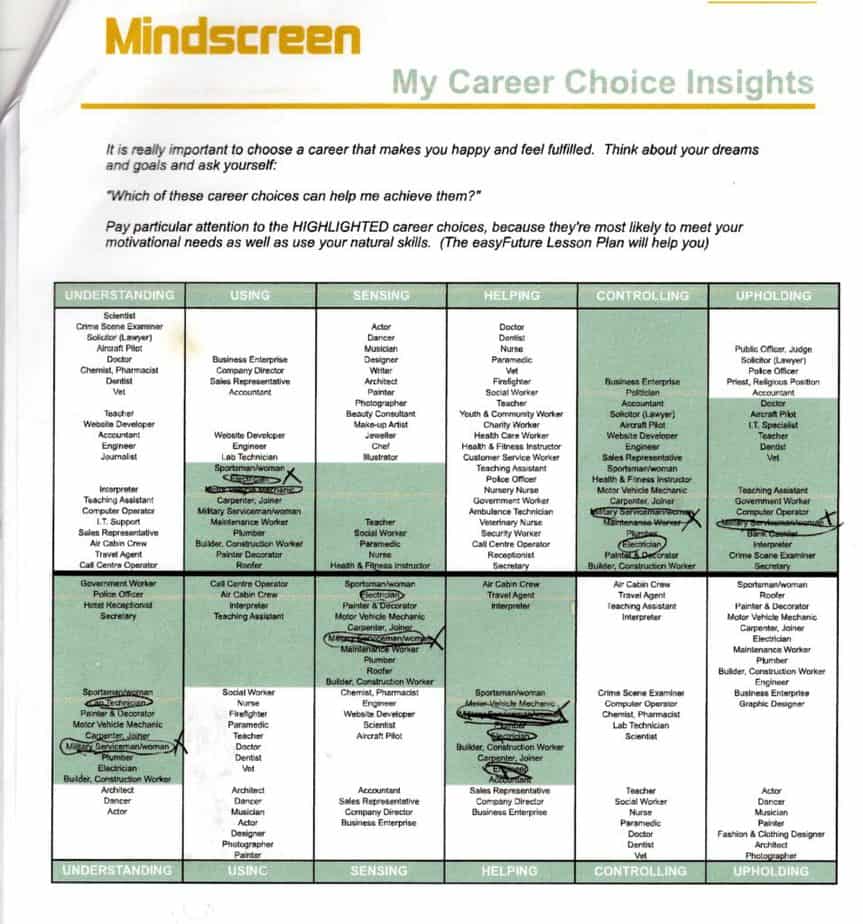
We wrote down a selection of jobs together and I invited the boys to select one job they would like to do from the list. I reminded them they could choose more career options in their “My Career Choice Insights” page in their Mindscreen experience profile.
Aron picked Police Officer and Aidan picked YouTuber.
About Me
The boys turned to their “About Me” section in their Mindscreen Profile and I asked them to pick three of their most positive statements related to the job they chose.
Aron picked:
“I want to be seen as a winner and I want to succeed.”
“I sometimes have big visions that seem extreme to other people.”
“I respect winners and those who achieve great things.”
I struggled with Aidan because he didn’t want to tell me what job he chose. Finally, after sitting down and chatting with him, he said he found the whole project very difficult. So we went through all the statements together. Eventually, we picked:
“I prefer limited supervision, therefore I like to be left to get on with the job.”
“I like to be in control of my own destiny and choose my own way in life.”
“I may get my own way more often if I learn to be less demanding and dominant.”
We then discussed how we were going to combine these three sentences to create our personal statement for the job they chose.
Eventually, we managed to write about Aidan’s skills (I wrote out a personal statement example for him) and we combined them into a personal statement for both.
What do I want to achieve in my life?
I asked the boys to think about what they wanted to accomplish in life and to answer the above question, “What do I want to achieve in my life?”
Aron – “Victory and proudness”
Aidan – “Self-belief”
I asked them more questions to help them answer this very difficult question.
“What do you see yourself doing as an adult?”
“Do you want to help people?”
“Do you want to solve crime?”
“Do you want to make the world a better place for your family?”
“Do you want to be rich?”
Aidan wrote “I want to achieve 500,000 subscribers”
Aron wrote, “I want to actually be able to get a house and have money to pay for my family.”
I then asked the boys how they would describe their goals and ambitions as part of their personal statement in a way that is relevant to the job they chose?
Aron wrote, “To achieve a crime license, I should study online and get paid to investigated who murdered people.”
Aidan wrote, “My goal is to get rich and get a house and a car.”
So, we were getting there slowly, but the boys still hadn’t grasped the point of a personal statement. I struggled with this part of the lesson because they knew what they wanted to do, but they found it very difficult to connect their skills to the jobs they chose.
We had a long chat about what CVs meant in the professional world as I had an inkling it was because the boys didn’t fully understand the point of the lesson. After about 20 minutes Aron got it and did a much better job of explaining how the personal statement worked by combining the three statements that Aidan picked and we eventually got Aidan’s personal statement sorted. Well done to Aron for explaining it in a way I couldn’t!
CV template
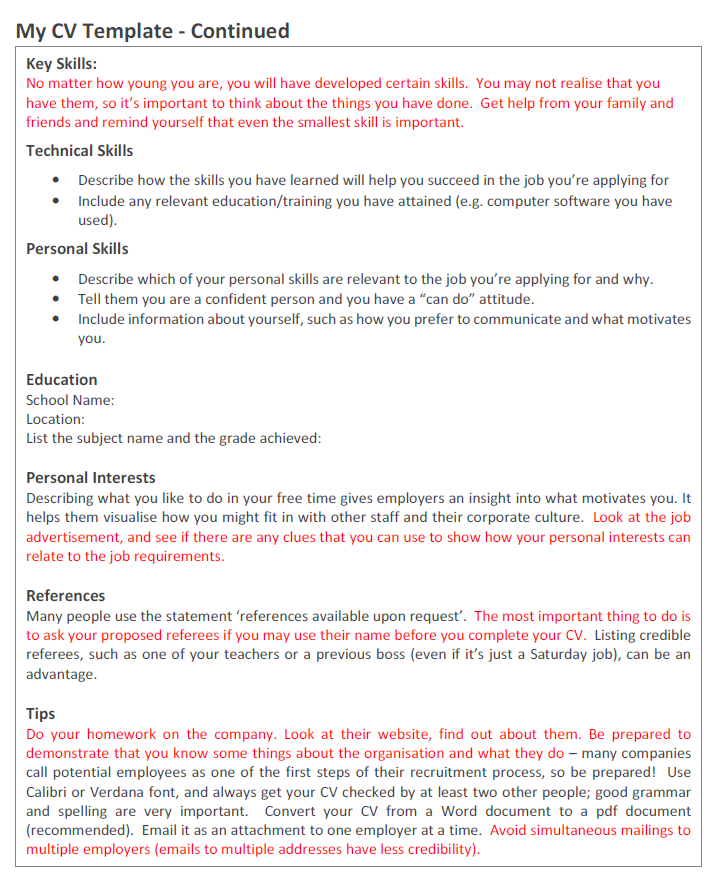
We moved on to look at a CV template that was provided by Mindscreen (see below).
I showed the boys the above CV template and explained the structure as well as the do’s and don’ts for CV writing, for example, using a professional email address like your name rather than a silly one like above. The boys were fixated on the naughty email address though.
I then went through the job personal statement template. I advised the boys that it’s especially important to get the CV right because then they’d get invited to an interview. The example personal statement helped the boys put together what I had earlier taught in the lesson.
I explained that the boys’ job history may be empty now but under Personal Achievements and Key Skills, they can add transferrable skills like working on their website or working for mum until they populate their CV with jobs later. I also showed them how organising and tidying their rooms every day was a personal achievement because it showed they were focused and had a tidy mind.
I asked them to think about what other skills they had at home they could put on their CV. Aidan said changing Ayla’s nappy which was a great skill to have as it showed Aidan could be trusted with fundamental jobs in the workplace and Aron said looking after his siblings which I also explained was a fantastic skill to have. It showed that Aron was a leader and he could manage a team well.
We went through some important tips too like always doing your homework on the company you’re applying for and how to personalise the CV for the employer.
How did we get on with Lesson 7, easyCV?
We struggled at the beginning because the boys found it difficult to get in the lesson. I realised that the topic of CVs being a completely new phenomenon had something to do with that, and so I took the time to explain it (Aron explained it much better than me!) and they eased up afterwards. It was fun going through the CV with them and working out where they could add to their CV.
How long was the lesson supposed to be?
30 – 40 minutes depending on the level of engagement with your children and the number of children in the lesson.
How long it took us
It took us almost two hours to complete the lesson, but we had a slow start. Plus, we engaged in lots of discussions which I think is invaluable so your children fully understand why a CV is fundamental to success in their chosen careers.
What did I want the boys to learn in this lesson?
The boys need to understand that it’s not just about going out, finding a job then starting. For every role they apply for, there will be competition, so they need to ensure they have an attractive CV which accurately portrays who they are and what they can do on paper. Their personal statement is especially important when they are so young and they don’t have much/any work experience because it shows employers what interests them.
They want to display themselves in the best way possible to increase their chance to get invited for an interview. I assured them that me and their dad will be there to help them with their CVs whenever they’re ready.
Top tip – You must research your employer first and change your CV every time you apply for a job. You can also use the tips above for when filling out a university application too (or any other application for higher education).
What did I learn from this lesson?
I learned how to properly construct a CV! I wish I had a lesson plan like Mindscreen when I was growing up. I probably would have had far fewer rejections!
I also think kids should be given an introduction on how to write a CV at school and be taught how to write a personal statement for university and beyond, so they are prepared for life after education.
What’s next?
In the next lesson, we’ll be looking at Lesson 8, easyFuture and easyFeedback which is the last lesson in the Mindscreen series.
Teaching your child how to choose a career they will enjoy – Mindscreen Review – Part 7
*This post and the proceeding/subsequent posts in the series are sponsored by Mindscreen – an online mental health and wellbeing tool which guides children towards higher self-esteem, at home or in the classroom.*
In Part 1 of our Mindscreen Self-Esteem Series, I talked about how to spot the signs of low self-esteem in your child by using an online tool called Mindscreen. If you haven’t done so already, please read the following articles in the series first:
In this article, we deep dive into Lesson 6, easyCareerChoice, which is about helping your child identify career options that they are more likely to enjoy. We will also go through helping them recognised the importance of taking action to achieve their aims and career goals.
BEFORE YOU START
Please note – you need to purchase the Mindscreen Experience to access these lesson plans. Follow the link below to get 10% off your Mindscreen Package now.
easyCareerChoice is an extension of easyStudyChoice which helps your child identify career options they are more likely to enjoy. This lesson will also assist them in recognising the importance of taking action to achieve their aims and career goals.
“To find the job that suits you and the right options to use,” Aidan responded.
I advised that this lesson was a continuation of what they learned in Lesson 5, but in this lesson, I was going to help them pick their career options based on their skillsets.
I also reminded them not to stress about not knowing what career they wanted to choose yet because they are still very young. But it was a good idea to have something in mind and be actively thinking about it already – the younger they start pursuing their careers, the more successful they will be later on.
I asked the boys to turn to their Mindscreen Profiles so they could take a look at their ‘My Career Choice Insights’. I then asked them to circle two careers they were interested in, in each of the shaded areas in the six columns provided.
We talked about the different career options and both seemed interested in the military serviceman role. But after I explained what they had to do, i.e. getting up early to exercise and being prepared to head to war at any given moment, Aron changed his mind. Aidan was still considering it.
The boys picked one career in each column they found interesting and recorded six of their chosen careers in their Learner Diaries:
Aidan wrote three – Military Serviceman, Electrician and Lab Technician. He felt the other career options weren’t for him.
Aron picked Police Officer, Roofer, Sportsman, Painter and Decorator and Firefighter, which were interesting subjects to pick! Aron loves drawing and painting, so the Painter and Decorator role seemed like a suitable career option to keep in mind should he want to pursue his painting career.
I then asked the boys to select just one of the career options from their chosen selection. Aidan picked Military Serviceman and Aron picked Police Officer.
Interview time!
Instead of me interviewing the boys, the boys would get the chance to be interviewer and interviewee this time, and ask each other questions related to why they picked that certain career option.
Aron went first.
“So why did you pick military serviceman?”
Aidan – “Because I like the sound of it?”
Aron – “Do you know what skills you need to do?”
Aidan – “To be brave, to be careful.”
Aron – “But why did you pick military serviceman?”
Aidan – “Call of Duty?”
Aron – “The game?”
Aidan – “It got my mind to it.”
Aron – “Can you use a gun?”
Aidan – “No.”
Aron – “Well, Call of Duty is not like Military Serviceman. You will have to use a real gun.”
Aidan – “I don’t want to use a real gun.”
Aron – “Then I don’t think the Military Serviceman is for you.”
Aidan – “No.”
Aron – “Do you want to pick something else?”
Aidan – “I don’t want to be an electrician though!”
Me – “Ok, well let’s leave it for now. Why don’t you interview Aron?”
Aidan perked up – “Ok!”
“What did you pick?”
Aron – “Police officer.”
Aidan – “Why did you pick police officer?”
Aron – “It’s because I can be a good detective.”
Aidan – “What skills do you need?”
Aron – “To find out the mystery.”
Aidan – “And what would you use the mystery for?”
Aron – “To write everything down. So, for example, if someone killed someone, they were trying to get out of it by making up a story. I would write everything down and work it all out. So, say if they said, ‘my battery ran out and then I went to this alleyway and found a dead body,’ I would say, but if your battery ran out, how would you call me?”
Aidan – “But what would you use to find out though?”
Aron – “A magnifying glass, a pen and a notepad.”
Aidan – “But what kind of skills do you need to be a detective?”
Aron – “I will use my magnifying glass to search for a weapon.”
Aidan – “And what about how many doughnuts you’re going to eat?”
Aron – “1,500!”
Aidan – “But why did you pick that career?”
Aron – “I want to solve crimes.”
The boys did a great job interviewing each other and once they were done, I asked them to turn to the ‘My Skills Insights’ in their Mindscreen Profiles, so they could take a look at the shaded areas and check which skill suited their favourite career.
Aron picked out skills like problem-solving and decision making which were great choices, while Aidan picked out skills like leadership and efficiency. I asked them to record the skills they picked in their Learner Diaries.
Where can you find more information about your chosen career choice?
We discussed where the boys could find more information about their chosen career options and they came up with some great ideas:
Google it
Job Centre
Government careers website
Police website
Speak to people already in the job
I asked the boys to think again about whether their chosen career suited them. Did it sound like their type of career? Did it suit their skills?
Just do it!
The last activity in the lesson was all about showing the boys that determination is the key to success.
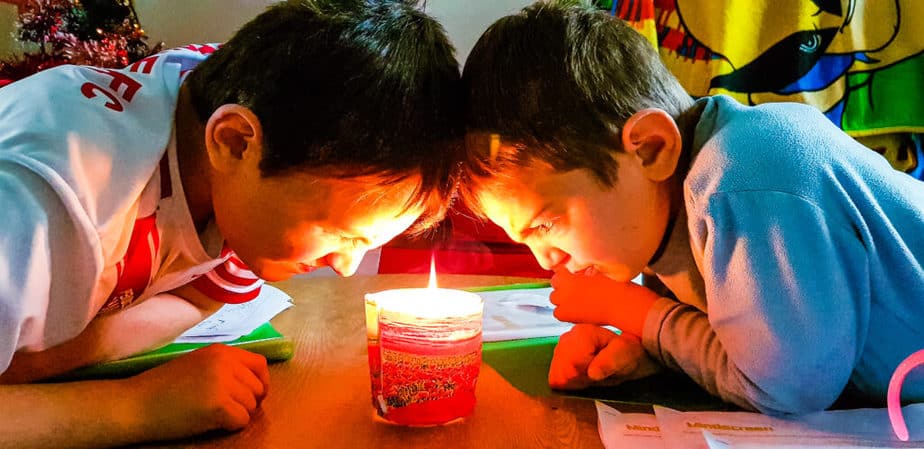
We humans are highly intelligent beings and have a brain no computer in the world can ever reproduce. To prove what I meant, I lit a candle and asked the boys to use their brains to put the candle out without blowing it out.
They first stared at the candle for a few seconds then they started to think smart. They took a piece of paper and fanned the air around the candle. They also blew through their nose and used pieces of plastic. Aron finally put the candle out by waving his hands to create wind.
I asked them if they knew what the candle activity represented.
Aidan – “It means that our brain is smart and if we use our minds to think of something we can put it out.”
If you know someone who has a great idea but they never did anything about it, putting out that candle is taking action. And you have to take action to achieve your aims.
We played the candle experiment a few more times before we closed the lesson with a review of what we learned today, which was to take action on your career and to not just expect it to fall on your lap.
Aidan – “Can I tell you why it’s really important? Say you pick a job and then you get really bored with it and you’ve had to pay all that money to go somewhere else then you’ll be sad. So you have to think of a job you want to stay in and take action so you actually do that job!”
Aidan got it.
How did we get on with Lesson 6, easyCareerChoice?
It was another great lesson with minimal resistance from the boys. They especially loved the candle experiment and enjoyed using their brains to put the candle out in as many unique ways as possible.
How long was the lesson supposed to be?
30 – 45 minutes depending on the level of engagement with your children.
How long it took us
Over an hour but we engaged in a lengthy discussion which was needed to explain some of the career choices.
What did I want the boys to learn in this lesson?
I wanted the boys to learn that it’s really important to choose a job that matches their skills and interest so it’s therefore fundamental they know what they’re good at so they can choose the right job for them. If they pick the right job then it won’t feel like work and they’ll be happy later in life because they followed their passion. It’s also important that they know how to get information about their careers and work hard to achieve their goals.
What did I learn from this lesson?
The boys were really interested in working in the army at first which I did not expect. But, I’m not fully convinced they understood what being in the army really entailed. I also was surprised to see how engaging they were in this lesson. I thought career choices would go over their head because they’re so young, but they got the importance of picking the right career to help them live a happy and fulfilled life later. I’m proud of them for being so grown already.
What’s next?
In the next lesson, we’ll be looking at Lesson 7, EasyCV, which is about providing your child with the opportunity to prepare the most important part of their CV, their personal statement. We’ll also go through the “dos” and “don’ts” in CV writing.
Why self-awareness is important to build your child’s self-esteem – Mindscreen Review – Part 2
*This post and the proceeding/subsequent posts in the series are sponsored by Mindscreen – an online mental health and wellbeing tool which guides children towards higher self-esteem, at home or in the classroom.*
In Part 1 of our Mindscreen Self Esteem Series, I talked about how to spot the signs of low self-esteem in your child by using an online tool called Mindscreen. Mindscreen offers insight into a child’s personality to spot the signs of low self-esteem and offer detailed lesson plans in key step-by-step areas to boost their confidence and ultimately their self-esteem. If you want to learn more about what Mindscreen can offer, please head to Part 1, which I urge you to read first before you continue with this article.
In this article, the first step of the Lesson Plan is to head to the first lesson of the Mindscreen Experience, easyAwareness, which is about helping your child build their self-awareness through discovering more about their unique characteristics.
So, let’s get started!
Please note – you need to purchase the Mindscreen Experience to access these lesson plans. Follow the link below to get 10% off your Mindscreen Package now.
Each lesson plan will have a Parent-Carer Guide which you keep with you to prepare and host the lesson and a Learner Diary for the child to read and fill out during the lesson.
There are nine lessons, which are:
EasyAwareness
EasyBelief
EasyConfidence
EasySkills
EasyStudyChoice
EasyCareerChoice
EasyCV
EasyFuture
EasyFeedback
Each lesson lasts around 30-40 minutes (some last around 60-80 minutes depending on the number of children. If the lesson has a different duration it will specify how long it will take.) The parent guide provides enough detail for you to prepare for your lesson before you start, from detailing the lesson’s objectives to the resources needed and the order in which you take the lesson.
Lesson 1 – EasyAwareness
In this lesson, me and the boys discussed the importance of learning about their personal characteristics to build their self-awareness.
So, let’s get started!
What is self-awareness?
EasyAwareness is the first of the nine lesson plans which is all about providing your child with the opportunity to learn about their personal characteristics and begin building on their self-awareness. We want to help our children become more aware of their own natural behaviour and how others see them too.
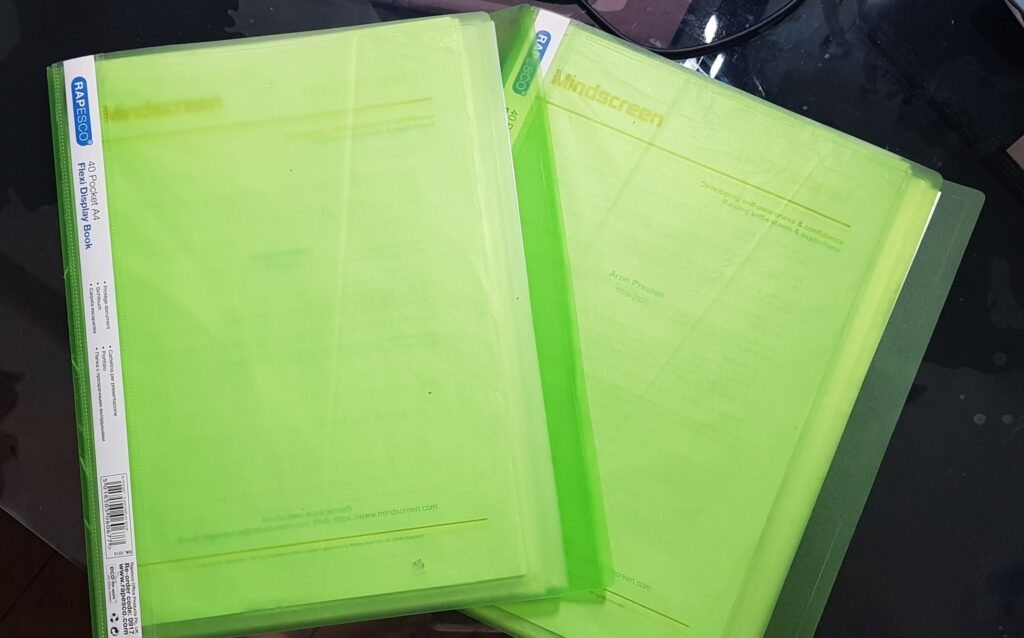
I showed the boys their folders which I created especially for their Mindscreen Experience. Each folder housed their Mindscreen Profiles and Learner Diaries.
The boys were very intrigued by their special green Mindscreen Experience folders and wondered what it had to do with them sitting down and having a lesson with me outside of school hours.
I introduced Mindscreen as the website they used to complete their questionnaire to find out more about themselves.
Aidan (8) chimed in.
“That’s not good, we are going to get reported!”
“Why?” I asked.
“Because people will steal our information!”
Ah! He thought we were going to write about his date of birth, address and phone number! At least he was on the ball with online fraud.
I reiterated the reasons why self-awareness is important, i.e. that finding out about themselves meant learning about natural skills and strengths, as well as weaknesses and building their emotional intelligence so they can build confidence and experience success in life – and this meant learning more about their personality and characteristics.
“But it’s still bad to give away that information.”
“No, Aidan, the information is related to you personally and won’t be shared with anyone else but us, and only if you want to, as well as the owner of Mindscreen who won’t share it with anyone else. The website is protected.”
Aidan sat back with a reluctant look on his face.
“How do I learn about myself?”
“Let me explain so you understand what I mean and I promise you will feel better about it. Paying attention will help!”
The boys stopped messing about with their baby sister and Aidan nodded his head in silence while Aron (9) darted his eyes between us like ping pong balls at a table tennis match.
“I promise you, this lesson is very interesting! Once you start going through your Mindscreen profile you will be shocked at how much you will find out about yourself. And knowing about yourself can help you become great leaders one day! Anything is possible, ok?”
The boys perked up a bit.
I asked the boys if they remembered completing the questionnaire, where they had to drag and drop boxed statements about themselves, with the most like you at the top and the least like you at the bottom, for example ‘I am energetic’, ‘I am fun’, ‘I like people to leave me alone’.
“I am fed up of working all time,” Aidan said.
“Yes, something like that,” I replied.
I opened up my parent guide and read through briefly what I needed to do (Both Mindscreen and I advise that you read and prepare the lesson before you get started, so you don’t waste time faffing about).
Your Mindscreen profile starts with the following:
“Ready, steady, go! Do not wait for a second longer! Start figuring yourself out now, while you are young!
Knowing yourself is vital because it helps you to recognise what you get passionate about and what you love to do. Doing what you love makes you happy! Learning about your own natural skills is important too because later you can choose study and career paths that use your skills! The more you know your strengths, the more your self-confidence and self-belief will grow!
Your Mindscreen experience® profile is UNIQUE TO YOU.
It is full of insights that will help you to better understand:
* Yourself – How your friends, family, and other people see you
* What your dreams and goals are
* What study and career paths you are more likely to enjoy
* What things make you happy and feel fulfilled
Remember, you can learn even more about yourself with these fun Lesson Plans: easyAwareness | easyConfidence | easyBelief | easySkills | easyStudyChoice | easyCareerChoice | easyCV | easyFuture”
Once we talked briefly about their Mindscreen profiles and what it meant for them specifically, I got into the first lesson, EasyAwareness, and showed them where they could find their learner diaries.
I asked them:
“Do you know who you are and what you want?”
“Yes, I’m Aron.”
“Yes, you know your name. But do you really know who you are?”
The boys looked confused.
“Are you aware of how you act and what your characteristics are? Are you aware of how you are different from other people? “
I explained that being different was a good thing and that the importance of self-understanding meant that you could understand yourself better – understand what makes you angry or anxious about things. It is about being aware of your behaviour, your motivations, your emotions, how you feel etc.
Being aware when someone upsets you and how you feel when you’re upset, and understanding why you behave in the way you behave. For example, If you are loud and talking too much and you notice that you may be upsetting people, you are self-aware. If you are doing a skill really well and noticing the results are positive then you are self-aware.
When you are self-aware you can make changes to your actions to better suit yourself and the situation.
“If you are shouting in a room and you can’t see that it’s upsetting others then you are less self-aware or unaware of what you are doing. Does that make sense?”
Both boys nodded.
Aron asked, “Mum, is this crisp-munching annoying?”
“No.”
“See? I’m aware that this crisp munching may be annoying to some, so I am self-aware!”
“Yes!”
I was getting through – yay!
So now I wanted them to open their minds and accept the lesson as an open lesson where we could talk, interact, discuss, and debate what we talked about. Most importantly, I wanted the boys to take in what was going on in this lesson and understand how important it is to be self-aware.
Ultimately, I wanted them to enjoy learning about themselves because it’s supposed to be a fun thing!
I also mentioned that once we talked about being self-aware there were sections in their learner diaries that they could fill out and keep as a record for reference later.
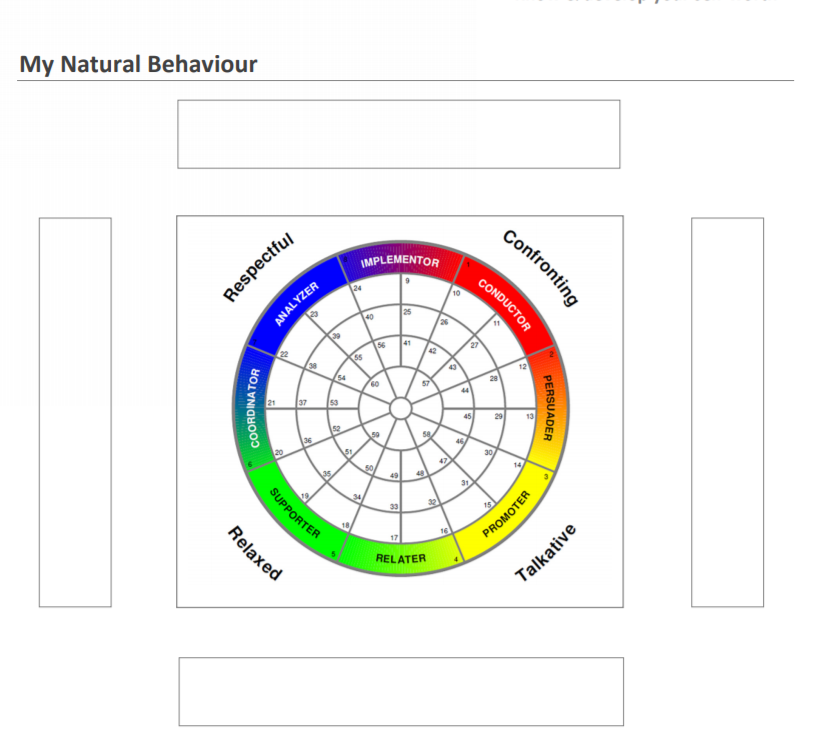
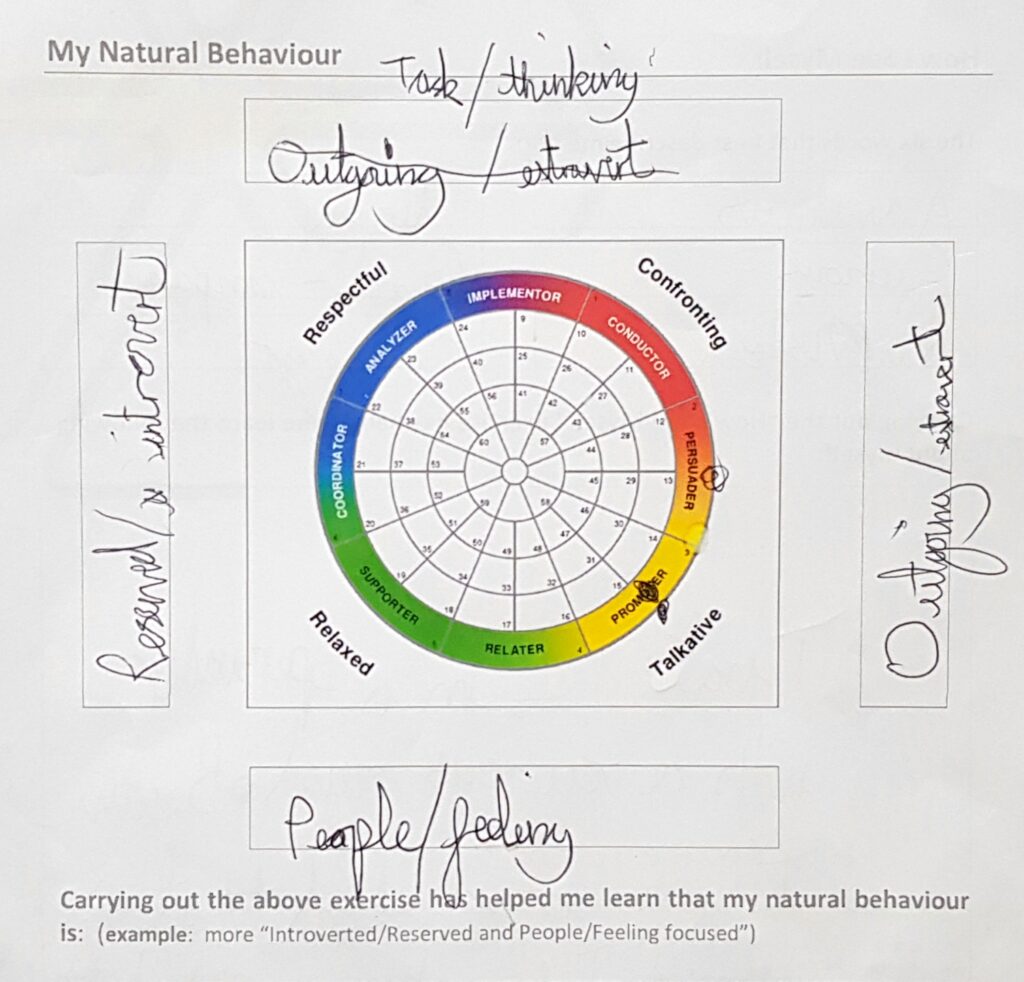
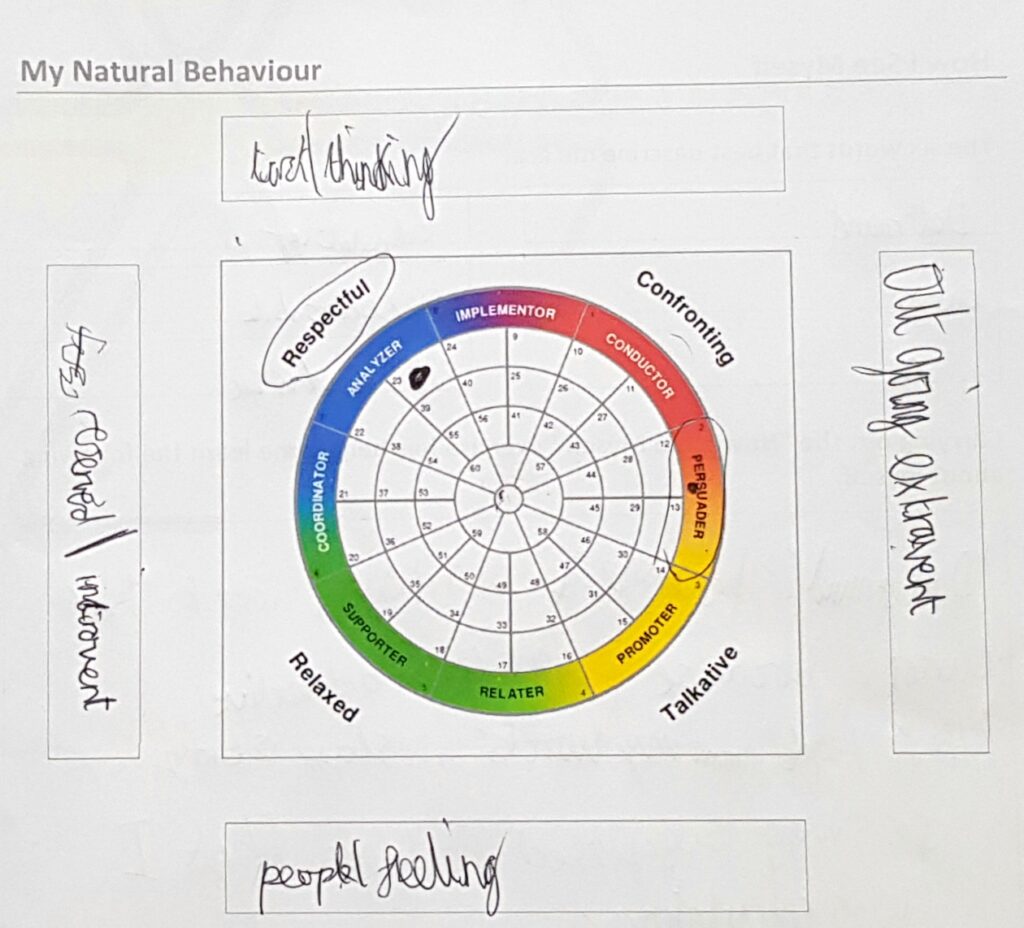
I asked the boys to go to their Mindscreen profiles and look at the “My Natural Behaviour” section.
“So, how do you get to know yourself?” I asked
Both boys stared at me with blank faces.
“Ok. Do you feel you are more reserved or more outgoing? And do you know what I mean when I say reserved and outgoing?”
Aron shouted “Outgoing! I’d rather play in the football match than be subbed.”
“No….”
“I’m outgoing! OUTGOING!” Aidan shouted.
“Reserved means that you’d rather keep to yourself than go out and socialise, for example. If you’re outgoing then you like to spend time with people, go out to parties and socialise that kind of thing.
“What if you don’t like to social distance?” Aron replied.
“Well, everyone should social distance, whether they’re outgoing or not.”
“But if you don’t want to social distance then you’re more outgoing, right?”
“Erm…”
“I don’t really like people, so I guess I’m reserved,” Aidan said
“I have lots of friends, so I’m definitely outgoing,” Aron said
“I have lots of friends!” Aidan cried “So I’m outgoing then!”
“But, even if you have lots of friends you can still be reserved because you may want to keep certain things to yourself and not share everything with your friends.”
“Oh no, now I don’t know what I am,” Aidan said.
“Ok, let’s move on to motivation. What motivates you? Do you know what that means?”
“I feel motivated to quit,” Aidan muttered.
“Ok, what keeps you happy? What makes you want to do the things you do?” I interrupted.
Both boys stared blankly at me again.
“I wake up in the morning and I want to do [blank]. Fill in the word that most applies to you.”
“Roblox,” Aron said.
“Think bigger.”
“Playing on the fields at lunchtime.”
“Think even bigger than that.”
“Being myself?”
“What motivates you in life?”
“Being outside,” Aron replied.
“Ok, we’re getting there. What is it about being outside that motivates you?”
“Playing football, fresh air, being free.”
“Ok!”
Triumph. Aron is motivated by being outside playing football – and being free.
Aidan looked at Aron and agreed that being outside and playing football motivates him too.
I then asked the boys to catch themselves reacting and behaving in certain situations, like when something upsets them, or in a stressful situation, they should note of how they react – catch themselves in the moment
In stressful situations, do you get stressed easily? Are you able to stay calm?
Both boys shouted no.
“Are you happy? Do you feel demotivated? Demotivated means you don’t want to do things.”
“And then ask yourself what caused me to feel this way. What is your current mood? As in your feelings/emotions?”
Aidan responded, “Right, now my feelings are that I want to finish these crisps and go outside.”
I asked the boys to become their own mirror and see themselves clearly.
“But, what if I walk past the bathroom and see myself naked?” Aidan said, looking shocked at Aron.
“Ok, I don’t mean an actual mirror – it’s a metaphor. The metaphor means not a real mirror, a pretend mirror where you are seeing yourself like you are the mirror. Think about what you are like right now. Can you see yourself joking around? What is causing you to feel that way?”
“Ayla [baby sister] is distracting me.”
“Ok, let’s move on to the lesson.”
In the parent guide, the lesson asks you to set the scene in the form of a respected psychologist from years ago, His name is Carl Gustav Jung and he was the first person to describe human behaviour simply. He recognised that, by creating an easy-to-understand behavioural model, people could begin to become more aware of their behaviour.
I told the boys that we will be using this model to help them better understand themselves and to reiterate that different and unique doesn’t mean good, bad, right or wrong. It just means different and unique.
I asked the boys to take out their learner diaries and look at the model that was created. I told them that the fun was about to begin and gave them a pen to get started.
The behavioural model
Aron immediately said, “I am a challenger I would do dangerous challenges like exploring a home where a tiger is.”
I asked the boys to write down ‘Reserved/Introvert’ on the left-hand side of the wheel.
In the right-hand box, I asked them to write ‘Outgoing/Extrovert’
At the top box on the wheel, I asked them to write ‘Task/Thinking’
At the bottom of the box, to write ‘People/Feeling.’
I then asked the boys to place their finger on the centre of the wheel. I again explained what reserved and introverted meant again to ensure they understood.
I asked them to move their finger either to the left if they felt they were more introverted or to the right if they felt they were more outgoing, The further to the end of the wheel they moved their finger, the more reserved or outgoing they were.
It took them ages to figure out what I was trying to say. Eventually, they moved and kept their fingers on the spot while I asked then to think about task/thinking, i.e. they are more task-focused if they liked to think things through, have lists to work through, and tick the tasks off when they are done.
And to move their finger more towards people/feeling if they prefer to be around other people, talk with other people, help other people etc. I asked them to move their finger either to the top or the bottom respectively. I had to remind them to move their fingers to the degree they thought they were either a little or a lot of each.
Aron ended up on the yellow area, i.e. between Outgoing/Extrovert and People/Feeling – right in the Talkative/Promoter section.
Aidan ended up on number 23 in the wheel, more towards the Task/Thinking section, up towards the Analyser/Respectfulblue area.
I asked them to put a dot where they ended up.
The comparison between how you see yourself and what is your natural behaviour and adapted behaviour
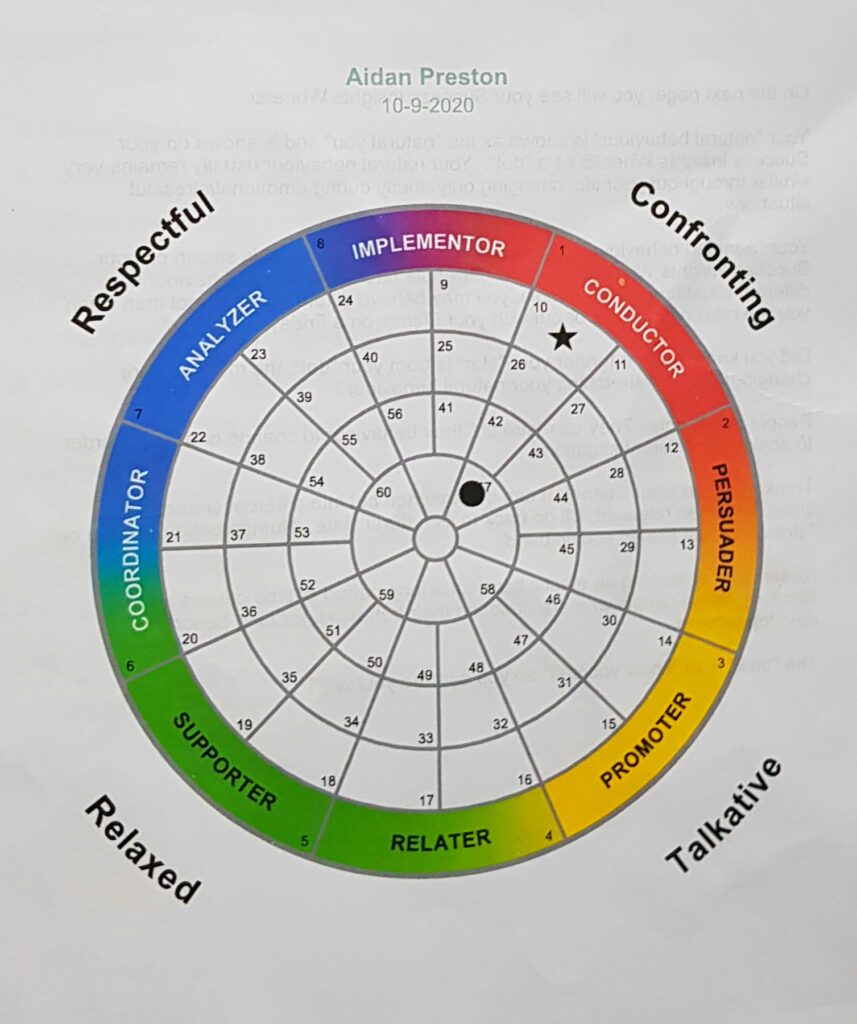
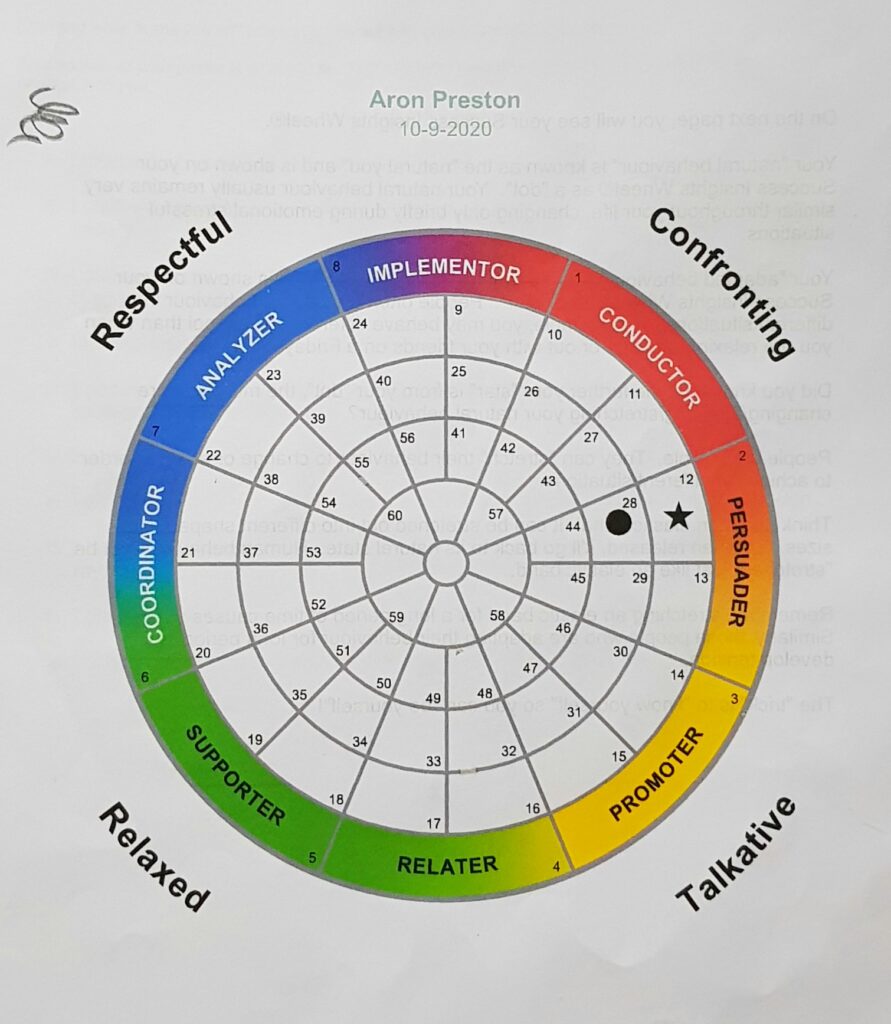
I asked them to turn to the “Wheel” page – The Natural & Adapted Me section in their Mindscreen profiles.
I wanted them to see the difference between how they saw themselves and where their questionnaires placed them on the wheel. I explained in the profile that the dot is their natural behaviour, the behaviour they carry with them throughout life, only changing very slightly to adapt to certain situations.
The star is their adapted behaviour. That means the behaviour they change when they are in different environments. For example, when they are at school their behaviour might be different from when they are at home. In a stressful situation, their adapted behaviour might be different from their natural behaviour.
The results were very interesting.
Aidan’s dot was further away from his star but in the same column. If the dot and star are further apart from each other, then Aidan seemed to be stretching his behaviour to adapt himself to certain situations to be more confrontational and controlling than he likely naturally was.
But Aron’s wheel showed no real change in his natural and adapted behaviour. He was who he was, whatever environment he was in.
Aidan shouted, “This is stupid. I am not argumentative!”
“Maybe not naturally, but perhaps you try to be in certain situations?”
“I don’t know, I’m confused! I don’t understand what any of this means!”
The elastic band metaphor
I asked the boys to think about an elastic band. The elastic band can stretch a little bit to adapt its surroundings, perhaps around a pot. But as the elastic band stretches further, what happens?
“It gets longer?” Aidan asked.
“No, Aidan, it will snap if you stretch it too much,” Aron responded
“EXACTLY!”
“It will snap?” Aidan responded looking like he was about to cry.
“Ok, let’s backtrack.”
I picked up the elastic band again and left it slack.
“Who you are is this. Now focus on the stretchiness.”
“I am not an elastic band!”
“No, but I want to imagine that your behaviour is like an elastic band.”
“What? How can my behaviour be the elastic band?”
“Ok,” I sighed.
“When the elastic band is left like this, is there any strain on it? Is it in its normal resting natural self?”
“Yes?” Both boys replied, still confused.
“Ok, so just pretend for a moment that this natural state is your natural behaviour. Your natural behaviour is like this elastic band. It’s not stretched, it’s in its most relaxed self. You are the most comfortable in your relaxed self.”
“Ohhhhhh….kkkkk?”
“Now look what happens when I stretch the elastic band a little bit. Is it ok still? Can it handle this stretchiness?
“It can handle a lot more stretching!” Aron replied
“Ok, so it’s happy to be stretched this much, right? Now, think about your behaviour stretching just a little bit and by that I mean, you’re adapting your behaviour a little bit to suit whichever environment you’re in, like at school or home etc. Makes sense so far?”
“Yes!”
“Now, think about what will happen if I do this.”
I stretch the elastic far to the point it’s very taut now and the boys wince.
“What do you think will happen?”
“It will snap!” the boys shouted.
“Ok, so the further you stretch your behaviour the more strain you are putting on yourself. Can you tell me why?”
“Because we are not being ourselves!”
“BINGO, ARON, BINGO!”
“And what happens when you are not yourself all the time?”
“We get sad because we just want to be ourselves.”
“HURRAH! You get it!”
“You see it’s not a bad thing to adapt your behaviour slightly to different situations because you’re reading the room and you’re responding in a way that helps the atmosphere of that room. For example, if you’re in a serious meeting, you act more serious to reflect the seriousness of the room. You don’t clown around and jump up on the table even if that’s what you want to do.”
“Now, think about when you are with a group of friends and they are all making fun of someone and you make fun of that person too because you want to fit in. But you like that person or you’re a nice person and it makes you feel sad inside.”
I held the elastic band in a very taut position.
“It hurts you inside that you are doing what you’re doing, but you are trying to adapt your behaviour to suit those so-called friends. Can you keep doing that again and again?”
I stretched the elastic band until it snapped. The boys gasped.
“Stretching the elastic band too far causes strain and it can only handle it for so long before it snaps. Sooner or later, you are going to get depressed. You are going to feel like you will snap because you are fighting to not be yourself, but you can’t do that forever. When you pick a job you hate and you have to work at that job every day then you will start to feel anxious, upset and stressed. Eventually, it will damage your health.”
I asked the boys if they’re the same at school as they are at home and what makes them different.
“I am the same,” Aidan replies, “I always act the same”
“Your wheel says different, though.”
“Maybe when you are at school, you’re a bit shyer so you try to act more strong by shouting?” Aron asked Aidan.
“Wow. Very good insight, Aron.” I reply.
“No. that’s not what I’m like.” Aidan replied with his arms crossed “I am number 57! Number 57!”
I look at the wheel and number 57 is in the centre, slightly towards conductor/confronting.
“Your wheel tells me that in some situations you try to be number 10, which is more confrontational.”
So I asked Aidan when he thought he could become a bit more argumentative than normal.
“What about when you’re on a stage and you’re being asked to present something on a stage?”
“I would just run away,” Aidan replied
“Do you think you might be a bit more serious? Confident?”
“No.”
“Why do you think your star and dot are far away from each other?”
“Because it’s rubbish.”
I finish the elastic band analogy by explaining to the boys they cannot change who they are but they can adapt, as long as they don’t try to change themselves for others.
It took us about an hour to get through this part of the lesson!
What did the boys learn about their natural behaviour?
I asked the boys to answer the question in their learner diaries about how this exercise had helped them learn what their natural behaviour was (i.e. were they more introverted, reserved, people/feeling focused?)
Aidan wrote, “I am a balance of implementer and get tasks done.”
Aron wrote “I am a persuader. I am more extrovert.”
How I see myself
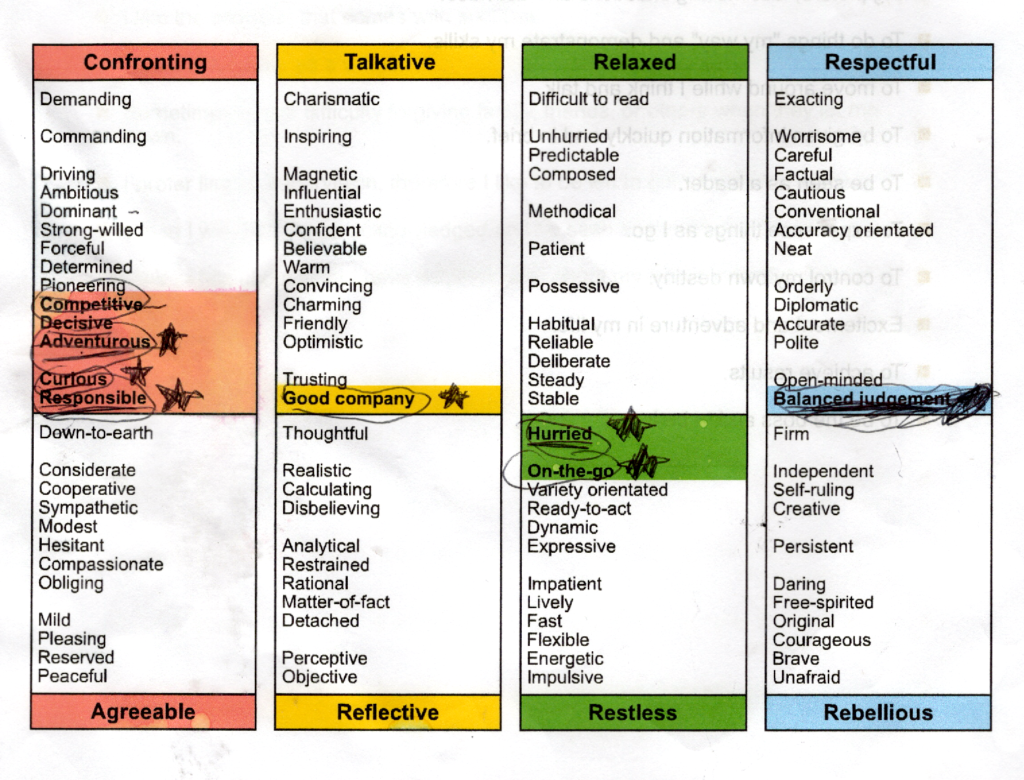
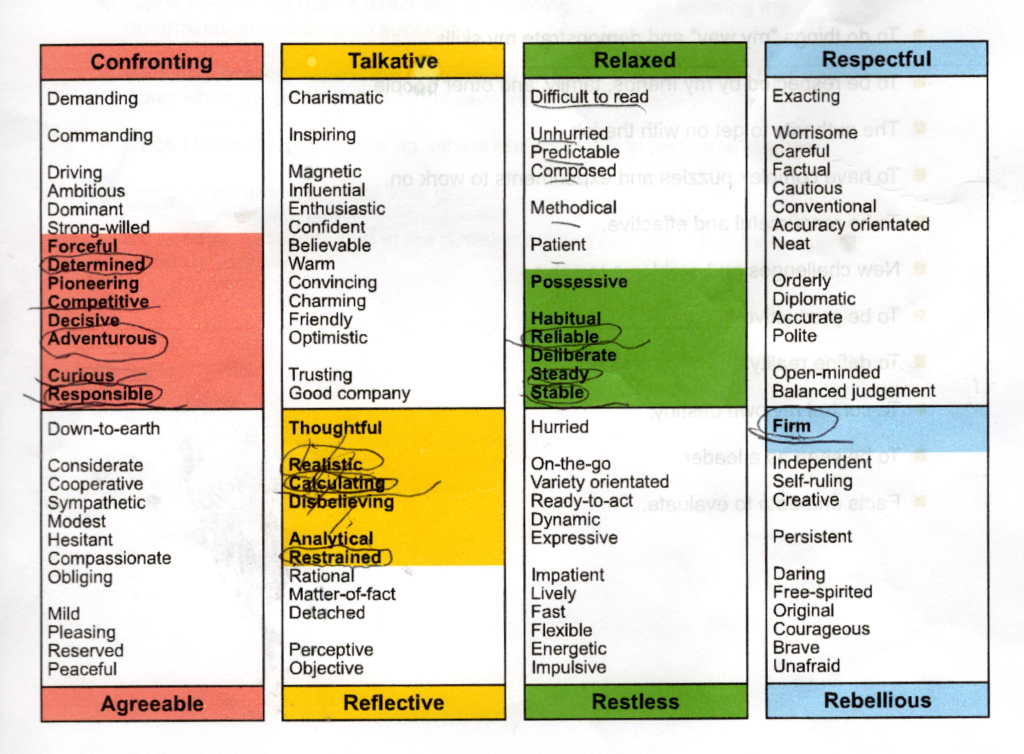
I asked the boys to turn to the ‘how I see myself‘ section in their Mindscreen experience profiles and take a look at the highlighted words in each of the columns. These words reflect how they see themselves. I asked them to circle three words in the highlighted areas from each column which are accurate and positive statements about themselves.
The boys had to ask what some of the words meant, but after a while, they highlighted their three words.
Aron selected Competitive, Good Company, and Balanced judgement
Aidan selected Determined, Reliable and Firm
Then I asked the boys who wanted to be ‘Person A’ and who wanted to be ‘Person B’ where Person A looked at Person B’s profile and vice versa.
The boys were to underline six of the words that described how they saw their brother.
Both boys underlined ‘Responsible‘ for each other which I thought was sweet.
Aidan underlined ‘Adventurous’, ‘Curious’, ‘Responsible’, ‘Good Company’, ‘Hurried‘, and ‘On-the-Go’. Aidan explained that Aron was a nice brother and he was always loving and helpful, as well as very polite. He was also very fast and never stopped moving.
Aron picked ‘Responsible’, ‘Calculating’, ‘Reliable’, ‘Stable’, ‘Determined’ and ‘Firm’ for Aidan because he always wanted to be the best and get what he wanted. Competitive because he takes part in everything and always wanted to win. Responsible because you can rely on him and Calculating because he liked maths.
How I describe myself
I asked the boys to write down the six words that best described themselves.
Aidan wrote “Determined, calculating, curious, firm, responsible and realistic”
Aron wrote “Adventurous, curious, responsible, decisive, good company and on the go.”
I reminded the boys that these traits didn’t mean they were bad or weak, but that they made up their unique characteristics, which is a beautiful thing and being different is fantastic.
But the main lesson here is that if they learn more about themselves they can build their self-awareness, and keep these six words in mind so they can catch themselves when they are like that.
This is not just about working out who you are, it’s about catching yourself and how you’re like when you are at school, when you’re with your friends and when you’are at home.
What I’ve learned about how I see myself
I asked them to fill out the last box ‘Carrying out the “How I see myself” exercise has helped me learn the following about myself:’
Aron wrote “That I am a persuader with a curious mind. I’m so shocked that I’m hurried. It makes me feel shocked.”
Aidan wrote “Determined: because I am ready I can do this. Curious: because I want to be a detective. Firm: people mark my words, and I stay strong. I was surprised to learn that I was calculating. I feel happy when I learn new feelings about myself.”
How did we get on with Lesson 1?
I struggled to get their attention for most of the lesson – either they were distracted by each other or their baby sister who was running around pulling things off the shelf. I also found it difficult to get them to sit on the table with me and listen. They already had preconceived views that this lesson was going to be boring and it wasn’t until the last thirty minutes that they got into it and realised that learning about themselves was fun.
How long the lesson was supposed to be
30-40 minutes
How long it took us:
Over 1 ½ hours
I told the boys that I was looking forward to the next lesson, EasyBelief, because I enjoyed learning more about them. I explained that Lesson 2 will be about exploring how their own beliefs are formed and how those beliefs drive their behaviour.
It was tough but I really did enjoy learning more about the boys.
What did I want the boys to learn in this EasyAwareness lesson?
The most important part of this lesson, in my opinion, was that personal awareness is vital for growth and I really wanted to show them why self-awareness is important for professional development too. I also wanted to show them why self awareness is important in leadership, but at eight and nine years old, they would have had no idea what I meant if I had explained it in that way.
Instead, the importance of self-awareness is to learn how to be more aware of their natural behaviour in situations and how external factors can cause their behaviour to adapt, which is fine, as long as they’re not stretching their personalities and causing strain on their mental health. Why is self-awareness so important in mental health? Because we are most comfortable in our natural state and trying to be someone we’re not can damage us in the long run and lower our self-esteem because we may eventually end up thinking our natural behaviour is not good enough.
Why is it important to develop self-awareness? How can it help you balance your thoughts and feelings?
Why should people be aware of themselves? There are many benefits to self-awareness in humans because it can make us more proactive and encourage positive self-development (Sutton, 2016). Self-awareness also allows us to see things from the perspective of others, and practice self-control, as well as lead us to be better at our jobs and become better communicators too.
Why is self-awareness important in children?
If we can teach our children how to be self-aware when they’re young, we can help them to enhance their self-confidence early which is the whole point to this Mindscreen series. The earlier we start, the more chance they have in succeeding in the path they want to choose.
We also need to teach children how self-awareness is important to their personal growth as it can encourage them to be better people all-round.
What does self-awareness allow you to do that less self-aware people can’t?
Being self-aware can help you take better action towards life decisions and goals. Knowing about yourself means you can play to your strengths and improve your weaknesses – or avoid them altogether. Why is awareness important for children? You can help your child nurture their skills and ultimately find the job that’s better suited to them, allowing them more opportunity to succeed and be happy later in life.
What’s next?
In Part 3, we will be going through Lesson 2, EasyBelief lesson plan where me and the boys will explore how their own beliefs are formed and help them to understand how their beliefs drive their behaviour.
Simple breastfeeding tips to keep baby feeling full for longer
During each first year of breastfeeding (I have three babies), I had an oversupply of breastmilk, especially foremilk, and it often felt like I was feeding for hours on end. I remember one particular incident when I breastfed my eldest for almost three hours while watching two movies back to back. Two hours later, he was hungry again.
Very first breastfeeding experience after Aron’s birth
If you’re breastfeeding and you feel like a human milk bottle, then let me introduce you to Jacqui Nancey, who is a Registered Midwife, Lactation Consultant and Baby care/Sleep Specialist!
Jacqui has created Nature’s Four Course Beginner Breastfeeding Tips and Tricks, which are simple breastfeeding latching tips to help your nursing baby feel full for longer. As well as teaching mothers how to breastfeed successfully, Jacqui also offers advice on the following:
“How do I satisfy my breastfeeding baby? Why does my 6+ week old keep waking every 45-60 mins after feeding for ages on both breasts, yet he wants to feed again each time I think he is asleep and I try to settle him down in his crib? I am exhausted from feeding him constantly and totally sleep-deprived, yet my baby’s appetite keeps growing every passing day and week.”
Walking robotic mum
This mum’s reality of accruing mental stress, daily sleep deprivation, and psycho-social fatigue, is a major risk factor for:
recurring negative mood swings which could lead to postpartum depression, or even escalate to maternal psychosis should the mother be susceptible to mental health risk factors if not properly supported
slow postnatal recovery, or even morbidity after childbirth
the potential for marital conflict and challenging family dynamics
poor mother and baby parenting skills and emotional attachment…
Does stress affect breastfeeding?
Breastfeeding for new moms can be stressful, but increased levels of the stress hormone cortisol can also reduce overall breast milk supply, and delay the let-down reflex of milk release.
Mental, physical, and emotional stress can also have a negative impact on breastmilk supply and quality, as well as hinder the normal function of your breastfeeding hormones, prolactin, and oxytocin, which are produced by your brain’s hypothalamus. Stress can affect the delicate balance between your milk production, milk release, breast milk supply, and the quality richness of your milk.
Benefits of a stress-free experience when breastfeeding a baby
Breastfeeding is meant to relax the mind, soothe the body, and be a comfortable experience overall for mother and baby.
However, if you are feeling moody, tired, or mentally fatigued, then the actual quality and volume of your breast milk will eventually be compromised, from a creamy baby milk texture to a very light and unsatisfying breast milk quality. You may also find it difficult for your baby to latch-on easily at the start of some feeds throughout the day or night time feeding sessions.
Therefore, the more relaxed nursing mothers are, the better their mood and psycho-social well-being will contribute to the creamy QUALITY density and volume of breastmilk, which increases the chances of breastfeeding success.
Here are some other benefits of breastfeeding:
Being happy has a positive impact on breastmilk supply and quality
Happy hormones in your bloodstream are released into your breastmilk, which can directly contribute to your baby’s sense of relaxation and satisfaction from the creamy density of your milk supply. Plus, the sleep-inducing effect of the natural morphine hormone is found in your HIND-breast milk, so you need to make sure baby is feeding for longer enough to get to that back milk.
Follow a good breastfeeding diet and encourage positive family dynamics
Your breast milk volume plus rich quality in terms of its nutritional value, creamy density and baby satisfaction can be improved and sustained by ensuring you are:
➢ Well rested and psycho-socially at peace with your inner self and home environment
➢ Practically well-supported by your immediate family
➢ You eat and drink nutritional meals, foods and snacks
The following brief will focus on three breastfeeding tips (for first-time mothers especially), to experience relaxed breastfeeding from day one:
1. Soothing Breast-Softening massage
The best mind and body-relaxing pre-feed preparation tools for mums
2. Pain-free baby latching
The latch is extremely important to encourage the baby to suckle and enhance breast milk let-down. Latch also ensures breastfeeding enjoyment, so the milk comes easily. Make sure to wipe the baby’s face gently after each feed to prevent a milk rash forming.
3. Satisfying baby at every feed
Use the four-course breastfeeding tricks to satisfy your breastfeeding baby
1. Breast-softening massage
Always start your day with the side your baby does not naturally seem to prefer. By nursing this way, you will naturally ensure that both breasts have a good supply on both sides of your breasts.
Start the breast-preparation massage to relax, soften and ease the breast skin and ducts into pain-free breastmilk release and nursing
Sit comfortably in a well-supported comfy chair. Have a clean hand towel on your lap, plus a bowl of edible sunflower or olive oil next to you if there are no familial allergies
Half-strip only by taking the blouse and nursing bra off on one side of your chest. Start with the breast that produces the lesser from the two. This is because one breast always seems to have bigger ducts than the other, which explains why most babies naturally prefer the faster-flow breast side than the one with the slower flow or narrower ducts
Use a gentle oil salve and rub some oil in both your palms. Gently salve all over the breast tissue
Place one of your wrists within the crest of your torso – to provide leverage with your open palm for the breast to be massaged. ALWAYS MASSAGE ONE BREAST AT A TIME, as massaging both will leave you soaking in breastmilk from the side your baby would not be suckling on.
With the other palm, use the ball of the palm to gently massage the side of your breast from the arm-pit to the areola five times
After these initial 5X armpit massages, use that same palm as leverage on that side of the breast. Then proceed the same gentle massage 5X with the other palm from crest to the areola
Move one palm to support by cupping the underside of that same breast. Then use the other palm to gently massage – always using the ball of your palm – from the shoulder blade to the areola X5
For the finale, simply use the shoulder blade massaging palm to support the entire top-side of the breast. Then use the other ball of the palm to likewise massage the entire underside of your breast by starting from the rib-cage muscle, breast underside right up to the same breast areola
Best times for your breast massage
You can massage your breast any time you feel full and engorged, i.e. from your 3 am – 11 am feeds, as this is usually the time when your breasts will be full, hard, engorged and probably painful to touch
Soft breast skin and a pliable areola means that it is a lot easier for your hungry baby to suckle from your areola
2. Pain-free baby latching
Pain-free breastfeeding starts with the correct attachment of the baby’s mouth around your areola, instead of the baby’s lips and jaws clamping onto your tender nipple tissue.
A good breast-feeding latch-on means that the soft and massaged breast tissue, makes it a lot easier for your baby to open their mouth much wider around the areola, instead of focussing on the nipple alone.
Babies are clever and will quickly notice when the breast is hard to suckle. They will get frustrated because they will find it difficult to fit a hard and engorged balloon into their mouth, hence why they seem to naturally clamp onto your nipple alone, each time you try to nurse them – with full and hard breast tissue.
Parenting Tip: Baby Gas or Colic Relief
Should your baby suffer from the two tummy discomforts, you could offer them some Woodwards gripe water tonic.
Mix 5mls in 3oz of warm boiled water and offer your baby 1oz 30 mins before the 6/7 am feed, 10/11 am and the 5 pm feeds.
3. Satisfying baby at every feed
The Four-Course Breastfeeding Approach is the easiest way to make sure the baby gets to the rich HIND milk during and after every breastfeeding session. The result is a baby who feeds lustily from start to finish and is satisfied after every feeding session. Thus, they have a full tummy and is happily settled plus sleeping well during the day or night breastfeeding sessions. Otherwise, when the baby keeps waking up for small, frequent and short breastfeeding feeding sessions, this type of commonly adapted breastfeeding approach is known as the:
SNACK breastfeeding method.
SNACK-breastfeeding means that although your baby feeds frequently, their overall appetite is not fully pacified, hence why they keep waking up every 45-60 mins throughout the day or night.
Yet for most healthy six-week-old babies, born at term gestation and with no compromising psycho-social risk factors, you would expect to start sleeping for at least 2-3 plus hour intervals in between their day or night feed, which can result in an ongoing cycle of stress and parental sleep-deprivation, the older their baby gets.
However, the Four-Course Breastfeeding Approach is nature’s way to satisfy your baby’s appetite from day one.
If you have ever expressed breast milk and left it to settle for later use in the fridge, you can see the three stages of your breast milk quality ‘titrate’ or separate themselves into three noticeable layers.
When breastmilk is made by the breast milk-making cells known as the acinar cells, the result is a release and increase of breastmilk supply which comes as a combination of three types of breastmilk densities as follows:
Stage 1 – TOP milk
This is the thirst-quenching feed-starter
Stage 2. MIDDLE milk
This is the semi-skimmed milk appetiser
Stage 3. HIND-milk
This is the toffee-rich super creamy nectar
Significantly, even though ALL breastmilk is nutritious, it seems like it is naturally released in three stages, which naturally changes from Stage 1 to Stage 3, as the feed progresses to pacify your baby’s appetite.
Mothers who use the Four-Course Breastfeeding Approach, find that from start to finish, a typical breastfeeding session would naturally last at least 45 minutes of the active baby nursing, taking burping breaks after every 10 mins when needed.
Stage 1 – TOP milk -Thirst-quenching feed-starter
Have you noticed how most babies wake up in a feeding frenzy? This is because they aree feeling both thirsty and super-hungry at the same time.
So nature designed this initial Stage 1 milk to assuage their thirst first. Stage 1 breast is found at the very base of your milk ducts, located at the front of your breast anatomy/areola. This TOP breast milk is very light in colour, thin in density and often has a chalky-greyish hue.
Although it makes up as much as 60-70% of your entire breast milk supply and is very nutritious, its thin density is NOT very satisfying for babies. Which explains why switching sides at the moment your baby stops nursing, will leave most exclusively fed nursing babies feeling constantly peckish – hence the frequent baby-feeding bouts and very limited sleeping episodes.
Quick Tip – COLIC-Relief baby-burping Massage
Once your baby starts falling asleep on the breast after the first ten minutes of their thirst-quenching initial feed, it is your cue to wake them up gently by applying the COLIC-Relief baby-burping massage.
As soon as you have applied the baby-burping colic-relief massage, your baby will immediately wake up and route for a feed. The baby-burping massage naturally quickens the release of breastfeeding into the stomach, instead of the usual 45+ mins it normally takes for this milk to reach the baby’s stomach from the feeding tube.
The beauty of the colic-relief baby burping massage is that it will keep your baby avidly interested, happy, and awake throughout your entire breastfeeding session from start to finish – hence why it is naturally done in-between each of your baby’s breastfeeding sessions.
Instead of switching sides, you are encouraged to latch your baby onto the same side for this second time.
You will also notice that your baby will not be as frenzied in their suckling as in the initial Stage 1 milk intake. This is because your baby is at least 3/4s full from the Stage 1 milk.
Also, Stage 2 milk is creamier in density than the skimmed density of Stage 1 milk. As seen by its light yellowish colour and it is also more satisfying for the baby’s appetite than Stage 1 milk.
Stage 2 milk is therefore called the semi-skimmed breast milk appetizer, since it’s quality of milk richness falls between the very light Stage 1 milk quality of skimmed milk density and the very rich Stage 3 toffee milk.
It is not only the QUANTITY and VOLUME of breast milk that satisfies baby, but it is the QUALITY and RICHNESS of any given feed that pacifies both your baby’s hunger and feeding urges.
Hence why adapting the Four-Course Breastfeeding Approach, results in your baby starting to calm down after another 8-10 mins of taking the Stage 2 milk.
Usually, your baby’s Stage 2 milk intake will last between 8-10 mins of a medium-slow baby feeding pace, unlike the frenzied rapid feeding, pace witnessed at stage 1.
Towards the end of Stage 2 milk, your baby’s feeding pace will eventually slow down significantly until they get to what we call the intermittent baby feeding pace when you will notice your baby begin to feed in bits of tiny suckles in a drowsy state before literally falling off the breast half asleep.
Medical caution
If your baby is unwell, dehydrated or on any kind of medical fluid balance assessments, then very often the volume aspect of your baby’s feeds will be the priority to follow as per your paediatric advice.
Stage 3 – HIND-milk – Toffee rich super creamy nectar
Have you ever noted how thick and creamy this milk density is!
Every single baby loves this Stage 3 milk quality and though every breastfeeding session has it in different measures throughout any 24hr time frame – you can get most of this Stage 3 milk between the 3 am – 12 pm breastfeeds.
It is generally full fat in density, has a sticky texture and is super-sweet, hence why its called ‘toffee sweet’. It also comes with a natural dose of ‘morphine’ properties that are naturally designed to make your baby have a deep sound sleep after every Four-Course breastfeeding session.
Given the rich density and satisfying quality of this Stage 3 breast milk, this session usually lasts only 5-8 mins in total, before your cherub looks pretty dazed and super sleepy.
This is also your cue to change your baby’s nappy immediately after the burping massage. A soothing and gentle warm water nappy change will immediately wake up your drowsy baby enough to keep them contented and alert, before your Fourth Course breastfeeding finale – which will occur from your second breast.
If you try to feed your baby straight after the aesthetic nappy change, your baby will be reluctant to feed so soon, or simply spit up when fed that soon. Hence the 15-20 min mini-break.
Therefore, settling your baby in a recliner, while you grab a snack, shower, or check on your emails gives you that much-needed break away from the feeling of constantly feeding over the last 30 minutes.
Quick Tip
Settling your baby in a gentle recliner will ease your baby’s digestion for about 15-20 mins
Fourth Course – Change Breastfeeding side
Generally, most babies from age 0-3 months post-partum can only stay awake for 1-hour in-between feeds before falling into a deep 2-3 hour sleep, depending on your breastfeeding technique and family home psycho-social dynamics.
This way we start the 3-stage breastfeeding technique on one side A, to begin with, which normally lasts for 30 minutes. By the end of this 30 minutes on breast A, your baby would be at least 80% full and looking like they are ready to sleep soundly.
After 15-20 mins mother and baby take a break, and your baby will start to get visibly restless, sleepy, and unsettled. This is your baby’s cue to let you know they are now ready to resume the Fourth-course stage of their entire breastfeeding session.
You can now SWITCH sides by offering your baby the now massaged Breast B, because it would be naturally so full and engorged by now. Besides, after taking the rich density of the HIND-milk quality, your baby will naturally need the thirst-quenching milk to wash it.
This final stage will only take 5-10 minutes on the new side before your baby is ready for a good two+ hour’s sleep.
Conclusion
While we understand how draining the reality of exclusive breastfeeding can be for most postnatal mums’ mental and physical faculties, we hope that the practical breastfeeding for newborn support tips shared in this brief will offer you a much easier breastfeeding experience instead of the chronic weariness when trying to satisfy a ‘snack-fed’ baby.