Cats and newborns: how to introduce your cat to your baby
Bringing a new baby home is an exciting but nerve-wracking experience for parents, especially if you already have a furry family member to consider. Cats and newborns can live together safely with proper preparation, patience, and a focus on positive associations. While cats are independent creatures, a new baby can disrupt their environment and routine. Here’s everything you need to know to help your cat adjust to life with a baby and ensure your family’s safety and happiness.
Preparing your cat for the arrival of a new baby
Before your baby arrives, prepare your cat for the changes that are about to happen. Cats thrive on routine, and sudden shifts in their environment can lead to stress or behavioural issues. Here’s how you can make the transition smoother for both your cat and your newborn:
Create a safe space for your cat
Set up a quiet, safe place where your cat can retreat if they feel overwhelmed. Use scratching posts, cat trees, and cosy bedding to make this space inviting. This “safe place” will help your cat feel secure and less likely to act out. It’s important to establish this area before the baby arrives so your cat becomes familiar with it.
Gradually introduce baby-related changes
Start making changes in your home before your baby’s arrival. Introduce baby gear like a crib, changing table, and baby toys so your cat can get used to the new environment. Play baby sounds at a low volume so your cat gets used to the noises of a newborn. This desensitisation process helps to reduce the shock when the baby arrives.
Use positive associations
Help your cat associate the baby’s presence with positive experiences. For example, give your cat treats or affection whenever they’re near baby-related items like the baby’s room or toys. This will build positive connections and reduce anxiety. If your cat learns that baby-related items bring rewards, they’re more likely to feel calm and comfortable around the new arrival.
Train your cat early
Teach your cat to stay away from the baby’s sleeping areas, like the crib or bassinet. You can use baby gates or cat deterrents to set these boundaries. Cats love to explore high places, so ensure the baby’s space is secure. If necessary, place cat-safe barriers around the baby’s sleep area to prevent unwanted exploration.
When the baby arrives
Once your baby arrives, your cat will notice the new sounds, smells, and movements. Here’s how to manage this important introduction:
Introduce your cat and baby slowly
Allow your cat to smell your baby’s blanket before introducing them in person. When you’re ready, supervise the first interaction. Let your cat observe the baby from a distance and reward calm behaviour. The more gradual the introduction, the less likely your cat is to feel threatened.
Supervise all interactions
Never leave your cat alone with a newborn. Cats are naturally curious, and while it’s unlikely that they’ll harm a baby, it’s always better to be safe. Supervised interactions build trust between your cat and baby. Cats are more likely to be curious than aggressive, but close monitoring will prevent any potential issues.
Maintain your cat’s routine
Cats love predictability. Keep feeding, playtime, and litter box cleaning schedules consistent. Maintaining your cat’s routine will reduce stress and help them adjust to the new family member. This consistency also prevents jealousy, as cats are less likely to feel neglected when their daily needs are met.
Provide mental stimulation
To prevent boredom and destructive behaviour, offer plenty of interactive custom cat toys, scratching posts, and playtime. Cats love feather wands, laser pointers, and puzzle feeders. Keeping your cat mentally engaged reduces the likelihood of stress-related behaviours, like scratching furniture or marking territory.
Can cats and newborns live together safely?
Yes, cats and newborns can live together safely if you follow proper precautions. It’s a myth that cats intentionally harm babies, but they can accidentally scratch or lie too close to a baby’s face. Here’s how to ensure safety for both your baby and your cat:
Keep Sleeping Areas Separate: Ensure that your cat does not have access to your baby’s crib or bassinet. You can use crib nets or covers if necessary.Pets
Keep the Litter Box Clean: Cats use litter boxes for hygiene, but ensure they’re cleaned frequently to avoid the risk of toxoplasmosis, which can affect pregnant women and infants.
Use Safe, Non-Toxic Cleaning Products: Babies have sensitive skin, so use safe cleaning products for baby toys, blankets, and surfaces. Avoid products that may irritate your cat’s skin or nose.
Myths vs. facts about cats and newborns
Myth 1: Cats smother babies
Fact: This is a persistent myth, but cats do not intentionally smother babies. Cats may be attracted to the warmth of a baby’s crib or bassinet, but they don’t seek to harm babies. You can prevent access by using crib nets or covers.
Myth 2: Cats are dangerous to babies
Fact: Cats are not inherently dangerous to babies. Proper supervision, hygiene, and training ensure safe interactions. Cats are usually curious and prefer to observe rather than interfere with a baby.
Myth 3: Cats will ignore the baby
Fact: Cats often show curiosity towards new family members. While some cats might stay away, others may become affectionate. Introducing your cat to the baby properly can encourage positive bonds.
Myth 4: Cats will get jealous of the baby
Fact: Cats thrive on routine and familiarity. If you maintain your cat’s feeding, playtime, and affection schedule, jealousy is unlikely. Cats are more likely to feel secure with a consistent routine.
“Cats can adapt well to changes in their environment if those changes are introduced gradually. A positive introduction between a cat and a baby is essential for their long-term relationship.”
Experts recommend setting up safe spaces for cats and using rewards-based training to establish positive associations.
FAQs about cats and newborns
1. Are cats OK with newborn babies? Yes, cats and newborns can live together safely with proper introductions and supervision.
2. Can my cat be next to my newborn? It’s best to supervise interactions and not leave your baby unattended with your cat.
3. Is it good to have a cat when you have a baby? Growing up with pets can benefit children’s social and emotional development.
4. Can I introduce my cat to my newborn? Yes, introduce your cat slowly and ensure positive associations with the baby’s presence.
5. Do cats and babies get along? Yes, cats and babies can have a strong bond with proper training and supervision.
6. Do cats smother newborns? It’s a myth that cats intentionally smother babies. However, always supervise your cat around a sleeping baby.
7. Can newborns be around cats? Yes, as long as there is supervision and proper hygiene practices.
8. How can you tell if your cat is adjusting well to a new baby in the household? If your cat eats, sleeps, and plays as usual, they adjust well. If they’re hiding or showing aggression, they may be stressed.
9. Can cats and babies live together? Yes, they can coexist peacefully with both supervision, preparation, and safe spaces.
10. How do I keep my baby safe from my cat? Keep the baby’s sleep space cat-free, use positive associations, and always supervise interactions.
Final thoughts
Cats and newborns can live together harmoniously, but it takes planning, patience, and awareness. By preparing your home, maintaining your cat’s routine, and supervising all interactions, you’ll create a safe, happy environment for everyone. Just like any family member, your cat’s needs should be considered alongside your baby’s. Take these steps to build a positive, long-lasting relationship between your cat and your little one.
*Collaborate feature post*
The benefits of play therapy autism activities in kids
Play therapy is a wonderful way to encourage kids to open up on topics they may not feel comfortable expressing verbally. For children with autism, where communication can be especially challenging, these therapeutic activities can make a world of difference.
Both play and speech therapy offer children the chance to learn, grow and connect in ways that feel natural and enjoyable. Therapy isn’t just about addressing communication challenges-it’s also about nurturing social skills, building emotional resilience, and creating a space where children can truly be themselves. Let’s explore this guide to autism speech therapy and how storytelling and other methods in play therapy autism activities can support children on the autism spectrum in meaningful, holistic ways.
Why play therapy autism activities are crucial
Play therapy and speech therapy provide unique benefits for children with autism, especially when therapists adapt these approaches to suit meet a child’s individual needs. While speech therapy often focuses on improving communication skills, play therapy engages children in creative and sensory activities that improve fine motor skills, support sensory processing, and strengthen social interactions.
Together, these therapies provide a safe and structured environment where children can practice essential skills-like turn-taking, managing emotions and interpreting social cues—all while having fun. Through engaging storytelling games, pretend play, and interactive activities, children with autism can explore and practice these skills in ways that feel natural and fulfilling.
The importance of a supportive environment
Children with autism face unique challenges in daily life, from interpreting social cues to managing sensory sensitivities. A structured, supportive environment allows them to explore these areas with greater confidence. In play and speech therapy,, the environment provides a safe space for the child to express themselves, interact with others, and experience sensory activities in ways that are not overwhelming.
Therapists play a key role in setting up this environment. They plan activities that feel playful but are thoughtfully designed to support specific developmental goals. For example, storytelling games allow children to use language creatively, practice listening, and engage in social interactions—all without feeling pressured. This type of environment is essential for making progress that feels both natural and meaningful.
Play therapy ideas for autism
Play therapy for autistic children includes structured activities that support emotional and social growth. Here are some play therapy techniques that can be especially effective:
1. Storytelling through sensory bins and sensory swings
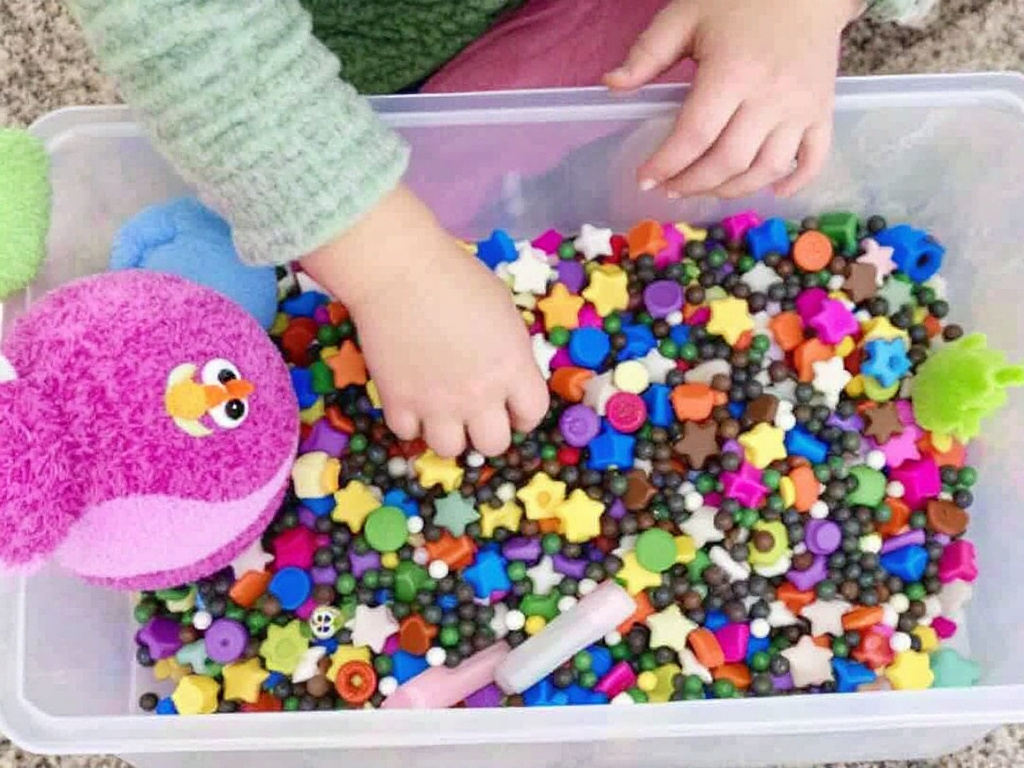
Sensory bins and swings are popular tools in occupational therapy and provide calming sensory input, helping children regulate sensory sensitivities. But beyond their sensory benefits, these can also be great tools for storytelling.
For example, a sensory bin filled with rice or sand allows children to explore objects by uncovering small toys or figurines. Therapists can prompt children to create a story with the items they find, which helps them connect objects to language and narrative. Sensory swings, meanwhile, offer a fun, safe environment where a child might tell a story or listen to a therapist tell one, further reinforcing relaxation with language skills.
2. Pretend play and role-playing games with a storytelling focus
Pretend play is essential for social development. It allows children to act out familiar scenarios, explore emotions, and even practice empathy. For instance, playing “house” lets children act out routines like preparing meals or getting ready for bed, which helps them process daily experiences in a safe, imaginative way.
In these scenarios, storytelling often emerges naturally as children create dialogue and situations for their characters. Role-playing games, adapted for group play, allow children to take on different roles, encouraging turn-taking and active listening. For children who struggle with social cues, pretend play and storytelling create a low-stakes environment for practicing language and social skills without fear of judgment.
3. Interactive group games with storytelling elements
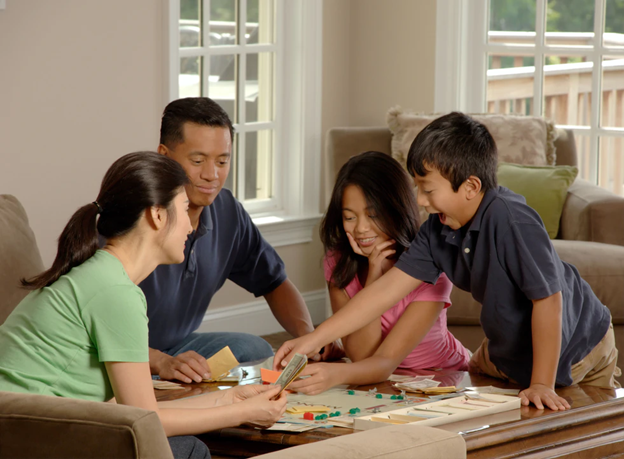
Group activities, like board games or scavenger hunts, can be adapted to include storytelling. Board games that involve dice or drawing cards allow children to create stories as they play, adding another layer of engagement and imagination.
For example, therapists might modify a board game so each turn involves describing what a character in the game is doing or feeling, incorporating storytelling while focusing on language and social skills. Group storytelling activities encourage children to work together, listen to one another, and develop narrative skills in a fun and supportive setting.
The role of speech-language pathologists in storytelling-based interventions
Speech-language pathologists (SLPs) play a crucial role in implementing storytelling games as therapeutic tools. They select and adapt games to target specific speech and language goals for each child, guiding gameplay, modeling language use, and providing feedback to reinforce learning.
SLPs can make therapy sessions more engaging and motivating for children with autism, helping them practice essential communication skills in enjoyable, low-pressure settings.
SLPs may use picture-based storytelling for minimally verbal children, where they present a series of images and encourage the child to describe the scenes. This technique not only supports vocabulary and sentence structure but also provides an opportunity for children to practice sequencing, a critical component of storytelling that helps improve narrative skills and logical thinking.
The benefits of storytelling in speech therapy for autism
Storytelling is a powerful tool within speech therapy, especially for children on the autism spectrum, because it combines language development, social engagement, and emotional expression in one activity. Here’s how storytelling-based speech therapy can support children in building vital communication skills.
1. Enhancing language and communication skills through storytelling
Storytelling games are one of the most effective ways to enhance language skills in speech therapy. These games allow children to create and share stories, which promotes expressive language and vocabulary building. For children who are minimally verbal, picture-based storytelling provides visual cues, helping bridge the gap between thoughts and spoken words.
For example, a speech therapist might guide a child through a series of images and ask them to describe what’s happening in each one. This activity helps children practice sentence structure, vocabulary, and narrative skills, fostering comfort with language and making it easier to communicate needs and feelings.
2. Practicing social communication through storytelling scenarios
Social communication is another area where storytelling makes a big impact. Through storytelling games, children can practice conversation skills like initiating topics, maintaining dialogue, and responding to others.
Therapists might use a simple story and prompt the child to continue it, allowing them to add details or respond to questions about the characters’ actions or feelings. These interactive storytelling sessions give children a chance to practice the back-and-forth of real-life conversations in a supportive, structured environment.
3. Building Emotional Expression through storytelling characters
Storytelling is also effective for helping children explore and express emotions. By interacting with different characters and scenarios, children learn to identify and understand various emotions, as well as how to manage them.
For instance, therapists might introduce a story with characters experiencing a range of emotions, such as happiness, frustration, or sadness. They can then ask the child how each character feels and why, allowing the child to reflect on and discuss emotions in a safe space. This type of storytelling builds emotional recognition skills, which are often challenging for children with ASD.
Practical tips for parents and caregivers
Storytelling and play-based techniques can be extended beyond the therapist’s office. Here are some practical tips to bring these techniques into your everyday life:
1. Encourage pretend play and storytelling at home
Simple games like “restaurant” or “doctor’s office” give children a chance to create stories around familiar scenarios. Allow your child to take the lead in creating a story, and follow their cues. Letting the story evolve naturally can be a fantastic way for them to express thoughts and feelings.
2. Use visual supports and story schedules
Visual supports like picture charts, storyboards, and “first-then” boards can be helpful for children who feel anxious in new situations. Using visual aids to map out a simple story or a schedule of the day’s events can help children understand sequencing and develop a sense of narrative structure.
3. Practice storytelling with everyday events
Storytelling doesn’t need to involve elaborate plots. Use everyday events as storytelling prompts. For instance, after a family outing, ask your child to describe what happened, guiding them to recount the day in order. This simple practice helps them develop narrative skills while reinforcing memories of positive experiences.
Working with qualified therapists
Occupational therapists, speech-language pathologists (SLPs), and play therapists have specific training to support children with autism. Therapists adapt activities to each child’s strengths and growth areas. For example, an SLP might incorporate storytelling games to enhance language skills, while an occupational therapist might use sensory-based storytelling activities. Qualified therapists also guide family members on how to reinforce these skills at home, creating a well-rounded approach to therapy.
FAQs on storytelling in play therapy and speech therapy for autism
What are the main benefits of storytelling games in autism therapy?
Storytelling games enhance language, social, and emotional skills by letting children practice these skills in a structured setting. Storytelling offers a unique way for children to build social connections, understand emotions, and express themselves.
How does storytelling in play therapy help with social skills?
Storytelling within play therapy encourages cooperation, empathy, and emotional regulation. These skills are essential for children with autism as they learn to navigate social situations.
What is the role of storytelling for minimally verbal children?
For minimally verbal children, storytelling through picture-based activities provides visual cues that support language development, helping them communicate thoughts and ideas in a way that feels comfortable.
Long-term benefits of storytelling in play and speech therapy
The benefits of storytelling in play and speech therapy extend far beyond individual sessions. As children develop communication and emotional skills in a safe,
Play therapy ideas for autism
Play therapy for autistic children uses structured activities to nurture emotional and social growth. Here are some play therapy techniques that work wonders:
1. Sensory swings and sensory bins
Sensory swings are a popular tool in occupational therapy. They provide calming sensory input and help children regulate sensory sensitivities. Swings can also be a fun way to practice social engagement in a safe environment. Sensory bins, on the other hand, offer hands-on activities where children can play with textures, colors, and objects, stimulating their senses and encouraging exploration.
For instance, a bin filled with rice or sand allows children to bury and uncover toys, which can help improve fine motor skills. These activities create a great way to help children feel centered and calm, making them ideal starting points for play therapy.
2. Pretend play and role-playing games
Pretend play is essential for social development, and it provides children with a platform to explore emotions, practice empathy, and understand social roles. For example, playing “house” allows children to act out familiar routines, like preparing meals or getting ready for bed, which helps them process daily experiences in a safe, imaginative way.
Role-playing games can be adapted for group play too, promoting turn-taking, active listening, and creative thinking. For children who may struggle with social cues, pretend play offers a low-stakes environment to practice without fear of judgment.
3. Interactive group games
Group activities, such as board games and scavenger hunts, encourage cooperative play and social interaction. These activities teach children the basics of turn-taking, listening, and responding, which are crucial for social success.
Board games that involve dice or drawing cards are perfect for promoting social skills and patience. Plus, these games are highly adaptable; for example, therapists can modify rules to focus on specific skills, like following directions or expressing emotions.
The role of speech-language pathologists in game-based interventions
Speech-language pathologists (SLPs) play a crucial role in implementing storytelling games as therapeutic tools. They select and adapt games to target specific speech and language goals for each child. SLPs guide gameplay, model appropriate language use, and provide feedback to reinforce learning objectives.
These professionals create structured environments that encourage turn-taking and social exchanges. They may use visual supports or modify game rules to accommodate individual needs. SLPs also involve parents and caregivers, teaching them to use game-based strategies at home.
By incorporating storytelling games, SLPs can make therapy sessions more engaging and motivating for children with autism spectrum disorder (ASD).
The benefits of speech therapy for autism
Speech therapy is incredibly beneficial for children with ASD, especially when it includes storytelling games and structured language activities. Here’s how speech therapy supports children in building vital communication skills.
1. Enhancing language and communication skills
Speech therapy is known for enhancing language skills, and storytelling games are one of the most effective tools for this purpose. These games allow children to build expressive language skills as they create and share stories. Picture-based storytelling games are especially useful for children who are minimally verbal, providing visual supports that help bridge the gap between thought and speech.
For example, a speech therapist might use a game where children describe a series of images, helping them practice sentence structure, vocabulary, and narrative skills. As they become more comfortable with language, children may find it easier to communicate their needs and feelings.
2. Practicing social communication
Social communication is another area where speech therapy can make a big impact. Through role-playing and storytelling games, children practice conversation skills like initiating topics, maintaining dialogue, and responding to others. These activities give children a chance to navigate the back-and-forth of real-life conversations in a supportive environment.
Therapists often create scenarios that mirror everyday interactions, such as ordering food or asking for directions. By practicing these “scripts,” children build confidence in their communication abilities, which can make a significant difference in their daily lives.
3. Building emotional expression
Storytelling and role-playing games also help children explore and express emotions. By interacting with different characters and scenarios, children learn to identify various emotions and understand how to manage them.
For example, therapists might use puppets or picture cards to help children discuss how a character feels and why. These discussions provide a safe space to explore complex emotions, from joy and surprise to frustration and sadness. For many children with ASD, understanding emotions is challenging, so this form of therapy is particularly valuable.
Practical tips for parents and caregivers
For families, therapy doesn’t have to stop at the therapist’s office. Here are some practical tips to bring the benefits of play and speech therapy into everyday life.
1. Encourage pretend play at home
Simple games like “restaurant” or “doctor’s office” provide children with opportunities to practice communication, turn-taking, and emotional expression. Start by creating a scenario together, then allow your child to take the lead. Follow their cues and let the play evolve naturally—this can be a fantastic way for them to express their thoughts and feelings.
2. Use visual supports and schedules
Visual supports like picture charts, schedules, and “first-then” boards can help children understand and anticipate what’s coming next. These aids are particularly helpful for children who feel anxious in new situations. For example, a visual schedule showing the day’s routine can help children transition smoothly from one activity to the next.
3. Practice storytelling with everyday events
Storytelling doesn’t need to involve elaborate plots or fantasy. Use everyday events as storytelling prompts. For instance, ask your child to recount what happened after a family outing, prompting them to describe the details. This helps them build narrative skills while reinforcing memories of positive experiences.
Working with qualified therapists
A strong therapeutic partnership is vital for making progress. Occupational therapists, speech-language pathologists (SLPs), and play therapists have specific training to support children with autism.
Therapists adapt activities to suit each child’s strengths and areas for growth. For instance, an SLP might use storytelling games to boost language skills, while an occupational therapist could focus on sensory play to improve motor skills. A qualified therapist also involves family members, teaching them how to reinforce these skills at home.
Key qualities to look for in a therapist
When selecting a therapist, look for qualifications, experience with autism spectrum disorder, and a collaborative approach. A good therapist should make both the child and family feel comfortable, valued, and engaged in the therapy process. Also, consider therapists who are open to using a variety of techniques, such as sensory integration, visual supports, and play-based interventions, to target specific goals.
FAQs on play therapy and speech therapy for Autism
What are the main benefits of storytelling games in autism therapy?
Storytelling games enhance language, communication, and emotional skills by allowing children to practice these skills in a structured yet engaging setting. They provide a unique way for children to develop social skills, understand emotions, and express themselves.
How does play therapy help with social skills in autistic children?
Play therapy activities like pretend play, group games, and role-playing encourage cooperation, empathy, and emotional regulation. These skills are essential for children with autism as they learn to navigate social situations.
What is the role of occupational therapists in autism therapy?
Occupational therapists focus on fine motor skills, sensory integration, and self-regulation. They often use sensory activities, visual supports, and play-based techniques to help children feel more comfortable in their environment.
How can play therapy be adapted for children with sensory sensitivities?
Play therapists may use sensory bins, swings, and visual aids to tailor activities to a child’s specific sensory profile. This allows children to experience sensory input in a controlled and supportive way.
What types of activities are used in play and speech therapy?
Common activities include storytelling games, sensory play, pretend play, board games, and cooperative group activities. Each activity addresses different goals, like building language skills, improving motor coordination, or fostering social interactions.
Long-term benefits of play and speech therapy
The benefits of play and speech therapy extend well beyond therapy sessions. As children build skills in a supportive environment, they experience improvements in many areas:
Increased Communication Skills: As children gain confidence in language use, they can express themselves more clearly and understand others better.
Enhanced Social Abilities: Play therapy provides practical experience with social rules, helping children build friendships and navigate social situations.
Improved Emotional Regulation: Learning to recognize and manage emotions in therapy can help children feel more in control in daily life.
Better Motor Skills and Sensory Integration: Sensory activities in play therapy help with both fine and gross motor skills, making physical activities more enjoyable.
With a strong foundation in these skills, children with autism can grow more independent and capable, enjoying a higher quality of life and more meaningful connections with others.
By combining play and speech therapy, children with autism receive a holistic support system that nurtures communication, social, and emotional skills. These therapies provide a safe, enjoyable environment where children can develop in ways that feel natural and empowering. With the right guidance, autistic children can unlock new skills and gain the confidence to navigate the world around them, building a brighter future.
*Collaborative feature post*
Top tips on how to be more productive with ADHD
I am more productive if I chunk similar activities together so I’ll set time aside specifically for social media, schedule writing for a different time etc.
I think a really great way to be productive is to have your to -do list written out and on your clear and clean desk the night before. It means you start the day with absolute clarity of purpose.
Working from home can be distracting when you have a mountain of washing or other household tasks. I often take myself off to a nice cafe with free WiFi so I’m then totally focused on work. A good coffee and slice of cake is a good reward.
I make a list the night before my day off so I don’t procrastinate/waste time in the morning deciding what to do. I feel that way I get up knowing exactly what I’ve got to get done!
Don’t go for the false economy of not buying some of the productivity tools out there. The money you save not doing so is far outweighed by the increase in time you have if you use them. Tools like Tailwind, Buffer, Missing Letter are a godsend for me. And – have a set time to check your emails. Absolutely DON’T have it open all day distracting you.
Try and set certain tasks up the night before, such as the washing machine or dishwasher! By the time you then come downstairs in the morning, some of your tasks will already be done – resulting in more time for other tasks or a 5 minute sit down.
Starting something is probably the hardest thing to do, so the only way to start is, well, to start! Use the above tips to be productive at home, grab yourself a productivity pack like I did and start recording your habits.
Plan your goals and write out your monthly, weekly, and daily goals. Set yourself a target of 30 days to complete your habit and focus on tracking that habit every single day. After a few weeks, you will form your habit naturally as you have focussed on fulfilling that habit. I always feel amazing when I’ve had a particularly productive day.
You just need to find the motivation to start and what better time than to start implementing the ways to be productive now!
FAQs on how to be more productive with ADHD
How to be productive at home with ADHD?
Staying productive with ADHD at home requires creating routines, breaking down big tasks into small goals, and using productivity planners to stay on track.
How can ADHD people be more productive?
By using techniques like the Pomodoro method, prioritising important tasks, and limiting distractions, you can improve your productivity.
Can ADHD contribute to increased productivity and creativity in individuals who do not take medication for the condition?
Yes, many people with ADHD find they have bursts of creativity and productivity, especially during periods of hyperfocus. Medication isn’t always necessary for everyone.
How do I create a routine that sticks for someone with ADHD?
Start by setting small, achievable goals and using tools like task lists, timers, and accountability partners to build habits over time.
What strategies can a person with ADHD use to stay organised and remember tasks in their daily life?
Using visual cues like sticky notes, brain dumps, and productivity apps like Trello or Todoist can help you stay organised and on top of tasks.
How can people with ADHD use digital tools to create a more productive daily routine?
Apps like Trello and Notion offer visual task management, while timers like the Pomodoro technique help break the day into manageable chunks, making it easier to stay focused.
Are adults with ADHD more intelligent or creative?
Some research suggests that people with ADHD can be more creative and thrive in environments that reward innovative thinking. Hyperfocus can lead to impressive productivity in certain areas.
What are some ADHD productivity hacks for staying on task?
Using the Pomodoro method, limiting distractions, and working during peak productivity hours are all excellent ADHD productivity hacks.
*Collaborative feature post*
I feel more productive if I put my phone down… I get so easily sucked into irrelevant things on social media that I lose track of what I’m doing and feel like I have to start again. That goes for both work and at home. Once I sit down and just have 5 minutes, I don’t want to get up again.
I am definitely more productive if I stop working for regular breaks. I either do some housework, walk the dog, go for a run or swim or simply play the piano or read a book for 5 minutes. I’m much more able to properly focus on what I should be doing afterwards.
I am more productive if I chunk similar activities together so I’ll set time aside specifically for social media, schedule writing for a different time etc.
I think a really great way to be productive is to have your to -do list written out and on your clear and clean desk the night before. It means you start the day with absolute clarity of purpose.
Working from home can be distracting when you have a mountain of washing or other household tasks. I often take myself off to a nice cafe with free WiFi so I’m then totally focused on work. A good coffee and slice of cake is a good reward.
I make a list the night before my day off so I don’t procrastinate/waste time in the morning deciding what to do. I feel that way I get up knowing exactly what I’ve got to get done!
Don’t go for the false economy of not buying some of the productivity tools out there. The money you save not doing so is far outweighed by the increase in time you have if you use them. Tools like Tailwind, Buffer, Missing Letter are a godsend for me. And – have a set time to check your emails. Absolutely DON’T have it open all day distracting you.
Try and set certain tasks up the night before, such as the washing machine or dishwasher! By the time you then come downstairs in the morning, some of your tasks will already be done – resulting in more time for other tasks or a 5 minute sit down.
Starting something is probably the hardest thing to do, so the only way to start is, well, to start! Use the above tips to be productive at home, grab yourself a productivity pack like I did and start recording your habits.
Plan your goals and write out your monthly, weekly, and daily goals. Set yourself a target of 30 days to complete your habit and focus on tracking that habit every single day. After a few weeks, you will form your habit naturally as you have focussed on fulfilling that habit. I always feel amazing when I’ve had a particularly productive day.
You just need to find the motivation to start and what better time than to start implementing the ways to be productive now!
FAQs on how to be more productive with ADHD
How to be productive at home with ADHD?
Staying productive with ADHD at home requires creating routines, breaking down big tasks into small goals, and using productivity planners to stay on track.
How can ADHD people be more productive?
By using techniques like the Pomodoro method, prioritising important tasks, and limiting distractions, you can improve your productivity.
Can ADHD contribute to increased productivity and creativity in individuals who do not take medication for the condition?
Yes, many people with ADHD find they have bursts of creativity and productivity, especially during periods of hyperfocus. Medication isn’t always necessary for everyone.
How do I create a routine that sticks for someone with ADHD?
Start by setting small, achievable goals and using tools like task lists, timers, and accountability partners to build habits over time.
What strategies can a person with ADHD use to stay organised and remember tasks in their daily life?
Using visual cues like sticky notes, brain dumps, and productivity apps like Trello or Todoist can help you stay organised and on top of tasks.
How can people with ADHD use digital tools to create a more productive daily routine?
Apps like Trello and Notion offer visual task management, while timers like the Pomodoro technique help break the day into manageable chunks, making it easier to stay focused.
Are adults with ADHD more intelligent or creative?
Some research suggests that people with ADHD can be more creative and thrive in environments that reward innovative thinking. Hyperfocus can lead to impressive productivity in certain areas.
What are some ADHD productivity hacks for staying on task?
Using the Pomodoro method, limiting distractions, and working during peak productivity hours are all excellent ADHD productivity hacks.
*Collaborative feature post*
I realised quite late in life that I could have ADHD, even though all the signs were there from as early as I could remember. During my childhood, I was told I’d either distract people or get distracted. The teachers couldn’t handle me. I had bundles of energy and I never slept, so my parents struggled with me, too. It was only when I channelled my energy into music and sport that I realised I needed extra tools to manage daily life.
As a fully-fledged adult, I procrastinate when I should finish a deadline, complete a household chore, or even when I read to the kids before bedtime. Tackling household clutter can feel overwhelming, but starting with practical steps can make a huge difference. For instance, if you’re managing a major decluttering project, you might consider looking into how to rent a home cleanout dumpster that allows you to efficiently clear large amounts of waste and regain control of your space. Procrastination has become the biggest bane of my life, so staying productive can be challenging, especially when I have several distractions around me.
It’s safe to say we all experience procrastination in varying degrees when trying to manage everything. The Internet and social media have made it that much easier to waste time rather than get things done. Now I am a busy mum of four with (undiagnosed) ADHD and, at the best of times, it can feel like juggling plates while walking on a tightrope.
Whether it’s managing the house, the kids, or even your own business, staying productive while ADHD symptoms demand your attention is tough. So, this article is mostly geared towards those, like me, who work from home and juggle parenting and work duties, often at the same time, but with the added nuance of ADHD. From breaking down tasks to using accountability partners, here are 60 top tips on how to be more productive with ADHD. Let’s get stuck in!
What is productivity?
To be productive, we need to know what productivity means. Businessdictionary.com defines productivity as:
“The measure of the efficiency of a person… in converting inputs into useful outputs. Productivity is computed by dividing the average output per period by the total costs incurred or resources (capital, energy, material, personnel) consumed in that period. Productive is a critical determinant of cost efficiency.”
So, in essence, productivity basically means how efficient you are at what you are producing and what you receive economically as a result, i.e.output per unit of input. So, the more productive you are, the more chances you have of increasing your value.
What about productivity at home? Being busy vs productive
In simpler terms, productivity means using your time and energy effectively to achieve your goals. So, if the tasks you are working on are low-value or at the expense of high-value tasks, then doing something doesn’t always mean you are productive. The primary aim of being productive is to know exactly what you should spend your time, energy and attention on to improve yourself and your family around you.
Why does being productive matter?
Consider what it would be like if you could achieve all the high-value tasks you needed to complete in a shorter period, so you have more time to spend with your family. Perhaps productivity will allow you to use your energy on the things that make you happier or even work on tasks that will help you improve your work and home life.
Having something productive to do at home means that you can manage your daily tasks effectively and still increase your health and wellbeing. And at work, being productive means that you can improve your way of living and earn more income to spend on the things that make you happier.
So let’s dig into the tips on how to be more productive. Even if you don’t have ADHD, these tips will work for you too:
Tip 1: Break down big tasks into small goals
We’ve all been there – staring at a massive to-do list and feeling completely overwhelmed. For me, that feeling of being paralysed by the size of a task used to be my biggest barrier to getting things done. What I’ve learned is that breaking down big tasks into smaller, manageable goals is a game-changer. If you’re staring at a mountain of laundry or an overwhelming work project, don’t think about the whole thing. Just tackle the first small step. Before you know it, those little steps will add up, and you’ll be making progress without feeling buried under the weight of it all.
Tip 2: Use a timer (Pomodoro Method)
Let me tell you, the Pomodoro technique is like a secret weapon for ADHD productivity. The idea is simple, but so effective. Set a timer for 25 minutes and focus on one task during that time. Once the timer goes off, take a 5-minute break to reset. I use that little break to grab a coffee, stretch, or just give my brain a breather. After the break, I jump back in for another 25-minute sprint. It’s amazing how much you can get done with this method. Plus, those little breaks are perfect for recharging without losing momentum.
Tip 3: Find your peak productivity hours
Are you more productive in the morning or late at night? For me, it depends on the day, but I’ve learned that knowing my peak hours makes all the difference. If I didn’t have to do the school runs, I could work into the early hours of the morning. But, now I have to be up at 6am, so I find the period just after drop is off my most productive time to check off the most challenging tasks.
The idea is to work with your natural energy levels instead of fighting against them. If you know you’re sharper in the morning, use that time to tackle your most important tasks. If you’re a night owl, save the big stuff for the evening. Understanding when you’re at your best can help you make the most of those bursts of energy.
Tip 4: Keep a task list
I live by my task list. Without it, I’d probably forget half of the things I need to do. Whether you use a simple to-do list or something more structured like a Productivity Planner, having your tasks written down is a lifesaver. Not only does it help you stay on top of things, but there’s also something incredibly satisfying about crossing off completed tasks. It reduces stress and keeps everything manageable.
Tip 5: Use a brain dump
Sometimes, my brain feels like it’s running a million miles a minute, especially when I have a lot on my plate. That’s where a brain dump comes in handy. I just grab a piece of paper or open a productivity app and jot down everything that’s swirling in my mind. Getting it all out helps me focus on what’s most important without constantly being distracted by random thoughts or worries. It’s one of the best ways to clear mental clutter and stay productive.
Tip 6: Use an accountability partner
If you struggle to stay on track, an accountability partner can work wonders. It could be a friend, a family member, or even a colleague. The idea is that someone checks in on your progress, keeping you accountable. Knowing that someone will ask how you’re doing can give you that extra push to stay motivated. I’ve found it especially helpful when I’m working on long-term projects or tasks that feel overwhelming.
Tip 7: Limit distractions
Let’s face it: distractions are everywhere, especially when you have kids at home. For me, the key is creating a work zone where I can limit distractions as much as possible. Whether it’s using noise-cancelling headphones or setting up a quiet workspace, reducing external interruptions helps me stay focused. It doesn’t eliminate the chaos completely, but it certainly makes things a bit easier.
Tip 8: Use ADHD-friendly tools
There are so many tools out there designed to help with productivity, and some of them are particularly helpful for ADHD brains. Apps like Trello and Todoist, as well as my trustee Microsoft Outlook and To-Do help me stay organised, while a Productivity Planner keeps me on track with habits and goals, as I like to write things down. You can also use a LiveChat conversational platform with ChatGPT at its core for almost human-like interaction. I can’t live without it now!
The important thing is to find tools that suit your style and stick with them. These tools are like scaffolding for your productivity—they provide the structure you need to stay on task.
Tip 9: Create routines but stay flexible
Routine is essential for productivity, especially with ADHD. But life happens, and sometimes sticking rigidly to a schedule just isn’t possible. That’s why it’s important to stay flexible. I try to keep a basic routine, but if something throws off my day, I don’t beat myself up about it. The key is to stick to the most important tasks and give yourself a little grace when things don’t go as planned.
Tip 10: Start with one task
When there’s too much to do, it’s easy to get stuck in indecision. My advice? Just pick one task and start. It doesn’t have to be the biggest or most important thing—just start with something small. The act of getting started builds momentum, and before you know it, you’re ticking things off your list. Action leads to motivation, so don’t wait for that burst of energy. Just begin.
Tip 11: Take short breaks
We’ve talked about the Pomodoro Technique, but short breaks can make all the difference, especially when your brain feels overloaded. I try to work in 25 to 30-minute bursts and then take a 5-minute break to move around, grab a snack, or just relax. But, the important takeaway here is breaks are needed as they’re a great way to recharge without losing focus. And those little breaks prevent burnout, helping you stay productive for longer stretches of time.
Tip 12: Keep things fun and interesting
Let’s be honest—boring tasks are the worst. But I’ve found that adding a bit of fun can make even the most mundane chores more bearable. I’ll often put on a playlist or listen to an audiobook while I’m cleaning or working. Music can really shift your mood and make repetitive tasks feel less like a chore.
Tip 13: Celebrate small wins
One of the best ways to keep yourself motivated is to celebrate the little victories along the way. Finished a task? Take a moment to acknowledge it! Whether it’s treating yourself to a cup of tea or taking a quick break, these small rewards help build momentum and keep you moving forward.
Tip 14: Try body doubling
Body doubling is a brilliant productivity hack for people with ADHD. Simply having someone else around, even if they’re working on something completely different, can help you stay focused. I’ve even found virtual body doubling helpful—just having someone on a video call while we both work keeps me on task.
Tip 15: Don’t wait for motivation
If you’re waiting for motivation to strike, you might be waiting a long time! The truth is, ADHD brains often struggle with finding motivation. But here’s the secret: action creates motivation, as we mentioned before. Don’t wait for the spark—just start. Once you’re in motion, the motivation will usually follow.
Tip 16: Avoid multitasking
Multitasking is tempting, especially when you have a lot on your plate. But I’ve found that it rarely works, especially with ADHD. It’s better to focus on one task at a time and see it through to completion. You’ll be more efficient and less stressed when you’re not trying to juggle multiple things at once.
Tip 17: Use visual cues
I’m a huge fan of sticky notes and other visual reminders. If you’re the type of person who forgets what you were doing just two minutes ago, like me, having visible cues can be a lifesaver. Whether it’s a note on your desk or a reminder on your phone, keeping important tasks front and centre can help you stay focused.
Tip 18: Find an ADHD coach or expert
Sometimes, you need a little extra help. An ADHD coach or expert can provide personalised strategies that fit your unique challenges. They can help you find what works for your specific situation and even help you develop a plan for your business or guide you through any rough patches. It’s worth considering if you’re struggling to manage on your own.
Tip 19: Be kind to yourself
Productivity will vary day by day, especially when you’re managing ADHD. Some days, everything flows smoothly, and you feel like a superhero. Other days, it’s a struggle just to get out of bed. And that’s okay. Be kind to yourself and recognise that not every day will be perfect. Give yourself the same grace you’d offer a friend.
Tip 20: Plan your day the night before
One of the best habits I’ve developed is planning my day the night before. Before I go to bed, I write out my top tasks for the next day. This way, I wake up knowing exactly what I need to focus on. It takes the guesswork out of the morning and helps me hit the ground running.
Tip 21: Get some sleep
Sleep is key to being productive at home during the day and being at your very best work performance. Set a bedtime and wake time every day, even during the weekends, and stick to them so your body clock automatically shifts to these times.
To have an effective good night’s sleep, try to sleep in complete darkness. I use an eye mask which helps me sleep in pitch black because the slightest bit of light will wake me up. If you can, invest in blackout blinds, as they help to block out any light coming from the window. Avoid drinking alcohol and caffeine before bed, as they will keep you up and decrease your productivity the next day.
Tip 22: Fit in regular exercise
Exercise is literally my number one therapy! It helps to keep the heart pumping and will keep your mind and body happy and relaxed. I work out from home 30 minutes a day, and this works for me as I also work from home. But if you need extra motivation, perhaps classes are a good way to keep you motivated.
Exercising outside when the weather is nice is a great way to take your mind off your daily tasks and get in some much-needed fresh air, which will help to clear the cobwebs in your head. Studies have shown that if you step outside at the very start of your day, your productivity increases by up to 70%! When and where I can, I will take myself for a walk.
Diet is also just as important as exercise. Make sure you’re eating well and getting your 7-a-day. Try to avoid sugary food and drinks as they spike your sugar levels and will cause an energy crash, which is not good for productivity.
Tip 23: Practice mindfulness and meditation
Mindfulness and meditation are all about keeping your mind in the present moment, and not wandering off when you need it to focus on your work. It’s a great way to train your brain muscles and help you be more productive in your daily tasks.
This is a slow process, so take your time and keep going – you will reap the rewards later. Headspace is a great way to practice meditation, and I have written more about mindfulness and meditation to reduce anxiety, which you can find here.
Tip 24: Set up a home command centre
Set up a home office that limits distraction and makes your office space the hub of productivity. For more information on how to set up your home office, check out Forbes’ article here.
Tip 25: Embrace procrastination and use it as a tool
As I’ve mentioned before, I am a huge procrastinator and spend a lot of my time wasting time! So, as mentioned above, I incorporated a technique which works for me, and that is to work on my tasks in 30-minute bursts and then allow myself 5 – 10 minutes to procrastinate.
You will not beat procrastination, the temptation will always be there. So use your time effectively to get all your procrastinating done and then focus your time and energy on getting your projects done in periods which you can manage. Try the 30-minute burst and see if that works for you.
I wear a fitness tracker, so I set 30 minutes on my timer, and my wrist will buzz when I have finished those 30 minutes. Then I get off my seat, and I take a walk around, scroll on my phone, eat some food or schedule in my exercise.
Take your mind off work for those short few minutes, so you are ready to set another 30-minute timer and tackle your tasks.
Also, if you have deadlines and you set them a few weeks in advance, but you sit on that deadline until the last minute, then change your deadline to a shorter period in advance. If I have a deadline coming in a few days, then I make sure I get it sorted in those few days. If I had 3 weeks, I wouldn’t do anything until the last minute!
Tip 26: Use a productivity journal to reach your goals
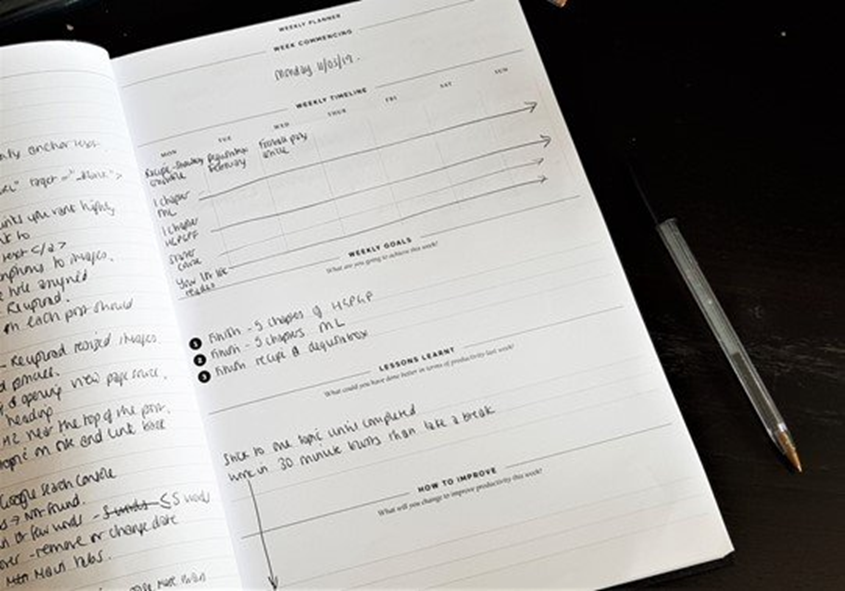
Start recording your habits and tasks so you know what you’re working on every day. You can set goals, manage your time, and plan your tasks, so you can see what you need to do every day.
At the start of each month, specify what you will work on each month. Then within each week, set goals that will contribute to that monthly goal, and each day work on the goals that will contribute to your weekly goals.
I found since using a productivity planner that I am so much more productive with my work and house duties because I know what my good and bad habits are and I know what I need to do every day, week and month.
Tip 27: Work out what your goals are and create habits to achieve those goals
What is it you would like to achieve? Are you trying to lose weight? Do you want to clean less and spend more time working on your business? Do you want to spend more time with your family? Be clear with what you want to achieve and note the point at which you want to get to, so you can create habits to achieve your goal.
For example, if you want to lose weight, set times to get to the gym or fit in your workout. If you want to spend more time with your family, then schedule a few hours in the day to purely spend time with the family – make sure you do nothing else in that time.
If you want to clean less and spend more time working on your business, then use my ‘short work-burst’ method and work on your business for 30 minutes and spend 10 minutes cleaning up a certain area of the house. You can use The Organised Mum’s Method where she talks about cleaning an area in your house for just 30 minutes a day, and this works just as well. I use a method similar to this, otherwise I would just end up cleaning all day and spending little time on work.
Use a habit tracker to track the habits you have identified. Each time you have fulfilled a habit, tick it off. Include your bad habits too like I did and cross-check them off when you have successfully not fallen into those bad habits that day.
If you’re stuck for ideas on how to be productive, here are some productive things to do when you are bored at home:
Tip 28: Improve yourself
As mentioned above, knowing your bad habits are just as important as creating good ones. Know where you need to work on and spend time improving yourself.
Tip 29: Try something new
Stepping outside your comfort zone is the only way you’ll grow. I try to do that regularly by learning a new skill or trying my hand at something new. I took a leap of faith and started publishing on Amazon and I’m so glad I did! I’ve learned a new skill and I feel like I’ve accomplished something huge.
Tip 30: Invest in your future
The best investment you can make is on yourself. So carve out some time to learn a new skill. Take some home learning courses and work towards building your portfolio, which will eventually help you to build on your income too.
Tip 31: Have fun
We’ve touched on this before, but give yourself a break now and again to wind down and forget about tasks and to-dos. Having fun is actually a very productive past-time because it clears the stress and it helps you step away from a task and have a birdseye view of the problem if you’re not thinking about it all the time. Plus, it’s healthy. Balance is key to being productive so have some downtime too. Go out with friends, go to the cinema or go shopping. Whatever it takes to get in those feel good hormones.
Tip 32: Better your health
I’ve noticed that when I eat junk, I am less productive because I feel lazy and I don’t have the energy to get up and get things done. Exercise has given my brain a natural energy boost, but so has fuelling my body with good food. Improving your health improves your productivity, so put health at the very top of your to-do list.
Tip 33: Get organised
I run a tight ship – I have to because I have four kids, triple school runs and a business from which I work at home. So household tasks, work day tasks and work time itself all have their own pockets in which they can’t overlap or be allowed to fall by the wayside. Project management and organisation is the only way I survive the multitude of tasks but it also keeps me ticking. So make sure you get organised, but be prepared to wing it if certain things prop up you haven’t accounted for. It’s also important to think on your feet too.
Tip 34: Hone your talent
Do you have a particular skill that you could potentially monetise? Then work on honing that talent and becoming an authority in that field. Knowledge is power, especially if it’s your ADHD superpower and you can teach your potential customers something that will help better their own lives.
Tip 35: Visit the library
If I get writer’s block or lose my mojo because I’ve had a particularly challenging day, then I put my work down and I head to the library. While I’m there I browse the shelves until I find a particular book that reaches out to me. I sit down for a few minutes and I read for a bit. The act of sitting down and tucking into a good book makes me forget about my day and once I’ve put the book down, I’m ready to tackle my tasks again.
Tip 36: Make a playlist
On Spotify I have a number of playlists that help me get into the mood for whatever I’m doing. I have a playlist all about bettering yourself and a playlist for winning in business. I also have a playlist of workout music to get me into the groove for working out. Playlists are effective at picking you up when you need an extra boost to get started.
Tip 37: Learn from mistakes
Mistakes aren’t failures, they’re perfect opportunities to learn and do better at succeeding. But if you repeat your mistakes, you learn nothing. Always take your mistakes as experiences and learn from them so you don’t repeat. Remember, without mistakes you won’t know the path to success, so keep trying, even if you fail.
Tip 38: Create an evening routine
We have touched on this before, but one thing I do to make sure I’m prepared for the next day is to set out clothes for the kids’ school, pack any lunches and basically do anything that doesn’t impinge on the morning routine. Then I get ready for bed by washing my face, applying my skincare and finishing any tasks that can’t spill onto the next day. Only then do I go to bed knowing I’ve done what I need to do.
Tip 39: Create a morning routine too
First thing I do when I wake up is review my 5 main productive tasks of the day in priority order. My to-do list also has other home tasks like making sure to fit exercise in and other child-related activities that are important. I consult my to-do list every hour on the hour because it keeps me on task and I make sure I’m not deviating from what I need to do that day. Then I forget the rest for the next day. As long as I’ve completed my five tasks for the day (and even if I don’t) that’s all i’m focussing on, and nothing more.
Tip 40: Go camping
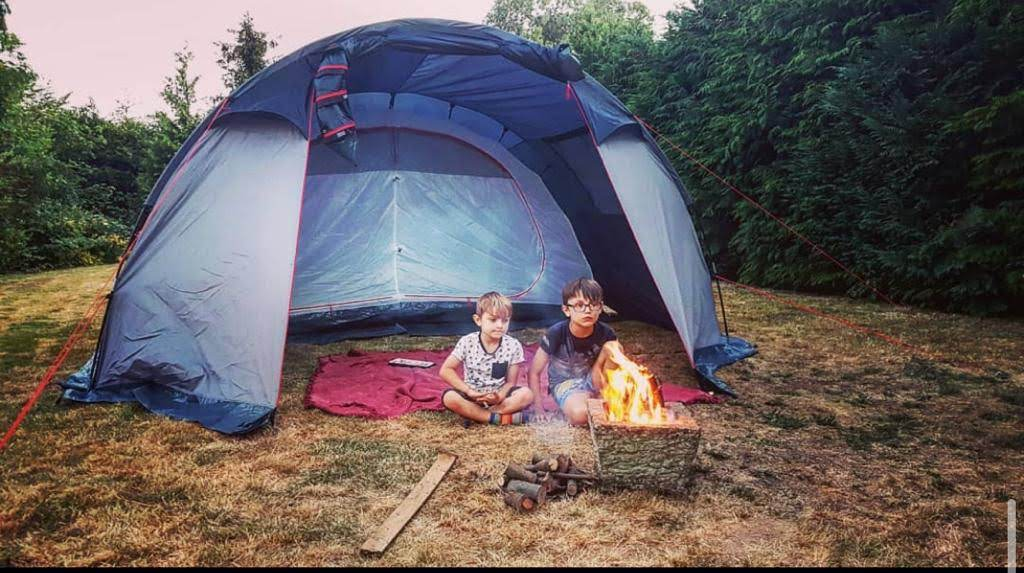
There is nothing like leaving the materialistic stuff behind and getting back to nature to make you feel you can accomplish anything. Making a fire out of wood or frying an egg on a makeshift tinfoil pan can provide you with the animalistic tools to go out and get what you want. It also helps you shift your focus on what really matters, something we often forget to do when we’re knee deep in our to-dos.
Tip 41: Watch tutorials
Learn new skills in webinars if you want productive downtime because tutorials can help you become better in the business of what you’re doing. Perhaps you want to learn to become a better chef so you watch tutorials on how to hold a knife. Or you want to write a book so you watch a step by step process on how to write and publish a book. These are all skills you’re learning so make sure your downtime is filled with lots of productive watching.
Tip 42: Start a bullet journal
A bullet journal is much like a productivity planner in that it helps you set out the goals you want to achieve in the year ahead. First you lay out your index of plans you want to achieve and then you dissect them into monthly, weekly and daily goals. Define your purpose, review your goals and keep it simple and achievable.
Tip 43: Again set some goals
If you have some free time, set some goals, this time on things you’d like to achieve as a person. It could be a bucket list of things you want to do that’s not related to work.
Tip 44: Test out new time management strategies
Sometimes what you’re doing isn’t working, so it’s important to keep testing until you hit the magic formula. Keep testing new time management strategies to see what works for you. This also includes the time in the day you’re at your most productive and whether you prefer to work in longer stints than 30 minutes a day. Whatever works for you will be different to the next person, so try to focus on what you’re doing rather than what other people are doing.
Tip 45: Create a list of travel destinations
You may wonder why creating a travel list is a productive thing to do, but it helps you set goals for where you’d like to travel and allows you to work for them. Plus it’s something fun to look forward to!
Tip 46: Start planning your days
It’s really important to know what your daily schedule looks like in advance. So plan what you’re going to do in advance so you can focus on the tasks that offer the biggest reward and leave the less urgent, less important things for later.
Tip 47: Share your knowledge
It’s always nice to pay it forward and the act of sharing your knowledge with people will make you an authority in your field, which is great for business!
Tip 48: Build a blanket fort
You may think that building a blanket fort sounds like a waste of time but it’s actually a pretty effective way to shut the outside world out and focus on you in the here and now. Either build a blanket fort on your own and use it as a form of me time or build with friends and family and use it as a bonding exercise. It is a great way to forget about the mountain of tasks you have waiting for you and just enjoy yourself.
Tip 49: Make a new dish
I’ve mentioned before that change is good for the soul and making a new dish is a great way to build confidence in your culinary skills. Make a new dish, add it to your recipe arsenal and use the accomplishment to boost your productivity at work
Tip 50: Become a better decision maker
The famous saying, ‘indecision is the number one reason for failure’ could never ring more true because it halts productivity and stops you from getting things done. Become a better decision maker and the best way to start doing this is by making a decision and sticking to it. Go with your gut and decide – your decision is final.
Tip 51: Go for a swim
Swimming is such a fantastic sport to melt your troubles away. I find that a vigorous front crawl that gets the heart pumping makes me feel alive and strong, so much so that I want to run back to my desk and bash work out. Use the swim to feel strong mentally and physically and then bring that force back to your productivity.
Tip 52: Go airplane mode
Sometimes going offline means you can focus on the tasks ahead of you because you’re not messing about on the internet or scrolling through social media. It has taken me a long time to force myself to work on my tasks for the dedicated 30 minutes without caving and clicking on a notification that comes up. So I disabled notifications and went airplane mode. Now I don’t get distractions anymore to entice me to stop working.
Tip 53: Go for a hike
Another productive sport is hiking because it’s get you out into the fresh air which boosts productivity and it gets your heart pumping which boosts your mental health. Hiking helps you forget about your insular world for a moment and enjoy nature and the bigger picture. A good hike should leave you feeling refreshed and ready to tackle your tasks when you get home.
Tip 54: Envision your ideal body
One of my biggest goals is to get back to my pre-pregnancy athletic fit weight, but I have been lazy and often resorted to junk food because I haven’t got a goal or I haven’t envisioned how I want to look. I started looking through old photos of me and now I can envision my ideal body which helps me to push through the workout when I haven’t got the mental energy to start. Envisioning your goal helps you map out the steps to success, so that’s what I always do when I’m feeling like i don’t want to exercise. It helps so much.
Tip 55: Clear out your clutter
If you’re constantly asking yourself, ‘How can I be more productive in life?’ Perhaps your mental and visual load is a bit overwhelming and you need to declutter and compartmentalise your to-dos. Start by organising your space around you or venting to someone if you have anxiety. And don’t take on other people’s worries, you have enough to deal with!
Tip 56: Clean out your junk drawer
If you have junk everywhere, then you will not be very productive at home. Cleaning junk from your space is one of the most vital tips on how to be more productive.
Tip 57: Organise the spices
Another strange one to add to the productivity to do list but the act of organising your spices helps you organise your mind and it boosts you to organise other parts of your life too. If you do’t have spices, then organise your clothes or your books. Try it and see for yourself.
Tip 58: Prep your meals for the week
One of my favourite tips to be productive is to prep your tasks in advance, and one of them is definitely meal prepping. It helps me not to waste time on figuring out what to cook every day. I now subscribe to Hellofresh which means I don’t need to waste time figuring out what to cook or go to the shops and waste time figuring out what to buy. I just pick out the recipe card and the exact ingredients and I cook!
Tip 59: Make backups of everything
I now back all my work to a cloud which means no more hard drives and no more figuring out where everything is. Backups help you access your work easier and if something goes wrong, it doesn’t matter, because you have a copy in the cloud.
Tip 60: Know your why!
The infamous Simon Sinek penned this, but knowing your why means knowing why you do what you do. What is your biggest reason for what you are doing right now? Maybe you want a forever home or you want a bigger family. Figure out what it is and work backwards. It’s easier to forge a path ahead of you than fumble in the dark and get nowhere.
Best productivity tips for working from home from parents
I asked multitasking parents what their top tips are on productive things to do moving forward:
I feel more productive if I put my phone down… I get so easily sucked into irrelevant things on social media that I lose track of what I’m doing and feel like I have to start again. That goes for both work and at home. Once I sit down and just have 5 minutes, I don’t want to get up again.
I am definitely more productive if I stop working for regular breaks. I either do some housework, walk the dog, go for a run or swim or simply play the piano or read a book for 5 minutes. I’m much more able to properly focus on what I should be doing afterwards.
I am more productive if I chunk similar activities together so I’ll set time aside specifically for social media, schedule writing for a different time etc.
I think a really great way to be productive is to have your to -do list written out and on your clear and clean desk the night before. It means you start the day with absolute clarity of purpose.
Working from home can be distracting when you have a mountain of washing or other household tasks. I often take myself off to a nice cafe with free WiFi so I’m then totally focused on work. A good coffee and slice of cake is a good reward.
I make a list the night before my day off so I don’t procrastinate/waste time in the morning deciding what to do. I feel that way I get up knowing exactly what I’ve got to get done!
Don’t go for the false economy of not buying some of the productivity tools out there. The money you save not doing so is far outweighed by the increase in time you have if you use them. Tools like Tailwind, Buffer, Missing Letter are a godsend for me. And – have a set time to check your emails. Absolutely DON’T have it open all day distracting you.
Try and set certain tasks up the night before, such as the washing machine or dishwasher! By the time you then come downstairs in the morning, some of your tasks will already be done – resulting in more time for other tasks or a 5 minute sit down.
Starting something is probably the hardest thing to do, so the only way to start is, well, to start! Use the above tips to be productive at home, grab yourself a productivity pack like I did and start recording your habits.
Plan your goals and write out your monthly, weekly, and daily goals. Set yourself a target of 30 days to complete your habit and focus on tracking that habit every single day. After a few weeks, you will form your habit naturally as you have focussed on fulfilling that habit. I always feel amazing when I’ve had a particularly productive day.
You just need to find the motivation to start and what better time than to start implementing the ways to be productive now!
FAQs on how to be more productive with ADHD
How to be productive at home with ADHD?
Staying productive with ADHD at home requires creating routines, breaking down big tasks into small goals, and using productivity planners to stay on track.
How can ADHD people be more productive?
By using techniques like the Pomodoro method, prioritising important tasks, and limiting distractions, you can improve your productivity.
Can ADHD contribute to increased productivity and creativity in individuals who do not take medication for the condition?
Yes, many people with ADHD find they have bursts of creativity and productivity, especially during periods of hyperfocus. Medication isn’t always necessary for everyone.
How do I create a routine that sticks for someone with ADHD?
Start by setting small, achievable goals and using tools like task lists, timers, and accountability partners to build habits over time.
What strategies can a person with ADHD use to stay organised and remember tasks in their daily life?
Using visual cues like sticky notes, brain dumps, and productivity apps like Trello or Todoist can help you stay organised and on top of tasks.
How can people with ADHD use digital tools to create a more productive daily routine?
Apps like Trello and Notion offer visual task management, while timers like the Pomodoro technique help break the day into manageable chunks, making it easier to stay focused.
Are adults with ADHD more intelligent or creative?
Some research suggests that people with ADHD can be more creative and thrive in environments that reward innovative thinking. Hyperfocus can lead to impressive productivity in certain areas.
What are some ADHD productivity hacks for staying on task?
Using the Pomodoro method, limiting distractions, and working during peak productivity hours are all excellent ADHD productivity hacks.
*Collaborative feature post*
11 examples of how to build emotional strengths of a child
I’m a huge advocate of placing children’s mental health on the same level playing field as physical health and as a mum of four very different children with varying levels of mental health needs, emotional intelligence is something I strive for everyday.
We all want our children to grow into confident, resilient, and emotionally aware individuals, but how exactly do we nurture these emotional strengths? It can feel overwhelming, especially when we’re trying to nurture our emotional strength too, but after ‘winging it’ for 14 years with a preschooler, primary school child, teen and tween I’ve come up with 11 practical examples of how to build emotional strengths of a child. Whether you’re navigating toddler tantrums or helping an older child with tricky social situations, let’s dive in on what you can do to ensure your child’s emotional strength doesn’t falter throughout and that they have the tools they need to thrive and achieve future success.
Emotional strengths of a child
You may have heard the term emotional intelligence, and as a parent, it’s a skill you definitely want to foster in your child. Emotional strengths, like resilience, empathy, and self-control, allow your child to handle life’s challenges, connect with others, and eventually grow into a well-balanced adult. These strengths also help shape how a child understands their feelings and the emotions of others. For many children, building emotional awareness starts early through hands-on activities and daily life experiences.
Why is it important to know a child’s strengths?
Understanding your child’s emotional strengths is key because it shapes how they respond to difficult situations and bounce back from setbacks. Emotional intelligence is more than just understanding emotions; it’s about learning to manage them healthily, a vital skill that leads to long-term success in life—emotionally, socially, and even academically.
Emotional strengths also go hand in hand with developing personal strengths, such as communication skills, cognitive strengths, and soft skills, which are critical in both daily life and school environments.
What are examples of the emotional strengths of a child?
So, when we say emotional strengths, what do we mean? Here are some of the key traits to look out for and encourage in your child:
1. Having a cheerful outlook
Having a cheerful outlook means your child can navigate challenges with a positive growth mindset. This type of mindset encourages them to view obstacles as opportunities to learn and grow, rather than as setbacks.
When your child is cheerful, they can approach difficulties with optimism, believing they can overcome them through effort and perseverance. So, encouraging open discussions about their feelings and creating a safe space for them to express themselves will help build on this cheerful attitude.
Positivity is closely tied to a good sense of humour, which not only lightens the mood but also enhances social interactions. Children with a cheerful outlook and humour are more likely to attract friends, making it easier for them to form strong, positive relationships and become a good friend to others.
2. Showing courage
Courage is an important emotional strength that comes into play when your child faces new or difficult situations, whether it’s starting school, learning new things, or meeting new friends. Courage allows them to step out of their comfort zone and tackle challenges head-on, even when they feel uncertain or afraid.
Encouraging your child to display courage by celebrating small wins is key—these small achievements build their confidence and reinforce their ability to face fears. Support them through these challenges, so they can develop good common sense and improve their decision-making skills. Over time, facing fears and taking calculated risks will help your child grow into a more resilient and confident individual.
3. Having determination
Determination is the inner drive that pushes your child to keep trying, even when things get tough. When your child faces obstacles, determination teaches them that failure is not the end, but a chance to try again and learn. One way to build determination is by setting age-appropriate challenges they can work towards independently. As they learn to tackle tasks on their own, it also strengthens their good organisational skills and ability to complete tasks.
With determination comes a growth mindset, which allows your child to view challenges as opportunities to grow. This mindset will also help them manage any negative emotions effectively, as they learn that persistence and effort lead to success.
4. Showing empathy
Empathy is one of the most crucial emotional strengths your child can develop, as it helps them connect with and understand other people’s feelings. When your child can relate to others’ emotions, it strengthens their ability to form meaningful relationships and develop good character. Try to discuss social situations and emotions with your child, for example, ask them how they think someone else might feel in a specific situation or guide them through reflecting on how they’ve felt in similar circumstances. Building empathy also enhances their interpersonal skills, which helps them navigate friendships, resolve conflicts, and understand the diverse emotions of those around them.
5. Practising patience
Patience is a key emotional strength because it helps your child manage frustration and stay calm when things don’t go as expected. It’s a skill that’s often tested daily, from waiting their turn in a game to handling disappointments at school.
Teaching patience through mindful activities like deep breathing or setting up small scenarios where they must wait helps your child to learn self-control and this ability to wait without becoming frustrated plays a significant role in their overall emotional regulation. Patience also contributes to the development of soft skills—the personal attributes that help your child interact with others—by helping them manage their specific emotions in challenging situations, making them better equipped to handle life’s ups and downs.
6. Showing resilience
Resilience is the ability to recover quickly from difficulties and continue moving forward, and it’s a skill that can significantly impact your child’s emotional and cognitive development. When your child is resilient, they learn to view setbacks as temporary and see failures as opportunities to improve.
Whether it’s handling a difficult day at school or bouncing back from disappointment, resilience is critical for emotional growth. It also helps your child build emotional awareness by encouraging them to reflect on what went wrong and how they can cope better next time.
7. Keeping calm
Teaching your child to stay calm during stressful situations is vital for helping them regulate their emotions. When your child is calm, they’re better able to think clearly and respond to challenges without becoming overwhelmed.
Use calming strategies like deep breathing, mindfulness exercises, or taking a moment to pause so they can manage their stress and deal with overwhelming feelings. This way, your child can approach difficult situations with a balanced mindset and a healthy way of processing negative emotions, which is especially important as they grow, as it allows them to maintain emotional stability throughout their lives.
Calming strategies for the classroom
Sometimes, children need help managing their emotions in school environments. Teachers can use techniques such as feelings list for kids, deep breathing, quiet corners, or mindfulness exercises to help your child stay grounded. These strategies—including going through facial expressions with them and discussing what they mean—can make a big difference in your child’s emotional regulation.
Incorporating study skills and hands-on activities like playing musical instruments or physical exercises can also help your child express themselves and deal with different strengths and challenges they may face in the classroom.
8. Being friendly
Encouraging friendliness in your child is a great way to help them build strong, lasting social relationships. When your child is friendly, they naturally attract others, making it easier for them to form positive connections.
Friendliness also fosters cooperation and kindness, which are key in both play and school environments. Whether your child is sharing toys on the playground or working on a group project at school, these qualities make a big difference. Social strengths like being a good storyteller or showing good manners go hand-in-hand with friendliness, and they help your child engage with their peers on a deeper level. These traits aren’t just nice-to-haves; they’re essential social-emotional skills that set the foundation for healthy interactions throughout life.
9. Being flexible
Flexibility is one of those skills that makes all the difference when life throws curveballs—something your child will encounter frequently. Teaching your child to be flexible allows them to adapt to change and handle unexpected situations with ease, whether it’s adjusting to a new school year, shifting family routines, or even something as simple as a change in plans.
Flexibility also strengthens their cognitive skills by encouraging them to think outside the box and approach problems from different angles. When your child learns to be flexible, they understand there are often various ways to deal with challenges. This ability to cope with transitions and unexpected events is a vital life skill that builds resilience and prepares them to handle whatever comes their way.
10. Being Independent
Developing independence is such an important emotional strength for kids, and it will benefit them in so many aspects of life. Allow your child to make decisions and complete small tasks independently, so they can build confidence in their abilities.
Independence is closely linked to understanding one’s own strengths, and it fosters a sense of positive psychology—an optimistic outlook where one feels capable of taking on new challenges. This doesn’t just boost their emotional growth, but it also enhances their physical strengths and problem-solving skills. When your child engages in independent activities like organising their own room or helping with household chores, they learn to rely on themselves, contributing to their overall wellbeing and sense of achievement.
11. Being confident
Confidence is one of the most powerful tools your child can have. It allows them to face new challenges with a positive attitude and belief in their own abilities. When your child feels supported and encouraged, their confidence naturally grows, making them more likely to take on new experiences.
Whether it’s learning a musical instrument or improving their maths skills, confidence helps them persist through challenges and stay motivated. When they’re confident in their student’s strengths, it positively impacts both their academic and social success. Confidence gives them the courage to try new things, overcome setbacks, and engage more fully in school and social life, laying the groundwork for long-term success.
Emotional strengths of a child with autism
Children with autism can also develop emotional strengths, although they may need additional support. Tools like visual support, structured communication, and ABA therapy can help children with autism understand and manage their emotions effectively. Focus on their specific strengths and create a supportive environment, so they can thrive emotionally and socially.
Benefits of helping of a child develop emotional strengths
Helping your child build emotional strengths doesn’t just benefit their childhood—it sets them up for success in life. From better academic performance to healthier social interactions, emotional strengths are the foundation for a well-rounded individual. These strengths also contribute to building high self-esteem and a sense of balance in life, helping them achieve their full potential.
How to build upon these emotional strengths in the classroom?
Teachers play a huge role in nurturing a child’s emotional strengths. Creating a supportive and collaborative classroom environment encourages emotional learning and incorporating learning-based programs and focusing on communication skills, problem-solving, and positive reinforcement helps build good role models in class. Teachers can also help students manage their emotions by providing structured opportunities for empathy and cooperation.
How can you build upon the emotional strengths of a child at home?
At home, you can build emotional strength by providing a nurturing environment where your child feels safe to express their emotions. Open conversations, modelling good behaviour, and establishing routines all play a part in supporting emotional growth. Encouraging your child to explore their personal strengths, such as creativity or physical skills, and exposing them to activities like video games, sports, and card games can enhance their emotional and physical abilities.
Seeing emotions in others
Just as important as being able to recognise one’s own emotions is being able to read the emotions that other people are having. This is vital as a part of emotional intelligence, and actually it turns out that this kind of empathy is one of the most important skills that your child can develop on the whole.
As such, it is never too early to start helping them see and interpret the emotions in other people’s faces. This can be as simple as going through facial expressions with them and discussing what they mean. You might find that your child can take to this quite naturally, or that they need a little help. It doesn’t matter – what matters is that you are helping them move in the right direction, and you are encouraging them to do this as well as you can. Being able to see the emotions in others is a hugely important and valuable skill and one that will do very well for them throughout their entire life.
Talking about reactions
Once your child has started to develop strong emotional intelligence, you can then start talking about the reactions you have noticed them having in the past. This is a great way to help them reflect on their behaviour and understand why they react in the way they do. Knowledge is power, but so is patience, which brings me to my final point.
Give it time
Remember, your child is at the very beginning of their emotional journey and they may not always be able to express how they feel, simply because they don’t know what they are feeling. All of this can take time, and it’s an education like anything else. Feelings don’t lie, so never gaslight your child, but be patient and explain that feelings are normal and it’s ok to let them out, as long as they are not hurting themselves or others.
If your child lashes out when they are angry (like my third), then use the time when they have calmed down to reflect on why the way they reacted may not have been the best way to deal with the situation. Come up with easy ways to remind them to use their words and not their hands. We talk about squeezing hands when they’re angry or letting it out with a massive sigh or even a yell.
You will eventually learn how your child works and so you should embrace who they are and build on their strengths and weaknesses. Emotional strength is the foundation of success, so make it an easy process for both of you by showcasing one of yours – patience.
FAQ
1. How can parents best support their children’s social and emotional development alongside academic achievement?
Parents can support both social and emotional development by creating a balanced environment where your child feels safe to express their emotions and have the tools to excel academically. Encourage open communication, promote empathy, and model positive behaviour at home while also reinforcing a structured learning routine. Schools should work in tandem with parents by incorporating social-emotional learning (SEL) alongside academic subjects.
2. How do positive emotions impact a child’s academic success, and what strategies can parents and educators employ to cultivate these emotions?
Positive emotions, such as happiness and confidence, improve focus, memory retention, and problem-solving skills, all of which are crucial for academic success. Parents and educators can cultivate these emotions by fostering a supportive environment, using positive reinforcement, celebrating small wins, and encouraging self-expression through arts, play, and storytelling.
3. How to encourage your child’s emotional strengths?
You can encourage your child’s emotional strengths by modelling healthy emotional expression, teaching empathy through role-playing, practising patience, and providing opportunities for them to handle challenges independently.
4. How do you know that your child is well emotionally?
Signs that your child is emotionally well include the ability to express emotions appropriately, recover quickly from setbacks, maintain healthy relationships, and exhibit a positive outlook on life. If they’re open to discussing their feelings and generally handle stress well, this indicates emotional well-being.
5. How to foster your child’s emotional intelligence pillars?
The pillars of emotional intelligence—self-awareness, self-regulation, empathy, social skills, and motivation—can be fostered through regular emotional check-ins, teaching problem-solving, promoting empathy, and encouraging healthy communication.
Behavioural and emotional strengths in children
6. What are behavioural and emotional strengths in children?
Behavioural strengths include patience, flexibility, and responsibility, while emotional strengths refer to resilience, empathy, and self-control. These qualities help your child manage their emotions and interact positively with others.
7. What are some emotional strengths of a child?
Some common emotional strengths include empathy, resilience, optimism, patience, and self-regulation. These traits help your child navigate social situations and cope with challenges.
8. What are social-emotional behavioural strengths?
Social-emotional behavioural strengths include the ability to form positive relationships, show empathy, communicate effectively, manage emotions, and work well in groups. These strengths help your child succeed both socially and academically.
9. What are the behavioural and emotional strengths of your child?
Each child has unique strengths, but common ones include independence, determination, emotional regulation, and problem-solving abilities. These traits allow them to handle difficult situations with resilience and grace.
Emotional strengths of special needs and autistic children
10. What are the behavioural and emotional strengths of a child with autism?
Children with autism may have strong problem-solving skills, a heightened focus on specific interests, and the ability to empathise deeply in certain situations. Visual support and structured environments can help further develop these emotional strengths.
11. What are the strengths and weaknesses of having attention deficit hyperactivity disorder (ADHD) as a child?
Children with ADHD often excel in creativity, enthusiasm, and out-of-the-box thinking. However, they may struggle with focus, impulse control, and emotional regulation. At home and school, they benefit from structured routines, positive reinforcement, and extra support for managing attention challenges.
Identifying and encouraging child strengths
12. How do you identify your child’s strengths?
You can identify your child’s strengths by observing their behaviour in various settings, noting where they show confidence, passion, or resilience. Seek input from teachers, coaches, and other caregivers to gain a broader perspective.
13. How can you build upon these strengths?
Once you’ve identified your child’s strengths, reinforce them by providing opportunities to practise these skills. Offer praise for their efforts and create a nurturing environment that fosters further development of these strengths.
14. What are your child’s strengths?
Your child’s strengths could include personal traits like kindness, empathy, leadership, problem-solving, or independence. These are often highlighted in how they approach challenges and interact with others.
15. What are the emotional strengths of a child with special needs?
Children with special needs may have unique emotional strengths, such as the ability to focus deeply on a task or show intense dedication to a personal interest. Emotional regulation and empathy may be enhanced through tailored support and consistent routines.
Strength-based parenting and child development
16. What is strength-based parenting?
Strength-based parenting focuses on identifying and nurturing a child’s inherent strengths rather than correcting weaknesses. It encourages parents to foster positive traits such as resilience, creativity, and empathy to help their children thrive emotionally and socially.
17. What is the strength switch?
The “strength switch” is a concept in strength-based parenting that encourages parents to flip their focus from a child’s weaknesses to their strengths. By highlighting and praising strengths, parents can build a child’s confidence and emotional resilience.
18. How can children’s strengths be learned?
While some strengths may come naturally, others can be learned and developed through practice, such as empathy, patience, and perseverance. Your child can build these strengths with guidance, encouragement, and real-world experiences.
Developing specific emotional strengths and skills
19. How can leadership skills be developed in children?
You can help develop leadership skills in your child by encouraging teamwork, problem-solving, and responsibility. Provide opportunities for them to lead small group activities or make decisions at home.
20. What are the three pillars of emotional intelligence?
The three pillars of emotional intelligence are self-awareness, self-regulation, and empathy. Teaching your child to identify their own emotions, regulate their reactions, and understand the feelings of others builds a strong foundation for emotional intelligence.
21. How can parents support interpersonal skills in children?
Parents can support interpersonal skills by encouraging open communication, practising empathy, and promoting healthy social interactions. Role-playing social situations and discussing non-verbal cues can also be helpful.
Cultural and social expectations in strength development
22. What are the strengths of a child from different cultural expectations?
Different cultures may emphasise various strengths in children. For example, some cultures prioritise independence and problem-solving, while others may value cooperation and respect for authority. It’s essential to recognise and support your child’s strengths within the context of their cultural background.
23. What are the social strengths of a child?
Social strengths in your child include being a good listener, forming strong friendships, and demonstrating cooperation. These qualities are vital for building positive relationships with peers, family members, and teachers.
Helping children with emotional and behavioural support
24. How to get emotional or behavioural support for your child?
If you believe your child needs emotional or behavioural support, start by talking to their teacher, school counsellor, or paediatrician. You can also seek professional help from a therapist specialising in child development or behaviour management.
*Collaborative feature post*
60 best gifts for active kids to keep them busy
When finding the perfect gifts for active kids, the goal is to keep them moving about and having fun at the same time. In today’s fast-paced, screen-obsessed world, keeping kids physically active is more important than ever now. Regular physical activity is not just about maintaining a healthy weight; it also plays a crucial role in mental wellbeing, mindfulness, and overall health. Whether your child has boundless energy or just enjoys spending time outdoors, there’s no shortage of great gifts that can provide hours of entertainment while also helping them develop critical motor skills, teamwork, and overall fitness.
This guide is designed to help you find the best gifts for active kids of all ages, so they stay active, healthy, and happy. From sports gear to imaginative play, these ideas will be a hit with the whole family.
Gifts for active kids
Engaging in sports helps your child develop essential life skills, such as discipline, teamwork, and resilience. Physical activities can serve as a powerful tool for reducing stress, improving mood, and boosting self-confidence. With that in mind, here are 60 of the best gifts to keep your active child entertained and moving all year round.
1. Springfree Trampoline
A Springfree trampoline is the perfect gift for active kids who love to jump and play. Its innovative design offers a safe way for kids to enjoy bouncing without the usual risks associated with traditional trampolines. This outdoor gift is a huge hit as it provides hours of entertainment for the whole family.
2. Mini Micro Scooter
The Mini Micro Scooter is such an awesome gift for young children. This scooter is not only fun but also helps develop balance and coordination, making it a great way to encourage outdoor play.
3. Stomp Rocket Jr. Glow Kit
The Stomp Rocket Jr. Glow Kit is a fun toy that offers a lot of excitement. Kids can launch foam rockets high into the air, helping your child develop gross motor skills while having fun outdoors.
4. Nike Hyperfuel Sport Water Bottle
Keeping kids hydrated during active play is essential. The Nike Hyperfuel Sport Water Bottle is a perfect start to encourage your child to drink more water while engaging in physical activities. It’s a great idea for kids involved in team sports or outdoor play.
5. Slackers Swingline
Slackers Swingline is an outdoor gift that brings the fun of a ninja course to your backyard. With ratchet straps and climbing holds, this gift is perfect for adventurous kids who love obstacle courses and active play.
6. Pickleball Set
One sport that has been gaining popularity rapidly is pickleball. Often described as a combination of tennis, badminton, and ping-pong, pickleball is a fun and accessible sport for kids of all ages. A pickleball set includes paddles and balls, offering a great way for kids to develop hand-eye coordination and enjoy hours of fun gameplay.
Pickleball is ideal for children because it offers a balance of physical activity and mental engagement. The sport requires quick reflexes and strategic thinking, helping your child develop their agility and hand-eye coordination. Since pickleball can be played in singles or doubles, it also teaches valuable lessons in teamwork and communication. The game’s adaptability makes it suitable for kids of various skill levels, allowing them to improve at their own pace while having fun.
7. Laser Tag Set
For a fun game that can be enjoyed indoors or outdoors, a Laser Tag Set is a great gift. It encourages active play, teamwork, and strategic thinking, making it a favourite toy for active teens.
8. Hop Balls
Hop Balls are a fun toy that provides a great way for your child to burn off energy while developing balance and coordination. These bouncy balls are perfect for outdoor play and are a huge hit during play dates.
9. Indoor Trampoline
An indoor trampoline is an ideal gift for active kids, especially during the winter months. It offers a fun way to stay active indoors, helping your child develop core strength and gross motor skills.
10. Gymnastics Mat
A gymnastics mat is a great gift for kids who enjoy tumbling and gymnastics. It provides a safe space for practising flips, rolls, and other moves, making it a great toy for developing strength and flexibility.
11. Mud Kitchen
A mud kitchen is an outdoor play essential for encouraging imaginative play. It’s a great gift for young children who love to get messy and create their own outdoor adventures.
12. Training Wheels Bike
A bike with training wheels is a perfect start for young children learning to ride. It helps build confidence and balance, and when they’re ready, the training wheels can be removed for more advanced riding.
13. Soccer ball set
Soccer (or football to us Brits) remains one of the most popular sports worldwide, and for good reason. It’s a sport that emphasises teamwork, coordination, and cardiovascular fitness. Whether played casually in the backyard or competitively in a league, soccer offers numerous physical and social benefits.
A soccer ball set is a classic gift that encourages teamwork and physical fitness. Soccer is excellent for developing motor skills and coordination and requires players to use their feet, head, and body to control the ball, promoting balance and dexterity. In addition to physical benefits, soccer helps your child learn the importance of working together as a team to achieve common goals—a lesson that extends beyond the field. This gift is sure to get lots of use in the backyard or at the park.
14. Basketball Hoop Set
Basketball is another fantastic sport that can keep your child active and mentally sharp. The game requires agility, speed, and strategic thinking, making it both physically challenging and intellectually stimulating.
A basketball hoop set is a great way for your child to practice their shooting skills while staying active. Whether set up in the driveway or backyard, this gift offers hours of entertainment and helps improve hand-eye coordination.
15. Water Table
A water table is a great toy for young kids, offering hours of entertainment while helping to develop fine motor skills. It’s especially popular during the warmer months and makes a great outdoor gift.
16. Ratchet Straps Slackline
A Slackline is an awesome gift that challenges your child to improve their balance and focus. With ratchet straps and a sturdy line, it’s perfect for outdoorsy kids who love a challenge.
17. Obstacle Course Set
An obstacle course set is a fantastic gift for kids with endless energy. It allows your child to create their own courses and challenges, promoting physical activity and imaginative play.
18. Climbing Holds
Climbing holds are a great addition to any playset, encouraging your child to climb and explore. They’re a great gift for kids who love outdoor adventures and help build core strength and gross motor skills.
19. Tennis Racket Set
Tennis is a sport that can be enjoyed throughout a person’s life. It’s excellent for developing coordination, agility, and strategic thinking. A tennis racket set is a great gift for kids interested in learning tennis and helps develop hand-eye coordination and offers a fun way to stay active and enjoy the outdoors.
Starting tennis at a young age helps your child develop strong hand-eye coordination and quick reflexes. The sport also teaches strategic thinking, as players must anticipate their opponent’s moves and plan their shots accordingly. These skills are not only useful in tennis but also in many other aspects of life.
20. Pocket Knife
For older kids who enjoy outdoor activities like camping and hiking, a pocket knife can be a thoughtful and useful gift. However, it’s important to ensure they understand safety and responsibility when using it.
21. Stepping Stones
Stepping stones are a great way to add an obstacle course element to any backyard. They’re perfect for imaginative play and help develop balance and coordination.
22. Nike Running Shoes
A pair of Nike running shoes is a great gift for kids who love to run. They provide comfort and support, making them perfect for running around the park or participating in team sports.
23. Climbing Rope
A climbing rope is another great outdoor gift for adventurous kids. It’s perfect for building upper body strength and adds a fun element to any backyard play area.
24. Roller Skates
Roller skates are a classic gift that provides hours of active fun. They’re great for developing balance and coordination and can be enjoyed at the park, in the driveway, or even indoors with the right setup.
25. Archery Set
An archery set is a unique and exciting gift for kids interested in learning a new skill. It helps develop focus, patience, and hand-eye coordination.
26. Trampoline with Safety Net
For families with limited space, a trampoline with a safety net is a great choice. It offers all the fun of a trampoline while ensuring kids stay safe during play.
27. Kickball Set
A kickball set is a great way to get the entire family involved in a fun, active game. It’s perfect for outdoor play and encourages teamwork and physical activity.
28. Gymnastics Bar
A gymnastics bar is a great gift for kids who love to practice their flips and tricks. It’s perfect for indoor use and helps build strength and flexibility.
29. Swimming Pool Toys
Swimming is not just a sport but a vital life skill. It’s an activity that combines physical exercise with safety and can be enjoyed by kids of all ages. Swimming offers a full-body workout that enhances cardiovascular health, builds muscle strength, and improves flexibility. It’s a low-impact sport, making it ideal for children who might be prone to joint injuries or who prefer a gentler form of exercise.
Swimming pool toys are a great gift for the holiday season, providing endless fun in the water. From diving sticks to inflatable rings, these toys keep kids active and entertained.
30. Pogo Stick
A pogo stick is a fun toy that offers a great workout while improving balance and coordination. It’s sure to be a huge hit with kids who love to jump and play.
31. Martial Arts Gear
Martial arts are a great way to develop both physical and mental strength. Whether it’s karate, taekwondo, or judo, martial arts offer a structured environment where children can build discipline, confidence, and respect.
Martial arts gear, such as gloves and pads, is a great gift for kids enrolled in martial arts classes. It helps them practice safely at home and encourages discipline and focus.
32. Dance Mat
A dance mat is a fun and interactive gift that encourages kids to move and groove. It’s perfect for indoor play and helps develop coordination and rhythm.
33. Skateboard
A skateboard with some great skateboard shoes is a great gift for older kids who love to skate. It’s perfect for outdoor play and helps develop balance and coordination.
34. Rock Climbing Set
A rock climbing set is an exciting gift for kids who love to climb. It’s great for developing upper body strength and offers a fun challenge for adventurous kids.
35. Bike Helmet
A bike helmet is an essential gift for any child who rides a bike. It provides protection and peace of mind, ensuring they stay safe during their outdoor adventures.
36. Outdoor Playhouse
An outdoor playhouse is a great way to encourage imaginative play. It’s perfect for young children who love to create their own adventures in the backyard.
37. Bowling Set
A bowling set is a fun indoor or outdoor game that can be enjoyed by the entire family. It’s a great way to develop hand-eye coordination and offers lots of use during play dates.
38. Camping Tent
A camping tent is a great gift for kids who love the outdoors. It encourages a sense of adventure and is perfect for backyard camping or family trips.
39. Fishing Rod Set
A fishing rod set is a great gift for kids who enjoy spending time by the water. It’s a fun way to learn patience and enjoy the great outdoors.
40. Jump Rope
A jump rope is a simple yet effective gift for promoting physical fitness. It’s great for building cardiovascular health and can be used both indoors and outdoors.
41. Scooter with Light-Up Wheels
A scooter with light-up wheels is a fun and exciting gift for kids. It’s perfect for outdoor play and encourages active transportation.
42. Hiking Backpack
A hiking backpack is a great gift for kids who love to explore the outdoors. It’s perfect for carrying snacks, water, and other essentials during hikes or nature walks.
43. Table Tennis Set
A table tennis set is a great indoor game that helps develop hand-eye coordination and reflexes. It’s perfect for active play on rainy days.
44. BMX Bike
A BMX bike is a great gift for adventurous kids who love to ride. It’s perfect for performing tricks and exploring trails, offering hours of active fun.
45. Yoga Mat
A yoga mat is a great gift for kids interested in mindfulness and physical fitness. It’s perfect for practising yoga, stretching, or even gymnastics at home.
Basketball shoes are a great gift for kids who play basketball. They offer the support and traction needed for quick movements on the court, helping to improve performance.
48. Outdoor Adventure Kit
An outdoor adventure kit is a great gift for young explorers. It typically includes binoculars, a compass, and other tools that encourage kids to discover nature.
49. Football Set
A football set is a great way for kids to practice their throwing and catching skills. It’s perfect for outdoor play and encourages teamwork and physical activity.
50. Dance Class Gift Card
A gift card for dance classes is a great gift for kids interested in learning new dance styles. It encourages physical activity and helps develop rhythm and coordination.
51. Balance Bike
A balance bike is a perfect start for young children learning to ride. It helps develop balance and coordination without the need for training wheels.
52. Inflatable Bounce House
An inflatable bounce house is a great gift for kids’ parties and playdates. It offers hours of active fun and helps burn off energy.
53. Scooter Ramp
A scooter ramp is a great gift for kids who love to perform tricks. It’s perfect for the backyard and encourages active play and skill development.
54. Water Gun Set
A water gun set is a fun outdoor toy that provides hours of entertainment during the summer months. It’s great for play dates and encourages active play.
55. Sports Watch
A sports watch is a great gift for older kids involved in sports. It helps them keep track of time, set goals, and monitor their performance.
56. Playground Ball Set
A playground ball set is a versatile gift that can be used for various outdoor games. It’s perfect for encouraging active play and teamwork.
57. Hula Hoop
A hula hoop is a simple yet effective gift for promoting physical fitness. It’s great for building core strength and can be used both indoors and outdoors.
58. Adventure Park Pass
A pass to an adventure park is a great gift for the entire family. It offers a fun day out and encourages physical activity and exploration.
59. Dance Party Speaker
A dance party speaker is a great gift for kids who love to dance. It’s perfect for indoor play and encourages active movement and fun.
60. Gift Card for Sports Store
A gift card for a sports store is a thoughtful gift that allows kids to choose their own sports gear or equipment. It’s perfect for active kids who have specific interests or needs.
FAQ
General gift ideas for kids
What is the best gift for a kid?
The best gift for a kid depends on their interests. For active kids, consider sports equipment or outdoor toys. Creative kids might enjoy art supplies or building sets. Experience-based gifts like a day at a theme park can also be highly memorable.
What to gift a kid?
When choosing a gift for a kid, consider their interests. Toys, books, sports gear, or art supplies are always good options. For something more unique, consider an experience gift, like tickets to an event or a day trip.
What is the 5-gift rule for kids?
The 5-gift rule for kids is a strategy where you give a child five gifts, each with a specific purpose:
Something they want,
Something they need,
Something to wear,
Something to read, and
A special gift of your choosing, often an experience or something that holds sentimental value.
Active and sporty kids
What to buy for active kids?
For active kids, consider gifts that encourage physical play and help develop motor skills, such as trampolines, scooters, or sports equipment.
How to get my child active?
To get your child active, focus on making physical activity fun and a regular part of their routine. Encourage activities they enjoy, whether it’s playing a sport, riding a bike, or simply running around the backyard. Limit screen time and replace it with outdoor play or family activities like hiking or walking. Lead by example by being active yourself, and provide the necessary equipment, such as a soccer ball or a bike, to make it easier for them to stay engaged. Positive reinforcement and making physical activity a shared experience can help instil a lifelong love of being active.
What should I get my sporty kid?
For sporty kids, look for gifts that align with their favourite sports, like a new soccer ball, basketball shoes, or a tennis racket set.
What do you buy an active boy?
Active boys might appreciate sports equipment like a basketball hoop set, soccer ball, or bike. Outdoor adventure gear such as a tent or climbing ropes can also be exciting. For something unique, consider a slackline or laser tag set.
What kind of gift fits a very active 15-year-old boy?
For a very active 15-year-old boy, consider sports gear like a new pair of running shoes, a skateboard, or a basketball. Adventure gear such as a camping set or a climbing harness might also be appealing.
Age-specific gift ideas
What are the best gifts for 10-year-olds?
For 10-year-olds, consider gifts that match their growing interests and independence. A BMX bike, rock climbing set, or sports gear like a basketball hoop set are excellent for active kids. Art supplies, science kits, or musical instruments cater to creative and curious minds.
What is a good gift for a 10-year-old boy?
A 10-year-old boy might enjoy a sports watch, video games, or STEM kits that challenge him intellectually. For active play, consider a bike, skateboard, or basketball hoop set.
What gift for a 10-year-old boy? I need help, I have no idea what I can buy for my cousin. Consider gifts that match his interests. If he’s into sports, a BMX bike, soccer ball, or tennis racket set could be great. If he enjoys building or creating, Lego sets, science kits, or art supplies might be more appropriate.
What kind of gifts would be good for a 10-year-old girl?
A 10-year-old girl might enjoy art supplies, jewellery-making kits, or craft projects. If she’s into sports, consider a new soccer ball, roller skates, or a yoga mat. Books that match her reading level are also a thoughtful gift.
What is a good gift to give to an eight-year-old for doing well in school?
To reward academic achievements, consider a personalised journal, science kits, or books related to their favourite subjects. Tickets to an educational event or an experience-based gift, like a day at a museum or science centre, can also be meaningful.
What can be the best gift for an 8-year-old boy?
An 8-year-old boy might enjoy a remote-controlled car, Legos, or an archery set. For active boys, consider a soccer ball set, skateboard, or scooter with light-up wheels. STEM kits or puzzle games are also great for combining fun with learning.
What non-toy gift can you give an 8-year-old for her birthday?
Non-toy gifts for an 8-year-old could include a subscription to a kids’ magazine, a gift card for a bookstore, or tickets to a live show or museum. Art classes or cooking classes are also excellent options.
What gifts to get for a 4-year-old girl?
For a 4-year-old girl, consider gifts like a dollhouse, dress-up costumes, or building blocks. Art supplies for colouring and drawing, or interactive books that teach basic reading skills are also great choices. A balance bike is another fun and active gift.
What is the best gift to buy a 4-year-old girl?
Consider a dollhouse, interactive books, or educational puzzles for a four-year-old girl. Outdoor toys like a tricycle or sandbox are also popular and provide hours of fun.
What is a good birthday gift for a 4-year-old boy?
A 4-year-old boy might enjoy a train set, building blocks, or a tricycle. Other great options include puzzle games, books, or outdoor toys like a water play table or mini soccer goal.
What is a good birthday gift for a 7-year-old girl?
For a 7-year-old girl, consider gifts that encourage creativity and active play. Craft kits, dance mats, or sketchbooks are great for creativity. Roller skates, a scooter, or outdoor playsets can help keep her active and entertained.
What are good birthday gifts for a 5-year-old girl?
A 5-year-old girl might enjoy gifts that encourage imaginative play, such as a mud kitchen, dollhouse, or a dress-up costume. Other great options include art supplies like a drawing kit, interactive storybooks, or educational puzzles that help with learning letters and numbers.
Non-toy and experience-based gifts
What are some good non-electronic gift ideas for kids?
Non-electronic gift ideas for kids include sports equipment, outdoor playsets, arts and crafts kits, or adventure kits that encourage exploration.
What are some easy but thoughtful gifts for kids that are not toys?
Consider gifts that focus on experiences or learning. Gift cards for classes (like dance or art), a day trip to a zoo or museum, or subscriptions to a kids’ magazine are thoughtful options. Personalized items like custom storybooks where the child is the main character, or a handmade scrapbook capturing family memories are also great choices.
What are some good birthday presents for kids that aren’t toys but still fun?
Experience-based gifts are a great alternative to toys. Consider passes to amusement parks, cooking classes for kids, or a family game night kit with board games or puzzles. Outdoor adventure kits with binoculars and compasses can also be fun and educational.
What is a meaningful gift for a child who has too many toys?
A meaningful gift for a child who has too many toys might include experiences like a day pass to an adventure park, a gift card for sports classes, or outdoor gear like a camping tent.
What do you buy a spoiled child that has every toy imaginable for their birthday?
For a child who seems to have every toy, consider experience gifts like a day at an amusement park, a subscription to a monthly activity box, or tickets to a special event. Personalised items like custom artwork or a photo book documenting special moments can also be meaningful.
What would be a meaningful gift for a 6-year-old who has too many toys?
A meaningful gift could be a personaliesd storybook, a scrapbook of family photos, or a special experience like a day at the zoo or a cooking class. A donation made in their name to a cause they care about can also teach valuable lessons.
Outdoor and active play
What are some engaging outdoor toys for children to enjoy?
Outdoor toys like a Springfree Trampoline, Stomp Rocket Jr. Glow Kit, or a Mini Micro Scooter are great options. Water play tables, kickball sets, and obstacle course kits are also engaging choices that encourage active play.
What are some good birthday presents for children who have everything?
For children who seem to have everything, consider gifts that focus on experiences or creativity, such as tickets to a special event, art classes, or membership to a local children’s museum. Customised gifts, like personalized books or unique clothing items, can also be thoughtful.
Party and group gifts
What kind of cheap prizes are good to give out for an 11-year-old’s coed birthday party?
Consider small, fun items like glow sticks, mini notebooks, keychains, or slime kits. Candy or stickers are also inexpensive and popular choices. For something a bit more special, consider DIY craft kits or personalized water bottles.
Final thoughts
Choosing the best gifts for active kids doesn’t have to be a challenge. Whether they’re into team sports, outdoor adventures, or imaginative play, there’s something on this list for every active child. Encourage them to stay active, explore their surroundings, and develop new skills with these thoughtful and exciting gift ideas.
*Collaborative feature post*
Family home evening activities: 35 fun games and ideas
As much as I loved having the kids at home, the last lockdown was brutal. I had to homeschool two boys in two different years, manage a baby who wanted to destroy everything in the house and curb horrible morning sickness as I was newly pregnant – all while trying to work from home too. I definitely wouldn’t want to go through that again, especially with the youngest two now being preschoolers.
But if we had to do it all again, there are certain things I would do differently provided homeschooling didn’t take six hours a day like last time.
Family home evening activities are one of those special traditions that invite families to carve out dedicated quality family time each week for bonding, learning, and just having a good time together. Originally, the family home evening concept found its roots in religious communities, but it’s evolved into a concept that any family can embrace, regardless of background. Whether you’re teaching life lessonsc, playing games, or simply enjoying each other’s company, a family home evening is a golden opportunity to strengthen family ties and create memories that last a lifetime.
Having gone through it with four kids of varying ages, I have some tips on how to entertain kids at home. In this article, we’re diving into 35 fantastic family home evening activities that cater to everyone, from the youngest to the oldest in your family. From getting crafty with art projects to playing games and planning seasonal activities, these ideas help you plan evenings members of your family will look forward to every week.
Establish your availability
To work out how to entertain kids at home, you need to first establish how much time you have to entertain the kids. Do you have to work at home or have you taken holidays so you have the entire day to spend with the kids?
Whatever your situation, make sure you let your children know. Establish some ground rules and then, when you’re free, prepare the kids with some activity options. Then select the activity together if you don’t have any work/school/activity commitments. Stuck on ideas? Keep reading!
Be mindful of essential costs
Thankfully, entertaining a child at home means you’re less likely to take them out to a crowded place that costs money to enjoy. However, you need to factor in other costs, like increased housing costs, clothing and food. You still need to fork out for recreational activities even if they’re online, although there are lots of free online activities now thanks to entrepreneurs capitalising on the post-pandemic spirit.
You can get a better handle on this by knowing more about these expenses. Whether you are forking out for a onetime expense like a braces cost or paying towards your kids’ football club, make sure you know what’s coming in and going out first.
Help save for your activity goals by using an early savings account to keep your money safe.
You may struggle to find minutes in the day to spend with your kids but studies show that engaging in activities with your child will not only help them get the most out of that activity but it also improves your kids’ self-esteem and your bond with your children.
35 family home evening activities for all ages
Now that we’ve explored the importance of family home evenings, it’s time to dive into the core—finding the perfect activities that will make these evenings memorable for everyone involved. Whether your family loves to get creative, enjoys playing games, or prefers to spend time outdoors, this list of 35 activities has something for every interest and age group.
Engaging activities for all ages
1. Arts and crafts family night
If you’re thinking about how to entertain toddlers at home, arts and crafts are probably your best bet because it helps toddlers channel their energy – and messiness – into creating something magical, provided you’ve protected your furniture!
Stock up on paint, glitter glue, stickers (and whatever else you find!) and let their imaginations go wild. If you think they need a little structure, set them a specific task. Good examples include a paper airplane, your own ultimate frisbee, paper craft one hour kits, drawing a family portrait and for extra fun, creating a 3D object using papier mâché.
If you have desk work to do, then why not set up a play table beside you where your child can have fun with arts, crafts or different family home evening games? This will only suit older children, but at least you can offer them some distraction with a good attitude without having to resort to switching on the TV.
Choose arts and crafts materials that aren’t too messy, such as crayons and a piece of paper, so you don’t have to be watching your child every minute.
2. Get creative in the kitchen
Depending on the age of your kids, you can throw caution to the wind and loosen the restrictions in the kitchen. Kids deserve to learn valuable culinary skills because it will set them up for university and later adulthood, but we are often too scared to loosen the reins in case they cut themselves or set fire to the house.
Get them involved in easy-to-make recipes, like boiling an egg, making spaghetti or baking biscuits. You can ask them to read out the recipe instructions or assist in certain parts of the cooking process. Or if you’re baking with a baby, you can place their hands on the biscuits to make little cute hand marks. You may make a mess in the kitchen, but you’ll all have so much fun in the meantime!
Maybe your entire family doesn’t always have time to eat together, but when you do, make it something special. How about a one-pot meal everyone can enjoy together at the table like paella or a fondue? Your family can share the experience of a common meal and you can get to know your big and little kids through engaged conversation. It’s a great way to find out about how school is getting on or what’s troubling them.
3. Gardening
Gardening is an easy way to get your kids out in the great outdoors and away from their addictive devices. Why not dedicate a specific area outside for them to get stuck in? Ask them to pick out some pretty plants at the garden centre and then help you pot them once you get home. Or if you fancy more of a challenge, try growing your own veg! This is a great way to teach your kids the importance of nurturing and looking after things.
4. Family scrapbooking
Remember the good times with a family scrapbook. Gather those photos, ticket stubs, and drawings, and spend an evening putting them all together in a beautiful keepsake. Scrapbooking is a creative way for everyone to contribute, and it’s a project you can keep coming back to. The best part? Flipping through it later and reliving all those special moments.
5. DIY home decor
Why not make your home feel even more like “you” by creating some DIY decorations? Whether it’s making wreaths for the holidays, painting ornaments, or designing table centrepieces, this is a fun and productive way to spend an evening together. Plus, you’ll end up with something beautiful to display around the house.
Fun and interactive games
6. Board games night
There’s nothing like a classic board game to bring everyone together. Board games are perfect for encouraging a little friendly competition, strategic thinking, and, most importantly, lots of laughs. Whether you’re breaking out Monopoly, Scrabble, or Clue, or keeping it simple with games like Candy Land for the little ones, board games are a great way to spend an evening. They’re a fun activity that helps strengthen family bonds while creating memories of fun and laughter.
7. Charades
Get ready to giggle with a game of charades! This classic acting game is perfect for unleashing your family’s creativity. You can create a list of actions, movies, or characters to act out, making sure there’s something for everyone, regardless of age. It’s a fantastic way to encourage teamwork and self-expression, all while keeping things light and fun.
8. Treasure Hunt
Turn your home—or backyard—into a treasure map! A treasure hunt is a versatile activity that can be tailored to any age group. For younger kids, you can use simple picture clues or rhymes, while older kids might enjoy solving riddles or puzzles. Hide a small prize at the end for an extra element of excitement. It’s a great way to keep everyone engaged and entertained.
Ensure the clues are difficult enough to challenge the children but easy enough so they can actually solve them. You should have about an hour to have that cup of tea or get on with your tasks.
9. Puzzle night
There’s something wonderfully calming about puzzle-solving. Or, if you prefer, you can challenge each other with crossword puzzles. Platforms like 247 crossword offer a wide range of puzzles that cater to both beginners and experts, making crosswords more accessible than ever. Additionally, crosswords appear in The New York Times and highlight the creativity and linguistic skill involved in crafting crosswords.
A rainy day is the perfect time to play a game as a family, but whatever game you choose, it matters that you play together and have fun. And if you play for a short while, you will find your kids will naturally go off and want to play on their own afterwards.
10. Card games
Sometimes, the simplest games are the best. Classic card games like Uno, Go Fish, or Rummy are easy to pick up and provide endless fun. These games encourage strategic thinking and quick decision-making, all while keeping the atmosphere light and enjoyable. Plus, they’re suitable for all ages, making them a a great idea for a mixed-age family gathering. Maybe make it a weekly thing, like every Monday night you play cards together.
Enjoying the great outdoors
11. Family picnic
Pack up some sandwiches, grab a blanket, and head to your favourite park for a family picnic. Add some outdoor games like frisbee or soccer to keep everyone active. It’s a fantastic way to enjoy nature and get some fresh air, all while sharing a meal. And hey, who doesn’t love a good picnic?
12. Stargazing
On a clear night, grab some blankets, head outside, and see what constellations you can spot. Stargazing is a peaceful activity that can spark great conversations about the universe and our place in it. Plus, it’s a beautiful way to slow down and appreciate the natural world.
13. Nature walk
A nature walk or hike is a great way to explore the outdoors and get some exercise. Take the time to collect leaves, rocks, or flowers along the way and discuss what you’ve found when you get home. It’s a simple but effective way to foster a love for nature and spend quality time together.
14. Sports night
Why not turn your backyard into a mini sports arena? Whether it’s a game of football, basketball, or just a good old-fashioned game of catch, playing sports together is a fun way to get everyone moving. It’s a great opportunity to burn off some energy while enjoying each other’s company.
15. Outdoor movie night
If you have a projector, why not set up an outdoor movie night? It’s like bringing the cinema experience right to your backyard. With blankets, pillows, and your favourite beef jerky sticks snacks, you’ll create a cosy and fun evening under the stars. Plus, it’s a unique twist on your usual movie night.
Special themes for memorable nights
16. Holiday-themed family home evening
Holidays are the perfect time to get a little festive with your family home evening activities. Whether you’re decorating the tree for Christmas, organising an Easter egg hunt, or planning a Valentine’s Day craft night, holiday-themed activities add a special touch to your family traditions. These nights are not just about the fun—they’re also about creating lasting memories together.
17. Cultural night
Why not explore a new culture together? You can cook a traditional meal, listen to good music from that culture, and even learn about their customs and traditions. It’s a fun, educational way to broaden your family’s horizons and develop an appreciation for diversity. Plus, it’s always exciting to try something new!
18. Book club night
For the book lovers in your family, why not start a little book club? Choose a family-friendly favorite book, read it together, and then discuss it as a group. It’s a great way to encourage reading and critical thinking, and it gives everyone a chance to share their thoughts and perspectives.
19. Game show night
Bring the excitement of a game show into your living room! You can create your own family game show with trivia discussion questions, challenges, and even some prizes. This activity is not only fun but also a fantastic way to encourage learning and healthy competition.
20. Music and dance night
Nothing gets the energy up like a good dance party! Play everyone’s favourite tunes and dance the night away. If you’re feeling brave, you can even add a karaoke session. It’s all about letting loose and having fun together, and it’s sure to leave everyone with big smiles.
Learning and growing together
21. Family history night
Take a trip down memory lane with a family history night. Share stories from your family’s past, create a family tree, or flip through old photo albums. This activity helps children connect with their roots and understand where they come from, fostering a sense of identity and belonging.
22. Service project
Why not use your family home evening to give back to the community? Choose a service project that the whole family can participate in—whether it’s making care packages for those in need, volunteering at a local charity, or even cleaning up a neighbourhood park. Service projects are a great way to teach compassion and responsibility while making a positive impact together.
23. Science experiment night
Bring out your inner scientists with a science experiment night! Conduct simple experiments at home and discuss the results together. It’s a hands-on way to introduce scientific concepts and spark curiosity in kids of all ages. Plus, it’s just plain fun to see what happens when you mix baking soda with vinegar!
24. Storytelling evening
Everyone loves a good story, and a storytelling evening is a wonderful way to share them. Each member of the family can take a turn telling a story—whether it’s something that happened in real life or a tale from their imagination. It’s a fantastic way to encourage creativity and communication, and you’ll likely hear some surprising and entertaining tales.
25. Values and family home evening lessons night
Family home evening is a great opportunity to discuss important values and lessons. You can talk about topics like kindness, honesty, or responsibility, and how they apply in daily life. These discussions can include role-playing scenarios, sharing personal experiences, or even watching a short film or reading a story that illustrates the lesson. It’s a meaningful way to reinforce positive behaviours and principles in a family setting.
Fun family home evening ideas for every season
26. Pumpkin carving
Get into the Halloween spirit by carving pumpkins together. This is a fun and creative activity that lets everyone show off their artistic side. Plus, you can roast the pumpkin seeds for a tasty treat afterward!
27. Easter egg decorating
Make your Easter family home evening extra special by decorating eggs together. You can try different techniques like dyeing, painting, or even adding glitter and stickers. Afterward, have an egg hunt in the yard to see who can find the most!
28. Christmas cookie baking
There’s nothing quite like the smell of freshly baked cookies during the holidays. Spend an evening baking and decorating Christmas cookies as a family. You can share them with neighbours or friends, or simply enjoy them together with a cup of hot cocoa and a good Christmas story.
29. Winter crafts
When the weather outside is frightful, stay warm inside with some winter-themed crafts. You can make your own paper snowflakes, homemade ornaments, or even create a wreath for the front door. It’s a cosy way to spend time together while making your home feel festive.
30. Summer water games
Cool off during the hot summer months with some fun water games. Whether it’s a water balloon fight, setting up a slip-and-slide, or just running through the sprinklers, it’s a great way to beat the heat and have a blast together.
Unwind and connect
31. Home spa night
Turn your living room into a spa for a night of relaxation. Create DIY face masks, enjoy foot baths, and play some soothing music. It’s a perfect way to unwind and pamper yourselves after a busy week.
32. Movie marathon
Choose a series of movies—whether it’s Disney movies or a Harry Potter marathon—and settle in for a cosy night of entertainment. Pop some popcorn, enjoy and ice cream and grab your favourite snacks, and enjoy a cinematic experience from the comfort of your own home.
With all kinds of free movies available, you and your family can create your own personal film festival. You can make it just like going to the pictures with rows of chairs or just your comfortable bean bag.
33. Yoga and meditation
Bring some calm to your family home evening with a session of yoga and meditation. Practice simple yoga poses together, followed by a few minutes of meditation. It’s a peaceful way to relax and recharge as a family.
34. Build a fort
Sometimes, the simplest activities are the most fun. Gather up some blankets and pillows, and build a fort in the living room. Once it’s done, crawl inside for some snacks, stories, or even a board game. It’s a great way to encourage imagination and spend quality time together.
Once you are all comfortable inside your hiding place, enjoy a banquet of sandwiches and cakes whilst acting like royalty in your impressive creation.
35. Family testimony meeting
If your family is spiritual, consider dedicating a family home evening to sharing personal experiences, feelings, or testimonies about faith, gratitude, or family values. It’s a meaningful way to connect on a deeper level and strengthen your family’s bonds.
Final thoughts
Family home evenings are a wonderful tradition that offers endless opportunities for fun, learning, and bonding. With these 35 activities, you’ll find something that resonates with every member of your family. Whether you’re getting creative, playing games, or simply enjoying each other’s company, these ideas will help make your family home evenings both memorable and meaningful.
We’d love to hear your thoughts! Share your favourite family home evening activity ideas in the comments below.
FAQs
Common questions about family home evening activities
What activities can I do with my family?
There are countless activities you can enjoy as a family during FHE, both indoors and outdoors. Options include board games, treasure hunts, storytelling, and seasonal crafts. The key is to choose activities that everyone can participate in, ensuring a fun and inclusive experience.
What are some fun things to do with my children that don’t cost money?
FHE doesn’t have to be expensive. Consider activities like playing classic games, reading books together, or having a DIY pape3r craft session. These budget-friendly ideas allow you to spend quality time with your children without breaking the bank.
How do I keep kids entertained without electronics?
Suggest creative, screen-free activities to engage kids during FHE, such as arts and crafts, cooking, or playing outdoor games. These activities promote interaction and help children develop various skills while enjoying quality time with the family.
What are some ideas for spending quality time together as a family?
Discuss the importance of spending great time together and offer tips on how to make the most of FHE. This can include planning activities that cater to all family members, ensuring that everyone feels included and valued.
How to plan an FHE that is enjoyable for all ages?
Provide tips on planning activities that cater to both young children and older family members. This might include a mix of games, discussions, and creative projects to ensure that everyone has something to look forward to.
*Collaborative feature post*
*Links marked with a ‘*’ are affiliate links which means I may earn a small commission if you click through to buy, at no extra cost to you.
55 self care empty cup quotes to inspire busy mums
Motherhood often means that your kids will always come first, and while this might seem like great parenting, it’s crucial to remember that you need to look after yourself first as well. Striking a good balance between caring for your children and yourself can completely transform your family life. You may have heard the phrase, “You can’t pour from an empty cup,” and brushed it off, but it holds significant truth, especially in the context of motherhood.
Prioritising your children while neglecting your own needs might feel like the right choice in the moment, but it’s a form of short-term thinking that can lead to burnout. Instead, thinking long-term and making small, sustainable changes to care for yourself can have a profound, positive impact on your entire family.
This article is here to inspire you with 55 self care empty cup quotes that emphasise the importance of filling your own cup first, so you can be the best version of yourself for your loved ones.
What does “You can’t pour from an empty cup” mean?
The phrase “You can’t pour from an empty cup” is a simple yet powerful metaphor, particularly relevant in the context of self-care. It essentially means that you need to take care of yourself first before you can effectively take care of others. For busy mums, this metaphor serves as a crucial reminder that neglecting your own well-being in the name of caring for your family can ultimately lead to burnout. When your mental and physical health are depleted, you will feel like an empty vessel and your ability to nurture and support your loved ones diminishes. Self-care, therefore, isn’t just about personal indulgence; it’s about maintaining the energy and vitality needed to sustain your daily responsibilities and relationships.
The relevance of this metaphor for mums
For many mums, the demands of daily life can leave you feeling drained, both physically and emotionally. Constantly prioritising others over yourself can lead to a state of exhaustion where even the simplest tasks become overwhelming. This is why the “empty cup” metaphor is so important—by putting yourself first, even in small ways, you ensure you can serve your family better in the long run. It’s not about being selfish; it’s about creating a sustainable lifestyle where both you and your family thrive.
Practical self-care tips for busy mums
Assessing your current lifestyle
The most helpful thing you can do as a busy mum is to assess your current lifestyle. This means taking a step back to truly understand what your day-to-day life looks like and identifying where self-care might be lacking. Are there moments in your day when you feel completely overwhelmed or too tired to carry on? Are you constantly pushing yourself beyond your limits?
Reflecting on these patterns will help you see what needs to change. Once you have a clear picture of what your life currently looks like, you can begin to consider how you want your life to look. This awareness makes the process of change much more manageable and motivates you to stick to the small, sustainable adjustments that will lead to long-term benefits.
Making positive changes
When you’ve identified the areas of your life that need improvement, it’s time to think about the positive changes you can make. Start by creating a list of things you’d like to change, but remember, it’s essential to start small. Small changes are easier to implement and maintain over time. For instance, if you have bigger goals, like incorporating regular exercise into your routine, break them down into manageable baby steps. This way, you create a roadmap that guides you toward your main goals without overwhelming yourself. Focusing on your mental health and physical well-being is crucial; these aspects of self-care not only benefit you but also improve your capacity to care for your family.
Finding time for yourself
Incorporating “me time” into a busy schedule can feel like an impossible task, but it’s vital for maintaining healthy boundaries and ensuring you don’t run on empty. Consider scheduling downtime in the evenings, after the kids have gone to bed. Instead of using this time solely to catch up on chores, dedicate some of it to activities that help you unwind, such as reading a book, playing chess, or enjoying a quiet cup of coffee. These moments of self-care are not luxuries; they’re necessities that help you recharge and maintain your well-being. By setting these boundaries and prioritising self-care, you’re not only taking better care of yourself but also setting a positive example for your children.
55 famous self care empty cup quotes for busy mums
Taking care of yourself as a busy mum isn’t just a luxury; it’s a necessity. Often, the demands of daily life can make it difficult to find time for self-care, but remembering that you can’t pour from an empty cup is crucial. Self-care allows you to recharge, refocus, and return to your family with more energy and positivity.
In this section, we’ve gathered 55 inspiring quotes to remind you of the importance of self-care. These self care quotes are grouped into categories that highlight the necessity of prioritising your well-being, maintaining mental and physical health, finding balance, and staying motivated. Let these words of wisdom inspire you to fill your cup first, so you can continue to give your best to your loved ones.
“You cannot pour from an empty cup. Take care of yourself first.” – Anonymous
“Self-care is giving the world the best of you, instead of what’s left of you.” – Katie Reed
“Take time to do what makes your soul happy.” – Unknown
“Caring for myself is not self-indulgence, it is self-preservation.” – Audre Lorde
“You deserve the love you so freely give to others.” – Unknown
“Rest and self-care are so important. When you take time to replenish your spirit, it allows you to serve others from the overflow.” – Eleanor Brownn
“It’s not selfish to love yourself, take care of yourself, and make your happiness a priority. It’s necessary.” – Mandy Hale
“Nourishing yourself in a way that helps you blossom in the direction you want to go is attainable, and you are worth the effort.” – Deborah Day
“When you recover or discover something that nourishes your soul and brings joy, care enough about yourself to make room for it in your life.” – Jean Shinoda Bolen
“Sometimes the most important thing in a whole day is the rest we take between two deep breaths.” – Etty Hillesum
“Almost everything will work again if you unplug it for a few minutes, including you.” – Anne Lamott
“You yourself, as much as anybody in the entire universe, deserve your love and affection.” – Buddha
“The most powerful relationship you will ever have is the relationship with yourself.” – Diane von Furstenberg
“Self-compassion is simply giving the same kindness to ourselves that we would give to others.” – Christopher Germer
“Love yourself first and everything else falls into line.” – Lucille Ball
“Your work is to discover your world and then with all your heart give yourself to it.” – Buddha
“Self-care is not a waste of time; self-care makes your use of time more sustainable.” – Jackie Viramontez
“Taking care of yourself doesn’t mean me first, it means me too.” – L.R. Knost
“Do something today that your future self will thank you for.” – Unknown
“Talk to yourself like you would to someone you love.” – Brené Brown
“You are enough just as you are.” – Meghan Markle
“By taking care of myself I have so much more to offer the world than I do when I am running on empty.” – Ali Washington
“To love oneself is the beginning of a lifelong romance.” – Oscar Wilde
“Self-care means giving yourself permission to pause.” – Cecilia Tran
“You are worth the quiet moment. You are worth the deeper breath. You are worth the time it takes to slow down, be still, and rest.” – Morgan Harper Nichols
“An empty lantern provides no light. Self-care is the fuel that allows your light to shine brightly.” – Unknown
“The only person who can pull me down is myself, and I’m not going to let myself pull me down anymore.” – C. JoyBell C.
“You are not a drop in the ocean. You are the entire ocean in a drop.” – Rumi
“Self-care is how you take your power back.” – Lalah Delia
“If your compassion does not include yourself, it is incomplete.” – Jack Kornfield
“The better you feel about yourself, the less you feel the need to show off.” – Robert Hand
“When you say ‘yes’ to others, make sure you are not saying ‘no’ to yourself.” – Paulo Coelho
“You can’t take care of anyone else unless you first take care of yourself.” – Michael Hyatt
“Keep good company, read good books, love good things, and cultivate soul and body as faithfully as you can.” – Louisa May Alcott
“You owe yourself the love that you so freely give to other people.” – Unknown
“Owning our story and loving ourselves through that process is the bravest thing that we’ll ever do.” – Brené Brown
“You are enough. A thousand times enough.” – Atticus
“If you get tired, learn to rest, not to quit.” – Banksy
“No more martyring myself.” – Sharon E. Rainey
“Self-care is taking all the pressures you are facing right now, and deciding to which you will respond, and how.” – Imani Shola
“Almost everything will work again if you unplug it for a few minutes, including you.” – Anne Lamott
“You deserve to take up space in your own life.” – Unknown
“When you say yes to others, make sure you don’t say no to yourself.” – Paulo Coelho
“Take care of your body. It’s the only place you have to live.” – Jim Rohn
“You have been criticizing yourself for years, and it hasn’t worked. Try approving of yourself and see what happens.” – Louise Hay
“Be yourself; everyone else is already taken.” – Oscar Wilde
“Do something today that your future self will thank you for.” – Unknown
“Self-care is giving the world the best of you, instead of what’s left of you.” – Katie Reed
“You cannot pour from an empty cup. Take care of yourself first.” – Anonymous
“Self-compassion is simply giving the same kindness to ourselves that we would give to others.” – Christopher Germer
“The most powerful relationship you will ever have is the relationship with yourself.” – Diane von Furstenberg
“You deserve the love you so freely give to others.” – Unknown
“Self-care is not a waste of time; self-care makes your use of time more sustainable.” – Jackie Viramontez
“When you recover or discover something that nourishes your soul and brings joy, care enough about yourself to make room for it in your life.” – Jean Shinoda Bolen
“Your work is to discover your world and then with all your heart give yourself to it.” – Buddha
FAQs on self-care and the “Empty Cup” metaphor
Understanding the empty cup metaphor
What is the deeper meaning of “Come with an empty cup”?
The phrase “Come with an empty cup” is rooted in Eastern philosophy and suggests that to truly learn or grow, one must let go of preconceived notions, judgments, and ego. By “emptying” your mind of these distractions, you become open to new experiences, knowledge, and wisdom.
What is the quote about empty cups?
The quote “You cannot pour from an empty cup” means that you must take care of yourself first before you can effectively care for others. It’s a reminder that self-care is essential to being able to support and nurture those around you.
What does empty your cup mean in meditation?
In meditation, “empty your cup” refers to the practice of clearing your mind of all thoughts, stresses, and distractions. By doing so, you create a space of openness and receptivity, allowing for a deeper connection with yourself and the present moment.
Incorporating self-care into daily life
How do you prioritize self-care in your daily routine and what are some of your favorite self-care practices?
Prioritising self-care in your daily routine involves setting aside specific times for activities that recharge you, whether it’s a morning walk, a few minutes of meditation, or a relaxing bath at the end of the day. Favourite practices might include journaling, yoga, or simply taking a moment to enjoy a cup of tea in silence.
How do you prioritize self-care during busy times?
During busy times, self-care can be as simple as taking short breaks to breathe, stretch, or step outside. It’s about finding small moments in your day to reconnect with yourself, even if it’s just for a few minutes.
What are some daily self-care practices for better mental health?
Daily practices for better mental health include mindfulness techniques, staying hydrated, maintaining a balanced diet, regular physical activity, and engaging in hobbies that bring joy and relaxation. These habits help to reduce stress and improve overall well-being.
What does it mean when people say fill your cup first? What should we be doing to fill our cups so that we can give more of ourselves to others?
“Fill your cup first” means prioritising your own needs and well-being before taking care of others. This could involve ensuring you get enough sleep, eating nutritious meals, practising mindfulness, or engaging in activities that bring you happiness. When your own needs are met, you’re better equipped to care for those around you.
Inspirational and philosophical questions
Can you share some quotes that inspire self-love and personal growth?
Certainly! Here are a few:
“You yourself, as much as anybody in the entire universe, deserve your love and affection.” – Buddha
“Self-care is how you take your power back.” – Lalah Delia
“The most powerful relationship you will ever have is the relationship with yourself.” – Diane von Furstenberg
How can I interpret this quote by Bruce Lee “Be formless, shapeless, like water”?
Bruce Lee’s quote encourages adaptability and openness. It suggests that by being flexible and fluid like water, you can navigate challenges more effectively. Water takes the shape of any container it’s in, symbolising the ability to adapt to circumstances without losing your essence.
What are your thoughts on self-care?
Self-care is essential for maintaining a healthy balance between your responsibilities and your personal well-being. It’s not a selfish act but a necessary one to ensure you can continue to give your best to both yourself and others. Prioritising self-care helps prevent burnout, enhances mental and physical health, and allows you to live a more fulfilled and balanced life.
Motivation and mental health
Life is so empty; I feel my life is so meaningless. What should I do for motivation?
If life feels empty, start by identifying small things that bring you joy or a sense of purpose. It could be reconnecting with a hobby, setting a new goal, or reaching out to a supportive friend or therapist. Sometimes, taking small steps toward self-discovery can reignite your sense of motivation and meaning.
What is a good quote about self-care?
“Self-care is not a waste of time; self-care makes your use of time more sustainable.” – Jackie Viramontez. This quote highlights the importance of self-care in making sure that you can sustain your energy and well-being over time.
Final thoughts
As a mum, it’s natural to put your children first, but it’s crucial to remember that your well-being is the foundation for your ability to care for them. By prioritising self-care, you not only replenish your own energy and mental health but also create a more harmonious and supportive environment for your family. Self-care is not about being selfish; it’s about ensuring you have the strength, patience, and resilience needed to nurture your loved ones effectively.
Making self-care a priority doesn’t have to mean overhauling your entire life. Small, sustainable changes can have a profound impact over time. Whether it’s taking a few minutes each day to breathe deeply, enjoying a quiet cup of coffee, or setting aside time for self-care activities that bring you joy, these small steps can help you fill your cup gradually and consistently. Remember, the goal is progress, not perfection.
To leave you with a lasting thought, consider this powerful phrase from the above list of inspirational quotes about self care again: “You cannot pour from an empty cup. Take care of yourself first.” Let this be a daily reminder that by nurturing yourself, you are better equipped to nurture those you love. Prioritising your well-being is the most valuable gift you can give to both yourself and your family.
*Collaborative feature post*
Cord blood banking: key facts for parents and newborn health
This article is a collaborative feature post with Cells4Life.
Cord blood banking is a process that has become an increasingly popular choice for parents who want to safeguard their newborn’s future health. Essentially, it involves collecting and storing the blood left in your newborn’s umbilical cord after birth. This blood is rich in unique cells known as stem cells, which have the remarkable ability to develop into different types of cells in the body, making them invaluable in treating various medical conditions.
Umbilical cord blood banking is important because these stem cells can treat over 80 different diseases, including certain cancers, blood disorders, and immune system deficiencies. So, choosing to bank your baby’s cord blood means you’re not just preserving a resource that might one day be life-saving for your child, but you’re also providing a match for other family members.
There are two main options for cord blood banking: private and public banks. Private cord blood banks store your baby’s cord blood exclusively for your family’s use, while public banks store donated cord blood that is available to anyone in need. Both options involve a simple and safe process where the cord blood is collected immediately after birth and then cryogenically stored to ensure its viability for years to come.
But before diving deeper into the specifics of how this process works and its potential benefits, you will need to understand what stem cells are and why they play such a critical role in modern medicine.
This article aims to address some of the most frequently asked questions and provide further resources for information.
What are stem cells?
Stem cells are like the body’s natural repair system. These are special cells that can renew themselves and develop into various types of cells, such as blood cells, brain cells, or muscle cells. In cord blood banking, the focus is on two types of stem cells: Hematopoietic Stem Cells (HSCs), which produce blood cells, and Mesenchymal Stem Cells (MSCs), which can develop into bone, cartilage, and muscle cells.
Stem cell banking, especially cord blood banking, is a proactive method of preserving these adaptable cells for future medical purposes. Whether it’s for treating a life-threatening condition like leukemia or taking part in emerging therapies that could address a variety of diseases, banking stem cells from your baby’s umbilical cord blood could be an invaluable resource.
Why collect at birth?
When your baby is born, the umbilical cord, which has been a lifeline between you and your child throughout pregnancy, still holds one ultimate gift—stem cells. These cells are found in the blood left in the umbilical cord and placenta after birth, commonly referred to as cord blood. This cord blood is rich in Hematopoietic Stem Cells (HSCs), which have the unique ability to develop into various types of blood cells. But here’s the thing: if not collected, this blood, along with its life-saving potential, is simply discarded as medical waste.
Collecting cord blood at birth is a rare and valuable opportunity because it allows you to preserve these powerful cells when they are most easily and safely collected—right after your baby’s birth. This process doesn’t interfere with the delivery of your baby or the immediate bonding time you have with your newborn. Instead, it captures a resource that might otherwise be lost, ensuring that these stem cells are available should your child or even a family member ever need them.
So, when we talk about cord blood collected at birth, we’re referring to an invaluable safeguard—a way to bank a resource that could be crucial in the future.
Potential uses of cord blood
Now, you might wonder, why consider cord blood banking? The answer lies in the incredible medical potential of the stem cells found in cord blood. These cells can treat a wide range of serious health conditions. For example, they have been successfully used in cord blood transplants to treat diseases such as leukemia, lymphoma, and sickle cell anemia—conditions that affect the blood and immune system.
But the potential doesn’t stop there. Cord blood is also a focus of ongoing research in regenerative medicine, an exciting field that explores how stem cells can repair or replace damaged tissues and organs. This research could lead to new treatments for conditions that currently have limited options, offering hope to families dealing with chronic or life-threatening diseases.
Given this potential, the decision to bank your baby’s cord blood is not just about preparing for the present but also about investing in the future. With the increasing number of blood diseases and disorders that stem cells can address, having your child’s cord blood stored could one day be a critical factor in their health and well-being.
How cord blood is collected and stored – the collection process
The process of collecting cord blood is both safe and seamless, so neither you nor your baby experience any discomfort. Whether your delivery is natural or via caesarean section, the method for collecting cord blood remains the same.
Immediately after your baby is born and the umbilical cord is clamped and cut, a healthcare professional will use a sterile needle to collect the blood remaining in the umbilical cord and placenta. This blood is rich in valuable stem cells. The procedure is quick, usually taking only a few minutes, and it doesn’t interfere with the birthing process or the precious first moments you share with your newborn.
The blood collected is then placed in a specialized cord blood collection kit, designed to ensure that the stem cells are preserved in optimal condition until they can be processed. This entire cord blood collection process is painless for both you and your baby, and it provides a unique opportunity to secure a potentially life-saving resource.
The storage process
Once the cord blood has been collected, the next crucial step is to store it in a way that preserves its viability for years, even decades. This is where advanced cryogenic storage techniques come into play.
The collected cord blood is transported to a specialized facility where it undergoes processing to isolate the stem cells. These stem cells are then cryogenically frozen at extremely low temperatures—typically in a liquid nitrogen storage tank. This process ensures the cells remain intact and viable over long periods. In fact, stored correctly, cord blood has been shown to remain effective for medical use even after 25 years.
The facility where your baby’s cord blood is stored is often referred to as a cord blood unit or part of a cord blood registry. These facilities are equipped with state-of-the-art technology to monitor and maintain the conditions for long-term storage. The goal is to ensure that whenever you need the stored cord blood, it is ready and in prime condition for medical use.
Cord blood banking costs
One of the important considerations when deciding to bank cord blood is understanding the associated costs. Cord blood banking typically involves a onetime fee for the collection and processing of the cord blood, followed by an annual storage fee. These costs can vary depending on whether you choose a private or public cord blood bank.
The cost of banking cord blood in a private facility is generally higher because the cord blood is reserved exclusively for your family’s use. This includes fees for the cord blood collection, processing, and cryogenic storage. These fees cover the meticulous process of preserving the stem cells so they remain viable for potential future medical use.
When considering the banking cord blood costs, weigh the potential long-term benefits against the financial investment. While cord blood banking costs can seem significant, many parents view it as a valuable investment in their child’s future health. Some banks offer payment plans to make the process more accessible, and it’s worth checking if your health insurance might cover part of the expense.
Private vs. public cord blood banking
Private cord blood banking
With cord blood banking, you have two main options: private and public. With private cord blood banking, your baby’s cord blood is stored exclusively for your family’s use. This means that the stem cells collected from your child’s umbilical cord will be available whenever your family needs them, whether it’s for a potential future treatment or participation in emerging clinical trials.
Private cord blood banking comes with costs, as it involves fees for the collection, processing, and storage of the cord blood. However, by choosing a private cord blood bank, you’re ensuring that these life-saving cells are preserved and ready to be used specifically for your family. This option provides a sense of security, knowing that you have a personalized health resource at your disposal, should the need arise.
Public cord blood banking
There’s the option of public cord blood banking. If you choose this route, your baby’s cord blood is donated to a public bank, where it becomes available to anyone who needs it. The donation process is free, making it an altruistic choice that could potentially save someone’s life.
However, there are some important considerations with public cord blood banking. Once donated, it goes to an unrelated donor and your family no longer has access to that specific cord blood for personal use. It also may not be available for clinical trials or emerging therapies. Additionally, public banks have strict criteria, and not all donated cord blood meets the standards required for storage. In fact, a significant portion of donated cord blood may be discarded if it doesn’t meet these criteria.
The benefits of cord blood banking – medical advancements
As mentioned above, the field of medicine is constantly evolving, and cord blood banking is at the forefront of some of the most exciting developments. Stem cells from cord blood are already being used to treat a wide range of diseases, including leukaemia, lymphoma, and sickle cell anaemia. However, the potential uses of these cells are expanding rapidly.
Ongoing research is exploring how these stem cells can be applied in regenerative medicine, As science progresses, the stem cells stored in your baby’s cord blood could become even more valuable.
Family health
Cord blood banking isn’t just about the potential benefits for your baby—it’s also about protecting the health of your entire family. One of the key advantages of banking cord blood is the higher likelihood of a genetic match with siblings and other immediate family members. This means that if a family member ever needs a stem cell transplant, the cord blood stored at a family cord blood bank could provide a perfect match.
Having this resource readily available can make all the difference in treating serious health conditions.
Why should you bank cord blood?
So, why should you consider cord blood banking? The reasons are compelling. First, the ability to treat a wide range of serious diseases with the stem cells found in cord blood is a significant advantage. Second, the field of regenerative medicine is opening up new possibilities for the use of these cells in the future. And third, having a readily available supply of your baby’s genetically matched stem cells could be a critical factor in family health emergencies.
Banking cord blood is not just a precaution—it’s an investment in your family’s future health. Whether through a private or public bank, the decision to bank your baby’s cord blood is one that could have life-saving implications down the road.
Cord blood banking: a closer look at the costs
Is cord blood banking expensive?
One of the most common questions parents have about cord blood banking is whether it’s expensive. The answer depends on the type of banking you choose. Private cord blood banking involves an initial fee for the collection and processing of the cord blood, followed by annual storage fees. These fees cover the cryogenic preservation of the stem cells, ensuring they remain viable for future use.
While the blood cord banking cost can seem significant, many parents view it as a worthwhile investment, especially when considering the potential medical benefits. Some private banks offer payment plans to make the cost more manageable. It’s also a good idea to check if your health insurance might cover some of the expenses, as more insurers are beginning to recognize the value of cord blood banking.
Is cord blood banking worth it?
Deciding whether cord blood banking is worth it ultimately comes down to a cost-benefit analysis. On one hand, there is a financial investment involved. On the other hand, you’re gaining peace of mind by securing a potentially life-saving resource for your family.
Consider the potential benefits: the ability to treat over 80 diseases, the growing field of regenerative medicine, and the possibility of matching stem cells to other family members. When weighed against the costs, many parents find that cord blood banking offers invaluable security for the future.
The future of cord blood banking
Ongoing research and innovations
The field of cord blood banking is continuously evolving, with ongoing research exploring new ways to use stem cells in treating a variety of conditions. Current studies are looking at how these cells can be used in regenerative medicine, potentially offering treatments for conditions like cerebral palsy and metabolic disorders. Advances in drug administration and the treatment of a variety of diseases further highlight the importance of cord blood banking as a valuable medical resource.
As research progresses, the potential uses of stored cord blood are likely to expand, making the decision to bank your baby’s cord blood an increasingly wise investment.
Longevity and viability
One of the most reassuring aspects of cord blood banking is the longevity of stored cells. Stored cord blood has been shown to remain viable for decades, with some samples still effective after 25 years. This long-term viability means that the preservation of umbilical cord blood can offer peace of mind, knowing that this resource will be available whenever it’s needed, potentially even into the donor’s old age.
By choosing to bank your baby’s cord blood, you’re securing a resource that could provide life-saving treatments far into the future.
Final thoughts
Biobanking cord blood is a valuable investment in your family’s long-term health. By understanding the benefits, costs, and various options available, you can make an informed decision that could have life-saving implications. The potential to treat life-threatening diseases and the ongoing advancements in medical research make cord blood banking a valuable consideration for any parent.
Ultimately, it’s a personal decision—one that involves careful consideration of your family’s needs and resources. But with the wealth of health resources now available, you’re better equipped than ever to make the best choice for your family’s future well-being.
FAQs about cord blood banking
General questions
What is cord blood?
Cord blood is the blood that remains in the umbilical cord and placenta after childbirth. It is rich in stem cells that can be used to treat a variety of medical conditions.
What does cord blood banking mean?
Cord blood banking refers to the process of collecting and storing this blood for potential future medical use.
What is the purpose of cord blood banking?
The purpose is to preserve stem cells that can be used to treat diseases or for other medical therapies in the future.
Process and functionality
How is cord blood collected?
Cord blood is collected immediately after birth using a sterile needle to draw blood from the umbilical cord. This process is quick, safe, and painless for both mother and baby.
How does cord blood banking work?
After collection, the blood is processed to isolate the stem cells, which are then cryogenically stored in a specialized facility.
How is cord blood stored?
Cord blood is stored in a cryogenic storage unit at extremely low temperatures to maintain its viability over long periods.
How many years should you bank cord blood?
With proper storage, cord blood can remain viable for decades. There is currently no definitive expiration date.
Cost and financial considerations
How does cord blood banking cost?
The cost varies depending on whether you choose private or public banking. Private banking involves a one-time collection fee and annual storage fees.
Is cord blood banking a qualified medical expense?
In some cases, cord blood banking can be considered a qualified medical expense, particularly if there is a known family history of certain diseases.
Is cord blood banking covered by insurance?
Some insurance plans may cover part of the cost, especially if there is a medical need.
Is cord blood banking FSA eligible?
Yes, cord blood banking can be eligible for reimbursement through a Flexible Spending Account (FSA) under certain circumstances. Similarly, it can also be eligible under a Health Savings Account (HSA).
Is cord blood banking free?
Public cord blood banking is free, but private banking involves costs.
Is cord blood banking halal?
Generally, cord blood banking is considered halal, but it is advisable to consult with a religious authority for confirmation.
Medical and ethical considerations
Is cord blood banking necessary?
Whether it is necessary depends on individual circumstances, such as family medical history and personal preferences.
Is cord blood banking really useful?
Yes, it has been proven useful in treating a variety of serious medical conditions.
Why might your doctor recommend banking your baby’s cord blood?
Doctors might recommend it if there is a known risk of genetic or blood-related disorders in the family.
Personal decisions
Is cord blood banking right for me?
This decision depends on your family’s medical history, financial situation, and personal beliefs.
Should you bank your baby’s cord blood?
Consider the potential benefits and costs to make an informed decision.
Pregnancy: should I bank my baby’s umbilical cord blood?
Discuss with your healthcare provider to determine if this is a good option for you.
Health and safety
Is my delivery affected by donating my baby’s cord blood?
No, the collection process does not interfere with the delivery.
Can anyone donate cord blood?
Generally, yes, as long as the mother and baby meet certain health criteria.
Can I donate cord blood?
If you meet the eligibility requirements, you can choose to donate to a public bank.
Uses and applications
What is cord blood banking used for?
It is used to store stem cells that can treat various diseases and conditions.
What does cord blood banking cure?
Cord blood can be used to treat blood cancers, genetic disorders, and immune system deficiencies.
What does cord blood banking do?
It preserves a resource that could be used in life-saving treatments in the future.
Comparisons and best practices
Which cord blood banking is best?
The best option depends on your personal needs and preferences. Private banking offers exclusivity, while public banking benefits the broader community.
What are the cons of cord blood banking?
The main cons include the costs associated with private banking and the possibility that the stored cord blood may never be needed.
Best ways to bank cord blood.
Research both private and public banks, understand the costs, and consult with your healthcare provider to make the best decision for your family.
*Collaborative feature post*
20 best family hikes in Colorado that are kid-friendly
Colorado is renowned for its stunning landscapes and diverse outdoor opportunities, making it a paradise for hiking enthusiasts. Whether you’re a seasoned hiker or new to the trails, there are many things to do with the kids in Colorado. Hiking in Colorado allows families to bond while experiencing the great outdoors.
From the most beautiful mountain spots and dense forests to serene lakes and vibrant meadows, Colorado’s landscapes are incredibly varied. Each region offers unique hiking experiences, ensuring no two family-friendly hikes are the same. Whether exploring the Rockies or wandering through a quiet trail in a state park, the state’s natural beauty is bound to captivate you. In this article, we’ll go through the 20 best family hikes in Colorado that are kid-friendly and offer insight on how to make the most of your hiking trip.
Safety tips for hiking with kids
Always carry a first aid kit
Accidents can happen anytime, especially with kids around. A well-stocked first aid kit is essential for handling minor injuries like cuts, scrapes, and insect bites. It’s also wise to include items specific to your child’s needs, such as any medications they might require.
Keep children within sight
Children can be unpredictable and might wander off if left unsupervised. Always keep them within your line of sight to ensure their safety. Using a buddy system can also help, pairing up children so they can look out for each other.
Educate kids about wildlife and plants
Teach children to respect wildlife and not to approach or feed animals. It’s also important they know which plants are safe and which to avoid. Education is key to preventing accidents and ensuring a safe hiking experience.
Stay on marked trails
Venturing off marked trails can be dangerous, leading to potential encounters with wildlife or getting lost. Stick to the established paths to ensure safety and to protect the natural habitat from damage.
Essential gear for kid-friendly hikes
Appropriate footwear
Wearing the right shoes is crucial. Sturdy, comfortable hiking boots, or shoes with good grip can help prevent slips and falls. For children, make sure their footwear is well-fitted to avoid blisters and discomfort.
Comfortable clothing
Dress in layers to adapt to changing weather conditions. Moisture-wicking fabrics are great for keeping everyone dry and comfortable in the summer months. Don’t forget hats and sunglasses for sun protection.
Plenty of water and snacks
Staying hydrated is key, especially at higher altitudes. Carry plenty of water and remind everyone to drink regularly. Healthy snacks like fruits, nuts, and energy bars will keep energy levels up during the hike.
Sunscreen and hats
The sun can be harsh, even on cooler days. Apply sunscreen to exposed skin and reapply as needed. Hats provide extra protection for the face and neck.
20 best family hikes in Colorado that are kid-friendly
1. Bear Creek Park Trail, Colorado Springs
Difficulty: Easy
Stroller Friendly: Yes
Features: This trail offers a pleasant walk through the park with a nature centre and a bubbling creek, making it an educational and scenic hike for families.
2. Central Garden Trail, Garden of the Gods, Colorado Springs
Difficulty: Easy
Stroller Friendly: Yes
Features: Famous for its striking red rock formations, this trail is accessible and perfect for kids. The educational signs along the way add an informative touch.
3. Bear Lake Trailhead, Rocky Mountain National Park
Difficulty: Easy
Features: A short, scenic trail that circles Bear Lake, offering stunning mountain views. It’s an ideal spot for introducing kids to the beauty of Rocky Mountain National Park.
4. Lair o’ the Bear Park, Idledale
Difficulty: Easy
Features: Enjoy a peaceful walk along Creekside trails with plenty of great picnic spots. It’s an excellent place for birdwatching (because you can spot lots of different birds) and spotting the local wildlife.
5. Roxborough State Park, Littleton
Difficulty: Easy to Moderate
Features: Known for its dramatic red rock formations and diverse wildlife, this park offers trails suitable for all skill levels.
6. Staunton State Park, Pine
Difficulty: Easy to Moderate
Features: With waterfalls and scenic views, this park with a moderate hike provides a variety of trails that cater to different levels of hikers.
7. Pine Valley Ranch Park, Pine
Difficulty: Easy
Features: A serene park with pine forests and picnic tables, perfect for a family outing. The gentle trails are ideal for young children.
8. Buena Vista River Park, Buena Vista
Difficulty: Easy
Features: This park offers beautiful river views and play areas, making it the perfect hike for families.
9. Mesa Trail, Boulder
Difficulty: Easy
Features: A lovely trail with mountain views and abundant wildflowers. It’s a gentle hike that’s great for kids and beginners.
10. Chautauqua Park, Boulder
Difficulty: Easy to Moderate
Features: Rich in history and natural beauty, this park offers diverse trails that provide pretty darn good views of the Flatirons.
11. Clear Creek Trail, Golden
Difficulty: Easy
Features: A family-friendly trail along Clear Creek with playgrounds and picnic spots. It’s a great place for a leisurely walk and outdoor fun.
12. Glacier Gorge Trailhead, Rocky Mountain National Park
Difficulty: Easy to Moderate
Features: Offering access to waterfalls and scenic vistas, this trail with easy hiking is a favourite for families looking to explore the beauty of the park.
13. Garden of the Gods, Colorado Springs
Difficulty: Easy
Features: Famous for its unique rock formations, this park provides educational programs and accessible trails that are perfect for families.
14. Helen Hunt Falls, North Cheyenne Cañon Park
Difficulty: Easy
Features: A short hike to a beautiful waterfall, complemented by a nature centre that offers educational exhibits.
15. Horsetooth Falls, Horsetooth Mountain Open Space
Difficulty: Easy to Moderate
Features: This trail leads to a picturesque waterfall and offers panoramic views of the surrounding area.
16. Eldorado Canyon State Park, Eldorado Springs
Difficulty: Easy to Moderate
Features: Known for its towering cliffs and rock climbing for a steep climb, the park also has family-friendly trails with beautiful scenery.
17. Mt. Falcon Park, Morrison
Difficulty: Easy to Moderate
Features: Explore historic ruins and enjoy panoramic views on the various trails in this park.
18. Cheyenne Mountain State Park, Colorado Springs
Difficulty: Easy to Moderate
Features: With diverse ecosystems and picnic areas, this park offers a range of trails suitable for families.
19. Alderfer/Three Sisters Park, Evergreen
Difficulty: Easy to Moderate
Features: This park is known for its rock formations and forest trails, providing a variety of hiking options. Perfect for older kids.
20. Staunton State Park, Pine
Difficulty: Easy to Moderate
Features: Another mention for its scenic views and wildlife, this park is a must-visit for families.
Best practices for hiking with kids
Start with shorter, easier trails
Begin with trails that are less challenging to gauge your children’s hiking capabilities. Gradually increase the difficulty as they become more confident and experienced.
Encourage regular breaks
Kids have shorter attention spans and might tire easily. Regular breaks allow them to rest, rehydrate, and enjoy the surroundings.
Make it educational and fun
Turn the hike into an educational adventure by teaching kids about the flora, fauna, and geology of the area. Scavenger hunts and nature bingo can add an element of fun.
Pack plenty of water and snacks
Keep everyone hydrated and energised with frequent water breaks and nutritious snacks. Avoid sugary snacks that might lead to energy crashes.
Check weather conditions
Colorado’s weather can be unpredictable. Always check the forecast before heading out and be prepared for sudden changes.
Be aware of altitude and its effects
Higher altitudes can affect both adults and children. Take it slow, stay hydrated, and watch for signs of altitude sickness.
Always stay on marked trails
Venturing off the trails can lead to getting lost or damaging fragile ecosystems. Stick to designated paths for safety and environmental preservation.
Respect wildlife and nature
Observe wildlife from a distance and never feed animals. Leave no trace by packing out all trash and being mindful of your impact on the environment.
Yield to other hikers
The golden rule is that uphill hikers have the right of way. Step aside to let them pass and be courteous to fellow hikers.
Keep noise levels down
Enjoy the natural sounds of the trail and avoid loud conversations or music. Respect the peace and solitude of the wilderness (like the Indian peaks wilderness which is breathtaking.)
Pack out all trash
Carry a trash bag and ensure you leave the trail cleaner than you found it. Teach kids the importance of keeping nature pristine.
Respect other hikers and nature
Be considerate of other trail users and wildlife. Stay on designated paths and follow park regulations.
Final thoughts
Hiking is a wonderful way for families to connect with nature and with each other. It offers a unique opportunity to escape the hustle and bustle of everyday life, allowing families to create lasting memories while exploring the great outdoors. Colorado, with its diverse landscapes and numerous kid-friendly trails, is the perfect destination for these adventures. Encourage your family and friends to explore the beautiful trails Colorado offers, and discover the magic of nature together.
Plus spending time outdoors has many physical, mental, and emotional benefits. Hiking promotes a healthy lifestyle by encouraging physical activity, which is crucial for maintaining fitness and overall wellbeing. Mentally, being in nature can reduce stress, boost mood, and enhance cognitive function. Emotionally, hiking promotes a sense of achievement and for children, it’s an educational experience that instills a love for nature and an appreciation for the environment.
We invite you to share your hiking stories and tips. Whether it’s a favourite trail, a memorable wildlife encounter, or a funny family moment, you can inspire others to venture into the great outdoors. So, lace up your hiking boots, pack your backpacks, and embark on a family adventure to the natural wonders that Colorado has to offer. Happy hiking!
FAQ
Are there any good ways to deter cougars when hiking or camping with kids?
Yes, making noise while hiking, such as talking loudly or using a bell, can help deter cougars. Keep children close and within sight at all times. Carrying bear spray and knowing how to use it is also a good precaution.
Aside from Pikes Peak, which state is a popular mountain for hiking and driving?
In addition to Pikes Peak, Colorado offers several popular mountains like Mount Elbert, the highest peak in the state, and Longs Peak in Rocky Mountain National Park, both of which are favoured by hikers and drivers alike.
Can you recommend a great trail near Denver, CO? What makes it your favorite?
There are a lot of options but one great trail near Denver is Chautauqua Park in Boulder. It’s my favourite because of its stunning views of the Flatirons, varied trails suitable for different skill levels, and the historical charm of the park.
What are some good hiking or hike-in camping spots near Highway 71 between Dallas and Fayetteville, AR?
The Ouachita National Forest is an excellent option near Highway 71. It offers scenic hiking trails and beautiful campgrounds, perfect for a great time at a weekend getaway with family.
What are some 20-30 mile low elevation backcountry hiking loops within 2 hours of Denver not inside RMNP?
Lost Creek Wilderness provides some fantastic low-elevation backcountry loops within 2 hours of Denver. These trails offer beautiful scenery and are less crowded than those within RMNP.
What are some of the best places to go hiking in Colorado that few people know about?
Staunton State Park is a hidden gem with scenic views and diverse trails. It’s less crowded compared to more famous parks, offering a peaceful hiking experience.
What apps or gadgets should a hiker use when hiking alone in Rocky Mountain National Park?
Using a GPS device, the AllTrails app for detailed trail maps, and an emergency beacon for safety can make solo hiking in Rocky Mountain National Park more secure.
What are the risks of hiking alone in Colorado?
Risks include wildlife encounters, sudden weather changes, and the potential of getting lost. Always inform someone of your hiking plans, carry sufficient supplies, and be prepared for emergencies.
What should I know before hiking the Rocky Mountains?
Be aware of the weather conditions, effects of altitude, and trail difficulty. Prepare adequately with the right gear, plenty of water, and a good understanding of the route.
What is it like to hike each of Colorado’s fourteeners?
Hiking Colorado’s fourteeners is challenging and requires preparation. Each mountain offers unique experiences, from easier climbs like Mount Bierstadt to more demanding ones like Capitol Peak, but all reward hikers with breathtaking views.
What is the most amazing place to camp and hike in Colorado?
Rocky Mountain National Park is arguably the most perfect place to camp and hike in Colorado. Its diverse trails and stunning landscapes make it a top choice for outdoor enthusiasts.
What thing surprised you the most about a trail during a hike?
One surprising experience was encountering unexpected wildlife, such as a herd of elk, or discovering hidden waterfalls along the trail, adding an element of wonder to the hike.
What to drink on Colorado Trails?
Water is the best choice to stay hydrated. Electrolyte drinks can also be beneficial, especially on longer hikes, to replenish lost minerals and keep energy levels up.
What to eat on a family hike?
Healthy snacks like trail mix, fruits, and sandwiches are a good idea for keeping energy levels up. Avoid sugary snacks that can lead to quick energy crashes.
What to wear hiking Colorado trails?
Dress in layers to adapt to changing weather. Wear moisture-wicking fabrics, sturdy hiking boots, and hats for sun protection. Always carry a lightweight rain jacket, just in case.
Where in the US should you live if hiking is your top priority?
Colorado is one of the best states for hiking enthusiasts because of its extensive trail network and diverse landscapes. Other great states include Washington and California.
Where is the best hiking trail in California?
The John Muir Trail is considered one of the best in California, offering breathtaking views, diverse landscapes, and a challenging but rewarding experience.
What is the best county in Colorado to raise a family?
Boulder County is often recommended for raising a family. It offers excellent schools, outdoor activities, and a strong sense of community, making it ideal for families who love the outdoors.
What is the best way to hike down to the Colorado River from the rim of the Grand Canyon?
The South Kaibab Trail is a popular route. Start early, carry plenty of water, and be prepared for a steep descent and climb back up. It’s a challenging hike but offers incredible views.
What to wear on Colorado Hikes?
Wear comfortable, moisture-wicking clothing in layers, sturdy hiking boots, and sun protection like hats and sunglasses. Always be prepared for sudden weather changes with a lightweight jacket.