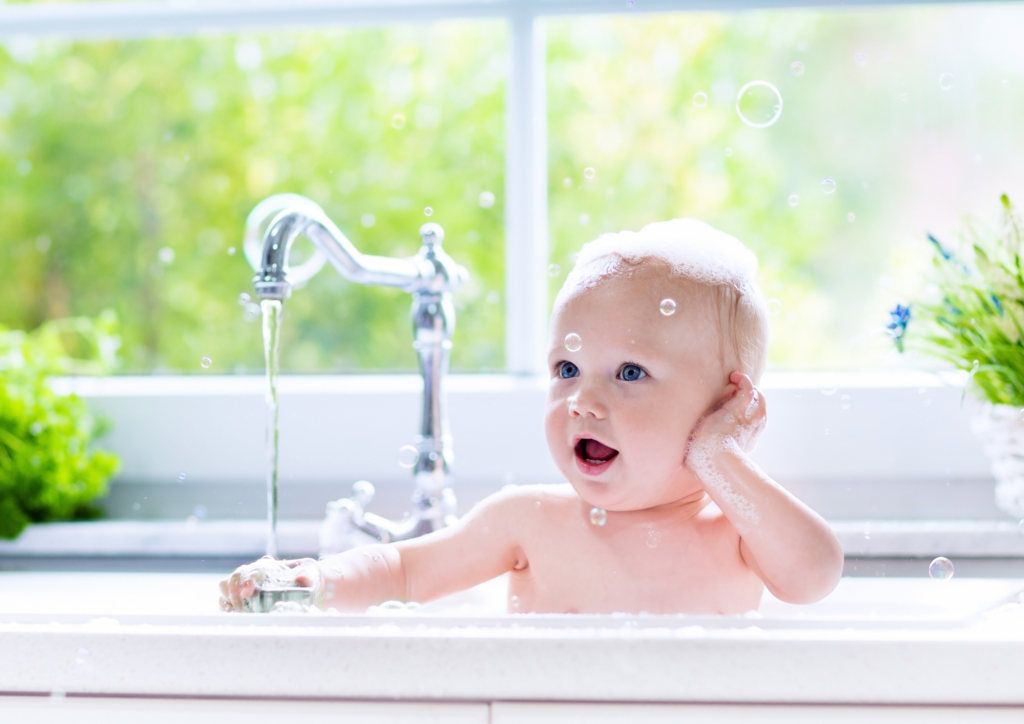
Your baby will never grow as fast as they do in their first year. Sometimes, like with our second, their face changes so much that they look like a totally different person. So, capturing every essence of your baby’s first year in digital form is essential because time flies so fast. Blink, and they’re teens (my second will be 13 next year!).
You’ll likely be snapping pictures daily, but taking a dedicated baby’s monthly photo is helpful to truly see your baby’s growth. These snapshots, taken from newborn to the first year, will show their amazing transformation over time.
However, with the thousands of images you’ll be creating, organising them will be key. In this article, we’ll share 72 of the best monthly baby photo ideas for your baby’s first year and offer tips for taking monthly baby photos on how to organise and showcase them for years to come.
Why monthly baby photos matter
Monthly baby photos help document significant milestones, from the first smile to the first steps. These regular snapshots can capture those subtle changes and major developments that occur each month that you may not necessarily see when you’re living in the moment with your baby. You’ll look back and revel at how tiny your new baby was back then, but at the time you’ll be too busy dealing with everything life throws at you as a new parent.
It’s really important to organise these photos into a collection, so you can see a visual timeline of your baby’s month of their first year, as it also creates cherished keepsakes for you and your family. These memories will truly treasured for years to come, allowing you to relive those precious moments when they’ve long flown the nest..
Essential tools and equipment
To capture the best monthly baby pictures, you’ll need the right tools and equipment. Here’s a look at what you need and some examples to get you started:
Camera vs. smartphone
Choosing between a camera and a smartphone depends on your preference and the equipment you already have.
A DSLR or mirrorless camera offers high-quality images and better control over settings like aperture and shutter speed. For instance, a Canon EOS Rebel T7i* or a Nikon D3500* are great entry-level options that provide excellent photo quality.
Modern smartphones like the iPhone 13* or Samsung Galaxy S21* have impressive cameras that can capture high-resolution images and are incredibly convenient to use. Plus, they come with built-in editing tools and easy sharing options.
Natural light vs. artificial light
Good lighting is key to taking beautiful photos.
Using natural light is ideal as it’s soft and flattering. Position your baby near a window where indirect sunlight can illuminate their face. Morning or late afternoon light works best to avoid harsh shadows. Try different angles too, to get the perfect shot.
If natural light isn’t available, you could use softbox lights or ring lights if you have them to hand. These lights can mimic natural light and are adjustable to get the right amount of light. We use a ring light which is really good at brightening up the face. The Neewer Ring Light Kit* is also a popular choice among photographers because of its versatility and ease of use.
Props and backgrounds
For some fun ideas to boost your first-month pictures, use props and backgrounds to make your first baby photos look more engaging and thematic.
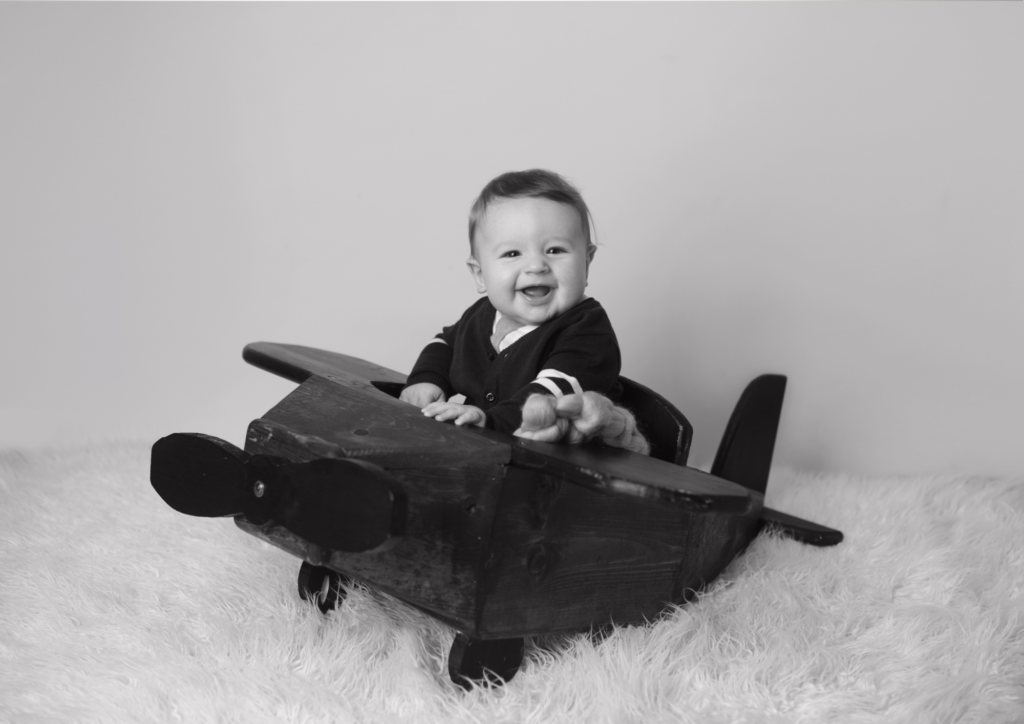
Items like stuffed animals, blankets, and toys can add personality to your photos. Seasonal props such as pumpkins during Halloween or holiday decorations during the Christmas season can make each month’s photo unique and fun.
For your baby’s monthly milestone photos, try a simple, clean background which helps keep the focus on your baby, although you can use plain sheets, patterned fabrics, or even themed backdrops that match your monthly milestone markers. For example, a white sheet can provide a classic look, while a colourful quilt can add warmth and texture.
We’ll share many more prop and photo monthly baby picture ideas below, so stay tuned!
Monthly milestone markers
Milestone markers help document your baby’s growth and make it clear which month the photo represents. Plus, they make for super cute baby milestone photos!
You could use milestone blankets with numbers and designs to highlight your baby’s age. The “Lulujo Baby’s First Year” blanket* is a popular choice.
A wooden or plastic set of blocks that spell out the month is cute and reusable. You can find sets specifically designed for baby’s milestones, like the Pearhead Wooden Milestone Blocks*.
Monthly milestone stickers you can place on your baby’s onesie are easy to use and come in various cute designs. The “Baby Month Stickers” by Little Moments* are a cute option.
72 best monthly baby photo ideas you can try now!
Now you’re ready to capture those sweet photos! Here are 72 baby month-by-month picture ideas – from themed setups to simple, sweet concepts – which will inspire you to create memorable snapshots of your little one:
Themed photo cute ideas
1 – Autumn leaves
Capture your baby among the colourful autumn leaves to create a cosy, seasonal photo.
2 – Holidays of the first year
Celebrate each holiday with thematic props like pumpkins for Halloween or Santa hats for Christmas.
3. – Popular characters and toys
Use props of popular characters or your baby’s favourite toys to create familiar and engaging photos.
4 – Beach gear
Create a summer vibe with beach props like sunglasses, hats, and sand buckets.
5 – Pumpkin patch
Use pumpkins and hay bales to create an adorable autumn photo setting.
6 – Winter Wonderland
Create a snowy scene with white blankets, snowflakes, and winter attire.
7 – Magical unicorn
Use unicorn-themed props for a whimsical and magical photo session.
8 – Jungle adventure
Include jungle animals and plants for a wild, adventurous theme.
9 – Ocean explorer
Use sea creatures and beach elements for an under-the-sea adventure.
10 – Carnival fun
Incorporate bright colours, balloons, and carnival toys for a lively and fun theme.
11 – Butterfly kisses
Use butterfly props and pastel colours for a sweet and gentle theme.
12 – Nature walk
Take photos in a natural setting with trees, flowers, and greenery.
13 – Fairy tale
Use props from classic fairy tales to create magical and enchanting photos.
14 – Zoo day
Include stuffed zoo animals and set up a mini zoo scene.
15 – Space adventure
Use star and planet props for a space-themed adventure.
16 – Island breeze
Create a tropical setting with palm leaves and beach toys.
17 – Wild west
Dress your baby as a cowboy or cowgirl and use Western props.
18 – Urban baby
Use a cityscape backdrop to create an urban, modern theme.
19 – Vintage vibes
Use vintage props and clothing for a classic and timeless photo.
20 – Art studio
Set up an art studio with paints, brushes, and a mini easel. Come up with a new idea for each month, like the best things they did that month or something which involves their first time.
Simple and sweet concepts
21 – In your arms
Capture the warmth of holding your baby and showcase the bond between parent and child.
22 – Tiny props on white
Use simple, tiny props on a white background to keep the focus on your baby. For example, you can do a pizza baby-style photo by placing your baby carefully in a pizza box. It’s so cute!
23 – Sweet little kit
Include a favourite stuffed animal or blanket for a cosy photo.
24 – Simply seated
Position your baby in a cosy chair for a natural, relaxed photo.
25 – Quilted comfort
Place your baby on a homemade quilt for a warm and comforting background.
26 – Quiet time
Capture peaceful moments with your baby in a serene setting.
27- Lullaby land
Use musical-themed props to create a calming, dreamy photo.
28 – Oldtimer
Use sepia tones and vintage props for a nostalgic feel.
29 – Books and bears
Create a reading time scene with books and teddy bears.
30 – Picnic day
Set up a picnic blanket and basket for an outdoor, sunny day theme.
31 – Chalkboard moments
Use a small chalkboard to write the month or a special message.
32 – Minimalist beauty
Focus on clean lines and simple backgrounds to highlight your baby’s natural charm.
Fun and unique ideas for monthly milestone pictures
33 – Doughnut grow up
A unique idea could be to use a fun doughnut theme with colourful doughnut props.
34 – Flower power
Surround your baby with flowers for a bright and cheerful photo.
35 – Bounty of the season
Use seasonal fruits and vegetables as props to highlight the time of year.
36 – Character of the month
Feature a different character each month for variety.
37 – Create a scene
Build a small set to create a themed scene, like a mini bedroom or a park.
38 – Go digital
Use digital backdrops to create imaginative and varied scenes.
39 – Little illustrations
Add hand-drawn illustrations to your photos for a personalised touch.
40 – Mod markers
Use modern milestone markers to highlight your baby’s age each month.
41 – Plush pics
Incorporate plush toys to add softness and whimsy.
42 – Use blocks
Spell out your baby’s age with different colour blocks.
43 – Hat collection
Feature your baby in different hats each month for a fun series.
44 – Ice cream delight
Create an ice cream-themed photo with colourful cones and sprinkles.
45 – Kite flying
Use a kite as a prop for a playful, outdoor theme.
46 – Lemonade stand
Set up a mini lemonade stand for a summer photo.
47 – Rainbow Colours
Use a rainbow backdrop or props to create a vibrant, colourful photo.
48 – Tea party
Create a tea party scene with mini teacups and treats.
49 – Under the stars
Use a night sky backdrop with stars and a moon for a dreamy photo.
50 – Xylophone fun
Incorporate a xylophone and musical notes for a musical theme.
51 – Yellow sunshine
Use bright yellow props and a sunny backdrop to create a cheerful photo.
52 – Gingham style
Use gingham-patterned props and outfits for a classic look.
53 – Hobby time
Include props related to family hobbies, like sports or cooking.
54 – Jewel tones
Use rich, vibrant colours to create striking and beautiful photos.
55 – Keepsake box
Include keepsakes and mementoes in the photo to highlight special memories.
56 – Merry-Go-Round
Create a carousel-themed photo with colourful horses and carnival elements.
57 – Nature baby
Capture your baby in natural surroundings, like a garden or park.
58 – Retro fun
Use retro props and outfits to create a nostalgic theme.
59 – Sibling love
Include siblings in the photos to capture their bond and interactions.
60 – Toyland
Surround your baby with their favourite toys for a playful photo.
61 – Vintage toys
Use old-fashioned toys to create a vintage-themed photo.
62 – Xoxo
Create a hugs and kisses theme with XOXO props.
63 – Year in review
Create a collage or compilation of the year’s best photos.
64 – Zany hats
Feature your baby in a different, fun hat each month.
Dress your baby in different costumes each month for a fun series.
69 – Dreamy clouds
Use a soft cloud backdrop for a dreamy, ethereal photo.
70 – Farm friends
Include farm animal props and set up a mini farm scene.
71 – Gardening Baby
Capture your baby in a garden setting with flowers and plants.
72 – Island breeze
Create a tropical scene with palm leaves and beach props.
Organising your baby photos
As you capture your baby’s growth month by month, it’s a good idea to organise the photos from the offset, so you can easily access the photos when you need to. Here are some of baby’s monthly picture tips to help you manage your growing collection of baby photos:
Digital photo management
Create specific folders on your computer for each month or milestone. For example, have folders labelled “Month 1,” “Month 2,” etc.
Within each folder, use tags to identify special moments or themes, like “first smile,” “Halloween,” or “family time.” This will make it easier to locate specific photos later on.
Use cloud storage services like Dropbox, Google Photos or iCloud to back up your photos. These platforms offer the convenience of accessing your photos from any device.
Google Photos, for example, allows you to create albums, share photos with family, and even search for specific images using AI-powered search features.
Regularly upload and organise your photos to keep your collection up-to-date and secure.
Creating a digital photo album
Use software like Adobe Lightroom or apps like Shutterfly to create digital photo albums. These tools offer templates and customisation options to make your album unique. Include captions and dates to document important details and milestones.
Arrange your photos chronologically or by significant events, such as their first step or first birthday. This will create a coherent narrative of your baby’s first year. You can also use thematic sections within the album to highlight special occasions and monthly milestones.
Printing and displaying photos
Choose high-quality printing services so your photos look their best. Online services like Printique or local photo labs can offer excellent results. Consider printing a few standout photos in larger sizes for framing and display.
Creative display ideas for month-to-month baby pictures at home
You can create a photo wall with a timeline of your baby’s first year. Use a mix of framed photos and canvas prints to add variety.
Use a photo baby book to compile your monthly photos into a beautiful keepsake. These books can be customised with text and embellishments to tell your baby story of their first year.
Consider making a photo calendar with a picture for each month, which can serve as both a keepsake and a functional item.
Be consistent
Select a specific day each month to take your baby’s photos. This could be the same date each month or the same day of the week. Consistency helps create a coherent series of photos that clearly show your baby’s growth and development over time.
Use the same or similar backgrounds and props each month to create a unified look. This could be a favourite monthly milestone blanket, a specific chair like a rocking chair (if it’s safe), or a particular setting in your home. Consistency in props and backgrounds highlights the changes in your baby rather than the surroundings.
Engage your baby and make it fun
Keep the photo sessions light and enjoyable for your baby. Use toys, songs, or funny faces to grab their attention and make them smile. A happy baby will result in more natural and joyful photos.
Don’t stress about getting the perfect pose every time. Some of the best photos come from candid moments when your baby is simply being themselves. Keep your camera ready to capture spontaneous smiles, giggles, and curious expressions.
Editing and enhancing photos
After taking your photos, use basic editing tools to enhance the images. Adjust the brightness, contrast, and colour balance to make your photos pop. Cropping can help eliminate any distracting elements in the background.
There are several apps available that can make photo editing easy and fun. Apps like Adobe Lightroom, Snapseed, and VSCO offer a range of editing tools that can help you enhance your baby’s photos with just a few taps. These apps often include filters and presets that can give your photos a professional look.
FAQ Section
1. Can you please provide some 1-month baby picture ideas?
For one-month-old baby picture ideas, consider using cosy setups like a soft blanket or a plush cushion. Include simple props like a milestone marker, a tiny stuffed animal, or a themed outfit. Capture your sleeping baby or them gazing up at the camera for natural, heartwarming photos.
2. Any 1-month-old baby girl picture ideas?
Baby girl monthly photo ideas can include dressing your baby girl in a cute outfit, like a floral dress or a pastel onesie. Use props like a headband, soft toys, or a pretty blanket. Consider themes like princesses, butterflies, or seasonal flowers to add a feminine touch for the perfect one-month baby picture!
3. I need 1-month-old baby photography ideas please
Use natural lighting near a window for soft, flattering photos. Place your baby on a simple, textured blanket to keep the focus on them. Capture close-ups of their tiny hands and feet or candid moments of them yawning or stretching.
4. Are you a new parent? What are some photoshoot ideas at home for a one-month-old Baby?
Set up a cosy spot with a soft blanket and pillows and use natural light from a window. Include props like milestone cards, toys, or a favourite food or outfit. Capture different angles and expressions, and don’t forget to include family members in some shots.
5. How do I celebrate our 6-month-old baby’s birthday?
Create a small, free intimate celebration at home with family and decorate with balloons, a banner, and a small cake. Take photos of your baby with birthday props like a “6 Months of Life” milestone marker, and capture moments of them interacting with their surroundings.
6. How do I do a baby photoshoot at home?
For monthly photoshoot ideas for baby boy choose a well-lit area, preferably with natural light. Set up a simple background with a blanket or sheet and use props that are meaningful or fun. Take multiple shots from different angles, using a smartphone or camera with good resolution. You can edit the photos lightly for brightness and contrast afterwards for the perfect monthly milestone photoshoots
7. How do I make my baby monthly pictures?
Select a consistent spot and background for each monthly photo. Use milestone markers like blankets, blocks, or stickers and dress your baby in different outfits each month to highlight their growth. Capture your baby’s personality by photographing them in natural, candid moments.
8. How do I photograph a newborn baby? Any ideas on how to photograph them?
Keep the room warm and comfortable and use natural light to avoid harsh shadows. Capture your baby in simple poses, like sleeping or being held. Focus on details like tiny fingers and toes and use soft blankets and minimal props to keep the focus on your baby.
9. How should I celebrate baby’s 1st birthday as we don’t have any friends to throw a party for?
Create a special day at home with family. Decorate with balloons and a birthday banner and bake a small cake or cupcake for your baby. Take lots of photos to commemorate the day. Plan activities that your baby enjoys, like a favourite game or toy. A cake smash is a fun and simple way to celebrate your baby’s first photo and make for great photos!
10. What are some clever newborn photography ideas?
Use creative props like baskets, wooden crates, or themed blankets and capture close-ups of your baby’s tiny features. Include elements like fairy lights or flowers for a unique touch. Try different angles and perspectives to add variety to the shots as well.
11. What are some creative maternity photography ideas?
Incorporate nature by taking photos in a park or garden. Use props like baby shoes or ultrasound photos and wear flowing dresses that highlight the baby bump. Include your partner or an older sibling for family-themed shots and experiment with silhouettes and backlighting for dramatic effects.
12. What are some cute poses for a newborn photography session?
Place your baby on their tummy with their hands under their chin. Capture them sleeping on their back with legs curled up and take close-up shots of their face while they are sleeping. Include props like a soft toy or a cosy blanket.
13. What are some good baby boy photoshoot ideas?
Use boy-themed props like toy cars, blocks, or sports items and dress your baby boy in cute outfits like overalls or a bow tie. Create a themed setup, such as a mini camping scene or a little superhero backdrop.
14. What are some ideas for a baby girl’s first birthday party and her mom’s second wedding anniversary baby shower combined in one celebration?
Combine themes like “Princess and Love” to celebrate both events and use decorations in matching colours, such as pink and gold. Have a joint cake with sections dedicated to each celebration and include activities that are fun for both adults and kids, like a photo booth or a craft station, which you can get from any craft store.
15. What are some of the best ideas for a 1-month-old’s birthday?
Even though it’s early, you can mark the one-month milestone with a small celebration. Use a cute “1 Month” sign or milestone card and dress your baby in a special outfit. Take lots of photos and include simple decorations like balloons or a banner.
16. What are the best memory-keeping ideas to do for a baby?
Create a digital photo album with monthly milestones and keep a baby journal to document important moments and milestones. Creative ways could include making a memory box with keepsakes like your baby’s hospital bracelet, first shoes, and favourite toys. Regularly print and frame special photos to display at home.
17. What settings should I use for newborn photography?
Use a low ISO (around 100-400) to avoid graininess. Set a wide aperture (f/2.8 to f/4) to create a soft background blur and use a fast shutter speed (1/200 or faster) to capture sharp images, especially if your baby moves. Adjust the white balance to match the lighting conditions.
18. When to take monthly baby photos?
Take your baby’s monthly photos on the same date each month, such as their birth date. Choose a time of day when your baby is usually in a good mood and well-rested, such as after a nap or feeding. Consistency in timing will help you capture their growth accurately.
19. Why do many people on the internet use baby photos as their icons or profile pictures?
People often use baby photos as their icons or profile pictures to showcase their pride and joy. It’s a great way to share the happiness and innocence associated with babies. These photos also attract positive attention and engagement from friends and family.
20. Why do new parents get professional photoshoots basically naked with their newborns?
Newborn photoshoots with a professional photographer often feature minimal clothing to highlight the baby’s pure and natural state. This style of photography focuses on the bond between the parent and baby, emphasising skin-to-skin contact which is comforting for the baby and creates intimate, timeless images.
21. Why do people cover their baby’s face in pictures?
Some parents cover their baby’s face in pictures to protect their privacy. It’s a way to share moments without exposing the baby’s identity for security reasons. This can be especially important on public social media platforms.
22. Why shouldn’t we take a photo of a newborn baby?
Certain cultures and beliefs hold that taking photos of a newborn can bring bad luck or unwanted attention. It’s always important to respect cultural practices and beliefs. If there are no such concerns, taking photos is generally safe and a wonderful way to capture memories.
23. What is the best age to get professional newborn photography?
The ideal age for professional newborn photography is 5 to 14 days old. At this age, babies are more sleepy and easier to pose in those adorable, curly positions. It’s also a great time to capture the baby’s name and details in the photos. You can also start those monthly baby photo ideas from this age to create a beautiful monthly photo series.
24. What app do you use for newborn monthly pictures?
There are several great apps for capturing and organising monthly baby photos. Baby Pics is a popular choice, offering creative monthly baby photo ideas to add artwork and text to your baby’s pictures. Another excellent app is Tinybeans, which allows you to create a digital photo album, track milestones, and share updates with family and friends. These apps are great at helping you manage milestone baby photos and generate unique monthly baby photo ideas effortlessly.
25. Is it wrong to tell my family not to post my newborn baby’s pictures on social media?
It is not wrong to ask your family not to post your baby’s pictures on social media. As a new mum, you have the right to control your baby’s digital footprint and ensure their privacy. You should discuss your concerns with your family and emphasise that you’re looking for a better way to protect your child’s privacy. Sharing baby’s photos should be your choice, and setting boundaries is perfectly acceptable.
26. Is it okay for an adult to post pictures of their babies on social media?
Yes, it is okay for adults to post pictures of their babies on social media, as long as they take necessary precautions. Using privacy settings to control who can see the photos and avoiding sharing too much personal information can help protect your baby. Posting cute creative ideas for monthly baby pictures and milestone baby photos can be a fun way to share your baby’s growth, but always prioritise safety and privacy. Make sure your baby is in a safe environment, such as a cosy chair or with safe props like a Moses basket or a milestone blanket, before sharing online.
Final thoughts
Capturing monthly baby photos is a wonderful way to document your baby’s growth and milestones throughout their first year. Use the right tools and equipment, create themed and simple photo ideas, and organise your photos efficiently, so you can create a beautiful collection of memories. Remember, consistency in taking photos and engaging your baby can make each session enjoyable and successful.
So, don’t wait any longer and start capturing your baby’s precious moments now. Whether you use a camera or a smartphone, natural light or softbox lights, the key is to start and stay consistent. These photos will become cherished keepsakes, allowing you to look back and remember those fleeting early days.
*Collaborative feature post*
*Links marked with a ‘*’ are affiliate links, which means I may earn a small commission if you click through to buy, at no extra cost to you.*
Essential newborn baby caring tips for those first few weeks
A new baby is indeed a bundle of joy, but your little one is also remarkably fragile and defenseless — especially in today’s rapid-paced, chemical-fuelled world. Whether you’re spending the day with your infant at home, choosing a new last name for your child or heading out for a visit with mum, it’s important to pay attention to any potential hazards that may lurk in your environment. From car safety to infant CPR, here are some newborn baby caring tips for those special first few weeks.
Do I need to follow these newborn baby caring tips?
From looking after multiple newborns, there are certain things I’ve learned through experience, so this article aims to help you avoid the failures that came with trial and error during those times, especially suited if you’re a first time parent. Take what you read as guidance only, but it’s important to consider these newborn tips and facts as part of your routine after birth.
How to take care of the newborn baby – Create essential stations for newborn care
You’re going to be tired after birth, and the new experiences happening around you will be overwhelming. So it’s important to prepare for when you take your baby home. If you’ve had a difficult birth and experienced a birth trauma then you should try to minimise moving around by ensuring you create essential stations for newborn care set up, so you can still be responsive to baby quickly and safely.
General stations can include a nappy changing area which includes all the essentials, like nappies, wipes, cotton wools, a place for cooled boiled water and clothing sets, as well as blankets and something entertaining for baby to look at while you change.
Wash hands before handling the baby and then wash hands after you change baby’s nappy to protect from germs spreading unnecessarily.
We will talk about other the stations you’ll need throughout this article too.
How to take care of baby – feeding and burping your baby
Another essential station to set up is a feeding station where you can sit comfortably and feed baby. Nursing care of newborn baby involves regular feeding even at night and whether you’re breastfeeding or using formula feed, your baby will want to feed every few hours at the beginning. Do not sleep train at the beginning, as this is actually detrimental to their health. When taking care of baby, respond quickly when your baby cries during the first months so they feel safe and secure.
If you are having trouble breastfeeding your baby, then you can visit a lactation consultant or attend your local clinic for professional help and support.
Burp the newborn after feeding
A gentle way to help your baby digest milk after feeding is to either place them over your shoulder with a muslin cloth in between or lean them over your hand. Gently rub their back in a clockwise circular motion until they burp. If after ten circles, they haven’t burped, you can feed them again. Take your time with this as it helps the baby to feel comfortable after a feed.
Newly born baby care – Change your baby’s nappy regularly
To avoid nappy rash, it’s important to change your baby’s nappy as soon as they have soiled, to prevent any nasty rashes on their delicate skin. At the beginning, you can use cooled boiled water and cotton wool, then after four to six weeks, you can transition to baby wipes. We use water wipes as they seem to be the most gentle on skin.
Newborn baby care tips – bathe your baby safely but not too frequently
There is no set baby skincare regime for first-time parents when learning how to look after a newborn during bathtimes. A gentle bath routine will help baby stay clean and happy.
For the first few weeks at least, you don’t need any cleansers when you bath baby as newborns are mostly clean. You can start with topping and tailing (more info here on how to take care of a newborn baby when bathing) to help you gain confidence in bathing your baby before you transition to bathing them in the bath tub.
After a few weeks, you can introduce a baby soap and give the baby a sponge bath to help with the cleaning process, but make sure it’s a gentle soap that’s suitable for newborn skin.
How to care for a newborn baby – Incorporate a baby massage into their bath/bed routine
As part of your baby bath routine, you could give the baby a massage which not only feels good but it helps baby relax before bedtime. Baby massage is also great for the digestion system and the blood circulation too.
Encourage baby to self soothe by gently flowing into a bedtime routine. Kids thrive on routine because they love to preempt what’s happening next in a world where they have no control. But, as with anything, no force is needed. Be guided by your baby to encourage them into a bedtime routine that works for you and baby.
Newly born baby care tips – Sleep when your baby sleeps and start a bedtime routine
Plan to sleep when your baby sleeps, which we all know can be tough when you have a million things to do. But, if you’re not sleeping well at night, then you don’t want to risk exhaustion. Even if it’s a short five to ten-minute nap, resting where you can make the difference between having the energy to deal with the onslaught of new experiences and being no good to anyone because you’re sick.
You can also use a white noise machine when baby is sleeping to help lull them into a deep sleep or to keep them asleep, but this shouldn’t be relied upon. A dark room helps baby settle down easily, so invest in some dark blinds and a comfortable place to feed baby.
Many people advise to make sure the baby is awake during daytime feedings to help them establish day and night, but during the newborn stages, it’s important to be responsive to the newborn’s cues because they require regular feeds throughout the day. Look for cues from baby when they’re tired and drowsy, and look for cues from baby so you can initiate the sleep routine before they become overtired.
Skin to skin contact with baby
Whenever and wherever possible, try to encourage skin to skin contact with baby because it helps to calm both you and baby, it regulates the baby’s heart rate and breathing and it stimulates digestion and an interest in feeding.
How to take care of newborn baby – protect your baby from sharp nails
A lesser known fact is to put mittens on baby’s bands after birth to take care of baby not scratching themselves with sharp nails, which tend to grow very fast. Babies aren’t in control of their limbs so they need help to protect their skin.
When handling baby take care to file nails while baby sleeps to avoid baby moving about too much. This is to help make sure there are no sharp edges when you trim baby’s nails.
Tips to take care of newborn baby – safe sleeping
Newborns are safest when they sleep on their backs on a firm surface, away from blankets or pillows. Pick a crib/cot that is suitable for your baby, so that you can minimise any complications because SIDS, or crib death, is a threat to newborns until they’re as old as a year. While doctors aren’t sure what causes infant death syndrome, they know of a handful of behaviours that increase the risk, including:
Smoking around the baby
Placing the baby on her stomach to sleep
Placing the baby on a soft surface to sleep
Placing the baby in a room away from her mother to sleep
Not breastfeeding
If your baby moves during sleep, change the position of the baby’s head when sleeping so that their airways are clear and they sleep on their back.
Car safety
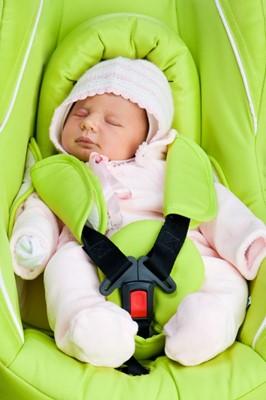
Car safety is an essential part of keeping your newborn safe when you’re out and about with baby, so when you choose a car seat, it’s important to find one that meets national safety standards. Follow the manufacturer’s instructions to ensure it is properly installed in the back seat and facing towards the rear of your vehicle. Pull the straps tight enough to properly restrain your child and make sure the baby is securely fastened in the event of an accident.
Most newborns dislike being placed in a car seat at first, but in time, they usually adjust. Drive with even more care, if possible, and in the event of an accident — even a small one — be sure to notify the police, and accept any medical care for your child that is necessary.
A proper hold
Newborns have deceptively weak neck muscles, which means it’s important to support their heads when you hold them. Gently keep a hand behind your baby’s head anytime you move her until your baby’s neck is strengthened — usually by the time she is two to three months old.
Try baby wearing with a baby sling or baby carrier to move baby around safely. Make sure you follow the package instructions on how to carry baby safely and securely,
Prevent falls
Newborn babies aren’t mobile yet, but you still need to be on the lookout to prevent falls. Never place your baby on an elevated surface — even in a car seat or bouncy seat — in case they fall, and always stay with your child while you’re changing his nappy, so there’s no chance of him/her falling off the changing surface.
Infant CPR
Cardiopulmonary resuscitation, or CPR, for infants differs from it is for adults, so even if you’ve been trained on reviving grown-ups, you may need further education on how to resuscitate a child. A class conducted by a trained professional is recommended. In the meantime, some features of infant CPR are:
Be sure to remove any visible blockages from baby’s mouth or nose.
Place one hand on your baby’s forehead and tilt it back while lifting the chin.
Place two of your fingers in the centre of your child’s chest and press down roughly a third of the depth of his chest.
At the rate of 100 per minute, give 30 compressions. Then, give two breaths into your child’s nose and mouth.
Continue the repetition of 30 compressions to two breaths until your baby recovers or help arrives.
Product recalls
Pay attention to any product recalls that may affect your baby equipment at home or at nursery. Cribs, strollers, car seats, and more are all commonly recalled due to defective manufacturing that leads to safety risks. An ongoing and updated list of product recalls can be found here.
Avoiding phthalates and BPA
Plasticisers, also known as phthalates, and bisphenol A, also known as BPA, are two common chemicals found in many household products, from lotions and packaging to cosmetics and toys. There is a lot of concern over the side effects that may be caused through exposure to these chemicals, such as hormone disruption that can affect your child’s reproductive system, as well as an increased prevalence towards asthma, obesity, and even cancer. While a definitive link has not been proven, it’s best to rid your home of anything that has these chemicals in it just to be safe.
Look after yourself
This article wouldn’t be a useful article if I didn’t include newborn care tips for stressed out parents. I’ve been through the newborn stage four times and I know how overwhelming it is when handling a newborn while staying sane during the first six weeks, especially when learning how to handle newborn baby alone after the help has gone.
The postpartum bleeding, the sleep deprivation and a needy baby creates a combo platter of stressful emotions, which makes it difficult for you to think objectively. It indeed takes a village to look after a baby, but if you don’t have a village, then the least I can advise is to take time to look after yourself. Plan to sleep when your baby sleeps and take the rest where you can. Babies need love and attention but so do you. Don’t forget yourself.
Newborns are resilient, but it is your job to keep your baby safe. Thankfully, by using common sense and following these newborn baby tips and other guidelines, you will know how to take care of your newborn baby and do so without too much worry.
For more parenting tips direct to your inbox, as well as baby care tips for new parents and my top tools that I’ve tried, tested and love, sign up above for more information, tips and freebies.
FAQ
When can newborn babies see? What are the vision development stages?
Taking care of a newborn baby of one month is challenging. What can I do to manage the situation?
When babysitting a little baby newborn, 7 months, how can I provide the best care for the child?
What are some life hacks when having a newborn baby?
What special care does a newborn baby need?
How do parents take care of a newborn baby in the first six months?
How do you take care of newborn baby in winter?
Follow the above baby care tips for new mums to help with the first few weeks of handling a newborn.
What should you not do with a newborn?
Never shake a baby because it can lead to brain damage or even death. Also, do not neglect your baby. They cry because that’s their only form of communication. They don’t cry for nothing! Find out what is causing your baby to cry and tend to their needs accordingly.
The first week has been such a daze and it has gone by so quickly. I can’t believe little Aron is already a 1 week old newborn!
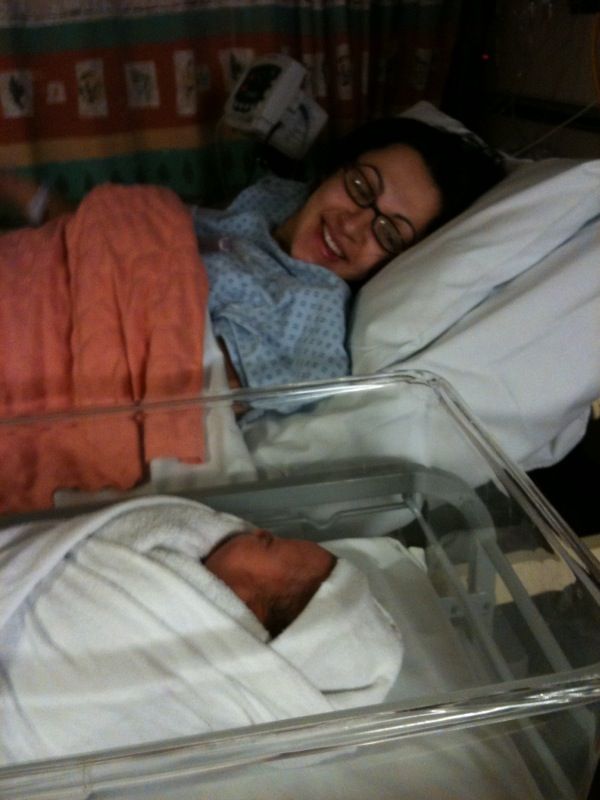
I stayed in the hospital for 2 days after Aron was born as I had a caesarean section and needed to recover. I was taken to the maternity recovery ward on the first night where other women were staying with their newborns.
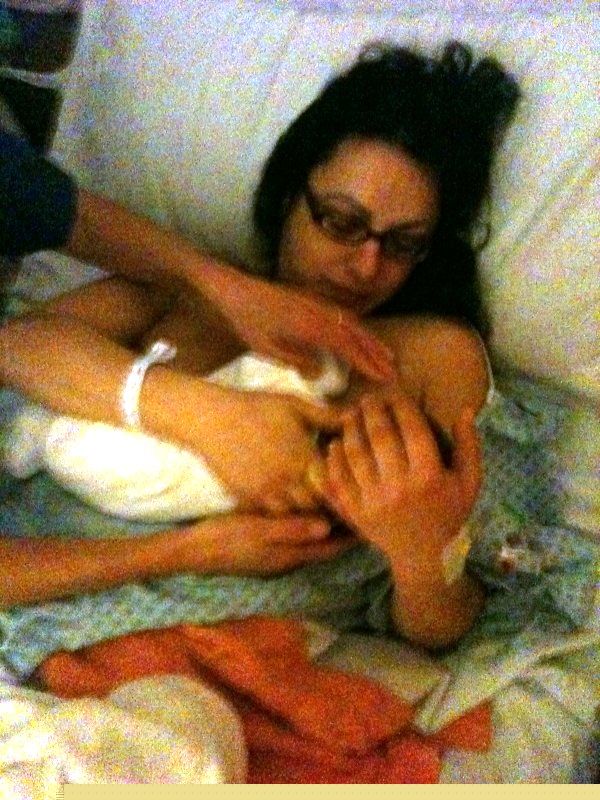
I was bedridden for the first night as I was hooked up to a urine catheter and a drip which drained all the liquid from my caesarean wound. The midwives encouraged some skin-to-skin contact straight away so they placed Aron on my chest and showed me how to encourage him to my breast.
I was still very dazed from previous events, so the fact that I held my one week old son in my arms was an overwhelming experience to say the least. The labour and birth felt like I had accomplished something so great and Aron was my reward.
After several attempts (and quite a lot of patience from the midwives) Aron successfully latched onto my breast and we started bonding.
I was taken aback by the beauty of him and watched him feed. He then slept in my arms before the midwife came to place him back into his cot. The ward that night was so loud – newborn babies were crying constantly and I didn’t manage to get any sleep. Aron was such a good boy though and didn’t cry once. He only got up to feed, and then he would just go back to sleep.
The second night, the midwives took the catheter out so I was able to move around a bit and stretch my legs. I still had to have this annoying drainage device attached to me so I still felt restricted. Hubby and family came to visit and play with the baby who seemed so relaxed after what was such a distressing labour and birth for him too.
A paediatrician also checked Aron over and advised he was recovering very well. The midwife could also tell that I hadn’t slept at all that night and moved me to another ward where there was only one other woman. It didn’t make much of a difference though as the lady snored so loudly and every time the snoring would stop, her baby would wake up and cry loudly. Poor Aron and I didn’t get any sleep again.
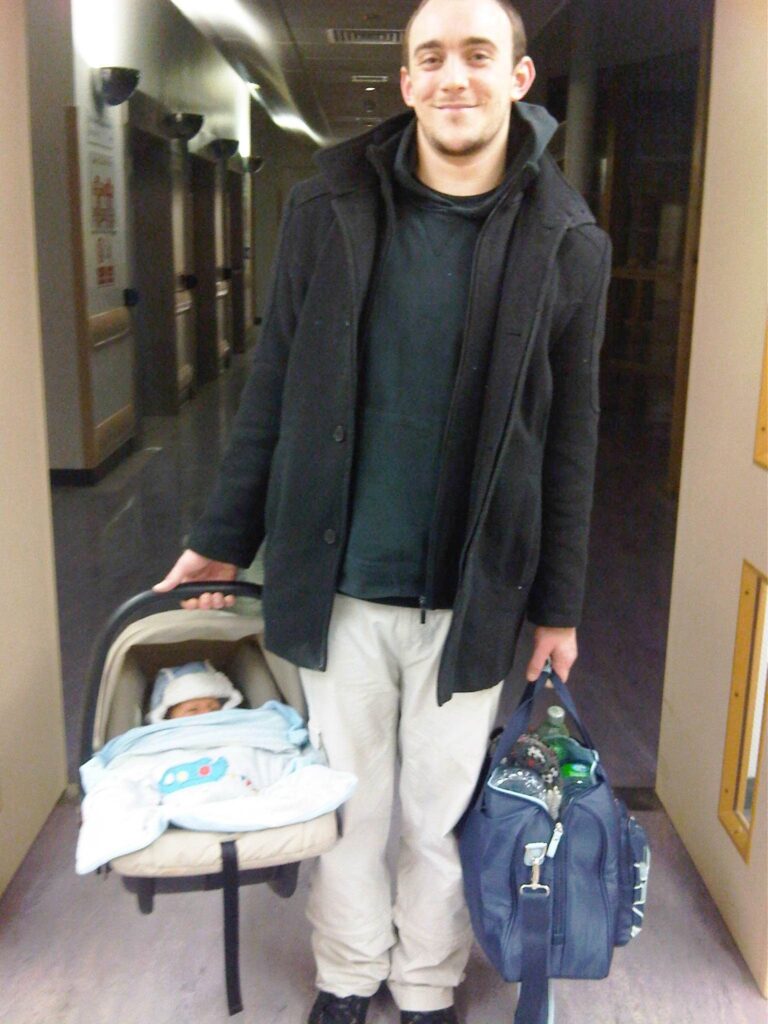
I was discharged from hospital on the Tuesday. The midwife checked me and Aron over and gave us a clean bill of health, so that night hubby and I were given the all clear to go home. We were so excited to take Aron home for the first time. It was freezing outside, so we dressed him up in a sleepsuit and snowsuit, hat and gloves and placed him in the car seat. He’s so beautiful, I can’t stop staring at him!
It was such an exciting and daunting time for us. We were now solely responsible for Aron’s wellbeing and were watching him like a hawk to make sure everything was ok. When we got home I fed him and we put him to bed. I just sat there for hours staring at him. I couldn’t believe hubby and I made such a beautiful baby boy! He seemed so relaxed and settled too, considering everything that had happened. Needless to say, hubby and I weren’t quite as relaxed and didn’t sleep at all that night – we were up every hour feeding and changing Aron.
To be honest, all it seems we have been doing this week is feeding Aron and doing constant nappy changes. After 1 week, he has started to have more active periods which is so cute and hubby and I have already noticed certain characteristics which help us to prevent Aron from crying. He is such a good boy though and hardly cries. The midwife came over this week to give Aron the heel prick test. He cried a bit but was otherwise very good and took it like a man.
He gets a lot of hiccups and breastfeeding seems to be the only thing to stop the hiccups. There is one problem though – he gets quite gassy. He had trouble at one point, not being able to burp and poo, but the midwife advised us to buy Infacol* and that seems to have done the trick. He has already passed meconium quite a few times and now his poo is a mustardy colour. I am laughing as I write this.
I can’t believe how much hubby and I have become so obsessed with Aron’s digestive system! Has Aron pooed? What colour is it? Has he peed? Is he hydrated? Am I feeding him well? The midwife did advise me to stop eating acidic foods like orange juice and also to go out and buy Spatone iron supplements* as my haemoglobin levels were quite low, which has made me quite constipated. Honestly, feeding and sleeping in the first week of life is all we’re thinking about at the moment!
I managed to do a bit of catching up on work before I passed out for a few hours while hubby took over a bit. Then it was rinse and repeat!
By the end of this week, hubby and I can safely say that we have learned the following 1 week old milestones:
It doesn’t take long for your breast milk to come in – about two to three days – and they feel uncomfortable, large and sore. However, after 1 week my breasts are going back to normal now so the uncomfortable period is quite short.
My one week old newborn doesn’t like the cold. He doesn’t like his nappy to be dirty and only cries when he’s soiled his nappy. However he also doesn’t like to be changed because that also makes him cold so we have decided that straight after breastfeeding is the best time to change him because he’s so content and drunk from breast milk that he doesn’t care.
Aron is fascinated with my hair because it’s dark and curly.
It is ok for Aron to sleep 3 to 4 hours at a time, but it’s probably best to make sure he only does this once or twice during the day, but only when he’s older, as he’s too young at the moment for a sleep schedule. But it’ll allow us to have a good sleep (by good sleep I mean 4 hours).
Aron can now stretch his legs out in front of him and no longer feels the need to curl up into the foetal position.
Aron brings his legs up to his chest when he is in discomfort or when he’s about to fart or poo.
Aron loves it when I put him over my shoulder after breastfeeding and rub his back until he burps.
About your newborn’s first week of life – 1-week old baby development
Read on for some general guidelines related to development in the first week of life.
1 day old baby
You will be doing a lot of trial and error as you navigate your way with your new baby who will be crying, sleeping and feeding. You may still be at the hospital and so try to ask for help when you need it. Your baby will be able to see as far as your face but their vision will be blurry. They can grab onto your finger if you place it in their palm. Encourage your baby to root for milk as they will be hungry.
2 day old baby
Your newborn will be sleeping for most of the day, only to wake up every few hours to feed. Newborns can’t sleep through the night as they have very small tummies, so it’s normal for them to wake up. Newborns have around 8-12 feeds every 24 hours.
3 day old baby
You should be able to see some interaction from your baby now. When they are alert they will focus on your face and will be drawn to your voice, especially higher-pitched voices. Even if they can’t understand, keep talking to them because not only will they be enjoying it but they’ll be taking everything in like a sponge.
4 day old baby
Your baby will be focusing more and more and becoming more active. Keep talking and interacting with them, using baby noises and funny faces to encourage a smile.
5 day old baby
Your baby will still be sleeping for most of the day and their face may have even changed from when they were born. Keep interacting with your baby, as well as cuddling them a lot. It’s good for them!
6 day old baby
Your baby can only see objects up to 12 inches in front of your face, which is about the same distance from your face to theirs while feeding. At this stage they will hold your gaze for a few seconds. They will still be sleeping for most of the day and you’ll likely feel like a feeding machine because they feed every few hours.
What else to know about your week old baby – Your baby’s development at one week old
Your newborn’s appearance in the first week of life may be different to what you expected but their face will be changing daily. You may not understand all the crying in the first week of life, but slowly you will begin to point out what a hungry cry is as opposed to an annoyed or pain cry. Trust your instincts and give yourself time to learn as you go along.
1 week old development – milestones
1 week old baby milestones include instinctive brain function which means babies know how to breathe, feed, sleep and poo. This is all instinctive as the name suggests so follow your baby’s cues.
1 week old baby food
Your baby should only be drinking milk, either breastmilk or special formula made for newborns. They don’t need anything else at this stage, not even water.
1 week old baby sleep
Your baby will sleep for around 16 to 18 hours a day, waking to feed and then going back to sleep. It’s important to take their cue and allow them to sleep when they want to sleep at this stage.
1 week old baby schedule
It’s difficult to implement a baby schedule at this point as you’re basically following your baby’s cues at this stage. Keep learning from your baby and eventually you will be able to guide them to a loose schedule – but not now, they’re too young!
1 week old baby health and safety
Common health concerns in the first week of life include:
It’s very important to practice safe sleep, which means no items in the cot and no bumpers or loose blankets to restrict or cover baby. Place baby at the end of the bed with feet touching and use a sleepsuit to cover them while they sleep. Keep the room around 18 degrees celsius and make sure the cot’s sides are up.
1 week old baby care basics
After the first week – baby health check-ups include:
Newborn physical examination
Hearing screening test
Heel prick test
Your baby’s weight
Vaccinations
Bonding and communicating in the first week of life
It’s very important to promote bonding, whether that is wearing your baby using a baby carrier/sling, skin-to-skin contact and lots of cuddles. Your baby only needs food, sleep and lots and lots of love. They have only just come out of your womb so keep them close – and, no, you won’t mess them up if they fall asleep on you – just the contrary!
A fun fact – The baby’s main activities at the moment are sucking and chewing on his/her hands.
Read on for more newborn milestones week by week!
Move forward to 2 week old baby
Click above for our journey with Aron at two weeks old and how we got on in the first month.
Some things you can do with baby while they’re awake include:
Dancing with them (make sure to protect their neck!)
Tummy time to strengthen their back, although it will only be for a few minutes
Stretching, baby massage and lots of tickling and sensory touches
Reading to them
Singing to them
What should a baby be doing at 1 week old?
Most of the time they’ll be feeding and sleeping, but you can still interact with them as much as you can. Know their cues when they’re overstimulated, though, or they’ll become fussy babies!
How long should my 1 week old newborn sleep?
Other questions asked were:
How much does 1 week old sleep?
How much should 1 week old sleep?
How long should 1 week old be awake?
Babies sleep throughout the day and can interchange between long periods to much shorter periods. You should let your newborn baby sleep for as long as they need but do note they will wake up every two to three hours which is perfectly normal.
What are the hardest weeks of a newborn?
The first six weeks can be quite stressful because of the lack of sleep for parents and the overwhelm of learning something new every day with your baby. Keep at it because the time flies so fast and, before you know it, they’re 18 and have flown the nest!
How much should a 1 week old feed?
Other questions asked were:
How much does 1 week old eat?
How much should 1 week old eat?
How often should 1 week old eat?
How long should 1 week old nurse?
If you’re breastfeeding, then your baby will know how much to feed, but if you’re formula feeding then you will feed around 2 to 3 ounces (60 to 90 ml) of milk depending on their hunger cues.
Is the first week with a newborn the hardest?
It can be the hardest, especially if you had a tough birth and you’re recovering. Don’t forget you’re also dealing with lochia (the bleed after the birth) and you’ve barely slept. But this period is fleeting and it will get easier as you get used to your new normal and slide into a routine that works for you and your baby.
My baby is 1 week old and constipated. What do I do?
Other questions asked were:
My baby hasn’t pooed for 1 week. Is my one week old constipated?
Why is my 1 week old constipated?
How often should 1 week old poop?
A good baby massage and a warm bath may encourage your baby to open their bowels. Make firm but gentle circular motions from the belly button outwards as your baby is lying down on their back. You can also move their legs backwards and forwards in a ‘bicycle’ motion to help keep things moving.
Why is my one week old red?
Other questions asked were:
Why is my 1 week old baby so red?
Some newborns may have red marks on their skin which may be caused by squeezing through the birth canal. These will heal and disappear after the first two weeks. It’s quite normal for your newborn to develop a rash on their face as they get used to the outside world, but if they have a temperature or the rash looks angry, it’s best to consult your GP to see if it’s nothing to worry about. Better safe than sorry!
Can I take my baby out at 1 week old?
Yes you can and there are no set rules but it’s recommended to keep your baby away from crowded places until they are at least a few months old to allow them to build immunity slowly and to pass the immunisation milestones for added protection.
What do I do with the umbilical cord stump?
Umbilical cord care is very important so as not to get it infected. It’s recommended to just leave well alone until it falls off on its own and wash around it during bath times.
I can’t think of any baby names for my little one. What do I do?
You still have up to 6 weeks to register your baby’s name so there’s still plenty of time to come up with a name. Ask friends and family for help and draw inspiration from places around you. Eventually you’ll come up with a name with which you’ll be happy.
Should 1 week old make eye contact?
Other questions asked were:
What can 1 week baby see?
A baby at one week won’t be making eye contact all the time – this usually happens when they are about six to eight weeks old. But, they will be looking at your face a lot, so keep interacting with them and eventually they will make eye contact with you.
My baby has lost weight. Should I be worried about their birth weight?
Other questions asked were:
I was told that newborn weekly development included a bit of weight loss. Is this true?
My one week old baby has lost weight. Should I be scared?
Weight gain and body shape at one week old changes almost instantly after birth. This is because babies are born with extra fluid so it’s normal for them to lose up to 10% of their birth weight, which they will then regain in weight withing the first two weeks of birth. If they lose more or you’re worried you’re not feeding them enough then it’s important to consult your GP as it may be down to latch if you’re breastfeeding or an issue with their digestive system.
What is the most important item you’ve used during your first week?
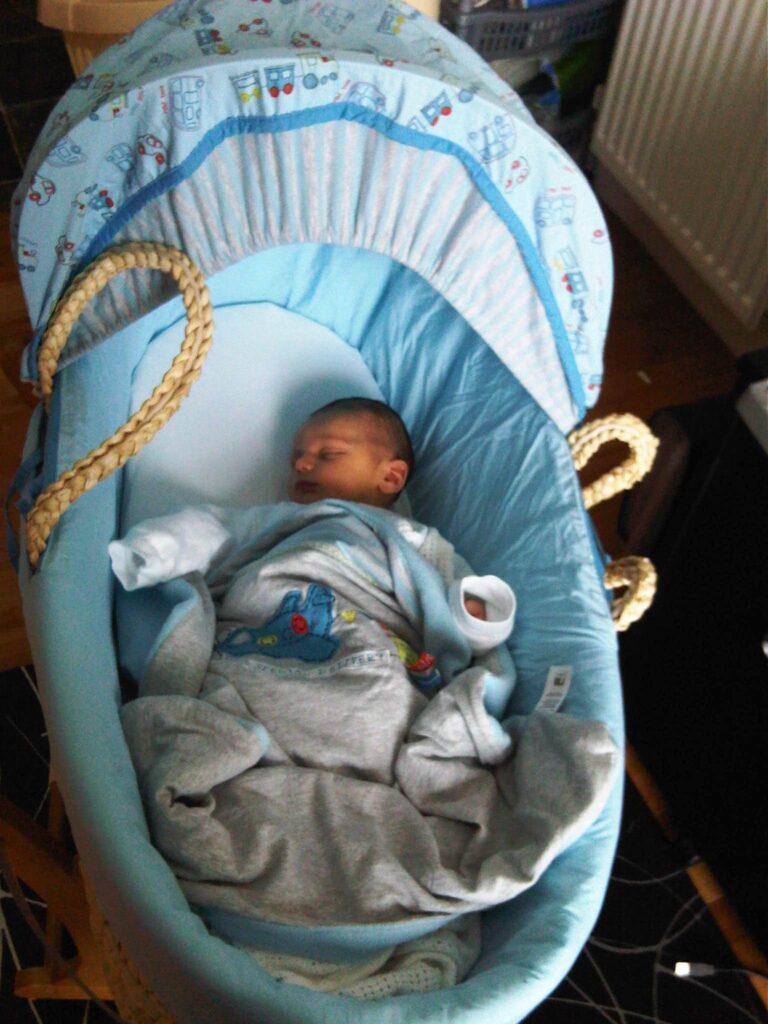
Our most important item was the Moses basket as we could move baby around wherever we were stationed.
Can you tell me more about newborn baby and one week old development milestones please?
Please read above for more information on developmental milestones at 1 week old and keep reading the Motherhood Diaries series for more information on your baby as they grow!
*Every baby is different so use the above as only loose guidelines. If you are worried about your baby, please see a healthcare provider ASAP
*Links marked with a ‘*’ are affiliate links which means I may earn a small commission if you click through to buy, at no extra cost to you.