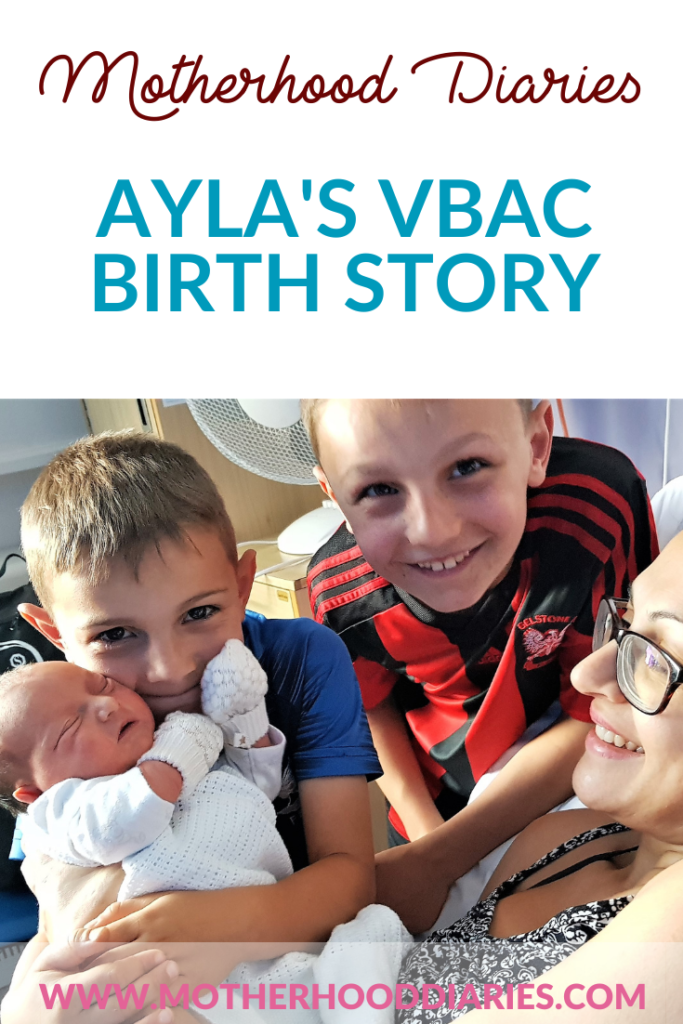
I could not have foreseen how it all started and how it ended with my fourth and final baby.
I will preface this unassisted VBAC story by saying that I did everything to encourage my baby out naturally. I followed all the natural birth induction techniques and I pushed the scheduled Caesarean for 41 weeks to 41+5, but baby had no interest in coming out yet.
Getting ready for my C section
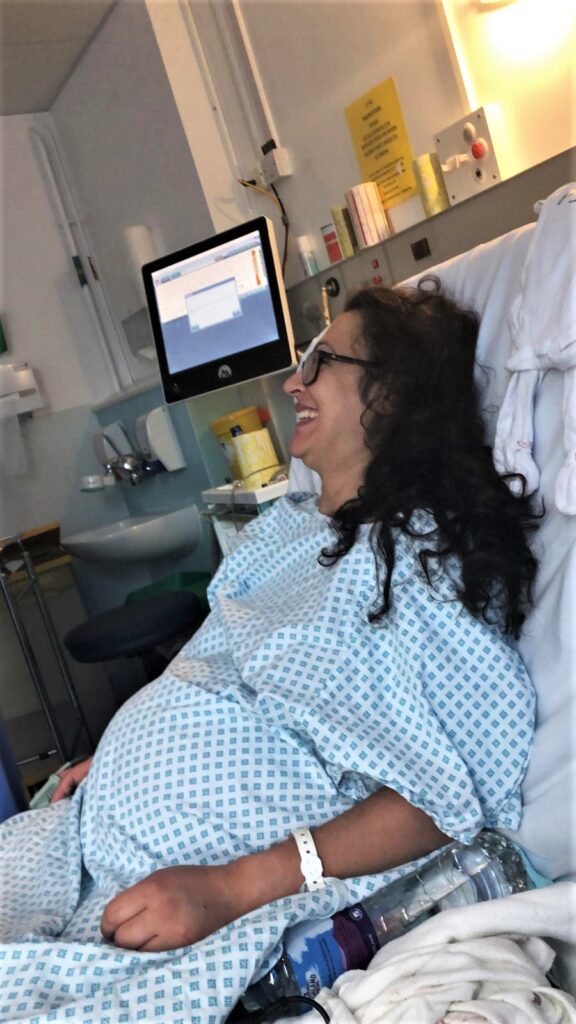
The night before my C section, I didn’t eat or drink anything from 10 pm and took the offered two omeprazole to reduce my stomach acidity before the operation. I woke up at 5 am after a vivid dream of missing my C section (I was secretly miffed that I hadn’t actually missed it). Surprisingly, all three kids had woken up too. They must have sensed what was to happen today and my frayed nerves.
I took my second two tablets at 6 am with my last sip of water and called Watford Hospital to confirm the time to come in, which we were told was 7 am. We dropped the kids at the grandparents’ and headed to the Katherine Ward at 7.10 am where we were asked to complete a Covid PCR test for me and a lateral flow test for hubby. Thankfully, the results were negative, so we could continue with our baby journey.
Instead of a C section, why not try this new induction method?
I was starving as I had been nil by mouth since 10 pm, yet hubby was busy munching away on the snacks he bought me for post-surgery. A consultant doctor came to see me while I waited on a hospital bed that had a nightgown and compression socks sitting patiently on top in anticipation of the surgery. The doctor must have spied the sheer horror on my face after she confirmed I was scheduled for a c section because she asked whether I had been offered a new type of induction that involves Dilapan and is safe for previous c section patients. The new induction doesn’t involve the hormonal drip syntocinon so it doesn’t cause artificial labour and place unnecessary risk on uterine scars.
I replied I hadn’t but had no idea what this new induction process was. She explained that Dilapan works by placing rods inside to soften and open the cervix enough to break the waters. She hoped the process would stir my baby enough to incite contractions. They also offered an epidural during the procedure, which I happily accepted. You don’t get a medal for taking labour pain!
We had to wait three hours in the Katherine Ward until we were taken to the Victoria Ward where I could stay in a private room. Hubby had to leave at this point and could only return once I was in active labour. And who knows when that was going to happen, seeing as I had only felt tightenings at this point.
I was offered a lunch menu, but there was more waiting around. I mentioned I was to be prepped as GBS positive, which wasn’t stated previously by any other doctor. I had to mention again to be sure because I had heard a horrible story recently that a mother’s newborn baby had died from contracting Group B Strep and as I was tested positive during my miscarriage in 2017 and was treated for antibiotics in 2019 with my third pregnancy, I didn’t want to risk this little lady.
At around 10.30 am a lovely woman in purple overalls, Angelica explained the Dilapan process again, i.e. they will insert rods into my cervix and there shouldn’t be any pain. Then when labour starts or I get contractions, I will be asked if I want an epidural before my waters are broken and I will then be placed on IV meds for Group B Strep. She warned that the induction process could take up to 12 hours to work. So they would monitor baby first for half an hour then they would start the induction process. It was just a waiting game now. It could still end in caesarean but at least I was giving VBAC another good shot.
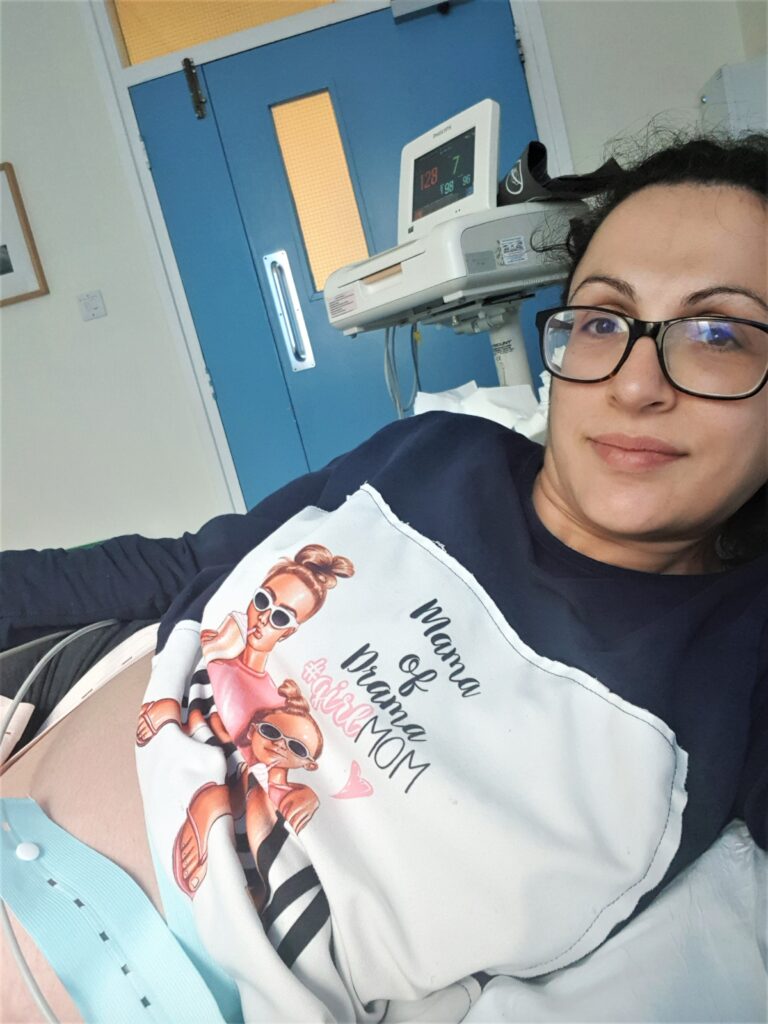
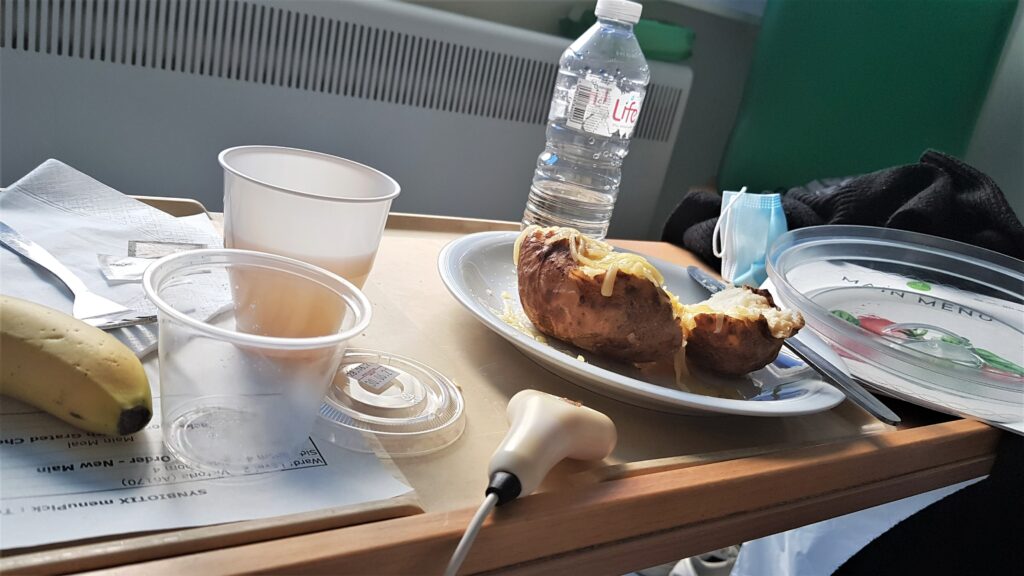
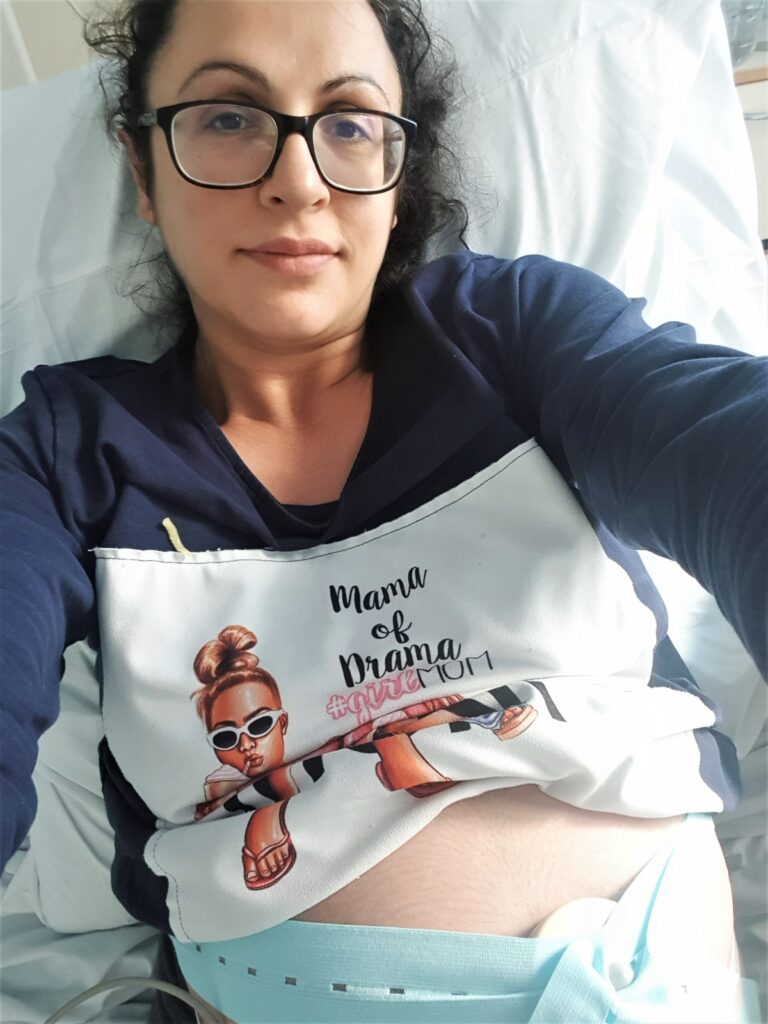
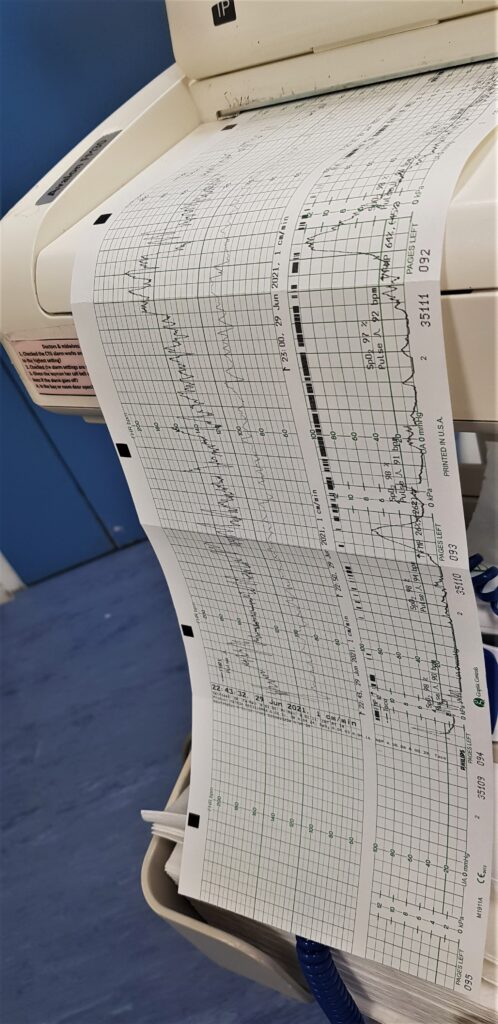
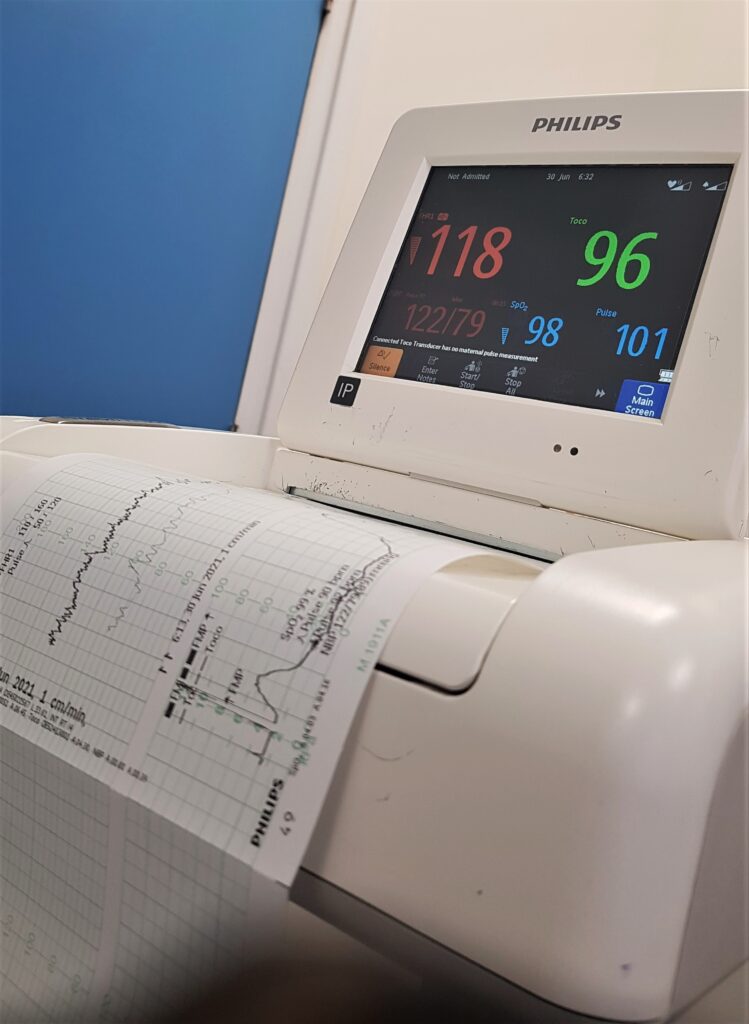
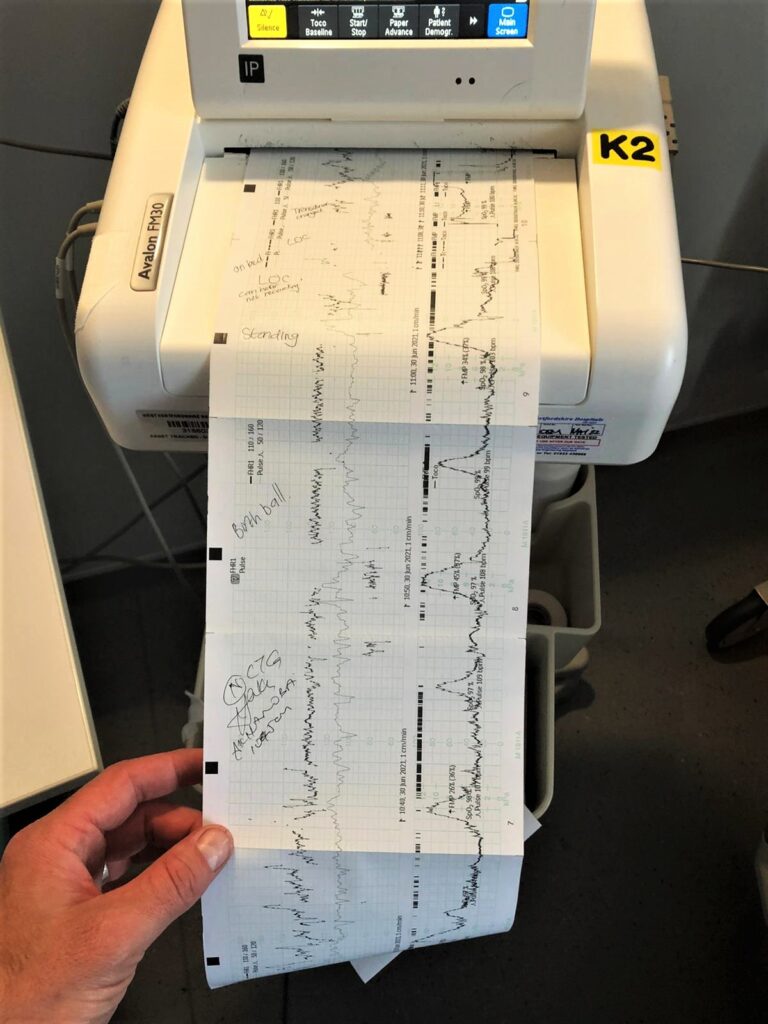
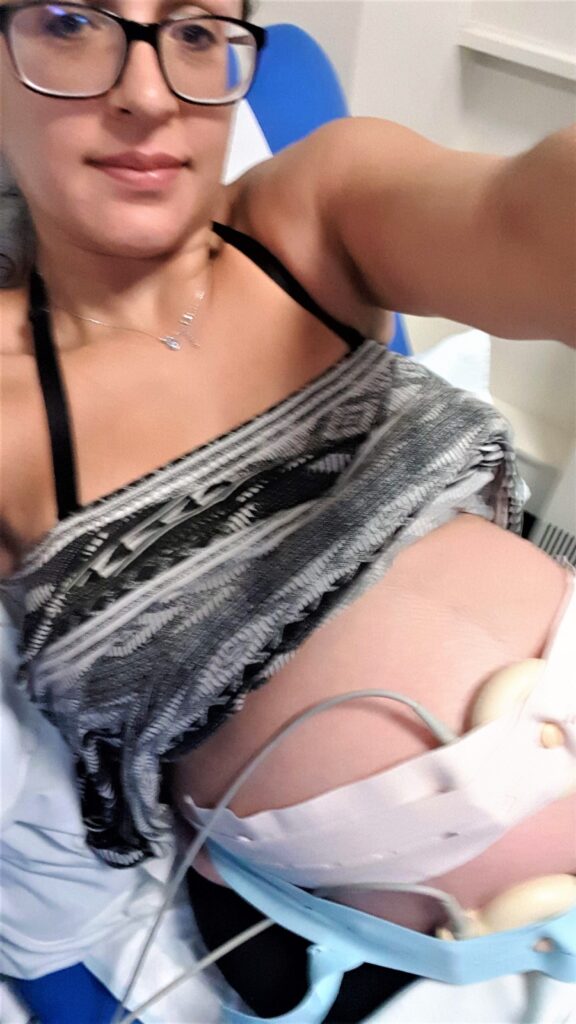
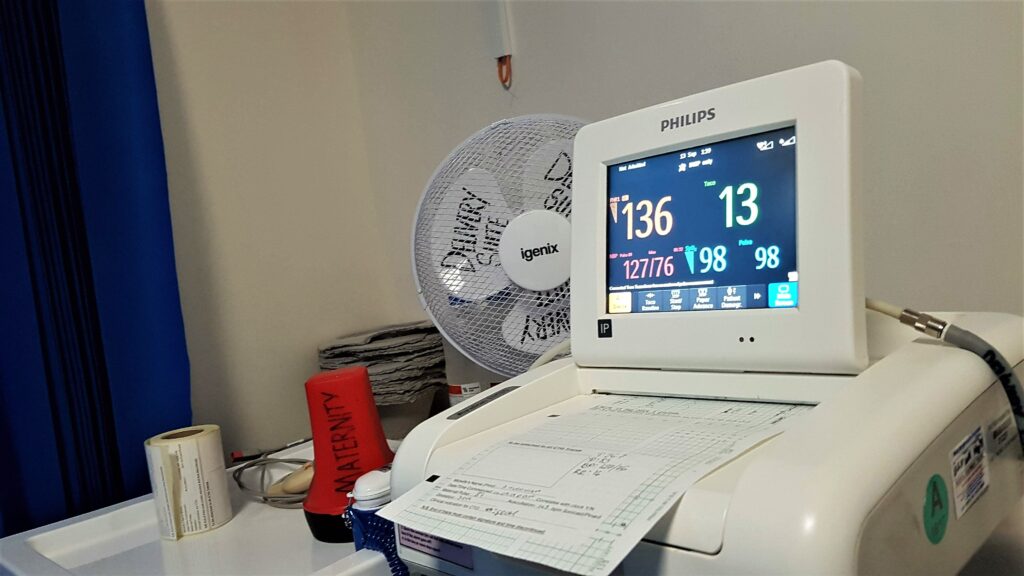
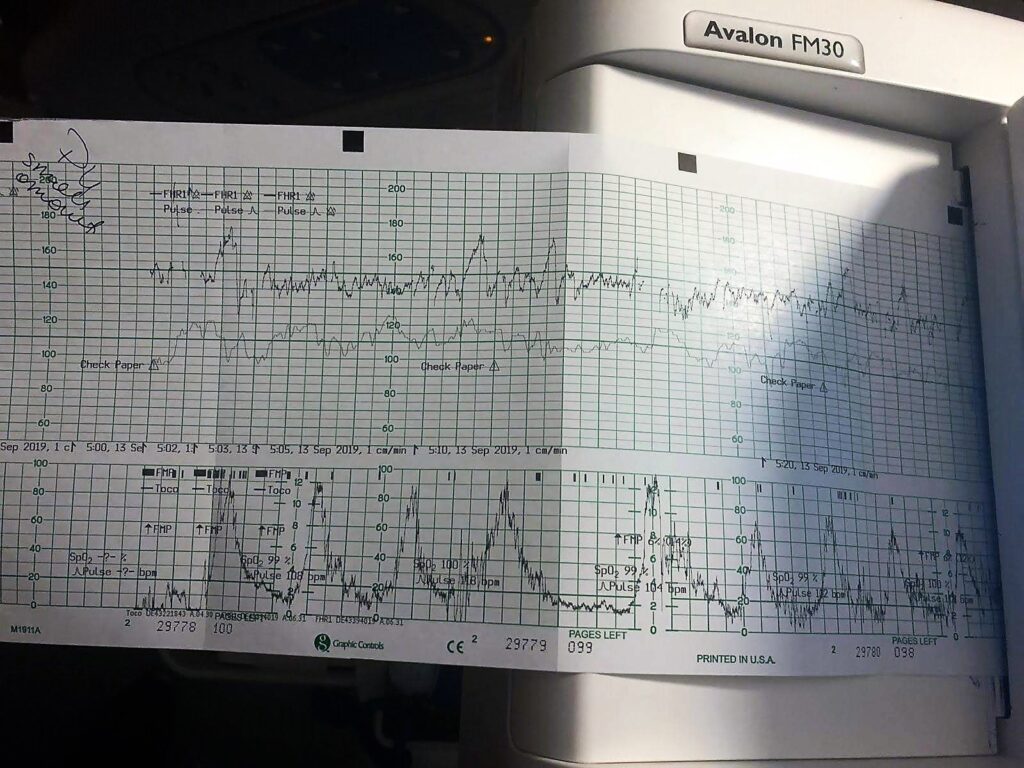
So they hooked me up to the CTG for thirty minutes to check if baby was still ok. The heart accelerations which I was told was how it should be for babies was between 120 to 167. Every time I had a tightening, baby’s heart rate would go up slightly then dip, which apparently was normal. But she kept moving around so the heart rate would disappear off the screen. During the monitoring, one of the staff members brought over some lunch; jacket potato with cheese, banana and apple juice. Unfortunately, I couldn’t eat as I was hooked up to the monitor and lying on my side.
After about an hour, I was told I could change position to lie on my back so I could eat lunch. Before 2 pm, I was taken off the monitor to wait for the induction process that was just next door. Once the induction process was over, I’d come back and be placed back on the monitor to gauge if baby was happy with it all.
I was annoyed that hubby couldn’t be around until active labour. I found it hypocritical that 15,000 people could go to Wimbledon or 60,000 people could watch the Euros but my hubby who tested negative from the lateral flow test couldn’t be with me at hospital. I get that it is a hospital environment with vulnerable newborn babies so it’s better to be extra careful. However, I believe a lot of the decisions made by the government are economic and contradictory. Anyway, I’ll move past the politics!
There was more waiting around and at 2.30 pm I was called next door to have the Dilapan fitted. The rods looked long and scary and I was worried it would be uncomfortable when inserted (they would insert up to five rods). I had to take my bottoms off and place my legs on the stirrups. The lovely doctor inserted some jelly to check my cervix and good news! She said I didn’t need the induction because my cervix was quite open and baby was very low. So now all was needed was for them to break my waters to ramp up labour.
She tickled baby’s head a bit to spur baby on but they couldn’t break my waters yet because it could trigger labour rapidly and they didn’t have the equipment available at the floor we were on. But I had to wait to break the waters because more important women were going ahead of me. I just hope this baby could hold on for a while longer before they called time on the waiting and brought me to theatre for the c section.
At 4.30 I was still waiting, so I got out my laptop and started working. I actually got a lot of work done, the wait was so long!
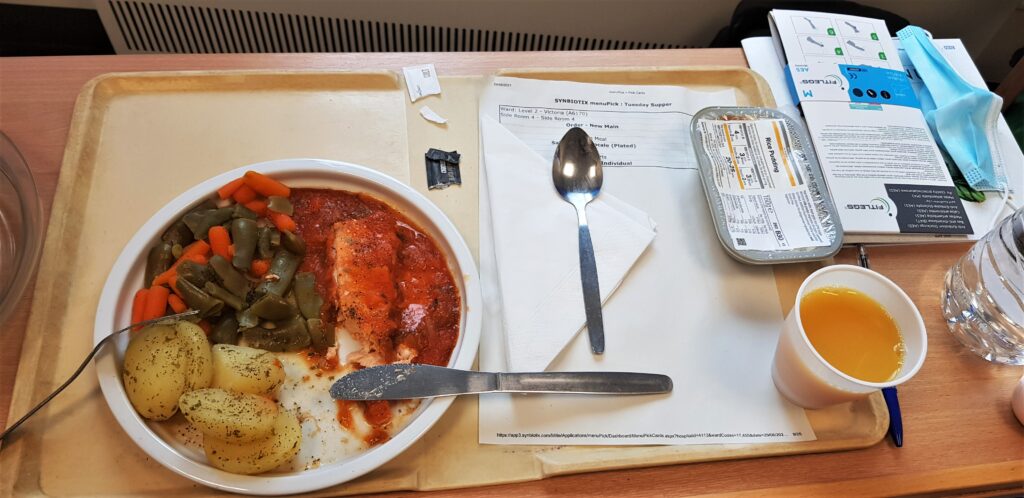
At just before 6 pm, I had my dinner; a salmon Provencale and rice pudding with an orange juice. I watched many episodes of Firefly Lane and even finished the series!
My mum who works at Watford Hospital, asked to visit but only partners could be present during designated visiting hours, despite hubby not being allowed to come in until labour. I was so bored, I tried to work but I just wanted this baby to greet me with her presence. I wanted the hospital to call me to break my waters and it even crossed my mind that it may have been better to go through with the elective c section because at least I would have had my baby by now!
At 7.30 pm a student midwife called Eleanor came to do my obs again (blood pressure and body temperature). She told me that 22 mums were delivering, but they were trying to get a constant update for me. There was good news though; baby was slowly turning back to the front-to-back position, which is an optimal position for labour, so I was hopeful she was doing her thing in time for birth. Baby’s heart rate was also checked and it was fine, although the midwives warned me there won’t be any movement until after the shift change tonight, whenever that was going to be.
Irregular contractions – has labour started?
Hubby could visit between 6 and 8 pm but he wasn’t able to come anyway because he had to retrieve the other three kids from the grandparents as they were exhausted. So I told him to stay with them until I had more updates or at least until my water broke, whenever that was going to be as it was now 8 pm!
At 8.40 pm there was a shift change and one midwife informed me it was very busy upstairs in the delivery suite. I was placed in a queue with up to four other women, and I was last in that queue, even though we were all at differing levels of riskiness. I realised it was highly unlikely my baby girl would come that night, so midwives advised they would do another set of obs at 10 pm to check whether baby was still happy but that was about it.
At just after 10 pm, the midwife came to do the CTG and baby’s heart rate was still between 120 and 170 so she was still happy. The CTG didn’t come off until 11.35 pm, however, so I was encouraged to sleep and they’d wake me if there was any movement in going upstairs to break my waters.
At 2 am, baby and I were monitored again. All was still fine except I couldn’t sleep because the bed was so uncomfortable. And when I slept, I woke up throughout the night because of painful tightenings. I got myself up properly at 5.30 am because the pressure down below was too strong to sleep through. Could this be labour starting?
Starting to feel some tightenings!
I was monitored again and could see the contractions had started, but they were irregular. I was hooked to the CTG for a long while but finally I was called upstairs at around 10 am and was taken to the delivery suite. A lovely positive woman called Corina hooked me up to another CTG and she also gave me a birthing ball to bounce on to help baby move down. It was a lovely room with a flat-screen showing the CTG movements.
The VBAC story begins
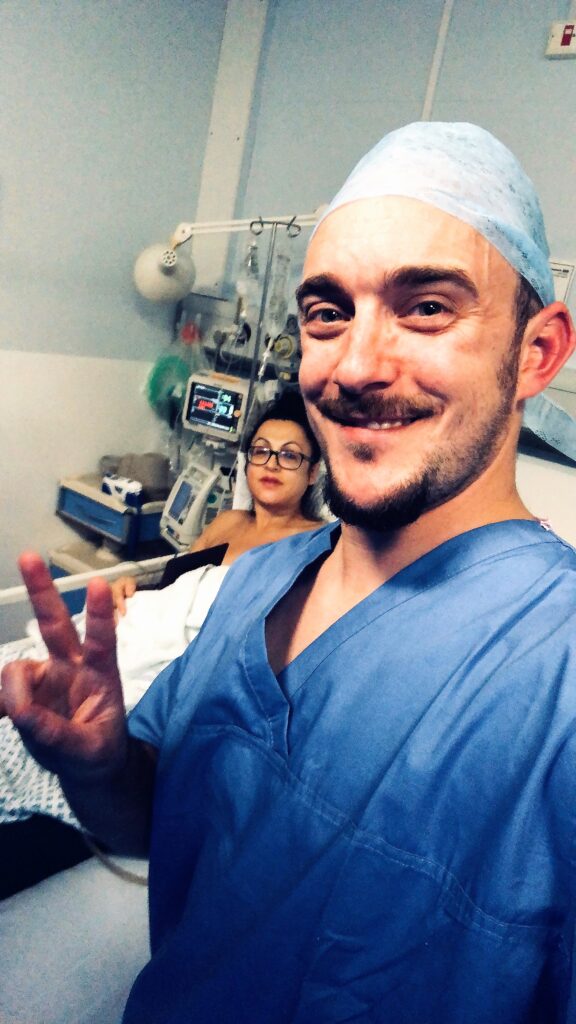
Hubby finally made his appearance, for which I was grateful and soon after the midwife examined me.
Regular contractions have started!
I was at 6cm!
I was shocked. The contractions were still manageable and not at all bad like last time. The midwife said it was because the baby had turned from Occiput Posterior (back to back) to transverse (side) position and she was slowly turning front to back which was the optimal position for labour and birth. Even being transverse made such a difference with the pain as it wasn’t centred in my back like last time, which had been excruciating.
Corina broke my waters, which was uncomfortable because there was so much tugging involved and then what happened in the next 15 minutes was a blur.
I started on gas and air (Entonox) somewhere between 7 and 8cm and around five minutes later the contractions had ramped up so hard that hubby said I sounded like a wolf and an owl at the same time. The pain was unbelievably strong. I cried for pain relief and they said the anaesthetist had been called but she never came.
Suddenly I had an urge to push, like the need to go to the toilet. I just remember the midwives telling me to listen to my body but it was very much like needing to go for a massive poo! You can’t control it.
Corina told me to breathe slowly to avoid tearing, and then she told me to give it one last massive push. I kept shouting that I couldn’t do it. I was so tired and the pain was so horrible, but she told me I was doing it and to keep going. I remember the stinging and I thought at that moment I must have torn. One big crazy push and I felt the biggest relief, like a massive pop and it was euphoric.
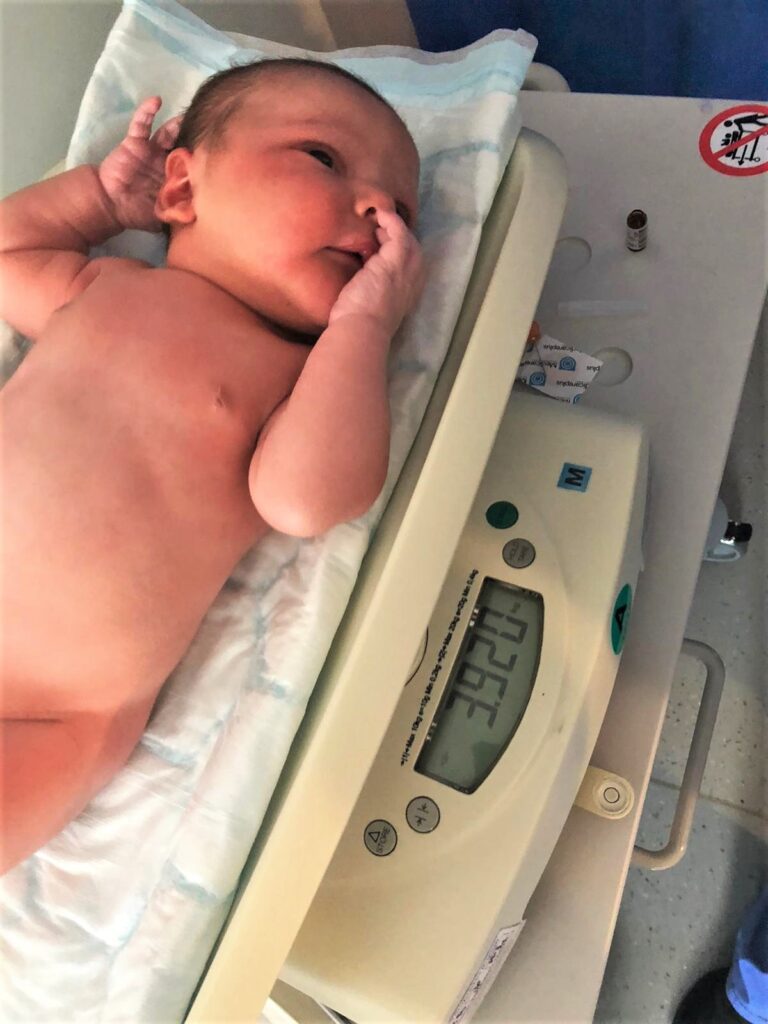
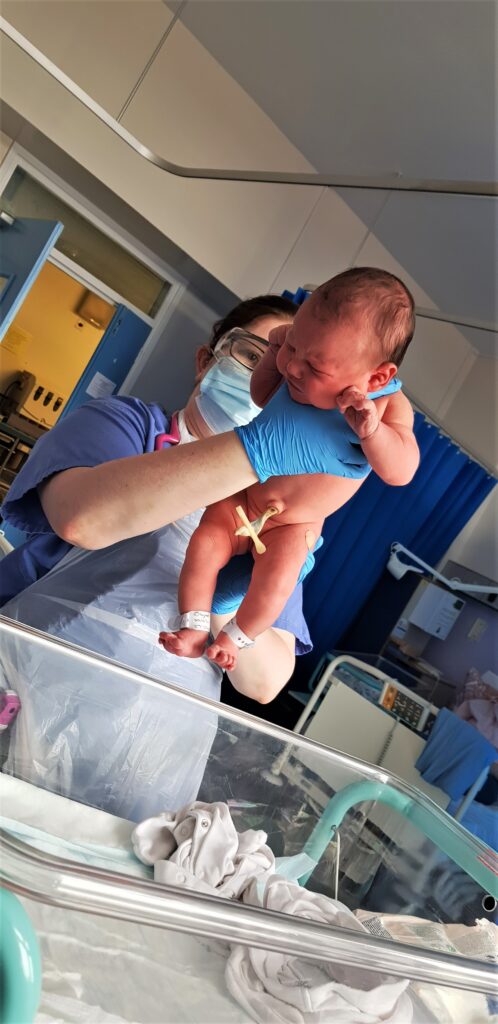
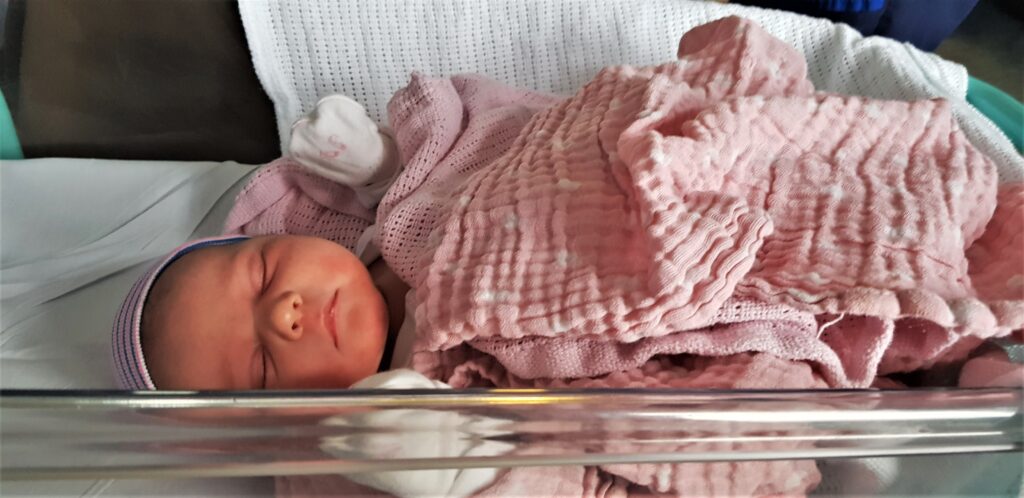
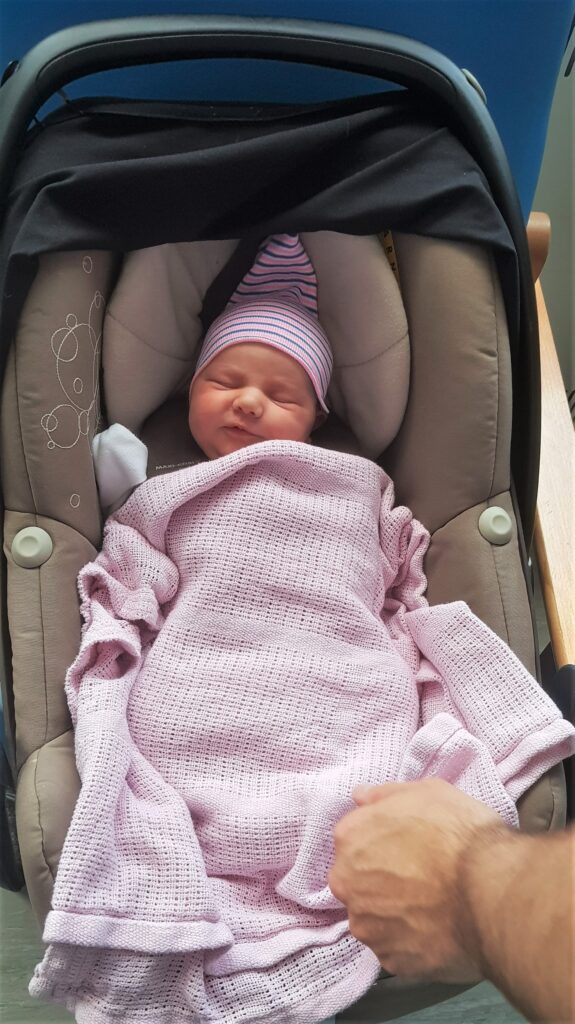
Baby girl Amelia was out at 13.56, which meant that I had laboured for just under four hours and pushed her out within 15 minutes! Amelia weighed a massive 3.920kg / 8lbs 9oz and I had no pain relief except for gas and air.
What!?
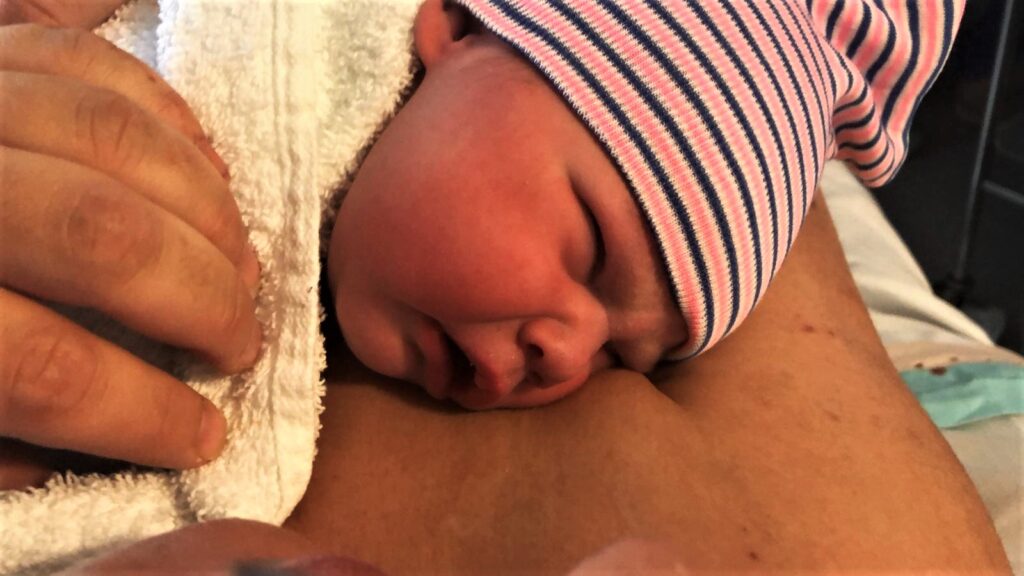
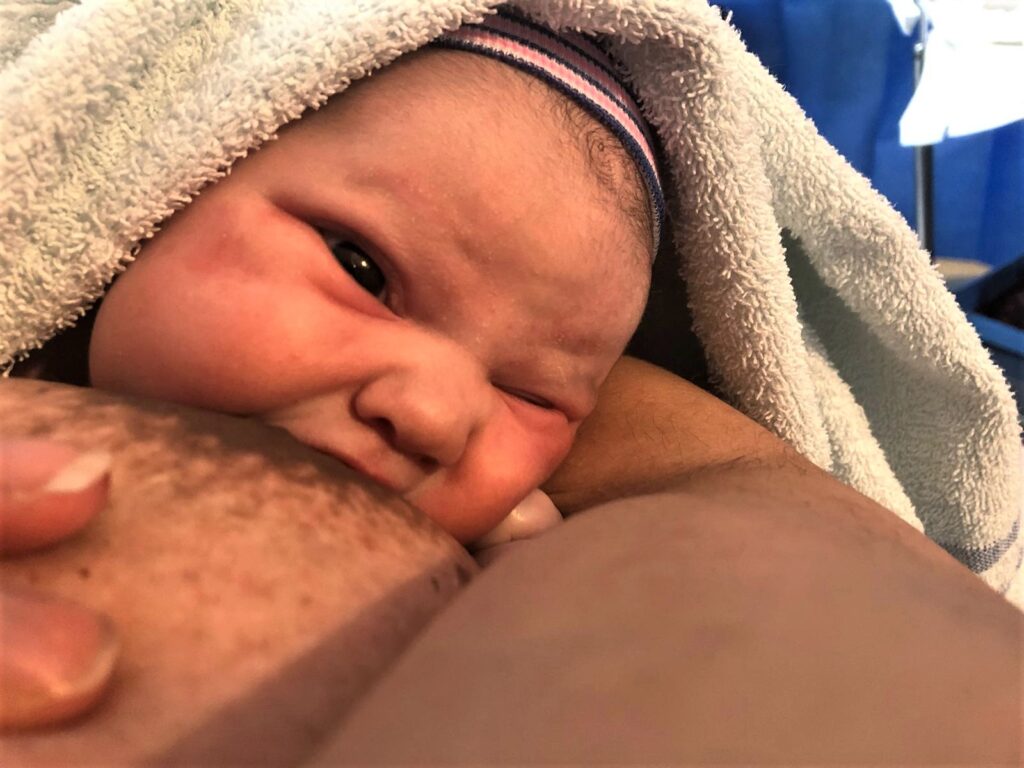
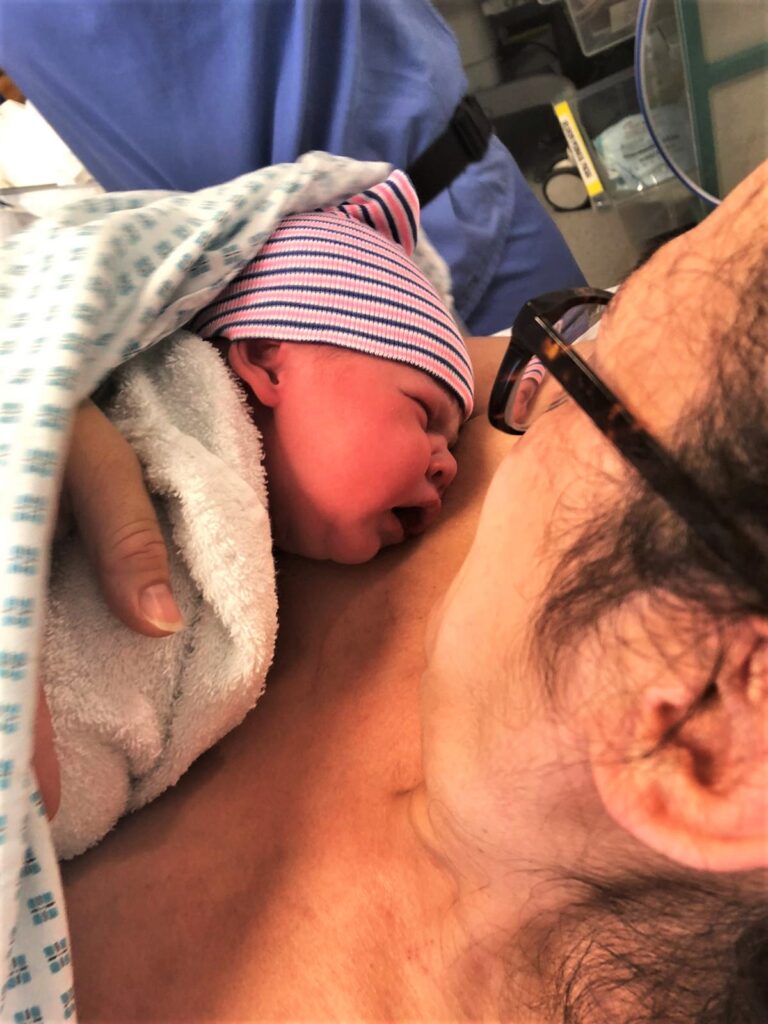
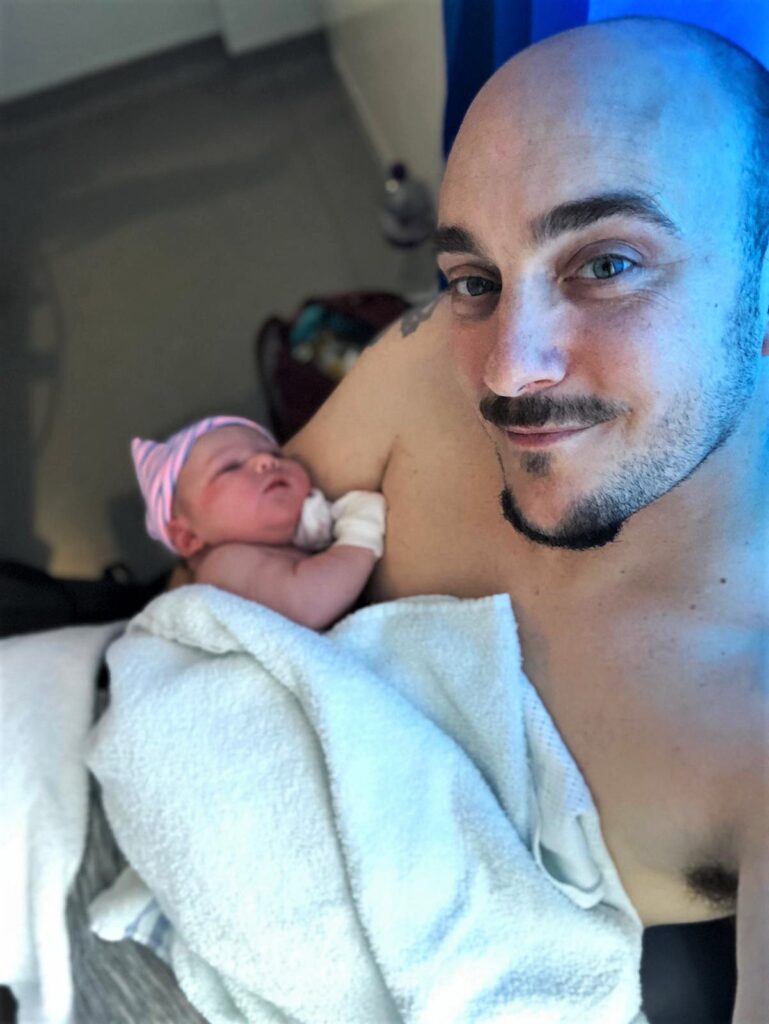
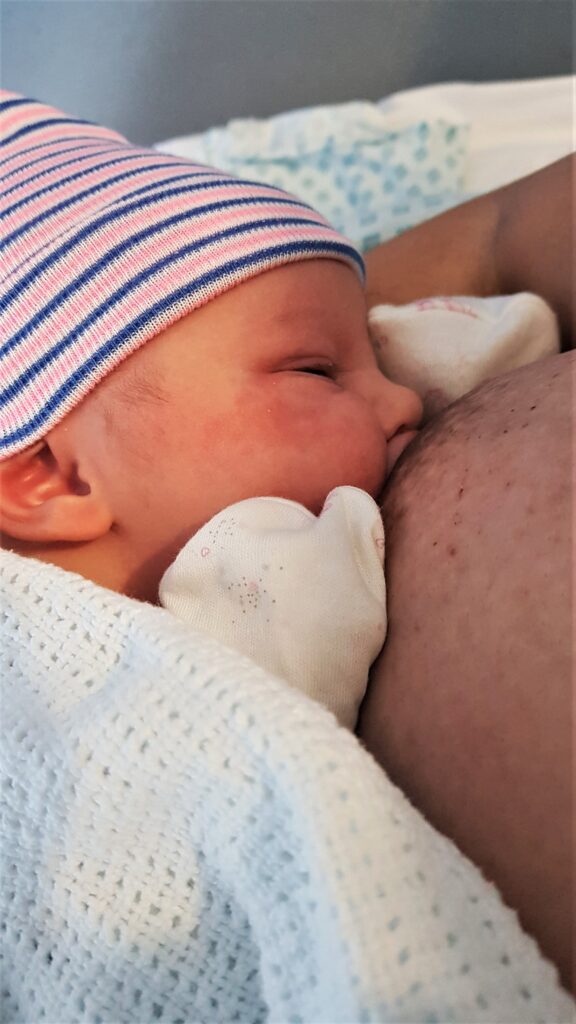
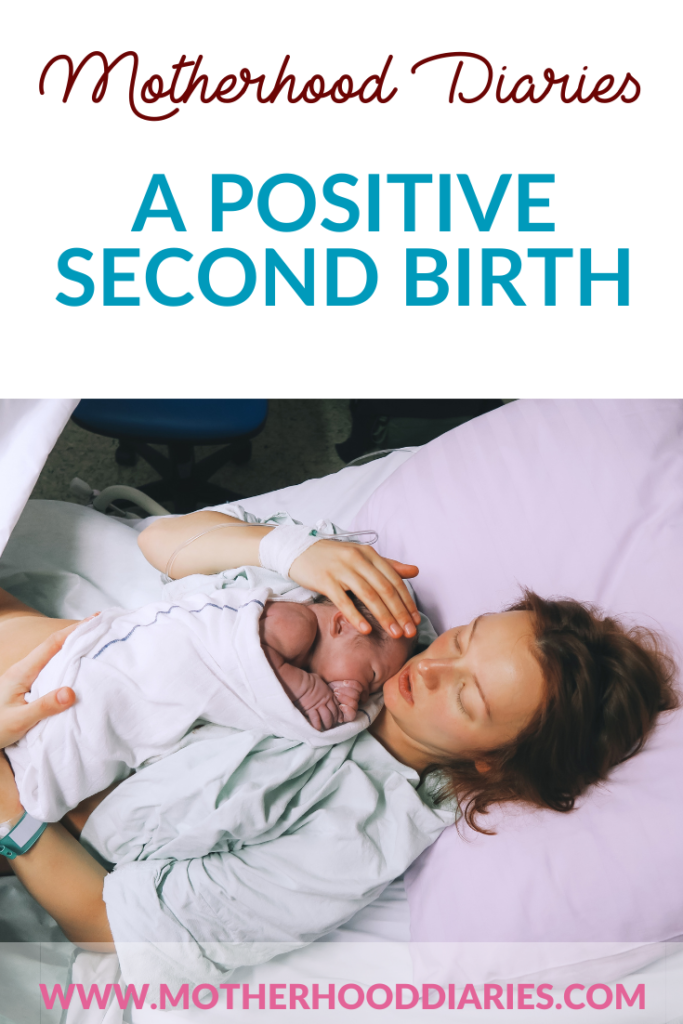
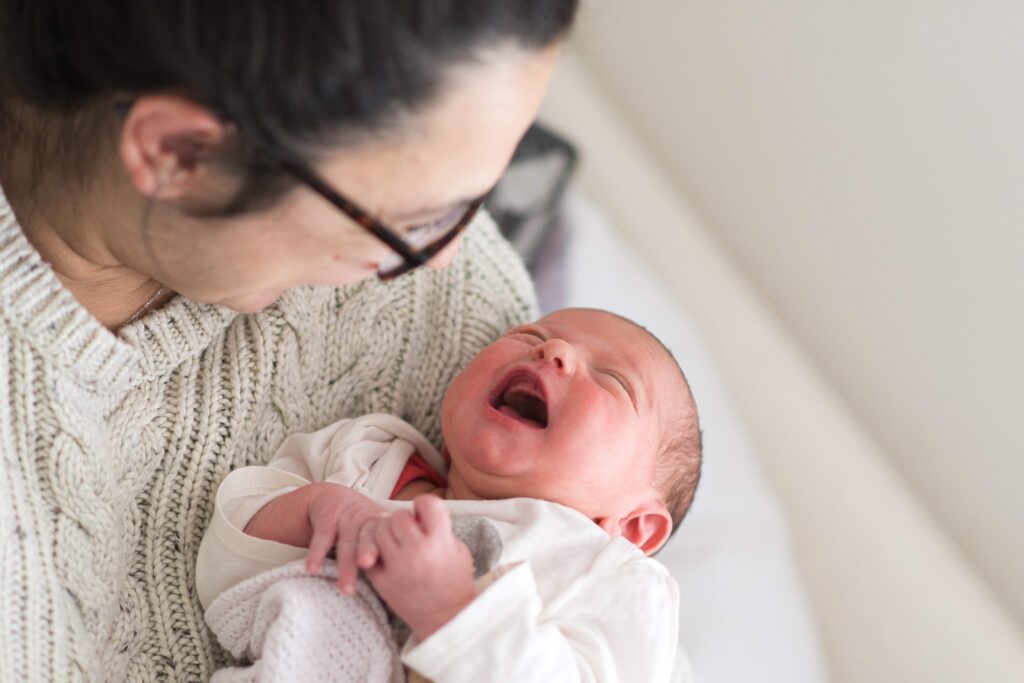
Amelia chilled on my chest and rooted for milk. She attached beautifully, but her nose was blocked so she struggled a bit to breathe in while she was feeding. The midwives said she had received quite a shock flying out of the birth canal so quickly. So she had to be resuscitated, but once we heard that cry it was joyful and I felt so proud of myself and Amelia for helping each other get through the birth. Apparently, hubby said Amelia was moving around a lot to get into the right position, which I think helped with the shorter labour.
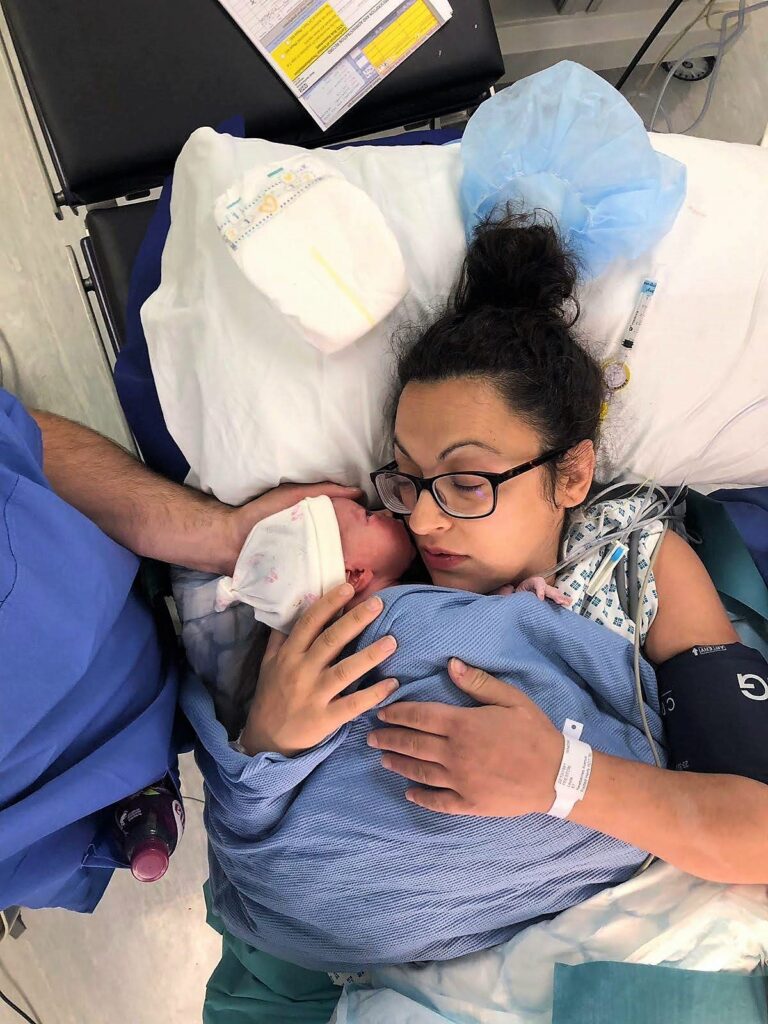
Mum and baby enjoying each other’s company for the first time
Pushing the placenta out was interesting too. I had to do another big push although it wasn’t as painful as birthing the baby. The placenta came out a few minutes later.
The nurses checked me over downstairs, which I needed gas and air for because it stung so much, but they only found grazes, which meant no stitches too.
Double what!?
I went from coming in to be prepped for a c section to pushing my baby out without pain relief in 15 minutes and needing no stitches! The pain was ridiculous. The pushing is even crazier but once you push your baby out, the feeling you get is nothing short of amazing. I am so glad they turned the epidural away. I could walk around post-birth, albeit with a bit of stinging. I could stay mobile. I had no drugs coming through my system after having a medication free birth and it felt amazing. What a positive VBAC birth story of a big baby weighing almost 9lbs too!
We stayed in the recovery suite until around 6 pm where hubby ordered a Burger King post-birth meal which tasted sublime. I also had toast and a lovely cup of tea which were delicious.
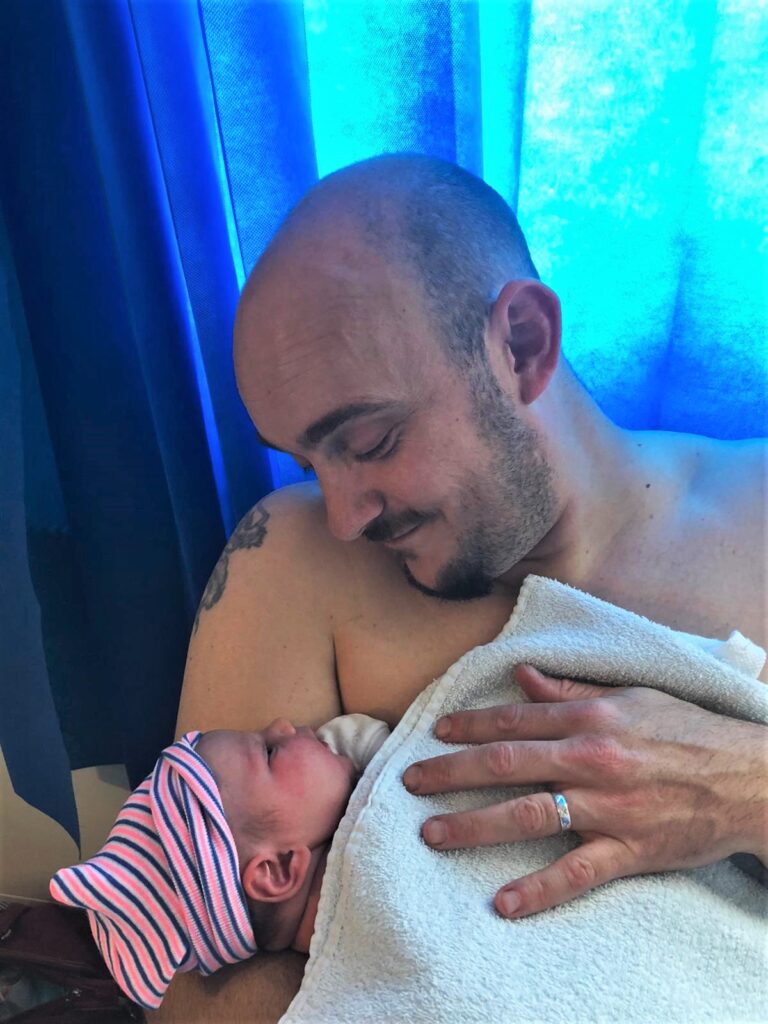
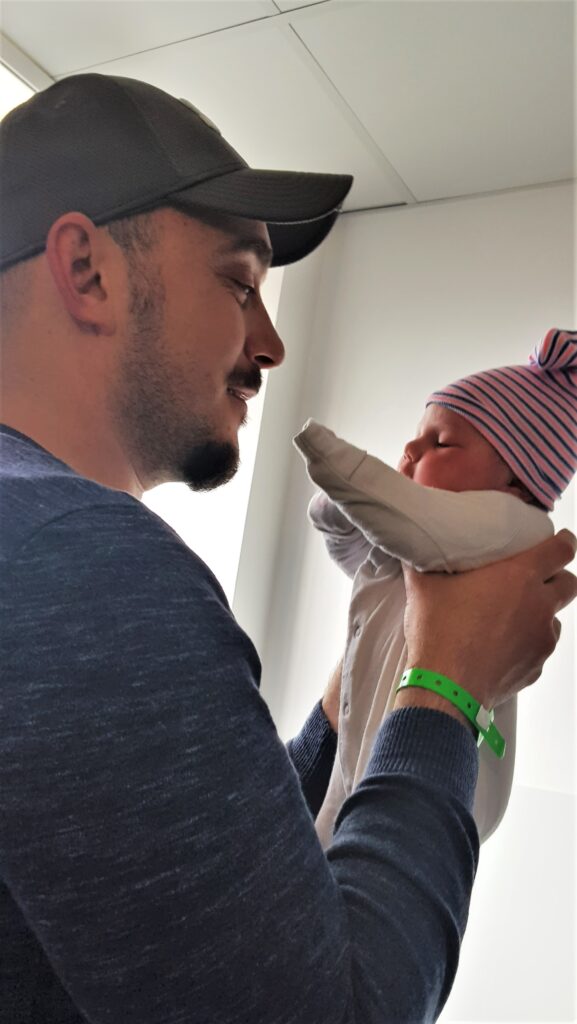
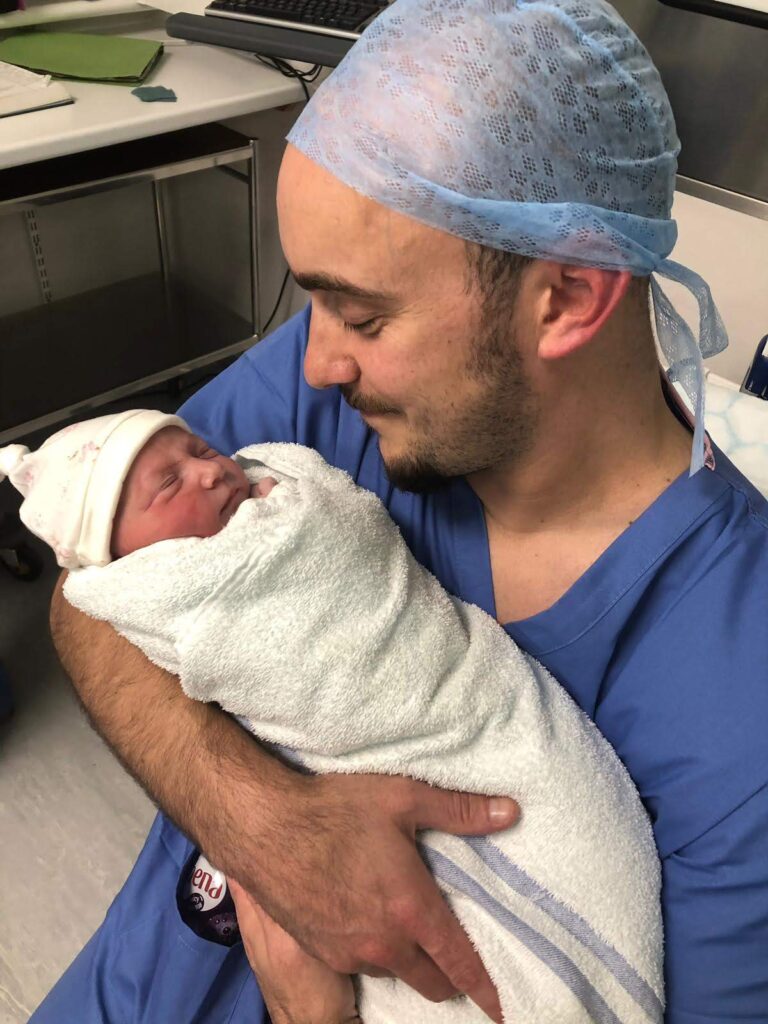
Daddy enjoying skin to skin too
I was then wheeled to the postnatal ward with Amelia in my arms. There were four other women at the ward all with different birth stories but it was lovely to chat with them and share their birth experiences. The bleeding was uncomfortable as it’s baking at the hospital and the beds aren’t particularly comfortable.
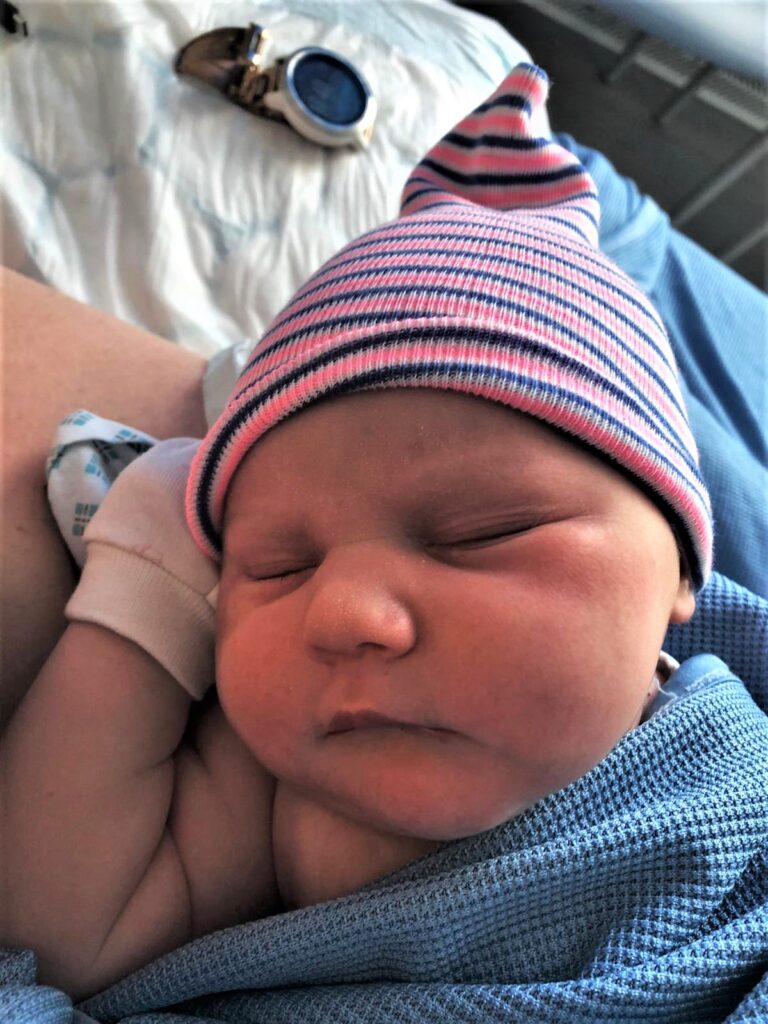
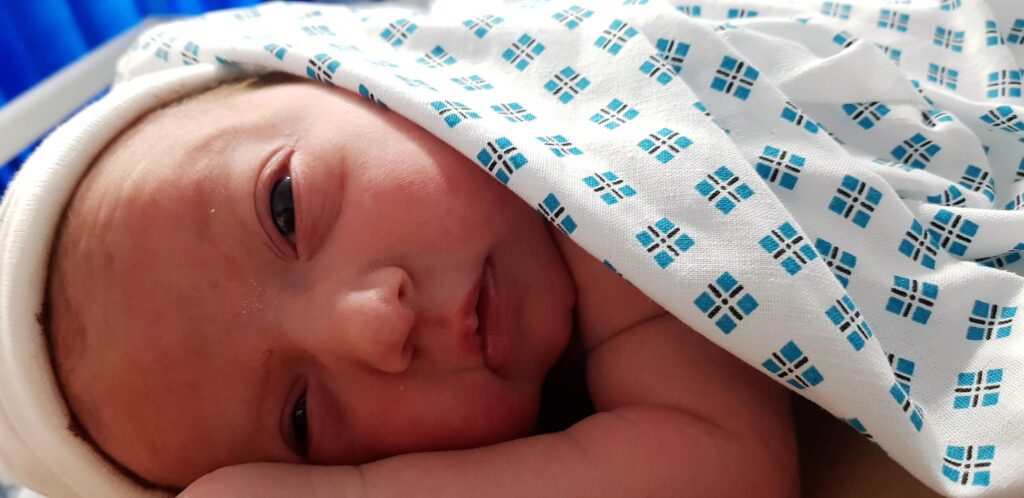
Amelia chilling nicely
No one told me about the afterpains, especially after four kids! Every time I breastfed, my uterus contracted and it felt like a mini contraction, I needed painkillers! Apparently, it takes longer for the uterus to contract back down to size after it has swelled like a balloon four times. Breastfeeding was proving quite difficult because of Amelia’s blocked nose, but the midwives said she was slowly clearing it herself, so it was better to leave it but they offered saline drops in case breastfeeding was becoming a problem.
As a result, it became painful to breastfeed but I noticed it was slowly getting better, so I persevered.
As I wasn’t allowed visitors, I was desperate to see my family and show off baby Amelia. I was advised I would be discharged the next day which was great because I thought I’d be here for three days and neither of us slept well the first night that I doused myself in sugar to stay awake. Amelia was completely clogged up, but thankfully she passed the hearing test at around 10.30 am the next morning and the newborn check.
Her nose slowly cleared by the afternoon and she had a nice long nap in bed.
I was discharged to just midwifery care in the afternoon so I just had to wait for the go-ahead and we were ready to go home! I was prescribed Enoxaparin, which is blood-thinning medicine to prevent thrombosis (blood clots); I showed two risk factors, which were my age and the number of kids I’ve had.
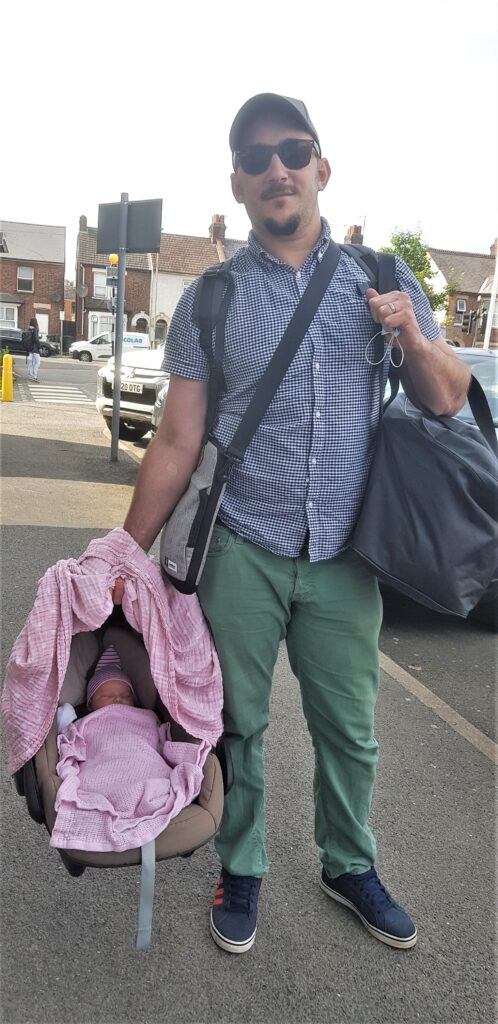
Daddy is back to pick his girls up
At around 5 pm hubby came to pick me up and I was shocked that I was able to walk so easily back to the car, which was a wonderful experience, even though my hips and front bottom felt sore and I was tired from not sleeping well the last few nights.
What an amazing experience and it goes to show you never know what’s around the corner! Thank you so much to two wonderful midwives, Corinna and Lucy. They were paramount in helping me achieve the most perfect VBAC birth story after three very different birth experiences. I can’t believe I managed another vaginal birth after two caesareans!
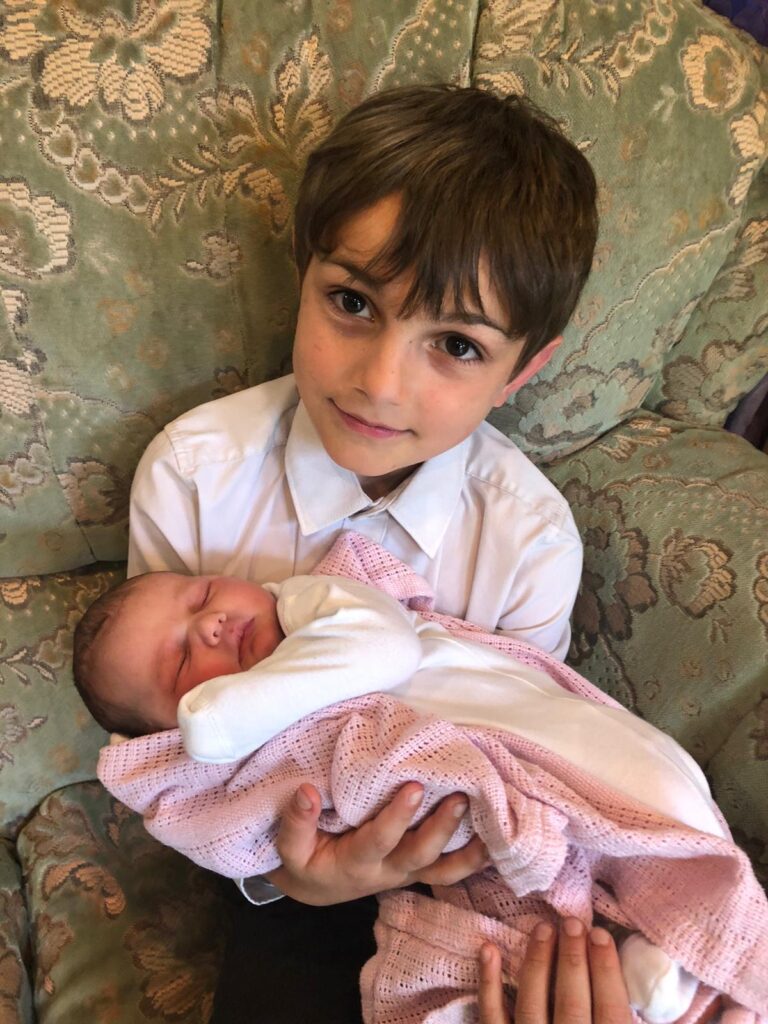
Meeting Amelia for the first time
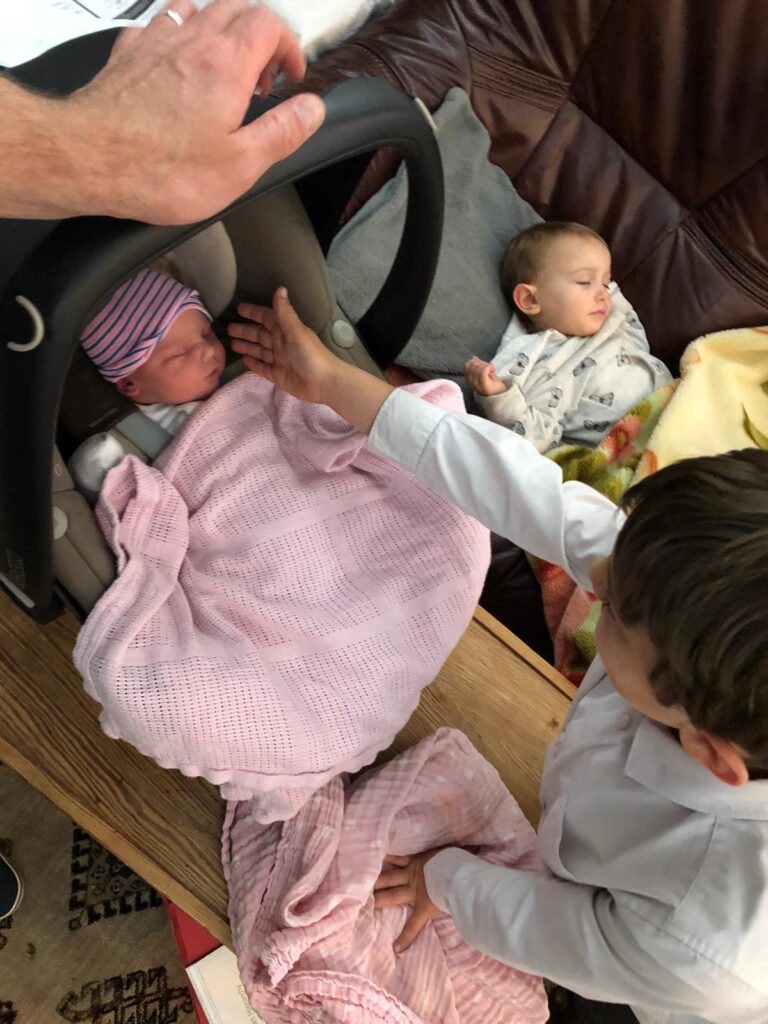
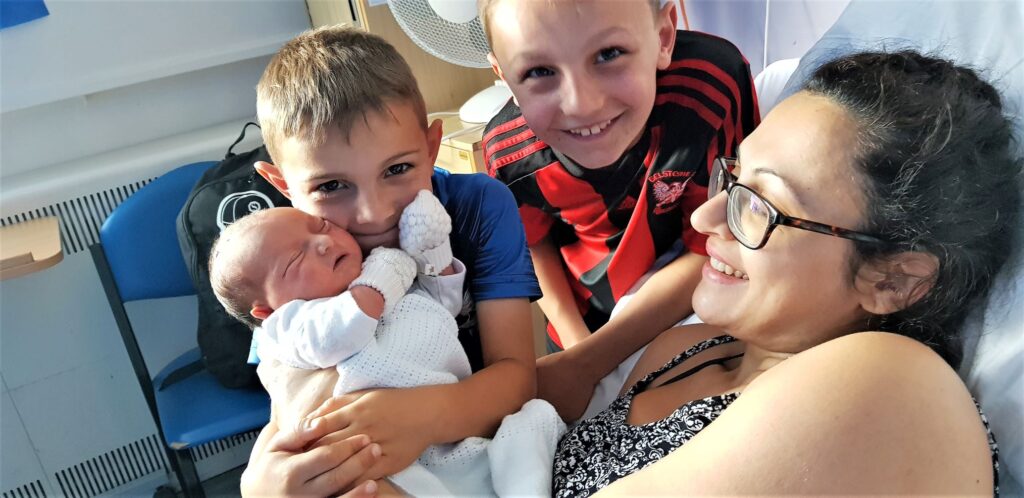
Middle one loving his new baby sister
My VBAC experience was perfect for me. But, I learned that everyone’s perfect birth is different and as long as it is a positive one then it’s perfect for you and baby.
Am I a good candidate for VBAC TOLAC if I had my first child by cesarean 12 years ago? My firstborn was a breech birth?
Whether you are a good candidate for a trial of labour after caesarean (TOLAC) or VBAC depends on several factors, including your specific medical history and current circumstances. It’s best to consult with your doctor to assess your individual situation and determine whether VBAC is suitable for you.
In general, having had a previous caesarean section, especially for a non-recurring reason such as breech presentation, does not automatically exclude you from being a candidate for VBAC. However, other factors will need to be considered, including:
Breech presentation is not a recurring indication for caesarean section. The reason for your previous caesarean may have an impact on your eligibility for VBAC. For example, if the caesarean was performed due to a specific condition that could recur or if there were complications during the previous birth, it may affect the recommendation for VBAC.
The type of incision made during your previous caesarean can influence the feasibility and safety of a VBAC. A low transverse incision (horizontal incision) is generally considered more favourable for VBAC compared to other types of incisions, such as a classical vertical incision.
The length of time since your previous caesarean can impact the likelihood of a successful VBAC. A longer interval, such as 12 years in your case, may be associated with a higher chance of VBAC success. For more VBAC success stories, you should Google ‘vbac success stories forum’ or ‘vbac experience forum’ to read other success stories.
Your overall health, current pregnancy, and any new complications or conditions need to be taken into consideration. Factors such as the size and position of the baby, any placental issues, or other medical conditions may influence the recommendation for VBAC.
The availability of immediate emergency care, including an operating room and a skilled surgical team, is important in case of any unforeseen complications during a VBAC attempt.
Attempting VBAC Vaginal Birth after Cesarean. What can go wrong? Can pushing rupture previous stitches in the ovaries? What is the recourse in that condition?
Attempting a VBAC carries certain risks, and it’s important to be aware of them. While VBAC can be a safe option for many women, there are potential complications, which you should discuss with your healthcare provider to make an informed decision.
Some potential risks and complications associated with VBAC include:
Uterine rupture, which is the most significant concern with VBAC. Uterine rupture is a rare but serious complication where the scar from the previous C-section tears during labour. It can result in severe bleeding and pose risks to both the mother and baby. Emergency surgery, such as a C-section, is typically needed if a uterine rupture occurs.
Any type of delivery carries a risk of infection. However, the risk may be slightly increased in VBAC due to extended labour and multiple vaginal examinations.
There is a possibility that VBAC may not be successful, and a C-section may still be required. Factors such as labour progression, foetal distress, or other complications can lead to a change in plans.
Regarding your specific concern about pushing rupturing previous stitches in the ovaries, it’s important to note that the ovaries are not typically involved in the uterine incision made during a C-section. C-section incisions are usually made on the lower segment of the uterus, away from the ovaries. However, it’s always best to discuss any specific concerns related to your previous surgery with your doctor.
In the event of a complication during a VBAC, such as uterine rupture or other emergencies, the medical team will be prepared to provide immediate medical intervention. This may involve performing an emergency C-section, providing blood transfusions if necessary, or taking any other appropriate measures to ensure the safety of both you and baby.
What happens if you refuse a C section in a hospital that has a VBAC ban but won’t travel to a different hospital? Do they still have to admit you?
The policies regarding VBAC and C-sections can vary between hospitals and healthcare providers. If a hospital has a VBAC ban or a policy that restricts VBACs, it means that they may not offer VBAC as an option for childbirth.
If you refuse a recommended C-section in a hospital with a VBAC ban but are unable or unwilling to travel to a different hospital, the hospital may still have a responsibility to provide you with appropriate care. However, it’s important to note that this depends on the hospita’s policy.
Have an open and honest conversation with your healthcare provider about your concerns. They may be able to provide other options that prioritise your health and well-being while respecting the hospital’s policies.
In some cases, it may be possible to talk to other healthcare professionals, such as obstetricians or midwives, who have experience with VBAC and can provide additional guidance.
You must be proactive in advocating for your own care and seek information about your rights and within the healthcare system in your country or region. Consulting with a patient advocate or seeking legal advice, if necessary, can help you understand your rights and potential courses of action in situations where you and your healthcare provider may have differing views on the best approach to your care.
Can you have a successful VBAC after 3 c-sections?
Other questins asked were:
Can you have a successful VBAC after 4 c-sections?
Having a successful vaginal birth after three previous caesarean sections (VBAC3) is possible in some cases, but it generally carries higher risks and is considered more challenging compared to VBAC after one or two previous caesarean sections. The decision to attempt a VBAC after three C-sections is complex and should be made in close consultation with a healthcare provider experienced in managing high-risk pregnancies.
Factors that may influence the possibility of a successful VBAC after three C-sections include:
The type of uterine incisions from the previous C-sections can impact the safety and feasibility of a VBAC. Ideally, low transverse incisions (horizontal incisions) are preferred for VBAC as they have a lower risk of uterine rupture compared to other types of incisions, such as classical vertical incisions.
The doctor will evaluate the healing of the uterine incisions from the previous C-sections. If there are concerns about the integrity or strength of the uterine scar tissue, a VBAC may not be recommended due to the increased risk of uterine rupture.
Other considerations include your overall health, any additional medical conditions, the size and position of the baby, and the availability of emergency resources in case of complications during labour.
Given the complexity of your situation, it is crucial to consult with a healthcare provider experienced in managing high-risk pregnancies and VBAC after multiple C-sections. They will be able to provide you with peronalised advice based on your specific medical history, conduct a thorough evaluation, and discuss the potential risks and benefits associated with attempting a VBAC after three previous C-sections.
Would you mind sharing your successful VBAC story after having an emergency C section?
This is my birth journey as I didn’t have a VBAC after an emergency C section. I hope it helps:
2021 – Fourth pregnancy – Unassisted VBAC (which you can read above!)
What should I do to have a successful VBAC?
Other questions asked were:
Are you a good candidate for VBAC?
Ways to prep physically for VBAC?
To increase your chances of having a successful VBAC, here are some general recommendations:
Look for a healthcare provider who is experienced and supportive of VBAC. They should be knowledgeable about the latest research and have a positive attitude towards VBAC. Consider discussing your intentions with different providers to find the one who best aligns with your goals.
Discuss the details of your previous C-section with your healthcare provider. Factors such as the type of uterine incision and the reason for the C-section can influence the feasibility of a VBAC. Understanding the specifics of your previous birth can help you make an informed decision and determine if VBAC is a suitable option for you.
Enrol in childbirth education classes that specifically cover VBAC. These classes can provide valuable information about the process, techniques for managing labour pain, relaxation methods, and coping strategies. They can also help you feel more confident and empowered in your decision.
Prioritise your health and well-being during pregnancy. Eat a nutritious diet, engage in regular physical activity (as advised by your healthcare provider), and attend prenatal check-ups to monitor your progress. Staying healthy can contribute to a smoother labour and delivery.
Learn about the stages of labour, various birthing positions, pain management options, and potential interventions.
Surround yourself with a supportive network of family, friends, or a doula who can provide emotional support during your VBAC journey.
Openly communicate your desires, concerns, and expectations with your healthcare provider. Ensure that your birth plan clearly outlines your intentions for a VBAC and any specific preferences you may have during labour and delivery.
Would a VBAC be better than a second c section?
The decision between a vaginal birth after caesarean (VBAC) and having a caesarean a second time depends on various factors and you should discuss these factors with your doctor. Both options have their own advantages and potential risks, so it’s important to consider individual circumstances and preferences.
VBAC can be an appropriate choice for many women. Some potential benefits of VBAC include:
VBAC avoids the risks associated with surgery and the recovery time needed after a C-section.
After a vaginal birth, the recovery time is usually shorter compared to a C-section, allowing you to resume normal activities more quickly.
VBAC generally carries a lower risk of infection, bleeding, blood clots, and damage to internal organs compared to a C-section.
However, VBAC is not without its risks and limitations. Some factors that may affect the feasibility of a VBAC include:
The type and location of the uterine scar from the previous C-section can impact the safety of a VBAC. A low-transverse incision (horizontal incision) carries a lower risk of uterine rupture during VBAC compared to other types of incisions.
Certain medical conditions or complications during pregnancy may increase the risks associated with a VBAC, and your healthcare provider will consider these factors when making a recommendation.
VBAC is generally considered safer when there is prompt access to emergency medical care, including an operating room and an experienced surgical team, in case complications arise.
What is a VBAC water birth?
A VBAC water birth refers to the combination of a vaginal birth after caesarean (VBAC) and giving birth in a water birth setting. It involves labouring and delivering the baby in a pool or tub of warm water. While VBAC itself refers to the mode of delivery, water birth is a birthing method that provides pain relief and a soothing environment during labour and delivery.
Water birth is a natural childbirth method that has gained popularity in recent years. Many women find it helpful for pain management, relaxation, and promoting a sense of calmness during labour. The warm water can help to ease muscle tension and provide buoyancy, which may make contractions more manageable.
When considering a VBAC water birth, it’s essential to discuss the option with your healthcare provider, as it may depend on various factors. Some factors to consider include:
Not all women who have had a previous C-section are considered good candidates for VBAC. The safety of VBAC depends on factors such as the type of uterine scar from the previous C-section and the overall health of the mother and baby.
Water birth may not be available in all hospitals or birthing centres. It’s important to check if the facility you plan to give birth in offers water birth options and whether they allow VBAC in a water birth setting.
Some hospitals may have specific policies or guidelines regarding VBAC water births. It’s really important to discuss your and preferences with your doctor and ensure they are supportive and knowledgeable about this birthing method.
Each pregnancy and birth situation is unique, and certain conditions or complications may make a VBAC water birth unsuitable. Your doctor will evaluate your specific circumstances and help you make an informed decision.
How long can you push in labour before c section?
In the UK, the duration of pushing during labour before considering a caesarean section (C-section) can vary depending on several factors. The decision for a C-section is typically based on the individual circumstances and the well-being of both the mother and baby. The duration of pushing alone may not be the sole determining factor.
In the UK, healthcare providers generally follow guidelines provided by the National Institute for Health and Care Excellence (NICE) when making decisions about childbirth. However, it’s important to note that specific practices and policies may vary between healthcare providers and individual cases.
According to NICE guidelines, if a woman is having a vaginal birth, the second stage of labour (the pushing stage) should usually be actively managed if progress is not made within two hours. However, this time frame can be extended to three hours for women who have previously given birth and to four hours if regional anaesthesia (such as an epidural) has been administered.
These guidelines are not set in stone and healthcare professionals will take into account various factors, including the well-being of the mother and baby, the progress of labour, and the overall clinical situation. They will make an individualised assessment and determine the most appropriate course of action, which may involve a C-section if necessary.
Ultimately, the decision regarding the timing of a C-section during labour is a complex one and is based on the judgement and expertise of the healthcare provider, taking into consideration the specific circumstances of each case. It’s recommended to discuss any concerns or questions you have about pushing and the potential need for a C-section with your doctor.
Do you have any real VBAC stories to inform/inspire your birth journey?
Yes I do have some VBAC birth stories for you! Please checkout some success VBAC stories here. VBAC NATURAL BIRTH STORIES
While it is not accurate to say that doctors universally discourage a VBAC, some hospitals may approach a VBAC with caution or discuss the risks associated with it. Here are a few reasons why some doctors may be cautious about VBAC:
The primary concern associated with VBAC is the risk of uterine rupture, which is when the scar from a previous C-section tears during labour. Although the risk is relatively low, uterine rupture can be a serious and potentially life-threatening complication for both the mother and baby. Doctors may weigh this risk against the potential benefits of VBAC.
VBAC is considered safer when there is immediate access to emergency medical interventions, including an operating room and a skilled surgical team, in case complications arise. Some hospitals or birth centres may not have the necessary resources readily available, which could influence a healthcare provider’s recommendation regarding VBAC.
The type and location of the uterine scar from a previous C-section can impact the safety of VBAC. A low-transverse incision (horizontal incision) carries a lower risk of uterine rupture compared to other types of incisions, such as a vertical incision.
Certain maternal or foetal conditions or complications during pregnancy may increase the risks associated with VBAC. Factors such as a history of multiple previous C-sections, a large baby, placental complications, or certain medical conditions may influence a healthcare provider’s recommendation.
In some regions, hospitals may have concerns about the potential legal implications associated with VBAC due to the risk of complications or adverse outcomes. These concerns can influence their approach to discussing VBAC with their patients.
What is the failure rate of VBAC?
Other questions asked were:
What are VBAC Pros and Cons?
Why is VBAC controversial?
What are the risks of having a VBAC?
There is no universally fixed failure rate for VBAC, as it depends on individual circumstances and the specific criteria used to define success or failure.
In the UK, the success rate of VBAC is generally reported to be around 70-75%. This means that approximately 70-75% of women who attempt a VBAC are successful in giving birth vaginally.
In the US, the success rate of VBAC is slightly lower, ranging from 60-80%. The success rate can be influenced by factors such as the type of uterine incision from the previous C-section, the reason for the previous C-section, the mother’s health, the size and position of the baby, and other individual factors.
It’s important to remember that success rates can vary between different healthcare settings, healthcare providers, and individual cases. Some factors that can affect the success of VBAC include the type of uterine scar, the experience and expertise of the healthcare team, access to emergency care, and the presence of any underlying health conditions.
*Affiliate link
A positive second birth
Michelle Maurice from Vale of Evesham shares how the birth of her daughter was a positive experience after a first traumatic birth 3 years earlier.
As the birth of my first child had not gone anything like according to my birth plan, I was pretty nervous about having my second. My wonderful plan of a homebirth for my first baby with soothing music, candles and a birthing pool was cruelly shattered at 38 weeks and 4 days when I was diagnosed with pre-eclampsia and had to go into hospital for an induction.
After a 28-hour labour, much pain relief (including an epidural) and forceps delivery, my beautiful baby boy was born. I was delighted, but I was exhausted and I felt a failure for not having delivered him drug-free and ‘naturally’.
This was all compounded by me developing blood clots a few days later which led to six months of medication and further feelings of having failed and wondering how anybody could ever have a second – even third! – baby. Perhaps worse, I never met anyone else at mum and baby groups later who’d suffered a similar fate, so I felt isolated as well as suffered depression and panic attacks.
Yet this second baby was exactly what I knew my husband Martin and I both wanted for our son also. When Seth was less than a year old, this knowledge was something which used to make me feel depressed and panicky … it was something I ‘couldn’t’ do (despite doctors saying actually, I could – although I’d be given heparin as a safeguard against the possibility of any clots forming again).
When Seth was about 3, my body and mind had recovered as much as they were going to, and I genuinely felt fine to see if I might fall pregnant again. This wasn’t a 24-hour a day feeling – I don’t know if the decision to have a baby ever can be – but I knew it was the best time for me.
I was determined to make everything different about this pregnancy, and so hopefully birth. The pregnancy hormones that make one calm in so many ways kicked in almost straight away, and in themselves shielded me from anxiety. I prepared for this second baby in a more indulgent way. Silly, small details now made a difference and were a bizarre way of ‘ensuring’ a better time this time around.
For example, whereas items for my son had been practical and plain, sourced often from Tesco’s, now I determinedly went out and indulged my passion for gorgeous accessories – a Cath Kidston nappy bag was a must! Friends laughed along with me, knowing my passion for handbags. But for me, psychologically, this sort of behaviour was different from the first time around and so in some way might help to lead to a different birth. (Illogical? Yes. Comforting? Definitely.)
The run-up to the birth was very different from my previous experience. This time, my blood pressure remained resolutely normal. Amazing! Especially in view of the fact I could never have my blood pressure read without feeling some anxiety as the familiar band was wrapped around my arm. Already, I was feeling a small sense of achievement …
My reflexologist had confidently predicted that my baby would be born around week 39, with a certainty that I found charming if unconvincing. I continued to enjoy my monthly pampering at her hands and was happily attending a visit to my midwife for a check-up in the middle of my 39th week when she said, ‘I think you’re going to go into labour very soon, Michelle’.
Panicking at the thought of my waters breaking suddenly and publicly on my planned visit to the local swimming pool, I questioned the wisdom of proceeding with my schedule for that day. Her confidence and calmness in stating that it would be fine for me to carry on were in fact typical of my treatment from pretty well all the medical staff I encountered the second time around: eminently reassuring and confidence-inspiring.
So on that fateful Friday, despite some odd sensations that started in my back around midday (nothing you could exactly call an ache, however) I swam my 30 lengths before rolling my rotund frame into the oh-so-small shower cubicles at the local pool. I came home, remembered I’d promised to buy my son some Christmas cards to send his friends at school, rolled round to the shops (which were also starting to feel oh-so-small these days).
I came home and plopped myself onto my birthing ball to see if some pelvic rotations might help my back which was still feeling – odd. I thought that perhaps some distraction might help … watch a good film, a brilliant idea! I lowered myself towards the DVD (whose idea had it been to put it practically on the floor? Why had I agreed? Madness!) and put ‘Atonement’ on. James McAvoy therapy, that should do it.
By the time my husband returned from work about an hour later, it hadn’t done it – my back still felt odd and I felt a sense of excitement that I found hard to restrain. We decided to summon his parents and snap a photo of my truly impressive profile before it might be too late. My in-laws arrived a few hours later, having travelled up from the coastline of South Wales, to find me decidedly restless and my husband quite calm. I decided to have an early night (‘just in case’) and retired to bed feeling guilty in case I’d caused them an unnecessary journey.
I managed to drop off to sleep quite late – I was still trying not to be excited and nervous about what the midwife (and my reflexologist!) had said. I awoke at 1.30am, experiencing period type pains, which were followed at about 2am by a distinctive ‘pop’ from within my stomach that told me my waters had broken. Things then happened quite quickly.
Pacing around the living room and sitting on my birthing ball helped me through the next half an hour or so. My husband calmly rang the hospital at about 2.30 am to see if it was time to go in: they thought not. An hour or so later of trying all my breathing exercises and walking/waddling around the living room forced me to conclude that nothing was now really relieving the pretty strong contractions, and I definitely wanted to go to the hospital. My now slightly-less-calm husband rang the hospital again at 4 am and spoke to a midwife who happened to know me from my first baby. She said I could go in. Hurrah!
Having jammed my birthing ball and overnight bag into the boot of the car, Martin jammed me into the front and set off for Worcester Royal with some haste … thank goodness the night roads were so clear. I remember saying in between contractions that the first thing I would have when arriving at the hospital was pain relief, thank you, and thinking that we couldn’t get there soon enough.
Our arrival at 4.30 am was suitably dramatic, with me being unable initially to get out of the car because of an almighty contraction, and I really just wanted to press myself down onto the cold, wet tarmac of the car park, which looked strangely inviting … My panicky husband kept asking what he should do – bless him, with my birthing ball wedged under one arm and bulging overnight bag locked in the other hand he didn’t really look able to do much. Somehow we made it to the foyer, where he got a wheelchair and somehow manoeuvred me into it.
The birthing ball and overnight bag were abandoned temporarily as we made our way to maternity triage, en route losing one of my shoes (although this was only discovered later). Two lovely calm WONDERFUL midwives inspected me and said ’Oh, we can see the head’, which explained my difficulties in getting out of the car and into the hospital.
I remember at this stage I was very conscious of everything that was being said around me but of not being able to talk myself in response. I felt happiest remaining on my knees gripping the headboard of the bed (not a practised position, or even a planned one, but it just felt right at the time). With a few sets of pushes and LOTS of breathing, our beautiful daughter Scarlett May was born at 5 am.
I felt such an incredible rush of love when I looked at her (and even at my husband and the midwife) – it just goes to show what oxytocin does to you. Marvellous stuff.
So there it was. A beautiful baby girl, and finally ‘closure’ from my scary first birth. This time, no pain relief or forceps in sight. The words of my fab NCT teacher rang clear in my mind:
‘Every labour is different, every birth is different.’
On Thursday 12th September at around 12.30 am, at 39+4 weeks pregnant, I waddled upstairs to try to get some sleep. As I laid down, I heard a very loud pop.
That’s weird I thought.
At first, I thought something had burst in my belly, but when I went to the toilet, I experienced trickling that didn’t stop.
I went downstairs to tell my husband I thought my water just broke. Hubby, who was still absent-mindedly watching TV, had heard my self-diagnosis three times already in the pregnancy, so he double-checked I hadn’t just peed myself again. But, as soon as he finished that sentence, more liquid trickled down my leg.
It took hubby about 30 seconds to grab a towel, but by the time he had returned, I had a puddle on the floor and my knickers were soaked through. I called my parents to ask if one of them could look after our older two boys, as they were asleep and they had school the next day.
My dad came over and asked me if I was in any pain. I wasn’t but I was experiencing quite a bit of cramping, which I had put down to Braxton Hicks. We called the triage first and they confirmed that it sounded like my water broke.
“Have you got any pain?”
“No.”
“Are you experiencing contractions?”
“I don’t think so. Tightenings possibly but nothing that’s painful to write home about.”
“You better come in.”
As I was considered high-risk due to my miscarriage previously, I had to come in as soon as my water broke.
Off to the hospital
I grabbed my hospital bag and we headed to triage and the midwife asked me to keep a pad on, so she could check whether it was amniotic fluid and not just pee.
I laid on the bed as the midwives tested the liquid with a speculum, and they confirmed my waters had broken. A CTG was strapped to my belly to monitor the contractions, which I was experiencing regularly at this point. I thought this was strange because I wasn’t feeling any pain. After about half an hour to 40 minutes of checking, I was famished so I asked hubby to get me a sandwich.
I had to have an IV drip put in for Group B Strep antibiotics to be administered because I was tested positive for Group B Strep in 2017 when I had my miscarriage. The cannula put in was quite painful, apparently because my veins are really juicy and I had holes or waves in the veins. The midwife found air I think and so she had to take it out and put it on the other hand, which hurt a lot!
The two midwives in the room advised they were going to take me upstairs to the delivery suite soon. I was still fine and not experiencing that much pain until I was told to lie down. I told the midwife that I wasn’t comfortable with lying down on the bed and asked whether I could still be active. The midwife responded that when they took me to the delivery suite a bit later I would be able to move around then, but they had to continuously monitor me right now to check if the baby was ok.
It took a while for all the checks to be done and I felt so uncomfortable. The pain of some contractions was seeping in too, but I got the go-ahead to be moved to the delivery suite.
Off to the delivery suite
When I got to the delivery suite, a midwife examined me and she said I was 2 cm. The contractions were nothing to write home about; I could still talk, and I had some time in between them but they were starting to get a bit painful.
The midwives found me a birthing ball, but I still had a CTG strapped to my belly because they wanted to monitor my contractions and the baby’s heart rate, which was still high up on the 130/140 range.
We sat around and walked around a bit and I was advised not to eat in case I had to go to the theatre. I had a previous emergency c section and a planned c section, but I had made it very clear from the offset that I wanted to have a vaginal birth this time. I wanted to go as far as I could before the option of theatre had to come in. So I stuck my earphones in and listened to my hypnobirthing tracks. I kept concentrating on two chants I learned during my hypnobirthing course;
“Contractions are not that painful.”
“Your body can do this.”
I got into a rhythm of breathing in and out through the labour track while repeating the two chants in my head and I felt the process calmed me down.
Labour started and the pain increased steadily. The midwife asked me if I would consider having an epidural during this birth. I honestly didn’t know, but I said I would like the option. So the midwife brought the machine in.
The contractions were escalating now but I realised the pain was all in my back. I got really annoyed because I thought this baby was in an optimal position. I actually think she was in an optimal position until I got to the delivery suite because the contractions had changed drastically. I wasn’t feeling any contractions before 2cm. But, once I got to about 4 or 5cm, all of a sudden it felt like someone had stamped on my back and the pain was ongoing.
The midwife said she was going to try to turn the baby. So she got me to lie on the bed, which I didn’t think I could do because I was in so much pain. She assured me that lying on my side would take the tension off my back. She gave me some gas and air and told me to breathe in and out.
The midwife bent my inside leg and placed my foot on the floor and then she pushed against my back. She said we had to do this for three contractions and then we would turn to the other side.
It did feel like the pressure was off for a bit. The contractions were obviously still painful but they weren’t as painful as they were when I was walking around. When the midwife kept telling me to get on the bed, to rest a bit, I couldn’t. I couldn’t sit down, I couldn’t lie down. The only way I could lie on my side was when the midwife was pushing against my back.
We did that for three times each go, but when I had the next contraction, the pain was worse. She apologised for the manoeuvre not working. Well what can we do, I thought. It’s just the way it is. So I carried on trying to find a way to be one with the pain.
Then there was a shift change. A lovely very experienced midwife called Jo asked me whether it was ok to have a student midwife join and observe and I said yes, that’s absolutely fine – four eyes are always better than two in my opinion!
Contractions are real pain!
I was starting to struggle a lot. I thought this can’t be right, why am I not feeling anything in the front of my belly? Weren’t contractions at the front of my belly?
Jo said: “It’s because you’re having back labour. And, unfortunately, with back labour, things tend to take a bit longer.”
I thought, ok well I’m not going to let that cloud me. I had 3 days of back labour with Aron which was really intense and it ended in a crash caesarean, but Jo and Alicia were very positive that I was going to have my natural birth if I found a way to calm down.
“We’re still going to have our normal birth, don’t worry. Keep going, keep trying, keep breathing. Relax, stay positive, and breathe.”
I was examined at this point and I was 7cm. The last contraction felt like it had lasted five minutes, although it was probably only about 30 to 45 seconds. I tried to breathe through the pain and I had this system where I was shaking my hands as hard as I could to try and displace the pain. It worked until 7cm but then it stopped working.
From that point, I found it very difficult to keep the momentum of breathing through the pain and found myself holding my breath and tensing up. My husband kept reminding me about the chants, so I tried to focus back to the breathing and it worked for a couple of tries.
Epidural? Yes! A thousand times yes!
They asked me again if I wanted an epidural and I kept putting it off. I kept thinking, no I’m not going to do it. But when it got to about 7cm or 8cm, the pain had doubled, and they were getting stronger and longer. I found it too difficult to listen to the track, and couldn’t breathe through the pain anymore. It was getting to about 10.30 am at this point and hubby helped me by pushing and pressing on my back, as well as squeezing on my hips, which is what the midwife showed him to do. When the midwife asked again, “Do you want to try the epidural?” I said:
“Yes, 100% yes, I want to have the epidural NOW!”
The anaesthetist was running late; he had been called to theatre due to an emergency c section. The midwife apologised and I said no, no this is a blessing in disguise in some way. I had to deal with this on my own and I needed to find my way. So in a way, I was kind of glad it wasn’t there. But, at the same time, I was also thinking my gosh this is real pain.
So I must have got to about 8 cm, I wasn’t checked, but the contractions were coming hard and fast now and they were so painful. Then all of a sudden the anaesthetist turned up. The two midwives kept telling me:
“Come on, you can do it. Breathe! Breathe!”
They were really positive; they were breathing with me and rubbing my back. They were doing everything they could to try to get me to relax. And it worked for a while; I got into the zone a little bit. The anaesthetist again asked if I wanted the epidural and I didn’t hesitate. I screamed:
“Yes, I want the epidural! I can’t take this, it’s too much pain!”
I was given a button and advised that the epidural would need to be topped up every 25 minutes, although the pain wouldn’t necessarily come back in 25 minutes. So I was told to only press the button if I was in pain. So, from that point, I tried to challenge myself to not press the button as long as I could.
And sometimes I could feel the edge of the contractions coming back and then I’d wait for the next contraction before I pressed the button, or I’d wait until two contractions before I pressed. It was like my own private challenge to help me get through it. Plus, it was taking my mind away from how long everything was taking.
Every contraction gets you one step closer to your baby
I remember in the hypnobirthing course, Dani Diosi the course creator, said every contraction is getting you one step closer to your baby. So all you’ve got to think about is that you’ve done one, you’ll do another one and it’ll be one less than you’ll need to do. So I kept trying to think that way.
Every time the button came on I tried not to look at the green light. Jo advised me to be careful when I got to the pushing stage because I’d needed to stop topping up so I could feel the pressure to push.
I thought because I was still feeling the pressure of the contractions, I didn’t think it would make any difference.
Jo examined me and said I was at 9cm now.
Wow, that’s brilliant! I’d never got to 9cm before! I only got to 6cm with my first and my second was a planned c section, so I was in unchartered waters now.
I was so happy. I managed to get a little nap in as well and the midwives kept my mood up by joking around. At one point my husband said he was getting cramp from waving the fan to cool me down and Jo asked if it was ok to evict him from the birthing room or throw him out of the window.
I laughed and said:
“No he can keep fanning me, cramp and all!”
We joked briefly about how men think labour pain is like a toothache or adult colic and it relaxed me a lot.
We’re ready to push!
Jo reckoned in an hour’s time I would be at full dilation and once I got to 10cm, I was asked to rest a bit. When I got my contraction, Jo would ask me to push when I felt the pressure. Ok, I thought, sounds straightforward enough! So I topped up one last time, and we waited for about an hour. Jo checked me and said:
“Right, you’re ready to push. Let’s go! Wait for a contraction and then push down on your bottom.”
It was then I realised oh my gosh, it is really difficult to push without the pain or pressure because there wasn’t as much pressure as I thought there would be. I didn’t realise what Jo meant when she said it would be harder with the epidural.
Jo said, “Well 50% of women who have the epidural can’t push and 50% of women who can push end up with having an instrumental delivery because they can’t feel it.”
And I thought that was a silly mistake to accept the epidural in hindsight. If I had thought about what she had said and how difficult it was to push because of how desperately I wanted to have my baby naturally, I would have refused the epidural.
That was the first time I had kicked myself because I found pushing really difficult. I kept looking at the machine to check when I was having a contraction just in case because Jo said there was no point in pushing without a contraction because the baby wouldn’t come through.
So I pushed for about an hour. I didn’t know if I was making any progress, and I’m pretty sure I pooed at that point, but they didn’t tell me.
“Don’t worry, doesn’t matter, not thinking about it,” they said.
But I’m pretty sure I did.
Jo said, “Well baby is coming slowly but she’s coming.”
It got to just about before the hour, around 40 – 45 minutes when the doctor came in and said:
“Listen, at this point baby is doing absolutely fine, there is no distress on the heartbeat, contractions seem regular, and there doesn’t seem to be a problem.”
There was an issue at one point during the pushing stage when the contractions had faded a little bit and so Alicia brought a gauze with clary sage to trigger the contractions. I couldn’t have syntocin (to be induced) because of the previous births and risk of uterine rupture. So instead of syntocin, we went for something natural. The clary sage was so strong, but the smell was lovely. And it worked! The contractions came back really hard and fast, so I kept using the contractions to push as hard as I could and Jo kept saying, that baby’s making progress – just slowly.
The doctor continued, “We have to limit your pushing to an hour before we have to prep you for theatre in case the pushing doesn’t work.”
So the next part of the pushing had to happen in theatre and not in the delivery suite because the doctors had to make sure that if anything happened they could perform the c-section as soon as possible. The doctor examined the baby and he said that baby seemed fine. So they said to keep going with the pushing, but in about five minutes they were going to take me up to the theatre.
Off to the theatre
We got to the theatre and there were so many people there – so many staff and I didn’t know who they were. People kept coming and talking to me and they explained they were going to administer an epidural with a local anaesthetic so I couldn’t feel anything.
I had the checks done to see if the epidural was working and it hadn’t gone up to the chest – it’s a freezing cold test where they sprayed freezing cold water on my legs. The water felt warm until they sprayed on my chest which felt freezing cold. That meant the epidural was working fine. There was a situation earlier where on one part of my body, I could still feel the pain of the contractions so I was still taking in gas and air even though the epidural had kicked in. So Jo advised that the next time I topped up, I moved to the right-hand side of my hip so that the epidural drug filtered through.
In theatre, I was administered a local anaesthetic. The doctor advised that we were going to try pushing for a while, even though it wasn’t looking likely and we may end up with a c-section.
It was at that point I lost it. I just, I couldn’t hold back the tears. I was so upset that people kept asking me if I was ok. I said I really wanted to have a normal birth and at this point, this is where the two midwives really shone.
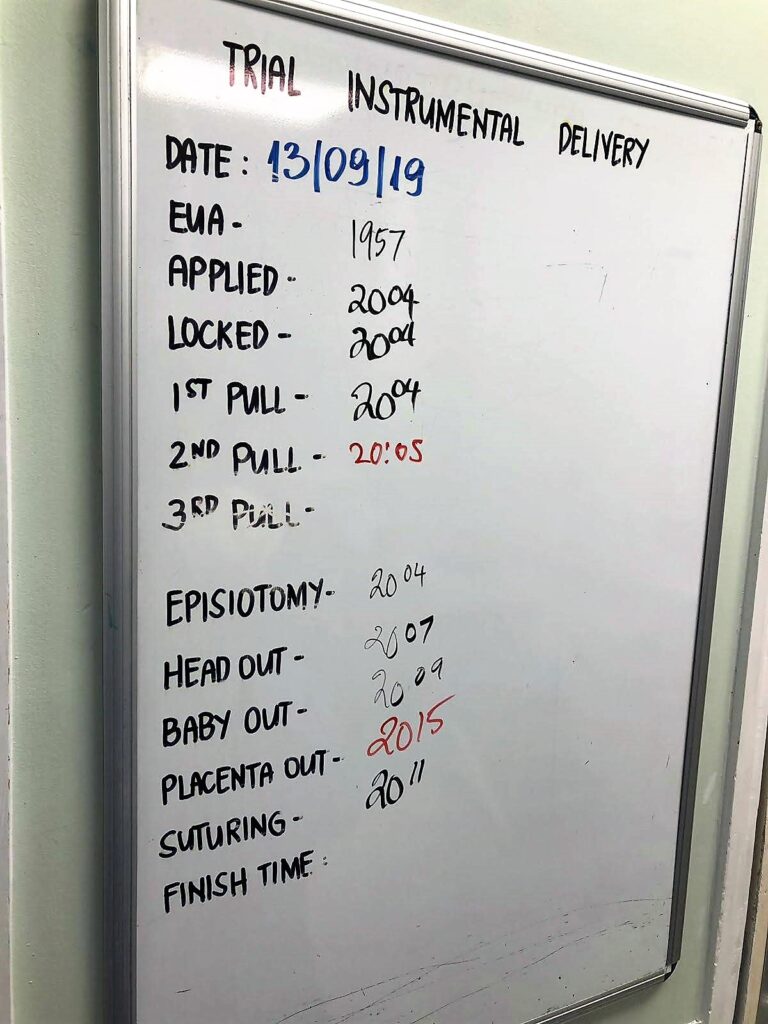
They really championed for me. I didn’t know about this but after the birth, my husband told me that the surgeon had been tugging with forceps to get the baby out. I tell you, it was even worse trying to push under a local anaesthetic. You have to try to remember the feeling of what it’s like to push, but you can’t push. I mean you cannot push!
But, apparently, it was working. Coupled with the local anaesthetic which made me shiver and feel weak, (I felt sick every time I pushed), I did everything I could to push my baby out. I had to push past the feeling of being sick, the feeling of shivering and the cold, which I later realised was down to low blood pressure.
She’s out! My baby is out!
So I thought I’m going to have to get through it, I have to push. So I did everything I could to push and finally, she was out. The relief I felt when they told me that she was out was just – it was euphoric. It’s something that I can’t explain:
“Wow, I did it! I pushed my baby out after two c sections!”
The baby wasn’t crying and she looked a little bit blue. The doctors took baby over to the examining table, straight away, and I could see they were moving her around. A few minutes later she started crying and my husband and I sobbed with relief that she’d made it. She made it through all the tugging and all this time she’d had a consistent heartbeat.
I had never felt so happy. The thought of managing a vaginal birth after two c sections was insurmountable, but I did it. I know loads of women have VBACS every day but I don’t care. For me, it was just the most immense feeling in the world.
I cried my eyes out thanking everyone in the theatre, especially the midwives.
“Thank you so much; you did it, you did it! Thank you, thank you!”
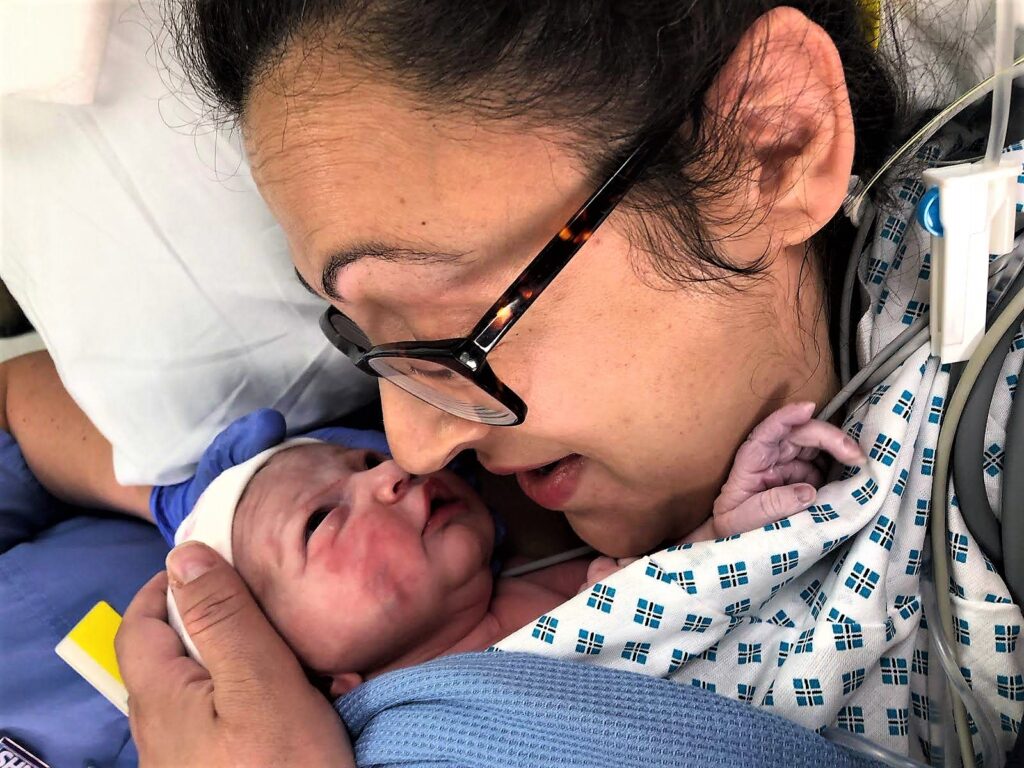
The surgeon congratulated me but mentioned it had been really tough. They had to do a forceps delivery, and I ended up with a second-degree tear and an episiotomy on each side. The midwife championed for skin on skin straight away, so while he was stitching me up I got to enjoy some really beautiful cuddles with my baby. I was so happy.
I noticed the bruises on her face from the forceps, but the doctor said not to worry as they will fade eventually. I was exhausted but I was immensely proud of myself, my body, my baby and the staff. Hubby was amazing at keeping me calm and focused too because there was one point where I thought I was going to lose it. But hubby stayed calm for me and talked me through everything. He was my absolute rock.
When they stitched me up, I got to enjoy skin on skin with my princess and they waited until the cord had stopped pulsing before they clamped and cut the cord.
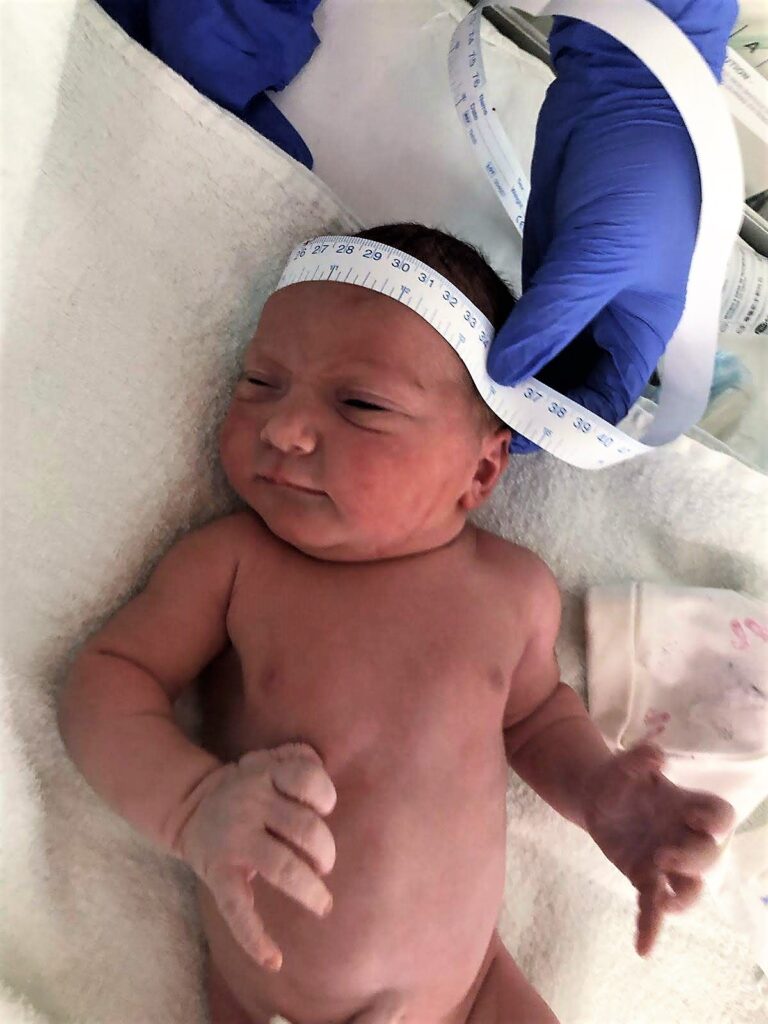
They didn’t do any of the checks or weigh-ins until I had spent precious time with my baby and I thought that was amazing. It was in my birth plan, but I didn’t have to tell them that’s what I wanted.
“We don’t need to do the weigh-in checks, we don’t need to clean her now. Just put her on your skin and enjoy her.”
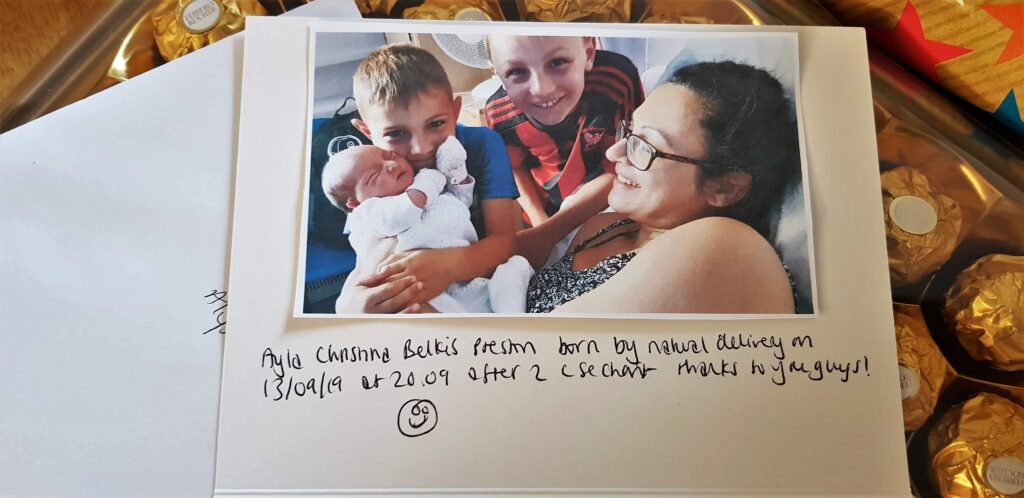
Baby was weighed at 7lbs, 7 ounces / 3.487 kg and born 39+5 weeks on Friday 13th September at 20.09. And, it was a fantastic experience!
I was wheeled into the labour ward as I was still under local anaesthetic, so I couldn’t feel anything in my legs. They put a catheter in me and I just relaxed with my baby. I was so happy she was there.
When the local anaesthetic wore off, however, oh my goodness! I was not aware of how painful birth really was! There was a swelling in my back passage, which the surgeon said I should take a look at because it could have been a prolapse. And, the afterpains, the pressure and the swelling was agonising. I couldn’t sit on my bum, I couldn’t do anything. They told me they had been giving me oramorph which was liquid morphine, but it wasn’t cutting the pain. It was getting rid of the vaginal pain but the back passage was just intense.
So, after many, many talks, the doctor decided to up the dosage. They gave me one small dose of epidural, which they tied to my back, and I scratched my back half to death because the epidural has a side effect, which is very itchy skin. I itched everywhere. It was so hot in the theatre as well, so I was sweating and so, so uncomfortable. I had also forgotten all about the bleeding aftermath.
I ate loads of food constantly. I didn’t know whether it was because of the drugs or breastfeeding, but I couldn’t stop eating. One of the midwives said I needed to let her know when I did my first poo. And I was like how the hell am I going to do my first poo, I can’t even feel that area!? She mentioned it was going to be tough because I’d had a bit of trauma down there.
I was convinced that I had over pushed and certain things had come out from the inside to the outside because of how swollen my back passage was. But apparently, you can’t overpush. The midwife assured me that the bottom will eventually heal. I asked her how long she thought it would take and she said maybe about 3 weeks; up to 3 weeks, depending on how quickly I healed. 3 weeks!? C section is 6 weeks!
She praised me again:
“Honestly, what you did was amazing, You would have not experienced the same if you had a c-section.”
She was right. It was all worth it. I had a beautiful baby out of it. So I told myself to take the pain. I’ll deal with it, just keep topping me up with painkillers!
The midwives kept asking about when I was ready to go to the toilet and and hubby desperately wanted to go home because the ward was so loud. I told him I didn’t want to go home until I hit the poo milestone, just in case I broke something else down there.
So I drank loads and loads of water, and thought about how I was going to pass this milestone with minimal disruption. The midwives advised just trying to pee first and then I thought, OMG how am I even going to pee!? The midwives took the catheter out and I thought just break the bullet; they won’t take the cannula out unless I pee.
It really wasn’t as bad as I thought it would be in terms of stinging but I was shocked at the lack of bladder control I had. As soon as I pulled my pants down it was free-flowing. I now needed to have a shower. But I thought, how am I going to have a shower!? I’ve got loads of stitches down there. The midwife told me not to use any shampoo or conditioner, I didn’t need it. I just needed to rinse off because I had been sweating buckets.
The epidural was taken off my back and it was such a relief to get all that tape off because it was so itchy. I was so sweaty, I’d actually scratched my back half to death! I had a really cold shower, which felt amazing. I felt so much better, apart from the pain downstairs.
As a result, I found it very difficult to sleep. But, the baby was amazing and she was so relaxed. We had a few problems with her latching on to the breast. She was a bit diva-like and couldn’t wait for me to show her where the nipple was – she had to have it now!
But while she was on she fed for ages and in her first night, she slept for six hours! The midwife asked me if I wanted to wake her up and I was like, do you know what? No. I think I’m just going to let her sleep, she seems fine. When she woke up, she was obviously very hungry, so I fed her again and she fell back to sleep. The poos took a while to come in but once they did she was pooing like a champion as well.
Off to the postnatal ward
The next day, I was wheeled into the postnatal ward. During the birth, I had lost 1.7 litres of blood, which is a ridiculous amount of blood to lose. I lost 900ml with my first, and 700ml with my second. I felt quite weak and lethargic – I really wasn’t feeling all too strong.
When I moved to the postnatal ward, I was prescribed iron tablets, lactulose so I could go to the toilet, co dydramol, and ibuprofen.
The consultants were worried that the oramorph was only working in the vaginal area and not in the back passage. How can liquid morphine not hit the pain in the back passage?
A consultant examined me to test whether something had happened with the epidural. They later deduced that the legs being on the stirrups may have caused some muscle tension or breakage near the hips, around the back passage and that could have been what was causing the pain. But whatever the reason was, it did not allow me to sit on my bum or lie on it.
So, I just had to lie on my the left side and very rarely on the right-hand side – it was so difficult. I couldn’t do anything. I couldn’t wait to get the next dose because the pain kept coming back.
That night my husband wasn’t around either, so I found that night really difficult. I was in a ward with two other hungry crying babies and I had to figure out how to get up off the bed, feed the baby, put her back in the cot, and then get back on the bed. So I was doing loads of ninja moves, by using my feet to control the height of the bed, the pillow area, the head area, and the headrest, and by pulling the headrest up to 90 degrees, to 45 degrees, or lying it down flat. But nothing worked. I was in constant pain.
The aftercare was amazing, though. The midwives regularly checked my obs. They also kept telling me my bloods were very low, so they might need to offer a blood transfusion. However, I said I preferred iron tablets instead, which was what I had been taking anyway.
The second night I told the midwives that my baby wanted to feed constantly and she struggled to sleep because of the other babies crying. I also found it quite hard because I couldn’t lie down with her, and I couldn’t sit up to breastfeed her. I had to do the advanced, lying-down-on-the-side breastfeeding move because I didn’t really have much of a choice.
I also found out that I couldn’t have any painkillers at night so I had to handle the pain until the ibuprofen came at 6am – I couldn’t have eaten it fast enough! Ibuprofen was the only thing that worked because it was anti inflammatory. So when I had ibuprofen, I felt relief. Actual relief.
I ate lots of food but I couldn’t go. I thought ok it’s not working so I am just going to just leave it and this really lovely midwife said to me that she’d experienced the same thing.
“Don’t push it; have Weetabix, prunes, and milk the next day and you’ll go.”
I ended up going the next day – and it didn’t hurt at all. We had lots of obs, and so did Ayla, which she passed with flying colours!
Our next-door neighbour’s husband constantly chatted on the phone in the middle of the night to his mum or family member and his baby was crying constantly. Then, when the husband went to sleep, he snored so loudly. I thought it was so selfish of him. We’ve got babies trying to sleep here and he’s chatting away throughout the night! Luckily Ayla like a champion slept really well.
I still found it difficult to sit down on my bottom, so I slept much less. The boys came to visit me in hospital and we got a lovely photo in together. They also ate all my hospital food!
Off home – with a new addition!
We took a long time to be discharged and hubby was getting restless. But, the meds had to be signed off before we were finally able to leave for home. I looked like a state when I got into the car, wearing my husband’s clothes, no makeup, and hair scrunched up on my head. I also didn’t realise that I couldn’t sit on the seat, so I had to crouch. I asked hubby to get a towel from the back, which I turned into a ring cushion and that made it much better to sit down, although the pressure was still horrible.
The first three weeks were tough but I lived on the couch with my laptop. Hubby took time off from work and he and my parents did the school run for me. It was amazing to just sit and be with my baby and I have my support network to thank for that!
I realised how important it is to have a support network around you because it can turn an otherwise positive experience into a very negative one. Hubby had to inject me for 10 days with Enoxaparin to prevent any blood clots after birth and I had to continue my meds – there were so many I had to keep to a rigorous plan, so I wouldn’t forget. I used a cooling gel for downstairs which I placed on top of my really protective pads and that really helped with the soothing and healing.
And slowly but surely, I started to heal. I was told that you will know when you’re on the road to recovery when your stitches feel really tight. I felt that around 3/4 weeks. I hadn’t used any shampoo or conditioner until that point and it felt really good to use a mild detergent like Sanex to have a proper wash. I didn’t have a bath, though, just a standing shower to ensure downstairs was free from any chemicals. I was actually very strict with my aftercare and I think that helped.
The health visitor came to check me over and asked how my mental health was. I said that I was on top of the moon! I had a really positive birth and that was a lot down to the hospital being so positive too.
I since learned that the pain of vaginal birth was probably worse than the c-section and that it didn’t matter whether you had a vaginal or a c section delivery as long as it was made to be as positive as possible. Having had both now, it didn’t matter how our babies are born. What matters are that they’re happy and healthy!
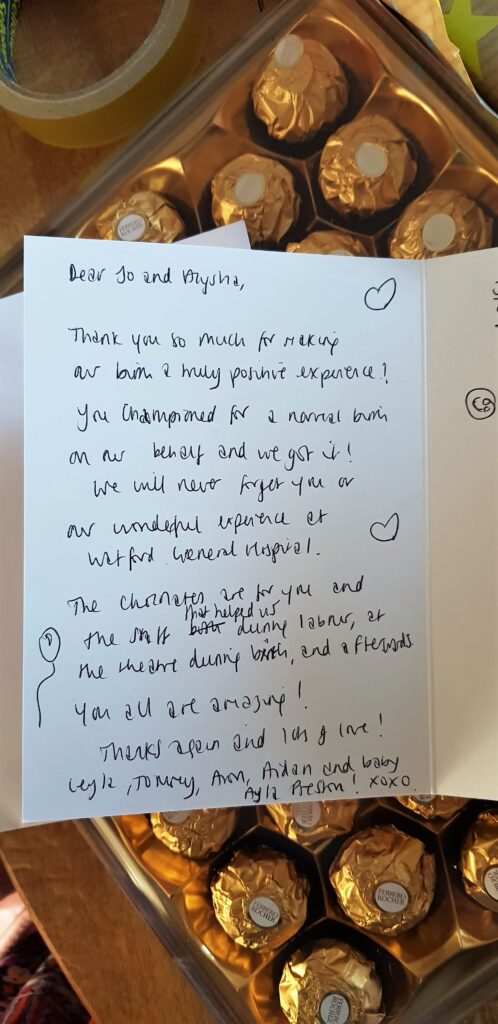
Thank you to Watford General Hospital for helping us achieve a really positive birth. We brought in some chocolates and a card to Jo and Alicia for being such amazing midwives throughout labour and birth.
A big thank you to Dani Diosi for the wonderful and very informative hypnobirthing course which helped me to think positive throughout my birth delivery and get me the positive birth I wanted and to Dr Verma for giving me hope in getting my girl. We did abandon the conception plan towards the end so it’s hard to know whether it was luck or whether Urobiologics helped me get my girl. Again looking back, it doesn’t matter to me anymore whether it’s a boy or or a girl. Being happy and healthy trumps all of it.
If you want more information on Dani Diosi’s hypnobirthing course, head here: mamaserene.co.uk
Don’t forget to read Part 1 and Part 2 of my Hypnobirthing series on how hypnobirthing works to achieve a positive birth.
If you want to learn more about how you can get the baby of your desired gender through non-invasive methods, head here: urobiologics.com
Click here for more birth stories (including VBAC stories)
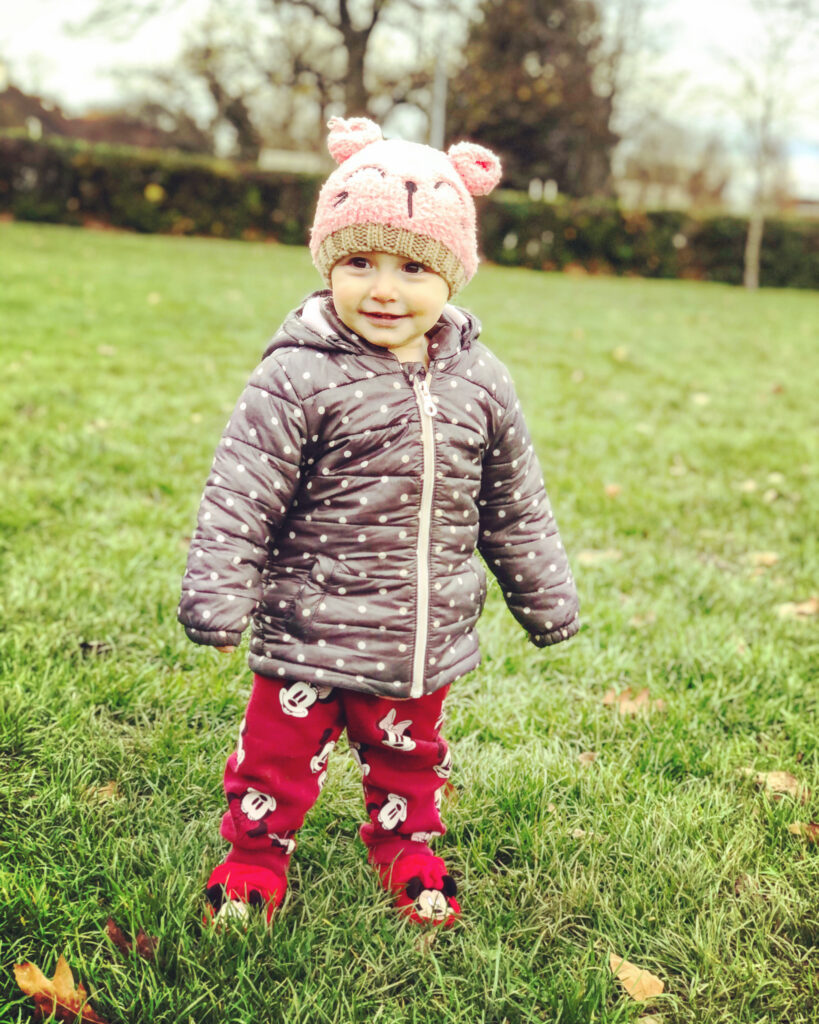
After a very successful VBAC birth story, I welcome Ayla Christina Preston who was born on 13 September 2019 at 20.09, two days before my due date! Ayla is now 16 months old and a very active baby!
*Some links contain affiliate links where I may earn a small commission at no extra cost to you. As an Amazon Associate, I earn from qualifying purchases.*
William’s birth story
I honestly thought that baby number 2 would arrive early. Aren’t they supposed to? I’d finished work 6 weeks before my due date just in case I had to give birth in the office assisted by someone I wouldn’t show my face to let alone my lady bits. But as the due date approached there were no signs of anything imminent. In fact, the baby felt like it was well and truly bedded and I was contemplating how it would feel to be pregnant forever.
I never thought I’d need my 40-week midwife appointment. I’d practically guffawed when the midwife had told me to book one. But there I was at the surgery, hauling myself up onto the bed – not a hint of grace or dignity left. The midwife informed me that the baby’s back was now to my right side and his head was only two to three fifths engaged. Two weeks previously the baby had been so perfectly placed! I left the midwife clutching a long list of ways I should and shouldn’t be sitting and moving. I also left with the delightful prospect of a ‘sweep’ at my next appointment and, perhaps after that, an induction. A birth with minimum intervention felt like it was slipping away.
Two days after my due date, it finally felt like things might be on the move. When you’re on child number two you expect to know what you’re doing, but it felt like the first time all over again. Having been pretty comfortable all day, albeit with a bit of back ache, I picked my daughter up from nursery as usual. But as the evening progressed I got less comfortable and couldn’t sit still for long. I don’t remember thinking that it might be the start of it all, just that it was a bit ouchy and time to grind on the birthing ball.
By about 11pm I was getting regular pains and, although I still wasn’t convinced I was in labour, we thought it was time to go and collect my mum and bring her back to the house so that she could look after my 2-year-old daughter should things start to happen in the night. When my mum arrived the birthing ball was getting an awful lot of rotary action.
By the time I went to bed I was downloading a contraction timer app on my phone (and then cursing it when midway through the night I discovered the free version only took a limited number of readings then deleted the whole flipping lot of them!). Whilst I writhed in pain every 7 minutes or so my husband was busily tapping away on his Blackberry sending work emails. And, yes, that really, REALLY irritated me!
At about 5.30am I rang the hospital. I suspected that they’d tell me to wait a bit longer before I came in. I must admit I lied a little bit about how regular my contractions were so that they wouldn’t tell me to stay at home. It worked and at 6am I crept into my mum’s room to tell her that we were off to produce her next grandchild. I then went and kissed my toddler, knowing that the next time I saw her I’d be introducing her to her little brother.
The next bit is where you can all go off and make a drink. Between our 6.30am arrival at the Birth Unit and around 12pm very little happened. When I arrived I was about 4cm dilated but, despite the ongoing contractions, I didn’t dilate any further. The contractions were bad enough to be straight on to the gas and air but they didn’t become any more regular or intense.
At some point during the morning the midwife gave me a sweep to speed things up. She concluded that my waters had already broken. I thought this was plausible as I’d had some dampness (in hindsight probably a wee). It was nothing near the torrent I’d released with my first child but, to be honest, I was so desperate for things to move on that I didn’t admit I suspected that my waters hadn’t broken. Likewise, when the midwife asked whether it felt like I needed to push, I didn’t say “no”, I said “errr, a bit”. Terrible web of lies!
Around midday, the midwives decided that I needed to be transferred to the doctor-led delivery suite and put on a syntocin drip. The thought terrified me. Looking back, I wonder whether my slow progress was linked to the fact that I was so darned scared. The adrenalin had kicked in and undone all the good work of the birth-inducing hormones. Having had a short and straightforward labour with my first child, I was so convinced that this birth would be quicker. I’d hoped a sneeze would do the trick! But when I realised this wasn’t happening the fear took over. Things weren’t going as I’d planned.
Off the midwives went to fetch a trolley so that I could be transferred. My husband and I got my belongings together and we were ready to go. As I sat up on the bed to shuffle onto the trolley there was a “POP” and a gush – there was no doubting that my waters had at last broken!
From that moment on things progressed quickly and I finally started to need to push. But I was still frightened. I remember focusing on the picture on the wall that depicted a table and chair looking out onto a beach and tried to imagine I was there. This didn’t stop me screaming at one point “I CAN’T DO IT!”, which was met by a chorus of “YOU CAN!” from my husband and the midwives. (Apologies to anyone who may have been in the Birth Centre at that point trying to have a quiet and relaxed birth.) I didn’t believe them that the baby was actually coming as the pushing seemed to be going on forever and with nothing to show for it.
But come he did and at 1.30pm (and after three-quarters of a tank of gas and air) my handsome baby boy arrived. The first words he heard may well have been me apologising profusely (again) to the midwives for having done a poo. William was weighed and as the midwife’s finger climbed higher and higher up the weight conversion chart, we realised that I’d squeezed out a 10lb 11oz whopper. Amazingly, I’d avoided any tearing and for this I thank the midwives for their instructions on when to push/not push and my ability to obey them! The midwives were amazing. For one midwife, William was the biggest baby she’d ever delivered and for the other it was the first baby she’d delivered since qualifying. He was special to everyone.
So what did I gain from my birth experience as well a healthy and chubby son? A profound lesson that whilst planning your birth options is necessary, don’t expect things to go exactly to plan. And if they don’t, don’t panic. Wonderful advice in hindsight!
This post is from the UK
Ted’s Birth Story
…The Birth of Ted!
I was 15 days late and really sick of people asking if I was going to get induced so I decided to take things into my own hands by having a long walk, spicy food, raspberry leaf tea and then sitting on my gym ball whilst watching “My fair lady” and bouncing in the hope something would happen….. and it did!!!
I went to bed at 1 am ish, went to lay down there was a gush and my waters broke, I was so grateful at that point that my partner had fitted the en-suite and I didn’t have to run downstairs as it would have gone everywhere…luckily most went into the toilet!! At this point I rang Viv but it was a little early, or so I thought, so she said to call when things had progressed a little more.
I then went for a bath and it filled with all this green liquid, which made me panic a little as I had heard all this stuff about the meconium so Andrew called Viv and she decided to come and check, this is when the whole thing starts to get a bit confused for me as the contractions started and as a coping mechanism I went very quiet (unlike my usual self!!) and internalised the pain so I could concentrate on the breathing I had practised, almost daily with a Yoga exercise CD. A lot of pushing started on the loo and eventually moved to the birthing pool and my contractions were coming pretty quickly, enough to make me think it wouldn’t be long before I’d be in the 2nd stage…..how very wrong I was!!!
I was in the pool for ages and Viv and Andrew and eventually Mirijn, when she arrived later were an amazing support, I really felt like I needed to hold on to someone and not feel completely alone with the pain – I had no idea, and I suppose no one does until your there how unbelievable this pain was, I just know it closed down my communication with the outside world, except for squeezing a hand, shoulder – whatever I could grab of someone else. Viv and Mirijin kept topping up the pool with hot water as I was in there for ages, thinking things were progressing but now I know they weren’t really, so Viv suggested that I go back to the bathroom and again, it all blurs into one as I was in and out that bathroom, lounge and bedroom. I can’t remember how many times I was in each or when…
I did find all sorts of ways of breathing through contraction by leaning on the piano, radiator, sitting on the edge of the bath, using the shower as pain relief from the waist down. Viv smiled at me and gave me such encouragement, even when I was tired she brought me pillows and I went to sleep, mid contractions whilst sitting on the loo!!! The hours were passing and it must have been late afternoon of the next day when Viv concluded that I was only 5cm, I was quite confused by this as I think I thought to start pushing but I still had another 5cm to go! It was at this point that Viv and Mirijin suggested I come into the lounge and Andrew help me do some squats whilst supporting me from a chair, it was a little like doing my yoga class once again, but I had envisioned an Active birth and here it was! I never wanted to eat during all this time but I did have the lucozade glucose sweets and little sips of water, I couldn’t actually face anything else. I also used the TENS machine and wasn’t sure it was doing any good until it was removed, as I got it wet and then I realised how much good it was doing and asked for it to be put back on ASAP.
It was then approaching early eve and I had started to push but was finding it really hard one of the main things being that I was utterly exhausted, it was around this point that I asked for a couple of paracetamol. All I remember thinking is “I wish I was one of the midwifes or Andrew drinking tea and feeling normal and not going through this pain!” But I was determined for a home birth as I had planned and in my mind thought of it as a super marathon that I was going to finish! I was flagging though and Viv said that things had slowed down and that they needed them to progress or I may have to consider a transfer to hospital, which I really didn’t want but at the same time I did want an end to the pain and also to remember why I was doing all of this – to have a baby!!
I asked if I could have a rest and so I went upstairs, walking sideward’s up the stairs as the head was fairly low down. However when I got upstairs I decided to go for another round of pushes and Viv and Mirijin suggested some more interesting positions in order to give more space in the pelvis and get that babies head moving down, unfortunately it wasn’t happening and again it was suggested that because my 2nd stage was now approaching it’s 5/6th hour that I should consider the hospital and an assisted delivery, but I really didn’t want to go, I dreaded not being with the people that had helped me so far and the bright lights, clinical atmosphere! I was so lucky that Ted’s heartbeat remained strong throughout or I would have been at hospital sooner!
After this attempt things were still not progressing, where I got the energy from to continue I will never know! I then decided that I did want a little sleep and so me and Andrew got into our bed and I prayed, Andrew told me he did too and being religious and spiritual I really believed that someone helped me as I have no idea after 24 hours how else I could have done it…… Whilst I was lying down my body started to have contractions of its own, without me forcing or controlling them, they started to increase and Mirijin, who had sat on the stairs listening to me as I slept would come in and see what was going on, sooth me with kind words and then cover me again and go back to the stairs when the contraction had finished.
After about 10 mins the contractions came thick and fast and so I decided before the hospital route was seriously considered I would try again, Viv came upstairs at this point and both midwifes then guided me once again through different positions with results finally happening, the head was moving down and I could feel it! I did some more squats, pushes on the toilet, squats with Mirijin and Andrew holding me up from the side of the bed and when I saw Viv setting up the birthing equipment I felt that this is it, it’s happening!! It gave me the encouragement I needed and my body then pushed out the top of the head. Wow, the crowning part as far as pain goes is beyond it all!! I was put into the Roberts position and out came the TED! He was a little stressed from the time it took and did need a bit of resuscitation, not much and there he was a beautiful baby boy weighting 8lbs 13 ounces……… It was so nice to be at home and if it wasn’t for the amazing support and belief I had from Viv , Mirijin and Andrew I would never have been able to do this and I would have been so disappointed as I had set my heart on a natural birth with no stitches and that’s what I got!!!
I never thought about after the birth as I was so worried about the birth itself which lasted 25 hours but dealing with some of the challenges in the weeks after was the real test and thank goodness Viv and Mirijin were there to help me. Breastfeeding I think was one of the biggest challenges I’ve ever faced, it was so painful, in the early days and once the babymoon period had worn off and I wondered why I was putting myself through something that hurt so much, but both of them were there to support me and show new ways of doing it and generally offering comforting words, encouragement and positivity about it without being pushy. I really didn’t feel very well in those first few weeks after the birth but because of the relationship I had with both Viv and Mirjin I turned to them as the experts because they helped me achieve the natural birth I wanted. Therefore I trusted them both with all the aftercare and my goodness was it needed, I couldn’t walk for a week I’d tired myself so much with all the different squats and positions I was in during labour!!!
I actually have to remind myself what a fantastic achievement the whole experience was as not many women manage to have a natural birth first time round and avoid stitches and then still manage to continue breastfeeding as I am now, over two months later, (Visiting the baby clinic the other day and meeting other mums was proof of this and many of them said that they unfortunately were not shown the correct way of feeding or given the choice of how the birth would take place). So paying to have Viv and Mirijin as my midwifes was worth every penny!!!