Feeling depressed during pregnancy? Here’s what to do now
Pregnancy is a rollercoaster! It is that period in your life when mood swings bounce around from elation to depression (also known as antenatal depression) and you have absolutely no control of the scale. The impact of depression on your pregnancy can sometimes mean crippling loneliness and feeling like the world is crashing down on you. Are you feeling depressed during pregnancy? And, if so, do you know how to seek help?
If you’re pregnant, grab your free pregnancy pack now and receive personalised emails related to your pregnancy week by week – details inside!
Mood swings or depression during pregnancy? How to tell the difference between mood swings and depression
Irritation, gloominess and low self-esteem are other small side-effects of pregnancy and they suck, but it is important to remember that these emotions are the product of the many new hormones shooting through your body to make that beautiful special miracle called your baby. Bad days are bound to happen. I’ve had my fair share of them during all four pregnancies, but they are not permanent.
There are some factors that contribute to depression in pregnancy, so before you book a trip to the doctor, try out the following activities for treating depression symptoms to keep depression away during pregnancy.
Depression during pregnancy – You’re not alone. Let it all out
The best way to deal with problems is to face them head on. The same goes for depression during pregnancy. If you’re going through any mental issues, the best thing to do is talk it out with someone that you trust, like your partner, a family member, a loved one, or a good friend. It helps to speak to someone who is or has been pregnant because they will better understand the feelings you are experiencing and they can offer their tried and tested techniques on how to get through the bad days.
It’s important to note that depression doesn’t feel the same for everyone. I had high anxiety during my first pregnancy but I wanted my child and felt so grateful. Some people feel like the pregnancy is unwanted and some are scared to leave the house for fear of damaging their baby. It’s important to talk about your problems, but know that sometimes your issues may be unique but equally important to you.
Feeling depressed during pregnancy? Take a walk
Sometimes, all you need is some fresh air when you’re caught up at home or at work and cabin fever is taking its toll. Taking a walk can help you relax your mind, body and soul, as well as get the blood pumping in the brain to release those feel-good hormones. This rejuvenation process will help calm your body and release the stress, which will also calm your baby too.
Feeling depressed during pregnancy? Take your mind off the daily troubles and go online
The beauty of the Internet is that you can forget your real life for a few minutes and follow someone else’s online. If you are not much of a surfer (or stalker) then there are other ways to spend your time.
Believe it or not, playing games has various health benefits, including energising oneself and calming the mind. It can boost memory power too, which will benefit the baby. There are various sites that have chat systems in place, so you can chat online. Whether you are playing Solitaire, following a blog, or trying your hand at poker via bitcasino, or even training your brain via an app, choose something that boosts your mood and leaves you feeling like you had a real break from the pregnancy drama.
Feeling depressed during pregnancy? Take care of your diet
Irritation during pregnancy can be down to an improper diet. For example, if you are eating food high in sugar, you may experience energy highs and crashes, hence why you may feel energetic and happy at the beginning and low and tired afterwards. It is important to make sure you’re eating from all the food groups in moderation, too.
Prenatal care is important so ensure you are ingesting nutritious foods, especially fruits and vegetables, which release positive endorphins and drive away depression. Studies show that curcumin has an antidepressant-like effect and can improve mental health. If you are nursing, your baby will benefit from this diet too.
Feeling depressed during pregnancy? Yoga relaxes the soul
Yoga is the master of calm and relaxation. You can Google ‘pregnancy yoga’ and there will be tonnes of YouTube videos and exercises that are easy to follow, so you can practice yoga in the privacy of your own home. Yoga makes you concentrate on your breathing, which relaxes your mind and body. You also get a good stretching workout at the same time too. Ask your GP first before starting any new exercise during pregnancy.
If all else fails and you’re still feeling low, make an appointment with your GP and explain your symptoms. Chronic depression causes severe symptoms that affect daily life, so maybe it’s worth checking whether your depression is down to several other contributing factors, like previous mental health issues or a chemical imbalance in the brain.
Your health care provider can treat these symptoms with either psychological treatments (Cognitive Behavioural Therapy) or pregnancy-safe medication for treating depression (antidepressants). Look for a behavioural therapist in your area too to help get to the source of the depression. Depression during and after pregnancy can affect your whole experience, so treating depression during pregnancy is vital for the health of you and your baby.
It’s also important to research available support in your area to find a clinic which can offer information or even grant funding for support if you don’t have the resources to pay for treatment.
Don’t suffer alone and in silence. Depression during and after pregnancy is common and treatable, so act fast if you think you’re depressed.
Frequently asked questions
What is depression?
Other questions asked were:
What is depression while pregnant?
What is pregnancy depression?
Depression is when you’re feeling low but it lasts for weeks or months and it affects your daily life. You can feel unhappy, have low self-esteem and have little pleasure in doing things you normally enjoy.
I’ve had my baby, but I’m still feeling depressed. What can I do?
Other questions asked were:
What is post-pregnancy depression?
What causes post-pregnancy depression?
It’s quite normal to feel the ‘baby blues’ after giving birth. You’re thrown into a whirlwind of parenthood with a baby who dotes on you to survive. You’re sleep deprived, recovering from birth and you have no idea what you’re doing.
Eventually you will get over the initial drop in mood but it’s important to check whether the depressive symptoms are not ongoing and effecting your daily life. Postpartum depression is different from the baby blues where symptoms of postpartum depression can include
Perinatal depression is when you experience depression while you’re pregnant (antenatal depression) or up to one year after giving birth (postnatal depression (PND).
Why does depression during pregnancy often go unrecognised?
Depression can often go unsuspected because a lot of the pregnancy symptoms involve lack of sleep, hormonal changes and chronic stress. It’s hard to distinguish what is a pregnancy symptom and what is depression.
What are the risk factors for depression during pregnancy?
Other questions asked were:
What factors increase my risk of being depressed during pregnancy?
The following risk factors may suggest an increased risk of depression, especially during pregnancy:
Family history and genetics (can include birth defects, bipolar disorder and mental illness)
Chronic stress.
History of trauma, i.e. intimate partner violence or abuse/neglect of family members
Gender.
Poor nutrition.
Unresolved grief or loss or unresolved depression
Personality traits.
Medication, substance use and addiction (i.e. crystal methadone / crystalline meth / meth crystals
If you are clinically depressed, there is support out there, for example, narcotics anonymous or alcoholics anonymous and mental health services to help treat signs for depression. Head to your GP who can complete a test for depression and take down your health information, so they can refer you to the health care providers who can treat depression.
What are the signs and symptoms of depression during pregnancy?
Other questions asked were:
What are some of the signs of depression during pregnancy?
What does pregnancy depression look like?
What are signs of depression?
The signs of symptoms of pregnancy depression can include:
Feeling sad, low or tearful a lot of the time
Losing interest in things you normally find pleasurable
Feeling irritable and angry
Loss of appetite or eating more than usual
Having negative thoughts, such as worrying you can’t look after the baby
Feeling guilty, hopeless or blaming yourself for the problems you’re experiencing
Difficulty concentrating or making decisions
Why is treatment for depression during pregnancy important?
Not treating depression can lead to dire consequences, like ruined relationships, problems at work, and making it difficult to overcome serious illnesses. Depression can also lead to more fatal situations, like increased risk of suicidal tendencies.
Can depression affect early pregnancy?
Other questions asked were:
Can depression affect pregnancy?
What happens if you get depressed while pregnant?
Does being depressed affect your unborn baby?
Does stress and depression affect pregnancy?
Does pregnancy cause depression?
How does depression affect pregnancy?
Will my sadness affect my baby?
Can crying and stress affect unborn baby?
Why is depression bad during pregnancy?
Does depression pregnancy affect baby?
Does depression during pregnancy harm the baby?
Is depression during pregnancy bad for the baby?
What can happen to the baby if the mother is depressed?
High levels of stress for long periods can cause health problems, like high blood pressure and heart disease. Stress can also increase the chances of having a premature birth or a low-birth weight baby (weighing less than five pounds eight ounces).
How common is depression during pregnancy?
Other questions asked were:
Is it common to get depressed during pregnancy?
Why depression occurs in pregnancy?
Is it normal to get depressed while pregnant?
Is it normal to be depressed in pregnancy?
Does pregnancy depression exist?
Is depression a side effect of pregnancy?
Does depression prevent pregnancy?
More women experience depression during pregnancy than you think because of the hormone changes which affect the brain chemicals, causing depression and anxiety. Sometimes, pregnant women don’t realise they are depressed, but untreated depression can often lead to more chronic symptoms which may require suicide prevention down the line.
What are my options if I’m depressed during pregnancy?
Other questions asked were:
What helps with pregnancy depression?
Look above for tips on how to treat depression during pregnancy.
Does pregnancy depression go away?
Other questions asked were:
Does depression during pregnancy go away?
Does prenatal depression go away?
Sometimes depression can go away on its own, depending on the severity, but most of the time it requires treatment. So, if you’re suffering, don’t delay and contact our GP now.
Does depression in pregnancy cause autism?
Other questions asked were:
Does depression during pregnancy cause autism?
Does prenatal depression cause autism?
This study concluded that women with depression during pregnancy have an increased risk of having a child with ASD, regardless of antidepressant use.
Are antidepressant medications safe during pregnancy?
Other questions asked were:
Do depression pills affect pregnancy?
There is some evidence that shows taking antidepressants during pregnancy or while breastfeeding can lead to birth defects or your baby developing heart defects, spina bifida or cleft lip.
*Written by Samantha Waites*
The latest maternity styles to boost your wellbeing
Even though pregnancy is a blessing, there’s no denying that it comes with its own fair share of hardship. Managing a growing belly can take its toll on your body and self-esteem. You may also feel frustrated that clothes no longer fit or you don’t know what to wear that won’t make you look like a tent.
When I first became pregnant, back in 2010, I wasn’t sure where to look for maternity clothing. I pictured dowdy jumpers and oversized shirts, paired with leggings or tracksuit bottoms that catered for the growing bump. I also wasn’t prepared that I had to make that decision quicker than anticipated.
My bloated tummy 3 months into my pregnancy meant I already could not button up my favourite jeans and my baby shower was a good few months away, so I had to source my own maternity wear. I didn’t even know what the latest maternity styles were. Where would I find clothes that would work for me? How can I look trendy during pregnancy? And do maternity clothes need a style upgrade from the bog-standed leggings and oversized shirt?
I searched high and low for decent city-type clothes for work and fashionable wear for the evenings and weekends – not an easy job when hit with the typical fluctuating weather in London. And shopping during my last trimester was a nightmare. I hated waddling into busy clothes stores and trying to fit my sausage feet and tree trunk thighs into maternity trousers, strutting my big stuff for all to see.
In the end I got stuck in a rut and lived in black leggings and baggy vest tops, occasionally stepping outside of my comfort zone and wearing maxi dresses when it got too hot (I cannot stress enough how comfortable maxi maternity dress styles are when you’re pregnant!)
During my second pregnancy in 2012, I was a bit more prepared for change and armed myself with the knowledge of maternity fashion that I had picked up from my last pregnancy. I still lived in my leggings, but I definitely looked more feminine. After my second pregnancy, I did my research to prepare for my next baby and I was directed to a much wider variety of super trendy maternity wear. Now, that is what I’m talking about!
And now online stores take the hassle out of shopping when pregnant, especially during those lazy and heavy days of the third trimester. But what maternity clothes are worth buying when you have your trusty leggings and oversized top at home?
In this article, we will discover the latest maternity styles that will not only help you feel good but boost your wellbeing too.
What to wear when you are newly pregnant?
When you are newly pregnant, especially if it’s your first pregnancy, you’ll be thrown into the world of maternity wear and you may not be sure where to look first. Before you wonder about the places to shop for the best maternity clothes, let’s look at the latest maternity styles of clothing that you should look at.
What week should you start wearing maternity clothes?
Most women can still fit into their normal clothes after three months but it’s important to wear the right-fitting bra, which may grow before you need maternity clothes. Opt for looser fitting clothes for comfort during this time and then when your bump starts to grow, at around four to five months pregnant, you may need to switch to maternity clothes to accommodate the expanding bump.
Dress appropriately
There are a lot of options out there that can help you; you just have to embrace the change in your appearance. Go for maternity clothes that are the right size for you. Knowing your body type is the secret behind looking fabulous during maternity.
If you’re carrying extra weight, try to emphasize your length and not the width. A long draped sweater can work like magic for such body types. Go for black tops that are large enough to cover the belly. Black can actually make you look leaner. If you’re not into black, then go for natural hues like tan, grey or even khaki. Opt for long skirts for bottoms and low wedges as footwear.
If you are carrying low weight, then wear clothes that help rebalance your proportions by making your legs appear longer. Empire waist-tops are an ideal choice, while options such as V-necks will draw attention away from your belly.
Consider comfortable underwear that supports you from the inside
A growing bump also comes with other growing parts of the body and they need to be supported properly, not just for your health, but for your sanity too. There are tons of maternity underwear out there at the moment that have been stylishly designed for pregnant and new mums and is ideal for everyday use. The double cup also cleverly allows for discreet feeding or use with your breast pump.
You may wonder why you need shapewear, but during the initial stages of pregnancy, you may have a pot belly you’d like to hide from the world (especially work) until the 12-week mark.
Maternity shapewear can hold things in place and help you feel secure under your clothes. This underwear collection can be a comfortable way of accentuating the shape of your body or smoothening out other parts of your body while you still have a waist. As long as you’re comfortable and embracing your beautiful bump coming up, it’s the perfect item to have postpartum too.
Consider comfort on the outside too
While picking out clothing for your maternity wardrobe, keep comfort in mind. Maternity jumpsuits, complete with sleeves, offer a loose fit and the coverage makes them a great option for a stylish pregnancy.
With the bottoms, maternity jeans come in a variety of fits: boot, cut, flair, boyfriend and even straight leg. Go for a style you wore pre-pregnancy – if you were comfortable in it before, you would be comfortable in it now.
Keep up with the latest trends for major style points. With prints, clean stripes, abstract florals and intricate prints are trending in maternity fashion – these are patterns women prefer to stay away from during maternity, but they can look just as good during this time.
Pair your outfit with a comfortable outer jacket or coat. The best maternity jackets and coats are flattering yet protective and don’t make you look like a bus!
Comfortable trousers can look glam too
Black maternity trousers have been a staple favourite for many years because of its sheer versatility and usability. You can pair black trousers with absolutely anything on top, so it’s well worth having a token pair of black trousers in your cupboard.
Opt for long skirts
Venture out of your comfort zone and go for a skirt during pregnancy. Skirts can instantly make an outfit look smart and elegant. Tube skirts can not only look comfortable and protect the bump, but they look warm enough to keep those legs covered nicely when the temperature starts to plummet.
Going out somewhere nice? You don’t have to wear black
Summer barbecues are on their way, and if you are attending an informal event and you are not sure what to wear, then go for glam pregnancy gown styles that looks great with a pregnant bump. Add accessories like some bling jewellery and you can even wear the dress on nights out (if you have the energy!) The best dresses for pregnant women are stylish yet effective at flattering the body and helping mum feel good.
And don’t forget when going for more formal attire, the best maternity formal wear will help you look a million bucks but still allow for room for your bump to shine, as well as offer the flexibility to get in and out without breaking your back.
If you do want to wear black
Evolving pregnancy dress styles are paving the way for a new kind of stylish mama. I especially love the low smocked waist of black maternity dresses, elongating the body and flattering the pregnancy bump. The lightweight material dress styles for pregnant women makes for comfortable wearing during those summer days and the timeless tunic dresses are specially designed to suit all shapes and sizes.
There’s even a black breastfeeding dress for post-maternity, which is just as chic, yet efficiency is not compromised.
The best maternity dresses offer convenience and comfort, so go for inverted pleats which conceal a panel with openings to make breastfeeding simple and stylish.
Leggings can still look great with anything
Leggings are a favourite for pregnant mums because they are so versatile and they go with absolutely anything on top. I lived in my leggings, often opting to change it up a bit with shirts, vest tops and off-the-shoulder blouses. The best maternity leggings are comfortable yet flexible and versatile.
You can even opt for jeggings or jean leggings to get away from the token black legging look. The best maternity jeans that double up as leggings will help you look stylish yet keep you feeling comfortable all day.
You can’t go wrong with vest tops
Vest tops can be worn on their own in the summer or layered up with shirts, cardigans or jackets when the weather is unpredictable. If you’re not up for showing off your bump, then a camisole style vest to, hides the first/second-trimester pot belly quite well!
Florals look great during pregnancy
Floral prints epitomise elegance and beauty. A light floral top’s material glides over the bump, making it comfortable and loose in warmer climates. This style is perfect for the spring weather but can be worn with a lovely jacket to accommodate the coming autumn months.
Some tips on what to look for when shopping for maternity dresses online
You love dresses but you’re pregnant so you’re probably thinking, what dress is best for baby bump? Look for maternity empire dresses that close in just under the bust, as they create an illusion of a smaller frame, but loosely cover the bump – these are great especially during the summer.
Go for light cotton material so your bump can breathe. The best casual maternity clothes don’t contain heavy material that weighs on your bump, especially during the third trimester when you’re already uncomfortable.
The best affordable maternity clothes have bright bold colours that can really accentuate a pregnant figure and make you look glamourous and elegant. Don’t go too heavy on the patterns – florals are great, but if they’re too busy, you may end up looking like a beach ball.
Team dresses up with compression garments like stockings and pantyhose, to help aid circulation in the legs. The best maternity clothes for work are practical, flexible and professional enough to pull off a pregnant mama who means business!
Long maxi dresses are perfect for the warmer weather and they are so comfortable to wear because they are generally made of lighter material and loosely frame your figure.
Maternity bras don’t have to be boring
Maternity bras are great because they are so comfortable during pregnancy and they can be worn after birth too.
From experience, I would advise you not to buy bras in bulk during pregnancy as the size of your breasts vary drastically throughout. If you are able to, get a professional to measure your bra size during the first trimester, the third trimester and post-birth, so that you are wearing the right bra size for you, to maximise ease and comfort. The best maternity underwear and bras cater for the growing bump and boob and offer flexibility throughout.
Gingham is all the rage right now
I love Gingham style tops because they are so trendy and they can brighten up your maternity outfits to no end – stripes can also look just too cool for school!
Tights can complement a dress, keep you warm and dress up an outfit
Maternity tights are great because they hold everything in (including those wobbly bits on the thighs) and cooling tights can keep you cool and comfy, especially with the warm weather on its way. Not only that, they can be worn with any maternity dress, so they are versatile. I cannot advocate maternity tights enough because they are so cheap and if you ladder them, just buy another!
Are you going away on holiday but worried about looking like you have eaten too many pies? The best maternity swimsuits offer tummy control over the waist and a flattering shape while you’re easing into your pregnancy. The latter stages swimsuits are catered for that growing bump and they show if off in style!
Pink Blush Black Smocked Long Sleeve Maternity Midi Dress
Hatch Everything You Want In A Maternity Dress
Old Navy Maternity JerseyKnit LongSleeve Nursing Tunic Top
Storq Not Your Normal Maternity Clothes
Storq Easy Maternity Button Down
Gap Maternity Turtleneck Rib Midi Sweater Dress
Angel Maternity Classic But Fresh Workwear
Angel Maternity Knit Midi Maternity Dress
ASOS Design Maternity Longline Trench Coat
Modern Eternity Lightweight Down In MaternityNursing Jacket
BB Dakota by Steve Madden Zoey Herringbone Maternity Jacket
Seraphine Slate Blue Maternity And Nursing Maxi Dress
Galaxy OneShoulder Maternity Gown
Kimi and Kai Floral Print Long Sleeve Maternity Maxi Dress
Summersalt The Maternity Ribbed Current
Kindred Bravely Nursing And Maternity Wrap Swimsuit
Motherhood Beach Bump Ruffle Maternity Swimsuit
Ankara styles short gown and maternity dress
Butterfly TOP DASHIKI topAngelina top free topmaternity top
African fashion, i.e. African print and African maternity dress / African dress
Feeling good in pregnancy is not just about the clothes you wear
Pregnancy can be a time when you blossom; or it can be stressful, difficult and leave you feeling frustrated. Clothes make you feel good on the outside but what about your insides? Here are some tips on how to feel good on the inside too:
Pregnancy can cause your hormones to really go wild; this can lead to greasy or oily hair and skin. Wash your hair regularly and try a dry shampoo or hairspray to keep it in good condition, in turn, making you feel fresh and clean during pregnancy.
At the end of a busy day, what could be better than a little foot pampering? Whether it’s accompanied by a nice soak in a massaging foot bath or half an hour with your loved one helping you to relax, a great foot massage with your favourite foot care products is the perfect way to help you feel good during pregnancy. Close your eyes, listen to some soothing music and feel your stresses and strains slide away.
A lot of time during pregnancy is spent in hospital or doctors’ waiting rooms – these can often lead to dry or chapped lips thanks to the air-conditioning. Carry a pot of lip balm with you and apply generously.
Get the hairdo you’ve always wanted: mums-to-be can often feel less than glamorous, especially as they grow out of their clothes and move into more comfortable maternity wear. One great way to help make you feel more pampered again is by getting a new sleek hairstyle; you may not be able to party like before, but you can certainly look the part!
Drink plenty of water-based drinks – water is not only reputed to be good for your skin but staying hydrated will help ward off any nasty cramps and aches. Whether it is tap water or a specially formulated drink containing essential vitamins and minerals, staying hydrated will help keep you feeling great too.
Take a long warm soothing bath – the water will not only help you feel clean again, it’ll also help to support baby’s weight and make you much more comfortable, especially in the later stages of pregnancy. Close the door, drop in an exotic bath bomb to add some fizz and enjoy a little “me time”
Visit your local beauty shop and take a treatment when you have some spare time – whether it’s getting your nails done or a quick head massage, you’ll be amazed how much more relaxed you’ll feel in just 15 minutes.
Indulge your skin with body butter – not only does body butter help with the less-enticing aspects of pregnancy such as stretch marks, you’ll smell and feel luxuriant; for many pregnant women, a heightened sense of smell can be a real downside: coating yourself with a beautiful balm will bring instant relief and help you unwind. It’s also wise to adopt a great beauty skincare regime, especially when the raging hormones from your pregnancy starts playing havoc with your skin.
Feeling a little run down or unattractive? Pop on some bold bright lipstick to give you an instant perk-up before heading out. You’ll feel more confident and ready to face the world again.
If all else fails, treat yourself to a spa day with your best friends or close family, and really and indulge; once the little one arrives you’ll be rushed off your feet so take the time to unwind, chill out and forget about your cares for a few hours. Whether it’s an Indian head massage, a great pedicure or a long massage, you’ll feel far more relaxed and spoilt afterwards!
Here is an infographic on the 10 essential beauty and unwind tips for mums-to-be that you can print out and put up on your fridge, so you don’t forget to take care of yourself!
Don’t forget, what truly matters is that you’re feeling comfortable and well-supported while also feeling fantastic about your own body. The added confidence will be a huge boost and help to make this pregnancy a journey to remember!
FAQ
Can I just buy bigger clothes instead of maternity clothes?
Other questions asked were:
Why should I buy maternity wear?
Do maternity clothes grow with you?
What should I wear during my pregnancy?
What should I wear in the last weeks of pregnancy?
Buying a size bigger or plus size clothes is not the same as wearing maternity clothes, so they may not fit correctly. However a size bigger may accommodate a growing bust size or help you feel more comfortable if you prefer looser fitting clothing.
Where can I find the best affordable maternity clothes?
Other questions asked were:
What are the best places to buy maternity clothes?
What are the three must-have maternity clothes?
What are some cute inexpensive maternity clothes?
Where can I try on maternity clothes?
Where can I buy some cute inexpensive maternity clothes?
Luckily we live in a world where stores are increasingly recognising the need for stylish maternity wear. Stores like New Look and H&M have some great maternity clothes at such a cheap price, so check them out.
What are the best brands for maternity activewear?
Other questions asked were:
What are the best maternity workout clothes?
What are some good wholesale sites for maternity clothes?
Where are the places to shop for the best maternity clothes?
Check this article out for a list of the best maternity activewear out there at the moment.
Does Forever 21 sell maternity clothes?
Yes they do.
What kind of fabrics and colours are suitable for a pregnant lady? Why?
Please see article above.
*Collaborative feature post*
What is a holistic birth and do I need it?
When you find out you’re pregnant, you may experience a plethora of emotions. Can you afford it? Will the pregnancy be safe? Do you have the mental capacity to look after another human right now and do you want a holistic birth?
It is a nerve-wracking and emotional time, so allow yourself to experience the emotions as they hit you and then get some help to decipher them. Motherhood Diaries has a great place you can start (here) to answer all your questions. We’ll also answer some very common questions about having a natural birth below in the FAQ section, so let’s get started!
Before reading on, remember that every birth is unique. A positive birth can also include a c-section birth. I’ve had a gentle c-section and an unmedicated natural birth and both were as positive and fulfilling as each other.
Whether you are looking into maternity care in Houston or planning how you’ll co-parent your new child, there are several things you need to prepare before birth. I have an article all about how to prepare for your new baby during the first year, which you can find here. But in this article, we will talk about what a holistic pregnancy and birth looks like and whether you are interested in aiming for a holistic birth.
Before reading on, remember that every birth is unique. A positive birth can also include a c-section birth. I’ve had a gentle c-section and an unmedicated natural birth and both were as positive and fulfilling as each other.
What are the 4 types of childbirth?
I’ve personally had all four types of childbirth. These are:
Assisted vaginal delivery (forceps or Ventouse/vacuum)
Childbirth education is important so make sure you read up on what each birth entails and speak to your GP about the likelihood, benefits and risks of each type of birth for your pregnancy journey.
What is a holistic approach to pregnancy and childbirth?
To define holistic approach in its simplest terms, it means you opt for as minimal medical intervention as possible and trust the body’s natural resources and processes to keep the pregnancy natural throughout. Massage therapy and reflexology are used as part of a holistic pregnancy to help the mother relax and have the safest, natural birth as possible.
What is a holistic birth?
The holistic approach to birth promotes natural childbirth without unnecessary medical intervention and technology. Women often feel empowered and are more in touch with the journey through labour and birth.
Holistic birth emphasises your spirituality and mental condition while you experience childbirth and empowers you to be in control of your environment, your belief system, your emotional wellbeing and the important relationships surrounding you postpartum.
A holistic birth could also include a lotus birth where you don’t cut the umbilical cord and instead let the placenta stay attached until it falls off naturally. This process is believed to comfort the baby.
However, it’s important to note there is very little research that proves the benefits to leaving the placenta to fall off naturally and in fact, there are greater risks of infection and injury to the baby. Make sure you speak to your doctor so you don’t risk your baby’s natural health after birth.
What is a holistic midwife?
A holistic midwife offers natural prenatal care which is facilitated through communication and physical responses to the parents’ needs. Holistic midwives respect the individual’s unique journey and will approach pregnancy care encompassing the psychological, emotional and social aspect too.
What are some examples of holistic considerations?
All this might sound a little vague. That’s because “holistic birth” is a blanket term that potentially encompasses many factors.
For instance, if you want to give birth holistically, you might do so with the father in the room if you plan to co-parent with them. You might also give birth at home instead of in a hospital. You want to feel as comfortable as possible, which may involve surrounding yourself with objects and people who make you feel that way.
If you have a certain spiritual or religious belief, you may have someone from that community present to support you when the time comes. You may have someone who can help you say a mantra to ease any pain or discomfort rather than opt for medication.
If you want to give birth holistically, you might burn candles in the room. You may have incense, fresh herbs, or something else emitting pleasant aroma. A calming scent might relax you as you go through the labour process.
Holistic birth often involves very little technology. Those who want it might feel technology mars the natural or spiritual birth process, so they avoid machines unless they’re experiencing a complicated pregnancy. If complications arise, the hospital is there to help.
Is there a holistic birth program available? What is the holistic model?
If holistic birth interests you, you might look into getting some tea light candles, calming tea, or coconut water to stay hydrated. You can get comfy socks and some hand lotion. You may also want lip balm or face cream and look into hypnobirthing to increase your chances of a positive birth.
So what does a holistic birth plan look like? Holistic births are unique and you can incorporate any element you wish. You’re setting up all the details to help you feel calm, secure, and powerful during labour and birth. Speak to your holistic birthing centre and holistic pregnancy doctor about the perfect birthing conditions for you.
Holistic tips for an easier labour delivery
Birth stories differ, as do birth memories. A holistic birth probably may not include the hustle and bustle of hospitals or traditional medical facilities, rather you’d want to birth in peace, calm, and tranquillity. Some hospitals and especially birth centres can still offer holistic style birthing options but are next to medical intervention in case plans change last minute.
You can contact a midwife who knows about holistic births and has attended them before to help you plan the process leading up to birth. A holistic midwife can work with you to set up a customised, workable situation that produces little stress and maximises your chances of a positive birth.
Holistic births increase the chances that you and your baby will immediately bond through the care you’ve taken to help them experience love and acceptance when they arrive in the world. The holistic approach often reveals deep atavistic connections with one’s ancestry.
Make your birth story one that you’ll look back on fondly in the coming years and make sure you have your camera ready so you can immortalise the moment your beautiful baby graces your world.
Contact the Holistic Birth Centre in your area for more information on how to embrace calm and comfort in childbirth and have a positive holistic birthing experience.
FAQ
How do you define childbirth?
Childbirth is the act of giving birth to your baby, either by c-section or by vaginal delivery.
Are there any birth doula services available in my area?
The most natural way to give birth is to have an unmedicated vaginal birth.
Is natural birth painful?
Other questions asked were:
Does natural birth hurt?
Was natural birth painful for you?
Natural birth is painful but manageable. In fact, 46% of first time mums said the pain of their first birth was better than they expected.
Does natural birth stretch you out?
Other questions asked were:
Does natural birth make you loose?
Does natural birth ruin your body?
Does natural birth widen hips?
Does natural birth reduce tearing?
After vaginal birth, your vagina will be noticeably stretched and sex may even feel a bit painful for a while. Your vagina may also become loose but can improve over time, although it may not go back to the way it was pre-birth. Doing your pelvic floor exercises can help strengthen these muscles but if you had a complicated delivery, a vaginoplasty may help to restore the muscles down there to working order.
Pregnancy also widens hips and ribs and these may become permanent too.
Does natural birth cause hemorrhoids
After vaginal birth, some women may develop haemorrhoids which includes pain, bleeding after bowel movements and a swollen anal area.
Is natural birth better than c section?
Other questions asked were:
Is natural birth safe?
Is natural birth dangerous?
Is natural birth better for the baby?
For most, a vaginal birth is safer as it reduces the risk of complications. The C section is a huge operations but can sometimes be the safest form of delivery, especially if baby is not in the right position or the placenta is covering the cervix (placenta praevia).
Is natural birth better than epidural?
Other questions asked were:
is natural birth faster than epidural?
Does natural birth mean no epidural?
Does natural birth hurt with epidural?
The epidural provides pain relief during labour and delivery, ultimately providing for an easier, less stressful birth experience. However, women who do take the epidural are at an increased risk of assisted vaginal delivery or c section, as they can’t feel the pressure to push when baby is crowning.
It is often recommended to stop taking the epidural once mum gets to 9-10cm to allow time for the feeling to come back to push. (This happened during my third birth, which ended up being an assisted VBAC)
Is natural birth easier the second time?
“Will my second birth be less painful? Although the sensations of the contractions are likely to be the same, most women say that they are able to cope with them more easily. Knowing what to expect and preparing beforehand play a role in this. As labour is often shorter, you won’t feel so tired either (NICE, 2014)”
What does the holistic pregnancy first trimester look like?
You focus more on nutritious less processed foods, you take supplements to boost your health and you exercise gently to reduce rapid weight gain. You avoid poor lifestyle choices like smoking and alcohol and you try to limit stressful situations in your life and promote relaxation.
Where can I find holistic pregnancy books so I can learn more about holistic pregnancy care?
Click this link for an article on the top holistic pregnancy books that may help:
Where can I find holistic prenatal care near me?
Other questions asked were:
How can I get a holistic pregnancy?
Google ‘holistic prenatal care near me’ and you should find a list of centres that can help. Ask on Facebook groups for recommendations too.
Is there a holistic pregnancy blog I can follow to learn more holistic pregnancy tips?
Some great blogs include BirthRite and The Holistic Midwife which share lots of information on the holistic manner meaning and how they offer all natural pregnancy care.
Tracking dates, calculating hormone levels, and keeping an eye out for even the slightest body change can be tedious, especially when you are trying to conceive.
You have reason to suspect you are pregnant, but you are unsure of what symptoms you’re expected to experience. Don’t forget that early signs of pregnancy can differ from woman to woman too, and if you don’t experience any or all of the below symptoms, then you could still be pregnant. As you wait anxiously for the right time to take a pregnancy test*, it may help if you can identify the early pregnancy symptoms after ovulation day.
In this article, we will look at the ovulation symptoms that occur at different phases during your journey to a Big Fat Positive (BFP) on the pregnancy test and answer some commonly asked questions about what to expect. But first we need to understand the basics of ovulation and why it’s important to track your fertile window.
What happens at ovulation? What are the signs after ovulation?
Ovulation marks the beginning of the luteal phase of your menstrual cycle and occurs when your ovary releases a mature egg from a follicle. The follicle responds to a surge in luteinizing hormone (LH) 24-36 hours before it bursts to let out the egg. This egg is now available to meet the male sperm so that fertilisation can form an embryo.
The best time to try is around ovulation if you are trying to conceive. This is called the fertile window, a six-day period that spans four days before ovulation, the day of ovulation, and a day after ovulation. You may have a higher chance of a successful pregnancy if you have intercourse during these days.
How early can we detect signs of pregnancy?
While some women can experience pregnancy symptoms as early as three days post ovulation (3DPO), it is safe to believe that they are only premenstrual symptoms.
You could already be pregnant at 3 DPO, but your fertilised egg has not been implanted yet. It’s only after the fertilised egg develops into a blastocyst and attaches to the uterine lining that you can expect pregnancy symptoms to occur.
This is because, after implantation, the body produces the human chorionic gonadotropin (hCG) hormone, often referred to as the pregnancy hormone. Pregnancy tests detect hCG hormone levels in your urine and blood to give a BFP result. During early pregnancy, hCG doubles every 1-2 days before peaking around 10-12 weeks of pregnancy.
You may only suspect that you may be pregnant if you experience your body’s reaction to rising progesterone and hCG hormone levels after the fertilised egg has been implanted into the uterine wall. This is why that two-week wait (TWW) is such an anxious period between ovulation and when a pregnancy test can reliably pick up a pregnancy and provide the most accurate results.
Clearblue Pregnancy Test Ultra Early Triple-Check & Date Combo Pack, Results 6 Days Early (Visual Sticks) & Tells You How Many Weeks (Digital Stick)… Buy from Amazon here*
So, what are the most common signs of early pregnancy that are the easiest to identify? Let’s find out!
What happens in the days past ovulation? What are some post-ovulation pregnancy symptoms?
Nausea
After fertilisation and implantation, your body releases human chorionic gonadotropin (hCG), which has been proven to cause morning sickness in 70-80% of women. Although it’s called ‘morning sickness’, nausea and vomiting can last all day. Sometimes, it may be severe enough to cause dehydration, so you ensure you drink enough fluids during this period. These symptoms usually taper off at the end of the first trimester or the first 12 weeks of pregnancy.
Some women are lucky and experience very light nausea during pregnancy. Some women experience nausea or are sick during the first 12 weeks of pregnancy (first trimester) and some unlucky women experience extreme nausea or are sick throughout the entire period of their pregnancy (Hyperemesis Gravidarum).
You may become more sensitive to smells, including food and cooking, which may set off your morning sickness. It is found that ginger helps to curb morning sickness, although there is little explanation why it works. Dry crackers also help to keep your tummy full without causing too much nausea.
10 Pairs Travel Sickness Bands Children, Jane Choi Motion Sickness Relief Wristbands for Children Kids Adult Pregnancy, Morning Sickness Relief Bracelets… Buy from Amazon here*
Fatigue
60% of all pregnant women feel extremely exhausted in the early days of pregnancy. Fatigue is common because this is when your body works overtime to produce the placenta, a rich supply of blood vessels that will give your baby the oxygen and nutrients it needs to grow and thrive.
Your metabolism may also increase, causing physical weakness. Nausea may prevent you from eating properly, so your body gets less fuel to function. Pregnancy and conception are emotional roller coasters that can leave you physically drained.
Pregnancy fatigue is not like normally tiredness, you may feel exhausted after doing normal activities. Listen to your body and rest when you need to. But, chances are you may be pregnant.
Constipation
16 to 39% of pregnant women experience constipation. After implantation, your body releases the hormone progesterone to help build the inner walls of the uterus and prepare the body for pregnancy.
Progesterone is a smooth muscle relaxer, so it relaxes the muscles of your bowels and intestines. Digested and undigested food stays stagnant longer in the intestines to absorb water and nutrients. The waste becomes dry and harder to pass, causing constipation.
Breast tenderness
You may notice that your breasts are increasing in size. As they swell, you may have to go up a bra size. Your breasts may also become sore, heavy, or tingly. Many women say that their nipples feel sensitive to touch. Studies show that rising hormone levels cause blood flow to increase in the breast tissue, which causes them to swell and become tender.
Mood swings and early pregnancy symptoms
Happy one minute and sad the next. Mood swings are unpredictable but are a common symptom of pregnancy. Your moods may fluctuate because of pregnancy’s physical and emotional stress and changes in metabolism and hormones like oestrogen and progesterone.
A funny metallic taste in your mouth
Not everyone experiences this symptom, but if you go off food and have a strange metallic taste in your mouth, then this may be an early sign of pregnancy. You may experience excess saliva too. Studies may suggest that a metallic taste in our mouth can signify a deficiency in vitamins so make sure you’re taking your prenatal vitamin, especially folic acid, as soon as possible, even before you get your positive pregnancy test
Needing to go to the toilet more often
During early pregnancy, you may find that you need to pass urine more often because of your womb expanding and pressing on your bladder. This is one of the most common symptoms of pregnancy and the progesterone is the culprit to frequent urination. It may also cause another nasty side effect, constipation.
Headaches
Increased blood circulation during pregnancy may cause headaches, thanks to frequent hormonal changes.
There are other signs to spot during pregnancy, but the only true way to find out you are pregnant is if you take a pregnancy test. It is scientific proof of whether or not you are expecting a baby. For more information on pregnancy changes to your body, visit Mommy Authority.
Now that you know the common symptoms, let’s look at the unique signs that distinguish the various DPO phases.
Pregnancy symptoms after ovulation day by day
The symptoms can fluctuate for all women, but what happens after ovulation day by day in common pregnancies exactly?
Below you can find the most common pregnancy symptoms after ovulation day by day until your missed period.
3-4 DPO symptoms by day
Spotting because of ovulation bleeds
Studies have shown that almost 5% of menstruating women experience mild bleeding or spotting during early pregnancy, known as ovulation bleeding. It may occur as the follicle of the ovary ruptures, damaging a few blood capillaries as it releases the mature egg. This is often seen around 3 or 4 DPO. You may also feel mild cramping during this time.
5 – 6 DPO
Implantation bleeding
The fertilised egg implants itself into the uterus wall at around 8-10 DPO. But it can occur anytime between 6-12 DPO. As the egg burrows into the uterine wall, it may also damage a few blood vessels, which cause mild spotting, known as implantation bleeding. Research shows that 15 to 25% of pregnant women experience bleeding in early pregnancy. Implantation cramps are milder and occur between 6 to 12 DPO. You can distinguish these from menstrual cramps, which occur at around 14 DPO.
Changes in cervical mucus
After ovulation, your vaginal discharge usually becomes dry and scanty. But if an egg is fertilised, you may see changes in the discharge. The cervical mucus may increase in quantity and become runny, with the consistency of egg whites. It may even take on a pink tinge or appear as a brownish discharge.
7-13 DPO
Can you have symptoms 7-13 days after ovulation? Here are some common symptoms:
Increased urination
At 7 – 13 DPO early pregnancy symptoms can include increased urination. Many women notice they go to the bathroom more often, even though their water or fluid intake has not increased. This is because of the increased blood flow to your kidneys during the first few weeks.
Increased sense of smell
As oestrogen rises, your sense of smell may get sharper. Even the slightest whiff of an unfamiliar smell can be overwhelming. This can lead to increased cravings for particular foods or aversions, which change your eating habits during this phase.
Pregnancy symptoms at 14 DPO
Early pregnancy symptoms at 14 DPO can include a missed period. At 14DPO you may still be a day or two away from your expected period, but you can take some of the early response pregnancy tests to check. Your breasts may also feel tender and swell.
15 -16 DPO
Increased basal body temperature (BBT)
Your body’s BBT naturally rises after you ovulate and remains high until a few days before your period arrives. But if the egg is fertilised and you become pregnant, your BBT stays steady, even after 15DPO.
Testing for pregnancy
The time between ovulation and your next expected period is usually 12-14 days. If you aren’t pregnant, you should get your period by 15DPO. So if by 15 to 16 DPO you don’t bleed, it marks the first day of your missed period, and you can take a pregnancy test to ensure that you are pregnant.
However, some women have shorter, longer, or irregular cycles., which can make tracking ovulation and menstrual times difficult. Luckily, a fertility monitor like Inito can help take the guesswork out of your calculations!
FAQS
While it is useful to understand the details of each symptom and know approximately when to expect them, let’s get to the common questions women have when trying to conceive.
When is the best time to take an ovulation test?
Ovulation tests give their results by measuring the levels of luteinizing hormone (LH), which rise 24-36 hours before ovulation. The best time to take an ovulation test is about 17 days before your next period.
The LH surge takes place in your blood between midnight and 8 am. However, it can take 3-6 hours for the hormone to be detected in your urine. So, the ideal time to take an ovulation test that checks your urine is between 11 am – 3 pm the next day. Take the test twice daily to ensure that you don’t miss the brief LH surge.
The Inito Fertility Monitor measures oestrogen and LH to track your fertile window. It also measures progesterone (PdG), which is released only after ovulation. A positive progesterone test will confirm that ovulation did indeed take place. So you can rest easy knowing that you won’t miss your fertile window when trying to conceive.
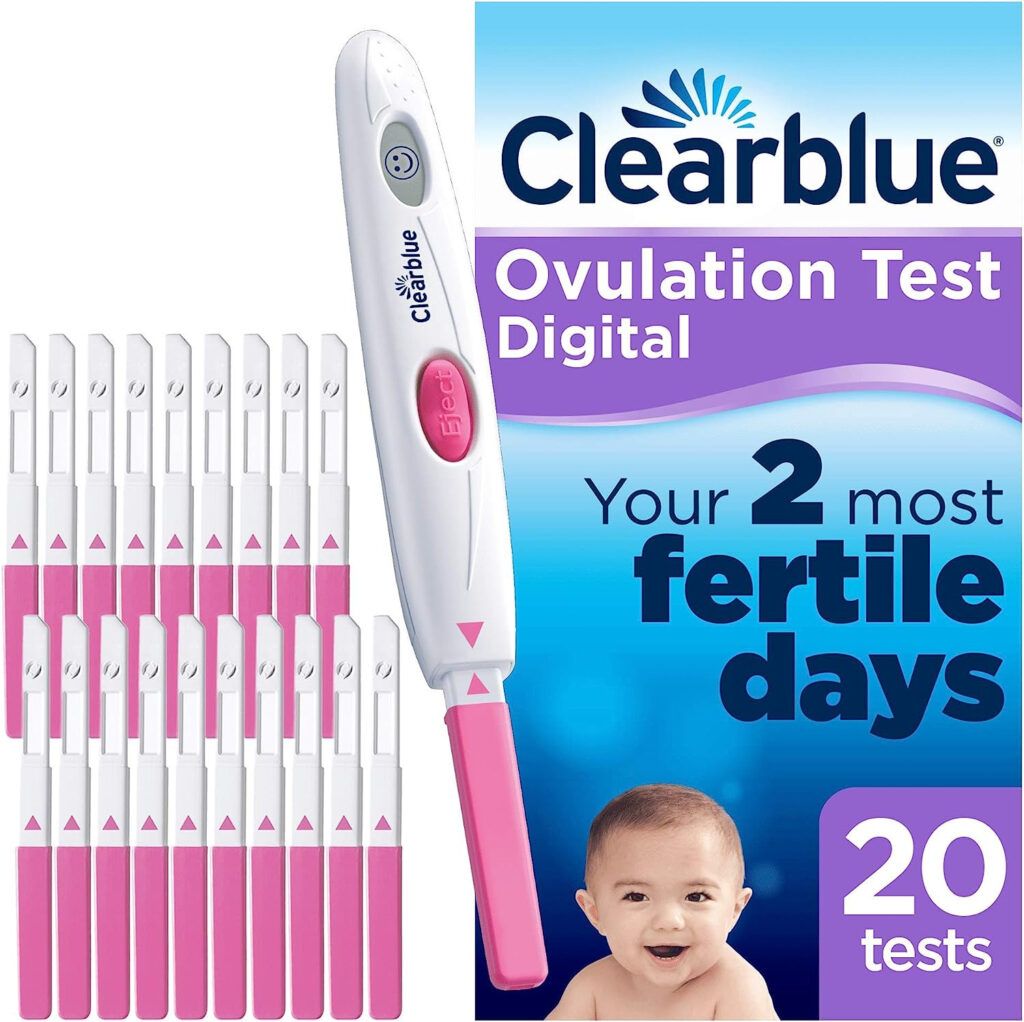
Clearblue Digital Ovulation Test Kit, 1 Digital Holder And 20 Tests. Buy from Amazon here*
When is the best time to take a pregnancy test?
The best time to take a pregnancy test is on the first day of a missed period, which is usually around 14-15 DPO or approximately 2 weeks after ovulation. So, why do we need to wait for so long?
It may be nerve-racking, but waiting for the first day of your missed period gives you a 99% chance of getting an accurate result. You need to give the hCG levels time to rise. Studies show that most pregnancy tests need hCG levels of 25 mIU/mL to give a positive result. Considering that hCG levels double roughly every two days after implantation, before peaking at around the 10th week, it can take several days for the hormone to be detected by the tests.
If you normally have a regular period, then having a missed period will often be the earliest physical sign to watch out for. You may still have a little light bleeding or spotting around the time of your period even if you are pregnant and this is called implantation (when the fertilised egg implants itself into your womb).
Implantation bleeding is generally lighter than a period and the cramps are less severe. For those of you who don’t have regular periods, then you may notice other earlier symptoms before you spot a missed period. Take a pregnancy test as soon as you miss your period date, as this method is the most accurate way of finding out if you’re pregnant.
How do I make out the difference between ovulation bleeding and implantation bleeding?
Both implantation and ovulation bleeding are similar, and their timelines may also overlap. Here is a quick way to identify the differences between the two.
Factor
Spotting
Implantation Bleeding
Ovulation bleeding
Reason
It occurs when a fertilised egg attaches to the inner uterine lining or endometrium, signalling the start of pregnancy.
It occurs when the ovary releases an egg from a mature follicle.
Color
Light pink to dark brown
Light pink or red
Clotting
No clots
No clots
Time
Lasts only 1-2 days
Lasts only 1-2 days
Pattern
Irregular and unpredictable
Irregular and unpredictable
Amount
Small amount of blood causes light spotting, which may require a panty liner for collection.
Small blood causes light spotting, which may require a panty liner for collection.
Symptoms
Nausea, light cramps, frequent urination,
Increase in cervical mucus, with the look and consistency of egg whites. Increase in basal body temperature. Increased sex drive. Ovulatory pain or cramping.
Which symptoms appear even when you’re not pregnant?
Other questions asked are:
What are the symptoms after ovulation if not pregnant?
Symptoms after ovulation if you’re not pregnant can also be construed as pregnancy symptoms but are actually false symptoms. These include:
Delay in your period
Bloatedness.
Enlarged and tender breasts, changes in the nipples, and possibly milk production.
Feeling of foetal movements
Nausea
Weight gain
Positive pregnancy test but no symptoms. Is this normal?
Other questions asked were:
What happens after ovulation if pregnant and how does your body feel?
What are the symptoms after ovulation if pregnant?
it is perfectly normal for some women to not have any symptoms at all and still be pregnant.
Is it normal to have blood spotting 2 days after ovulation day?
Ovulation bleeding can occur immediately before, during or after ovulation due to changing oestrogen levels. Light spotting doesn’t usually signal a serious problem, but if you’re worried consult your doctor – better safe than sorry!
What happens one day after ovulation?
Other questions asked were:
What happens the next day after ovulation?
Can you feel symptoms after ovulation?
Are there DPO symptoms leading to BFP?
How do you feel the day after ovulation if pregnant?
How many days after ovulation can you have symptoms?
Can you feel pregnancy symptoms immediately after ovulation?
Can you get pregnancy symptoms right after ovulation?
How does one feel after ovulation?
How many days after ovulation do you get symptoms of pregnancy?
Ovulation lasts anywhere between 12 to 24 hours and after the egg is released, it dies after 24 hours unless a sperm fertilises it. If you have sex days before or during your ovulation period, you have a high chance of conceiving because the sperm can survive for up to 5 days in the cervix.
Can I have pregnancy symptoms at 2 DPO?
Other question asked were:
Can pregnancy symptoms start 2 days after ovulation?
48 hours after conception symptoms, you may experience some cramping, bloating, breast tenderness and fatigue, but these symptoms are generally related to hormonal changes during ovulation. The symptoms will be the same whether or not an egg is fertilised.
Can you have symptoms 3 days after ovulation?
Other questions asked were:
What are the symptoms 3 days after ovulation?
It is unlikely you will experience pregnancy symptoms at after the third day of ovulation.
What happens day 4 after ovulation?
Other questions asked were:
Can you have pregnancy symptoms 4 days after ovulation?
Can you have symptoms 4 days after ovulation?
At 4DPO, the sperm has fertilised the egg that was released four days prior. Once merged, they will transform into a zygote.
Is it possible to have pregnancy symptoms 5 days after ovulation?
Other questions asked were:
Can you have symptoms 5 days after ovulation?
I am 5 DPO days past ovulation with no symptoms. When will I get any symptoms?
You may experience some symptoms as early as 5DP, although you won’t know they’re pregnancy symptoms until much later. Some early symptoms include mood swings, implantation bleeding, cramping and breast tenderness.
Can you have symptoms a week after ovulation?
Other questions asked were:
What are 7 days after ovulation symptoms?
Can you have symptoms 6 days after ovulation?
Please check the day by day pregnancy symptoms after ovulation above for an idea of what to expect 7 DPO.
What are pregnancy symptoms 10 days after ovulation?
Other questions asked were:
10 DPO no symptoms. Is this normal?
What are 10 DPO symptoms of pregnancy?
I have zero pregnancy symptoms at 10 DPO. What do I do?
Can I get a positive pregnancy test 10DPO?
What are day 10 pregnancy symptoms?
10 DPO symptoms include the above symptoms due to progesterone production stopping at around 10DPO. Your period should then start around 14 or 15 days after ovulation if you are not pregnant.
Do pregnancy symptoms before missed period mean I’m pregnant?
There’s no way to know for sure unless you take a pregnancy test. You may experience some symptoms, but these could also be period symptoms too. If you aren’t sure you’re pregnant after taking a test, make sure you visit your doctor to get checked.
Can you feel conception after ovulation?
Fertilisation symptoms before implantation can including cramping due to implantation.
Summary – The bottom line on DPO Symptoms
The period between ovulation and when you can detect and confirm pregnancy is often tricky. The symptoms overlap, and you can easily mistake them for premenstrual symptoms. Instead of ovulation or common early pregnancy symptoms, an easy way to track hormone levels and confirm ovulation is by using a fertility monitor like Inito.
When you know what to expect in the days post ovulation, you can keep a close watch on your symptoms as you start your exciting journey to motherhood!
Maternal childbirth injuries are a common occurrence, however, they range in severity from minor perineal tears through to serious complications such as prolapse and postpartum haemorrhage. Unfortunately, childbirth injuries are rarely talkemd about, meaning that many women are unprepared when it happens to them, which can have a severe impact on a woman’s mental and physical health. In this article, we’ll take a look at some of the ways you can help to prevent tearing when giving birth, which is the most common trauma during birth.
How common is tearing during birth?
What are the chances of tearing during childbirth? And can you prevent tearing during birth? These are the questions that burn through pregnant women’s minds most if not during all of their pregnancy journey.
“Up to 9 in every 10 first time mothers who have a vaginal birth will experience some sort of tear, graze or episiotomy. It is slightly less common for mothers who have had a vaginal birth before. For most women, these tears are minor and heal quickly.”
I’ve had a tumultuous relationship with labour and birth. My first two were an emergency caesarean and a planned c-section so I didn’t experience any tearing. But, my third and fourth births were vaginal. I experienced a second-degree tear with an episiotomy with my third birth and no tearing at all (just grazes) during my 4th. And, yes, the aftermath is more difficult when you tear, but most of the time it’s fixable and even reversible. But, are there ways to prevent tearing during birth? And if so, how do you prevent tearing during birth?
I will lay down some tips on how to prevent vaginal tearing but first, we need to know about the differing levels of perineal tearing before we discuss how to prevent tearing during birth.
How many levels of tears are there?
There are four degrees of perineal tears which can involve the vagina, the labia, the cervix and the area between the vagina and the rectum. Most tears will heal without treatment but if you’ve suffered severe perineal trauma, you may experience prolonged pain and require treatment to heal.
First-degree perineal tears
A first-degree tear is the least severe of all the tears and involves just the perineal skin which is the skin between the vaginal opening and the rectum, and the tissue directly beneath the skin. First-degree tears heal on their own and during the healing process, you may experience stinging when you pee.
Second-stage perineal tear
Second-degree vaginal tears are when the skin and the muscle of the perineum tear during birth and may extend into the vagina. Second-degree tears generally require stitching and the healing process can last a few weeks. As with the first-degree tear, keeping the area clean and using a cold or warm compress to ease the stinging can help you to recover quickly.
Third-degree tear
A third-degree labour tearing extends into the anus’ muscle (anal sphincter) which requires an operation under anaesthetic. It may take longer than a few weeks to heal and complications such as faecal incontinence can occur.
Fourth-degree perineal tear
A fourth-degree tear during labour is the most severe of all perineal tears and extend right into the mucous membrane lining the rectum (rectal mucosa). Fourth-degree tears generally require a more specialised operation under anaesthetic and take longer than a few weeks to heal.
There are certain risk factors that come with fourth-degree tears like faecal incontinence and painful intercourse, therefore reducing perineal trauma as much as possible is a priority.
So what causes tearing during birth?
Vaginal tearing happens when the baby’s head coming through the opening is either too large for the vagina to stretch to accommodate or the vagina doesn’t stretch easily around a normal-sized head.
Is there any way to prevent tearing during labour?
9 out of 10 first-time vaginal births experience some tearing so how do women avoid tearing while giving birth? There are things you can do to reduce the risk of tearing and we will go through the most popular options now.
How to prevent tearing during delivery – getting your body ready to give birth
Giving birth is probably the most challenging thing your body will go through in your lifetime and deserves adequate recognition and preparation. Just as you wouldn’t turn up to the start line of a marathon with no training, ideally you don’t want to be turning up to the birthing suite of your local hospital entirely unprepared either.
While it’s true that your body and baby know what to do at each stage of labour, there’s a lot you can do to help your body and increase your chances of having a complication-free birth.
You should ensure that you’re in good shape before conception and throughout your pregnancy, by eating well and keeping up with your appointments and scans. Gentle exercises such as pregnancy yoga, walking and swimming can also help to prepare your body for labour and are one of the tried and tested techniques on how to avoid tearing during birth. You can also try doing gentle squats to help strengthen your muscles (but not if your baby is breech.) Breathing techniques, like those used in yoga, meditation or hypnobirthing can also help prepare you mentally, which has been shown to have an impact on birth outcomes.
How to prevent tearing during labour – get your baby into position
One of the major factors and probably a big part of what prevents tearing during childbirth is your baby’s position. For as smooth a delivery as possible, your baby should be in the occiput anterior (OA) position. This means that their head is down, and they are facing your spine. In this position, the smallest part of the baby’s head will travel through your pelvis first. This can help prevent issues such as the baby becoming ‘stuck’ and can reduce your risk of tears.
Many babies will get themselves into this position before birth without any help, however, there are a variety of things you can do to encourage your baby into the correct position. Towards the end of your pregnancy, try to ensure that when you’re sitting down, your knees are lower than your hips. So rather than sinking back into the sofa to watch TV, try sitting upright on a birthing ball instead, or kneeling forward with your elbows resting on a coffee table. Swimming is also great for this, as it tilts your pelvis forward, and gravity will do the rest!
How to give birth without tearing – get the correct aftercare
Unfortunately, even with careful planning in preventing tearing during labour, it’s still possible to suffer an injury during childbirth. If this happens to you, it’s important to remember that it isn’t your fault and you’re not alone.
Depending on the severity of your injury, you may recover quickly with proper aftercare and advice, or you may need input from other health professionals, such as a physiotherapist, for example. A small number of women may even require corrective surgery. If you feel that your care has been below standard and your injury was avoidable, then you may have a medical negligence claim and should talk to a specialist about what this might involve.
No matter what type of birth you’ve had or whether you sustain a birth injury, it’s possible to develop birth-related trauma. If you think this might apply to you, organisations such as the Birth Trauma Association may be able to help you on your path to recovery.
FAQ
Do all women tear while giving birth?
No, not all women tear but most do. So make sure you take the steps above to reduce your risks of tearing during birth.
I’m scared of tearing during birth. What can I do to overcome my fear?
It is quite normal to be fearful of tearing during birth due to the high statistic. But when asking yourself, can you prevent ripping during birth, look at the tried and tested techniques above and try them for yourself.
Listen to your body and push when your body wants to push, but also be mindful when your midwife tells you to stop pushing as they’re trying to prevent you from tearing too. If you can’t overcome your fear and it’s impacting your daily life, it’s important to speak to your midwife who can put you in touch with a specialist. They can talk through the process of birth and what to do to avoid tearing. Do not leave it alone.
How can you avoid tearing during a natural birth?
Another question asked was, ‘How can I prevent tearing during delivery?’ Please see the above advice which will help to reduce the risks of tearing during birth.
How can I avoid tearing during labour with a perineal massage?
Some hospital caregivers advise a perineal massage during the third trimester when discussing how to avoid tearing when giving birth. A perineal massage is a massage to the perineum, the skin between the vagina and the rectum to help strengthen and keep it intact during birth.
Do you know what to eat to prevent tearing during birth?
Giving birth to a large baby can increase your chances of tearing during birth, so it’s important to stick to the right foods when considering how to prevent perineal tearing during birth.
Are there any home remedies to prevent tearing during birth?
Yes, please see above for more information on these home remedies.
Are there any exercises to prevent tearing during birth?
“During pregnancy, pelvic floor exercises help with muscle control during labor and pregnancy and recovery afterward. Not only that, but women who paired perineal massages with a consistent kegel routine increased their chances of no tear at all from 6% to 17%.”
It is advised by medical experts that using olive oil to prevent tearing during childbirth can have successful results but can oil prevent tearing during labour when used by itself? The answer is not exactly. When used during a perineal massage it can become an effective and inexpensive way to help strengthen and improve your perineum so it is more able to tolerate the vigour of birth.
Can I use coconut oil to prevent tearing during labour?
Does coconut oil prevent tearing during labour? Massaging the perineal area with any moisturising oil, including coconut oil is effective when considering how to prevent tearing in labour.
What are your recommendations to prevent tearing during childbirth? I want to learn how to push during labour without tearing.
Read trusted resources on how to prevent tearing during birth, so you are fully prepared before you go into labour. This will help put you in a strong position to do the best you can to make it a positive birth for you. As mentioned above, it’s important to listen to your midwife/doctor during the pushing stage who will advise you when to breathe and when to push. And, if you do end up tearing during birth, know that you have a lot of aftercare out there to help you recover quickly and efficiently so you can concentrate on building a new life with your baby.
*Collaborative feature post*
The risks of bacterial vaginosis in pregnancy
The Centers for Disease Control and Prevention (CDC) estimates that 1 million women get bacterial vaginosis in pregnancy each year making it the most common cause of vaginal complaints in pregnancy. But its prevalence is low and most women are asymptomatic.
So why is it so common? This article will discuss bacterial vaginosis (BV) while pregnant and how women who are pregnant with BV treat this common pregnancy health issue. We will also talk about symptoms, treatment and disease control so you can enjoy a healthy pregnancy free from vaginal problems.
What causes Bacterial Vaginosis?
Bacterial vaginosis in pregnancy is caused by an overgrowth of the bacteria Lactobacillus and especially Gardnerella, which also play important roles in maintaining healthy vaginal flora. Bacterial vaginosis is characterised by a fishy or sour odour, frequent discharge, and a thin fluid-like yellowish film on the mucous membranes.
What is the risk of developing bacterial vaginosis during pregnancy?
The risk of developing bacterial vaginosis during pregnancy is low (at around 20%), but it is not clear how much the risk has changed now that douching is no longer recommended.
Douching is the process of intravaginal cleansing with a liquid solution to prevent or treat an infection. One study looked into the risks and benefits of douching because the act has been associated with many adverse outcomes including pelvic inflammatory disease, BV, cervical cancer, low birth weight, preterm delivery, human immunodeficiency virus transition, sexually transmitted infections, ectopic pregnancy, recurrent vulvovaginal candidiasis and infertility.
The study found that more research needs to go into whether douching is a causal factor in diseases like BV or whether it is more common among those who are at risk of STDs. Perhaps there is an increased risk of adverse effects associated with douching if certain solutions are used.
How can you lower your risk of bacterial vaginosis during pregnancy?
Bacterial vaginosis in pregnancy is the most common cause of vaginal complaints, but the complications associated with untreated BV can be serious. Therefore, it is important to understand the risk factors, symptoms, and tests for the condition. Improving hygiene, reducing stress, and making lifestyle changes are the best ways to reduce the risk of BV.
BV while pregnant – symptoms
Bacterial vaginosis in pregnancy is characterised by a fishy or sour odour, frequent discharge, and a thin fluid-like yellowish film on the mucous membranes. The most common symptom for women in bacterial vaginosis when pregnant is a vaginal odour that differs from normal vaginal discharge.
Bacterial vaginosis discharge can be described as “fishy” or “sour.” It may also have a mild to strong salty or acidic smell. Other symptoms of BV in pregnant women include increased vaginal discharge, itching and burning during urination, and pain during sex.
Tests for bacterial vaginosis in pregnancy
The diagnosis of bacterial vaginosis in pregnancy is made by a thin, watery, yellow-green or grey discharge and a fishy odour. There are several tests for bacterial vaginosis in pregnancy: wet mount, vaginal pH, Gram stain, and KOH prep.
Bacterial vaginosis in pregnancy – treatment
Treatment for bacterial vaginosis in pregnancy can be treated with antibiotics. But this treatment will depend on the severity of the symptoms and the gestational age of the foetus. In most cases, there are no adverse outcomes associated with BV during pregnancy. However, if a pregnant woman does contract bacterial vaginosis, then treatment may be necessary to prevent complications.
If you are allergic to penicillin or tetracycline antibiotics then treatment should not be administered. If you have questions about bacterial vaginosis in pregnancy, you should consult your health care provider.
Overcoming any barriers to treatment
BV is treatable, although, there can be side effects from treatment methods. Therefore, it is important to research your options before deciding on one course of treatment and consult your doctor, as some treatments may work well for others with similar symptoms, but may not work for you.
Conclusion
Bacterial vaginosis in pregnancy is the most common vaginal infection in women of childbearing age. The symptoms are often mild and may not be noticeable. However, if you are pregnant, BV can pose pregnancy complications, such as preterm birth (having the baby before your due date). Thankfully, there are steps you can take to reduce your risk.
To reduce your risk of sexually transmitted diseases, maximise your prenatal care, including only having unprotected sex with your partner who has had a negative STD screening or uses birth control that does not contain hormones, such as an IUD or a NuvaRing. If applicable, reduce the number of sex partners, to minimise STD transmission.
Triclosan soaps and douching should also be avoided. In addition, always practice good hygiene by wiping from front to back and making sure not to wear tight-fitting clothes that may trap moisture. And if you are experiencing vaginal discharge, odours, or burning during urination, see your doctor as soon as possible to get treatment for bacterial vaginosis or other possible relevant issues.
FAQ
I can’t get rid of BV during pregnancy – what do I do?
Pregnancy bacterial vaginosis can be treated with antibiotics to kill off the bacteria. The antibiotic may be oral or a cream/gel that you put into your vagina. BV antibiotics are safe for your baby during pregnancy and they may help to reduce your risk for STIs.
How do you avoid recurrent bacterial vaginosis when you are trying to conceive?
To treat bacteria in the vaginal canal which may be pregnancy BV your doctor may prefer to prescribe Oral metronidazole (Flagyl for BV in pregnancy). Intravaginal metronidazole gel or intravaginal clindamycin cream are alternatives but less preferred.
What is the diagnosis for bacterial vaginosis?
Your doctor may examine the vaginal secretions to look for ‘clue cells’ which are a sign of bacterial vaginosis in pregnancy.
What could cause BV Bacterial Vaginosis?
BV results from an imbalance of ‘good’ and ‘harmful’ bacteria in the vagina. Having multiple sex partners and not using condoms can upset the normal balance of the bacteria in the vagina, which increases the risk of getting bacterial vaginosis in pregnancy.
Can birth control cause bacterial vaginosis?
“Hormonal birth control has not been shown to cause these infections, but for some women, it can change the pH balance of the vagina and make them more prone to overgrowth of yeast or Bacterial Vaginosis (BV.) Both can cause dryness, irritation and itching.”
“Although BV can be triggered by sex, having BV is not an STI (you can still get BV even if you have not had sex) and it doesn’t mean your partner is cheating or has passed something on to you.”
What antibiotics women should take during pregnancy?
The following antibiotics can be taken by pregnant women:
Penicillins, including amoxicillin (Amoxil, Larotid) and ampicillin.
Cephalosporins, including cefaclor and cephalexin (Keflex)
Clindamycin (Cleocin, Clinda-Derm, Clindagel)
Can men carry bacteria that infect women with bacterial vaginosis after they have been treated with antibiotics?
Men can’t get BV because the penis doesn’t contain the same delicate balance of bacteria, but they can pass on bacteria which can cause bacterial vaginosis in pregnancy because of a change in the vaginal bacteria balance and/or exposure to a new sexual partner.
I had an IUD inserted 3 weeks ago and my vagina has had an odour in the past week. Could there be something more going on than just the IUD?
“An IUD should never cause a weird smell, itching, redness, or other irritation. These are all signs of infection and should be checked out asap.”
Is bacterial vaginosis and a friable cervix that bleeds because of inflammation a sign for cervical cancer?
Friable means easily irritated, which makes the cervix prone to inflammation, bleeding, or tearing. BV can affect the cervix. It’s possible that BV and a friable cervix can clear up on their own, but if left untreated, it could lead to other health issues like infertility and possibly cervical cancer. If you have BV and a friable cervix, you should visit your doctor immediately for an accurate diagnosis and treatment.
What’s the best treatment for recurrent bacterial vaginosis BV?
“Antibiotics for bacterial vaginosis. Oral antibiotics are the first-choice treatment in pregnant women with BV. A full course of metronidazole tablets is the common treatment. Metronidazole is an antibiotic.”
Why would bacterial vaginosis symptoms persist through antibiotic treatment when doctors say I’m clear then later recur?
“Around a third of women who take antibiotic treatment for bacterial vaginosis (BV) find that the problem recurs within the next two to three months. Some strains of BV organisms may have resistance to some antibiotics. You should return to your healthcare provider and describe the problems you are having.”
Can the antibiotics of sulfamethoxazole treat bacterial vaginosis?
“Trimethoprim-sulfamethoxazole should be avoided, if possible, during the first trimester of pregnancy because of the antifolate effect associated with neural tube defects.”
What are the signs and symptoms of bacterial vaginosis?
Bacterial vaginosis in pregnancy signs include:
thin, grey, white or green vaginal discharge
foul-smelling ‘fishy’ vaginal odour
vaginal itching
burning during urination
How do I cure vaginal bacterial infections naturally without antibiotics?
Most women with BV can have a normal pregnancy and up to half of the cases resolve on their own. however, studies still show that having BV while pregnancy can increase the risk of preterm birth and having a low birth weight baby. There are some home remedies to treat BV but antibiotics can treat most cases. These are:
Use barrier protection when having sex
Urinating immediately after intercourse
Avoid scented vaginal products
Abstain from douching
Washing the vagina regularly
Wear breathable cotton underwear
Keep the vaginal area dry
Wash your hands before you touch your vagina
Taking probiotics like yoghurt, fermented foods, some cottage cheese and kefir
Garlic supplements
Please check with your doctor trying the above during pregnancy.
Can one treat bacterial vaginosis with dicloxacillin?
Dicloxacillin is a penicillin-type antibiotic and is used to treat a wide variety of bacterial infections. Dicloxacillin has been assigned to pregnancy category B by the FDA. It should only be given when need has been clearly established as there has been no controlled data relating to its use in pregnancies. Therefore, it is not recommended during pregnancy because it can affect tooth and bone development in your baby. Talk to your doctor about taking a different antibiotic for bacterial vaginosis.
How efficient are boric acid suppositories for treating bacterial vaginosis?
Please note Boric acid should not be taken during pregnancy and is toxic to the developing foetus.
“The cure rates with boric acid ranged from 40 to 100 percent.
This review, however, did not specifically focus on the bacteria that causes BV.
While these results are encouraging, more studies need to be done to confirm that boric acid is, in fact, an effective add-on treatment for BV.”
How should I take antibiotics to cure bacterial vaginosis?
A bacterial infection during pregnancy can be treated with antibiotic tablets or gels/creams to prevent preterm labour and ultimately premature birth.
Consult a medical professional for more information on BV in pregnancy and do not rely on the information in this article to diagnose yourself or someone else with BV.
*Collaborative feature post*
How to support your body through pregnancy with Mama Mio Skincare
*Sponsored guest post by Mama Mio*
Whether you’re trying, you’ve just found out you’re expecting, or you are preparing to push, you’ve definitely got lots on your mind right now, mama. From practical and logistical considerations to noting down questions for your next doctor’s appointment, or falling down those late-night Google holes… there’s so many questions, so much information, and so much to consider. Plus, every pregnancy is different – so where to begin?!
Here at Mama Mio skincare, we know how precious this time is, and whilst you’re preparing for your new arrival, we want to help you enjoy it. We’re committed to giving you one concern less – helping you take care of your skin during the 9-month str-e-tch. Whether you’re 8 weeks pregnant or in your 3rd trimester and about to pop!
We have over 15 years of pregnancy skincare expertise and unique, hydrating formulas to protect and support your skin throughout your pregnancy journey and beyond. From before bump all the way through to baby, Mama Mio skincare is here to support you every step of the way.
We’ll support your health as you’re trying for and growing your Miniwith Mama Mio Skincare
Are you ready to start a family, mama? We want to be there for you on your journey towards a healthy, happy pregnancy. Besides cutting out alcohol, too much caffeine and smoking, it is recommended by the NHS that you should take 400 micrograms of folic acid every day as soon as you try for a baby all the way until your 12th week of pregnancy. In fact, research shows that having a good amount of folic acid in your bloodstream during the time of conception can help to reduce the risk of your baby having neural tube defects such as spina bifida.
That’s why we created our Pregnancy Gummies, designed to support you when trying for a baby all the way through to bump! Our delicious, vegan-friendly and sweet-berry flavoured gummies are packed with 8 essential pregnancy vitamins and minerals including 400mcg* folic acid to increase maternal folate status, vitamin C and Vitamin D3*. Included in one super tasty, easy to take gummy, they are the perfect daily dose to give your baby the absolute best possible start in life!
*Recommended by the UK Department of Health to be supplemented when pregnant.
We’ll nourish and protect your body for the 9-month stretch and beyond
Trusted by mamas globally, we know that your skin can change a lot during pregnancy. From stretch marks to sore boobs, itchy legs and swollen ankles, we know pregnancy can be tough on your skin and we pride ourselves on providing it with the care it deserves, every step of the way. From our iconic, nourishing Mama Mio Tummy Rub Butter and Rub Oil to our soothing and cooling Lucky Legs Cooling Gel, we create products designed to support and protect your skin no matter how it’s feeling.
We use the highest quality ingredients and have packed all of our products full with 100% natural plant-based actives and our unique Omega Rich Skin Stretch Complex that deeply nourish, hydrates, elasticises and is clinically proven* to help prevent stretch marks. Our products have been specifically developed to be suitable for pregnant, post-partum and breastfeeding mamas and they’re also vegan, cruelty-free and use 100% natural fragrances.
Our mamas are at the centre of everything we do. Our pregnancy products are dermatologically tested and supercharged with soothing formulas and natural fragrances that are safe for both mama and baby. In our commitment to treading gently on the planet, we source our packaging sustainably and responsibly to help protect our future generations!
We’ll help you prepare to push
We know that birth can be daunting, but we’re here to help you prepare to push, push, push! In your 3rd trimester (from weeks 34-36 in pregnancy) mamas are advised to massage their perineum 1-2 times per week with an oil that is safe to use in this delicate area, to help make your perineum more flexible and able to stretch more easily during birth to help prevent tearing.
Our Push Partner (see what we did there?) Perineum Oil has been expertly formulated with a blend of 100% natural nourishing oils including Coconut Oil, Sweet Almond Oil, and Rosehip oil to help mama relax, making the massage process easier. Supercharged with our iconic Omega Rich Skin Stretch Complex, our Push Partner Perineum Oil is clinically proven* to help increase skin’s elasticity and help to keep your skin supple and ready to str-e-tch when the time comes to meet your little bundle of joy! Packed full of plant-based actives to deliver results you can both see and feel, this fragrance-free formula is perfect for mamas with sensitive skin and delicate noses.
*Independent clinical trial
We’ll create moments as you bond with your Mini
For over 15-years Mama Mio has nourished, supported, and protected Mama-to-be skin throughout the 9-month str-e-tch and beyond to give you pregnancy-safe support for strong, healthy skin. From breastfeeding safe nipple and boob creams to hydrating body lotions for dry skin, we have extended this love and care to your little ones with our new baby skincare range Mini Mio that brings parents and little ones together for moments of bonding. From connecting at changing times to building bonds and bedtime, we’ve designed each product to help you connect with your baby.
Made from premium ingredients derived from Mother Nature and our new Skin Nurturing Omega Complex, you can trust our baby skincare products to nourish, soothe, calm and protect even the most sensitive baby skin. Charged with plant-based ingredients and nourishing oils, Mini Mio skincare is vegan, cruelty-free, Paediatrician approved and safe for babies. From gently cleansing body washes to comforting bum balms, hydrating face and body lotions and sensorial Bath Bubbles, we have a product to help you care for every single mini moment in the day.
Whether you’ve just found out you’re pregnant, about to push or are looking for baby-safe skincare for your little one.
*Links marked with a star are affiliate links which means Motherhood Diaries may earn a small commission at no extra cost to you should you click through to buy the products
15 fun and productive things to do on maternity leave
Maternity leave is a time for you to leave work at work, prepare for your new baby, and get to know your newborn in the fourth trimester. But it can also present a dilemma as to how to make the most of maternity leave, especially if it’s your first maternity leave.
Maybe you’ll want to get back to normality as soon as possible or perhaps you’d want to squeeze in as many new experiences as you can before you head back to work. Whatever you decide, there are a lot of things for pregnant mums to do before baby arrives and we have some tips from experienced parents on fun things to do on maternity leave after the baby is born too.
What is not classed as maternity leave?
Maternity leave is a specific period of leave granted to a mother for the birth and care of her newborn child. However, there are several types of leave not classified as maternity leave. These include:
Paternity Leave: This is leave granted to a father after the birth of a child, allowing him time to care for and bond with his newborn. It’s distinct from maternity leave and usually shorter in duration.
Parental or Family Leave: This type of leave can be taken by either parent to care for a child. It’s often more flexible and can be taken at different times, not just immediately after the birth.
Sick Leave: This is time off work taken by an employee because of illness. If a woman is sick and it’s unrelated to pregnancy or childbirth, it’s considered sick leave, not maternity leave.
Annual Leave or Holiday Time: Regular paid time off that employees earn during their employment. This is separate from maternity leave and can be used for any purpose.
Unpaid Leave: Some time off work, such as a career break or sabbatical, might be unpaid and is not classified as maternity leave.
Adoption Leave: Leave taken by an individual who is adopting a child. This is different from maternity leave but has similar aims in allowing time to bond and care for the child.
Compassionate Leave: Leave taken due to a family emergency or bereavement. This is separate from maternity leave.
Short-Term Disability Leave: In some regions, pregnancy may be covered under short-term disability if there are medical complications. This is different from standard maternity leave but may run concurrently in some cases.
Each type of leave has its own rules, duration, and eligibility criteria, and they are designed to cater to different needs and circumstances of employees.
So, let’s dispel some more maternity leave myths!
Myth – Maternity leave is just an extended vacation
The myth that maternity leave is just an extended vacation is far from reality. In truth, maternity leave is a crucial period for physical recovery, emotional adjustment, and nurturing a new life. For new mums, this time is often characterised by sleep deprivation, doing multiple dishes, continuous care for the newborn, and dealing with the physical and mental changes post-delivery.
It’s a time of significant transition, filled with challenges and adjustments that go well beyond the realms of a ‘vacation’. Maternity leave serves as an essential phase for bonding with the newborn, laying the foundation for a child’s healthy development, and recalibrating family dynamics. It’s a time for healing, learning, and immense responsibility, often without the breaks and leisure typically associated with a holiday. Therefore, it’s crucial to acknowledge and respect the dedication and effort that goes into this life-changing period.
Myth – Maternity leave slows down your career
The myth that maternity leave slows down your career is a widespread concern but doesn’t necessarily hold true. While it’s understandable to worry about the impact of taking a break from the workforce, maternity leave does not inherently derail career progress. In fact, this period can offer valuable experiences that enhance professional skills.
Skill Development: Maternity leave often hones skills like time management, multitasking, and prioritisation, which are highly transferable to the workplace.
Perspective and Motivation: The time away can provide a fresh perspective, renewing your motivation and commitment to your career.
Policy and Workplace Culture: Many organisations are recognising the importance of supporting parents and are implementing policies that facilitate a smoother return to work, such as flexible hours, part-time options, and remote work opportunities.
Networking and Professional Growth: Staying connected with colleagues, engaging in professional development during leave, and participating in relevant networks can help mitigate the feeling of falling behind.
Legislation and Rights: In many regions, laws protect the jobs of those on maternity leave, ensuring you can return to your role or equivalent position.
Long-term Career Trajectory: While there might be a temporary pause, the long-term impact on your career can be minimal. In fact, the break can sometimes lead to new opportunities or career paths that align more closely with your evolved personal and professional goals.
Societal Shifts: There’s a growing societal shift towards recognising the value of work-life balance, with more emphasis on the quality of work rather than just presence in the office.
Myth – Maternity leave is only for birth mums
The myth that maternity leave is only for birth mothers is a misconception that overlooks the diverse family structures and parental roles in modern society. In fact, maternity leave, as traditionally understood, has evolved to include a broader range of parental leave options, reflecting the varying ways families are formed and parents participate in caregiving. Here’s a breakdown of this evolution:
Inclusive Parental Leave: Parental leave policies in many countries have become more inclusive, recognising not just birth mothers but also adoptive parents, surrogates, and other non-birth parents. This shift acknowledges the importance of bonding and caregiving time for all parents, regardless of how they become a parent.
Paternity Leave: Many countries and companies now offer paternity leave, enabling fathers to take time off work to bond with their newborn or newly adopted children, sharing the caregiving responsibilities traditionally associated with mothers.
Adoption Leave: Specifically designed for parents who adopt, this leave allows them to spend crucial time with their new child, helping to establish a bond and settle them into their new home.
Shared Parental Leave: Some regions offer the option for parents to share leave, providing flexibility and choice in how they manage childcare and their careers. This can include splitting the leave between both parents or taking it in turns to be off work.
Surrogacy Leave: Recognising the role of surrogacy in modern family-building, some policies now include provisions for parents who have children through surrogates.
LGBTQ+ Parental Rights: Parental leave policies are increasingly acknowledging LGBTQ+ families, ensuring that same-sex partners and other non-traditional parents have the same access to leave as traditional parents.
Legal Protection and Equality: Progressive legislation in various countries ensures that parental leave rights are protected and equally accessible to all parents, regardless of gender or biological connection to the child.
Changing Social Norms: There’s a growing understanding and acceptance that bonding and early childcare are critical responsibilities of all parents, not just birth mothers.
Myth – Maternity leave is a lonely journey
The myth that maternity leave is a lonely journey stems from the significant change in daily routine and social interaction that a new mother may experience. However, this perspective doesn’t account for the many ways in which maternity leave can be an opportunity for social connection and support. Here’s a more nuanced understanding:
Community and Support Groups: Many new mothers find community and support through local parenting groups, maternity classes, or online forums. These groups offer a chance to connect with others who are going through similar experiences, providing both social interaction and emotional support.
Bonding with the Baby: Maternity leave is a crucial time for bonding with your newborn. This period allows you to understand and connect deeply with your child, which is a unique and fulfilling experience, contrary to the idea of loneliness.
Family and Friends: It often becomes a time when family bonds are strengthened. Relatives and friends may offer help and companionship, providing social interaction and emotional support.
New Friendships: Joining mother and baby groups or attending baby-centric activities like music classes or swimming lessons can lead to forming new friendships with other parents.
Personal Growth: Maternity leave can also be a time for personal reflection and growth. Engaging in hobbies or interests that may have been sidelined can be both fulfilling and a way to connect with like-minded individuals.
Reconnecting with Old Friends: The change of pace during maternity leave might provide opportunities to reconnect with old friends, especially those who have children and can relate to the new phase of life you are entering.
Partner Involvement: For those with partners, this period can also be a time to deepen the relationship and hold onto the romance, as you navigate the challenges and joys of new parenthood together.
Digital Connectivity: With the advent of social media and digital communication tools, staying connected with the outside world is easier than ever. New mothers can participate in online communities, follow parenting blogs, or stay in touch with friends and family digitally.
Professional Networks: Some women use maternity leave to keep in touch with their professional network in a relaxed manner, which can help maintain a sense of connection to their career and adult interaction.
Local Community Activities: Engaging in local community activities or volunteering can be another way to stay connected and feel part of a larger community.
Now that we’ve established that maternity leave is a time of reflection, bonding and positivity, here are 15 ideas of things to do on maternity leave before and after baby:
1. Preparing for maternity leave – start by preparing for your new arrival
Your pregnancy to-do list, your impending due date, giving birth and coming up with baby names if you haven’t done so already is probably occupying your mind at the moment, but why not also come up with some productive things to do on maternity leave like preparing your new baby’s room while you have the chance to discuss a baby name.
The House to Home website has lots of great baby room ideas that can be achieved with a pot of paint and a little imagination. And designing a fun and colourful mural for your baby’s room can help develop your own artistic side!
And though it’s still early, Christmas is just around the corner, so squeeze in a little practice by having a go at knitting some miniature stockings and penguins to make your baby’s first Christmas extra special – if you have the time that is!
2. Must-do activities for maternity leave – Find a few minutes every day to just be you
Use this opportunity to get to know yourself as well as your baby. You may find you have a certain talent in an area you didn’t get the chance to pursue before you got pregnant. I found my passion in writing while I was pregnant with my first and gave up my job in law. I have since never looked back.
I spent a lot of time breastfeeding on the sofa, so I would recommend taking up knitting. You can majorly multitask then – snuggle with baby, catch up on box sets and make cute baby clothes. Relaxing, bonding and productivity in one!
You can’t be expected to run at 100% all the time or you will experience exhaustion long before your maternity leave is over. So allow yourself to slow down and get creative with your rest periods. Relax by firing up the TV, cuddling your newborn and enjoying some of the best series TV offers at the moment.
Lots of streaming sites such as Netflix and Amazon Prime host some fantastic vintage TV shows such as Friends and Gilmore Girls that can serve for a perfectly nostalgic and relaxing evening. Or if you’re like me and want something with a bit more grit, Good Girls, Workin’ Moms and Motherland are brilliant shows related to the trials and tribulations of motherhood. Well worth the viewing and it’s lovely to enjoy girly things to do while on leave.
Rest is productive! Taking some time to really slow down and rest can be just what you need before the intense period following a new addition! And if you get to binge watch a series while hiding from your family and eating all the snacks, then that’s just a bonus!
4. Essential things to do on maternity leave – Batch cook your meals
Use the extra time (I say ‘extra time’ loosely) to batch-cook your meals at the beginning of the week and stick them in the freezer or get them ready before baby comes because once he/she is here, you’ll find that all your time will be taken up doing baby and new mum stuff. Batch cooking means you’ll still get to eat nutritious meals rather than snack on easy-to-find processed junk.
Batch cooking! Get those meals stashed to take the load off before baby comes, or while baby naps if baby is already here.
5. How to get the most out of maternity leave – Spruce up your home!
One great tip on how to make the most of maternity leave is to do up your home. We talked about sorting out the nursery, but as you’ll likely be spending a lot more time in your home, then it’s only fair to give the entire house a do-over too.
You could paint the walls in new colours, hang up new pictures and artwork and, as previously suggested, make your own furniture–even sourcing such supplies as a desk and dining table legs for it. Why not have a look at bathrooms while you’re at it!
6. Things to do on maternity leave with baby – Get out of your pyjamas
It’s tempting to wear your pyjamas if you know you won’t be leaving the house. However, how you dress affects your mood, so attempt to get dressed in daywear to give yourself a bit of a boost. Of course, there is no pressure to get out of your pyjamas during the fourth trimester (birth to 12 weeks) but as you come out of the baby haze, help the transition into your new normal by engaging in a certain routine that helps you clear those cobwebs – and putting the PJs away until bedtime is a good start!
7. Practical things to do on maternity leave after baby arrives – enjoy daily gentle exercise
Your workout routine doesn’t have to go out of the window, but it is one of your essentials. You can just change it up a bit to include your baby or start light with gentle walking. Regular physical exercise is crucial for recovering after birth, provided you don’t overexert yourself, plus it helps to boost your mood.
Don’t worry too much about losing weight at the moment, just keep yourself strong and content and the weight loss will follow. You just want to do enough to help the recovery process. Walking is one of the most effective forms of exercise because it’s gentle on the body and it gets you and baby out of the house. You would be surprised at how easily you can integrate walking into the latter stages of pregnancy and with your newborn, so capitalise on nice scenic walks while you have the time on maternity leave.
8. Fun maternity leave activities for when you have the energy – socialise
One of the best ways for making the most of your maternity leave is to get out there and make some new mum friends. Online Facebook groups are a brilliant way to start (I am in a great Facebook group related to my third baby’s birth year. It is so interactive we send each other pick-me-up gifts from time to time. Plus, my daughter gains new friends too). As Covid rules relax there are more chances to go out and socialise, as long as you follow Covid rules so utilise the chance to make friends in person too.
The most productive thing I did on maternity leave was to try to build “a village” by making friends with other mums. When I had my baby I didn’t have any local friends with children, so attending baby groups and meeting other mums gave me a much needed support network.
If this is your first child, then your maternity leave could be your last gasp of true freedom before the little one arrives. While jetting off to a distant location might sound exotic, the rigours of pregnancy can often make it a little taxing.
So instead it can be a good idea to take a short babymoon break in the UK that will help you relax and enjoy the great outdoors. Heading to the coast to sample the clear sea breeze can provide the perfect break before that upcoming big day and ease any maternity leave boredom.
Things I wish I did on maternity leave if I had a time capsule
You’ll want to avoid regretting you didn’t spend your maternity leave doing something you really enjoyed. I’ve had the privilege of being able to enjoy my maternity leave (allowance) with my fourth baby properly this time, to fulfil the things I didn’t do with my first two ten years ago and even my third before lockdown. So here are a few things I wish I did on maternity leave that I am finally doing now!
10. What to do during maternity leave – Go swimming with baby
Take your baby swimming, from as early as six weeks if they can handle it. It’s such a lovely way to bond with baby, plus it’s a great way to get them comfortable with the water and developing new skills already. There are tons of swim schools opening up again and they fill up fast, so book in advance to avoid being stuck on the waiting list.
11. Maternity leave things to do – Sleep when the baby sleeps
I had two boys 15 months apart, so napping was tough, unless I could time their naps at the same time. Ten years later and I have two girls 21 months apart, so I have the same issue. But, on the off chance, I can time their naps together, you can bet your bottom dollar I’m squeezing in a nap too!
I used to think I could just get on with the cleaning and work while my babies napped, but I was only running myself into the ground. A simple 20-minute nap at least can re-energise me to take on the crazier latter half of the day when my two boys get home from school. If I don’t nap, I just feel like I have a constant sleep deficit and I’m less productive.
12. Maternity leave things to do – Get off the phone and enjoy quality time with baby
It’s quite easy to scroll mindlessly through social media while feeding or playing with baby, but I realised I’m missing out on so much by not putting the phone away. I challenged myself to a day of no phones at all and found out how much I truly loved playing with my kids without the need to pick up my phone all the time. I loved engaging with my baby while I fed her – she would smile back at me and we’d squeeze in some precious bonding time. I have a full-blown conversation with my toddler and learned so much about her during play time.
But do you want to know the crazy part? My babies entertained themselves for longer and there were fewer tantrums when I did eventually get up and do something else. Babies need love and attention to be happy and I was wasting so much valuable time doing literally nothing on my phone. What a waste!
13. Maternity leave reality – Don’t wish the first few weeks away so quickly
The first few weeks are tough – the afterbirth bleeding, after pains, sleep deprivation. So it’s normal to want easier times to come quickly. I’ve done this with every birth and felt like I hadn’t properly enjoyed the golden weeks with my newborn because all I did was wish the time away. This time around, and with my third baby, I lived in the moment and tried to enjoy the 3 am wake-up calls for what they were – free snuggles with my baby.
I found that just by accepting that the first six weeks were going to be tough, they ended up being easier to deal with. Broken sleep is hard, but if you can try to find a more positive mindset to push through it all, then you may even end up enjoying the fourth trimester. I did wish the bleeding away though…
14. Things to do during maternity leave – Take more selfies with baby
I took tons and tons of pics and videos of all four kids, but very rarely was I in any of them. This time around, I ignored the bags under my eyes and took many selfies with my babies. I look terrible, but at least I can look back and reminisce at how happy I looked. Kids grow up so quickly, so who cares what you look like, take those magical shots with your baby so you have something to look back on when they’re older.
15. Things to do in maternity leave – Just enjoy it all and care less about what others thought
Like I said above, it’s easy to get caught up in the craziness of birth and try to survive (try going to the toilet on time!) but you can afford to be selfish during your leave. You will feel guilt no matter what you do, so try to get into the habit of taking a step back and realising that you’re in one of the most magical times in your life and it doesn’t matter what other people think about how you choose to spend it.
You have a brand new baby who is growing at an exponential rate in front of your very eyes. Life is too short to sweat the small stuff, so screw what others think, it’s you and baby against the rest of the world – well, the outside world, so enjoy it!
Maternity leave must-haves
Below are some items of which I haven’t been able to live without during four maternity leaves. These are:
Baby Sling/Carrier
I’ve had my fair share of baby carriers, but I always go back to the Babybjörn Baby Carrier because you can use it from (almost) birth and it’s so easy to put on and take off. I would definitely recommend the Baby Carrier One because it also fits larger babies and you can probably stretch more use out of it. Plus, you can wear baby around the house while you get stuff done and baby gets a first-class seat to everything you do – great for baby development.
Travel Mug
If you’ve drunk your hot beverage when it’s hot, then well done, you’ve cracked motherhood! Sometimes, I make a cup of tea and I forgot I’ve made it. Or I stare at my mug from the other side of the room while I’m feeding my baby. Or I’ve microwaved my coffee twice already, and it’s congealing.
Don’t fight the fight, just grab yourself a travel mug and bring it with you wherever you go – hot drinks hot all the time!
I bought a travel musical mobile recently and kicked myself for not buying it sooner. The Tiny Love Take Along Musical Mobile* has large crocodile clips that can clip onto anywhere. My favourite places to use the musical mobile is in the buggy, above the changing (and resting) station, in front of the car seat and above her cot. It engages baby and provides you with a little extra time to complete your tasks.
Maxi dresses are great in the summer for when you’re in the latter stages of pregnancy and when you’ve just had the baby. They’re stretchy, loose and flattering. plus they leave ample room for feeding too. I normally buy my maxi dresses from eBay as there are tons of different types on offer.
Maternity leave is the perfect opportunity to prioritise both comfort and style in your daily wear, and nothing complements this better than the right pair of shoes. I’ve teamed up with Black Tulip Studio to offer you an exclusive 5% discount on two fantastic footwear options:
Farro Flat Chelsea Boot – Caramel Suede
These boots are a blend of elegance and comfort, ideal for the modern mother. The caramel suede finish adds a touch of sophistication, while the supportive design ensures comfort during your daily activities. Whether you’re out for a stroll or catching up with friends, these boots are your perfect companion.
Arbi Sleek Sneaker – Giraffe
Inject some fun into your maternity wardrobe with these giraffe print sneakers. They are lightweight, fashionable, and a great conversation starter. Perfect for casual outings, these sneakers will keep your feet comfortable all day long.
Comfy slip-on trainers/sneakers that don’t require you to bend down too much to pull on (your large bump won’t allow you to anyway) are a must! Make sure they’re strong enough to stand the weight of baby carriers, big babies and changing bags complete with the kitchen sink.
If you have multiple babies like me, then trainers should also be able to withstand school runs, getting in and out of the car, pushing prams (double buggies in my situation) and walking on multiple terrains. Don’t skimp on the trainers, get a pair that will last!
Maternity/nursing bras
Your boobs are going to fluctuate more than a yo-yo, so you’ll need some versatile maternity bras which turn into nursing bras should you decide to breastfeed. Stretchy maternity bras also feel comfortable above the bump while nursing bras allow you for easy access for feeding too.
Leggings
Leggings are stretchy and accommodate a growing and shrinking bump. Plus, you can team them with anything and they can handle the constant moving around. Grab yourself a few pairs and wear them until they’re worn and torn. Mine are literally falling apart they’ve been used so much!
Baby wipes
Baby wipes aren’t just for nappy changes, they are for wiping yourself down when you can’t get to the shower and even wiping up stains when you haven’t got time to clean properly. You can even wipe off your make-up with wipes, so keep a few packets nearby at all times.
With all the baby photos that’s been taken, creating photos books and journals is a fun way to remind us of the times they were little and how quickly they grow up. It’s so great looking through them physically together rather than wasting them hidden on our phones.
What should women be doing on maternity leave? I started mine today and have already had my college in touch about a task and my partner asking what have I done today. What else have you done?
Maternity leave is a significant period for rest, recuperation, and preparation for your new baby. It’s essential to understand that this time is primarily for you to focus on your health, well-being, and the upcoming changes in your life. Here are some suggestions on how you might want to spend your maternity leave:
Prioritise Rest and Relaxation: Pregnancy and childbirth are physically demanding, so it’s crucial to get enough rest. Nap when you feel tired, and don’t feel guilty about resting – your body is doing important work.
Disconnect from Work: Try to set boundaries with your workplace. Politely remind your colleagues that you are on maternity leave and that they should redirect their queries to someone else in your absence.
Prepare for the Baby: This includes setting up the nursery, organising baby clothes, choosing baby names, and packing the hospital bag.
Prenatal Care: Keep up with your prenatal appointments and any prenatal classes like childbirth education or breastfeeding workshops.
Bond with Your Baby: This can be as simple as talking to your baby, reading to them, or playing soothing music.
Personal Care: Engage in activities that make you feel good, like light prenatal exercises (as advised by your healthcare provider), reading, or pursuing a hobby that you enjoy.
Educate Yourself: Read books or watch videos on childbirth, baby care, and parenting. The more you know, the more confident you’ll feel.
Plan for Postpartum: Think about the period after the baby arrives. This might include arranging for help from family or a postpartum doula, and planning how you’ll handle visitors.
Socialise and Build Support Networks: Connect with other expecting or new mothers. This can be through online groups or community meet-ups.
Reflect and Journal: Use this time to write down your thoughts and feelings about becoming a mother. This can be a great way to process your emotions and document your pregnancy journey.
Enjoy Quiet Moments: Whether it’s a walk in the park, a quiet cup of tea, or just sitting and enjoying the peace, take time to enjoy the calm before the busy times ahead.
Learn New Skills: This could be anything from cooking new recipes to learning about baby care or even starting a new hobby.
Prioritise Rest and Relaxation: Pregnancy and childbirth are physically demanding, so it’s crucial to get enough rest. Nap when you feel tired, and don’t feel guilty about resting – your body is doing important work.
Disconnect from Work: Try to set boundaries with your workplace. Politely remind your colleagues that you are on maternity leave and that they should redirect their queries to someone else in your absence.
Prepare for the Baby: This includes setting up the nursery, organising baby clothes, doing the baby laundry, choosing baby names, and packing the hospital bag.
Prenatal Care: Keep up with your prenatal appointments and any prenatal classes like childbirth education or breastfeeding workshops.
Bond with Your Baby: This can be as simple as talking to your baby, reading to them, or playing soothing music.
Personal Care: Engage in activities that make you feel good, like light prenatal exercises (as advised by your healthcare provider), reading, or pursuing a hobby that you enjoy. Maybe see if you can get a prenatal massage in too!
Educate Yourself: Read books or watch videos on childbirth, baby care, and parenting. The more you know, the more confident you’ll feel.
Plan for Postpartum: Think about the period after the baby arrives. This might include arranging for help from family or a postpartum doula, and planning how you’ll handle visitors.
Socialise and Build Support Networks: Connect with other expecting or new mothers. This can be through online groups or community meet-ups.
Reflect and Journal: Use this time to write down your thoughts and feelings about becoming a mother. This can be a great way to process your emotions and document your pregnancy journey.
Enjoy Quiet Moments: Whether it’s a daily walk in the park, a quiet cup of tea, or just sitting and enjoying the peace, take time to enjoy the calm before the busy times ahead.
Learn New Skills: This could be anything from cooking new recipes to learning about baby care or even starting a new hobby.
Can I bring my maternity leave forward?
Yes, you can usually bring your maternity leave forward. In most countries, you have the right to start your maternity leave earlier than originally planned, but there are specific rules about how you can do this.
Generally, to bring your maternity leave forward, you must:
Notify your Employer: Inform your employer of your new intended start date for maternity leave. This is done in writing for record-keeping purposes.
Follow Specific Timelines: Many employers have regulations about how much notice you must give before changing your maternity leave start date. This is often at least 28 days before you want to start your leave or 28 days before your new start date, whichever is earlier.
Medical Reasons: In some cases, if you are off work for a pregnancy-related illness in the last few weeks before the expected week of childbirth, your maternity leave might start automatically.
Consider the Impact on Maternity Pay: Changing your leave start date can also impact your maternity pay, so it’s important to understand the implications.
Understand Company Policies: While laws provide a framework, company policies may offer additional flexibility or requirements, so it’s important to consult your HR department or employment contract.
What are things to do on maternity leave pre-baby?
Other questions asked were:
What should I do on maternity leave before baby arrives?
What are things to do on maternity leave for rookie moms?
Things to do on maternity leave before baby?
Things to do on maternity leave while waiting for baby?
What to do on maternity leave pre-baby?
What to do on maternity leave before baby?
There are several things to do while on maternity leave before the baby arrives, which I’ve mentioned above. Use this time to set yourself up for the baby by ensuring you have everything you need.
I have a very extensive guide on how to prepare for your new baby below which provides you with information on what to expect up to when baby is one-year-old.
Newborns do little except sleep, eat and poo. So, capitalise on the time you’ll spend with them by snuggling them while you’re feeding and taking lots of selfies. As they get older, they’ll engage more and eventually, you’ll be able to play with them properly. My daughter just turned 2 and she made up my face full of pretend make-up. Give it time, the fun part is about to begin!
Is it normal to feel lonely on maternity leave?
Yes, it is normal to feel lonely on maternity leave for several reasons:
Change in Social Dynamics: Before maternity leave, many women have an active social life and a busy work environment. The transition to spending most of the time at home with a baby can lead to a significant reduction in adult interaction and social engagement, which can feel isolating.
Limited Adult Conversation: Much of the day-to-day interaction on maternity leave is with the baby, which lacks the back-and-forth of adult conversation. This can lead to feelings of loneliness, even while being physically with someone (the baby) all the time.
Change in Lifestyle and Identity: Maternity leave can bring about a profound change in your identity and daily routine. The shift from a professional environment to caring for a newborn can be jarring, and some women may feel a loss of their previous identity, contributing to feelings of loneliness.
Lack of Understanding from Others: Friends or family who haven’t experienced maternity leave may not fully understand the emotional and physical demands it entails. This can lead to feelings of being misunderstood or isolated.
Physical Recovery and Restrictions: The physical recovery after childbirth can limit your ability to socialise or participate in activities you enjoyed before, contributing to feelings of isolation.
Sleep Deprivation and Hormonal Changes: The physical and hormonal changes after childbirth, coupled with sleep deprivation, can affect mood and feelings of wellbeing, sometimes heightening feelings of loneliness.
Limited Mobility: Depending on the circumstances of the birth and availability of transportation, you may find yourself home-bound more than anticipated, limiting social interactions.
Pandemic Restrictions: If maternity leave occurs during periods of public health crises like the COVID-19 pandemic, the usual avenues for social interaction, like mother-and-baby groups or family visits, might be restricted, increasing feelings of isolation.
Are there any free things to do on maternity leave?
Yes, there are many free or low-cost activities that can be enjoyed during maternity leave. These activities can provide meaningful engagement and help combat feelings of isolation or boredom. Here are some ideas:
Join Parent and Baby Groups: Many communities offer free parent and baby groups where you can meet other new parents, share experiences, and let your baby interact with others.
Visit Local Libraries: Libraries often host free storytime sessions or other events for young children and their parents.
Enjoy Nature Walks: Taking your baby out for a walk in a stroller or baby carrier can be refreshing for both of you. Parks, nature trails, and scenic routes are great places to explore.
Exercise with Baby: Look for free online postpartum workout classes or yoga sessions that you can do at home with your baby.
Attend Breastfeeding Support Groups: These groups provide an opportunity to meet other mothers, share experiences, and receive support from lactation consultants.
Explore Free Museums or Art Galleries: Some museums and galleries offer free entry days. It’s a great way to enjoy some culture with your baby.
Baby-friendly Movie Screenings: Some cinemas offer free or discounted screenings for parents with babies, known as “baby matinees” or “newbie screenings.”
Online Parenting Communities: Join online forums or social media groups for new parents. These platforms offer a space to connect, share tips, and seek advice.
Crafting and DIY Projects: Engage in crafting projects that can be done with items around the house. It’s a creative way to spend time and possibly make something for the baby’s room.
Read to Your Baby: Reading is a wonderful way to bond. You can borrow books from the library or read from your own collection.
Park Meetups: Organize or join meetups with other parents in local parks. It’s a great way to socialize while letting your baby enjoy some fresh air.
Explore Free Community Events: Check out community boards or websites for free events like fairs, open-air concerts, or festivals that are baby-friendly.
Volunteer Work: Depending on your interests and the age of your baby, you might find opportunities for volunteer work that can accommodate you both.
Home Photo Sessions: Have fun taking photos of your baby and yourself with your camera or get a photographer to come in and take awesome ones! These can be great memories to look back on.
Learn New Skills Online: Utilise free online resources to learn new skills or hobbies. This can range from cooking to digital skills.
Meditation and Relaxation: Light some candles and practice mindfulness or meditation, which can be done for free using online guides or apps.
What are fun things to do with baby on maternity leave?
Other questions asked were:
What can I do while on maternity leave?
What to do when bored on maternity leave?
How can I pass time on maternity leave?
Free things to do on maternity leave?
What can I do on maternity leave?
What do you do on maternity leave?
Fun things to do on paternity leave?
What did you do on maternity leave?
What should I do to pass time while on maternity leave and waiting for my baby to arrive?
What should you do if you’re going on maternity leave?
How do you handle maternity leave?
What do you do with your baby after maternity leave?
Maternity leave daily routine?
What to do on last day of maternity leave?
How do I create a maternity leave bucket list?
There are lots of things you can do with baby on maternity leave, which I’ve mentioned above. Make full use of playgroups and classes where you can learn new skills, baby can develop his/her own skills and you can make new mama friends too. Play with them, become a child yourself and just have fun! They’re only babies once and they seem to grow faster than us 🙁
What are fun activities for new mums and babies?
When one door closes, another one opens. Fun things to do while on mat leave includes channeling your inner child and taking them to baby sensory classes, music classes and other baby centred activities, to enhance their development and meet other mums too. I signed my third baby up to Monkey Music when she was just four months old, which I think is the perfect time to start and I took my eldest swimming at six months.
If there is a baby activity suitable for mum and baby go for it. You won’t get this chance again with your baby. I didn’t care about what other mums thought of me; I jumped and pounced along with my baby and it so turned out that other mums were grateful for the lack of judgement too. We’re all in the same boat.
What are things to do on maternity leave during Covid?
Other questions asked were:
Things to do on maternity leave uk?
Covid messed up quite a few plans for new mums, so you’re probably wondering what to do on maternity leave during lockdown. Luckily, we’re not in lockdown anymore, but you still need to be careful. There are still some fun activities to do during maternity leave that are safe too. When you visit places, just make sure you’re keeping a safe distance, washing your hands and wearing a mask where practicable to keep you and baby safe during covid times. But you can still do a lot, like take baby out to the park and meet other people.
Staying outdoors helps to keep covid at bay. But, if you want to be extra safe, you can set up your own little nursery at home and engage with baby there. You don’t need to give up everything, just use common sense and don’t expose them to too many germs too quickly and too early.
Can I work during my maternity leave?
Other questions asked were:
Can you negotiate to work from home after maternity leave?
What problems do women face at work after maternity leave?
“You can agree to work for your employer for up to 10 days without interrupting your maternity leave or pay. These are called ‘keeping in touch days’. Any work you do should use a keeping in touch day – including going to training or meetings.”
What are things to do on maternity leave to make money?
Other questions asked were:
How can I make extra money on maternity leave?
Things to do on maternity leave to make money?
How can I usefully spend time while on maternity leave?
More than a Mummy has come up with a list of things you can do to make money while on maternity leave here.
What are things to do on maternity leave in winter?
Toronto New Mum has some great tips on what to do on maternity leave in winter here.
What should I do to pass time while on maternity leave and waiting for my baby to arrive?
There are lots of tips above for what you can do to pass the time, but don’t think of it as trying to pass the time – it’s precious time, so enjoy it! You won’t get this chance again.
How do I cope with returning to work after maternity leave?
Take it easy and use your keep in touch days to stay in touch with what’s going on at work. Your employer should offer flexi-time to ease you back into work and you can adjust your working hours to cater to your new life with baby. Speak to your employer and open up a conversation about getting you back into work slowly. Don’t suffer in silence if you’re struggling with the transition.
What is a typical maternity leave policy for a startup?
You can find more information about parental leave at startups here.
What are the three hardest things about going back to work after maternity leave?
I personally have never had to go back to an office to work for an employer after each of my maternity leave periods ended (I took maternity allowance as I’m self employed). But the three things I found the most difficult when transitioning back to work were:
Finding the hours to get things done – I didn’t leave my kids with anyone or hired childcare, I pretty much worked around my kids and that would be either at stupid o’clock in the morning or late o’clock in the evening. And I didn’t even use a breast pump so I felt like a human cow – I so needed a nanny!
The exhaustion – the broken sleep makes you feel foggy and tired so your brain isn’t functioning at its optimal pace. I’ve often made mistakes at the beginning and struggled to keep up with the pace of deadlines because I just wanted to sleep all the time.
Losing my mojo – I didn’t have the urge or the want to go back to work after my maternity leave ended. I had become too used to spending my time strolling in the park with baby, attending groups and napping during the day while watching meaningless TV. To go back to using my brain and following orders took a lot of brain power and frankly, I just wanted to go back to playing with my baby. Thankfully, I can choose my own hours, but that meant finding the will to catch up at night rather than just go to sleep. That was tough.
Can we take maternity leave within probation period?
“Being on probation in your workplace does not affect your maternity rights – you can have 52 weeks of maternity leave and return to your job (even if you have only been employed for a very short time). If you meet the requirements, your employer has to pay you Statutory Maternity Pay (SMP).”
How do working couples with kids manage their daily routine?
My husband works full time while I work part-time around the kids, so our roles have very much meshed together. There are no traditional jobs where I solely take care of the kids and he takes over the financial pressure, although his job is heavily leaned towards the finances and I do take on the bulk of the childcare. However, when he comes home, he takes over some of the housework while I find some time on the laptop.
Both of us contribute together and over time we have made it work while not sacrificing time with the kids. We’ve also worked out over the decade where we can outsource, for example, hiring a cleaner every week, so we spend more time on work and play with the kids. Eventually, we will outsource other jobs, but at the moment it works for our busy life with four kids.
Any other tips on how to survive maternity leave with a baby?
Take it easy and use all the time you’ve got to spend with your baby, as that’s what maternity leave is there for. Use your Keep in Touch days to keep your foot on the work pedal to make it an easier transition back to work, if you want to go back, that is (I didn’t). Maternity leave is a time for recuperating after birth and bonding with your baby, so make sure you have fun so your mental health stays in tact, especially when you have to deal with those night feedings!
I hope these maternity leave ideas will give you a helping hand in making the most of maternity leave.
Do you have any maternity leave tips to share? What are your favourite things to do on maternity leave before baby arrives during lockdown?
*Links marked with a ‘*’ are affiliate links, which means I may earn a small commission on qualifying purchases at no extra cost to you.*
Why growth scans are important in pregnancy
*Motherhood Diaries worked with MyBaby4D in Watford (Ultrasound Image Studio Ltd) to raise awareness among pregnant couples about the importance of ultrasound scans during pregnancy to monitor the health and well-being of your baby. We were provided with the opportunity to review the Growth & Presentation Scan for the article – all opinions are 100% my own*
During your pregnancy, you should have routine scans via the NHS at around 12 weeks (nuchal translucency scan or dating scan) and 20 weeks (mid-pregnancy or anomaly scan). In this MyBaby4D Pregnancy Scan Series, I’ve talked about the importance of early scans (before 12 weeks) and wellbeing scans (from 16 weeks), which can provide that extra bit of comfort that the baby is doing OK, as there is a lot of time in between each NHS scan. Unfortunately, we don’t have a camera inside our uterus.
If necessary, you may be offered a foetal Growth scan between 28 and 40 weeks, too. We will discuss growth scans in more detail in this article.
Why are growth scans necessary?
I wasn’t aware of growth scans until my second baby measured big for dates (my bump was slightly bigger than the estimated week of pregnancy). So, I was scheduled to go for a foetal growth scan at 36 weeks to see if he was measuring slightly on the larger side and if there were any indicators of increased amniotic fluid (more on this below) and gestational diabetes. Otherwise, I would have no idea growth scans existed.
In recent years, hospitals’ focus has been on stillbirth prevention, as stillbirth rates in the UK were among the highest in Western Europe and had not changed much over the last twenty years. Most stillbirths were classed as ‘unexplained’, which meant these deaths were unavoidable. However, independent case reviews have been conducted to find that many stillbirths were associated with substandard antenatal care and, therefore, potentially avoidable. Most stillbirths showed that there was growth restriction during pregnancy, which had not been recognised during antenatal care. This meant that most women never had a growth scan, therefore there was no special attention until there was an absence of foetal movements, which was usually when it was too late.
Therefore, a better classification system came about that included categories for foetal growth restrictions (e.g., small for gestational age, which is a factor that increases stillbirth sevenfold). This report also found that recognising foetal growth restriction during antenatal care can halve the risk of stillbirth if discovered early.
The RCOG guidelines developed an algorithm that set out the recommended assessment of early pregnancy risk factors and the route of care for low-risk and high-risk pregnancies with foetal growth restriction. Those with an increased risk would require a growth scan and assessment. However, this was found by many hospitals to be too complicated, so The Journal of British Medical Ultrasound Society, Ultrasound, helped the NHS develop a simplified algorithm that identified a list of risk factors as part of the Saving Babies’ Lives Care Bundle initiative. You can find more information on these risk factors in the image below:
The growth assessment protocol (GAP) algorithm for fetal growth surveillance. Adapted from NHS England.
Growth scans in the NHS
The NHS now prescribes routine growth scans until delivery for those considered high-risk between 28 and 40 weeks.
Our growth scan at MyBaby4d Watford – 30+2 weeks
I attended a private Growth & Presentation Scan at 30+2 weeks with MyBaby4D in Watford, a 15-minute appointment to check the baby’s wellbeing, heartbeat, movement, weight and measurements. The primary objective of the third-trimester growth scan is to check the well-being of the baby, so I will go through each aspect of the foetal Growth Ultrasound scan taken by Dalson, the sonographer and break down each part below to show what happens at a Growth scan during pregnancy.
Preliminary questions
Dalson asked if I had had a growth scan before, if the NHS mentioned having one at 36 weeks, and whether I could notice a pattern in the baby’s movements. I told her this baby doesn’t really move much; she just shifts from side to side. But during the scan, she was dancing away, and I did wonder whether the ultrasound waves were too loud for her.
“Fetuses can hear ultrasound and the sound is as loud as a subway train entering a station.”
I also find that the baby moves more when I’m on my back. I often wonder whether I’m squashing her in that position and whether that’s why we are advised to lie on our left side while sleeping and napping. Lying on your right side puts pressure on your liver, so the left side is optimal.
During the scan, Dalson checked the following:
The head
We saw a bird’s-eye view of the baby’s head, and Dalson measured the head circumference. Dalson confirmed that the baby’s head was down, but she did state that the baby could still move at this stage. Until 34 weeks, they can still turn, but generally, babies may settle in a head-down position around 32 to 36 weeks. The baby’s head measured within the normal range.
Legs and Feet
We saw the baby’s legs stretched out, and the feet, too. Dalson struggled to measure the thigh bone as the baby’s hands on her bottom caused shadowing. I was asked to move to the side as our girl was kicking and munching away on amniotic fluid.
Amniotic Fluid Index
Dalson measured the single deepest pocket of fluid for the Amniotic Fluid Index, which should be between 2 and 8cm. Too little fluid means oligohydramnios (which is what I saw in my third ultrasound scan during my second-trimester miscarriage when I broke my waters at 15 weeks) or polyhydramnios. I was measuring at 7.7cm at the top of the normal range. Dalson mentioned that at MyBaby4D (and Watford General Hospital, where we plan to give birth), they measure one of the four pockets of the amniotic fluid volume, but some hospitals will measure all pockets. As I was measuring on top of the normal range, I was advised to control the sugar in my diet, as above 8cm could be an indicator of gestational diabetes. I have been so good with sugar until the last trimester, but now I have to get myself off it again. But to hear I was 7.7cm was a good trigger to watch my diet for the next ten weeks.
Waist and tummy
Dalson moved on to measuring our girl’s waist (Abdominal Circumference), and I was asked to turn to the other side as the baby was dancing away. We saw a bird’s-eye view of the tummy.
Spine and kidneys
They check the kidneys to assess for normality and also exclude renal pelvis dilation (RPD)—excess fluid inside the foetal kidneys. The fluid measured within the normal range.
Stomach and bladder
Dalson checked the stomach and bladder to ensure the baby was drinking well and the stomach was below the diaphragm. Pregnant women can still catch late-onset Congenital Diaphragmatic Hernia, where the baby’s stomach migrates into the chest. Thankfully, the stomach was where it should be, below the diaphragm.
Heart
We saw the beating heart, which was so relieving to see.
Gender check
It was confirmed again that we were having a girl, and this time I saw the three lines!
Placenta
My placenta was on the back wall, which is good. Dalson checked the blood flow in the umbilical cord to assess fetoplacental circulation, as I had mentioned to her my baby’s reduced movements. There was a normal flow pattern, and the pulsatility index (PI) reading was within the normal range, which was relieving. Indicators for performing umbilical artery Doppler may depend on individual hospital protocols. Some hospitals will check blood flow throughout the Growth scans,, and others will only check if indicated.
Weight
Once Dalson performed all three measurements, the baby weighed 1.5kg/3lbs and 5oz at 31 weeks.
We were provided with a report showing the baby’s measurements and developments, as well as the health and state of my placenta and amniotic fluid. The femur length was showing a little under, but thankfully, the estimated foetal weight (EFW) was plotting within the normal range.
EFW = Estimated Foetal Weight, HC = Head Circumference, AC = Abdominal Circumference and FL = Femur Length
Placenta posterior not low means that the placenta is situated high in the uterus and has attached itself to the back of the uterus. The foetal position is Cephalic which means her head is down and feet is up (which is great!). The Amniotic Fluid Index that I mentioned above is showing at 7.7cm which is at the top of the normal range. Umbilical Artery Doppler; positive EDF (speed of the blood through the cord) indicates a normal trace and it was within the normal range.
Your questions
When do you have growth scans in pregnancy?
A growth scan is a third-trimester scan to measure whether the baby is growing normally.
How accurate are growth scans?
“They’re not [technically] measuring growth. We don’t measure growth and there is no system by which we can accurately assess the growth – growth is speed, yeah? These are assessment scans or wellbeing scans as we call them.”
Many readers’ questions revolved around the accuracy of growth scans in the third trimester and whether they were routine or required.
Here were more of your questions:
How accurate are growth scans?
Are growth scans common?
Are growth scans routine?
Are growth scans safe?
Are growth scans necessary?
Are growth scans normal in pregnancy?
Are growth scans reliable?
Why would you have growth scans?
When should growth scans start?
Does everyone get growth scans?
Why are growth scans needed?
Can growth scans be wrong?
Can growth scans prevent stillbirth?
Can I refuse growth scans?
I’ll answer all these together. As mentioned above, growth scans are not routine,, but your consultant, doctor or midwife may book a baby Growth scan if you are measuring big or small for dates. The scanning of a baby can show up indicators of too much or too little amniotic fluid and check for other developmental issues, therefore it is important to attend your growth scan if it has been suggested for you to do so. Depending on your issues, you can have a 28 week Growth scan (often when the bump is small) or a 32 week Growth scan (or at 34 and 36 weeks when baby could be measuring too big or too small). I had my initial NHS Growth scan at 36 weeks, so it depends on when your hospital books the appointment.
Growth scans are safe, but as with anything, they are not 100% accurate, as they are based on estimates. Specific issues can be missed at your scan,, so it’s essential to track your baby’s movements and attend all midwife and consultant appointments for optimum antenatal care.
Reasons why you will be offered a growth scan
If your fundal height (vertical measurement of your belly) is smaller or larger than expected for your baby’s gestational age
If you have any maternal diseases like diabetes or gestational diabetes
If your placenta is looking low at the 20-week scan
If you have a history of pre-eclampsia (high blood pressure and swollen hands, face and feet)
If you have a history of premature births
If you are very overweight and you have a BMI of 40 or over
If there is a large difference in your and your partner’s height, although experts dispute this so it may be assessed on a case-by-case basis
You have concerns about your baby’s pattern of movement or reduced movements
You have any vaginal bleeding
You experience any abdominal pain
Are growth scans 3D or 4D?
At MyBaby4D, you can request a 3D or 4D preview, but the NHS does not offer them. Remember, the growth scan is to check the baby’s well-being and development—all other perks are added bonuses but may not be offered if they disrupt the baby’s well-being check during the appointment.
Can partners attend growth scans?
At MyBaby4D, you are allowed to bring one partner with you, but they advise you to keep children away. The NHS scans I have attended so far do not allow a partner to attend the scan appointment, but this may soon change as restrictions lift in the coming months. Check with your local hospital and stay updated on current COVID rules at MyBaby4D’s website here.
Growth scan cost at MyBaby4D
To book your growth scan at MyBaby4D, please visit here for more details. At the time of this published article,, the price is currently £65.00, but may be subject to change.
* I was offered a Growth & Presentation Scan for the review article but all words and opinions are 100% my own
*MyBaby4D Watford is a trading name of Ultrasound Image Studio Ltd