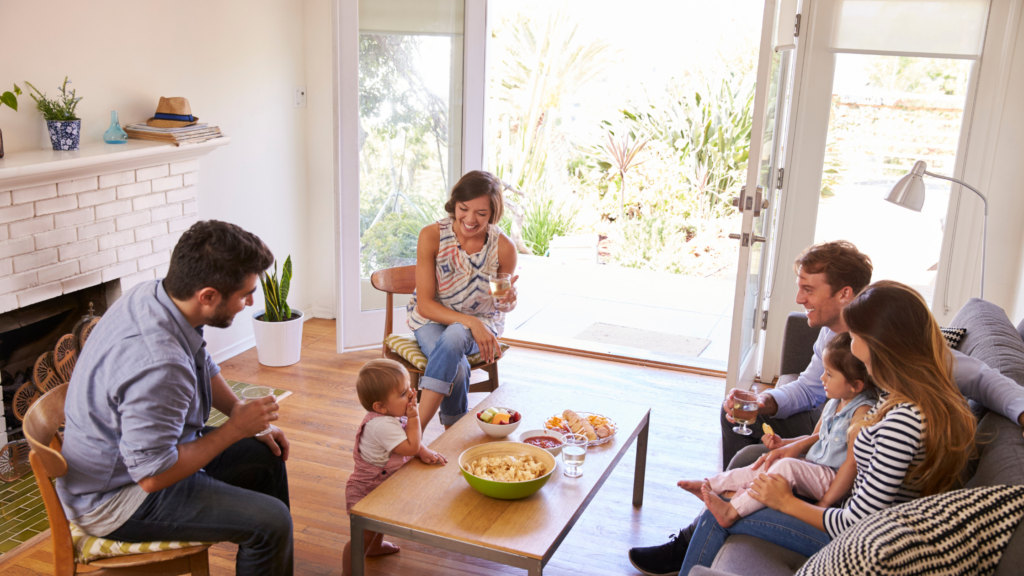
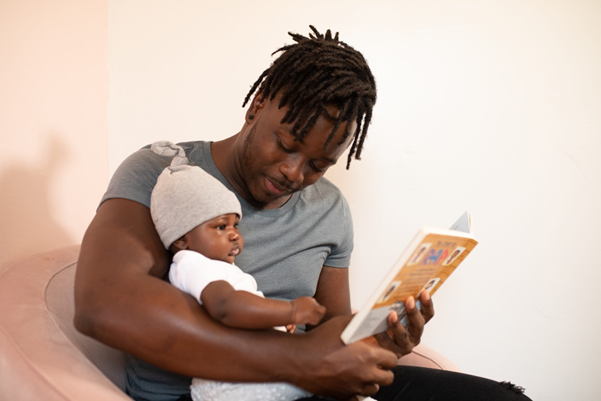
According to the EPA, parents spend approximately 90% of their time indoors, much of it at home with their families.
Your home should make you smile, not stress you out. Designing for joy isn’t about following trends or copying glossy magazine spreads; it’s about creating a space that lifts your mood, makes life easier, and feels like you.
From the moment your feet touch the floor in the morning (often earlier than you’d like, thanks to little ones) to the soft glow of a lamp in the evening, every detail has the power to shape how you feel. And the secret is to design with happiness in mind, not just to make the place look pleasing.
What it really means to design for joy
Designing for joy is about emotion, not perfection. It’s that little sigh of relief when you walk through the door after a long day. It’s the cosy warmth of the living room on a rainy Sunday or the light that dances across the kitchen tiles while making breakfast.
When we design with joy in mind, we stop chasing flawless interiors and start building homes that make us feel good. It’s about surrounding yourself with colours that make you smile, materials that feel right in your hands, and spaces that work for real life —i.e., kids, pets, muddy boots, and all.
Creating zones that work for homework, play, and relaxation
Choosing furniture that can handle real family life
A joyful home tells your story. It’s filled with familiar textures, comforting scents, and small details that quietly say, “this is our home”. Research from the Journal of Environmental Psychology confirms that personalised spaces significantly reduce family stress levels.
Why happiness deserves a place in every design plan
We often talk about function and style in interiors, but happiness rarely gets a mention, which is a real shame because our surroundings can have a bigger impact on our mood than we realise.
Bright spaces tend to lift energy levels, while softer, natural tones help calm a busy mind. A clutter-free room can make mornings run more smoothly, and a cosy corner can become your daily reset spot, even if it’s just five minutes with a cuppa before the chaos begins.
The science behind happy homes:
Natural light exposure increases serotonin production by 30%
Organised spaces reduce morning stress for 73% of families
Good design can’t fix everything, but it can make daily life more enjoyable. It’s the kind of quiet happiness that builds up over time, like stepping onto warm wooden flooring on a chilly morning or catching the smell of baked goods in the kitchen.
The role of flooring in a joyful home
Flooring might not be the first thing you think about when it comes to happiness, but it has a surprisingly big influence on how a home feels. It sets the foundation for everything else… literally.
Think about it: flooring is the first thing you feel when you wake up and the last thing you touch before bed. Whether you’re padding barefoot through the kitchen or hosting friends in the living room, it’s always part of the moment.
Key benefits for family homes:
Warmth and comfort: A soft, warm surface underfoot makes every step feel better. Engineered wood and luxury vinyl are both great for maintaining a homely feel without the maintenance. Perfect for those midnight baby checks or early morning school runs.
A sense of calm: Natural wood grains and gentle tones bring a grounding energy into a space. They help rooms feel balanced and peaceful, even when life feels anything but.
Light and brightness: Pale flooring reflects light beautifully, making smaller spaces feel airy and open. If you prefer a snug, cocoon-like feel, darker floors create warmth and depth instead.
Ease of living: True joy comes when things just work. Durable, easy-to-clean flooring means fewer worries about muddy paws or spilt tea, and more time spent actually enjoying your home. For families, consider waterproof laminate or luxury vinyl planks that can handle spills, toys, and heavy traffic.
Flooring quietly supports the whole mood of your home. It can add texture, warmth, and personality in ways that go far beyond what’s underfoot.
Simple ways to design for joy
You don’t need to start from scratch to make your home more joyful. A few thoughtful changes can make a big difference.
Quick wins for busy families:
Play with light: Use mirrors and warm lighting to create brightness and a sense of space. Try battery-operated LED strips for instant under-cabinet lighting, no electrician needed!
Add nature: Plants, wood textures, and natural materials help soften a room’s look and boost wellbeing. Choose low-maintenance options like snake plants or pothos that survive busy family life.
Bring in personal touches: Family photos, handmade crafts, or travel keepsakes make your space truly yours. Create a rotating gallery wall for children’s artwork – it’s a confidence booster for kids and adds personality to your home.
Choose comfort first: From your flooring to your seating, prioritise pieces that feel good to use every day. Invest in washable slipcovers and memory foam rug pads for family-friendly comfort.
Keep it calm: Joy often grows in simple, uncluttered spaces. Clear surfaces and clever storage can instantly lift the mood. Implement a nightly 15-minute family reset where everyone tidies their zone.
At the end of the day, the best homes are the ones that make you smile when you walk through the door. Designing for joy means thinking about the everyday moments that make life feel good; whether that’s the feel of your kitchen floor as you make your morning brew or the glow of sunlight bouncing across your living room.
Remember: Perfect homes don’t exist, but happy homes do. Start with one small change – perhaps better lighting in your most-used room or a cosy reading corner for bedtime stories. Small steps lead to big transformations in how your family experiences home.
FAQs about creating a happy family home
Q: How can I maintain a joyful home with young children? A: Focus on durable materials, smart storage, and designated play zones. Remember that “lived-in” is beautiful when it reflects a happy family life.
Q: How do I handle different family members‘ style preferences? A: Keep shared spaces neutral while allowing personal expression in bedrooms. Let children have input in their own spaces while maintaining overall home cohesion.
Q: Can I achieve this on a budget? A: Absolutely! Paint, reorganisation, and thrift store finds can work wonders. Focus on one area at a time rather than overwhelming yourself (and your budget).
Q: How do I know if my design choices are working? A: Watch your family’s behaviour. Do they gravitate to certain spaces? Do mornings feel calmer? Are bedtimes smoother? Your family’s happiness is the best measure of success.
About this guide
This guide was developed in collaboration with interior designers who specialise in family homes and reviewed by child development experts to ensure all recommendations support family wellbeing.
*Collaborative feature post*
Cats and newborns: how to introduce your cat to your baby
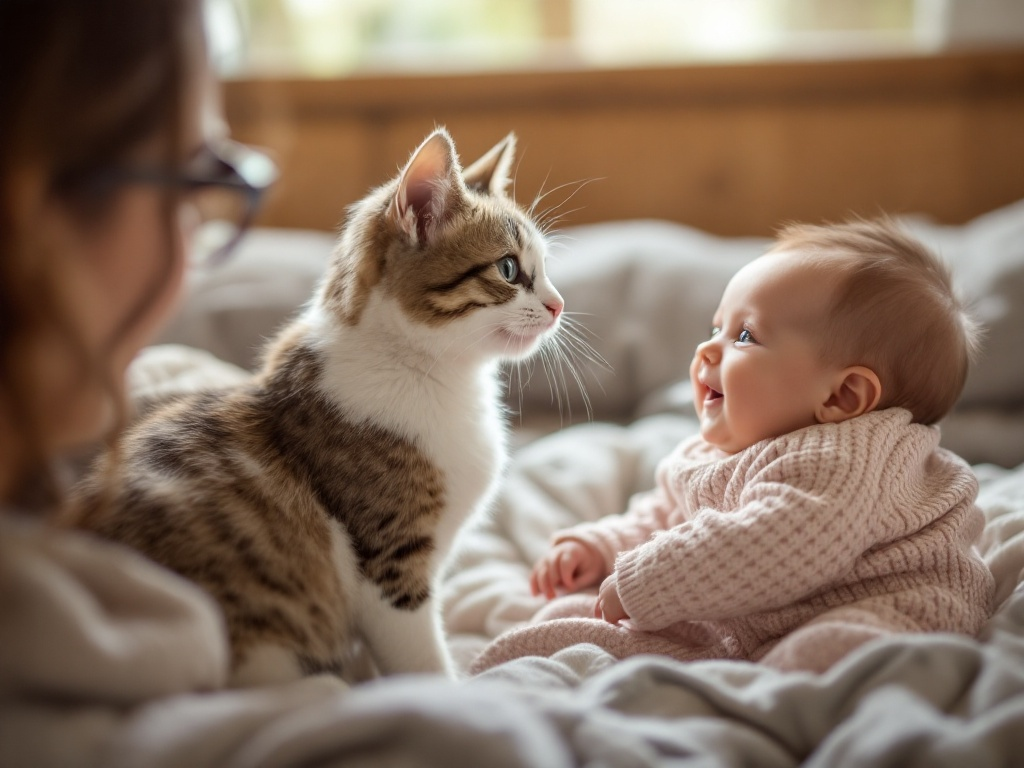
Bringing a new baby home is an exciting but nerve-wracking experience for parents, especially if you already have a furry family member to consider. Cats and newborns can live together safely with proper preparation, patience, and a focus on positive associations. While cats are independent creatures, a new baby can disrupt their environment and routine. Here’s everything you need to know to help your cat adjust to life with a baby and ensure your family’s safety and happiness.
Preparing your cat for the arrival of a new baby
Before your baby arrives, prepare your cat for the changes that are about to happen. Cats thrive on routine, and sudden shifts in their environment can lead to stress or behavioural issues. Here’s how you can make the transition smoother for both your cat and your newborn:
Create a safe space for your cat
Set up a quiet, safe place where your cat can retreat if they feel overwhelmed. Use scratching posts, cat trees, and cosy bedding to make this space inviting. This “safe place” will help your cat feel secure and less likely to act out. It’s important to establish this area before the baby arrives so your cat becomes familiar with it.
Gradually introduce baby-related changes
Start making changes in your home before your baby’s arrival. Introduce baby gear like a crib, changing table, and baby toys so your cat can get used to the new environment. Play baby sounds at a low volume so your cat gets used to the noises of a newborn. This desensitisation process helps to reduce the shock when the baby arrives.
Use positive associations
Help your cat associate the baby’s presence with positive experiences. For example, give your cat treats or affection whenever they’re near baby-related items like the baby’s room or toys. This will build positive connections and reduce anxiety. If your cat learns that baby-related items bring rewards, they’re more likely to feel calm and comfortable around the new arrival.
Train your cat early
Teach your cat to stay away from the baby’s sleeping areas, like the crib or bassinet. You can use baby gates or cat deterrents to set these boundaries. Cats love to explore high places, so ensure the baby’s space is secure. If necessary, place cat-safe barriers around the baby’s sleep area to prevent unwanted exploration.
When the baby arrives
Once your baby arrives, your cat will notice the new sounds, smells, and movements. Here’s how to manage this important introduction:
Introduce your cat and baby slowly
Allow your cat to smell your baby’s blanket before introducing them in person. When you’re ready, supervise the first interaction. Let your cat observe the baby from a distance and reward calm behaviour. The more gradual the introduction, the less likely your cat is to feel threatened.
Supervise all interactions
Never leave your cat alone with a newborn. Cats are naturally curious, and while it’s unlikely that they’ll harm a baby, it’s always better to be safe. Supervised interactions build trust between your cat and baby. Cats are more likely to be curious than aggressive, but close monitoring will prevent any potential issues.
Maintain your cat’s routine
Cats love predictability. Keep feeding, playtime, and litter box cleaning schedules consistent. Maintaining your cat’s routine will reduce stress and help them adjust to the new family member. This consistency also prevents jealousy, as cats are less likely to feel neglected when their daily needs are met.
Provide mental stimulation
To prevent boredom and destructive behaviour, offer plenty of interactive custom cat toys, scratching posts, and playtime. Cats love feather wands, laser pointers, and puzzle feeders. Keeping your cat mentally engaged reduces the likelihood of stress-related behaviours, like scratching furniture or marking territory.
Can cats and newborns live together safely?
Yes, cats and newborns can live together safely if you follow proper precautions. It’s a myth that cats intentionally harm babies, but they can accidentally scratch or lie too close to a baby’s face. Here’s how to ensure safety for both your baby and your cat:
Keep Sleeping Areas Separate: Ensure that your cat does not have access to your baby’s crib or bassinet. You can use crib nets or covers if necessary.Pets
Keep the Litter Box Clean: Cats use litter boxes for hygiene, but ensure they’re cleaned frequently to avoid the risk of toxoplasmosis, which can affect pregnant women and infants.
Use Safe, Non-Toxic Cleaning Products: Babies have sensitive skin, so use safe cleaning products for baby toys, blankets, and surfaces. Avoid products that may irritate your cat’s skin or nose.
Myths vs. facts about cats and newborns
Myth 1: Cats smother babies
Fact: This is a persistent myth, but cats do not intentionally smother babies. Cats may be attracted to the warmth of a baby’s crib or bassinet, but they don’t seek to harm babies. You can prevent access by using crib nets or covers.
Myth 2: Cats are dangerous to babies
Fact: Cats are not inherently dangerous to babies. Proper supervision, hygiene, and training ensure safe interactions. Cats are usually curious and prefer to observe rather than interfere with a baby.
Myth 3: Cats will ignore the baby
Fact: Cats often show curiosity towards new family members. While some cats might stay away, others may become affectionate. Introducing your cat to the baby properly can encourage positive bonds.
Myth 4: Cats will get jealous of the baby
Fact: Cats thrive on routine and familiarity. If you maintain your cat’s feeding, playtime, and affection schedule, jealousy is unlikely. Cats are more likely to feel secure with a consistent routine.
“Cats can adapt well to changes in their environment if those changes are introduced gradually. A positive introduction between a cat and a baby is essential for their long-term relationship.”
Experts recommend setting up safe spaces for cats and using rewards-based training to establish positive associations.
FAQs about cats and newborns
1. Are cats OK with newborn babies? Yes, cats and newborns can live together safely with proper introductions and supervision.
2. Can my cat be next to my newborn? It’s best to supervise interactions and not leave your baby unattended with your cat.
3. Is it good to have a cat when you have a baby? Growing up with pets can benefit children’s social and emotional development.
4. Can I introduce my cat to my newborn? Yes, introduce your cat slowly and ensure positive associations with the baby’s presence.
5. Do cats and babies get along? Yes, cats and babies can have a strong bond with proper training and supervision.
6. Do cats smother newborns? It’s a myth that cats intentionally smother babies. However, always supervise your cat around a sleeping baby.
7. Can newborns be around cats? Yes, as long as there is supervision and proper hygiene practices.
8. How can you tell if your cat is adjusting well to a new baby in the household? If your cat eats, sleeps, and plays as usual, they adjust well. If they’re hiding or showing aggression, they may be stressed.
9. Can cats and babies live together? Yes, they can coexist peacefully with both supervision, preparation, and safe spaces.
10. How do I keep my baby safe from my cat? Keep the baby’s sleep space cat-free, use positive associations, and always supervise interactions.
Final thoughts
Cats and newborns can live together harmoniously, but it takes planning, patience, and awareness. By preparing your home, maintaining your cat’s routine, and supervising all interactions, you’ll create a safe, happy environment for everyone. Just like any family member, your cat’s needs should be considered alongside your baby’s. Take these steps to build a positive, long-lasting relationship between your cat and your little one.
*Collaborate feature post*
15 cute ways to tell the kids about your engagement
When a couple shares that they are getting engaged, it is often the first time the kids find out about their new additions or how serious the relationship really is. But what do you say to the kids? How do you tell them about your engagement? And how do you plan an announcement for the kids without scaring them or making them feel left out? Here 15 fun, cute and clever engagement announcement ideas to help you tell the kids.
Know your audience
Should you make a video of you getting down on one knee?
Announce it in front of everyone at your child’s school assembly?
Buy the newspaper space from the shop and print an obituary for yourself titled “R.I.P. Mum”?
These are jokes, obviously.
But there is nothing wrong with wanting to be creative or even trying some fun ways to engage your kids into knowing their family is going to be expanding soon. For example, if your kids are excited about prom, you might want to check out the Prom Dress Finder to involve them in the fun activities leading up to the engagement. Additionally, if you are planning to capture and share your wedding moments, consider using Wedding Photo Swap to easily share photos with family and friends.
But there is nothing wrong with wanting to be creative or even trying some fun ways to engage your kids into knowing their family is going to be expanding soon.
Anything is OK, as long as you know who your audience is so you know whether the type of announcement you’re going for will resonate with your kids.
Prepare your kids
Make a list of your child’s closest friends and other family members they know well. Once you have compiled the list, write down how they would like to be told about the engagement.
Would they prefer a door knock after school? Would they like to see an online social media post like on TikTok or an Instagram reel? Would they prefer it if you made a video or an engagement announcement to friends in person at an upcoming family gathering?
Be sensitive to their feelings–make sure it is something that will not cause too much embarrassment or shame. Put your ideas to paper so you can come up with some cute ways to announce engagement to the kids while preparing them for questions so you can answer with well-rehearsed responses.
Telling the kids
Whether you will announce your engagement in the flesh or via facetime on Skype, lots of little ones will be excited at the thought of getting dressed up, taking part in the wedding day and taking care of the wedding planning checklist, but some may be more confused about what’s going on. Make sure you explain what getting married to your partner means and show them there will be even more love to go around after the big day. If your kids are struggling with the concept, make sure you listen to their concerns about the new life you’ll all have together.
Educating yourself about the different ways to announce your engagement will allow you more freedom when coming up with creative ways to tell the kids. You want to choose something fun that will make your children happy.
So how can you get creative/funny/clever with your announcement engagement ideas?
Creative engagement announcement ideas to family
The best engagement announcements are unique, so here’s how to announce engagement really creatively:
1. Ultra cute super fun engagement announcement photos ideas – go professional
Get your engagement photoshoot captured on camera by a professional photographer and then have some fun with the engagement announcement photos. For example, you could dress up like Batman and The Joker if the kids are into Batman and use a suitable backdrop to make it look realistic. Or you can wear a matching bandana with a message on it to send the message in such a unique way. Then, when you’re done you can take a classic engagement selfie together or an engagement ring shot with your partner.
2. Unique ways to announce an engagement – play dress up
Another option is to dress up as a princess and your fiancé as the prince. Be creative with the costumes and choose something that will reflect your kids’ personality or interests.
3. Creative ideas for the best engagement announcement – create a personalised book
One fun idea is to create a personalised book where you can record memories from the kids’ fun time together with your partner, for example, when they played together and talk about how much they mean to you. This will help them feel special about being in your life and they may feel proud of what you have achieved in life with your partner.
Funny engagement announcements
Laughter is the best medicine, so to soften the blow or enhance the glorious news, here are some fun ways to announce engagement to the kids while conjuring up a laugh or two.
4. Special ways to announce your engagement to the world – Make a funny video
The sillier the better, but make sure it is something you would like to put on your future wedding DVD and show at family get-togethers.
5. DIY Engagement Announcement – Get arty
Get involved with or create an art project that represents your engagement in a fun way. For example, paint yourselves into a mural holding hands or making bird cages together.
Cute engagement announcement ideas
Funny and clever can also mean cute, so here are some cute engagement announcements ideas (as well as clever engagement announcements) which should go down well with the kids:
6. Unique and sweet ways to announce your engagement – Write sweet messages
Write messages on balloons and let them fly into the sky for all to see. You could even write engagement messages on sand pails at your local beach/park.
7. How to announce an engagement on social media – create a website and share
Create an announcement of engagement on a wedding website or blog to share with friends and family.
8. Creative in-person non social media announcement ideas
Kids can help bake some cookies (or cupcakes) with little hearts stamped out of the centre. Or pick up a box of Valentine sweets and put your engagement picture on there.
9. Photo projection enlarged!
Take your engagement photo and project it onto a wall or billboard in a very public place, or create an announcement mural on the bottom of two shoes you’re wearing while standing next to each other (to cover your faces so people don’t think they are missing an episode of ‘The Bachelor’)
10. Cute puzzles messages!
Write out messages with hearts cut out of cardboard and create a puzzle that spells out your engagement in an envelope or box
11. Make it memorable
Talk with your significant other about what works best for both of you and then get ready, because once you’ve invited everyone over, all eyes will be on your memorable announcements!
Fun engagement announcement photo ideas for social media platforms
Kids are living in the digital age, so announcing engagement ideas can involve sharing with others on social media after you’ve told the kids. You can think of some cool ways to announce engagement on Facebook, Twitter or Instagram that the kids can relate to. Here are some tips on how to announce your engagement on social media.
12. Creative ideas for the best engagement announcement – use hashtags
Include fun hashtags and creative spelling so people can see you’re having a good time. Be sure to use the same hashtag on all of your engagement announcement posts within that day so that more people search for it and find you.
13. Unique ways to announce your engagement on social media – ask for help from friends
If you don’t have a professional photographer, ask close friends or relatives to take pictures of your engagement with their phones and then share them on Facebook/Twitter. It’s a really cool way of announcing an engagement in today’s digital age.
Make sure there is an option available for the children to leave comments as well – this way they feel like part of the big event taking place. After receiving many ‘likes’ on social media, they might even be excited about the expanding immediate family.
Engagement announcement wording ideas
14. Cute engagement announcement ideas you’ll want to copy – write a short letter
Many online etiquette guides suggest you shouldn’t share the exciting news with your kids straight away, but wait until they ask about it themselves. However, if you want to come up with more creative engagement announcements, why not put together a short letter to them or word your social media posts in such a way that the kids are also involved? Below is an example of how you can do this:
“We were so happy when BFFs [friend’s name] suggested we all go on holiday together! We had such a great time as friends, but somehow ended up falling in love. Beaming from ear to ear! We thought you should know first because we couldn’t wait to tell you! We’re engaged!
Love always, Mummy”
Engagement announcement quotes
15. The loved up engagement announcement – Include some quotes
Include some personal engagement announcement quotes for your children if they are particularly young. What sort of relationship do they have with their step-parent? Are they excited about welcoming a new member into the family? Engagement announcement ideas for parents should include how your kids feel about the whole thing too.
Examples of engagement announcement quotes for kids:
“When two people are meant for each other, no time is too long, no distance is too far, and no one can ever take them apart.”
Richard Bach
“They say that nothing lasts forever, but as long as I have you, I’d like to try.”
Anonymous
“[Your name] and [Their name] are just two perfect puzzle pieces fit together so well.”
Song of Solomon 6:2
“I can be with you in the morning, noon, or night. I will love you until the stars go out and the tides no longer turn.”
Anonymous
Other lovely engagement announcement ideas
Spell it out Scrabble engagement announcement or spell it out Scrabble marriage announcement
Act it out charades wedding announcement
Coffee mugs engagement reveal – this could be an engagement announcement for coffee Lovers
DIY engagement announcement cards
Engagement announcement t-shirts
Engagement announcement posters
Announce your engagement the day of your wedding, although this is a risky one!
Family photo engagement announcement with siblings, grandparents and cousins involved
Artistic engagement print
Create the wedding of your dreams or hold back?
You’re entitled to the perfect wedding, and even a fancy engagement party or celebration, but some brides and grooms decide to tone things down, even the wedding dress or the suit because they’d rather save money to spend on their kids. Weigh up the pros and cons of enjoying family-orientated luxurious weddings and try to find something that suits both your fantasy and your family. Whether you check out these diamond engagement rings for sale and buy a princess dress or prioritise a holiday for the little ones, know that your decision is completely valid.
Allow your children to have some input
Your children will feel special if you ask for their opinions on wedding invitations, wedding ideas, wedding dates and preparations. Try not to let them make big decisions about the décor, wedding cake or food but if you’re having trouble deciding between the balloons, the type of flowers, or even the lovely flower quotes you’ll add, your kids will be more than happy to point at their favourites. If other wedding guests are bringing their kids too, consider putting on some entertainment to keep them occupied.
Honeymoon
Are you going to have a honeymoon for just you and your partner or take the kids along? While having alone time with your significant other can really boost your relationship status, you don’t want the kids to feel left out. If possible, try to have the best of both worlds and take a short break with both. You can ask your family or friends to make a special fuss over your children while you’re away with just your partner so they’ll have a great time too and not miss you too much when you’re gone.
Getting engaged is a positive occasion and one which should be celebrated with your children. The bottom line is that your children’s happiness should factor very heavily in your decision making, as they will be deeply involved in the blended family dynamics. Opting to announce your engagement in a way which the children can enjoy will help them to accept the changes and look forward to the joyous wedding ahead.
FAQ
When should you announce engagement on social media?
Other questions asked were:
Engagement announcement ideas for Facebook?
Do you have any engagement announcement ideas for social media?
When should I announce my engagement?
Do I have to announce my engagement?
When should I not announce my engagement?
Engagement announcement ideas for social media real life?
How to announce your engagement online?
Engagement announcements on Facebook
See above for more tips on how to announce your engagement on social media
Do you have any funny engagement announcement ideas?
Other questions asked were:
Do you have any fun engagement announcement ideas for parents of multiple children?
Any ideas for engagement announcement games?
what should an engagement announcement say?
funny ways to announce engagement?
funny wedding announcements ideas
Lots of cute, funny ideas above! Let me know what your favourite idea is 😀
*Collaborative feature post*
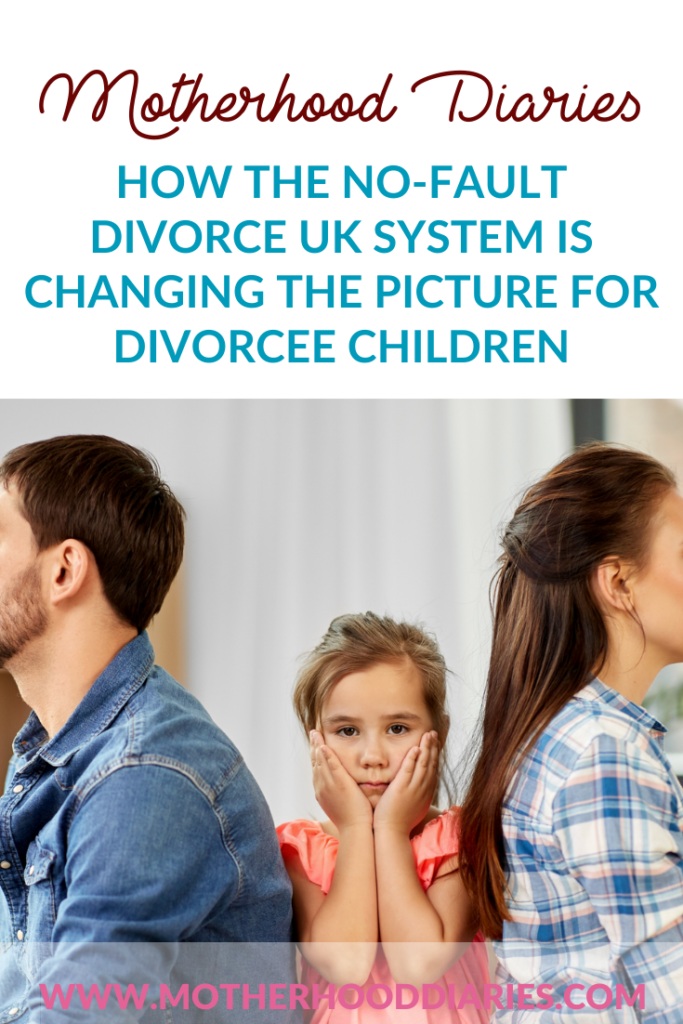
How the no fault divorce UK system is changing the picture for divorcee children
No-fault divorce will eliminate the need to blame one spouse for a divorce, but how will this affect the children of divorced couples?
The UK has a system of divorce that requires one spouse to prove the other acted in a way that caused the breakdown of the marriage. That said, with no fault divorce, there’s no need for proof, and divorce can be granted by consent alone.
This new system hasn’t been introduced yet but will likely become law by autumn 2021. The question is, how will this new no fault divorce system affect the children of divorcees?
Today, we’re going to give you a brief overview of no fault divorce and how it’s different from the current system. We’ll also dive into how this will affect the children of divorced couples, before giving you some advice on whether you should wait for the law to come in before you get divorced.
What is no fault divorce?
As we mentioned in the introduction to this post, no fault divorce is a new system of divorce that allows couples to end their marriage without proving one spouse is at fault. Under the current divorce system in England and Wales, one spouse must file for divorce, and accuse their partner of misconduct if they want to dissolve the marriage. There are three reasons you can use to end your marriage:
Unreasonable behaviour
Adultery
Desertion
Once the spouse has filed for divorce, their partner needs to respond, and if they disagree, the person who filed the proceedings will need to provide proof of their initial claim of misconduct. If they can’t provide this evidence, the court might rule that the two must live apart for two or five years until they are able to get divorced.
After several cases of people being forced to stay with a partner because they weren’t able to prove misconduct, the government created a no fault divorce bill. This has now made it through its parliamentary journey and is ready to be passed into law.
This new bill means that, instead of blaming your partner for misconduct to end a marriage, a couple can claim ‘irretrievable breakdown’ as the reason the marriage is ending. Then, they can get a divorce without having to suffer any painful separation periods.
How will no fault divorce change the picture for children?
So, now that we’ve covered the main difference between no fault divorce and the current system, it’s time to discuss what impact this type of divorce/family law will have on children. This section will serve as a sort of no fault divorce pros and cons debate. There are two primary views on whether the new bill is a good or bad idea for children…
Pro – Removes the toxic environment of fault-based divorce
Instead of parents having to blame each other for the breakdown of their marriage, no fault divorce can end it amicably and quickly. This prevents any long, drawn-out arguments over whose fault the divorce is, and just the general tension caused by them having to stay married any longer than they want to. It also avoids the parents coercing the child to take sides; no blame means no sides to take.
The less fighting between the couple, the less their children will be subjected to it. Ultimately, although their parents will be divorced, at least the child didn’t have to witness the breakdown and further resentment caused by their parents being stuck in a toxic marriage.
The Justice Secretary, MP Robert Buckland, said: “The institution of marriage will always be vitally important, but we must never allow a situation where our laws exacerbate conflict and harm a child’s upbringing. By sparing individuals the need to play the blame game, we are stripping out the needless antagonism this creates so families can better move on with their lives.”
Buckland’s sentiments were mirrored by Aidan Jones, the CEO of relationships charity, Relate, who told The Independent newspaper:
“Our current divorce laws encourage increased animosity between parting couples because they are led to decide who is ‘at fault’ and why. This can be difficult to navigate – especially when there’s already a lot of bad feelings and conflict between partners,” he says. “Even when things have been relatively amicable up until that point, the process of having to apportion blame can turn things sour pretty quickly.”
Aidan Jones, CEO of Relate
Relate also released research showing that conflict between parents damages children more than anything else during a divorce. This suggests that no fault divorce is a more compassionate system than the current one.
Con – More children will have divorced parents
Keeping in mind that conflict between parents damages children more than anything else during a divorce, the avoidance of divorce itself is the aim of those who disagree with no fault divorce.
One thing that the current divorce system has in its favour is that it tries to encourage married couples to stay together. The marriage has to have undergone grave misconduct for a divorce to be granted, as most other things are considered small enough for the couple to recover from.
With no fault divorce, couples will be able to get divorced on a whim over a minor disagreement or issue, which could lead to more children having divorced parents.
Also, with divorce proceedings happening at a higher speed, there isn’t much time to discuss how the parenting will be organised after the divorce. Because of this, the child might be dragged through a painful child custody battle.
This sentiment was expressed in a letter written to the Telegraph by several MPs who asked the government to focus their attention on helping couples reconcile instead of introducing no fault divorce. The MPs also claimed that enacting the no fault divorce bill would be poor timing, as COVID-19 has already made couples more fragile and on the verge of filing for divorce.
One of the MPs, Fiona Bruce, said of the bill:
“This bill is a bad bill. It sends out the wrong message at the wrong time. No-fault divorce is really state-approved unilateral divorce.
“Ministers like to say that it is all about the divorce process and not about marriage. They are wrong. The removal of fault sends out the signal that marriage can be unilaterally exited with no available recourse for the party who has been left.”
Fiona Bruce, MP
Should you wait for no fault divorce to happen?
The Divorce, Dissolution and Separation Bill made it through the House of Commons on 17th June. It’s now on its way to receive Royal assent, and will need to have additional amendments made to it by the House of Lords.
Unfortunately, for those of you waiting for no fault divorce to be passed, the bill will not come into force until autumn 2021. So, it may be a waiting game for those wanting to part ways without a cause.
So, is it worth waiting until next year for no fault divorce to pass?
If you’re in a marriage that isn’t working, and you’re sure that you’re going to get divorced anyway, it might be worth filing for divorce now. Especially if you have children who have to watch the breakdown of your marriage over the next year, why not nip it in the bud.
However, it’s a good idea to make sure you have evidence of misconduct, or a partner who won’t contest the misconduct, before you file for divorce. If you don’t have this, you’ll have to wait at least 2 years to get divorced anyway, so you might as well wait for the no fault divorce bill to be passed.
Change is inevitable
Today, we’ve managed to cover what no fault divorce is and how it differs from our current system. We’ve also delved into the two sides of the coin on how it will affect children, and shared some advice on whether you should wait a year for the bill to be passed into law.
Depending on whether you believe no fault divorce will cause more divorces or not changes the way this new bill affects divorcee children. If the level of divorce doesn’t go up too much, then no fault divorce was the right choice. However, if it goes up a lot it, could mean that many more children end up with divorced parents than under the previous system.
The main thing to remember is that this bill has now been passed and will be put in place in 2021. We have to hope that the benefits of reducing the pain of divorce for children outweighs the possible increase in divorce rates.
Hopefully this post has shed some light on the topic of no fault divorce. Leave a comment down below if you have any insight into the topic, and thanks for reading!