If you’ve recently discovered that your child may have autism spectrum disorder, you’re probably wondering about what’s next for them after tshe autism diagnosis. Children with autism spectrum disorders can lead very long, happy and healthy lives, but it is all about adult guidance and setting the right environment for them.
They may require more care to help keep their mental health strong or to ensure they function well in a neurotypical society. But, aside from the medical care and therapy such as CPI training, there are simple, everyday strategies you can work on with your child to help them. Remember, every child is unique, so try the below tips on how to support a child with autism at home and find out what works best for you and your child.
What is the best way to support a child with autism? Join a group
If you haven’t already, parent/Facebook groups are invaluable in helping you get started on the right foot. You’re about to step into a whole another world of SEN (Special Educational Needs) and the different pathways available can make parenting a child with autism confusing.
Try to find knowledgeable parents with children who have the same level of autism as your child so they can show you where to start with getting the right support at home. You can take parent courses too, which will help build your knowledge on SEN and what support is out there for your child too.
The National Autistic Society, which is the UK’s leading charity for autism, includes an Autism Services Directory which can point you to the right groups to join when helping a child with autism.
How can you support a child with autism? Stay positive
Children with autism spectrum disorder, like everyone else, often respond well to positive reinforcement, especially when you praise them for good behaviour. Be specific and literal in your approach, so they understand what you require from them. Then you can reward them with things like more playtime or a small prize like a sticker. Also, as you would with anyone, value your child for who they are. The Autism Society provides resources to help you stay positive at home.
How to support a child with autism spectrum disorder? Encourage friendships
Autism is frequently associated with social difficulties, but in more ways than you think. Some children with autism may appear uninterested in spending time with you and some may be over-friendly and very sociable. Underneath it all, parenting an autistic child is about working out who they are and playing towards their strengths and characteristics.
According to researchers, people with autism can form friendships, but they struggle to maintain them because the social interaction may not come naturally. Encourage your child to socialise, either in after-school clubs, at parties or one-to-one playdates. Helping an autistic child be help them become more confident and help their socialisation skills.
How do you support a child with autism? Communicate
A child with ASD may take longer to process information, so when thinking how best to support a child with autism, adjust your conversation to the pace they can take. Long pauses can be beneficial. For example, when you want things doing, ask your child to do something, using clear, concise language and with a low, firm tone. Wait 10 seconds before you repeat the request in exactly the same way. Bombarding them with too many demands can overwhelm and stress them out.
Also, children with ASD should and can learn they do not have to suppress or scream out their emotions if they are angry. Emotions are perfectly normal, but they may need help to learn how to manage what they’re feeling. Be persistent while remaining resilient with requests, even if you feel you’re not getting anywhere. When they don’t respond to you in the way you want, remember, they sometimes don’t understand why they feel how they feel and that can be very distressing for them.
All children thrive on empathy and understanding to help them become more confident in the very difficult skill of emotional intelligence. Do not take it personally if they use you as a comfort blanket when venting their emotions. It must tire them out having to mask (hide) their behaviour to fit in. The analogy, the coke bottle effect, is very fitting here. The coke bottle’s lid is closed, but the fizz is bubbling inside and you may be the first person to lift that lid and the bubbles explode out of the bottle.
Ironically, they may not understand this analogy because they prefer things to be explained literally, but if you are the parent who sees their coke bottle lid off, then it’s important to explain this to them in a way they understand. You may well have to be that comfort blanket and to help them understand and manage their emotions afterwards.
How to support a child with autism at home – play therapy
Play therapy is simply learning through play and its goal is to help children with autism to improve social interaction and communication skills. Play therapy also helps children to engage in novel activities and symbolic play. You can offer play therapy at home by engaging your child (and the family) in simple chase-and-tickle games, bubble blowing, or sensory toys and activities like swinging, sliding, or wriggling through a tube. You may progress to back-and-forth turn-taking games, collaborative games, or even make-believe as your child’s abilities develop.
What is the best way to support a child with autism? Stay calm
Caring for children with autism can be difficult, especially when you don’t understand their outbursts. But avoiding, coping with, or planning for meltdowns can only take you so far. A better solution is to teach your child how to manage their emotions. It’s easier said than done, but staying calm can help anxiety stay low in both you and your child.
Some techniques like sensory integration therapy, can teach the brain how to respond to touch, sound, sight, and movement. These skills help your child connect feelings to expressing emotions and encourages them to speak up when they are feeling a certain way. Being able to express your emotions is the first step in managing them too, and this can often be difficult for a child with autism.
Autism plus environment equals outcome.
When caring for a child with autism, providing a positive environment is key. Also, encouraging play therapy and learning more about raising a child with autism can help your child become a high achiever. Pay attention to your child’s traits and help them manage these traits in a neurotypical society. Some schools teach children how to embrace diversity and in turn children learn to be forgiving and non-judgemental. Practice being the same so your child doesn’t feel like they are lesser than other people. The focus here should be on helping children with autism lead full lives alongside their unique traits not despite them.
FAQ
Why do people with autism stay with their parents for a long time?
“Not every child diagnosed with autism spectrum disorder will need to attend a specialist school, many attend mainstream school and have no issue. However, some children need more support and with even a few minor adjustments can benefit from attending a mainstream school.”
“Teach math concepts through visual examples and pair them with verbal instructions for those that are partially verbal or non-verbal. Make teaching math fun by playing games with flash cards, apps, or an online curriculum. Use technology to help those students whose fine motor skills aren’t as developed.
“Paediatrician. Paediatricians are experts in the health and development of children, particularly those with developmental disabilities. Paediatricians are often involved in the initial diagnosis of autism and offer follow-up support in some cases.”
What is the best way to support someone with autism?
“Support your friend if they ask for help. Be sensitive to what they want and need, not just how you think they should improve or behave. Try not to talk over or about them when others are around. Help them work on social skills by trying to engage them in conversations with yourself and others.”
“letting your child wear headphones to listen to calming music. turning down or removing bright lights. planning ahead for any change in routine, such as a different route to school.”
“Some autistic people will have high support needs, which may mean that they require full time care and support. Some people may need a bit of support with day to day activities, while others live fully independent lives. With the right support in place, all autistic people should be able to live the life they choose.”
Another question asked was, ‘What not to do with an autistic child?’
“Don’t worry, everyone’s a little Autistic.” No. … “You must be like Rainman or something.” Here we go again… not everyone on the spectrum is a genius. … “Do you take medication for that?” This breaks my heart every time I hear it. … “I have social issues too. … “You seem so normal!”
“Be patient. … Teach the child how to express anger without being too aggressive. … Be persistent but resilient. … Always stay positive. … Ignore irritating attention-getting behavior. … Interact through physical activity. … Be affectionate and respectful. … Show your love and interest.”
“Caring for a child with ASD can demand a lot of energy and time. There may be days when you feel overwhelmed, stressed, or discouraged. Parenting isn’t ever easy, and raising a child with special needs is even more challenging. In order to be the best parent you can be, it’s essential that you take care of yourself.”
How vital is post operative care of cesarean section?
There are many reasons you’d plan a c section to birth your baby after you’ve gone through the various birth options with your specialist. But what happens with the post operative care of cesarean section is just as crucial. Without proper post-operative care after c section, you could undo the operation’s benefits or even make it worse.
Here are some reasons why post-operative care is vital so you can spend that time looking after your baby and healing quickly.
The c-section operation
Although medically required, the cesarean birth section never takes place for the sake of it, the procedure ranges in seriousness from planned to life-saving. As many as four million surgeries take place annually in England and Wales, and the numbers are increasing for caesareans in the UK. You will receive pre operative care for cesarean section in the form of advice and support.
The anaesthetist will talk to you about the procedure and the doctor will advise you of what to expect post c section operation. The c-section recovery week by week can vary, but generally recovery can take up to 6 weeks. If unforeseen events occur like an infection to the scar tissue, this may take longer.
Tailored rehabilitation – post operative care of cesarean section
If you’ve had an emergency c section, then your postoperative cesarean section aftercare may require extra supervision by medically qualified staff under your doctor’s instructions and being prescribed over-the-counter pain relievers like paracetamol, ibuprofen and Co-dydramol.
If you do too much too quickly, or lift anything heavier than you should too soon, this can be very damaging to your c section recovery. Try not to do everything by yourself and find someone you trust to help you with the recovery at home. If you’ve trusted someone with your recovery and they’ve done more harm than good, you may have a case to raise a claim for clinical negligence.
Care providers
If you’ve had your surgery in a private or NHS hospital, you should be given postoperative nursing care after cesarean section.
If you feel you need more care, there are providers of post-operative services. This may be especially necessary for c sections gone wrong. Whatever care you receive should be approved by your surgeon or specialist, so make sure to listen closely to their c section recovery tips to maximise your chances of healing quickly and safely.
You must heed this information and follow it to the letter. It’s highly likely they’ll have offered similar advice in the past and will know how to prevent post-operative complications. For example, if your doctor advises you to exercise to prevent blood clots after a caesarean section, then you should follow this advice. Your doctor would have also prescribed you medication for pain management, so make sure you are taking those consistently and as frequently as your doctor has prescribed.
Planning
Lastly, unless you’re receiving emergency surgery, you will probably have at least some time to plan.
Ask your doctor what sort of post-operative postpartum patient care will be involved, what sort of limitations you may have, and what your level of pain after c section may be.
This way, you can get everything you need in advance for your after c section recovery space and make sure it’s accessible for minimal trouble when you’re feeling most vulnerable.
FAQ
What could cause a cesarean section to breakdown bringing out pus? What are the consequences of it for future pregnancy?
“If your C-section opening is due to an infection in the area, you’ll see signs of infection, such as redness, swelling, or pus. If necrosis is the cause of C-section opening, you might see gray, yellow, or black discoloration around the area, as opposed to pink or your normal skin color. The area may also smell bad.”
You may do too much or not keep the area clean. Provided you’ve caught the infection early, get to your medical provider quickly so the scar tissue can heal quickly and there will be no lasting consequences for future pregnancies.
What causes low blood pressure after a C section?
“Hypotension commonly occurs as a complication of spinal anesthesia (1, 2). One study on 511 mothers who received spinal anesthesia for a C-section found that 20% had mild hypotension, 35% had moderate hypotension, and 40% had severe hypotension (1).”
Is back pain after a cesarean C section a side effect of the anesthetic injection given at the spinal cord? Is it lifelong?
“Whether a cesarean delivery is planned or unexpected, it often comes with a longer recovery time, and you’re also likely to have some back pain. C section pain is usually temporary, and sometimes reversible by improving your posture and making other adjustments.”
Recovering from a c-section can be tough at the beginning. Drink plenty of liquids and eat lots of fibre so you don’t have to force gas out. Keep away from carbonated drinks or foods which make you too gassy.
How much rest should one take after a C section? Is it really necessary that we should not get out of bed?
“Get plenty of rest. Expect to stay in the hospital for 2 to 4 days after your delivery. If there are complications, your stay will be longer. Give your body 6 to 8 weeks to fully heal. That’s easier said than done.”
Obstetrics and Gynecology – What are the most common problems women suffer from after giving birth via a cesarean section?
“Some of the main risks to you of having a caesarean include: infection of the wound (common) – causing redness, swelling, increasing pain and discharge from the wound. infection of the womb lining (common) – symptoms include a fever, tummy pain, abnormal vaginal discharge and heavy vaginal bleeding.”
How long it takes for stitches to heal after c section?
Another question asked was, ‘How to look after c section stitches?’
“Your wound will take about 6 weeks to heal. You will have a scar but this will fade over time. Your scar will be 10–20cm long and is usually just below your bikini line. It will be red at first but will fade over time.”
How many days does it take to recover from c section?
Other questions asked regarding post op care cesarean section were, ‘How long does c section operation take to heal?’, and ‘How many days does it take to heal after c section?’
You will receive immediate post operative care of cesarean section and the hospital will tend to your wound, as well as take the catheter out to help you move around after the surgery. The c-section discharge from hospital will take around 3 days and healing from c section will take 4 – 6 weeks, depending on your level of aftercare. If you have an infection, it may take longer, but you will receive close c section after care to ensure you recover safely.
How long for internal stitches to heal after c section?
In most cases, the c – section recovery will take up to 6 weeks and you’ll end up with a small scar after the c section. Sometimes you may have complications and the takeaway here is to make sure you visit your doctor quickly to fix any issues you may have.
Which position is best after c section?
“On Your Back. According to Specialty Surgery Center, the best sleeping position after C-section and most surgeries is on your back. Many times sleeping on your back may be the best option to relieve any pressure on your c section incision.”
Which incision is most frequently used for cesarean sections?
“A C-section includes an abdominal incision and a uterine incision. After the abdominal incision, the health care provider will make an incision in the uterus. Low transverse incisions are the most common (top left).”
Another question asked was, ‘Where are c section incisions?’
“A low-transverse incision (or a “bikini cut”) is used in 95 percent of C-sections today. That’s because it’s done across the lowest part of the uterus, which is thinner — meaning less bleeding. It’s also less likely to split if you try to have a vaginal birth after a C-section (VBAC) when delivering a future baby.”
What is the most common postoperative complication of cesarean birth?
Other questions asked were, ‘How to prevent complications after c section?’ and ‘What not to do after c section surgery?’
“The most common complication is massive bleeding, reported in 7% of cases [6]. Smaller studies report damage to the inner organs such as the urinary tract, bowel, and large vessels, in a small number of cases [7].”
Another question asked was, ‘How to keep c section incision from getting infected?’
“Get urgent medical care if there’s any sign that your C-section incision is opening or infected after going home. Call your OBGYN right away if you have: bleeding from the incision site.”
Top 5 cosmetic non-invasive procedures popular with mums
Motherhood can play havoc with your appearance, so mums look to cosmetic non-invasive procedures to help them feel good again. Not to be mistaken with invasive procedures like plastic surgery, non-surgical cosmetic procedures can be done quickly and safely with no need for going under the knife.
Beauty clinics like Absolute Cosmetics are just one place that offers these types of procedures so you can look and feel your best.
If you’re interested in undergoing a cosmetic procedure but are not ready for surgery, read on to learn about five of the most commonly requested non-invasive procedures at clinics today.
Soft tissue fillers
Dermal fillers are an effective way to reduce wrinkles by replenishing hyaluronic acid levels in the skin. They also help plump up areas where they have been injected by pulling moisture from surrounding tissues into the injection site. This can be done on both lips and faces and is a popular cosmetic treatment option for those seeking to reduce wrinkles and other signs of aging.
Botox
If you are looking for exceptional results, then other non-invasive methods of improving wrinkles are Botox injections, which are a popular cosmetic procedure among mums. Wrinkles around the eyes and on forehead are diminished due to Botox blocking muscle nerve signals.
Chemical peels
Chemical peels can offer some benefits, even though the name may not sound too appealing. With this procedure, a chemical solution is a non-invasive method to remove the outer layers of your skin to improve its texture and promote exfoliation. This is something that is often used by individuals who suffer from bad acne or those who want to achieve a more youthful appearance since it is much less invasive than other options that are available and don’t require a surgeon.
Cupping therapy
Another popular choice among non-invasive cosmetic treatments for mums is cupping therapy, which involves the use of suction cups to create a vacuum-like effect on the skin’s surface. Cupping therapy increases blood flow, promotes lymphatic drainage, and stimulates collagen production, resulting in firmer and smoother skin. Additionally, the benefits of cupping for cellulite reduction have made it a popular treatment option for those looking to improve the texture and appearance of their skin.
Hair removal
Getting rid of unwanted hair can be quite the hassle, but thanks to laser hair removal treatments, it’s now a breeze! Both men and women can get rid of unwanted hair quickly and easily, and with just a few visits to the clinic each year..
Liposuction
Liposuction has evolved over the years to become a less invasive treatment and more comfortable experience for patients. In the past, liposuction was a painful process that required anesthesia, pain management and a long recovery period with careful patient care. However, advances in technology have allowed clinics to replace traditional liposuction with a non-invasive medical procedure using non-invasive devices like laser liposuction, which is less painful and doesn’t require any recovery time.
Want to try something at home? Give yourself a mini facelift!
As you age, your skin will lose its elasticity in the lower part of your neck and face, especially when you experience that dreaded sleep deprivation and overall stress that comes with parenting. There are ways you can give yourself a mini facelift in as little as a few minutes per day. And, if you are considering surgery, make sure you consider some natural remedies that are not invasive to lift and tighten the skin below too.
What is a mini face Lift?
A non-surgical facelift is a non-invasive technique to firm, lift and tighten the facial skin and give your face a more youthful appearance through facial exercise, beauty masks, and various other facials. A surgical mini facelift involves techniques which are comparable to the Liftstyle Lift, S-Lift, Botox, eyelid surgery, or the Quick Lift. Additionally, booking an appointment with an eyebrows and lashes specialist through their scheduling system can really take years off your looks.
The main differences are that these surgical procedures are not as invasive or as expensive as a traditional facelift and use smaller incisions and stitches to minimise the scarring that appears.
Use a homemade natural face lift mask
Facelift masks may be the most natural, non-surgical way to get a natural lift on the face. Naturalfacecares.blogspot.co.uk list a range of Non-Surgical Face Lift Mask recipes you can concoct in the comfort of your own home.
Facial exercises
Facial exercises work to tighten the muscles behind the facial skin, just like working out your body makes you lean and toned. There are several internet sources that claim their series of facial yoga moves will help to tighten and firm up the skin. Danielle Collins, a renowned yoga expert, has come up with five facial exercises that claim to improve the face and neck after two weeks. After two to four months, you will notice less fine lines and tension on the face. The five exercises are:
1. The V – Good for dropping eyelids, crow’s feet, eye bags and puffiness
2. The Smile Smoother – Good for cheek lines and sagging skin
3. Smooth the brow – Good for horizontal forehead lines
4. The flirty eyes – Good for deep eye hollows and drooping eyebrows
5. The Giraffe – Good for lines and loose skin on the neck.
Is there non-invasive treatment to get rid of skin tags?
Skin tags, which are raised pieces of skin, are a common skin condition for many people. Some first-time moms discover skin tags on their breasts, although they don’t affect breastfeeding. Some people might have skin tags under their eyes, but the main places are under folds, including armpits, groin area and even on the neck.
Skin tags are harmless, but they may look and feel strange. The important point to note is that they aren’t cancerous or a sign of any other health problems, although people who suffer from obesity may be more likely to experience skin tags.
How do you get rid of skin tags?
You can’t just remove skin tags, but there are non-invasive and invasive ways to do it. Your doctor can cauterise the skin tag by burning it off with heat via electrolysis. Cryosurgery removes the skin tag using liquid nitrogen. Or you can use ligation, where you cut off the blood supply to the skin tag so it can be cut off.
If you’d rather treat it at home, you can purchase a skin tag remover. Most of these removers use natural ingredients that work well in sensitive areas.
More and more people are opting for the benefits of non-invasive procedures, and the demand for the above non-invasive procedure examples are increasing annually. As with anything, do your research and ask a professional questions to get the answers you need.
FAQ
What is the definition of non-invasive?
Other questions asked were, ‘What does non-invasive mean in medical terms?’, ‘What is non-invasive surgery?’, ‘What does non-invasive surgery mean?’ and ‘What does non-invasive procedure mean?’
The non-invasive definition means not involving the introduction of instruments into the body.
When was non-invasive surgery invented?
“The procedure was first performed in Britain in 1990. Its subsequent rapid diffusion throughout the profession signalled the entrance of minimally invasive techniques into general surgery.”
What is the difference between invasive and non-invasive procedures?
As you can define non-invasive as without the need for instruments in the body, invasive means using surgical instruments in the body as part of the medical procedure.
What is an example of an invasive procedure?
Other questions asked were:
What are some examples of invasive medical procedures?
What are non-invasive procedures?
What are non-surgical procedures?
Are there any non-invasive procedures?
What are invasive procedures?
What is non-invasive treatment?
Examples of invasive treatments include body contouring which aims to reshape an area of the body or hand surgery.
What is non-invasive imaging?
“Non-invasive simply means the body is not invaded or cut open as during surgical investigations or therapeutic surgery“
What is a non-invasive procedure for removing eye bags? I don’t want to go for blepharoplasty
“Non-surgical eye bag removal involves the use of a hyaluronic acid dermal filler, injected using a thin needle deep underneath the actual eye bag just above the orbital bone. With multiple puncture and threading techniques, the trough is then filled, lifting the under-eye area up.”
Is there a non-invasive procedure that won’t use implants to augment a woman’s breasts
“An auto breast augmentation lifts the breasts while simultaneously reshaping the breast tissue to create perkier and fuller breasts without implants. “The results are just as long lasting as a traditional breast augmentation without the risk of capsular contracture or rupture…””
“The non-invasive treatments get patients in and out of the doctor’s office quickly, with little post-op discomfort and minimal downtime. Even though you will not “go under the knife,” the anti-aging results from a non-surgical facelift are still significant.”
What is the best nonsurgical procedure to slim your face and turn it from round to oval
“Facial slimming is an effective non-surgical treatment used to help patients achieve a slimmer, more oval or v-shaped profile. It is ideal for people who want to reshape and slim down their face to help it look firmer and smoother.”
Which is better? Surgical or nonsurgical procedures?
Check this article for a good comparison between surgical and nonsurgical procedures.
Are there any nonsurgical procedures for tightening drooping skin that are actually effective
“Advanced ultrasound technologies like Ultherapy are highly effective at improving the overall strength and elasticity of aged skin. Ultherapy utilises harmless sound waves to restart the natural production and replication of collagen and elastin proteins.”
“In the cosmetic space, “non-surgical” treatments are otherwise known as “non-invasive”. Unlike “invasive” surgical treatments, these procedures do not involve the skin being cut or instruments being inserted into the body.”
Losing a loved one changes a person’s life and it’s hard to know how to help a grieving family member and provide support and consolation, especially when their mental health is low. What helps deal with grief? Do you know what to say to someone grieving?
When learning how to help someone grieving, there isn’t really a manual out there to stop you from saying the wrong thing either. There are various options to help grieving friends or family dealing with this tough time and to provide some sort of comfort for grief. If you know a family member who needs grief support, here are some suggestions by Cosmopolitan Funeral Services about things to do to help a grieving family member:
How to help a grieving family member – Listen to what people have to say
Comfort for the bereaved person may be as simple as listening, which may be the best thing to do for a mourning friend or family member who needs to vent. It is impossible to take away the grieving person’s grief, but just being there to listen may provide them immense comfort.
If the person who died had suffered from drug abuse, for example, it’s important not to talk about how drug abuse kills because it’s not helpful and grieving people don’t need a Captain Obvious in this situation. Be mindful of the bereaved’s state of mind and ask if they need anything. Your job is to support the grieving process with care and empathy.
How do you comfort a grieving family member? Respect the mourning process
When considering what to do to help a grieving family member, there isn’t a right or wrong method. Each person grieves in a unique and personal manner, but loss is a universally felt emotion. Support grieving by respecting their boundaries, being reactive and allowing them time to mourn. No words of ‘shouldn’t you be over it now?’ will help – it will never help.
How to comfort a grieving family member – accept their mood fluctuations
Be prepared for the emotional difficulties that accompany someone who is grieving. Many people compare the experience of grieving to riding a roller coaster. As someone grieving the loss of a loved one, you may find them in a state of emotional turmoil. This is an ordinary reaction to the loss of a loved one.
How do you help a grieving family member? Avoid advising others
The grieving person will appreciate it if you stay away from providing directives on what to do or not to do. Though it’s a good idea, such advice might make the individual grieving feel worse. Instead, express your sympathy and acknowledge the enormity of the person’s loss. To express your sympathy for their situation, you may say:
“I can only imagine how difficult this must be for you and your family.”
What you can do to help a grieving family – stop making excuses for the setback.
In certain circumstances, words intended to comfort the grieving individual might have the opposite impact. You should refrain from expressing statements like:
“Your loved one is in a better place.”
“God’s will,”
“At least she or he isn’t suffering anymore.”
It’s more beneficial to listen rather than just say what has to be said.
How to help someone who is grieving – practical help is always appreciated
Helping a grieving individual with everyday tasks such as grocery shopping and cooking meals may be a great relief. It’s better to give help with particular activities than to say:
“Let me know if there is anything I can do to help.”
What to say when someone is grieving – offer heartfelt expressions of gratitude
It’s normal to have difficulty finding the words to express yourself. Often, the best words are the simplest ones. Saying something like, “I’m very sorry for your loss,” or anything like that might be suitable here. Enquire, “How can I help?” The most important thing is that you are concerned and want to help, regardless of how reluctant you are. The grieving individual will likely appreciate your earnest attempts to be sympathetic.
How do you comfort a grieving family member? – the final advice
Supporting the grieving person might be difficult, since you don’t want to seem intrusive. So, avoid instructing the other what to do by expressing yourself instead.
FAQ
Do you have any words of comfort for the loss of a family member?
Another question asked was, ‘While grieving, what is something comforting that someone could say or do for you?’ and ‘How can I help a grieving family member?’
How to comfort someone who is grieving through text?
It might be tough to offer support via text message, but it’s better than nothing. Grief comfort can be sending information about grief support groups that your family member can go to and/or simply saying you’ll be there for them when they need you. Empathy is key here, so keep it simple and if you can, offer your help and a time and date they can reach out to you in person/via phone call.
What to say to someone who lost a family member?
Other questions asked were:
How to talk to someone who lost a family member?
How to comfort someone who lost a loved one?
What to say to someone who is grieving
When considering how to help someone that is grieving, note the following:
Other questions asked were, ‘What are 3 things you can do to comfort a grieving person?’, ‘How can you help others cope with death?’ and ‘How to comfort a grieving friend.’
Talk about it. It is normal to feel scared about making things more difficult or painful.
Make promises that you can keep.
Stay in touch. …
Remember that everyone experiences grief differently. …
What can I take to a grieving family besides food?
Other questions asked were, ‘What to take when visiting a grieving family member?’ and ‘Another question asked was, ‘What to get a grieving family member?’
How can I start the grief process for the loss of a loved one when I still can’t even process that they are gone?
Other questions were, ‘How do I get over a parent’s death?’, ‘How do you get over grief after it has been years?’ and ‘What can you do to help with grief?’.
“Inevitably, the grieving process takes time. Healing happens gradually; it can’t be forced or hurried—and there is no “normal” timetable for grieving. Some people start to feel better in weeks or months. For others, the grieving process is measured in years. Whatever your grief experience, it’s important to be patient with yourself and allow the process to naturally unfold.”
If you have a family and live on a budget, then you will need financial planning to build security. As they get older it’s important that you know how to teach your child financial responsibility. It is never too early to teach kids finances because the earlier they start, the better their relationship with money.
First, you teach your kids about money and how it is earned and then saved. Ultimately you want your children to know how to make money work for them, not the other way around. Here are some ways to teach your child financial responsibility.
How do you explain responsibility to a child?
Your child should learn about responsibility from as young as when they’re toddlers, as it encompasses making good choices and being accountable for their actions. As your child gets older you can specify responsibility, for example, ‘If I make £5, I can either spend it on Robux, invest it in a business idea or put it into my savings accounts. Which is a better choice for me?’
Slowly but surely they will understand their actions will determine how their future will look so being more responsible for their actions will mean better outcomes in their future. These kids savings tips should be coupled with setting an example yourself – so if you’re a big spender, you may not be showing your children how to be frugal.
Why is it important to teach your child responsibility?
As mentioned above, teaching your child early on how to be responsible for their financial future means they are less likely to get into debt, make poor life choices and suffer later in life. Knowledge is power, as they say, and there’s nothing quite like financial education to help your child feel more in control.
How to teach your child financial responsibility
Activities to teach kids responsibility should include games and showing rather than telling. We will go through how to help your child understand money in this article.
How to teach a kid to be responsible – open up the talk about money as soon as possible
As soon as children are old enough to understand that money can be exchanged for goods and services, open up the conversation about how one earns money, i.e. through a job, and then saves or invests that money to further their plans in life. My boys are 10 and 11, and for a few years now I have explained that mum and dad work to receive money which helps us save for the future, including buying a house and a car, as well as investing in our family businesses to grow more wealth.
You don’t have to be super detailed about how it works – that can come in time. The importance here is to open up the conversation and make them aware that money doesn’t grow on trees, nor should it be treated as such. Money should be treated as it is, currency to assist us in improving our future.
How to teach your kids about money – teach your child about money through play
A great way to teach kids about how money works is to introduce games like money maths, which will not only teach them about math calculations but also how money is used. Money maths is also a great way to help children understand the value of the pound by learning to what each currency corresponds.
There are lots of great money games around that you could introduce at home. Money manager games like Monopoly* are a wonderful way to teach kids, not only how to work money maths, but how to save and invest their money into property. During a game talk about what it would mean for them to invest in a property in the future and the kind of return, they would expect.
My ten-year-old is already a Monopoly mogul. He saves all his money until he reaches the two most expensive streets on the board, Park Lane and Mayfair, and then he clears us out by investing in houses and hotels. He has learned quite quickly that saving your money and investing it into something that offers a significant return is the way to maximise chances of earning more money in the long term.
How to teach your child about money – introduce kids to budgeting
Part of getting your children on board with financial savings can be making it a family plan to save and invest, and even having a little fun with it at the same time. You could have different weekly activities that involve saving money that you and your spouse can discuss with your children and make different goals you’d like to see them achieve.
But even during their playtime, there are ways to help them learn such as playing games like the ones listed here. Basically, the sooner you start your children on their financial savings journey, the further ahead they’ll be once they reach their mid-high school and college years. The plan is to keep them out of debt and teach them the responsibility of saving and managing their money before it’s too late.
How to teach kids to be responsible – clear savings jars are king
Even in the digital age, you should still emphasise the importance of cash to kids because it lets them know that money doesn’t grow on trees. Financial expert Dave Ramsey recommends getting your child a savings jar when they’re young and allowing them to see the money grow as they save it. He also suggests making sure it’s not free allowance cash but the money they earn from helping around the house and putting in their share of work because, again, the idea is to make sure they know money must be earned. It also makes it less likely they’ll be tempted to go out and spend it.
How to teach kids about finances – look into a child savings account
Another great way to save money is to find a child savings account that offers compound interest on deposits. Let your child come with you to the bank and deposit their hard-earned cash from their jars into a savings account while the bank manager can teach them all about what happens to their money under the responsibility of the bank.
Show them their monthly bank statements so they can see how their money grows. They will enjoy seeing the value of their bank account increase and the euphoric feeling they get knowing that it is all their money they saved.
How to teach finance to kids – get kids used to paying in cash
While it’s important to use your credit card or debit card as needed and eventually teach children about credit scores, you don’t want them to get the idea that credit cards can be used for everything. Using cash at the register when they’re with you helps them learn they should only buy things within their means. Plus having them hand it to the cashier can also be a teaching moment.
Ways to teach your child responsibility – talk about bad loans and the impact they have on their future
There is of course a time and place where personal loans are important such as student loans, mortgages or business loans. But getting into a habit of borrowing money is not advisable. It’s important when teaching your child financial responsibility, you warn them while they’re still young about predatory loans.
Show them how to avoid high-interest loans like car title loans. Loans are only intended for significant financial needs when your income is steady. And credit cards are not meant to be used at their maximum limit.
How to teach kids financial responsibility – find ways for them to make their own money
Encourage your children to think outside of the box and come up with ideas that can help them make and grow money. Discuss important business lessons like identifying a market need. They could come up with something as simple as creating a product or service and selling it on eBay. The idea is to show them making money can be in their own hands. If they can dream it, they can do it.
How to teach your children responsibility – teach them long-term life lessons
Teaching kids about protection like a retirement plan, life insurance for the family and saving energy which is vital in safeguarding the future of the planet can be massive teachable moments to help them grow as adults. Here are seven ways to teach children about saving energy now so they can save money later:
Before you start teaching children about how to save energy, it is important to make sure they know where energy comes from. It is worth checking to see whether your children know how your home is heated, what the different types of fuels are, and even how your cooker runs. It is also important to explain to children the impact that excessive energy usage can have on the environment – and their money!
Explain to children that although leaving appliances on standby is an easy option, it is not the best choice for the family finances or for the environment. Leaving appliances on standby rather than switching them off completely could be costing your family as much as £37 per year. Standby is also increasing our energy usage, which is extremely damaging to the environment.
If you want to take the ‘standby’ message one step further, make a decision with your family to spend one evening a week with no TV, tablets, phones or computers. Try to turn this into some fun family time by playing games, reading books or perhaps even just chatting!
An easy way for families to save energy and perhaps some money is to replace regular lightbulbs with energy-saving versions. You could even try to see, with the help of your children, whether there are any lights in the home that you could do without or could replace with more energy-efficient alternatives.
One of the best ways to save money is to have sufficient insulation in your home. A fun way to get children involved in insulating the home is to ask them to make a draught excluder for their bedroom door or for the front door. Controlling the temperature of your home is especially important in the winter months when people have the heating on. Having the heating on at a consistently low temperature would be better for your pocket and for the environment. One way to control the temperature in your home is to ensure that your central heating system uses an energy-efficient
pump, such as those available from Pump Sales Direct. Get the children involved in checking and comparing the temperature in different rooms of the house.
Children are great at coming up with ideas so try holding a family ‘brainstorm’ to see how many ways they can think of saving money in the home.
Financial responsibility for a child is a valuable skill to learn. It will set them up with clear goals for the future and encourage them to plan accordingly. If we can avoid our children getting into debt, then this would be the biggest lesson we can pass on. So, let’s start now!
FAQ
How do I teach my child financial responsibility?
Check out the tips above which should hopefully give you some insight into talking to your child about financial responsibility.
Should I explain my financial situation to my kids?
You should honestly, but appropriately talk to your kids about your financial situation. For example, if you’re in dire straights, balance honesty with caution. You don’t want to burden your child with adult-sized problems, but pretending things are great when they’re not is also not helpful.
Instead of rattling off all the problems you have with debt, try to explain the situation in a relatable way. You could mention that you’re trying to earn more money to pay for bills or that you’d need to work into the budget the item your child wants to see if you can afford it. Involve the kids in the budget too – a great way to do this is to bring a list to the shops and help your child add up the cost of the grocery list to see if they’ve stuck within the budget. If there’s money to spare, they can get that item they want. If there isn’t, they can’t.
Have you got any tips on how to teach your teenager financial responsibility?
Another question asked was, ‘How do I teach my teen financial responsibility?’
“One way to help teenagers take responsibility for their money is to talk to them about your financial responsibilities. Talk to them about your income and what you need to budget for. This includes bills, shopping, and anything you spend on them, such as school lunches or trips.”
What is the best way to teach your child or children how to be successful and secret on making money and saving? The school system is preparing our children for financial hardship and bad financial decisions
Teaching money management in schools is such an important step in helping kids educate financially. But unless the whole education system changes, I doubt subjects like business management, investing/saving money and getting a mortgage will be gracing our kids’ curriculum anytime soon!
How do I teach myself to better manage my money and financial responsibility?
Yes absolutely. When you became a parent, you signed up to feed your kids.
At what age should parents disclose their financial details to their kids?
Another question asked was, ‘At what age did you start talking to your kids about personal finances? How did it turn out? What would you recommend for other parents?’
As soon as your kids start to take an interest in money and you think they’re old enough to understand how it works, then they’re old enough to start getting a financial education. There isn’t a set age.
How do you make a child pay for something they want in order to learn responsibility when they don’t have a job?
This is a great question! You can start by using an earnings/reward chart and list basic chores around the house from which they could gain some pocket money/allowance. You can then progress to jobs outside the house and a weekly salary to mimic working in a job environment. Advise them to put a percentage of their money into a savings account and they can spend the rest on what they want.
If you could create a public school curriculum that would teach children and adolescents how to achieve financial success and live the lives of their dreams after they graduate what would it look like?
Do you as a parent feel it’s your responsibility to help your grown children financially if they need it?
I prioritise my kids’ health and well-being over anything, and helping them be responsible adults is one way of becoming well-rounded humans. The more knowledgeable they are, the happier they will be in the long run.
How should I financially prepare for parenthood?
I have a great article here about how to prepare for a new baby which will help!
*Collaborative feature post*
*Links marked with a ‘*’ contain affiliate links – I may earn a small commission if you click through to buy – thanks for your support!
How to prevent tearing during birth
Maternal childbirth injuries are a common occurrence, however, they range in severity from minor perineal tears through to serious complications such as prolapse and postpartum haemorrhage. Unfortunately, childbirth injuries are rarely talkemd about, meaning that many women are unprepared when it happens to them, which can have a severe impact on a woman’s mental and physical health. In this article, we’ll take a look at some of the ways you can help to prevent tearing when giving birth, which is the most common trauma during birth.
How common is tearing during birth?
What are the chances of tearing during childbirth? And can you prevent tearing during birth? These are the questions that burn through pregnant women’s minds most if not during all of their pregnancy journey.
“Up to 9 in every 10 first time mothers who have a vaginal birth will experience some sort of tear, graze or episiotomy. It is slightly less common for mothers who have had a vaginal birth before. For most women, these tears are minor and heal quickly.”
I’ve had a tumultuous relationship with labour and birth. My first two were an emergency caesarean and a planned c-section so I didn’t experience any tearing. But, my third and fourth births were vaginal. I experienced a second-degree tear with an episiotomy with my third birth and no tearing at all (just grazes) during my 4th. And, yes, the aftermath is more difficult when you tear, but most of the time it’s fixable and even reversible. But, are there ways to prevent tearing during birth? And if so, how do you prevent tearing during birth?
I will lay down some tips on how to prevent vaginal tearing but first, we need to know about the differing levels of perineal tearing before we discuss how to prevent tearing during birth.
How many levels of tears are there?
There are four degrees of perineal tears which can involve the vagina, the labia, the cervix and the area between the vagina and the rectum. Most tears will heal without treatment but if you’ve suffered severe perineal trauma, you may experience prolonged pain and require treatment to heal.
First-degree perineal tears
A first-degree tear is the least severe of all the tears and involves just the perineal skin which is the skin between the vaginal opening and the rectum, and the tissue directly beneath the skin. First-degree tears heal on their own and during the healing process, you may experience stinging when you pee.
Second-stage perineal tear
Second-degree vaginal tears are when the skin and the muscle of the perineum tear during birth and may extend into the vagina. Second-degree tears generally require stitching and the healing process can last a few weeks. As with the first-degree tear, keeping the area clean and using a cold or warm compress to ease the stinging can help you to recover quickly.
Third-degree tear
A third-degree labour tearing extends into the anus’ muscle (anal sphincter) which requires an operation under anaesthetic. It may take longer than a few weeks to heal and complications such as faecal incontinence can occur.
Fourth-degree perineal tear
A fourth-degree tear during labour is the most severe of all perineal tears and extend right into the mucous membrane lining the rectum (rectal mucosa). Fourth-degree tears generally require a more specialised operation under anaesthetic and take longer than a few weeks to heal.
There are certain risk factors that come with fourth-degree tears like faecal incontinence and painful intercourse, therefore reducing perineal trauma as much as possible is a priority.
So what causes tearing during birth?
Vaginal tearing happens when the baby’s head coming through the opening is either too large for the vagina to stretch to accommodate or the vagina doesn’t stretch easily around a normal-sized head.
Is there any way to prevent tearing during labour?
9 out of 10 first-time vaginal births experience some tearing so how do women avoid tearing while giving birth? There are things you can do to reduce the risk of tearing and we will go through the most popular options now.
How to prevent tearing during delivery – getting your body ready to give birth
Giving birth is probably the most challenging thing your body will go through in your lifetime and deserves adequate recognition and preparation. Just as you wouldn’t turn up to the start line of a marathon with no training, ideally you don’t want to be turning up to the birthing suite of your local hospital entirely unprepared either.
While it’s true that your body and baby know what to do at each stage of labour, there’s a lot you can do to help your body and increase your chances of having a complication-free birth.
You should ensure that you’re in good shape before conception and throughout your pregnancy, by eating well and keeping up with your appointments and scans. Gentle exercises such as pregnancy yoga, walking and swimming can also help to prepare your body for labour and are one of the tried and tested techniques on how to avoid tearing during birth. You can also try doing gentle squats to help strengthen your muscles (but not if your baby is breech.) Breathing techniques, like those used in yoga, meditation or hypnobirthing can also help prepare you mentally, which has been shown to have an impact on birth outcomes.
How to prevent tearing during labour – get your baby into position
One of the major factors and probably a big part of what prevents tearing during childbirth is your baby’s position. For as smooth a delivery as possible, your baby should be in the occiput anterior (OA) position. This means that their head is down, and they are facing your spine. In this position, the smallest part of the baby’s head will travel through your pelvis first. This can help prevent issues such as the baby becoming ‘stuck’ and can reduce your risk of tears.
Many babies will get themselves into this position before birth without any help, however, there are a variety of things you can do to encourage your baby into the correct position. Towards the end of your pregnancy, try to ensure that when you’re sitting down, your knees are lower than your hips. So rather than sinking back into the sofa to watch TV, try sitting upright on a birthing ball instead, or kneeling forward with your elbows resting on a coffee table. Swimming is also great for this, as it tilts your pelvis forward, and gravity will do the rest!
How to give birth without tearing – get the correct aftercare
Unfortunately, even with careful planning in preventing tearing during labour, it’s still possible to suffer an injury during childbirth. If this happens to you, it’s important to remember that it isn’t your fault and you’re not alone.
Depending on the severity of your injury, you may recover quickly with proper aftercare and advice, or you may need input from other health professionals, such as a physiotherapist, for example. A small number of women may even require corrective surgery. If you feel that your care has been below standard and your injury was avoidable, then you may have a medical negligence claim and should talk to a specialist about what this might involve.
No matter what type of birth you’ve had or whether you sustain a birth injury, it’s possible to develop birth-related trauma. If you think this might apply to you, organisations such as the Birth Trauma Association may be able to help you on your path to recovery.
FAQ
Do all women tear while giving birth?
No, not all women tear but most do. So make sure you take the steps above to reduce your risks of tearing during birth.
I’m scared of tearing during birth. What can I do to overcome my fear?
It is quite normal to be fearful of tearing during birth due to the high statistic. But when asking yourself, can you prevent ripping during birth, look at the tried and tested techniques above and try them for yourself.
Listen to your body and push when your body wants to push, but also be mindful when your midwife tells you to stop pushing as they’re trying to prevent you from tearing too. If you can’t overcome your fear and it’s impacting your daily life, it’s important to speak to your midwife who can put you in touch with a specialist. They can talk through the process of birth and what to do to avoid tearing. Do not leave it alone.
How can you avoid tearing during a natural birth?
Another question asked was, ‘How can I prevent tearing during delivery?’ Please see the above advice which will help to reduce the risks of tearing during birth.
How can I avoid tearing during labour with a perineal massage?
Some hospital caregivers advise a perineal massage during the third trimester when discussing how to avoid tearing when giving birth. A perineal massage is a massage to the perineum, the skin between the vagina and the rectum to help strengthen and keep it intact during birth.
Do you know what to eat to prevent tearing during birth?
Giving birth to a large baby can increase your chances of tearing during birth, so it’s important to stick to the right foods when considering how to prevent perineal tearing during birth.
Are there any home remedies to prevent tearing during birth?
Yes, please see above for more information on these home remedies.
Are there any exercises to prevent tearing during birth?
“During pregnancy, pelvic floor exercises help with muscle control during labor and pregnancy and recovery afterward. Not only that, but women who paired perineal massages with a consistent kegel routine increased their chances of no tear at all from 6% to 17%.”
It is advised by medical experts that using olive oil to prevent tearing during childbirth can have successful results but can oil prevent tearing during labour when used by itself? The answer is not exactly. When used during a perineal massage it can become an effective and inexpensive way to help strengthen and improve your perineum so it is more able to tolerate the vigour of birth.
Can I use coconut oil to prevent tearing during labour?
Does coconut oil prevent tearing during labour? Massaging the perineal area with any moisturising oil, including coconut oil is effective when considering how to prevent tearing in labour.
What are your recommendations to prevent tearing during childbirth? I want to learn how to push during labour without tearing.
Read trusted resources on how to prevent tearing during birth, so you are fully prepared before you go into labour. This will help put you in a strong position to do the best you can to make it a positive birth for you. As mentioned above, it’s important to listen to your midwife/doctor during the pushing stage who will advise you when to breathe and when to push. And, if you do end up tearing during birth, know that you have a lot of aftercare out there to help you recover quickly and efficiently so you can concentrate on building a new life with your baby.
*Collaborative feature post*
codeSpark play app – coding activities for kids aged 5-10 years old
We can’t run or hide from it.
Our kids are growing up in a digital world full of screen time where vying to become a lawyer or a doctor is old news and a new wave of gamers and coders are paving the way with new jobs and new money (a lot of money!)
My ten-year-old has shown an avid interest in coding, and his goal is to create the next best game in ROBLOX. For him to realise his dreams, I need to find coding activities for kids which not only interest him but help him keep focused so he can reach his ambition; to own a Tudor House and a Lamborghini (because, well, why not?)
So should I fight the inevitable and put down the pen and paper?
No, not necessarily. I still believe an ‘old-school’ academic education is massively important for kids and pen and paper aren’t obsolete yet. But, I need to stop trying to ban screens and promote a balance of activities instead, where kids can enjoy the luxury of both. My eldest is starting secondary school and requires a Chromebook and my middle child has enrolled in a coding program which he thoroughly enjoys but still gets to read real life books with actual pages. So I’m happy.
Why coding for kids then?
With the influx of new technological jobs and side hustles turning into empires, it’s inevitable that coding is becoming a huge element. Businesses need web developers to build apps/software so consumers can get what they need at a click of a button.
Why am I talking about this?
These new job-worthy areas require people who can function a website or code to help facilitate these changes. So can you imagine how far your child can go if you start them in a coding program now?
Coding is becoming an entity on its own, with skillsets that rivals any other academic subject taught at school. So, in this article I’m going to talk about the importance of online coding activities for kids and how kids can learn how to code using an online programming app called codeSpark*, the number 1 learn-to-code app for kids aged 5-10.
PLUS!
Motherhood Diaries’ readers can enjoy a 30-day trial to try codeSpark* for your child, rather than the 7-day trial you normally get, so you can jump on and get started with hands-on coding activities for kids straight away.
Use this code: MOTHERHOOD30 to activate the trial. You can also click on the button below, which will automatically activate the code.
Coding is a language used to communicate with computers where you instruct the computer to perform a set of tasks. Kids can learn how to work with computers by following an online program like codeSpark which teaches them this new language.
Is learning to code necessary for future kids and students?
Absolutely. We live in an increasingly digitised world, so coding is already becoming a necessity. Kids who learn to code can then transfer their skills to all aspects of online problem-solving activities from a very early age. Plus, they’ll be ahead of the rat race when more jobs require coding as part of their role. Coding activities for kids are a great way to introduce kids to coding.
Are online coding classes effective for kids?
Online coding classes are definitely effective for kids aged 5+ because it helps to improve several skills. These include:
Code sequencing skills, which are building blocks to early literacy and mathematics
The earlier you expose the child to programming, the less likely they are to show gendered stereotypes about STEM careers (Science, Technology, English and Maths)
How good is free online coding for kids?
There are several free coding programs online with free coding activities for kids, but the best way to learn coding skills properly is through a structured approach with a quality app/teacher that offers hands on coding activities. So sometimes premium coding programs are better to help focus the child through a proven instructional pathway.
That’s not to say free coding for kids doesn’t exist. Lots of websites offer free coding games for kids, so your best bet here is to Google and check out the recommendations.
What is the best way to get your kids interested in coding?
My son became interested in coding for fun after he realised he’d need the skill to create the next best ROBLOX game. But, it was important to show him that coding isn’t just boring language; it inspires creativity, encourages exploration and taps into his passion to become a game developer.
By using a dedicated app to help teach your child to code, it will ignite an interest in STEM by showing how science and technology can be creative and fun.
Other proven ways to encourage kids into coding is to find a mentor who can help show the child the benefits of learning to code and using a program that teaches coding in a fun way, i.e codeSpark.
Or you can find a board game and amend it using a board game maker to relate more to coding.
Is there a fun way for kids to learn to code?
Yes! We’re going to talk about codeSpark in this article as codeSpark is the number one learn-to-code app for kids aged 5-10. With codeSpark, kids learn at their own pace so they can build confidence in their coding abilities. CodeSpark is also ad-free and COPPA-certified which promotes safe screen time too.
Studies show that codeSpark works!
After just 90 minutes of codeSpark Academy, 55% of kids showed increased confidence in problem-solving abilities. Kids develop fundamental coding, academic, and personal skills to thrive in both school and life.
So tell me more about codeSpark
Ok, so codeSpark is a fun and creative way to teach kids how to code through games, which includes loops, sequencing and game design. The app is based on a researched-backed curriculum from MIT and Princeton and it’s self-directed so no experience is required to start.
Learning with puzzles shows kids how to use the step-by-step order in which instructions occur to code and then those set of instructions are repeated. The puzzles reinforce the core computer science concept of sequencing and help kids to understand when an action or cue signals a new line of code to run. The puzzles also help kids work on executing their actions based on certain provisions.
Create with Game Maker
Once kids master the concepts learned in the puzzles, then they are ready to make their own game.
Mastering Automation – Pet Pals
Pet Pals uses creative problem solving through taking care of (and picking up after) lots of pets.
Mini-games
Mini-games help kids to learn additional concepts that may apply to STEM topics.
How do I set up a codeSpark account?
The codeSpark Academy play app has kindly asked me to share a unique codeSpark play code just for Motherhood Diaries’ readers. You click on the link here* to access your 30-day free trial, but make sure you use this link or the link in the blue button below to activate the full 30 days, otherwise you will only be able to access the 7-day trial.
Enter your registration details to get started and make sure the codeSpark free code is ‘MOTHERHOOD30’ in the promo code box. Once you’ve accessed your codeSpark student login, you enter the codeSpark dashboard and then you can select a coding activity. There are tons of fun coding games for kids from which to choose.
How to play codeSpark
It’s very simple. Pick your super-duper play academy name (you get to choose really awesome names!) and then you just get started with all the fun coding activities for beginners straight away.
What did we think of codeSpark for my ten-year-old?
My son really enjoyed the codeSpark app but it may have been a touch on the easy side for him as has completed a lot of the coding starter activities with another one-to-one coding programme he works with every week and he codes for fun!
He’s also 10 so on the top end of who codeSpark is geared towards but if your child just wants to code for fun or you’re looking for structured computer programming activities for kids, then codeSpark is definitely the app for you.
FAQ
Can you play codeSpark offline?
You can access offline printables which can be monitored by parents, but the coding exercises for kids are online.
I’m a 12-year-old interested in coding, but all the sites for kid coding seem like they’re for 5-year-olds and they teach nothing about coding. What are some recommendations?
codeSpark is aimed at 5-10-year-olds but includes games and computer activities for kids that inspire coding. If you’re looking for an older program, look at JetLearn* which my son uses now, as he’s almost 11. You get one-to-one tutorials via Zoom and one module is all about creating a game in ROBLOX!
Which online education platform has the best value for learning how to code for kids?
codeSpark offers a 30-day free trial when you use this link* and the code MOTHERHOOD30 so you can try out whether your child likes it before you buy. Then it’s just $9.99 a month when you go for the monthly plan or you can save 33% and pay just $6.67/month ($79.99 billed annually). For your money you get:
What are a few recommended coding programming packages for kids 10-year-olds?
codeSpark* is catered for kids aged 5-10 years old but if your child is a beginner, then the app is a great place to start. Then you can progress to other coding programmes like JetLearn* for older kids to which my child has now enrolled and a one-to-one mentor comes online to teach coding.
What is the best coding class for kids?
If you’re looking for an app where kids can learn at their own pace without teacher supervision, then codeSpark is for you. If you’re looking for actual one-to-one classes with a teacher, then I would suggest something more like JetLearn* but you’ll be paying much more every month.
What’s the right age for kids to learn to code? I taught my son from the age of 6. Do I deprive him of his normal childhood? He is now 8 but still very interested in coding.
Absolutely not! The best time for kids coding is now, especially if they show an interest. Of course, you can’t force a child to code if they have no interest in the subject, but if your child still wants to learn coding, then get him onto a learning program like codeSpark and use the 30-day free trial to see whether your son gets on with the structure and the learning activities to help him build on his coding skills.
What are the best starter programs to get a 10-year-old child into programming coding or games for open source coding?
The best starter programs are the ones which allow your child to try out coding at their own pace. CodeSpark is an app which is child-led so the more activities your child completes, the further they progress.
Why should I consider coding games for kids to help my kid learn computer programming?
Coding games make coding fun and the transferrable skills allow the child to take what they’ve learned and implement it into something like computer programming.
What are some good games to teach programming for kids?
codeSpark has some great instructional games which teach your child how to code by using the step-by-step block activities. The games and activities teach your child code without them realising, so it’s a great way to teach them the new coding language.
Is there any game for PS4 that teaches kids 10 years old to code and programming?
You can access codeSpark on the web, so you should be able to access codeSpark via the browser on the PS4, but we haven’t tried this personally.
With preschool games that teach 4-year-olds coding and multiple learning resources, is there too much disparity in education levels for grade school children? How can we level the playing field in schools?
What is the best way to teach my 10-year-old coding? He likes to make video games.
Then definitely dip his toes into the coding water and get him to try codeSpark just for fun. He may be on the top end of the age range, but the app has great starter coding games to see if it is something your son wants to continue working towards.
Are there any coding activities without a computer?
You can get free printable coding worksheets from codeSpark which work offline.
Are there any coding activities for elementary children?
codeSpark is catered towards kids 5-10 years old so is the app is prefect for elementary children.
Are there any coding activities for preschoolers?
“Pretty much any game or activity that uses mathematics skills is a useful coding activity for pre-schoolers. There are lots of easy and fun number sense games that help teach preschoolers to understand numbers.”
*This post was sponsored by codeSpark. Links marked with a ‘*’ are affiliate links which means I may earn a small commission should you click through to buy.
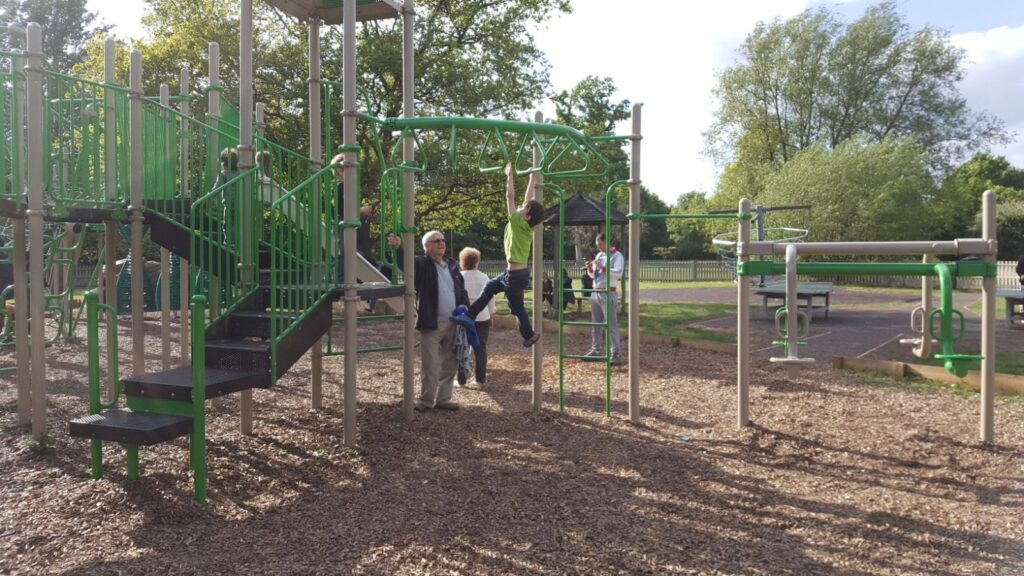
Teach your kids to use the monkey bars
Are children’s monkey bars a source of fear or fun for your child? For some kids, playing on the monkey bars is a thrilling test of balance and agility. For others, they may be a source of stress — because they’re afraid, or because they find them too challenging.
Whether your child is afraid or simply needs practice to master the monkey bars for kids, there are ways to help them feel more confident and comfortable. The key is creating an appropriate environment in which your child feels safe to experiment with new skills. Here are some ways you can teach your children to use the monkey bars.
Are monkey bars easy?
Actually no. Monkey bars require a rock-solid grip and a good use of bodyweight momentum. Also, you’ll need mental strength to get you past each bar when you feel the ache setting in.
Set the stage
If your child has a high level of fear about using monkey bars, the first thing you’ll want to do is create an environment that’s as safe as possible. This can help reduce the anxiety associated with the bar. You can do this by finding a playground with a safe set-up. Ideally, you’ll find playgrounds that have a soft surface, like natural sand or wood chips.
This will make them less jarring on joints and sensitive parts like knees and elbows. If you’re at a park with a harder surface, you can also put a mat down to provide some cushion. You can also ask the playground supervisor if they can turn down the volume on the surrounding playground equipment.
How to use monkey bars – Go slow: start with holding and balance poses
If your child is afraid of the bars, start by having them hold their position at the bar for long periods. This will help them get comfortable with their position and the feeling of the bar underneath them.
Try saying something like:
“OK, you’re holding the bar. Try to stay still. See how the bar feels in your hands. Try to focus on being still.”
This will help them feel more grounded at the moment and less anxious. You can have them practice this before they climb, or while they’re holding the bar.
While they’re holding, you can also encourage them to look at the ground and keep their head still. You can also have them focus on a specific point on their body, like their feet or the space between their toes.
Have your child choose a hold they’re comfortable with
Some kids will naturally gravitate towards one type of hold or another. Others may be less sure of what they want to try. This is where you can have your child decide for themselves which hold they want to try.
You can ask them:
“What do you think would be the easiest hold to start with?”
Or
“What do you think would be the most fun hold to start with?”
If your child is feeling unsure of themselves, you can help them choose a hold that’s easy to start with.
This can give them the confidence boost they need to feel ready to move on to more challenging holds.
Encourage your child to try new positions while holding
As your child feels more comfortable, encourage them to try different positions while they’re holding, like extending their legs straight out in front. Or bringing their legs up towards their chest. You can also encourage them to swing. This will help them get a better sense of the momentum of the bar.
You can also encourage your child to see if they can move their legs to the other side of the bar. This can help your child feel more in control of the bar and more familiar with the way it moves.
When you’re ready, have your child shake out their arms and legs
Before you let your child walk along the bar from one end to the other, have them shake out their arms and legs to help them release any extra tension in their muscles. This will reduce the risk of injury. And it will help them stay focused and relaxed.
You can say something like:
“OK, now shake out your arms and legs. Loosen up. Get ready to walk on the bars.”
This can help your child stay focused on the task at hand and reduce the chance that they’ll get overwhelmed or anxious.
Have your child walk along the bar from one end to the other
Once your child is relaxed and focused, they can walk along the bar from one end to the other. This will help them become more familiar with the way the bar moves and gain a better sense of balance.
You can say something like:
“OK, now you can start walking on the bars. Let’s try to walk all the way to the other side and back.”
Then encourage your child to focus on moving their legs to maintain their balance.
Give them a boost so they can jump up on the next bar or platform
If your child is ready to move on to the next bar or platform, you can give them a boost to help them get there. Have them hold on to the bar below them and have you hold on to their legs so they can focus on using their upper body for the jump.
You can say something like:
“OK, hold on to the bar below you. I’ll hold on to your legs. Ready? Jump up.”
Then help them lift their knees to give them a boost, and give them a little a push so they can get up onto the bar above them.
Bottom line
Monkey bars for kids are an ideal way to help your child build strength, agility, and confidence. By finding a safe setting, either at home or at the playground, you can help to reduce the anxiety of your child.
While it’s important to set the stage for a successful experience, it can sometimes be helpful to encourage your child to go slow and steady. This can help them build the confidence they need to master a challenging skill.
If your child is afraid of the bars, then it may take some patience and creativity to help them overcome their fear. It’s a personal choice, so don’t force the process. With the right approach, i.e. take a backward step and view from afar how your child is before you proceed, then they can learn to appreciate the joy of this fun play structure.
FAQ
Are monkey bars banned?
No, but there have been some talks of getting them banned because they can be dangerous. More information can be found here.
Are monkey bars good for you?
“Swinging forward and backward with their legs tucked up helps children improve and develop the right posture. They will also improve body strength at the same time. In the meantime, they also train to attain full control over their balance and hand-eye coordination.”
Dunster House Kids Monkey Bars Pressure Treated Childrens Wooden Climbing Frame UK. Buy from Amazon here*
Can I buy a kids monkey bars kit from Amazon?
You can get swing sets with monkey bars for your backyard from the Amazon shop like this one* which also has a playhouse too! Make sure you have the right height and width in your garden to house all the accessories as well. You can hire someone to come to your home to build this for you, but remember, the installation might not be free. So be sure to factor in all the costs before you buy.
Monkey Bars Climbing Frame Pressure Treated Playhouse Wave Slide Swing Set – MonkeyFort® Wilderness. Buy from Amazon here*
I have old monkey bars, which haven’t been used. Can my child still use them?
You need to make sure that the bars are safe to use. Is there any rust? Any breakages? Make sure the bars are safe before your child uses them.
Are monkey bars a good workout?
“Many of us have plenty of experience playing and swinging on monkey bar when we were young. Other than it being fun, the strength needed to use the monkey bars is also a great form of exercise. They are extremely effective for building on core and upper body strength.”
The bars are extremely effective at building upper body and core strength, so it definitely helps to build muscle.
Are monkey bars good for shoulders?
“Swinging on monkey bars, or any implement, is a fantastic way to strengthen your grip, develop your lats, and improve your posture. It also provides decompression on your shoulder and is a great way to train your scapula to function properly.”
“While pull-up bars may not directly work in increasing your height, they actually help in improving the overall posture which helps an individual look taller.”
See above. The bars can help improve your posture and make you appear taller.
Do monkey bars work biceps?
See above under the question where the bars help build muscle.
Is monkey bars a good workout?
See above.
Are monkey bars dangerous?
The bars can be dangerous if not used properly. Read the above article and take it easy. Always maintain good posture and cushion the ground under you.
Is monkey bars aerobic or anaerobic?
The bars are mostly an aerobic exercise (as it’s a good cardio) and are a great workout.
Are monkey bars good for adults?
Absolutely! When done safely, the bars are great for kids of all ages.
*Collaborative feature post*
Money saving for families – 27 ideas you can implement now
Rising inflation and stagnant salaries have clobbered families’ nest eggs, so now is a good time as ever to think about investing in your child and focus on money-saving ideas for the family. In times of crises, money saving for families includes ensuring you have enough money to fall back on, like an emergency fund, in case you can’t work or the situation changes with your job role.
Budgeting ideas for families can help offer stability and if you’re doing it as a family, you can teach kids how to save money better too. If you look hard enough, there are tons of different ways to save household money. Here are some money saving tips for large families too, which you can implement right now.
1. Have piggy banks around the house
For very young aspiring savers, a piggy bank is the perfect starting point. You can find a piggy bank that’s colourful and based on one of their favourite cartoon or film characters.
This is a great time to begin their understanding of pocket money and how saving money works. They’ll enjoy receiving their weekly money and deciding whether to put it in their bank or spend it. The amount the kids receive doesn’t have to be much at all. Just getting them into the habit of saving is the first stepping stone.
2. Money saving for families – eliminate debts
You must learn how to save money while raising a family, so when you build up an emergency fund, you’re not burning it all away on debt and unnecessary family expenses. It is essential, therefore, before you save, to pay off any outstanding debts first, especially secured debts.
Debts like rent, council tax, mortgage and household bills like gas, electricity and water, need to be paid off first before unsecured debts like mobile phone and car insurance. There’s no point in having all these wonderful savings plan ideas when you’re constantly in the red. You might have credit cards that were maxed out and are now being paid off, or you might have student loans you need to refinance or consolidate. Now is the time to look at those debts and work to get rid of them.
For old student loans and other payments, consider refinancing, which essentially means you take out a new loan with an affordable repayment term and rate. Consolidation is ideal for people who have multiple debts and need to lump them all into one account. Martin Lewis has some great information on consolidating debt on his website, moneysavingexpert.com, as well as other money-saving ideas for the home.
3. Save for an emergency
Accidents are just a part of life, and there will always be unexpected costs that arise for which we may not have previously budgeted. One of the best budgeting tips for families is to make sure you have an emergency fund in place as this will give you the peace of mind you need to pay emergency expenses immediately.
The best way to save money is in a bank, and if you have a low credit rating, there are tons of basic savings accounts which offer minimal deposit when opening. When you’re looking at a savings account, check the rate of interest the bank will pay you when you save money. My HSBC bank offers 0.1% which is low, but it builds up.
4. Money saving tips for families online – app-based banking
We live in a digital age, which means regular bank visits and paper-based savings books are almost obsolete and a new wave of only online savings accounts has come in. I use a few myself which are great because I think they are one of the easiest methods of saving money. They automate saving by rounding up purchases and depositing the leftovers into respective savings pots. My favourites (I have these) are:
Beanstalk
Beanstalk is a simple app that makes saving for children (and yourself) easy. The app is packed with tools; including money back on purchases and rounding up your change.
I opened my children’s Beanstalk Stocks & Shares Junior ISA and ISA for myself in minutes. There are no regular contributions I had to commit to, and you can round up your purchases, too.
Monzo
Apart from my main HSBC account, I have two bank accounts with Monzo, a personal account and a business account. Monzo is great because you get real-time notifications on how much you’re spending and saving. You can also create ‘pots’ where you can round up a purchase to the nearest pound and deposit the difference into a pot.
There are also no international fees and you can take cash out for free in the UK up to £200 within 30 days. You pay 3% if you go over that amount. Everything is purely online, so there are no branches that you can visit, but you can deposit cash anywhere with a PayPoint for a £1 fee and via cheque in the post.
I have a joint savings account with my husband where we regularly contribute towards the house. It’s easy to set up payments between each other too or split the bills if required.
I also have a free business account, but if you want to upgrade to business plus you would need to pay a monthly fee. Head to Monzo for more information on the different types of accounts you can open.
Plum is another savings account which works via its own app or via Facebook messenger. It works out how much you can save and moves that amount automatically to a savings account. You can save up to £5,000 per day via Plum, but you won’t get any interest paid on your money saved like a normal bank account.
Plum can also help you invest your money into a variety of funds, but like any investment plan, be mindful that your money is at risk. You could end up getting less than what you put in, depending on the stock market. However, you may also stand to gain more on your investment. So, it’s important to shop around and Plum can help you understand how to do that with great resources on their app.
There are also tons of ways to win money, like fun competitions and the messenger bot is pretty good at picking up what you want. Some comments make me laugh as they’re quite witty.
If you apply via the link below, you will get a £5 bonus added to your account within 30 days of Plum making your first automatic save.
Moneybox is another savings tool which offers several options for you to save by rounding up your purchases to the nearest pound and depositing the difference into one of your savings/investment accounts. For example, if you buy a coffee for £2.37, it will put away 63p into one of your accounts.
I have several live investments via Moneybox too which are taken from my account once a week via direct debit and invested a few days later. There are several accounts to choose from, either a general account or a stocks and shares ISA. It’s a great way to get started with investing if you’re like me and you’re a beginner. The app charges £1/month after the first three months, plus 0.45% a year of whatever you invest in.
It’s essential to have some savings plan ideas for the kids as well for when they start university, which can get very expensive thanks to high tuition rates and accommodation costs. It may seem out of reach now if you’re not earning in the top 1%, but if you start now, you should be able to offset much of this cost.
It’s never too early to save for university so open a bank account for your child now. If you’re in the US, BB&T bank accounts can help to separate your finances with your child’s college savings. If you’re in the UK, we use Beanstalk* to save for our four children via Junior ISAs and Child Trust Funds. You can find more information on these in my article on Beanstalk here*
You would also need to think about saving for childcare when that comes along once you return to work. Find out how much you will spend roughly on childcare each week so you can plan this. Perhaps it’s worth looking into adjusting your work or career path to make it more flexible for you to shuffle childcare with work, or lessen the need to get full-time care.
5. Money savings tips for families – get the entire family involved
Unfortunately, it’s almost impossible for you to be on a family budget if everyone isn’t on the same page. For example, you might avoid overspending all week long, but your partner is eating out a lot for lunch at work or ordering items online when they’re home. Likewise, your kids might ask for money constantly, or they might use your credit card to buy game cards or subscription services.
The key here is to get the entire family involved in coming up with frugal living family budget ideas, so kids learn how to save money effectively. Come up with some family money saving tips around the house, like making dinner and dessert from scratch or creating your entertainment in the evenings.
6. Ways for families to save money – find out exactly what you’re entitled to
Working out which family benefits you’re entitled to can become quite confusing, especially with the recent changes to child benefit and conflicting news articles. Visit the direct.gov website to find out what you are entitled to, for example, maternity pay, child tax credits, and child benefit.
Also, take advantage of the £230 marriage perk if you earn less than £11,500 a year. You may be entitled to Marriage Allowance to boost your family’s income, which allows one partner to transfer up to £1,150 of their personal allowance to their partner. This helps to reduce the tax bill by up to £230 during the tax year.
Although these can be difficult waters to navigate, once you have registered for the various benefits and credits that might apply, it is relatively easy to keep on top of them.
7. Budget ideas for families – look for free money opportunities
Look for opportunities to get grants and tax-breaks. Are you able to apply for a mortgage-holiday or rent-holiday? Are you eligible to receive grants for your business? Do you have a lost pension or bank account which you can track? Moneywise has a great article on 40 ways to get free money here.
Also, get into the habit of calling your utility/internet providers etc. and asking them what deals or discounts they can offer, as a gesture of goodwill for your continued loyal custom to their company. Some companies are more obliging than others, but generally, you can make approximately £100 a year by just asking!
8. You can invest in pretty much anything
From wine to Golden Eagle Coins, there are small investment opportunities anywhere you look, provided you can grow your capital. Here are some examples:
Real Estate
Buying a property is a great long-term investment option, as it can generate continuous passive income if the value increases. You can even use real estate to build your overall wealth and portfolio. However, you need to make sure you are ready to invest in real estate because you have to put a significant amount of money down, i.e. the deposit to invest, regardless of whether you buy a park home or a mansion.
There will be ongoing maintenance costs too, and you need to make sure everything is legal before you sign on the dotted line. A homeowner’s association attorney can help with the legalities before you buy a property.
Funds
A fund is another way of buying shares, but you buy a slice of the company directly. Each fund comprises ‘units’, and the cost of these units varies daily. So, if you wanted to invest £1,000 into a fund and each fund cost £1, then you can buy 1,000 units. Then, if each unit goes up in value to £2, your investment is worth £2,000.
Funds can invest in almost anything, from gold to even debt, according to their theme (i.e. geography, industry and types of investments). Which you decide to choose is up to you and your risk appetite.
Investing in an actively managed fund provides the chance of growing money faster. There is, of course, the risk of getting less money back than what you put in. However, experience in the stock market has shown that this is a small risk.
Look for advice on investing and find a suitable provider that can manage your portfolio for you in the best possible way. It might be an idea to convert your stocks and shares into cash right before your child’s 18th birthday, to minimise the risk of a stock market crash.
Bonds
Bonds are investment products created by governments and companies to raise money to pay for various projects like transport, a new factory or capital equipment. When you buy a bond, you are essentially lending money to fund these types of activities, and in return, you will receive a promise that you’ll get your money back, plus interest.
Bonds can be appealing as they provide an easy route to investing and are typically considered as low-risk. When you buy a bond, you can receive interest payments which are also known as yields.
They can also be fixed, floating rate or inflation-linked. However, it is important to note that bonds don’t guarantee payments, since there is a risk that companies and governments can default and you can end up receiving less than your initial investment.
With shares, there are no agreed interest payments and shareholders may receive a dividend. But, again, this isn’t guaranteed and it mostly depends on the company’s financial circumstances.
Saving for retirement – personal pensions
As well as saving for short-term goals, you need to think about your pension and saving for retirement (a long-term goal, so you don’t plan to draw from your investment until the distant future).
My husband has worked full-time since leaving university. Thus, he is regularly contributing towards his state pension. I am, however, worried about my basic pension entitlement as there are gaps in my National Insurance contributions from not working during my maternity period and subsequently working part-time at home while being a full-time mum.
However, I intend to make up the shortfall with my personal pension investment. Look into providers that offer personal pensions where you can pay as much as you want when you want. If you are a basic rate taxpayer, the government adds 25% of any amounts you put in, up to £40,000 per year, or the value of your annual salary, whichever figure is lower.
If you pay a higher rate of tax, then you may claim even more via your tax return form. Your initial investment can be as little as £5,000 where you can then make further contributions in regular instalments or ad hoc lump sums. You cannot withdraw any money from your pension until you are 55.
P.S – www.nidirect.gov.uk provides much more in-depth advice on pensions and includes a State Pension Age calculator to give you an idea of your own personal pension status.
Having a child saving plan with children’s savings accounts
Saving any sort of disposable income is difficult, especially in the UK. But, a good way to start would be to put aside 10% of your earnings every month. You can keep the rest of your salary in your account for daily expenses, etc. If you’re in debt or are struggling with your emergency fund, consider taking out a basic bank account which doesn’t require a credit check.
For your child savings plan, open a savings account for your child and put away small amounts into your children’s savings accounts now, which can lead up to large amounts later. A contribution of £10 a month at a basic interest of 3% could give your child nearly £3,000 by the time they are 18.
If you want your savings vehicle to be tax-efficient first and easily accessible second, then Junior ISAs are tax free and your child can’t draw the money until they are 18.
Junior ISAs and Child Trust Funds are accounts of the cash variety, i.e. you save 100% of your child’s annual allowance in cash. But, as interest rates are so low at the moment, this may not be the best decision.
Opting for an investment ISA like a Stocks and Shares ISA means you can earn a substantial return on your capital over a long-term period. For adults, you get a £20,000 allowance, and some providers will offer a no platform fee for 1 year. You can use all of this allowance for cash investments, or you can split it between a Stocks and Shares ISA, a Cash ISA (typically a savings account which you never pay tax on), Lifetime ISAs and innovative finance ISAs. As a rule of thumb, invest for at least five years to allow time to smooth out bumps in the market where your investment earnings may dip.
The best way to save money for kids is investing your money into an ISA where you can earn interest over time. You can invest your money into a Junior Stocks and Shares ISA, where contributions are made on behalf of your child to buy various types of investments, and your child doesn’t pay tax on any capital growth, interest or dividends they receive either. Other savings are liable to capital gains tax if the investments have gone up.
Although riskier than a Junior Cash ISA, as the value of a Junior Stocks and Shares ISA can fluctuate, this is a great option if you’re looking to invest over the long-term. Junior Stocks and Shares ISAs can offer more potential for growth, whereas with a Junior Cash ISA, inflation could eat at any interest your child could make.
If you already have a Junior Cash ISA for your child, you can still open a Junior Stocks and Shares ISA, as your child can have both. You just need to make sure that the combined amount you pay into both Junior ISAs does not exceed the annual limit, which is £4,368 a year.
9. Avoid using credit cards
You should only use credit cards in an emergency. If you’re using your line of credit to pay for new furniture, a boat or a luxury vacation, you’re doing your future financial well-being a serious disservice.
While it might not be a smart idea to close out these accounts, since doing this will affect your credit score, you should lock them away so they cannot be used and you won’t be tempted to rack up more debt with them. If there is an emergency, like a failed appliance or a broken-down vehicle, don’t hesitate to use your line of credit. Just make sure that it’s paid off as quickly as possible.
10. Family budgeting tips – Spend more time at home
When you’re out and about, you’re more likely to spend money. At home, you won’t have this problem (unless you’re ordering online deliveries all the time!), as you are less likely to spend on frivolous expenditures or activities. There are plenty of things you can do right in your backyard, and many of these can be educational.
Some things to try include bug catching, playing yard games, gardening or simply playing ball. Try to find ways to get kids off the screens by doing an indoor activity that gets everyone involved. The great thing about being at home with your family is that you get to spend time with each other when normally you would be running around in different directions. It’s a lot easier to save money together when you are together.
11. Make food from scratch and keep the ingredients low
Avoid pre-packaged food as they are much more expensive. It’s a lot cheaper to make meals from scratch and you need not go overboard on the ingredients. For example, make a simple Bolognese sauce with mince, onion, celery and chopped tomatoes, which saves you on around a £2–£3 jar of readymade Bolognese sauce.
Also consider making your own pasta instead of buying shop-bought, and limiting your ingredients to five or less, which can save you money per meal too.
If you have a large family, it may even be worth subscribing to a food delivery service like HelloFresh which provides the ingredients for you, so you don’t overspend in the shop – plus , every recipe I’ve tried has been ridiculously tasty!
12. Update your will and get life insurance
If you have a growing family, one thing that you cannot forget to do is update your will. You need to have an updated will in place that will outline how your finances and family are to be taken care of should something happen.
Although we don’t like to think about this sort of thing, you will want to make sure you are prepared. This won’t cost you much to do and it will give you the peace of mind that you need to protect your family financially after you are gone. Life insurance, if you are young and in good health, won’t cost you much at all, but if you can, I suggest you get life insurance sorted before the demands of a new baby take over.
13. Make sure you’re not taking out insurance where you don’t need it
There is such a thing as being over-insured. You can’t always insure against every risk, so calculate how much risk you’re willing to take. Life insurance is important, but do you need your premium health insurance if you’re fit and healthy and the NHS will suffice?
14. Swap supermarkets, and shop in pound shops and eBay!
It is time to step out of the mainstream mindset and move to cheaper stores like Aldi or Lidl. You may have to pack your shopping extremely quickly when the checkout assistant scans through your items at record speed. But, you save approximately £15-20 a week, compared to previous shopping experiences. That’s a huge £1000, or near enough, per year. eBay is also a fantastic place to get really cheap deals on pre-loved items for the family.
One of the best ways to save money on food shopping is to head online to do your supermarket shop. By shopping online, you can see the sum of your purchases in front of you and you’ll be less reluctant to add bits and bobs you don’t really need to your basket, which can often result in a nasty surprise at the tills.
By shopping online, you’ll stay away from those unnecessary buys and offers that lure you in. And if you shop with a comparison site, you can make even more savings because by offering you the cheapest possible price for each item and you can take the time to compare the different prices of products before adding them to your basket. Some great sites I found are Pricespy and PriceRunner which I use regularly, as well as Idealo and Kelkoo too. Shopping online is a great way to save money on buying clothes for the family too.
15. Sell your unused items too!
Instead of throwing items away, sell them! You could stand to make a lot of money on items that you don’t even use. eBay is probably the easiest way to sell your items, but you could also hold a garage sale or use the vast Facebook community where you’ll generally be able to sell things quite quickly.
A friend of mine gave me a great tip the other day, which was to sell gift cards you’ll never use. I had never thought to do that before as gift cards are generally given as presents. But, if you’re not going to use them, sell them to someone who will. So, go on a hunt around your home and create a collection of items you can sell to make more money.
16. Give the gift of time – and personalised gifts!
Birthdays, Christmas and other seasonal celebrations can get pretty expensive every year, especially if you’re like me and have a brother, sister, son and dad who are all born during the same week as Christmas! You can offer the gift of time if you haven’t seen that person for a while or if you’d still prefer to provide a gift, consider making something for them. Personalised gifts are a fantastic way to give someone something that no one else has. It shows that you’ve put your effort into the gift rather than buying them something generic.
17. Get cashback
Cashback sites will ensure you receive money back on purchases you were going to make anyway. Google ‘cashback sites’ and find the right site for you – you could be missing tons of savings by not purchasing via one of these sites.
18. Do surveys and take part in reward programs.
There is a myriad of ways to make money while you’re at home. Some easy ways are to fill out surveys in return for cash payments. It may not be lots of money, but some sites will pay up to £5 per survey, so the pot could add up. Reward programs are self-explanatory where they offer rewards for your purchases. Some credit cards offer this as well as some major stores. I have around £30 on my Boots card, which I’m accumulating to buy something I really need. That’s £30 of free money just by buying items from Boots!
19. Look for offers and special deals
You could take advantage of offers and special deals by looking for special offers and discount deals before you buy. Some brands recognise the value of making something cost-effective while providing a service for several members of the family at the same time. Sometimes, alongside the regular outstanding bills, food can be the next highest expenditure, as everyone has to eat.
Online grocery shopping is big business in the UK and all the major UK supermarkets have tons of great deals to entice customers in. If you’re a brick and mortar person, look out for deals at the end of each aisle or head to the shops late in the day when everything is reduced according to freshness and expiration date. Of course, tie that in with meal planning and you’ve effectively saved a huge portion of your finances every week.
Vouchers, coupons and discount codes can really make a difference when saving money on your shopping, so it’s important to take the time to look online for fresh codes or coupons in magazines or newspapers before you set off on your shop. Any savings you make will add up over time, whether it’s a few pennies on the petrol bill or a £5 voucher off your next big shop.
Get in the habit of keeping an eye out for special offers and deals too and bulk buy wherever possible, to make savings. Also, there are some great apps now which will automate this process, like Honey*, which I’ve added as a Chrome extension when searching via Google. Honey* will automatically scan the site and provide you with coupon codes which it will try on your behalf. It will then offer you the biggest saving on the item(s) you’re purchasing. I’ve saved so much money using Honey*. There is another app called Cently which does the same thing.
Also look for better mobile phone deals or consider going sim only and buying the phone outright. If your monthly contract is up, it may be worth keeping the phone and transferring to sim only that way. You could save hundreds every year from staying away from the overpriced phone deals that are in the market at the moment!
20. Reduce your leisure time or find deals
Entertainment eats into the family budget; from transport to expensive tickets. However, there are ways around this, which also applies to spare time at home, and overseas holidays. There are fantastic deals to be found for families, including free child places to destinations all over the world, meaning you can create lasting memories for less. Some attractions offer family discounts, and some may even allow grown-ups in for free.
Do you need Sky World? Are you paying premium prices for your gym membership but not using the gym? Remove these services because they are burning a hole in your pocket and you’re not gaining anything from them. You may think you’re not saving much, but over the years, cancelling unused services can save you hundreds, maybe even thousands!
22. Get personal with your expenses
Do you know what you’re paying for? Do you actually know where your money is going? Do you really need to buy new clothes? Using personal finance software can help you track where you are spending money, which will make it easier to see where you can potentially save.
Set goals on saving and caps on your spending, so you don’t overspend every month. If you’re in debt, then it’s a great way to track how much you have left to pay off and it can provide extra motivation to get back into the green too.
23. Use an affordable courier
parcels,If you spend a lot of money on posting parcels to family and friends, using an affordable courier like TNT can be really useful. As a reliable and trusted courier with a great reputation, you can send everything from fragile items to bulk parcels of old baby clothes and heavy parcels both domestically and internationally.
24. Think about your mode of transport
Can you walk instead of taking the car? Can you drive instead of flying? When we took a road trip to Switzerland it took us around 15 hours each way to drive. But we saved so much money and we got to travel with as many bags as we wanted and packed our own food. So we saved on luggage costs, and expensive airline food too!
25. Buy a timeshare
Holidays are precious ways to build great memories with the family, but they can also be expensive ways to have fun. There are, however, loopholes in enjoying a regular holiday once or twice a year without breaking the bank every time.
Timeshares are essentially holiday time where you can share ownership with other holidaymakers in a resort or holiday accommodation. When you buy a timeshare you purchase the use of that time in the accommodation, along with other owners, which means you can vacation in more luxurious accommodation for a fraction of the cost. Think of it as owning a holiday home, but only paying for your time when you actually occupy it on holiday.
If you no longer use your timeshares, then ensure you do your research via a reputable timeshare cancellation company to avoid any potential scamming when cancelling your timeshares.
26. Accept help when offered
If your mum is offering to make dinner for the family or a friend is offering to give you their car seat for free, consider accepting it. You could cut cost in so many areas where you would normally spend a lot of money. Plus, you’ll be able to offer the same when you’ve outgrown the item or when you’re in a better position to help.
I never knew about the wonderful world of recycling when I became a parent, but it’s a wonderful unwritten concept. You are given free stuff like baby clothes and items from a friend or relative which you then pass on to your friend or relative when they have a baby. Everyone is happy.
27. Take care of your health
By taking care of yourself, you will spend less on medical costs later, so it’s important to prevent health conditions which can be related to diet obesity, smoking and drinking alcohol excessively. Also, the healthier you are, the more productive you’ll be, which means the more you will make in your job or business.
Although the above money-saving ideas for the home won’t make you a millionaire tomorrow, they should help you make considerable savings, especially over a longer period. So if you stick to it, you will soon see the pounds adding up. You never know, you might treat yourself to a little something special in a few months, as a reward for being such a savvy parent!
If you have any more tips on how to saving money, please share your best tips in the comments below.
*Collaborative feature post, which includes some affiliate links (marked with a ‘*’). Please read our Ad Policy for more information*