Boost math learning: parent-teacher collaboration ideas
Helping your child get better at math is something both parents and teachers need to work on together. It’s not just about what happens in school; the role of parents is fundamental to this process! You can help make sure your child understands math and feels good about learning it.
In this article, we’ll talk about why it’s so important for parents and teachers to work as a team and we’ll share some tips for successful parent-teacher partnerships, set common goals, and use teamwork to make math fun and interesting for your child.
Consistency is key to reinforcing mathematical concepts. When you and your child’s teacher align your approaches, your child receives a unified message about the importance of mathematical skills, which will foster a deeper understanding of the subject.
3. Addressing individual learning needs
Every child is unique, and when you and the teacher work together, you can help your child in their special way. By talking and sharing ideas, you can come up with great ways to make the most of what your child is good at and help them with the things they find tough. If you struggle to solve math problems, you can also visit MathMaster, an app that will assist you in your math journey: math-master.org.
Establishing healthy parent-teacher relationships for early learning success
Here are five ways to build parent-teacher partnerships and collaboration strategies developed by teachers:
1. Open communication channels
The fundamental importance of teacher parent communication revolves around talking openly, so the importance of parent involvement is crucial. Having regular meetings, sending emails, and using apps or websites that let you chat helps you connect to school and home. This way, you can always keep each other updated on how your child is doing.
2. Sharing learning objectives
One of the key parent-teacher collaboration strategies includes making sure you and the teacher understand the math goals and what’s expected. When everyone knows what the math lessons are about, it’s easier for you to help with these topics at home, which supports what’s being taught in the classroom. Including parents in the classroom would help with this part of the collaboration, but not all schools allow for it for security reasons.
3. Interactive workshops and seminars
A great way to enhance teacher parent collaboration is to attend workshops and seminars about teaching math because you’ll get to learn about the latest ways teachers are doing it. Plus, you’ll pick up some handy tips to help your kid with their math. These workshops can talk about different math subjects, ways to solve problems, and fun activities you can do together.
4. Using technology for updates
You can’t operate a successful parent and teacher collaboration without the use of technology in this day and age! Technology can help you keep track of how your child is doing in real-time. Online platforms, apps, and emails are great for getting updates on their tests, projects, and activities you can do at home to help with their math learning.
5. Encouraging math-focused family activities
Try to include math in your family’s fun times, not just homework. How about playing math games on a family game night? Or use cooking to practice measurements. Even everyday things can be a chance to have fun with math and make it more interesting.
Collaborative strategies to reinforce math learning at home
Here are some parent teacher collaboration ideas that you can reinforce at home with your child:
1. Setting a positive tone between teacher and parents
Remember how important it is to stay positive about maths. A big part of the teacher and parent collaboration involves getting rid of any worries about maths, encouraging them to keep going, and helping them see challenges are just chances to learn more.
2. Creating a dedicated math space
Families can set up a special learning environment at home just for maths. Fill it with maths books, puzzles, and learning games. This area will be a constant reminder of how important maths is in your everyday life and will help with overall academic achievement.
3. Real-world math applications
Try to use real-life maths in your daily routines. Things like working out your shopping budget or doing a bit of DIY around the house are great ways to put those maths skills to use in practical situations.
4. Regular progress check-ins for a successful parent and teacher partnership
A successful collaboration with parents and teachers includes regular catch-ups because you can monitor how they’re doing in maths. Working together to spot areas they can improve on, and cheering on their successes really helps show you’re all in it together to support their maths learning.
5. Homework support strategies
Give yourself some good ways to help with your child’s homework. Set up a quiet spot for them to work, stick to a regular homework schedule, and be there to help with their questions, but try not to give away the answers straight away.
Parent-teacher collaboration struggles and overcoming challenges
There can be a number of reasons why getting together with a teacher can be a struggle. Here are some issues you could run into and why continuing parent teacher communication is important, even if it’s challenging:
1. Time constraints
Remember, both you and your child’s teachers might be short on time. Using online meetings, being flexible when you meet up, and keeping communication clear and to the point can make collaboration between parents and teachers easier, even when you’re both busy.
2. Differing teaching approaches
Understand the way you teach at home might differ from how it’s done in the classroom. Having a detailed collaboration between teachers and parents means you can learn about their teaching methods. You’ll also get a better idea of what’s happening at school and can support your child more effectively.
3. Addressing math anxiety
Work together to tackle maths worries by sharing resources, and tips, and running workshops for both you and the teachers. Building parent-teacher relationships through a supportive atmosphere that recognises these anxieties helps make everyone feel more positive about maths.
Success stories: examples of effective parent-teacher collaboration
Below are some parent teacher collaboration examples you can try now:
1. Math nights and family workshops
If your school puts on Maths Nights or family workshops, they’re a great chance for you to get stuck in and see how maths is taught. These events are all about learning together and they show you how maths is used in real life.
2. Regular newsletter updates
If teachers send out newsletters with updates, tips, and activities all about maths, it helps keep you in the loop and be involved in the management of what’s going on. This regular catch-up makes you feel more like a team. Parents and teachers working together helps students do better in maths.
3. Interactive online platforms
If your child’s school uses interactive websites or apps for regular updates, online meetings, and resources, it makes it easier for you and the teachers to keep working together and stay in touch.
Parents meaningful questions you should ask your childs teacher
When you’re having a chat with your child’s teacher about maths, there are some good questions you can ask to get involved and help out. Here’s what you might want to ask:
“How’s my child doing in maths?” Start with the basics. This gives you a clear picture of their progress and any areas they’re good at or might need extra help with.
“What part of maths are they finding tricky?” Knowing this helps you understand what to focus on at home. It’s not just about the struggles; it’s about how you can support them to get better.
“Can you show me an example of their work?” This is great because you get to see exactly what they’re doing, and the teacher can explain it in a way that makes sense to you.
“What maths topics will they be learning this term?” This one’s good for staying ahead. You might find games or activities at home that tie in with these topics.
“Are there any resources or activities we can do at home?” Teachers often know about fun maths games or websites that can make learning at home a bit more interesting.
“How can I help my child with maths homework without giving away the answers?” It’s all about helping them think for themselves, not just telling them what to do.
“Is there a way we can make maths more real and fun at home?” Practical stuff, like measuring when cooking or working out change when shopping, can make maths feel more relevant.
Conclusion
Working together, you and your child’s teachers can help them get the hang of maths. By talking openly, understanding what they need to learn, and using teamwork, you can create a space where your child doesn’t just learn maths but gets it. This teamwork lays the groundwork for a love of learning and mastering maths skills, which will be useful as they grow up. So as we start this journey, remember, it’s not just about maths–it’s about helping each child reach their potential and feel confident with numbers.
FAQ
Why are healthy parent-teacher relationships important?
Other questions asked were:
Why is parent-teacher collaboration important?
Why is it important for teachers to collaborate with parents?
What is the importance of parents and teachers working together?
It’s really important for you as a parent to have a good relationship with your child’s teachers because when you and the teachers get along and talk easily, it helps your child in a few ways. First, if there’s something tricky going on with your child’s learning or behaviour, you and the teacher can sort it out together. It’s great for their mental health!
Also, when your child sees you and their teacher working as a team, it makes them feel more secure and supported. Plus, you get to understand what’s happening at school better, so you can help with homework and stuff at home. Parents and teachers are partners in education, so it’s all about making sure your child gets the best support from both home and school
What are the three C’s – how to form a constructive parent-teacher partnership?
The ‘Three Cs’ for a good parent-teacher partnership is a friendly guide to help you work well with your child’s teacher:
Communication: This one’s key for a good parent and school partnership. Keep the lines of chat open with the teacher. It means just being clear and honest when you’re talking about your child’s progress, any concerns, or even the good stuff happening at home that might affect school life.
Collaboration: You and the teacher are like a team for your child’s education. It’s all about working together, sharing ideas, and sometimes coming up with plans to help your child do their best. It’s not just about meeting at parents’ evening; it’s about being involved and interested all school year round.
Consistency: This is about making sure what’s happening at home and school lines up. So, if the teacher is focusing on certain behaviours or ways of learning, try to support that at home too. It helps your child to have the same sort of rules and expectations whether they’re at school or in the living room.
Remember, it’s all about making school and home a team effort for your child’s learning and growth.
What are the benefits of parent-teacher collaboration?
Other questions asked were:
What are examples of parent-teacher collaboration?
Why is parent-teacher relationships important?
When you and the teacher work together, loads of good things can happen for your child. Here are some benefits:
Better understanding: You’ll get a clearer picture of what your child’s doing at school and how they’re getting on. The teacher can fill you in about classroom stuff, and you can share what’s happening at home. It helps everyone understand your child better.
Support for your child: When you agree with the teacher, your child gets consistent support. They know what to expect both at home and at school, which can make them feel more confident.
Spotting problems early: If there are any issues, like struggles with reading or getting on with others, you and the teacher can spot them quicker. That means you can work out how to help your child sooner rather than later.
Boosting learning: With you and the teacher both cheering them on and helping in different ways, your child can get a boost in their learning. It’s like having a tag team to help them do their best.
Building relationships: It’s not just about schoolwork. This teamwork helps build a strong community around your child. They see that adults in their lives are working together for them, which is a positive thing.
So, in a nutshell, teaming up with your child’s teacher is a win-win. It’s good for you, the teacher, and most importantly, your child.
How to make parent events at school meaningful?
If you’re thinking about how to make school events focused on maths useful for you as a parent, here are some tips for successful parent-teacher conferences at your child’s school, which are meaningful and help with working together with the teachers:
Interactive workshops: Suggest having workshops where you can actually get stuck in with maths activities. It’s not just about watching; it’s about doing. This way, you can experience what your child is learning in a fun and hands-on way.
Q&A sessions: Good to have a bit where you can ask questions. Maybe you’re wondering about the maths curriculum or how to help with homework. A Q&A gives you the chance to get those answers straight from the teacher.
Real-life maths examples: Ask to include sessions that show how maths is used in everyday life. It could be about budgeting, cooking, or even DIY projects. This helps you understand how to make maths more relatable and fun for your child at home.
Information on resources: It’s really helpful to get a list of resources like websites, apps, or games that you can use at home. These can be great for making maths practice more engaging.
Parent-teacher chat time: Having time to chat informally with the teachers is great, as a parent’s interaction with teacher offers the chance to build a bit of a relationship and share any specific concerns or successes about your child’s maths learning, whether that be face-to-face or through regular phone calls.
Parents’ feedback to teachers: After the event, maybe suggest a way to give feedback. It helps the school know what worked and what they could do differently next time.
These events are a chance for you to get involved and understand more about how maths is being taught to your child, and how you can support them. Plus, it’s a good way to show your child that you’re interested in what they’re learning.
How do I create parent and student reports that are useful for my child’s maths teacher?
If you’re looking to make some useful reports for your child’s maths teacher then parent engagement is key. Here are some simple ways for parents to help teachers:
Keep a record of homework: Jot down how your child gets on with their maths homework. Note which bits they found easy or hard, and how long it took them. This gives the teacher a good idea of their strengths and areas to work on.
Observe their learning: While they’re doing maths, watch out for things like whether they’re guessing answers or if they’ve got a particular method. Sharing these observations can be really helpful.
Include their attitude: Mention how they feel about maths. Are they confident, frustrated, or maybe indifferent? The teacher can use this info to help make maths more enjoyable for them.
Talk about maths at home: If you do any maths-related activities together, like cooking or shopping, jot down how your child handled the maths parts. It’s useful to know how they apply maths in real life.
Ask your child’s opinion: Sometimes, just asking your child how they think they’re doing in maths can give you and the teacher some good insights.
Keep It simple and honest: You don’t need to write an essay. Just simple points about how your child is doing with maths will do. And honesty’s key – it’s all about helping your child, after all.
When you’ve got all this together, hand it over to the teacher. They’ll likely find it really useful to get this extra perspective on how your child is doing with maths. Remember, parents working with teachers can offer a fuller picture of your child’s learning, which will help their teacher in the long run.
*Collaborative feature post*
Overcoming mask discomfort when you can’t sleep with CPAP
Sleep apnea is a common sleep problem that affects a lot of people all over the world, and it can really mess with your health. But the good news is, there’s a treatment called Continuous Positive Airway Pressure, or CPAP for short, that works well to help handle sleep apnea.
That said, as transformative as CPAP therapy can be for those who suffer from sleep apnea, its success hinges on the comfort and compatibility of the CPAP mask. And some people find they can’t sleep with CPAP. The mask is the conduit through which pressurised air flows to maintain an open airway. However, not all masks are made equally. CPAP is not easy and there are common complaints that can become a source of discomfort for many users who can not go to sleep, potentially hindering the effective use of CPAP therapy.
In our guide, we talk about how sometimes CPAP masks can be so uncomfortable that you can’t fall asleep or stay asleep. We’ll look at the usual problems people have, like masks that don’t fit right, annoying air leaks, and skin irritation. Is your CPAP therapy keeping you awake at night? We’ll dig into why these things happen and give you some handy CPAP tips for beginners to make things better.
By figuring out what’s causing the trouble and making the right changes, you can make wearing your CPAP mask a lot more comfortable. This way, you can get a good night’s sleep and feel refreshed in the morning.
What is sleep apnea?
Sleep apnea is a pretty common problem where you stop breathing for short periods when you’re asleep. This happens because you’re airway either partly or totally gets blocked.
The most common kind is called obstructive sleep apnea (OSA). It’s where the muscles in your throat relax too much and cause a blockage. There’s also another kind called central sleep apnea (CSA), which happens when your brain doesn’t send the right signals to the muscles that control your breathing.
Good sleep is essential to good health so if you don’t get sleep apnea treated, it can lead to some serious issues. You might feel really tired all the time because of the difficulty falling asleep, have trouble thinking clearly, or even have more serious issues like heart problems.
Are you at risk of sleep apnea?
To figure out if you have sleep apnea, doctors will often need to do sleep studies. A common way to treat it is with something called Continuous Positive Airway Pressure, or CPAP therapy. This treatment helps ease the symptoms and lowers the chances of health problems that can come with sleep apnea.
Understanding CPAP therapy – How CPAP works
At its core, CPAP therapy involves using a specialised machine that delivers a continuous stream of pressurised air through a mask (like a CPAP mask from CPAP Direct) worn over the nose, mouth, or both.
The main goal of using a CPAP machine is to make sure your airway stays open while you sleep, so you don’t stop breathing like what happens with sleep apnea. By keeping a steady flow of air, CPAP therapy helps you breathe normally during sleep and cuts down the risks that come with untreated sleep apnea. These risks can be things like heart problems or feeling tired during the day.
Getting the basics of how CPAP therapy works is really important. It’s the first step to getting better sleep and feeling good overall.
Benefits of CPAP therapy
CPAP therapy is a really important treatment for people with sleep apnea, and it comes with a bunch of benefits.
What it does is send a steady flow of air into your airway when you’re sleeping. This stops the airway from getting blocked, which is what causes sleep apnea. Because of this, people who use CPAP breathe better when they’re asleep, get more oxygen, and don’t have as many sleep interruptions.
Using a CPAP machine can help you sleep better at night and feel more awake and sharp during the day. Sticking with CPAP therapy over time can help with sleep apnea symptoms and make a big difference in your overall health and happiness. It’s a treatment that can change and improve your life.
Best of all, most of the cost of CPAP treatment is covered on Medicare. So it is very affordable.
Can’t sleep with CPAP? 7 tips for sleep and avoiding common problems
Starting to use a CPAP machine to get better sleep can be a bit tough, and sometimes people find the CPAP masks uncomfortable.
This article lays out the 7 most troubleshooting issues with CPAP tolerance and provides solutions to common issues like fit problems and air leaks. By dealing with these issues, you can be more comfortable and make the most out of this helpful sleep apnea treatment.
1. CPAP machines and masks – which ones are right for you?
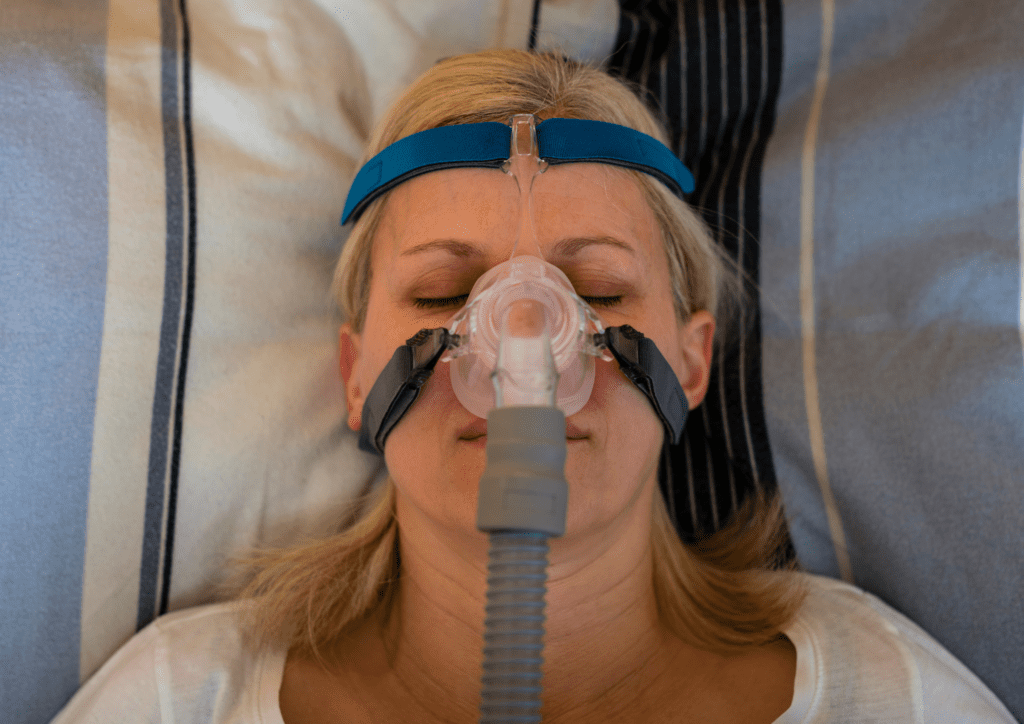
When shopping for CPAP, it’s really important to have a CPAP mask that fits just right. The wrong size or style of CPAP mask, i.e. if it’s too tight or too loose, can rub your skin the wrong way, cause sore spots, or let air leak out.
To prevent this, you need to pick a mask that’s the right size and shape for your face. Most masks have straps you can adjust. You want them to be tight enough to stay in place, but not so tight that they’re uncomfortable. Sometimes, you might have to try a few different types of masks to find the one that fits you the best.
Tip – Make small adjustments to your CPAP mask nightly
When you wear a CPAP mask, sometimes it doesn’t fit perfectly right off the bat. It might be a bit too tight, too loose, or just not sitting right on your face. Making small adjustments means you fiddle with the straps or the position of the mask each night, just a little, to get a better fit.
The idea is to find that ‘just right’ spot where the mask is snug but not too tight, and it doesn’t leak air or bug you while you’re trying to sleep. It’s like tuning a guitar – a little tweak here and there until it sounds perfect. In the case of your mask, you’re adjusting it bit by bit for the best comfort.
2. Air leaks
Making sure your mask fits well and doesn’t leak during your therapy is key. If air leaks out of the mask, the treatment won’t work as well, and it might bother your eyes and skin.
To stop this from happening, regularly check your mask for any cracks or damage and adjust the straps so it fits securely.
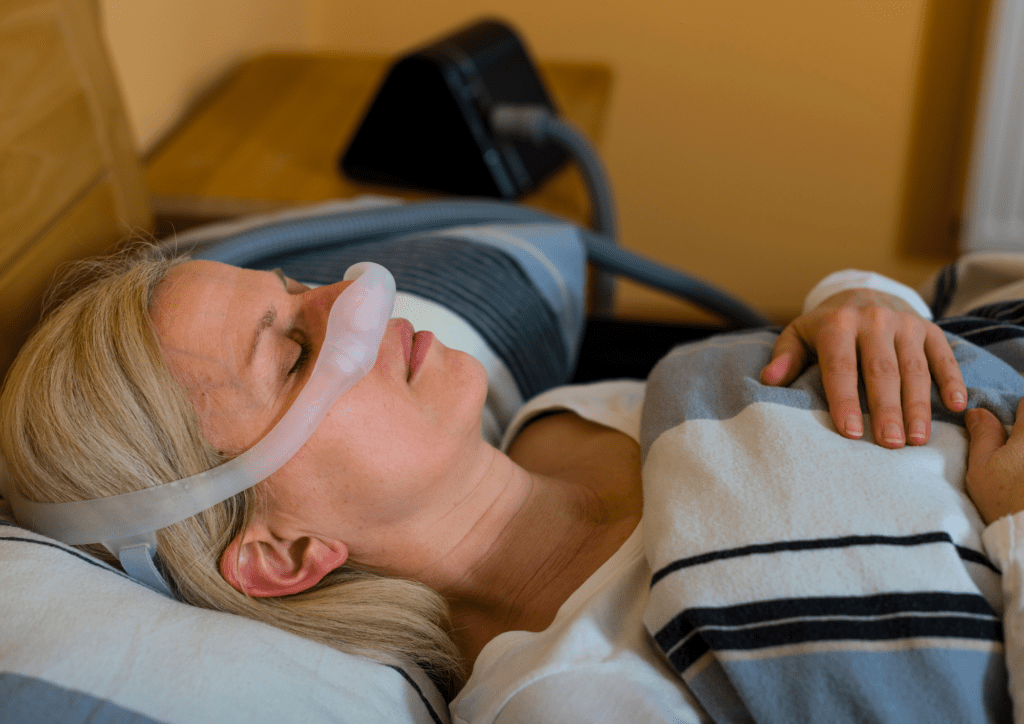
If you still have leaks, think about trying a different kind of mask, like nasal pillows or full-face masks. These might work better for your specific needs and stop the leaks.
3. Dry mouth or nose
The steady stream of air from the CPAP machine might make your mouth and nose feel dry, which can be uncomfortable. To fix this, you can use a heated humidifier with your CPAP machine. This adds moisture to the air and helps prevent dryness.
Some masks have special features that keep the air moist, which is great for avoiding dryness. Also, drinking plenty of water during the day can help keep you from feeling too dry.
4. Claustrophobia
Wearing a CPAP mask might feel weird at first, and it can even make you feel a bit trapped or uncomfortable, which might be why it’s hard to fall asleep with it on or fall asleep right away. You will have trouble getting used to wearing the CPAP mask at the beginning, but there are ways to make it easier to get used to.
One thing you can try is to wear the mask for a little while during the day, and then ease yourself into CPAP slowly, wearing it for longer periods. Practising breathing with the mask on can also help you feel more at ease with it.
If you still feel closed in after trying the mask for a few days, you might want to try a mask with a simpler design or one with nasal pillows. These kinds of masks can feel more comfortable and less in the way.
Tip – Use your CPAP mask every time you sleep
You should use your CPAP mask every single time you go to sleep, whether it’s at night or even during a short nap during the day. The idea is to make sure you’re always getting help from your CPAP machine to keep your breathing steady while you sleep. It’s like wearing your seatbelt every time you’re in a car – it’s just a good habit to keep you safe and healthy. So, whether it’s a full night’s sleep or just a quick snooze on the couch, pop on that CPAP mask to make sure your sleep is as good as it can be!
5. Skin irritation
Wearing a CPAP mask for a long time can sometimes cause skin problems like irritation, redness, or even sore spots. This happens because the mask needs to fit closely to work right, and that can rub against your skin.
To help with this, it’s a good idea to clean the mask regularly using a gentle, skin-friendly soap. This keeps any buildup off the mask that could irritate your skin. Also, using something like mask liners or barrier creams can make a big difference. They act like a cushion between your skin and the mask, cutting down on rubbing and protecting your skin.
Taking these steps can make wearing your CPAP mask a lot more comfortable and lower the chances of having skin issues.
6. Noisy mask
Some CPAP masks can be noisy, making sounds like whistling or air leaks, and this noise can bother both the person wearing the mask and their sleeping partner. It’s important to figure out where the noise is coming from so everyone can sleep better.
Start by checking the mask parts to see if anything is loose or broken. Make sure everything is connected tightly. If there’s still noise after that, talking to a healthcare provider can be helpful. They might suggest different masks that are quieter and more comfortable.
Dealing with a noisy mask right away is key. It not only makes things more comfortable for the person wearing it but also helps create a better sleep environment for everyone.
7. Congestion or nasal issues
People who already have stuffy noses or other nose problems might find it tricky to get used to some types of CPAP masks. This can make it hard to breathe comfortably and affect how well the therapy works.
If this is a problem, trying a nasal mask or nasal pillows might work better if you have a stuffy nose. Also, using a saline nasal spray before bed can help clear uhup the congestion, making sure the air flows smoothly and making the CPAP experience more comfortable.
Choosing the right kind of mask to suit nose issues can help you breathe easier and deal with stuffy nose problems while using your CPAP machine.
Tip – Use AutoRamp on your CPAP machine
AutoRamp is a cool feature on some CPAP machines. When you first put on your mask and turn on the machine at night, the AutoRamp setting starts with a lower air pressure. As you fall asleep, the machine automatically increases the pressure to the level your doctor set for you.
This is great because it makes it more comfortable to fall asleep. See if there’s a ramp setting on your CPAP machine where you don’t have to start with the full pressure right away, which can feel a bit overwhelming. AutoRamp starts gently and then gradually gets stronger as you snooze. It’s all about making it easier to drift off to sleep while using your CPAP.
How to know if CPAP is not right for you
Treating sleep apnea when CPAP masks don’t help is doable with CPAP alternatives, but it’s always good to chat with your doctor for advice on how to sleep with sleep apnea without CPAP. Is your CPAP therapy keeping you awake at night? Here are some other options you can try:
BiPAP therapy
It’s like CPAP but with two pressure levels – a stronger one when you breathe in and a gentler one when you breathe out. Some folks find this more comfy.
Oral appliances
If you can’t get to sleep with your CPAP, you can try oral appliances. Think of these as special mouthpieces that adjust your jaw and tongue position. They work well for a lot of people, especially if your sleep apnea isn’t super severe.
Lifestyle changes
Sometimes losing some weight, quitting smoking, or cutting back on booze can make a big difference.
Positional therapy
If your sleep apnea gets worse in certain sleeping positions, there are ways to train yourself not to sleep on your back.
Surgery
For some, surgery might be the answer, especially if something in your throat or nose structure is causing the problem.
Supplemental oxygen
Adding extra oxygen at night can help, sometimes along with CPAP or BiPAP.
Adaptive Servo-Ventilation (ASV)
New CPAP innovations can help like this fancy new type of air machine mainly for a specific kind of sleep apnea.
Nerve stimulation
There are several new treatment options available now, one of which is nerve stimulation where doctors zap a nerve to help keep your airway open.
Lifestyle adjustments
Not drinking before bed, keeping a regular sleep schedule, and sleeping on your side can also help with sleep apnea. You can also try to prepare your sleep space and create good sleep habits like preparing your sleep area to keep it ambient for sleep.
Alternative therapies
Yoga or acupuncture might give some relief, but they’re more like extras, not the main solution.
Conclusion
If you have sleep apnea, getting comfortable with your CPAP mask is important for the treatment to work well. But sometimes, you might run into problems like the mask not fitting right, air leaks, your nose and mouth getting dry, or skin irritation.
The good news is that these issues can be fixed to make wearing the mask more comfortable and help you stick with the treatment. Don’t let your sleep suffer. It’s all about being patient and trying different things to see what suits you best. And if you keep having trouble, it’s a good idea to talk to a healthcare professional to make sure you’re getting the most out of your treatment.
With the right mask, accurate health information from your doctor, and a few adjustments, you can benefit from this therapy and enjoy a better night’s sleep.
FAQ
I can’t tolerate CPAP. What can I do?
I get it, CPAP machines aren’t for everyone. But don’t worry, there are other ways to tackle sleep apnea. Check out the tips above for when you’re struggling with sleep and check out some troubleshooting issues with CPAP tolerance too.
Why do I sleep with my mouth open with a CPAP?
If you sleep with your mouth open while using a CPAP machine, it could be because of the following:
Habit: Sometimes, it’s just a habit to breathe through your mouth, especially if you’ve done it for a long time.
Nose issues: If your nose is stuffy or blocked, you might open your mouth to breathe easier while asleep.
CPAP pressure: The air pressure from the CPAP might feel too strong, making you open your mouth.
Mask fit: If your CPAP mask doesn’t fit just right, you might open your mouth without realising it.
To help with this, you could try a chin strap to keep your mouth closed, or a full-face mask that covers both your nose and mouth. Also, a humidifier can make breathing more comfortable.
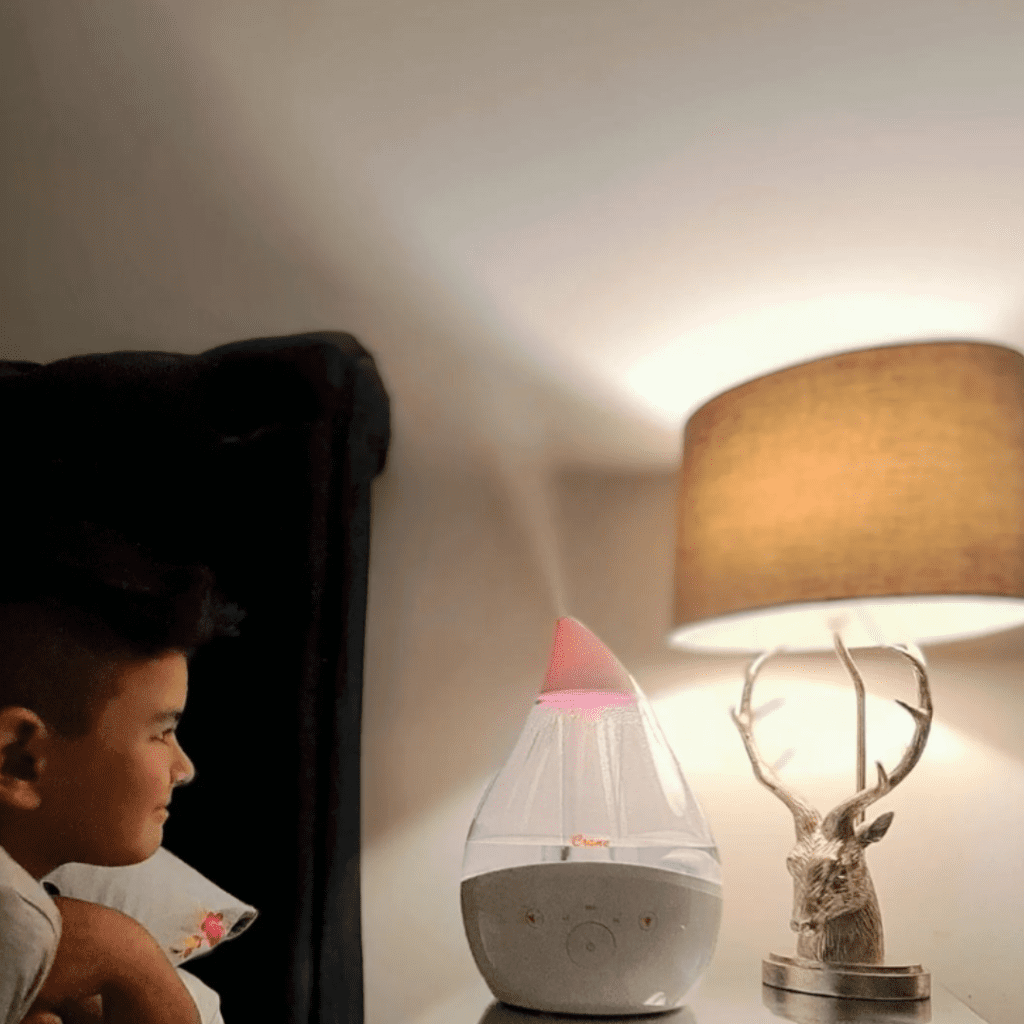
To enhance your sleep environment alongside CPAP therapy, consider incorporating the Crane 2.0 4-in-1 Humidifier into your nightly routine. This innovative device offers more than simple humidification; it emits a soothing ultrasonic cool mist to alleviate congestion and coughs, features a built-in sound machine to drown out background noise for a calmer sleeping atmosphere, and includes an aroma diffuser for the safe use of essential oils, creating a relaxing environment conducive to sleep.
Additionally, its optional nightlight provides a gentle, comforting glow, easing the transition into sleep. By addressing common sleep disturbances, the Crane 2.0 4-in-1 Humidifier complements CPAP therapy, making it an essential tool for achieving a restful night’s sleep. For more details and purchase options, visit the Cheeky Rascals website, and discover how this device can improve your sleep quality and comfort.
How do you wear a full face mask?
Full face masks tend to be a learning curve. Here’s how to do it:
Position the mask: Hold the mask against your face, covering both your nose and mouth. The cushion should fit comfortably.
Adjust the straps: Pull the headgear over your head. There are straps you can adjust to make sure it’s snug but not too tight. You want it just right so there’s no air leaking but it doesn’t press into your skin.
Check the fit: Once the mask is on, turn on your CPAP machine. If you feel air leaking out around the edges, you might need to adjust the straps a bit more.
Get comfortable: It might feel a bit odd at first, but you’ll get used to it. Lying down with the mask on before you turn on the machine can help you get comfortable.
Remember, the key to how to stay asleep for longer is that the mask should feel secure on your face, but not too tight. It’s like finding the perfect pillow – it might take a little adjusting, but once you get it right, you’re all set for a good night’s sleep!
Can CPAP cause insomnia? I can’t get to sleep
Using a CPAP machine can sometimes lead to trouble sleeping, especially when you’re just starting with it. It’s pretty common actually. The feeling of the mask on your face, the sound of the machine, or the sensation of the air pressure – all these things can feel a bit strange and might make it harder for you to fall asleep at first. It’s like getting used to a new pillow or blanket, but a bit more challenging.
But don’t worry too much – many people adjust to it after a while. It’s like getting used to any new thing in your routine. If you continue having trouble sleeping though, it’s a good idea to chat with your doctor or a sleep specialist. They might have some tips to make it more comfortable for you or adjust the settings on your machine. Hang in there, it often gets easier with a bit of time!
What does a CPAP machine do when you stop breathing?
A CPAP machine is like a little assistant that watches over your breathing while you sleep. When you stop breathing, which can happen in a condition called sleep apnea, the CPAP machine jumps into action. It gently pushes air into your airways to keep them open, making sure that your breathing doesn’t stop. This way, you can keep breathing smoothly throughout the night.
Are there any body changes after CPAP?
Yes, using a CPAP machine can lead to some changes in your body, but mostly good ones! When you start using CPAP, you’re likely to notice:
Better sleep quality: You’ll probably sleep better because the CPAP machine helps keep your breathing steady while you sleep. This means you won’t be waking up as much during the night.
More energy during the day: Because you’re sleeping better, you’ll likely feel more energetic and less sleepy during the day.
Less snoring: CPAP can really cut down on snoring, which is a bonus for anyone who shares your bed or your home!
Improved health: Over time, using CPAP can help lower your blood pressure and reduce the risks of heart problems.
Possible side effects: Some people experience dry mouth, nasal congestion, or skin irritation from the mask. But these can often be managed with a little adjustment to the machine or the mask.
Overall, the changes are generally positive and can really improve your quality of life.
Does sleeping with a CPAP cause gas?
Yes, sleeping with a CPAP machine can sometimes cause gas. This happens because a bit of the air from the machine can get into your stomach while you’re sleeping. It’s like swallowing a little extra air, and this can make you feel a bit bloated or give you some extra burps or even a bit of gas.
It’s not too serious, but it can be a bit uncomfortable. If it bothers you a lot, it’s a good idea to talk to your doctor about it. They might have some tips to adjust the machine or change how you use it to help reduce this side effect.
What happens if you don’t sleep with your CPAP machine?
If you skip sleeping with your CPAP machine, especially if you have sleep apnea, a few things might happen:
Back to snoring: You might start snoring again. The CPAP machine helps keep your airways open, so without it, the snoring could come back.
Poor sleep quality: You might not sleep as well. The CPAP machine helps you breathe smoothly, so without it, you might wake up more often during the night.
Feeling tired during the day: Because your sleep might not be as good, you might feel more tired or sleepy during the day.
Health risks: Over time, not using your CPAP can increase your risk of health problems related to sleep apnea, like high blood pressure or heart issues.
So, it’s really important to use your CPAP machine as your doctor advised, to keep all these things in check. It helps you get better sleep and keeps you healthier!
Do you need less sleep with CPAP?
Not exactly. Using a CPAP machine doesn’t mean you need less sleep, but it can make the sleep you get more effective. Here’s the thing: if you have sleep apnea, you might not be getting good, quality sleep. You might wake up a lot during the night, even if you don’t realise it, because your breathing stops and starts.
When you start using a CPAP, it helps keep your breathing steady all night. So, you’re less likely to wake up, and the sleep you get is deeper and more restful. This means you might feel more refreshed and alert during the day, even if you sleep the same number of hours as before. It’s like the difference between having a bunch of short, interrupted naps and one good, long sleep.
Can CPAP make sleep worse?
Yes, sometimes a CPAP machine can make your sleep feel worse, especially when you first start using it. Here’s why:
Getting used to it: The mask and the sound of the machine can feel strange at first. It’s like trying to sleep with a new pillow that you’re not used to.
Air pressure adjustments: The air pressure might not feel comfortable right away. It can take some time to get the settings just right for you.
Mask fit: If the mask doesn’t fit well, it can be annoying. It might leak air, or you might feel like it’s too tight or too loose.
Side effects: Some people get side effects like a dry mouth, a stuffy nose, or irritation where the mask touches their face.
But don’t worry too much. Many people get used to their CPAP machine after a while and their sleep improves a lot. It’s a bit like breaking in a new pair of shoes – uncomfortable at first, but better over time. If you’re having trouble, it’s a good idea to talk to your doctor. They can help adjust the machine or give you tips to make it more comfortable.
Are there any long-term side effects of CPAP machine?
Using a CPAP machine for a long time can have some side effects, but keep in mind that many people use it for years without major issues. Here are a few things that can happen:
Skin irritation: Where the mask touches your face, you might get some irritation or pressure marks. This usually happens if the mask isn’t fitting quite right.
Nose and throat issues: Some folks experience dryness in their nose or throat or even nosebleeds. This is because of the air blowing in all night. Using a humidifier with the CPAP machine can help with this.
Ear problems: Rarely, the pressure from the CPAP machine can cause issues like earaches or sinus problems, especially if the pressure settings aren’t quite right for you.
Claustrophobia: For some, wearing a mask can feel a bit claustrophobic, but different types of masks can help with this feeling.
Remember, while these side effects can happen, the benefits of using a CPAP machine – like better sleep and reduced risk of serious health problems – often outweigh these issues. If you’re having any troubles with your CPAP machine, it’s always a good idea to chat with your doctor. They can help adjust things to make it more comfortable for you.
Why can’t I seem to stay asleep when using CPAP?
Other questions asked were:
Why can’t I fall back asleep with my CPAP machine?
How do I get a good night sleep with my CPAP machine?
Why can’t I sleep with my CPAP machine?
Is sleeping with a CPAP uncomfortable?
Why can’t I stay asleep with my CPAP mask?
You may have sleep apnea but what if you can’t sleep with a CPAP machine? Trouble staying asleep with your CPAP machine can be frustrating, but it’s pretty common, especially when you’re just getting used to it. Check out the tips above for how to make your CPAP mask comfortable and maintain good sleep hygiene.
It’s a good idea to talk to your doctor or a sleep specialist about these issues. They can help you figure out what’s going on and how to make CPAP work better for you. And remember, it often takes a bit of time to get used to CPAP, so don’t get discouraged!
*Collaborative feature post*
Home remedies for hair fall after pregnancy
It’s exhausting being a parent! Not only do you have to look after a brand new little person, but when you look in the mirror, you don’t recognise yourself anymore. And with the sleepless nights and endless cuddles comes an unexpected guest: post-pregnancy hair fall. It’s like your luscious, glossy pregnancy hair left with the stork!
But before you fret, let’s unravel this hairy situation together. As natural as the sunrise, hair fall after pregnancy is a common experience for many, yet it often catches us by surprise. In this journey, we’ll explore some tried-and-true home remedies for hair fall after pregnancy that not only nurture your hair back to health but also weave in a bit of that much-needed self-care.
Want the full story on postpartum hair loss? Grab a cup of your favourite beverage (if you’re able to!), and let’s embark on this journey to reclaim your crowning glory, one strand at a time.
What is postpartum hair loss?
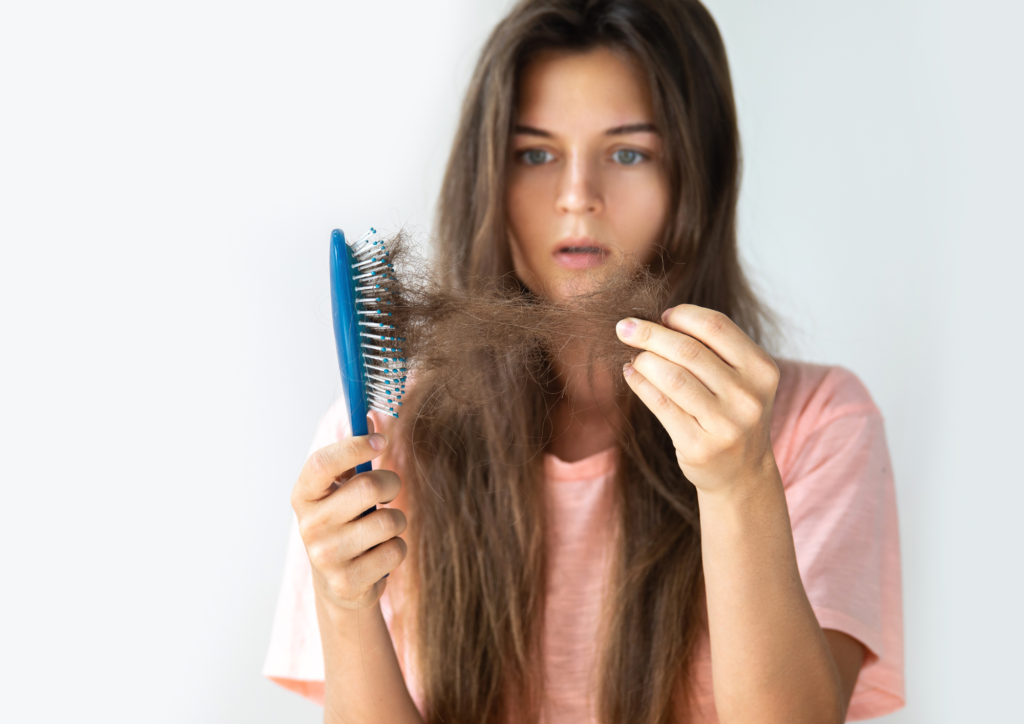
One day you’re marvelling at the thick, lustrous locks you enjoyed during pregnancy, and the next, you’re wondering if your shower drain is plotting against you. So, what’s the deal with this follicular fallout?
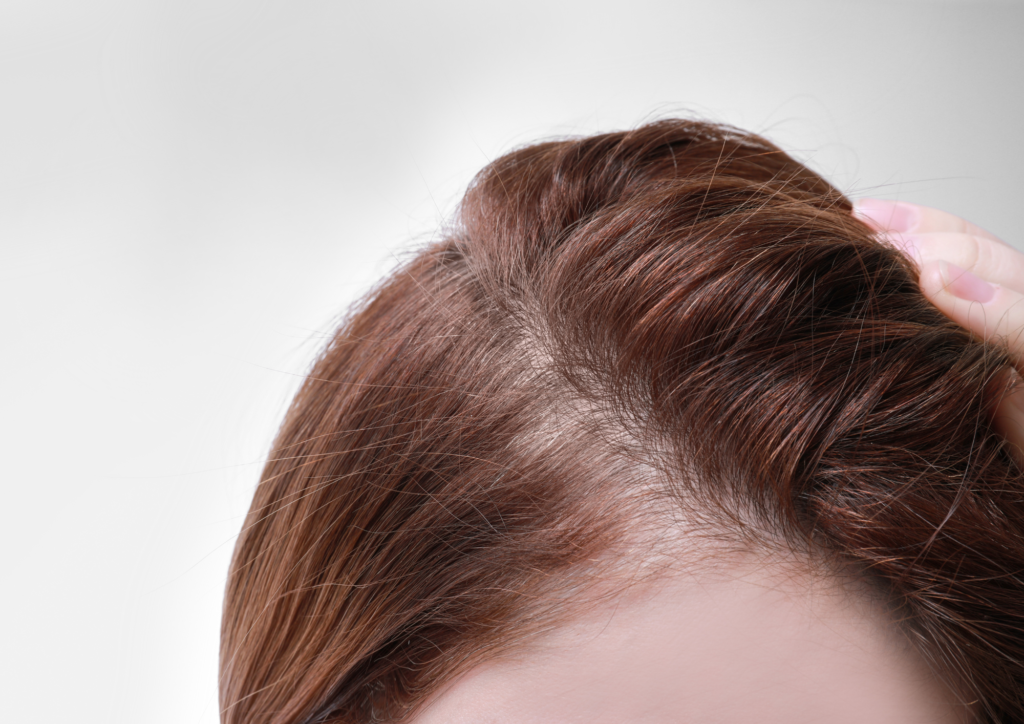
Postpartum hair loss, also known as postpartum alopecia, is a common condition experienced by many women after childbirth, where hair falls seemingly quicker than when it grows, causing thinning and shedding hair.
What causes postpartum hair loss? How your hormones change during pregnancy and postpartum
During pregnancy, hormonal changes like elevated oestrogen levels prolong the growing stage of hair (anagen phase), leading to less shedding and thicker tresses. However, after childbirth, oestrogen levels drop rapidly, resulting in a significant shedding of hair (telogen phase). This leads to a condition called postpartum telogen effluvium, where you experience significant hair loss.
How long does postpartum hair loss last and is your postpartum hair loss normal?
One study1 examined how pregnancy and the postpartum period affect the hair growth cycle in women and found significant differences in hair growth and shedding phases between four groups studied, i.e. pregnancy, full-term pregnancy, four months after birth and then the first year after birth.
Notably, four months after childbirth, women generally have less hair growing and more hair shedding compared to when they were pregnant. Breastfeeding women have more hair growth and less shedding than those who aren’t breastfeeding. But by the first year after childbirth, there’s no big difference in hair growth or shedding between those who breastfeed and those who don’t.
So the study concluded that while hair in the growth phase increases during pregnancy and hair in the shedding phase increases after childbirth, these changes are not extreme for most women and you generally see hair growing back by the time the first year is over,
How much hair will I lose?
While it’s alarming to see clumps of hair falling out, it’s important to remember that this is usually just the body’s way of returning to its pre-pregnancy state. For most women, their hair returns to its usual fullness by their child’s first birthday. If, like me, you notice much thinner hair after one year, we have some home remedies you can try to boost your hair regrowth. And, if this doesn’t work, we have some treatment plans and tips on how to approach your doctor about your thinning hair.
How common is postpartum hair loss? Why post partum hair loss is normal
Post pregnancy hair loss is a very common phenomenon, affecting a significant number of women after childbirth. Estimates suggest that postpartum hair loss affects between 40% to 50% of women, though anecdotally this number may be higher. Hair loss can vary amongst people so it’s important to address your own hair loss needs and not compare it to others.
How to treat postpartum hair loss – home remedies for hair fall after pregnancy
Postpartum hair loss doesn’t always require medical treatment. Maintaining a healthy diet and using gentle hair care products can help boost hair. Sometimes, prenatal vitamins and supplements might be recommended to boost hair growth too.
Below are more ideas on how to boost hair growth at home, although it’s important to note that while these remedies are backed by some level of research or expert opinion, specific studies focusing on their effectiveness for postpartum hair regrowth are limited. So always consult with a healthcare professional who can offer you expert tips on how to boost hair growth.
Eating a prohair diet – a balanced diet rich in vitamins and minerals
Nutritionists emphasise the importance of a balanced diet rich in vitamins and minerals for hair health. Biotin, in particular, has been highlighted for its role in hair growth, as well as vitamins A, E, C, and D. Eating probiotic yoghurt regularly has also been linked to improved skin and hair health in animal studies.
A study published in 20072 showed that caffeine can stimulate hair follicle growth and help hair develop thicker roots, however, this was a study for countering the negative effects of testosterone on hair follicles, so related to men specifically.
Which nutritional deficiencies can cause or worsen hair loss?
Nutritional deficiencies can indeed contribute to hair loss. Various studies have pointed out specific nutrients whose deficiency might either cause or exacerbate hair loss.
One study3 showed that not getting enough certain nutrients can cause problems with hair, like affecting its strength, look, and health. However, we don’t fully understand how each nutrient helps hair grow and stay healthy.
Factors like age, poor nutrition, problems with absorbing nutrients, and certain medicines can increase the risk of not getting enough nutrients. Another study4 recommended a doctor look at your medical and food history and do a physical exam to check if you’re missing important nutrients, which could cause excessive hair loss. The study also says more research is needed to see if taking extra nutrients helps when there’s no clear lack of them.
This research5 looked at zinc and copper levels in people with different kinds of hair loss. They found that those with hair loss had much lower levels of zinc in their blood than people without hair loss. The study suggests that problems with how the body uses zinc might be a big reason for hair fall after delivery, especially in types called alopecia areata (AA) and telogen effluvium (TE). However, more research is needed to understand how copper affects hair growth and loss.
Other nutrition deficiencies include:
Iron deficiency
Iron deficiency, which can lead to anaemia, is one of the most common causes of hair loss, especially in women. Iron is crucial for hair cell protein synthesis6.
Protein
Hair comprises a protein called keratin. A diet low in protein7 can lead to weaker hair and potentially hair loss.
Vitamin D
Low levels of vitamin D are associated with alopecia, a technical term for hair loss. Vitamin D may help create new follicles8, the tiny pores in the scalp where new hair can grow.
B Vitamins
Biotin (Vitamin B7) is commonly associated with hair growth9. Deficiencies in other B vitamins, such as B12, can also cause hair loss.
Fatty Acids
Deficiencies in essential fatty acids, particularly omega-3 and omega-6, can lead to hair loss.
Vitamin A
Both an excess and a deficiency in Vitamin A can lead to hair loss10.
Natural remedies for postpartum hair loss – consider herbal remedies
A couple of studies note certain herbal remedies that promote new hair growth, although they may not cover the specific context of postpartum hair regrowth.
One study11 talks about different plants and their key ingredients for treating postpartum hair loss. Plants like Curcuma aeruginosa (pink and blue ginger), Serenoa repens (palmetto), Cucurbita pepo (pumpkin), Trifolium pratense (red clover), and Panax ginseng (Chinese red ginseng) have been shown to help with hair loss. They mainly work by blocking a substance called 5α-reductase. They also help by improving nutrition and blood flow to the scalp.
Postpartum hair loss remedies – oil treatments can help boost hair growth
Finding studies specifically focused on the effectiveness of oil treatments for boosting postpartum hair growth however was challenging because of the limited direct research in this area.
One study12 looked at traditional home remedies for hair and scalp care in the West Bank-Palestine. It found that oils, like olive oil and Ricinus communis oil, were popular. People often used these oils alone or in mixtures, applying them directly to the scalp, and these oils were effective in treating hair loss, damaged hair, and split ends. The study also noted that products from minerals or animals were frequently mixed with natural items like eggs, honey, or olive oil for similar hair treatments.
Several studies and expert opinions offered insights into the potential benefits of certain oils for hair health and growth, which may apply to postpartum hair growth as well. These were:
Top home remedies for postpartum hair fall – Rosemary Oil
Although research specifically on rosemary oil for postpartum hair loss is limited, studies have shown that rosemary oil can fight patchy hair loss, like alopecia areata. In a study, people with alopecia areata who rubbed a rosemary essential oil blend into their scalp daily for seven months showed significant improvement in their hair loss.13
The best treatments for postpartum hair loss – Tea Tree Oil
A 2013 study14 suggested that using a mixture of tea tree oil and Rogaine can increase hair count. This implies potential benefits for hair growth, which could be relevant for postpartum hair regrowth.
Natural ways to treat postpartum hair loss – Lavender Oil
A 2016 study15 on mice showed that lavender oil can promote rapid and thick hair growth. While this study was conducted on mice, it suggests potential benefits that might apply to humans as well, including postpartum hair regrowth.
Hair postpartum – cedarwood oil
Studies have shown16 that cedarwood oil helps to stimulate blood circulation around the scalp, which promotes healthy hair growth and balances oil-producing glands on the scalp.
Postpartum hair loss home remedies – frankincense oil
A 2013 study on rats17 showed that frankincense oil promotes good sleep and reduces instances of postpartum stress, which can lead to hair loss. While this study does not directly link frankincense oil to hair growth, reducing stress is a key factor in mitigating hair loss, including postpartum hair loss.
Postnatal hair loss remedy – peppermint essential oil
A 2014 study18 found that peppermint seed oil might help hair grow. It showed that in mice, hair grew faster and thicker with peppermint oil, which could be because the oil increases blood flow to the hair roots. Impressively, peppermint oil was better at growing hair (92% effectiveness) than minoxidil, a common hair growth treatment (55% effectiveness).
Peppermint oil also makes the skin and hair roots thicker, which might be down to the menthol in the oil, which widens blood vessels. This suggests peppermint oil could be a good natural option for hair growth by improving blood flow on the scalp.
Postpartum hair loss remedy – coconut and castor oils
A review of studies found19 that coconut, castor, and argan oils are traditionally used in India and Africa for hair problems. When you massage hair with coconut oil, it can help with brittle hair and scalp issues, but its effects on hair growth aren’t clear. Castor oil might make hair shinier, but there’s not much proof that it helps hair grow or treats scalp problems.
Postpartum hair treatments to try – Nutraceutical supplement study
A six-month study20 looked at how well a supplement with natural plant ingredients worked to help women who felt their hair was thinning. Although it wasn’t specifically about hair growth after pregnancy, the study hints that natural treatments might be helpful for hair regrowth too.
These findings suggest that certain oils and natural supplements may be beneficial for hair growth and might help address postpartum hair loss. However, it’s important to consult with a healthcare professional before starting any new treatment, especially in the postpartum period.
The Cleveland Clinic offers some tips for dealing with hair loss after pregnancy, like being careful with herbal supplements, especially when breastfeeding, as their effectiveness and safety aren’t well-proven.
Lifestyle adjustments can help with postpartum hair regrowth
Finding a specific study that shows how lifestyle adjustments can help with postpartum hair regrowth is challenging because there isn’t a lot of research out there. However, there is some useful information about hair loss after pregnancy.
One study with 98 women21 showed that most of them started losing hair 8 to 16 weeks after giving birth, but for about two-thirds of them, their hair went back to normal within four to six months. The study mainly advised patients not to worry too much, as hair regrowth happened for almost everyone unless they had a different health issue causing the hair loss.
The relationship between stress and hair loss
The relationship between stress management techniques and postpartum hair regrowth, as well as the roles of sleep, relaxation, and exercise in hair health, can be understood through various studies and expert insights.
Researchers at Harvard University22 found that long-term stress can damage the stem cells in hair follicles in mice. They noticed that a stress hormone caused these stem cells to stay in a resting phase for a long time, not allowing new hair to grow. This means that reducing stress might help with hair growth, however, more research is needed before we can be sure this applies to people too.
Postpartum hair loss natural treatment remedies – sleep and hair growth
Getting enough good sleep is also important for growing healthy hair and preventing hair loss and damage. When you sleep, your body fixes and renews hair follicles, which helps your hair grow properly. Good sleep also helps blood flow better to your scalp, which is necessary for strong, healthy hair. The hormone melatonin, which is made while you sleep, helps make your hair thicker and better textured, and enough sleep can also prevent early greying by helping your body produce the right amount of hair colour pigment.
Ways to relieve postpartum hair loss – exercise and hair health
Specific studies linking post-pregnancy exercises to hair health were not readily available. However, regular exercise is great for your overall health and can help your hair grow while also reducing hair loss. When you exercise, more blood flows to your scalp, which helps feed and grow your hair follicles. Exercise also lowers stress, which can otherwise cause too much hair to fall out. Plus, the endorphins (happy hormones) that you make when you exercise can make you feel better overall, which is also good for your hair.
Exercise is especially recommended during and after pregnancy. It helps prevent chronic health problems, similar to the benefits of not smoking. After giving birth, either naturally or by C-section, you might need to pause your usual exercise routine, but it’s good to exercise again once you’re able23.
Postpartum hair tips to try – protect your skin and hair from the sun
While there is no specific study that directly links sunscreen use to postpartum hair regrowth, there is evidence suggesting that sunscreen can protect hair from damage24 caused by UV rays, which could be beneficial for overall hair health.
Sunscreen is not only used to prevent sunburn but also to protect against ageing of the skin, uneven skin tone, DNA damage, and even skin cancer. These benefits of sunscreen for the skin suggest it might also help protect your hair from the sun. Therefore, UV protection remains essential, even on cloudy days.
Tips to relieve postpartum fair loss – have a good haircare regime in place
Studies and expert advice highlight the importance of gentle hair care and understanding the impact of chemicals and heat on hair, especially in postpartum hair regrowth.
Fighting postpartum hair loss with simple natural solutions – Gentle hair care and using the right hair care products
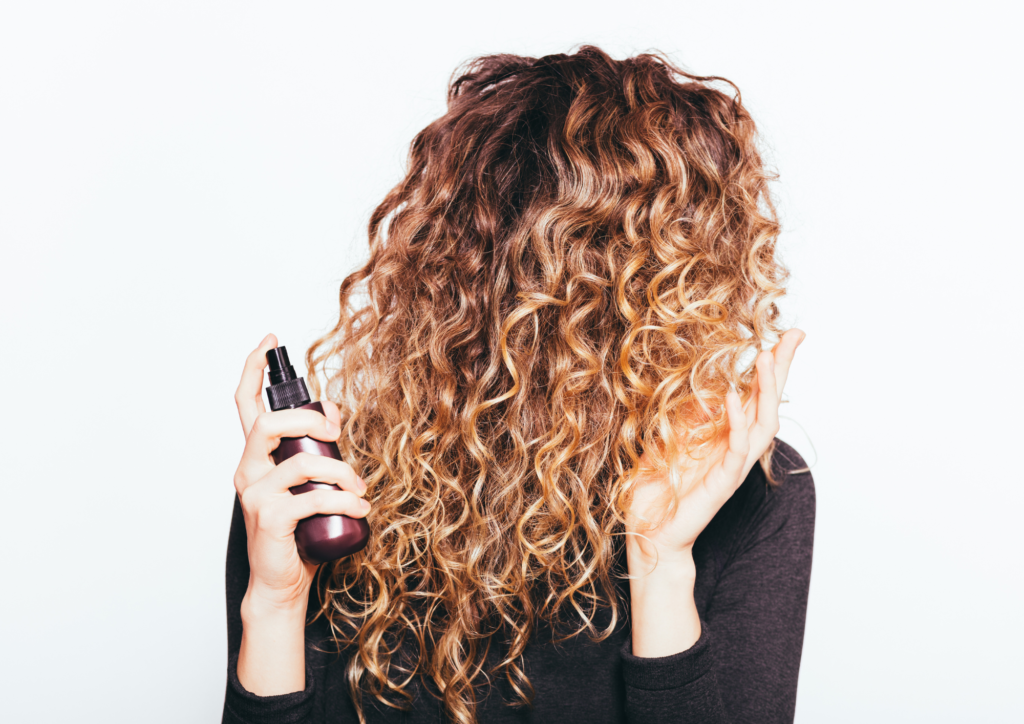
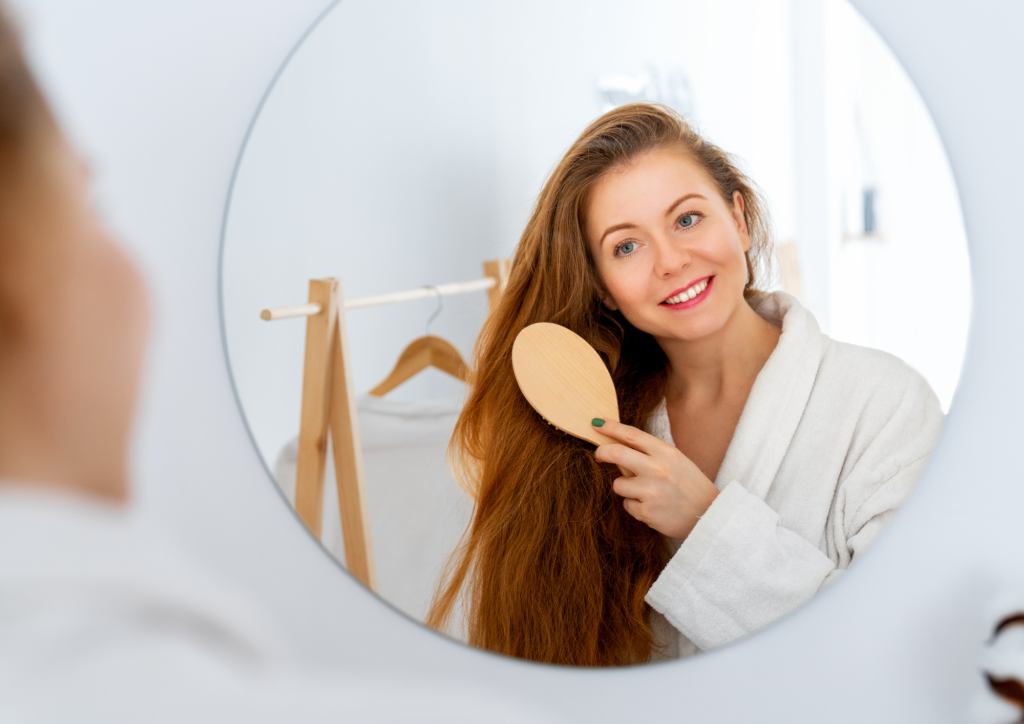
Taking care of your hair gently, like brushing softly, not using hot tools too much, and not tying it too tightly, can help prevent hair from breaking and falling out. Getting regular haircuts and using shampoos that add volume can also make your hair look thicker and healthier.
Also, consider using natural hair products and avoiding harsh hair products to promote healthier hair. Use lighter conditioners and treat hair gently during washing and combing. Use lower heat settings on blow dryers and styling irons, avoid tight ponytails and braids, and think about having shorter hairstyles for a fuller appearance and easier care.
A study on the effects of heat treatment on hair structure25 showed that heat can change how hair looks and feels. If hair is heated to less than 140 degrees Celsius, it doesn’t change much and any changes can be undone. But, if it’s heated above 140 degrees Celsius, the changes are big and can’t be fixed, like how the outer layer of the hair looks. This means using very hot tools for styling can damage hair a lot. It’s best to use a lower heat, around 60 degrees Celsius, to keep hair healthy and avoid damage.
These tips are especially important after having a baby when your hair might be weaker26.
There are treatment options for hair loss – how to regrow hair after pregnancy
If hair thinning from stress or post-pregnancy is affecting your self-esteem, know that effective treatments exist. There are options beyond concealing shedding strands. Consider a hair loss treatment plan that will fit your specific needs. You can find a range of different hair loss treatments that are available from online pharmacies.
Stop postpregnancy hair loss – when to seek professional help
When dealing with hair loss after pregnancy, it’s important to know when it’s time to seek help from a medical professional. If you’re losing a lot of hair for more than six months, still seeing postpartum hair loss after 1 year, notice worrying changes in how your hair feels or looks, or experience other issues like an itchy scalp or bald spots, see a healthcare provider. A dermatologist or trichologist can give you expert advice on extreme hair loss postpartum, figure out if there’s a deeper problem, and suggest treatments that are more effective than home remedies, making sure your hair and overall health are well looked after.
Final thoughts on home remedies for hair fall after pregnancy
If you’re dealing with hair loss after having a baby, just know you’re not alone – it’s pretty normal and usually just a phase. Try being gentle with your hair, eating well, and keeping stress at bay, as these can help get your hair growing back. But remember, everyone’s different, and what helps one person might not do the trick for another. It’s all about tuning into what your body needs. And if things don’t seem to get better, it’s okay to ask for some expert advice on extreme hair loss after pregnancy.
Just be patient and kind to yourself – you’ve got this! After all, getting your hair back in shape is just another part of the incredible journey of being a parent.
FAQ
How to stop hair fall after delivery?
Other questions asked were:
How to regrow hair after pregnancy?
What home remedy can I use to stop postpartum hair fall?
Ways to reverse postpregnancy hair loss?
How can I stop my hair falling out after pregnancy?
Does hair loss after pregnancy grow back?
How long does hair loss last after pregnancy?
How to get my hair to stop falling out after pregnancy?
Postpartum hair loss, will it grow back?
How to prevent hair loss after pregnancy?
How to treat hair fall after delivery?
Will my hair grow back after postpartum hair loss?
What are some of the recommended postpartum hair loss remedies?
What are the signs of postpartum hair loss?
How can I prevent postpartum hair loss?
How is postpartum hair loss diagnosed?
How is postpartum hair loss treated?
When does postpartum hair loss stop?
What are reasons for hairfall after delivery?
Is hair loss normal during postpartum?
My hair is falling after having a baby. What do I do?
For how long does postpartum hair loss last?
Why does hair fall out after pregnancy?
Why hair fall after delivery?
How to control postpartum hair fall?
Top best ways to lessen hair fall post pregnancy?
Please check out the article above for more tips on how to combat hair fall after childbirth and promote hair regrowth.
Do you have any Indian home remedies for hair fall after delivery?
Indian home remedies for hair fall, especially postpartum, are rooted in Ayurveda and traditional practices that have been passed down through generations. Here are some popular and natural remedies you might find helpful:
Coconut Oil Massage: Coconut oil is widely used in India for hair care. Gently massaging your scalp with warm coconut oil can stimulate blood circulation and strengthen hair roots. It’s also believed to nourish the scalp and condition the hair.
Amla (Indian Gooseberry): Amla is rich in Vitamin C and antioxidants. You can use amla oil for scalp massage or make a hair pack by mixing amla powder with water or coconut oil. This is known for promoting hair growth and reducing hair fall.
Fenugreek Seeds (Methi): Soak fenugreek seeds overnight and grind them into a paste. Apply this to your scalp and hair, and leave it on for about 30 minutes before washing it off. Fenugreek is known for its hair-strengthening and nourishing properties.
Bhringraj (Eclipta Alba): Bhringraj is a herb widely used in Ayurvedic treatments for hair loss. You can apply bhringraj oil to the scalp or use a paste made from its leaves and apply it to your scalp and hair.
Neem Leaves: Boil neem leaves, cool the water, and use it to rinse your hair after shampooing. Neem has antibacterial properties that can keep the scalp healthy and free from infections, which can reduce hair fall.
Curry Leaves: Curry leaves can be used to prepare a hair tonic. Boil some curry leaves in coconut oil, strain the leaves out, and apply the oil to your scalp. This is believed to stimulate hair growth.
Yoghurt and Egg Hair Mask: Mix yoghurt with an egg and apply the paste to your scalp and hair. This mask is known for nourishing the hair, promoting hair growth, and reducing hair fall.
Aloe Vera: Apply fresh aloe vera gel to the scalp and hair. Aloe vera has enzymes that promote hair growth and condition the scalp.
Healthy Diet: Consuming a diet rich in iron, protein, and essential vitamins (like A, E, and B complex) is crucial. Include green leafy vegetables, fruits, nuts, seeds, and dairy products in your diet.
Can your hair fall out when pregnant?
Other questions asked were:
Is hair fall normal in pregnancy?
Hair fall during pregnancy causes and treatment?
Most of the time, women don’t lose hair when they’re pregnant. Actually, they often get thicker hair! This is because of higher oestrogen levels during pregnancy, which keeps hair growing longer than usual.
However, some women might notice their hair getting a bit thinner or falling out either during pregnancy or after having the baby. This is usually just for a short time and can happen because of hormone changes, stress, changing what they eat, or not getting enough vitamins.
After the baby is born, it’s more common for women to lose some hair. This happens because estrogen levels go down, making more hair go into a resting phase and then fall out. This is called telogen effluvium, but don’t worry, it’s usually just temporary and hair gets back to normal in a few months.
If you’re losing a lot of hair during or after pregnancy, it’s a good idea to talk to a doctor. They can check if there’s another reason for the hair loss and might suggest eating well, taking care of your hair, or maybe taking some supplements.
Can my hair loss affect my baby?
No, hair loss after childbirth won’t affect your baby at all. Hair loss during or after pregnancy is something that happens to you because of changes in your body like hormone levels changing. It doesn’t have any impact on your baby’s health or development. So, you don’t need to worry about that! If your hair loss is bothering you, it’s always a good idea to chat with a doctor, but your baby will be just fine.
Can parachute coconut hair oil stimulate hair growth?
Parachute coconut oil is popular for hair care, but whether it actually stimulates hair growth is a bit of a debate. Coconut oil is great for moisturising and strengthening hair, which can prevent breakage and make your hair look healthier and fuller. Some people believe that because it keeps your scalp healthy, it might help with post delivery hair loss, but there’s no solid scientific proof that it directly causes hair to grow faster or thicker. So, using it can make your hair look and feel better, but it’s not a guaranteed way to make your hair grow more.
Is it okay to take Becosule capsules every day for four months to stop hair loss?
Taking Becosule capsules, which are basically a multivitamin supplement, every day for four months might be okay for some people, but it’s really important to check with a doctor first. These capsules have a bunch of vitamins that can be good for your hair, like B vitamins. They might help with hair health, but they aren’t a surefire solution for stopping hair loss. Also, taking any supplement for a long time, especially for months, should be done under a doctor’s guidance to make sure it’s safe for you and won’t interfere with other health factors. So, the best move is to have a chat with your doctor about it.
What is the best shampoo and conditioner for hair loss after pregnancy?
Finding the best shampoo and conditioner for hair loss after pregnancy can vary from person to person, but there are a few types that are generally recommended. Look for products that are labelled as “volumising” or “thickening” as they can help make your hair look fuller. Also, shampoos with ingredients like biotin, keratin, or caffeine are often suggested because they can strengthen hair and promote health.
It’s also a good idea to use gentle, natural products since your hair might be a bit more sensitive after pregnancy. Avoid harsh chemicals and look for shampoos and conditioners with natural oils and vitamins.
Remember, what works for one person might not work for another, so you might have to try a few different products to see what works best for you. And if you’re really worried about hair loss, it’s always a good idea to talk to a dermatologist or a hair care specialist. They can give you personalised advice based on your hair type and situation.
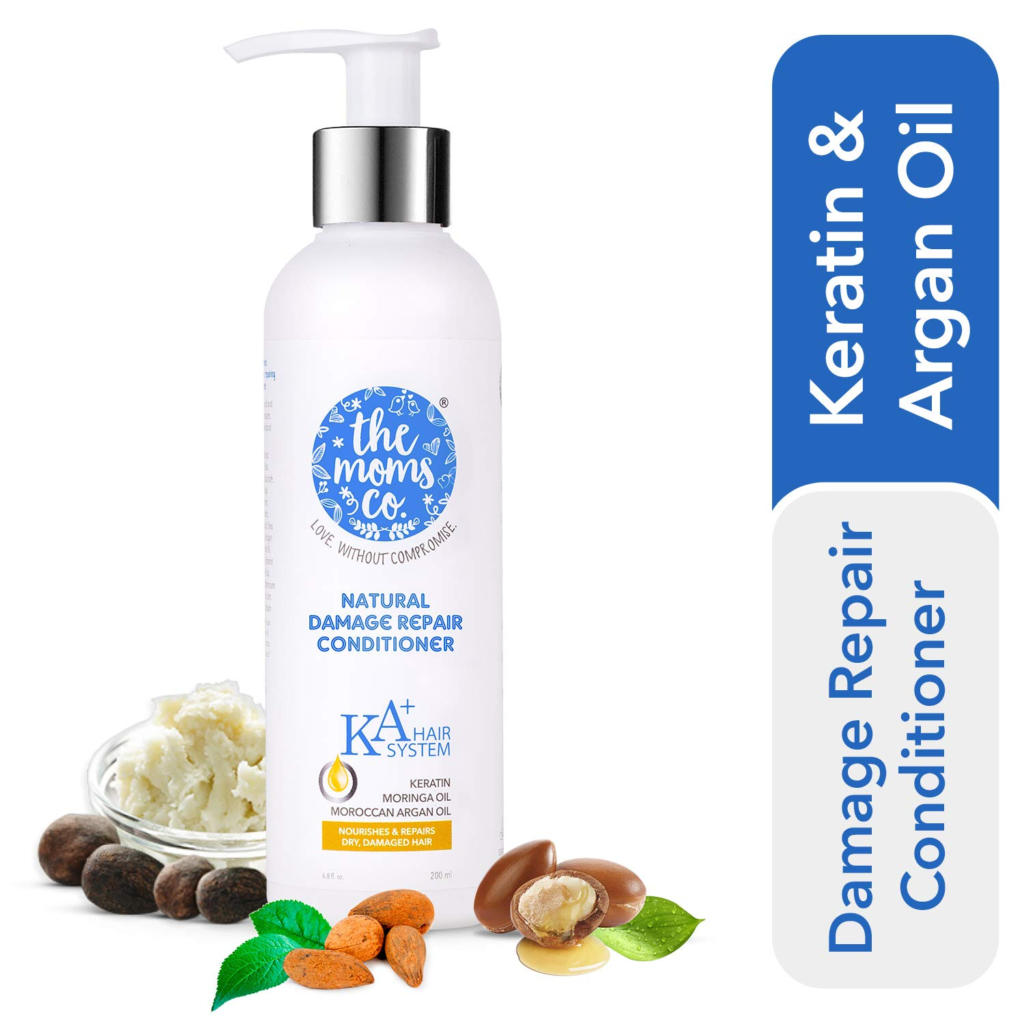
A product which has been recommended for post-delivery hair regrowth is:
Which natural protein hair serum can I use to promote hair regrowth?
Using a natural protein hair serum can be a good idea to help promote hair regrowth. These serums often have ingredients like keratin or other proteins that can strengthen your hair. This can reduce breakage and make your hair look thicker and healthier.
Apart from protein, look for serums with natural ingredients like oils (like argan or coconut oil), aloe vera, or vitamins. These can nourish your scalp and hair, creating a good environment for hair growth.
Some hair serum products which have been recommended are:
Remember, while these serums can help your hair look and feel better, they’re not a miracle cure for hair loss. They work best as part of a healthy hair care routine. And as always, if you’re really concerned about hair loss, it’s a good idea to talk to a professional like a dermatologist for advice tailored to your specific needs.
What are the different ways to use Neem for hair care and dandruff removal?
Neem is great for hair care, especially for tackling dandruff. Here are some simple ways you can use neem:
Neem Oil: You can massage neem oil directly into your scalp before washing your hair. It’s strong, so you might want to dilute it with a carrier oil like coconut or olive oil. Leave it on for about an hour, then shampoo it out.
Neem Leaf Paste: Make a paste by grinding neem leaves with a little water. Apply this paste to your scalp, leave it on for about 30 minutes, then wash it off. It’s a bit messy but really effective for dandruff.
Neem Water Rinse: Boil neem leaves in water, let the water cool, and then strain it. Use this neem-infused water as a final rinse after you shampoo. It’s a gentle way to use neem and can help with scalp health.
Neem and Yogurt Mask: Mix neem powder with yoghurt to make a hair mask. This can soothe your scalp and fight dandruff. Apply it to your scalp, leave it for about 30 minutes, and then wash it off.
Remember, neem can be pretty potent, so if you have sensitive skin or are trying it for the first time, do a patch test first. And if you have any scalp conditions, check with a dermatologist before trying new home remedies.
What are the best hair loss after pregnancy treatment and vitamins to buy?
Other questions asked were:
What vitamins are good for postpartum hair loss while breastfeeding?
What are some of the recommended postpartum hair loss vitamins?
What doctor should you consult for hair loss treatment?
Can Rogaine help postpartum hair loss?
After pregnancy, if you’re dealing with hair loss, there are a few hair loss postpartum treatment products and vitamins you can try:
Topical Treatments: Products with Minoxidil (like Rogaine) are often recommended. You apply them directly to your scalp to help encourage hair growth.
Natural Oils: Oils like coconut, argan, and castor oil are good for your scalp and hair. They can help strengthen your hair and prevent breakage.
Gentle Hair Care: Use a gentle, sulfate-free shampoo and avoid harsh styling practices. This can reduce further stress on your hair.
Postpartum hair loss vitamins:
Biotin: This is a popular vitamin for hair growth. It’s often found in hair care supplements.
Vitamin D: Low levels of Vitamin D are linked to hair loss. Taking a supplement might help.
Iron: Especially if you’re anaemic, iron supplements can improve hair health.
Omega-3 and Omega-6 Fatty Acids: These can be found in fish oil supplements and are good for hair thickness and growth.
Remember, it’s best to talk to a doctor before starting any new supplement, especially if you’re breastfeeding. They can guide you on what’s safe and what might work best for your situation.
How do PRP injections help hair growth?
PRP (Platelet-Rich Plasma) injections are a cool way to help with hair growth. Here’s how they work in simple terms:
Getting Your Blood: First, a small amount of your blood is taken, just like a regular blood test.
Separating the Good Stuff: This blood is then spun in a machine called a centrifuge. This separates your blood into different layers, and one of those layers is rich in platelets. Platelets are tiny cells in your blood that help with healing and growth.
Injecting the Platelets: The layer of blood with lots of platelets (that’s the PRP) is then injected into your scalp. The idea is that these platelets will help heal hair follicles that aren’t growing hair as well as they could be.
Stimulating Hair Growth: The growth factors in the platelets are believed to encourage hair follicles to grow hair again.
It’s kind of like giving a boost to your scalp, using your body’s own natural materials. PRP is considered safe since it uses your own blood, but it’s not a guaranteed fix for everyone. It’s best to talk to a healthcare professional to see if it’s a good option for you.
*Collaborative feature post – links marked with a ‘*’ are affiliate links, which means I may earn a small commission if you click through to buy, at no extra cost to you.
Going to the dentist while pregnant: tips for expecting mums
Amidst the whirlwind of prenatal visits and baby showers, dental health often gets sidelined. But, can you go to the dentist while pregnant?
Yes!
Going to the dentist while pregnant is crucial, not just for the mother but also for the baby as well.
Why is going to the dentist while pregnant important?
During pregnancy, hormonal changes can lead to an increased risk of gum disease, also known as periodontal disease. The gums may become more sensitive, leading to bleeding, swelling, or tenderness.
Additionally, the surge in hormones may cause benign oral tumours or pregnancy granulomas, which, though generally harmless, can be quite uncomfortable. Untreated severe gum disease can increase the risk of premature birth or low birth weight. This correlation showcases the importance of timely dental checkups and procedures during pregnancy.
When to visit the dentist during pregnancy?
It’s important to maintain good oral hygiene and continue dental check-ups throughout your pregnancy.
When should you get dental work while pregnant – safe dental procedures during pregnancy
“Preventive, diagnostic and restorative dental treatment is safe throughout pregnancy.”
The American Dental Association
Contrary to some misconceptions, regular dental cleanings, cavity fillings, and other essential dental treatment when pregnant are perfectly safe during pregnancy. However, elective treatments like teeth whitening or cosmetic procedures are better postponed until after delivery.
Radiographs
X-rays should generally be avoided, especially in the first trimester. That being said, with today’s technology and proper shielding, the radiation exposure from dental X-rays is minimal, making it safe if genuinely needed.
Necessary dental work, like dental fillings during pregnancy or extractions, can be performed under local anaesthesia. Studies indicate that it’s safe for both mother and foetus. But, as always, consult with both your dentist and doctor first.
The best time for a dentist visit during pregnancy
The second trimester is usually the most comfortable time for dental procedures. Morning sickness is generally less frequent, and the belly isn’t large enough to cause discomfort when lying down. Nevertheless, regular checkups can and should be continued throughout the pregnancy. Lying on your back at the dentist while pregnant is usually considered safe and dentists are familiar with the modifications needed to ensure the comfort and safety of pregnant patients. The dentist can elevate your upper body slightly to help prevent compression of the vena cava. They might tilt the chair to the left to help relieve any pressure.
If a procedure is lengthy, the dentist might give you a chance to move or adjust your position periodically. Let your dentist know if you feel light-headed, nauseous, or have any other concerning symptoms while lying on your back. Remember that lying on your back for long periods during pregnancy can double the risk of preterm birth or stillbirth.
It’s important to communicate with both your dentist and your prenatal care provider before any dental procedures. They can work together to determine the safest approach for dental care during your pregnancy, including the best positions for comfort and safety, and appropriate timing for necessary dental treatments.
Regular dental care during pregnancy is important, and most routine care is safe. Urgent dental issues should be addressed regardless of the pregnancy stage to reduce the risk of infection and other complications that could affect your or your baby’s health.
Dental care while pregnant – oral hygiene tips for expecting mothers
Stick to the basics. Nothing should drastically change.
Brush twice a day using fluoride toothpaste and floss daily to remove plaque.
If you’re more susceptible to pregnancy gingivitis, consider using an antiseptic mouthwash.
Pregnancy can often lead to sugar cravings. Opt for healthier snacks, and if you indulge, ensure to brush your teeth afterwards.
Consuming a balanced diet with plenty of vitamin C and B12 can help prevent oral problems.
Managing toothache while pregnant
Life doesn’t stop happening just because you’re pregnant. Toothaches, cavities, swollen gums and accidents can and do occur.
Toothaches during pregnancy are increasingly common and can be especially challenging during pregnancy. The discomfort might range from a mild, dull ache to sharp, excruciating pain, often causing additional stress. Understanding the causes and knowing how to manage them safely during pregnancy is vital.
Causes of toothache during pregnancy
Several factors can contribute to toothaches during pregnancy:
Hormonal changes
Pregnancy-induced hormonal shifts can affect oral health, making teeth and gums more susceptible to bacteria and plaque, leading to cavities and toothaches.
Increased blood flow
The enhanced blood flow to the gums, due to increased hormones, can make them swollen, sensitive, and more prone to bleeding, sometimes causing discomfort.
Sinus pressure
The growth in hormone levels can lead to an increase in mucus production, potentially causing sinus congestion or infections. This increased pressure can sometimes be felt as a toothache, especially in the upper back teeth.
Safe remedies for toothache during pregnancy
If you experience a toothache during pregnancy, address it promptly while ensuring the safety of your baby:
Consult your dentist
This should always be your first step. Describe your symptoms clearly so your dentist can provide immediate relief and suggest further steps.
Effective communication with your dentist in your native language is also critical. There are dental offices that have staff that are fluent in many common languages such as French, Spanish, Tagalog and Chinese.
Warm salt rinse
Dissolve half a teaspoon of salt in a cup of warm water and use it as a mouthwash. This can help in reducing gum swelling and inflammation.
Cold compress
Applying a cold pack to the outside of the cheek for 15-20 minutes can help reduce pain and inflammation.
Safe over-the-counter pain relievers
Some OTC pain relievers can be safe during specific trimesters of pregnancy but ALWAYS consult with both your dentist and obstetrician before taking any medication.
Good oral hygiene
Regular brushing and flossing can prevent further complications that could aggravate the toothache.
Avoid certain foods
Steer clear from very hot, cold, sweet, or acidic foods that might trigger or intensify the pain.
Dental care during pregnancy is indispensable. As the body undergoes numerous changes, oral health should not be neglected. From ensuring safe procedures to practising good oral hygiene, you can protect your well-being and that of your babies.
So, whether you’re expecting or planning to start a family soon, remember to include dental check-ups in your prenatal care routine. Your smile, and your baby’s future, will thank you for it.
FAQ
Is dental anaesthesia safe during pregnancy?
In the UK and in other parts of the world, dental anaesthesia is considered safe for pregnant women when administered properly. The National Health Service (NHS) and various UK dental health organisations acknowledge that local anesthetics are necessary for some dental procedures and there is no evidence to suggest they are harmful during pregnancy.
Can I get dental cleaning while pregnant?
Yes. Pregnancy dental cleaning is not only considered safe during pregnancy, but it is also highly recommended. Pregnancy can lead to increased risks of certain dental problems, such as gingivitis (pregnancy gingivitis) due to hormonal changes, which makes regular dental care during this time even more important.
What safety precautions do I need to think about when going to the dentist while pregnant second trimester?
Going to dentist while pregnant during the second trimester is the safest time to have elective dental work done. During the first trimester, the baby’s major organ systems are developing, and in the third trimester, lying on your back for an extended period could be uncomfortable and may affect blood flow. However, you should still exercise caution to ensure the wellbeing of both you and your baby
Inform your dentist about your pregnancy so they can tailor your treatment plan appropriately and avoid any medications or procedures that might not be recommended during pregnancy. Any medications like local anaesthetics and antibiotics should be reviewed by both your dentist and doctor to ensure they are safe for use during pregnancy. If possible, schedule shorter appointments to avoid discomfort and reduce stress.
Although modern dental X-rays are extremely low risk because of their focused beam and low radiation levels, your dentist will likely avoid them unless absolutely necessary. If you do need an X-ray, they will use a lead apron to shield your abdomen and thyroid as a precaution.
If there are elective procedures that can wait, your dentist may recommend postponing them until after your baby is born.
If you are experiencing morning sickness, work with your dental office to schedule appointments at a time of day when you feel best. Additionally, the smell of dental materials might trigger nausea, so ask the dentist to use odour-free materials if possible.
Stress can affect your pregnancy, so practices that reduce stress during dental procedures, such as listening to music or practicing relaxation techniques, can be helpful.
What safety precautions do I need to think about when going to the dentist while pregnant third trimester?
When you visit the dentist during your third trimester it’s important to consider a few additional safety precautions due to the advanced stage of pregnancy. Always remind your dentist that you are in your third trimester. Adjustments in care may be necessary, and certain treatments may be postponed until after delivery.
As lying flat on your back can be uncomfortable and could potentially cause supine hypotensive syndrome (a condition where the weight of the uterus compresses the vena cava, reducing blood flow to the heart), your dentist should adjust the dental chair to a semi-reclining position. They may also ask you to turn slightly to one side.
Try to keep dental appointments short to avoid any discomfort. It may also be advisable to avoid lengthy procedures unless they are urgent. Elective dental procedures often can be postponed until after delivery to avoid any potential stress on you and the baby. Review any proposed medications or procedures with both your dentist and doctor. This is especially important for any antibiotics or pain relievers that may be prescribed.
If X-rays are absolutely necessary, your dentist will use a lead apron and thyroid collar to minimise exposure to the baby. However, non-urgent X-rays are typically postponed until after the pregnancy. If you have a dental emergency, such as an infection or severe pain, it is important to get it treated promptly to avoid any risk to your health or the baby’s.
If the dentist’s mask or the smell of materials bothers you, request a well-ventilated space or a break during the procedure if needed. Make sure you are well-hydrated and have eaten a light meal before your dental visit to maintain your blood sugar levels and to help prevent feeling lightheaded. You may need extra pillows or supports to help maintain a comfortable position during the procedure.
If you experience any discomfort, such as dizziness, shortness of breath, or contractions during the dental visit, let your dentist know immediately.
How many weeks pregnant can you go to the dentist?
Other questions sked were:
When to see the dentist while pregnant?
When should i go to the dentist while pregnant?
When can you go to the dentist while pregnant?
Should you go to the dentist when pregnant?
Can I go to the dentist when I’m pregnant?
Can I visit the dentist when pregnant?
Can I go to the dentist during pregnancy?
Why is it important to go to the dentist while pregnant?
Why do you have to go to the dentist when pregnant?
Do you have to go to the dentist when pregnant?
Is it okay to go to the dentist while pregnant?
You can go to the dentist at any stage of your pregnancy. It’s important to maintain your oral health throughout pregnancy, as hormonal changes can increase the risk of certain dental issues, such as gum disease (pregnancy gingivitis) and tooth decay.
Are there any dangers of dental work while pregnant?
Other questions asked were:
What dental procedures should be avoided during pregnancy?
Is it safe to have dental X-rays while I’m expecting?
Is it ok to go to the dentist while pregnant?
Is going to the dentist while pregnant safe?
Is it ok to go to the dentist while pregnant
should i go to the dentist while pregnant?
can you go to the dentist when pregnant
Is it safe to visit dentist while pregnant?
Why can’t you go to the dentist while pregnant?
Should you go to the dentist while pregnant?
Is it okay to go to the dentist when pregnant?
Can you go to the orthodontist while pregnant?
Can you still go to the dentist while pregnant?
Can I still go to the dentist while pregnant?
Is it safe to go to the dentist during pregnancy?
Is it safe to visit the dentist while I’m pregnant?
Is it bad to go to the dentist while pregnant?
Can you go to dentist when pregnant?
Why should you go to the dentist when pregnant?
Are you allowed to go to the dentist while pregnant?
Routine dental work during pregnancy is generally considered safe. However, there are some considerations and potential risks associated with dental work at this time.
Certain medications used during dental procedures should be used cautiously. Your dentist should select medicines (like local anesthetics, antibiotics, and painkillers) that are safe for pregnant women. They usually avoid medications that are known to be teratogenic or harmful to the baby.
Dental X-rays should be avoided during pregnancy if possible, especially during the first trimester when the baby is in the crucial stages of development. If X-rays are absolutely necessary (for example, in the case of a dental emergency), your dentist will use a lead apron and thyroid collar to shield you.
Dental procedures can be stressful, which isn’t ideal during pregnancy. Stress can potentially have an impact on your blood pressure and the baby. Also, lying on your back for extended periods, especially in the third trimester, can be uncomfortable and may affect blood circulation.
Non-urgent or elective dental treatments are often postponed until after pregnancy. This is to avoid any unnecessary risks to the baby and to prevent putting you through prolonged procedures that might be uncomfortable or stressful.
While local anaesthetics are generally safe, they cross the placental barrier to some extent. The amount and type of anaesthesia should be carefully considered by your healthcare provider.
Postponing dental work can lead to the risk of infections such as periodontal disease, which has been associated with preterm birth and low birth weight. Therefore, untreated dental infections pose a greater risk than most dental treatments.
For women with high-risk pregnancies, such as those with preeclampsia, preterm labour, or other medical conditions, even routine dental work may require special consideration and coordination with yout doctor.
When should I tell my dentist I’m pregnant?
Other questions asked were:
Do I need to tell the dentist I’m pregnant?
You should tell the dentist as soon as possible, or if you plan to get pregnant, so that your dentist can tailor your dental care to your pregnancy, postponing non-essential treatments and taking special precautions with necessary dental work.
*Collaborative feature post*
How to talk to your daughter about her period
For most girls, the subject of their first period is quite taboo and the thought of discussing menstruation can leave you both feeling a little uncomfortable when the situation arises. But, kids need to learn about periods eventually and the best place to start is at home. Helping your child understand how the body changes during puberty (like growing pubic hair and starting her period) will encourage your daughter to make good decisions about her health going forward.
So below is a parent’s ultimate guide to periods and how to talk to your daughter about her period when the time comes.
How to support your daughter with her first period
Supporting your daughter during her first period is crucial to help her feel confident, understood, and cared for. We will go through some ways you can help support your daughter, from the initial talk to preparing a period kit when her period starts – and everything in between!
Should boys know about periods too?
Boys are sometimes left out of the talk about periods, which means they end up viewing periods as a dirty topic when they’re older. Get any men in your life involved in the conversation about periods as soon as possible, even explaining period embarrassing moments their sister/mum/auntie/wife may go through and what period products to buy if they are ever asked to do so.
The more you discuss girls’ puberty with your sons, the better brothers, husbands and fathers they will become when their close female friends and family finally get their periods.
How early should I talk to my kids about periods?
The right age to talk to your children about periods will vary depending on their maturity level, exposure to information, and personal development.
Follow their lead, as some children will ask questions at an early age. If your child is curious about bodily functions, reproduction, or menstruation, it can be a natural opportunity to discuss why girls have periods.
Many girls will get their period from the age of nine to fifteen, although some may begin earlier or later. Considering the wide age range, it may be a good idea to introduce the concept of periods around age eight to nine years old, or even earlier if you feel they’re ready.
Keep the conversation simple. You don’t need to delve into the scientific intricacies of the menstrual cycle. A simple explanation could be:
“As girls grow into women, their bodies change and they get a period every month, which is a sign they can have babies when they grow up. We wear period products, a bit like nappies, to mop up the bit of red blood that comes out every five days a month.”
Normalise the topic because periods are a natural and very normal part of life. Girls shouldn’t feel ashamed or frightened when they experience their period for the first time and boys should be taught to feel empathetic and understand that for girls, periods can be a difficult time of the month too.
So, what is a period?
A period starts when there are hormonal changes in the body. The ovaries release oestrogen and progesterone and then these same hormones cause the lining of the uterus to build up, to prepare for an egg to fertilise with sperm and start developing into a baby.
However, if there is no fertilised egg, the lining is not needed so it breaks down and bleeds out. The same process happens every month, hence why most girls and women get their period around once a month. Note, however, that for the first few years, a girl’s period may not come regularly, which is normal. Her periods will become regular two to three years after her first period.
When do girls get their period?
Most girls will get their first period around the age of 11 – 15 years. But, every girl has their own body clock and they will start when their body is naturally ready. There will be some clues when your daughter is ready to start her period, which is typically around two years after her breasts develop and she experiences vaginal discharge fluid, which she may see or feel on her underwear. Make sure you discuss vaginal discharge with your daughter as well, so she doesn’t feel that something is wrong with her.
How often do periods happen?
When girls first begin menstruating, their cycles can be irregular. While the average menstrual cycle is 28 days, it can range anywhere from 21 to 45 days in young teens. Over time, periods tend to settle into a more regular cycle.
It’s common for girls in their first few years of menstruating to experience irregular periods. They might skip months or even go several months without a period. This irregularity is primarily due to the body’s adjustment phase as it gets used to the new hormonal rhythms.
How long do periods last?
The length of a period can also vary. Typically, menstrual flow lasts about three to seven days, but it can be shorter or longer, especially in the beginning.
Can your child get pregnant once her period starts?
Yes, and she can even get pregnant right before her first period. A girl’s hormones may already be active, and these hormones may cause an egg to be released from the ovary (ovulation). So, if she has sex, she can get pregnant.
How to talk to your daughter about her period
It may seem like only yesterday when you were holding your baby in your arms and now you are helping your child deal with puberty and periods. But, it’s important to learn how to talk to your daughter about puberty and menstruation so you can help make the situation less awkward for her too. Here are some tips on how to start the period talk:
Remind your child that other people have periods too
For her, it may feel like she’s the only one in the world getting her period, so it’s important to remind her that every woman gets their period and it should be treated like a rite of passage. She is transitioning from a girl to a woman and that is a very normal part of her life.
Try to prepare your daughter for what’s to come with her period as early as you can in advance. This includes period products, physical signs and emotional signs. Here are some tips on how to prepare your daughter for her period.
Talk about possible period signs
Look out for signs your daughter is about to start her period and explain to her that these are normal. Some girls experience cramps, headaches, or other symptoms even before their period starts (premenstrual syndrome). Offer remedies like heating pads, pain relievers (always according to age-appropriate dosages), and techniques for relaxation.
What is Premenstrual Syndrome (PMS)?
PMS is when a girl exhibits emotional and physical mood swings before or during her period. These symptoms can include bloating, acne, moodiness and anxiety. They diminish after the first few days of a period.
Hormonal shifts can lead to mood swings. Reassure her that it’s okay to have fluctuating emotions, and encourage open communication about how she feels.
Consider CBD for cramps
Daye, a gynaecological health startup that aims to raise the standards in vaginal and reproductive healthcare, stocks a rich CBD balm* which provides restorative cooling to cramping bellies. You can also use it on sore muscles.
What’s more, you can invite your daughter’s friends and get free tampons and other goodies with every referral. Anyone who gets a tampon subscription at Daye can use their specific referral code to get £5 off their next order.
When should I call the doctor about my child’s period?
If your daughter hasn’t started her period by 15, then it’s usually a good idea to consult a doctor. Similarly, if she hasn’t established a cycle regularity after two to three years, or if her period stops for more than 90 days, then a doctor’s guidance can be beneficial.
Irregularity is normal at first, but other symptoms like very painful periods, extremely heavy bleeding or other concerns related to periods should be discussed with your daughter’s doctor to rule out any underlying health concerns.
How Daye’s Period Pain Clinic can help your daughter
Daye wants to change that with their virtual Period Pain Clinic* (PPC), which aims to help young women and those assigned female at birth (AFAB) live less of their lives in pain.
55% of people find painkillers ineffective when treating period pain. So with personalised, doctor-approved plans that maximise pain relief and minimise side effects, you can learn more about what’s causing your child’s pain, and fast-track their way to diagnosis with the PPC.
Given that nine out of ten women experience period pain and that its severity can rival a heart attack, there’s a clear need for such a service. Yet, a majority of women don’t voice their discomfort, with over half noting that period pain has affected their work and study capacity. And for far too long, women’s health mysteries like endometriosis went unsolved, causing lifetime suffering. If you want the scoop on the gender pain gap, you can check the link here.*
The PPC is here to change the game, guiding women and AFAB on period health and paving the way to specialist referrals. Daye’s innovative service collaborates with NHS GPs, gynaecologists, and other specialists to facilitate an in-depth assessment of an individual’s symptoms. This ensures a rapid diagnosis of conditions like endometriosis, PCOS, adenomyosis, and fibroids, which are typically associated with chronic pelvic pain. Additionally, the clinic addresses symptoms like infertility, obesity, hair loss, and severe acne, which are often overlooked.
Patients are given a tailored pain management plan, merging both holistic and pharmaceutical approaches. The clinic also suggests scientifically-backed symptom management tools, including CBD tampons, TENS machines, and hormonal contraception. Daye even partners with businesses, such as Myoovi, to offer discounts on the suggested products.
Daye’s PPC has three service tiers ranging from £24.99 to £199.99, offering varying degrees of insights and consultations.
Founder Valentina Milanova emphasised the clinic’s commitment to ensuring no one silently bears the pain or remains unaware of their period pain’s cause or management. The clinic seeks to foster an environment where everyone feels valued, heard, and empowered, leading to enhanced diagnosis accuracy, individualised treatment strategies, and improved overall health outcomes.
Here is a rundown list of how to access the Period Pain Clinic to assess your daughter’s own period pain:
Get a free preview of your daughter’s personalised period pain report and a personalised pain relief routine
Fast-track your daughter’s journey towards diagnosis and learn about the six gynae health conditions that could be affecting their period
Connect with vetted world-class health specialists and discover alternative methods approved by experts
Receive clinically proven lifestyle recommendations and find relief that works for your daughter
Learn how to take painkillers safely and reduce long-term health effects
Have access to innovative treatments
Get prescribed tampons and hormonal contraception
Receive deals and resources worth up to £300 in savings
Your daughter’s personalised report via the Period Pain Clinic* will help her work out if her symptoms match the above conditions quickly. Then you can download her report and discuss the results with her doctor or connect with one of the vetted physicians through Daye’s platform. The Period Pain Clinic gives you the breathing space to share all your daughter’s health concerns, and get the most out of your consultation without being rushed out of the GP room!
What do you get your daughter when she gets her period?
Before your daughter starts her period, it’s helpful for her to know what products are available, where they are in the house, and how to use them. Consider creating a small “period kit” she can carry in her school bag, which can include a selection of tampons, pads, menstrual cups, and/or period pants, as well as a fresh pair of underwear, and some pain relief medicine if you feel it’s appropriate and she knows how to use it.
For the first period, many girls prefer starting with pads* as they can be less intimidating.
Try 100% organic, sustainable tampons
When your daughter is ready to start using tampons, she can try Daye’s 100% organic tampons for free by ordering a Sample Box* to test drive before committing to a subscription. And if she likes the tampons after trialling them, you can create a subscription box for her, which is really easy to do.
Simply match the subscription box to her flow by choosing the tampons here* and then leave the rest to Daye. Daye syncs her box with every cycle length and you can modify, skip or cancel anytime.
Discuss hygiene
Talk to your daughter about the importance of changing menstrual products regularly, washing her hands before and after, and maintaining personal hygiene during her period.
Empower her
Some girls might feel embarrassed about getting their period. Let your daughter know it’s a natural and powerful part of being a woman, and not something to be ashamed of. Some families choose to celebrate a girl’s first period as a rite of passage, with small gifts, a special meal, or another form of acknowledgement. However, gauge her comfort level before doing this. Some girls might love it, while others might prefer to keep things low-key.
Ensure privacy
Respect your daughter’s need for privacy and provide a comfortable environment for her to manage her period in peace.
Stay available
Let her know she can come to you with any questions or concerns. If she doesn’t want to talk about it, that’s okay too. The key is she knows she’s not alone.
Offer resources all about periods
Offer resources so as your child grows and they become more curious, you can offer them age-appropriate books or websites where they can learn more about their period. Let them know they can always come to you if they have questions.
Some children might be curious, while others might be embarrassed or uninterested. Respect their feelings, answer questions as they come up, and ensure they know you’re available for future conversations.
It’s always beneficial to approach these discussions in a positive, open, and non-judgmental manner. Being proactive ensures your child will have accurate information and feel supported when they encounter these natural changes.
Encourage your daughter to track her period
It can be helpful for young girls to keep a menstrual calendar or use an app to track their periods. This can aid them in identifying patterns over time and help them anticipate when their next period might be.
Supporting your daughter when her period arrives is crucial for her to feel as comfortable as possible with the new changes in her body. It’s a tough time for your daughter and her first period is the most monumental event in her life. Help her be prepared by talking to your daughter about periods as if they are a very normal part of her life – because they are.
FAQ – Your teens’ or preteens’ common period questions answered
Is it normal to get your period at age 11?
Other questions asked were:
When do most kids get their first period?
Yes, it is normal for some girls to start their period at age 11. The average age at which girls start menstruating, known as menarche, is around 9 to 15 years. However, some can start a bit earlier or later.
The onset of menstruation is influenced by several factors, for example, genetics, BMI, health and nutrition and environmental factors, as well as other health conditions.
While starting at age 11 is within the typical range, it’s always a good idea for you to have open communication with your daughter about the changes they’re experiencing. If there are any concerns about early or late menstruation, a consultation with a paediatrician or a gynaecologist can provide clarity.
My daughter got her period at 10. Will she still grow?
Yes, many girls who start their period at age 10 or even earlier can still continue to grow. The onset of menstruation is one event in the continuum of puberty and is not an immediate signal that growth has stopped.
What is a period for boys?
Boys do not have a menstrual cycle or a period in the same way that girls do, as they don’t have ovaries or a uterus, and therefore don’t menstruate. However, the phrase “period for boys” might be used colloquially to refer to the physical and emotional changes boys go through during puberty.
Can a woman whose hymen is intact use a tampon?
Yes, a woman whose hymen is intact can use a tampon. The hymen is a thin membrane that partially covers the vaginal opening. It has one or more openings to allow menstrual blood to flow out. The size, shape, and elasticity of the hymen vary from person to person.
When inserting a tampon, it can pass through the natural openings in the hymen without causing any harm. Some girls might feel slight resistance or discomfort the first time they try to insert a tampon, especially if they’re not fully relaxed or if they’re not inserting it at the right angle.
While the hymen is somewhat elastic, using a tampon can stretch it. However, this doesn’t mean the hymen will be “broken” or completely torn. Many activities, not just tampon use, can stretch the hymen, including sports or other physical activities.
In many cultures, an intact hymen has been historically associated with virginity. However, it’s essential to understand that the state of one’s hymen is not an accurate or reliable indicator of virginity or sexual activity. The hymen can stretch or tear due to various reasons unrelated to sexual activity.
At what age should you talk to your daughter about periods?
Other questions asked were:
What do I say to my daughter about her period? What should I talk about?
How do you tell your daughter is about to start her period?
How to talk to your daughter about getting her period?
How to talk to your daughter about starting her period?
How to talk to your 10 year old daughter about her period?
When should I talk to my daughter about periods?
How to talk to your daughter about first period?
When to talk to your daughter about her period?
How to talk to your daughter about her first period?
What to say to your daughter when she gets her period?
What to say to your daughter on her first period?
Are there any expert tips for parents on talking about periods?
How to explain menstruation to a 9 year old?
how to talk to your 9 year old daughter about her period
How to talk to your daughter about menstruation?
How to talk to your daughter about periods?
When should I talk to my kids about periods?
How can you talk about puberty and menstruation
my daughter started her period – how do I broach the subject with her?
The age at which you can start explaining periods to your daughter can vary depending on individual circumstances, cultural contexts, and her developmental stage. However, a general guideline is to start introducing the topic before she begins puberty, so she’s informed and prepared. Considering that some girls can start their period as early as age 9 or 10 (or even earlier in rare cases), it’s a good idea to start the conversation around the ages of 7 to 9.
How does a dad talk to his daughter about her period?
For many dads, the idea of discussing menstruation with their daughter might seem daunting. However, with the right approach, it can be a supportive and bonding experience.
Educate yourself first before you speak to your daughter so you understand the menstrual cycle and what it involves, as well as the common experiences she may face. There are many resources online, including books, articles, and videos, that can provide you with accurate information.
Find a quiet moment when you both can sit down without distractions. This will make the conversation feel more private and focused and start the conversation by letting your daughter know you’re there for her and that she can ask any questions or express any concerns. Your role is primarily to listen, support, and provide information.
Use the tips above to help you talk to your daughter about her periods and acknowledge that menstruating can sometimes be uncomfortable or even painful. Let her know that it’s okay to talk about her feelings or any physical discomfort she might experience.
Encourage questions and seek female support, like a mother, aunt, sister, or family friend as they may be able to provide additional support or information.
This shouldn’t be a one-time conversation. As she grows older, her needs and concerns related to menstruation might change. Regularly check in with her, ensuring she has the supplies she needs and addressing any new questions or concerns.
Remember, the primary goal is to create a supportive environment where your daughter feels comfortable and empowered. Demonstrating understanding and a willingness to engage in the conversation, even if it’s outside of your personal experience, can mean a lot to her.
When the doctor asks when was your last period do you say the day the bleeding started or do you say the day it ended?
When a doctor asks about your last period, they typically want to know the first day of your most recent menstrual cycle. So, you should provide the date when the bleeding started, not when it ended. This date is a standard reference point in medical practice to determine various aspects related to reproductive health, including calculating the possible date of ovulation, estimating gestational age in pregnancy, and assessing menstrual cycle regularity.
Will I get my period during my whole life?
No, you will not have your period your entire life. Menstruation usually starts during puberty, with the onset of the first period called menarche, and it continues regularly until menopause, which is around ages 45 to 55 years old.
*This post is sponsored by Daye but all thoughts and opt are 100% my own. Links marked with a ‘*’ are affiliate links which means I may earn a small commission at no extra cost to you if you click through to buy. Thanks as always for your support!
Aunt Flo is back! Signs of a healthy period after pregnancy
Disclaimer – This article is about spotting the signs of a healthy period after pregnancy. If you have any concerns about your period, always consult a medical professional first.
Welcoming a new baby into the world is a whirlwind of joy, adjustment, and transformation. As you navigate the nuances of motherhood, your body too embarks on its journey of recovery and returns to its pre-pregnancy state. One significant marker of this transition is the return of “Aunt Flo”, otherwise known as your period.
You may not meet the reacquaintance of your menstrual cycle with the most positive of emotions. But it is both a sign of your body’s remarkable resilience and a shift back to your familiar, monthly rhythm. However, after pregnancy, your periods may not be exactly as you remember them, and that’s perfectly normal. Unless it isn’t, in which case we’ll go through the symptoms that you should look out for and when to seek medical advice.
So, what are the signs of a healthy period after pregnancy?
In this article, we’ll explore the signs of a healthy menstrual cycle after pregnancy, what to do if you’re experiencing cramps and offer tips on how to improve your chances of having a healthy period.
So, let’s dig in!
Your first period post-baby – what to expect when Aunt Flo returns and signs your period is about to start
Your first period after childbirth and the initial lochia (bleeding after birth) may seem unrecognisable to you. It may be too heavy and have you running to the toilet every hour, or you’re clutching your belly in agony. But, eventually, your period will regulate, and if it doesn’t, this could be a reflection on your overall health.
We will look at the possible underlying issues that cause your period to stay askew. But, first, here are a few symptoms you might experience in the first periods after pregnancy and what they may indicate about your health.
Timing
The timing of your first period will vary. If you’re not breastfeeding, it might return as soon as six weeks. But if you’re breastfeeding then your first period will be delayed significantly, with some women citing their first period not arriving until at least six months after birth, although this may not always be the case.
Anecdotally, my period didn’t arrive until my fourth baby was 11 months old. But, boy, did it come back with a bang! This brings me to my next point.
A heavier flow / abnormal uterine bleeding
As mentioned before, you may find your first period will be heavier than normal. From experience, during my first two cycles, I had a very heavy period and I was changing my menstrual cup every one to two hours, even during the night. By the third cycle it did regulate and two years postpartum, although very heavy in the first two days, it is much more manageable now.
What are signs of a heavy period? – Abnormal signs and symptoms related to heavier flow
A heavier flow isn’t unusual, but if you find you are soaking through pads/tampons or changing your cup every hour or less, this is one of the menstrual cycle signs and symptoms you should consult your doctor about to check there are no underlying issues like fibroids or endometrial polyps (we’ll go through these conditions in a moment). It could also indicate that your hormones are still imbalanced.
On the flip side, a light flow may be a sign of hormonal issues, poor nutrition, or early signs of perimenopause (if occurring in older people).
Irregular periods after pregnancy
Initially, your periods might be irregular as your hormone levels adjust back to a non-pregnant state. However, over time, your hormone levels will balance out and your cycles should become more regular.
But if you’re still experiencing irregular cycles, this could mean your hormone levels are still trying to regulate or you have other underlying health issues, like Polycystic Ovarian Syndrome (PCOS), thyroid issues or high-stress levels.
What is considered an irregular period as opposed to a normal menstrual cycle?
An irregular period refers to any variation in the menstrual cycle that deviates from the norm, including changes in cycle length, flow, and symptom severity. Generally, a typical menstrual cycle lasts about 28 days, although it can range from 21 to 35 days in adults and from 21 to 45 days in young teens.
It is always advisable to consult a healthcare provider if you experience irregular periods, as it might be a sign of underlying health issues such as hormonal imbalances, stress, illness, or other medical conditions.
Change in duration
The duration of your period might change, either lasting longer or shorter than what you were used to before pregnancy. This could be anywhere from three to seven days.
When to worry about your period – bleeding between periods
Bleeding between periods, medically known as intermenstrual bleeding or spotting, can occur due to various reasons. For example, ovulation, hormonal birth control and a hormone imbalance can cause spotting as well as health conditions like polyps and fibroids or sexually transmitted infections and vaginal infections.
Perimenopause could also cause spotting when you are more likely to experience irregular periods. Other causes could include endometriosis, cancer (in rare cases), stress and extreme physical activity.
In the case of unexplained bleeding between periods, you should talk to your healthcare provider who might suggest:
A Physical Examination: Including pelvic examination to identify any obvious causes.
Blood Tests: To check for hormonal levels or signs of infection.
Ultrasound: To identify any structural issues or growths.
Biopsy: In some cases, a tissue sample may be taken to check for abnormal cells.
Different consistency or colour – period blood colours and their potential meanings
You might notice a change in the consistency or colour of your menstrual blood. It might be darker or have more clots than usual.
What colour should your period blood be?
Typically, a healthy period blood colour should be blood red. This is a sign of a healthy and normal period. A healthy period colour may also be dark brown or black at the beginning or end of a period, which isn’t normally a concern.
When does colour become a problem?
If your period colour is greyish, then this could potentially indicate an infection, so it’s advisable to call your doctor and arrange an appointment.
Sensitivity in breasts
If you are breastfeeding, you may notice increased sensitivity in your breasts during your period. Mild tenderness is normal but if your breasts are very sensitive then this may indicate hormonal imbalances or underlying health conditions.
Mood swings and emotional changes
Just like before pregnancy, you might experience mood swings or emotional changes due to fluctuating hormone levels.
Mild mood swings or pre-menstrual syndrome (PMS) is generally considered one of the more normal signs of a healthy period after pregnancy. However, if your PMS symptoms are severe they may indicate premenstrual dysphoric disorder (PMDD), a more serious condition that requires medical attention.
Ovulation – Can you get pregnant before you have a period?
It’s possible to ovulate before your first period postpartum, which means you can become pregnant even before your first postpartum period returns.
If you experience a clear, egg-white-like discharge then this indicates healthy ovulation and generally represents balanced hormones.
However, if you don’t have any ovulation signs, this could be a result of hormonal imbalances, stress or other underlying health issues.
Overall energy levels
Having normal energy levels could signify balanced hormone levels but low energy levels and persistent fatigue may indicate anaemia, thyroid issues or other health conditions.
Changes with age
In older people, a shortening menstrual cycle and increased irregularities can indicate that menopause is coming.
Changes in body weight
Body weight fluctuations can influence your period and also might indicate underlying health issues.
Birth control
Different types of birth control methods can have varying effects on your menstrual cycle.
Oral contraceptive pills (a combination of oestrogen and progesterone) can actually make your periods more regular but can lead to lighter periods because they prevent the endometrial lining from becoming very thick. They may also help to reduce menstrual cramps and pain. Patch and vaginal rings have similar effects to oral contraceptives as these also deliver a combination of oestrogen and progesterone hormones.
Some women may experience spotting between periods, especially when they first start taking the pill. Sometimes, especially if you use the pill long-term, you may miss periods.
Progestin-only pills can lead to irregular periods and some women might experience an absence of periods. Similar to combination pills, you may experience spotting between periods too.
If you are using a copper intrauterine device (IUD) then this doesn’t contain hormones, but it can make your periods heavier and possibly increase menstrual cramping. Hormonal IUDs release progestin and can make periods lighter or even cause them to disappear over time.
Implants and injections can lead to irregular bleeding, especially in the first months of use. They may even lead to a complete absence of periods (Amenorrhea).
Emergency contraception can temporarily disrupt a healthy period cycle, causing early period signs or late periods. They may also cause spotting or changes in menstrual flow.
Pain and cramping
Period pain is one of the most commonly attributed symptoms associated with your period. You may experience more cramping than usual, which could be down to the hormone fluctuations and the uterus returning to its pre-pregnancy size.
Cramping and period pain are generally normal and caused by uterine contractions shedding the lining. However, if you have severe cramping this could indicate underlying issues such as endometriosis or fibroids.
Gynae health conditions that could be affecting your period
We’ve touched upon underlying health conditions that could be affecting your period. But what exactly are they? Here is a rundown of the six underlying health conditions that affect your feminine health.
Endometriosis
Endometriosis is a chronic medical condition where tissue similar to the lining of the uterus, called endometrium, grows outside the uterus. This misplaced tissue can develop on the ovaries, fallopian tubes, the outer surface of the uterus, and other organs and structures in the abdomen and pelvis.
The symptoms of endometriosis can vary but may include:
Chronic pain, which can be severe, especially during menstruation.
You might have heavy periods or spotting between periods.
It’s not uncommon to experience pain during or after sexual intercourse.
Digestive issues include diarrhoea, constipation, and bloating, which can mimic symptoms of irritable bowel syndrome.
The exact cause of endometriosis remains unclear, though several theories suggest the following:
Retrograde menstruation is where menstrual blood containing endometrial cells flows back through the fallopian tubes and into the pelvic cavity instead of out of the body.
Hormones such as oestrogen might promote the growth of endometriosis.
A malfunctioning immune system may fail to recognise and destroy the endometrial tissue growing outside the uterus.
Endometrial cells may attach to a surgical incision after surgery, such as a hysterectomy or C-section.
There might be a genetic component, as the condition seems to run in families.
Diagnosis is often challenging as symptoms can mimic other conditions. Methods for diagnosing endometriosis include:
A pelvic exam where a healthcare provider may feel for large cysts or scars behind the uterus.
An ultrasound can identify cysts associated with endometriosis (endometriomas), but it might not effectively detect the endometrial implants.
An MRI can help map the areas where endometriosis is occurring.
A laparoscopy is a surgical procedure where a camera is inserted into the pelvic cavity to observe endometrial implants directly.
Treatment can involve medications, surgery, or a combination of both.
Adenomyosis
Adenomyosis is a medical condition characterised by the growth of endometrial tissue into the muscular wall of the uterus. This infiltration of the endometrial tissue into the myometrium (muscle layer of the uterus) can lead to a thickened and enlarged uterus. It’s somewhat similar to endometriosis, but while endometriosis involves endometrial tissue growing outside the uterus, adenomyosis occurs within the uterus.
Symptoms can include:
Very heavy periods, sometimes with blood clots.
Menstrual bleeding that lasts longer than usual.
Severe cramping or sharp, knife-like pain during menstruation.
Significant bloating that may fluctuate with the menstrual cycle.
Pain during intercourse, particularly with deep penetration.
Urinary problems, including an increased frequency of urination or difficulty emptying the bladder.
The exact cause of adenomyosis is not clearly understood, but some theories include:
The inner lining of the womb might start growing into its muscle layer. This could be the main cause of adenomyosis.
This condition might begin when a baby is still developing in the womb, with tissue from the inner lining ending up in the muscle layer by mistake.
After giving birth, the swelling of the womb’s inner lining might break its usual barriers, which can lead to adenomyosis.
It’s also thought that surgeries or injuries to the womb might disturb the protective layer, potentially causing adenomyosis.
Diagnosing adenomyosis can be challenging, and might involve:
Examining the lower belly area to find out if it’s sore, has lumps, or if the womb is bigger than usual.
Using ultrasound to get a picture of the womb and the areas around it.
Using an MRI scan to get a clearer picture helps to understand how deep the disease has spread.
Sometimes, the only way to be sure about the diagnosis is by closely examining tissue from the womb, usually taken out during womb removal surgery.
The treatment of adenomyosis primarily focuses on managing symptoms and might include:
Taking certain medicines (NSAIDs) to help lessen pain and swelling.
Using birth control pills, GnRH agonists, and progestin therapy to help control symptoms.
Using uterine artery embolisation, which is a treatment that stops the blood flow to the sick parts of the womb and makes the unhealthy tissue get smaller.
Endometrial ablation is a process that gets rid of the inner layer of the womb, but it might not work well if the disease has spread deep into the muscles of the womb.
In serious cases, doctors might suggest taking out the womb, especially if other treatments don’t work and you don’t want to have children in the future.
Taking care of adenomyosis can be tricky and might need a team of different doctors and health experts to make a personalised treatment plan. This often means making changes in daily habits, using medicines, and sometimes even having surgery to control the symptoms properly. It’s really important to keep talking openly with your healthcare team to change the treatment as needed and help with the physical and emotional difficulties that can come with this condition.
PCOS
PCOS, or Polycystic Ovary Syndrome, is a common hormonal disorder that occurs in women of reproductive age.
PCOS is a health issue that affects women, mainly involving hormonal imbalances. It can cause irregular (or no) periods and make it harder to get pregnant. It can also lead to heavy bleeding during periods and sometimes unwanted changes in physical appearance, like excess hair growth.
Other symptoms include:
Acne, oiliness, or dandruff.
Weight gain or difficulty losing weight.
Thinning hair or hair loss on the scalp.
Darkening of the skin, particularly in neck creases, in the groin, and underneath the breasts.
The exact cause is unknown, but it’s often related to an imbalance in hormone levels. Some other causes could include:
Insulin resistance (where the body’s cells don’t respond well to insulin) is commonly seen in women with PCOS.
It might also be related to low-grade inflammation and hereditary factors.
Doctors usually diagnose PCOS based on symptoms, a physical exam, blood tests to check hormone levels, and sometimes ultrasound to look at the ovaries.
While there’s no cure, the symptoms can be managed with healthy lifestyle changes such as diet and exercise.
Medications might be prescribed to manage symptoms or help with fertility if the person wants to become pregnant.
Regular check-ups are essential to monitor any potential complications, like diabetes and heart disease, which are more common in people with PCOS.
Pelvic Inflammatory Disease (PID)
Pelvic Inflammatory Disease (PID) is an infection of a woman’s reproductive organs. It’s usually caused by a sexually transmitted bacterial infection (like chlamydia or gonorrhoea) that has spread from the vagina to the uterus, fallopian tubes, or ovaries. It can also occur after procedures like an abortion or childbirth.
Symptoms can include the following:
Pain in the lower abdomen or pelvis.
Fever and a general feeling of being unwell.
Unusual discharge from the vagina with a bad odour.
Pain or bleeding during intercourse.
Burning sensation when urinating.
Bleeding between periods.
Diagnosis can usually involve a physical examination and doctors might order urine tests or swabs from the vagina or cervix to check for infections. In some cases, an ultrasound or other imaging tests may be done to look at the reproductive organs.
Antibiotics can treat the infection and sexual partners should also be tested and treated to prevent the spread of infection. Prevention includes using condoms correctly to lower the risk of getting PID and regular screening for STIs can help catch infections before they cause PID. It is advisable to not douche as it can disrupt the normal balance of bacteria in the vagina.
If not treated, PID can lead to serious complications like infertility, ectopic pregnancy or chronic pelvic pain. It can sometimes cause an abscess to form in the reproductive organs. So seeking medical attention promptly is crucial if you suspect you have PID and follow the prescribed treatment plan.
Fibroids
Fibroids, also known as uterine fibroids or leiomyomas, are very common, with around 70-80% of women developing them at some point before the age of 50. They are non-cancerous growths that develop in or around the womb (uterus). These growths are made up of muscle and fibrous tissue and can vary greatly in size. They are most commonly found in women during their reproductive years, but they can occur at any age.
Many women with fibroids might not experience any symptoms. However, other symptoms can include:
Heavy or prolonged menstrual periods
Pelvic pain or pressure
Frequent urination or difficulty emptying the bladder
Constipation or difficulty with bowel movements
Backache or leg pains
The exact cause of fibroids is not clearly understood, but factors may include:
Fluctuations in hormones, particularly oestrogen and progesterone levels, seem to play a role.
Fibroids tend to run in families.
Diet, obesity, and other lifestyle factors can potentially influence the development of fibroids.
Fibroids are often discovered during a pelvic exam or prenatal ultrasound. Further tests with an MRI or specialised ultrasound scan can confirm the result.
Treatment depends on the size, location and symptoms caused by the fibroids and may include waiting to see if the fibroids are not causing any symptoms, administering drugs to regulate the hormones that might be used to shrink fibroids, or in more severe cases, a myomectomy surgery to remove the fibroids or hysterectomy to remove the uterus itself.
Primary dysmenorrhoea
Primary dysmenorrhoea, also known as primary menstrual cramps, is a medical condition characterised by pain during menstruation that is not associated with any other medical condition. This pain typically begins 1-2 days before menstruation and may last from 2 to 4 days. The pain is usually in the pelvis or lower abdomen area.
There are several potential causes of primary dysmenorrhoea, including:
Prostaglandins: These are chemicals in the body that cause the muscles of the uterus to contract, potentially leading to pain. Higher levels of prostaglandins may be associated with more severe menstrual cramps.
Uterine Contractions: During the menstrual cycle, the uterus contracts to help shed its lining, which can cause pain and discomfort.
Hormonal Fluctuations: Changes in hormone levels throughout the menstrual cycle can influence the severity and duration of menstrual cramps, especially menstruation after birth.
The condition is more common in younger women and may lessen with age or after giving birth. Medications like ibuprofen or naproxen can help manage the pain. Applying heat to the lower abdomen can sometimes help to relax the muscles and relieve cramps.
Regular physical activity can sometimes lessen the severity of menstrual cramps. Some women find that certain food or drink can either aggravate or alleviate menstrual cramps.
Other ways to encourage a healthier period and increase signs of a healthy period after pregnancy
Here are a few ways you can fast-track your way to a healthier period.
Track your period
Tracking your period is a great way to see what’s going on with your body and check for abnormalities. You can understand your body’s natural rhythms and patterns. , which can help you anticipate changes in mood, energy levels, and physical symptoms that often accompany different phases of the menstrual cycle.
Keeping track of your menstrual cycle can alert you to any changes that might indicate underlying health issues. Sudden changes in your cycle can sometimes be an indicator of hormonal imbalances or other health problems that might require medical attention.
If you’re planning to start a family, understanding your menstrual cycle can help you identify your fertile window, which can increase your chances of conceiving. Conversely, if you don’t want anymore kids, understanding your menstrual cycle can help you use natural methods of contraception more effectively (though it’s important to note that this method is not foolproof).
Knowing when your period is due can help you be better prepared, so you can have sanitary products on hand when you need them, and you can plan around potential period-related symptoms, such as cramps or mood swings.
How do I track my period?
Depending on your personal preferences you can choose any method you wish to track your period. It can be as simple as tracking the first day and last day of your period on a physical or digital calendar.
You can download a period tracking app where you can log various details about your cycle. I have used ‘My Period Calendar’ for years and have data backed up via the same app.
You can also use your favoured method to note the start and end date, the heaviness of your flow each day, and any symptoms you experienced such as headaches, cramps or mood swings, as well as their severity. You can also note any physical changes, like bloating or breast tenderness. Period-specific mobile apps will log and predict your periods according to the mean data they receive. That way you can dig deeper and create graphs to spot any anomalies and spot any patterns or trends within your cycle.
Know what goes into your body
It’s very important that the period products you use are 100% safe for your body, for health, environmental and personal comfort reasons.
Some period products might contain chemicals, synthetic fibres, fragrances, or dyes that can potentially irritate the skin or even have harmful effects on your body over time.
Using certain kinds of tampons for extended periods can increase the risk of Toxic Shock Syndrome (TSS), a rare serious medical condition and using unsanitary or unsuitable periods products can potentially lead to infections too. So knowing your products can help you mitigate such risks.
Different period products have varying impacts on the environment and certain products offer more sustainable choices like reusable menstrual cups or cloth pads. But the right period product is a very personal choice. Being aware of the materials and products out there can help you make an informed decision and choose the right healthy product for you.
How seed cycling supports a healthy menstrual cycle
Seed cycling is a natural approach to balancing hormones by consuming specific seeds during the different phases of the menstrual cycle. The method is believed to support menstrual health by potentially promoting hormone balance, although scientific evidence supporting seed cycling is currently limited. The practice generally involves eating certain seeds during the follicular phase (days 1-14) and a different set of seeds during the luteal phase (days 15-28).
What your period says about your fertility and are regular periods a good sign of fertility?
Your menstrual cycle can provide several insights into your reproductive health and fertility status. Regular cycles are a general good indicator of regular ovulation which is critical for fertility and a normal menstrual flow can indicate a healthy endometrial lining which is essential for embryo implantation.
Mild menstrual cramps are normal but extreme pain might indicate conditions like endometriosis or fibroids, which can potentially interfere with fertility. Some women may experience ovulation symptoms like a mid-cycle pain (mittelschmerz), increased cervical mucus, or a slight temperature rise, which are indicators of ovulation and hence fertility. The luteal phase (the second half of the menstrual cycle, post-ovulation) shuld ideally be about 14 days long. A significantly shorter or longer luteal phase might be associated with fertility issues.
Women’s fertility naturally decreases with age, and menstrual cycles might become shorter or more irregular as a woman approaches menopause. In some cases, early menopause might be a concern, particularly if periods become irregular or cease altogether at a relatively young age.
Final thoughts on first period after birth
Knowing your period arms you with the knowledge and power to make informed decisions for a healthier you. Follow the tips above you should be on track to recognise healthy period signs and not dread Aunt Flo popping in every month!
FAQ
What are the symptoms of getting your period?
Other questions asked were:
What is a normal perfect healthy period?
What to expect with your first postpartum period?
What are the signs of a healthy period?
How to know when you’ve started your period?
What are the signs you have a healthy menstrual cycle?
What are the signs you have a normal healthy period?
What are the signs of a healthy period after pregnancy?
What are the signs of a healthy menstrual cycle?
What are the signs you have a healthy period?
First period after giving birth – how long should it last?
Are periods after pregnancy irregular?
Are periods worse after pregnancy?
Is it normal to have irregular periods after giving birth?
When should you expect your first period after giving birth?
Do you get period after pregnancy?
What will my periods be like after pregnancy?
Why do periods change after pregnancy?
Will my first periods after birth be Irregular?
The symptoms of getting your period, also known as premenstrual symptoms (PMS), can vary widely among people. The common symptoms to look out for so you know when you’re getting your period are:
Abdominal Cramping: A tightening or cramping sensation in the lower abdomen.
Breast Tenderness: Breasts may feel sore, heavy, or more sensitive than usual.
Bloating: A feeling of fullness or swelling in the abdominal area.
Lower Back Pain: Some people experience a dull ache in their lower back.
Headaches: An increase in headaches or migraines may occur.
Fatigue: A feeling of increased tiredness or lethargy.
Changes in Bowel Habits: Some may experience constipation or diarrhoea.
Mood Swings: Fluctuations in mood, including irritability or feelings of sadness.
Anxiety: Increased anxiety or nervousness.
Depression: Some individuals may experience feelings of depression or low mood.
Irritability: A heightened sensitivity or quickness to irritation.
Changes in Appetite: Some individuals experience increased or decreased appetite.
Sleep Disturbances: Changes in sleeping patterns, including insomnia or sleeping more than usual.
Acne: A flare-up of acne or other skin issues.
Fluid Retention: Retaining more water than usual, which can lead to a feeling of puffiness.
Increased Sensitivity to Light or Sound: Some individuals report an increased sensitivity to stimuli.
Changes in Libido: Fluctuations in sexual desire, which may increase or decrease.
Difficulty Concentrating: Some people find it harder to focus or concentrate during this time.
Memory Issues: There may be moments of forgetfulness or difficulty remembering things.
Postpartum period vs lochia – Whats the difference?
Menstruation after birth and lochia are two different biological processes, although they both involve vaginal bleeding.
Lochia is the vaginal discharge that occurs after childbirth. It consists of blood, mucus, and uterine tissue and is the mechanism by which the uterus cleanses itself and returns to its pre-pregnancy state.
The menstrual period is a regular monthly process that most women and people with a uterus go through if they are of reproductive age. You get your first postpartum period after your lochia period has finished and your body is back at its pre-pregnancy state, ready to ovulate again.
What should my second period after pregnancy look like?
Other questions asked were:
My 2nd period is late after giving birth. What should I do?
Can your period come and go after pregnancy?
When will my periods start again after pregnancy?
When will my period return?
Your second period after delivery may vary depending on several factors including whether you are breastfeeding, your individual hormonal fluctuations, and how your body is recovering postpartum.
How much should I bleed during my period?
Other questions asked were:
Is a light period normal?
Are periods after pregnancy heavier?
Is period after birth heavy?
Is period heavy after pregnancy?
When should I worry about a heavy period after pregnancy?
Will your first postpartum period be heavy?
Why is the first period after pregnancy so heavy?
The amount of bleeding during a menstrual period can vary widely, and even from one cycle to another for the same person. Generally, it is considered normal to lose anywhere from a few tablespoons to a cup (30 to 80 ml) of blood during your period, which lasts on average from 3 to 7 days.
A light menstrual flow is around roughly less than 30ml (less than 2 tablespoons) per day. You might need to only change a low-absorbency tampon or pad one or two times per day. Easier periods are not always good news. While a light flow is generally not a cause for . concern, extremely light periods can sometimes signal hormonal imbalances or other medical issues.
With a moderate menstrual flow, you’re looking at around 30 to 50ml (2 to 3.5 tablespoons) per day, which means you would probably need to change a regular absorbency tampon or pad every 3 to 4 hours. This is generally considered a ‘normal’ or average amount of menstrual flow.
A heavy menstrual flow could mean more than 60ml (more than 4 tablespoons) per day. You might need to change a high-absorbency tampon or pad every two to three hours. Very heavy periods, known as menorrhagia, can sometimes be a sign of medical conditions like fibroids or hormonal imbalances.
Pay attention to other symptoms that accompany your period, such as pain, cramps or fatigue, which can sometimes provide additional information about your menstrual health. Keep track of your menstrual flow by noting the number of pads or tampons used and their absorbency which can help you understand what is normal for you and alert you to any significant changes. If you’re concerned always consult a medical professional for more advice.
What should my first period after c-section look like?
Other questions asked were:
How might my period be different postpartum?
What causes mildly painful postpartum periods?
What should I expect from my first period postpartum?
When should I expect my first period after pregnancy?
Will my period look or feel different after c-section?
Your periods after delivery by c-section can be influenced by various factors, including whether you are breastfeeding, your hormonal balance, and your personal recovery from surgery.
Similar to vaginal delivery, the timing of the return of your period can vary greatly. If you are not breastfeeding, your period may return between 6-8 weeks postpartum. If you are breastfeeding, this may delay the return of your period for several months.
You may find that your first period post-c-section is slightly different in consistency. It might contain more clots or be somewhat thicker. This is generally normal as your body readjusts.
Your first period might be accompanied by more intense cramps or discomfort, which could be more pronounced given that your body is also recovering from surgery. You may also experience pain or sensitivity around your c-section scar.
Remember, individual experiences can vary greatly, and what might be true for one person may not be true for another. If you have concerns or notice significant changes in your menstrual cycle post-c-section, it is advisable to consult with a healthcare provider who can offer guidance based on your individual health circumstances.
Why did my periods stop during pregnancy?
During pregnancy, menstruation stops because the hormonal processes that govern the menstrual cycle are altered. After fertilisation, the embryo starts to produce the HCG (Human Chorionic Gonadotropin) hormone, which is unique to pregnancy and signals the body that pregnancy has begun.
Progesterone and oestrogen levels rise significantly and these high levels of hormones prevent the ovaries from releasing eggs. They keep the uterine lining thick and ready to support the growing baby, preventing the shedding of the uterine lining which is what occurs during a menstrual period.
The uterine lining is preserved to nourish and house the developing foetus. This stops the menstrual cycle. The placenta develops to provide nourishment and oxygen to the baby, a state that makes the menstruation process unnecessary.
The body diverts all necessary resources to nurture and protect the baby, instead of preparing for potential pregnancy each month as it does with the menstrual cycle. Stopping the menstrual cycle is a natural protection mechanism to secure a safe environment for the growing baby.
Does breastfeeding affect my periods?
Other questions asked were:
When do you get your period after birth while breastfeeding?
Does your period affect your milk supply?
Will a period affect the taste of my breastmilk?
Why don’t breastfeeding women get their periods as quickly?
Will my period affect my breast milk?
Yes, breastfeeding can significantly affect your menstrual cycle. Many breastfeeding mums experience a delay in the return of their periods due to a condition called lactational amenorrhea. This is the natural deal in the return of menstruation due to hormone changes associated with breastfeeding.
If you are exclusively breastfeeding (meaning your baby receives no other food or drink) then it is common for your periods to remain absent for several months and even up to a year or more.
Breastfeeding stimulates the production of the hormone prolactin, which helps to maintain breast milk supply but also suppresses the menstrual cycle. The levels of the hormones oestrogen and progesterone are also affected, which can further delay the return of your menstrual cycle.
Are periods different after pregnancy?
Other questions asked were:
What will my first period after labour be like?
Is your period different after having a baby?
When does your period come back after birth?
When do you get your period after birth?
When does your period come back after giving birth?
How long does it take to get your period after having a baby?
Can you get a period after pregnancy?
When should you have a period after pregnancy?
Do you get your period after pregnancy?
When do you get your period after giving birth?
Do your periods change after pregnancy?
How are periods after pregnancy?
Can periods change after pregnancy?
Yes, periods can be different after pregnancy, at least initially. Following pregnancy, a woman’s body undergoes several changes as it returns to a non-pregnant state. Please see above for more information.
How does your period change over time?
Other questions asked were:
Do period symptoms change with age?
Can period symptoms change over time?
Do period symptoms change over time?
Your menstrual cycle can undergo several changes throughout your lifetime due to a variety of factors including age, hormonal fluctuations, lifestyle changes, and health conditions.
As you approach your 40’s, you might start to experience irregularities in your cycle due to the onset of perimenopause, the transitional phase before menopause. Your flow can become heavier or lighter, and the duration of your periods might change too.
As you hit menopause, typically between 45 and 55 years old, this will mark the end of your menstrual periods. This is confirmed when you haven’t had a period for 12 consecutive months (not due to other causes).
Throughout these phases, it is not uncommon to see changes in symptoms such as PMS, cramps, and breast tenderness. If any changes in your menstrual cycle concern you, consult with a healthcare provider to address any potential health issues.
Is it normal to have periods after 24 days?
Other questions asked were:
How long does a normal period last?
So what does a normal period look like?
What are the signs of a normal and healthy period?
What are signs of a healthy period?
What does a healthy period look like?
What to do to have a healthy period?
How many days does a healthy period last?
Is 32 days between periods normal?
A normal period cycle or a normal length of a period varies from person to person. On average, a menstrual cycle lasts about 28 days, but it can range from 21 to 35 days in adults and from 21 to 45 days in young teens.
A 24-day cycle would mean that you would have a period approximately every 24 days, which falls within the normal range for adult women.
What does it mean if my period came 3 days early?
Having your period come 3 days early is generally not a cause for concern. The menstrual cycle can fluctuate for a variety of reasons including changes in your lifestyle, stress, hormonal fluctuations, changes in physical activity levels, or even slight variations in your body’s internal clock.
When is it OK to use tampons again after pregnancy?
After giving birth, it is advised to wait until your postpartum check-up before using tampons or having anything inserted into the vagina, including during menstruation. This is to prevent infection and allow proper healing, especially if there was a tear or an episiotomy during delivery.
Typically, the postpartum check-up occurs between 6 to 8 weeks after delivery, but it could be sooner or later depending on your personal health situation and the advice of your healthcare provider.
You should discuss using tampons with your healthcare provider during this check-up to ensure your body has healed enough to use them safely again. They might recommend waiting a bit longer if they feel you’re not healed sufficiently, or they might give you the green light to use them during your next menstrual cycle.
Can I get pregnant before my period returns?
Yes, it is possible to get pregnant before your period returns after giving birth because you may ovulate before your first period, which can also be unpredictable in the first few months. So it makes it challenging to figure out when you’re ovulating.
While breastfeeding can suppress ovulation, it is not a reliable method of contraception. Some women might ovulate even while breastfeeding, particularly as the frequency of breastfeeding decreases. I am proof of that – TWICE!
What happens if I get a period in the middle of my cycle?
Having a period or bleeding in the middle of your menstrual cycle could be due to various reasons, and it might not necessarily be a “period” in the traditional sense.
Some women experience a small amount of bleeding or spotting during ovulation, which typically occurs about 14-16 days before the start of their next period. This is due to a drop in oestrogen.
If you experience unexpected bleeding in the middle of your cycle, it might be wise to keep a record of when it happens, how long it lasts, and any other symptoms you experience. It could also be beneficial to consult with a healthcare provider to determine the exact cause and whether any treatment is necessary.
What is healthy period blood?
Other questions aksed were:
Is bright red blood sign of a healthy period?
Healthy period blood can vary greatly between individuals and even from cycle to cycle for the same individual. Bright red, dark red/brown and pink are generally considered normal preiod blood colours, depending on the situation.
How do period cramps feel like to those who are underweight?
Other questions asked were:
Why do some periods feel worse than others?
How will my postpartum period be different?
When to worry about your period?
When should I worry about my period?
What are unhealthy period symptoms?
No period after pregnancy when to worry?
The experience of period cramps can vary greatly from person to person, regardless of their weight. However, people who are underweight might potentially experience certain patterns or intensities of menstrual cramps due to a variety of factors including hormonal imbalances or nutritional deficiencies
Is cranberry juice good for cramps?
Other questions asked were:
Is cranberry juice good for period pain?
What to eat for healthy periods?
The scientific evidence between cranberry juice and periods is unclear. However, cranberry juice is known to have various health benefits, which might indirectly aid in alleviating some symptoms associated with menstrual cramps.
11 must-have items on every baby shower gift list online
Anticipating a baby is akin to awaiting a sunrise – every moment leading up to it is a blend of exhilaration about what will be. As an expecting parent, you’re scripting a new chapter and, naturally, you want every detail to be just right.
But how do you guide the loving hands of friends and family to select gifts that resonate with your vision of a perfect fourth trimester? Enter the world of online wish lists! Dive into the treasures of Amazon UK, as we unravel the 11 must-have items that should grace every unique baby shower gift list online.
And remember, creating your very own wish list isn’t just about receiving; it’s about sharing a curated dream for your baby-to-be with those who matter most. So, why leave it to chance when you can design the perfect welcome for your little star?
Need help to create your baby wishlist? No fear!
In this article, I go through how to set up a baby registry on Amazon UK and share it with your loved ones, so your baby only gets the best when they grace us in this world.
What is a baby registry?
A baby registry is a list of baby products that any expecting parent would want as gifts for their unborn baby. This list can be created at various retailers or online websites that offer baby products. For this article, we will look at creating a baby shower gift list online with Amazon UK in more detail.
Do you do a gift list for a baby shower?
A gift list is typically associated with a baby shower. The baby registry can guide people who attend your baby shower (and other loved ones who want to offer gifts too) on what gift you’d like and it takes away the guesswork of figuring out what to buy. Parents receive items they actually need and it minimises the chance of duplicate or unwanted gifts.
What do you put on a baby shower gift list?
Creating a baby shower gift list (or baby registry) is an exciting but overwhelming project because of the vast array of baby products available on Amazon. You can essentially pick whatever you want, but, if you don’t have any ideas then don’t worry, we’ll go through 11 essentials in a moment!
When should I start my baby shower registry?
You can start your baby wishlist whenever you want, but sometimes cultural practices and practical considerations come into play. However, many expecting parents tend to start their register during the second trimester of pregnancy to give gift-givers some time to shop around and peruse the list.
Ultimately, the best time to start your baby shower registry is when you feel ready. Do what feels right for you.
How to make your own baby shower gift list online free with Amazon!
Amazon has one of the best baby registry services available because billions of people use the service and you get lots of recommendations about whether a product is any good. Plus, you can get a 15% discount on any product on your wishlist (it’s called a completion discount on Amazon. See terms and conditions here).
You can even claim a free item when you spend at least £20 on your baby list.
Amazon Baby Wishlist offers you a really convenient way to prepare for your new baby, by giving you access to over 100,000 baby items. Check out what else you get when you create an Amazon Baby Wish list:
Recommendations of top baby wishlist products
Curated lists of popular products to make shopping for your baby easier
You can share your list with friends and family at the click of a button via social media or email
You can create a thank you list to easily track gifts
You can create a universal baby registry checklist: Easily add items from any website for one easy-to-manage wishlist using Amazon Assitant
Gift givers who are also Prime members can also get free shipping
Create the perfect baby shower wish list with our walkthrough guide below
So, let’s get cracking with starting our Amazon Baby Wish List. Follow the steps below to create yours now:
Step one – Head to Amazon to start your baby registry checklist
Head here* to create your universal registry list and click on the yellow, ‘Get Started’ button.
Fill out your name, address, and expected due date of your baby. If you don’t know the due date yet, then just make your best guess as you can change this date at any time. You can also try out our Due Date Calculator to find your due date.
Many items on Amazon are sent out by a third-party seller. If you allow Amazon to share your wishlist delivery, the third-party seller might disclose your address to the gift purchaser. If you decide not to check the first box, loved ones buying the items for you will be required to provide a delivery address to the third-party seller at checkout.
If you decide to check the second box, friends and family will include additional selected items when they order items from your wishlist. If you’ve selected to allow gifts to be delivered from all sellers, these additional gifts will be eligible to be delivered to your wishlist address.
Check the third and fourth boxes if you’d like to be notified by email of gift alerts when items are purchased and when exclusive Wish List discounts become available.
Once you are done, input the captcha code provided for security purposes and then click on ‘Create my Baby Wishlist’ to proceed to the next step to add to your baby gift registry.
Option 1 – Search for a specific item and add it to the Baby Wishlist
If you have a specific item in mind, you can search for it in Amazon’s toolbar as you normally would.
Click on the item as you would add it to the cart.
Scroll down further from the ‘Add to basket’ and ‘Buy now’ buttons where you will find ‘Add to Baby Wishlist’, You can click on the link and add the item you searched for onto the Baby Wishlist that way.
You then have the option of checking the item as a ‘Must-have item’ or a ‘Private’ item. The ‘Must-have’ item will display a ‘Must-have’ badge to friends and family viewing your Wishlist. If you mark the item as ‘Private’, then only you and the co-owner of the list can see this item.
Option 2 – Search for items to add to the Baby Wishlist page
Head back to your Baby Wishlist (you can find it under ‘Accounts & Lists’ at the very top of the page, next to the toolbar and flag) and click on ‘Add Items’.
You will be offered baby shower gift list ideas to help you create your Baby Wishlist. You can search for a list by clicking on any of these ideas to help you and, for this article, we will click on ‘Customer Favourites’ and research the 11 best-selling and top-rated items for our own Baby Wishlist.
To add to your registry, you just click on, ‘Add to Baby Wishlist’ (you can see the WaterWipes I added using Option 1’s way is already on the list). Once you click on the button, you will see a confirmation that your item has been added to your Baby Wishlist.
Go back and scroll through the other ideas and inspirations to check if there are others you’d like to add and once you’re done, you can share your list!
Once you’ve completed your registry list and you’re happy with it, click on ‘Share’ on the main menu and copy the link provided to share your wish list with others. You can also click on, ‘Share with social network’ and copy your link that way, so you can send it to your friends and family members however you like.
Step 4 – Make any necessary changes
If your due date has changed or anything else for that matter, you can go into ‘Settings’ in the same navigation bar to change the details that way and save changes. At the bottom of this page, you can also delete your registry if you don’t need it anymore.
The beauty of the Baby Wish List is that you can make it as varied or as specific as you want!
The 11 must-have items I would add to my baby shower gift list for guests to buy
I will now create a target baby registry containing the 11 must-have items all parents should add to their online baby wishlist for friends and family to purchase before the big day!
Plus what’s more, this is the baby registry that grows with your family, so as your baby gets older you can add and remove items as you go!
1. Car seat
Car seats are an absolute MUST in your baby shower present list as it’s something you must have before you take your baby home from the hospital. It’s important to note that car seat rules have changed which means that car seats must adhere to the new R129 car seat regulations, i.e. car seats now focus on size, not weight, and have i-Size certification. The following Maxi-Cosi Pebble Plus Baby Car Seat* is a customer favourite and R129 approved:
Maxi-Cosi Pebble Plus Baby Car Seat Group 0+, ISOFIX Car Seat, i-Size, 0-12 m, 0-13 kg, 45-75 cm, Nomad Black. Add to your Baby Wishlist now.*
2. Travel system – Travel Gear Baby Shower Gifts
To create the best universal baby registry you will need a travel system!
Buying a travel system will ensure you have everything you need to transport your baby around. A travel system typically includes:
A bassinet attachment for newborns which converts to a stroller for when they are older
Other accessories may be included but it depends on the manufacturer, so always read the description first. The customer’s favourite on Amazon is the Graco Modes Pramette Travel System* which includes the baby stroller with True Pram Mode, a reversible seat, one hand fold, extra storage, a child tray and the SnugRide 35 Infant Car Seat, all in one.
Graco Modes Pramette Travel System, Includes Baby Stroller with True Pram Mode, Reversible Seat, One Hand Fold, Extra Storage, Child Tray and SnugRide 35 Infant Car Seat, Ellington. Add to your Baby Wishlist here*
3. Baby carrier
A baby carrier is a must for your baby wish list for baby shower gifts. One of my favourite ways to carry my baby around is in a baby carrier as it promotes so many benefits, like skin-to-skin, and increased health. Plus you can breastfeed on the go!
One of our favourites that we have used for 13 years with our four children is the BabyBjörn Baby Carrier One*, which is so easy to use and ergonomic so it’s kind on your back. It’s perfect for kids from newborn (wearing on the front) to three years (wearing on the back), with a built-in infant position. It’s well worth the buy!
A crib/cot is a necessary item for your baby shower list of items.
It’s very important to choose the right bed for your baby that offers not just a good night’s sleep but makes it easy for you to get your baby out and back in again during those nightly wake-up calls. An adjustable bed like the AMKE Baby Bassinet* is perfect as it attaches to the bed for safe co-sleeping and helps you stay close to your baby during the night.
AMKE Baby Bassinets,Bedside Sleeper for Baby,35s Quick Assemble Baby Crib with Storage Basket, Portable Bassinets for Safe Co-Sleeping, Adjustable Baby Bed for Infant Newborn. Add to your Baby Wishlist*
The bassinet should come with a mattress, but you may need to purchase extra bedding. Make sure it’s 100% cotton and you use f`1itted sheets like this Organic Cotton SNOO Baby Bassinet Fitted Sheet*.
5. Baby monitor
One item that should go on your baby shower list for gifts is a baby monitor as it’s vital to check in on your baby when they’re sleeping in another room.
Amazon’s preferred baby monitor and our ongoing favourite is the Nanit Pro* (you can find more information here). It’s the best video baby monitor we have ever tried because you can track baby’s movements, save memories of their milestones, monitor their breathing and connect to your Alexa devices so you can keep an eye on them in every room in the house! Well worth the money.
Nanit Pro Smart Baby Monitor & Wall Mount – 1080p Secure Wi-Fi Video Camera, Sensor-Free Sleep and Breathing Motion Tracker, 2-Way Audio, Sound and… Add to your Baby Wishlist here*
6. Diapering Bath Baby Shower Gifts – Nappies and wipes
Make sure to include in your baby shower list online, staples like nappies and wipes. They are super important as you will be using them multiple times a day, every day!
These are technically two items, but as they go hand in hand, I’ve grouped them into one essential bundle.
Start with Size 0 or 1 nappies, although I would recommend Size 1 as Size 0 is for premature babies. You’ll be using cotton wool and water for the first four to six weeks, but after that, I would recommend WaterWipes which we’ve already added to our list above.
Pampers Baby Nappies Size 1 (2-5 kg / 4-11 lbs), Harmonie, 102 Nappies, SAVING PACK, Baby Essentials For Newborn. Add to your Wishlist here*
WaterWipes Original Plastic Free Baby Wipes, 720 Count (12 packs), 99.9% Water Based Wet Wipes & Unscented for Sensitive Skin. Add to your Wishlist here*
7. Sleep Soothing Baby Shower Gifts – Blankets and swaddles
Soothing items are really important to add to your baby registry wish list and you’ll be using them for many other things, like covering your baby when they’re asleep and protecting your clothes when they spit up! So make sure you get something of good quality and is 100% cotton so it withstands the first few years of life.
Swaddles are great because they help baby feel comforted and boost sleep. Swaddles like this Sleepea 5-Second Baby Swaddle* which is made of 100% cotton, extra-quiet Velcro for escape-proof security and a 2-way zipper that opens from top or bottom for easy midnight nappy changes are perfect. Well worth adding one to the checklist!
Happiest Baby Sleepea 5-Second Swaddle – 100% Organic Cotton Baby Swaddle Blanket – Doctor Designed Promotes Healthy Hip Development (Charcoal Stars, Large). Add to your Baby Wishlist here*
8. Healthcare set
A healthcare set should definitely be on your baby gift list as it contains lots of necessary items in one set, like this Tommee Tippee Baby Healthcare Kit* which contains the following:
A digital thermometer
A nasal aspirator
Baby nail scissors
Baby nail clippers
Emery boards
A baby toothbrush
A baby hairbrush and comb set
Tommee Tippee Baby Healthcare and Grooming Kit, 9x Essential Newborn Care Items for Home and Travel, Wipe-Clean and Waterproof Travel Case. Add to your Baby Wishlist here*
9. Baby clothing accessories including mittens and hats
Include some clothing accessories in your checklist like bodysuits, mittens and hats, as you will be changing these constantly as your baby grows. Bundles are more cost-effective and efficient, like this Organic LongSleeve Baby Bodysuit Bundle* which offers a set of three bodysuits and a range of sizes to suit your baby’s age. Shop around though as there are tons of bundles available on Amazon to add to your baby wishlist.
Bramble & Bear (3-Pack Short Sleeve Baby Vests – Organic Cotton Unisex Baby Bodysuit Vests for 0-3 Years. Add to Baby Wishlist here*
10. Feeding Health Baby Shower Gifts – Bottles and steriliser
Your ultimate baby registry checklist should include bottles and a steriliser, which are technically two items but they’re so important together, that I have bundled them into one essential item. Some of our favourites include these anti-colic bottles* for an easy start and this steriliser* which we have used for the last 13 years with four children.
MAM Easy Start Anti-Colic Elements Baby Bottle Set of 2 (260 ml), Milk Bottle for Combination with Breastfeeding, Baby Drinking Bottle with Bottom Valve. Add to your Baby Wishlist here*
You may not think a bouncer is an essential item but when you’re running around trying to complete your tasks, the bouncer gets to work soothing baby in one safe place so you can have your hands free! We like the BabyBjörn Bouncer Bliss* because it offers a natural rock with no cords or batteries required. But if you want the bells and whistles, shop around as Amazon has a HUGE range of bouncers available!
Other items you can add to your ultimate baby registry wishlist
Don’t stop there! You can add up to 64 items to your checklist. So check out the Ideas and Inspirations tab, peruse the 100,000 different baby items on display and let Amazon’s online gift list take care of the rest. Some other ideas could include:
Surprising or unusual baby shower gift ideas
Baby shower party games
Decor fun baby shower gifts
If you need to add or remove items, you can manage your baby registry as you go with your smartphone and over time Amazon will helpfully auto-populate your baby list into main categories to help you check you’ve added all the necessary items.
So have fun creating your wish list, but take your time because you only want to shop the best for baby. Happy wish list, happy baby (we hope)!
What is the best baby shower gift you received? Share in the comments below!
A baby registry can be a really helpful guide, especially for first-time parents who aren’t sure about what they’ll really need for their baby.
A list can be tailor-made to avoid the risk of getting duplicates and it provides clarity and simplicity for family and friends (distant relatives too) about what you want or need. Many stores offer incentives like completion discounts (for Amazon you get 15% off for items left unpurchased in your registry) and you can claim a free gift with your baby list too.
How to give a gift card for baby shower?
Other questions asked were:
Are gift cards good baby shower gifts?
Is $200 a good baby shower gift?
Is there a way to register for cash gifts?
Giving a gift card for a baby shower is a flexible gift option as it offers expectant parents a chance to buy what they want with the cash gift fund. You can either offer a gift voucher or provide the money personally.
What not to put on your baby registry?
Think about your needs, space, lifestyle, and preferences.
Baby shower gifts to keep off your registry can include:
Wipe warmers – not practical and can even dry out wipes. Cold wipes aren’t generally a problem for babies, anyway
Expensive bedding sets, including bumper pads, quilts and pillows – these aren’t recommended for safe sleep and can actually increase the risk of Sudden Infant Death Syndrome (SIDS)
Too many newborn clothes – Babies grow quickly, so too many newborn sets may mean that baby may not even get to try them on! It’s better to have a range of sizes available.
Newborn shoes – Babies don’t need shoes until they start walking. Soft booties or socks will suffice and even help keep their feet warm.
Too many bottles – It’s good to have some bottles to hand, but babies can be picky. They might prefer one brand over another, so it’s best not to stock up until you know what they like
Fancy nappy bins – Some nappy bins are great at sealing odour and keeping things sanitary, but trash cans with lids can work too, combined with scented nappy bags and they’re cheaper
Too many toys – Babies don’t need a lot of toys when they’re newborns. A few stimulating and safe toys are plenty.
Baby powder – Due to potential health concerns and risks of respiratory problems, it’s best to avoid talcum-based baby powders.
Complicated clothing – Avoid clothes with too many snaps or buttons. Zippers or simple designs make parents’ lives much easier!
Baby bath with no drain – It’s definitely more convenient to have a baby bath with a drain so you can empty the water more easily
How to choose a baby registry when you’re not sure what you want to add?
Other questions asked were:
What baby shower gifts should I register for?
Choosing a baby registry when you’re unsure of the exact items you want can feel overwhelming, but by following a systematic approach, like the steps above, you will have a well-thought-out list with everything you need for your baby when they arrive.
Can I shop off my own baby registry?
Yes, you can shop off your own baby registry on Amazon UK (and other Amazon platforms). In fact, there are some benefits to doing so.
Amazon offers a “completion discount” for items that remain unpurchased on your baby registry. This means that as your due date approaches, you can buy items from your own registry at a discount.
Also, by purchasing from your own registry, you can keep track of what you’ve already bought and what’s still needed. The registry will automatically update, showing items as purchased.
Amazon often provides an extended return period for items purchased from your baby registry. This can be beneficial if you change your mind or if you receive duplicate items as gifts.
Sometimes, there are critical items you’ve added to your registry that you need before the baby arrives. If no one has gifted them and your due date is nearing, you can buy them yourself so you have everything you need in time.
If you decide to purchase from your own registry, the process is straightforward:
Go to your baby registry.
Browse through the list to find the item(s) you want to purchase.
Click on the item to view its detail page.
Add the item to your cart and proceed to checkout as you normally would with any Amazon purchase.
Remember to check for any completion discounts or other promotions that might be available to you as the registry owner.
Can you offer group gifting for baby registries?
Amazon.com offers group gifting, allowing a group of gift givers to contribute to a higher-priced item. You head to your checklist, click on edit next to the item you want to activate group gifting for and check the box.
Links marked with a ‘*’ are affiliate links, which means I may earn a small commission if you click through to buy at no extra cost to you. Thanks for your support!
13 exciting outdoor winter activities for kids
Ah, the great outdoors! There’s nothing quite like the feel of the sun on your face and the wind in your hair, right? But what happens when it’s winter and the weather is cold? How do you entertain kids in cold weather?
If the sun is shining, no matter the weather, then it’s time to bring out some exciting outdoor winter activities for kids. Do you know who needs that natural Vitamin D boost more than we adults do? Our kids!
We frequently struggle to get our kids away from their devices and encourage them to play outside in this age of video games and cartoons, especially during the winter months when cabin fever is at its highest.
So, how do you get them outside?
No fear! We have a list of entertaining outdoor winter games to keep your kids engaged, even when it’s brisk out there. What are your favourite winter outdoor activities for kids? Share in the comments below if we’ve missed yours in our guide.
Why is it important to play outside in the winter?
Playing outside in the winter is essential for child development for lots of reasons. Here are some benefits of outdoor play in the winter:
Improves physical health
Winter play helps children continue their physical activity year-round, maintaining fitness and strengthening immunity.
Exposes kids to more Vitamin D
Shorter and darker days mean less sunlight exposure indoors. Playing outside, even on cloudy days, helps kids get a healthy dose of the sunshine vitamin D, which is essential for bone health and a functional immune system.
Develops skills
Playing on different terrains, especially snowy or icy ones, challenges kids to develop new motor skills and coordination.
Boosts creativity
A change in season transforms familiar surroundings, prompting kids to engage in different play and use their imagination in new ways.
Exposure to varying temperatures and conditions teaches children to adapt and become resilient.
Develops social skills
Group snowball fights, building snowmen, or collaborative winter games can foster teamwork and improve social interactions.
Helps kids appreciate nature
Witnessing seasonal changes first-hand instils an appreciation for nature and the environment.
Improves sleep
Physical activity in the cold can lead to better sleep quality.
Combats cabin fever
Breaking the indoor monotony can reduce feelings of restlessness and provide a change in the environment.
Great for sensory development
The winter environment offers unique sensory experiences, from the crunch of snow underfoot to the feel of cold air, which can stimulate cognitive development.
How to prep for safe outdoor winter play with kids
Although outdoor winter activities are fun, you do need to exercise a bit of extra caution in the winter with kids playing outside. Preparing for safe outdoor winter play with kids needs some planning and awareness so children can stay warm, dry, and injury-free. Here are some tips to ensure safety:
Dress in layers
It’s important to dress in layers during the winter so your temperature is regulated, by adding and taking away garments, especially when you’re walking in cold weather.
You can start with a moisture-wicking layer, like synthetic materials or wool, which can help pull moisture away from the body. Avoid cotton as it keeps moisture in and makes you feel colder.
Then insulate with a middle layer like fleece or wool to trap the warmth. The outer layer can be waterproof and windproof to protect against the snow, rain and wind.
You can add other warm accessories like gloves/mittens, a thick hat that covers the ears, a snug-fitting scarf/neck warmer and waterproof boots.
You need sun protection, even in the winter!
Even during winter, the sun can be intense during family winter walks, especially when reflected off the snow. Use sunscreen on exposed skin and put on sunglasses or goggles with UV protection.
Stay dry
Wet clothes can cool down your body, so have an extra set of gloves and socks, as these tend to get wet first. Change any wet clothing immediately. It’s important you appropriately dress for winter walking, so you can have maximum fun!
Check the weather
Extremely low temperatures and wind chills can lead to frostbite quickly. Limit outdoor play during severe conditions. You don’t need to brave all the seasons!
Set time limits
When it’s very cold, limit the playtime to around twenty minutes with breaks inside to warm up.
Hydrate and refuel
Cold air and physical activity can lead to dehydration, so make sure to drink lots of water and have energy-boosting snacks high in protein.
Make sure your kids are playing in a safe environment
Check the play area for hazards like icy patches, open water, or snowbanks near roads. Teach kids about the dangers of roads, especially if playing near them. If you’re ice skating, ensure the ice is thick and solid. Also teach children to come inside if they feel numbness or if their clothes are wet. Check for signs of frostbite, including pale, gray or blistered skin on the fingers, ears, nose and toes.
Be aware of the signs of hypothermia like shivering, slurred speech, clumsiness, and confusion.
Stay together
Make sure you’re always around the younger kids. For older children, make sure they play outdoor group games and set boundaries for where they can go.
Warm up as soon as you come inside
When coming back indoors, remove all wet clothes immediately. Warm up with blankets and a warm drink. Avoid hot baths or showers right away as they can rapidly change the temperature and shock the body.
How do I get my child to play outside in the winter?
The benefits of spending time outside during the winter far outweigh sitting at home in the warmth and staring at a screen. Dressing appropriately, however, can help motivate your child to go outside if they feel the cold more than others and rewarding them for the effort with fun activities will encourage them to stay outside too.
But, most of the time, it’s the adult who doesn’t want to brave the seasons! And, that’s perfectly understandable! I was like that for many, many years until my then three-year-old refused to step into the car to go to nursery every day. So we walked the 25 minutes to and from nursery, even through the harshest winter months and we barely got sick that year! He single-handedly changed my opinion of the cold.
13 of the best outdoor winter play activities for kids
We all know that outdoor play is essential for children’s development and growth. And what better way to keep your kids entertained while giving them the physical activity they need than with classic outdoor games?
Here are 13 of the best winter activities for toddlers and kids that will have them giggling, running around and having fun under the winter sun:
Things to do with kids outside in winter – Go explore
Your child can be a winter wildlife detective and head out on an outdoor winter nature observation hunt. You can show your child the evergreens in winter where the leaves stay green all year around or find wildlife frozen in time. Outside winter science play not only provides the chance to learn about science for kids, but it also fosters physical health, emotional growth, and a deeper connection to the natural world.
Winter offers unique sensory experiences, from the cold touch of snow to the crunch of frost underfoot. Exploring these sensations can stimulate your child’s curiosity about the world around them.
Help your child to learn about the states of matter by examining how water freezes or melts. They can also explore concepts like insulation, temperature fluctuations, and the principles behind ice fishing.
Fun outdoor winter activities for kids – Go on a winter hike
Go for walks to explore how the neighbourhood or local park changes in the winter. Look for animal tracks in the snow or gather pinecones.
Outdoor activities for kids this winter – Obsta-Course
Have you ever heard of the Obsta-Course? It’s a super fun way to get outside and get moving. Obsta-Course is all about navigating an obstacle course full of challenges like cones, tires, chairs, and other objects you can find around your yard.
It will keep your kids delighted for hours while helping them become more agile and coordinated. Setting a time limit or including money bars in the mix are further ways to make it more difficult. Oh, and if you’re looking for equipment to set up your Obsta Course, be sure to view the range here.
Exciting outdoor winter activities for kids – Tag, You’re It!
Another classic outdoor game for all ages is tag. It’s a simple game where one person is designated as “it,” and then they must tag the other players. The players who aren’t must run away from the person who is before they get tagged.
The tag can be spiced up with variations like “freeze tag”, which requires the player who has been tagged to freeze and stay still until another player unfreezes them. Or you can play flashlight tag at night, similar to regular tag but with a flashlight providing light.
Great outdoor winter activities for preschoolers – Hide and Seek
You can’t go wrong with a game of Hide and Seek. It’s a timeless classic that requires sharp minds and quick reflexes. All you need is an area with plenty of hiding places, such as trees, bushes, or furniture.
One person will be the seeker, who has to count to ten while everyone else hides. The seekers must then find the other players to tag and extricate them. It’s a fantastic game that a small or large group of players may enjoy.
Ideas for winter activities for toddlers – Duck, Duck, Goose
One of the great outdoor activities for toddlers in winter can include the popular game Duck, Duck, Goose. It’s a terrific technique to get kids moving and make them giggle. All you need is a roomy, open location where you may move about.
You start by choosing one player as the goose, who then walks around the circle tapping each person on the head, saying either “Duck” or “Goose”. When they eventually pick the goose, that player then has to chase after the original goose around the circle. If they manage to tag them before they return to their spot, they become the new goose.
Fun winter activities for kids – Capture the Flag
Capture the Flag is an exciting game that yields plenty of physical activity and strategy in a large open space. Divide your players into two teams and assign each team a flag or other item to defend.
Each team must work together to protect their flag while stealing the other’s. The winning team is the first to seize both flags. This game is great for getting kids to work together and strategise in a fun, interactive way.
Outdoor winter activities without snow – Hopscotch
Hopscotch provides a fun twist on running and jumping games. You only need a simple hopscotch board drawn with chalk or other materials.
Players must take turns hopping on one foot to and from each square while trying not to step on any lines. Kids can even build up their skills with some practice by hopping through the course with both feet.
Games and activities to play in the snow – Go for a sled ride – a toddler’s favourite winter activity!
Outdoor snow activities can include an awesome sledge ride. You don’t need a proper sledge. Grab some plastic bags or even a baking tray and make your way down a slippery hill with speed!
Outdoor winter activities for kids at home – Have a winter picnic
A winter picnic can be a magical experience. Choose a location with a beautiful winter view, prepare some hot chocolate in a thermos, grab some snacks, and enjoy a hot picnic outside!
Indoor and outdoor winter activities for kids – Winter crafts for kids
Winter crafts are a delightful way for kids to express their creativity and celebrate the season.
At home activities during the winter can include ice painting with water, food colouring and paper. Simply mix water with the food colouring and freeze in ice cube trays. Once frozen, kids can ”paint” on paper using the coloured ice cubes.
Kids love anything related to family activities, so why not create your own photo frame using wintery materials and stick your favourite family photo inside!
Outdoor winter nature crafts can include stick crafts, creating bird feeders or ice ornaments by freezing water with natural items like berries and leaves inside.
Other winter-themed crafts can include:
Snowflake cut-outs: Use blue or white paper and scissors, fold the paper multiple times and cut out designs to create unique snowflakes. Unfold and admire!
Popsicle stick snowflakes: Grab some popsicle sticks, glue, glitter, and paint. Arrange popsicle sticks in snowflake shapes and glue together. Once dry, paint and sprinkle with glitter.
Paper plate snowman: You’ll need paper plates, coloured paper, markers, glue, and yarn or fabric scraps. Use two paper plates as the body and head of a snowman. Decorate with paper cut-outs for eyes, nose, and buttons. Use yarn for a scarf.
Pine cone trees: Find some pine cones, green paint, small pom-poms, glue, and glitter. Paint the pine cones green and let them dry. Glue colourful pom-poms as ornaments and sprinkle with glitter.
Salt dough ornaments: You’ll need salt dough (made with salt, water, and flour), cookie cutters, and paint. Roll out the dough and use cookie cutters to create shapes. Bake until hard. Once cool, paint and hang as ornaments.
Sock snowmen: Find some white socks, rice, rubber bands, buttons, fabric scraps, and markers. Fill the sock with rice and tie or rubber band sections to create the snowman’s body segments. Decorate with buttons and fabric scraps.
Snow Globe: You’ll need small jars, glycerin, glitter, waterproof trinkets or figurines, and water. Fill the jar mostly full with water, add a drop of glycerin and some glitter. Place the figurine inside and seal the jar. Shake and watch the snow fall.
Winter Wreath: Use a paper plate, tissue paper (blue, white, silver), ribbon, glue. Cut the centre out of the paper plate. Glue crumpled pieces of tissue paper around the ring. Add a ribbon for hanging.
Best outdoor winter activities for kids – Go on a winter scavenger hunt
A winter scavenger hunt is a great nature-themed game and a fantastic way to engage with the chilly season, explore nature, and have some fun outdoors. Hide some items in your yard, a local park, a forest, or a favourite outdoor spot, and give your child a list of things to find. You can also use this readymade scavenger hunt printable.
A checklist of items can include:
Pinecone
Red berries
Animal tracks in the snow
Icicles
Snowman (maybe not one already in your yard)
Something frozen in ice (like a leaf or berry)
A tree with snow on its branches
A bird in flight
A snowflake on black paper (bring along to capture and observe)
Y-shaped twig
Family activities for winter – Explore a winter waterfall
Exploring a winter waterfall with kids can be a magical experience. The frozen landscapes and cascading ice formations can be mesmerising.
Safety first, though! Discuss safety rules with your kids before starting your exploration. For example, never approach the edge of the waterfall or any ice-covered areas without extreme caution. Keep a safe distance, as ice can break unexpectedly.
Also, use trekking poles or walking sticks for additional balance and support.
Final thoughts
Winter activities with kids are not just a fun way to keep your children entertained – they’re vital to their physical and mental well-being.
When the cold sun is shining, there are plenty of outdoor activities in winter. Your backyard or local park can become a world of adventure. So step out into the cold sunshine and create those joyful, memories by playing these fun kids winter activities together.
What are your thoughts on surprising outdoor winter activities, no snow required, that kids can enjoy? What is your favourite outdoor winter activity? Share in the comments below!
*Collaborative feature post*
The best workout clothes after C Section
You’ve had your C-section. It has been at least six weeks since giving birth at the hospital. Your c section scar is healing nicely, and you’re itching to get back to exercising again, whether that means working out at home by yourself or at a gym. While you may want to recover quickly from your C-section and get out of your post-section robes and lounge pants, you must get the okay from your doctor and start slowly with low-impact exercises until you get stronger.
In this article, we will look at the best workout clothes after c section and why it’s important to choose wisely with your workout gear, to not only help the recovery process but to smash those workout targets in style and comfort!
Key factors to consider when shopping for post c-section workout clothes
Choosing what to wear after a Csection is crucial for several reasons, especially around the incision area, which may still be sensitive and swollen. The right workout gear can ensure there’s no unnecessary constricting or rubbing material against the surgical site and reduce the risk of any external injury to the healing wound.
Some post-surgical clothes offer mild compression which can enhance blood flow, reduce blood clots after c section, and decrease swelling to help speed up the recovery process. Plus, wearing the right workout gear that is both functional and aesthetically pleasing can give you a confidence boost, making the return to exercise more enjoyable. The right workout clothes after c section can make sure your movement isn’t restricted, allowing for a full range of motion, which is essential for effective workouts and stretches.
So your shopping list after your caesarean birth should have these four main aspects for workout clothes. These are:
Comfort: The material should be soft against the skin.
Support: The abdominal area should be well-supported without being restrictive.
Flexibility: The workout clothes should allow for a range of movement.
Breathability: The material should reduce sweat and be breathable, allowing for airflow.
We will now look at what to wear after having a csection that will benefit your workout regime.
The best clothes to wear after c section – look for compression wear
Compression wear plays a vital role in post-surgical recovery, especially after a C-section. Shapewear/compression shorts can provide additional support for the abdominal region too. Here are some reasons compression wear should be a vital part of your post c-section workout wardrobe:
Crease support and stabilisation
Compression clothes offer firm support to the abdominal area, which is crucial after a C-section. This support helps stabilise the muscles and tissues that have been impacted by the surgery, helping you return more smoothly to physical activity.
Reduces swelling
Compression wear promotes circulation, which can help reduce swelling and inflammation around the scar. This is particularly beneficial in the initial weeks post-surgery when oedema (fluid retention) can be a concern.
Improved blood flow because of compression can speed up the healing process by ensuring essential nutrients reach the incision site. This can be especially beneficial during workouts when there’s an increased demand for oxygen and nutrients in the muscles.
Protects the scar
Compression wear can protect the healing incision from external irritants and reduce the risk of keloid or hypertrophic scar formation by applying consistent pressure on the scar tissue.
Boosts confidence
Beyond the physical benefits, wearing compression clothing can provide a sense of security, making you feel more confident when moving or exercising.
For compression bottoms, consider high-waisted leggings like these* which offer just the right amount of compression for around-the-clock support when you’re out on a walk, or even doing yoga. Check them out below too:
Ingrid & Isabel Basics 7/8 Active Postpartum Legging, Compression & Support for Recovery, Black. Buy from Amazon here*
Wear suitable support underwear – What to look for in pants after a Csection
Wearing supportive underwear when working out after a C-section is essential for several reasons:
The best pants for after c section protect the incision site
The C-section incision is in the lower abdominal area, a region that experiences a lot of movement during most exercises. Supportive underwear can protect the incision site from excessive stretching, friction, or accidental impacts, which could otherwise cause discomfort or delay healing.
The best pants after c section stabilises the abdominal muscles
A C-section involves cutting through several layers of the abdomen, including muscles. So the best pants for after c section is supportive underwear that can provide gentle compression to stabilise these muscles during workouts, making movement more controlled and less painful.
Like compression wear, the best pants to wear after c section are supportive underwear that can also reduce post-surgical swelling, alleviate pain and boost confidence. Supportive underwear can also improve posture.
The best pants to wear after a Csection sit above the scar and are soft and breathable. Look for post c section underwear with a high supportive waist like these* which are cotton and offer full back coverage pants with double layer wide crotch for maximum protection. Check them out below.
The best pants to wear postpartum after a Csection – wirarpa Ladies High Waist Knickers Women’s Cotton Briefs Underwear Full Back Coverage Panties Plus Size Multipack. Buy from Amazon here*
What clothes to wear after c section – The importance of good chest support during workouts.
While it’s important to protect the lower belly because of the C-section scar, the need for a supportive sports bra during post-C-section workouts is still crucial.
The breasts change significantly after pregnancy because of hormonal fluctuations. They tend to become larger, heavier and more sensitive, especially if you are breastfeeding. A supportive sports bra can help manage these changes and offer comfort during workouts.
A supportive sports bra also prevents discomfort and pain and maintains ligament integrity, which means it protects the ligaments from stretching and sagging.
Nursing bras that double up as sports bras are great when providing chest support during workouts. My favourite nursing sports bra is the H&M nursing bra (I have three pairs in a Medium). Here is a nursing sports bra that may work:
HOFISH Pumping Sports Bra for Women Padded Medium Support Racerback Bras Seamless High Impact Yoga Exercise Athletic Bras. Buy from Amazon here*
Brilliant tips for dressing with a csection pouch- opt for loose fitting tops
Wearing loose-fitting workout clothes after a C-section can be beneficial for various reasons:
Avoids irritation
The incision site from a C-section remains tender and sensitive during the initial healing phase. Tight-fitting clothes can cause friction or pressure on the incision, leading to discomfort, potential irritation, or even disruption of the healing process. Loose-fitting clothes minimise this risk.
Provides air circulation
You should keep the incision site clean and dry to prevent infections. Loose clothing promotes better air circulation, helping to keep the area dry and reducing the risk of bacterial growth.
Accommodates the swelling
It’s common for women to experience post-operative swelling after a C-section. Loose clothing can comfortably accommodate this swelling without constricting the body.
Easier to dress
Post-surgery, the abdominal area might feel sore, making bending or stretching uncomfortable. Loose-fitting clothes are typically easier to put on and take off, reducing the strain on the healing abdomen.
Offers more comfort and flexibility
Loose clothing provides unrestricted movement, which can be more comfortable during the early stages of recovery when the body is gradually readjusting to exercise.
Regulates temperature
After childbirth, hormonal changes might lead to temperature fluctuations in the body. Loose-fitting workout clothes can aid in better temperature regulation, keeping the body cooler and more comfortable during exercise.
Offers psyschological comfort
For some women, the postpartum body might feel unfamiliar or different. Wearing tight clothes might lead to feelings of self-consciousness or discomfort. Loose-fitting clothing can offer a sense of ease, promoting a more positive self-image during the recovery phase.
Allows room for supportive underwear
Loose workout clothes can accommodate supportive undergarments more easily without feeling too tight or uncomfortable.
While there are definite advantages to wearing loose-fitting workout clothes after a C-section, it’s essential to strike a balance. The clothes shouldn’t be so loose that they become a safety concern during exercise.
Best clothes after c section are soft-seamed
Soft-seamed workout clothes are often recommended for post C-section workouts because of how sensitive the healing incision siteis. They reduce irritation, prevent pressure points during workouts and accommodate swelling as they are less restrictive. They also offer comfort and reduce the risk of allergic reactions.
Supportive shoes are a must
In the journey of post-C-section recovery, comfort in what we wear is paramount. This is where Black Tulip Studio’s footwear comes into play, offering the perfect fusion of comfort and style for new mothers.
I had the pleasure of trying out the Chelsea boot in brown* and the Giraffe Arbi Sneaker Style* from Black Tulip Studio. Each pair proved to be a revelation in my postpartum wardrobe, especially during a period where ease and gentleness on the body are crucial.
The Chelsea boot*, with its elegant design and soft brown tone, was surprisingly accommodating for swollen postpartum feet. Its supportive structure and cushioned sole offered much-needed comfort, making it an excellent choice for those rare yet cherished moments when you step out for a bit of fresh air or a casual meet-up. The stretchy top of the boots means you can slip in and out easily, while ensuring you don’t put too much pressure on your healing abdomen.
The Giraffe Arbi Sneaker Style* was another standout. As a new mum, you’re constantly on the move, and these sneakers are a dream for such an active lifestyle. They provided exceptional support, which is essential when you’re juggling the demands of motherhood and recovering from a C-section.
What makes Black Tulip Studio’s shoes a cut above the rest is their commitment to blending fashion with functionality. Their footwear is not just visually appealing but also crafted to support the unique needs of a healing body, making them an ideal choice for post-C-section mums.
For those looking to add these wonderful shoes to their postpartum recovery wardrobe, use the code BTLP05 for a 5% discount.
Incorporating Black Tulip Studio’s footwear into your post-C-section recovery can add a touch of style to your daily life while ensuring your utmost comfort during this delicate time.
Get 5% off your purchase at Black Tulip Studio here using code: BTLP05!
Supportive trainers (or athletic shoes) play a crucial role when working out after a C-section because they offer stability and balance, especially when the core muscles are weakened temporarily. Supportive trainers provide a solid foundation, ensuring the feet and ankles are stable.
Quality trainers also absorb shock, reducing the impact on joints like the knees and ankles. This is crucial after a c section as any jarring motions can cause discomfort or strain on the healing abdominal area, as well as protects it against injuury.
Fitflops women’s trainers are very comfy and developed biomechanically to work with your body’s alignment and natural movement. This means they offer world-class support and ultimate comfort, especially when you’re in the post c-section healing process.
Put on some music and dance your way to fitness!
Adding a playlist to your sessions can inject motivation into your fitness journey and the All-New Soundcore Sport X10 Workout Earbuds can be your perfect workout partner. Engineered with a distinctive rotatable design, they conform to the unique shape of your ear, ensuring they stay secure no matter how active you get. Plus, they’re completely waterproof with an IPX7 rating, meaning they’re built to withstand any liquid that comes their way—be it water or sweat, thanks to the additional SweatGuard technology that protects against sweat damage.
But what’s a workout without some energizing beats? The earbuds’ dynamic acoustic system offers twice the bass to keep your energy levels high without compromising the clarity of the music’s mids and treble. The built-in BassUp technology even fine-tunes the bass in real-time, giving your favourite tunes that extra thump. With 8 hours of playtime on a single charge and the convenience of three additional charges from the case, these earbuds are crafted to keep up with your workout regime and beyond.
Plus, there’s a little something to make your shopping sweeter—a 10% discount with the code WSCPIK2DQ3. Just visit Soundcore’s website and let the rhythm fuel your postpartum workout sessions!
Sign up to an online subscription program so you can exercise in comfort
I’ve just signed up for the Les Mills online exercise subscription program and I’m having the time of my life exercising – honestly!
And I’m already seeing results after two weeks. They have this awesome challenge series called Bodycombat, where you can pretend to be a pro martial artist and punch your resentment and mood swings away, or you can stretch and feel all Zen with Bodybalance, all from the comfort of your own home. It’s great!
I have been working out for about five months now and it is only now I have actually seen noticeable results, supercharged by Les Mills’ really, really fun workouts. I’m currently doing their two-week Bootcamp challenge which ends in two days and I have two workouts left. I’ve completed all other eight workouts so I’m super proud of myself and I don’t want to give up now.
But, I think that’s why Les Mills is so good. These bite-sized challenges inspire you to keep going and not give up. Well worth a shot, if you ask me and you can cancel after the 30 days if it’s not for you.
If you want 30 days free to try Les Mills yourself, just sign up using my referral link here ==> Start your fitness journey here*
While the C-section primarily impacts the abdominal area, the entire body’s well-being and stability are interconnected. Therefore, having supportive trainers is not just about foot comfort but making sure you are safe overall during your post-surgical workouts.
FAQ
When can you start wearing pants after C-section?
Other questions asked were:
When can I wear regular clothes after c section?
Best post c section pants?
The best pants after c section depends on several factors, including the individual’s comfort, the type of pants, and the advice of the healthcare professional overseeing the recovery.
In the immediate days following a C-section, you may prefer loose-fitting gowns or dresses, primarily because they’re comfortable and don’t put any pressure on the incision site.
When you do transition to pants, consider soft, high-waisted varieties that sit above the incision site. The high waist means the fabric doesn’t rub against the sensitive area, and softer materials can prevent irritation.
Avoid tight-fitting pants, jeans, or trousers for several weeks post-surgery. These can cause discomfort, irritate the incision, and potentially disrupt the healing process.
Recovery times vary from person to person. Some may feel comfortable wearing certain pants a week or so after the procedure, while others may take longer. Prioritise comfort over style and listen to your body’s signals as well as your doctor’s advice.
Can I wear leggings after C-section to workout?
Yes, you can wear leggings after a C-section to work out, but it’s important to wait for your doctor’s approval first and choose high-wasted leggings that sit above the scar, to avoid rubbing and risk of irritation.
Also opt for soft, breathable material and avoid extreme tight leggings. Some postpartum leggings offer compression, which can be beneficial for reducing swelling and providing support to the abdominal area. However, it’s important to consult with your doctor before using compression leggings to ensure they’re appropriate for your recovery stage.
Should you wear tight or loose clothes after c-section?
Other questions asked were:
What should you wear after a c-section to workout?
When can you wear normal clothes after c-section?
Is it ok to wear tight clothes after c section?
When can I wear tight clothes after c-section?
What not to wear after c section?
Can I wear tight clothes after c section?
After a C-section, the choice between tight and loose clothing largely depends on the type of garment, its purpose, individual comfort, and the stage of recovery.
Some women find postpartum compression garments more supportive as they hold in the weakened abdominal muscles and reduce swelling, while others prefer more loose fitting as they don’t place any direct pressure on the scar and allow for air circulation.
Both tight and loose clothes have their place in post-C-section recovery, but the key is to prioritise comfort, support, and the health of the incision site.
What to wear after c-section summer workout gear?
Other questions asked were:
What clothes should I wear after a c section if I want to work out in the summer?
Choosing what to wear after c section during the summer is essential for comfort, support, and optimal healing. The warm weather requires breathable and light fabrics, so high-waisted leggings or shorts that sit about the scar can prevent chafing or irritation. Go for soft-seamed as mentioned above and stick to lightweight, breathable tops and support sports bras.
Proper footwear is essential for stability and support, even after a C-section. Supportive trainers can help with balance and reduce the impact on joints, which is essential during the postpartum recovery phase.
Some women choose to wear a postpartum support or compression band while working out after a C-section. These bands can provide additional support to the abdominal muscles. Make sure it’s breathable for summer workouts and consult your doctor before using one.
If you’re exercising outdoors, sunhats and sunglasses can help protect your face and eyes from the summer sun, as well as SPF protection and make sure you’re hydrating regularly to prevent dehydration.
What to wear after c-section winter workout gear
It’s essential to stay warm while working out and accommodating the special considerations of post-surgical recovery. Go for thicker, moisture-wicking leggings to keep warm and dry during the colder months. .
Just like in summer, soft seams are crucial in winter to prevent any irritation on the sensitive incision area. Layering is key to staying warm during winter workouts. Start with a moisture-wicking base layer to keep sweat away from your skin, followed by insulating layers, and finish with a wind-resistant outer layer if you’re working out outdoors.
Ensure that the sports bra provides ample support without being overly tight and opt for trainers with a good grip, especially if you’ll be walking or running on potentially slippery surfaces.
Some women continue to use a postpartum support or compression band during winter workouts for added abdominal support.
A warm hat and gloves will help protect your extremities from cold temperatures and wind, especially during outdoor workouts. Wear a neck warmer or scarf to protect your neck from cold drafts and wool or synthetic blend socks can help keep moisture away while keeping your feet warm.
If exercising outdoors, a breathable yet insulated jacket will help regulate your body temperature. For especially cold days, consider wearing thermal underwear beneath your workout gear for added warmth.
Even in colder months, staying hydrated is essential. Carrying a water bottle ensures you’re drinking enough, especially during more intense workouts. If you’re working out during shorter winter days, post c section clothes should be reflective so you’re visible to others, particularly if you’re exercising outdoors during dawn or dusk.
*Links marked with a ‘*’ are gifted products or affiliate links which means I may earn a small commission if you click through to buy at no extra cost to you. Some products are gifted for this article, but all thoughts and opinions are 100% my own.