The Friday night before my due date I spent at my husband’s Christmas do dancing the night away and the Saturday just dosing on the sofa. (Frantic floor cleaning didn’t happen) We were trying to decide what to do on Sunday as it was potentially our last day as a couple. We planned on having a lazy day, having breakfast in bed, watching a film and going out for dinner later on. I didn’t even give the fact that it was my due date a second thought. I hadn’t bothered packing a bag for the hospital, partly because I was planning a home birth and partly because I just didn’t want to do it!
I woke at 4.30am on Sunday morning with a bit of a tummy ache but put it down to Braxton Hicks after overdoing it on Friday. The baby was the only 3/5th engaged at my last checkup so there was no danger of her arriving yet. I’d had no show and my waters hadn’t broken so probably just a false alarm. I managed to go back to bed but at 7.30am I just became uncomfortable. I left my husband sleeping in bed and crept downstairs to watch a film. Something made me put the times of the pains in my mobile phone and by 8.30am they’d been coming every 10 – 15 minutes. It still didn’t occur to me that I was in labour. At 8.30am I started to throw up. It was only then that I thought I might be in labour. My mum, my aunty and my sister were all sick in labour and that thought suddenly popped into my mind. I remember my mum saying “You’re either sick or swear like a navvy” I hoped it was true I didn’t fancy swearing at my husband or the midwife! My husband heard me being sick and thought it was probably time to get up! The next hour went very quickly. We tried to watch a program but only managed to get 11 minutes in and we’d re-wound it several times due to me moaning through the contractions. I tried to have a bath, pack a bag and move the table in the dining room ready for the birthing pool, and straighten my hair! (Why I thought I needed to do my hair I’ll never know!) In between all this, I was having contractions and being sick. Needless to say, I wasn’t very successful at any of these tasks. By 9.30am we phoned the hospital and said that we thought I was in Labour and they told us to phone back a bit later. The contractions were coming thick and fast. 3-4 every 10 minutes followed by me being sick. Within 20 minutes we’d phoned the hospital a second time and asked them to send the midwives.
The first midwife arrived around 10.30am and the second midwife arrived with a student midwife just before 11 am. (The journalist and photographer also arrived at this time but that’s another story!)The next 4 hrs seemed to pass in a bit of a blur. I had a tens machine which worked really well for me, and would thoroughly recommend. The midwives examined me and I was 5 cm dilated. (So my husband tells me!) I had a birthing pool and a birthing ball but because of the position of the baby, I didn’t find either of these comfortable. I wasn’t expecting labour to hurt as much as it did. My sister is a real wimp, she can’t even bear to have her legs waxed and she gave birth on just gas and air so I figured it would be easy. How wrong I was. I don’t think anyone can prepare you for the pain. I think the contractions wouldn’t have been quite so bad if I wasn’t so sick. As soon as a contraction finished I threw up and by the time I’d stopped throwing up the next contraction had started. The gas and air were great. It made me feel almost drunk and a bit hazy. I don’t remember thinking it was helping relieve the pain but it was a great distraction. Just biting on the tube was good. I also remember squeezing the midwives hand very hard, I did think I don’t know how they wear rings it must really hurt when labouring women are squeezing their hands. I wasn’t very aware of my husband. He seemed to be busy emptying and filling buckets for the birthing pool. He was great at mind reading. I couldn’t speak and just managed to shout single words like “water”, “lips” and “hand” and he was very good at knowing exactly what I wanted when I couldn’t speak.
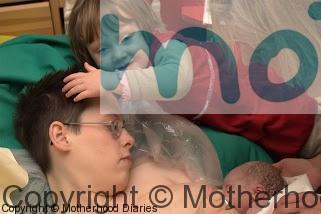
I remember at one point thinking I needed pain relief and the midwife saying “you’re doing really well my lovely just a little bit longer” I really needed her encouragement. About 2 pm I got out of the birthing pool as I was just so uncomfortable. I remember feeling the sting and I could hear my brother in law saying “it might sting a little!” it was the clue I had to start pushing. I could also hear my antenatal teacher saying “little pushes stretch things to prevent you from tearing.” After about 40 minutes I thought sod this I don’t care if I tear I just want her out! I also remember hearing the midwife saying “push through your bottom or you’ll get a sore throat” I’d heard that said on television programmes before and always wondered what it meant but at that precise time I seemed to know exactly what to do. It was amazing. An hour later at 3.15pm weighing 6lb 9.5oz on Sunday 5th December 2010 (her due date – check me out I’m now in that 5% statistic!) Agatha Florence Fenella King was born at home. My husband cut the cord and I held my daughter on the sofa. It was hard to believe this little girl had only minutes before been inside me.
home birth/guardian
I had opted for a natural third stage and was happy to sit on the sofa waiting for this to happen. I’m quite an organised person and in my head I had:
Have baby
Deliver Placenta
Have shower
Sit in bed feeding baby eating toast and drinking champagne.
This was as much of a birth plan as I’d made as I didn’t want to be worrying that things weren’t going to plan as I figured I’d just need to do what was best for baby and me at the time. It seemed though even this was too big a plan. After an hour I was unable to deliver the placenta so they gave me the injection. This still had no effect so an ambulance was called and I had to be taken to the hospital. I wasn’t very aware of Agatha at this point. I fed her as soon as she was born but the journalist held her to have her vitamin k injection and my husband held her and bonded with his daughter whilst I was trying to deliver the placenta. I just couldn’t focus on anything else until that had happened. Blood pouring out of me, hair plastered to my face and sat naked in my dining room surrounded by 5 strangers I had a little chuckle to myself, 5 hours ago I was planning on straightening my hair and wearing a tankini how naive was I?
As the ambulance arrived to take me to hospital Agatha stopped breathing and went blue and a second ambulance was called for her. She was given oxygen and on arrival at hospital Agatha was put under a heat lamp and monitored, whilst I was taken into theatre, catheterised and given a spinal block before having the placenta removed. We ended up having to spend a night in the hospital before being allowed to go home the following day. (Note to self-pack bag next time even if planning a home birth. My husband’s packing was not great but he had drinks and Kit Kats to keep him going – I, on the other hand, was destined to go home naked!)
Despite my home birth not exactly going to plan it was still definitely the right choice for me. I liked being in my own home, and having my belongings around me helped me to relax. I had 2 midwives there to support me throughout the labour. They were not running in and out and busy with lots of other women and trying to remember several different birth plans and requirements. They were able to encourage me and support me when I was struggling and knew the right things to say as they had spent some time getting to know me, rather than me being just a number in a hospital. If I had been in hospital I think I would have probably been given pain relief which I didn’t really want but I think it would have been too easy to accept in when in pain. I did not enjoy my stay in hospital – I’m not saying the hospital was bad but it wasn’t for me. I got conflicting advice on several things and felt unsupported and ignored. I have already decided that providing there are no complications with my next pregnancy I will opt for a home birth again, I know that not having a show, waters breaking and baby not being engaged mean nothing and that baby might actually arrive on her due date. And I’ll keep the Moet on ice just in case!
Karen King, mum to Agatha Florence Fenella King, 5 months old
I was 3 days past my due date apparently although I always thought I was 40+1 but anyway it was Friday 19th September; teatime. I was really grumpy and moaning at my poor husband Will over just about everything including how heavy he was breathing…poor fella!! Had lots of grumbly period pains since 5pm and was generally tired and whingy!!
18.30 came and normal routine of putting Henry (No1 son aged 18 months) in the bath commenced. While Will was dressing Henry for bed, I decided we needed to empty the birth pool as it was on day 8 of the same water and was supposed to be changed on day 7. We hired a heated pool to make life easier for Will.it was a fantastic pool and can be hired from www.aquabubs.co.uk. Will said it was too much hassle to empty the pool and nothing was going to happen tonight and as he was going to squash club it can be done tomorrow. I huffed and puffed and stormed out of the room saying I would do it myself and promptly started to get the pump together to empty the thing!!
Will came down and took over from me and I told him I was getting some heavy period type pain and things may start tonight. He thought I was being dramatic and just saying that to stop him going to squash….as if I would do such a thing!! So, he took over and I went to feed Henry for bed. While I was nursing Henry the familiar period type contraction pain started but I didn’t think too much of it at that point. Came back downstairs and the pool was emptying nicely. I started to look at the clock as I was getting waves of the pain rather than a constant dull ache. I announced to Will that the baby was coming tonight and I was officially in labour and that the contractions were actually every 5-6 mins apart….of course he didn’t believe me, then he panicked and asked ‘why the hell were we emptying the pool!!’ It had to be emptied otherwise we risked not being able to use it…so we continued to empty it and in the meantime, I put the hot water on so we ensured having a full tank when the time to refill came. By 19.30 the pool was almost empty and so we started to refill with cold water from the outside garden hose. We tried to connect the hose to the kitchen tap with the so called ‘universal’ tap adaptor, but of course it didn’t fit! Will started to panic then and so me being very calm said ‘let’s not find problems let’s find solutions….get some buckets!!’ so we (well he) bucketed in 20+ buckets of boiling hot water to the pool. The temp was around 34 degrees by the time it was full so we popped the cover on and turned up the heater.
At 2030 I called the midwife just to let her know I was in labour but I was fine. She told me her hubby was just dishing up her tea and could she eat it? I said that I was fine and contractions were manageable. She said to call her back when the contractions intensified. By 1030 I had my TENS machine on and things were hotting up a bit. I called the midwife again and explained contractions were 4-5 mins and lasting around a minute each and were painful but ok. She said she would come.
She arrived at 1115 and started taking my blood pressure and listened to the baby’s heartbeat. I was bouncing on my birthing ball in the front room using my TENS machine and breathing and relaxing through the contractions. Relaxing my body deep into each contraction really helped the pain. At 1145 while bouncing, I heard a pop and felt a warm sensation down below….my waters had gone. I grabbed the beach towel that was on the carpet next to my ball and managed to stuff it under myself. I then made my way to the conservatory (towel between my legs) where the pool was set up and sat on the sofa. The midwife (Sonia) said she’d like to examine me which was fine…..the contractions, since my waters broke, were really painful now so I was hoping she was going to bring me happy news and let me get in the pool. I was 5-6 cm dilated…yippee!! I was able to get into the pool at 1205am. The contractions were very painful now and I asked for some gas and air….what fab stuff that is!! I moved around the pool from my front up on to my knees and then sitting back down again. The freedom of movement was bliss. By 1225 I had an urge to push and my body almost took over at that point. Still using the gas and air and moving around the pool 10 minutes later at 1235, I had a greater urge to push and my body began to push without me even doing anything. Sonia was lovely and told me to let my body do what it wants to do. So I am pushing and probably grunting and mooing and at 12.45 the head was crowning and I reached down to feel. Another push and the baby’s head was out. At 12.50 our second child came into the world…his shoulders had got a bit stuck so the midwife had to give him a little tug I think. Sonia reached down for the baby and gave him straight to me. I held him under the water and he was very floppy and looked quite grey. Sonia gave baby a rub on its back and within seconds baby gasped and was breathing. The cord felt quite short so I had to hold baby under the water quite low down. The 2nd midwife then arrived….just a few minutes too late, but it was good to see Dee who I knew.
Will wasn’t in the room as I think he panicked and left looking for towels when baby wasn’t breathing initially….when he came back I wanted us to look to see what we had together. I tried to feel but couldn’t so I lifted up a leg and there we found a little boys bits!! Another son to make us a family of four and a new little brother for Henry. I sat there for 20 minutes and waited for the cord to stop pulsating and then Sonia cut it and handed our little boy to his daddy. He was pleased as punch and grinning from ear to ear. I climbed out of the pool and laid on the sofa ready for the 3rd stage. I wanted to have a natural 3rd stage so we waited…. I had the urge to stand up as I had what felt like cramp in my hips and so I squatted and with a few pushes the placenta was delivered. The 2nd midwife just about caught it in her dish!
I was then examined down below and they found that I had quite a nasty jagged tear with a tag which needed more detailed stitching than the midwife felt she wanted to do herself. This meant a trip into hospital unfortunately. The hospital was 3 minutes up the road so it wasn’t a problem and I was just concerned that I got a good embroidery job!! Before we set off to the hospital, I fed our new baby boy and Will came and sat beside me. We discussed names and decided on George William Roberts. George fed for around 40 minutes (he was a natural just like his big brother!!). We called my neighbour Ali who came and sat with Henry (who was sound asleep throughout the whole amazing event) while we went to the hospital. We got to the hospital at 0245am for suturing which I have to say was far worse than the labour and delivery!! I used gas and air throughout and it was found to be a 2nd degree tear. I was home by 0430 and in bed by 5am. Sent out a few texts and then slept. Only to be woken at 6am by Henry. I gave him a breastfeed in the hope he would go back to sleep and left him in his room. He must have gone back to sleep as we didn’t hear him until 08.30….i managed to get a couple of hours much needed sleep!!
We introduced Henry to his new baby brother which was a lovely moment. Henry adores his baby brother and keeps saying baby and puckering up for kisses!! Such a different birth experience to last time I am pleased to say. We decided that night we would probably have a number 3….because of having such an amazing experience with delivering George. Will was very anxious about a homebirth but now it is over he was glad that I had the birth I wanted and that it was such a positive experience all round. So now I am a proud mummy to 2 beautifully handsome boys and have hopped on board the journey of tandem breast feeding. I am writing this story on day 17 post George’s birth and at this point Henry has upped his breastfeeding 5 fold…he is enjoying mummy’s new found milk supply and is making the most of it!!
Gayle Roberts, mum to George William Roberts, 2 1/2 years old
This post is from the UK
Bruce’s Birth Story
Bruce Henry Mayer born 24/5/11
It was my due date and I’d spent most of the day feeling drained, very heavy and a little ratty (although I’d spent most this pregnancy moody anyway!)
At around 5.50pm I felt strange and as I had been having the odd bout of contractions over the previous 2 weeks I was sure this was what happening again. I had also had constipation and I thought that this was what was bringing more contraction pains. So I didn’t actually realise I was in labour! It was only when I noticed that the pains were coming at regular intervals which made me look at the Internet to see if they were really contractions. I was getting one every 3/4 mins or so. I called to Andrew to tell him, he didn’t believe me as I’d been saying this for a few weeks now….
Ted our 2 year old was running around whilst Andrew did the bedtime routine, I called to Andrew to put Ted to bed as he was wanting to climb on me! After an hour or so of lying on the sofa I decided to call one of my Midwifes and let them know the situation, although I was still sceptical that I was actually in labour. Andy (midwife) did ask if she should come round and I said no worries just now, I’ll call if they continue. They did start to come on much stronger and I was managing the pain in the bathroom, although I was worried as Andrew was putting Ted to bed, which can sometimes take ages! And that meant I was alone downstairs in the bathroom. So I text both Midwifes and asked if they could come ASAP.
When Andy called back I couldn’t really speak so she said she would be on her way. By this time Andrew was downstairs and started to do his usual manic clean and tidy, this time out of nervousness and knowing the contractions were real this time! I managed the contractions which were getting stronger by pushing on the sink and breathing. The difference between the contractions this time, from my last labour was that I had managed to not break my waters so far and that I also had a break between them to have a breather…. As they became stronger this obviously changed and I moved from the bathroom to the kitchen, pushing on the kitchen top each time I had a contraction. Andy and Andrew helped by massaging the bottom of my back, Andy remarked on how she could feel the babies head pressing through the lower back, a definite sign that he was on his way downwards! Andy also suggested I have a hot water bottle tied round my lower waist to help with the pain – this was a good idea, I now had help with the pain on both sides. I was keen to get in the pool but also didn’t want to do so until I was sure I was fairly dilated. Andy estimated I was between 5/6 cm and so we decided the pool would be ok. Andrew filled it ( took him a while!!) Mirjin my other midwife arrived and I got into the pool. At first it seemed more painful with the transition from standing through the pain to kneeling. But after a few mins of Andy/Mirjin pouring water on my back and Andrew sitting next to the pool and holding my hand, me squeezing his arms, probably putting my nails through his skin, I was managing, although it was all becoming so much quicker now with almost no breaks between contractions..
I started to panic that I wouldn’t be able to cope and that the baby was going to be too big! The Midwives reassured me that all was going well and I could do it. I kept saying that I was scared, I’m not sure if this was transition but I really doubted myself, especially since my first baby was possibly delivered with slight shoulder dystocia. It is a little debatable if Ted had this as the Midwifes managed to deliver him within 1 minute by using the McRoberts manoeuvre, so he wasn’t actually stuck for very long. Back to Bruce’s birth, things were going well but very fast, no breaks between contractions now and I had the urge to bear down and push. It was painful but hey it’s supposed to be!
Although if anyone passing by had an epidural or the like I would have whipped it out of their hands and stuck it in my back… I asked for gas and air, this definitely took the edge off the pain. Andrew my partner had always wanted to try it so I let him, he thinks he could have become addicted. I was aware however that although it was great for taking the edge off the pain, but that had I inhaled too much I would possibly have lost my concentration and breathing technique. So I tried to only use it on the height of the contractions. Andrew, Andy and Mirjin were so encouraging if it wasn’t for their help I wouldn’t have naturally had the confidence in myself. My waters broke with a pop which everyone was fairly excited by it!
I actually thought the baby had popped out! Andy fished the Amniotic sac out of the pool on a stick, which I looked at with one eye open between contractions. Everything happened very fast now, I had to concentrate and work hard, it took every bit of life I had in me… The babies head was making his way down at an adequate speed, which was good, I could feel him kicking and wriggling out! The Midwifes helped me to breath out the head, in fact the whole room was breathing together with short little breaths to ease out the head, shoulders (hurray!) and then his body, he slightly stuck at his hips, not shoulders! But Andy eased him out easily with her hands and asked me to stand to meet my little baby Bruce. Andrew had to rush upstairs to see to Ted, who awoke just before Bruce came. Mirijn had to call him down as not to miss it… He came just in time and then Ted woke again so we brought him down to meet his brother at 1.30 am.
I sat on the sofa with baby Bruce, who felt quite heavy and waited for the placenta to be delivered. Ted said “wow” when he met his brother and was fairly stunned! The placenta didn’t take long – phew!! I was having a good old moan about it, only as I had the injection last time and wasn’t that keen on waiting this time! After it was delivered I started to feel quite high, no stitches! Yipee!!! And a perfect birth, I was so happy… We all had some pink sparkly to celebrate and then talked about birth and the complications you can experience in hospital and the procedures which can be avoided. Why can’t everyone have the birth they want? Andy and Mirijn cleaned up and left at about 3.30ish whilst myself and Andrew felt so lucky to be looking at our lovely new son and to have had the birth we wanted. Being at home is so lovely. He weighed 9 pounds 9 oz.
The next few days were blissful too with a lovely placid baby boy, with red hair….. A big surprise and as we’d already chosen the name Bruce, it was just perfect. We had visitors, flowers, cards and warched Ted adjusting to his brother, maybe a little erratically but better than expected. Breastfeeding was so much easier than before, although there was some pain for a couple of weeks. Then after stomach cramp pains were quite painful but with some paracetmol they eased off.
In reflection, as it’s now 5 weeks after Bruce was born we are so happy once again with our experience and massively in love with him, he’s so gorgeous and calm and we really put it down to his wonderful delivery and the amazing care we received, which was worth every single penny!!!
This post is from the UK
Noah’s Home Birth Story
After four weeks of testing and difficult latent labour (difficult as DH was working ten hours a day and I had two others under four to look after), I point blank refused to believe I was in labour when I was awoken at 7 am on Monday 4th April with a huge contraction.
Rationally I knew this was different from the previous few weeks, however, I was not prepared to let myself believe I was in labour, after all, this could all fizzle out, couldn’t it? So we went about our day. DH was now on holiday for a month. We had just had a lovely weekend where I had been thoroughly spoiled with lunch out on Saturday and then a trip with the children to the fair on Sunday (mother’s day). While I was there I had a couple of goes on the gallopers and returned home Sunday evening feeling unwell, so much so I slept on the sofa for an hour while DH put the children to bed. I suspect this was my blood pressure rising up in preparation for labour.
Monday morning and I was up at 7 am, mooing around the house every 8-10 minutes. I was very taken aback by how strong the contractions were, however, I didn’t think they would be doing anything as they were still so far apart. It was all so different to Felix’s labour and birth! DH set off on foot with the children to take our eldest to pre-school while I went and made a nest in the children’s room in the dark (hooray for blackout blinds). I then decided to check in with our doula just in case she had plans to be a bit further away than I felt comfortable with. 😉
“I think we might be having a baby today but I’m not sure” followed by a huge contraction and much more mooing. DH returned from pre-school with Felix and kindly asked me to accept that I was in labour and we would be having a baby today. I decided to phone my mum to let her know things might be happening as she would be having Lilia and Felix while I gave birth. We then decided to go to Sainsbury’s to stock up, before then picking Lilia up from pre-school. Being in the car did not feel good! Contractions were still 8-10 minutes apart but raging. Thankfully Sainsbury’s was quiet and no one took any notice of me holding on to shelves now and again whilst groaning. We arrived home just after 12 and I went straight back upstairs to my nest while DH got the children ready for Nanna’s house. I had told my mum she was fine to come over at about 3.30 after her shift had finished. I decided to have a bath to relax and thought that if things were going to stop, the bath would fizzle everything out. It did the opposite. Although they were still 8-10 minutes apart they were getting stronger and I was mooing louder and louder. After a particularly loud contraction I announced to DH I couldn’t wait for my mum any longer and he needed to ring her NOW!
I got out of the bath and went back into my dark nesting place. I was listening to music on my mp3 which was a brilliant distraction and really helped me relax while I laboured quietly alone. The children’s bunk beds were brilliant for hanging off while I contracted and the baby would kick me in between contractions letting me know he was ok and I was doing a brilliant Job.
My mum arrived at 2 pm and took the children off to her house. DH then busied himself setting up the pool and getting the front room ready. We closed all the curtains in the house and I felt comfortable enough to venture downstairs and pace around. At about 3 I suggested we went for a walk. Contractions were still only 8-10 minutes apart and I thought the walk might get things moving. Just before we left the house I went for a wee and felt my waters had started to trickle.
I am very lucky to live right by the Cathedral and River in Norwich so couldn’t have wished for a more beautiful walk. DH phoned our doula to let her know how things were going and we walked a couple of times around the block. I was so thankful for this time with DH. It was really peaceful and we talked about our baby and how excited we were to be meeting him soon. Everything started to pick up the pace and within 20 minutes I was contracting every 3-4 minutes. After every contraction, I felt a gush of waters and before too long I wanted to go home.
We called our doula and asked if she’d start making a move over to ours. I paced about the house hanging off whatever came to hand whilst listening to my mp3. The music helped me to relax and to let myself go. I spent a lot of time leaning on the stair gate at the bottom of the stairs whilst rocking my hips from side to side and around as it felt so good. At about 4:45 pm our doula `Rachel’ arrived. I was in the kitchen listening to music and hanging off the kitchen work surface. I noticed her presence but could not acknowledge she was there for quite a few minutes. I am what I call `’labour shy” and am aware that people entering my labour space can really slow things down or even temporarily stop labour altogether.
Rachel was great. We had talked a lot about how I feel in labour and she just stood quietly near me for a while until I eventually said hello to her at the end of a contraction. Even after that though I felt I still had to go upstairs again for a while on my own to readjust and focus myself. I came down after about 10 minutes and felt much more relaxed. I was feeling tired so decided to sit on my birth ball for a bit (something I had said I wouldn’t be doing. Just goes to show every labour is different and you don’t know how you’re going to feel until you’re there). However, this position didn’t suit for long. Contractions were still every 3-4 minutes but they were increasing in intensity and the birth ball felt uncomfortable. Even the music was failing to distract me from the intense surges rushing through my body.
I asked Rachel to call Medicom at about 6:30 pm just to let the on-call midwives know I was in labour however made it clear I didn’t want them to come over yet. A very calm and relaxed midwife wanted me to know that she could come now if I wanted her to, but she was more than happy to wait until I felt I needed her. Rachel assured me how calm and lovely she was which was very reassuring as my only worry about my homebirth was whether the midwife would be able to hold it together. Luckily she was from my actual team of midwives who had all been incredibly supportive of my choice to homebirth and already knew me. It was at this point I started to feel a bit scared and unsure of myself. I announced I wasn’t comfortable with “this stupid birth ball anymore”. I got on to my hands and knees on the floor in the corner of our sofa and was muttering to myself in between contractions. I felt restless. Rachel sat on one side of me and DH the other. I then stopped talking and my contractions paused for a few minutes. I told Rachel I felt a bit scared and felt I was too in my head. We started to explore what I was feeling. I then said:
“I know what it is. I don’t trust myself to do this, this time. My body let me down with Harry” (the baby I miscarried at 12 weeks in may 2010).
“How can I trust myself to birth this baby?”
Rachel told me how wonderful I was doing and that I could birth this baby. She then suggested we made a nest on the sofa in the corner with all the scatter cushions so I could lean on them whilst facing the wall.
I climbed onto the sofa and Rachel and DH made me comfortable. I sighed with relief and said I felt better and that I had needed to let go of those feelings. I had been feeling distrustful towards my body for my entire pregnancy- not because of the HBAC as I had already VBAC’d with Felix but because I was so scared I would do something wrong and lose this baby too. The relief to have shared those feelings and let go of that mistrust made my whole body feel ten times lighter.
My contractions started again and picked up. They were coming every 2-3 minutes and I was having to work very hard. It felt so wonderful to be leaning into the pile of cushions and I could bury my head into them with each rush. I started to cheer up and would occasionally make jokes while I ate grapes and chatted to DH and Rachel. DH had to keep rearranging cushions around me as my knees hurt in that position but it also felt very productive. At about 8 pm I said this isn’t fun anymore at the end of a couple of contractions. I then asked to get into the pool. Instant relief greeted me and it was a welcoming reminder of the same relief when entering the pool for Felix’s birth. I thought to myself when I get out of this pool he’ll be here.
At 8:30 pm someone asked if I’d like to call the midwives to come. I looked at the clock and said no, we’ll call them at 9. I then had a huge contraction followed by a huge gush of the remainder of my waters. Instantly I said perhaps we should call them. I then had a little feel inside and thought I might be about 7cms dilated.
Things then started to get hard. The midwives didn’t call back until 9 pm by which time I was labouring really hard.
“Is it me or am I not getting much time between these contractions any more?”.
“No you’re not but you are doing beautifully” replied Rachel.
I started to feel a bit pushy at this point and occasionally asked:
“Where are the bloody midwives? They’re not coming”.
Both DH and Rachel assured me the midwives were coming however by 9.30 when they still hadn’t arrived and I was asking for gas and air and announcing that I wanted to push. I think they were feeling a little concerned. I remember Rachel saying that she suspected the baby was coming round the bend which made me feel great as I thought I’m doing this all by myself. But then when the contraction finished I’d say
“Where are the bloody midwives with my f****** gas and air!?”
Rachel said that she was sure that whatever was meant to happen in this baby’s birth would happen and that everything would be fine. At 9:35 pm the midwives phoned the house to say they were in the car park. Rachel went out to greet them while DH stayed by my side. DH has since told me that while Rachel was showing the midwives in I had a huge and very loud contraction to which he thought Christ this baby is coming in the next couple of contractions. Rachel informs me she was trying to hurry them along into the house telling them “I think she might be near” however they were quite relaxed about the situation while she was thinking ahh please hurry up! At 9:40pm the midwives walked through the door. I instantly started contracting and pushing. I had held off pushing hard for 40 minutes and I couldn’t wait any longer. I reached down and said I could feel his head.
The lead midwife came behind me as I was on all fours in the pool and asked if we had a torch. She was so lovely and I felt totally relaxed with her. I knew she was the same midwife we had talked to earlier and therefore from my amazing CM’s team. I trusted her. The second midwife was faffing about in the dark trying to set up the gas and air that I was asking for quite loudly and setting up a delivery pack.
With the next contraction, he crowned.
The contraction after that I was finally handed some gas and air of which I had about 2 gulps of and then his head emerged slowly, forehead, eyes, nose, chin and finally head out. I have been told I did this so perfectly and gently however I have no idea how. I do remember not being afraid to push this time though unlike with Felix. With the next contraction at 9:48 pm baby Noah was born only 8 minutes after the midwives entered the house and weighing 9lb (1oz less than Felix). I looked behind over my shoulder sat on my thigh, swung my leg over the umbilical cord and he was in my arms.
“I DID IT, I did it all right”.
DH didn’t have time to get in the pool and catch the baby as planned. Instead, he was right by my head letting me squeeze the life out of his hand. He did pass the baby from the midwives hands onto my chest, though, which was beautiful. The midwives listened to the baby once when they arrived, other than that and 2 puffs of gas and air I had no intervention. We had 4 midwives with us at one point as it was shift change although 3 of them stayed in the kitchen to give us time to enjoy our new baby quietly.
We waited for the cord to stop pulsing before DH cut the cord. I had planned to hold Noah while I delivered the placenta however just as with Felix the after pains were excruciating so Noah went onto DH’s chest for skin to skin while I had a natural 3rd stage. It took a while about 35 minutes and I did have some gas and air. However, I was urged not to feel too upset about this as apparently my placentas are huge and it did take some pushing! DH reckons Noah’s was even bigger than Felix’s so I am quite proud of having had 2 natural 3rd stages as well as 2 water births.
I cannot describe to you the feeling of not only giving birth at home but to (almost) do it all by myself as well. I still feel on such a high and can honestly say that since Noah’s birth I think I’ve had about 30 minutes of baby blues. Not bad for someone who twice before has suffered postnatal depression.
Myself, DH and Rachel barely noticed the transition and only on reflection now realise when I was saying that the midwives aren’t coming and wanting gas and air that must have been it. I put transition at about 30 minutes in length.
My pregnancy and birth with Noah was so enjoyable, a completely new experience for me. It was an emotional journey (mostly filled with joy) and the strength his homebirth has brought me is indescribable. I was listened to, respected, cared for and supported. All things which every pregnant woman should feel at such an important and special time of her life. Felix’s birth was a very healing experience and as hospital births go a good one, however, having now given birth at home there is no comparison. I know this is the best way for my husband and me to bring our children into the world. Switching community midwife teams after 2 dreadful pregnancies where I was bullied, lied to, not supported and terrified into every decision was the best thing I did for myself in this pregnancy.
Both my labours were very different. Felix’s was 18 hours established labour and despite giving birth in the water I tore badly. I used a tens machine for 15 hours and gas and air for the last 3 in the pool.
Noah’s was 6 ½ hours established labour and I didn’t have a single tear or cut even though the boys were the same weight bar an ounce.
After a long, tiring hospital labour, first in Watford’s ABC and culminating in an unnecessary panicky trip to delivery suite, with our first child we decided on a home hypnobirth.
It started at three in the morning (again!). I’m not comfortable lying down, and feel like I need to go to the loo. After a couple of hours alternating between sitting up and lying down I wake Iain. My back aches and I really want a bath. Erin, our three year old, wakes briefly then settles back to sleep. I relax into the bath with lavender oil and candle light, and breathe – in to the count of four and slowly out to the count of eight.
After two days with a hypnobirthing teacher and weeks of practising the breathing techniques and relaxation and visualisation exercises each night Iain and I feel far better prepared this time round. The spare room is ready – a new bed, plants, blackout blind and soft lighting. We thought about a birthing pool, but it seemed like too much hard work and since the plan is to relax the bath is plenty big enough. And it works – the bath takes away my back ache and I am wonderfully relaxed. With each surge (a gentler, more expressive way of describing contractions) I change my breathing. Slowly, but strongly breathing in to my belly to a count of twenty, and then out to twenty. Our hypnobirthing teacher had said that two of these breathes should see me through a surge and that means I can see an end to each one. Such a change from last time, when I was so zonked out on gas and air that I don’t remember the contractions at all, just a continuous discomfort and struggle to get through labour.
Iain stays with me and I follow his voice, helping me to turn inwards and relax deeper between surges. Iain guides me through the surges, focusing me on the breathing.
My parents arrive, the midwife comes and goes, Erin wakes and plays downstairs with my dad. Surges become more intense and I throw-up. I move to the bedroom, hot water bottle against my lower back easing the backache and relax, lying on my side. Our relaxation music and exercises play in the background. I relax deeper and deeper between surges, and quietly focus through the surges.
Iain is a wonderful presence, holding my hand, focusing me and helping me stay calm. My mum and the midwife are there, on the edge of my awareness. For a time my Mum takes over holding my hand and I feel a powerful connection to her – the woman who gave birth to me, her little girl. After throwing up again it is back to the bath. Then later back to bed where the surges intensify and are now coming close together. Iain’s Mum arrives, despite having had to drive through the snow.
I feel my ability to breathe through the surges slipping and Iain refocuses me. I now need to breathe deeper, actively pulling the air right down into my pelvis. I remain lying down as long as I can, but there is no longer room to breathe hard down into my pelvis lying on my side. I move to the birthing ball. Continuing to pull air down into my pelvis as the baby moves down.
Eventually I’m standing, in Iain’s arms and I can feel the baby’s head coming. I put my hand down and touch my baby’s head. I am focusing on breathing the baby out, and it is comfortable. I try pushing, which really hurts. I need to slow it down and let it happen in its own time, but I am feeling impatient. It is so much easier standing up and breathing the baby slowly out. A really full stretching feeling, rather than the burning pain and feelings of helplessness I experienced last time, pushing lying on my back.
I call for Erin – if she wants to see the baby being born she has to come now! Erin arrives just as I breathe our baby out into my hands. I pull her up onto my tummy and settle back. Erin feels a little overwhelmed and returns downstairs. Our little girl is impatient for a feed, and lets us know it. I bring her to the breast and she feeds. The cord remains attached, only cut by Iain when it has finished pulsing. Half an hour later the placenta is delivered. Erin returns to greet her sister Tara, having first ensured that she is no longer so messy.
It is only half past ten in the morning, a far cry from Erin’s birth. Labour started at the same time in the morning, but she didn’t arrive until just after midnight and all either of us wanted to do was sleep for days.
I am sure being at home has shortened this labour. I feel cocooned in my own home, amongst familiar surroundings and surrounded by my family. The hypnobirthing has enabled me to stay calm and let my body and baby get on with giving birth. Feeling hungry and energised we move downstairs to join the rest of the family.
This post is from the UK
Alfie’s C-Section Birth Story
Having been chilled to within an inch of my life on Monday morning, I got a call from the lovely midwife I had spoken to last week asking me to come in for some monitoring so the registrar could “agree for me to postpone my induction by 24 hours”. I chuckled but I thought I might as well play the game, seeing as how I had expected to have that very conversation on Tuesday morning, anyway.
So after lunch, in we trooped to Lister and after a large dose of sitting around in what can only be described as a sweatbox, the lovely registrar came to see me about my “specific issue”. That did throw me temporarily, but I rallied and ran through all the research I had done and why I wanted to wait longer than 42 weeks before considering an induction.
We discussed NICE guidelines and RCOG guidelines (or rather I discussed them) and in the end we agreed that monitoring would happen until 43 weeks at which point we’d look and see how things were moving along.
Marv.
Oh, and while I was there, how about a baseline trace? Seemed churlish not to, so I spent a very pleasant half-hour hooked up watching Alfie get himself all excited, followed by ten minutes of the midwives flapping as the little swine fell soundly asleep and refused to move. Luckily I had a bottle of cold water with me that sorted that minor problem out while they weren’t looking.
The hospital’s push for induction
The one big downer on the otherwise very positive afternoon was the attitude of the midwife who had been so positive. Once the resident and I had agreed, a plan for monitoring her attitude changed entirely and she had a go first at Keith, and then at me, implying that we were being irresponsible by trusting my body over the miracles of modern induction.
She has even written in my notes both on Monday and today words to the effect that I have to be on Red Alert for any signs of change. Because obviously up to this point I had been using my little internal bongo drum as a mere distraction when stuck in traffic. Today I had the joy of speaking to another graduate of the Lister charm school when I went for a scan to check the placenta and fluid levels.
Her opening gambit was to ask me how far along I was, at which point she said, in all seriousness:
“So why aren’t we just starting you off then??!”
I don’t want to be induced!
I gritted my teeth and explained I didn’t want to be induced and I had agreed to be monitored instead… *blank look*… so I need you to check the placenta and fluid levels, please.
Apparently, I am breaking new ground left and right with that place because she had to leave to find out what to do next. She wasn’t finished yet though, not by a long shot. Instead, she started by measuring Alfie’s head, which apparently was off the scale (as she informed us with extreme glee). She moved on to his tum and declared that I had better hurry up because our little boy was getting close to 9lb!
Were it not because I knew already that third-trimester scans have a tolerance of 2lb I think I might have broken at that point. In reality, the printout showed that he is just growing on exactly the same curve as he had been previously and both cord and fluid are looking perfect.
Trying to move things along
So anyway, I sit here this evening bouncing on my birth ball*, looking forward to the joys of my visit tomorrow. If there were no other motivation, that alone would be more than enough to motivate me to get this baby the hell out. I do find it profoundly sad, that something as simple as delaying an induction can be met with such vitriol by certain healthcare professionals.
It’s almost as if they have taken it as a personal insult which frankly is nothing short of bizarre. Luckily I have also spoken to that wonderfully respectful registrar (who said it was “nice to meet a lady who knew her mind” which I took as a compliment), a junior midwife today who was SO interested in our plans for the birth, and most of all the community midwives, who I called yesterday to update and who, to my eternal surprise, were totally chilled about our home birth plans going ahead unchanged.
Now if only Carlsberg did home births, maybe everyone would be that positive! We had agreed to stick a date in the diary after speaking to a lovely midwife on the delivery suite who told us we could still preserve a lot of the important elements of our home birth, such as bringing in our birth pool and being very supportive of what we were trying to do.
The day before we were due to go in, I decided I needed a day of peace to centre myself, and being a chicken, I booked in with the community midwife and had Keith call the hospital to tell them we would not be seeing them until the next morning. Obviously, I could only hear one half of that conversation, but judging by Keith’s tone, the reception to our plans fell below even the usual levels of disgust. I’m not entirely sure, but I believe the point at which he rolled his eyes for the seventh time was about the time we were told once more that we were going to end up with a stillborn baby.
Awaiting the impending induction
The next morning (the 11th) we arrived at Lister for induction. It’s hard to describe where my head was at that point. I was fairly calm about the idea of being induced, I think in my head that day “off” had given me the time and space to reconcile myself knowing that we had thrown everything we could at the situation and that I had complete trust in my husband to help make this birth as positive as it could be.
On another note, I have to record for posterity the fact that we looked like a pair of nomads that morning. We moved into that hospital with everything we thought we might need for the birth–pool; hoses, stereos, CDs, food, baby equipment. It was a two-person job just to haul it around the maternity department for the next few days until someone thought to bring us a trolley.
Time for induction
After my baseline monitoring was done (and I had the chance to smugly watch our baby’s perfect heartbeat for the last time) I was taken down to the delivery suite and given my first dose of Prostin, made to lie for an hour and then sent off around the hospital to see if we could get things going.
On the seventh lap of the hospital, we spent some time in the “wild garden” which was clearly a code for random-patch of-ground-we-ran-out-of-money-to-landscape. I sat on the bench with my TENS machine, slightly concerned that the back labour that had been taunting me for the last few nights wasn’t going to miraculously turn into constructive labour.
Looking back, right there should have been the warning sign that all would not go well, if a baby is in the wrong position to trigger contractions himself, then forcing them to start with him still in the wrong position was hardly likely to improve matters. That afternoon passed slowly, first walking around and then later in the Day Room, which we had to ourselves, the lights low and me rocking and bouncing on my birth ball in a last-ditch attempt to get Alfie to turn.
My TENS machine was my best friend and despite having no appetite, I think I was well stocked up with tea and digestives by the time the evening rolled around and our progress was checked.
Nothing is happening!
Actually, it was the lack of progress because, for all that discomfort, nothing had happened. I mean not a single chuffing thing. Oh, apart from the minor matter of a swab result which showed I had Group B Strep. Ordinarily not something I would have allowed to change my plans, but then I wasn’t in Kansas anymore, and now I was being told there was no way that I could now have my water birth.
It was around this time that negotiations started around what Keith was going to do that evening because Lister is one of those enlightened hospitals where they still send dads home as soon as is decently possible. Frankly, I was having none of that, and even if I had been, Keith was having even less of it.
The home from home room
I think the fact that my notes with strewn with snotty comments about being difficult helped us so when I said I would walk if Keith were made to go home, the staff knew to take me absolutely seriously. Several calls later and the Head of Midwifery (no less) gave permission for us to use what they call a Home from Home Room.
For those of you who don’t know, the Home from Home Room is a hotel-style room the hospital uses for grieving parents who have had a stillbirth. Every last thing in the room is dedicated to the memory of a lost child, which is just perfect when you are being induced with a child you have been told for ten days is going to die because of your stupidity.
Frankly, I didn’t care by that point because my back labour had ramped up after the second dose of Prostin and the only way I could cope was if Keith put his full weight into my lower back with each contraction (or contraption as we somehow ended up naming them).
I was staring down the barrel of the second night of no sleep and I knew that wasn’t an option, so I asked for some paracetamol and codeine and got into a nice hot bath. The bliss!! The unmitigated, boundless bliss of that hot water. I floated there until my toes went wrinkly and debated whether it was physically possible to sleep a night in a bath. Deciding it wasn’t I dragged myself out, and it was then that I had my lowest point in the labour.
I was tired, I was hungry, and despite the best efforts of the midwife on duty in packing me into different positions and Keith in pressing my back, I felt out of control and railroaded by the back pains. I could see I was facing a second sleepless night, and it was the time I most wanted to sit and wail about the unfairness of it all.
The back labour!
Instead, I happened upon a solution and like a drowning man clung to it with everything I had in me. I discovered by a sheer fluke of timing that if I was sitting bolt upright at the foot of the bed when a contraction hit, I could breathe through them effectively. Obviously, this solved the backache issues, if not the sleepless night issues.
I had also made Keith hit the hay because at least one of us would need our wits about us the next day, so I couldn’t even share my newfound comfort with him. And TV is about as interesting as playing spot-the-polar-bear-in-the-snowstorm in the early hours of the morning. All of this meant that I was forced to find some way of sleeping upright, which I did just about manage after a while with the aid of the sofa and a shed load of cushions. That said, I certainly wouldn’t suggest it as an option unless all other options, including sharpened spikes, have been exhausted.
Syntocinon and c section looming
The next morning, we knocked about making the most of that little room until we were taken back into the delivery suite for The Next Step. We met another in a long line of registrars who explained the schedule of events that they were proposing, which in summary involved breaking my waters, with the threat of a Syntocinon drip to follow, and a C Section grand finale if none of the previous steps had done the trick.
Unfortunately, the idea of breaking my waters posed a bit of a conundrum for the staff because by doing so, they were increasing the risks of infection to the baby, and they already knew that I had Group B Strep… Oh what to do, what to do! Well, the obvious solution when creating a problem is to mitigate it with more medicine: In this case, IV antibiotics before during and after breaking my waters.
The amniotomy itself was painless, if an odd experience, one I suspect to be a familiar territory of the old, infirm and paralytic. Although something had gone well with my induction, there were slightly furrowed brows all-around at the sight of my waters. There was meconium, Grade 2 out of a possible 3, which it transpired was old meconium, there most likely because Alfie was post-dates, rather than green meconium which would indicate any level of distress on his part.
In an amazing turn of events, the registrar was actually pretty calm about back, as development and was apologetic about the fact that it meant my previous timetable would now have to be halved.
Alfie still in OP position but still trying for a natural birth
Strangely, I wasn’t surprised, or worried by that announcement. I think looking back I knew deep down that nothing was going to shift Alfie, and that we were essentially just going through the motions. He had been in the OP (back-to-back) position for over a week, which was the reason he hadn’t kicked off labour, and nothing we were going to throw at him was going to change the basic physiological premise of labour so if a baby isn’t pressing down on the cervix, the cervix will not dilate.
I would not stop trying for him though, not now, because he deserved every chance I could give him at as natural a birth as possible. So I got back on my beloved birth ball*, monitors attached, and rocked and bounced and wandered as far as the leads would allow. My contractions were still stubbornly unchanged though, 8-10 minutes apart and slap bang in the small of my back.
Keith had resumed back pressing duties and combined with my TENS machine, each contraction seemed quite reasonable. Part of our caravan of luggage was a folder of CDs, and it was now that I felt like I needed to be motivated by some “doing” music. There was only one CD I wanted and that was Audioslave. I’m not sure how much it helped because there came a point where I was locked in a little bubble of my own, but while I could never tell you what tracks were playing or when the vibe from that music was absolutely right for what we were trying to do.
Time for the Syntocinon
It felt like minutes later it was time for my next progress check and, as predicted, nothing much had happened. The Syntocinon was wheeled in and I was hooked up on the lowest setting, 1mg, which was to be doubled every 30 minutes until my contractions numbered 4 or 5 every 10 minutes.
The only slight problem was nobody had explained the plan to the infuser, and it insisted on malfunctioning every time I was due a dose of the drug. It was quite farcical really, the number of midwives I had trooping in and out of the room trying to make this thing work, and all of them failing to tame the miserable, temperamental machine.
I would love to say I found it amusing, but the extra attention meant that for the first time that day, I wasn’t able to buy extra time because of staff shortages and busy departments. The dose was ramped first to 2mg, then 4mg and on to 8mg and with each increase the contractions seemed to carry me off further into my own little world.
Over to dad to finish the story!
Right about now, I have to hand you over to a guest writer for the rest of the story, because my memories of everything that happened next are confused and patchy. Over to you daddio!
At this point the contractions were coming thick and fast, the monitor measuring Tash’s contractions (which had previously been told meant nothing) was going off like a seismograph in downtown San Fran, and I was trying to fold myself around the front of Tash’s bed to look her in the eye and offer words of encouragement. I must say, you do feel somewhat pathetic uttering the words “breathe, drop your shoulders” as someone is going through what looks like some kind of exploding pelvic experience.
She was then offered further pain relief and was told morphine was available. I could not work out if her reply was muted due to the intense nature of the contraction, or because she didn’t really want it. Anyway, the midwives didn’t hear anything, and so I ignored her mumblings. This went on for a few minutes until the student midwife informed her senior “she has been offered Morphine”… at which point Tash exploded:
“YES, I WANT MORPHINE!”.
We had always planned to hold off drugs as long as possible because you hear so many people with stories of “we got so far, had an epidural, and two minutes later the baby arrived–the drugs hadn’t even taken effect”.
Anyway, Tash’s mind was made up, her drug intake NEEDED to step up. Looking back, I think our error was to assume that when a patient’s request was made, then a reaction from hospital staff would shortly follow. What actually happened was Tash’s request got passed from midwife to midwife, as one either left or entered the room.
Time for morphine!
Anyway, eventually it arrived, injection injected, and Tash quickly went from hugging the ‘head’ of the bed to passed out on it. This must have been mid-late afternoon by now. This was the hardest part for me. I knew Tash didn’t want the dosage to be increased anymore and I knew the midwives were relying on me to time the contractions… yet all of a sudden I was presented with a wife who responded to very little, and a machine that wasn’t showing when contractions kicked in.
Occasionally I would ask if she was going through the same contraction, and I’d manage to make out a response saying that there had been one or two since! I had no idea when I needed to be pressing the “boost” button on the TENS machine as I had no idea when the contractions were hitting – so I kept it on more often than not, it was just great having a button with “boost” on it!
Of course, the midwives and Registrars would ask about contraction frequency and I would just tell them what they wanted to hear. Five or six in ten minutes, a minute or so apart. I didn’t have a clue, but it kept them from turning up the dosage on the drip.
No progression!?
Anyway, time passed by… we must have listened to the Audioslave album another three times through… maybe it was 8 pm… and eventually, a doctor came in to inspect Tash. Hospital timescales are shocking by the way. I remember working out at the start of the day that it would all be over by 3 pm, or else she would be in very active labour. He had a peek and declared nothing has progressed whatsoever.
So here we are, some five hours later than predicted, and still no son. This registrar, maybe the 6th or 7th we’d had the pleasure of seeing, was brilliant though. He sat down next to us, clearly feeling like he had bad news to break.
“I’m really sorry, we have tried everything, and I know it’s not what you both wanted but I don’t see any point in continuing with the Syntocinon drip.”
Tash interrupted and informed the bloke:
“The only way we are carrying on with that drip is if you’re attached to it!”
We had our plan, and it didn’t include a c section, but at every crossroads, we have faced the path we chose was always our own. We were now at a point where, for once, we agreed with what was being suggested to us. Alfie would not make an appearance without someone going in and grabbing him!
Time for a C Section
And so the registrar disappeared, and the midwives prepared Tash. A few minutes later the registrar reappeared.
“I’ve got some bad news I’m afraid.”
It appeared he’d spoken to some higher power, who had no idea about us or our situation and refused the caesarean. Tash needed to have an epidural, and the drip be cranked to 16, and then 32. If Alfie still refused to come, then we would granted our caesarean… in 2hrs time.
I don’t remember if I asked, or maybe it was the anger on my face that requested, but everyone then left the room. I checked with Tash if she was happy with a C section, that this was definitely the result we were looking for now… and prepared to fight for the birth that we wanted once more.
Note from Tash
My mind was pretty fuzzy by this point, but I remember three words going around my head like a claxon when the Registrar said we would have to try the drip for another 2 hours at the max dosage–Pit to Distress. Basically, the practice is to crank up the drip as high as it’ll go on the premise that either it’ll get things moving, or else the doctors will have to perform a C Section because of foetal distress. I was determined that there was no way this was going to happen to our child.
The midwives came in first, to which I fairly calmly pointed out that a) we had been made to feel like sh*t for 2 weeks, being told we were risking a stillborn baby and that it was imperative the baby was born ‘immediately’, b) we had been told all along that it was most likely we would have a caesarean section, and c) that we had just been offered the C section, so clearly you agreed with me. We wanted a C section, and we didn’t want to wait. I had just got into the full flow when they cut me off and said I would need to say it to the registrar. He reappeared and I went through it all again:
I want a C Section!
“We aren’t prepared to have our son on that drip any longer than needed, and now we are FINALLY agreeing with you, and it’s you guys dragging your feet, delaying what you have been saying all along was inevitable. We want the caesarean, so I ask you go away and speak to whoever you need to speak with and state our position and see what they say.”
He clearly agreed with us, and Tash said she heard the midwives say they agreed with everything I said. He reappeared a few minutes later and confirmed we were on for the caesarean. A few months earlier I remember being really worried that an incident would appear; I would have to make a decision ‘cos Tash was so drugged up, and I’d end up making the wrong call.
Now the incident had appeared, and I felt pretty good about myself knowing I’d passed that little test … then I realised the result of my actions … I was going to have to watch my wife be operated on, and my child be delivered by C section!
Now, I’m generally ok with blood, guts and pain, but when certain things are left to the imagination, I can get quite squeamish. Casualty is not always an easy watch for me! So as I entered the theatre in my ‘obese American’ size scrubs I pointed out to Jo (the BEST midwife we encountered over the whole 43 weeks!) that I had been awake for 3 days, was running on pure adrenaline, and “wasn’t really sure how I was going to be with this”.
Jo pointed me to where I needed to be and rolled a stool over to me “you wouldn’t be the first to faint Keith!” The operation was real quick. The screen went up across Tash’s chest. I was head end, so I didn’t have to see all that was going on at the business end!
Alfie is born!
They confirmed Tash couldn’t feel anything below her armpits, and we chatted complete BS to pass the five minutes we were told it was going to take for little Alfie to make his grand entrance. Suddenly I heard a quick whimper, and suddenly they whisked a very small blue baby over to a cot a few metres away to the left.
His hat was rapidly placed on his tiny head, he was wrapped in a towel, and the attending midwives began rubbing him madly. They pulled down the heat lamp. By this point, I was up on my feet, edging closer because I wanted to see what was going on, but I was also conscious not to get in the way. An oxygen mask came out and was placed over the little fella’s face… and immediately you could see him go into shock, arms and legs rigidly forced out in front of him.
I turned and walked back to Tash, telling her that everything is OK, yet I can hear “come on little fella” in the background so I had no idea how convincing my words were. The next few minutes passed very slowly, yet his temperature rose and the breathing sorted itself out. He is presented on Tash’s bed. I asked afterwards, if what I had witnessed was common, or if that’s the way C sections usually went… and was told that was a common C section delivery–why hadn’t anyone told me that in advance so I could prepare myself?
The time was confirmed at 21:34, and with the doctors’ work now done we were very quickly carted out of the theatre and whisked around the corner to a recovery area. Jo, our attending midwife at that moment, helped Alfie take his first feed, and I grabbed some photos of our gorgeous son. An hour later we were rolled back onto the ward, a further 60 minutes later I was turfed out of the hospital.
I’m disgusted that a partner is removed from his wife and newly born son so soon after birth, but having fought to stay one night it was made very clear to me that a second would not even be contemplated! My Dad – dog sitter extraordinaire throughout all this – collected me from the hospital, and I know I slept very well, and very happy that night. As it turns out, far better than Tash did!
*Links marked with a ‘*’ are affiliate links which means I may earn a small commission on qualifying purchases
Aron’s crash C section traumatic birth story
This is Aron’s crash C section traumatic birth story, so there are some trigger warnings if you are sensitive to birth. It was a happy outcome and my baby is now fifteen, but the details of the birth were traumatic. If you’ve had birth trauma, it’s important to seek help and talk through your birth with a medical professional. Contact the Birth Trauma Association for advice.
I started having contractions on Friday at 3.30am, and these were fairly mild – a bit like the stomach pain you get from diarrhoea. So, it didn’t occur to me that these could have been the start of contractions, even though my due date had already passed a week ago.
I tried not to wake hubby the first time I went to the loo, but by the second time, half an hour later, hubby shot up in bed and asked me if the contractions had started. I replied honestly that I didn’t know, but the pain was coming every half an hour, so we both deduced that these were contractions and hubby stayed home instead of going to work that day since we both were unable to sleep anyway.
By Saturday at 4 am the contractions were coming every 15 minutes and the pain was situated only in my back. They felt less like diarrhoea pains now and more like a backache you get when you’re on your period. When I went to the birth centre to be assessed, as I felt like I was in labour for a while, the midwife said that my cervix was closed and I was still in the very early stages of labour.
These contractions were becoming steadily worse, but they were still manageable if I concentrated on the breathing techniques I had learned during my pregnancy. So we went home, but by Saturday at 11 pm, I was in absolute agony and my back pain was excruciating to where I couldn’t just breathe through the pain anymore.
I contacted the birth centre again, only to find out they would be closed for the weekend because of the snow, but the lady on the phone heard me having a contraction and advised me to come into the local hospital ASAP. The medical staff monitored my contractions and the baby’s heart on a monitor by a hospital bed, which I couldn’t stop staring at, and they examined me internally to find out that I was only 2 cm dilated.
They told me they were concerned about the baby’s heartbeat, which kept dipping after every contraction. This worried the doctors a little, but they assured me that things should be fine, so they gave me gas and air and codydramol for the back pain and I was told to come back at 9am that morning to monitor the baby’s heartbeat again.
By 9am I was almost screaming from the back pain and when we got to the hospital we were told to wait in the waiting room for over an hour until a room opened up. Hubby was visibly worried at the sight of me during my contractions and extremely annoyed at the staff because one room was taken up by a couple who were planning to have an induction, so hubby complained to a member of staff that my situation was far worse than theirs and that we should have that room.
Aron’s crash C section traumatic birth story begins
That member of staff agreed and told the couple to vacate the room so that I could lie in bed. But after an hour and a half of waiting, I was inconsolable at that point, begging for some pain relief. The midwife couldn’t even give me gas and air because there weren’t any spare cylinders, so I was just screaming inside at the pain now. It felt like the baby was hitting a nerve on my back and the pain lingered on after every contraction. The midwife brought another heart monitor into the room and I glimpsed her worried face and asked her what was wrong.
She replied she had to, “Call a doctor in as the baby’s heartbeat had dropped significantly.” Almost instantaneously I was rushed into an emergency room where there were a group of doctors and midwives running around me trying to sort something out, but no one was telling me anything. I started crying because I was so scared, plus the pain was unbearable. Luckily, the baby’s heartbeat started returning to normal, and they found me some gas and air.
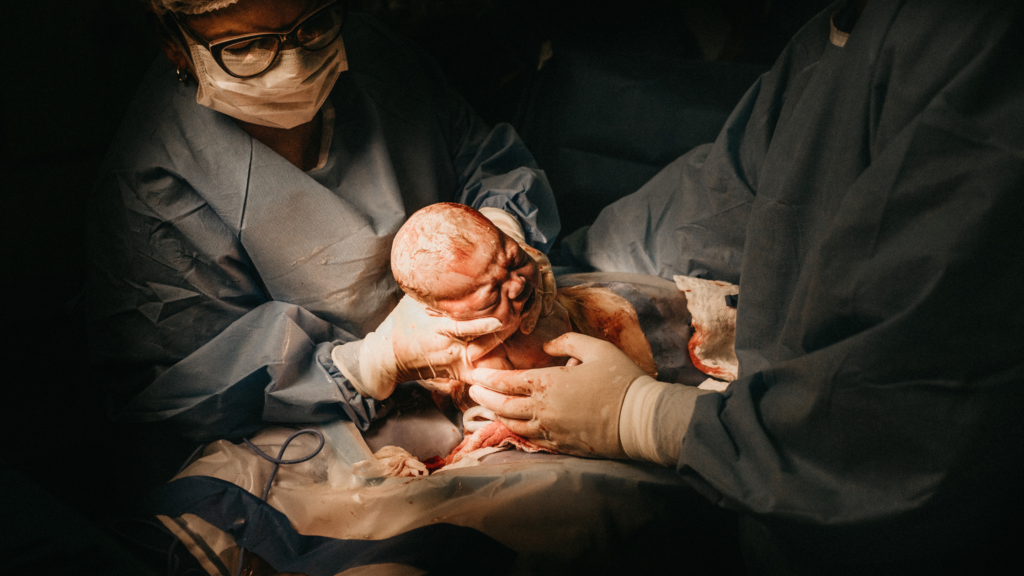
By 5 pm on Sunday, I was progressing slowly and the gas and air were not doing anything to relieve the pain anymore. The Doctor came in and told me he thought I should have an emergency caesarean section because the baby was getting distressed after every contraction. They gave me crash c-section anaesthesia and epidural and I was rushed into the theatre room.
I had no idea what the crash caesarean section protocol was but the emergency cs was the worst thing I had ever, ever dealt with. I felt everything without the pain. It felt like someone was pushing my organs around and I was crying so much, I just wanted to leave the theatre room. I heard the surgeon say that the cord was wrapped around the baby’s neck twice.
At 5.19pm little Aron was born but he had to be checked over as the cord that had been wrapped around his neck had pulled his head back, so every time he tried to come out naturally, his head would hit my spine instead, causing that insanely painful backache. Also, every time the cord was pulled after every contraction, my placenta had come away and rupture. So the longer he was in my tummy, the longer we were endangering both of our lives.
The midwife told me that if they had waited any longer, then an entirely different outcome would have arisen hence the crash caesarean. I’m not sure if she was trying to make me feel better by saying that, but I guess I can count my lucky stars! He would never come out naturally because of the cord and the placental abruption.
I’m glad we had called the birth centre and had been advised to go to the local hospital that night, as I dread to think what might have happened if we didn’t. Whatever the reasons for emergency c section, after 3 days of intense pain and 2 days of recovery at the hospital none of it matters anymore because Aron is so beautiful and he’s such a relaxed baby. PLUS, he’s taken to breastfeeding like a duck to water! He demands my boobs so much, typical man.
As far as difficult birth stories, in hindsight, this one was the worst. But, I’m recovering slowly after the emergency c-section trauma and have a lot of stitches. My haemoglobin levels have gone down to 9.2 because I lost so much blood during the birth, but I’m a tough cookie and fighting fit now.
After everything that had happened with the emergency caesarean delivery, I would still do it again because something so beautiful came out of it.
I have never been more proud of my baby. Plus, if it wasn’t for the staff at the hospital acting so quickly to save my baby, my hubby, my best friend and my family around me, I think I would have definitely fallen apart and little Aron may not have been here.
So I welcome little Aron into the world, born on 19 December 2010 at 17.19 and weighing a healthy 8lbs 9oz/3.79kg. I can already see that he has my skin and hair colour and he seems very relaxed.
Have you had a stressful childbirth experience or know anyone with bad birth stories? Please share your story here.
FAQ
Crash c-section vs emergency c-section. What’s the difference?
Other questions asked were:
What is a crash c-section?
What causes a crash c-section?
How long does emergency c section take?
How long does an emergency c section take?
How fast is a crash c-section?
What does emergency c section mean?
What does a crash c section mean?
How long does a crash c section take?
When is emergency c section needed?
What is a crash emergency c section?
What causes emergency c section?
What is a crash caesarean section?
What is an emergency Csection?
Why might you need an emergency Csection?
Common causes for an urgent Csection?
Common causes for emergency Csections?
What happens if I need to have an emergency Csection?
Indications for emergency caesarean section?
When might an emergency caesarean section be needed?
What’s the difference between the types of Csections?
How common is caesarean section?
Reasons for an unscheduled Csection?
Reasons for an emergency Csection?
What is a crash c section?
What are emergency caesarean sections?
What are the causes for c section?
Both crash c-sections and emergency c-sections are medical interventions performed during childbirth when there are complications or concerns about the safety of mum or baby. While the terms “crash c-section” and “emergency c-section” are sometimes used interchangeably, they can have slightly different meaning.
“Crash c-section” is often used in emergency medical settings or in situations where there is an immediate threat to the life of mum or baby. It implies that the situation is critical and requires immediate surgical intervention. This can occur when there is severe foetal distress, sudden maternal complications (such as placental abruption or uterine rupture), or other life-threatening emergencies.
An emergency c-section refers to a situation where there is a need for an unplanned caesarean delivery because of a sudden change in mum or baby’s condition. This can include scenarios where there are concerns about the baby’s heart rate, problems with the progression of labour (such as failure to progress or stalled labour), maternal health issues (such as preeclampsia or severe bleeding), or other unexpected complications that require immediate intervention.
In both cases, the decision to perform a crash or emergency c-section is made by the medical team based on their assessment of the situation and how urgent the intervention needs to be.
How common are crash c-sections?
Statistics for crash c-sections are difficult to find but emergency c-sections, which encompass both planned and unplanned emergency situations, are a common occurrence in obstetric practice. The Royal College of Obstetricians and Gynaecologists (RCOG) in the UK reports that emergency c-section rates can range from around 15-25% of all deliveries.
Not all emergency c-sections are “crash” c-sections. The decision to perform a c-section, whether planned or unplanned, is based on the healthcare provider’s team and their assessment of the health and safety of mum and baby.
For more information on crash c-section rates in the UK, consult official reports, research studies, or reach out to healthcare professionals or organisations specialising in maternal health and childbirth statistics in the UK, such as the National Health Service (NHS) or the RCOG.
What is a traumatic birth story?
A traumatic birth story is a physically and/or psychologically distressing experience during childbirth that can leave a lasting emotional impact. Hard birth stories generally leave the person feeling like they’ve lost power and control and are in a place of fear during emergency labour and delivery.
One of the most common types of birth trauma is perineal trauma or perineal tears. The perineum is the area between the vagina and the anus, and during childbirth, it can sometimes tear or be cut (episiotomy) to help deliver the baby. Perineal tears are classified into different degrees based on their severity:
First-degree tear: This is the mildest form of perineal tear, involving only the skin around the vaginal opening.
Second-degree tear: This tear extends beyond the skin and involves the vaginal tissue as well.
Third-degree tear: This tear extends even further into the anal sphincter muscles.
Fourth-degree tear: This is the most severe type of tear, extending through the anal sphincter muscles and into the rectum.
Perineal tears are relatively common during vaginal delivery, particularly among first-time mothers or where medical interventions, such as forceps or vacuum extraction, are used. Factors that can increase the likelihood of perineal tears include the baby’s size, position, rapid delivery, and the use of interventions like episiotomy.
Not all perineal tears are traumatic for everyone. The experience can vary based on pain, complications, emotional distress, and the overall birthing experience.
Can you get PTSD from a traumatic birth?
Other questions asked were:
Can a traumatic birth cause PTSD?
What are the causes of birth trauma PTSD?
Can an emergency c section cause ptsd?
Yes it is possible to develop PTSD from a traumatic birth. PTSD is a mental health condition that can develop when someone has experienced or witnessed a traumatic event.
The symptoms of PTSD typically fall into four categories:
Intrusive thoughts or memories: People with PTSD may experience recurrent, distressing memories of the traumatic birth, nightmares, or intrusive thoughts. These could involve reliving the intense pain, fear, or sense of helplessness during the delivery process.
Avoidance and numbing: You may try to avoid reminders of the traumatic birth experience, such as avoiding discussions about childbirth, medical settings, or even future pregnancies. You may also feel emotionally numb, disconnected, or experience a reduced interest in activities you once enjoyed.
Hyperarousal and increased anxiety: This includes symptoms such as irritability, difficulty concentrating, hypervigilance, exaggerated startle response, and difficulties with sleep. These symptoms can continue long after the traumatic birth experience and can significantly impact daily functioning.
Negative changes in mood and cognition: You may experience negative thoughts about yourself, others, or the world around you. You may struggle with feelings of guilt, shame, or distorted beliefs related to the traumatic event.
Not everyone who experiences a traumatic birth will develop PTSD. However, if you are, then seek professional help from mental health professionals experienced in trauma and perinatal mental health. Therapy such as cognitive-behavioural therapy (CBT), eye movement desensitisation and reprocessing (EMDR), and support groups can help you process the trauma, manage symptoms, and promote recovery.
Was our birth so traumatic for us that we can’t remember it?
It is possible for birth to be so traumatic that your memory of the event may become fragmented, vague, or even completely absent. A traumatic birth and labour story can trigger a defence mechanism known as dissociation, which can affect memory recall. Dissociation is a psychological response that can occur during distressing or overwhelming events as a way to protect yourself from the full impact of the trauma.
Memory recall can vary from person to person. Some women may have a clear recollection of their birth experience, while others may have only limited memories.
If you have concerns about your birth experience and its impact on your memory, speak to a mental health professional or a healthcare provider who can provide medical advice and support tailored to your specific situation.
How do doctors feel when a patient unexpectedly comes close to dying? I recently had a traumatic birth experience. I want to ask my OB how this has impacted him, but I’m afraid. Would doctors be open to this kind of conversation with their patient?
Every doctor’s emotional response is unique, but their primary focus is to provide medical care to ensure the best possible outcome for their patients. Doctors are trained professionals who understand that empathy and compassion for their patients is very important.
It is perfectly acceptable to have a conversation with your OB about your traumatic birth story and ask if they are open to discussing it. Talking about your feelings with your OB can help them understand your situation and promote healing. They may even recommend you seek support from a mental health professional for more specialised guidance and offer additional information on what to do next.
What is it like to remember a traumatic twilight birth?
A twilight birth refers to when a mother receives medication to induce a state of semi-consciousness or mild sedation during labour. While this helps to manage pain and discomfort it can cause hazy memories of birth.
Traumatic births can involve complications, high levels of pain and medical interventions and this can cause:
Flashbacks which can be triggered by specific sounds and smells associated with birth
Anxiety and fear, especially when thinking about future pregnancies or medical procedures.
Sadness when remembering the pain or complications during birth, which could lead to postnatal depression
If someone survives a major transitional traumatic experience at birth when both the baby mother almost died from complications of the childbirth labour unexpectedly, how would this affect effect the mother of the child?
Experiencing a major transitional traumatic experience during childbirth where both the baby and mother face life-threatening complications can have a real impact on mum’s emotional wellbeing. This can cause emotional trauma, anxiety and fear, depression and mood disorders, guilt and self-blame, bonding difficulties and a negative outlook on future pregnancies.
It is important to seek professional help from therapists, healthcare providers, and/or support groups specialising in perinatal mental health. They can provide the appropriate support to help mum navigate her emotions, process the trauma and begin the road to heal.
Does a traumatic birth negatively affect a baby’s development?
Other questions asked were:
Is birth traumatic for the baby?
A traumatic birth could potentially have a short-term and long-term effect on baby’s development. but it very much depends on the birth itself, the severity of the trauma, child health and the support provided after birth.
Some potential effects could include:
Oxygen deprivation may cause an injury to organs, brain damage or other complications that require medical intervention and ongoing monitoring
Some studies suggest that traumatic births may contribute to emotional and behavioural difficulties in children. They may be at a higher risk of experiencing anxiety, hyperactivity, sleep disturbances, and other behavioural challenges, although there are many factors that would contribute to a child’s emotional and behavioural development.
There is limited research specifically focusing on the impact of a traumatic birth on cognitive development. Some studies suggest that certain types of birth trauma like oxygen deprivation, may have long-term effects on cognitive functioning.
A traumatic birth experience may affect the bonding and attachment process between baby and parents.
Not all outcomes are negative or permanent and with the right support and care, babies can overcome the initial impact of a traumatic birth and develop normally.
If you are concerned about the effects of your traumatic birth on your baby’s development, consult your paediatrician or child development specialist for an individual assessment of your baby.
Is adoption at birth traumatic for the baby? Why he doesn’t even remember the experience, so why should it affect him?
Adoption at birth can be a complex and emotional experience for both the baby and the birth parents. While it is true that the baby may not have conscious memories of the adoption process itself, it doesn’t mean that the experience is without potential impacts.
The separation from birth parents, especially from mum, can be a significant emotional event for a newborn. Babies have a natural instinct to seek proximity and connection with their primary caregivers and the sudden separation could lead to distress and feelings of loss.
Early experiences also shape the brain and infancy is a very critical period for brain development. The quality of care, consistency and responsiveness of adoptive parents can influence the baby’s attachment patterns and emotional development.
Even without conscious memories, a baby may still experience a sense of loss or disconnect with birth parents. As the child grows older and becomes more aware of their adoption, they may ask questions and this could evoke emotions which may require extra support and understanding from adoptive parents.
Some children may face attachment difficulties and feelings of abandonment.
If adoption at birth is traumatic for the baby, is birth via surrogate traumatic too? Why do people feel that adoption should be open but surrogacy need not be?
The experience of birth via surrogate can be complex and emotionally charged, both for the intended parents and the surrogate mother. Babies have an innate need for attachment and connection and the sudden separation can be emotionally challenging for them.
The immediate post-birth period is crucial for bonding and attachment between baby and primary caregivers. In traditional surrogacy arrangements, where the surrogate is genetically related to the baby, the separation may be difficult, so the intended parents must provide quality and consistent care to support healthy bonding and attachment.
As the child grows older, they may have questions about their biological family and will want to understand their identity. They have may have more complex questions or feelings so it’s important to be open and honest when addressing their concerns.
Regarding the question of open adoption versus open surrogacy, perspectives can vary among individuals and cultures. Some people advocate for open adoption, where there is ongoing contact and information sharing between the birth parents and the adoptive parents, as they believe it can benefit the child’s wellbeing.
Some people may feel that surrogacy is primarily a contractual arrangement focused on fulfilling the intended parents’ desire to have a child, and they may not see the same need for ongoing contact or open relationships. However, there are also instances where intended parents and surrogates choose to have ongoing contact and maintain a relationship, similar to open adoption.
Ultimately, decisions regarding openness in adoption and surrogacy should be made based on the best interests of the child. It’s important for intended parents, surrogates, and all parties involved to have open and honest discussions, consider the emotional wellbeing of the child, and seek guidance from professionals specialising in adoption or surrogacy.
Do infants experience trauma when separated from their biological mother, i.e. Primal Wound?
The concept of the “Primal Wound” is a theory by Nancy Verrier in her book of the same name. It suggests that the separation of an infant from their biological mother, particularly through adoption, can lead to a deep and lasting emotional wound or trauma.
However, this theory is not universally accepted or supported by all psychologists and child development experts.
The experience of separation from the biological mother can be emotionally challenging for a baby, as it disrupts the natural bond that forms during the early stages of life. Babies have a natural need for attachment with their primary caregivers, and the sudden separation can lead to feelings of distress, loss, and confusion.
Not all babies will experience long-lasting trauma and many adopted children grow up in loving and supportive families, where they form secure attachments. With nurturing care, open communication about adoption, and support from professionals specialising in adoption and child development, the potential negative effects of separation can be reduced.
I can’t forget the horror of my son’s birth. How do I forget?
Other questions asked were:
I want to start learning and growing from my experience with birth trauma. What steps do I take to the road to recovery?
How do I look after my mental health after emergency Csection?
I’m really sorry to hear you’re struggling with the memories of your son’s birth. While it may not be possible to completely forget a traumatic experience, there are ways to help you cope with and reduce its impact. Here are some suggestions:
Reach out to a mental health professional, such as a therapist or counsellor, who specialises in trauma or perinatal mental health. They can provide appropriate guidance, support, and therapeutic techniques to help you process the reasons for c section or normal birth and the memories in a healthy way.
Share your feelings with a trusted friend, family member, or support group. Talking about your trauma can help alleviate the burden, provide perspective, and offer emotional support.
Engage in activities that promote your wellbeing and help manage traumatic stress. This can include regular exercise, mindfulness or meditation, pursuing hobbies or interests you enjoy, and getting good sleep.
Surround yourself with supportive people who can empathise with your situation. Joining support groups, either in-person or online, specifically focused on birth trauma or perinatal mental health, can connect you with others who may experience birth trauma too.
Trauma-focused therapies, such as Eye Movement Desensitisation and Reprocessing (EMDR) or Cognitive Behavioural Therapy (CBT), can help address traumatic memories and distress. A trained therapist can guide you through these evidence-based therapies.
Writing about your feelings in a journal can be a therapeutic way to process and release your thoughts. It can help gain insight, a sense of control, and promote emotional healing. You can even enjoy healing through storytelling.
I had an emergency c section. Can I have a vaginal birth now?
Other questions asked were:
Emergency Csection and future pregnancies. Can I give birth naturally?
In the UK, the possibility of a VBAC after a previous emergency c-section is considered viable for many women but it does depend on certain factors, such as:
Previous c section details, i.e. a low transverse incision is associated with more successful VBAC outcomes compared to vertical or classical incisions.
Your overall health, including any underlying medical conditions, will determine if it’s safe for you to have a VBAC.
Your current pregnancy may determine if a VBAC is possible, i.e. the position of the baby and the gestational age.
Hospital resources may not be so readily available to support VBAC, including access to an operating room in case of an emergency.
Is emergency c section worse than planned?
This is a subjective question as sometimes each c section has their own benefits and considerations, for example:
Emergency c sections are performed when there is a need for medical intervention because of the health and safety of mum and baby. The unexpected nature of the emergency c section can invoke anxiety. The sudden change in birth plans can create a sense of urgency too and offer less time for emotional and mental preparation.
Scheduling a planned c section allows for better planning and preparation. You have a better sense of control and readiness for the procedure too. You may feel more at ease emotionally because you’ve had time to discuss and understand the process with your hospital. You can also discuss parts of the surgery which involve more attachment like cutting the umbilical cord or enjoying skin-to-skin straight after delivery.
In some cases a planned c section may offer a more controlled environment for recovery as there is time to discuss post-operative care and pain management strategies in advance.
Is emergency c section covered by insurance?
In the UK, emergency c-sections are generally covered by the NHS, which provides free healthcare services, including emergency medical interventions.
In the US, coverage for emergency c-sections may vary depending on the specific health insurance plan. Most health insurance plans cover medically necessary procedures, including emergency caesareans. Review the terms and conditions in your insurance policy, including any co-pays, deductibles and coverage limitations to understand whether emergency c-sections are covered. You can contact your insurance provider for up to date information and ask the hospital billing department for help in understanding the potential costs.
Is emergency c section dangerous?
Other questions asked were:
Is emergency c section safe?
Is an emergency c section major surgery?
Is an emergency c section bad?
Why c-section is bad?
When did c sections become safe?
Can a baby die during c section?
What are the risks of an emergency Csection?
Risks involved during and after an emergency Csection?
What causes death during c-section?
What are the risks of a caesarean section?
How safe is a c section?
Emergency c-sections, like any surgical procedure, carry risks and potential complications. However, emergency c-sections are necessary if there are any risks to the mum and/or baby. Therefore, in most cases, the benefits of having a c section outweigh the risks.
What day is worse after c section?
Other questions asked were:
What is recovery like after an emergency Csection?
What to expect during an urgent Csection?
What to expect during an emergency Csection?
What to expect after an emergency Csection?
What is the recovery after emergency Csection?
How will I feel after a caesarean section?
What is a caesarean section like?
Recovery after you have an emergency c-section (or planned) can vary from person to person, and there isn’t a universally agreed-upon “worst” day. However, there are certain common patterns that some mums may experience during their recovery. Here are some general milestones:
The first few hours following a c-section can be difficult as the effects of anaesthesia wear off and you feel the initial pain and discomfort. You may also feel nausea, groggy and sore around the incision site.
Day 1-2: Moving around, coughing, sneezing, and laughing may be particularly uncomfortable. Many people require pain medication during this period.
Day 3-4: The pain and discomfort may begin to improve around this time. However, fatigue and limited mobility are still common, so keep practicing good self-care and following the instructions provided by the hospital.
Day 5 and beyond: By this point, you will begin to notice an improvement in your overall wellbeing and have reduced pain and increased mobility.
However, an individual recovery of delivery time can vary, so listen to your body and gradually increase your activity level as advised by your hospital.
Will I be awake for a caesarean section?
In most cases, during a c-section, you are conscious under local anaesthetic, typically in the form of an epidural or spinal block, which numbs the lower half of the body. This allows you to be aware of your baby while ensuring you don’t feel any pain.
You may experience sensations such as pressure, tugging or movement during the surgery. If this is uncomfortable you should let the healthcare team i.e. the anaesthetists, obstetricians and nurses know. They will explain the process and provide reassurance throughout the procedure.
There may be rare emergency situations where general anaesthetic is needed, which means you’ll be unconscious. This may be if a local anaesthetic isn’t feasible or poses additional risks.
Make sure you understand the different anaesthesia options and discuss with your hospital what you prefer so you feel well-informed before your planned c-section.
How long does a caesarean section take?
Other questions asked were:
What will happen during an emergency Csection?
In general, a c-section takes around 45 minutes to an hour from the time the surgical incision is made to the completion of the procedure, depending on whether there are any emergency issues.
Before they start the surgery, the healthcare team will prepare the operating room and mum for the procedure, including positioning, administering anaesthesia and making sure all necessary equipment is in place. This takes around 15-30 minutes
Then once the prep is complete the surgeon will make the incision in the abdomen and the uterus to access the baby. The baby is then carefully delivered through this incision. This take around 10 – 20 minutes.
After the baby is delivered, the team will remove the placenta, inspect the uterus and close the incision. This part takes around 10-20 minutes.
Can emergency c section cause infertility?
A C-section is not known to cause infertility, although, as it is surgery, it may carry some risks, such as infection or complications related to anaesthesia. However, infertility is not typically one of the long-term effects associated with c-sections.
However, certain medical conditions, complications during childbirth, or pre-existing fertility issues could be related to difficulties conceiving in the future, but these are not directly caused by the c-section procedure itself.
Can an emergency c section cause autism?
There is no scientific evidence to suggest that an emergency c-section directly causes autism. Autism is a complex neurodevelopmental condition that is believed to have a multifactorial aetiology, involving a combination of genetic, environmental, and possibly prenatal factors. The exact causes of autism are still not fully understood.
While certain prenatal and perinatal factors have been studied for their potential association with autism, the link between c-sections and autism is not well-established. Research in this area has yielded inconsistent results, with some studies suggesting a small association between c-section delivery and an increased risk of autism, while others have found no significant association.
If you have questions or concerns about the potential risk factors for autism or any other developmental conditions, seek guidance from healthcare professionals who can provide personalised advice based on your specific situation and medical history.
How many caesarean sections can I have?
In the UK and the US, the number of c-sections a person can have may vary depending on several factors, including medical history, the specific circumstances of each pregnancy, and healthcare providers’ recommendations. Currently there is no set limit on the number of c-sections a person can have.
In the UK, the National Institute for Health and Care Excellence (NICE) guidelines state that a woman’s preference for a VBAC should be respected and supported, and the decision should be made through shared decision-making between mum and healthcare provider. NICE guidelines also suggest that a planned c-section should be offered to women who have had more than two previous c-sections.
In the US, the American College of Obstetricians and Gynaecologists (ACOG) acknowledges that VBAC can be a safe option for many women with one or even two previous c-sections. However, the decision about the mode of delivery after a previous c-section should be individualised, taking into account factors such as the type of uterine incision, previous complications, and current pregnancy considerations.
It’s important to note that the specific recommendations and practices may vary among healthcare providers and hospitals and a careful assessment of the individual’s medical history and current circumstances is made first before coming to a decision.
What is the pain relief after caesarean section?
Other questions asked were:
Do emergency c-section births hurt?
Pain relief options after a c-section in both the UK and the US generally involve a combination of medications to manage pain and promote recovery.
In the UK, after a c-section, pain relief is typically provided through a combination of analgesic medications. This may include intravenous (IV) pain medications such as opioids (e.g. morphine) given during and immediately after the surgery. In addition, oral or intravenous nonsteroidal anti-inflammatory drugs (NSAIDs) may be prescribed to help control pain and reduce inflammation in the days following the procedure. Local anaesthesia techniques such as epidurals or spinal anaesthesia are often administered during the c-section surgery to numb the lower body and provide pain relief.
In the US, pain relief options after a c-section are similar. Opioid medications may be used to manage pain, either through IV administration during and immediately after the surgery or through oral medications in the days following the procedure. NSAIDs may also be prescribed to help with pain control and reduce inflammation. Regional anaesthesia techniques, such as spinal anaesthesia or epidurals, are aso used during c-sections to provide pain relief during and after the surgery.
The choice of pain relief methods and medication may vary based on individual circumstances, the preference of the healthcare provider, and the hospital’s protocols.
Is caesarean section safer for very premature babies?
For very premature babies, the decision regarding whether to have a caesarean section (c-section) or vaginal birth, is based on the circumstances of each individual case.
In some cases, a c-section may be considered safer for very premature babies due to the potential risks associated with vaginal delivery. For example, if there are concerns about the baby’s position, the ability to tolerate the stress of labour, or the potential for birth complications, a c-section might be recommended to ensure a safer delivery.
Additionally, if there are certain medical conditions or complications that make a vaginal birth risky for the mother or the baby, a c-section might be the preferred option. These conditions can include placenta praevia (when the placenta partially or fully covers the cervix), certain types of uterine abnormalities, or concerns about the baby’s health.