When it comes to pregnancy and childbirth, both midwives and doctors play essential roles, but their training, approach, and scope of practice vary significantly. Choosing between a midwife vs doctor depends on your personal preferences, medical needs, and the type of care you envision for your pregnancy.
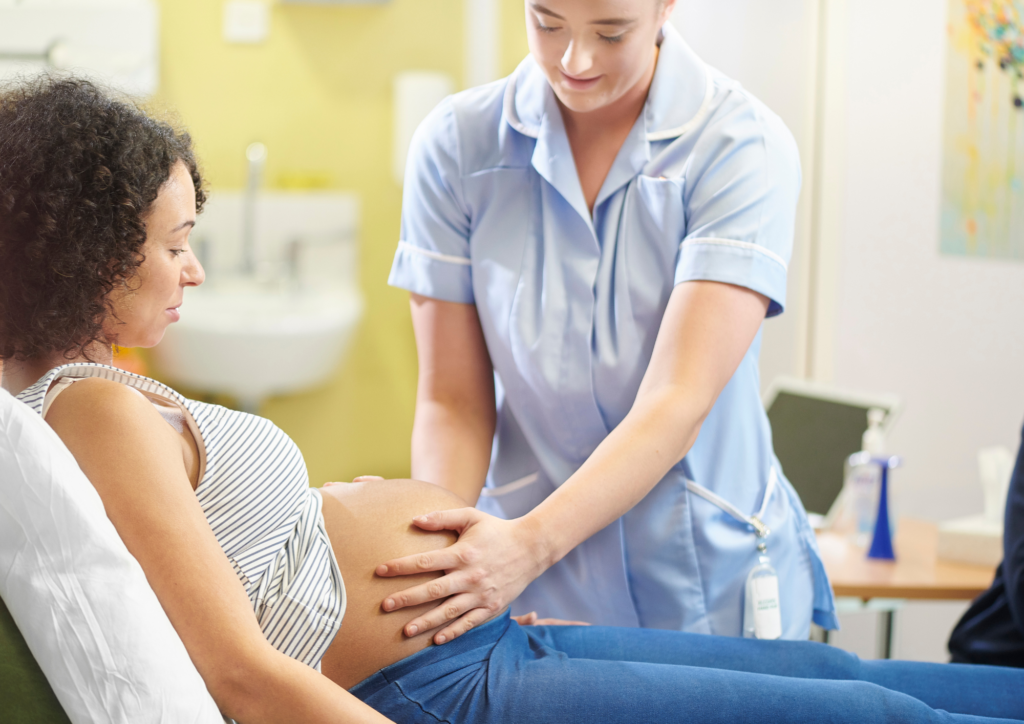
Midwives are trained healthcare professionals who specialise in supporting low-risk pregnancies and natural childbirth. They provide hands-on, personalised care throughout pregnancy, labour, and postpartum. In both the UK and the US, midwives focus on emotional support, patient-centred care, and avoiding unnecessary medical interventions. However, certified midwives have varying levels of training depending on the country. For example:
In the UK, midwives are highly trained professionals registered with the Nursing and Midwifery Council (NMC). They can provide care throughout pregnancy, delivery, and postpartum, even in hospital settings, and work closely with obstetricians if complications arise.
In the US, certified nurse midwives (CNMs) are licensed healthcare providers who can prescribe medication and manage labour, but they typically refer to obstetricians if surgical procedures like C-sections are necessary.
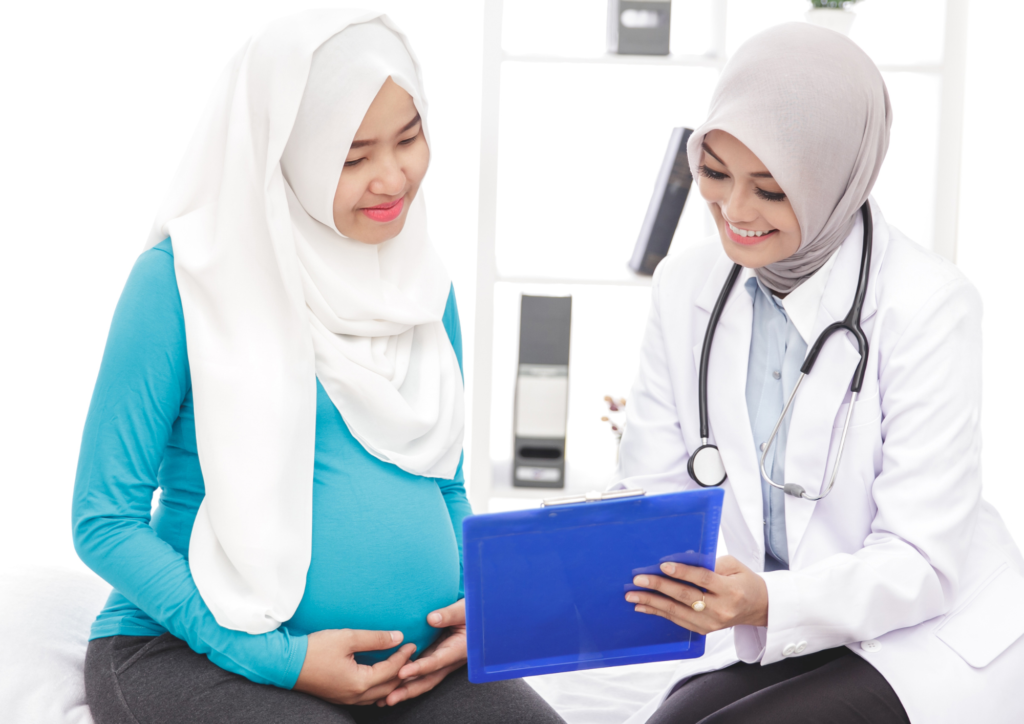
Doctors, specifically obstetricians (OBGYNs), are medical professionals who have completed years of medical school and specialised training in pregnancy and childbirth. They are equipped to handle both low- and high-risk pregnancies and are experts in managing complications. Their care often involves a focus on physical health and safety, making them the go-to option for those with complex medical histories or high-risk pregnancies. In both countries, obstetricians can perform surgical procedures such as caesarean sections and are more likely to recommend medical interventions, such as inducing labour.
Whether you choose a midwife or doctor, both offer excellent care tailored to your needs. Midwives may appeal to those seeking a more natural and personalised experience, while obstetricians are ideal for addressing medical complexities. Understanding the key differences in their roles will help you make the best choice for your pregnancy journey, whether you’re in the UK or the US.
Midwives and the care they provide
Midwives play a vital role in pregnancy care, focusing on a holistic approach that prioritises the wellbeing of you and baby. They provide hands-on support, build trusting relationships with their patients, and often act as advocates for natural birth practices. Midwives are well-suited for low-risk pregnancies, but they also have protocols in place to ensure the safety of mothers and babies should complications arise.
How does a midwife’s education differ from an OBGYN’s/doctor’s?
While both midwives and obstetricians are trained to care for pregnant women, their education and training paths differ. Midwives, such as certified nurse midwives (CNMs) in the US or registered midwives in the UK, complete specialised midwifery education programs. These programs focus on normal, low-risk pregnancies, emphasising natural childbirth and patient-centred care.
In contrast, obstetricians undergo years of medical school, followed by a residency in obstetrics and gynaecology. Their training includes a broader focus on medical and surgical procedures, equipping them to manage high-risk pregnancies and complications. While midwives focus on supporting physiological births, obstetricians are skilled in performing interventions like caesarean sections and handling complex medical situations. Both paths require rigorous training but cater to different types of care needs.
Factor
Midwife
Doctor (OBGYN)
Education Level
Nursing/Midwifery Degree
Medical Degree (MBBS, MD, etc.)
Years of Study
3-5 years
10+ years (medical school + residency)
Focus
Normal, low-risk pregnancies
Low- and high-risk pregnancies, surgery
Certification (UK/US)
Registered Midwife (UK), CNM (US)
Obstetrician certified by RCOG (UK) or ABOG (US)
Scope of Practice
Non-surgical
Includes surgery (e.g., C-sections)
How do midwives deal with labour complications?
Midwives are trained to identify and respond to complications during pregnancy and labour. They are skilled in managing common issues, such as stalled labour or minor blood pressure changes, and use evidence-based techniques to promote a healthy delivery. For example, they might suggest positional changes during labour or natural methods to encourage contractions.
However, in cases of significant complications, such as signs of foetal distress or a need for surgical intervention, midwives collaborate with obstetricians or refer care to a doctor. This partnership allows midwives to focus on their strengths—providing individualised, empathetic support—while making sure medical expertise is available when needed. For high-risk pregnancies, midwives may work as part of a team, ensuring all bases are covered for safe delivery.
Midwives’ adaptability and teamwork make them a valuable part of the healthcare system, as they offer safe and supportive care tailored to the needs of each pregnancy.
Doctors/OBGYNs and the care they provide
Obstetricians, commonly referred to as OBGYNs, are medical doctors specialising in pregnancy, childbirth, and women’s reproductive health. Their extensive training allows them to manage a wide range of situations, from routine care to high-risk pregnancies that require close monitoring and medical interventions. OBGYNs are an essential part of the healthcare system, offering expertise that ensures the safety and wellbeing of both mother and baby, regardless of the complexity of the pregnancy.
OBGYNs are particularly skilled in identifying and addressing complications that may arise during pregnancy. For high-risk pregnancies—such as those involving pre-existing medical conditions, multiple pregnancies, or concerns about foetal development—an OBGYN’s ability to assess and respond swiftly is invaluable. They use advanced tools like ultrasounds, foetal monitors, and diagnostic tests to closely monitor both the baby’s health and the mother’s condition.
In hospital settings, doctors/OBGYNs are often the primary care providers, offering immediate access to a range of medical procedures. These include inducing labour, administering epidurals, and performing caesarean sections when necessary. Their expertise in surgical and non-surgical interventions ensures that even unexpected challenges can be handled safely and efficiently.
Beyond the delivery room, obstetricians play a key role in postnatal care, helping mothers recover physically and addressing any ongoing medical concerns. Their ability to provide both routine gynaecological care and specialised obstetric services makes them a versatile choice for seeking comprehensive healthcare.
Can midwives administer pain medication?
Certified nurse midwives are equipped to manage labour pain, though their approach often emphasises non-invasive, natural comfort measures. These may include breathing techniques, hydrotherapy, and position changes to help reduce discomfort during labour. In hospital settings, CNMs can prescribe and administer certain pain relief medications, such as nitrous oxide or intravenous painkillers, and they can facilitate access to epidurals by collaborating with anaesthesiologists.
For those delivering outside of a hospital, midwives may focus more on holistic pain management techniques, as they typically don’t have access to the same medical resources. This approach makes CNMs an excellent option for individuals who want to explore natural pain relief methods with the reassurance of medical support when needed.
Can midwives perform C-sections?
Midwives are not trained to perform surgical procedures like caesarean sections. If complications arise during labour that require a C-section, the care will be transferred to an OBGYN or a surgical team. Midwives often work in close collaboration with obstetricians in hospitals or birthing centers to ensure a seamless transition if surgical intervention becomes necessary.
While midwives are highly skilled in managing low-risk pregnancies and natural births, their role does not extend to operating rooms. This distinction makes OBGYNs the preferred choice for individuals with a higher likelihood of needing surgical procedures due to high-risk pregnancies or medical conditions.
Researching obstetricians: what to know
Choosing the right obstetrician requires careful research and consideration. Credentials and experience should be your top priorities. Start by compiling a list of prospective doctors and verifying their qualifications. Your OBGYN should be board-certified and have a proven track record of successfully managing pregnancies similar to yours.
Make sure your chosen obstetrician has a clean professional history. Check if they have faced disciplinary actions, medical malpractice claims, or received subpoenas for birth injury settlements. The last thing you want is to risk your safety or your baby’s wellbeing by entrusting your care to someone with a record of negligence.
Should I have a midwife or a doctor deliver my baby?
Deciding between a midwife or a doctor to deliver your baby is a deeply personal choice that depends on several factors, including your medical history, birth preferences, and budget. Both options have their strengths, and understanding what each can offer will help you make the best decision for your unique pregnancy journey.
Medical history
Your health and the risk level of your pregnancy play a significant role in this decision. If you have a low-risk pregnancy, a midwife can provide excellent care, focusing on natural birth practices and minimal interventions. However, for high-risk pregnancies or complications such as gestational diabetes, preeclampsia, or previous cesarean deliveries, an obstetrician (OBGYN) is often the better choice. Doctors are trained to handle complex medical situations and have immediate access to surgical and advanced medical care if needed.
Birth preferences
Your vision for your birth experience is another important consideration. If you’re hoping for a natural birth with minimal medical interventions and a more hands-on, personalised approach, a midwife may align better with your preferences. Midwives often emphasise emotional support and patient involvement in decision-making, helping you feel empowered throughout labour and delivery.
On the other hand, if you prefer to deliver in a hospital setting with access to all medical options, including epidurals and emergency interventions, an OBGYN may be the right fit. Obstetricians can provide a more structured approach, which some people find reassuring, especially if complications arise.
Cost
Cost is another factor to keep in mind, particularly in the US, where healthcare expenses can vary significantly. Midwives are often a more affordable option, especially for home births or deliveries in birthing centres. However, if you’re considering hospital-based care, verify what your insurance covers for both midwives and doctors. In the UK, this decision may involve fewer financial considerations, as midwives and doctors are both accessible through the NHS for most pregnancies.
Ultimately, the choice between a midwife and a doctor comes down to your personal circumstances and what feels right for you and your family.
Cost comparison (average estimates):
US:
Midwife (home birth or birthing center): $2,000 – $4,000
Doctor (hospital delivery): $10,000 – $30,000 (with complications)
With insurance: Hospital births typically cost less, but check coverage for midwife services.
UK:
NHS: Both midwives and doctors are free for eligible individuals.
Private:
Midwife-led care: £2,000 – £5,000.
Doctor-led care: £5,000 – £15,000 (depending on interventions).
FAQs: midwife vs doctor: common questions
Do midwives deliver babies?
Yes, midwives deliver babies. They typically assist with low-risk pregnancies and can provide care in various settings, such as homes, birthing centres, and hospitals. Their focus is on supporting a natural birth process while ensuring safety.
Can midwives do gynaecology?
Certified nurse midwives (CNMs) are trained to provide gynaecological care, such as routine exams, Pap smears, and family planning advice. However, you may need to consult a gynecologist (OBGYN) for more complex gynaecological issues.
Can I have a midwife in a hospital?
Yes, many midwives, especially certified nurse midwives, work in hospital settings. They often collaborate with doctors and other healthcare professionals to ensure comprehensive care, particularly if complications arise.
Can midwives administer pain medication?
Midwives often emphasise non-invasive comfort measures, including:
Breathing techniques and guided relaxation.
Hydrotherapy (e.g., labouring in a warm bath).
Aromatherapy or acupressure.
Position changes to relieve pressure and improve labor progress.
In hospital settings, certified nurse midwives can also administer:
Epidurals (in collaboration with an anesthesiologist).
Nitrous oxide (laughing gas).
Intravenous (IV) painkillers.
Is a midwife a doctor?
No, a midwife is not a doctor. Midwives are trained healthcare professionals specialising in childbirth and women’s reproductive health, but they do not attend medical school or perform surgeries like doctors do.
Can midwives perform C-sections?
Midwives cannot perform C-sections, but they often collaborate with obstetricians in hospitals. According to the World Health Organization (WHO), approximately 21% of all births globally are delivered via C-section, with higher rates in hospital settings. For individuals planning a natural birth, starting with a midwife can reduce the likelihood of surgical interventions unless medically necessary
Are midwives as good as doctors?
Midwives and doctors serve different roles, and their effectiveness depends on the context. For low-risk pregnancies, midwives often provide excellent care with a focus on personalised and natural birthing experiences. Doctors are better equipped to handle high-risk pregnancies or complications.
Can I have a midwife and an OB-GYN?
Research from The Cochrane Review indicates that midwife-led continuity models of care are associated with several benefits compared to other models:
16% reduced likelihood of losing the baby before 24 weeks: There was a decreased risk of foetal loss before 24 weeks’ gestation in midwife-led care models.
Higher rates of spontaneous vaginal births: Women under midwife-led care had increased chances of having a spontaneous vaginal birth.
However, obstetricians are better suited for managing high-risk pregnancies or medical complications requiring surgical interventions.
What is the difference between a midwife and a doula?
A midwife provides medical care during pregnancy, labour, and postpartum, while a doula offers emotional, physical, and informational support. Doulas do not perform medical tasks but focus on advocacy and comfort.
Choosing between a midwife or a doctor to deliver your baby is a deeply personal decision that depends on your medical history, birth preferences, and the level of care you envision for your pregnancy. Midwives offer personalised, holistic support and are ideal for low-risk pregnancies, while obstetricians bring the medical expertise necessary for high-risk situations and surgical interventions.
Whether you choose a midwife for a natural, low-intervention approach or an obstetrician for their specialised skills and access to advanced medical care, the most important thing is that you feel supported, safe, and confident in your decision. Pregnancy is a unique journey, and with the right care team by your side, you can have a positive and empowering experience as you welcome your baby into the world.
*Collaborative feature post*
How to sleep with pillows when pregnant
Pregnancy is an exhilarating yet challenging journey, and one of the most common challenges is getting a good night’s sleep. Pregnancy also brings on new discomforts, such as back pain, leg cramps, frequent urination, and acid reflux, which can disrupt your rest, leaving you feeling more exhausted than ever.
Thankfully, pregnancy pillows can make a huge difference. Specially designed to support your growing bump, back, and legs, these pillows can help you sleep more comfortably and reduce strain on your body. If you’re not sure about what pregnancy pillows to get, then not to worry, Motherhood Diaries and My Dvija will not only show you how to sleep with pillows when pregnant, but what type of pillows are available, the best sleeping positions to try and relaxation techniques on how to improve your sleep quality during pregnancy.
Let’s dive in!
What is a pregnancy pillow and when should you start using one?
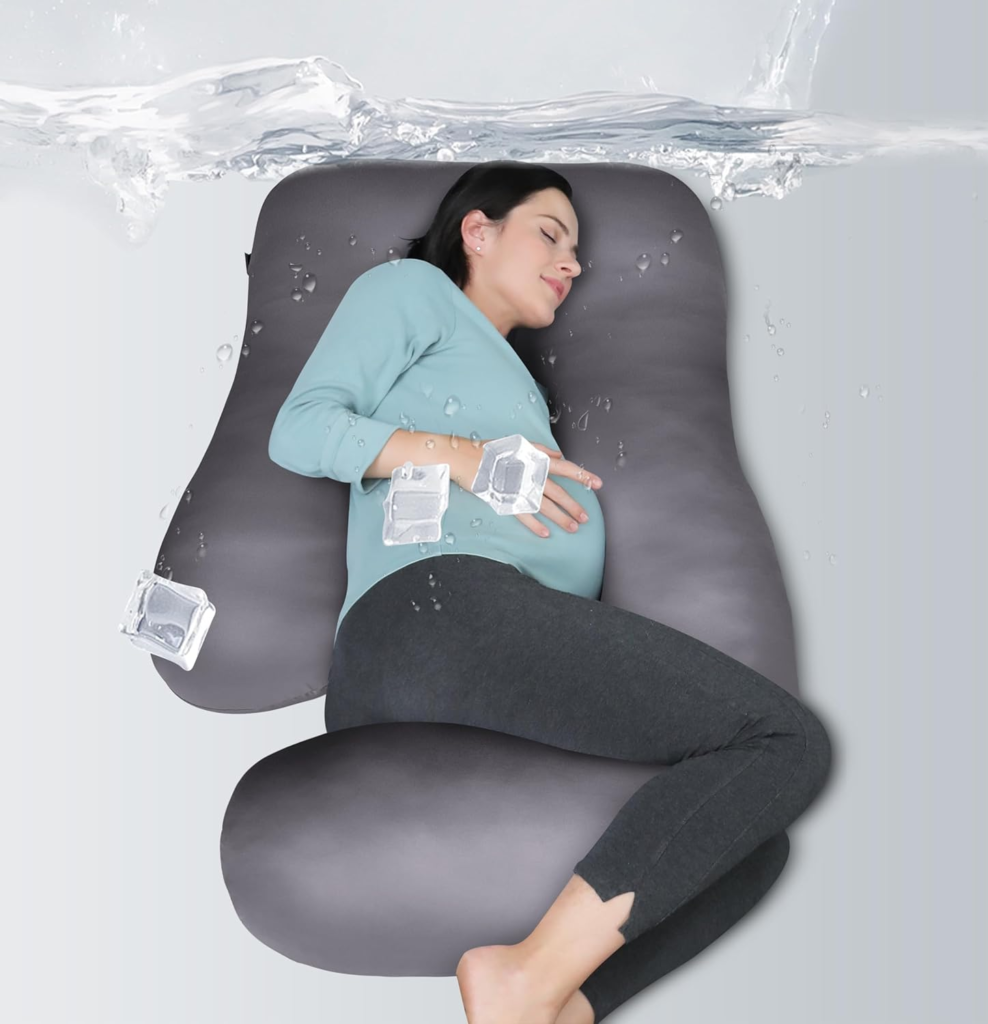
A pregnancy pillow is a specially designed pillow that provides full-body support, cradling your bump, back, and legs. Pregnancy pillows come in various shapes and sizes, including U-shaped, C-shaped, and wedge pillows. These pillows offer support to help alleviate pain and pressure, making it easier to sleep comfortably as your pregnancy progresses.
Many women start using pregnancy pillows as soon as they begin to feel discomfort, typically around the second trimester. However, you can start using one as soon as you notice your sleep being affected by physical discomfort or restlessness. In your third trimester, a supportive pillow becomes essential to managing your growing belly and promoting a comfortable sleep position.
Tools to aid sleep for pregnant women
Pregnancy pillows
Pregnancy/maternity pillows are great because they can support the weight of your bump and back as you get bigger, encouraging less disruption during sleep.
Maternity pillows come in all shapes and sizes, so here is a rundown of what to look for:
Rounded pregnancy pillows
Rounded pregnancy pillows are generally multifunctional and also used for breastfeeding. They’re also cheaper and require less space in the bed. You place the pillow under your bump or to support your back, but during the latter stages, you may require extra support as most of these pillows don’t wrap all the way around.
CLICK HERE* TO BUY THE BEST ROUNDED PREGNANCY PILLOW ON AMAZON
V Shaped pregnancy pillows
V-shaped pregnancy pillows are naturally shaped into a V to support both the head and neck. You can also use this kind of pillow to support the bump or the back so it’s multifunctional too. These pillows are best used if you don’t have enough space to use a full-body pregnancy pillow, like the one below.
CLICK HERE* TO VIEW V SHAPED PREGNANCY PILLOWS ON AMAZON RIGHT NOW
Full body pregnancy pillows
Full body pregnancy pillows* are the pillow of choice at the moment because they provide the most all-round support for your bump and back. You can mould the U-shaped pillow to support the entire body which helps ease pregnancy symptoms, including pregnancy-induced sciatica and pelvic girdle pain. Some pregnancy pillows like the one on the left have a detachable extension which can be used as its own full body pillow or attached to the main body pillow for additional back or belly support. Just make sure you have a large bed to accommodate for the pillow, which brings me onto my next point.
CLICK HERE* TO BUY THE BEST FULL BODY PREGNANCY PILLOW ON AMAZON RIGHT NOW
Bed frames
Thanks to your growing body you’ll soon start to find that you’ll take up quite a good chunk of the bed, especially when you have full body pregnancy pillows* taking up one side. If you can and you have space, invest in a super king-size bed so your partner (and any extra kids) can cuddle up to you while still having ample space in the bed.
A firm wooden frame with wooden feet will provide enough stability to house an extra bump in bed. The Birlea Balmoral Grey Fabric Bed in Superking size has a large headboard with a soft velvet feel to offer the perfect comfort when you’re cuddling up with your baby bump and partner or when you’re stretched out like a starfish.
A comfortable mattress
A strong bed frame is important, but a comfortable and supportive mattress is essential.
Look for a mattress which has/is:
Memory foam to mould perfectly to your body and adapt to your growing bump. You can find fully adjustable mattresses from Ausbeds.
A breathable mattress with Octasprings which provides 8x more breathable fabric than pure memory foam. The constant airflow keeps the mattress cool when you’re overheating from that energetic bump!
A hypo-allergenic mattress to keep allergies away and protect against dust mites and bacteria, so you have the healthiest sleeping environment for you and your baby
Medium firmness which allows for the mattress to not be too hard or too soft (so it’s just right!)
Supportive – Find a mattress which also provides optimal support for your head, shoulders and hips, so your hips are not singing in pain when you’re lying on your side for too long
As your bump grows, it becomes harder to find a comfortable sleeping position. Some positions, like sleeping on your back or stomach, may not be safe later in pregnancy.
An NIH-funded study suggested that the sleeping position up to the 30th week of pregnancy didn’t actually affect the risk of stillbirth, low birth weight babies or other pregnancy disorders like high blood pressure. However, the study cautioned that it did not provide information on whether back or right-side sleeping in late pregnancy could increase the risk of birth or pregnancy complications.
So let’s look at all the sleep positions separately and gauge which is the most effective and safest position in which to sleep during pregnancy.
Sleeping on your stomach during pregnancy
Sleeping on your stomach is generally regarded as ok until you reach around 16 weeks, when the bump gets bigger and it’s no longer comfortable to sleep on your front. But, comfort is where it ends. Amniotic fluid and the uterine walls protect your baby from being squashed, so you won’t have to worry about squishing your baby during sleep.
If you really want to continue sleeping on your stomach, you should consider getting an inflatable stomach sleeping pillow (more on that below) or cut out a large hole in your pillow for your belly. Just be careful not to overheat the baby if your room is too hot and allow for plenty of ventilation during the night.
Sleeping on your back while pregnant
Sleeping on your back is generally regarded as safe during the first trimester, but from the second trimester, you should avoid sleeping on your back for the remainder of the pregnancy. New research shows that the risk of stillbirth is doubled if women go to sleep on their backs in the third trimester. And, some other studies, albeit small in size, have linked sleeping the whole night on your back to stillbirth, however, it is not as clear cut as that. Other issues like sleep apnea may also factor in pregnancy and birth complications too.
Sleeping on your back may also result in other complications like poor circulation, back pain, digestive issues and haemorrhoids. As you get on during the pregnancy, you may find that you’ll get lightheaded and dizzy when sleeping on your back for long periods anyway.
If you wake up in the middle of the night and find that you’re on your back, don’t fret. Placing a pillow wedge underneath will catch you from rolling onto your back and allow for more circulation and blood flow to your baby.
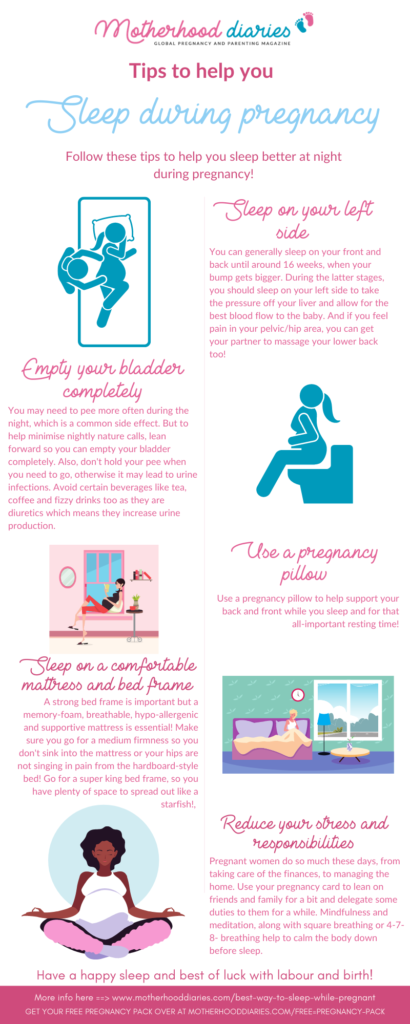
Sleeping on your left side
During pregnancy, you may often hear that you should sleep on your left side during pregnancy. But, do you know why that is?
It’s because your liver is on the right side of your bump, so sleeping on your left side not only keeps the uterus off the liver, but it improves circulation to the heart and allows for the best blood flow to the baby, kidneys and your uterus. Using a U-shaped pregnancy pillow can help maintain this position throughout the night by offering belly support and keeping your hips aligned.
But, it hurts to sleep on my side while pregnant
You may feel some pelvic pain from sleeping on your left side for too long, so you’ll find that changing position during sleep is a natural occurrence. So if you find yourself on your back or on your right side, this is normal and nothing to worry about. As soon as you realise just shift yourself back to your left side.
Start by lying on your side with your knees bent to take the weight off your heart’s large vein (the inferior vena cava) which carries blood back to the heart from your feet and legs. Then as you progress into the latter stages of your pregnancy, add pillows to your front and back to support the weight evenly.
Propping with a C-Shaped Pillow
C-shaped pillows are ideal for women experiencing lower back pain. Tuck the curve of the pillow behind you for back support, and place the long part of the pillow between your legs to help align your hips and reduce strain.
If you prefer sleeping on your side but need more support for your growing bump, you can place a pregnancy wedge pillow under your belly to alleviate pressure. This specific pillow can help relieve discomfort in the pelvic area.
Sleeping upright to prevent acid reflux
If you suffer from acid reflux or heartburn, consider propping yourself up with pillows to sleep in a more upright position. This can help prevent stomach acid from travelling up the oesophagus during sleep, promoting better blood flow and reducing discomfort. But in late pregnancy, you may find that you’ll be short of breath, so it’s better to switch to your left side when you are ready to settle to sleep at night.
Common sleep problems during pregnancy
The National Sleep Foundation created a poll in 1998 called the ‘Women and Sleep’ poll. They found that a whopping 78% of women reported more sleep disturbance during pregnancy than at any other time. They also found that:
15% of women developed restless leg syndrome (which we’ll go into later) during the third trimester of pregnancy
51% of pregnant/recently pregnant women reported having at least one weekday nap
60% reported having at least one weekend nap
Difficulty sleeping is common during pregnancy, so it’s vital to find ways to sleep that minimises disruption to your body and any health risks to the baby. Pregnancy is taxing on the body so it’s really important that you’re getting the recommended daily amount of sleep (some of you will sleep like a champion during the first trimester anyway) so you’re fit and strong for not just pregnancy, but for labour and birth too.
Pregnant women often experience a variety of sleep disturbances. Here are some common issues and how you can address them:
Frequent urination
Increased blood volume and pressure on your bladder can lead to more bathroom trips during the night. To minimise disruptions, limit your fluid intake before bedtime and make sure to empty your bladder completely before going to sleep.
You’ll find, especially in the first and third trimesters that you’ll need to go to the toilet more often, and this is down to the following reasons:
Your blood volume increases during pregnancy
You have almost 50 per cent more blood in your body than before which means more fluid is being processed in your kidneys, so your bladder fills up more frequently.
Hormonal changes
The hormonal changes in your body make your blood flow to your kidneys more quickly, filling up your bladder more frequently too.
Your growing uterus
As your little angel grows in your tummy, your uterus grows along with them, adding more pressure to your bladder, which brings back the need to pee frequently.
What can you do?
Unfortunately, frequent urination is a common and natural symptom of pregnancy, so you can’t avoid it completely. But you can limit nightly bathroom visits by doing the following:
Skip certain drinks
Skip drinks like coffee and tea, as well as carbonated drinks like soda because they are diuretics, i.e. they increase the amount of urine being made in the body.
Don’t hold your pee
Go to the bathroom when you need to because the more you strain your pelvic floor muscles, the more they will weaken, especially during pregnancy and birth.
Empty your bladder completely
When you go to the toilet, lean forward so you can empty your bladder as much as possible.
Drink most of your water during the day
You should still drink when thirsty of course, but try to limit most of your water intake to during the day. Never hold off on drinking though – the body needs lots of water, especially during pregnancy, so it’s better to go to the toilet than be dehydrated and risk getting a urine infection, which could cause complications to you and the baby.
Restless leg syndrome (RLS)
Around 1 in 5 pregnant women experience RLS in their last three months of pregnancy and this normally causes sleep issues. But what exactly is RLS?
RLS is this overwhelming urge to move your legs, which can also cause an unpleasant crawling or creeping sensation in the feet, calves and thighs. RLS is often worse in the evening and may affect the arms too. There’s no obvious cause of RLS, but some scientists reckon it may have something to do with how the body handles the chemical dopamine which is involved in controlling muscle movement. The problem does go away after birth though.
What can you do?
You can start by making sure you have a good bedtime routine and avoid caffeine at night too. Get in some gentle exercise every day during pregnancy as well to help get rid of any excess negative energy.
Leg cramps
You may feel this sudden sharp pain usually in your calf muscles or your feet which causes you to wake abruptly from your slumber. Around 30 to 50 per cent of women get leg cramps during pregnancy so leg cramps are a common part of pregnancy.
But why do you get leg cramps? Well, it’s not entirely clear why women get leg cramps, but scientists suggest little or too much exercise, an imbalanced metabolism, electrolyte imbalances or vitamin indeficiencies. The good news is leg cramps should disappear as soon as your baby is born.
What can you do?
Regular, gentle exercise will help to reduce leg cramps and often help ease symptoms when it happens too. When you experience an attack, do the following:
Bend and stretch your foot continuously and vigorously for around 30 seconds to 1 minute
Rotate the foot one way for around ten times and then the other way. Repeat with the other foot if needed.
Then with your fingers, pull your toes up to the ceiling to stretch the back of the calf and rub the muscle firmly at the same time with the other hand
Try getting out of bed and walking around on your heels before heading back to sleep
Keep bedding loose so you can do these exercises as and when needed without hopefully disturbing sleep or getting out of bed
Have a nice warm bath before bed to relax the muscles
Elevate your feet in bed by propping them up on a pillow with toes pointing up.
Insomnia
Fluctuating hormones, anxiety, and physical discomfort can all contribute to pregnancy insomnia, which can happen at any time during pregnancy and, with most pregnancy-induced problems, can be down to the fluctuating hormonal levels during pregnancy.
For most women, pregnancy insomnia attacks the hardest during the third trimester and you likely will have no idea when it will hit and how long it will end. You may find that you’ll fall asleep easily but staying asleep could be the issue.
What can you do?
Help your mind and body get into a set routine so your biological clock knows when it’s bedtime and your brain can get in line.
Avoid caffeine (you should be avoiding this anyway) and foods high in sugar and acid to avoid heartburn and/or a sudden burst in energy
It’s easier said than done but try to take your mind off your worries about not sleeping by thinking about something that makes you happy.
Practice the 4-7-8 breathing technique where you breathe in for four seconds, hold for seven seconds and exhale for eight. You might find the breathing duration difficult when you’re pregnant but as long as you are exhaling for longer than you are inhaling, the breathing will help you to calm down and eventually allow you to drift off to sleep.
Sleep apnea
Your breathing may change during pregnancy as your bump gets bigger and more pressure is placed on your lungs and airways. If you didn’t snore before or you were a soft snorer, you may find you’ll wake the house now with your loud snores. You may even experience some pauses or disruption in breathing and this disruption is called sleep apnea if the pauses last longer than ten seconds. Fortunately, the risk of developing sleep apnea in pregnancy is low – around 10 per cent of pregnant women are affected. However, if you’re overweight, obese, or experience excessive weight gain during your pregnancy, you may have an increased risk of developing sleep apnea.
What can you do?
It’s important to treat pregnancy-related sleep apnea as soon as possible as it could develop into complications for both you and your baby. Sleep apnea is also associated with gestational diabetes, diabetes and unplanned caesarean sections, so make sure you’re eating a healthy, balanced diet during your pregnancy. Make sure you sleep on your side too, to alleviate any pressure on the back and lungs
In severe cases treatment is available where a machine provides a constant flow of pressurised air to help maintain an open airway during the night. These are only used in extreme cases, but it’s worth checking with your doctor to ensure your sleep apnea is not placing any undue risk on you and your baby.
Otherwise known as heartburn, which is a common pregnancy symptom in the third trimester thanks to hormonal changes again and your growing baby pressing on your stomach. The muscles in your stomach relax during pregnancy causing stomach acid to escape back up the throat, which causes that burning sensation.
You’re likely to get indigestion/heartburn if you had indigestion in your previous pregnancies or you’re in the latter stages of your pregnancy.
Some symptoms include:
Feeling or being sick
Burning or pain in your chest and throat
Feeling heavy, bloated and full
Burping/belching
Bringing up food
What can you do?
Think about what you eat and how you eat it. Making changes to your eating and drinking habits can help to control symptoms if they are mild. Here are some tips:
Keep meals small and often rather than eating three large meals a day.
Don’t eat within three hours of going to bed at night
Cut down on caffeinated drinks and fatty, spicy and rich foods
Sit upright when you eat which will take the pressure off your stomach
Elevating your head and shoulders when you go to bed can help from stomach acid coming up when you sleep
Smoking and drinking can seriously harm you and your unborn baby’s health, but it also contributes to indigestion. If you need help to stop smoking and/or drinking talk to your midwife who can provide you with some support networks that you can call. NHS also has a Smokefree helpline which you can call on 0300 123 1044
If you’re still experiencing symptoms then speak to your midwife or GP who can examine you and provide further assistance and medicine if required
Excessive sleeping during pregnancy
Not getting enough sleep is an issue, but what if you’re getting too much sleep? Is there even such a thing as too much sleep during pregnancy?
According to the National Sleep Foundation, you should get around seven to nine hours of sleep each day. If you’re routinely sleeping more than nine to ten hours unbroken, good quality sleep, then this may be a sign of excessive sleep.
One study argued that women who slept for more than nine continuous hours without disturbance and they routinely had non-restless sleep in the last month of their pregnancy had a greater chance of stillbirth. However, this study was argued by other scientists who claimed that the non-restless nights were down to decreased foetal movement and not the cause of stillbirth.
What can you do?
If you are routinely sleeping for more than nine hours a night, then wow, lucky you! But it’s worth keeping some of those hours resting in bed, reading a book or writing, for example, to avoid oversleeping during the night.
Other major causes of sleep disturbance during pregnancy
Hormonal changes play a significant role in sleep disruption during pregnancy. Physical discomforts also contribute to restless nights for many pregnant women.
Exposure to technology
Blue light from digital screens can interfere with sleep quality. It affects the release of melatonin, a hormone that regulates sleep cycles. Pregnant women using electronic devices before bed may struggle more with falling asleep.
Hormonal changes
As mentioned before, hormonal changes during pregnancy significantly impact sleep patterns. Hormones like progesterone rise and can cause daytime drowsiness, which disrupts normal sleep cycles at night. Increased levels of oestrogen also lead to more frequent bathroom trips, interrupting deep sleep.
Lack of a healthy routine
An inconsistent schedule can lead to poor sleep quality and disrupted sleep patterns. Pregnant women who do not follow a regular bedtime may find themselves struggling with insomnia or waking up frequently at night.
Best pregnancy pillows 2024
With so many pregnancy pillows on the market, it can be hard to know which one to choose. Here are some top-rated options, along with their pros, cons, and where to buy them:
1. WEIKA Memory Foam Pregnancy Pillows for Sleeping
Price: £35.99 Rating: 4.8 out of 5 stars (41 ratings) Special Features: Portable, lightweight, adjustable, detachable cover, breathable. This pillow* provides excellent full-body support making it perfect for supporting your bump, back, neck, and legs. With its concave curve, ideal for side sleepers. The adjustable design allows you to customise it for your growing belly, hips, back, and legs. Its memory foam adapts to your body temperature, distributing pressure for optimal comfort. It also comes with a machine-washable cover. It’s also multi-purpose, as it can be used for breastfeeding or to support older babies during playtime. Best for: Pregnant women in all stages, relieving pain and discomfort in multiple areas.
2. Kolbray®️ U Shape Pregnancy Pillow – Full Body Maternity Pillow
Price: £42.99 Rating: 4.6 out of 5 stars (2,291 ratings) Special Features: Adjustable, includes a removable jersey cover. A UK-made pillow*, this U-shaped design provides full-body support for back, belly, legs, and hips. It comes with a detachable extension, so you can use it as a nursing pillow or for added comfort while sleeping. The soft-knit jersey cover keeps you cool throughout the night, and the machine-washable cover is easy to clean. Best for: All sizes and body types, providing comfort from pregnancy to nursing.
3. MOON PARK Pregnancy Pillows for Sleeping – U Shaped Full Body Maternity Pillow
Price: £71.28 Rating: 4.6 out of 5 stars (1,404 ratings) Special Features: Cooling cover, flexible, full-body support. This 57-inch pregnancy pillow* is designed with ergonomic features to support every part of your body, from your head to your feet. The cooling cover ensures that you don’t overheat, and the pillow provides relief from back pain, leg swelling, and other pregnancy discomforts. It is versatile enough to be used while nursing, reading, or relaxing. Best for: Pregnant women needing both comfort and cooling during sleep.
Price: £37.43 Rating: 4.6 out of 5 stars (965 ratings) Special Features: Flexible, removable, durable. This 57-inch full-body pregnancy pillow * offers premium comfort, replacing the need for multiple pillows. It supports your head, back, belly, sides, knees, hips, and feet. The polyester filling provides long-lasting support while maintaining its shape over time. Its soft, removable cover can be machine washed, making it ideal for frequent use. Best for: Expectant mothers looking for long-term support and versatility for various body positions.
Here are some additional tips to improve your sleep during pregnancy:
1. Develop a sleep routine
Establish a bedtime ritual that signals your body it’s time for rest. Engage in calming activities like reading, taking a warm bath, or practising gentle stretches before bed. Avoid using electronic devices as they can interfere with your ability to wind down. Consistent routines will help ensure quality sleep.
2. Stay active
Regular exercise can significantly enhance sleep quality during pregnancy. Engaging in physical activity helps reduce anxiety and fatigue, making it easier to fall asleep and stay asleep.
3. Limit caffeine and heavy meals
Caffeine, nicotine, and alcohol can significantly interfere with sleep quality during pregnancy. Opt for herbal teas or warm milk as bedtime beverages instead of caffeinated options.
4. Manage acid reflux
If you suffer from acid reflux, avoid lying down immediately after eating and try to elevate your head when you sleep to prevent heartburn.
5. Back massage
Lying on one side for too long can cause hip and lower back pain, so get your partner to massage the lower back to relieve some of the pressure built up when lying in one position for too long.
6. Nasal strips
You may find during pregnancy that you’re stuffy, even if you don’t have a cold. So if the snoring is waking up the whole town or the congestion is waking you up at night, your doctor may advise nasal strips to help open the airways and relieve nasal congestion.
CLICK HERE* TO BUY THE BEST NASAL STRIPS ON AMAZON RIGHT NOW
7. Diet can help
A ‘Sleep and Dietary Patterns in Pregnancy’ study in 2017 found that a good diet may help pregnant women sleep better at around 26 – 28 weeks gestation, with the Mediterranean diet coming up at the top of the list to helping combat sleep problems like insomnia. The Mediterranean diet is high in vegetables, legumes, fruits, cereals and fish, but low in dairy, saturated fat and alcohol, so it seems laying off heavy, unhealthy food and drink might help you to sleep at night.
The same study found that the Japanese diet which is rich in rice lowered the risk of poor sleep quality by 46 per cent. Suggested explanations were that rice has a high glycaemic index and is also high in melatonin which is the natural chemical we make in our bodies to help us sleep. Apparently even eating less of the seafood-noodle pattern can help you sleep better too!
8. Reduce your stress and responsibilities
We live in an age where we are sharing parental roles and duties. No longer does the old-school man-makes-fire-brings-in-the-bread-woman-is-the-homemaker work in this cultural and digital world.
This is great! Women can now be free from the kitchen-sink role and express themselves in the workplace, through their business, and at home, all while growing a baby. And, incidentally, men can take a more paternal role and share the load of looking after the kids.
However, because of the extra responsibility, sleep often gets pushed to the back of the priority list, resulting in sleep deprivation during pregnancy, which this study found was linked to postnatal depression, complicated birth and preterm delivery due to more pro-inflammatory serum cytokines released from the lack of sleep.
What does this mean?
It means that your mental health is affected as much as your physical health and when you’re pregnant you need sufficient sleep to nourish the development of your baby. This topic begs its own article but I found that running a business while being pregnant often didn’t help me get to sleep at night because I would be tapping away on my laptop screen for a long period while worrying about finances and whether we could afford to move to a bigger place.
Sometimes you have to learn to delegate certain duties and so I leaned more on my husband and parents to help me get through the tough later months of pregnancy and the vital fourth trimester where they did the school runs for me and took over some of the bills, of which I was very grateful because I needed the recovery time!
9. Mindfulness and meditation
Mindfulness and meditation, along with the 4-7-8 breathing technique can help to reduce some of the stress you feel during pregnancy. Breathing is a fantastic tool to instantly calm the body down and can even help to drift you off into the land of nod. Click here for more information on how mindfulness and meditation work to help you sleep during pregnancy.
One study urged that due to the high percentage of women who experience significant sleep disruption during pregnancy, there should be regular screening and treatment provided for sleep disturbances, especially the impact that sleep disruption has on the pregnancy, the baby and postnatal depression. I think this is a great idea!
It’s important that if you are finding it difficult to sleep during pregnancy, you should speak to your doctor, who can provide you with actionable, manageable steps to help you sleep better during pregnancy.
FAQ Section: How to sleep with pillows when pregnant
How should you sleep with a pregnancy pillow?
Sleeping with a pregnancy pillow depends on the type of pillow you have. For example, a U-shaped pillow can be used to support your entire body, while a wedge pillow is placed under your belly to relieve pressure.
When should you start using a pregnancy pillow?
Most women start using a pregnancy pillow during their second trimester when they begin to experience discomfort while sleeping.
Is it safe to sleep on your back while pregnant?
It is generally not recommended to sleep on your back during the second and third trimesters.
Can you sleep on your stomach while pregnant?
Sleeping on your stomach is usually fine in the early stages of pregnancy. However, by the second trimester, your bump may make it uncomfortable.
Final thoughts on sleep during pregnancy
Sleeping during pregnancy can be a challenge, but with the right tools, techniques, and support, you can improve your rest. Whether you’re using a pregnancy pillow, following a consistent sleep routine, or practising relaxation techniques, every small change can make a big difference.
Always consult your healthcare provider if you have concerns about your sleep during pregnancy. Their guidance, combined with these tips, can help ensure you get the restful sleep you need.
*Motherhood Diaries was gifted a Superking bed frame from Mattressman and a Superking mattress from Wayfair for the purposes of a review, but all opinions are 100% our own.
*This is a collaborative feature article, which also contains affiliate links, where if you click through and purchase, I may earn a small commission at no extra cost to you. Thank you for your support.
*As an Amazon Associate I earn from qualifying purchases.*
How to deal with an unsupportive husband during pregnancy
During pregnancy, it sometimes feels like you’ve signed up as a round-the-clock baby caterer. Finding time for yourself can seem nearly impossible between the morning sickness, mood swings, and preparing for your new arrival. Add an unsupportive partner into the mix, and it feels like you’re fighting an uphill battle. But here’s the thing: sharing the load during pregnancy is not only doable, it’s essential for your mental health and overall family welfare.
Whether you’re dealing with a partner who’s overwhelmed, distant, or simply clueless, there are ways to cope and even bring them on board. Because trust me, you deserve the support, and it’s vital for a healthy relationship. Let’s dive into how to deal with an unsupportive husband during pregnancy.
1. Establish open communication
Why it matters: Whether your partner is distant or just not as hands-on as you’d like, open communication is the first step toward maintaining your emotional health. Pregnancy is already a time full of emotional changes and physical symptoms, and having a partner who is a good listener and provides practical support can make all the difference. Without it, unresolved issues can lead to feelings of emotional distress.
How to do it: Set aside time for a proper chat. Lay your cards on the table—discuss how you’re feeling, what you’re finding hard, and what you need from them. This conversation is essential for a healthy pregnancy and ensures that you both understand each other’s emotional needs. It’s also a great way to prevent future hurtful comments or miscommunications. Getting these conversations out of the way early prevents any build-up of resentment or confusion as you both adjust to new roles.
2. Create a feeding system that includes your partner
Why it matters: Sharing the load of duties is crucial for both you and your partner. Whether you’re planning to breastfeed or use formula, allowing your partner to step in creates time for you to relax and focus on yourself. It’s also an excellent way to reduce the emotional distress that can come from doing it all alone, especially during the first trimester, when the physical and hormonal changes are most challenging.
How to do it: If you’re planning to breastfeed, pumping can allow your partner to grab a good baby milk bottle and step in during night feeds or when you need to take some “me time.” This is important not only for your mental health but also for your partner’s connection with the baby. Remember, shared baby care builds strong emotional bonds, creating a healthier family dynamic.
Tip: Shared feeding time is a good idea because it will help your partner connect with your baby and give you a well-deserved break to focus on your own emotional needs.
3. Lean on technology
Why it matters: These days, technology can help you keep track of all those little things, like feeding schedules and baby’s naps. Using baby tracking apps can reduce stress by keeping both you and your partner on the same page, especially during those tough times when sleep is scarce.
How to do it: When the time comes, sync baby apps with your partner’s phone, so you both know who’s doing what, whether it’s nappy changes, feeds, or tracking emotional milestones like your baby’s first smile. It helps avoid repeating tasks and ensures that you’re sharing responsibilities equally, which is a sign of a healthy relationship. Plus, these tools allow you both to stay organised, which is crucial for new parents.
Tip: Using technology to streamline baby care can not only prepare you for your baby but also get him involved in pre-baby preparations and improve your family welfare by reducing the mental load on both parents.
4. Utilise your support network
Why it matters: If your partner isn’t stepping up or you feel overwhelmed, it’s vital to lean on your broader support network—family, friends, or even a single-parent group. Mental health can take a hit when you’re trying to do everything on your own. Your support network can help lighten the load, offering practical support during challenging times like the first trimester or after baby’s arrival.
How to do it: Don’t be afraid to ask family members or close friends for help, whether it’s bringing over dinner or helping with pre-baby care, so you can attend antenatal courses or prenatal appointments. It’s all about teamwork, and relying on your support network is key to maintaining a healthy relationship and your emotional well-being.
Tip: If you’re struggling with a selfish or unsupportive partner, having a trusted friend or family member to talk to can provide emotional support and help you regain your strength.
5. Be assertive
Why it matters: Your needs during pregnancy are just as important as your baby’s. If you’re not getting the support you really need, don’t be afraid to speak up. Sometimes, partners don’t realise what’s needed unless it’s made clear to them. This can be especially true if they’re going through their own emotional changes or feeling overwhelmed by the weight of new responsibilities.
How to do it: Ask for specific help. Maybe it’s attending antenatal classes with you, helping with household chores, or simply providing more emotional support as you deal with morning sickness or mood swings. By clearly outlining what you need, you prevent future misunderstandings and ensure that your mental health is prioritised.
Tip: Assertiveness in communicating your needs is crucial, especially if you’re dealing with an unsupportive partner who might not be aware of the emotional impact their behaviour is having on you.
6. Schedule regular check-ins
Why it matters: Regular communication during pregnancy helps avoid emotional distress, especially as you face physical changes, emotional highs and lows, and increased responsibilities. Check-ins are vital for ensuring both partners feel supported and for discussing any emotional or practical challenges that have come up.
How to do it: Set aside time each week to sit down with your partner. These check-ins allow you to adjust to the demands of your pregnancy, address any relationship problems, and discuss upcoming baby events like the birth plan or prenatal appointments. Having these discussions early can help avoid last-minute stress, ensuring the smooth arrival of your baby.
Tip: Weekly check-ins are a great way to maintain a healthy relationship by making sure both you and your partner are on the same page about practical support and emotional needs.
7. Embrace imperfection
Why it matters: Let’s face it—things won’t always go as planned, and that’s okay! Your baby doesn’t care if their outfit doesn’t match or if the house isn’t spotless. What matters most is the emotional connection and unwavering support that both parents provide. Letting go of perfection is crucial for your mental health and for maintaining a balanced and healthy relationship.
How to do it: If your partner isn’t doing things exactly how you would, don’t stress. What’s important is that they’re trying, even if it means they occasionally fumble a nappy change or forget a prenatal appointment. Perfection is not the goal here—love and support are.
Tip: Allow your partner the space to make mistakes and learn, which can lead to a stronger emotional connection between you both.
8. Focus on yourself
Why it matters: Pregnancy is a time when your body and emotions are going through a lot, and it’s crucial to take care of yourself. Whether it’s taking time for rest or doing something that makes you feel good, focusing on your well-being helps you manage the stresses of pregnancy and ensures you’re in a good headspace to support your baby.
How to do it: Carve out time for yourself, even if it’s just a few minutes each day. Take a walk, do some gentle exercise, or indulge in a hobby that makes you happy. Practicing self-care during pregnancy can help alleviate stress and give you the emotional resilience you need to deal with any relationship problems or pregnancy symptoms.
Tip: Self-care isn’t selfish. Taking care of your emotional and physical well-being is essential for a healthy pregnancy and a strong emotional connection with your partner.
9. Consider professional help
Why it matters: If you’ve tried everything and your relationship still feels strained, consider reaching out for professional help. Sometimes, counselling is the best option for addressing deeper relationship issues, and it can provide you with the tools to navigate this challenging time.
How to do it: Couples therapy or individual counselling can offer a neutral space to discuss your concerns. If your partner is struggling with their role, therapy can help them gain a different perspective on how to provide the emotional and practical support you need during your pregnancy.
Tip: Seeking professional help is a sign of strength, not weakness. It shows that you’re committed to building a supportive and healthy relationship for the benefit of your growing family.
FAQs on how to deal with an unsupportive husband during pregnancy
Q: My partner doesn’t seem interested in my pregnancy. What’s wrong?
A: Your partner might be feeling overwhelmed or unsure of their role. Open communication can help them understand how their emotional distance affects you and your mental health.
Q: My partner and I have argued non-stop since I became pregnant. What can I do?
A: Pregnancy brings a lot of emotional changes, both for you and your partner. Regular check-ins, coupled with open communication, can help ease the tension. If arguments continue, consider relationship classes or counselling to work through the issues together.
Q: Why doesn’t my partner seem excited about the baby?
A: Some partners struggle to bond with the unborn child because they don’t experience the physical changes. The initial shock of becoming a parent can also make them feel disconnected. Bringing them along to prenatal appointments and antenatal classes can help them feel more involved.
Q: My partner is acting distant during my pregnancy. Is this normal?
A: It’s common for partners to feel unsure or overwhelmed, especially during a first pregnancy. Sometimes, they may withdraw as a coping mechanism. Creating space for open conversations can help them feel more connected and supportive.
Q: How should my husband behave during pregnancy?
A: Your husband should be emotionally supportive, provide practical help, and pay close attention to your needs. Simple things like attending prenatal appointments, helping with household chores, or providing emotional reassurance go a long way in showing unwavering support.
Q: Is it normal to fight with your partner during pregnancy?
A: Yes, pregnancy puts pressure on relationships, often because of hormonal changes, stress, and new responsibilities. It’s important to maintain open communication and schedule regular check-ins to prevent these fights from escalating into more significant relationship problems.
Q: How can I cope with an unsupportive husband during pregnancy?
A: If you’re dealing with an unsupportive or selfish husband, lean on your support network and consider setting up couples’ counselling. Assertiveness in asking for what you need and setting boundaries is crucial. Focus on your well-being and don’t hesitate to ask for practical support from family and friends.
Q: Can stress during pregnancy affect my baby?
A: Yes, prolonged stress can impact both your baby’s development and your overall pregnancy health. It’s essential to find ways to reduce stress, whether through self-care, open communication with your partner, or seeking professional help.
60 ideas for a pregnancy announcement to older siblings
Whether it’s your first time sharing the exciting news of a new baby with your little ones or you’re a seasoned pro, making the pregnancy announcement to older siblings is such a special moment. As a mum of four, I know that finding the right way to break the news can make all the difference. From creative surprises to heartfelt conversations, there’s a world of possibilities to make your child feel involved and excited about the new arrival. So, I’ve put together 60 memorable and fun sibling pregnancy announcement ideas to help you make this big news extra special. Let’s dive in!
Pregnancy announcement to older siblings
Having children is one of life’s greatest joys, but when you’re expecting again, it’s important to help your older children adjust to the idea of a new sibling. Making them feel included and valued can really smooth the transition because, after all, siblings will have each other to lean on, and a thoughtful announcement can help start that bond early. Whether you have a toddler or an older child, introducing a newborn can be a bit tricky at first, as everyone adjusts and your older kids might compete for attention. Here are 60 creative ideas to make sure the process goes as smoothly as possible when your new little one arrives.
Fun ways to tell older siblings about pregnancy
Here are 60 creative and cute ways to make your pregnancy announcement special for your older child:
Big Sib Outfit: Dress your child in a “Big Brother” or “Big Sister” T-shirt and reveal the news to family and friends with a photo. It’s a great way to announce, perfect for sharing on TikTok!
Only Child Expiring Announcement: A cute sign that says, “Only Child Expiring on [due date].” This is a funny pregnancy announcement idea that’s perfect for families with older kids.
Sidekick Coming Soon Sibling Announcement: Dress your child as a superhero and announce their new “sidekick” is coming soon. A great idea for superhero-loving siblings!
Kisses for Baby Announcement: Take a photo of your child kissing your baby bump with a caption like, “Big Kisses for Baby.” This makes a cute sibling pregnancy announcement for your baby news reveal.
Waiting on My Bestie Sibling Announcement: Use a sign or chalkboard that reads, “Waiting on my best friend to arrive!” It’s an excellent way to involve your child in the announcement.
Chalk Floor Announcement: Draw fun designs with chalk on the ground and have your child sit in the middle holding an ultrasound picture. A great thing to capture for a baby announcement idea.
Older Sibling T-shirts: Give your child a shirt that says, “Promoted to Big Brother/Sister” and snap a picture for a cute announcement. It’s the best way to make the exciting announcement.
Another Adventure Sibling Announcement: Capture a picture of your child with a sign that reads, “Another adventure begins!” Perfect for families who love adventure.
Book Sibling Pregnancy Announcement: Read a new baby book to your older child and capture their reaction for the announcement. Great for sharing a new chapter in your family’s life.
Bellies on Display: Take a picture with your older child and your baby bump on display, captioned with something sweet. A clever way to share your pregnancy news with the entire family.
Eviction Notice: Post a sign on your child’s crib or room that says, “Eviction Notice! Baby arriving [due date].” A funny sibling pregnancy announcement idea for older children!
Ultrasound Photo Surprise: Arrange a 4D scan and share an ultrasound picture with your child. Let them guess which part is which—a fun idea for older kids.
Tiny Shoes Reveal: Place a pair of baby shoes next to your child’s shoes for a cute social media post. It’s a funny pregnancy announcement idea and a great way to introduce the new addition.
Family T-shirt Reveal: Everyone in the family wears a T-shirt showing their new title: Mum, Dad, Big Brother/Sister. It’s a funny sibling pregnancy announcement that involves the entire family.
Big Kid Party: Throw a mini “Big Kid” party for your older child and announce their promotion to sibling status. A special gift for your first child to celebrate the great news.
Baby on the Way Puzzle: Give your child a puzzle that, when solved, spells out “You’re going to be a big brother/sister!” A cute pregnancy announcement for little siblings.
Photo Shoot with Bump: Take a family photo with your older child pointing at your baby bump. Capture the moment for your pregnancy announcement card.*
Superhero Shirt: Have your older child wear a superhero shirt with “Superhero Training Starts [due date].” A cute sibling pregnancy announcement idea for your baby boy.
Big Brother/Sister Badge: Create a badge or sticker that says, “Big Brother/Sister in Training.” A clever way to make the big announcement.
Scavenger Hunt with Ultrasound Photo: Hide clues around the house and let your child discover the ultrasound photo at the end. It’s an exciting time for your big kid.
Matching Outfits: Dress your child and your bump in matching outfits for a fun announcement. A fun way to announce a baby girl or baby boy.
Baby Registry Reveal: Include your child in the baby registry process and capture the moment with photos. It’s a great idea to make them feel part of the big announcement.
Telling Grandma with a Shirt: Have your child wear a T-shirt that says, “I’m going to be a big brother/sister” when visiting grandparents. A great thing for sharing the good news.
Announcement Cake: Bake a cake with a surprise inside that reveals the big news when it’s cut open. A fun idea for the entire family to share the baby news.
Family Movie Night: Announce your pregnancy during a family movie night by showing an ultrasound or baby announcement video. A great way to share your pregnancy news.
Big Brother/Sister Training Kit: Gift your child a “big sibling” kit with baby supplies they’ll need to help with their new sibling. A clever way to make the big reveal.
Countdown Calendar: Make a calendar with your child counting down the days until their sibling arrives. A fun way to build excitement for the new baby.
Teddy Bear with Baby Onesie: Put a baby onesie on your child’s favourite teddy bear with “Big Brother/Sister” written on it. It’s a great idea for a baby announcement.
Bump Art: Let your child paint on your baby bump and share a picture of their artwork as part of the announcement. A great way to make the announcement special for older children.
Baby Book Storytime: Share the news by reading a book about becoming a big sibling. A great idea for introducing the concept of a new sibling.
Little Buddy Announcement: Capture a photo of your child holding a sign that says, “My new buddy is on the way!” A funny sibling pregnancy announcement for your first child.
Chalkboard Wall Announcement: Use a chalkboard wall to create a fun, illustrated announcement with your child. A clever way to get your older daughter excited about their new sibling.
Santa Wish List: Let your child write a letter to Santa asking for a new sibling for Christmas. A cute pregnancy announcement idea for the holidays.
Baby Shoes on Display: Show off a pair of baby shoes next to your older child’s shoes for a simple, sweet announcement.
Sibling Promotion Certificate: Present your child with an official-looking certificate promoting them to “Big Brother/Sister.”
Balloon Reveal: Blow up balloons with “Big Sibling” written on them, and let your child pop them to discover the news. It’s a fun way to reveal the great news to the entire family.
Big Sister/Brother Book: Create a photo book featuring your child’s journey from only child to big sibling.
Onesie and Ultrasound Photo Combo: Take a picture of a baby onesie with an ultrasound photo for a great announcement.
Big Brother/Sister Cake Smash: Have a mini cake smash for your older child with the words “Big Sibling” written in icing. A funny sibling pregnancy announcement for the whole family.
Announcement via FaceTime: Have your child wear their “Big Sibling” shirt and make the announcement to family via FaceTime. A fun idea for those living far away!
Teddy Bear Tea Party: Set up a tea party with your child’s stuffed animals and announce that a new baby will soon join the fun.
Sand Writing: Write “Big Brother/Sister” in the sand at the beach and take a photo for a beautiful announcement.
Family Chalkboard Countdown: Create a countdown on a chalkboard where your child crosses off the days until the baby arrives. A great idea to keep older kids excited.
Big Reveal Photo Collage: Make a photo collage of your child’s reaction to the news and share it on social media for a creative announcement.
Baby Onesie Art: Let your older child decorate a onesie for the baby and use it as part of the announcement.
Tie Breaker Sign: If you have one boy and one girl, use a sign that says, “Tie Breaker coming soon!” to announce the baby’s gender.
Eviction Notice for Crib: Post an “Eviction Notice” on your older child’s crib as a fun way to announce the new baby.
Pregnancy Announcement with Family Pet: Include your family pet in the announcement with a sign that says, “Guard Dog in Training.”
Matching Family Pajamas: Dress the family in matching pajamas with the words “Big Sibling” on your child’s top. A great way to celebrate the good news.
Big Brother/Sister Board: Create a message board where your child can write notes or draw pictures for their new sibling.
Movie Poster Announcement: Design a movie poster featuring your child as the “Big Brother/Sister” and the baby as “Coming Soon.”
Candid Reaction Video: Capture your child’s candid reaction to hearing the big news and share it with family and friends.
Announcement with Baby Blocks: Spell out “Big Sibling” using baby blocks for a cute, simple photo.
Big Sibling Activity Kit: Put together an activity kit with books and toys to keep your older child busy and excited about their sibling’s arrival.
Holiday-Themed Announcement: Make your announcement themed around the nearest holiday, like “Our Christmas gift is arriving [due date].”
Big Kid’s Cup: Give your child a personalized “Big Kid” cup or mug with the announcement written on it.
Nursery Tour: Take your child on a tour of the nursery and announce that their new sibling will be arriving soon.
Ultrasound Magnet: Create a fridge magnet of your ultrasound and let your child place it on the fridge as part of the announcement.
Baby Shower Invitation: Let your child deliver a baby shower invitation to friends and family with the message that they’re going to be a big sibling.
Polaroid Pregnancy Reveal: Capture your pregnancy announcement in a series of Polaroid pictures with your child for a fun, vintage-style reveal.
Invest in a doll
If your child likes dolls, then this is a perfect way to show them how to be gentle before the baby arrives. Toddlers can be a little heavy-handed with newborns and their siblings at times. So, with a doll you can teach them the places they aren’t allowed to touch on the new baby, the fontanelle for instance. It also allows you to teach them different ways to hold a baby, as they will no doubt want to cuddle their new sibling at some point.
Adjust schedules
If you have a toddler, then you may wish to adjust their schedule slightly so it doesn’t clash with the new baby’s timings, if you can. You may not know what this looks like yet, but try to do it before the new baby arrives. If you have a certain time when you want to have dinner and a bath, then this could clash with your toddler’s existing bedtime.
You could bring this forward slightly or push it back so it happens later, giving you more time together in the evenings. If your toddler is struggling to sleep or stay in bed in the mornings, then a Gro clock could help them. This clock has a light on that shows them when it is okay to get out of bed in the mornings.
Take them out somewhere
Try to spend quality time with your children before the new baby arrives. A lot of children can sometimes feel pushed to the side when their siblings arrive. If you don’t want this to happen, then be sure to make them feel like the most important thing in the world before the birth. This could include going to the park, taking them swimming, taking them on holiday, or doing anything else they might enjoy. It might be a few days or weeks before you feel like doing anything after the baby is born, so be prepared for this.
Ask if they would like to help
Finally, when your new baby arrives, make sure you try to involve your other children in their care. This could be anything from watching them while you shower (and you are there too, to oversee everything) to passing you nappies or clothes. It is all very dependent on the age they are and how mature they are. Obviously, if you have older children or teenagers, then you can trust them a bit more with a newborn. Younger children will need to be observed at all times with a newborn, as they can be unpredictable at times.
FAQs
When is the right time to announce your pregnancy to older siblings?
The right time depends on your child’s age and understanding. Typically, waiting until the second trimester when the pregnancy is more visible helps make the concept more concrete for younger children.
Is there an ideal age difference between siblings?
There’s no perfect age gap—it depends on your family’s dynamics. While some parents prefer having children close in age, others prefer a bigger gap to give each child individual attention.
How do I explain pregnancy to older children in an age-appropriate way?
Using books or simple explanations helps younger children understand. You could say something like, “Mummy has a baby growing in her tummy, and soon you’ll have a little brother or sister to play with.”
What if my child is worried about sharing their toys or feeling left out?
Reassure your child that they are still just as important. Encourage them to help with baby tasks and make them feel involved in caring for their new sibling.
What are some fun, creative ways to announce pregnancy to siblings?
Ideas include personalised T-shirts, baby shoes, scavenger hunts with ultrasound pictures, or a family photo shoot.
How should I handle telling grandparents or other family members about the new baby?
Grandparents will often be thrilled! You can make it special by involving your older child in the announcement—perhaps with a personalised card or photo shoot.
How do I handle a child who is upset about the news of a new sibling?
It’s normal for children to feel a little jealous or worried at first. A fun way to ease their concerns is to involve them in the process as much as possible, such as helping with baby preparations or choosing items for the nursery.
What if my child doesn’t seem excited about the new sibling?
If your child isn’t as enthusiastic as you’d hoped, give them time to adjust. Share stories about the joys of having a sibling and reassure them that they will still have a special time with you.
*Collaborative feature post – links marked with a ‘*’ are affiliate links – we may earn a small commission if you click through to buy, at no extra cost to you
20 tips on how to survive the last month of pregnancy
Ah, the last month of pregnancy—when every day feels like a week and your due date seems like it’s playing hide-and-seek. You’re exhausted, excited, and probably more than a little ready to meet your little one. But those final weeks can test even the most patient among us. Having been through it four times I know it can feel like an eternity, but trust me, you’re almost there!
In these final days, it’s all about surviving with a smile (or at least without losing your sanity). Whether it’s dealing with the never-ending bathroom trips, the constant search for a comfortable sleeping position, or just trying to keep up with the rest of your life, it’s easy to feel overwhelmed. But don’t worry, I’ve got your back. I’ve pulled together some tried-and-true tips to help you make it through these last few weeks, all with your sanity (mostly) intact.
Whether you’re looking for ways to ease the aches and pains, tips to keep busy, or just a bit of reassurance that you’re not alone in feeling like a human balloon, I have 20 tips on how to survive the last month of pregnancy
Hang in there, mama, you’ve got this!
20 tips to survive the last month of pregnancy
Tip #1: Focus on gratitude
As your due date approaches, take a few moments each day to reflect on the little things you’re grateful for. Whether it’s the gentle kicks from your baby or the support of your family members, this positive mindset can help you stay grounded and calm during this exciting time. Try some of these positive affirmations to fake it until you make it!
Tip #2: Stick to your normal routine
Try to maintain a sense of normalcy in your daily life, even as your body changes. Keeping up with your normal routine can help you feel more like yourself. Just remember to adjust activities as needed to accommodate your third-trimester symptoms.
Tip #3: Get out of the house
Fresh air and light exercise are great for both your physical and mental health. Whether it’s a short walk or a visit to your favourite restaurant, getting out of the house can lift your spirits and help with discomfort. Just remember to wear comfortable pregnancy clothes and compression socks to prevent swelling.
Tip #4: Enjoy quality time with older kids
If you have older children, spend some special one-on-one time with them. This is a great opportunity to strengthen your bond and prepare them for the new baby’s arrival.
Tip #5: Spend time with your partner
Take advantage of these last few weeks to enjoy some quiet moments with your partner. Whether it’s a date night or simply watching a movie at home, these moments will help you both feel connected before your baby arrives.
Tip #6: Document the moments
Capture these final weeks of pregnancy by taking photos, writing in a journal, or even starting a blog. You’ll treasure these memories later when your little one is here.
Tip #7: Rest
Quality sleep can be hard to come by in the last month of pregnancy, but it’s essential for your well-being. A good pregnancy pillow can provide the support you need for a more comfortable night’s sleep. Consider using bra extenders to stay comfortable in your existing bras as your body continues to change.
Tip #8: Plan and prepare
Now’s the time to finalise your birth plan, pack your hospital bag, and prepare your home for the baby. You might also want to consider belly support options like a belly band to ease discomfort as your belly grows.
Tip #9: Check things off the to-do list
Tackle those last-minute tasks like installing the baby’s car seat, setting up the nursery, and stocking up on essentials like nappies and wipes. Completing these tasks can give you peace of mind as you approach your due date.
Tip #10: Pamper yourself
Treat yourself to a little self-care. Whether it’s a prenatal massage, a warm bath, or a cozy afternoon with a good book, taking time for yourself can help you recharge.
Staying comfortable in the third trimester: tips from moms
Tip #11: Relieve belly pain in the third trimester
As your baby grows, you may experience increased belly pain. Consider using a pregnancy pillow or belly band for extra support. Gentle stretching and prenatal yoga can also help alleviate discomfort. Happily, with the right belly support, you can help ease this discomfort and provide some additional help to your body as your baby grows. One of the most popular types of belly support to use during pregnancy is a belly band, which is a strip of reinforced fabrics that can be worn just below the belly to support it.
Tip #12: Try pregnancy massage and warm baths
A prenatal massage can work wonders for your aching muscles, especially in the lower back. Warm baths are also a great way to relax and relieve tension.
Tip #13: Use a pregnancy pillow (or other pillows) for support
Finding a comfortable sleeping position can be challenging during the third trimester. A pregnancy pillow can provide support where you need it most, helping you get a better night’s sleep.
Tip #14: Find the best pregnancy sleeping positions
Sleeping on your left side is often recommended during the last trimester to improve blood flow to your baby. Experiment with different pillow arrangements to find what works best for you.
Tip #15: Keep up the third trimester exercise
With your doctor’s permission first, gentle exercise like walking or prenatal yoga can help keep your body strong and prepare you for labor. Just be sure to wear compression socks to support circulation and reduce swelling.
Tip #16: More ways to handle third trimester discomfort
Stay hydrated by drinking plenty of water throughout the day. Consider eating small, frequent meals to avoid heartburn and keep your energy levels stable. Wearing belly support like a belly band can also provide relief from lower back pain.
Tip #17: Working while pregnant: tips for the third trimester
If you’re still working during the last month of pregnancy, be sure to take frequent breaks, stay hydrated, and use a footrest to alleviate swelling in your legs. Compression socks can also help reduce discomfort during long periods of sitting or standing.
Tip #18: Sleep problem: can’t get comfortable in bed
If you’re struggling to sleep, try using a pregnancy pillow to support your belly and back. Also, consider adjusting your sleep environment—keep the room cool, use blackout curtains, and eliminate noise to create a relaxing space.
Tip #19: Tired of being pregnant? You’re not alone
It’s normal to feel exhausted and impatient as you approach the end of your pregnancy. Take comfort in knowing that these feelings are common, and focus on activities that bring you joy and relaxation.
Tip #20: Prepare for labour and delivery
As you enter the last month of pregnancy, it’s important to prepare for labor and delivery. Attend childbirth education classes, discuss your birth plan with your healthcare provider, and make sure you have everything you need for your hospital stay.
By following these tips, you can navigate the final weeks of pregnancy with confidence and a little bit of extra comfort. Remember, you’re almost there—soon you’ll be holding your little one in your arms!
FAQ: Your last month of pregnancy
General information about the last month of pregnancy
Q: What is the last month of pregnancy?
The last month of pregnancy is typically the 9th month, spanning weeks 36 to 40. It’s the final stretch before your baby arrives, and it’s often the most challenging due to the physical and emotional changes your body goes through.
Q: What is the last month of pregnancy like?
The last month of pregnancy can be both exciting and exhausting. Physically, you may experience discomfort, difficulty sleeping, and increased fatigue. Emotionally, you might feel a mix of anticipation and anxiety as you prepare for labour and the arrival of your baby.
Q: What happens in the last month of pregnancy?
In the last month of pregnancy, your baby continues to grow and develop, gaining weight and getting into position for birth. You may experience more frequent Braxton Hicks contractions, and your body will start preparing for labour. You might also notice an increase in pressure as the baby moves lower into your pelvis.
Q: What happens to the baby in the last month of pregnancy?
During the last month, your baby’s lungs, brain, and nervous system are finalizing their development. The baby also gains the most weight during this time, typically around half a pound per week. The baby will likely move into a head-down position in preparation for birth.
Q: When does the third trimester of pregnancy start?
The third trimester begins at the start of the 28th week and lasts until you give birth. It’s the final phase of pregnancy, encompassing the 7th, 8th, and 9th months.
Q: What are symptoms of the third trimester of pregnancy?
Common symptoms include back pain, frequent urination, swelling in the feet and ankles, shortness of breath, and difficulty sleeping. You may also experience Braxton Hicks contractions, heartburn, and increased fatigue.
Q: Why is the last month of pregnancy so hard?
The last month can be difficult due to the physical strain of carrying extra weight, hormonal changes, and the emotional anticipation of labour. Discomfort, sleep disturbances, and anxiety about the impending birth can make this period particularly challenging.
Diet and nutrition in the last month of pregnancy
Q: What should I eat in the last month of pregnancy?
Focus on a balanced diet rich in nutrients that support both your health and the baby’s development. Include plenty of fruits, vegetables, whole grains, lean proteins, and healthy fats. Iron-rich foods and those high in fibre can help manage common third-trimester symptoms like anaemia and constipation.
Q: What should we eat in the last month of pregnancy?
Both you and your baby need adequate nutrition, so continue eating a variety of healthy foods. Include foods high in calcium, iron, and protein, and stay hydrated by drinking plenty of water.
Q: What should I avoid in the last month of pregnancy?
Avoid foods that pose a risk of foodborne illness, such as unpasteurized dairy products, raw or undercooked meat, and certain types of fish high in mercury. Limit your intake of caffeine and avoid alcohol entirely.
Q: How much weight should you gain the last month of pregnancy?
Weight gain in the last month of pregnancy typically slows down. On average, women may gain about 1 to 2 pounds per week, but this can vary. Your healthcare provider, like an OBGYN Atlanta, will monitor your weight gain to ensure it’s within a healthy range
Q: How much weight did you gain last month of pregnancy?
Every pregnancy is different, but most women gain around 4 to 8 pounds in the last month. This includes the baby’s weight gain, as well as increased fluid retention.
Q: How to lose weight in the last month of pregnancy?
It’s not recommended to focus on weight loss during the last month of pregnancy. Instead, focus on maintaining a healthy diet and staying active as much as possible. Any concerns about weight should be discussed with your healthcare provider.
Comfort and coping strategies
Q: How to make the last month of pregnancy more comfortable?
To stay comfortable, use pregnancy pillows to support your body while sleeping, wear loose-fitting clothes, and consider a belly band for extra support. Gentle exercise, like walking or prenatal yoga, can also help relieve discomfort.
Q: How can I be comfortable in the last month of pregnancy?
In addition to using pillows and supportive garments, stay hydrated, take warm baths, and get regular massages if possible. Compression socks can help with swelling, and taking frequent breaks can prevent exhaustion.
Q: How can I pass the last month of pregnancy?
Keep yourself occupied with light activities like reading, preparing the nursery, or spending time with loved ones. Attending prenatal classes and preparing for labor can also help pass the time and ease anxiety.
Q: How to sleep during the last month of pregnancy?
Sleeping on your left side with a pregnancy pillow supporting your belly and back is often recommended. Keep your bedroom cool, dark, and quiet to promote better sleep, and try to maintain a consistent bedtime routine.
Q: How to survive the last month of pregnancy?
Surviving the last month of pregnancy involves taking care of your physical and mental health. Rest when you need to, stay active with gentle exercises, and reach out for support when you’re feeling overwhelmed. Remember, it’s okay to ask for help from family and friends.
Q: How do you cope with the end of pregnancy?
Coping with the end of pregnancy can be challenging, but focusing on self-care, staying connected with your support system, and preparing mentally for labor can help. Practice relaxation techniques like deep breathing, and keep in mind that the discomfort is temporary.
Q: How to cope with the last month of pregnancy?
Break tasks into manageable pieces, focus on one day at a time, and remind yourself that the end is near. Treat yourself to small pleasures, and don’t hesitate to voice your concerns or feelings with your healthcare provider or a trusted friend.
Q: How much walking in the last month of pregnancy?
Walking is generally safe and recommended during the last month of pregnancy. Aim for 30 minutes a day, but listen to your body—if you feel tired or uncomfortable, take it easy.
Labour, travel, and activities
Q: What to do in the last month of pregnancy?
Use this time to finalize your birth plan, pack your hospital bag, and prepare your home for the baby. You can also take childbirth classes, spend quality time with your partner, and enjoy some relaxation before the baby arrives.
Q: Can you travel in the last month of pregnancy?
Travelling in the last month of pregnancy is generally not recommended, especially for long distances. If you must travel, consult with your healthcare provider first and make sure you’re comfortable and have access to medical care if needed.
Q: What to avoid during the last month of pregnancy?
Avoid strenuous activities, heavy lifting, and anything that causes undue stress or discomfort. It’s also wise to avoid new foods that might upset your stomach, and be cautious about exposure to illnesses.
Q: How difficult is the last month of pregnancy?
The last month can be difficult due to physical discomfort, emotional stress, and anticipation. However, with proper self-care, rest, and support, you can manage these challenges effectively.
Babymoon vacations are a wonderful way for expectant mothers to unwind and connect before they face the challenges of parenthood.
Whether you are planning babymoon package ideas for a perfect holiday with friends on the beach or just a long weekend with your partner to see some lambs in Manchester (whatever floats your boat!), here are 42 affordable babymoon ideas for a fun babymoon on a budget, so you get maximum enjoyment out of your holiday before baby comes.
What’s a babymoon?
It’s fine talking about why expecting couples should fit in some babymooning fun before little one graces its presence but what is a babymoon vacation exactly?
A babymoon is like a honeymoon after the wedding in the sense that it’s a special time or a celebratory holiday to spend time alone or on a trip with your partner before the new baby comes. The point of a babymoon is to enjoy one last adventure or quiet time before giving birth.
Why is it called babymoon?
The babymoon meaning derives from honeymoon and means a celebratory time between expectant parents to enjoy together before baby arrives.
What month do you go on babymoon?
Planning the perfect babymoon involves more than just picking a dreamy location; timing plays a crucial role too. You can go pretty much whenever you want but a better time for most expectant parents to go is during the second trimester, around 14 to 28 weeks. By this time, the nausea and fatigue of the first trimester have usually faded, and you’re not yet dealing with the discomfort of the third trimester, especially when you experience warm weather. Plus, many airlines have restrictions on flying during the later stages of pregnancy, so it’s best to plan your trip during this optimal window.
A handy tool like a pregnancy calculator can help pinpoint the best weeks for travel, ensuring your last hurrah is as comfortable and stress-free as possible.
How long is a babymoon?
Babymoons are typically between two to four nights long but you can take as long or as little as you want (can be as little as an overnight stay or even a day trip), keeping in mind you’re in a foreign country or city and away from your medical professional. But don’t let time constraints keep you from taking a pre-baby getaway.
Babymooning ideas for a perfect holiday – What is a good destination for a babymoon?
With plenty of tough decisions to make, planning budget-friendly babymoons can be a daunting task. Perhaps, the hardest part is choosing the best places for a babymoon.
Italy has been considered a favoured babymoon destination amongst Brits and Europeans and we’ve included some great Italian babymooning holiday ideas.
When selecting a destination, it’s important to consider how far along you’ll be in your pregnancy and how much energy you’ll have. While trekking through the Amazon or backpacking through Europe might sound adventurous, comfort should be your top priority. Opt for destinations that offer relaxation and easy access to healthcare. Beach resorts, spa retreats, and quiet countryside escapes are excellent choices.
Comfort is key
Travelling while pregnant means comfort should be at the forefront of your planning. If flying, consider upgrading to a seat with extra legroom if possible. Don’t forget to pack all your pregnancy essentials—comfy shoes, maternity clothes, and a pillow for extra support.
Also, consider your accommodations carefully; not every bed will do; ideally, pick a luxury hotel as they tend to have high-quality beds. When choosing accommodations, prioritise hotels known for their comfortable beds. Luxury hotels like the Andaz Mayakoba Resort Riviera Maya often provide the high-quality amenities and restful environments that pregnant travellers need.
Below, we’ve curated 42 affordable babymoon ideas to inspire your last getaway before your little one arrives. From stunning beach destinations to charming city escapes and serene nature retreats, there’s something here for every couple looking to make the most of this special time together. Let’s get started!
42 best affordable ideas for a fun babymoon on a budget
Beach vacations
1. Andaz Mayakoba Resort Riviera Maya, Mexico
Located along the stunning coastline of Riviera Maya, the Andaz Mayakoba Resort offers a luxurious experience at a surprisingly affordable price. The resort features pristine beaches, lush tropical surroundings, and an array of activities like snorkelling, beach yoga, and relaxing spa treatments. The resort’s ambience combines luxury with a laid-back vibe, making it a perfect spot for expectant parents to unwind and enjoy the serene beauty of the Caribbean Sea.
2. Florida Keys, Florida
The Florida Keys are known for their beautiful sunsets, clear waters, and relaxed atmosphere. You can explore the scenic Overseas Highway, visit charming towns like Key West, and enjoy activities like snorkelling or dolphin watching. Affordable accommodation options are plentiful, and the Keys’ laid-back lifestyle makes it an ideal babymoon destination for those seeking sun, sand, and serenity without the hefty price tag.
3. Costa Rica
Costa Rica is a paradise for nature lovers. With its lush rainforests, stunning beaches, and abundant wildlife, it’s a destination that offers both adventure and relaxation. You can stay at budget-friendly eco-lodges near the beach, indulge in fresh local cuisine, and explore national parks where you might spot sloths, monkeys, and tropical birds. Whether lounging on the beach or exploring waterfalls, Costa Rica provides an affordable escape into nature.
4. Myrtle Beach, South Carolina
Myrtle Beach is a classic American beach destination known for its long stretches of sandy beaches, lively boardwalk, and family-friendly attractions. Expectant couples can enjoy an affordable seaside retreat with plenty of dining options, mini-golf courses, and beautiful oceanfront views. The area also offers affordable accommodations ranging from cosy beach cottages to budget-friendly hotels.
5. Gulf Coast, Alabama
The Gulf Coast of Alabama, particularly areas like Gulf Shores, offers tranquil beaches with soft white sand and warm Gulf waters. This area is less crowded and more affordable than many other beach destinations, making it a great choice for a peaceful and budget-friendly babymoon. You can enjoy fresh seafood, explore nearby nature reserves, and take leisurely walks on the beach.
6. Outer Banks, North Carolina
The Outer Banks are a string of barrier islands off the coast of North Carolina, known for their beautiful, unspoiled beaches and charming small towns. The area is rich in history and natural beauty, offering opportunities for quiet beach strolls, lighthouse visits, and exploring local shops and restaurants. The Outer Banks are perfect for a relaxing babymoon with a touch of Southern charm.
7. San Diego, California
San Diego offers a perfect blend of beautiful beaches and vibrant city life. You can spend your days lounging on the sandy shores of La Jolla or Coronado Beach, explore the famous San Diego Zoo, and enjoy the diverse food scene in the Gaslamp Quarter. San Diego is a versatile destination where you can balance relaxation with fun city activities, all while staying within a budget.
8. Destin, Florida
Known for its stunning white-sand beaches and emerald-green waters, Destin is often called the “Emerald Coast.” This destination offers affordable accommodations and a variety of outdoor activities such as fishing, boating, and beachcombing. Destin’s calm and clear waters make it a safe and enjoyable place for expectant parents to relax and enjoy a peaceful beach retreat.
City escapes
9. Charleston, South Carolina
Charleston is a city steeped in history and southern charm. You can explore the cobblestone streets, visit historic plantations, and enjoy some of the best southern cuisine in the country. Charleston’s walkable downtown area and numerous parks make it a great destination for a babymoon. The city offers a range of affordable boutique hotels and bed-and-breakfasts, allowing you to experience luxury without the high price.
10. Savannah, Georgia
Savannah is known for its romantic atmosphere, with oak-lined streets, charming squares, and historic mansions. It’s an ideal place for leisurely strolls, especially through the famous Forsyth Park. The city’s affordability, coupled with its rich history and beautiful architecture, makes it a perfect spot for a romantic and budget-friendly babymoon. Don’t forget to indulge in some southern comfort food at one of the many local eateries.
11. San Francisco, California
San Francisco offers scenic views, cultural experiences, and diverse neighborhoods to explore. You can take a walk across the Golden Gate Bridge, visit Alcatraz Island, or enjoy the vibrant atmosphere of Fisherman’s Wharf. The city is known for its affordable public transportation options, like the iconic cable cars, and a variety of free or low-cost attractions, making it a great city escape that won’t strain your budget.
12. New Orleans, Louisiana
New Orleans is a city full of life, culture, and history. Known for its vibrant music scene, delicious Creole cuisine, and lively festivals, New Orleans offers a unique babymoon experience. Explore the French Quarter, take a steamboat cruise on the Mississippi River, or enjoy a beignet at Café du Monde. Despite its reputation for being a party city, there are plenty of quieter, more romantic spots to enjoy, making it both a fun and affordable destination.
13.Portland, Oregon
Portland is a city known for its quirky charm, green spaces, and excellent food scene. You can explore the city’s many parks, like the famous Washington Park, or visit Powell’s City of Books, one of the largest independent bookstores in the world. Portland offers a range of affordable dining options, from food trucks to farm-to-table restaurants, and its unique neighborhoods provide plenty of budget-friendly accommodation choices.
14. Washington D.C.
Washington D.C. is not only the nation’s capital but also a city filled with free attractions, making it an ideal destination for a budget-friendly babymoon. You can visit the Smithsonian museums, explore the National Mall, and take a tour of the U.S. Capitol—all without spending a dime. The city’s well-connected public transportation system makes it easy to get around and see the sights, while affordable hotels and dining options help keep costs down.
15. Boston, Massachusetts
Boston is a city rich in history, with beautiful architecture and a vibrant cultural scene. You can walk the Freedom Trail, visit historic sites like Paul Revere’s House, or relax in the Boston Public Garden. The city’s compact size makes it easy to explore on foot, and there are plenty of affordable dining and accommodation options. Boston’s blend of history, culture, and charm makes it a great choice for a memorable babymoon.
16. Asheville, North Carolina
Asheville is a small city with a big heart, known for its vibrant arts scene, stunning mountain views, and excellent food and drink. The nearby Blue Ridge Parkway offers some of the most scenic drives in the country, perfect for a relaxed and romantic getaway. Asheville is also home to many affordable boutique hotels and cozy bed-and-breakfasts, making it an ideal destination for a nature-infused city escape.
17. Nashville, Tennessee
Nashville, also known as Music City, offers a unique blend of music, culture, and southern hospitality. You can visit iconic sites like the Grand Ole Opry, stroll through the vibrant downtown area, and enjoy live music at one of the many honky-tonk bars. Despite its growing popularity, Nashville still offers plenty of budget-friendly accommodations and dining options, making it a great destination for a fun and affordable babymoon.
18. Santa Fe, New Mexico
Santa Fe is known for its rich cultural heritage, vibrant arts scene, and stunning desert landscapes. You can explore the city’s historic adobe architecture, visit art galleries, and enjoy delicious Southwestern cuisine. Santa Fe’s affordability, combined with its unique cultural offerings, makes it an ideal destination for couples looking for a babymoon that’s a little off the beaten path.
Nature retreats
19. New England (Fall Foliage Tour)
A fall foliage tour in New England is a breathtaking experience, offering stunning views of vibrant autumn leaves. You can drive through the picturesque countryside, visit charming small towns, and enjoy outdoor activities like hiking and apple picking. The region offers plenty of budget-friendly accommodations, from cozy inns to affordable motels, making it a perfect choice for a nature-filled babymoon.
20. Vermont Countryside
Vermont’s countryside is known for its rolling hills, quaint villages, and serene landscapes. It’s an ideal destination for couples looking to escape the hustle and bustle and enjoy some peaceful time together. You can stay in a charming bed-and-breakfast, explore local farms, and take leisurely walks through scenic trails. Vermont’s natural beauty and tranquillity make it a perfect spot for a relaxing babymoon.
21. Blue Ridge Mountains
The Blue Ridge Mountains offer stunning views, scenic drives, and plenty of outdoor activities. You can explore the Blue Ridge Parkway, visit charming mountain towns, and enjoy hiking or picnicking in the great outdoors. The region is known for its affordability, with many budget-friendly cabins and lodges available for a peaceful mountain retreat.
22. Great Smoky Mountains National Park
The Great Smoky Mountains National Park is one of the most visited national parks in the U.S., known for its mist-covered mountains and diverse wildlife. The park offers a variety of free activities, including hiking, wildlife viewing, and exploring historic sites. Affordable accommodations are available in nearby towns like Gatlinburg and Pigeon Forge, making it a great destination for a nature-focused babymoon.
23. Pacific Coast Highway
The Pacific Coast Highway is one of the most scenic drives in the world, offering breathtaking views of the California coastline. You can drive from San Francisco to Los Angeles, stopping at beautiful beaches, charming coastal towns, and iconic landmarks like Big Sur. The highway offers plenty of affordable motels and campgrounds, making it a budget-friendly option for a scenic road trip.
24. Adirondacks, New York
The Adirondacks are a vast wilderness area in upstate New York, offering a peaceful retreat into nature. You can stay in a cozy cabin, go hiking in the mountains, or relax by one of the region’s many lakes. The Adirondacks offer a range of affordable accommodations, from rustic cabins to budget-friendly resorts, making it an ideal destination for a quiet and scenic babymoon.
25. Shenandoah National Park, Virginia
Shenandoah National Park is known for its beautiful mountain scenery, wildlife, and over 200,000 acres of protected lands that are haven to deer, songbirds, and black bear. You can drive along Skyline Drive, hike the Appalachian Trail, or simply enjoy the tranquility of the mountains. The park offers a variety of affordable lodging options, including campgrounds and cabins, making it a perfect destination for nature lovers.
26. Poconos, Pennsylvania
The Poconos are a popular destination for couples seeking a romantic getaway in nature. The region offers a variety of activities, from hiking and boating to visiting waterfalls and quaint small towns. The Poconos also offer plenty of budget-friendly accommodations, including charming inns and affordable resorts, making it an ideal spot for a relaxing and romantic babymoon.
27. Yosemite National Park, California
Yosemite National Park is known for its majestic landscapes, including towering waterfalls, giant sequoias, and vast wilderness areas. You can explore famous landmarks like El Capitan and Half Dome, hike through beautiful valleys, and enjoy the park’s stunning scenery. Yosemite offers a range of affordable lodging options, including campgrounds and budget-friendly lodges, making it a great choice for an adventurous babymoon.
28. Glacier National Park, Montana
Glacier National Park offers some of the most breathtaking landscapes in the United States, with its rugged mountains, pristine lakes, and abundant wildlife. You can drive along the famous Going-to-the-Sun Road, hike scenic trails, or take a boat tour on one of the park’s crystal-clear lakes. Glacier National Park provides affordable lodging options, including campgrounds and rustic lodges, making it a great destination for nature lovers.
29. Rocky Mountains, Colorado
The Rocky Mountains offer a perfect blend of outdoor adventure and peaceful retreats. You can explore Rocky Mountain National Park, go for scenic drives, or relax in one of the many mountain lodges. The region offers a variety of affordable accommodations, from cozy cabins to budget-friendly hotels, making it an ideal destination for a nature-infused babymoon.
30. Joshua Tree, California
Joshua Tree National Park is a unique desert destination known for its striking rock formations, starry skies, and iconic Joshua trees. The park offers plenty of opportunities for hiking, stargazing, and photography. Joshua Tree is also home to a variety of affordable lodging options, including campsites and rustic cabins, making it a great spot for an off-the-beaten-path babymoon.
International Getaways
31. Milan, Italy
Milan is a city known for its fashion, art, and history. You can visit the iconic Duomo di Milano, explore world-class museums, and enjoy delicious Italian cuisine. Despite its reputation as a luxury destination, Milan offers plenty of affordable accommodations and dining options, making it possible to experience this romantic city on a budget.
Milan is quickly garnering a reputation as the perfect romantic getaway for couples. The Italian city offers many romantic activities, beautiful sceneries, and exquisite food and drinks.
While in Milan, you can ride in a classic tram, visit historical sites such as The Castello Sforzesco, and treat yourself to one of the best spas in Italy. You also want to go to the rooftop of The Duomo, where you will get a panoramic view of the city and perhaps take cool selfies to remember your babymoon forever. It is also a good idea to check out boutiques and high-end shops, especially Pisa Orologeria, that is among the best jewelry stores in Milan and in Italy; here you can get a unique push present or souvenir.
32. Lake Como, Italy
Lake Como is one of Italy’s most beautiful destinations, known for its stunning views, charming villages, and serene atmosphere. You can take a boat tour of the lake, explore the historic town of Como, and enjoy the local cuisine. Lake Como offers a range of affordable accommodations, including guesthouses and budget-friendly hotels, making it a perfect spot for a relaxing and romantic babymoon.
If you’re into nature, Lake Como is a must-go for you. This holiday destination offers beautiful sunsets, breathtaking landscape views, romantic picnics, boat rides, and affordable accommodations. While here, take time to walk along the shores of the lake and have some coffee or dessert at any of the various waterfront restaurants. The villagers here are welcoming and often ready to show you around and tell you more about Lake Como and its environs. Lake Como also has many scenic areas where you can set up a picnic on a warm sunny day.
33. Cinque Terre, Italy
Cinque Terre is a collection of five colorful villages perched on the rugged Italian coastline. The area is known for its scenic beauty, with steep terraces, vineyards, and breathtaking sea views. You can hike between the villages, enjoy fresh seafood, and relax in the peaceful surroundings. Cinque Terre offers a variety of affordable lodging options, from guesthouses to budget hotels, making it a great destination for a picturesque babymoon.
Cinque Terre screams romantic babymoon destination – from the hills to the alluring coastline. While here, have romantic lunch dates in one restaurant overlooking the coastal villages and enjoy some amazing and authentic Italian cuisine. There is a popular romantic spot in Cinque Terre known as Scoglio di Monterosso. It is a rock on Monterosso Beach where you can spend quality romantic time with your partner as you listen for the baby kicks.
34. Amalfi Coast, Italy
The Amalfi Coast is one of Italy’s most famous coastal regions, known for its dramatic cliffs, colorful villages, and stunning sea views. You can explore charming towns like Positano and Ravello, enjoy fresh Italian cuisine, and relax on beautiful beaches. Despite its popularity, the Amalfi Coast offers plenty of affordable accommodations, including budget hotels and guesthouses, making it possible to experience this beautiful region without overspending.
Amalfi Coast showcases the best of Southern Italy’s coastline; and as you may expect, the landscape views are to die for. This destination is ideal for those who wish to skip the hustle and bustle of crowded areas and cities. For a laid-back holiday, you want to visit Maiori, Minori, Ravello, and Conca dei Marini. Amalfi coast also offers delicious Italian pizza, pasta, Limoncello, and gelato that you will want to try while on your babymoon. To fully experience Amalfi, be sure to tour the picturesque town of Positano, walk on Marina Grande Beach, and sunbathe on Ferrero Beach.
35. Reykjavik, Iceland
Reykjavik, the capital of Iceland, is a small but vibrant city known for its unique culture, modern architecture, and proximity to stunning natural wonders. You can explore the city’s museums, soak in the Blue Lagoon, and take day trips to see waterfalls, geysers, and glaciers. Reykjavik offers a range of affordable accommodations, from guesthouses to budget hotels, making it an ideal base for exploring Iceland’s natural beauty.
Reykjavik is the capital and largest city of Iceland, on the coast of the country. The city is a small harbour town featuring a scenic waterfront and low-rise brightly coloured buildings. It is also home to the well-renowned Hallgrims church. Walking around this beautiful city with incredible scenery can be a perfect way for you to spend your babymooning. You can also shop around in a wide range of stores, including the famous Koloportid Flea Market.
36. Blue Lagoon, Iceland
The Blue Lagoon is one of Iceland’s most famous attractions, known for its warm, mineral-rich waters and stunning surroundings. You can relax in the geothermal spa, enjoy a soothing massage, and take in the beautiful scenery. The Blue Lagoon offers affordable day passes and packages, making it a perfect destination for a relaxing and rejuvenating babymoon.
37. Lisbon, Portugal
Lisbon is a city rich in history, culture, and charm, with its colorful buildings, narrow streets, and stunning views of the Tagus River. You can explore historic neighborhoods like Alfama, visit iconic landmarks like Belém Tower, and enjoy delicious Portuguese cuisine. Lisbon offers a variety of affordable accommodations, from guesthouses to budget hotels, making it a great destination for a cultural and budget-friendly babymoon.
38. Crete, Greece
Crete is the largest of the Greek islands, known for its beautiful beaches, ancient ruins, and charming villages. You can relax on the island’s stunning beaches, explore historic sites like the Palace of Knossos, and enjoy fresh Mediterranean cuisine. Crete offers a range of affordable accommodations, from beachfront hotels to budget-friendly apartments, making it a perfect destination for a relaxing and culturally rich babymoon.
39. Croatia
Croatia is a country known for its stunning coastline, historic cities, and beautiful islands. You can explore the ancient city of Dubrovnik, take a boat tour of the Adriatic Sea, and relax on beautiful beaches. Croatia offers a variety of affordable accommodations, from guesthouses to budget hotels, making it a great destination for a picturesque and affordable babymoon.
40. Azores, Portugal
The Azores are a group of volcanic islands in the Atlantic Ocean, known for their stunning landscapes, hot springs, and unique culture. You can explore the islands’ lush greenery, visit volcanic craters, and relax in natural hot springs. The Azores offer a range of affordable accommodations, from guesthouses to budget hotels, making it a perfect destination for an off-the-beaten-path babymoon.
Local and Unique Ideas
41. Staycation at a Luxury Hotel
Sometimes the best babymoon is one that doesn’t require any travel at all. Consider booking a staycation at a luxury hotel in your city. Many hotels offer special packages that include spa treatments, romantic dinners, and other amenities designed for relaxation. You can enjoy the comforts of a high-end hotel without the stress of travel, making it a perfect option for expectant parents looking for a peaceful and indulgent getaway.
42. Short Ferry Ride to a Nearby Island
If you’re looking for a quick and easy escape, consider taking a short ferry ride to a nearby island. Many coastal cities offer ferry services to local islands that are perfect for a weekend retreat. You can relax on the beach, explore local shops and restaurants, and enjoy the slower pace of island life. This option is budget-friendly and allows you to experience a change of scenery without the hassle of long-distance travel.
Some things to think about before you set off
Budgeting for your babymoon
Planning a babymoon doesn’t have to be a financial burden. Here are some tips to help you budget effectively:
Look for travel deals and discounts, especially during off-peak seasons.
Consider all-inclusive packages that can save you money on meals and activities.
Use travel reward points or credit card offers to reduce costs.
Plan activities that are free or low-cost, such as nature walks or visiting free attractions.
You’ll need to think about your finances, i.e. are you planning babymoon ideas on a budget or do you want to try the luxury babymooning destinations as the best babymoon destinations will depend on the type of holiday you’re looking for.
Do you want to travel abroad for your babymoon? Have you booked a hotel and has that hotel got the amenities you are looking for? It’s always best to email the hotel beforehand so you know what they offer before you set off.
It’s also worth checking whether your credit card offers holiday deals or travel insurance too so you’re safe in the destination. The best destinations for babymooning fun will offer deals and all-inclusive packages, so make sure you do your research before you set off.
Many people visit their timeshare accommodation during babymooning times, as they know they will be comfortable there and able to relax. The beauty of this type of location is that you can use a timeshare cancellation company to help you out of any contract if you decide to give up your timeshare.
Find a place where you can relax
Make sure your babymooning package includes spa treatments like a prenatal massage (a professionally trained masseuse should administer the pregnancy massage). Expecting couples can forget booking calming activities like these when the little one arrives, so make sure you get your relaxed time in before you become a family.
Some babymooning locations like Iceland have the best setting for relaxation. From treatments and massages at Blue Lagoon to soaking in thermal baths and spas, the island makes a perfect babymoon destination for an expectant couple looking to relax, rejuvenate and spend quality time together.
You can check to see if your resort offers these relaxing activities by clicking on their website link, Facebook or other affiliated social media platforms. Watch out for deals too, especially in the run up to the holiday season.
Sample fine dining
Iceland offers some of the most amazing cuisines in the entire world. The food has earned the reputation because the primary ingredients, usually lamb and fish, are often fresh and excellent. With amazing dishes ranging from rye bread ice cream, slow-roasted lamb to skyr, you can eat like a Viking while enjoying your babymooning.
Take in the scenery
Kids want to go to water parks and playgrounds, they don’t want to stare out into beautiful landscapes or sample historic hotspots (well, mine don’t), so use this opportunity to sample some of the most beautiful sights nature offers.
Iceland is a nation known for its incredible scenery and beautiful landscapes. With most of the nation uninhabited, the island is a perfect spot for expectant parents looking to marvel in nature. You can make stops in one of the many waterfalls in Skogasfoss or explore ice caves at the Vatnajokull National park, the home of one of the world’s largest glaciers.
The best thing about babymooning on the island is that the distance between stops is very short, which can be ideal for an expectant parent who is edging closer to their due date.
Whether you want to capture the scenic and private island resort like the Omni Amelia Island Plantation Resort and Westin Kierland Resort or the hustle and bustle of unique New York City, work out what you are looking for in a romantic babymooning holiday that you normally wouldn’t be able to do with the kids.
Make it a safe place to enjoy
Safety is paramount, whether you are on a honeymoon, a babymoon or even a new family holiday.
Iceland is known as one of the safest countries globally, making it a perfect babymooning destination now that you are expecting a child. With a small population, the crime rate on this island is extremely low. In addition, Icelandic people are caring and look out for one another.
With warmer temperatures and long days, also known as midnight sun (up to 21hrs of sunlight), summer is perhaps the best time to visit Iceland for your babymooning. However, you can visit the island during Autumn or Spring if you want to have a pocket-friendly babymoon and less crowded destinations.
Whether you opt for a beach holiday with a sea view, a city-style holiday with tons to do in town, or a simple walk in Manchester for Mother’s Day, jot down your ideas for a babymoon and then get your research done first. The internet is your friend and you’ll find there are tons of adventures you can join before you settle down with a family soon after.
FAQ
Timing and Safety
Is 32 weeks too late for a babymoon?
Generally, it’s advised against flying after 36 weeks for domestic travel (28-35 weeks for international travel). Always consult with your doctor.
Is a babymoon safe?
It’s generally safe to travel during pregnancy, but get clearance from your doctor, especially if you’re high risk.
When should you take your babymoon?
The best time is during the second trimester (14-28 weeks).
Is it better to take a babymoon in the second or third trimester?
The second trimester is usually the most comfortable time for travel.
Travel and Accommodation
Can you fly when 5 months pregnant?
Yes, the second trimester is considered the best time to travel.
How far can you travel for a babymoon?
It’s recommended to choose destinations within a few hours’ flight.
What should you do on a babymoon?
Focus on relaxation, bonding, and enjoying stress-free activities.
How long is the average babymoon?
Babymoons typically last 2-4 nights, but it can be as long or short as you prefer.
Budget and Planning
How much does a babymoon cost?
Costs vary, but with careful planning, you can keep it affordable.
How do you budget for babymoon expenses?
Plan ahead, look for deals, and consider off-peak travel times.
What are budget-friendly babymoon destinations?
Locations like Myrtle Beach, New Orleans, and the Blue Ridge Mountains are great options.
How do you plan and budget for a babymoon?
Start by deciding on a budget, choosing affordable destinations, and booking early to secure the best deals.
Destination Specifics
What are some popular babymoon destinations?
Italy, Iceland, and the USA offer great options for a babymoon.
What is a good babymoon destination in March/April?
Consider places like the Amalfi Coast, Florida, or Portugal during these months.
What are the best babymoon destinations in the USA?
San Diego, Charleston, and the Florida Keys are top picks.
What are affordable babymoon destinations in New England?
Vermont, the White Mountains, and coastal Maine offer scenic and budget-friendly options.
General Information
What is a babymoon?
A babymoon is a trip taken by expectant parents before the arrival of their baby, similar to a honeymoon.
Why is it called babymoon?
The term combines “baby” and “honeymoon” to describe a pre-baby getaway.
Are babymoons worth it?
Absolutely! They provide a final opportunity for couples to relax and bond before their baby arrives.
*Collaborative feature post*
Can chiropractic care help with anxiety during pregnancy?
Pregnancy is such an incredible journey, but it also comes with its share of challenges. For many expectant mothers, managing these physical and emotional changes can be overwhelming. One aspect of pregnancy that often goes unspoken is the increased anxiety that you might experience. Anxiety disorders during pregnancy can manifest in various ways, from constant worrying to more severe symptoms that impact your daily life.
Can chiropractic care help with anxiety during pregnancy? Yes, chiropractic care steps in as a potential ally. Chiropractic care, primarily known for its role in alleviating back pain and improving spinal health, has been increasingly recognised for its broader benefits, including the potential to ease anxiety symptoms. As more women seek natural and holistic approaches to managing their health during pregnancy, chiropractic care offers a unique, non-invasive option that supports both physical and mental well-being.
But what exactly does chiropractic care entail, and how can it help during pregnancy? In this article, we’ll explore how chiropractic adjustments work, the specific benefits they offer during pregnancy, and, most importantly, how they might help in reducing anxiety. We’ll also delve into the safety aspects of receiving chiropractic care while pregnant and provide practical advice on what to expect during a chiropractic visit.
Let’s dive in!
Understanding anxiety during pregnancy
Anxiety disorders are a group of mental health conditions characterised by excessive fear, worry, and apprehension. These feelings are often persistent and can interfere with daily activities. For pregnant women, anxiety can be particularly challenging because of the additional stressors and hormonal changes that accompany pregnancy.
Common symptoms of anxiety disorders include:
Persistent worry or fear that is difficult to control
Restlessness or feeling on edge
Irritability
Difficulty concentrating
Muscle tension
Sleep disturbances, such as trouble falling or staying asleep
Occasional worry is a normal part of pregnancy, but when these feelings become overwhelming and constant, they might indicate an anxiety disorder.
Common causes of anxiety during pregnancy
Pregnancy brings about numerous physical, emotional, and psychological changes, all of which can contribute to increased anxiety. Some common causes of anxiety during pregnancy include:
Hormonal Changes: Fluctuations in hormones like progesterone and oestrogen can affect mood and emotional stability, making pregnant women more susceptible to anxiety.
Health Concerns: Worrying about the baby’s health, potential complications, and personal health issues can contribute to heightened anxiety.
Lifestyle Adjustments: Significant lifestyle changes, such as adjusting to new roles and responsibilities, can be stress-inducing.
Previous Pregnancy Experiences: Negative experiences or complications in previous pregnancies can lead to increased anxiety in subsequent pregnancies.
External Stressors: Financial concerns, relationship issues, and lack of social support can amplify anxiety levels during pregnancy.
How anxiety impacts pregnancy and overall health
Anxiety during pregnancy doesn’t just affect mental health; it can have a ripple effect on physical health and the overall pregnancy experience. Some of the impacts of anxiety on pregnancy and health include:
Physical Symptoms: Anxiety can lead to physical symptoms such as headaches, digestive issues, and chronic pain, which can further complicate the pregnancy experience.
Sleep Disturbances: High anxiety levels often result in poor sleep quality, which is crucial for the health of you and the baby.
High Blood Pressure: Chronic anxiety can contribute to high blood pressure, which poses risks such as preeclampsia.
Preterm Labour: There is evidence to suggest that severe anxiety can increase the risk of preterm labour and delivery.
Impact on the Baby: Maternal anxiety can affect foetal development and lead to issues such as low birth weight and developmental delays.
Chiropractic care
So, what is chiropractic care and how can it help?? Chiropractic care is a form of alternative medicine focused on diagnosing and treating mechanical disorders of the musculoskeletal system, particularly the spine. Chiropractors use hands-on spinal manipulation and other alternative treatments to ensure proper alignment of the body’s musculoskeletal structure. This enables the body to heal itself without surgery or medication. The goal is to restore mobility to joints restricted by tissue injury caused by a traumatic event or repetitive stress.
How chiropractic adjustments work
Chiropractic adjustments, also known as spinal manipulations, involve the application of controlled, sudden force to a spinal joint. The purpose of this manoeuvre is to improve spinal motion and the body’s physical function. During an adjustment, chiropractors use their hands or a small instrument to apply a quick and precise thrust to the spine. This action helps to correct misalignments, reduce nerve irritability, and improve overall function.
Chiropractic manipulation and therapy
In addition to spinal adjustments, chiropractic care often includes other forms of therapy, such as:
Massage Therapy: To relieve muscle tension and enhance relaxation.
Exercise and Rehabilitation: To improve strength, flexibility, and posture.
Nutritional Counseling: To support overall health and wellness.
Lifestyle Advice: To help patients manage stress and maintain a healthy lifestyle.
These complementary therapies work together to promote holistic health and wellbeing.
Can chiropractic care help with anxiety during pregnancy? The benefits
Chiropractic care offers a range of benefits for individuals of all ages and health conditions. These include:
Pain relief
Improved joint mobility and function
Enhanced nervous system function
Better posture and alignment
Reduced muscle tension and stiffness
Improved athletic performance
Enhanced immune function
Specific benefits during pregnancy
Pregnant women can experience unique benefits from chiropractic care, including:
Alleviation of back pain
Pregnancy often leads to back pain due to weight gain and changes in posture. Chiropractic adjustments can help alleviate this discomfort by realigning the spine and reducing pressure on the back.
Improved blood circulation and blood flow
Proper spinal alignment can enhance blood flow, which is crucial during pregnancy for delivering nutrients and oxygen to both the mother and the baby.
Better body function and alignment
Chiropractic care helps maintain the alignment of the pelvis and spine, which supports overall body function and can facilitate a smoother delivery.
Relief from physical discomfort and pain
Regular chiropractic sessions can reduce pain and discomfort in areas such as the neck, hips, and joints, making pregnancy more comfortable.
Benefits of prenatal chiropractic care
Prenatal chiropractic care focuses specifically on the needs of pregnant women, using techniques that are safe and effective for both the mother and the developing baby.
Chiropractic care and anxiety relief
Chiropractic care can play a role in reducing anxiety symptoms through various mechanisms. Additionally, chiropractic care can enhance the function of the nervous system, which is closely linked to mental health.
Mechanisms of chiropractic care impacting mental wellbeing
Chiropractic adjustments can positively impact the nervous system by:
Reducing spinal misalignments that may interfere with nerve function.
Enhancing the body’s ability to manage stress by balancing the autonomic nervous system.
Promoting the release of endorphins, which are natural mood enhancers.
Clinical studies on chiropractic care and anxiety during pregnancy
Several clinical studies have explored the relationship between chiropractic care and mental health. While research specifically focused on anxiety during pregnancy is limited, existing studies suggest that chiropractic care can reduce stress and improve overall wellbeing. Pregnant women who receive chiropractic care often report feeling more relaxed and experiencing fewer anxiety symptoms.
Safety and risks – is chiropractic care safe during pregnancy?
Chiropractic care is generally considered safe for pregnant women when performed by a qualified practitioner. Chiropractors are trained to modify techniques to suit the unique needs of pregnant women, making sure both the mother and baby are protected during treatment.
Potential risks associated with visiting a chiropractor while pregnant
While chiropractic care is safe for most pregnant women, there are some potential risks to be aware of:
Misalignment of treatment can cause discomfort or pain.
Certain underlying medical conditions may make chiropractic adjustments unsafe.
It’s important to choose a chiropractor experienced in prenatal care to minimise any risks.
Guidelines for safe chiropractic care during pregnancy
To ensure safe chiropractic care during pregnancy:
Consult with your obstetrician or midwife before starting chiropractic care.
Choose a chiropractor with experience and training in prenatal care.
Communicate openly with your chiropractor about any discomfort or concerns during treatment.
Follow a personalised care plan tailored to your specific needs and pregnancy stage.
Specific chiropractic techniques for pregnant women
Chiropractors use specialised techniques to accommodate the changing bodies of pregnant women, such as:
The Webster Technique: A specific chiropractic analysis and adjustment that reduces interference to the nervous system and balances pelvic muscles and ligaments.
Techniques for relieving lower back pain
Common techniques to relieve lower back pain during pregnancy include:
Gentle spinal adjustments to alleviate pressure and improve alignment.
Soft tissue therapy to reduce muscle tension and improve flexibility.
Pelvic alignment techniques to support a balanced and comfortable pregnancy.
Chiropractic methods for easing pregnancy nausea
Chiropractors may use techniques to help reduce pregnancy nausea by:
Addressing spinal misalignments that affect the nervous system.
Promoting relaxation and reducing stress through gentle adjustments.
Providing nutritional and lifestyle advice to support overall health.
Repositioning the baby and addressing breech positions
Chiropractors trained in prenatal care can use specific techniques to help reposition a baby in the breech position, such as:
The Webster Technique helps create an optimal space in the pelvis for the baby to turn.
Pelvic and spinal adjustments to balance the pelvis and improve uterine function.
Creating a comprehensive treatment plan with a chiropractor
A comprehensive treatment plan should be tailored to your individual needs and may include:
Regular chiropractic adjustments.
Nutritional counselling and lifestyle advice.
Exercise and stretching routines to support physical health.
Stress management techniques to promote mental wellbeing.
Frequency of visits: how often should pregnant women visit a chiropractor?
The frequency of chiropractic visits during pregnancy varies based on individual needs and health conditions. Generally, pregnant women may benefit from:
More frequent visits during the third trimester as the body prepares for labour.
Postpartum care
Chiropractic care doesn’t end with pregnancy. Postpartum care can help you recover from childbirth and address common issues such as:
Postpartum back pain and discomfort.
Alignment and posture issues from breastfeeding and caring for a newborn.
Overall physical and mental well-being to support the transition to motherhood.
For the baby, chiropractic care can address any misalignments or issues caused during birth, promoting optimal growth and development.
Final thoughts
Chiropractic care offers numerous benefits for expectant mothers, both in terms of physical health and emotional wellbeing. By addressing spinal misalignments and improving nervous system function, chiropractic adjustments can significantly alleviate common pregnancy discomforts, such as back pain, nausea, and pelvic misalignment. Additionally, chiropractic care has shown potential in reducing anxiety symptoms through its positive effects on the nervous system and overall physical health.
For pregnant women, this holistic approach can lead to better blood circulation, enhanced body function, and improved overall wellness. These benefits collectively contribute to a healthier, more comfortable pregnancy, reducing the physical and mental stresses that can often accompany this period.
As you navigate the journey of pregnancy, considering chiropractic care as part of your prenatal plan can be a game-changer. It’s a safe, non-invasive way to support your body’s natural ability to adapt to the changes and challenges of pregnancy. Just make sure you always consult with your healthcare provider before beginning any new treatment and ensure you choose a chiropractor experienced in prenatal care.
FAQ
General benefits and safety
Are there benefits to going to a chiropractor?
Yes, chiropractic care offers numerous benefits including pain relief, improved joint mobility, enhanced nervous system function, and overall better physical health.
Can chiropractic care benefit pregnant women?
Absolutely. Pregnant women can benefit from chiropractic care through reduced back pain, improved pelvic alignment, and relief from pregnancy-related discomforts, leading to a more comfortable pregnancy.
How can chiropractic care help during pregnancy?
Chiropractic care can alleviate common pregnancy issues such as back pain, pelvic misalignment, and nausea. It also promotes better blood circulation and overall body function.
Is chiropractic care safe for pregnant women?
Yes, chiropractic care is generally safe for pregnant women when performed by a trained and experienced chiropractor who uses techniques tailored for pregnancy.
What are the potential benefits of receiving prenatal chiropractic care?
Prenatal chiropractic care can lead to better spinal alignment, reduced back and pelvic pain, improved posture, and a more comfortable pregnancy and delivery process.
Is chiropractic bad for pregnancy?
No, chiropractic care is not bad for pregnancy when performed correctly. It is a safe and effective treatment for many pregnancy-related issues.
Is chiropractic care safe during the third trimester?
Yes, chiropractic care is safe during the third trimester. Chiropractors use specific techniques to accommodate the growing belly and ensure the safety of both the mother and the baby.
What are the benefits of chiropractic care for overall wellness?
Chiropractic care promotes overall wellness by improving spinal health, reducing pain, enhancing joint mobility, boosting the immune system, and supporting nervous system function.
What are the primary benefits of seeing a chiropractor?
The primary benefits include pain relief, improved joint and spinal health, enhanced physical function, reduced stress, and better overall well-being.
Frequency and timing
How often should I go to the chiropractor while pregnant?
The frequency varies depending on individual needs, but many pregnant women benefit from weekly or bi-weekly visits, with more frequent visits in the third trimester.
Should a pregnant woman go to a chiropractor?
Yes, pregnant women can benefit significantly from chiropractic care, as it helps alleviate common pregnancy discomforts and supports overall health and well-being.
How much is chiropractic care beneficial during pregnancy?
Chiropractic care can be highly beneficial during pregnancy, providing relief from pain, improving pelvic alignment, and enhancing overall comfort and function.
When should you start seeing a chiropractor during pregnancy?
It’s beneficial to start seeing a chiropractor early in the pregnancy to address any initial discomforts and to maintain optimal health throughout the pregnancy.
Pregnancy-specific concerns
What should I expect during a visit to a pregnancy chiropractor?
During a visit, the chiropractor will use gentle, tailored techniques to adjust your spine and pelvis. They will also provide guidance on exercises and lifestyle changes to support your pregnancy.
Is seeing a chiropractor safe during pregnancy?
Yes, seeing a chiropractor is safe during pregnancy when you choose a practitioner experienced in prenatal care.
Why does the baby move more after chiropractic?
Chiropractic adjustments can improve blood flow and reduce physical restrictions, creating a more comfortable environment for the baby, which may result in increased movement.
What are the major benefits of chiropractic adjustment for back pain?
Chiropractic adjustments can realign the spine, reduce nerve irritation, and relieve muscle tension, all of which contribute to significant back pain relief.
What are the benefits of taking prenatal physiotherapy sessions?
Prenatal physiotherapy sessions can help improve posture, reduce pain, increase flexibility, and prepare the body for labor and delivery.
Pediatric considerations
How can I tell if my child needs pediatric chiropractic care?
Signs that your child might benefit from pediatric chiropractic care include difficulty breastfeeding, colic, poor sleep, irregular head shape, and signs of discomfort or limited mobility. Always consult with a pediatric chiropractor for an assessment tailored to your child’s needs.
*Collaborate feature post*
Packing, lifting and nesting: tips for moving while pregnant
Moving homes is a pivotal moment, especially when coupled with the anticipation of a new family member. As a mother of four, I have moved three times when pregnant and each time wasn’t easy – but it was doable! This guide aims to ease the journey for you and help make the transition to your new home a more comfortable one during pregnancy. Here are our tried and tested tips for safely moving while pregnant.
Plan to move at the right time
Moving when pregnant requires thoughtful timing, particularly to accommodate common pregnancy symptoms such as abdomen pain during pregnancy and aching back during pregnancy. During the first trimester, the aches and fatigue can be challenging, so it’s essential to plan your move when you have the most energy.
I’ve always moved during my third trimester and I found it really difficult because I was too heavy to help anyone and I was exhausted. However, many pregnant women have said moving during their first trimester was the most difficult because of the extreme fatigue and nausea they felt throughout. The second trimester is often the sweet spot for such a significant change because you’ll have more energy and mobility to take on the mammoth task of moving house.
While moving is often the last thing on your mind, the excitement of creating a new space for your growing family can be both invigorating and overwhelming. But, is moving harmful during pregnancy? It doesn’t have to be! Here are some tips on moving during each trimester:
Moving while pregnant – first trimester
It’s vital to avoid heavy lifting and minimise the risk of abdominal cramps during pregnancy. Prioritise rest and hydration to mitigate aches during pregnancy, and delegate tasks where you can. You can create a detailed checklist to ensure nothing is overlooked during this delicate time
Moving while pregnant – second trimester
Take advantage of the typically higher energy levels, but proceed with care to avoid abdominal tightness during pregnancy. Start by packing non-essential items early and book a trusted moving company to handle the logistics. (For those moving to Florida, go for a trusted Florida moving company like Solomon & Sons Relocation Services, known for their reliability and family-friendly services).
Moving while pregnant – third trimester
Your moving day plan should focus on comfort and safety to prevent ab pain during pregnancy. Finalise details with your movers and make sure they are aware of your condition. Considering preparing an “essentials” bag with items like maternity wear, avoiding any abnormal pain during pregnancy from last-minute rushes.
Create your moving timeline
Once you have a clearer picture of your ideal moving window, draft a detailed timeline that includes the following:
Research phase
Allocate time to research a reputable moving company that accommodates your pregnancy needs. This research should also extend to healthcare facilities in your new area to ensure a smooth transition of medical care.
Packing phase
Begin packing non-essential items early on, gradually moving to daily-use items as the moving date approaches. Consider tagging boxes with priority levels for unpacking, keeping in mind the items you’ll need immediately upon arrival, like maternity clothes, baby essentials, and important documents.
A good moving company can provide valuable services such as packing and unpacking, significantly reducing the burden on the family. Ensure the mover you choose has experience with family/pregnancy relocations and check their reviews from other families to gauge their suitability for your needs.
Moving week
Designate the week before the move to double-check arrangements with your moving company, confirm travel plans, and ensure your new home is ready for your arrival. It’s also a good time to assemble a small “essentials” bag that will stay with you, containing items you’ll need during the move and the first few days in your new home.
Post-move care
After the move, plan for a week of minimal activity to rest and acclimate to your new surroundings. Schedule a check-up in your new location to ensure continuity of prenatal care without interruption. We will talk more about the post-move part below.
Stay flexible
While having a plan is crucial, it’s equally important to remain flexible. Pregnancy is unpredictable, and circumstances may change. Keep communication lines open with your moving company to adjust plans if needed and emphasise the importance of choosing a service that offers flexibility and understanding of your unique situation.
Packing tips when you have a baby on board – how to move while pregnant –
Packing when pregnant, especially when you have other children, can be a daunting task, but with the right approach, it can also be an opportunity for everyone to be involved in the move. Start by making a detailed inventory of your belongings to keep track of what you have. Encourage family members to pack a personal box with their favourite toys, books, and comfort items, explaining that these will be with them in their new room. Emphasise safety when packing with children around, keeping hazardous materials out of reach and considering child-proofing essential items during the packing process.
Prioritise safety by breaking down tasks into manageable parts. Professional packing services and storage, offered by your chosen moving services, can significantly reduce the physical strain, allowing you to focus on your wellbeing and the excitement of anticipating your baby’s arrival.
Saying goodbye
It’s not just about moving to a new place, goodbyes are an essential part of the moving process, so you can experience closure from your old place. Organise a small farewell gathering with close friends and family to celebrate the memories made. If you have other children give them a chance to visit their favourite places one last time and encourage them to take photos or collect mementoes for a memory book. These activities can help you all process your feelings about the move and look forward to making new memories.
Setting up your new home
When you reach your new home, prioritise creating spaces that offer comfort and tranquillity. The nursery, your bedroom, and living areas should top the list, so you can foster a nurturing environment from the get-go. This setup phase is not just about unpacking boxes but laying the foundation for your family’s future memories.
Keeping a routine
Maintain a consistent routine if you have other children can significantly help them adapt to the changes that come with moving. Try to keep mealtimes, bedtimes, and other daily activities as regular as possible during the move. If your family had a game night every Friday or a special weekend breakfast tradition, continue those in your new home. Adjustments may be necessary, but the familiarity of routine provides a sense of stability.
Finding new schools/nurseries/childminding
The search for a new childcare if you need it, should begin well before the move, especially if the quality of education is a top priority for your family. Use online resources, reviews, and rankings to narrow down your options, and if possible, visit the places personally to get a feel for the environment and culture. Once you’ve made your choice, make sure all necessary enrollments are completed in advance to avoid any last-minute rush. If you need to, prepare your child for the transition by discussing what the new school might be like and emphasising the positives of making new friends and learning new things.
Exploring the new neighbourhood
Once you’ve settled into your new home, take the time to explore your new surroundings. This could mean taking walks, visiting local parks, finding the nearest library, or discovering a new favourite restaurant. Getting to know the neighbourhood not only helps everyone feel more at home but also provides opportunities to meet new people and begin integrating into the community. Consider joining local clubs, sports teams, or other activities that match your interests to further establish connections and roots in your new area.
Health care transition
A smooth healthcare transition is paramount when moving while pregnant. Research and establish connections with healthcare providers in your new area ahead of the move. This forward-thinking approach ensures you have immediate access to prenatal care in your new community and offers you peace of mind during this transitional period.
Listen to your body
Throughout the moving process, listen to your body’s cues. Embrace the support offered by your moving team, so you can maintain a focus on health and relaxation. This support system is not just logistical but also emotional, underscoring the importance of selecting a moving company attuned to the needs of expecting families. Stop what you’re doing when you experience the following and consider speaking with your healthcare provider if you’re concerned:
Lower abdominal pain when moving while pregnant
Pain when moving legs while pregnant
Sharp pains when moving while pregnant
Aching hips during pregnancy
Emotional support
Moving while pregnant can stir up a mix of feelings, from excitement to a bit of worry. It’s important to talk about what you’re going through with people close to you and start making connections in your new area. These steps create a strong circle of support that can really help during this big change.
Final thoughts
Moving while you’re expecting certainly comes with its challenges, yet with careful planning, a trustworthy mover, and a circle of support, it can turn into a delightful part of growing your family. Every move you make is a step forward into settling into a new home where you’ll bring your newest family member into the world.
FAQ
Is it bad to move while pregnant?
Moving isn’t inherently bad during pregnancy, but it does require extra care. It’s crucial to avoid heavy lifting and high-stress activities, which can put both you and your baby at risk. Always consult with your healthcare provider before making any significant decisions about moving during pregnancy.
Is moving furniture safe while pregnant?
Other questions asked were:
Is it safe to move furniture while pregnant?
Is it ok to move stuff while pregnant?
Should I move while pregnant?
It’s generally recommended to avoid moving furniture while pregnant, especially as your pregnancy progresses. Heavy lifting can strain your muscles and increase the risk of injury. If moving furniture is necessary, seek help and use proper lifting techniques to protect yourself.
I am moving while 8 months pregnant. Do you have any tips on how I can move comfortably without affecting the baby please?
At 8 months, it’s crucial to prioritize your comfort and safety. Avoid lifting heavy objects, stay hydrated, and take frequent breaks. Arrange for professional movers, if possible, and communicate your needs clearly to those helping you.
I have a high-risk pregnancy. Can I move while pregnant?
High-risk pregnancies require special consideration. Discuss your moving plans with your healthcare provider to understand the risks and get personalized advice. It might be recommended to postpone moving if it involves significant physical strain or stress.
Some religions have views about moving during pregnancy. What are these religious reasons for not shifting house during pregnancy?
Other questions asked were:
Is it bad to move around alot while pregnant?
Some beliefs hold that moving during certain stages of pregnancy could bring bad luck or negatively impact the mother and child’s wellbeing. The specifics can vary greatly across different cultures and religions. It’s essential to consult with community elders or religious leaders for guidance if this is a concern.
Can sudden movements cause miscarriage?
Sudden movements themselves are unlikely to cause miscarriage. Most miscarriages occur because of underlying issues, such as chromosomal abnormalities in the foetus. However, you should still be cautious with your activities. You should avoid sudden, jerky, or high-impact movements, especially if they strain the abdomen or could lead to falls or injury. It’s always best to discuss any concerns about physical activity with a healthcare provider, as they can offer personalised advice based on your pregnancy’s specifics and any potential risks.
I am moving states while pregnant. What do I need to know before I move?
When moving states, consider the timing of your move and its proximity to your due date, transferring your medical records, establishing care with a new healthcare provider, and understanding your new state’s maternity leave policies and health coverage options.
What positions should you avoid while pregnant?
Avoid positions that involve heavy lifting, bending over for prolonged periods, or lying flat on your back, especially after the first trimester. These can reduce blood flow to the baby and put unnecessary strain on your body.
*Collaborative feature post*
Natural heartburn remedies during pregnancy
Pregnancy is a beautiful journey, but it often comes with a less pleasant companion – heartburn. If you’re looking for natural heartburn remedies during pregnancy, you’re in the right place, as this article is dedicated to helping expectant mothers like you find relief from heartburn using natural methods. From diet changes to simple home remedies, we’ll explore safe and effective ways to ease your discomfort during this special time.
“A many as 8 out of 10 women experience indigestion at some point during their pregnancy.”
Heartburn is a pretty common side effect when you’re pregnant, and loads of women feel these niggly symptoms, which can get quite sore sometimes. Why does it happen? It’s all down to hormone changes when you’re expecting. And, in the later months, as your baby grows, your womb presses on your stomach. This can cause what we call acid reflux or heartburn. This is when stomach acid sneaks up into your food pipe (the oesophagus).
If you’ve got heartburn, you might feel a sort of tight or burning feeling in your throat and chest, usually just behind the breastbone. Sometimes, you might get a bitter or sour taste in your throat or even feel queasy.
It is important to note that indigestion and heartburn are harmless to you and your baby, but it can be painful and leave you feeling uncomfortable.
“… By the third trimester, nearly three quarters of pregnant women can suffer from heartburn.”
www.gaviscon.co.uk.
Natural heartburn remedies during pregnancy
What helps heartburn in pregnancy? There are some easy ways to help calm it down. Sometimes, it’s just about tweaking what you eat or how you sit and sleep. Eating more alkaline foods – stuff like milk and ginger, which are brilliant for acid reflux – can balance out the acid and ease the heartburn. And a little tip: if you sit or sleep a bit more upright, it helps keep the acid down in your stomach and away from your oesophagus. Simple changes like these can make a big difference.
But, when indigestion and heartburn can become too much for you to bear, asking your GP or midwife for some safe medication for heartburn to relieve symptoms may be an option.
What helps with indigestion and heartburn during pregnancy – Antacids and alginates
Antacids can be taken to provide immediate relief from indigestion. They work by neutralising the acid in the stomach (making it less acidic) so it no longer irritates the protective lining (mucosa) of the digestive system.
Some alginates can be combined with antacids to relieve any indigestion caused by heartburn (when acid leaks back up the oesophagus and irritates the protective lining.)
If you’re struggling with heartburn during pregnancy, your GP or midwife might suggest Gaviscon. It’s safe to use, even if you’re breastfeeding. Gaviscon is pretty clever – it creates a sort of protective layer over your stomach contents. This layer stops the acid from moving up to your oesophagus. The best part? It doesn’t even need to get into your bloodstream to work its magic and give you relief.
Gaviscon Original, Gaviscon Double Action, and Gaviscon Advance come in liquid and tablet forms, and they’re all okay to use when you’re pregnant or breastfeeding.
Heartburn and indigestion can be a real bother during pregnancy, so, it’s important to get on top of those symptoms quickly. And if you’re not sure what to do, just have a chat with your GP or midwife.
Just a heads-up, though – some medicines might not be great for your baby on the way. So, always check in with your GP or pharmacist before taking anything while you’re pregnant.
Get online for help
Managing your health needs can be a daunting task. Thankfully, an online pharmacy can be a convenient solution. Purchasing medicine online saves you a trip to the high street and offers the comfort of getting your healthcare needs delivered right to your doorstep. A pharmacy online in the UK typically provides a wide range of products, from over-the-counter medicines to prescription drugs.
Many online chemists offer expert advice and consultations with qualified healthcare professionals. This means you can receive guidance on medication and health concerns without having to schedule an in-person visit, saving precious time in your busy day. Using an online pharmacy can often be more cost-effective, with competitive pricing and the convenience of comparing products from your home.
Alternative safe home remedies for heartburn during pregnancy
Besides the remedies we’ve already mentioned, there are other simple, natural ways to ease heartburn during pregnancy. Here are some other ideas:
How to naturally treat heartburn during pregnancy – relax and unwind
Popular natural heartburn remedies can also include anxiety relief, which could cause heartburn. Giving yourself time to relax and unwind, perhaps through meditation or just some deep breathing exercises, can work wonders for your mental well-being. Eating right is also key. Quick, nutritious meals can boost your energy levels throughout the day. And it’s okay to ask for help – sharing household chores can free up some much-needed ‘you’ time.
Natural ways to prevent pregnancy heartburn – use technology
If you’re doing too much, natural ways to relieve pregnancy heartburn can include using technology, like apps for reminders or managing your to-do list efficiently. Also, remember the power of saying no. It’s okay to decline requests that don’t fit into your schedule or priorities. Involve your family in the daily routine. Assigning age-appropriate chores to children not only eases your load but also teaches them responsibility. With these small adjustments, your daily life can become more manageable, leaving you with precious moments to relax and rejuvenate, in turn, allowing you time to recover and regenerate.
FAQ
How can I stop acid reflux at night while pregnant?
First off, try not to eat big meals right before bed. Keep it light and easy. Also, spicy or fatty foods are not your friends right now, so try to steer clear, especially in the evening.
You can also prop yourself up with a few extra pillows. Sleeping a bit more upright can help keep that pesky acid where it belongs – in your stomach. Also, don’t forget to keep sipping water throughout the day, but maybe not too much right before bed. Staying hydrated is good, but you don’t want to overfill your stomach at night.
If none of this is doing the trick, have a word with your GP or midwife. They might suggest something like Gaviscon as previously mentioned above, which is generally safe during pregnancy.
Remember, every mum-to-be is different, so what works for one person might not work for another. It’s all about finding what suits you best.
What drink is good for heartburn when pregnant?
A good, simple choice is milk. It can help neutralise the acid in your stomach. Just go for a glass of skim or low-fat milk; it’s easier on the stomach compared to the full-fat kind.
Also, ginger tea can be a real winner. It’s gentle and can help settle your stomach. Just steep some fresh ginger in hot water for a few minutes, and you’re good to go. But remember, keep it to a cup or two a day, as too much ginger isn’t ideal when you’re pregnant.
And of course, water is always your best bet. It keeps you hydrated and helps things move along in your digestive system.
Just a little tip: try to avoid drinks that are too hot or too cold – lukewarm is the way to go when you’ve got heartburn.
Is honey good for heartburn during pregnancy?
Honey can be quite helpful. Honey is naturally soothing and has a bit of a coating action, which might ease the burn in your throat. Just a spoonful in warm (not hot) water or tea can make a nice, gentle remedy.
But, as with anything during pregnancy, don’t go overboard. A little bit of honey goes a long way. And of course, if you’re still struggling with heartburn, it’s a good idea to have a chat with your midwife or GP for more advice.
Indian home remedies for acidity during pregnancy?
Amla, or Indian gooseberry is good for acidity. You can have a teaspoon of amla powder with a bit of water or honey. It’s natural and gentle.
Then, there’s buttermilk. Sipping on a glass of buttermilk with a pinch of asafoetida (hing) and a bit of black salt can help balance the acidity in your stomach.
You might also want to try fennel seeds (saunf). Just chew on a few after meals. They’re known for aiding digestion and can help ease acidity.
And of course, coconut water! It’s super hydrating and has a cooling effect on the stomach.
Just remember, while these remedies are natural, it’s always a good idea to check with your doctor or midwife before trying anything new, especially during pregnancy.
How to relieve heartburn during pregnancy with apple cider vinegar?
Some people find apple cider vinegar helpful for heartburn, but the trick is to dilute it because it’s pretty strong stuff. Try mixing a teaspoon of apple cider vinegar in a glass of water and sip it before meals. It might help balance your stomach acid levels.
But here’s the thing – apple cider vinegar isn’t for everyone, especially when you’re pregnant. It’s quite acidic, so if you have a sensitive stomach or if it makes your heartburn worse, you might want to skip it.
It’s always a good idea to have a quick chat with your midwife or GP before trying it out, just to be on the safe side.
What can pregnant women take for heartburn during the third trimester?
During the third trimester, heartburn can be a real nuisance. But don’t worry, there are safe things you can take.
First, have a look at your diet. Try eating smaller, more frequent meals instead of big ones. Avoiding spicy, fatty, or very acidic foods can also help.
For quick relief, over-the-counter antacids like Tums are usually considered safe during pregnancy. They can neutralise the stomach acid pretty quickly. But remember, don’t overdo it and always check the label.
If antacids aren’t doing the trick, your GP or midwife might suggest something like Gaviscon. It forms a barrier on top of your stomach contents to stop acid from coming up.
And, of course, simple home remedies like sipping on milk or eating yoghurt can also provide some relief.
Just a heads-up, it’s always a good idea to run any medication or supplement by your healthcare provider before taking it, especially when you’re in the later stages of pregnancy.
What can help reduce heartburn during pregnancy if you can’t have dairy?
If dairy is off the table and you’re dealing with heartburn during pregnancy, no worries, there are still plenty of other ways to help soothe it.
First up, think about what you eat. Try to avoid spicy, greasy, or super acidic foods. Eating smaller meals more frequently instead of big meals can also help keep heartburn at bay.
Ginger is a great natural remedy. You can have it as ginger tea or even chew on a small piece of fresh ginger.
Almond milk can be a good dairy-free option. It’s soothing and has a neutral pH, which might help balance stomach acid.
Stay a bit more upright after eating, and prop your head up with some extra pillows when you sleep. This can help keep that acid down.
And, of course, as mentioned earlier, water. Drinking plenty of water throughout the day helps digestion and can dilute stomach acid.
Just remember, if heartburn’s really bothering you, it’s a good idea to chat with your midwife or GP. They can help you find the best way to manage it during your pregnancy.
How to get rid of heartburn during pregnancy fast when you’re suffering during the night?
Other questions asked were:
What helps acid reflux while pregnant?
What to take for heartburn when pregnant?
Dealing with heartburn during pregnancy can be a real bother, but when you need pregnancy heartburn relief at night, here’s what you can do to get some quick relief:
Prop Yourself Up: Use some extra pillows to elevate your head and upper body. This helps keep the stomach acid down and might stop it from bothering your throat, thus offering relief for heartburn when pregnant
Sip Some Water: Drinks that help with heartburn during pregnancy must include water! Sometimes, just sipping a little bit of water can help wash down the acid that’s crept up your throat.
Chew Gum: If you’ve got sugar-free gum handy, give it a chew. Chewing gum increases saliva production, which can help neutralise stomach acid and provide relief from heartburn during pregnancy
Antacids: Acid reflux during pregnancy third trimester can be really tough. Over-the-counter antacids, like Tums, can work fast to neutralise acid. Just make sure they’re pregnancy-safe – most are, but it’s always good to double-check.
Eat an Apple: Some women find that eating an apple helps with heartburn. It might be worth a try for indigestion relief during pregnancy!
Breathing and Relaxation: Pregnancy heartburn remedies can include deep breathing and trying to relax can help reduce heartburn symptoms.
If you keep getting heartburn at night, it might be worth looking at what you eat in the evening and avoiding big meals or spicy foods before bed.
And as always, if you’re not sure or if heartburn’s really bothering you, have a chat with your GP or midwife. They can offer more personalised advice.
Can you list the foods that help with heartburn during pregnancy?
Other questions asked were
What helps with acid reflux while pregnant?
What helps heartburn during pregnancy?
When you’re dealing with heartburn during pregnancy, some foods can be real lifesavers. Here’s a list of ones that can help:
Ginger: Home heartburn remedies during pregnancy can include a bit of ginger in your food or sipping ginger tea can calm your stomach.
Bananas: Natural remedies like bananas are soft and soothing, and great for coating your stomach lining.
Oatmeal: A nice, gentle start to your day, oatmeal’s great for absorbing acid.
Yoghurt: It’s cool and creamy, which can help ease the burn.
Green Veggies: Foods to help heartburn during pregnancy should include greens! Think broccoli, asparagus, green beans, and spinach – they’re not acidic.
Lean Meats: Pregnancy indigestion relief can include chicken or turkey (grilled or baked, not fried!) as they are good, gentle protein options.
Melons: Remedies for acid reflux when pregnant can include watermelon, cantaloupe, and honeydew as they are mostly water, so they’re easy on your tummy.
Rice and Whole Grains: These can help absorb acid and keep things calm in your stomach.
Almonds: A small snack of almonds can balance your stomach’s acidity.
Just remember, everyone’s different, so what works for one person might not work for another. And, of course, if heartburn’s a big problem, it’s always a good idea to chat with your midwife or GP.