It’s no secret that getting a good night’s sleep is vital for physical and mental development, no matter your age. If you don’t get enough sleep at night there is a risk of heightened anxiety and depression and even long-term health issues. Every child is different of course – some children find it easy to fall asleep at the drop of a hat. But, others either fight sleep or struggle to wind down.
In this article, we will discuss, not only why sleep is important but what to do if your child has trouble falling asleep. I will also list some natural sleep remedies for kids, which will help them to learn how to sleep at night time so bedtime is a much easier experience for both parent and child.
Why is sleep important for children?
Sleep is the activity in which your body recovers so you can continue to function at your best every day. Sleep also promotes a healthy brain and balanced emotional well-being, as well as optimised physical health and increased concentration. You can improve your memory and get the most out of your day because you feel more energetic after a good night’s sleep.
A child’s sleep pattern becomes a problem if it affects everyone’s emotional and mental well-being. If you are spending hours comforting your child because they can’t sleep at night, then you are both not getting the required time to recharge your batteries – and mum should be sleeping well too! Even if it’s difficult to be apart at bedtime, it is important to notice that you are in fact experiencing a sleep problem, and once sorted, you will both feel happier, as well as enjoy each other’s company when you have both slept well.
How do sleep cycles work?
At night we experience different levels of sleep which we call REM and Non-REM sleep cycles. They are both different stages of sleep required to increase sleep hygiene for a good nights sleep. Below is a diagram from The Sleep Council that shows an example of how these sleep cycles occur.
“We get our deep sleep towards the beginning of the night and our lighter sleep in the early hours of the morning,”
The Sleep Council
After each sleep cycle which is usually around 90 minutes (less in babies), we experience a partial awakening. Generally, we would just turn over and fall asleep, however, if anything has changed then that change would cause us to wake up. Therefore, it is essential to keep a child’s sleep conditions consistent throughout the night.
A child who is rocked to sleep will likely wake up at each cycle to then be rocked back to sleep. Likewise, if a child has learned to fall asleep on their parents then that is the condition they will look for to go back to sleep. Thus, we need to change these habits and help them self-soothe so that when they do wake up, they can settle themselves back to sleep again without needing their parents.
How much sleep should your child be getting?s
Some children require more sleep than others, but how much sleep do kids really need? Remember if your child is not getting enough sleep, they may act like they are full of beans, when in fact, they may be overtired. I have created an infographic below which shows the recommended guidelines for how much sleep a child should get depending on their age (click on the image to expand – and pin to share!)
Signs that your child is getting poor sleep – negative health effects of not sleeping enough
Apart from being overtired and seemingly finding a ‘second wind’, there are other symptoms that you can look out for that indicate poor sleep. These are:
- Tiredness
- Difficulty concentrating
- Irritability
- Slurred speech
- Nodding off during the day
- Frustration
- Trouble remembering things
Factors that prevent children from sleeping – sleep problems in children
Some children find it very difficult to go to sleep, and this could be down to underlying issues like ADHD, insomnia, sleep apnea (where breathing repeatedly stops and starts) or environmental factors that may require medical advice from a doctor or a sleep consultant for treatment or management. Below are some reasons why children may find it hard to go to sleep.
Night Terrors
Night terrors often happen to children between the ages of 4 and 12 years old and are different from nightmares or dreams related to anxiety. Night terrors tend to occur about an hour or two after falling asleep, and the first sign is your child seems to be awake but they are screaming uncontrollably.
Despite looking like they’re awake, your child is in fact sleeping, and they may not be able to recognise who you are. They will be unable to communicate and they are probably confused so it will also be difficult to comfort them. It is advised you try not to wake them but sit with them until the night terror passes, which is usually after five minutes. It is, of course, distressing to see your child go through this, but they won’t remember the night terror in the morning, and they generally grow out of this stage.
Nightmares
Nightmares can be caused by worries, nasty accidents, bullying or any other kind of abuse. Children can usually remember their dreams and would probably need to be comforted to get back to restful sleep. You can help your child by encouraging them to talk about their dream and if it helps them, to draw a picture as well.
This way you can find out the cause of the upset and work out the type of support your child needs. My eldest suffered from anxiety resulting from external environmental issues, and we got to the bottom of his worries by talking with him and attending a Multi-Family Anxiety Group session which provided us with great tips to help him settle at night.
Waking through the night
When a child wakes through the night, it can be tiring for the whole family. Check to see if there is anything that is causing them to be upset or unsettled, for example:
- Are they unwell?
- Are they too hot or too cold?
- Are they worried about something?
- Do they have a wet/dirty nappy/bed?
Try to let your child resettle themselves to sleep, but if they’re really distressed, then a cuddle may calm them down. Avoid letting them sleep in your arms in your bed or using sleep medicine for babies as these actions may kickstart the bad habits again or start new ones.
Make them realise slowly but surely that their bed is the right place to sleep on their own and that nothing will harm or upset them when they’re sleeping. If they’re thirsty, then try limiting liquids to just water as milk and juice contain sugar. Avoid giving too much water, however, otherwise, they may wake in the night because of a full bladder. Sleep inducing foods like a banana with crackers can be a good natural sleep aid for kids due to high levels of tryptophan and serotonin.
Your child wants to sleep in your bed
Some parents don’t mind having their child sleep in the bed with them, but if you’re trying to settle your child to sleep by themselves and help them sleep better at night, then taking this approach is counterintuitive. When s/he cries, and you take them into your bed, you are developing a habit that will be hard to break later.
Again if your child wakes and tries to get into your bed, soothe them and then take them back so they can settle again in their own bed. Attaching a bell to your door will let you know when they come in at night if you’re generally asleep when this happens. The aim here is to teach your child to sleep on their own, and it is essential to not forget this ultimate goal.
But how do you help your child to fall asleep in their own bed? Below are some tips to help your child fall asleep on their own.
Plan for the nighttime
Coaxing your little one into sleeping in their own bed isn’t going to be easy, so make sure you think of a plan to help the process go more smoothly. Begin by encouraging your child to spend more time in their bedroom during the day to get them used to the area. You should also try and bring up the topic of bedtime as much as you can, enforcing the idea that kids and parents sleep in separate beds. Normalising the idea in this way can help your child to see their own bed as less of a threat, and leave them with the right frame of mind.
Plan your night by creating a bedtime ritual, and sticking to it. Bath time followed by a good bedtime story while your child is tucked up in their bed is the best way to get them ready for a peaceful night’s sleep. There are lots of books that have been written with the aim of preparing children for sleeping alone, so it’s a good idea to look for the perfect story to make the transition easier.
How to help your toddler fall asleep faster at night – make them comfortable
Making your child’s bed as appealing as possible is key, which is why, if you haven’t already, you should invest in a cosy, high-quality frame and mattress (like a twin XL mattress for extra space). To try and mimic your own bed, think about going for a small double divan bed with a mattress and headboard for a grown-up feel that’s still cosy and child-sized.
Discuss the issue with your child to try and find out what it is that’s making them so reluctant to sleep alone. Doing so could help you think of ways you can ease the transition, such as a kids’ sleep aid like a night light or some soft bedtime music which is a great sleep aid for toddlers too, to encourage them to drift off.
If your little one is still having a tough time adjusting, consider taking a fold-up bed into their room for a few nights and sleeping on the floor. While this might seem like a step backwards, it could help make them feel more comfortable in their own bed. Gradually move out of their room and back into your own, and your child should rest in the knowledge that you’re close by and will hopefully sleep soundly.
Another great sleep aid for children to keep them comfortable could be to lend them a t-shirt or clothing item of yours that has your scent or give them a new soft toy to cuddle up with, which could double up as a toddler sleep aid too. Avoid sleeping pills for kids, as they may become reliant on them to help them sleep.
Natural sleep aids for kids – proven remedies for better rest – praise them for being so brave
After your child has spent all night in their bed, make a fuss of how proud you are of them the next morning. Reinforce their behaviour with small treats after each successful night’s sleep and they will recognise how well they’ve done and want to keep it up.
Once your child is settled, help them love their bedroom even more by re-decorating it with colours or designs of their choice. To ensure both of your night times are as peaceful as possible, you should also consider some blackout blinds to stop them from waking at the crack of dawn or being disturbed by streetlights. More about blackout blinds later.
You can encourage them further by providing them with a safe haven in their bedroom – a place they can personalise and treat as their own. Customising the bed and furniture can motivate them to want to go back to their bed when they wake up. If your kids share a bed then children’s bunk beds may be the most suitable for the bedroom so there is more space for other furniture.
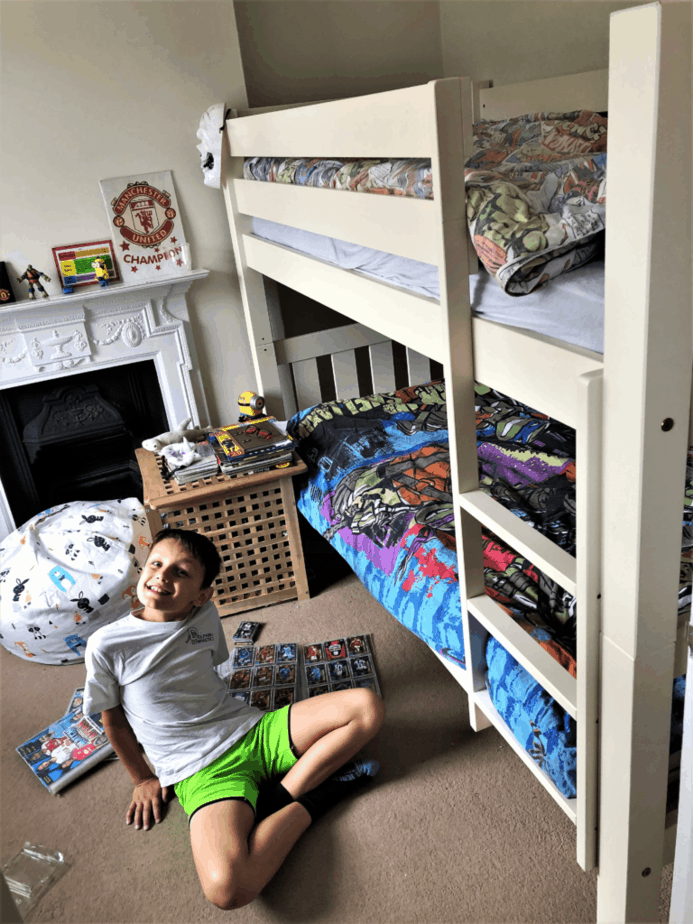
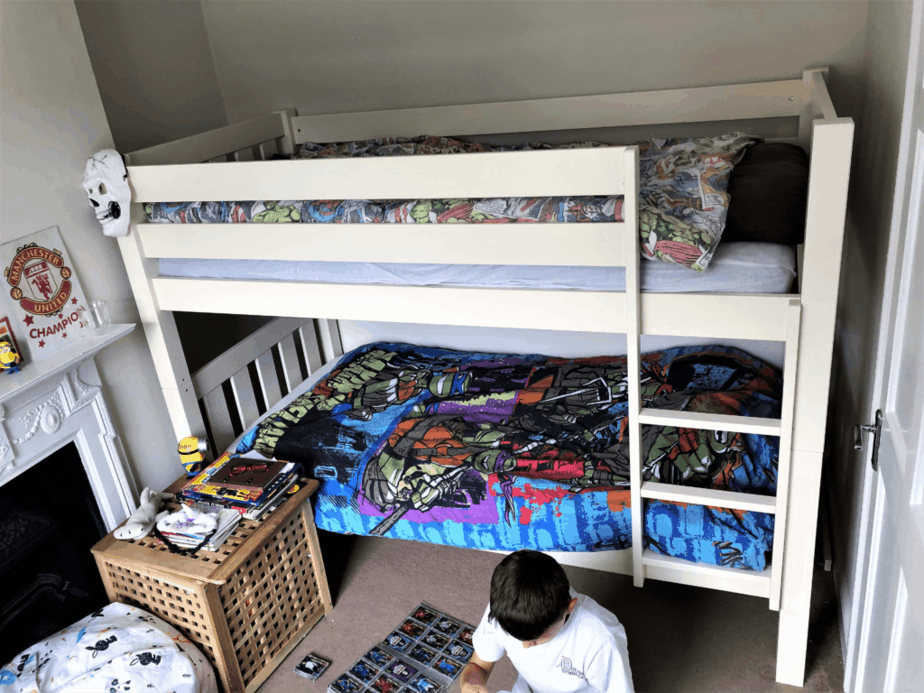
My boys used to have their own room, but each had a bunk bed which they customised. Check out my eldest’s old bunk bed below from Room to Grow which he treated as his safe place, which stopped the frequent wake-up calls during the night.
Sleeping too much during the day
After the age of three, most children won’t need to nap during the day anymore. If your child is still napping during the day, start reducing their naps otherwise they will not be tired enough to go to sleep early in the evening. Travelling to and from school can be a time when some children nap so try to keep your child awake with snacks or activities.
Sensory issues
Sometimes children have sensory issues that impact their sleep at night. For example, if your child is sensitive to noise, then they are likely to be affected by noise at night. The sound made by the house or central heating can be enough to wake up a child with sensory issues.
To combat this, block out the sounds with some white/pink noise or music. Some children are sensitive to touch and will remove their covers at night time. As a result, they can become too cold and wake up during the night. Combat this sensory issue by using a thinner sheet and increasing the room temperature slightly.
Using sleep medicines for children
Again, avoid sleeping medicine for kids as they can get used to them and more often than not, you can make the situation better by using a natural sleep aid for children instead.
How to help kids sleep better at night – natural sleep remedies for kids
There are some natural remedies that may help kids sleep better during the night. Here are some more ideas below:
Establish a good routine
Encouraging healthy sleep routines is essential, as they condition your child to know when bedtime is due. A step-by-step routine will teach your child the order of events that will lead up to bedtime. A short routine may include a bath, putting on pyjamas, brushing teeth, reading a story and/or listening to music.
It is essential that you manage your child’s environment and their behaviour before settling them to sleep. Try to look for situations that may interfere with their sleep and then you can follow simple tips that will help them get more rest at night, in turn promoting daytime alertness and treating recognised sleep disorders.
Ensure that your child learns the difference between day and night by providing a lovely peaceful atmosphere with dull light at bedtime, with calm voices and less contact and conversation. Learning the difference between day and night early on is a natural sleep aid for babies who take their cues from the ambience in the room and a well-structured routine.
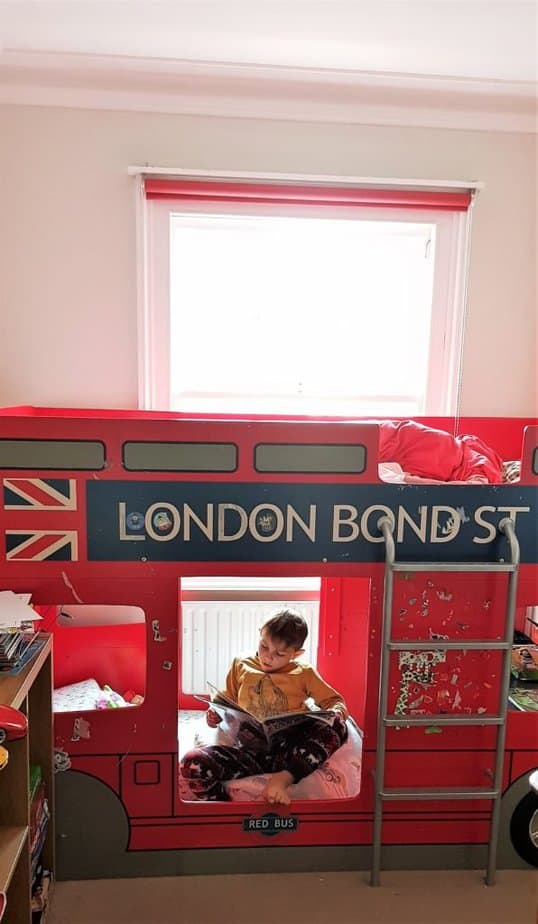
Choose activities that are relaxing – avoid lively games, and technology as these activities inhibit sleep. Using soft furniture like bean bag chairs will help your child to feel warm and cosy during bedtime. The below bean bag chairs from Just4Kids are perfect for the nighttime routine as your child can read happily and comfortably before you initiate going to bed.
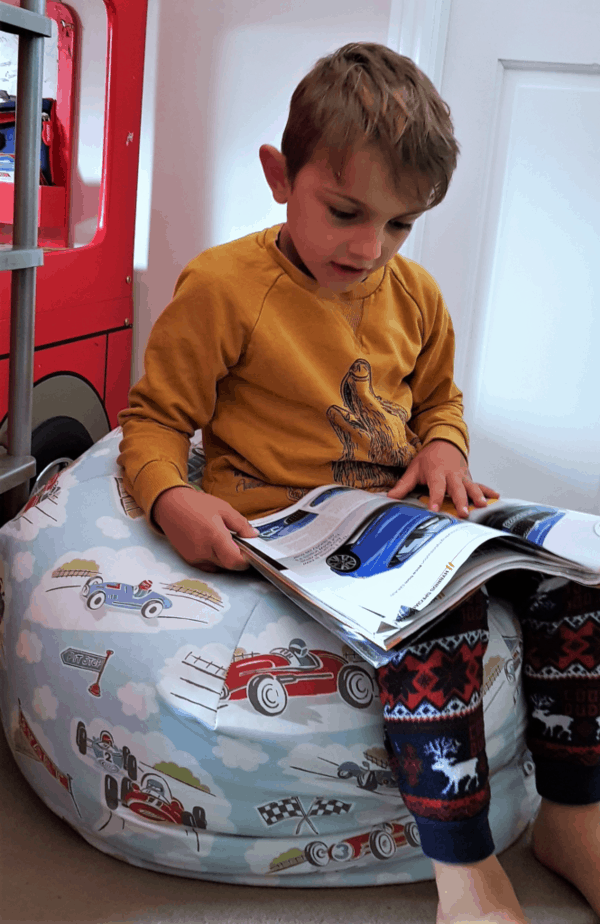
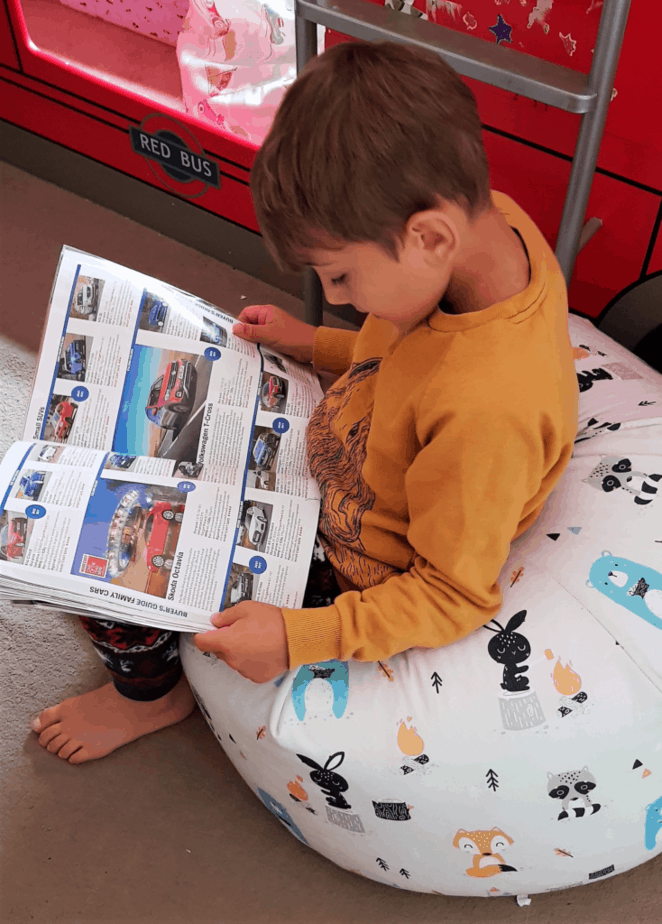
Try to keep your routine to around 20 – 30 minutes with a definite endpoint, which may be turning the light off or saying goodnight. A goodnight phrase like “Goodnight, sleep tight” if repeated every night can be a signal to the child that it is time to settle for bed. If your child needs more or less sleep than others, then you will need to accept this as part of their character. If you put them to bed too early, they will lie restless, which may increase their anxiety. If you put them to bed too late, then they will be overstimulated and irritable.
Try to place your child down when they are drowsy but awake, as your ultimate goal is to teach them to fall asleep without any assistance. This is difficult, especially if they are used to using you as a sleep aid. Some children may want you with them in their room while they settle and you can gradually remove yourself by following steps to remove the habit without causing further anxiety to your child. You can find more information here about how to break the vicious circle and expose your child to sleeping on their own in small manageable steps.
One of the best sleep aid for kids is maintaining consistent bed and wake-up times, so their body clocks will condition naturally. Try to be firm with your routine, so your child knows you mean business, but don’t shout or raise the anxiety levels at bedtime as this is counteractive behaviour. Keep things calm and boring at night time, so the only fun thing to do at night is to go to sleep.
Changing behaviours and rewarding good behaviour
Children will start to learn that different behaviours will lead to different outcomes. They will begin to link these behaviours and anticipate what will happen next. During sleep, if you consistently run to hug your child when they cry at night, then they will expect all their cries to end up with you hugging them.
This is because you are ‘rewarding’ your child with your attention. And, don’t forget that even your irritability through sleepiness is a reward too! So, when you are trying to encourage good sleep, start by rewarding them through simple steps. If your child gets into bed, reward them for that. Keep an eye on when they are doing something positive so you can reward them straight away.
Once the behaviour is well-established, you can slowly start to reduce the rewards until they stop. Try to ignore difficult behaviour as well and remember that even punishing your child is giving them attention, so you want to minimise attention as much as possible as this will be less rewarding for your child. Once you give out a reward, remember to not take it away.
Most children will feel rewarded when you show you are pleased with their efforts through cuddles, snacks, stickers and/or rewards charts. Again, start with small goals like going into their bedroom when their parents ask them then expand to settling to bed and sleeping once parents have left the bedroom.
Best natural sleep aids for kids – Remove screens and technology from the bedrooms
TVs, computers and even phones are too tempting and will stimulate the brain which will make it harder to relax.
The best natural sleep remedies for kids – Exercise regularly
Getting plenty of fresh air and exercise during the day doubles up as a natural sleeping aid for children and helps them to settle to sleep easier at night. Make sure the exercise is not too close to bedtime, or they won’t have enough time to wind down. Activities like running, walking, scooting to and from school and/or riding a bike during the day, can help kids to tire themselves and prepare their bodies for deep sleep later in the evening.
Child and toddler sleep remedies – avoid sugary food and drinks at night
Caffeine in chocolate, sweets and sugary drinks can keep the brain up and more alert at night time. Avoid eating and snacking for two hours before bedtime as digestion could keep your child up too. If they are hungry and need a snack, then crackers are good with a little bit of chamomile tea, warm milk or a banana (as mentioned before), as these foods induce a chemical called tryptophan which helps you to rest. Make sure they drink plenty of water during the day, so they don’t ask for much at night – this will help with reducing night-time toilet visits!
Natural sleep aids for kids – Set up the bedroom for sleep
One of the most important tasks to help your child sleep better at night is to set up their bedroom for success.
Below are some sleep aids that can help set a child’s bedroom up for sleep success!
Blackout blinds/curtains and comfortable mattresses
Kitting your child’s bedroom out with blackout blinds or curtains will help to block out the light coming from outside and settle your child to sleep at bedtime (they make great natural sleep aids for toddlers too). If you don’t have any in the bedroom, you can find some blackout curtains at Julian Charles or the below blackout blinds from Terrys Blinds* to help your child go to sleep in a dark room, especially during the summer when the sky gets dark much later.
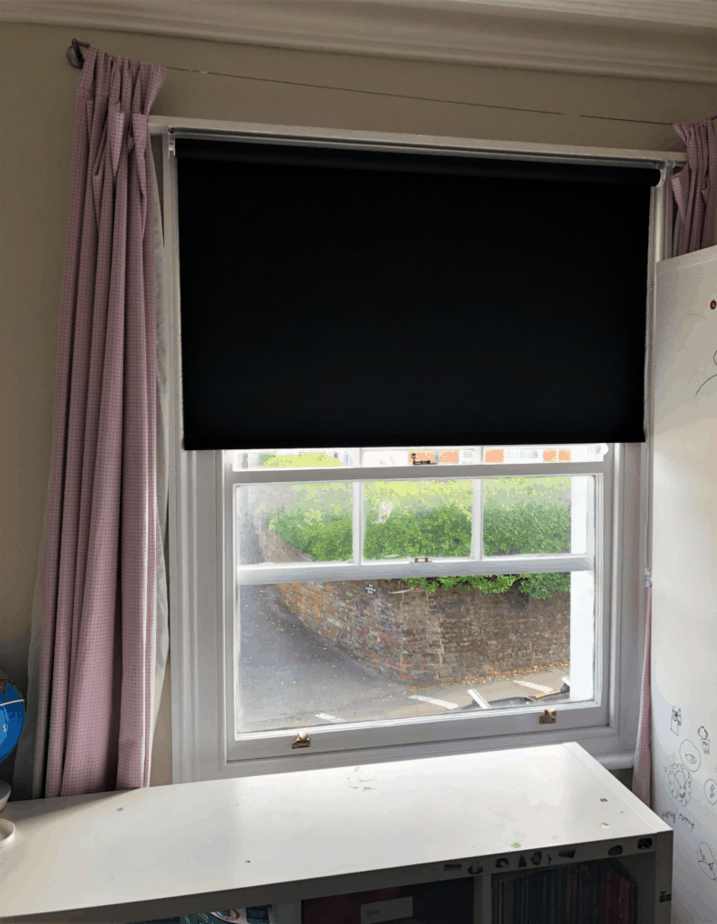
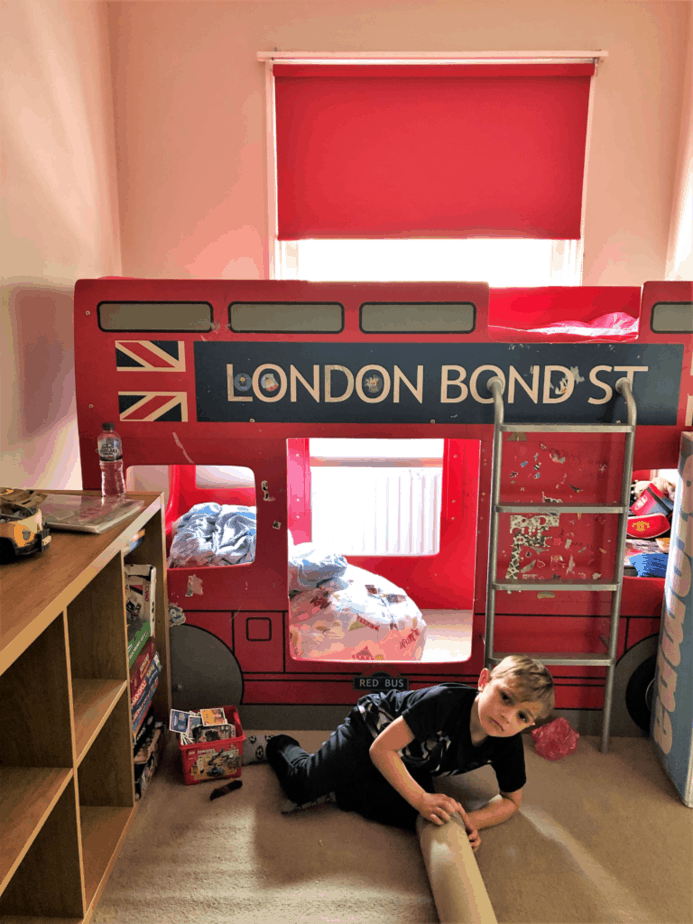
Aim to change your mattress when your child experiences significant growth spurts so they have enough room to move about and feel comfortable. The right mattress is also vital for correct support of growing bones and muscles as well as holding the spine in a proper position when laying down. Don’t buy second-hand/hand-me-down mattresses as they do not provide the right comfort for growing children and they could present a health and safety hazard. Opt for hypoallergenic, ergonomic mattresses to avoid the onset of disorders like asthma, eczema or rhinitis.
Pillows and bedsheets can make a difference too
It’s important to get a good quality bedsheet, preferably not synthetic fabrics which trap heat and lead to poor sleep quality, restlessness and frequent waking.
Quality cotton and silk sheets are more comfortable and can help your child self-regulate their temperature, leading to a more restful sleep.
Try this Eucalyptus Silk Sheet Set from Aeyla**
Sleeping in incorrect positions can place stress on the neck and back, so pillows are designed to minimise the stress and support the head at a comfortable level. They also take the pressure off the cervical area and straighten the spine.
Using an adjustable memory pillow like the FOAMO Pillow from Aeyla** or The Dual Pillow** supports your child’s neck, which is perfect for your child’s neck and spine.
Unlike other pillows, The Dual Pillow has a unique pillow-in-pillow design and is clump-resistant, so it keeps its shape every night.
The FOAMO is a fully adjustable pillow, made (literally) for your child. You can stuff or unstuff this fully customisable pillow at home, to create the right plumpness, and the cooling, gel-infused memory foam soothes pressure point pain and encourages healthy joint alignment.
Black out the light with an eye mask
An eye mask can block out external light stimuli which can become a constant disruptor during sleep, especially during the summer when the sun comes out earlier and it gets dark later.
An eye mask can help your child reach REM sleep faster and enjoy a deeper sleep.
Try this Eucalyptus Silk Eye Mask which is easy on the eyes and your skin!**
Have you tried a weighted blanket?
Children with special educational needs might need extra support to help them sleep and a weighted blanket is engineered to melt away anxiety and bring in calm for a deep, restorative sleep.
The weighted blanket offers gentle pressure and the soft blanket with a 100% Eucalyptus Silk thread cover and shell helps keep hot sleepers cool.
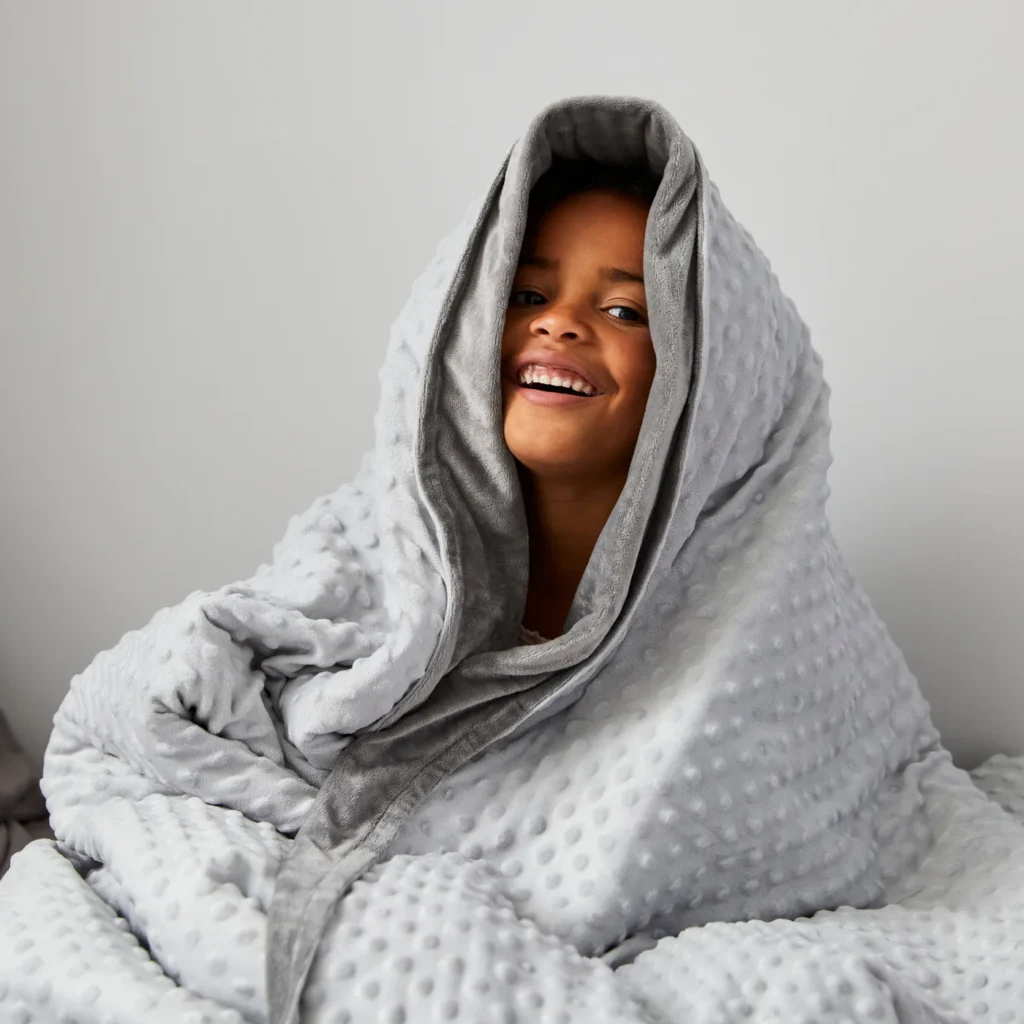
Check out the protective weighted blankets here
Try a Glow Dreaming Bundle
Having a sleep aid in the room like the 5-in-1 Glow Dreaming Premium Bundle, which is scientifically engineered for sleep can help your child relax and switch off before bed.
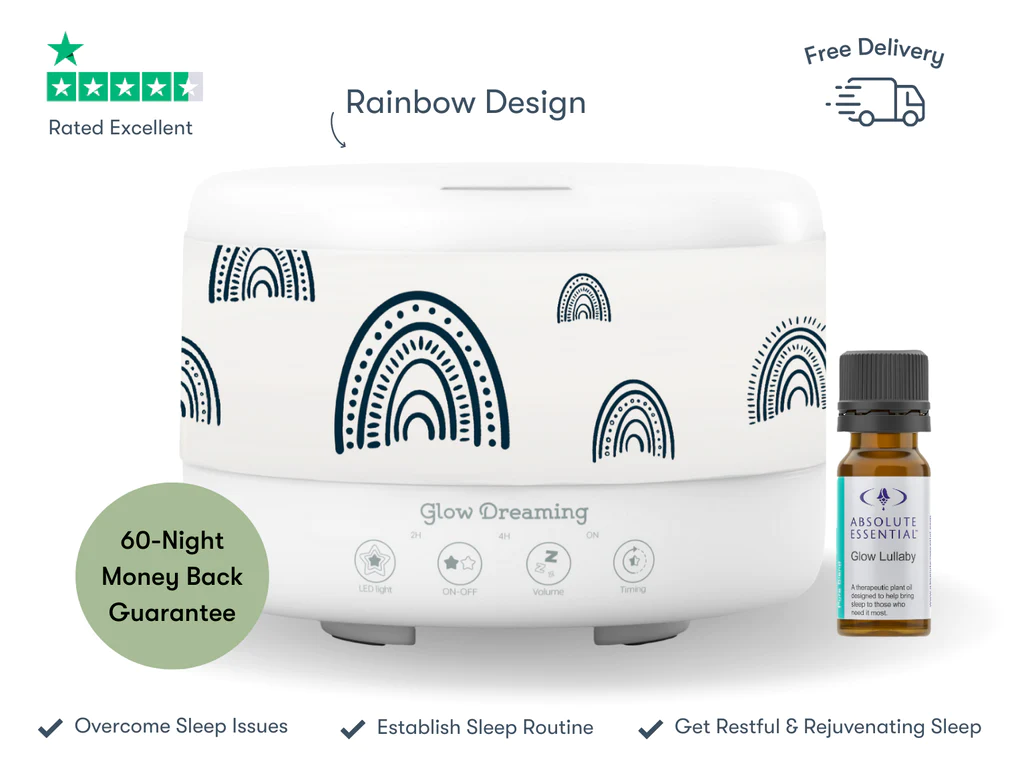
The Glow Dreaming uses 5 proven techniques to help your child sleep. These are:
- Red light – NASA uses specific red LED light therapy to help its astronauts sleep. The same technology is used in the child’s bedroom.
- Organic, medicinal essential oil, which is designed to relax the muscles and calm your child’s mind before falling asleep.
- Humidifier emitting mist – The Glow Dreaming also emits a cool mist technology and acts as a humidifier to ease breathing, prevent snoring and create an ideal sleep environment for your child.
- Pink noise – The Glow Dreaming uses Pink Noise, a combination of sounds naturally found in nature, which studies have proven is the best sound for sleep.
- 24/7 support – The bundle also comes with a customer care team and will personalise your program to make the sleep process as easy as possible.
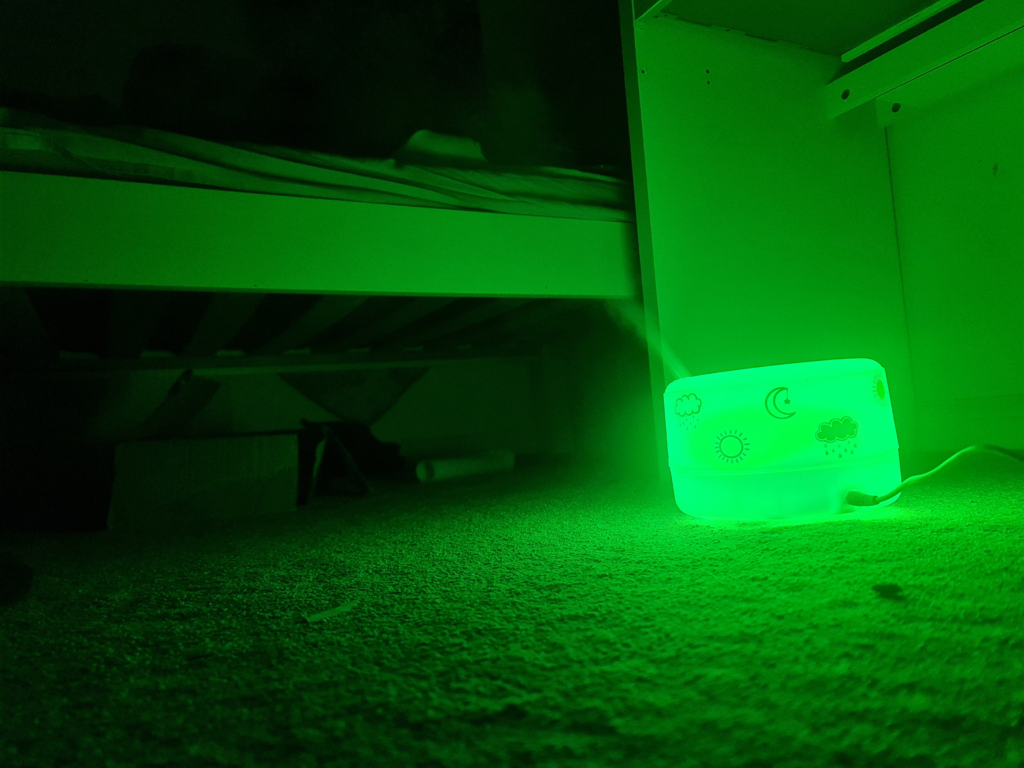
You can buy the Glow Dreaming 5-in1 Premium Bundle here**
Enhancing sleep with the Crane 2.0 4-in-1 Humidifier
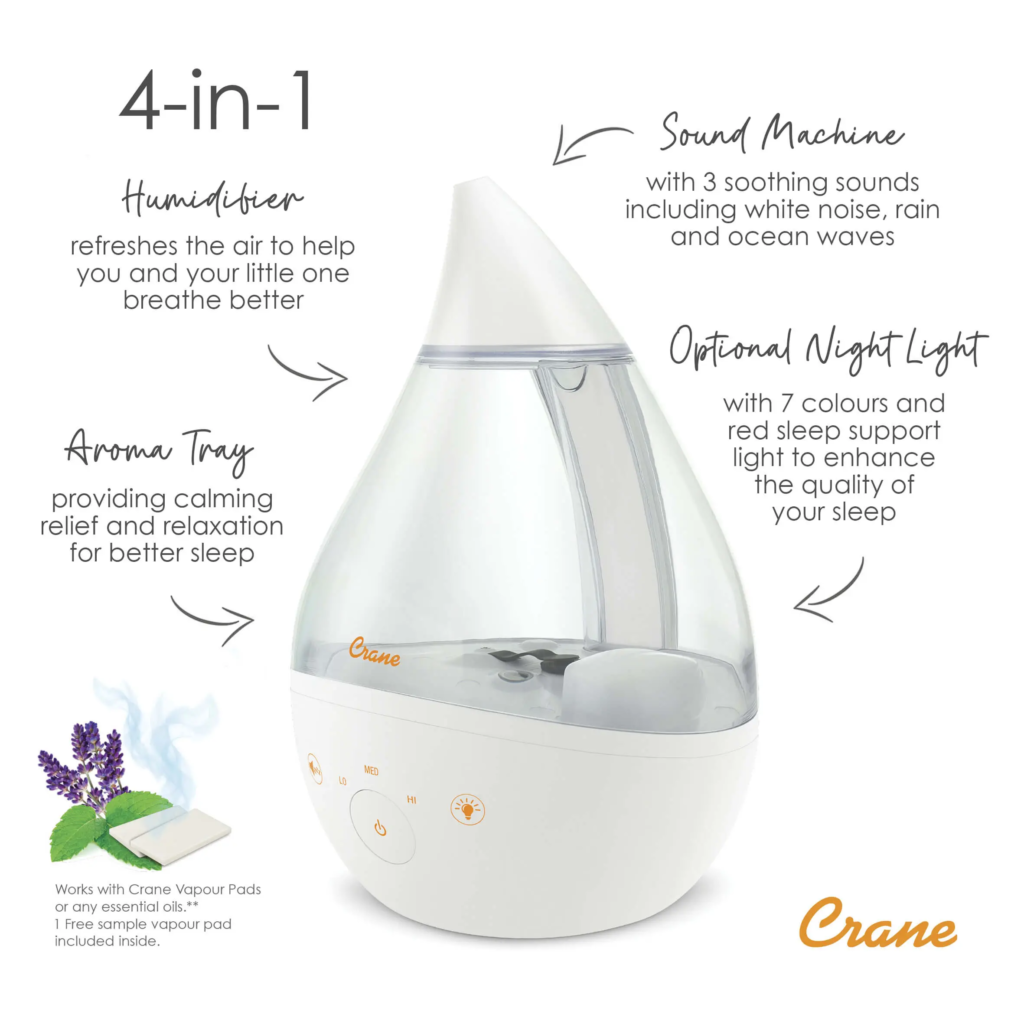
As we explore natural ways to improve our children’s sleep, it’s essential to consider the environment in which they rest. One impactful addition to creating a serene sleep space is the Crane 2.0 4-in-1 Humidifier, which stands out as an innovative solution, designed to offer more than just humidification.
Why choose the Crane 2.0 4-in-1 Humidifier?
- Ultrasonic Cool Mist: The Crane 2.0 humidifier emits a soothing cool mist that can alleviate congestion and coughs, making it easier for your child to breathe and fall asleep. This feature is particularly beneficial during cold and flu season or for children with allergies.
- Sound Machine: With built-in soothing sounds, the humidifier doubles as a sound machine. This can help drown out household noises, providing a consistent and calming sound background for sleep.
- Aroma Diffuser: While direct application of essential oils on the skin or ingestion is not recommended without medical advice, the Crane 2.0 offers a safe way to use these natural scents. By adding a few drops of child-safe essential oils to the humidifier’s aroma diffuser, which is a vapour pad you take out, you can create a relaxing atmosphere conducive to sleep. You may need to purchase more vapour pads and essential oils here.
- Optional Nightlight: The humidifier comes with an optional nightlight featuring various colours. This can be used to provide a soft, comforting glow that helps ease the fear of the dark, making bedtime a less stressful experience.
If you’re interested in adding this versatile tool to your child’s sleep routine, further details and purchase options are available directly on the Cheeky Rascals website. This 4-in-1 humidifier not only aids in creating a healthier sleeping environment but also offers the benefits of aromatherapy, white noise, and gentle lighting, all in one device.
What can help a child fall asleep? Essential oils and sprays can create a relaxed environment
Some essential oils can help relax kids into a deep slumber. This Sleep Enhancer Spray from Aeyla** contains notes of lavender, while chamomile and aloe vera create a feeling of calm and help your child fall asleep faster.
Natural sleep remedies for children – Relaxation techniques
Relaxation techniques like massage, warm baths, and mindfulness are great ways to help your child feel more relaxed before sleep and can also act as toddler natural sleep aids. Yoga music at night helps children sleep at night and once established, you can slowly start to take the music element away.
What can I give my child to help them sleep? – Melatonin for kids
You may hear a lot about doctors offering melatonin to help kids with extra needs sleep better. But, are melatonin sleep aids safe for kids?
Melatonin is a hormone that we make naturally in our bodies when it gets dark. We produce it at night time to help us sleep, which is why it helps to put your child in a dark environment and dim the lights in the run-up to bedtime.
Screen activities like watching TV or playing on a computer emit a blue light which can inhibit melatonin production, so it is best to avoid these activities before bed. Some children, particularly those on the autistic spectrum, are prescribed melatonin as sleep medicine for kids. If this is the case for your child then continue your sleep routine and make sure your child is comfortable in appropriate bedtime conditions so the melatonin can work effectively.
What can I give my child instead of melatonin?
Safe alternatives to melatonin could include supplements that contain magnesium first. Our boys take these magnesium gummies* before bedtime and it helps them to relax. Researches believe magnesium may relax the central nervous system to help people sleep better.
Zarbees Naturals Childrens Sleep with Melatonin Grape Chewable Tablets* also is a favourite amongst parents to help children relax at night for better sleep.
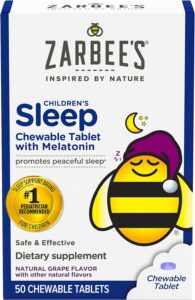

Zarbee’s Kids 1mg Melatonin Chewable Tablet Drug-Free & Effective Sleep Supplement Easy to Take Natural Grape Flavor Tablets for Children Ages 3. Buy from Amazon here*
Children’s sleep remedies – Changing your child’s sleep time
If you are trying to move your child’s bedtime to an earlier or later time, then a bedtime routine can help. Avoid changing the time drastically and opt for a gradual approach by moving the time to around 15 to 20 minutes every night. Children who fall asleep late or early need to have their body clocks shifted. Below are some options for teaching your kids how to get to sleep early (or later):
Natural sleep aids for kids – Create a set sleep time for kids every day – including weekends
Some parents let their children fall asleep late or sleep in, generally during the weekends, which is not a good idea as this late bedtime bleeds onto the next evening. Try to have a fixed get-up time for every day of the week and help your child settle by providing a lot of natural light in the morning and toning down that light from late afternoon onwards. Encourage your child to eat their breakfast by natural light, in the garden or by a window, or even walking to school etc. Sunglasses are suitable for avoiding bright light when it’s getting late in the day (and also healthy for their eyes!)
If you have a child who falls asleep and wakes up too early, then you can reverse the advice, by exposing your child to bright light in the late afternoon/early evening and avoiding light in the mornings. As you gradually move your child’s bedtime schedule later by 15 minutes, try to delay their breakfast time too.
Getting your child to sleep during special times – like Christmas!
During special times like Christmas, again, stick to the tips above like fresh air and exercise. Take your children on a winter’s walk to the park, on an adventure trail or for a bike ride. If it’s too cold or wet to keep them outside for too long, then take them swimming. Physical exercise throughout the day will ensure they are tired by the evening, making it easier for them to fall asleep.

Natural sleep aids for children – Santa won’t arrive if they’re awake

This classic statement works wonders for getting little ones off to sleep. Father Christmas never visits when children are awake, so depending on your view about Santa, you can encourage your child to sleep so Santa can drop off his presents in time for Christmas.
Use Christmas as part of the bedtime routine
Read a Christmas bedtime story or two to your child, then turn off the light and sing them some Christmas carols. Even if you can’t remember all the words to the verses, a softly sung or hummed carol can do wonders to help your child drift off to sleep.
A new magical bed
For the ultimate ruse to get your child into bed, consider investing in a Julian Bowen mid-sleeper bed. A fantastic multi-purpose bed can be fun not just at night time but during the day too. If you can’t afford to get a new bed, then decorate their normal one with Christmassy crafts, like tinsels and any Christmas cards they received from friends and family.
Helping your child to settle by themselves is one of the best skills you can teach them as this technique will run through to when they’re adults as well. It’s important not to feel guilty either (which we all feel), if you don’t always succeed. A loved and happy child will eventually learn to become more independent to sleep on their own.
If you have any comments, questions and/or tips on how to help your child sleep better, please do not hesitate to comment below.
Resources
- Here to help you with sleep problems, Hertfordshire Community NHS Trust – https://www.hct.nhs.uk/m
- Encouraging good sleep habits in children with learning disabilities, Research Autism, Dr Paul Montgomery, University of Oxford, Dr Lucy Wiggs, Oxford Brookes University – http://www.researchautism.net/
- The good-night guide for children, The Sleep Council – https://sleepcouncil.org.uk/
- The Children’s Sleep Charity – www.theschildrenssleepcharity.org.uk
- The Lullaby Trust – www.lullabytrust.org.uk
Is there a natural sleep aid for ADHD child?
Other questions asked were:
- Herbal sleep remedies that help kids sleep at night?
- Herbal remedies to improve sleep quality?
- Is there a natural sleep aid for teenager?
I am not a doctor, but try some of the natural remedies and strategies above. If you’re considering any of these for your child, it’s important to consult with a healthcare professional or specialist first to ensure they’re safe and appropriate.
Is there a sleep aid for children over the counter?
The availability of over-the-counter (OTC) medications for children can vary, and their use, especially for sleep, should always be guided by a healthcare professional. If you’re considering an OTC sleep aid for a child, always consult with a pharmacist or doctor beforehand.
Melatonin is typically available by prescription rather than over-the-counter for children, especially for those with sleep disturbances related to conditions like ADHD or autism. If you’re considering melatonin for your child, you’ll need to discuss it with a doctor.
Diphenhydramine is an antihistamine, which can be found in some OTC allergy and cold medications and may have sedative effects. It’s occasionally used as a short-term sleep aid, but it’s not recommended for regular or long-term use for this purpose in children.
Some parents opt for herbal remedies like chamomile or valerian, which can be found in teas or supplements. Homoeopathic remedies are also available, though their efficacy remains a topic of debate. Always make sure any product you’re considering is appropriate for children and check dosages carefully.
Some OTC products are marketed to help children relax or sleep. These might include baths or lotions with calming ingredients, such as lavender. While they might not act as sedatives, they can be part of a relaxing bedtime routine.
No matter the remedy or product, it’s crucial to read all product labels, understand potential side effects, and discuss any sleep concerns or potential treatments with a healthcare professional. They can provide guidance tailored to your child’s specific needs and circumstances.
How do I treat sleep apnea? Can natural remedies help?
Sleep apnea is a serious medical condition where breathing repeatedly stops and starts during sleep. The most common type is obstructive sleep apnea (OSA), which occurs when throat muscles intermittently relax and block the airway during sleep.
While natural remedies can’t ”cure” sleep apnea, they must help relieve some problems or reduce the severity, for example, positional therapy (sleeping on one side), treating allergies, using a humidifier and avoiding heavy meals before bedtime. Also, maintaining a regular sleep schedule can help too. Some studies suggest even singing can strengthen the muscles in the airway, making them less likely to collapse.
What are some quick remedies for people who have a clogged nose and are struggling to get sleep?
A clogged or stuffy nose can interrupt. Here are some quick remedies to help alleviate nasal congestion:
- Prop your child’s head up with extra pillows or elevate the head of their bed. This can help reduce nasal congestion and promote drainage.
- Place a warm cloth over your child’s nose and forehead. This can help open nasal passages.
- Use a neti pot or saline spray to rinse nasal passages. This can help remove mucus and allergens. Make sure to use distilled or previously boiled water and ensure the device is clean.
- Breathe in the steam from a hot shower or bowl of boiling water. This can help open the nasal passages. Adding a few drops of eucalyptus oil might enhance the effect, but be cautious if your child is sensitive to strong smells.
- Drink plenty of water, herbal teas, or broth to help thin mucus.
- Use a humidifier in your child’s bedroom. Moist air can help reduce nasal congestion.
- Over-the-counter nasal sprays can be effective for quick relief but shouldn’t be used for more than a few days consecutively as they can lead to rebound congestion.
- Saline sprays can help moisturise the nasal passages and remove trapped debris.
- Over-the-counter decongestant pills may offer relief. Always use them as directed and ensure they don’t interact with any other medications your child may be taking.
- Breathing strips can be placed on the bridge of the nose to help increase the space in the nasal passage, making breathing easier.
- Sipping on warm beverages like herbal tea can help soothe the inflamed lining of the nose and throat.
- If your child is allergic to something that causes nasal congestion, try to avoid or limit exposure, especially in the bedroom. This includes pet dander, dust mites, pollen, etc.
- Applying a vapour rub containing menthol, camphor, or eucalyptus to the chest or under the nostrils can help clear nasal passages.
- A drop or two of peppermint or Eucalyptus essential oil on your child’s pillow or in a diffuser can help open up the nasal passages.
Remember, if nasal congestion persists or is accompanied by other severe symptoms, it’s essential to consult a doctor. Chronic nasal congestion could be a sign of an underlying condition like chronic sinusitis, allergies, or other health issues that require medical attention.
What is a normal oxygen level for a child while sleeping?
The oxygen saturation level, often measured by a pulse oximeter, indicates the percentage of haemoglobin in the blood that’s saturated with oxygen. In general, a healthy oxygen saturation level (SpO2) for children and adults, whether awake or asleep, should typically be between 95% and 100%.
However, during sleep, it’s not uncommon for the oxygen level to drop slightly. Transient drops below 90% can occur, especially during REM sleep or with brief awakenings. But these drops are usually brief and return to the normal range quickly.
For children with specific medical conditions, such as certain heart or lung diseases or sleep apnea, the oxygen levels might be lower.
It’s crucial to understand that the “normal” range can vary based on individual circumstances, and a pulse oximeter reading should be interpreted in the context of the overall clinical picture. If there are concerns about a child’s oxygen saturation levels during sleep, a paediatrician should be consulted, and a sleep study or polysomnography might be recommended to assess sleep quality and oxygen levels throughout the night.
What vitamins help kids sleep?
Here are some vitamins which may help kids sleep, although, as always, it is very important to consult your doctor first:
Luna Kids natural sleep aid* is known for its calming and soothing properties and is suitable for kids.
The Little Moon Essentials Sleep Comes Easy Mist* is not a vitamin but it works by spraying on surfaces to freshen up your space and help you sleep.
The Badger Balm Sleep Balm* is also not a vitamin but a balm which uses essential oils to help calm thoughts and clear the mind.
How should my child dress for sleep comfort?
Dressing your child for sleep comfort involves considering factors such as the room temperature, the season, the child’s age, and the materials of the clothing.
Choose breathable, natural fabrics like cotton. It helps regulate body temperature and wicks away moisture. Avoid materials that can cause overheating or trap sweat, such as polyester.
Pyjamas should fit well but not be too tight. For babies, avoid any clothing with loose strings or ties that can be a choking hazard.
It’s often better to dress your child in layers so you can easily adjust for comfort. For instance, a short-sleeve onesie with a light sleep sack can be suitable for many conditions.
Babies, especially, are at risk for SIDS (Sudden Infant Death Syndrome), and one of the risk factors is overheating. Avoid heavy blankets, quilts, or too many layers. If your baby’s neck or back feels sweaty, they may be too warm.
The recommended room temperature for sleeping is generally around 18-21°C (65-70°F). You might need to adjust the child’s clothing based on the actual room temperature.
How much crying is involved in sleep training?
The amount of crying involved in sleep training largely depends on the method you choose, your child’s temperament, and their specific sleep issues. There are various sleep training methods, and some involve more crying than others. Here are some methods:
- Extinction (Cry It Out): You let your child cry until they fall asleep without any interventions. The amount of crying is high, especially on the first few nights.
- Gradual Extinction (Modified Cry It Out or Ferber Method): You let your child cry for specified, gradually increasing intervals before checking on them or comforting them briefly. The amount of crying is moderate to high but decreases as the child learns to self-soothe and the intervals between checks increase.
- Chair Method: You sit in a chair next to your child’s cot until they fall asleep, moving the chair further away each night until they can fall asleep with you out of the room. The amount of crying is moderate. The presence of the parent can be comforting, but there’s still potential for crying, especially as you move further away.
- Fading Method: You gradually decrease your involvement in your child’s sleep routine, allowing them to take on more of the process themselves. The amount of crying is low to moderate. The changes are introduced gradually, so there might be less resistance and crying.
- No Tears Method: You focus on comforting and positive bedtime routines without letting your child cry. Over time, children learn to self-soothe without crying as a precursor. The amount of crying is minimal to none, as the emphasis is on preventing tears.
- Pick Up/Put Down Method: If your child cries, you pick them up and comfort them until they’re calm and drowsy, then put them back in the crib. Repeat as needed. The amount of crying varies. Some children adapt quickly, while others may cry more, especially during initial attempts.
It’s essential to remember that every child and family is different. What works well for one child might not work for another. Some children are more sensitive to changes in routine or separation, while others adapt quickly.
No matter the method you choose, consistency is key. It’s also crucial to ensure there’s no underlying issue causing discomfort (like hunger, illness, teething, or a wet nappy) when practicing sleep training.
If you’re uncertain about which method to choose or are worried about the potential for crying, you might consider consulting with a paediatrician or a child sleep consultant for guidance tailored to your child’s specific needs.
Are there any home remedies for baby to sleep at night?
Other questions asked were:
- Is there a sleep aid for toddlers under 3?
- Natural remedies to help baby sleep?
- Homeopathic sleep remedies for toddlers?
- Natural sleep remedies for toddlers?
- Natural sleeping remedies for toddlers?
- Homeopathic sleep remedies for children?
- Child insomnia natural remedies?
- Natural sleep aids for babies?
- Home remedies for sleepless babies?
- Natural remedies to help babies sleep?
Establishing a consistent bedtime routine can signal to your baby that it’s time to wind down. This might include activities like a bath, reading a story, or singing a lullaby. The warmth of the water can be soothing and help relax the baby. A gentle baby massage using baby-safe oils can help relax your baby and prepare them for sleep.
A white noise machine or even the hum of a fan can mimic the constant noise your baby heard in the womb, providing a comforting backdrop that drowns out other household noises.
For younger babies, swaddling can replicate the snug feeling of the womb, helping them feel secure. (Note: Once your baby starts showing signs of rolling over, it’s time to stop swaddling for safety reasons.)
Ensure the room is dark or dimly lit. Darkness triggers the production of melatonin, a natural sleep-inducing hormone.
A full tummy can help your baby sleep longer stretches at night. However, as your baby gets older and starts sleeping through the night, you’ll want to avoid creating an association where they need to eat to fall back asleep.
Make sure the room is neither too cold nor too warm. A comfortable room temperature is crucial for good sleep. Gentle movement can be very soothing for babies. Whether it’s rocking in a parent’s arms, a rocking crib, or an automatic baby swing, the repetitive movement can lull babies to sleep.
It’s important to note that every baby is unique, so what works for one might not work for another. It may take some trial and error to figure out the most effective remedies and routines for your child. Also, always consult with a paediatrician before introducing any new remedies, especially if they involve ingestion or topical application.
*Gifted collaborative feature post*
*Links marked with a ‘*’ are affiliate links, which means I may earn a small commission if you click through to buy at no extra cost to you.
**Items were gifted as part of the review, but all opinions are 100% my own**