Essential guide to travelling with a car seat
A car seat is one of the most essential gears you are going to need to protect your child during travel. Most, if not all, hospitals won’t discharge you unless you have a proper fitting car seat with you. So this article will help you find the right car seat for travel by going through how to choose a car seat for your child, as well as installation tips and where to find the right car seat. Here is our essential guide to travelling with a car seat.
Why do you need a car seat?
The National Highway Traffic Safety Administration (NHTSA) states that:
“… Car crashes are a leading cause of death for children ages 1 to 13. That’s why it’s so important to choose and use the right car seat correctly every time your child is in the car.”
Do you look for baby car seats by weight or by age?
The common misconception is choosing car seats by age rather than weight. Ages vary widely and if I look at my own children, my eldest is on the 99th centile for his age and my middle child is on the 25th centile for his age group. So their weight at six months old were massively different. Where one child transitioned to the next group before the recommended age, the other was using a Group 1 car seat well into the next age range.
What you should look at which car seat supports your child’s weight. For example, the child car seat Сapsula MT5X 772140 can support weight from 15 to 36 kg, so you should be looking for baby car seats sizes Group 2 & 3 which suits ages four to 12 years. We will go through the different stages of car seats and their suitability below.
What are the 3 types of car seats?
The types of car seats at a glance are:
- Rear-facing or infant car seat
- Forward-facing car seat, which can further be categorised into:
- Convertible car seat
- Combination car seat
- All-in-one car seat
- Booster seat, further categorised as:
- Booster seat with high back
- Backless booster seat
- Combination seat
- All-in-one seat
Your child then transitions to an adult seatbelt after they have reached the recommended weight move up from the booster seat.
Recommended car seats based on your child’s age and size
The NHTSA shares an image showing the overlap between the recommended car seats by age and size. This is why it’s difficult to choose the car seat based on your child’s age.
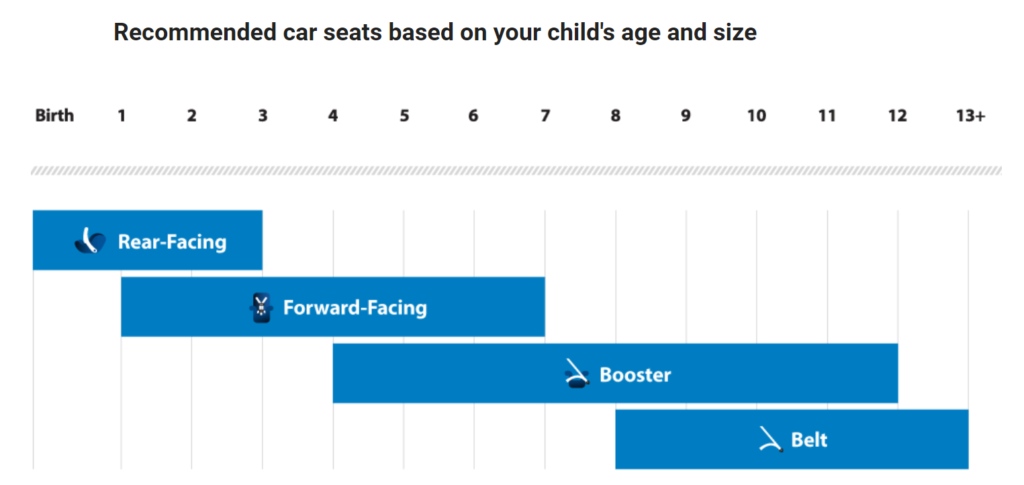
The AA discusses Regulation 44 in relation to child restraint groups based on weight rather than age.
So let’s look at the recommended weight and size of each car seat group.
Group 0 0+
These are infant rear-facing car seats for babies from birth to 13kg (0+) or 10kg (0) (approx. 15 months or 6-9 months).
Group 1
These car seats are for children from 9kg to 18kg (which is around 9 months to 4 years)
Group 2
These are booster seats for children from 15kg plus (from approximately 4 years)
Group 3
These are booster cushions for children who weigh at least 22kg or approximately from 6 years and are more than 125cm tall.
Vehicle and car seat parts explained – Installation information seat belts – ISOFIX/LATCH, in-car base or car seatbelt fittings?
When using a car seat for the first time, it is recommended that you request a trained expert to fit the car seat for you, to ensure you’re doing it right the first time.
There are three ways to install a car seat. These are:
- Using an ISOFIX
- Using the in-car base
- Using the car’s own seat belt
ISOFIX attachment – International Standards Organisation FIX
An ISOFIX is a standardised system for affixing a child car seat into a car to make fitting more straightforward.
Since 2006, all new cars now need to have ISOFIX fittings by law because it is considered safer to use an ISOFIX rather than the car’s seat belt to attach the car seat.
When using an ISOFIX, otherwise known as the LATCH in the US (Lower Anchors and Tethers for Children) you secure or hook the car seat which is fitted with ISOFIX connecters safely to the vehicle’s two special metal anchors in the crack of the vehicle seat, i.e. where the back seat meets the seat cushion.
Using an ISOFIX ensures you install your car seat correctly because it creates a strong link between the car frame and seat, which reduces movement during travel.
There is an easy click-in and out method for attaching an infant seat to the ISOFIX base, which means it’s more likely to be correctly fitted.
ISOFIX’s tend to me more expensive than those that require a seat belt to be fitted. Also you’d need to check you have the right version, so it’s compatible.

In-car base
You can fit your car seat with an in-car base which is normally sold separately and is a rigid plastic unit that sits on top of the car”s seat. You can secure the base by either ISOFIX attachments or a regular seatbelt and then slot or click the base on and off. Most base units also have a foot prop to provide that extra stability.
An in-car base is considered safer than using a seat belt or universal car seats, as some use light or sound indicators to confirm the base has been fitted correctly. It’s also much easier to use the car seat during travel and get the car seat in and out of the car. Bases can also raise the car seat’s height, which means little ones can see more of the outside world and they have that extra bit of leg room.
Base units are expensive and there are also several versions, so you’d need to double check you’re getting the right fit for your car seat. In-car bases are also heavy and not so easy to get in and out of the car.
The car’s own seatbelt
Using a 3-point adult seatbelt is gradually being phased out by ISOFIX systems and the new law states that all car seats must be fixed with ISOFIX fittings, which means eventually using car seatbelts will be phased out.
Using a car seatbelt is cheaper and universal so they fit all car seats, but universal car seats are difficult to fit correctly and eventually you will need a car with ISOFIX points.

Infant car seat
Infants / toddlers rearfacing seats are the best car seats for infants. You can use infant car seats for toddlers too if they weigh up to 13kg or are approximately 15 months old.
How to choose a car seat for newborn babies
Your newborn can’t support their head until they are about six weeks old, so they need a rearfacing car seat which is designed to evenly support their head, back and neck.
The very smallest car seats are Group 0 car seats which can only be used for babies up to 10kg, or at around 6-9 months. The Group 0+ car seats allow your baby to stay in a rearfacing car seat for longer, until they are around 13kg or 15 months old.
When considering how to choose a car seat for infant babies, there are types of rearfacing seats which only include the infant car seat, but you can incorporate some convertible car seats with extended rearfacing capabilities – these are hard to find though.
Infant car seat installation – How easy is it to install the seat?
Car seats come with three types of attachments, which you can read above – ISOFIX / LATCH attachments, in-car base or using the car seat’s adult seatbelt.
How do you install a baby car seat rear facing using an ISOFIX attachment?
Car seat manufacturers’ instructions vary, so it’s always important to consult your manual for installation tips for rear-facing seats using an ISOFIX attachment.
As mentioned above, some car seats come with an Isofix setting at the car seat base, which is already attached to the car seat, while others come with Isofix separately.
The ISOFIX clips easily into and out of the base if detached, and a support leg on the base prevents forward rotation in an accident. If you need to buy a separate ISOFIX attachment, make sure you check the car seat’s manual to ensure you buy the right ISOFIX category and size class.
Generally, when using the car’s seat belt for a rear-facing infant seat, you would need to check the adult belts are long enough. This way, car seats can be moved easily from one car to another.
Check the car seat’s manual for seat safety tips on how to install the car seat properly.
Newborn car seat price – How much should you spend on a car seat?
It depends on your budget. You can save money on convertible, combination or all-in-one car seats where the car seat can be rear-facing for the first 9 months and then forward facing until the child is three or four. However, these car seats are bigger and heavier than a simple newborn car seat, which is much easier to carry. Plus, the instructions are likely more complex. There are safety concerns with ‘two-way’ car seats as they are not always installed correctly too.
How long do you use an infant car seat?
Depending on whether you are using a Group 0 or a Group 0+ seat you can use an infant car seat until the child is between 9 and 15 months or 10-13kg. If you can, try to keep your child in a rearfacing car seat for as long as you can.
Remember the two hour rule!
Make sure babies under three years old do not stay in their car seats for longer than two hours as their breathing may be compromised, especially when they fall asleep in the scrunched up position.
Should you get an infant car seat or a convertible?
Convertible car seats for preschoolers are generally forward-facing and will last until the child is between 4 and 13 years old, depending on the style and Group (Group 1 2 3 car seats are from birth to 13kg so you’d only ever need to get one car seat for the duration of that child’s life.
However, as mentioned above, convertible car seats, although cheaper are bigger, heavier and more complex than infant car seats and if you travel a lot, they are very difficult to transport. They’re designed to stay in the car, whereas infant car seats can be attached to travel systems provided they’re compatible.
It’s worth noting whether you will be transporting from one car to the other, and whether you will travel with a pram, as you may like the simplicity of using the infant car seat if you’re popping in and out of the car. if that is the case, then getting an infant car seat is definitely easier, although more expensive in the long run.
Further reading recommendations about infant car seats
If you want to learn more about infant car seats, check out The AA’s website.
What is the safest infant car seat?
Hello Magazine voted the Ickle Bubba Radius 360 Spin car seat as the safest infant car seat in 2022 because the car seat is designed to be used from birth up to 25kg (around 7 years old) and provides longer protection, meaning you can use the rear facing car seat for longer, up to 13kg (around 15 months.) It also comes with a 38-degree recline which is safer and more comfortable for newborns and it has a rigid ISOFIX attachment which secures the car seat to the car.
How to buy an infant car seat online versus in-store?
When you buy an infant car seat online you are running the risk of your car seat either not being compatible with your ISOFIX if it comes separately or it being installed incorrectly in your car. However you do have the beauty of the internet to help you with installation, as well as consulting the car seat’s manual.
YouTube will no doubt have videos of someone installing your car seat correctly and tips on how to get the most out of the seat.
If you buy in-store you will have the benefit of an in-store expert to install the car seat correctly but you can also look, touch and feel the car seat before you commit to buy too. Just remember to not be too tempted to move up too early and try to keep your baby in a rear-facing car seat for as long as you can.
Best seats for extended rear-facing
Consumer reports best car seats here but when you’re looking for extended rear-facing car seats then top infant seats include:
- Britax Römer DUALFIX i-SIZE, £375
- Joie Verso, £225
- Axkid Minikid, £350
- Diono Radian 5, £189.99
- Recaro Zero 1. Elite, £495
- BeSafe Izi Modular i-Size and base, £430
- Joie 360 Spin car seat, £240
- Jané Gravity car seat, £349
- Cybex Sirona M2 iSize, £210
Recommended infant seats include either an ISOFIX, in-car base or car seat belt to fit the car seat into the cars, as mentioned above.
When you have multiple babies then narrow infant seats can allow you to squeeze three car seats in a row. The NUNA Pipa car seat is a safe narrow car seat when you need to squeeze babies into the car.
Car seat accessories
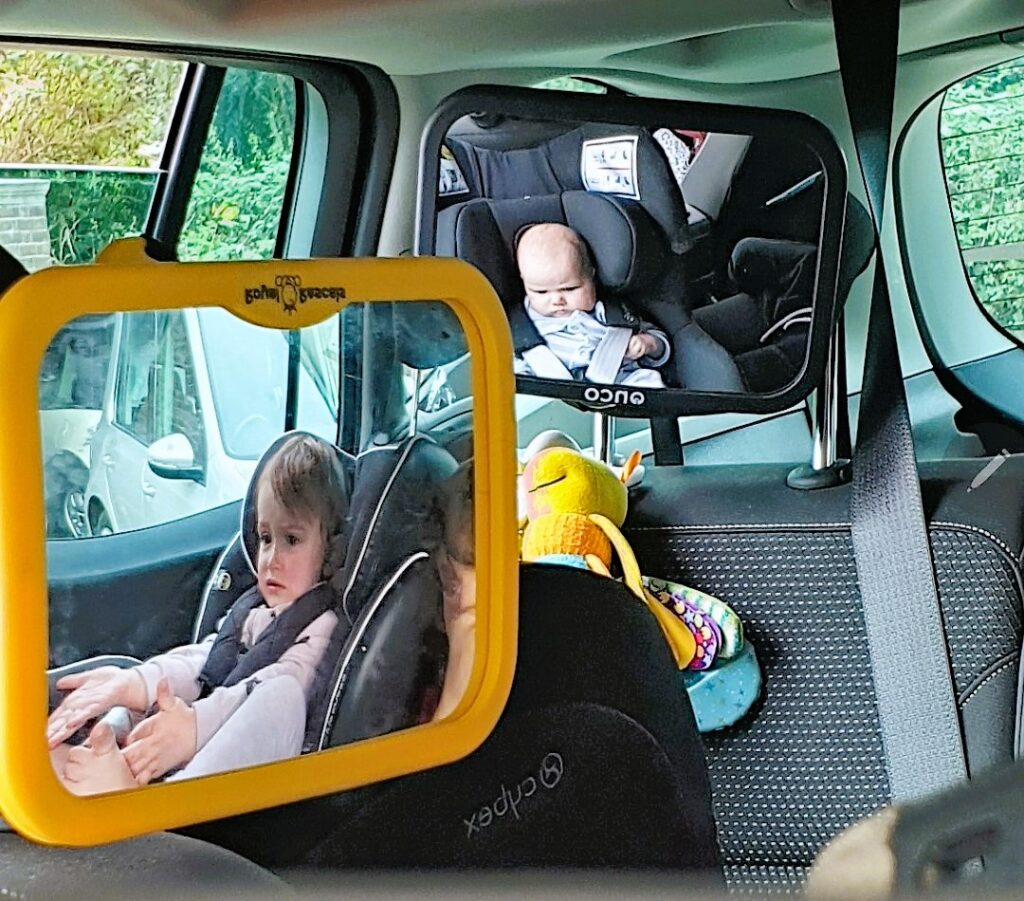
When you have an infant in the car, it’s difficult to see how they’re getting on, especially when they’re facing the back seat. So consider a back seat mirror to keep an eye on your newborn.
I even bought a second mirror and strategically positioned them both so I could spy on both my toddler and baby while I was driving.
Use a car seat canopy to shield your baby’s head from the beating sun as your baby will struggle to shield their eyes by themselves.

Buy the Cozy N Safe car seat here*
The convertible car seat – Group 1 car seats – from 9kg to 18kg (approx. 9 months to 4 years)
The car seat after infant carrier is called a Group 1 car seat, combination car seat or a convertible car seat, and is a forward-facing only car seat. You can also get Group 1 2 3 car seats which is an all-in-one up to 13-years-old.
As the child grows, the convertible seat transitions from Group 1 to 2 to then ultimately 3 which is a booster seat. Again, even though this type of car seat is technically approved for children from 9kg, which may be as young as 6 months old, it is still a lot safer to keep them in a rear-facing car seat – so no rush!
Group 1 car seats have a seat attached to a frame with a five-point harness. The frame attaches to the car using the adult seat belt or the ISOFIX anchor points.
Group 1 2 and 3 car seats include booster seats which remove themselves from the harness.
For convertible car seats, try before you buy to make sure your child seat is not only compatible with your car but also it fits with other children’s car seats in the car as they are quite big. Consider buying rear facing which is up to five times safer. Children in Sweden travel reafacing until they’re around 5 years using Group 1 seats approved to 25kg. But don’t use a rearfacing car seat on a passenger seat where you have fitted an active passenger airbag. Disable the airbag before you continue.

Buy the Solar Group 1 2 3 Isofix Car Seat from Ickle Bubba*
How to choose a car seat for toddler babies
Toddlers/preschoolers forwardfacing seats or all-in-one car seats come in all shapes and sizes so it’s important fo find one that suits your childs’ weight. You may save money on convertible car seats but keeping them rear-facing is safer, albeit more expensive (you can’t put a price on safety!). There are different types of forward-facing car seat restraints too, so read the manual and get an expert to show you the range they have available and how they are fitted in the car.

Convertible car seat installation – How easy is it to install the seat
Read your car seat’s manual for installation tips for forward-facing seats that require ISOFIX attachment. A forward facing seat will have a lower anchor strap and a tether strap along with the Isofix connectors. The tether strap or harness connects to the tether anchor from the top of the car seat with a hook.
Fit the adult belt correctly around the frame and adjust it so the seat is tightly fitted. Check the manufacturer’s manual and ask an expert to show you how to fit the seat correctly in your car because mistakes are common with these types of car seats.
Always check the seat before every journey and re-tighten where necessary. The harness should be comfortable, tight and with no twists.
Convertible car seat price – How much should you spend on a car seat?
Recommended convertible car seats vary in price but are generally cheaper all around as you are buying essentially a one-size-fits-all car seat. How much you spend on a car seat depends on whether you want to buy a car seat that grows with the child up to 13 years old or whether you just want an easy transition from infant seat to convertible car seat without the booster. We’ll touch more on the different types of booster seats below.
Click here for the Group 1 2 3 car seat / convertible car seat buying guide

The booster seat – Group 2 3
There are two types of booster seats, i.e. schoolaged children booster seats are suitable for kids from approximately 4 years or 15kg or from approximately 6 years or 22kg for Group 3 booster cushions.
Booster car seat installation – How easy is it to install the seat
Installation tips for booster seats will vary depending on the type of booster seat you have installed and common questions about booster seats generally stem around using a seat belt to secure the booster.
Harness / booster car seats are the easiest-to-use car seats because they’re light and easy to fit. Children love it too because they’re not as restricted by a convertible car seat. The latest booster seats also include side impact protection too, which is great, especially when you need to fit the booster with older children seat belts or adult seat belts.
An adult seat belt fits correctly when the diagonal part of the belt lies across your child’s shoulder, not neck. The lap part should lie across the top of your child’s thighs, not the belly and the belts should like flat, so no twists which may cause injury during a crash.
Booster cushions (Group 3)
Sometimes it may not be convenient to have a booster with a high back so a simple booster cushion can be bought for example when your child is being picked up from school by other parents and therefore you can send the child to school with the booster seat.
A booster cushion is small, easy to carry and cheap and it’s a good alternative to the adult seat belt alone as it will improve the fit of the diagonal belt on your child’s shoulder and ensure the lap belt lies properly across your child’s thighs.
New booster cushion regulations
New booster cushions launched after March 2017 now will only be approved for children over 22kg or approx 6 years and more than 125cm tall. Current booster cushions are approved for children weighing 15kg plus (approx. 4 years).
Any booster seat is better than none, but try to keep your child in a high back booster seat for as long as you can to provide more protection. You can also find seat belt buckle solutions that will ensure the seat belt is correctly fitted and restrained against the child.
How do I know what car seat fits my car?
Childcarseats.org helps you pick the right car seat for your car.
What is the number 1 safest car seat?
The number 1 safest convertible car seat in today’s market is the Britax car seat, more specifically, Britax Marathon ClickTight. Whereas the Nuna car seat (Nuna Pipa Lite) is considered the lightest car seat in the market.
How to choose a car seat and stroller – can you suggest a good stroller and car seat?
Car seat and stroller compatibility are important if you travel a lot. Choose the car seat first and then the stroller or travel system second, as car seats will ensure ultimate protection. Then choose the stroller or if you require a carrycot, it might be cheaper to go for a travel system instead, which normally comes with a car seat or adaptors to fit the car seat. Car seats will generally include adaptors to fit onto the pram so it’s best to consult the manual or themanufacturer’s website for more information.
Where is the best place to buy car seats?
You can buy car seats from pretty much any online markets like Amazon, baby-specific stores, or straight from the manufacturer’s website.
Be very mindful when considering used car seats. Never use a car seat that has dents, has visible wear and tear or is more than five years old.
Get your car seat inspected and when buying a second car seat base ensure that is compatible and still looks in good condition.
What is the best car seat on the market right now?
The best car seat overall in today’s market is the Graco car seat, more specifically, Graco 4Ever DLX All in One Car Seat which gives you ten years of use and has been deemed as the most comfortable thanks to the fabric it uses.
Picking the right car seat for your child depends on weight and durability, But quality is always more important than quantity because car seat costs vary greatly and may not always be based on how safe they are. So make sure the car seat you choose has passed all the safety ratings. It’s also a good idea to get car seat recommendations from parents who have already used that particular brand of car seat too.
What car seat features are you looking for? Do you want an ISOFIX attached or detached so you can alternate between car seat belt and ISOFIX tethers?
Make sure you understand the baby car seat types too, i,.e. does your child need a Group 1 2 3 car seat and are they ready for a booster seat yet? Try to keep your baby in a rearfacing car seat for as long as you can as they are considered the safest of all car seats because they’re facing the back not the front. Keep your child safe in a car seat by following the car seat safety tips above.
FAQ
What makes you choose a car seat?
When considering how to choose a car seat, look at the car seat safety features, as well as recommendations and whether the car seat is the right weight for your child.
Do your kids still use a car seat or booster seat?
My eldest boys do not have a booster seat anymore as they’re 10 and 11 but my 14 month old has just switched to a forwardfacing convertible seat as she’s on the bigger side and my toddler has a similar Group 1 2 3 car seat which you can find here.
How do I attach a car seat to a stroller?
Note that only infant car seats can attach to a stroller. Convertible, forward facing and booster car seats can not be adapted for use in strollers. Generally the car seat will come with adaptors or you can purchase adaptors online for your stroller. Not all car seats can fit certain strollers, so make sure you check both brands first to see if they’re compatible.
*Collaborative feature post
*Links marked with a ‘*’ are affiliate links which means I may earn a small commission if you click through to buy at no extra cost to you. Thank you for your support!