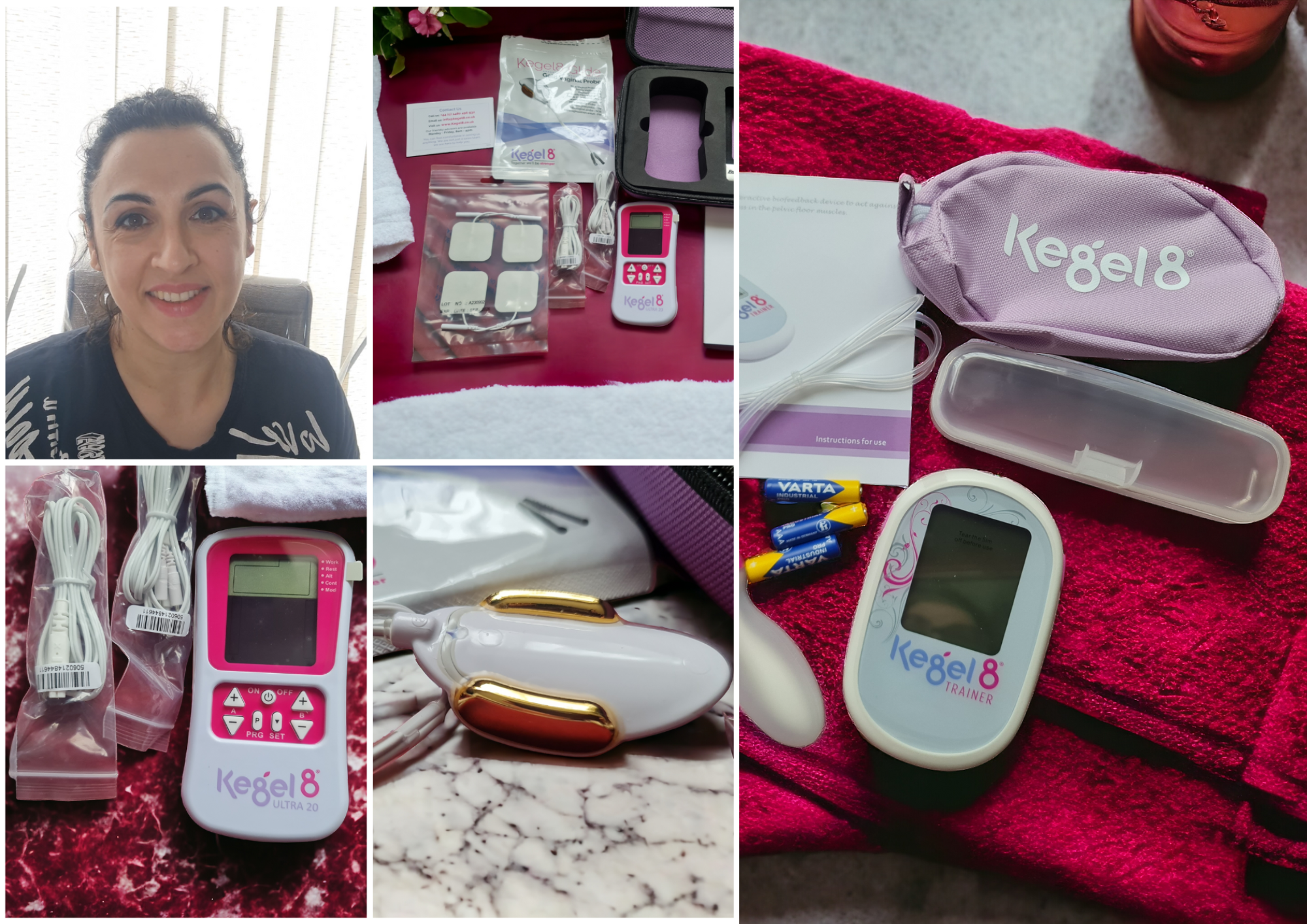
Kegel8®: pelvic floor exercises postpartum to regain strength
Having a baby comes with so many surprises, some of which you may not have prepared for, like the uproar of hormones, your droopy stomach, and how your downstairs feels like a runaway freight train that’s collided with a wall.
However surprising these symptoms are, they’re actually quite common. You could experience pelvic floor weakness even a few years after giving birth, and even if you’ve had a C-section and preserved your front bottom from being stretched like a balloon animal at a kid’s party, the pressures, hormonal changes and age can still affect your pelvic floor.
But, it’s important to note that even though over 60% of women in the UK and more than 15 million women in the U.S. suffer from a weak pelvic floor, it isn’t normal to suffer like this. There are ways you can strengthen your pelvic floor, so you don’t have to worry about leaving the house without a toilet nearby (something which I suffered with for years). Practising your pelvic floor exercises postpartum to regain strength can prevent and treat weaknesses that cause these accidents and make you feel confident to take on the world as well (honestly, you’ll be surprised at how much a strong pelvic floor makes you feel like a superwoman!)
As a mother of four (with the last two being vaginal births) my pelvic floor felt broken and even three years postpartum, I struggle to hold my bladder when I’m dying for the loo. This is known as urge incontinence, which I’ll go through in more detail later, and it has caused so much frustration, anxiety and even depression too. I can’t just decide to go for long walks because I have to think about where the nearest toilet would be. And, without realising, I’ve only ever worn black leggings because I think if I have an oops moment, hopefully no one would notice.
Not a way to live, is it?
Well, we don’t have to live like this anymore!
I teamed up with Kegel8®, the leading brand in electronic pelvic floor trainers and Amanda Savage MCSP MSt, a chartered physiotherapist, women’s health specialist and an expert in pelvic floor health, to dig deep into the science behind our pelvic floor muscles and trial the Kegel8® Ultra 20 V2 Toner* and Kegel8®, Biofeedback Pelvic Trainer Vaginal Probe for three months, to see if I can improve my pelvic floor.
The results have legit been astonishing!
Plus, I have an exclusive 10% discount code for Motherhood Diaries’ readers because I want you to try these amazing Kegel8® Ultra 20 V2 Toners*. I can wholeheartedly say that everything has changed since I’ve used it.
So, let’s muscle on (:D) with the article and I’ll share how I got on.
Welcome to your post-pregnancy body
Childbirth changes your body in many ways and the postpartum period can leave you feeling a bit low. If you’ve suffered injuries during birth, then the recovery process may take a little longer too. Perhaps you had an assisted vaginal delivery which resulted in a tear or you had C-section. Even if you came out with no scars, the weight of a baby could have had some bearing on the lower half of your body. Injuries suffered during birth are common, but with the right interventions and a gradual recovery program, you should be able to bounce back from them. Consistent exercise, a healthy diet, and proper pelvic floor exercises can help your body recover and regain strength.
These changes don’t happen overnight, though, and the age-old adage is generally true – it took nine months to make a baby, and so it will take at least that long to get back into shape again.
What about your pelvic floor?
“Don’t make me laugh or I’ll pee myself!”
I’m sure you’ve heard that saying multiple times in your life. That’s your pelvic floor making you leak when you laugh because of the stress laughing puts on those muscles – the one area we overlook and the one muscle we so wish we had exercised when it’s too late.
I’m guilty of forgetting to do my pelvic floor and, even though I and 90 per cent1 of ladies know the importance of doing our pelvic floor post-pregnancy (it improves your sex life too by the way!), still, 61 per cent of us are not training these muscles when we know we should be. According to research from lights by TENA, one in three2 women in the UK experience light bladder weakness and this is a common occurrence for 69 per cent3 of pregnant women and new mums.
So, you’re definitely not alone.
This leaky bladder after pregnancy is so common that over 200 million people worldwide suffer from incontinence. And, the problem is that women suffer from low mental health because of this symptom, but we are too ashamed to talk about it.
Can I just grin and bear it?
Well, yes, you can. But, do you want to live in fear of accidents all your life? And if you’re sexually active, don’t you want increased sensation? Also, a weakened pelvic floor can lead to more serious concerns if not treated, like urinary incontinence (we’ll go through the different types below), which is also a prevalent issue amongst women, as pregnancy exacerbates this problem. Pregnancy hormones relax the muscles and the increasing baby weight adds to the pressure on the bladder and pelvic floor, which results in accidental urine leakages. One other well-known side effect of pregnancy is constipation, which can also overstretch the pelvic floor muscles, weakening them even further.
So, you must recognise whether you have an issue with your pelvic floor and then take the steps to exercise and strengthen the muscles to prevent any further unnecessary leakages.
But, how do you do that?
By understanding exactly what your pelvic floor is!
So, let’s get down to the science:
Below are your pelvic floor muscles

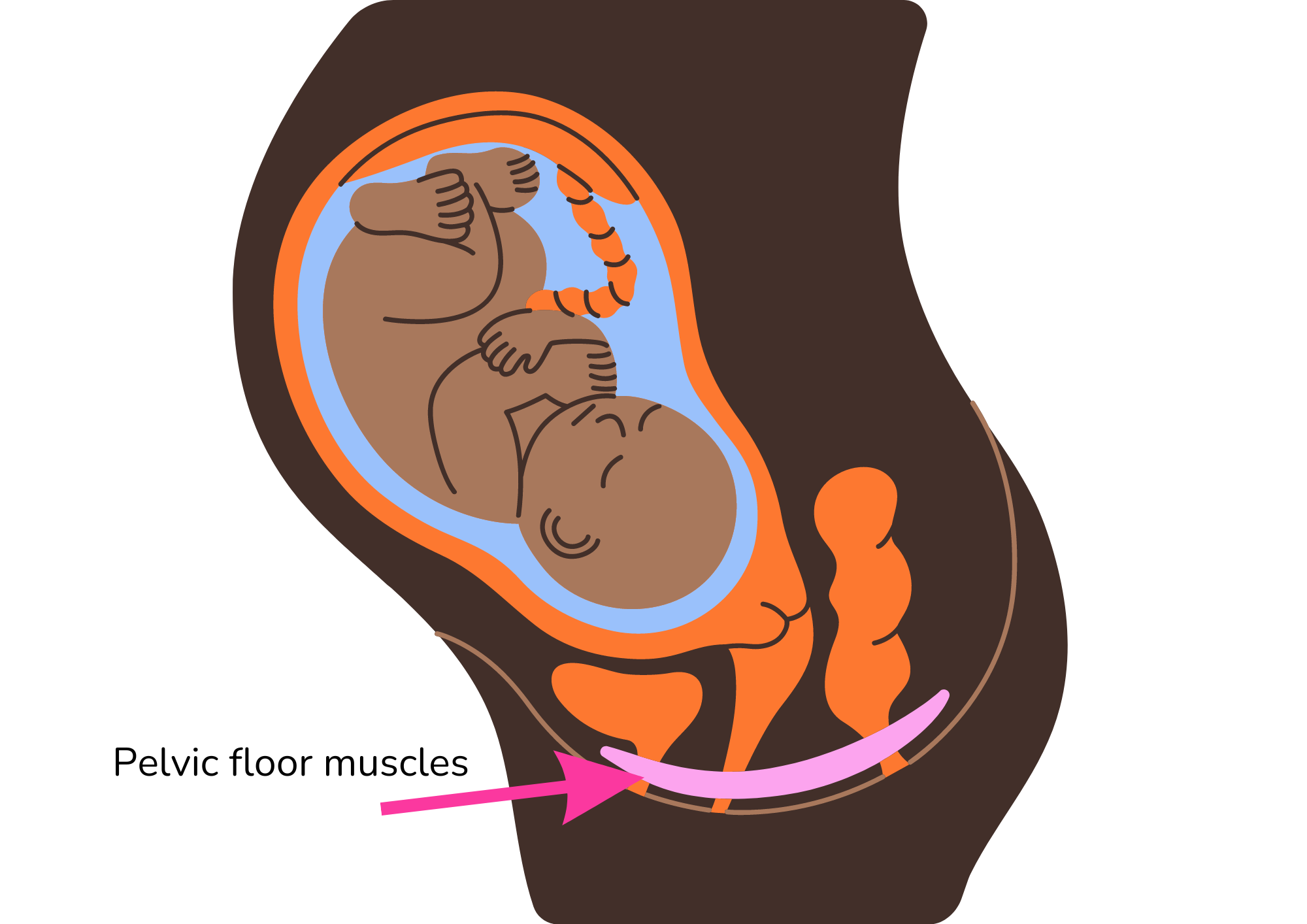
The pelvic floor is a group of muscles and connective tissue that spans the area underneath your pelvis. These muscles form a hammock-like structure from the pubic bone at the front to the tailbone (coccyx) at the back and from one sitting bone to the other. They support the bladder, uterus (womb), and bowel (colon), helping maintain control over the bladder and bowel movements, and play a crucial role in sexual function.
“Since giving birth, many women notice a change in sexual sensation and satisfaction, which can be related to pelvic floor weakness. Exercising these muscles brings blood flow to the area, tones and tightens the muscles, and can improve the ability to feel the vaginal walls during sex, often leading to easier and more powerful orgasms.”
Amanda Savage, MCSP MSt, chartered physiotherapist, women’s health specialist, pelvic floor health expert
Your pelvic floor stretches under a lot of weight and springs back up again. You can see above that these groups of muscles (called the pelvic floor muscles or ‘levator ani muscles’) are sitting directly under the weight of your growing baby.
During pregnancy, the muscles and tissue can become overstretched and exhausted from bearing the burden for so long, which is why it is massively important to exercise and strengthen your pelvic floor muscles before you get pregnant, throughout your pregnancy and after birth, too. Did I listen to the experts tell me this, though?
No, I didn’t. These pelvic floor muscles are often overlooked, especially postpartum. And, despite the common belief that having a C-section might protect the pelvic floor from damage, many women still experience pelvic floor weakness due to various factors as mentioned above, i.e. hormonal changes, the pressure of carrying a baby and ageing.
“Childbirth is one of the most predictable influences on pelvic floor condition but it is a muscle just like others in the body so can be affected by incidences later in life too – maybe a further muscle deconditioning due to another event, like things that can sneak up on you such as weight gain, chronic cough, constipation or having treatment for another condition like cancer.
Amanda Savage, MCSP Mst, chartered physiotherapist, women’s health specialist, pelvic floor health expert
Recognising pelvic floor weakness
Recognising you need to strengthen your pelvic floor is the first step to treating it. There are actually different types of incontinence, the most common being stress incontinence (pee leaks out when your bladder is under pressure) and urge incontinence (Pee leaks out when you feel the sudden urge to pass urine – or soon afterwards). More details below:
Stress incontinence
Pee leaks out when your bladder is under pressure, for example, when you cough, sneeze or laugh, and is usually the result of a weakening or damaging of the pelvic floor muscles used to prevent urination. Symptoms can stem from or be exacerbated during pregnancy and vaginal birth.
“Stress incontinence is particularly common after childbirth, as the pelvic floor muscles may be weakened or damaged during the process. It’s important to start pelvic floor exercises as soon as possible after birth to help strengthen these muscles and prevent further issues.”
Amanda Savage, MCSP MSt, chartered physiotherapist, women’s health specialist, pelvic floor health expert
Urge incontinence
Pee leaks out when you feel the sudden, intense urge to pass urine – or soon afterwards. This is usually the result of an overactive bladder due to the detrusor muscles, which control the bladder. Obesity, a family history of incontinence and age, can increase the chances of bladder weakness (although, this is not an inevitable side effect from ageing).
How to recognise you have a weakened pelvic floor
There is a common misconception that you think you have a weak bladder because you’ve leaked urine after you’ve coughed, sneezed, laughed, lifted heavy items or done anything which has resulted in having the sudden urge to go to the loo. But what 5.4 million women in the UK thought was a weak bladder was in fact weak pelvic floor muscles that were not holding the bladder and urethra in the correct position.
But, what if you want more children?
Each person and their pelvic floor are unique. Problems do not necessarily change further with each pregnancy or delivery. However, there are risk factors such as maternal age, your collagen type, family history, size of babies’ heads, and type of delivery. Some are in your control but many are not.
No one would want you to limit the size of your family through fear of body changes. But everyone decides on their family size with many factors in mind: financial, mental, and physical coping capacity.
They are developing tools to help women and doctors predict better and help make birth/delivery choices (e.g., UR CHOICE), but these are not well developed yet. If you have a traumatic delivery or suffer with incontinence or prolapse symptoms after childbirth, you will be offered time to discuss your plan for your next delivery with your midwife and/or a consultant.
If you feel that your pelvic floor is vulnerable, perhaps take a bit more of a break between pregnancies to allow yourself to get strong again. It can take 18 months to rebuild vitamin and mineral levels and similarly pelvic floor strength.
Amanda Savage, MCSP MSt, chartered physiotherapist, women’s health specialist, pelvic floor health expert
Do you need to pee a lot?
Remember, you don’t have a weak bladder. You have weak pelvic floor muscles.
“An overactive bladder is a common condition. The bladder muscle becomes more sensitive and contracts too often, even before the bladder is full. Symptoms include peeing more than seven times a day or more than once at night (nocturia), and a sudden, urgent desire to pass urine. It can happen in conjunction with leakage or without.”
Amanda Savage, MCSP MSt, chartered physiotherapist, women’s health specialist, pelvic floor health expert
Do you feel like you can’t get to the loo in time?
Again, that feeling is not related to a weak bladder; it’s your pelvic floor muscles.
Do you feel you can’t fully empty your bladder?
If you’re straining to pee and it feels difficult to fully empty your bladder, this is more likely due to your pelvic floor muscles rather than your bladder itself.
Do you accidentally leak sometimes?
If you sneeze, cough, laugh, jump or do any heavy lifting and experience an unintentional leak, then you may have stress incontinence. These actions put stress on the bladder, and if your pelvic floor muscles are not tightening enough, this will cause an involuntary leak, which is the most common form of female incontinence.
Do you have pelvic pain?
Tension or problems in the pelvic floor muscles can cause pelvic pain after pregnancy, but this may also be a sign of infection. Visit your doctor as soon as you feel any pelvic pain after childbirth or pubic pain after birth in the area.
Do you feel a loss of sensation during sex?
A weakened or damaged pelvic floor may mean that you experience a loss of enjoyment during sex. However, those who can squeeze and relax their pelvic floor muscles correctly experience more intense orgasms – need there be any more reason to exercise your pelvic floor!
Do you leak during sex?
A large proportion of women with incontinence experience leakage during sex due to a weak pelvic floor because sexual activity puts pressure on the bladder or urethra.
Do you accidentally pass wind?
The inability to hold wind is another sign of a weakened pelvic floor because it supports the bowel as well as the bladder and so is responsible for all the openings.
Do you have backaches or bad posture?
Another sign of weak pelvic floor muscles is poor posture or suffering from backaches. An exercised pelvic floor should support the entire core, a stronger midsection and a flatter tummy, as well as better posture.
You may be thinking you’re doomed, but you’re not. It’s never too late to strengthen your pelvic floor muscles and stop any unwanted leakages.
But, why should you strengthen your pelvic floor muscles?
Suppose you don’t strengthen already weakened muscles, then your pelvic floor will get weaker and could lead to incontinence or worse, pelvic organ prolapse, which is when one or more of the organs (womb (uterus), bowel, bladder or top of the vagina) in the pelvis slip down from their normal position and bulge into the vagina. A prolapse can cause postpartum pain and discomfort, but it isn’t life threatening. Other symptoms may include faecal incontinence, which is the inability to control your bowels.
I do my pelvic floor exercises post-pregnancy, but I still have a weak pelvic floor
Did you know that 50% of women in the UK cannot activate their pelvic floor muscles correctly, so any exercises they do already are ineffective and can lead to postpartum pelvic pain? Don’t worry, we’ll show you how to do your pelvic floor muscles correctly and even show you how to use a device (Kegel8® Ultra 20*) which can do it for you if you are post-12 weeks postpartum!
How to strengthen your pelvic floor after birth
You can strengthen your pelvic floor by either physically exercising them every day, multiple times a day, using pelvic floor physical therapy through strengtheners, or treatment options by a pelvic floor physical therapist/physiotherapist and devices you can use at home. We’ll go through exercising your pelvic floor muscles yourself first.
You should be able to locate your pelvic floor muscles
To use your pelvic floor muscles correctly, you need to know where to find them. As mentioned before, the pelvic floor muscles start from your pubic bone and run through to the tailbone at the back.
You are often told to think about holding your wee in mid-stream to connect with your pelvic floor muscles, but a better way is to imagine stopping the wind from your back passage and then stopping a wee from the front. You then pull these two points in and up together. Doing it this way will help you learn where they are and therefore, connect to them better if you get problems.
So, to use your pelvic floor muscles correctly, you:
- Imagine stopping the wind from your back passage
- Then stop the wee from the front
- Pull these two points in and up together
The above three steps are the correct way to exercise your pelvic floor muscles and avoid pelvic problems after pregnancy.
Did you know that exercising helps to strengthen your pelvic floor muscles too?
The more active you are during pregnancy, the easier it will be for your body to adapt to the weight gain and increased pressure. Exercising also helps strengthen your core and encourages you to feel emotionally and physically strong – this includes your pelvic floor too.
Recruit your entire pelvic floor when exercising
Muscles should have strength, length, and balance. So, you should not only think about contracting the muscle but letting it relax too. A great way to do this is to imagine you are pulling your pelvic floor muscles up through 5 floors – like a lift going up.
Then, you go back down through the levels before you lift up again.
Work your pelvic floor the hardest
Focus predominantly on your pelvic floor muscles when exercising, so they can strengthen over and above the other muscles that take over, like the glutes (the bum) and the abs.
Do not hold your breath
Holding your breath creates tension in the body that can cause pressure, increasing stress on some muscles, including the pelvic floor. While exercising your pelvic floor muscles, take deep breaths and, as you inhale, try to relax and feel your pelvic floor.
Lifestyle changes can also help
You can make certain lifestyle changes to help prevent the onset of bladder weakness and pelvic pain after delivery. These may include:
- Losing weight and cutting down on alcohol and caffeine
- Train your bladder to wait a little longer between needing to urinate and passing urine.
- Use an award-winning muscle re-trainer like the Kegel8® Ultra 20* below, which stops you from worrying about your bladder by re-training the pelvic floor muscles.
Regardless of whether you have a weakened pelvic floor, get into the habit of exercising your pelvic floor muscles every day. But suppose you still find you are not exercising the muscles correctly, especially when you’re in a rush or forget altogether, there is another very awesome way to ensure you exercise your pelvic floor muscles correctly every time.
Introducing the Kegel8® Ultra 20 V2 Electronic Pelvic Toner!
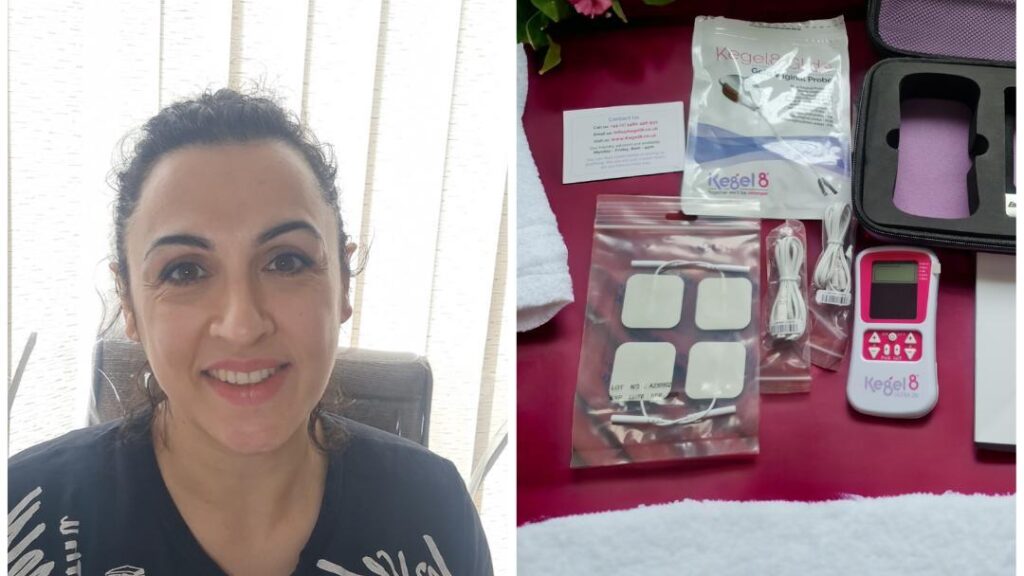
The Kegel8® Ultra 20 Toner can do the pelvic floor exercises postpartum for you!
Pelvic floor strengtheners ensure you’re doing your pelvic floor exercises properly, so you can achieve quicker results. And as this article is all about the very awesome Kegel8® Ultra 20 V2 Electronic Pelvic Toner (Kegel8® Ultra 20*), let’s dig into how this amazing contraption got me from leaking the moment my bladder was half full to walking five miles with a full bladder and managing to get home with no leakage in sight!
In just three months!
Grab the Kegel8® Ultra 20 with 10% discount using the code MD10 now!*
What is the Kegel8® Ultra 20?
The Kegel8® Ultra 20 is a sophisticated device designed to strengthen and rehabilitate weak pelvic floor muscles in the comfort of your own home. Created especially for women, the Kegel8® Ultra 20 is a safe and effective neuromuscular stimulator (STIM) that works by producing electrical pulses that gently stimulate the muscles and nerve fibres in your pelvic area and automatically activate these muscles, even if you can’t do them manually.
This was my first time using a STIM device, so I was apprehensive about using it. The box comes with wires and cables, but I can assure you, once you read the manual first and follow the instructions for proper use, it is so easy and very comfortable to use.
What do you get in the box?
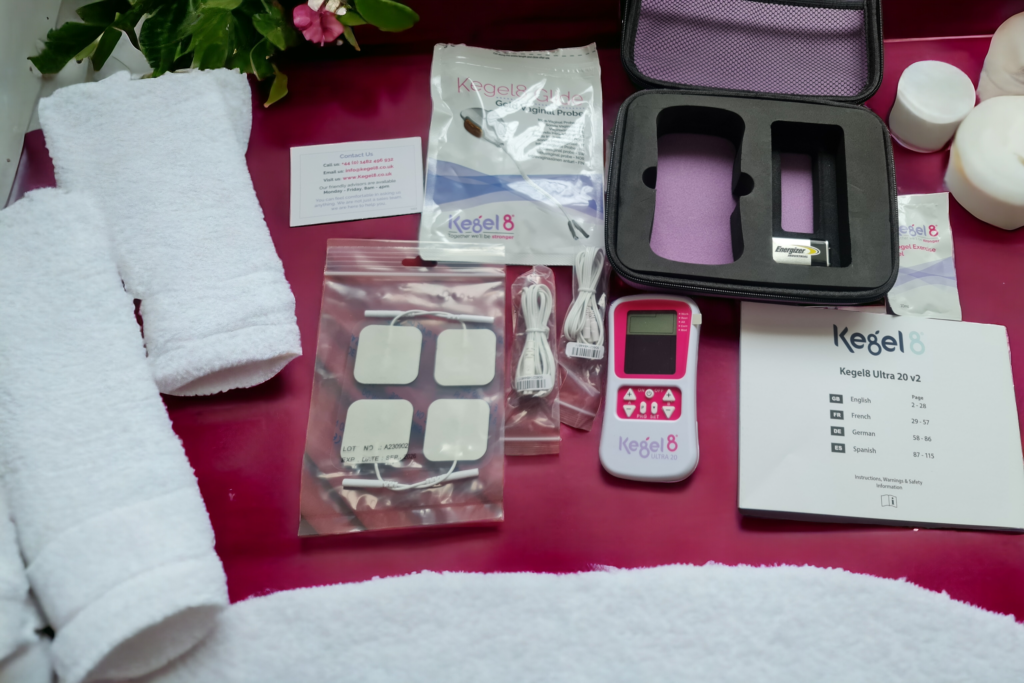
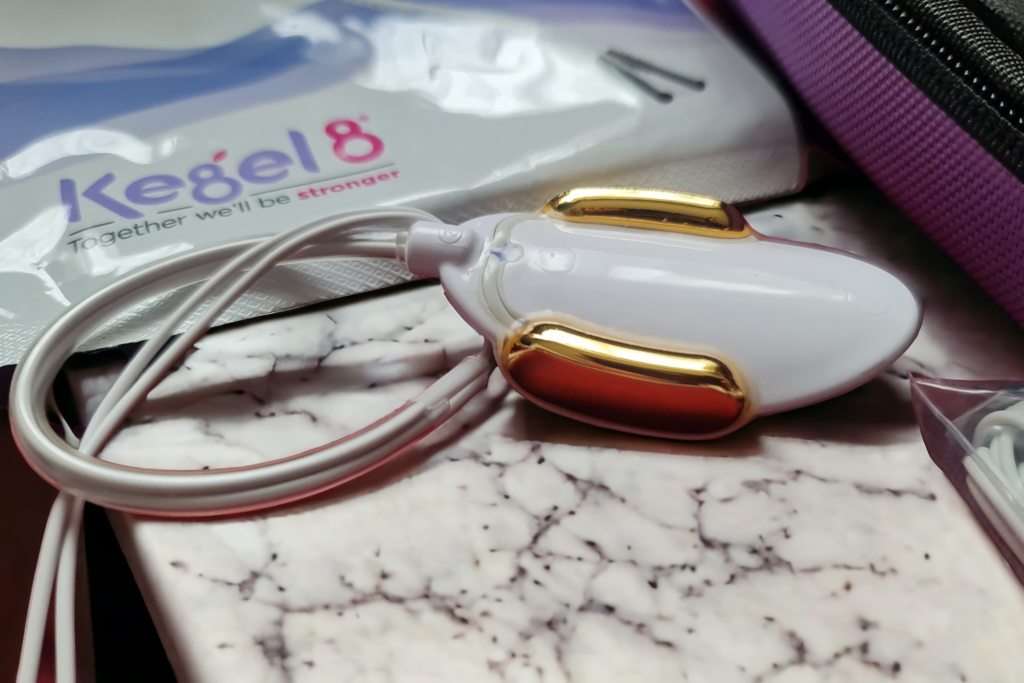
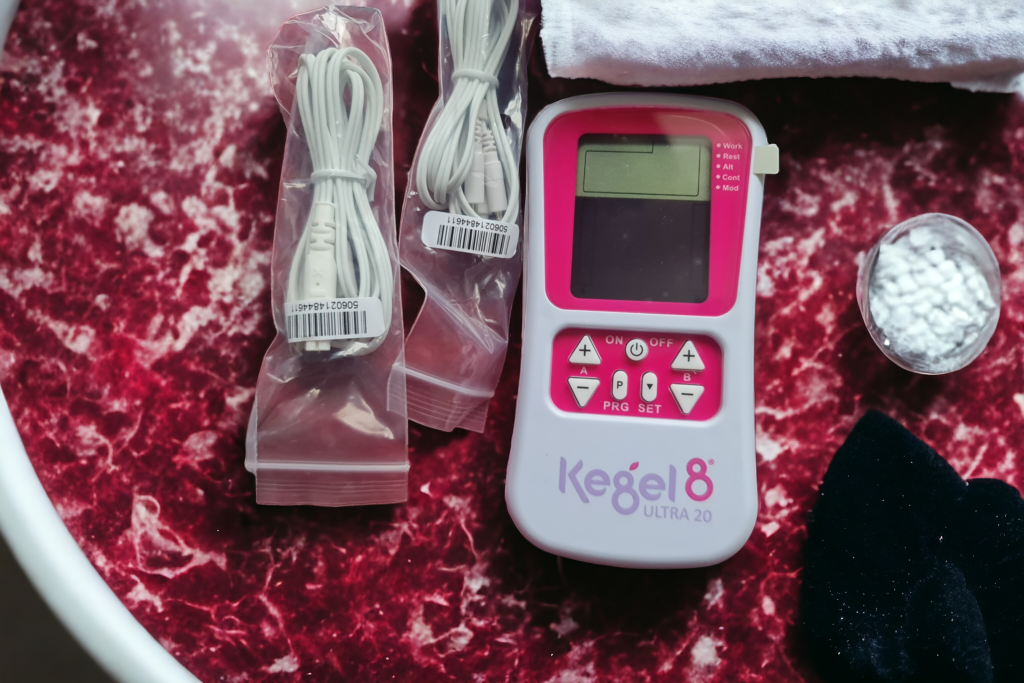
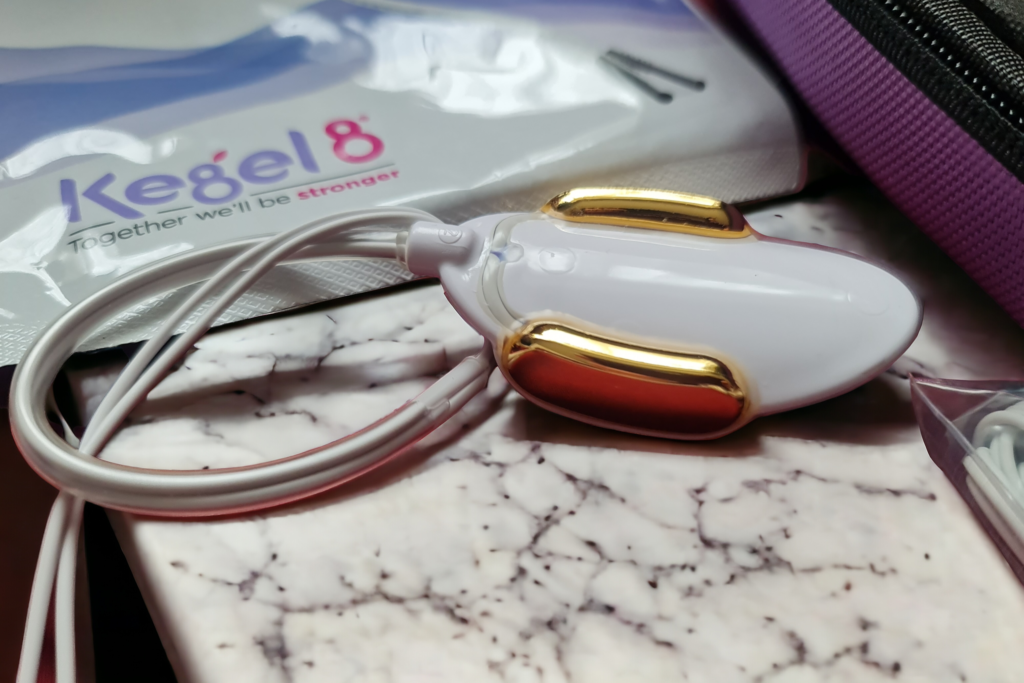
Your package should contain the following items:
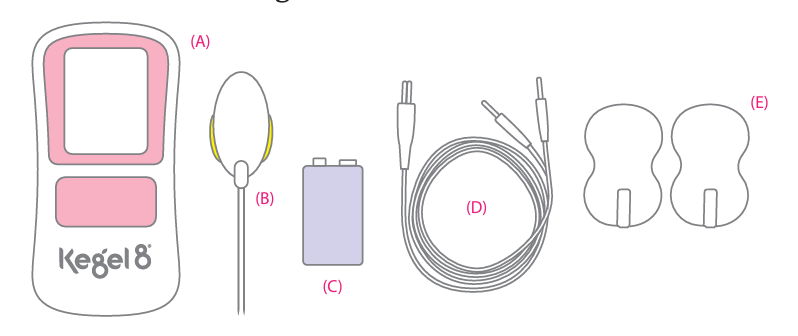
- 1 x Kegel8® Ultra 20 device (A)
- 1 x Kegel8® Ultra 20 Probe (B)
- 1 x 9 Volt Battery (C)
- 2 x Kegel8® Ultra 20 Lead Wires (D)
- 4 x Kegel8® Ultra 20 Electrode Pads (E)
- 1 x Kegel8® Ultra 20 User Manual
Who can use the Kegel8® Ultra 20?
You can use the Kegel8® Ultra 20 if you have the following issues:
- Stress urinary incontinence
- Overactive bladder
- Faecal incontinence
- Pelvic and back pain
- Natural ageing
- Painful intercourse
- Lack of sensation during sex
Who shouldn’t use the Kegel8® Ultra 20?
You should not use the Kegel8® Ultra 20 at home without the guidance of a medical professional if you fall under any of the below categories:
- You are pregnant
- If you are fitted with a demand-style cardiac pacemaker
- If you have an undiagnosed pain condition
- If you have an undiagnosed skin, vaginal, or rectal condition
- If you have active pelvic cancer
- If you don’t understand the user instructions – don’t worry, the manual is super easy to understand
- If you are immersed in or near water
- If you are connected to a high-frequency device
- If you are operating a motor vehicle or potentially dangerous machinery
Let’s get started!
If you can use the Kegel8® Ultra 20 after checking off the above criteria, then let’s move on to the fun part – using the toner to get those pelvic floor muscles nice and tight!
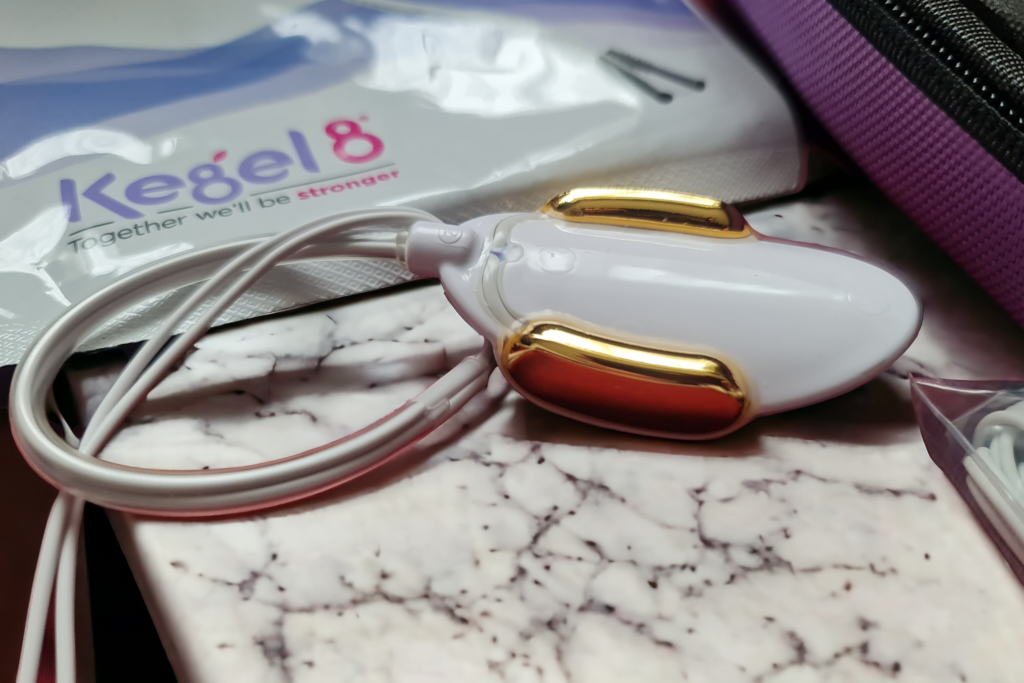
Once you’ve read the manual fully, you’ve completed the initial set-up, i.e. inserted the battery and connected the probe/electrodes to the Kegel8® Ultra 20 Device (Insert the lead wire into Channel A at the top left of the device and connect your probe/electrodes to the lead wire connectors), turn on your Kegel8® Ultra 20 Device by pressing the on/off button once.
Consult your manual to learn how to set up your Kegel8® Ultra 20 for the first time. Make sure you clean your probe with warm water before and after use or spray with an antibacterial spray, then store your Kegel8® Ultra 20 in the carrying case you receive conveniently with the device. You should never share your probes or electrodes with anyone else – this device is just for you to use!
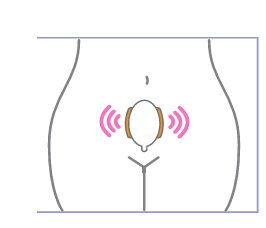
Insert your probe by applying a small amount of Kegel8® Conductivity Gel on the metal parts of the probe. Insert the probe into your vagina, with the metal sides facing “hip-to-hip”. Avoid placing it in too deep; you should be able to touch the base of the probe with your fingertip still, approximately one knuckles depth inside the entrance to the vagina.
If you’re using electrodes (I never used these personally), place them in the desired position and make sure they’re stuck on properly.
Selecting a programme
The tingling/knocking sensation means that the programme is starting to work. You should keep at this level for your sensation test (more on that below) and the first week of your routine before increasing the mA level by 1-2 mA’s every 1-2 weeks. Don’t set the mA level too high as this may cause the pelvic floor and surrounding muscles to overwork and create discomfort. You can pause a programme at any time by pressing the P button. When you’re ready to continue press the + button.
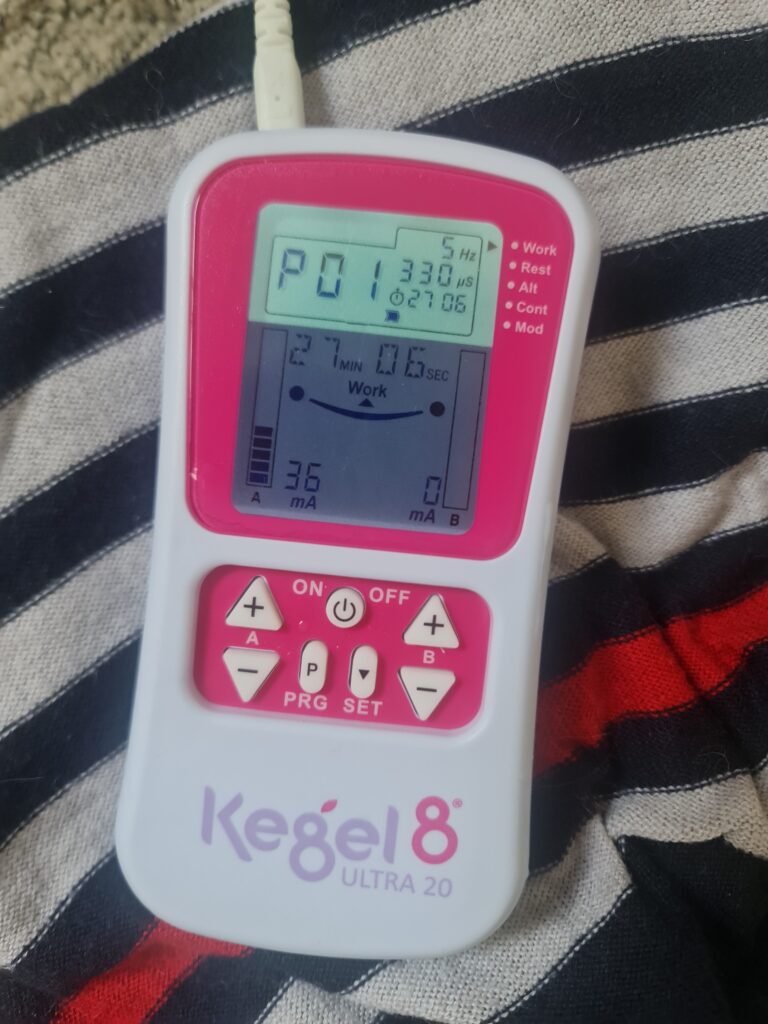
You can choose a programme by pressing the PRG button until the screen shows which programme you want to use. When you’ve selected the programme you want, press the A+ button to increase the intensity (displayed as mA, which means milliamps). If you feel the sensation is too strong, then you can decrease it by pressing the A- button. The amount of current you need to stimulate your pelvic floor muscles will vary. So, starting from 0 mAs, consider increasing the mA power to the level where you can feel the effects of the electrical pulse without any discomfort.
The aim is to gradually increase until you feel the muscles contract and relax with the electrical cycles, but it should never be painful. Some programmes have different phases, but you can play with the intensity level by using the + and – to increase and decrease the mAs back to a comfortable level.
What programmes should I start with?
With the Kegel8® Ultra 20, you get 20 pre-set programs and 3 customisable options. These programs are designed to target the various conditions above, which include urinary and bowel incontinence, light bladder weakness, overactive bladder, pelvic pain and, of course, postpartum recovery. We’ll go through what programmes you get and then what you should start with, depending on your situation. For this article, we will be focussing on postpartum recovery.
| Programme Number | Screen Code | Programme Name | Electrode Positioning | Time |
| P01 | RCV1 | Sensation Test 1 | 1, 2 or 3 | 30 |
| P02 | RCV2 | Sensation Test 2 | 1, 2 or 3 | 60 |
| P03 | EXE1 | Pelvic Floor Muscle Exercises 1 | 2 | 45 |
| P04 | EXE2 | Pelvic Floor Muscles Exercise 2 | 2 | 30 |
| P05 | EXE3 | Pelvic Floor Muscle Exercises 3 (maintenance programme) | 2 | 45 |
| P06 | SIMP | Sensation Improvement | 2 | 20 |
| P07 | ENDU | Pelvic Floor Muscle Exercises 4 – Endurance | 2 | 60 |
| P08 | SENS | Sensory Modulation (TENS) | 2 | 60 |
| P09 | OAB | Overactive Bladder Neuro-Modulation | 2 or 3 | 20 |
| P10 | STR1 | Stress Incontinence 1 | 2 | 40 |
| P11 | STR2 | Stress Incontinence 2 | 2 | 40 |
| P12 | MIXDS | Mixed Incontinence | 2 | 30 |
| P13 | FTRN | Functional Continence Training (with skin electrodes) | 2 | 9 |
| P14 | PNC1 | Postnatal / Post-Surgical Care 1 | 2 | 35 |
| P15 | PNC2 | Postnatal / Post-Surgical Care 2 | 2 | 30 |
| P16 | BOW1 | Bowel (Faecal) Incontinence 1 | 2 | 10 |
| P17 | BOW2 | Bowel (Faecal) Incontinence 2 | 2 | 40 |
| P18 | PAIN | Chronic Pain Relief (with skin electrodes) | 1 or 2 | ∞ |
| P19 | CIRC | Pelvic Floor Circulation | 1 or 2 | 60 |
| P20 | RELX | Pelvic Floor Relaxation | 2 | 20 |
What the different programmes mean
Looking at the table above, you can place the programmes into three distinct categories. These are:
Sensation tests
P01 and P02 are designed to test your sensation levels. If this is your first time, you should start with the P01 Sensation Test 1, to find out whether you can feel the current safely. If you can’t feel the current, use P01 at 50mA once a day for 4 weeks before you progress onto P02.
Muscle exercises
The following programmes are muscle exercises for strengthening your pelvic floor muscles:
- P03 – Pelvic Floor Muscles Exercises 1
- P04 – Pelvic Floor Muscles Exercises 2
- P05 – Pelvic Floor Muscle Exercises 3 – (maintenance programme)
- P06 – Sensation Improvement
- P07 – Pelvic Floor Muscle Exercises 4 – Endurance
- P10 – Stress Incontinence 1
- P11 – Stress Incontinence 2
- P13 – Functional Continence Training (with skin electrodes)
- P14 – Postnatal/Post-Surgical Care 1
- P15 – Postnatal/Post-Surgical Care 2
- P16 – Bowel (Faecal) Incontinence 1
- P17 – Bowel (Faecal) Incontinence 2
Neuromodulation programmes
The following programmes are for calming overactive nerves, circulation, relaxation and pain relief:
- P08 – Sensory Modulation (TENS)
- P09 – Overactive Bladder Neuromodulation
- P12 – Mixed Incontinence
- P18 – Chronic Pain Relief (with skin electrodes)
- P19 – Pelvic Floor Circulation
- P20 – Pelvic Floor Relaxation
How to start the road to postpartum pelvic floor recovery
You’ll find in the guide there are lots of tailored condition guides by Amanda Savage, who is a specialist physiotherapist4, that address specific issues. These condition guides combine several pre-set Kegel8® Ultra 20 programmes. These are:
- More Effective Pelvic Floor Exercises
- Bladder Weakness & Stress Incontinence
- Uncontrollable Gas/Wind & Bowel Control
- Menopause, Perimenopause & Postmenopause
- Pelvic Organ Prolapse
- Pelvic Pain
- Postpartum Recovery
- Vaginal Looseness & Lack of Sensation
- Rehabilitation After Gynaecological Surgery
In this section, we’ll go through the advised process for pelvic floor exercises postpartum to regain strength. I will coincide this section with my journey too, so we can see real-life action results and find out whether the Kegel8® Ultra 20 actually works (hint, it does!)
If you want more information on the other condition guides, please consult the manual.
Grab the Kegel8® Ultra 20 with 10% discount using the code MD10 now!*
Month 1 – The beginning of the postpartum pelvic floor journey – Testing the sensitivity
If you have given birth less than 12 weeks ago, you need to start with the physical pelvic exercises without using a STIM device first. If you have given birth more than 12 weeks ago, you are safe to continue.
Here’s a video on Instagram, introducing my journey and partnership with Kegel8®:
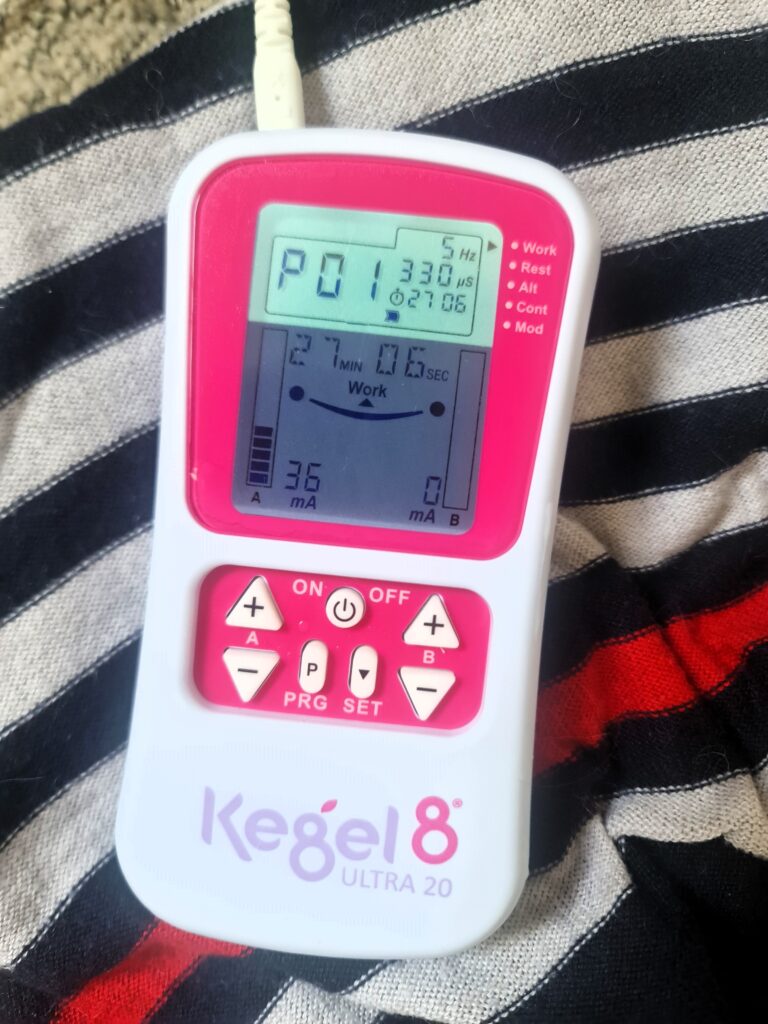
The programme guide suggests you start with P01 – Sensation Test 1 to test whether you can feel the current safely. So this is what I did.
Use the + button on the same side you are plugged into the machine to turn up the mA current. If you can feel a sensation, like a warm tickling, below 50mA then you can progress to the second sensation test P02.
If you can’t feel a tickling sensation below 50mA, it can be a sign of nerve damage or difficulty conducting messages. This is quite common after childbirth or surgery.
P01 can be your treatment programme to help you recover, at 50mA (or less), once a day for four weeks before progressing onto P02. If you can’t feel any sensation returning after one month, then you should consult a medical professional for advice.
I was impressed I could feel something at 30mA which meant I still had feeling down there, so I felt I could move nicely onto P02 – the second sensitivity test.
Progressing onto P02 – Second sensation test
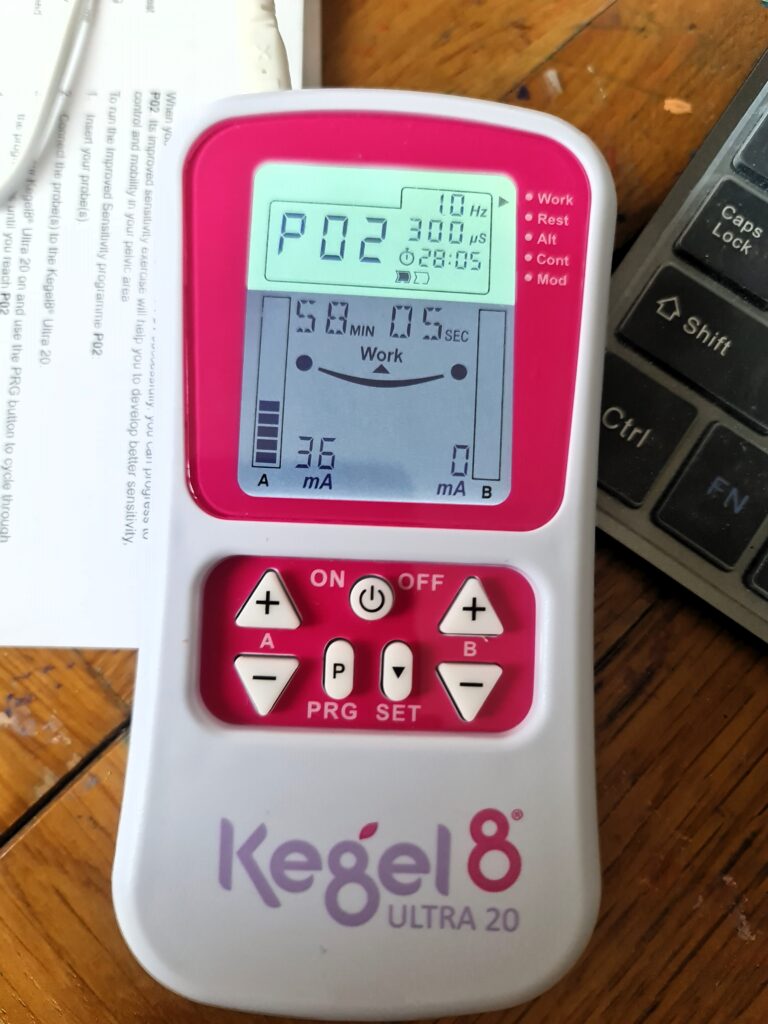
This second test introduces new frequencies and if you can feel a sensation from the internal probe below 50mA on P02, you can progress to one of the Kegel8 treatment programmes (P03-P20).
If you can’t feel a sensation below 50mA it can be a sign of nerve damage. Use P02 at 50mA once a day for a further four weeks. Again, if you do not feel any sensation returning, contact your doctor or physiotherapist for advice.
P02 was a full 60 minutes long, a length of time a mother of four doesn’t have the luxury of enjoying, so I decided to discreetly train my pelvic floor as I sat at my desk working and no one was none the wiser! I cranked it up to 36mA and thought that was a great place to start. I did this for a few days before I felt I could move forward with P14. It’s important to note that the higher the mA the stronger the current, but not necessarily a stronger pelvic floor. The effectiveness of the mA depends on how the muscles respond to the stimulation. Some muscles might contract more effectively with lower currents, while others might require higher currents. Quality and proper engagement of the muscles during the practice is what matters here.
Week 1 – “Find and Feel” your pelvic floor muscles with P14 – Postnatal / post-surgical care 1
Once you’ve taken the sensitivity tests, it’s time to move on to a 25-minute gentle exercise programme, which is designed for vulnerable mums after childbirth.
Phase 1 is a 20-minute continuous low-frequency current that improves the awareness of the muscle position, blood flow and nerve sensitivity. The point of this program is to relax as much as possible.
Phase 2 is 15 minutes and uses a higher frequency current to stimulate the fast and slow pelvic floor muscle fibres by contracting for 6 seconds and then relaxing for 18 seconds. This is because you need long rest phases when your muscles are learning to work again. Much like exercising your core after pregnancy.
It’s important to allow the sensations to come and go and for you to learn where your pelvic floor muscles are. Use this program on alternate days until you get used to the probe.
I cranked the mA up to 40mA and was happy I could complete the program quite easily at this stage.
Week 2 – Continue then take a rest – P14 – Postnatal / post-surgical care 1
If you were comfortable in Week 1, then use the Kegel8® Ultra 20 every day for six days, then take a rest day. If you’re feeling particularly uncomfortable or irritable internally then take an extra rest day, or do alternative days.
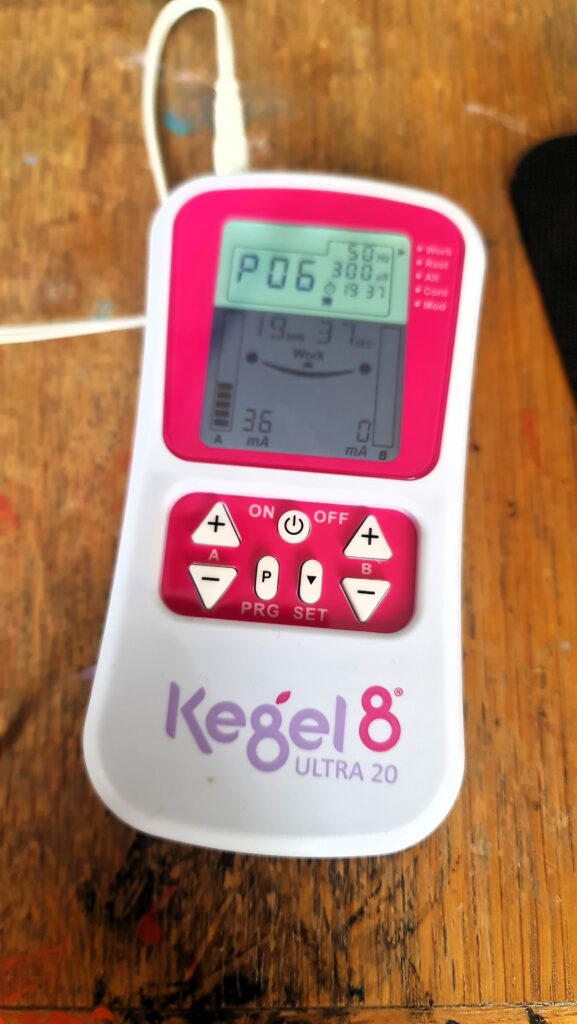
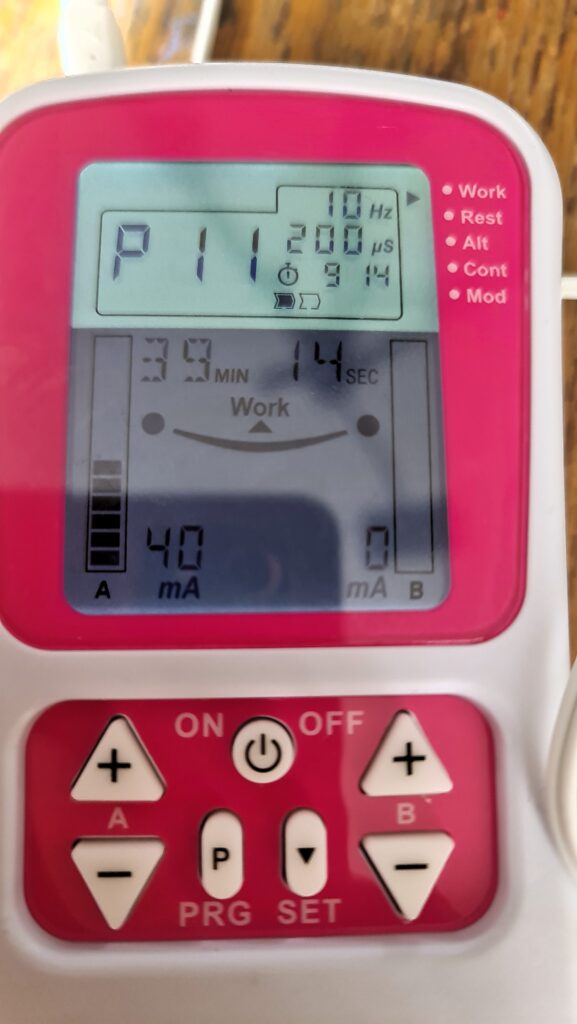
I have to say, I got bored with P14 as I was three years postpartum so I wasn’t ‘vulnerable’ down there. So I went off on a tangent at this point and started messing about with all the programs. I tried P11 – Gentle incontinence program and cranked it up to 40mA. Then I went for P06 – Increased sensitivity program. In this program I could really feel the muscles working on the sides of my walls, even at 36mA! I even took a work call while doing my exercise – that’s multitasking for you! I could feel the pressure towards the back passage too, so I felt I had worked them enough in this program.
It was actually during this month I realised I didn’t have stress incontinence, but urge incontinence. So I also hit P09 – Overactive Bladder Neuromodulation on 40mA because it’s only twenty minutes long. I actually found this easy.
Weeks 3 – 4 – P03 – Pelvic floor muscle exercises 1
P03 exercises your muscles for a longer 45 minutes, with a shorter recovery time between muscle contractions. Phase 1 has a low frequency at 15 minutes and then Phase 2 hits a higher frequency for 30 minutes. I found this a tad more challenging but still sailed through at around 36mA. I did this for a couple more days before the end of the month hit and my period was nigh.
End of month 1 update
Three days before my period and coming up towards the end of the month, I tried P09 – Overactive Bladder Neuromodulation and I couldn’t even get it to 30mA! I wondered whether everything down there was more sensitive just before your period. This is a very interesting point. I decided to consult ChatGPT which said:
“Yes, it’s actually quite common for women to experience increased pelvic floor sensitivity and even some changes in pelvic floor function during different phases of their menstrual cycle. In the days leading up to your period, hormonal fluctuations can make tissues more sensitive, and you may retain more fluid, which can affect how comfortable electrical stimulation feels. This could be why you’re having difficulty reaching the usual intensity on your device. It’s completely normal to need to adjust the intensity of your Kegel8® device throughout your cycle. Listen to your body, and only use a level of intensity that feels comfortable and effective for you.”
At the end of the month, I didn’t notice any physical improvements yet, but I fell in love with doing my pelvic floor exercises with the Kegel8®, especially I could feel the device working my pelvic floor muscles without me having to knowingly remember, thanks to my scatty brain! So, I’m sure whatever is happening down there is progression. And practice makes progression!
So let’s see how we get on in Month 2!
Grab the Kegel8® Ultra 20 with 10% discount using the code MD10 now!*
Month 2 – Weeks 1 – 4 – Do more of the same, but with longer muscle contractions now
In month 2, you now use P04 – Pelvic Floor Muscle Exercises 2 which features longer muscle contraction times (8 seconds) with a similar long rest time in each cycle. There are four phases to change between stimulation frequencies more often, which is often the case when working your body through fitness as well. You want to trick the muscles and make them work differently so they don’t get tired or bored. I totally understood why this was indeed the case for the pelvic floor muscles too – and I felt it as well!
In this phase, you also needed to get your brain involved in this process and ‘join in’ with some of the stimulation cycles. You can do this by trying to work your pelvic floor muscles in your mind, by drawing in and up when you feel the stimulation (as we showed above in the three-step process – remember hold in the wind, then hold in the pee, then go up 5 levels on the lift, and then back down again while breathing normally). Follow these movements when doing the pelvic floor muscles yourself. And, don’t worry if you can’t do all the seconds at this stage. We’re still new in the process and that’s absolutely fine. Just do what you can and let the machine do the rest.
I actually didn’t find this easy at all. I kept missing the mark and then moved up too quickly, or held my breath. I even kept holding my glutes or tummy. So it took me a while to isolate the muscles and follow the stimulation cycles. By the end of the program, I got it and when I got to the of the month, I had mastered the process and found I could hold all the way through. I was so tired by the end though. It felt like a proper workout!
Using the Kegel8® Biofeedback Pelvic Trainer to monitor results


I was also gifted the Kegel8® Biofeedback Pelvic Trainer which I used to monitor my results. You can use the Biofeedback to take the guesswork out of Kegels because you squeeze and it measures your results. At this stage, I used it to test how well I was doing on my daily practice with the Kegel8® Ultra 20 because I wasn’t strong enough to do the practice yet. You do this by using the test function, which squeezes and relaxes your pelvic floor repeatedly for 45 seconds. It then gives you a level score, so you can track your progress.

The Biofeedback practice phase tends to come in handy when your pelvic floor muscles are a bit stronger and you can do the squeezes yourself. I plan to use the practice phase of the Biofeedback once I’ve hit level 2 on the test phase.
Biofeedback Trainers and Muscle Stimulation Devices like the Kegel8® Ultra 20 can offer different approaches, as you can use the practice phase of the Biofeedback to practice your pelvic floor yourself as well. Here’s a comparison to help you understand their differences and how to incorporate them into your routine:
| Feature | Kegel8® Biofeedback Pelvic Trainer | Kegel8® Ultra 20 Muscle Stimulation Device (Neuromuscular Electrical Stimulation) |
| Ideal User | For muscles with Oxford Scale > 2 | For very weak or fatigued muscles (Oxford Scale < 2) |
| Functionality | Provides visual or audio cues for muscle identification, practice, and motivation Use the trainer to identify your pelvic floor muscles in different positions | Uses electrical impulses to stimulate muscle contraction and brain-muscle coordination |
| Benefits | Helps identify pelvic floor muscles in different positions – Ensures correct practice of contraction and relaxation – Enhances endurance, coordination, and brain skills | Assists the brain in identifying pelvic floor muscles – Stimulates different muscle fibres – Allows for assisted and independent muscle contraction – Supports learning of muscle control during breathing or movement – Can calm bladder overactivity (neuromodulation) |
| Daily Use | Typically used for 10-15 minutes, once or twice a day, focusing on both quick and sustained contractions. | Recommended for 10-60 minutes daily, depending on the program and muscle condition |
| Frequency | Can be used daily or as needed to track progress and practice | Often used daily for initial strengthening and can be adjusted based on progress |
| Examples of Use | Daily tracking to improve muscle strength over 12 weeks – Real-time display of muscle strength during exercises – Real-time feedback allows you to monitor your progress and adjust exercises as needed. | 20-60 minutes daily sessions – Programs for stress incontinence, overactive bladder, muscle endurance, and more |
My end of month 2 update
I definitely felt a difference during this month. I used the Biofeedback trainer and I went from Level 0 to Level 1 – I was so pleased! I also found out at this point that the mA electrical pulses don’t really tell you how much you’re improving. It’s not about the strength of the mA, it’s more about how you feel down there. When you use the Biofeedback trainer’s test, you can see that you are improving and it really boosts your confidence. The test is about 45 seconds long and the program flexes and relaxes your muscles repeatedly and then it gives you a score at the end,
It’s the little things I’ve noticed now like I don’t leak when I hold my pee in, which has given me a huge confidence boost. This month, I decided to try the programs that alternate between increased sensitivity (P06) and urge incontinence settings (P12). I cranked it up to 40mA which was fine but I was worried I wasn’t feeling it as much. A part of me did wonder if I had created nerve damage from doing too much too soon. But I figured, it’s fine and I’ll just go for it.
Also, I’ve noticed when I have my period and I walk, my period cup stays in rather than slips out. My core feels stronger and I just feel better in myself. What a difference since last month. I’m so eager to keep going!

Month 3 – It’s all about developing more pelvic floor skills now
Weeks 1 – 4 – Use P10 – Stress incontinence 1
Now is the time to work yourself a little harder in phase 2, by joining in with the machine more and having shorter rests between contractions.
Phase 1: First, you enjoy 10 minutes of continuous low-frequency current to improve awareness of the muscle position, blood flow, and nerve sensitivity. You can relax in this phase.
Phase 2: Now comes the work! Do 30 minutes medium frequency current to stimulate the fast and slow pelvic floor muscle fibres, by contracting for 5 seconds and then relaxing for 5 seconds in cycles. Try to join in with some of these contractions, and aim to contract for the entire 5 seconds. Join in for 1 minute then let the machine do the work for 1 minute or count joining in for 6 cycles, then letting the machine do 6 cycles.
Use 6 days out of 7 (or alternate days if your internal tissues are sensitive).
Ongoing maintenance – P05 – Weekly maintenance
Once you’ve completed three months with the Kegel8® Ultra 20, you should see a vast improvement in your pelvic floor. At this stage, ask yourself:
- How do you feel now compared to how you felt in Week 1?
- Have some of the problems you suffered with gone?
- Do you have any of the same concerns?
- What’s still bothering you?
My end of month 3 update
For me, I have noticed a huge difference after month three. So here are my answers to the below questions:
- I feel so much more confident now than I did in Week 1. My tummy feels flatter, my period is lighter, my cup stays in and I don’t leak
- I can hold my bladder for quite a while now and I don’t have to worry about leaking – this was my biggest concern.
- Absolutely hand on heart, no concerns right now.
- My droopy stomach is still bothering me, but that’s for another article! For now, I know I’m improving, just like my whole body fitness is too – so onwards and upwards and no more giving up.
So, now we move to maintenance!
P05 – Pelvic Floor Muscle Exercises 3 is a maintenance program which contains a mix of frequencies to maintain fast and slow twitch muscle fibres. You can then use P20 – Pelvic Floor Relaxation for 20 minutes once a week to relax and refocus on sensations when you are feeling tense, stressed or disconnected. I have been doing this religiously for a while now and the biggest difference is how long I can tense the muscles now, which makes me feel like Hercules!
Follow the Let’s Get Started Guide for more details on the above Postpartum Recovery process or follow any one of the other guides related to your current condition, to exercise those pelvic floor muscles into fighting fit status! You can download the Let’s Get Started guide here –> Let’s Get Started User Guide
Discover pelvic health with Kegel8®’s free eBooks
Kegel8® has an exclusive eBook library of resources aimed at enhancing your understanding of pelvic floor health. These eBooks are meticulously crafted by Kegel8®’s team of experts to address a wide array of pelvic health conditions and topics.
Whether you’re seeking to strengthen your pelvic muscles or your partner is interested in improving bladder control and intimate wellness their range of eBooks provide valuable information, practical advice, and step-by-step guidance. These resources cover everything from basic pelvic floor exercises to more specialised advice on managing pelvic pain, prolapse, and sexual intimacy.
Available eBooks Include:
- Leaks
- Postnatal Care
- Pelvic Pain
- Sexual Intimacy
- Prolapse
- Men’s Pelvic Health
Each eBook is readily available for download, offering expert insights to help you improve your pelvic health. Click here* or on the banner below to visit their library.

As technology advances, what’s the future of pelvic floor rehabilitation?
As technology advances, pelvic floor rehabilitation is evolving. Amanda perceives certain future trends to include:
- Devices that interact with a therapist so you get the best of both worlds: working at home while having someone able to review your results and coach you remotely.
- Smaller devices, although this may be tougher for those suffering from eyesight issues.
- Non-invasive methods to affect or measure the pelvic floor, like a magnetic chair, although it’s not very portable or affordable for home use.
Final words of encouragement from Amanda Savage
“Remember that YOU are amazing. Your body is hugely capable, adaptable and resilient. Your body wants to heal and restore itself – but it may need your help and encouragement. And it will need is your time and every tiny step will add up.
Rehabilitation results can feel slow… but progress will continue for YEARS ahead. These problems have arisen during the phase of life when you have the most demand on your time, your sleep, and your energy. And when you have the most extra load on your body. Believe it or not, a time will come when your children can get in the car independently and carry their own stuff. You will sleep through the night. And have a bit more time for your own needs.
Right now to do the best you can in your personal circumstances, seek professional help if you have an inkling that you don’t know what you are doing – or what you should be doing – or if DIY isn’t going to be enough. Make a promise to your future self that when you find your mothering load a little lighter your first re-focus won’t just be on your career or a new external project – you will make sure you come back to your body first to cross the t’s and dot the ‘is that might have to be a little skipped out at present.”
Final words from me
It has taken me almost three years to accept my body after four kids – and it is still a work in progress! I know how overwhelming the postpartum recovery journey can be. But, with the right tools and guidance, you can learn to love yourself again.
Thanks to the Kegel8® Ultra 20, I feel stronger, fitter and more confident. I know longer wear baggy clothes or black leggings because I’m afraid to pee on the street. It’s a long game, but the rewards are so totally worth it!
Stay committed to your pelvic floor exercises like you do with regular fitness and listen to your body. When you are ready to move to the next step why not try my postpartum core exercises and share your recovery journey with me over at @motherhooddiaries.
Don’t give up!
Grab the Kegel8® Ultra 20 with 10% discount using the code MD10 now!*
FAQ
Can I use the Kegel8® Biofeedback Trainer and Kegel8® Ultra 20 during my period?
Amanda advises you can use the Kegel8® Biofeedback Trainer and Kegel8® Ultra 20 during your period, though it can be a bit messy, so most women choose to take a break. Remember that hormone changes can make your pelvic floor less responsive just before your period, so don’t be disheartened if your performance varies throughout the month.
Pelvic floor issues and recovery
I have a tight pelvic floor after birth. What does this mean?
“A shortened or tight muscle may be just as incapable as exerting force as a long or loose muscle. Being tight does not mean your pelvic floor is strong. Neither tight nor loose are healthy or desirable.”
Kelly Bryant Wellness
How long does it take for your pelvic floor to recover after childbirth?
How long does it take for your pelvic floor to heal after birth?
How long to regain pelvic floor after birth?
“It’s important to exercise your pelvic floor postpartum. Pelvic floor recovery time takes up to 6 months. The change in the area of the levator hiatus with Valsalva reflects the stiffness of the pelvic floor; that is, its ability to withstand the increased abdominal pressure accompanying pelvic loading.”
LWW Journal
What happens to your pelvic floor after birth?
Does our pelvis get bigger after giving birth?
“After giving birth, it might look wider than it did before and could feel looser, softer and more open. It might also look and feel bruised or swollen. But all of this should settle in a few days. You may also find that your vagina feels drier, especially if you are breastfeeding.”
NCT
Pelvic pain and treatment
I am experiencing pelvic pain after birth. What do I do?
How do I know if I have postpartum pelvic pain syndrome?
Does pelvic floor pain go away after birth?
“A trained pelvic floor physical therapist can help you teach your muscles how to function optimally again. In particular, Kegels are helpful for muscle strengthening and endurance. They’re especially important for women with urinary or anal incontinence and pelvic floor weakness.”
What to Expect
Pelvic floor exercises and therapy
How can I strengthen my pelvic floor muscles?
How to help your pelvic floor after childbirth?
How do you tighten your vagina after childbirth?
When to start pelvic floor exercises after birth?
When to do pelvic floor after birth?
When to start pelvic floor after birth?
How can I rebuild my pelvic floor after birth?
“To strengthen your pelvic floor muscles, sit comfortably and squeeze the muscles 10 to 15 times. Do not hold your breath or tighten your stomach, bottom or thigh muscles at the same time. When you get used to doing pelvic floor exercises, you can try holding each squeeze for a few seconds.”
NHS
I have no pelvic floor muscles after birth. What can I do?
Follow the tips above and consult your doctor about a plan to start retraining them again. Slow and steady wins the race!
What is pelvic floor therapy after birth?
“Pelvic floor therapy is a type of physical therapy that helps with problems involving the group of muscles that – along with surrounding ligaments and tissues – hold your pelvic organs in place. The pelvic organs include the bladder, urethra, intestines, rectum, uterus, cervix, and vagina.”
BabyCenter
Urination After Birth
How do I pee after giving birth?
“Urinate in a warm shower. Run water in the background. Place your hand in cold water as you empty your bladder. Your pelvic floor muscles are important for healthy bladder function.”
The Women’s
Post-Pregnancy Body Changes
How long does it take for your belly to go back to its normal size after giving birth?
Do women get their bodies back after pregnancy?
“It takes six to eight weeks for your uterus to return to its normal size, but for some mums, it may take much longer for their post-pregnancy belly to return to ‘normal.’ For other new mums, they may find that their bellies take on a permanently different new appearance.”
BabyCenter
Pelvic Floor and Sexual Health
Does giving birth weaken your pelvic floor?
“Pregnancy and birth (both vaginal and caesarean) can put stress on and damage the pelvic floor.”
Health Queensland
Does sex change after giving birth?
“Birth and parenthood are likely to change the kind of sex you have and how often you have it. For women, interest in sex can return 1-3 months after having a baby, but it’s normal for it to take longer. Unless your doctor has advised otherwise, you can have sex again when you feel ready.”
Raising Children
Pelvic Health and Conditions
Did anyone else get diastasis recti after laparotomy abdominal surgery?
You can find an answer to this question here: Quora
Do you have any home remedies for pelvic floor dysfunction?
“Self-care. To reduce strain on your pelvic floor muscles, avoid pushing or straining when using the bathroom. Relaxation techniques such as yoga and stretching can also help to relax your pelvic floor muscles. Taking warm baths is another useful technique.”
Healthline
Does rectocele cause gas?
“A sensation of rectal pressure. Rectal pain. Difficulty controlling the passage of stool or gas from the rectum.”
Drugs.com
General Pelvic Floor Health
Why should I do pelvic floor exercises?
Will my pelvic floor recover from childbirth?
How do I fix my pelvic floor tension?
My pelvic floor muscle is always tight it is as if I am always trying to hold myself from going to the bathroom even when I am not going. How can one strengthen a weak or damaged pelvic floor muscle without physical therapy?
Are there any effective home exercises for this?
How can pelvic floor physiotherapy benefit women’s health and what are some effective exercises to strengthen the pelvic floor muscles?
How long does it take for pelvic floor muscle exercises to make you feel better or notice any change in pain levels?
Is holding my pelvic floor muscle for 2-3 minutes while taking deep breaths a good or bad exercise to strengthen it?
How can you tell if you have weak pelvic muscles and what are some ways to strengthen them?
What are some recommended exercises for women with incontinence?
What are some ways to strengthen the pelvic muscles after giving birth?
Do Kegel exercises work?
Can you get too good at it that it becomes painful for your partner?
What are the best exercises and lifestyle choices to support strong pelvic floor muscles?
What exercises can help improve pelvic floor strength and function while running?
For all these questions, the following advice applies:
“To strengthen your pelvic floor muscles, sit comfortably and squeeze the muscles 10 to 15 times. Do not hold your breath or tighten your stomach, bottom or thigh muscles at the same time. When you get used to doing pelvic floor exercises, you can try holding each squeeze for a few seconds.”
NHS
- One Poll survey of 2,000 UK women, 2016 ↩︎
- International Consultation on Incontinence (ICI), publication 2013, Abrams et al ↩︎
- One Poll survey of 1,000 women, 2016 ↩︎
- Amanda Savage is a member of the Professional Network of Pelvic Obstetric & Gynaecological Physiotherapy and a graduate of the University of Cambridge. ↩︎
*Links marked with a ‘*’ are affiliate links, which means, as an Amazon Associate I may earn a small commission at no extra cost to you for qualifying purchases.
*Sponsored by Kegel8®, but all thoughts and opinions are my own