Best supplements for fertility
Anyone who has struggled to get pregnant knows that the road to conception can be a difficult journey to overcome especially when you witness countless negative pregnancy tests. It took us almost two years to conceive our baby girl (sadly we lost her at 16 weeks pregnant) and even though I recorded the journey I took (you can find this journey here) it still took us fourteen months to get pregnant with our second baby girl (you can find her birth story here).
It was then I realised that for pregnancy to work, all the dots have to be connected, i.e. if one thing is off, then everything is off. There are lots of factors to maximise your chances of getting pregnant naturally and one of the branches of the fertility tree is preconception supplements, which is the basis of this article.
Read on for more information on the best supplements to take to get pregnant.
Can supplements help fertility?
Just like prenatal supplements help to fill in any missing gaps in nutrition during pregnancy, the best fertility pills to get pregnant ensure you’re building all the blocks to conceive. But there is such a wide variety of supplements around, which are the best supplements for fertility?
Motherhood Diaries has teamed up with Zita West, the leading fertility expert, to advise which supplements will maximise your chances of getting pregnant. And, we’ve even created a competition for you to win four proven products from the Zita West Shop to help you on the road to pregnancy success. More on the giveaway later – let’s talk about which supplements actually help you get that Big Fat Positive.
Start with your preconception check up
When struggling to conceive, your first port of call should be to visit your doctor for a preconception checkup. You can head here to download your starter pack which contains questions to ask your doctor. At the check-up, your doctor will be able to let you know what’s missing in your diet and what supplements can increase fertility.
Remember each person’s body is different so you may need different vitamins and minerals to supplement your diet. So it’s recommended to talk through the types of supplements you need with your doctor first.
Get an insight into your fertility with an accurate at-home test and check your female hormone levels from the privacy of your own home. Code below!
Get 25% off your LetsGetChecked Female Hormone Test with your exclusive discount code MHD25*
Micronutrients in fertility
The science around micronutrients when getting pregnant is still very new but some studies show that vitamins play a very important role in female health, including:
- Period and ovulation cycles
- Egg quality and maturation
- Immune system function
- Thyroid function
- Reduction in symptoms of Polycystic Ovary Syndrome (PCOS) – a common cause of infertility
For men, vitamins can help to increase sperm motility and mobility.
So what supplements are the most effective in fertility?
Folic acid
Folic acid helps to prevent neural tube birth defects in the brain and spinal cord. But these types of defects can develop in the first 28 days after conception before you know you’re even pregnant. And as more than half of pregnancies are unplanned, it’s recommended you take 400 micrograms (mcg) of folic acid daily, starting before conception and continuing for the first twelve weeks of pregnancy.
If you have already had a baby with neural tube defects, then you should talk to your doctor about upping your dose (up to 4,000 micrograms) at least one month before and during the first trimester for a healthy pregnancy.
B Vitamins (other than folic acid)
B Vitamins are a group of vitamins made up of B-3 (niacin), B-6 (pyridoxine), B-9 (folate or folic acid), and B-12. These B vitamins are vital in the formation and proper function of red blood cells and also help to ensure your body is running properly.
Vitamin B-6 – pyridoxine
A study in 2007 found that women who have higher levels of B-6 in their blood are less likely to experience fertility problems, although it hasn’t been proven yet that increasing B-6 levels can treat infertility.
B-6 helps to use and store energy from protein and carbohydrates in food and helps the body to form haemoglobin, which carries oxygen around the body.
You can find B-6 in pork, poultry, some fish, peanuts, soya beans, wheat germ, oats, bananas, milk and some fortified breakfast cereals.
You should be able to get B-6 in your diet, which is 1.4mg a day for men and 1.2mg a day for women. However, when taking a supplement it’s important to not take too much. Taking 200mg or more a day of B-6 (LK2) can lead to a loss of feeling in the arms and legs. Do not take more than 10mg of B-6 a day in supplement form unless your doctor has advised otherwise.
Vitamin B-9 – Folate
B-9 is one of the most important vitamins for conception and can help to prevent irregular ovulation and increasing pregnancy rates. Low intake of folate is also associated with a risk of neural tube defects and for men, poor sperm health and DNA-damaged sperm. Taking a supplement with zinc can help to improve male sperm.
Good sources of folate can be found in dark leafy greens such as cabbage, kale, spring greens and spinach, peas, brussels sprouts, lentils, chickpeas, kidney beans, asparagus and broccoli. Folate can also be found in liver but you should avoid eating liver during preconception and pregnancy.
You need around 200mcg of folate a day as there are no long-term stores in the body. So it’s important to eat folate-containing foods frequently.
Vitamin B-12
B-12 prevents anaemia, a deficiency that can cause a low number of red blood cells or haemoglobin. Adults need about 1.5mcg of B-12 a day. If you eat meat, fish or dairy foods, you should be able to get enough B-12 from your diet. However, if you are vegan or vegetarian you may be deficient, so make sure to take a supplement that contains B-12 as this is vital for fertility.
Good sources of B-12 include meat, fish, milk, cheese, eggs and some fortified cereals. You need around 1.5mcg of B-12 a day, but taking 2mg or less a day of B-12 in supplement form is unlikely to cause any harm.

Get a comprehensive picture of your hormonal health with no clinics or appointments. Easy testing, free shipping, and fast results.
Order now for 25% using the discount code MHD25*
What’s the difference between folate and Folic acid?
Folic acid is the synthetic form of B-9 and can be found in most vitamin supplements. When you see foods that state they are fortified with B-9, it’s almost always folic acid and not folate.
However, you should take folate and not folic acid because when you’re taking a folic acid supplement your body has to transform the folic acid into folate, otherwise your cells can’t use the nutrient.
You can also find supplements with folate (look for 5-methyltetrahydrofolate or 5-MTHF rather than ‘folic acid’) but these supplements tend to be more expensive and harder to find.
Speak with your doctor and find out if you have any genetic or medical condition which makes it more difficult for you to properly absorb B-9 in the folic acid form. Some women may be at higher risk of miscarriage, pregnancy complications or having a child with neural tube defects due to poor folic acid/folate absorption. So it’s important to have this looked at first.
Omega-3s
Omega-3s help to boost sperm mobility and increase your chances of getting pregnant over 35. Omega-3s also help to fight inflammation and heart disease.
You can find Omega-3 in fatty, oily fish like mackerel, salmon, herring, sardines, anchovies, and oysters, caviar, flax seeds, chia seeds, walnuts and soybeans.
When taking in supplement form, read the label carefully. Always check the type of Omega-3, i.e. your supplement should contain EPA and DHA, which are the most important types of Omega-3s. For better absorption, also look for FFA (free fatty acids), TG, rTG and PLs rather than EE.
Iron
Iron is one of the most important minerals for fertility and can help to prevent iron-deficient anaemia and ovulatory infertility. A long-term study found that over 18,000 women who took iron supplements decreased the risk of ovulatory infertility.
You can typically get iron from animal protein and beans, lentils, spinach and fortified cereals. You can maximise absorption by taking Vitamin C too. But be mindful that iron can cause constipation, so eat foods high in fibre to counteract its effects.
Acetyl L-carnitine
L-carnitine (LC) and its acetylated (and preferred) form, acetyl L-carnitine (ALC) regulates the female reproductive system and improves female fertility. ALC has better antioxidant properties and can be used as a treatment option for women who suffer from infertility. LC can also help sperm motility.
A 2018 review found that supplementing with both LC and ALC can improve symptoms of PCOS, endometriosis and amenorrhea (no period).
It is recommended for men to take between 1 and 3 grams per day of both ALC and LC but consult your doctor first to discuss safety and proper dosing.
Coenzyme Q10
Coenzyme Q10 (CoQ10) improves ovarian response in IVF and boosts sperm motility. Your body produces CoQ10 on its own, but for the baby-making process, it may be more beneficial to increase the amount in your bloodstream, especially when you’re trying via IVF. More research is needed in this area, though, to determine whether taking a supplement positively affects female fertility outside of IVF.
Selenium
Selenium is vital for health and plays a role in thyroid function, DNA synthesis and reproduction. Not having enough selenium in your diet can lead to a risk of a luteal phase defect (the portion of your menstrual cycle that occurs after ovulation but before the first day of your next menstrual cycle, so around 12 to 14 days.) Some people who have fertility problems experience a short luteal phase and recurrent miscarriage (miscarrying more than two times in a row) has also been associated with a shorter luteal phase than normal.
There are currently no studies on taking a selenium supplement during fertility but a small study in 2017 found that men with reduced sperm motility who supplemented with selenium significantly increased their sperm count, motility, viability and morphology.
Brazil nuts contain very high levels of selenium. You can also find selenium in tuna, halibut, sardines, ham and shrimp.
Vitamin D
A deficiency in Vitamin D or the ‘sunshine vitamin’ has shown in some studies to lead to female infertility, due to polycystic ovarian syndrome (PCOS). However, this wasn’t observed in women who had infertility for no known cause.
Vitamin D is very important for both men and women’s reproductive function so it’s important to get tested for vitamin D deficiency and seek advice from your doctor regarding the proper dose, depending on your levels.
Vitamin C
Vitamin C is a very powerful antioxidant that can help to reduce cellular damage and free radicals from the body, as well as increase iron absorption. Multiple studies have found that vitamin C and vitamin E improve sperm count, mobility and quality in men.
It is recommended that men should take 90mg of Vitamin C while women should take 75mg.
Calcium
There isn’t much research out there which defines how calcium boosts fertility, but it’s an important mineral to prevent deficiencies in both men and women. One study found that there could be a link between infertility in men and a calcium deficiency as calcium is involved in sperm production.
It is recommended to take around 1,000mg of calcium per day and to get your calcium from dietary sources like full fat yoghurt and not supplements.
Vitamin E
Vitamin E is an antioxidant that helps to promote sperm function in men. Vitamin E for fertility in women supports general female reproductive health. More research is needed but adults should take around 15mg of Vitamin E per day.
Zinc
Zinc is essential for sperm formation, but the link between zinc deficiency and male infertility hasn’t been proven yet. One study showed that lower levels of zinc in the female’s blood may be associated with taking a long time to get pregnant.
It is recommended for women to take 8mg of zinc per day while men should take 11mg.
Get an insight into your egg reserve with LetsGetChecked's Ovarian Reserve test.
Order now for 25% using the discount code MHD25*
What about just taking a multivitamin?
You need so many micronutrients to improve fertility, so it may be more suitable to find high-quality conception pills that include all the minerals and vitamins for fertility that you’ll need. Look for a supplement for fertility that contains a minimum of 400mcg of folate and at least 600IU or 10mcg of Vitamin D. Make sure the supplement includes iron, Vitamin C, calcium, iodine and choline. For men, look for supplements that also contain 200 percent of your daily allowance of Vitamins C, E and zinc.
Do not take any cod liver oil or supplements that contain Vitamin A (retinol). Too much Vitamin A could harm your baby.
Your questions
What are some natural ways to increase fertility?
In my Facebook page of over 10,000 women and Facebook group, one of the leading questions I get is ‘What are the natural ways to increase fertility in women?’
Make sure your diet is enriched in antioxidants like folate and zinc. Eating foods like fruits, vegetables, nuts and grains are packed full of nutrients like Vitamins C and E and folate, beta carotene and lutein.
Cut down on refined carbs if you have PCOS. Switch white pasta, rice and bread for their wholemeal versions and reduce your sugar intake. Eat more fibre too and avoid caffeine which can be dehydrating. If you’re deficient in iron you may struggle to get pregnant as low levels can cause ovulatory infertility (no ovulation).
Watch your weight too. Too high or low BMI levels can affect fertility. But every woman is different. So it’s important to get a preconception weight check-up to find out where you are on the scales and what you need to do to achieve the perfect weight balance. Also, avoid alcohol and smoking as these can cause damage to egg and sperm cells and increase infertility.
Other things you can do is get active, reduce stress where you can and know your ovulation cycle so you can time intercourse when you’re ovulating. You can also find organic or natural fertility supplements which may cost a bit more and might be harder to find.
What vitamins should a man take when trying to conceive?
The other questions I got was ‘Do supplements work for male fertility?‘ and ‘What is the best supplement to increase sperm count?‘ See above for more information. Fertility supplements for men should contain 200 per cent of your daily allowance of Vitamins C, E and zinc. Also, check out Zita West’s Male PreConception Support Pack which contains all you need to help sperm quality. Enter the competition below to win this Support Pack and three other products to aid in getting pregnant!
Does taking pre workout powders impact male fertility?
Aidan, Accredited Sports Dietitian and Practising Dietitian of Ideal Nutrition says:
“Theoretically, there is no way I can see protein powder by itself reducing fertility in any way, within the context of an overall healthy diet…”
However, Aidan went on to say that one study showed a noticeable impact on sperm count in those who consumed whey protein regularly. Those who did not consume protein powder ended up with a medium sperm concentration that was 2.6x higher than those who did.
Aidan summarised that although sports supplements are rarely discussed during fertility most supplements should not affect male fertility if taken at the appropriate dose. However, it is still worth taking a cautious approach when trying to get pregnant. It’s better safe than sorry to avoid sports supplements if fertility is a priority.
Can black seed oil help you become pregnant?
For those who don’t know, black seed is a plant and has been used widely in making medicine for over 2,000 years. There is some scientific evidence that black seed may help boost the immune system, but it is also used to prevent pregnancy as well. There isn’t enough information found in humans yet so it’s better to err on the side of caution and leave it out.
Best fertility supplements for twins
There are no right methods to increase your chances of having twins, it’s mostly pot luck. Age tends to be a factor for increasing your chances as well as medical treatments like IVF. Some fertility drugs can increase your chances of having twins as they work to boost the number of eggs produced in a woman’s ovaries. Clomiphene and gonadotropins are typically used that can increase your chances of having twins, but when it comes to taking supplements, there have been some small studies that suggest folic acid may increase the likelihood of conceiving multiples. There aren’t any larger studies to confirm this so you’re better off ensuring your taking supplements for a healthy baby and hope for the best if you want twins!
Supplements to help implantation
Implantation is when the fertilised embryo implants itself into the lining of the uterus. This occurs around 7 to 10 days after ovulation. But to increase your chances of implantation you need to ensure that the embryo is of good quality, you have a receptive uterine lining and a balanced immune system. Some herbs are suggested to improve implantation, but as long as you are taking a good high-quality preconception supplement as well as a nutritionally balanced diet you should maximise your chances of naturally getting pregnant.
What supplements are bad for fertility?
Avoid supplements like Vitamin A, any dietary supplements which promote weight loss, testosterone boosting supplements and overdosing on vitamins as these can all impact fertility and can be quite damaging to your body.
What are the benefits of Maca?
During recent years, Maca has increased its reputation for promoting wellness, with benefits including improved energy levels, libido and fertility. Maca, also known as Peruvian ginseng and part of the cruciferous family has been cultivated and used as a fertility aid for at least 3,000 years in Peru.
There is very little research to suggest that maca improves fertility, so make sure you check with your doctor before you include maca in your diet, especially if you are taking any other medication for PCOS and fertility.
Does vitamin D decrease fertility?
See above. On the contrary, a deficiency in Vitamin D may lead to infertility so it is very important to take the proper dose of Vitamin D and seek advice from your medical professional about the amount you should take every day.
Can honey boost fertility?
Honey has a very long history of providing nutritional and therapeutic remedies. It has even been acknowledged in science as having an antioxidant and antibacterial nature to support fertility. However, this has been controversially discussed and has not been well received in modern medicine.
Numerous observations have shown that honey bee pollen is thought to improve egg quality and general fertility. Honey has also been advised in men with impotence and women with irregular ovulation cycles. Honey is rich in Vitamin B, which is an essential vitamin for the production of testosterone.
Honey has promising properties which can improve sperm count and fertility however there is a lack of trials to prove this. It is therefore recommended to include honey in your diet in moderation as it won’t hurt.
Can certain medication reduce fertility?
The side effects from certain types of medicines and drugs can affect fertility. These include:
- non-steroidal anti-inflammatory drugs (NSAIDs) such as ibuprofen or aspirin
- chemotherapy medicine can sometimes cause ovarian failure
- neuroleptic medicines / antipsychotic medicine which are often used to treat psychosis can cause missed periods and even infertility
- spironolactone, which is a type of medicine used to treat fluid retention (oedema) can cause infertility but you can recover your fertility from two months after stopping
What are natural supplements for PCOS?
PCOS is the most common condition which can affect fertility with symptoms including ovarian cysts and irregular periods so a lot of women ask what are the natural supplements for PCOS. Look for supplements that contain Myo-inositol, which is the most helpful to increase your chances of getting pregnant. Other supplements should include Vitamin D, Omega-3, N-acetyl-cysteine (NAC), Magnesium, Vitamin B-6 and Zinc.
Is it really necessary to take prenatal vitamins during pregnancy?
Another popular question is, ‘What do prenatal vitamins do to help fertility?‘ Eating a healthy varied diet during pregnancy is vitally important to help you get most of the vitamins and minerals you need. But it’s important to supplement your diet with folic acid and other vitamins and minerals to ensure you’re filling in all the nutritional gaps.
Make sure you take 400mcg of folic every day from before you are pregnant until you’re 12 weeks pregnant and do not take any cod liver oil or supplements that contain Vitamin A.
Can supplements affect fertility?
When it comes to infertility, there are so many factors to consider which you can’t control, i.e. your age, genes and your ovulation cycle. But giving your body the best fighting chance by ensuring there are no holes in your nutrition, a factor which you can control, you are maximising your chances of conception.
It is recommended that you take supplements for at least three months to optimise absorption into the body and achieve nutritional balance.
Speak to your doctor who can work with you to find the right balance of vitamins and minerals you need to boost your chances of getting pregnant. Head over to naturalpathtopregnancy.com for your free starter pack and weekly email tips on how to get pregnant naturally now!
LetsGetChecked can help you understand your hormonal health with their female fertility testing options. Collect your sample from home and you'll receive accurate results within 2-5 days of the lab receiving your sample
Order now for 25% using the discount code MHD25*
Zita West products to help with fertility
If you’re struggling to get pregnant or just starting the road to conception, then these products are for you.
Female PreConception Support Pack – £62.00 (RRP £69.50)
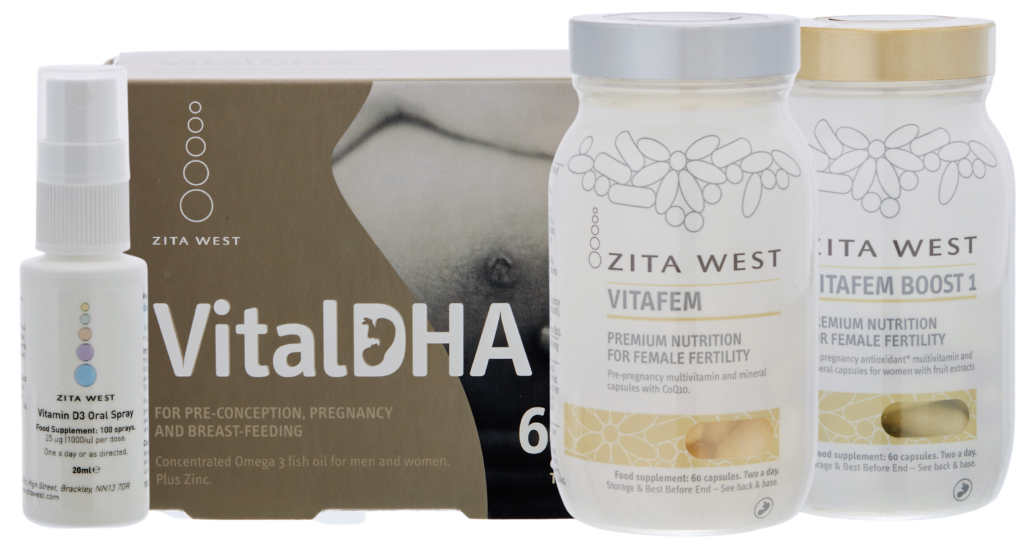
The Female PreConception Support Pack provides a wide range of key vitamins, minerals, essential fats and antioxidants for when you are trying to conceive.
Each pack contains:
Vitafem
A specially developed multivitamin and mineral supplement to support conception. Includes over 30 vitamins and minerals – 60 capsules – 1 month supply
Vitafem Boost
An antioxidant “booster” formula to help protect your cell DNA from oxidative stress and damage during preconception – 60 capsules – 1 month supply
Vital DHA
Provides Omega 3 DHA and EPA along with zinc to ensure your Omega-3 levels are supported during conception – 60 capsules – 1 month supply
Male Preconception Support Pack – £92.00 (RRP £102.00)

This pack contains a variety of multivitamins, minerals, antioxidants, amino acids and Omega-3 DHA to support male fertility.
Each pack contains:
Vitamen
A specially developed one-a-day multivitamin and mineral to support male reproductive health during preconception
Vitamen Boost 1
An antioxidant formula for use alongside Vitamen to help protect sperm DNA from oxidative damage
Vitamen Boost 2
An amino acid powder with zinc and selenium to provide important nutrients involved with sperm count, motility and morphology.
Vital DHA
Provides Omega-3 DHA and EPA along zinc to ensure Omega -3 levels are supported throughout preconception
Zita West’s Guide to Getting Pregnant: Fertility and Conception – RRP £14.99

Fertility is about connecting the dots, so simply taking supplements is not enough. Zita West’s guide provides hints and tips to boost your chances of conception whether you are trying to get pregnant naturally or via IVF.
Guided Relaxation for Getting Pregnant Naturally (download) – £9.95

This program provides relaxation and visualisation tips which you listen to daily to help you prepare mentally and emotionally for conception, as well as work to reduce stress in your life. Learn how to harness the power of positive visualisation to help you get pregnant.
Resources
- Dietary Supplement Use during Preconception: The Australian Longitudinal Study on Women’s Health – https://www.ncbi.nlm.nih.gov/pmc/articles/PMC5691735/
- Try These 12 Vitamins and Supplements to Boost Your Fertility – https://www.healthline.com/health/fertility/fertility-vitamins#b-vitamins
- Preconception B-Vitamin and Homocysteine Status, Conception, and Early Pregnancy Loss – https://academic.oup.com/aje/article/166/3/304/116752
- Vitamins for Fertility: What Should You Be Taking? – https://www.verywellfamily.com/vitamins-for-fertility-what-should-you-be-taking-4140655
- National Heart, Lung, and Blood Institute. Pernicious Anemia.
- Gaskins AJ, Mumford SL, Chavarro JE, et al. The Impact of Dietary Folate Intake on Reproductive Function in Premenopausal Women: A Prospective Cohort Study. PLoS One. 2012;7(9):e46276. doi:10.1371/journal.pone.0046276
- Ko EY, Sabanegh ES. The Role of Over‐the‐Counter Supplements for the Treatment of Male Infertility—Fact or Fiction? J Androl. 2012;33(3):292-308. doi:10.2164/jandrol.111.013730
- B vitamins and folic acid – https://www.nhs.uk/conditions/vitamins-and-minerals/vitamin-b/
- Role of L-carnitine in female infertility – https://www.ncbi.nlm.nih.gov/pmc/articles/PMC5785901/
- Morbat MM, Hadi AM, Hadri DH. Effect of Selenium in Treatment of Male Infertility. Experimental Techniques in Urology & Nephrology. 2018;1(5). doi:10.31031/ETUN.2018.01.000521
- DO SPORTS SUPPLEMENTS AFFECT FERTILITY? https://thedietologist.com.au/do-sports-supplements-affect-fertility/
- Role of honey in modern medicine – https://www.ncbi.nlm.nih.gov/pmc/articles/PMC5478293/
- Causes of infertility – https://www.nhs.uk/conditions/infertility/causes/
- Miscarriage Research – Inositol. (2020). Available online: https://sites.google.com/site/miscarriageresearch/supplements-and-miscarriage/d-chiro-inositol Accessed: 12th March 2020.
*Collaborative feature post
*Prices correct as at 15 April 2021
*Codes marked with a ‘*’ are affiliate links which means I may earn a small commission on qualifying purchases