40 best language and literacy activities for toddlers
I live in the UK, one of the most multicultural places globally, yet language isn’t pushed as an essential part of the current school curriculum, nor are tips for parents on how to teach a foreign language to a child.
This boggles my mind.
Families at home speak multiple languages, yet some parents (like us) only speak to our children in English for fear we, the current education and the UK work system won’t confuse or be too fast-paced for our kids.
In fact, nothing could be further from the truth.
There are so many extra benefits to learning a different language. My husband speaks five languages and English isn’t even his native language, yet he has no accent.
Why?
We’ll go into the why’s in more detail below but coming from a person who wished her parents taught her Turkish so she had a bilingual brain, I can categorically tell you that my life would have been enriched if I had spoken fluent Turkish to my family in North Cyprus rather than the broken slang I piece together now. I probably would have found German and even Swiss German easier to pick up so I could speak to my husband’s family in Switzerland.
There is a reason my parents didn’t speak to us in Turkish, though. They came to the UK when they were teenagers and my mum was thrown into an apprenticeship at a hospital in Central London and she struggled to keep up with the pace. As a result, she prioritised learning English so we four children wouldn’t struggle at school. She thought we’d fall behind if we didn’t understand what our friends were saying. Of course, my mum now regrets this, but it’s understandable why she thought like that even if it really wasn’t the case.
Parents soon realise that once a child uses different parts of their brain to speak multiple languages, they will absorb everything like a sponge. Learning a language comes with a multitude of benefits like encouraging critical thinking and inspiring creativity, especially those up to five years old who have a better grasp of phonics and reading, as well as being able to notice sounds in English that are different to sounds in another language.
Engaging toddlers in language and fun literacy activities is crucial for their cognitive development and communication skills, as early exposure to language not only enhances their ability to speak and understand words, -. but also lays a strong foundation for future learning. Here are 40 of the best language and literacy activities for toddlers that combine fun and education, ensuring your little one gets the most out of these formative years.
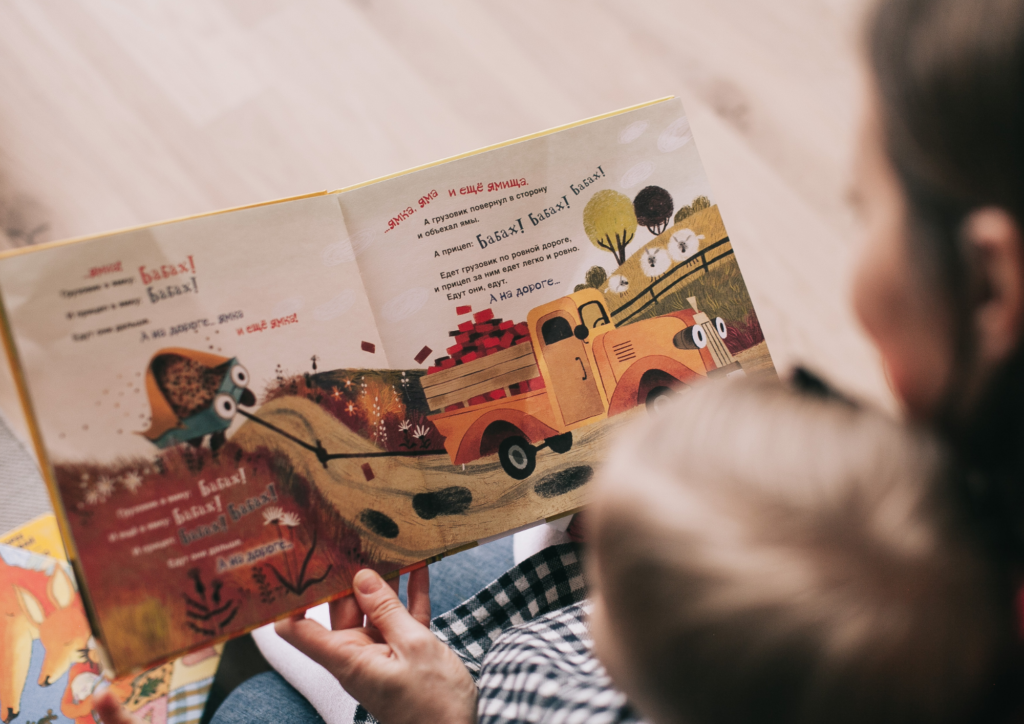
1. Storytime sessions
Quiet time is the perfect time to read to your toddler daily, using expressive voices and gestures to make the story come alive. This not only builds their vocabulary but also fosters a love for reading. Consistency in reading helps your child connect with language on an emotional level, enhancing their comprehension and interest in books.
2. Interactive storybooks
Use interactive storybooks that include touch-and-feel elements or sound buttons. These books make reading a sensory experience, helping your toddler engage more deeply. The sensory elements stimulate curiosity and help your toddler associate words with their meanings through touch and sound.
3. Nursery rhymes and songs
Sing nursery rhymes and songs with your child. The rhythm and repetition in these songs help with language development and memory. Singing also introduces your toddler to language patterns, making it easier for them to pick up the sounds and rhythm of speech.

4. Labelling objects around the house
Label common household items with their names in different languages. This can help your toddler associate words with objects and learn basic vocabulary in multiple languages. For example, you can label the “door” as “puerta” in Spanish, which reinforces language learning in a natural context.
5. Picture books exploration
Let your child explore picture books independently. Ask them to describe what they see, even if it’s in their own words or baby talk. This fun literacy activity encourages visual literacy and helps your toddler make connections between images and words.
6. Flashcard games
Create flashcards with pictures and words. Use these for matching games or simple recognition activities to build their vocabulary. Flashcards are versatile tools that can be used to introduce new languages or reinforce existing vocabulary.
7. Alphabet puzzles
Introduce alphabet puzzles to help your toddler recognise uppercase and lowercase letters while developing their fine motor skills. These puzzles make learning the alphabet interactive and fun, which helps your toddler associate letters with sounds.
8. Language learning apps
Use language learning apps like Babbel or Studycat that offer interactive games and fun activities designed for young children to learn new languages. These apps are customisable and can immerse your toddler in a foreign language through interactive videos, quizzes, and games, making language learning both effective and enjoyable.
9. Foreign language songs
Play songs in a foreign language. Music is a powerful language learning tool and your toddler can pick up new words and phrases through songs. Listening to music in another language can help your child grasp the sounds and rhythm of that language.
10. Cooking together
Cook simple recipes together, narrating each step in a different language. This sensory-rich activity helps with vocabulary building and comprehension. Cooking not only engages all five senses—sight, smell, sound, touch, and taste—but also provides a practical context for learning new words in another language.
11. Daily conversation in a foreign language
If you’re bilingual, speak to your child in a foreign language during everyday routines. This immersive method help your toddler pick up the language naturally. Introducing a foreign language as early as possible, ideally, between six and twelve months, makes it easier for toddlers to grasp the surrounding sounds and differentiate various phonemes.
12. Interactive media
Watch age-appropriate cartoons or educational videos in a different language. Encourage your child to repeat phrases or words they hear. This method is a feasible way to expose toddlers to a new language, especially when combined with in-person interactions. Platforms like Studycat provide engaging content that can supplement this approach.
13. Play-based learning
Engage in role-playing games using dolls or action figures and narrate the play in a foreign language. This makes learning fun and contextually relevant. Games that involve active participation help children immerse themselves in the language naturally, making it easier for them to pick up new words and phrases.
14. Multilingual storytime
Read the same story in different languages. This reinforces language skills and shows the similarities and differences between languages. It also helps your toddler develop an ear for different sounds and structures in languages.
15. Word matching games
Create matching games where your toddler pairs pictures with their corresponding words. This activity is great for visual and language development. Matching games are effective in reinforcing vocabulary and helping toddlers remember words better.
16. Outdoor exploration with language
During walks, point out objects in nature and name them in various languages. This not only builds vocabulary, but also connects words with the real world. It’s a great way to introduce new vocabulary in a practical and engaging setting.
17. Language learning through art
Involve your toddler in art projects, discussing colours, letter shapes, and objects in different languages. This merges creativity with language learning. Art projects provide a tactile way to reinforce language concepts while allowing your child to express themselves creatively.
18. Memory games with words
Play memory games using picture cards that correspond to words in your target language. This helps with both language acquisition and cognitive development. Memory games are particularly effective in enhancing recall and reinforcing new vocabulary.
19. Sing-along videos
Watch sing-along videos in a different language together. Encourage your toddler to sing along to enhance their language skills through music. Singing along to videos in another language can help your child internalise pronunciation and vocabulary.
20. Interactive reading apps
Use interactive reading apps that offer stories in multiple languages, allowing toddlers to hear pronunciation and intonation. Apps like Studycat provide stories that make it easier for toddlers to grasp new languages through listening and repetition.
21. Creating a bilingual environment
Surround your child with bilingual toys, books, and games. The consistent exposure helps reinforce language learning naturally. A bilingual environment ensures that your child is consistently exposed to both languages, making it easier for them to become fluent.
22. Language-focused playdates
Arrange playdates with other children who speak different languages. Social interaction in a new language can boost your toddler’s conversational skills. Playdates in a language-rich environment provide a fun and engaging way for children to practice speaking and listening in another language.
23. Cooking recipes in different languages
Cook simple international dishes together, reading the recipes in the language of the cuisine. This integrates cultural learning with language development. Following a recipe in another language provides context and helps children understand instructions while learning new words.
24. Interactive language toys
Invest in interactive language toys that speak, sing, or ask questions in multiple languages, helping toddlers learn through play. These toys often use repetition and context to reinforce vocabulary, making language learning a natural part of playtime.
25. Storytelling in multiple languages
Create and tell simple stories using different languages. This encourages your toddler to think and respond in the languages they’re learning. Storytelling helps children understand the structure of language and improves their narrative skills.
26. Language immersion days
Dedicate certain days of the week to speaking only a specific language. This immersion technique helps toddlers get accustomed to thinking in that language. Immersion days make language learning consistent and focused, which can significantly boost fluency over time.
27. Watch cartoons in another language
Switch the audio of their favourite cartoons to a different language. Toddlers are more likely to pick up the language because they’re already familiar with the content. This method provides a comfortable and enjoyable way for your child to hear and learn a new language.
28. Action songs
Teach action songs in different languages where your toddler can follow along with movements. This connects language with physical activity, making it memorable. Combining movement with language helps reinforce vocabulary and improves memory retention.
29. Cooking classes in a foreign language
Enrol your toddler in a cooking class or a virtual one conducted in a different language. This little hands-on activity paired with language instruction enhances learning. Cooking classes provide a practical and fun context for learning new vocabulary and phrases.
30. Flashcard treasure or scavenger hunt
Hide flashcards around the house and encourage your toddler to find them. Once found, ask them to say the word on the card in different languages. This game adds a physical activity element to language learning, making it interactive and engaging.
31. Interactive language books
Use books with built-in audio that read stories aloud in different languages. These books often come with translations, helping toddlers understand and compare languages. Interactive books can reinforce language learning by providing auditory and visual stimuli simultaneously.
32. Language-focused puppet shows
Put on puppet shows in various languages. Puppets make learning playful and can hold toddlers’ attention while teaching them new words. Puppet shows are a creative way to make language learning entertaining and engaging.
33. Colour and shape recognition in multiple languages
Teach colours and shapes using bilingual flashcards or colouring books. This reinforces basic concepts in multiple languages. Recognising colours and shapes in different languages helps your toddler learn descriptive vocabulary.
34. Bilingual play mats
Use bilingual play mats that have large letters of the alphabet, numbers, and words in two languages. Toddlers learn as they play, surrounded by visual stimuli. Playmats provide a sensory-rich environment that supports language learning in a playful context.
35. Simple daily tasks in a foreign language
Narrate simple daily tasks like getting dressed, eating, or cleaning up in a different language. Repetition in routine activities reinforces learning. Daily routines provide consistent opportunities to introduce and reinforce new vocabulary.
36. Language-themed parties
Host a language-themed party where word games, songs, and everyday activities are conducted in a foreign language. This social setting encourages language use in a fun way. Language-themed parties make learning a social and enjoyable experience, which can enhance language retention.
37. Listening to audiobooks in another language
Play audiobooks in a foreign language during car rides or quiet time. Listening comprehension is a key part of language learning. Audiobooks expose children to new vocabulary and sentence structures in a relaxed and enjoyable setting.
38. Flashcard crafting
Make your own flashcards with your toddler, decorating them while discussing the words in different languages. This hands-on activity solidifies learning. Crafting flashcards together allows children to engage creatively with language, making the learning process more memorable.
39. Bilingual story recording
Record yourself or your child reading a story in a different language. Playback allows them to hear the language in their own voice, reinforcing confidence and learning. Recording stories in multiple languages helps children practice pronunciation and intonation.
40. Travel language kit
Create a travel language kit with common phrases and words in a foreign language. Practice these with your toddler before a trip, making travel an extension of their language-learning journey. Preparing a travel kit familiarizes your child with a practical vocabulary that they might use during the trip, enhancing their language learning experience.
The benefits of travel in language learning
Travelling with young children offers a unique opportunity to introduce them to new languages and cultures. The experience of seeing new parts of the world helps your toddler develop a broader perspective and become more adaptable and early exposure to different foods, sounds, and languages can make them more comfortable with new experiences at home and in school. So, normalising travel from an early age, even if it’s to destinations that require adaptability, teaches resiliency and enhances their ability to learn new languages.
if you are travelling and you are considering changing your car, look on Edmunds for a kid-friendly vehicle that is versatile enough to drive around charming Italian towns and spacious French countryside alike. If your children are comfortable in new settings from an early age, this will give them useful foundational skills and social skills that benefit them in future.
Creating a positive learning environment
It’s important to create a positive and encouraging environment when introducing a new language to your toddler. Start as early as possible, ideally when they are infants. If someone in the household speaks another language, encourage them to use it with your child. Be patient and supportive if your child struggles, and remember to praise their progress to foster a lifelong love for learning. This early introduction, especially between six and twelve months, helps your toddler distinguish the specific sounds of a new language, making it easier for them to learn.
The role of media and interactive resources
Using media such as music, movies, and educational videos in another language can be an effective way to introduce your toddler to new sounds and words. Interactive language-learning apps like Studycat or Babbel offer a fun, customisable experience that can fit into busy schedules. These resources are particularly useful for making language learning a regular part of your child’s routine.
Practical tips for parents teaching a foreign language
For parents who are not fluent in a second language, it’s still possible to teach your child effectively. Use language-learning materials, apps, and resources to provide correct models of speech. Engaging in activities together, such as reading stories or playing games in the target language, helps both you and your child learn and reinforces the language naturally.
The long-term benefits of bilingualism
Teaching your child a second language from a young age comes with numerous long-term benefits, including better problem-solving abilities, creativity, and cultural awareness. Children who are exposed to multiple languages early in life are more likely to become proficient in those languages and may even find it easier to learn additional languages later on. This skill set will serve them well in school, social settings, and future job opportunities.
By integrating these 40 activities into your toddler’s daily life, you’re not only teaching them language and early literacy skills but also opening up a world of cultural richness and lifelong learning opportunities.
FAQ: Language and literacy activities for toddlers and preschoolers
Why would you teach your child a second language?
Evidence shows that people who speak two or more languages have:
- Better problem-solving ability
- Better critical thinking
- Better creativity
- Better capability to mix amongst people of other cultures
- Overall language skills
You should teach your child a second language when they’re as young as possible, as the critical age hypothesis suggests, although research now shows you can acquire a language more easily up to the age of 18. Starting when your child is under six years old is particularly beneficial because they have more of a chance of becoming bilingual and not developing an accent.
The rewards of teaching a child another language when they’re young may not show up just yet but when they’re older they will enjoy a multitude of benefits, for example:
- They can communicate with other people in other countries
- They will find it a lot easier to pick up another language
- They can socialise amongst people of different cultures.
- They can experience other cultures in a deeper way which will lead to more learning for them too
- They can look for other jobs in other countries
- They have an additional skill to add to their CV
It is argued there is an additional benefit to learning languages in different language groups, for example:
- English and German are Germanic languages
- Turkish is a form of Arabic language
- Spanish and French are Latin languages.
- Chinese and Japanese are Logographic languages
So in my situation, if I had learned Turkish when I was younger, I would have acquired languages from two different language groups (English as a Germanic language and Turkish as an Arabic language) and my brain would have found it easier to pick up other languages as I used more than one part of my brain to interchange between the languages.
So if your child is learning English, it might help them further if they learn a language like Arabic or Vietnamese because the two languages are so different. Logographic languages like the Chinese languages exercises other parts of your brain and further enhance your child’s language development.
There is also another argument that acquiring a fourth language is easier to learn than the second language. Once children acquire that second or third language then the brain just knows how to pick up another language.
Isn’t that crazy!
It’s like learning maths. Once you get past algebra and formulaic equations the rest of it becomes easy.
But, what’s the difference between acquiring a language and learning it?
What’s the difference between acquiring vs. learning a language?
Learning is when you consciously go through a process, like actively learning grammar and spelling, but acquiring is picking up the language that surrounds you through various means, i.e. speaking and being exposed to that language.
Acquiring happens when you create the environment and expose the child to the language so they can pick it up for themselves. We’ll talk about exposure in more detail below.
Think about this.
Before we started school, did we learn grammar and spelling in English as we began to speak it? No. We acquired English through our parents (or surrounding family or environment) who either spoke to us, read stories or engaged in outdoor activities with us in that language.
When we went to school we learned English through schoolwork, working out the grammar, learning how to spell words and story writing etc.
Jake Whiddon of Studycat says there seems to be a new trend in today’s bilingual parents, especially in China, to teach kids grammar early while they acquire a language because it can actually help with the learning process later. The argument is that the child has more of a concept of the grammatical structure of that language.
Whether this is true or not, we don’t know yet.
How to teach your child a foreign language?
The common problem amongst parents is to throw a child in front of the TV and make them watch a show in a different language. The child is being exposed to that language but there is no active learning taking part. What this means is that for learning to happen here, there has to be a purpose in watching that show in that language. Do they want to communicate with their family? Do they want to live in the country?
One of the best ways to teach your child a second language is when one parent only speaks the second language to the child. Even if the child replies in English, you still respond to that child in the second language. The child will eventually acquire that second language through exposure as long as there is a meaningful reason to acquire that language.
Again, it’s very important that your child is engaged in the process, i.e. they have a reason to learn and they try to engage with another person in that language. This is what we mean by having a ‘meaningful reason’.
“Kids need to have a meaningful and active reason to use that language.”Jake Whiddon, Head of Learning Experience at Studycat
What are good methods to teach multiple languages to your children?
There are lots of great methods to teaching multiple languages to your children, but the key factor as mentioned before is active learning. If your child is just passively picking up a language, by sitting and watching TV, for example, they won’t learn anything. It will expose them to the language, yes, but it won’t teach them anything because they’re not actively doing anything with that language.
My husband picked up Arabic while he was in Abu Dhabi because he had to speak to taxi drivers and his local friends. He engaged in active learning while being exposed to the language and that fast-tracked his learning process. But if he watched the same on a video he wouldn’t have been able to acquire that language through just exposure.
Explicit vs. Implicit
How you teach your child a second language can affect their learning process too. For example, when you are explicitly teaching them a language you’re expressly telling them what the word means in that language.
“Today, child, we’re going to teach you the past tense of a particular word in X language.”
NOPE! That won’t work. That child will switch off faster than you can say ‘schoolwork’.
If you teach your child implicitly then you’re correcting the child without realising they’re being corrected. For example,
Child: “Mama, I go shop”
Mum: “Ah, so you want to go to the shop? I want to go to the shop too.”
You’re teaching them by correcting them through your speech. You are indirectly providing correct models which they will pick up naturally. This is FAR more effective than explicitly telling them how to structure that sentence.
So what encourages active learning?
People used to think that second language acquisition was so different to first language acquisition in the way that babies learn. It’s not. You go through exactly the same process as you would as a baby learning a first language.
You need all key factors below to help your child to learn another language:
Your child needs to hear, see and be around that language. So you could start by creating an environment for your child in the language. Songs and videos are useful to expose them, but you must bring their attention to what they’re doing. If they’re actively trying to understand what they’re watching or listening to then along with the other parts of active learning below, this type of exposure can enhance their learning further.
Exposure
If one parent speaks the language, this is also great exposure to a child as long as there is meaningful interaction. So my husband speaking to my baby daughter in German is a meaningful interaction between daddy and daughter because my daughter would want to communicate with her dad.
Noticing
Once exposed to listening to the parent speak that language every day, kids will start to notice certain things in that language. So, for example, I tell my daughter every day that “we’re going to school now to pick up the boys”. One day she came out with, “We go school!” and I was shocked. It was because she had noticed that every time I took her in the car and she saw the boys again we were at school. This is what we mean by noticing things in a language and connecting the dots.
Understanding
Your child is exposed to a word, they noticed when it was used and they understand how the word is used in context. But remember, they will only notice things if it is meaningful to them. For my daughter, it was meaningful to know when school was so she could see her brothers again but also because I would take her in the car at the same time every day.
Trying
Once my daughter understood that time was school pick up time, she tried to communicate to me that, “We go school!” Kids will understand a language long before they try it, either because the speaking part hasn’t clicked with them yet or they’re too shy to form the words. Whatever the reason may be, they will eventually try to speak a few times before they actively use that word in the second language.
Using it
The more they use that word in context, the more they understand how it is used and the easier it will become to form other words to string a sentence. This is the process to learning a second language. I’m trying to learn German in this way and I may be at possibly a five or six-year-old level, but I’m getting there slowly but surely. My Turkish is probably no better than that of an eight-year-old, but it’s a process and one you should attempt to practice every day with your child if you can.
The below activities encourage active learning in children:
- Playing games – even playing a simple board game or playing cards can be interactive enough for the child to go through the above steps to acquire the second language
- Using interactive apps like Studycat*
- Talking and engaging with other kids (language schools are great for this)
- Learning online as long as they are talking to a teacher who speaks that language fluently
Anything that actively engages the child in that language is key – so not just passive language learning from watching videos. (Remember the hoo-ha over Baby Genius and Baby Einstein and how they didn’t teach babies anything? Same difference!)
Don’t forget there are lots of language materials you can buy to enhance your child’s learning like worksheets or activity books. Encourage a variety of learning resources to keep it fun. Apps like Studycat* have been designed to encourage kids to interact with the language. We’ll go through how Studycat can help your child learn another language in a moment.
How to teach your child a language you don’t know?
As mentioned above, kids learn another language just as easily as they would any other language as long as they’re exposed and actively engaging in that language using the process above.
My kids want to learn Spanish and I only know English. So a great way to get them involved in learning Spanish is to start them on Studycat and then expose them to the environment, by engaging them with other Spanish people and visiting Spain to throw them into the culture.
How to teach your child multiple languages?
As mentioned before, it’s worth grouping languages together to make learning multiple languages easier. You could encourage your child to learn a Germanic language like German which is similar to English. Once they’ve learned both German and English, it might be easier to pick up Dutch or Swedish. If your child is going to learn Spanish, then they may as well learn Italian and then Portuguese too as the languages are interlinked.
Learning Arabic is another useful language because the words have different meanings for the same sentence. This nuance encourages your child to use other parts of their brain and improve abstract thought. There is a lot of interpretation in Arabic whereas in German the word is what it means and that’s it.
How to teach a baby two languages at the same time?
Old research showed that if you taught a child a second language past the age of six they would have an accent or not learn the language as fluently as a native speaker. New research shows that the critical age hypothesis (which I mentioned at the beginning of the article) is more likely to be ten or twelve years old. This means you can still absorb a language up to the age of twelve very easily.
Jake Whiddon says that you can actually pinpoint when someone moved to a country by the way they acquired and learned the language. If you can’t hear an accent you know they came around 13 or 14 years old.
The truth is you can learn a language at any time – even 90-year-olds can learn a new language! But you are much better at acquiring a new language when you’re ten or twelve years old.
And two-year-olds? They absorb languages like a sponge and they don’t even know they’re doing it! Babies can differentiate between different languages without any active consideration, even before they start to speak.
Another benefit to your child learning a language when they’re very young is because they will sound native or natural in that language if they learn when they’re under ten. This young learning process is called fossilisation. We adults will find it so difficult to pronounce certain sounds, for example in Arabic but children who learn languages early will pick them up straight away and interchange between the different sounds naturally.
How do you teach your child a second language when only one parent is bilingual?
The bilingual parent should only speak that second language to the child. The other parent speaks their native language. So in our case, I would only speak English to my kids and my husband would speak only German to our kids.
If your child speaks back to you in English, just answer in that second language every time and guarantee they will pick up both languages. In our case, I could also use it as an opportunity to learn German from my husband too. My German would probably double or even triple in those few years my husband speaks to our children in German until they’re bilingual. Even if I didn’t understand what he was saying, I know I would eventually pick it up, so it doesn’t matter. The aim is to teach our children German.
Why shouldn’t I teach a foreign language to my children?
This is an important question and one I’m sure my parents often asked themselves. It’s important to note that while the parent may get confused learning more than one language, the child won’t.
Research on cognitive advantages of bilingual children in different sociolinguistic contexts showed that kids even at three months could work out that it’s two different languages. It’s different when you get into reading because you start to get into alphabet, spelling and grammar but when speaking to your child in another language, it won’t confuse them.
There are some noticeable traits in children who come from bilingual parents who speak to them in a different language when they’re young. These kids may develop speaking skills later than kids who only speak one. Children may also confuse words for example, “I shopping going”. This confusion in structure and words is called ‘Code switching’ but it just means that the child is learning. It can also be time-consuming and slow down the development of all languages in children.
But that’s it!
The benefits at the end far outweigh the fact that kids might take longer to speak.
How do I teach a kid to speak three languages if I’m German, my wife is Spanish and we both speak fluent English?
It’s exactly the same concept as teaching a child another language. If the dad speaks to his child in German and his wife speaks to the child in Spanish, the external environment in England will teach that child the third language, English. As long as one person speaks one language and the other person speaks the other language and the home country is English then don’t worry, children will pick it up.
Should I teach my child a foreign language that I speak even though I am not fluent in it?
This is the million-dollar question for me. My Turkish is broken at best, so should I be teaching my children Turkish even though I have a strong accent and talk at a Grade 3 level?
Jake Whiddon says, yes you can teach them if you think you’re getting it right and, remember, as we said earlier, providing correct models to your child.
If you know the correct grammar, vocabulary and structure, then that is the key. It might be better to learn from a native speaker so your child can develop a deep insight into the cultural understanding of the language, but otherwise yes, to begin with, you can.
If you are worried about your accent then complement your teaching with other examples of the language, for example, a native speaker reading a story in that language with subtitles so your child is actively learning that language. YouTube has lots of children’s stories in different languages which can help enhance your child’s learning.
Don’t forget that you should model your behaviour on that child. The best way to encourage a child to read is to show them you reading too.
What is the best foreign language for your children to learn?
Jake Whiddon talks about starting kids off with root languages, for example, English and German are both Germanic languages. Research shows that the Germanic language is processed in one part of the brain.
If your child was learning English and Turkish for example, that’s two different parts of the brain as Turkish is completely unrelated to English. But there are added benefits for your child to learn from different root languages, albeit more difficult because it engages different parts of the brain.
If you were going to teach your children another language today which languages would you choose and why?
Jake Whiddon says he would teach his child languages from different root language groups, for example, English, Spanish and Chinese. He would also aim to teach his child Arabic too! Spanish is a great language to learn because once you’re fluent, you can pick up a bit of French, Portuguese and Italian for good measure too. You can also travel the whole of South America and half of Europe too.
Apps are a great way to start the language learning process and provide an opportunity to interact with your child in that language so they’re not just listening and taking the language in as noise. This is where Studycat* comes in.
Classroom-based activities
How can you include language and literacy activities in the classroom?
Integrate language and literacy activities into daily routines by including interactive read-alouds, storytelling sessions, and phonics games. Use visual aids like alphabet charts and word walls. Encourage journaling or drawing activities where children can narrate their stories. Additionally, create literacy centres where students can engage in reading, writing, and language games.
What are some play-based activities that build reading readiness?
Play-based activities like letter hunts, matching games, and storytelling with puppets can build reading readiness. Activities that involve sorting objects by their first letter or sound can also be highly effective.
What are three activities that fall under language and literacy activities for preschoolers?
- Storytime with follow-up questions to develop comprehension,
- Alphabet puzzles to recognize and memorize letters, and
- Singing nursery rhymes to improve phonemic awareness.
What is literacy in preschool?
Literacy in preschool involves teaching young children the fundamentals of reading and writing through engaging activities such as reading books, recognizing letters and sounds, and beginning to write simple words. It also includes developing listening skills and understanding the concept of print.
Teaching literacy to toddlers and preschoolers
A: Use colourful alphabet puzzles, flashcards, and songs to teach letter recognition. Introduce letters gradually, starting with those in the child’s name. You can also label objects around the house with their corresponding letters to help reinforce recognition.
How do I teach a toddler letter recognition?
How do I teach sight words to preschoolers?
Start by introducing a few common sight words and use flashcards for repeated exposure. Engage them in activities like sight word bingo, or create a word wall. Reinforce learning by reading books that frequently use those sight words.
How do you teach preschool literacy?
Preschool literacy can be taught through interactive story sessions, alphabet and phonics games, and daily writing practice. Incorporate activities like drawing and labelling, singing songs, and playing with magnetic letters. Consistent exposure and practice are key to developing literacy skills in preschoolers.
Which is the best way to teach writing to my 2-year-old kid?
Start with activities that develop fine motor skills, such as playing with playdough or drawing with crayons. Introduce tracing letters and simple shapes. Encourage scribbling and gradually guide them to form letters, especially those in their name.
Home-based activities
What activities can I teach to my 3-year-old son at home?
Engage your 3-year-old in storytelling, interactive reading, and simple puzzles. Introduce them to phonics games, matching letters to sounds, and using flashcards for basic vocabulary. Arts and crafts, where they can draw and label their creations, are also great for language development.
What are some creative and educational activities for babies and toddlers?
Sensory play, such as playing with textured books or exploring different materials, is great for babies. For toddlers, interactive activities like singing songs with actions, simple sorting games, and using storybooks with flaps or textures can be both creative and educational.
What are some great activities to keep 2-3-year-old toddlers occupied, preferably learning things as well?
Engaging activities include building blocks for cognitive development, interactive storytelling sessions, and simple art projects that involve naming colours and shapes. Toddlers can also benefit from language learning through songs and nursery rhymes.
What are some great learning games to engage a 2-year-old and keep his interest?
Use memory matching games, simple board games like picture dominoes, and interactive apps designed for toddlers. Games that involve sorting objects by colour or shape, or matching pictures to words, are also highly engaging for this age group.
What are some learning activities for a toddler I’m teaching him English? (P.S. He already knows the alphabet, colours, numbers, and names of basic foods.)
Introduce simple sentences and phrases through flashcard games, storytelling, and role-play scenarios. Engage in activities that involve following instructions, like “Simon Says,” to develop listening skills. Expand their vocabulary with themed word hunts or by reading books that introduce new words.
What are some learning activities to do with my 1-year-old (15 months)?
For a 15-month-old, focus on sensory play, interactive board books, and simple songs with actions. Playing with stacking toys, exploring textures, and using basic picture cards to name common objects can also support early language development.
Literacy development and support
What activities promote literacy development?
Activities such as daily reading, singing songs, playing with letter blocks, and engaging in storytelling promote literacy development. These activities help children develop their vocabulary, understanding of language structure, and love for reading.
What are examples of activities that you could use to support children’s language and literacy development?
Examples include interactive read-aloud, using puppets for storytelling, playing rhyming games, and involving children in daily tasks like making a shopping list together and going to the grocery store. Activities that encourage conversation and vocabulary building, such as describing pictures or narrating actions, are also beneficial.
What are some effective methods for teaching a child who struggles with reading and speaking?
Use multisensory approaches like tracing letters in sand, using apps that combine visual and auditory learning, and practising with phonics songs. Be patient, and repeat activities that reinforce sounds and words. Also, consider small group sessions that focus on building confidence in speaking and reading.
What are some things adults can do to promote early childhood literacy development in kids between birth and five years old?
Adults can promote literacy by reading to children daily, engaging in conversations, singing songs, and providing a print-rich environment with books, labels, and educational toys. Encouraging drawing and writing, even if it’s just scribbling, also supports literacy.
What is a literacy activity for preschoolers?
A literacy activity for preschoolers could be creating a storybook where they draw pictures and narrate the story, with an adult helping to write down the words. Other activities include playing phonics games, singing alphabet songs, and using letter magnets to form simple words.
What is a literacy activity for toddlers?
For toddlers, a great literacy activity is using alphabet blocks to build and name letters, or playing with picture flashcards to identify objects and start learning new words. Singing songs that include rhyming words or simple phrases can also be effective.
What preschool activities do you recommend for children other than music and reading that are essential for their development?
In addition to music and reading, hands-on activities like sensory play, puzzles, building with blocks, and arts and crafts are essential for preschool development. These activities help develop fine motor skills, problem-solving abilities, and creativity, all of which are important for overall growth.
Collaborative feature post