

How to tell your kids about a divorce
Divorce is difficult for everyone, and when you have the feelings of young children to consider too, it can be doubly challenging.
Legal advice from family lawyers like Wiselaw will establish your legal position for shared parenting, but what about guidance on supporting your child during the process? Although children need love and support during these troubled times, how to tell your kids about a divorce is based on some routine things you can expect and basic tips to follow to help you through this time. We’ve compiled some basic pointers on how to tell your kids about divorce.
‘If you love someone and you break up, where does the love go?’ Carrie Bradshaw, Sex and the City
What is divorce?
Divorce is the process of terminating a marriage or marital union. Divorce usually entails the canceling or reorganising of the legal duties and responsibilities of marriage, thus dissolving the bonds of matrimony between a married couple under the rule of law of the particular country or state.
Wikipedia
How do you tell your child about divorce without breaking them?

The collateral damage suffered by children when couples split up varies from family to family and depends on several factors. How they react depends on what to tell your child about divorce, their age, their personalities, and the particular circumstances in which the divorced parents find themselves.
Unfortunately, the stress of divorce is experienced by thousands of children every year and it is in everyone’s interests to make the painful journey more bearable. Initially, when considering how to tell kids about separation, parents must consider the wide range of emotions the kids will go through, i.e. sadness, helplessness, loneliness, anger, and betrayal. But, if handled properly, a newfound strength and inner resolve can derive from the healing process. Therefore, it is so important you know how to tell your child about divorce in the proper way.
What you can expect from your child after divorce
Very young children aged between 18 months to five years can regress into behaviours typical of a younger age group as a coping mechanism for the stress they’re feeling. Going back to using a dummy, wetting the bed, or becoming clingier with either or both parents is quite normal if this is the case.
Young children and babies are tuned into their parents’ emotions even though they cannot verbalise this. Over time, they will understand the decision you made, but this won’t happen straight away. A young child growing up with divorcing parents will be scared.
When to tell your child about divorce – The first bit is the hardest
The initial stages of a divorce, whether that’s a year or even two years, are often the time when it’s hardest for children. The changes that happen during this period, for example, one parent moving out of the family home, are a big shift in a child’s world and they can react by experiencing anxiety, anger and shock.
Go to them first before they suspect – talking to kids about divorce first
No child wants to hear that their parents no longer love each other, but they may have guessed that for themselves if public rowing has taken place. So it is better to come from you than to leave them second guessing or, worse still, get the wrong end of the stick.
As hard as it may sound, try to come to an agreement with your partner/spouse about how to talk to your kids about divorce and be as consistent as you can with your message. If possible, both of you should be present when you sit down to discuss things with your child/children. and try to pre-empt some questions you may get asked so that you are fully prepared because, in an emotional situation like this, it is easy to go ‘off message’. When thinking about how to talk to your child about divorce, explain what the stages of divorce for a child would mean, but don’t overwhelm them.
National Charity Place2Be and National Association of Teachers (NAHT) state that more must be done by the Government to help protect the mental health of children during a divorce. There seems to be a notable increase in pupils experiencing low self-esteem and depression.
How to tell children about divorce – Toddlers
Toddlers will need support from parents by creating and sticking to solid routines to provide comfort and safety. A child’s primary bond is with their parents at this stage, so big changes can have a profound effect and a small child may look inwards to find a reason for their parent’s divorce. As a result, they can have sleeping problems and fear being alone. As well as a predictable schedule, parents should plan to spend one-on-one time their child, for example, playing a game or reading a book together, focussing all efforts on that child.
How to tell kids about divorce – 3 – 5 years
Some pre-schoolers may feel responsible for what has happened and concerned about what is going to happen in the future. It’s common for children at this age to experience nightmares and bottled-up emotions too. Although divorce can present challenges, parents should try to adopt a positive approach and avoid blame and negativity, as children will pick up on these emotions.
How to talk to children about divorce – Older children
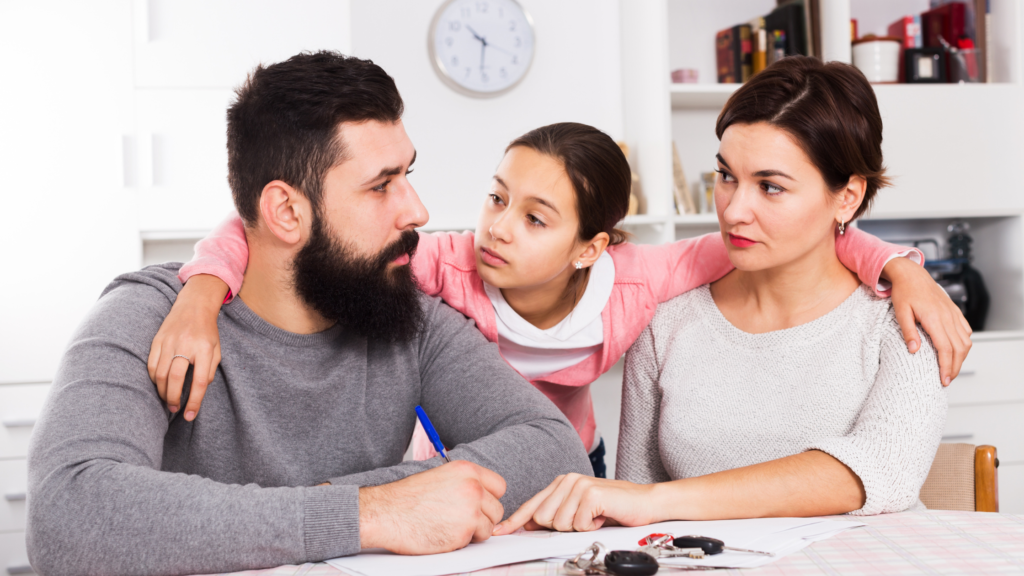
Older children are going through their own growth pains and can often experience a fluctuation of emotions. They may be old enough to understand the reasons behind divorce, but they are still too young to compartmentalise that the divorce isn’t about them and you don’t love them any less. It’s important at this stage to not place blame, invite questions and give them time to get their head around it all.
What else you can do to support your child during divorce – How to divorce without hurting your child
- When a young child is feeling anxious or uncertain about the future, it can help to explain what has happened using simple and age-appropriate language, while reassuring them that both parents love them very much. In addition, you can try one of the many children’s books available to help you communicate effectively with your child about divorce.
- If one parent has moved out of the home, explain to your child when they will see that parent again. Children can often feel reassured when there is a place for them at another home already organised.
- Some pre-schoolers maintain hope that their parents will reunite, especially if the divorce is being handled convivially. It’s important to be gentle but clear to children and explain that you and the other parent won’t be living together again in the same house but will always be there for them.
- Because young children cannot comprehend the complexity of divorce, they may be concerned that they, too, are going to be divorced from a parent. This is when you will need to provide extra reassurance to your child that you won’t be leaving them, but you just won’t be living in the same house as their other parent again.
Try to keep the routine going
Talking to kids about divorce is especially difficult when you know uncertainty about the future ahead is often a child’s biggest concern. Try to be truthful in answering all of their questions. It is important to your child (especially younger children) that their normal routine is going to be as disrupted as little as possible.
Knowing that Mum is still going to take them to swimming lessons every week and Dad is going to do the school run may seem trivial to you at the time but these little things, if handled properly, can go towards making the bigger picture seem a little less scary. Offer as much child support as you can to cushion the disruption of their routine.
If you are going through the divorce process, there are lots of places you can turn to for support. Look at the government’s website for information about how to talk to kids about divorce and divorce mediation. Once you are ready to take the practical steps towards annulling your marriage, choose a family law solicitor and divorce coach or divorce mediator to take you through the process. If you need emotional support, Relate is also worth a visit and they can help you work out how to tell your child about your divorce.
Going through a divorce when you have young children is a testing time for parents. Practical arrangements need to be made and emotional well-being needs to be a priority too. Taking steps to reassure your child during the process will bolster the innate resilience many children possess.
FAQ
How can I convince my parents that divorce shouldn’t be taboo and is sometimes the only option?
You can find some great answers to this question here: https://qr.ae/pGQ7PE
What are the best tips for explaining to your children that you are getting a divorce?
Please read above, we have some great tips to help you talk to your child about divorce.
How do you help a friend whose parents are divorcing?
Your friend will go through a whole heap of emotions, so be the shoulder for them to cry on, help them unpack their emotions and to encourage them to communicate with their parents about how they’re feeling. Sometimes, your friend might just need a sounding board in which to help make their next few very tough decisions with their family.
How do you deal with the guilt of telling your spouse you want a divorce knowing it will break their heart?
You can find some answers here: https://qr.ae/pGQ74Z
How long after separation should I file for divorce?
“If you are divorcing on the grounds of separation, then you and your spouse will need to have been separated for at least two years if you both agree to the divorce, and at least five years if you don’t.”
https://www.co-oplegalservices.co.uk/media-centre/articles-jan-apr-2017/how-long-do-i-have-to-be-separated-before-i-can-divorce/
What are some signs that someone’s parents are divorced?
You can find some answers here: https://qr.ae/pGQ7kH
What if I don’t want custody of my child post divorce?
You can find some answers here: https://qr.ae/pGQ7ku
Scripts to tell kids about divorce
How to tell a young child about divorce will be very different from working out how to tell your teenager you are getting a divorce. There is no worst age for divorce for children, so it’s very much about knowing your child and how to talk to them in a way they’d understand. This link shares a script about how to tell your kids about divorce.
Things not to say to a child of divorce
How to tell your child about a divorce is paramount to how they deal with the aftermath of separation.
Check out this link for 30 things you should never say to your kids when you’re going through a divorce:
How to tell your 8 year-old about divorce
“The Effects of Divorce on Children Ages 6–8. Children aged six to eight years old respond most often with grief. They express their grief through crying and sobbing; this happens with boys more than with girls. They also feel a deep yearning for the absent parent.”
https://www.divorcemag.com/articles/effects-of-divorce-on-children
It’s important for your child to know that you both don’t love your child any less and that they will continue to see their parents.
Can children be happy with divorced parents?
You can find some answers here: https://qr.ae/pGQ7bP
What is the best way to tell your adult children (22 and 20) you are getting a divorce?
You can find some answers here: https://qr.ae/pGQ7bS
How to tell your autistic child about divorce
Click this link for tips on how to tell a child with autism about your divorce.
*Collaborative feature post*









One Comment