
Plagiocephaly – Prevention and Awareness using the Mimos Pillow
Sudden Infant Death Syndrome (SIDs)
SIDs, more commonly known as cot death, is the leading cause of death in children between one month and one year of age. Ample research has gone into finding what is the leading cause of SIDs, of which new risk factors have come to light. These mainly include excessive layering or atmospheric heat, maternal smoking during pregnancy and after delivery, and placing babies on their front for sleeping (Prone Decubitus position).
Back to Sleep’ Campaign to Combat SIDs
The United States of America launched a ‘Back to Sleep’ campaign which was supported by The National Institute of Child Health and Human Development (NICHD) at the National Institute of Health. Its aim was to encourage parents to place their infants on their backs when sleeping (Supine position) to reduce the risk of SIDs. As a result, reported cases of SIDs have declined by more than 50%.
Plagiocephaly and the Tummy Time Initiative
However, it was medically noted that babies’ soft heads started to suffer from constant high-pressure spots when sleeping on their back in one position. Over time, this could result in the flattening of the skull, or Plagiocephaly, otherwise known as Flat Head Syndrome. Adjustments needed to be made to make it possible to apply the ‘Back to Sleep’ initiative without causing cranium deformation. Thus, in 2000 a new campaign begun, sponsored by the American Academy of Paediatrics (AAP), ‘Back to Sleep – Tummy Time to Play’, this encouraged parents to place their babies on their tummy for a minimum of 30 minutes a day. Although there are several factors that may cause the foetal head to alter before and during birth (Macrosomia, Macrocephaly, multiple pregnancies, Uterine Myomas, Bicornuate Uterus, instrumentation of the birth etc.,) generally these are resolved within the first six weeks of life. However, babies tend to opt for a favourite sleep position that feels comfortable, sometimes because the neck muscles have developed a tightness which causes the head to tilt and/or turn to one side (Torticollis). Parents can rule out Torticollis by systematically doing neck exercises as part of a routine. The head position should be rotated alternately to one side and to the other every time the infant goes down to sleep during the day. It is also advised that the child’s orientation should be changed in the cot, so they do not always turn their head toward the same side. Babies that sleep on one side have a higher tendency to develop Plagiocephaly and this causes flattening of the affected area due to the constant pressure from gravity. Figure 1 below shows that early recognition and intervention by removing pressure off the affected flat spot can aid for best improvement and regrowth.
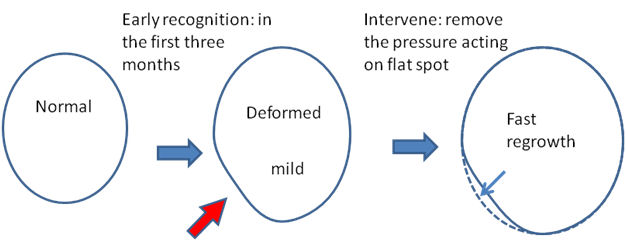
Figure 1: Early Recognition and Intervention for Best Improvement

The result, if severe, can easily be identified by visually observing the baby’s head from the top/central view, as can be seen in Figure 2 below. If parents are unsure, they should consult their GP.
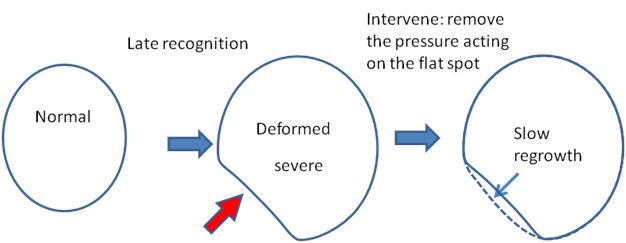
Figure 2: Reduce Improvement with Late Intervention
Current Treatment Available for Plagiocephaly
Positional Plagiocephaly is a topic of concern for worried parents and the lack of information available to prevent the onset of Plagiocephaly at an early stage. Currently, there is no scientific proof that babies with Plagiocephaly will develop any neurological disorders, but they may encounter physiological problems later on in life. Presently the NHS views this issue as ‘cosmetic’ and the flattened head, either Plagiocephaly or Brachycephaly, will correct itself over time. Many private medical companies are now offering helmets to correct the severe deformation. This treatment is costly, at £2,000, and the affected child would need to wear the helmet for twenty-three hours a day for at least six months as babies’ skulls harden as they grow older. The treatment is said to be most effective between four and twelve months old. With private treatment being expensive, most parents are struggling to find the money to aid alteration of the cranium and many parents are becoming increasingly distressed that the permanent physical appearance might affect their child’s self-esteem and confidence as they grow up, with some cases reported of flat head babies going on to develop a skewed ear or have one eye socket appear larger than the other. There is no NHS funding for Plagiocephaly prevention or treatment at this time, as the NHS simply advises “tummy time” during the day and new positions during play. Parents are also advised to switch the baby between a sloping chair, sling and flat surface so there is not constant pressure on one part of the head.
Prevention of Plagiocephaly using the Mimos® Pillow
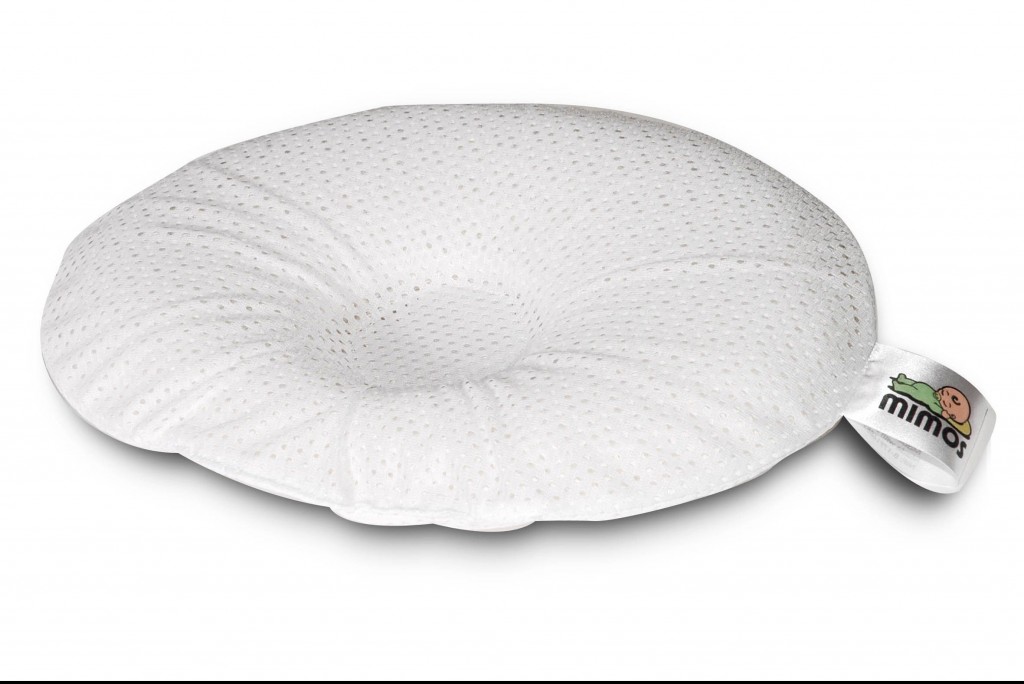
The Mimos® Pillow (Figure 3 above) has been created to allow babies to still sleep on their backs and the safe pillow works to distribute the pressure to prevent Plagiocephaly occurring in the first place. Low and Low Limited is creating awareness for parents to use the Mimos® Pillow as a prevention tool from birth to avoid Plagiocephaly, severe cases of which would later need to be corrected by the helmets. Minor positional Plagiocephaly can improve over time with repositioning, tummy time and massage therapy, and the Mimos® Pillow is designed to prevent skull flattening and allow the baby’s head to grow normally and round out to its natural shape. The pillow can be used from birth and there are different sizes available depending on age and Cranial Perimeter. Sizes range up to XXL and can be used up to a maximum of 18 months old. This can vary depending on the baby’s head size and physical development.
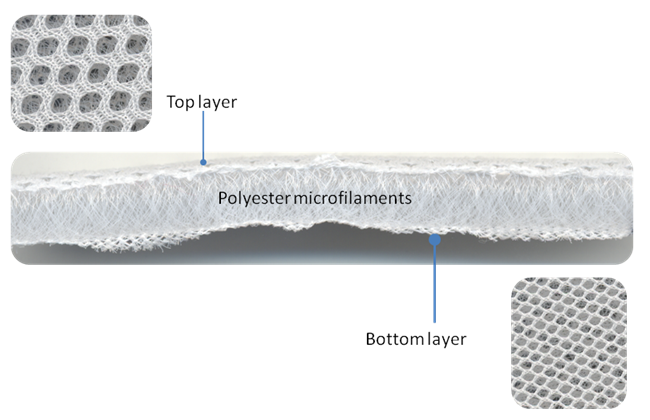
The Mimos® Pillow is a Class I Medical device regulated by the CE Health Authority and is TUV certified to be safe to use with babies. There is enough air flow through the body of the pillow to allow the baby to breathe normally, even when the baby lies face down on the pillow. The Mimos® Pillow has been specially engineered to distribute pressure evenly across a wider area of the baby’s soft skull during sleep and rest periods. Its unique oval shape gently cradles the baby’s head in the centre and helps to encourage free rotation of the head and neck. It is made of 100% 3D spacer fabric, as shown in Figure 4, and provides balance support for pressure relief as well as regulation of heat and moisture. The Mimos® Pillow is used to make the parents’ life easier as all they would have to do is place the baby on the pillow without worrying about the location of the deformity. As long as the headrests within the pillow cavity, the pressure on the head will be massively reduced as the weight is distributed over a larger area of the contact. If parents are unsure as to whether their child is suffering from Plagiocephaly, Low and Low Ltd offer a Craniometer to measure the deformities index, together with the monitoring.

Benefits of the Mimos® Pillow
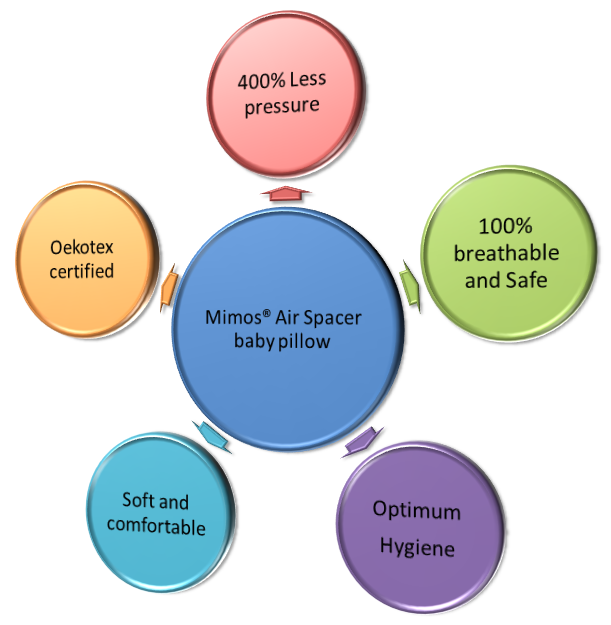
- 400% less pressure for prevention of positional deformations of the head
- Breathable and safe
- Allows free rotation of the head and neck
- Soft, light and comfortable.
- Machine washable and hygienic
- Oekotex 100 Class 1 certified safe for direct contact with baby skin.
If you would like more information on the Mimos® Pillow, please visit www.mimospillow.co.uk.
If you have found this post helpful or interesting, please share, tweet or pin!


Never miss a new post!
Don’t forget to tailor your preferences, so you just get the posts you want to read!
Follow Motherhood Diaries on Facebook (Facebook Recipes Page), Twitter, Pinterest, Instagram, Google+ and LinkedIn
If you’d like to share your pregnancy or parenting story, then please do share your story here. Don’t forget to read our Ad Policy









Where can i purchase mimos pillow in india
I bought this pillow from Motherworks Singapore to prevent my baby from having a flat head, but it did it opposite. My baby is now 10 weeks old and has a flat head and a flat patch. Please emAil me dianlee@me.com to see a before and after picture. I am really upset I bought this pillow, both my older children who did not use the mimos pillow have beautiful round head.
The only way to prevent your baby having a flat head is to turn your baby regularly and to stretch out any restrictions in their cervical spines. Most flat heads or plagiocephaly develops because the baby’s neck is restricted in movement and then the baby’s head will flatten as their bones are still soft – after the flattening occurs the baby will always lie on the flat spot. Its rather like a football with a flat area will always roll onto the flat spot. As the baby lies on the flat spot it will get flatter unless the restriction in the cervical spine is released and the baby’s head is moved from side to side. No pillows mattresses will correct the flat spot they will only help or sometimes prevent it developing. The main problem in the majority of cases is in the cervical spine and not the head – Google torticollis and have a look. I have also written some articles on prevention and who is at risk on our website and online, I work as an osteopath in Central London and specialise in paediatrics and of course and am seeing more and more babies with flat heads. One of the main problems is that parents are not advised to change the position of the baby’s on discharge from hospital – to all new mothers – when your baby is awake give it tummy time and lie them from side to side – when your baby is asleep and lying on its back lift your baby’s head and turn it from side to side.
http://www.wiselivingmama.com/#!Wise-Living-Mama-Recommends-Mimos-Baby-Pillow-For-Flat-Head-Syndrome/c1a1n/186D5A3B-8FC2-4793-95B3-6E6BC8883687
We had great result, Dian- Asian baby may have smaller head that required smaller size
This Medical rathed pillow were introduced by chiropractic/osteopath as a complementary product treatment of plagiocephaly. http://www.babysafepillows.com.au/stockists/
If a doctor determines that your baby has positional plagiocephaly, his recommendations will depend on your baby’s age and the severity of the condition.
If your baby is young enough and the condition is mild, he’ll probably recommend repositional therapy, a combination of simple measures designed to help your baby’s head round out. In severe cases, cranial orthotic therapy (using a helmet to change the shape of the head) may be required.
Hi New Mom Needs, thank you so much for your comments, which are really helpful 🙂