
*This post is not sponsored or gifted. This article is about raising awareness to parents on the importance of learning basic first aid skills, so you can help a child if they are choking. For more information on any of the points raised below, please visit the British Red Cross’ website and the links within the article for extra reference.*
*Please also note that the information included here is intended for parents or relatives to learn so they can help their little ones in an emergency. Anyone looking after children in a professional setting is required to be qualified in first aid – visit here to find out more about your legal requirements*
Last year I conducted a mini informal survey with parents on what their biggest fear was related to their child and the subject that came up the most was choking.
This fear was further realised when a friend’s two-year-old daughter tragically passed away from choking on a piece of food at nursery. I have never felt so much grief for the family and the strength and support they’ve received has been nothing short of amazing. As a result, Sadie’s parents triggered a petition for sausages and grapes to be banned at nursery and a fundraising page has been set up for children’s intensive care charity COSMIC.
“It’s important that [nursery] staff are trained, are able to react quickly and have the confidence to respond to any incidents.”
Purnima Tanuku, Chief Executive of National Day Nurseries Association (NDNA)
Choking has been my biggest fear, especially when my middle one choked on a lollipop when he was 18 months old and I almost broke his back getting it out. Thankfully, I was successful and the reason for this was that I had learned basic first aid just a few months prior. I am so grateful for the first aid I learned because if I hadn’t known what to do, I dread to think what may have happened.
Three out of four parents in the UK would not be able to save their baby from choking.*
Research by British Red Cross
So, Motherhood Diaries is raising awareness on the importance of learning basic first aid skills so you know what to do when a baby or child is choking. Nobody wants their child in an emergency situation, but learning simple first aid steps can give parents and parents-to-be the confidence to be able to help and save their child.”Babies can be very curious and love to explore their surroundings by putting things in their mouths, especially when they’re teething. No parent wants to be in the situation where their baby is choking and they don’t know what to do, but helping is easy when you know how.”
British Red Cross’ survey of parents across the UK also found that 20% of mums and dads have never learned first aid through any means, with a third of parents of babies under 2 have never been on a first aid course.
This article sets out the first aid procedures needed when helping a baby under the age of one who is choking and how to help a child over the age of one who is choking.
“The steps are the same for all age groups except for a child under one, so it makes it pretty easy to remember in an emergency.”
Stella Jenkins, Paramedic Clinical Tutor for the London Ambulance Service.
What should you do if a baby is choking? (Under one year old)
A choking baby will not be crying, coughing, breathing or making any noise, so as soon as you spot that something has been lodged in their throat, the steps are:
Step 1 – Give up to five back blows
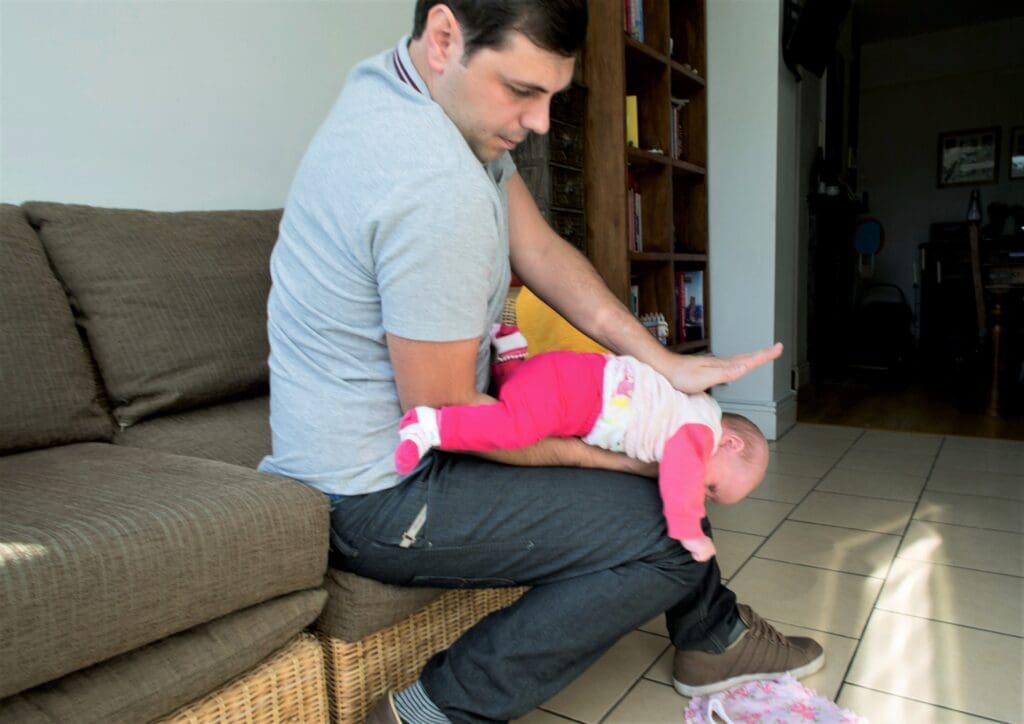
- Hold the baby face-down along your thigh with their head lower than their bottom.
- Hit them firmly on their back between the shoulder blade up to five times. If back blows do not dislodge the blockage, move onto step 2.
Step 2 – Give up to five chest thrusts
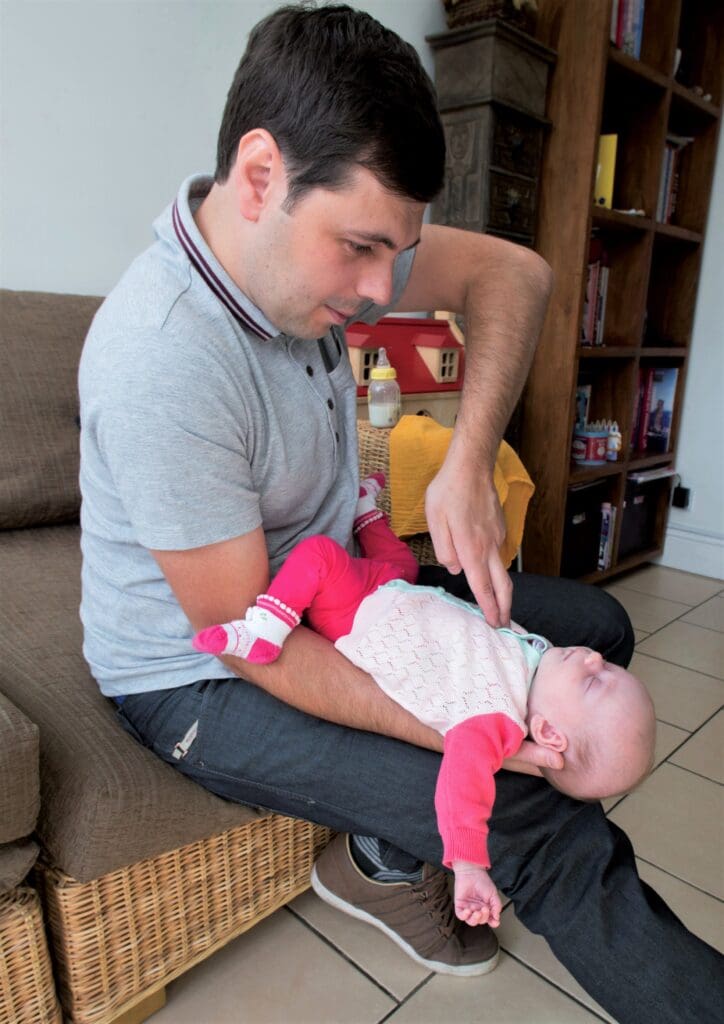
Turn the baby over so they are facing upwards. Place two fingers in the middle of their chest just below the nipples. Push sharply downwards up to five times.
Step 3 – Call 999 if the object does not dislodge from their airway
Continue with the cycles of back blows and chest thrusts until the object dislodges or help arrives.
A choking infant may need hospital care after medical help arrives.
Check out the video and the step-by-step instructions below on what to do if baby is choking:
Helping a child over the age of one who is choking

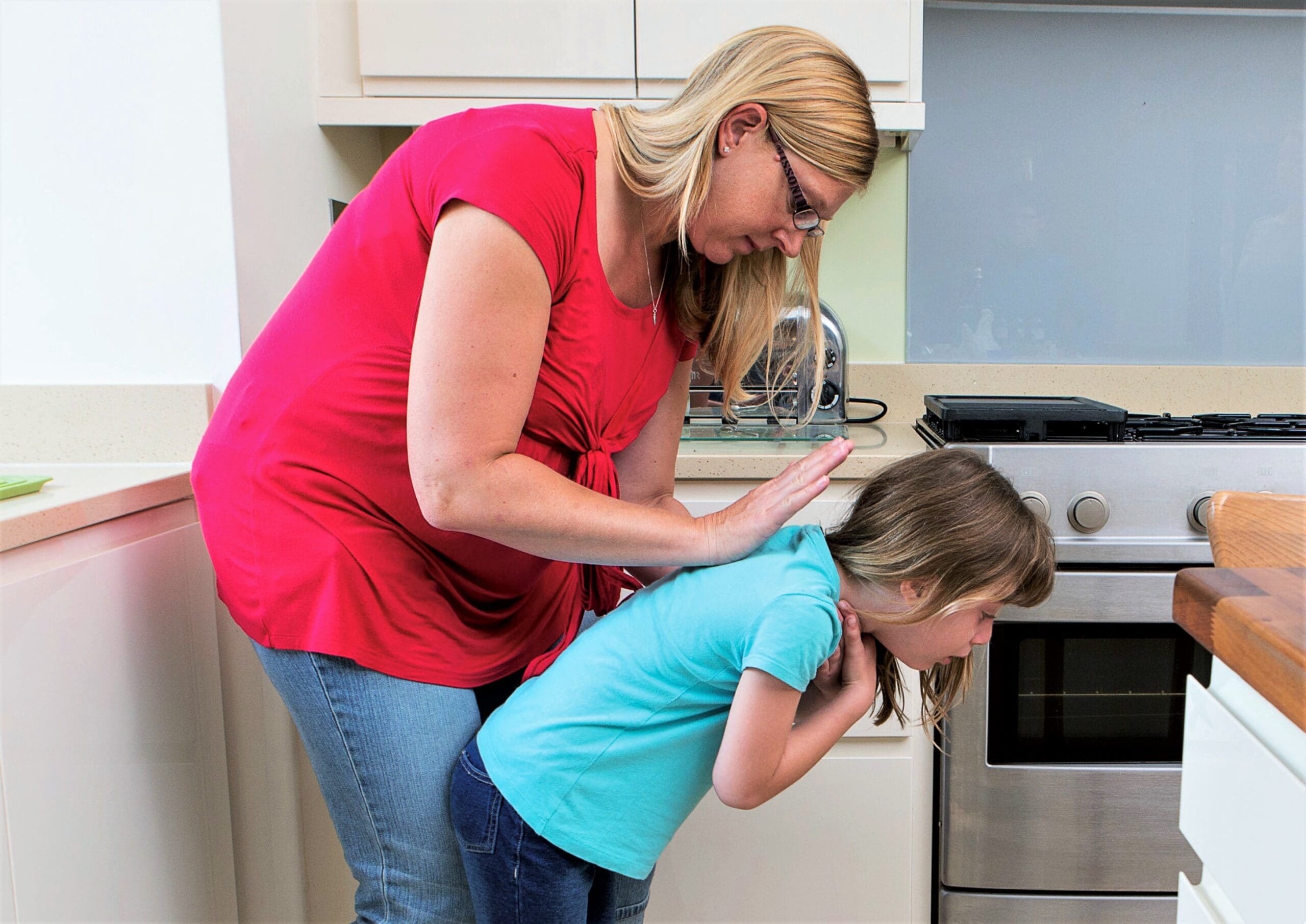
A child who is choking may be clutching at their chest or neck but will be unable to speak, breathe or cough. Follow the first aid steps and emergency action plan below to help dislodge the object:
Step 1 – Give up to five back blows
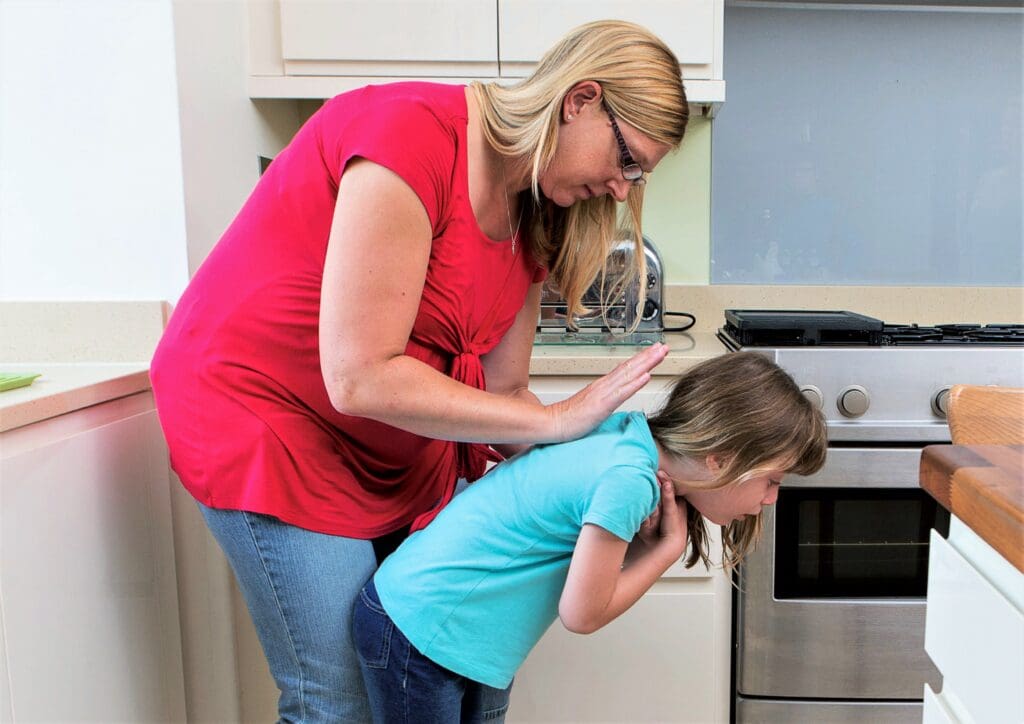
Hit them firmly on their back between the shoulder blades. If back blows do not dislodge the object, move onto Step 2.
Step 2 – Give up to five abdominal thrusts

Hold the child around the waist and pull inwards and upwards above their belly button.
Step 3 – Call 999 if the object does not dislodge
Continue with cycles of back blows and abdominal thrusts until the object dislodges or help arrives.
Check out this video for step-by-step instructions on what to do if a child is choking:
What else can you do to help?
Stay calm
Try to stay calm and think clearly. It’s difficult not to panic in emergency situations, but try to remember that simple actions can be all you need to make a huge difference. If you do need to ring 999, remember the call handler will also be able to help you and guide you through the actions to take.
Learn more with the free British Red Cross Baby and Child First Aid app
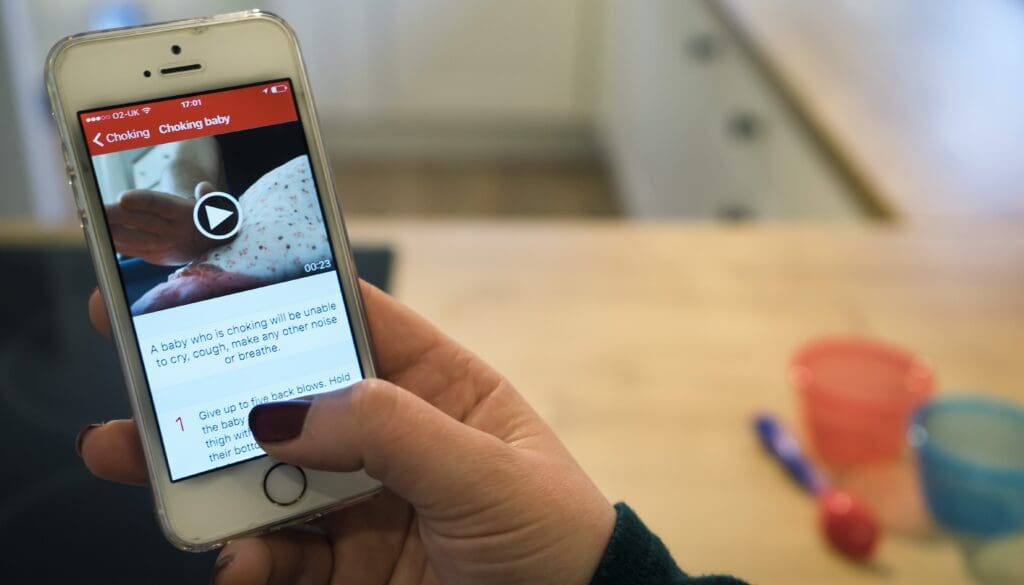
Carry around the first aid skills you need by installing the British Red Cross’ Baby and Child First app, which provides you with easy-to-learn skills to help a baby or child in a first aid emergency. You’ll get:
- Useful tips
- Animations and video clips
- Test your knowledge with quizzes
- Record your child’s medication needs and any allergies
- You don’t need an internet connection to access the app info either!
Learn more about the app by visiting redcross.org.uk here.
Learn first aid online
You can enhance your knowledge by heading online and building on your basic first-aid knowledge. Head here for more information.
First aid courses are available. However, they are not operating at the moment due to Covid-19. You can stay updated here to find out when the course will be up and running again.
Children can learn first aid too
Kids from ages 5-18 can learn first aid via British Red Cross’ brand new online resource, First aid champions.
First aid education is now on the RSE and Health curriculum in England so First aid champions can be used by all schools in the UK to teach kids and young people how to save a life. Parents can also use First aid champions to help their children learn essential skills at home.
First aid champions feature films, roleplays and quizzes to help children learn first aid skills in a fun way so they can feel confident to act when they need to. They can also learn about kindness as well as how to cope during pressure and keep calm while they keep safe too.
FAQ and recap
What is the definition of first aid?
First aid is the first and immediate assistance given to any person suffering from either a minor illness or injury, which includes choking.
How do you know if a child is choking?
They will maybe holding their throat or clutching at their chest but they will not be able to speak, breathe or cough.
What do you do if your infant child started to choke on something they picked up off the floor?
Follow the emergency action plan steps above depending on your child’s age (for under one follow the first aid action plan for a baby and for a person over one, follow the emergency action steps.)
Why is first aid training important?
Knowing basic first aid guidelines and procedures means you will know what to do if your baby/child is choking to increase your chances of helping the child to safety, whether the object comes out or you call for help.
What are the best resources for learning first aid techniques?
The British Red Cross contain a bank of resources for all types of first aid, so your best place to start is to visit their website here.
How can you be equipped to handle an emergency situation with no first aid supplies?
When it comes to a baby or child choking, you only need to be by your phone to call 999 for medical help if the object doesn’t come out. You don’t need any other first aid supplies.
What is the best way to perform first aid on a choking toddler?
Follow the first aid response plan above to perform first aid on a child choking over the age of one years old.
Is the handling of people who are choking the same between teenagers and children?
You do the same first aid steps as you would for any child over the age of one year old. Learn how to help someone who is choking here.
If you find yourself in a situation where your baby or child is choking, stay calm, follow the action plan steps above and educate yourself on what to do in first aid on British Red Cross’ website online. There are plenty of tips and resources to help you build your knowledge so you are armed and ready should the situation ever present itself.
*Nationally representative online survey of 2008 UK adults, carried out in April 2017 by Critical Research. Only 24% of mums and dads were confident and knowledgeable enough to help a choking baby.