

20 tips on how to get pregnant at 40 fast and get your baby
If you’re reading this, chances are you’re in your 40s and thinking about starting or expanding your family. As a mum of four who had her last little one at 40, I know firsthand the mix of excitement and anxiety that comes with trying to conceive later in life. There’s a lot of chat out there about how impossible it is to get pregnant naturally at our age, but let me assure you—it’s not! Sure, it can be more difficult, and yes, there are things to consider, but it’s far from impossible.
In this post, I’m going to walk you through everything you need to know about getting pregnant at 40. We’ll dive into the facts and myths, talk about fertility tips, and tackle the big questions like “Is 40 too old?” or “How many eggs do I have left?”
So here are 20 tips on how to get pregnant at 40 fast and get your baby.
Did you know:
- At 20 years old, it can take up to four months to conceive
- At 35 years old, it can take up to 18 months to conceive
- At 40 years old, you have less than a 5% chance to conceive
- Even if you’re fit and healthy, your chances of conceiving are 25
- There are only six days in the menstrual cycle when you can become pregnant. And that window opens BEFORE ovulation.
- If you have health conditions, it may be even more difficult to get pregnant
It doesn’t sound easy to get pregnant, does it, especially when you hear of people getting pregnant at the drop of a hat? One wonders how they beat the odds when other couples try for years and sadly never manage to conceive.
The odds are evidently very small, but, at the same time, you can’t stress yourself because stress can also affect your chances of getting pregnant.
I know.
But, 5% at 40 years old, is still 5%. It’s not 0%
And 25% is also not 0%.
Remember, many older women have successfully conceived, including using their own eggs. It’s all about timing, health, and a bit of luck!
So, it is possible, and the important thing to note here is unless your doctor or fertility specialist has advised you have a 0% chance of getting pregnant, then you can still get pregnant.
Some people may urge you to try some of the old tricks to getting pregnant, like standing on top of your head when doing it or eating spinach before ovulation. The truth is, the journey to fertility can be a long one, but no fancy gimmick can replace a good diet or healthy lifestyle choices.
Making the journey fun with your partner is essential too (did you know that orgasming during sex can increase your chances of getting pregnant?)
If you’re trying to get pregnant and somehow you’re not conceiving, something could be off, whether that be your nutrition, your sleep patterns, you’re not doing it at the right time or maybe your partner’s sperm quality is subpar.
It’s important to look at ALL the internal and external factors that could affect your chances of getting pregnant naturally because fertility works when all the dots are connected.
If you’re trying to get pregnant naturally and need some extra help, then download our Starter Kit now!
The road to conception is a long process, but it’s important to note the following too:
- If you are under 35 years old, you should try for a year to get pregnant naturally before seeking fertility treatment.
- If you are over 35 years old, you should try for six months to get pregnant naturally before seeking fertility treatment (We tried for 13 months the third time and got pregnant at 37, but sadly lost the baby. We then tried for 14 months thereafter and got pregnant at 38 with our daughter, who is now a bouncing toddler! I followed my own Natural Path to Pregnancy method, which you can find more information about here)
So, are there any tricks on how to get pregnant fast and easy?
No tricks.
It’s all about making sure you hit all the right points and increasing your fertility rate rather than playing the race game.
So, grab yourself a cuppa because this is a long read, but it’s jam-packed full of tips on increasing fertility – and the tips worked for me twice.

How many eggs does a woman have at 40?
As we age, the number of eggs in our ovaries decreases. By the time you reach 40, your ovarian reserve—the number of eggs you have—has significantly declined. While you’re born with about 1 to 2 million eggs, this number drops to around 25,000 by the time you hit 37, and even fewer by 40. However, it’s not just the quantity but the quality of the eggs that matters most, which can also decline with age. It’s also not just about the number of eggs left, but also about their quality, which can be impacted by age-related factors like high blood pressure and other health issues.
Are my eggs bad after 40?
The quality of your eggs can decrease as you age, leading to a higher risk of chromosomal abnormalities such as Down’s syndrome and an increased chance of miscarriage. However, it’s important to remember that while the quality of eggs may be lower, many women in their 40s still produce healthy, viable eggs that can lead to a successful pregnancy.
Is having a baby at 40 too old?
I know the phrase “too old” might sting a bit, but having a baby at 40 comes with its own set of challenges. However, with the right approach, a healthy pregnancy is absolutely possible. Being a bit older often means you have more life experience, emotional stability, and perhaps even financial stability, all of which can make you an excellent parent. The key is to understand the risks and prepare accordingly, including regular check-ups and staying on top of your overall health.
How long does it take to get pregnant at 40?
Time is a key factor when you’re trying to conceive at 40. On average, it can take longer to get pregnant as you age. At 20 years old, it might take around four months, but by the time you’re 35, it could take up to 18 months to conceive. At 40, it’s common to try for about six months before seeking further medical advice. The good news is that many women still conceive naturally within this timeframe.
So, it is possible, and the important thing to note here is unless your doctor or fertility specialist has advised you have a 0% chance of getting pregnant, then you can still get pregnant.
Some people may urge you to try some of the old tricks to getting pregnant, like standing on top of your head when doing it or eating spinach before ovulation. The truth is, the fertility journey can be a long one, but no fancy gimmick can replace a good diet or healthy lifestyle choices.
Making the journey fun with your partner is essential too (did you know that orgasming during sex can increase your chances of getting pregnant?)
If you’re trying to get pregnant and somehow you’re not conceiving, something could be off, whether that be your nutrition, your sleep patterns, you’re not doing it at the right time or maybe your partner’s sperm quality is subpar.
It’s important to look at ALL the internal and external factors that could affect your chances of getting pregnant naturally because fertility works when all the dots are connected.
The road to conception is a long process, but it’s important to note the following too:
- If you are under 35 years old, try for a year to get pregnant naturally before seeking fertility treatment.
- If you are over 35 years old, try for six months to get pregnant naturally before seeking fertility treatment (We tried for 13 months the third time and got pregnant at 37, but sadly lost the baby. We then tried for 14 months thereafter and got pregnant at 38 with our daughter and our fourth at 40! I followed my Natural Path to Pregnancy method, which you can find more information about here)
So, are there any tricks on how to get pregnant fast and easy?
No tricks.
It’s all about making sure you hit all the right points and increasing your fertility rate rather than playing the race game.
So, grab yourself a cuppa because this is a long read, but it’s jam-packed full of tips on increasing fertility – and the tips worked for me twice.
26 tips on how to get pregnant at 40 fast
Improving your fertility after 40 involves a combination of lifestyle changes, health checks, and possibly medical interventions. Here are 26 tips to help you on your journey:
1. Stop your birth control right now
It may take a while for your period to return after you stopped taking birth control and it may be irregular for up to three months before your body flows into its natural menstrual cycle again. This initial, irregular period is called the “withdrawal bleed,” and for most women, it should only last for one to two cycles.
One study1 found that taking birth control did not affect your chances of getting pregnant and that age-affected fertility had nothing to do with whether or not you took birth control. So speak to your doctor about the possible delay you might experience with the birth control you’ve stopped using.
It’s also a good idea to wait until after you’ve had a natural period (the period after the “withdrawal bleed”) to give you some time to make sure you’re in physical health for conceiving, i.e. taking folic acid, and changing lifestyle choices, like smoking and giving up alcohol. We’ll go into these points later.

2. Know your ovulation cycle
There are often clear signs of ovulation that you will become accustomed to as you learn and understand your body’s habits in the lead-up to ovulation and your period.
Tracking your ovulation is a good thing to do and can be done effectively by using an app. You also have ovulation sticks that you can pee on to check if you’re ovulating or not.
One study2 shows that only 30% of women ovulate between 10 and 17 days in the menstrual cycle. Most women reach their fertile window earlier and others much later. So, your fertile window can be unpredictable, even if your cycles are regular.
No calendar method is completely effective, but there are a few days in your menstrual cycle where you will not become pregnant, even including the cycle day when you may expect your period to start again. Investing in a lab-quality ovulation tracker like the one from Mylo World can help to provide accurate, personalised results of when you ovulate from the privacy of your own home.
But it’s not as easy as knowing when to ovulate.
The female’s reproductive system has many obstacles to flush out the sperm.
And scientists reckon only 1 in 100 sperm will ever make it into the safety zone of the cervix, and this is because nature has a wonderful way of weeding out the weak, the deformed and the dying sperm.
And, entering the cervix is only the start of the journey.
Sperm has to get through the womb and into one of the fallopian tubes, and there are so many obstacles along the way.
And, don’t forget you have two fallopian tubes, so the sperm must swim to the right fallopian tube! If they swim to the wrong one, it’s a completely wasted journey.
But, by this time, your body comes to the rescue and helps one sperm finally squeeze his head into the egg and start the fertilisation process.
And, then, you have your baby.

3. Have sex at the right time, not all the time

It’s a common misconception that more sex must mean a higher chance of falling pregnant. In fact, having sex too frequently can actually decrease the number of healthy sperm your partner has to play with.
Instead, focus on having sex at the right time, such as during your fertile window as mentioned above, or when you’re in the mood for it. When trying to conceive, it’s common to forget that sex is about so much more than just conception – it’s about connecting with your partner and enjoying the moment.

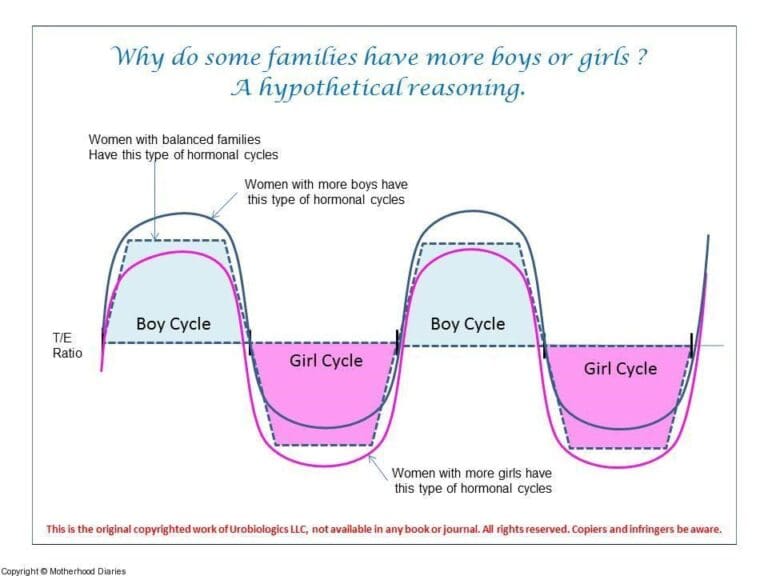
The figure above shows that ovulation peaks around day 14, but can also fluctuate, so it’s advisable to avoid the uncertainty of predicting your fertility days by having sex around two to three times a week.
In your quest to get pregnant, remember that sexual intercourse still boasts an array of benefits, such as being a great stress relief and a way to connect as a couple (which brings us to the next point). So enjoy it!
4. Reduce your stress levels where possible

Stress is a HUGE factor in fertility problems and it builds up over time if you don’t fix it.
Stress-related fertility problems warrant its own article because it plays such an enormous role in cycle regulation. Stress can throw ovulation off and make it harder for you to time when to conceive. And, if you’re 40, and the chances of conceiving are 5%, you want to make sure your cycles are as regular as possible to minimise inaccuracies.
Don’t forget that you can experience physical stress and emotional stress. So, don’t over-exercise (which we discuss in more detail below).
Have you ever heard of the saying:
“When I stopped thinking about having a baby, I got pregnant.”
I believe finally relaxing about getting pregnant was the ultimate factor in me getting pregnant because when I gave up trying, I got pregnant. Both times!
Why is this?
Well, stress invokes an interesting response in our bodies. Sudden minor stress isn’t known to cause any lasting damage and, in fact, some stress is good for you.
But, if you are experiencing prolonged stress, whether that be working in a difficult job, not sleeping enough, physical stress from being under or overweight (this is its own point below), experiencing pain in your life, or whatever is causing you to stress every day, this may be the reason you are not getting pregnant.
When the body experiences prolonged stress, it has to decide which body processes are more important to keep functioning during a life or death situation (even if you are not in a life or death situation the brain can’t see this and just thinks you are about to die – EVERY TIME.)
And, more often than not, the reproductive system is the first thing to be turned off, so the body can work on the more important processes like living through the life or death situation.
But this doesn’t work for you, does it, especially when you need your reproductive system to make a baby!
Find out what is causing you stress. Is it your job? Kids? Where you live? Is it a medical issue?
And then find out how you can reduce or even remove that stress because if you are serious about making a baby, then you need to make some changes in your lifestyle for this to happen (another tip we go through later in the article).
For me, it was losing weight and stop stressing about making a baby. I know it is SO much easier said than done, but I’ll share some tips on how I did that in a future article.
But, for now, just get a pen and paper and write what is causing you stress in your life. Be honest and dig deep. When it’s written, it’ll make it easier for you to figure out what to do.
5. Get some sleep

How much sleep do you get every night? Five hours? Six hours? Twelve? Two?
Do you know how much sleep you should get every night to ensure you regenerate and re-energise for the next day?
At least seven to nine hours of proper shut-eye.
Just like all the other key factors you need to achieve overall good health and, ultimately, great fertility, like getting your preconception checkup done (more on that in a mo), eating well and stressing less, sleep is right up there as one major factor that can improve fertility.
If you skimp on sleep, it can throw your hormones out of whack, which then leads to irregular periods and higher stress levels.
Plus, if you’re charting your BBT (Basal Body Temperature) then you need efficient sleep to achieve the best results. I say efficient because broken sleep doesn’t count.
If you’re tired during the day, try to sneak in a nap or two to energise a tired body and go to bed early to keep up with the rest. If you’re struggling to get to sleep at night, there are some things that can help you achieve a relaxed slumber:
- Have a bath and add some lavender bubbles to help you relax
- Avoid caffeine and chocolate where possible and opt for warm milk or herbal tea, like chamomile tea. You can get special night teas which help you relax before sleeping.
- Lay off the screens where possible, and if you can’t, use the blue filter on the device’s settings to remove the glare and flicker that wires your brain.
- Practice a little night yoga, by gently stretching every part of the body to ease the muscles
If you’re still struggling to sleep, you may need to speak to your GP to find out if there are other options out there. Perhaps you’re stressed from trying to make a baby, or something else is keeping you up. Try to speak to someone about what’s causing you that stress so you can take steps to overcome them.
And, above all, try to get in as much sleep as you can now because when the baby comes, sleep will become a thing of the past!
6. Eat a fertility-boosting diet

We are bombarded with resources about how to stay healthy during pregnancy, but one of the biggest areas that is overlooked is how important nutrition is BEFORE you get pregnant, which, in fact, is the most important part of growing a healthy foetus.
Why? Because it can affect nutrition further down the line when you are pregnant and when the baby is born.
Your overall health is massively important in your fertility. After all, it takes two healthy bodies (mum’s and dad’s) to make a healthy baby! So, now is the time to think about what you put into your body. And, not just the food you eat, but the immunisations you have, the chronic conditions that need managing and any other health complications that your preconception check-up picked up, including dental health. These things can impact your chances of getting pregnant.
There are many reasons nutrition may not play a big part in someone’s life. Couples often worry they don’t have enough money to buy the right foods, so they skip meals or reduce their portion sizes. Others may not be educated about what is nutritious and may have grown up with a family who was not educated in healthy food either.
Whatever the reasons are, it’s time to think about foods that increase fertility, or you will find you won’t have the right building blocks to make a baby.
So, what is the right diet for fertility?
One Harvard study3 found that a diet rich in folic acid, vitamin B12, omega-3 fatty acids and a healthy diet such as the Mediterranean diet helped women’s chances of getting pregnant naturally.
The most important ingredient to a nutritional diet is:
Folic acid/Folate
Folic acid or folate, which is a B vitamin, is one of the biggest nutritional requirements to make a baby – and keep a baby.
You may have heard of neural tube defects (NTDs) like Spina Bifida knocking about during your research, but these NTDs are down to a lack of folic acid and occur when the baby’s spine is not formed properly. Other NTDs can be Anencephaly where the top part of the skull and brain don’t form correctly and Encephalocele, where part of the brain sits outside of the skull. In these cases, sadly, babies rarely survive.
You need to have enough folic acid in your system to prevent NTDs from happening BEFORE you get pregnant because most NTDs occur in the first few weeks after the egg and sperm meet. When you miss your period, the NTD could form even before you realise you are pregnant. Even if you eat really well and do everything to achieve a healthy baby, if you don’t have enough folic acid in your diet, you risk your baby developing NTDs before you even know it.
Or you won’t get pregnant at all.

So, how much do you need to take?
You are required to take 400mcg at least three months before TTC to maximise your chances of getting pregnant as well as preventing NTD. Prenatal supplements should have the right dosage (as mentioned above), so consult with your doctor about what prenatal supplements you should take. But the time to take them is NOW!
Other vital nutrients you should include in your diet are calcium, and iron, which build strong bones and iron levels. A deficiency in each of these will seriously hinder your chances of getting pregnant.
Herbs to get pregnant fast
It has been known that some herbs are fertility food boosters to help you get pregnant quickly. Check out a list of herbs which help to get pregnant in this article here.
Foods to avoid when trying to get pregnant
Avoid the sat fats
The same Harvard study found that trans fats and “unhealthy diets” (which were rich in red and processed meats, potatoes, sweets and sweetened beverages) were found to have negative effects on fertility and contributed to an infertility diet rather than being fertility food boosters.
Avoid low fat dairy foods
One US study published in the journal Human Reproduction followed 18,555 women aged 24 to 42, with no history of infertility, but were trying to become pregnant or were pregnant over an eight-year period. The results suggested that eating low-fat dairy food every day affected a woman’s ovulation, in turn reducing her anovulatory fertility rates (no egg being released during a menstrual cycle).
It was also found however that high-fat dairy foods may decrease the risk of anovulatory infertility and they found no links between ovulation disorders and having a normal intake of lactose, Vitamin D, calcium and phosphorous.
Cut down on carbs if you have PCOS
Polycystic Ovarian Syndrome (PCOS) can hinder your chances of getting pregnant, as well as any other health condition, but there are natural ways to get pregnant with PCOS, which we will go into in a separate article.
If you know you have a health condition, you need to take the time to treat/manage it before you move onto fertility treatment options like Clomid and Intrauterine Insemination (IUI) (where doctors place the sperm directly into the uterus during ovulation to help the sperm get closer to the egg.)
Taking the time to treat/manage your underlying conditions may save you valuable time and expenses later down the fertility path.
It’s not impossible to get pregnant, but PCOS can make it more difficult. Diet and nutrition play a part in helping to manage symptoms. Eating a varied nutritious diet low in carbs and high in good fats like avocados while eating less bad fats (animal products) and high carb foods (white pasta and rice) will help to restore balance to your insides.
Eating a whole food diet with plenty of fruit and vegetables will help too and don’t forget to supplement your diet with a good multivitamin that contains all the vitamins and minerals you need.
7. Watch your iron levels
If you have inadequate iron levels you will have more trouble getting pregnant, so it might be worth checking to see if your iron levels are low. Some great sources of iron are:
- Fortified breakfast cereals – One serving contains 100% of your daily recommended intake of iron
- Lean meats like chicken, beef and turkey contain about 1mg of iron per 3oz serving
- Spinach is a fertility booster and a great source of iron – 1/2 cup of boiled, drained spinach contains around 3mg per serving which is around 17% of your daily recommended intake
- Plant-based whole foods can positively impact your chance in becoming pregnant too.
A great iron-enriched recipe to try is my 5-ingredient Spinach Rice Recipe, packs a punch!

Foods to avoid when trying to get pregnant
Avoid the sat fats
The same Harvard study found that trans fats and “unhealthy diets” (which were rich in red and processed meats, potatoes, sweets and sweetened beverages) were found to have negative effects on fertility and contributed to an infertility diet rather than being fertility food boosters.
Avoid low fat dairy foods
One US study published in the journal Human Reproduction followed 18,555 women aged 24 to 42, with no history of infertility, but were trying to become pregnant or were pregnant over an eight-year period. The results suggested that eating low-fat dairy food every day affected a woman’s ovulation, in turn reducing her anovulatory fertility rates (no egg being released during a menstrual cycle).
It was also found however that high-fat dairy foods may decrease the risk of anovulatory infertility and they found no links between ovulation disorders and having a normal intake of lactose, Vitamin D, calcium and phosphorous.
Want to share your story on Motherhood Diaries? Become a MD Contributor now!
Cut down on carbs if you have PCOS
Polycystic Ovarian Syndrome (PCOS) can hinder your chances of getting pregnant, as well as any other health condition, but there are natural ways to get pregnant with PCOS, which we will go into in a separate article.
If you know you have a health condition, you need to take the time to treat/manage it before you move onto fertility treatment options like Clomid and Intrauterine Insemination (IUI) (where doctors place the sperm directly into the uterus during ovulation to help the sperm get closer to the egg.)
Taking the time to treat/manage your underlying conditions may save you valuable time and expenses later down the fertility path.
It’s not impossible to get pregnant, but PCOS can make it more difficult. Diet and nutrition play a part in helping to manage symptoms. Eating a varied nutritious diet low in carbs and high in good fats like avocados while eating less bad fats (animal products) and high carb foods (white pasta and rice) will help to restore balance to your insides.
Eating a whole food diet with plenty of fruit and vegetables will help too and don’t forget to supplement your diet with a good multivitamin that contains all the vitamins and minerals you need.
8. Take prenatal vitamins as early as possible in the conception journey
Prenatal supplements ensure you get your full A to Z of vitamins and minerals so that your body is fighting fit to take the fierce weight of pregnancy and birth, which are tough on the mind and the body. But, also taking your prenatal vitamins as soon as possible can help you jump onto the road to get pregnant faster.
What should prenatal supplements contain though?
- At least 400mcg of folic acid / Vitamin B9, which helps to prevent congenital disabilities in your baby’s brain and spine
- Vitamin B12 before conception can help to reduce neural tube defects like spina bifida and congenital heart defects in your growing baby – it can also help to reduce the risk of preterm birth.
- At least 10mg of Vitamin B6 – to reduce nausea during pregnancy
- At least 30g Iron – Iron is vital for building your baby’s cells, and your body requires iron more than ever when you’re pregnant. You can become anaemic during pregnancy if you are not taking in enough iron
- Calcium – Calcium is very important during pregnancy to help grow your baby’s bones. All women require 1,000mg a day from their diet as well as from prenatal vitamins. Calcium interferes with iron absorption so it may be worth taking these at separate times of the day or not taking both in large doses.
- No more than 800mcg of Vitamin A per day – Too much Vitamin A in tablet form can be toxic during pregnancy, so some supplements have been replaced with beta-carotene which is a much safer source of vitamin A.
- At least 400IU of Vitamin D – Your body needs vitamin D with calcium to keep you and your baby’s bones strong. Try to incorporate vitamin D in your diet through fortified food and drink too.
- 15mg of Zinc – Zinc helps to support your body’s immune system and healthy cell division
- 50 – 80mg of Vitamin C – Vitamin C helps your body to absorb iron and supports your immune system too. But more than 2,000mg a day can be dangerous so don’t take a supplement if you have a rich vitamin C diet already
- At least 150mcg of Iodine – Iodine has been known to help your baby’s thyroid and brain development. You may find that not all prenatal vitamins have iodine so talk with your doctor if you need a separate iodine supplement
- 200 – 300mg of DHA – Regular prenatal vitamins don’t contain DHA, which is an omega-3 fatty acid found in many types of fish. DHA has been shown to aid baby’s brain development before and after birth, so if you’re unable to get it through your diet then you should ask your doctor about taking an omega-3 fatty acid supplement
- Other vitamins and minerals to keep an eye out for are vitamin E, riboflavin, niacin, and thiamine.
I used Proceive Advanced Female Fertility Vitamins* to help me get pregnant both times and also made sure my partner took the male version Proceive Advanced Fertility Sachets* to maximise our chances because your partner also needs to make sure he’s in tip-top shape too!
Click on the links above or images below to buy both Proceive Fertility Vitamins from Amazon
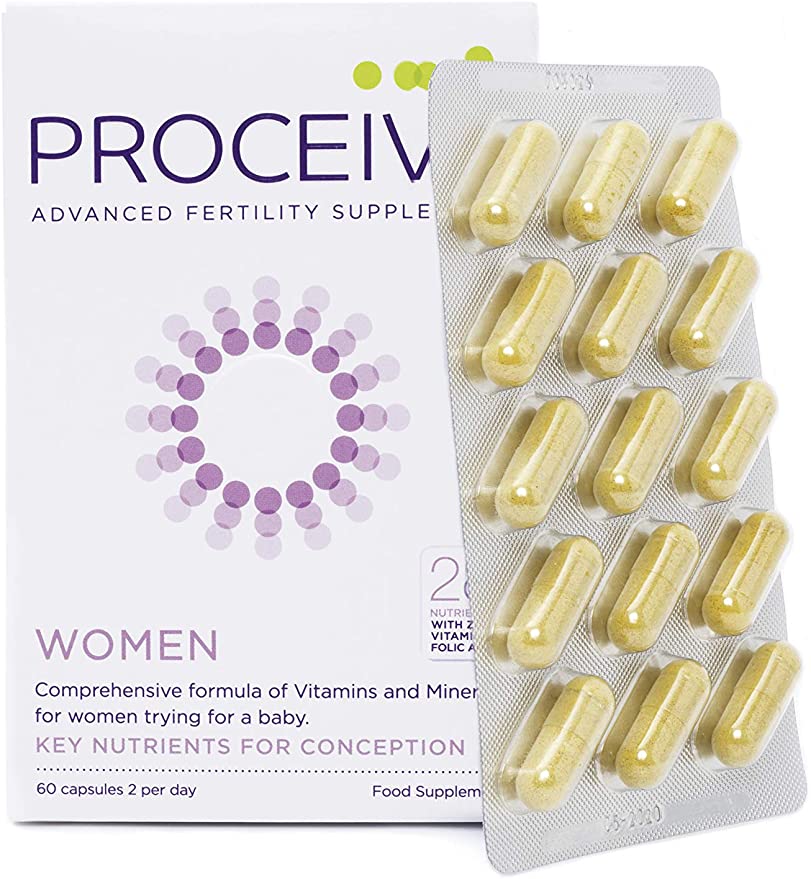
Order now for 25% off using the discount code MHD25*
9. Check your weight
If you’re underweight or overweight, then you’re already making it harder for yourself to get pregnant. The sooner you get to your ‘ideal’ weight, the more chance you have of conceiving. Whether you have a little to lose (like I did) or a lot (and vice versa) now is the time to start getting on top of that.
If you’re not sure of where your weight should be, check with your medical professional, as this should have been discussed during your preconception checkup. (If you haven’t had a preconception checkup then you should do this first.
Unfortunately, it’s not just about numbers. It’s a complicated connection between weight and fertility. And, you may not gain weight because you’ve eaten too many pies. Weight can be an impact of a health condition, i.e. hormone imbalance, so it won’t be so straightforward to keep your weight down (or up if you’re underweight). Getting to the bottom of why you have extra weight is key to helping you speed up the process of pregnancy.

Some factors that may affect your weight are:
Hormones
Oestrogen is the reproductive hormone that is produced primarily in your ovaries and helps your eggs to mature, as well as build up the lining in your uterus. Oestrogen also produces thin cervical mucus which is very important to boost fertility.
Over 30% of oestrogen is produced by your fat cells, which is why your body fat is linked to getting pregnant. The perfect supply of oestrogen is needed for your reproductive cycle to work effectively as too much or too little can really affect your conception chances.
Your BMI
Checking your BMI (Body Mass Index) will tell you whether you are likely producing the right amount of oestrogen because if your BMI is high then you may be producing too much – and vice versa – if your BMI is low then you may not be making enough oestrogen. But, as I mentioned before, it’s not all about numbers. Your ideal size depends on your natural body, and your doctor will tell you how much you should lose or gain to speed up the process of conception.
So, what is BMI?
BMI describes the relationship between your weight and height and provides a better measure of the amount of fat you have on your body. And because your fat cells produce oestrogen, your body fat is key to your fertility.
Again, not so straightforward, because BMI readings may not produce an accurate account of how much weight to lose. If you are someone who has a higher muscle mass or you’re training, then muscles will make you weigh more, but you may have less fat on your body (I told you, it wasn’t straightforward).
Generally, the rule of thumb is:
BMI of less than 18.5 = you are underweight, so you might not be producing enough oestrogen
BMI of 18.5 to 24 = you are at an ideal weight and you may be producing the right amount of oestrogen
BMI of 25 – 29 = you are overweight and you should lose some weight before trying to conceive (TTC)
BMI of 30+ = you are considered as obese, and it’s time to get serious about your weight loss before TTC
Again, if you’re someone with a higher muscle mass, then you will need to go to your doctor to get the right body fat reading. The key is that your body should be producing the right amount of oestrogen to keep your reproductive cycle regular.
Dad’s weight can affect fertility too
If your partner is overweight, then this could affect your chances of getting pregnant too. This is because excess fat converts testosterone (the male hormone) into oestrogen, which suppresses sperm production and quality. It can also affect his libido, and you’ll need that for the baby-making process! There are other problems that come with being overweight, and we’ll explore these in later articles.
Other key points:
- Being overweight or underweight can affect your period because of too much or too little oestrogen, which will keep you from ovulating regularly or at all
- Even if you have normal periods, you may still struggle with ovulation if you are overweight or underweight
- PCOS (Polycystic Ovarian Syndrome) is linked to being overweight/obese and having too much weight can cause insulin levels to rise.
- Increased insulin levels = ovaries producing too much testosterone
- Being overweight can increase your chances of pregnancy-related complications like miscarriage, gestational diabetes and hypertension. You may end up with longer labour and caesarean delivery.
Check your BMI using the BMI Table below:

10. Exercise every day, but not too much!
While it’s important you aim to settle at a healthy weight before TTC, be careful to avoid strenuous exercise to achieve this.
One study, although careful to avoid the claim that heavy exercises cause infertility, found an association with fertility problems. However, this could have been down to those who exercised more while dieting and having low-calorie diets, rather than solely over-exercising being the issue.
One factor may be that overdoing it during exercise can cause stress to the body, which we’ll go into below. Stress can disturb your reproductive cycle and hinder your ovulation, which means you’re less likely to know when your fertile window is going to be.
Exercise is an important addition to any healthy life, so it’s important to make sure you’re getting that heart pumping every day. But, as with anything, moderation is key. Don’t overdo it and lose too much weight because, as we learned above, your body will produce less oestrogen, which will inhibit your chances of getting pregnant.
Are your lifestyle choices affecting your fertility?
The short answer is yes.
Negative lifestyle choices don’t just make you feel bad, they can damage your DNA too and ultimately cause infertility, so it’s really important that if you’re serious about getting pregnant, you take a good look at your lifestyle and figure out what might affect your chances.
You can’t always avoid everything that’s negative, like pollution and toxins because you’re naturally exposed to them. But there are certain lifestyle choices that you can avoid, like tobacco, alcohol and drugs, which can damage the development of your eggs, sperm and ultimately the baby.
11. Stay away from caffeine
Caffeine can also affect your chances of getting pregnant and should be one of the first things you give up. Even decaf can be as bad as normal coffee because it stimulates the body to produce cortisol, which is that stress hormone that affects your reproductive cycle. But, that’s not all. Caffeine can also rob your body of water and valuable minerals, and cutting it out of your lifestyle can increase your chances by up to 50 percent!
Caffeine also increases your chances of miscarriage, low birth weight and pre-eclampsia and it can affect dad’s sperm too, so avoid caffeine where possible. But if you can’t, then go for tea as it’s not as bad. Don’t forget soft drinks and some chocolates also contain caffeine, so be aware that all this adds up to your daily amount of caffeine.
12. Stop smoking
Smoking is fertility’s enemy and robs the body of many vitamins and minerals. It contains so many radicals (at least 30 different chemicals) that it will drastically affect your chances of getting pregnant. Smoking also reduces the rates of cell replication in all organs, so it may do the most damage at the very beginning of pregnancy. There are many risks related to smoking and the most important one to note is that it can make you infertile. The risk increases the more cigarettes you smoke every day.
If you’re having trouble stopping, consider seeking counselling or specialist help to assist you in giving up.
13. Cut down on alcohol
You may feel like alcohol relaxes you, but studies show that women who drink more than five units (five small glasses of wine) a week reduce their chances of getting pregnant by 50%. But, if you stop you are twice as likely to conceive within six months.
Alcohol is also one of the most common causes of male impotence and 80% of male alcoholics are infertile, so it’s worth speaking to your partner about giving up alcohol until after you have conceived as this will massively improve his sperm quality and mobility.

14. Bin the recreational drugs
Even a small amount of recreational drug use can have a huge impact on your mind and body. Cocaine affects the brain’s ability to release hormones to start the ovulation cycle and cannabis can have a toxic effect on the development of eggs too. It can also cause a low sperm count and damage sperm.
Prescription and non-prescription drugs
Some medicated and non-medicated drugs are toxic to eggs and sperm, so it’s important to check with your doctor before you start the road to fertility because they may disrupt your chances.
15. How’s your environment?
Like I mentioned before, you may not be able to control your environment, but look out for pollutants and harmful substances around you to see if you can limit them as much as possible. Pollutants from factories, and pesticides etc all have an adverse effect on conception.
Try eating organic food, drinking bottled water and staying away from places with too much pollution to increase your chances of getting pregnant.
16. Check your partner’s sperm quality

Since 1980 the fertility rate for men in their 30s has increased by 21% and for aged 40 or over the rate has increased by nearly 30%. However, the fertility rate for men under 30 years has in fact decreased by 15%.
Although the amount of eggs you have is the most crucial component of getting pregnant, your partner’s age has a significant impact on your overall fertility, which can bring about certain medical conditions, but most importantly sperm quality and quantity. Also, there is an association between the age of your male partner and birth defects/chromosomal abnormalities.
While there is nothing you can do about age, one of the natural ways to get pregnant with low sperm count and maximising sperm quality is to look at your partner’s diet and lifestyle choices and eat foods to boost fertility too, making sure they have as clean a diet as you to really give you the best possible chance to get pregnant.
17. Get a health MOT
As you get older, you are naturally more prone to health risks, which is why you should look at getting a health MOT before you try to get pregnant.
From your weight to blood pressure and any medications that you might be on currently. A pre-pregnancy check is helpful to have in order to tackle any underlying problems that could be fixed or improved before you start on your fertility journey.
Speaking to a healthcare professional can put your mind at ease and highlight any potential that might be worth being made aware of.
18. Check your egg count and consider egg-freezing
If you want children but don’t want them until you’re older, then it’s always worth considering egg freezing. This is where eggs are taken and frozen to then use at a later date when you’re ready to have a baby or babies.
Checking your egg count is something you should do regardless, in order to assess how healthy your eggs are. As you get older, your egg count will reduce, making it more difficult to get pregnant as a result. The quality of your eggs will likely deteriorate over time too, which is why it’s important to keep an eye on your egg count and to consider egg freezing where possible.
19. Take it a day at a time and stay relaxed
Stress can negatively impact your ability to conceive, so it’s important to stay relaxed and take things one day at a time. Chronic stress can impact hormone levels and ovulation. Consider practices like mindfulness, counselling, or stress-reduction therapies to keep stress in check.
Often enough, pregnancy occurs when you’re relaxed in both your body and mind. Sometimes, it can feel like you’re never going to get pregnant and for some, it can be a hard journey to navigate.
With that in mind, try to take it a day at a time, and don’t forget to keep your body and mind relaxed at all times.
20. Make an appointment with a fertility specialist
If you’ve been trying to conceive for six months or longer without success, it might be time to consult a fertility specialist. If you’ve been trying to conceive for six months or more without success, consult a fertility specialist to discuss options like In Vitro Fertilization (IVF) or Intrauterine Insemination (IUI). Fertility tests can provide insights into your reproductive health, including egg quality and quantity. Tests like Anti-Müllerian Hormone (AMH) levels can help assess ovarian reserve.
Is there help if I haven’t gotten pregnant after 40?
If you’ve been trying for a while and haven’t had any luck, don’t lose hope! Fertility treatments like IVF, IUI, and donor eggs are available and have helped many women over 40 achieve their dream of becoming a mother. Consulting with a fertility specialist can give you a better idea of your options and what might work best for you.
Final thoughts
Getting pregnant at 40 might seem daunting, but with the right information and approach, it’s entirely possible. By following these tips and staying proactive about your health and fertility, you can improve your chances of conceiving and having a healthy pregnancy. Remember, every journey is different, so be patient with yourself and seek support when you need it. Here’s to your exciting journey to motherhood!
Have you struggled or are you struggling to get pregnant? What is the one big problem you keep running into that’s stopping you from getting a positive result? Share with us in the comments below or join 10,000 other women in our private Facebook page and our Facebook group here.
If you are looking for natural ways to get pregnant and you need some extra help, then download our Starter Kit now!
References
- The statement that taking birth control does not affect your long-term fertility is supported by research. A study involving 8,500 pregnancies found that 85% of women who had never used birth control conceived within a year of trying, compared to 89% of women who had used birth control for more than five years. This study concluded that prolonged use of oral contraception does not negatively impact fertility and may even be associated with slightly improved chances of conception after stopping use – Alexandra Farrow, M.G.R. Hull, K. Northstone, H. Taylor, W.C.L. Ford, Jean Golding, Prolonged use of oral contraception before a planned pregnancy is associated with a decreased risk of delayed conception, Human Reproduction, Volume 17, Issue 10, October 2002, Pages 2754–27 – Prolonged use of oral contraception before a planned pregnancy is associated with a decreased risk of delayed conception – PubMed (nih.gov)
- The Timing of the ‘Fertile Window’ in the Menstrual Cycle: Day-Specific Estimates from a Prospective Study published in the British Medical Journal (BMJ). https://www.bmj.com/content/321/7271/1259
- Diet and fertility: a review – https://pubmed.ncbi.nlm.nih.gov/28844822/
*Collaborative feature post*
*As an Amazon Associate I earn from qualifying purchases*
*Contains other affiliate links of which I may earn a commission if you click through to buy on a qualifying purchase







One Comment