
How to have a happy child and parent relationship
A few years ago I attended a very special event at The Centre for Child Mental Health, to learn about how to build the best possible relationship with my children. Armed with an open mind and my then four-year-old son, I travelled to Central London to learn about how to grow an already great bond with my child and, ultimately, the best possible relationship with my two boys (now 8 and 10 years old).

Arriving at The Centre for Mental Health
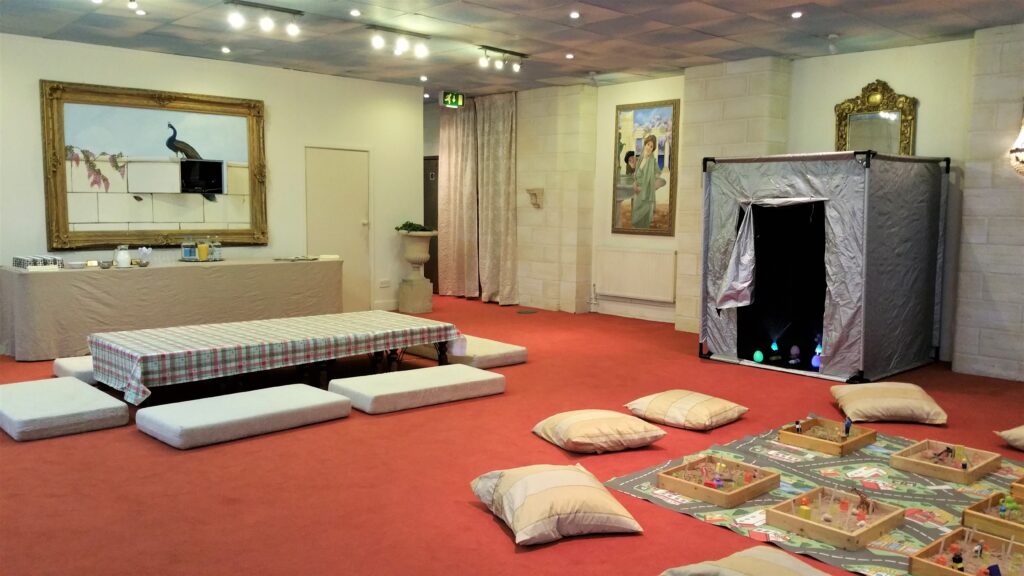
As soon as we arrived, we were guided into a decorated room that housed an array of interesting activities, as well as an eating area that included hot and cold beverages and some biscuits to snack on throughout the morning. The activities out on display included:
- A grey sensory tent, complete with sensory items
- A seating area in front of an overhead projector, a whiteboard and a podium
- Seven sandpits
- A racing car mat with cushions
- Tables that were covered with a green tablecloth
- Large Lego blocks
- Hula hoops
- Cuddly toys and costumes
- And a separate dark sensory room lit up with a range of lava lamps and sensory toys
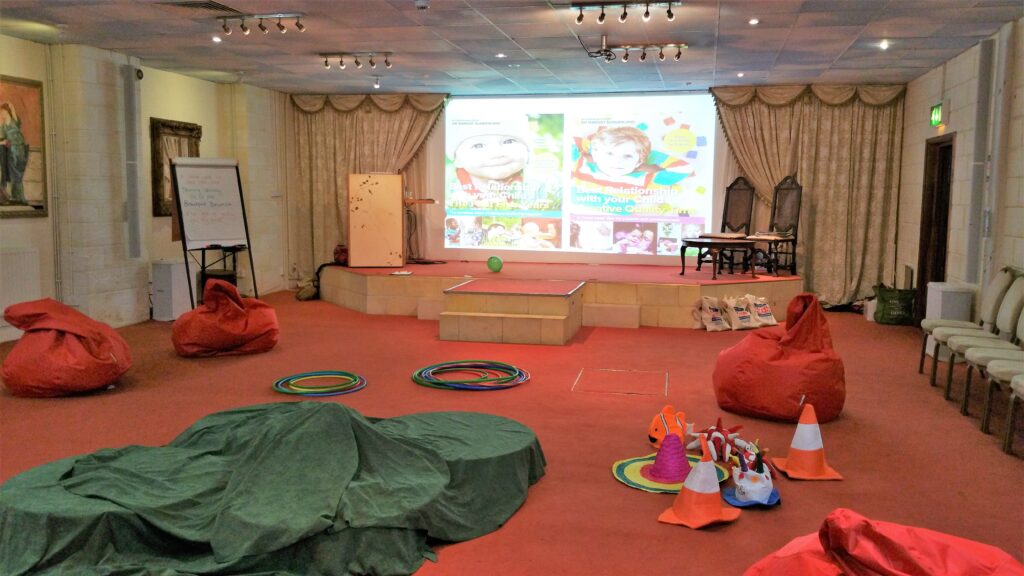
Emily, who assisted in the event, expertly kept all the kids entertained as we seated ourselves in front of the overhead projector, ready to start our learning journey on attachment play and creating the best possible bond with our children.
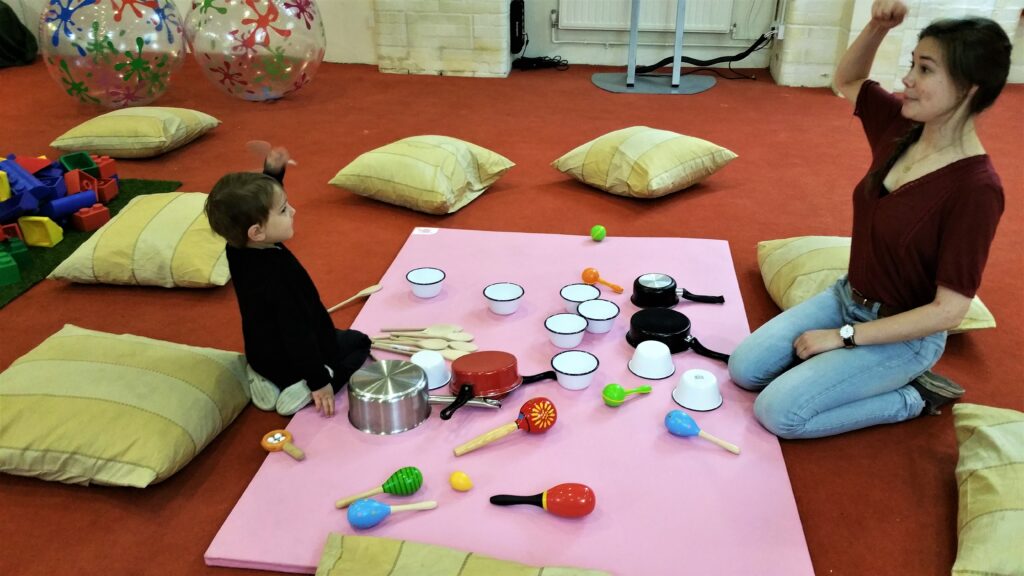
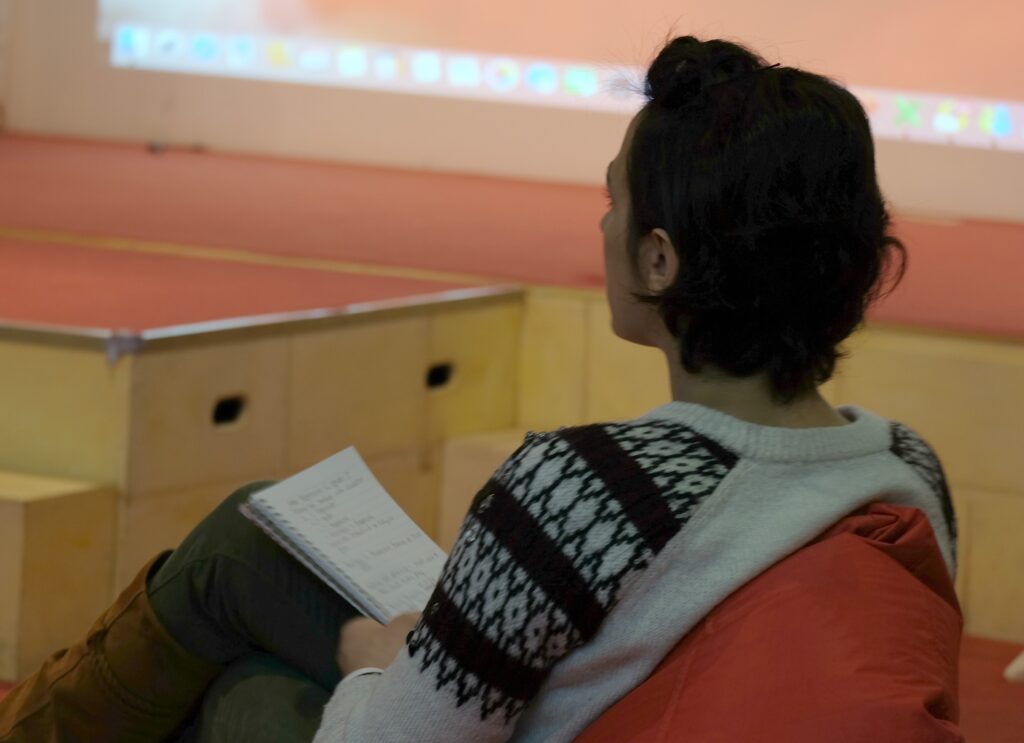
I later found out that Emily was an only child and she believed that her deep connection with children was probably down to never having the chance to play with siblings. I found this interesting that even as an adult if you miss out on important child’s play, so you may look for it later in your adult life. This was just a taste of psychology and science to come during the day!
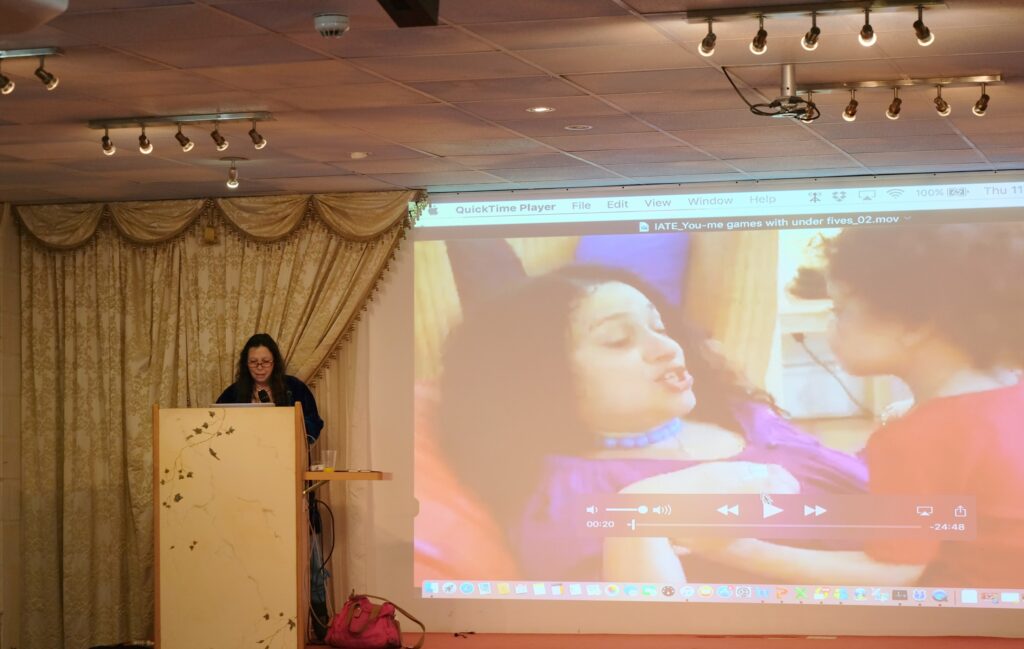
We were introduced to Dr Margot Sunderland, an interesting woman with a number of accreditations under her belt. Dr Margot Sunderland is a child psychologist and gentle parenting expert who has written a neuroscience book called, ‘What Every Parent Needs To Know’ and brought out three DVDs, the subjects of which this event was about. The DVDs are:
- Best Relationship with your Child: The First Five Years
- Best Relationship with your Child: Creative Quality Time (for babies and children up to the age of eight)
- Best Relationship with your Child: Age Five to Twelve
“These three films in the Best Relationship with your Child series are designed to equip parents with tools, skills and practical ideas to strengthen their attachment relationship with their child.”
Dr Margot Sunderland
Having the best relationship with your child
There are so many resources out there on how to get your child to behave. But, recent studies have shown that parents want so much more than this. We want to know how to have the best possible relationship with our children.
Modern parents deal with so many tasks and troubles; the washing, cleaning, preparing meals, the school/nursery run and rushing off to work. All those gorgeous bonding moments with our babies take a backseat when our children get older and school takes them away from us.
Scientific research shows, however, that the special relational bonding time with mummy and daddy is just as important for our five-year-olds as they are for our five-month-olds. And, it’s not just vital for bonding but for our child’s brain development.
Recent studies also show that the average quality time should be one hour a day for fathers.[1]
Over a third of parents don’t spend enough time with their child.[2]
6 out of 10 parents occasionally play with their child.
1 in 6 fathers confesses that they don’t know how to play with their child.
Just 1 hour a day from the mother or 35 minutes from the father a day is enough for the child to experience a great attachment and connection with their parents.
Providing undivided and engaging attention to your child is important
During the event, we learned that engaged and attentive play develops the brain. Providing your full attention during the child’s play increases their opioid and dopamine levels, which decreases depression and provides an energised engagement in life. Teenagers have less dopamine, hence why they want to mope around and play video games. But, if these chemicals are established in the brain as early as possible then this kind of attunement actually shows up thirty years later in their adult life.
So, how do we increase our children’s dopamine and opioid levels and what does it all mean?
We’re going to tackle the brain science and the games together to illustrate how both go hand in hand to develop a child’s brain and to strengthen the bond between parent and baby.
Strategies to aid and maximise attachment play
We watched a clip from one of the movies about adopting an ‘Owling’ strategy, which Dr. Margot Sunderland further explained as ‘Observe, Wait and Listen.’
Observe, Wait and Listen
- Observe the child without intervention during play.
- Wait to seeft how they respond, make eye contact and understand their manner and behaviour
- Listen and then respond accordingly
This strategy is perfect for children from six months old onwards and the result actually encourages the child’s entrepreneurial side because you are allowing the child to lead the play and the next step of the journey. Being too invasive during play can actually lead to mental health problems later in life.
The commenting strategy
The formula for the commenting strategy is:
4 comments and 1 question
The commenting strategy during play is a key strategy for enhancing the child’s self-esteem. Commenting, rather than questioning or demanding actually makes the child believe that:
“What I am doing is really important.”
We are commenting on the child’s actions rather than criticising them. The verbal attention (the correct scientific term is ‘focus behaviour’) means that the child is far more able to have goal-directed behaviour. Accompanied play with an adult is key and just as important as solitary play.
Solitary play vs accompanied play
Solitary play is just as important as accompanied play as it allows the child to enter into his/her own realm where that child is the star of his/her world. However, through solitary play, the child only has his/her own encouragement and the play can then become quite short due to their short concentration span.
Commenting through accompanied play encourages them to continue being the star of their world where you become a part of their journey and the child revels in your awe and encouragement. Sometimes a child needs help to engage and explore a certain activity and this focus behaviour develops the child’s ability for sustained attention through attachment play.
Demonstrating the commenting strategy through play
We were guided to a play area in the room where there were large snow table tops, filled with white and pink snow. Inside the snow table were penguins and cups and I observed Aidan creating a snowstorm. I listened intently to him excitedly call out a snowstorm and I responded accordingly with my comments.
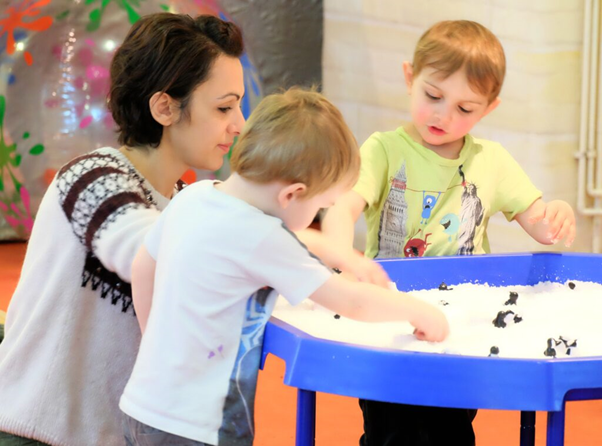
“Ooh, it’s a snowstorm!”
This kind of play triggers dopamine levels and encourages the child to use their imagination to create a story, for which you are a character. If I noticed Aidan’s energy drop, I subtly commented and suggested a certain action, and then left him to lead the way.
“Imagination is more important than knowledge.”
Albert Einstein
Copying strategy
The copying strategy is another key strategy which helps you to get a better understanding of the child’s world. We further explored this strategy through sand and sand tools at the event.
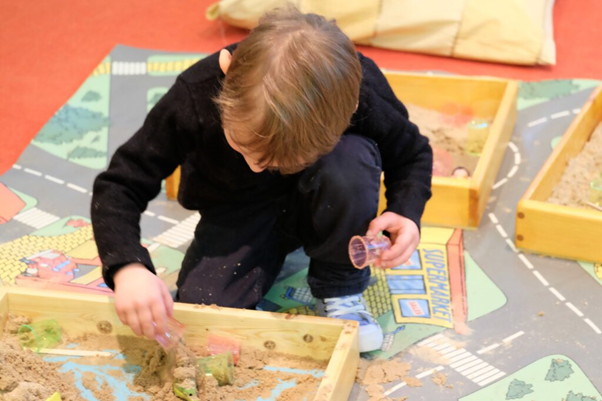
If you put a two-year old in front of a sand-pit and say ‘play’, they won’t know what to do. It’s up to you to enhance their learning and imagination.
“Logic will get you from A to Z. Imagination will get you everywhere.”
Albert Einstein
The key here is to stay animated, copy the expression the child is using and any actions that may follow. For example, if the child goes under the table, you follow them. We watched a clip from one of the DVDs, where the mother was copying the child’s movements and the child was giggling with enthusiasm.
We were guided to have a go at the drums and explore the power of music at the event. I listened to Aidan drum a beat and then I copied him.
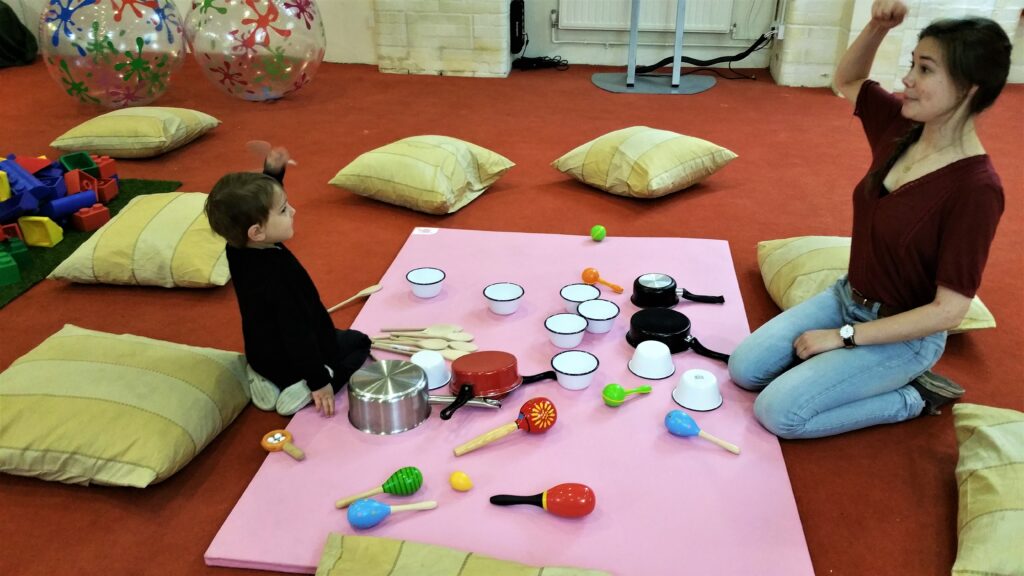
Music, especially drums, are a great way to bond with your child and create beautiful music together. Plus, drums are a hit with kids of all ages, including us adults! And, one hour of quality time is all that is needed to engage with your child and maximise their enjoyment in life.
We stopped at lunchtime for a brief bite to eat from an impressive array of jigsaw sandwiches and a fruit/veg selection. Post-lunch we talked about the use of drums, a beanie bag, and my favourite of all, the sensory room, which I am desperate to build for my children. It is a place of calm and special ‘you and me’ time.
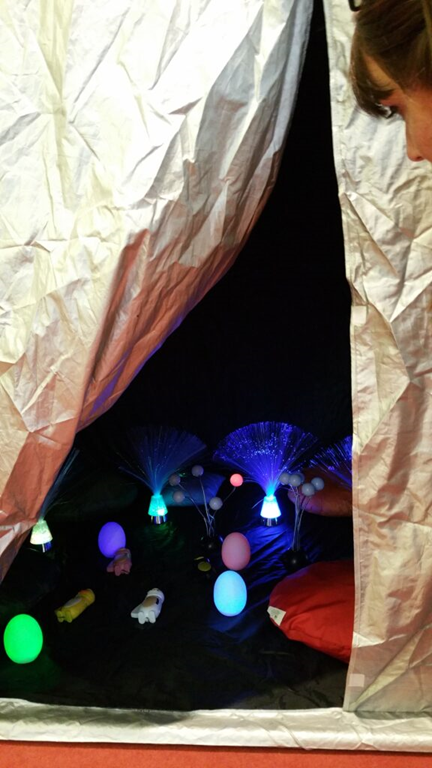
We entered a very dark room in the corner of the main area and immediately entered a state of relaxation as the soft melodic music played in the background. Our eyes were drawn to an array of colours from lava lamps and other sensory toys. You can build a sensory room from TTS’s website for £50, so I will definitely have a go at doing one myself.
We also practised our ‘five-finger’ rule, which is the commenting strategy of five comments and one question as explained above. The first comment should be a suggestion or invitation to the play and the question should be an open question to encourage play of which you don’t know the answer.
Parent-child physical play
We ended our afternoon with lots of examples of physical play, for example:
- Animal rides (a dinosaur ride to bed which will actually help to speed the process of bedtime along, although I haven’t tried this yet)
- Helicopter rides
- Wheelbarrow rides
- Simple tickling games
- The sausage roll (which is our favourite at home)
A bit of rough and tumble is very important for growth, but make sure to be the referee when things go a bit too far.
At the end of the event, Aidan and I left with a renewed bond and an increase in dopamine and opioid levels in our brains, as well as a lovely goodie bag of the three DVDs, two books, some finger puppets and chocolates for the boys.
The science
Dr Margot Sunderland explains the science behind all the activities shown in each of the DVDs and then demonstrates this through scenarios by a carer/parent and a child, in various you-me and relational games, suitable from newborn to twelve years.
“With all the pressures of modern-day parenting, quality time with your baby or child has never been more precious. Many parents want something deeper and more significant than the usual going to the park, the playgroup or watching TV together. [The DVDs] are packed with ideas for together times to strengthen your relationship in enduring ways, offering the richest shared experiences. The creative activities for quality time are designed to transport you into the world of sensation, imagination, wonder, delight and shared laughter. Using the latest brain science research, and featuring footage of the loveliest parent-child connections, the film aims not only to enrich your relationship now but to create memories for life.”
Why adult accompanied play?
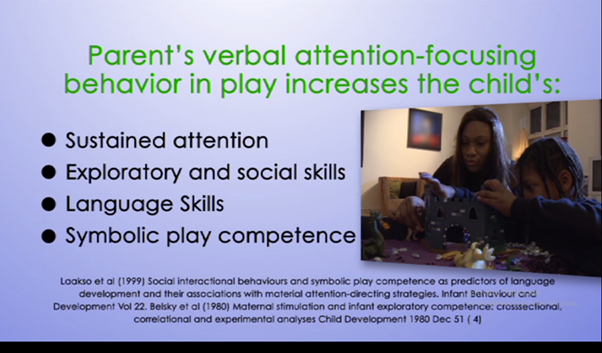
Solitary play allows the child to play in his/her own world and brings about an important withdrawal time. However, the child’s attention span is a matter of minutes, so accompanied play with adults allows for sustained attention and encourages exploratory and social skills.
When a child engages with an adult they also learn important language skills, perhaps learning words through play that they may not have learned through solitary play. The vital commenting strategy also develops their communicative and exploratory skills and this leads to goal-directed behaviour. Becoming a character in a play where our child is the star also results in the child becoming inspired to create business ideas later in life.
Who doesn’t want an entrepreneurial child?
Utilising that imagination with the use of tools helps to develop a story and build up excitement. This kind of play increases the child’s dopamine levels, which develops their passion for learning and engaging life in an energised way.
For a child of three to four years old, start the story and let them develop. Suggest something and then leave for them to develop the story further. For example, use the sand like a rock for lions. Suggest a party and invite friends to make the party. Wait for the child to get excited and develop the story further. You can also bring in the use of other animals as additional characters to the story.
Games to play at home with your child
At the event, Dr Margot Sunderland introduced a few games that we could play with our children (up to nine years old) at home, which enhanced brain development. I got to try these games out with Aidan, but he wasn’t very receptive, opting to play with the other equipment in the room.
Dr Margot Sunderland urged us not to force our children to play, instead, allowing them to lead the way and gently guide them to these types of games should the opportunity arise, i.e. when they showed an interest.
Parent-child puppet play
Communicative tools like puppets enhance the parent-child relationship and can be used as an aid to help the child think about their feelings, instead of ‘behaving’ their feelings. Use the puppets as a way to reflect what that child is feeling if they don’t want to talk to you. There are many ways you can utilise puppet play to really enhance engaged play.
- You can make puppets together and then take them on a journey.
- Create ‘feeding’ puppets. Allow the child to feed the puppet and create some play around it. It’s better to not show the child that you are taking food out of the puppet’s mouth in order to keep the imaginative play seem real (paradoxically).
- Use puppets to bring story books alive. Act out some of the parts in the story, making the puppet a particular character in the book.
Other props you can use for play
Other props can be used as communicative tools with the child and help to explore a fantasy journey. These can include plants, foods, cushions and blankets. Incorporating messy play has tons of psychological benefits and enhances brain development. Messy play and small world play when other people are involved trigger amazing brain growth fertilisers.
“Imagination grows by exercise.”
Somerset Maughan
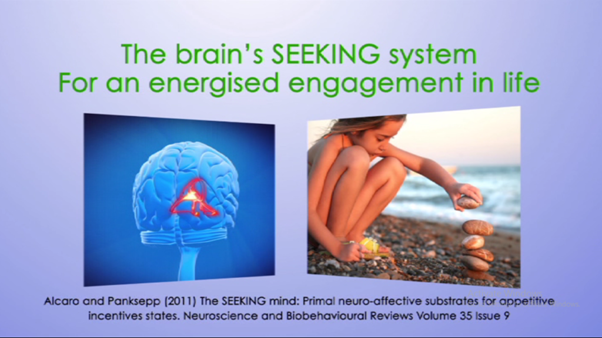
The SEEKING system is a part of the brain that your child needs to work really well if they’re going to learn how to be kind and empathetic to others. It also helps to enjoy good relationships and live life to the full. Brain fertilisers enhance brain development, which is critical for physical and mental health.
“Just as plant fertilisers make plants grow better, brain fertilisers make the brain function better.”
Dr Margot Sunderland
The Brain-Derived Neurotrophic Factor (BDNF) and the Insulin-like Growth Factor 1 (IGF1 -1)
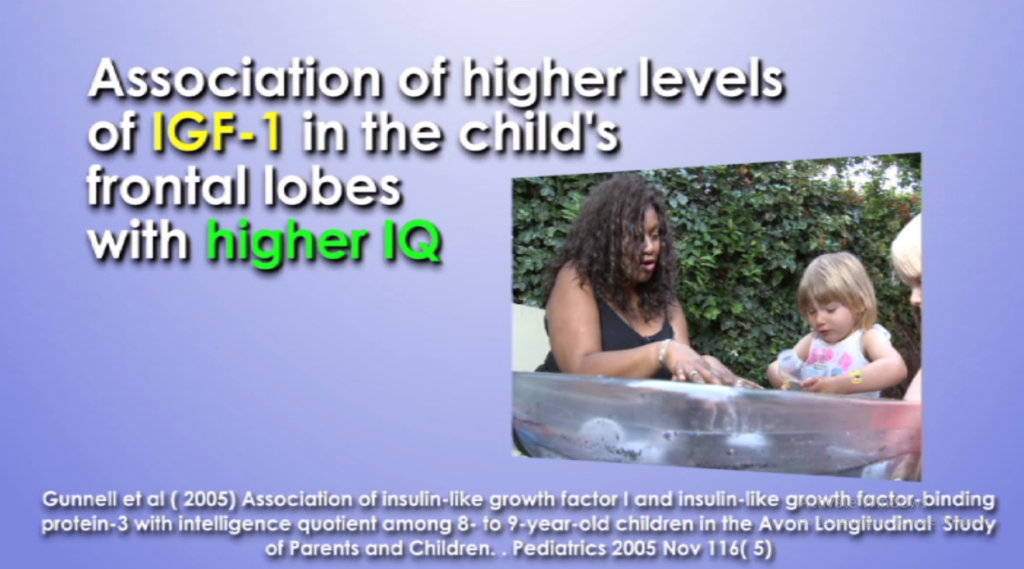
BDNF and IGF1-1 promote growth in the frontal lobe so positively that they affect the human functions, i.e. the ability to learn, problem-solve, to attend and concentrate, as well as to handle stress well. [3]
In fact, research on five-year-olds showed an association of higher levels of the brain fertiliser IGF1-1 in the frontal lobes of those with a higher IQ.
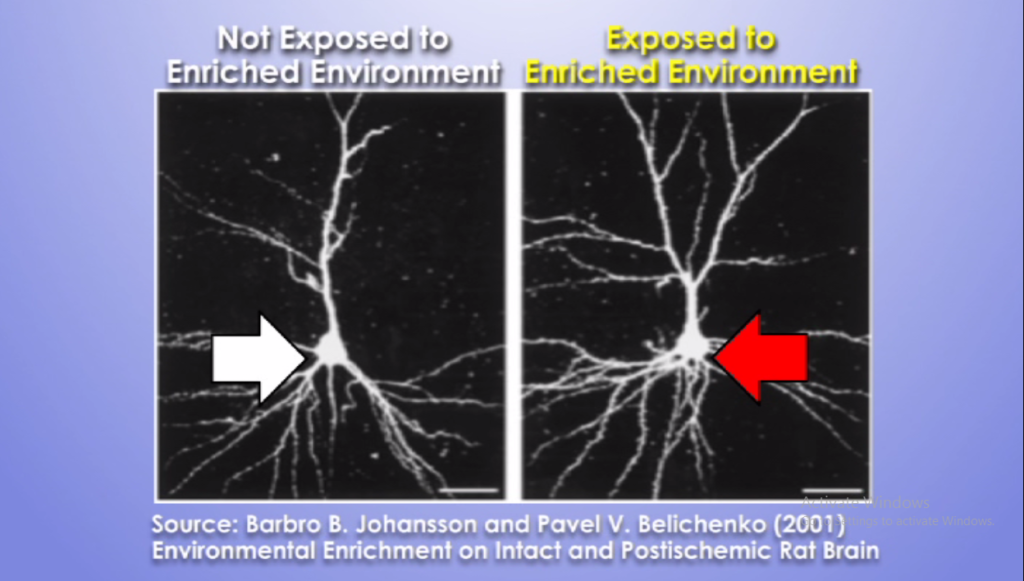
The number of brain connections (dendritic spines) in the frontal lobes is significantly higher in the child who has experienced the enriched environment, i.e. more connections.
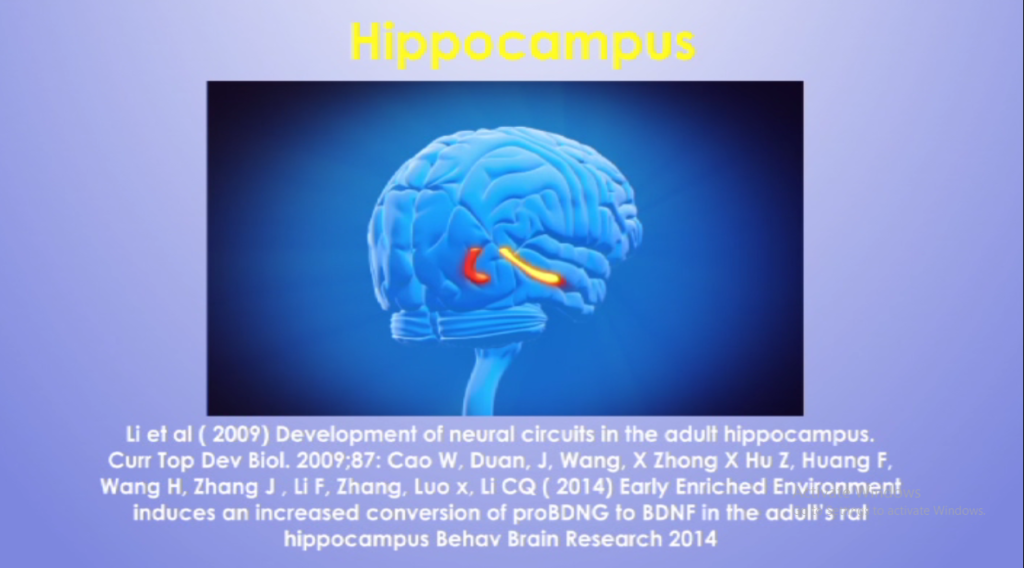
Impacts on the Hippocampus, which is the key memory system in the brain, helps your child to learn.
What is an enriched environment?
An enriched environment has four key elements to it. Messy play and small world play are great examples of an enriched environment because they engage the child’s:
- Thinking (cognitively)
- Movement level (physically)
- Social intelligence (you’re there with them)
- Sensory skills (you’re helping them and playing alongside them)
“Every child is born blessed with a vivid imagination. But just as a muscle grows flabby with disuse, so the bright imagination of a child pales in later years if he ceases to exercise it.”
Walt Disney
If you give the child the same thing everyday for a month, it ceases to be amazing.
There must be a novelty for the advantageous brain effects of enriched environments. Brain fertilisers will be activated with a novel environment when combined with social interaction.
Messy play – the three key stages
“There are three stages of messy play: dry, soft and wet.”
Denise Tulloch Johnson, Senior Play Leader and Communication Specialist at The Institute for Arts in Therapy & Education
You can start at the baby stage with dry messy play, like raw pasta and colouring pencils. Once the baby starts to enjoy them, you can move them onto soft messy play, like playdough and cooked or play pasta. After that stage, you move on to wet messy play, which is water and cornflour.
Not every child will enjoy messy play, but it is important to just follow their lead and join in with them. It would be very helpful for the parent to join in too. If they see that you are enjoying the messy play, they will too.
Some ideas for messy play
- Active world tray with stand (TTS Educational Resources – www.tts-group.co.uk
- Rectangular tray (TTS Educational resources)
- Gelli Baff – have spoons, ladels, cups etc (find at TTS Educational Resources)
- Instant snow powder – penguins, polar bears, eggs, egg cups, baskets etc
- Snowflakes in water – teapots and stuff to pour from
- Shaving foam without scent – play jelly games
- Crazy soap (to blow bubbles at each other or put on head)
- Rainbow sparkles (use ladles to pour into measuring jugs and other cups – it makes a lovely sound and feel). You can also move your hands through the sparkles for a great sensation.
- Rice and food colouring – uncooked (use blue and red colours side by side where children can mix and the texture feels great)
- Cornflakes – you can eat them and play with them. Cornflakes provide an auditory sensation. Add other animals.
What to do when a child doesn’t enjoy messy play
You can always use tools to encourage messy play if the child doesn’t want to touch directly, i.e. spades, spoons and straws. Allow them to watch the messy play, which helps them to prepare themselves for what’s to come. Ideas to encourage messy play is to add some flour, mix with a spoon and add water with different colours. Don’t forget to use the commenting strategy when helping the child prepare for messy play, for example, “Oh, you were adding blue!”
Messy play is good for fussy eaters
Encourage your child to become more open to trying new food by allowing them to play with it. Create messy food play, using spaghetti with pots and pans and cereal with water and spoons. You can use oats with warm (sterilised water) for younger children. The child will gain the opportunity to smell, squeeze, roll, flick, squash, feed or taste the food. Ultimately, food becomes more natural for them. So, as long as it’s safe for them to eat then it’s fine for them to play with.
Messy play and small world play engages all the child’s senses
If you just isolate one of those key elements, it wouldn’t work. So, all senses have to be present and engaged in the activation of those fantastic brain fertilisers.[4]
“The play environment must feel new to the child. But, you can’t keep running to the toy shop because it’s far too expensive. So, we are going to show you lots of different ways of creating new stimulating messy play and small world play environments with little expense.”
Dr Margot Sunderland
Key ways of communicating with your child
Dr Margot Sunderland talks about how to communicate with your child, i.e. make your voice interesting, observe, wait and listen (owling) and then respond accordingly. Using eye contact shows respect and it helps you to pay attention, as well as recognise your child’s needs.
Get down onto the child’s level, so you can maintain that eye contact and communicate clearly with them. Positioning is important too. Sit in front of the child, so they can watch, observe and communicate your lips and facial expression.
When something new or potentially frightening happens to a child then it’s very important to help the child reflect on it, ideally before it happens. You can use little dolls and set up the scenario. For example, if mummy is having a baby then you can set up the doctor talking to mummy about having a baby.
When you’re talking about something serious or important, often the child would be distracted and their attention will be elsewhere.
With dolls, you can get their attention and help them focus on what’s going to happen so they’re prepared. It’s like they’ve almost had a rehearsal of what will happen and they’re not sent into a terrifying shock state.
Copying strategy
We touched upon the copying strategy above, but it is another key strategy to help you get a better understanding of your child’s world. Copying them helps them to own the play. With babies, you can copy their sounds to develop communication and build self-esteem. For example, if the child goes under the table, follow them into their world.
Communicating strategy
Communication is key because it enhances self-esteem and potency – it makes the child believe they are doing something right.
Commenting strategy
Also known as ‘adult verbal attention-focused behaviour’, the commenting strategy is proven to develop a child’s cognitive creative ability [5]
If you don’t comment, often the child loses energy and enthusiasm. Commenting keeps up the child’s flow and go-getting attitude and develops that proactive go-getting attitude later in life. The commenting strategy:
- Develops the capacity for goal-directed behaviour later in life
- Aids language development
- Helps the child make a connection between verbal communication and play
For example, when they are playing with a toy, talk to them and comment about that toy.
“Oh, the elephant is grey! That elephant has a big long tusk.”
Asking the child a question may pressurise them into answering you without knowing the answer, so it’s best to use what is called, ‘The 5 finger rule’ (which we touched upon above.)
The 5-finger rule
For every question, you do ask (you must not know the answer) comment four times. If you don’t know the answer, you can ask a question.
Follow the child’s lead and the child will stay attentive if they set their own game. If you don’t follow the child’s lead then if it’s no longer about them, they may lose interest. It must be all about the child.
You can take turns for example, ‘I talk, you talk, I talk, you talk’.
Don’t overstimulate or under-stimulate
The play environment should not have too many toys or the child will lose focus and not maintain attention.
Choose your child’s favourite toys and teach through play how to share and take turns. You can use OWL skills to set out an environment appropriately.
You-me games
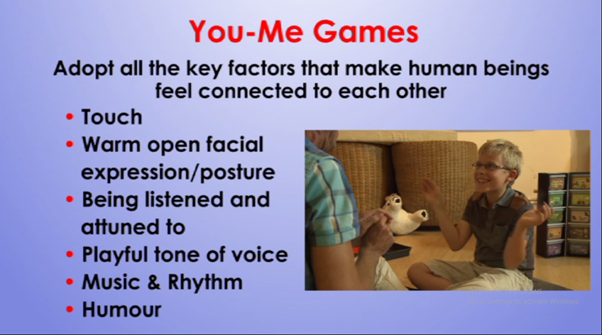
You-me games adopt all the factors for the parent and child to connect with each other. They are deeply intimate face-to-face times which is so beneficial for brain development and protects against depression later in life too because they adopt all key factors that make them human beings.
There are different types of you-me games. These are:
- You-me lap games
- You-me music games
- You-me sensory games
- You-me physical games
- You-me hand games
- You-me balls, quoits and hoop games
- You-me imagination games
You-me games bring out a state of the interpersonal synchrony: a delicious feeling of oneness with each other [6].
Use warm open facial expressions/posture and a playful tone of voice. Incorporate music rhythm and humour in your you-me games so the child feels listened to. Relational play can also bring about new brain growth in the Hippocampus (key memory system in the brain). [7]
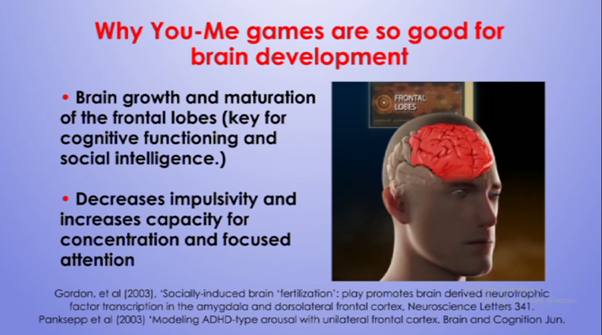
“You-me games optimises the chances of real moments of meeting between the parent, the carer of the child.”
Dr. Margot Sunderland
“When a [child] sees their specialness reflected in their eyes so they see it in themselves.”
Helen Reiss[3]
Avoid teaching, criticising or commanding as this kills off the play. Instead, use lots of encouragement and praise and suggest rather than teach or command. It’s all about the power of suggestion.
Shimmy shimmy coco-pap
Sit with your child and incorporate lots of interesting voices, including facial and hand contact during play.
“Shimmy, shimmy coco-pap. Secret animal on your back. Which animal crawled up your back?
Shimmy. shimmy coco-pap. Spider, spider up your back! Which finger did that?
And then other poke them or tickle them on the back.
Make an animal noise and wait for your child to answer. If they don’t answer straight away, answer for them.
Bang and shake
You will need:
- Shakes
- Pans
- Wooden spoons
- Funky background music
You-me messy play
Don’t make the mistake of thinking that messy play is just for the under fives. It’s an ‘enriched environment’ triggering brain fertilisers and enhancing cognitive development. So, don’t deprive your over-fives of quality messy-play time!
Can I visit your castle?
You will need:
- Clay
- Clay tools
- Small natural objects like leaves, buttons, shells and feathers etc
You can create little sections which are divided into subjects such as the zoo, the fair, the seaside or shopping. The boxes should be labelled as such.
Ask the child to tell you a story. Or if they prefer, you can tell them the story. Use the five-finger rule to comment on their story or how they’re playing and then ask a question, of which you shouldn’t know the answer.
Making sock puppets together
You will need:
- Two socks
- Buttons for eyes
- Wool for hair
- A good glue
- A timer (optional)
You can play one-minute finger puppet games and come up with a range of finger puppet characters.
You can also create a miniature puppet theatre which is a great way to enhance parent-child physical play.
You-me games for middle childhood
Pitta Patta Polt
“Pitta patta polt, to shoe a little colt, to shoe a little colt, pitta patta polt”
You-me hand games
Poking games
“A sailor went to sea, sea, sea. A great big shark that gobbled up little boys/girls!”
Then think of an animal that has a touch sensation.
Breakfast bonanza
“Potato, potato, break the egg, break the egg. Stir the beans, and eat the breakfast!”
Then pretend to eat the child.
Cycling song
“Cycling, cycling down the road. Whoops, watch out there is a toad! Cycling, cycling up the hill. Thrill!”
Use hands/arms first and then feet to mimic cycling.
Cup and clap game
You will need:
- Two solid plastic cups
- A wooden plastic tabletop
Happy birthday
You will need:
- Happy birthday music
- Potato prints
- Paint and paper
- Stick on eyes
- Matches
- Thin cake with candle or a plastic dough cake
Then present your child with cake.
Copy hoop
You will need:
- Two hoops
- Funky music
- Sombrero hats or other funny hats
- A ball that can fit inside the hoops
Rainbow ice cream and pizza
You will need:
- Cone
- Hoops
- Different colour bean bags
Name the ingredients as you throw them.
Bean bag bonanza
You will need:
- Funky background music
- Bean bags
- Animal telephones
- Talking tubes set
- Hear myself sound phone is available from www.tts-group.co.uk
Animals crossing
You will need:
- Little pig
- Big pig
- Large inflatable pigs
- Sand or mud tray
You can use any animal but you mime the animals venturing the obstacles on the tray.
Drum hat
The caudate nucleus, the part of the brain that is activated through drumming or dancing triggers warm positive feelings towards the other person. [8]
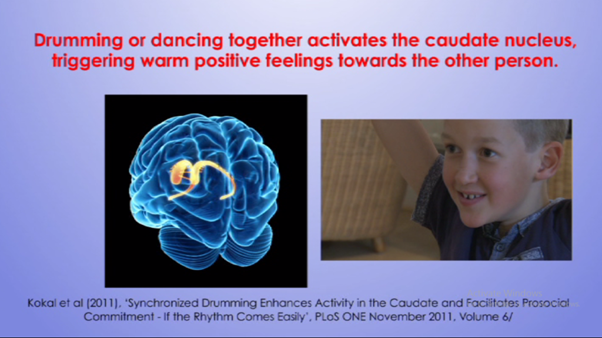
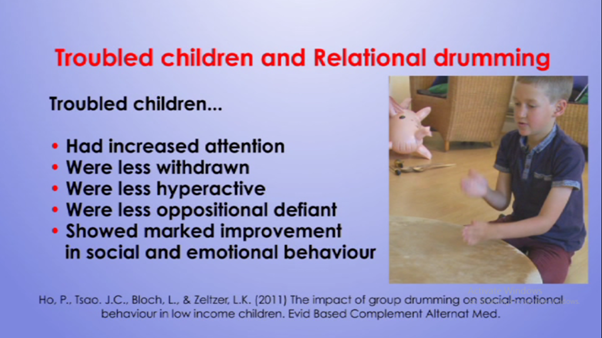
Relational drumming also enhances a calm and meditative state and boosts the immune system, making the child less hyperactive and aggressive.
You will need:
- two silly hats
- A large floor/gather drum
You bounce the ball onto the drum for the child to catch in the hat and then vice versa. As the child becomes more confident you build up a rhythm
Great you-me games with baby
Where’s Mr Sausage Dog?
Hide a sausage dog under a towel and then ask the child where he is? Make woofing noises to help the child find the toy. This is a great game for a baby too.
Silly sock
“I’ve got a silly sock on my head!”
Put something silly, bright and colourful on your head and comment with enthusiasm
Music band
Suggest and then OWL (Observe, wait and listen) – then praise. Use funky background music and a big drum. Encourage baby to hit the drum to different rhythms and sounds. You might even be able to trigger and “call and response” drums to hold baby’s attention more than other toys.
Dancing delight and cuddle dancing
Hold baby close. Daddy can get involved with sway dancing too.
Sand box and sand
Sand is great for sensory play. Place baby’s feet in the sand and sprinkle. Hide feet and show surprise when they appear.
Splishy splashy
Use a water container and add ducks (use the copying strategy here to ensure baby is in charge of the play). Get some sponges too
Foil crunching
Use a foil blanket from a camping shop. Sit baby opposite and use the copying strategy, so when they ‘crunch’ the foil, copy them with the same energetic tone. Be careful not to up-stage them.
Scarf peekaboo
Use a sheer scarf, cover them and then say peek a boo!
Hide toys
Hide the toys and then ask baby where the toys have gone. Help them find it if they’re lost.
Ready steady arms
Gently hold baby’s arms and rhythmically say “ready, steady, go!” On “go” lift his/her arms over their head and make your voice interesting.
Face tracing
Hold your baby’s hands to your face and trace down the sides of your face three times rhythmically with humming sounds. End with a large cheek pop. Repeat.
Up to the sky
Place baby up in the sky and then down again to the ground.
Playing ball
Roll the ball to baby and wait for baby to roll back. Stay animated to activate dopamine levels in the brain
You-me tickling games
Some great you-me tickling games with baby are:
- Simple tickling
- Chica-boo-boo (thumb and two-finger to tickle tummy and toes)
- Freddy frog and ruby rabbit – introduce them by tickling and give them names like FF & RR
Tummy time
Tummy time from day one is essential for helping baby to sit up, crawl, roll over and develop upper body strength.
Place your baby on a mat and then prop him/her up on a rolled up towel or tummy time pillow with arms out in front. Lie down opposite your baby so ou are at their level.
You-me games for under fives
Some great games for under-fives that I’ve mentioned before are:
- Breakfast bonanza
- Cycling story
- Ice cream song
- And other songs like the Grand old Duke of York
- A sailor went to sea
- Tick tock – bounce the child the number of times that you strike the clock, for example. ‘Now I’m striking 3 o’clock!’ Bounce the child three times on the ground.
- I’ve got jelly on my knee. Lay your child on the knee and use music for movement. Use other animals and objects.
- Bang and shake
- Ball and big drum
- Drum hat
- Dancing delight and cuddle dancing
- You-me ball games
- Rainbow ice cream and pizza making
- You-me imagination games using objects like puppets. Puppets can eat all sorts of things which you can mime
Little beach, big beach
You will need:
- Two large beach balls
- Small sand traay with small beach props (people, sea creatures, etc)
Begin by playing together at the beach. When someone says “big beach” go play with big beach balls. When someone says “little beach”, you go back to the sandpit.
Mummy (or daddy)’s sleeping game
The child helps you to sleep and wake up. Encourage your child to think of different ways to wake you up.
Cooking for mum and dad
Use real or imaginary items to cook for mum and dad. Repeat ingredient and recipe ideas. Use the commenting strategy here and keep the comments positive.
Animal telephones
You can use a talking tube set. Encourage the child to talk to an animal or be an animal.
Castle visit
Use clay, clay tools and small natural objects and become a small person in their world. Ask to visit their castle and get in with them. Sit facing them at all times. Use small world toys, plastic pouring jugs, bubbles etc.
You-me sensory play
“Parent-child sensory plays allows you with your child to have a very intimate time where awe and wonder are at the fore.”
Dr Margot Sunderland
Sensory den
You will need to set up a darkened area in the house. It could be a blanket over two chairs or a wigwam or tent inside and inside you have lots of lovely special lights, which you would use at the same time as the child.
As well as it being sensory, you’re actually emotionally regulating them at the same time and meeting them in these states of awe.
Children can become overwhelmed with cognitive tasks during the day so they need sensory breaks to help them learn. Maybe the stress of being at school can take over and they start behaving in difficult ways. Encourage them to go and have some special time in the magic cave. It’s not just about going into the sensory zone and playing though, it is an emotionally regulating event.
When you’re playing with them in the sensory zone, relate at the same time. Use this time to be calm and keep the child in a calm state. The autonomic nervous system is in a far better state when it’s calm and it makes it easier for the child to go back to the classroom in a regulated sate and engage in cognitive tasks. Enable the child to enter into states of awe and model that awe and wonder so they can see.
Have two of everything so you can do it together and keep calm! They need to borrow your imagination and mature brain function. So when a child picks up an item, you pick one up too.
For an older child of three or four, let their imagination run wild, for example, “These are magnificent trees and they only live in a magic forest!” Echo and amplify positivity to what they’re doing. Tell them a story.
“Once upon a time there were three magical eggs.”
Then, what happens next? If you are afraid to tell a story, it’s important to still try as imagination tends to take over lights that respond to sound. It’s great for relational play and echoing with your voice activates oxytocin. The release of oxytocin (anti-anxiety brain chemical) from the warm lights, the sound of your calm voice and soothing background music are very calming for a child.
Social play using roleplay
Adding the idea of roleplay events like Giggleverse can enhance laughter and fun play and bring families closer. Giggleverse is a special place filled with fun adventures and offers different fun areas for kids to explore, like fairy lands and pirate worlds, making it great for playing and having a good time. This magical world helps parents and kids enjoy happy moments together, strengthening their bond. Whether it’s going to fun events or just playing together, Giggleverse is all about creating happy memories with lots of laughter.
Why are these games good for the brain?
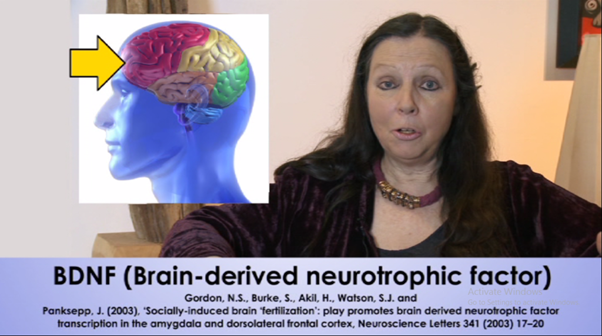
These you-me games are hugely powerful because they activate a brain fertiliser called brain-derived neurotrophic factor or BDNF for short.
You-me play develops a key part of the brain where Dopamine Pathways are activated to enhance learning and concentration, emotions, motivation, and energised engagement in the world.
What happens if your child has low levels of dopamine?
Your child will procrastinate and they won’t really know what they want. They have a lack of motivation and will rarely carry something through or finish what they started. They just can’t be bothered or they will seem ‘lazy’.
“It’s never too late to activate these chemicals and one of the key ways is relational play.”
Dr Margot Sunderland
How do opiods help?
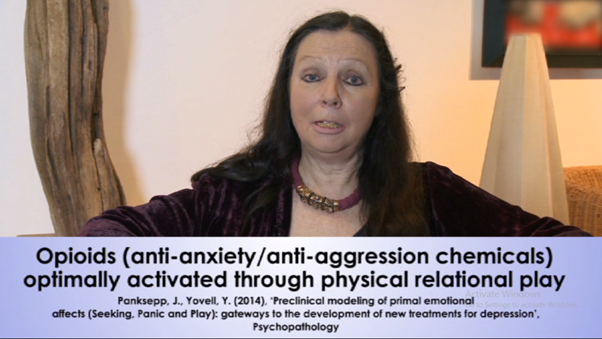
Opioids are anti-anxiety, anti-aggression chemicals which are optimally activated through physical relational play. Opioids give us a wonderful sense of wellbeing. The more these chemicals are activated in a relationship, the more the brain habituates to them – so “emotional states become personality traits” [9]
“Can a fully social brain-emerge without play or will it remain socially stunted for life?”
Professor Jaak Panksepp 2007 World Leading affective neuroscientist
Games like ‘rough and tumble’ can develop these chemical systems.
What is ‘rough and tumble’ play?
Rough and tumble is about meeting a child in an intense arousal state.
“If we can’t meet the world with energised engagement, the problem is that sometimes we don’t feel passionate about learning and we don’t feel passionate in love. So it’s a key time where you can actually meet the child in an energised engagement which can be then transferred into skills to meeting life with energised engagement.”
Dr Margot Sunderland
Rough and tumble helps develop brain systems and increase dopamine levels
Interactive physical play turns on the brain fertiliser BDNF and helps develop brain systems which are key for attentive learning. Physcial play can also help you reconnect with a child during/after difficult times.
“Sometimes, if you haven’t, as a parent, had relational play, it is a bit difficult to know what to do.”
Dr Margot Sunderland
There will, of course, be times when your parent/child relationship is fraught and you’re fed up of each other. Physical play breaks the ice and brings you back together after a conflict.
So what are some great ‘rough and tumble’ games to play to enhance opioids?
- Sausage roll
- Up and down together game
- Lap rides (over fives can enjoy too!)
(Place the child on your lap and playfully move them around according to the method of transport that you have chosen.)
“I’ve got a train/I’ve got a tractor/I’ve got a choppy boat.” Etc
- Rescue games
- Animal footsteps
- Rucksack (walking up the parent!)
- Good old pillow fights!
- Animal rides (child chooses which animal you will be)
- Sandwich time
- Mummy into the river
- Breakfast bonanza
(Mime the words and show breaking the egg and mixing the beans.)
“Break the egg, break the egg, mix the beans, mix the beans/stir the pot, stir the pot.”
And then pretend to eat the child with lots of fun eating noises and actions.
Safety first!
- Make sure to take off any jewellery
- Make sure there isn’t anything in the room that is sharp or where the child can hit their head.
- Be aware of tummy and organs through thumps!
- Make a rule to keep games safe
- Use a comfortable seat for seated games
- Be a hands-on referee if things get too rough!
When to play you-me games
You can play these you-me games whenever you have spare time. Some examples could be:
- When you’re waiting for the bus. Suggest, “How about we play x, y, z games?”
- Make blocks of quality time available
- Before you send them to school, use the moments to connect
- When the kids are going to bed, take them on your back. Turn them into a dinosaur, a rocket or you can become a helicopter ride.
What happens if your parent/child relationship is weak or there is a conflict?
It’s quite normal for your child to do something provocative and all of you feels like wanting to say:
“Don’t you talk to me like that!”
But, actually what the child is doing is not a big deal and your negative reaction could really rupture the two of you, i.e. crossing the transaction and refusing the power play and go into humour. It is a deeply intimate thing to do and physical play will connect you. But really tune into the child’s non-verbal cues in terms of whether they are enjoying the game or not.
Playful parenting brings about far better behaviour than punishing parenting. Maintain eye and physical contact. Use lots of moments during the day to tell the child you delight in them, even during those stressful days.
Playful parenting activates:
- Anti-anxiety chemicals
- Anti-aggression chemicals (so children grow up not interested in fighting) [10]
Stress hormone activates aggressive and bad behaviour in a child.
The above games are just some of the games that will help you to build that special bond with your child. Use your imagination and create a world where only you and your child live and allow the child to lead the play while you bask in the delight of spending time with them. Spending the time to play with your child this way will encourage your child to have a happy and healthy life well into adulthood!
TTS Educational Resources
All the equipment used at the event and in the clips can be found on TTS Educational Resources website here.
For information on events and updates at The Centre for Child Mental Health, please check out their Facebook and Twitter page
Resources
[1] – Sevilla, A (2014) Economic and Social Research Council Britain June 2014
[2] – Parent-Play survey, Playmobil UK 2013
[3] – Mohammed et al (2002) Environmental enrichment and the brain Chapter X in Progression in Brain Research Vol 138 Hofmn et al (Eds)
[4] – Pang et al (2013) Enhancement of cognitive function in models of brain disease through environmental enrichment and physical activity Neuropharmacology.
Sale et al (2014) Environmental and brain plasticity: towards an endogenous Pharmacotherapy. Physiology Review.
[5] – Belsky et al 1980 and Laakso et al 1999
[6] – Grelli et al (2014) Interpersonal Synchrony increases pro-social behaviour in infants Developmental Science 2014
[7] – Wohr et al (2009) New Insights into the relatinosihps or neurogenesis and effect: neuroscience 2009 vol 163
[8] – Kokal et al (2011), ‘synchronised drumming enhances activity in the Caudate and facilitates prosocial commitment – if the rhythm comes easily,’ PloS ONE November 2011, Volume 6
[9] – Bruche Perry Child Trauma Academy (famous neuroscientist)
[10] – Panksepp and Biven (2012) The Archaeology of Mind Chapter 10 Playful Dreamlike Circuits of the Brain
Disclaimer: Motherhood Diaries was invited to attend this event for free, but all opinions are 100% my own.










One Comment