Navigating co-parenting with long distance parenting plans
When parents live far apart, sharing child custody can get pretty tricky and you might face new challenges almost every day. Often, it starts with legal stuff, where divorce lawyers help figure out who gets to make what decisions for the kids. But it’s not just about the legal side. When you’re co-parenting over a long distance, you need practical long distance parenting plans because you’ve got to think about what’s best for your child.
This article is here to help you figure out how to make a long-distance parenting plan when you are long distance co parenting. We’ll also talk about how to maintain an amicable relationship, so your child gets the best out of both of you. I’ve included a long distance parenting plan template at the bottom of this article that you can pin to Pinterest or print out and fill out. Make sure you seek legal advice to ensure that your plan complies with UK laws and that the plan adequately addresses the needs of your child.
What is a long distance parenting plan?
So, what is a parenting plan? And how does long distance parenting work? A long distance parenting plan is like a special plan for mums and dads who are divorced, separated or don’t live close to each other, usually because they’re separated or divorced. This plan is important because it helps ensure that kids can keep a steady and stable relationship with their parents, no matter how far apart they live.
How many miles is considered long distance parenting?
There’s no set rule for what makes up “long-distance” parenting. It’s basically when parents live far enough away from each other that regular face-to-face visits are tough. This can be different for everyone, depending on things like how easy it is to travel and how busy the parents are.
Even if the distance isn’t super far, it could still be considered long distance if the trip is really hard or takes a long time. This might mean having to cross state lines, travel through places where it’s hard to get around or deal with really busy cities. The main thing is if the distance makes it hard to see each other often and be involved in person.

What are the goals of a long distance parenting plan?
The main point of a long distance parenting plan is to help your child keep a great relationship with both mum and dad, even when they live far apart.
What goes into this plan can be different for each family, so here are some important things to think about when considering how to make a long distance parenting plan:
Keep in touch
It’s important to make sure your child regularly chats and meets with the parent they don’t live with. This could be through phone calls, video chats, emails, texts, or distance visitation.
Look after their feelings
Your child should feel loved and supported by both parents, no matter how far apart they live.
Visits on the calendar
Visitation and custody scheduling in long-distance parenting plans should be clear from the offset. Set up a clear plan for when your child will visit the other parent, especially on special days like the summer break and birthdays, while thinking about travel arrangements, the child’s school and extracurricular activities. You could create a linear calendar so all the events are in chronological order, for easier planning.
Stable school and social life
You should arrange visits so the child’s school life and friendships aren’t disturbed by moving around or travelling.
Parents should talk well
Parents should talk well about what their child needs, how they’re doing, and any problems, to keep things friendly and cooperative.
Be flexible
Make sure there’s room to change the plan as the child grows or as things change for both parents.
Decide on health and school
Talk about and share decisions on your child’s health, education, and other important situations.
Avoid arguments
Make sure there are clear rules and expectations to stop arguments and make things more stable for the child.
Follow the rules
Make sure everything in the plan follows the law and any court orders about custody and visits.
Sort out disagreements
Have a way to fix any arguments or problems that come up with the parenting plan.

How do I make a long distance parenting plan?
The easiest way to make a parenting plan is to have a good chat with the other parent first. Travel in long-distance parenting plans should be discussed in detail like child support for example. Talk about how often your child will visit each parent and how you’ll handle long distance holiday schedules and birthdays. Work out how your child will travel between you two. Who’s going to do the driving or book the train tickets? And think about who’ll cover the costs.
Plan how you’ll keep in touch when your child isn’t with you. Maybe set times for phone calls or video chats. It’s all about making sure you both stay a big part of your child’s life.
Make sure your plan fits with your child’s school and activities. You don’t want them to miss out on important stuff. Some factors affect long distance parenting plans, like when kids grow and things change. So make sure your plan can change too.
Agree on how you’ll make big decisions about things like your child’s health and education. Think about how you’ll handle disagreements. Maybe agree to chat it out or get some advice if you can’t agree.
Write it down and get legal advice

Once you’ve agreed on everything, ease long-distance parenting with convenient tools like writing it all down using the template below for example. This is the easiest way to make a long distance schedule work because you both know what you’ve agreed to and can refer to it if needed. It’s always smart to get some legal advice, especially if you’re not sure about the different parts of a long-distance parenting plan or if things are a bit complicated.
The most important thing is that your plan works for your child and keeps them happy and settled.
How discipline and rules are handled in long-distance parenting plans
Good communication, consistency, and teamwork are super important for handling discipline in long-distance parenting. It helps keep things smooth and fair for your child.
First off, both long distance parents need to have a good chat about how they handle discipline because it’s important to agree, especially if you’ll be the custodial parent or residential parent and you want things done your way. What’s okay and what’s not? What kind of rules do you both agree on? Try to have similar rules at both houses. It helps if bedtime, homework rules, and screen time limits are more or less the same, so your child knows what to expect no matter where they are.
When you’re the one parenting from a distance, keep in touch about the day-to-day stuff. This way, you’re still part of decisions about discipline and can support the other parent’s rules. Make sure your child knows what the rules are and that they apply no matter which parent they’re with. Clear rules mean less confusion.
If there’s a bigger issue or a major rule is broken, it’s best to tackle it together. Maybe have a video call where you both talk to your child about it. Each parent might have different ways of doing things, and that’s okay. It’s about respecting each other’s space and methods, as long as the main rules stay consistent.
Working with an attorney on long distance parenting plans
Working with a professional third party like an attorney on long-distance parenting plans can be helpful. Here’s how you can do it in a straightforward way:
Find the right attorney
Look for a lawyer who knows about family law and long-distance parenting issues. It’s great if they’ve got experience with situations like yours.
Share your story
Tell your attorney about your situation. Where do both parents live? What’s your child like? What’s your work schedule? This helps them understand your needs.
Discuss your goals
Talk about what you want from the parenting plan. Do you want to make sure your child visits during the holidays? How often should they travel? Get these ideas clear.
Understand legal stuff
Your attorney can explain any legal rules you need to follow. They know the ins and outs of what the law says about parenting plans.
Plan for the future
Talk about how the plan might need to change as your child grows. A good plan can adapt over time.
Work on communication
Your attorney can advise on how to communicate with the other parent, especially when it’s about legal stuff or tricky issues.
Get help with disagreements
If you and the other parent can’t agree on something, your attorney can help sort it out. Sometimes they suggest mediation, where a third person helps you find a solution.
Put it in writing
Once you’ve got a plan, your attorney will help you put it all in writing. This makes it official and clear for everyone.
Review and adjust
After some time, if things change, your attorney can help you update the plan. It’s always good to keep it up-to-date.
Remember, an attorney is there to guide you and make sure the parenting plan is fair and works well for your child. They’re a great resource for making sure everything is done right.

Managing missed parenting time and rescheduling in long distance parenting plans
Managing missed parenting time and rescheduling in long-distance parenting can be a bit of a puzzle, but here’s how you can handle planning for parenting time:
Stay cool
First off, try not to stress too much if a visit gets missed. It happens! The key is figuring out how to make up for it.
Talk about it
Have a chat with the other parent. Be understanding and try to work out a new plan together. Maybe you can add extra days to the next visit or plan a special trip.
Be flexible
Flexibility is super important. Both parents need to bend their visitation schedules to make up for the lost time.
Keep your child in the loop
Let your child know about the changes in a simple way. They’ll appreciate being kept up to date.
Plan ahead
If you can, try to have a backup plan for when visits can’t happen as scheduled. Maybe you can agree on extra phone or video calls until the next visit.
Use technology
If a physical visit isn’t possible, maybe do something fun like a video call, watch a movie together online, or play a game.
Write it down
If you keep missing visits, it might be good to write these changes in a parenting agreement. It helps to have a record, just in case.
Legal advice
If missed visits become a big issue, it might be worth getting some advice from a lawyer, just to make sure everything’s okay legally.
Remember, the goal is to keep your child connected to both parents. So, it’s all about working together and being creative with solutions!
Long-distance parenting plan template
Click on the images below to view the templates that you can use for your long-distance parenting plan. Please consult with a solicitor specialising in this area for more advice.

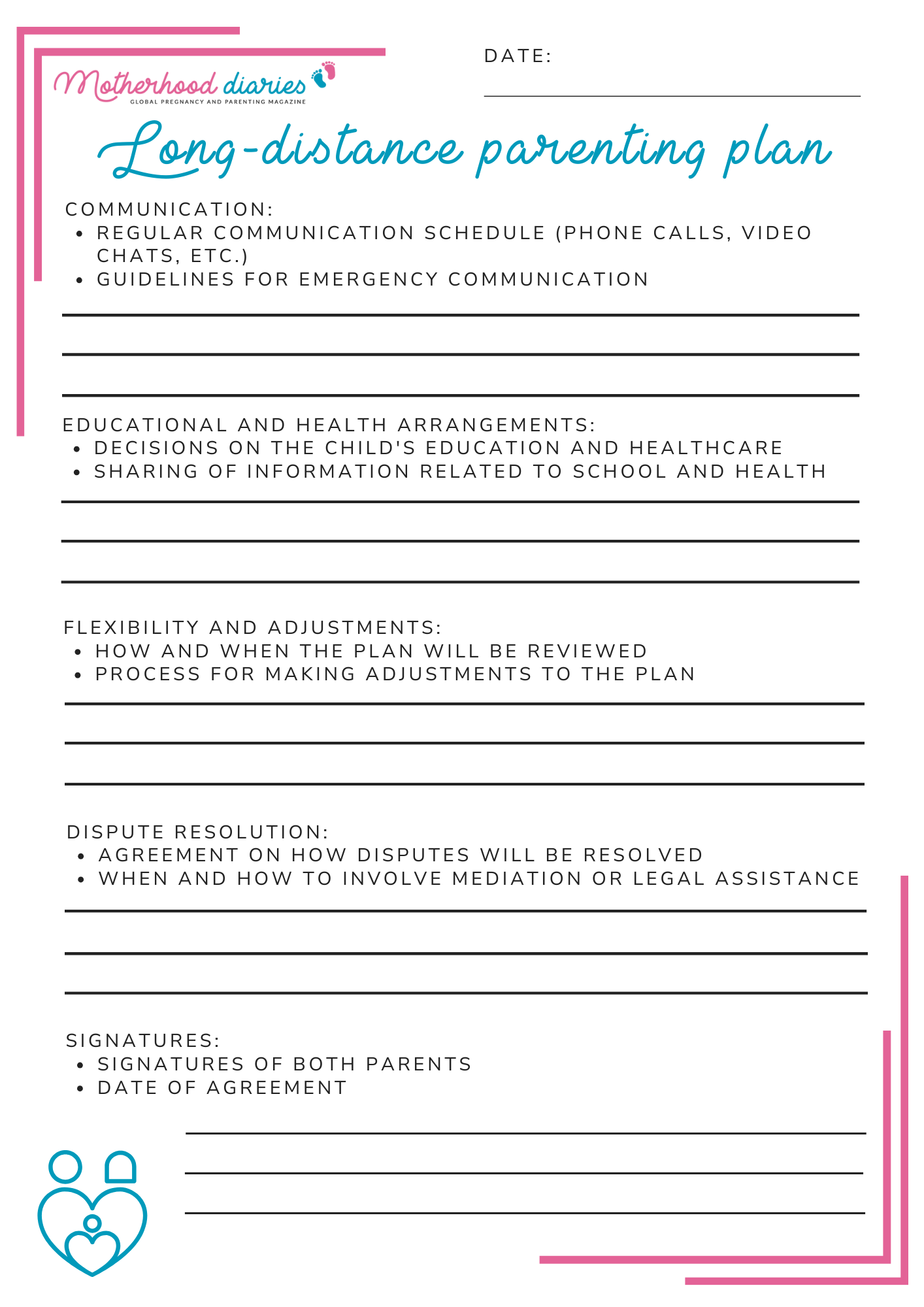
Navigating the challenges of long-distance parenting requires a blend of legal guidance, practical planning, and emotional intelligence. Whether you’re discussing the logistics of travel or the intricacies of co-parenting from afar, the central focus should always be on what’s best for your child. Remember, a well-thought-out 50/50 long distance parenting plan is not just a legal requirement; it’s a roadmap for maintaining a loving, stable, and consistent relationship between your child and both parents, regardless of the miles in between.
Embrace the journey of long-distance parenting with patience and positivity. Use the template provided as a starting point or long distance parenting plan examples online, but tailor them to fit the unique needs of your family. And most importantly, never underestimate the power of open, respectful communication and flexibility in fostering a healthy, happy environment for your child to thrive.
As you embark on this journey, remember you’re not alone. Many parents have successfully navigated these waters before you, and with the right approach, you too can create a nurturing and supportive long-distance parenting arrangement. Follow the above tips on long distance parenting plans, keep your child’s best interests at heart, and you’ll find your way through the challenges with grace and resilience.
*Collaborative feature post*