

Unless you’re itchy or burning down there, you don’t really pay much attention to what your front bottom is doing. However, your vaginal microbiome is a big deal and holds the key to your fertility success, pregnancy outcomes and other related diseases. But how do you know if your vaginal microbiome is happy?
By doing a vaginal microbiome test!
Daye, an innovative brand that raises the standards in gynae health by creating cutting-edge feminine health products and services, offers a convenient at-home vaginal microbiome test and a whole heap of information on what to do when you receive the results.
In this article, we’ll discuss the importance of knowing your unique vaginal microbiome and introduce the concept of at-home testing with Daye.
Your vaginal health starts here!
Wait, what’s my vaginal microbiome and what are vaginal microbiome tests?
The term ‘microbiome’ might sound like a fancy scientific word reserved for lab-coated professionals, but in essence, it refers to the community of microorganisms or vaginal microbiota, both friendly and unfriendly, that call our bodies home. Our vaginal microbiome plays a pivotal role in our overall health, influencing everything from our reproductive health to our vulnerability to infections. A vaginal microbiome test takes a swab of your microbiome and can tell you your unique makeup and whether your vagina is in working order.
But, why should you take a vaginal microbiome test?
Before diving into the necessity of a vaginal health test, it’s crucial to understand why it’s important to know your unique vaginal microbiome. This ecosystem consists of various bacterial species, most notably Lactobacillus, which play an instrumental role in vaginal health. An imbalance, often termed as bacterial vaginosis or dysbiosis, can lead to various health issues, as mentioned above.
So what’s in your vaginal microbiome?
Your vaginal microbiome is made up of the following:
Lactobacilli
Dancing gracefully in the theatre of your body, Lactobacilli are the unsung heroines of your vaginal realm. These benevolent bacteria produce lactic acid to strike just the right pH balance and your reproductive haven remains flourishing and vibrant, keeping unwelcome bacterial invaders at bay.
Studies show that a vaginal microbiome that is rich in protective lactobacilli bacteria is linked to a lower risk of infections, fertility issues and pregnancy complications.
Anaerobic bacteria
Meet the party animals of the microbial world! These microorganisms are quite the mavericks, dancing around the microbiome without care for oxygen. And they adore settling down in cosy, less acidic nooks, which can often be found in the neighbourhoods of human skin and the avenues of mucosal membranes. A favourite hotspot? The ever-popular vaginal canal!
But, when the rambunctious duo, Gardnerella vaginalis and Prevotella bivia, decide to come into the mix, things can spiral out of control, leading to bacterial vaginosis (BV), the talk of the town in vaginal infections. Awareness is key, however, and spotting these party crashers early can be the first step in keeping the microbiome balanced.
Yeast-like fungi like Candida
A whopping 75% of us ladies have to deal with these tiny troublemakers called Candida at some point and these yeasts chill in many of our vaginal areas without causing a fuss most of the time. But, if they decide to throw a little over-the-top party, it can lead to an infection known more commonly as thrush (or vaginal candidiasis.) It’s central for yeast infections, causing all sorts of itching and discomfort down there.
Mycoplasma hominis and Ureaplasma
Mycoplasma and Ureaplasma are some of the tiniest little organisms that don’t have a cell wall, which means spotting them under a microscope can be tough.
However, they have been spotted at the scene of a few vaginal infections and have even been linked to some specific pregnancy outcomes. But in low numbers, they’re pretty much harmless, just mingling harmoniously with the normal vaginal flora.
Pathogenic microorganisms – Mycoplasma genitalium
Mycoplasma genitalium holds the record for being the tiniest bacteria that can make copies of itself. But if it decides to cause a stir in your microbiome, it can bring along some not-so-fun symptoms like vaginal discharge, a stinging sensation when you pee, pelvic pain, and spotting either after getting frisky or at random times between your periods.
Why is it important to have a balanced microbiome?
The vaginal microbiome is a complex ecosystem and these microorganisms that live in the vaginal playground each play a vital role in maintaining your overall health and wellbeing. Maintaining a balanced vaginal microbiome is crucial for several reasons:
Prevention of vaginal and urinary tract infections
Having a hearty bunch of Lactobacilli is like having a superhero squad down there, keeping the nasty recurrent vaginal infections like thrush and bacterial vaginosis at bay. It could also mean saying goodbye to those annoying urinary tract infections (UTIs).
If you’re expecting a little one, have diabetes, recently took antibiotics, have a weakened immune system or are using the pill, you might be experiencing more bouts of thrush than normal.
Shield against sexually transmitted infections
An abundance of lactobacilli in your microbiome could actually act as a shield against catching sexually transmitted infections, even something as serious as HIV. And get this, animal studies have shown that lactic acid (thanks to our lactobacilli buddies!) can knock out the bacteria behind some nasty STIs, including chlamydia.
Increase fertility and reproductive health
Did you know that if the balance of your vaginal microbiome goes a bit wonky, it might bump up your risk of facing some fertility hurdles or even pre-term labour? That’s not all – some early research even hints that this kind of imbalance might throw a spanner in the works when it comes to successful IVF cycles.
Research has also found a connection between infections caused by Ureaplasma parvum and a higher chance of babies arriving ahead of schedule, not to mention giving the little ones a bit of a tough start with respiratory issues.
Mycoplasma hominis might be behind some early pregnancy losses and even cause trouble during the second trimester. This may explain the reason for my second-trimester loss back in 2017 as it was detected in my own microbiome screening (more on my own results later in the article).
Imbalanced microbiome linked to gynaecological cancers
In the ever-evolving field of medical research, experts are now delving into the potential link between lactobacilli and cervical cancer. Findings suggest it’s important for those with cervical cancer or who have signs of vulvar cancer to know they often exhibit an imbalance in their vaginal flora, marked by a reduction in the beneficial lactobacilli bacteria. While the human papillomavirus is a recognised factor in cervical cancer, the connection between the vaginal microbiome and other gynaecological cancers, like ovarian cancer, remains less clear.
Menopause can knock things out of whack
During menopause, oestrogen levels take a nosedive while follicle-stimulating hormone (FSH) climbs. This seems to push our friendly lactobacilli out of the picture. Many researchers have drawn a line connecting menopause to a higher chance of getting off-kilter down there, probably because of this bacterial shakeup.
What’s more, when Lactobacillus is in short supply, things like vaginal atrophy can pop up, causing thinning, dryness, and inflammation of the vaginal walls. Good news, though! Hormone replacement therapy seems to roll out the red carpet for Lactobacilli and can soothe those pesky vaginal woes. Popping some oral or vaginal probiotics* might also give your vaginal microbiome a much-needed boost during these changing times.
What happened during my at-home vaginal microbiome screening?
I was gifted the At-home Vaginal Microbiome Screening Test Kit from Daye to check out how my own microbiome was doing and the results were very interesting!
There is a small disclaimer before starting out with the kit and that’s to note that the information Daye provides is based on the initial questionnaire you fill out and the screening is designed to help make sense of your unique vaginal microbiome. But it should not be used to replace a medical diagnosis or your regular gynecological appointments. Daye’s platform can connect you with vetted physicians if you don’t currently see anyone for your gynae health.
What did I find out from my at-home vaginal microbiome test?
I have to say, I was pretty surprised at the results!
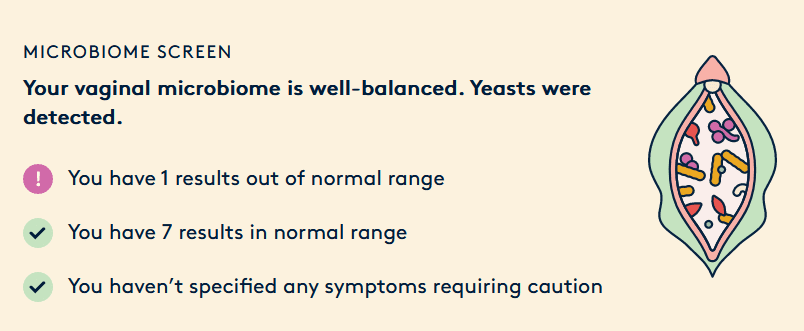
The at-home vaginal test results came back within three days via email and were very extensive. Here are some results below:
My vaginal microbiome is balanced and abundant in lactobacilli, which is great news, but the test did find some yeast-like fungi out of the normal range that may require further attention. I mentioned in my questionnaire that I had some itching after using the menstrual cup during my period but after a couple of days, it would go. For the rest of the month, I would have no symptoms. Daye did mention that there was no cause for emergency and that my ‘out-of-the-range’ result was a mere 0.1 off the normal range. So I wasn’t concerned.
There were some Anaerobic Bacteria and Mycoplasma/Ureaplasma detected but these were within the normal range. When I delved deeper into the results the rate of detection was 0, so I was confused as to what exactly was detected if the result was 0. Thankfully no Pathogenic microorganisms were detected.
So, what do these results mean?
Anaerobic bacteria detected
Anaerobic microorganisms are found in healthy vaginal microbiomes in various amounts. Studies show that while they are in range, they don’t pose a risk of developing infections.
My microbiome contains a moderate amount of anaerobic bacteria and is abundant in lactobacilli, so this means I have a low risk of vaginal infections (like BV) and other health complications, like infertility, preterm birth and contracting STIs. It is the protective function of the lactobacilli that keeps the anaerobic bacteria at bay and prevents overgrowth that leads to infections – awesome!
Candida detected out of the normal range
Research shows that people with microbiomes abundant in Candida have a high risk of a yeast infection.
This could lead to symptoms like burning and itching in and around the vagina, unusually white thick discharge, and in some cases pain while peeing or having penetrative vaginal sex. Since I have an abundance of lactobacilli I don’t need to replenish them. Instead, I need to reduce the amount of Candida with medication to help restore a balanced flora.
I mentioned in my questionnaire that my menstrual cup sometimes leads to itching after my period so I may need to change my menstrual cup.
Mycoplasma/Ureaplasma detected
My microbiome contains small amounts of bacteria from the Mycoplasma family (Mycoplasma/Ureaplasma). The asymptomatic presence of these bacteria is common and I don’t need treatment as I don’t have relevant symptoms, negative tests for STIs or high bacterial loads. If I do experience any vaginal symptoms, or I’m trying to conceive or pregnant, then I am advised to consult with a specialist for advice on what to do next.
What I found really interesting was the information about how a high-sugar diet could lead to more concentration of Candida in your microbiome and up until last month I had a very high-sugar diet. This month I have been a lot more careful and I’d be interested to find out whether that will make a difference in my microbiome after my period, where I notice the most symptoms.
The other point to note was the detection of the other bacteria which is what could have led to my spotting during my third pregnancy and ultimately a second-trimester miscarriage. Those results had found a UTI and Group B strep but doctors couldn’t advise whether these were related to my miscarriage. But linking this knowledge with the information provided by Daye in the results makes it even clearer that these could have very well been a factor in my pregnancy not being viable.
Do we really need at-home vaginal microbiome tests?
Considering how simple this test was to take, and send and how quickly the results came back, I would say, 100% yes!
Knowledge is power and you don’t have to set doctor’s appointments and endure the long wait at the clinic to give your sample. With Daye, you can conduct the test within the comfort of your home, at your pace, and on your terms.
The test results came back within three days! There’s no more waiting weeks to get your results and then chasing them on the phone. Daye’s results were so quick and the feedback was very detailed, complete with studies and next steps.
Plus, I love the convenience and confidentiality of it all. Discussing intimate health can be quite daunting at a clinic. At least, you can have control over your health narrative at home with an at-home vaginal microbiome test from Daye.
How does testing work? What do I have to do?
You can also follow the basic steps below:
- Order an At-Home Vaginal Microbiome Screening Test Kit from Daye
- Create an account and activate your test kit online when you receive your kit. The kit will contain all the instructions you need.
- Complete the online questionnaire
- Place the freezer pack in the freezer
- Insert the tampon for at least 20 minutes, making sure to wash your hands first to avoid contamination. Make sure you are ready to take the test by ensuring:
- You are over 18
- Your last period ended at least five days ago
- You haven’t taken any antibiotics or antifungals in the last 30 days
- You haven’t had vaginal penetrative sex in the last 24 hours
- You haven’t used any vaginally administered meds, creams, douches, gels or similar in the last 24 hours
- Place the tampon in the blue pouch provided and follow the instructions to close the pouch
- Place the pouch in the freezer with the ice pack
- Place the pouch in the kit provided and drop it off at your local post office.
- Make sure you are able to post between Monday and Wednesday. If you can’t, leave the tampon and ice pack in the freezer until you are able to drop it at the post office.
- You will receive your results very quickly. I received my results within three days!
- Sit back and learn all about your vaginal microbiome!
So, what’s next after the vaginal microbiome test?
Learn more about the microbiome by digging into the studies provided in your results and using the dashboard to check your next steps. Depending on your results, you can book a call with a specialist related to the area you have concerns, i.e. sexual health nurses, period and pelvic pain specialists, fertility specialists, nutrition and physical therapists, or a GP. The price and time of the call will be displayed on the page.
Or you can export a PDF of your results to send to your local doctor should you need advice on the next medical steps to balance your microbiome.
If you need to, you can book an STI test online or find an NHS/private clinic nearby, if you receive a negative result.
You can order probiotic supplements and other products to help boost your microbiome on Daye’s website.
There is an abundance of knowledge on Daye’s website, so have a browse and learn more about your vaginal microbiome in one place!
Track your vaginal microbiome development over time
Once you learn more about your microbiome, you can take steps to implement the changes, i.e. for me it’s about changing my menstrual cup, finding some over-the-counter medicine to reduce Candida and ditching the high-sugar diet which I’m doing already. I will then retake the test to see if it all worked and if my microbiome is nice and balanced.
Are you struggling with period pain?
Daye also offers the groundbreaking new Period Pain Clinic, which offers specialised gynae care If you suffer from period pain and need more tips on how to manage it then check out my article coming up on period pain really soon!
To conclude
Diving into the world of your vaginal microbiome is like flipping open a never-before-read chapter about the intricate wonders of your own body. It’s more than just seeking a healthy balance; it’s about fostering an open dialogue with the vibrant ecosystem that thrives within us, adapting and growing as we do.
Thanks to Daye’s straightforward at-home vaginal microbiome test, you can say goodbye to the long waits and clinical visits that used to be the norm. It’s all about speedy results and unlocking the knowledge you need to step up your health game right from the comfort of your home. How cool is it that tech advancements have made it so we can get this precious insight without any fuss?
For me, it’s about letting go of some cherished habits, like parting ways with my favourite menstrual cup or resisting those sugary treats. Every change, big or small, is a positive leap towards cultivating a microbiome that’s not just balanced but flourishing. And with Daye’s innovative approach, we’re all set to embrace a future where wellbeing is not just attainable, but completely in our hands.
FAQ
Does my microbiome affect my fertility or preterm birth?
Absolutely, your vaginal microbiome can influence both your fertility and the risk of preterm birth. Here’s a bit of detail on how this works:
Fertility
Researchers have found that a healthy microbiome, rich in lactobacilli, can create a favourable environment for conception and a successful pregnancy. Lactobacilli helps in maintaining the vaginal pH at an optimal level, which is crucial in warding off infections and creating a hospitable environment for sperm.
On the flip side, an imbalance in the vaginal microbiome, also known as dysbiosis, can potentially lead to infections and inflammations, which might interfere with the conception and implantation of the embryo.
Preterm Birth
As for the risk of preterm birth, studies have linked vaginal microbiome imbalances to an increased likelihood of delivering before the 37th week of gestation. Bacterial vaginosis, a condition characterised by a decrease in lactobacilli and an increase in diverse anaerobic bacteria, has been associated with a higher risk of preterm birth. The exact mechanisms are still under research, but it seems that infections and inflammation might play a role in triggering premature labour.
So, maintaining a balanced vaginal microbiome is not only important for your overall vaginal health but could also be a significant factor in your fertility journey and the outcome of your pregnancy. It’s always a good idea to consult with a healthcare provider if you have concerns about your microbiome and its potential effects on your fertility or pregnancy.
What is a microbiome test for BV?
Other questions asked were:
- Where can I find a BV home test kit or BV screening kit?
A microbiome test for BV, often part of a more comprehensive vaginal health assessment, is a diagnostic tool used to analyse the bacterial composition in the vaginal area. The above at-home vaginal microbiome test from Daye can also be a bacterial vaginosis home test and if found, offers tips on how to seek specialist advice. Look online for recommendations on the best at-home bacterial vaginosis test for you.
Are athome vaginal pH tests discreet and accurate?
Yes, at-home vaginal pH tests can be both discreet and accurate, provided they are purchased from reputable providers and used correctly. Daye’s microbiome test uses extra security to ensure data is kept private and the packaging comes in a plain kit, so as not to alert others as to what is inside.
Tests are designed to be used at home by yourself, avoiding any potential embarrassment or discomfort that might come with a clinic visit.
Daye’s vaginal microbiome test has been thoroughly vetted and backed by scientific research to ensure the results you’re getting are highly accurate and effective.
Accuracy:
However, it is worth noting that while they can be accurate, these tests are not foolproof. If the results are unclear or you are unsure, it is always best to consult with a healthcare provider for further evaluation. Additionally, a pH test can indicate there might be an imbalance, but it won’t provide a full picture of your vaginal microbiome. Further microbiome testing might be required to pinpoint specific issues or infections.
My yeast infection and bacterial vaginosis test came back negative but I’m still itching and have a smell. What could it be?
I’m not a doctor, but if you’re experiencing persistent symptoms and your initial tests for yeast infections and bacterial vaginosis came back negative, it might be worth considering other potential causes. Here are a few possibilities:
- Trichomoniasis: This is a sexually transmitted infection (STI) caused by a parasite. It can cause itching and an unusual smell, among other symptoms. You might want to get tested for this.
- Allergic Reaction or Irritation: Sometimes, the products we use, like soaps, detergents, or even the material of underwear can cause irritation or an allergic reaction in the vaginal area. You might want to consider if you’ve used any new products recently.
- Hormonal Changes: Changes in hormone levels, which can be caused by various factors including your period, pregnancy, or menopause, can sometimes affect the vaginal environment and cause symptoms like itching. I believe I suffer from this.
- Foreign Body: Occasionally, a foreign body like a forgotten tampon can cause symptoms of irritation and a foul smell. If there’s a chance this might be the cause, you should consult your doctor.
- Cytolytic Vaginosis: This is a lesser-known condition where there is an overgrowth of lactobacilli bacteria, the “good” bacteria. It’s different from bacterial vaginosis, and it can cause symptoms like itching and burning.
- Vulvodynia or Vestibulodynia: These are conditions characterised by chronic discomfort in the vulva area, including itching, burning, and pain. The exact cause is often unknown.
- Dermatological Issues: Sometimes, skin conditions like eczema or psoriasis can also affect the genital area and cause symptoms like itching.
Given that your symptoms are persisting, you should try a home yeast infection test kit and reach out to your doctor. They might suggest further tests to pinpoint the exact cause and prescribe appropriate treatment options. It’s always best to consult with a doctor when it comes to health concerns!
The post was sponsored by Daye but all thoughts and opinions are 100% my own. Images are taken from Daye’s website