
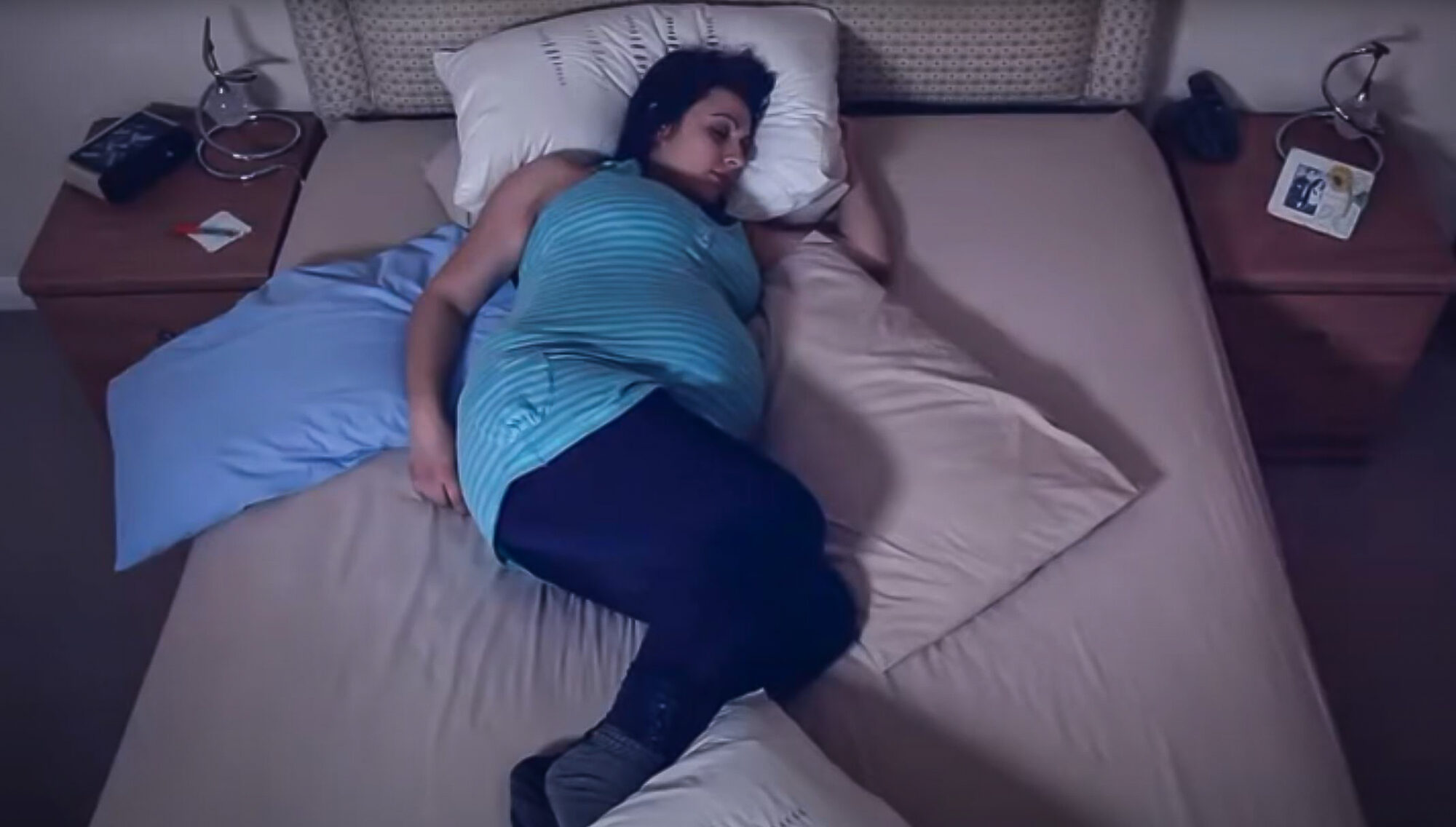
How to sleep with pillows when pregnant
Pregnancy is an exhilarating yet challenging journey, and one of the most common challenges is getting a good night’s sleep. Pregnancy also brings on new discomforts, such as back pain, leg cramps, frequent urination, and acid reflux, which can disrupt your rest, leaving you feeling more exhausted than ever.
Thankfully, pregnancy pillows can make a huge difference. Specially designed to support your growing bump, back, and legs, these pillows can help you sleep more comfortably and reduce strain on your body. If you’re not sure about what pregnancy pillows to get, then not to worry, Motherhood Diaries and My Dvija will not only show you how to sleep with pillows when pregnant, but what type of pillows are available, the best sleeping positions to try and relaxation techniques on how to improve your sleep quality during pregnancy.
Let’s dive in!
What is a pregnancy pillow and when should you start using one?
A pregnancy pillow is a specially designed pillow that provides full-body support, cradling your bump, back, and legs. Pregnancy pillows come in various shapes and sizes, including U-shaped, C-shaped, and wedge pillows. These pillows offer support to help alleviate pain and pressure, making it easier to sleep comfortably as your pregnancy progresses.
Many women start using pregnancy pillows as soon as they begin to feel discomfort, typically around the second trimester. However, you can start using one as soon as you notice your sleep being affected by physical discomfort or restlessness. In your third trimester, a supportive pillow becomes essential to managing your growing belly and promoting a comfortable sleep position.
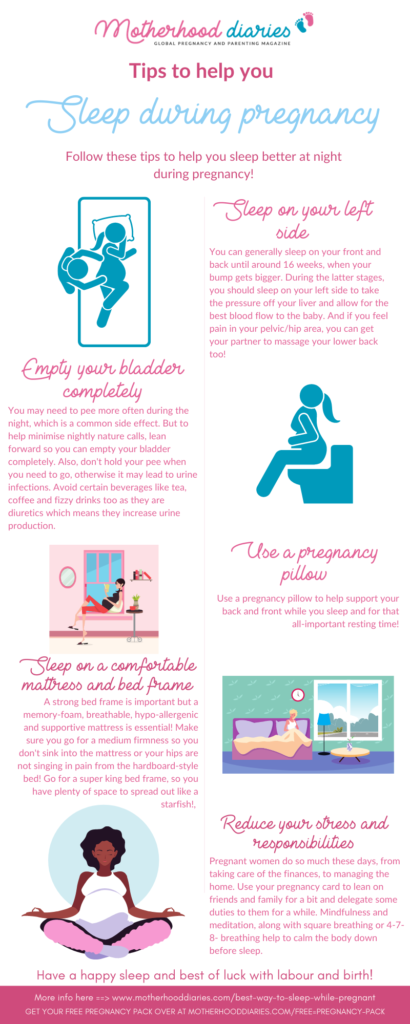
Tools to aid sleep for pregnant women
Pregnancy pillows
Pregnancy/maternity pillows are great because they can support the weight of your bump and back as you get bigger, encouraging less disruption during sleep.
Maternity pillows come in all shapes and sizes, so here is a rundown of what to look for:

Rounded pregnancy pillows
Rounded pregnancy pillows are generally multifunctional and also used for breastfeeding. They’re also cheaper and require less space in the bed. You place the pillow under your bump or to support your back, but during the latter stages, you may require extra support as most of these pillows don’t wrap all the way around.
CLICK HERE* TO BUY THE BEST ROUNDED PREGNANCY PILLOW ON AMAZON
V Shaped pregnancy pillows
V-shaped pregnancy pillows are naturally shaped into a V to support both the head and neck. You can also use this kind of pillow to support the bump or the back so it’s multifunctional too. These pillows are best used if you don’t have enough space to use a full-body pregnancy pillow, like the one below.
CLICK HERE* TO VIEW V SHAPED PREGNANCY PILLOWS ON AMAZON RIGHT NOW
Full body pregnancy pillows

Full body pregnancy pillows* are the pillow of choice at the moment because they provide the most all-round support for your bump and back. You can mould the U-shaped pillow to support the entire body which helps ease pregnancy symptoms, including pregnancy-induced sciatica and pelvic girdle pain. Some pregnancy pillows like the one on the left have a detachable extension which can be used as its own full body pillow or attached to the main body pillow for additional back or belly support. Just make sure you have a large bed to accommodate for the pillow, which brings me onto my next point.
CLICK HERE* TO BUY THE BEST FULL BODY PREGNANCY PILLOW ON AMAZON RIGHT NOW
Bed frames
Thanks to your growing body you’ll soon start to find that you’ll take up quite a good chunk of the bed, especially when you have full body pregnancy pillows* taking up one side. If you can and you have space, invest in a super king-size bed so your partner (and any extra kids) can cuddle up to you while still having ample space in the bed.
A firm wooden frame with wooden feet will provide enough stability to house an extra bump in bed. The Birlea Balmoral Grey Fabric Bed in Superking size has a large headboard with a soft velvet feel to offer the perfect comfort when you’re cuddling up with your baby bump and partner or when you’re stretched out like a starfish.

A comfortable mattress
A strong bed frame is important, but a comfortable and supportive mattress is essential.
Look for a mattress which has/is:
- Memory foam to mould perfectly to your body and adapt to your growing bump. You can find fully adjustable mattresses from Ausbeds.
- A breathable mattress with Octasprings which provides 8x more breathable fabric than pure memory foam. The constant airflow keeps the mattress cool when you’re overheating from that energetic bump!
- A hypo-allergenic mattress to keep allergies away and protect against dust mites and bacteria, so you have the healthiest sleeping environment for you and your baby
- Medium firmness which allows for the mattress to not be too hard or too soft (so it’s just right!)
- Supportive – Find a mattress which also provides optimal support for your head, shoulders and hips, so your hips are not singing in pain when you’re lying on your side for too long
The Octasmart Hybrid Plus Pocket Sprung Mattress from Wayfair provides all of the above and protects your evergrowing bump, allowing you to sleep more comfortably at night.
Best sleeping positions during pregnancy
As your bump grows, it becomes harder to find a comfortable sleeping position. Some positions, like sleeping on your back or stomach, may not be safe later in pregnancy.
An NIH-funded study suggested that the sleeping position up to the 30th week of pregnancy didn’t actually affect the risk of stillbirth, low birth weight babies or other pregnancy disorders like high blood pressure. However, the study cautioned that it did not provide information on whether back or right-side sleeping in late pregnancy could increase the risk of birth or pregnancy complications.
So let’s look at all the sleep positions separately and gauge which is the most effective and safest position in which to sleep during pregnancy.
Sleeping on your stomach during pregnancy
Sleeping on your stomach is generally regarded as ok until you reach around 16 weeks, when the bump gets bigger and it’s no longer comfortable to sleep on your front. But, comfort is where it ends. Amniotic fluid and the uterine walls protect your baby from being squashed, so you won’t have to worry about squishing your baby during sleep.
If you really want to continue sleeping on your stomach, you should consider getting an inflatable stomach sleeping pillow (more on that below) or cut out a large hole in your pillow for your belly. Just be careful not to overheat the baby if your room is too hot and allow for plenty of ventilation during the night.
Sleeping on your back while pregnant

Sleeping on your back is generally regarded as safe during the first trimester, but from the second trimester, you should avoid sleeping on your back for the remainder of the pregnancy. New research shows that the risk of stillbirth is doubled if women go to sleep on their backs in the third trimester. And, some other studies, albeit small in size, have linked sleeping the whole night on your back to stillbirth, however, it is not as clear cut as that. Other issues like sleep apnea may also factor in pregnancy and birth complications too.
Sleeping on your back may also result in other complications like poor circulation, back pain, digestive issues and haemorrhoids. As you get on during the pregnancy, you may find that you’ll get lightheaded and dizzy when sleeping on your back for long periods anyway.
If you wake up in the middle of the night and find that you’re on your back, don’t fret. Placing a pillow wedge underneath will catch you from rolling onto your back and allow for more circulation and blood flow to your baby.
Sleeping on your left side
During pregnancy, you may often hear that you should sleep on your left side during pregnancy. But, do you know why that is?
It’s because your liver is on the right side of your bump, so sleeping on your left side not only keeps the uterus off the liver, but it improves circulation to the heart and allows for the best blood flow to the baby, kidneys and your uterus. Using a U-shaped pregnancy pillow can help maintain this position throughout the night by offering belly support and keeping your hips aligned.
But, it hurts to sleep on my side while pregnant
You may feel some pelvic pain from sleeping on your left side for too long, so you’ll find that changing position during sleep is a natural occurrence. So if you find yourself on your back or on your right side, this is normal and nothing to worry about. As soon as you realise just shift yourself back to your left side.
Start by lying on your side with your knees bent to take the weight off your heart’s large vein (the inferior vena cava) which carries blood back to the heart from your feet and legs. Then as you progress into the latter stages of your pregnancy, add pillows to your front and back to support the weight evenly.
Propping with a C-Shaped Pillow
C-shaped pillows are ideal for women experiencing lower back pain. Tuck the curve of the pillow behind you for back support, and place the long part of the pillow between your legs to help align your hips and reduce strain.
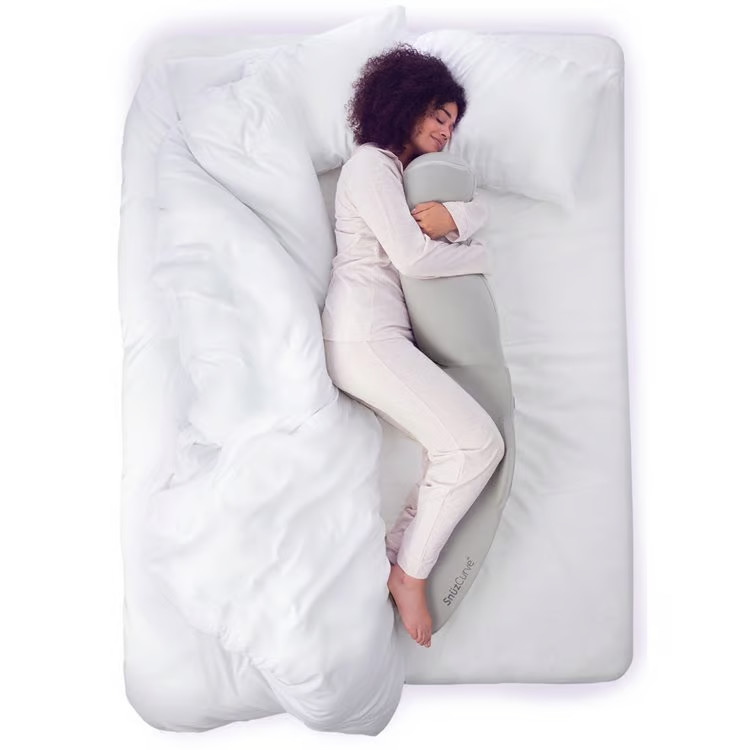
Save £35 SnuzCurve Pregnancy Support Pillow here*
Using a wedge pillow for bump support
If you prefer sleeping on your side but need more support for your growing bump, you can place a pregnancy wedge pillow under your belly to alleviate pressure. This specific pillow can help relieve discomfort in the pelvic area.
Sleeping upright to prevent acid reflux
If you suffer from acid reflux or heartburn, consider propping yourself up with pillows to sleep in a more upright position. This can help prevent stomach acid from travelling up the oesophagus during sleep, promoting better blood flow and reducing discomfort. But in late pregnancy, you may find that you’ll be short of breath, so it’s better to switch to your left side when you are ready to settle to sleep at night.
Common sleep problems during pregnancy
The National Sleep Foundation created a poll in 1998 called the ‘Women and Sleep’ poll. They found that a whopping 78% of women reported more sleep disturbance during pregnancy than at any other time. They also found that:
- 15% of women developed restless leg syndrome (which we’ll go into later) during the third trimester of pregnancy
- 51% of pregnant/recently pregnant women reported having at least one weekday nap
- 60% reported having at least one weekend nap
Difficulty sleeping is common during pregnancy, so it’s vital to find ways to sleep that minimises disruption to your body and any health risks to the baby. Pregnancy is taxing on the body so it’s really important that you’re getting the recommended daily amount of sleep (some of you will sleep like a champion during the first trimester anyway) so you’re fit and strong for not just pregnancy, but for labour and birth too.
Pregnant women often experience a variety of sleep disturbances. Here are some common issues and how you can address them:
Frequent urination
Increased blood volume and pressure on your bladder can lead to more bathroom trips during the night. To minimise disruptions, limit your fluid intake before bedtime and make sure to empty your bladder completely before going to sleep.
You’ll find, especially in the first and third trimesters that you’ll need to go to the toilet more often, and this is down to the following reasons:
Your blood volume increases during pregnancy
You have almost 50 per cent more blood in your body than before which means more fluid is being processed in your kidneys, so your bladder fills up more frequently.
Hormonal changes
The hormonal changes in your body make your blood flow to your kidneys more quickly, filling up your bladder more frequently too.
Your growing uterus
As your little angel grows in your tummy, your uterus grows along with them, adding more pressure to your bladder, which brings back the need to pee frequently.
What can you do?
Unfortunately, frequent urination is a common and natural symptom of pregnancy, so you can’t avoid it completely. But you can limit nightly bathroom visits by doing the following:
Skip certain drinks
Skip drinks like coffee and tea, as well as carbonated drinks like soda because they are diuretics, i.e. they increase the amount of urine being made in the body.
Don’t hold your pee
Go to the bathroom when you need to because the more you strain your pelvic floor muscles, the more they will weaken, especially during pregnancy and birth.

Empty your bladder completely
When you go to the toilet, lean forward so you can empty your bladder as much as possible.
Drink most of your water during the day
You should still drink when thirsty of course, but try to limit most of your water intake to during the day. Never hold off on drinking though – the body needs lots of water, especially during pregnancy, so it’s better to go to the toilet than be dehydrated and risk getting a urine infection, which could cause complications to you and the baby.
Restless leg syndrome (RLS)
Around 1 in 5 pregnant women experience RLS in their last three months of pregnancy and this normally causes sleep issues. But what exactly is RLS?
RLS is this overwhelming urge to move your legs, which can also cause an unpleasant crawling or creeping sensation in the feet, calves and thighs. RLS is often worse in the evening and may affect the arms too. There’s no obvious cause of RLS, but some scientists reckon it may have something to do with how the body handles the chemical dopamine which is involved in controlling muscle movement. The problem does go away after birth though.
What can you do?
You can start by making sure you have a good bedtime routine and avoid caffeine at night too. Get in some gentle exercise every day during pregnancy as well to help get rid of any excess negative energy.
Leg cramps
You may feel this sudden sharp pain usually in your calf muscles or your feet which causes you to wake abruptly from your slumber. Around 30 to 50 per cent of women get leg cramps during pregnancy so leg cramps are a common part of pregnancy.
But why do you get leg cramps? Well, it’s not entirely clear why women get leg cramps, but scientists suggest little or too much exercise, an imbalanced metabolism, electrolyte imbalances or vitamin indeficiencies. The good news is leg cramps should disappear as soon as your baby is born.
What can you do?
Regular, gentle exercise will help to reduce leg cramps and often help ease symptoms when it happens too. When you experience an attack, do the following:
- Bend and stretch your foot continuously and vigorously for around 30 seconds to 1 minute
- Rotate the foot one way for around ten times and then the other way. Repeat with the other foot if needed.
- Then with your fingers, pull your toes up to the ceiling to stretch the back of the calf and rub the muscle firmly at the same time with the other hand
- Try getting out of bed and walking around on your heels before heading back to sleep
- Keep bedding loose so you can do these exercises as and when needed without hopefully disturbing sleep or getting out of bed
- Have a nice warm bath before bed to relax the muscles
- Elevate your feet in bed by propping them up on a pillow with toes pointing up.
Insomnia
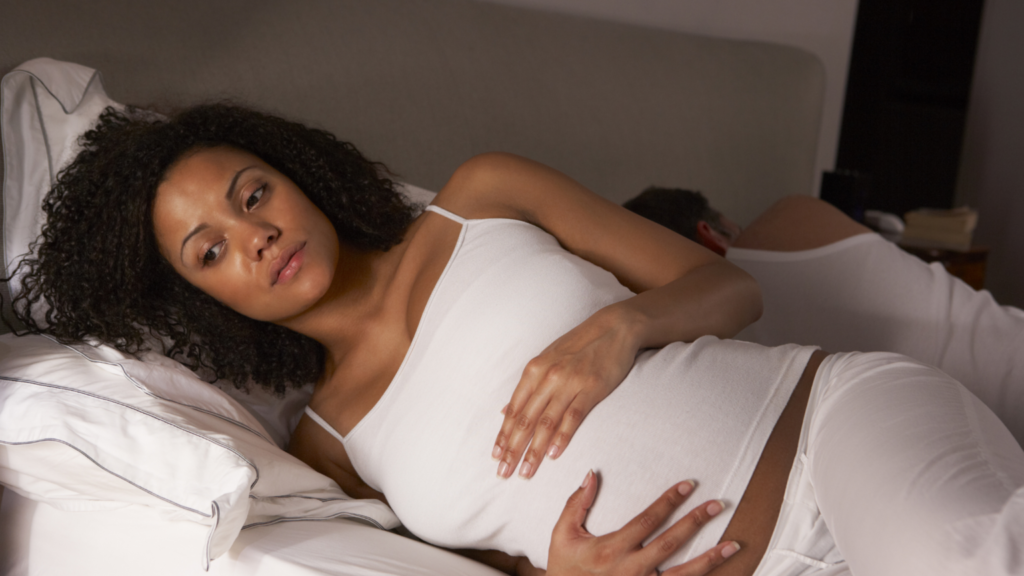
Fluctuating hormones, anxiety, and physical discomfort can all contribute to pregnancy insomnia, which can happen at any time during pregnancy and, with most pregnancy-induced problems, can be down to the fluctuating hormonal levels during pregnancy.
For most women, pregnancy insomnia attacks the hardest during the third trimester and you likely will have no idea when it will hit and how long it will end. You may find that you’ll fall asleep easily but staying asleep could be the issue.
What can you do?
- Help your mind and body get into a set routine so your biological clock knows when it’s bedtime and your brain can get in line.
- Avoid caffeine (you should be avoiding this anyway) and foods high in sugar and acid to avoid heartburn and/or a sudden burst in energy
- It’s easier said than done but try to take your mind off your worries about not sleeping by thinking about something that makes you happy.
- Practice the 4-7-8 breathing technique where you breathe in for four seconds, hold for seven seconds and exhale for eight. You might find the breathing duration difficult when you’re pregnant but as long as you are exhaling for longer than you are inhaling, the breathing will help you to calm down and eventually allow you to drift off to sleep.
Sleep apnea
Your breathing may change during pregnancy as your bump gets bigger and more pressure is placed on your lungs and airways. If you didn’t snore before or you were a soft snorer, you may find you’ll wake the house now with your loud snores. You may even experience some pauses or disruption in breathing and this disruption is called sleep apnea if the pauses last longer than ten seconds. Fortunately, the risk of developing sleep apnea in pregnancy is low – around 10 per cent of pregnant women are affected. However, if you’re overweight, obese, or experience excessive weight gain during your pregnancy, you may have an increased risk of developing sleep apnea.
What can you do?
It’s important to treat pregnancy-related sleep apnea as soon as possible as it could develop into complications for both you and your baby. Sleep apnea is also associated with gestational diabetes, diabetes and unplanned caesarean sections, so make sure you’re eating a healthy, balanced diet during your pregnancy. Make sure you sleep on your side too, to alleviate any pressure on the back and lungs
In severe cases treatment is available where a machine provides a constant flow of pressurised air to help maintain an open airway during the night. These are only used in extreme cases, but it’s worth checking with your doctor to ensure your sleep apnea is not placing any undue risk on you and your baby.
Nocturnal gastroesophageal reflux (nighttime GERD)
Otherwise known as heartburn, which is a common pregnancy symptom in the third trimester thanks to hormonal changes again and your growing baby pressing on your stomach. The muscles in your stomach relax during pregnancy causing stomach acid to escape back up the throat, which causes that burning sensation.
You’re likely to get indigestion/heartburn if you had indigestion in your previous pregnancies or you’re in the latter stages of your pregnancy.
Some symptoms include:
- Feeling or being sick
- Burning or pain in your chest and throat
- Feeling heavy, bloated and full
- Burping/belching
- Bringing up food

What can you do?
Think about what you eat and how you eat it. Making changes to your eating and drinking habits can help to control symptoms if they are mild. Here are some tips:
- Keep meals small and often rather than eating three large meals a day.
- Don’t eat within three hours of going to bed at night
- Cut down on caffeinated drinks and fatty, spicy and rich foods
- Sit upright when you eat which will take the pressure off your stomach
- Elevating your head and shoulders when you go to bed can help from stomach acid coming up when you sleep
- Smoking and drinking can seriously harm you and your unborn baby’s health, but it also contributes to indigestion. If you need help to stop smoking and/or drinking talk to your midwife who can provide you with some support networks that you can call. NHS also has a Smokefree helpline which you can call on 0300 123 1044
- If you’re still experiencing symptoms then speak to your midwife or GP who can examine you and provide further assistance and medicine if required
Excessive sleeping during pregnancy
Not getting enough sleep is an issue, but what if you’re getting too much sleep? Is there even such a thing as too much sleep during pregnancy?
According to the National Sleep Foundation, you should get around seven to nine hours of sleep each day. If you’re routinely sleeping more than nine to ten hours unbroken, good quality sleep, then this may be a sign of excessive sleep.
One study argued that women who slept for more than nine continuous hours without disturbance and they routinely had non-restless sleep in the last month of their pregnancy had a greater chance of stillbirth. However, this study was argued by other scientists who claimed that the non-restless nights were down to decreased foetal movement and not the cause of stillbirth.
What can you do?
If you are routinely sleeping for more than nine hours a night, then wow, lucky you! But it’s worth keeping some of those hours resting in bed, reading a book or writing, for example, to avoid oversleeping during the night.
Other major causes of sleep disturbance during pregnancy
Hormonal changes play a significant role in sleep disruption during pregnancy. Physical discomforts also contribute to restless nights for many pregnant women.
Exposure to technology
Blue light from digital screens can interfere with sleep quality. It affects the release of melatonin, a hormone that regulates sleep cycles. Pregnant women using electronic devices before bed may struggle more with falling asleep.
Hormonal changes
As mentioned before, hormonal changes during pregnancy significantly impact sleep patterns. Hormones like progesterone rise and can cause daytime drowsiness, which disrupts normal sleep cycles at night. Increased levels of oestrogen also lead to more frequent bathroom trips, interrupting deep sleep.
Lack of a healthy routine
An inconsistent schedule can lead to poor sleep quality and disrupted sleep patterns. Pregnant women who do not follow a regular bedtime may find themselves struggling with insomnia or waking up frequently at night.
Best pregnancy pillows 2024
With so many pregnancy pillows on the market, it can be hard to know which one to choose. Here are some top-rated options, along with their pros, cons, and where to buy them:
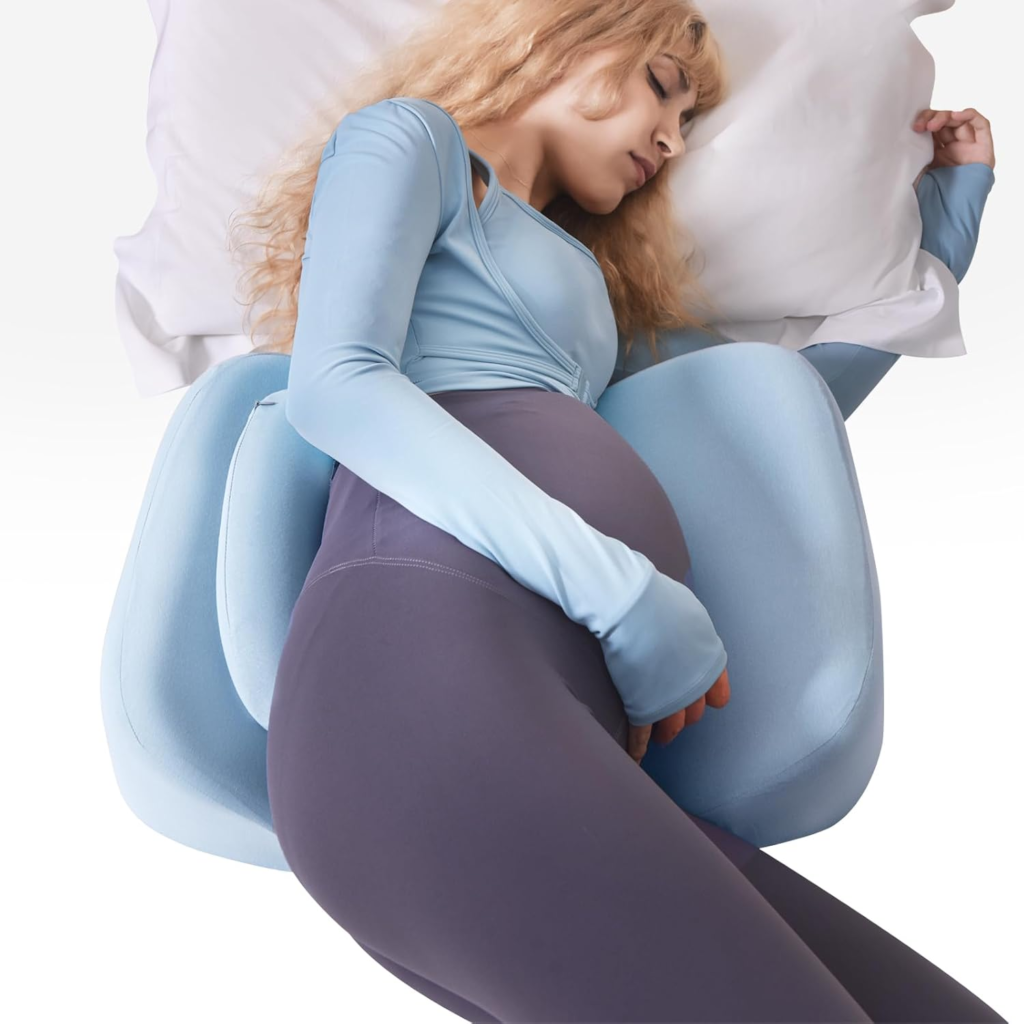
1. WEIKA Memory Foam Pregnancy Pillows for Sleeping
Price: £35.99
Rating: 4.8 out of 5 stars (41 ratings)
Special Features: Portable, lightweight, adjustable, detachable cover, breathable.
This pillow* provides excellent full-body support making it perfect for supporting your bump, back, neck, and legs. With its concave curve, ideal for side sleepers. The adjustable design allows you to customise it for your growing belly, hips, back, and legs. Its memory foam adapts to your body temperature, distributing pressure for optimal comfort. It also comes with a machine-washable cover. It’s also multi-purpose, as it can be used for breastfeeding or to support older babies during playtime.
Best for: Pregnant women in all stages, relieving pain and discomfort in multiple areas.
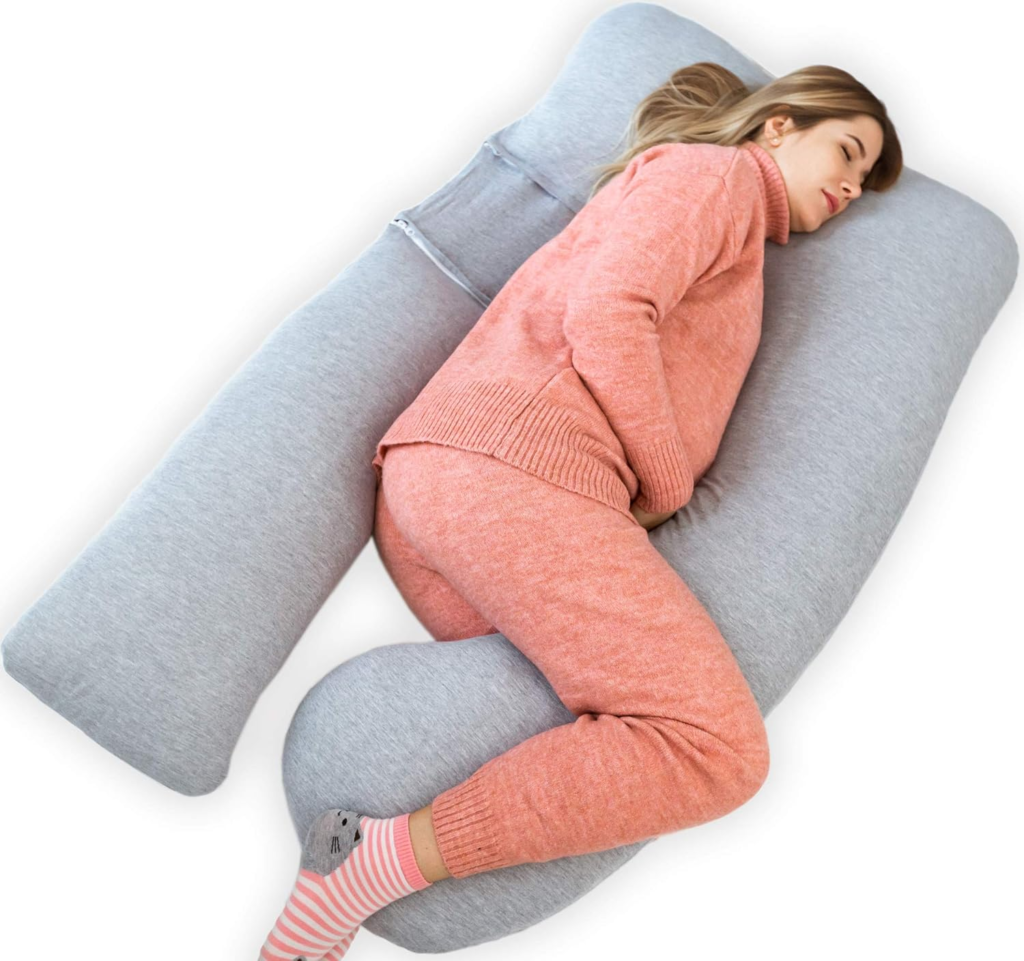
2. Kolbray®️ U Shape Pregnancy Pillow – Full Body Maternity Pillow
Price: £42.99
Rating: 4.6 out of 5 stars (2,291 ratings)
Special Features: Adjustable, includes a removable jersey cover.
A UK-made pillow*, this U-shaped design provides full-body support for back, belly, legs, and hips. It comes with a detachable extension, so you can use it as a nursing pillow or for added comfort while sleeping. The soft-knit jersey cover keeps you cool throughout the night, and the machine-washable cover is easy to clean.
Best for: All sizes and body types, providing comfort from pregnancy to nursing.
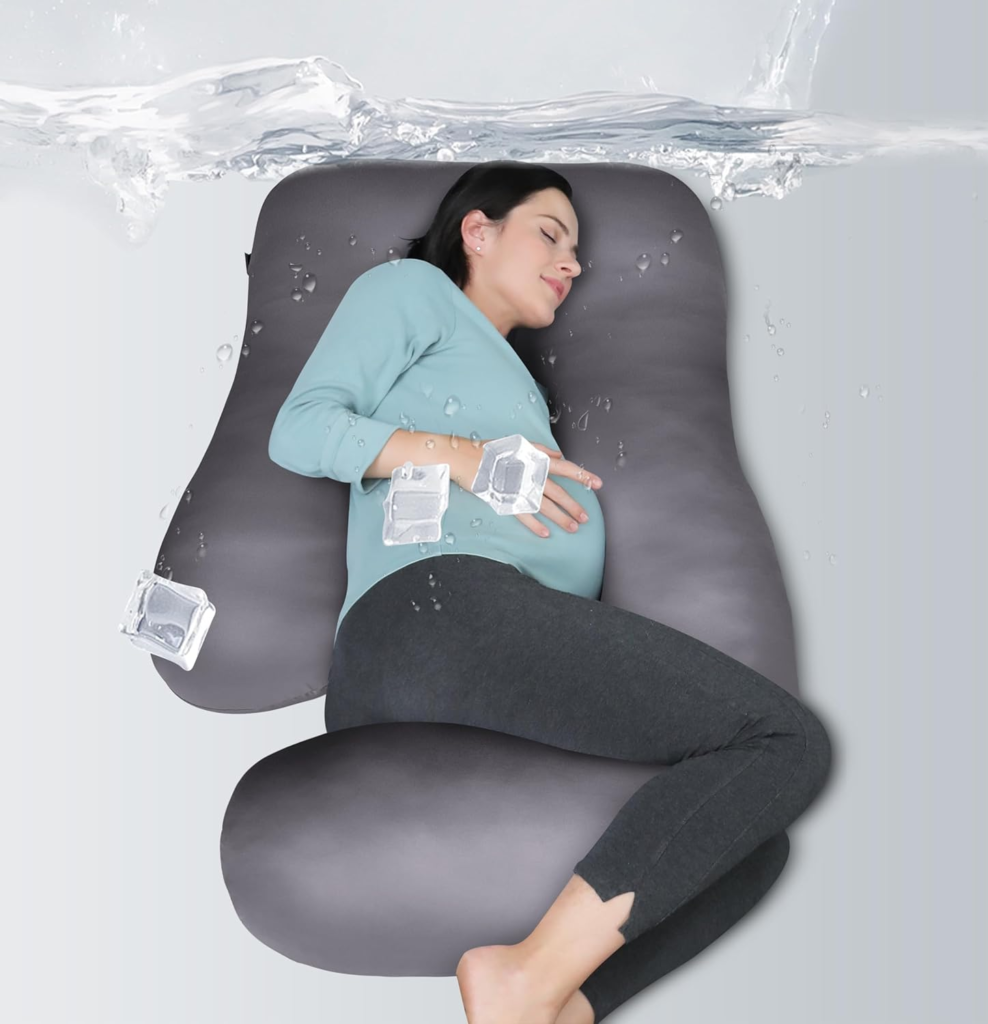
3. MOON PARK Pregnancy Pillows for Sleeping – U Shaped Full Body Maternity Pillow
Price: £71.28
Rating: 4.6 out of 5 stars (1,404 ratings)
Special Features: Cooling cover, flexible, full-body support.
This 57-inch pregnancy pillow* is designed with ergonomic features to support every part of your body, from your head to your feet. The cooling cover ensures that you don’t overheat, and the pillow provides relief from back pain, leg swelling, and other pregnancy discomforts. It is versatile enough to be used while nursing, reading, or relaxing.
Best for: Pregnant women needing both comfort and cooling during sleep.
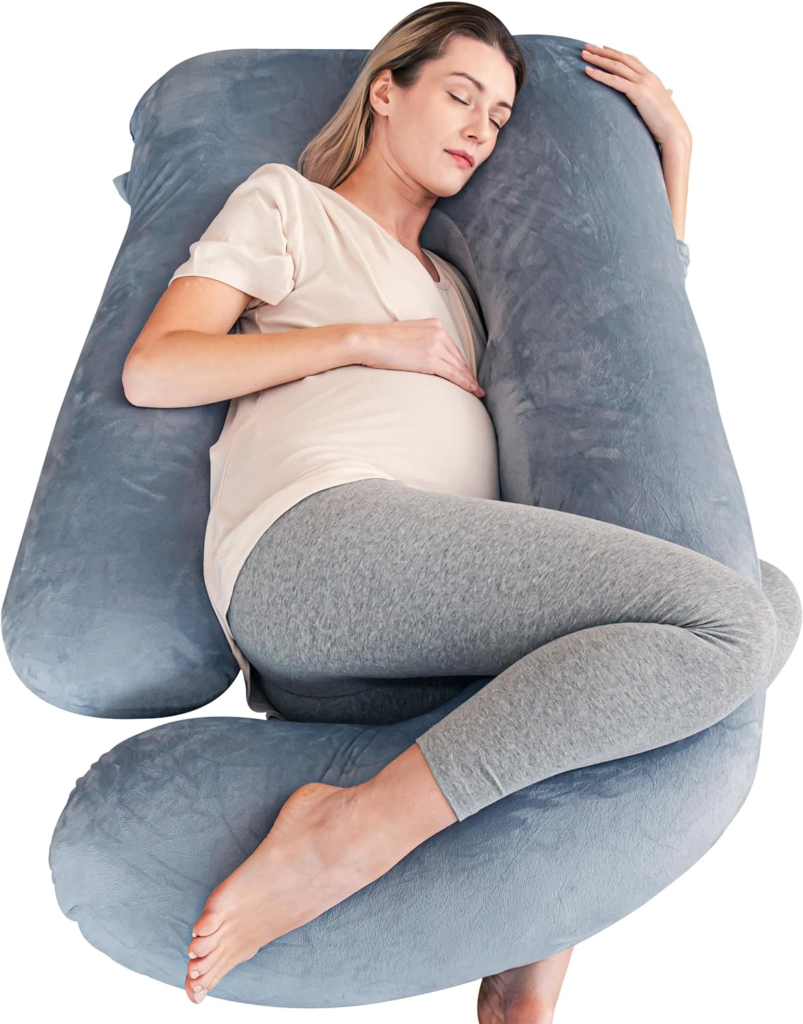
4. Cute Castle Pregnancy Pillows, Soft U-Shape Maternity Pillow
Price: £37.43
Rating: 4.6 out of 5 stars (965 ratings)
Special Features: Flexible, removable, durable.
This 57-inch full-body pregnancy pillow * offers premium comfort, replacing the need for multiple pillows. It supports your head, back, belly, sides, knees, hips, and feet. The polyester filling provides long-lasting support while maintaining its shape over time. Its soft, removable cover can be machine washed, making it ideal for frequent use.
Best for: Expectant mothers looking for long-term support and versatility for various body positions.
How to sleep better during pregnancy
Here are some additional tips to improve your sleep during pregnancy:
1. Develop a sleep routine
Establish a bedtime ritual that signals your body it’s time for rest. Engage in calming activities like reading, taking a warm bath, or practising gentle stretches before bed. Avoid using electronic devices as they can interfere with your ability to wind down. Consistent routines will help ensure quality sleep.
2. Stay active
Regular exercise can significantly enhance sleep quality during pregnancy. Engaging in physical activity helps reduce anxiety and fatigue, making it easier to fall asleep and stay asleep.
3. Limit caffeine and heavy meals
Caffeine, nicotine, and alcohol can significantly interfere with sleep quality during pregnancy. Opt for herbal teas or warm milk as bedtime beverages instead of caffeinated options.
4. Manage acid reflux
If you suffer from acid reflux, avoid lying down immediately after eating and try to elevate your head when you sleep to prevent heartburn.
5. Back massage
Lying on one side for too long can cause hip and lower back pain, so get your partner to massage the lower back to relieve some of the pressure built up when lying in one position for too long.
6. Nasal strips
You may find during pregnancy that you’re stuffy, even if you don’t have a cold. So if the snoring is waking up the whole town or the congestion is waking you up at night, your doctor may advise nasal strips to help open the airways and relieve nasal congestion.
CLICK HERE* TO BUY THE BEST NASAL STRIPS ON AMAZON RIGHT NOW
7. Diet can help
A ‘Sleep and Dietary Patterns in Pregnancy’ study in 2017 found that a good diet may help pregnant women sleep better at around 26 – 28 weeks gestation, with the Mediterranean diet coming up at the top of the list to helping combat sleep problems like insomnia. The Mediterranean diet is high in vegetables, legumes, fruits, cereals and fish, but low in dairy, saturated fat and alcohol, so it seems laying off heavy, unhealthy food and drink might help you to sleep at night.
The same study found that the Japanese diet which is rich in rice lowered the risk of poor sleep quality by 46 per cent. Suggested explanations were that rice has a high glycaemic index and is also high in melatonin which is the natural chemical we make in our bodies to help us sleep. Apparently even eating less of the seafood-noodle pattern can help you sleep better too!
8. Reduce your stress and responsibilities
We live in an age where we are sharing parental roles and duties. No longer does the old-school man-makes-fire-brings-in-the-bread-woman-is-the-homemaker work in this cultural and digital world.
This is great! Women can now be free from the kitchen-sink role and express themselves in the workplace, through their business, and at home, all while growing a baby. And, incidentally, men can take a more paternal role and share the load of looking after the kids.
However, because of the extra responsibility, sleep often gets pushed to the back of the priority list, resulting in sleep deprivation during pregnancy, which this study found was linked to postnatal depression, complicated birth and preterm delivery due to more pro-inflammatory serum cytokines released from the lack of sleep.
What does this mean?
It means that your mental health is affected as much as your physical health and when you’re pregnant you need sufficient sleep to nourish the development of your baby. This topic begs its own article but I found that running a business while being pregnant often didn’t help me get to sleep at night because I would be tapping away on my laptop screen for a long period while worrying about finances and whether we could afford to move to a bigger place.
Sometimes you have to learn to delegate certain duties and so I leaned more on my husband and parents to help me get through the tough later months of pregnancy and the vital fourth trimester where they did the school runs for me and took over some of the bills, of which I was very grateful because I needed the recovery time!
9. Mindfulness and meditation
Mindfulness and meditation, along with the 4-7-8 breathing technique can help to reduce some of the stress you feel during pregnancy. Breathing is a fantastic tool to instantly calm the body down and can even help to drift you off into the land of nod. Click here for more information on how mindfulness and meditation work to help you sleep during pregnancy.
One study urged that due to the high percentage of women who experience significant sleep disruption during pregnancy, there should be regular screening and treatment provided for sleep disturbances, especially the impact that sleep disruption has on the pregnancy, the baby and postnatal depression. I think this is a great idea!
It’s important that if you are finding it difficult to sleep during pregnancy, you should speak to your doctor, who can provide you with actionable, manageable steps to help you sleep better during pregnancy.
Have you had trouble sleeping during pregnancy? How did you overcome it? Pop a comment below and share your top tips and best positions for sleep during pregnancy.
FAQ Section: How to sleep with pillows when pregnant
How should you sleep with a pregnancy pillow?
Sleeping with a pregnancy pillow depends on the type of pillow you have. For example, a U-shaped pillow can be used to support your entire body, while a wedge pillow is placed under your belly to relieve pressure.
When should you start using a pregnancy pillow?
Most women start using a pregnancy pillow during their second trimester when they begin to experience discomfort while sleeping.
Is it safe to sleep on your back while pregnant?
It is generally not recommended to sleep on your back during the second and third trimesters.
Can you sleep on your stomach while pregnant?
Sleeping on your stomach is usually fine in the early stages of pregnancy. However, by the second trimester, your bump may make it uncomfortable.
Final thoughts on sleep during pregnancy
Sleeping during pregnancy can be a challenge, but with the right tools, techniques, and support, you can improve your rest. Whether you’re using a pregnancy pillow, following a consistent sleep routine, or practising relaxation techniques, every small change can make a big difference.
Always consult your healthcare provider if you have concerns about your sleep during pregnancy. Their guidance, combined with these tips, can help ensure you get the restful sleep you need.
*Motherhood Diaries was gifted a Superking bed frame from Mattressman and a Superking mattress from Wayfair for the purposes of a review, but all opinions are 100% our own.
*This is a collaborative feature article, which also contains affiliate links, where if you click through and purchase, I may earn a small commission at no extra cost to you. Thank you for your support.
*As an Amazon Associate I earn from qualifying purchases.*









One Comment