Essential car seat safety tips during school runs with Graco
I have four drop-offs and pick-ups during the dreaded school run, which can last around two hours each way. So, it’s safe to say I’ve seen my fair share of driving mishaps, which have either caused me to emergency brake or swerve towards the curb. Each time there has been a jolt at the back of the car, I’m thankful my kids’ car seats were secure enough to handle the near-misses.
However, I haven’t always been on top of car seat safety in the last 14 years. Safety on the road has always been a huge concern for parents, especially during the hectic school runs where the risk of accidents increases significantly.
So, in the run-up to Road Safety Week (17th to 23rd November) and in collaboration with Graco and their ‘Safety Within’ campaign, we thought it would be a great time to revisit car seat safety measures, especially during the school runs, so we can feel safe and secure even when the roads can get quite hectic.
In this guide, we will deep dive into car seat safety and shed light on the often-overlooked dangers of school commutes. We will also go through appropriate safety measures for older children, as often parents believe our kids are too big for car seats, which isn’t always the case. We will also explore Graco’s dedication to enhance daily travel safety for families, so your most precious passengers are protected at all times.
Why Road Safety Week?
Road Safety Week is more than just a campaign and annual observance; it’s a crucial intervention designed to make our roads safer for everyone, especially our children. Road Safety Week serves as a potent reminder of the risks present every time we buckle our children into their car seats and start the engine. The point is to educate about safe practices and advocate for policies that protect all road users.
Why are we focusing on the school runs though?
School runs tend to be the times when children are most at risk on the roads. As evidenced by alarming statistics from the Department of Transport, nearly one in six-weekday car accidents occur when children are being dropped off (8-9 am) or picked up (3-4 pm) from school.
This period of high traffic and increased activity can also lead to rushed decisions and not paying attention, with the Department of Transport reporting that distractions inside the vehicle have been a contributory factor in 85 deaths and 4,103 injuries, ranging from mobile phone usage to activities involving other passengers, particularly children. These activities include managing children, such as attending to their needs or settling disputes, which can divert the driver’s attention from the road.
Furthermore, Allianz reported that insurance claims peak around 3pm, coinciding with the end of the school day when people are collecting kids and highlighting the afternoon rush hour as a critical time for heightened vigilance – people seem less alert during these times than the morning drop.
Driving on autopilot in familiar settings—often the case during regular school runs—means drivers are not as alert to unusual situations. This lack of alertness is a critical factor in why many accidents occur within a 10-mile radius of the home. In response to these risks, drivers are urged to exercise extra caution during school run rush hours and adhere to a recommended speed limit of 20mph in these community areas. This lower speed limit is intended to enhance safety for all road users, especially the young pedestrians who may unpredictably enter the roadway.
Graco has been a proud supporter of Brake for two years, the road safety charity behind this significant week, to promote safety and actively make road travel safer, especially during the school runs. Graco is enhancing its involvement by aligning its ‘Safety Within’ campaign with Brake’s Road Safety Week and this campaign will be featured on Graco’s Instagram account from November 17th to 23rd, providing daily child car safety tips aimed at educating parents and improving road safety awareness.
“Graco has been trusted by families to keep children safe in car seats for over 60 years, and supporting Brake helps us to extend that trust to the wider community.”
Luisa Rollins-Svensson, Consumer and Trade Marketing Manager at Graco UK
Graco wants to educate parents about these statistics and the real risks they represent, so we can all adopt a more safety-conscious approach to school runs. This focus is not only about preventing accidents but also about instilling lifelong safe driving habits that ensure our children’s safety every day.
Brake’s comprehensive safety guidelines for families
Brake provides invaluable guidance (you can find more information here) to protect children in and around vehicles, so that every journey is as safe as possible. Here are some important tips on how to be safe on the road:
Select the right vehicle for family safety
Choosing a safe car is the first step in safeguarding your family on the road. The EuroNCAP safety ratings are an invaluable resource for assessing a vehicle’s protective capabilities in crash scenarios and offer detailed insights into how well a car safeguards its occupants, including children, and pedestrians outside the vehicle.
These ratings evaluate everything from the effectiveness of seat belts and airbags to the structural integrity of the car in frontal, side, and rear collisions. Furthermore, opting for vehicles equipped with advanced safety technologies—such as autonomous emergency braking systems—can significantly enhance safety. These systems help prevent accidents by automatically applying the brakes if a collision is imminent, potentially saving lives. Additionally, cars designed with features that minimise injuries to pedestrians, such as softer bonnet materials and external airbags around the windscreen, represent a thoughtful choice for families concerned with both in-car and external road safety.
Make sure your child is properly restrained
Always use a child seat that is appropriate for your child’s height, age and development, certified with the United Nations E mark or BS Kitemark, and preferably new to avoid risks associated with wear or unknown history. For optimal safety:
- Use rear-facing seats for as long as possible (Graco recommends up to at least 4 years if possible).
- Make sure the car seat fits the child’s current size and switch to the next size only when necessary.
- Continue using a child seat until the child reaches 150cm, so they continue to be safe in the car.
Adopt these driving behaviours to minimise accidents
Speed control and minimising distractions are paramount. Encourage safe driving behaviours by setting a personal example, i.e.:
- Adhere to speed limits, especially in residential and school areas, and drive at 20mph where possible
- Never use your phone while driving. If necessary, store it in the glove box to avoid temptation.
- Engage your children in maintaining safety by asking them to remind you about safe driving practices. We will discuss this in more detail below.
Rethink the School Run
If feasible, reduce the reliance on driving for school commutes:
- Encourage walking or cycling to school to promote safety, health, and environmental benefits.
- If driving is necessary, consider parking a short distance from the school and walking the rest of the way to alleviate congestion at school gates and minimise the risk of accidents.
Never leave children unattended in a vehicle
We cannot overstate the dangers of leaving children alone in a vehicle, especially in warm conditions. Always ensure your children are never left in a car unattended, as this can lead to tragic consequences.
A deeper dive into car seat safety guidelines
Your child’s safety during every car journey is paramount and with Graco’s expert advice and innovative car seats, you can be confident that your little ones are securely and comfortably buckled up. We will go through some of Graco’s tools and resources to ensure you are as safe as possible on the road.
Legal and safety requirements for car seats
- Airbag deactivation: When using a car seat in the front passenger seat, it’s a legal requirement to deactivate the front airbags, to prevent injury in the event of an accident. Always consult your vehicle’s manual and the car seat’s instruction manual to ensure correct installation and airbag deactivation.
- Appropriate sizing: Children should use car seats that are appropriate for their size until they reach 150cm. Do not rush the transition from one stage of child seat to another. Safety first!
- Extended rear-facing use: Keep your child in a rear-facing seat until they reach a minimum of 75cm and 15 months of age. Extensive research has shown that rear-facing seats offer better protection for your child’s head, neck, and spine.
- Regular fit checks: Regularly check that the car seat fits your child’s current height. i-Size and R129 standards use height as the primary indicator for seat suitability. Graco’s car seat buying guide can help you make sure your seat is the right fit.
Check your car seat with Graco now!
Expert tips on the safest way to travel
Travelling with children requires not only the right equipment but also the knowledge of how to use it effectively to ensure maximum safety. Here are some expert tips to make sure every journey with your little ones are as safe as possible:
Remove your child’s coat during the colder months
During colder months, remove your child’s coat before securing them in their car seat, so the harness fits snugly against their chest and shoulders. You can place the coat or a blanket over the secured harness for additional warmth without compromising on safety.
Harness security – try the pinch test
To check if the 5-point harness is tight enough, perform the pinch test. Try to pinch the strap at your child’s shoulder; if you can pinch a fold in the fabric, the harness is too loose and needs adjusting. Make sure the harness straps are level and equally tight on both sides to provide balanced support and restraint.
Optimal seating position – SHH! (seat, headrest, handlebars)
When considering the optimal seating position, think SHH! (which is what I use to remind myself that I’ve checked everything). Always position the youngest child or the child in the rear-facing seat behind the passenger seat. This positioning is safer during an accident, breakdown, or even when you’re parked, as it allows you to access your child safely from the pavement side without exposing them to road traffic.
Adjust the headrest so the bottom aligns with your child’s chin and sits 2-3 cm above their shoulders. This ensures the headrest can protect the head efficiently without causing discomfort or restricting movement.
For Group 0+/i-Size infant carriers, keep the handlebar upright as it acts as a secondary safety feature during collisions, helping to protect your baby further.
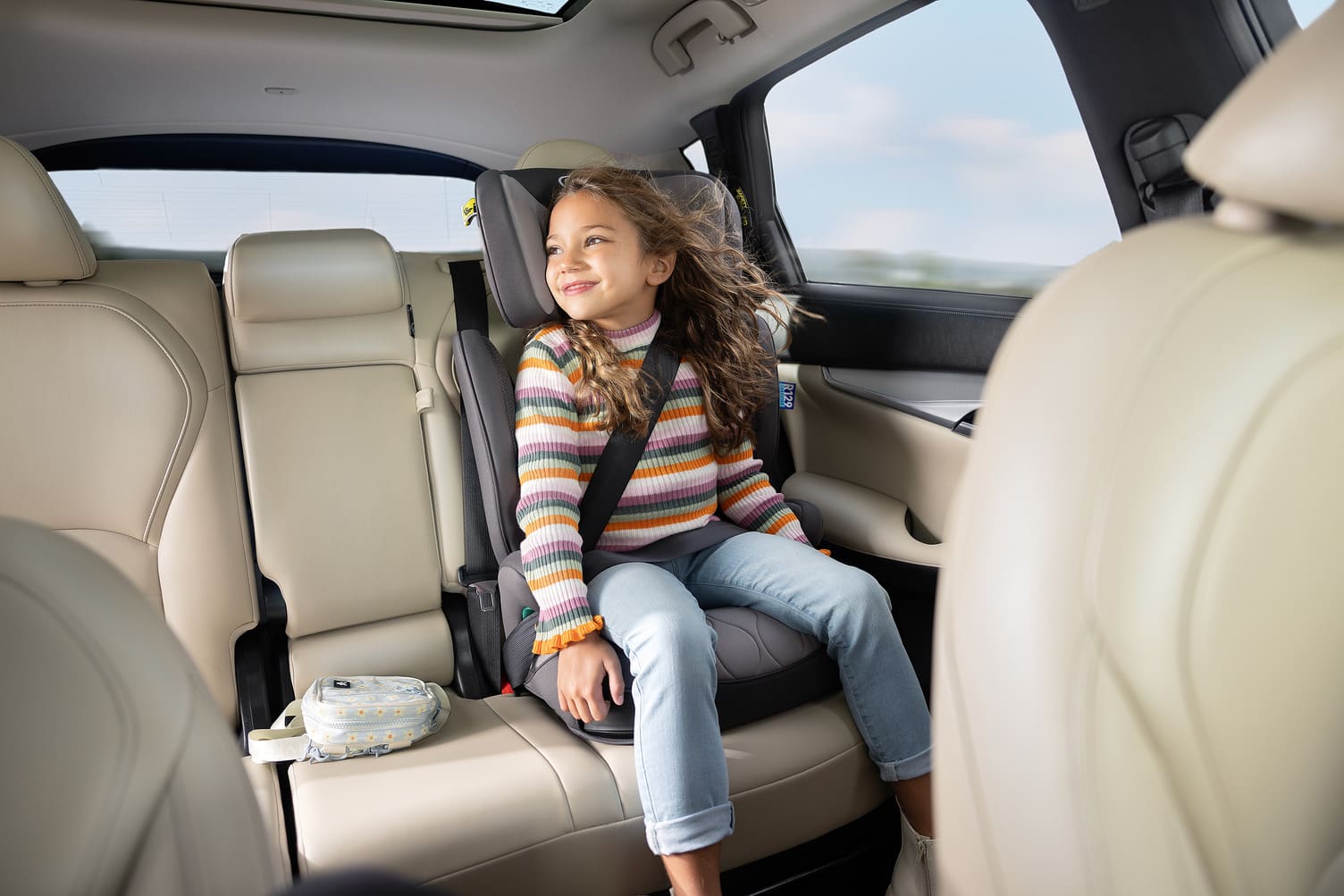
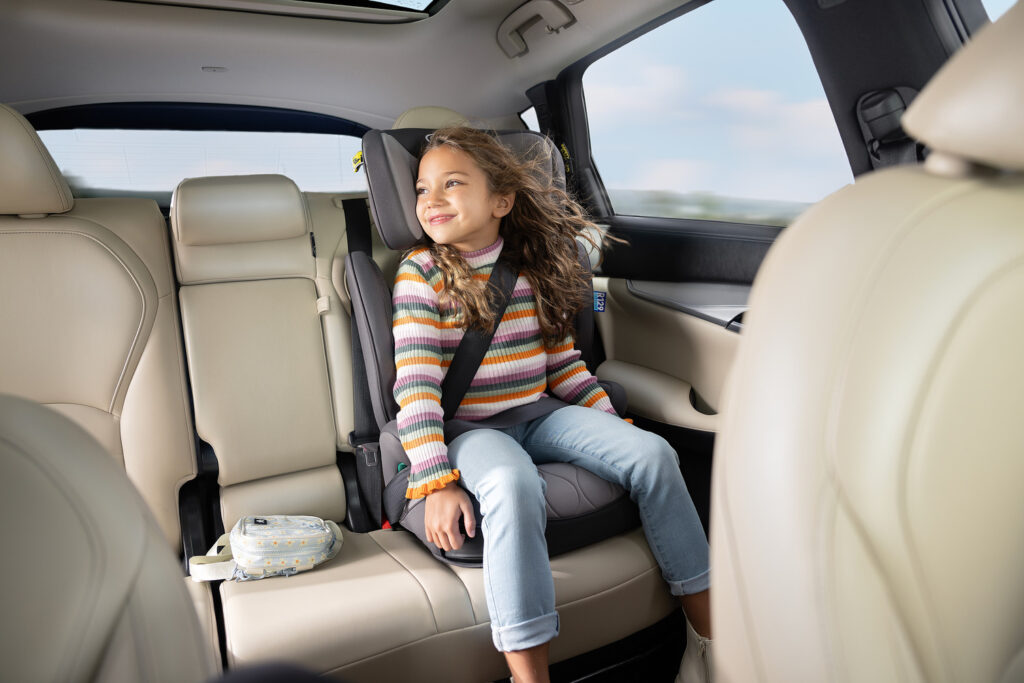
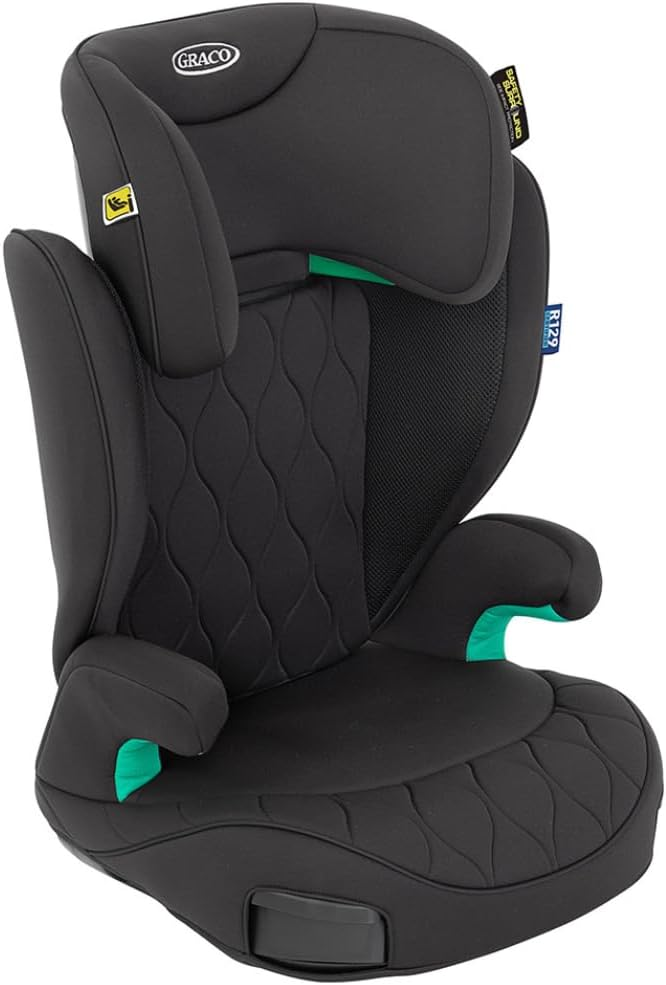
The Graco Affix i-Size R129 ISOFIX Highback Booster grows with your child
Graco’s Affix i-Size R129 ISOFIX Highback Booster is designed to grow with your child, offering a combination of comfort, ease of use, and stringent safety measures:
Key features:
- Age and Size Adaptability: Suitable for children approximately aged 3.5 to 12 years, accommodating heights from 100 to 150cm.
- Safety Certifications: The seat is i-Size and R129 certified, meeting the latest safety standards, which include advanced side impact protection to safeguard your child in the event of a side collision.
- Installation Ease: Colour-coded ISOFIX connectors make the installation process straightforward, minimising errors and enhancing overall safety.
- Lightweight and Portable: Weighing just 4.2kg, this booster is easy to transfer between vehicles, making it ideal for families on the move.
- Comfort Features: Includes breathable fabrics for side ventilation, a 10-position adjustable headrest, premium padded seat and armrests for comfort on long journeys. Dual retractable cupholders keep necessities within easy reach too.
Purchase the Graco Affix i-Size R129 ISOFIX Highback Booster here*
Engaging children as in-car safety advocates
One of Brake’s innovative strategies is to recommend involving children actively in their own safety. One of these strategies includes encouraging children to role-play as ‘police(wo)men’, overseeing the safety practices within the car. This role-playing activity does more than entertain; it empowers children to actively participate in maintaining safety. It’s a fun and interactive way to monitor and remind about safety protocols such as seatbelt usage and proper seating, but it also instils a sense of responsibility and awareness about road safety from a young age. Children can develop a deeper understanding of safe driving practices, making them more likely to grow up with a conscientious approach to driving and road use.
You can support these initiatives by reinforcing the message that road safety is crucial and everyone has a role to play in ensuring a safe journey.
FAQs on car seat safety during school runs
1. What is the proper car seat safety during school runs?
Proper car seat safety involves using a car seat appropriate for your child’s height, age, and weight. Make sure the seat is installed according to the manufacturer’s instructions and secured tightly in your vehicle. Always use the harness and buckle system as directed to keep your child safely restrained during each journey.
2. At what age do you stop using a car seat?
You should continue using a car seat until your child reaches the height or weight limit specified by the seat’s manufacturer. After they outgrow the car seat, transition to a booster seat until they are tall enough to properly fit your vehicle’s seat belts, which is typically when they are about 150cm tall or 12 years old.
3. How can I ensure my child’s car seat is installed correctly?
To ensure correct installation, follow the car seat manual and your vehicle’s instruction manual carefully. Use either the seat belt or LATCH system to secure the seat. After installation, the seat should not move more than an inch side-to-side or front-to-back. If unsure, visit a local car seat inspection station for professional assistance.
4. What are the CDC recommendations for car seats?
The Center for Disease Control and Prevention (CDC), America’s leading science-based, data-driven, service organisation that protects public’s health recommends keeping children in rear-facing car seats for as long as possible, moving to a forward-facing car seat with a harness until they reach the maximum weight or height limit, and then switching to a booster seat. They should remain in a booster seat until adult seat belts fit properly.
5. How do I check car seat safety ratings?
Car seat safety ratings can be checked through consumer reports or safety organisations that conduct and publish crash testing and safety evaluations, such as the National Highway Traffic Safety Administration (NHTSA) or the Insurance Institute for Highway Safety (IIHS).
6. Are booster seats safe?
Yes, booster seats (highback or backless) are safe and necessary for children who have outgrown their forward-facing harnessed seats but are not yet large enough for adult seat belts. Boosters elevate children to a height where the seat belt fits them properly over the sternum and the centre of the collarbone, not the neck, and low across the upper thighs, not the abdomen.
7. Why is car seat safety important?
Car seat safety is crucial as it significantly reduces the risk of injury or death in the event of an accident by properly securing the child and ensuring that impact forces are distributed over the strongest parts of the body.
8. How often should I check my child’s car seat for issues?
Check your child’s car seat regularly, at least once a month, to ensure there are no loose parts, and that straps and harnesses are not twisted or frayed. Always replace the car seat after any incident.
Final thoughts
Throughout this article, we have emphasised the pivotal role of car seat safety, particularly during school runs—a time when our children are frequently on the move and most vulnerable. Graco, in collaboration with Brake, has taken significant steps through its ‘Safety Within’ campaign to enhance awareness and instil rigorous safety measures, especially about the critical nature of properly fitted and utilised car seats. You must regularly check your child’s car seat meets current safety standards, such as the i-Size and R129 certifications, and ensure that these seats are correctly installed and maintained.
The statistics speak for themselves: accidents during school runs are not just possible but prevalent, with a disturbing number of these incidents attributed to preventable causes such as distraction and improper seat usage. So adhering to the guidelines provided, such as ensuring the correct seat for your child’s size and age and engaging children in safety practices, means you can drastically reduce these risks.
Every journey matters, and every precaution taken is a step toward safeguarding our children’s futures. Graco’s longstanding commitment to safety and their active involvement in Road Safety Week serves as a model for how companies and parents alike can contribute to creating safer travel environments for everyone.
For more detailed information on the latest in car seat safety technology and tips for secure travel, visit Graco’s website. Additionally, to stay engaged with ongoing safety campaigns and to find daily tips on protecting your little ones on the road, follow Graco’s Instagram. Join the ‘Safety Within’ campaign and become part of a growing community dedicated to ensuring that every child is protected, every journey, every day.
*This post is sponsored by Graco, but all thoughts are 100% my own – Some images are taken from Graco’s website*