
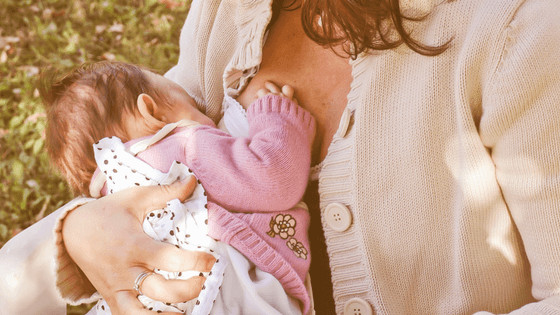
How I Lost Breastfeeding and Got it Back
Someone I know once said to me that becoming a mother for the first time was “a bit of a shock to the system”. At the time I thought it had to be one of the most extreme understatements I had ever heard.
Perhaps one of the strangest aspects of having a live human being come out of your body is its need to stay attached. Not
While the last thing I’d want to do is sound negative about the nursing relationship, a relationship that my daughter and I gained so much from, I think it’s a shame that so many women are still going into it with widely perpetuated false expectations. The biggest of these, and I beg to differ with many creators of instructional videos here, is that it doesn’t hurt starting out if you are doing it correctly. If you believe this, then you are likely to believe you are not doing it correctly in the beginning, when in fact you may very well be doing it just fine.
In my experience, succeeding and carrying on for any length of time means walking through the fire. One friend of mine was told by a midwife to ‘grit her teeth until she came down off the ceiling’. If your nipples

Aside from the hardcore ‘just rub breast milk on the region’ advice, there are some ways to soothe some initial pain.
My story with nursing begins with some bruises nearly all of us go through at first birth. I’d
My mother was at first thrilled to see my spirits lift and thought a combination of nursing and formula would help restore my tentative sanity. It soon became apparent that I was very reluctant to put my baby on the breast at all. I wanted an electric pump. I wanted that bottle there between me and the baby. I wanted to see what she got every time. The skin to skin situation was alien, alarming, draining. Even when my breasts were bulging and leaking, the only way I wanted to empty them was with a pump: an activity that I could do at my discretion and within my control.
What I envisioned to cope turned out to be complex and problematic. My daughter was screaming on and off, but mostly on, throughout the nights. I couldn’t tell whether she was taking formula as comfort or out of hunger. She seemed
One friend realised what was happening and told me I wasn’t just using
I despised the nursing pillows around me. Every time I looked at them they said ‘failure’. Nursing was something other women could do. I couldn’t comprehend my baby’s unfathomable needs – or needing her in return. Then a strange thing happened.
My baby was five-and-a-half weeks old. I took her to her pediatric checkup. Outside in the waiting area was a woman with a toddler daughter. The woman saw me struggling with my distressed newborn and we discussed nursing. She explained that her daughter had been premature and that they’d had a lot of trouble with the feeding. In addition, the woman had to go back to work full time when her baby was tiny. It wasn’t easy, but they kept at it, nursing when they could, pumping breast milk when they couldn’t until the little girl was eleven months old. This struck me as an astonishing accomplishment.
I could see that this mother wasn’t especially privileged or well-educated. She was
Inside the paediatrician’s office was a poster – the kind that either makes a woman feel proud that she is feeding or awful that she is not. It listed all the things that nursing helps prevent: a myriad of
I spoke with the paediatrician. He said any breast milk was better than none. He looked surprisingly meek and human for a doctor. His wife had gone through the challenges of nursing and he knew that the early days of establishing it could be very hard. He seemed to think I might recover my supply and arranged for me to speak with the lactation consultant after the checkup was over.
Nursing was, in my mind, the epitome of motherhood and that was part of why I
Now she waited with me for the lactation consultant, Maria. I’d met Maria once before and had spoken to her on the phone. She breezed in and I remembered what she’d said previously; that she had nursed three of her own children and bottle-fed one and that nursing was actually the easier choice once you got the hang of it.
Maria saw that I was wasted by exhaustion. She explained that I could get breastfeeding back but didn’t want me to beat myself up about the whole thing. She expressed her belief that if a baby was being adequately fed and fully loved, that that was hardly abuse. “But if it’s what you really want, put her on every hour and a half to two hours”, she said. “The milk supply will rebound. In the first six weeks, we have milk enough for two babies. It’s just a matter of getting it all moving again.”
I was afraid to believe her. I could hardly pump anything at all sometimes. “But the pump isn’t very effective”, she reminded me. “Put her on”, she said again, “If it’s what you really want.”
Therein began an incredibly frustrating week, with my mother coaxing me on every step of the way. The alternating discouragement and hope were like high seas. At first, my baby didn’t seem particularly interested in or contented with my milk. She would often be hungry again very shortly after I nursed and so I’d give her formula. This was the pattern, breast and then formula. Even in the middle of the night, I’d start heating the formula before putting her on the breast. Then one night she just fell right back asleep after being nursed. I couldn’t believe it. I ran around the house celebrating by myself, heating up plain old milk in the micro, so I could build up my own strength.
I’d been frantically writing all her feeds, the side she was on, the number of minutes, how much of it was
I don’t say any of the joys of bonding with a baby
As I became a community volunteer who supported breastfeeding, I saw the spectrum of challenges that mothers go through. There’s one baby’s reflux, another’s determination to hang off the nipple, a mother’s mastitis, illness at birth, fiscal and cultural considerations and much more. But I’ll never forget a woman telling me once that she was taking a dietary supplement that had all the nutritional value of breast milk! I thought, first, you don’t need breast milk at your age. Second, there are well over 100 ingredients that have
There are surely cons
Such a fantastic article about the trials and tribulations of feeding her demanding newborn and how Jennifer overcame breastfeeding through sheer hard work. Do you have a story related to breastfeeding, pumping and/or bottle feeding?
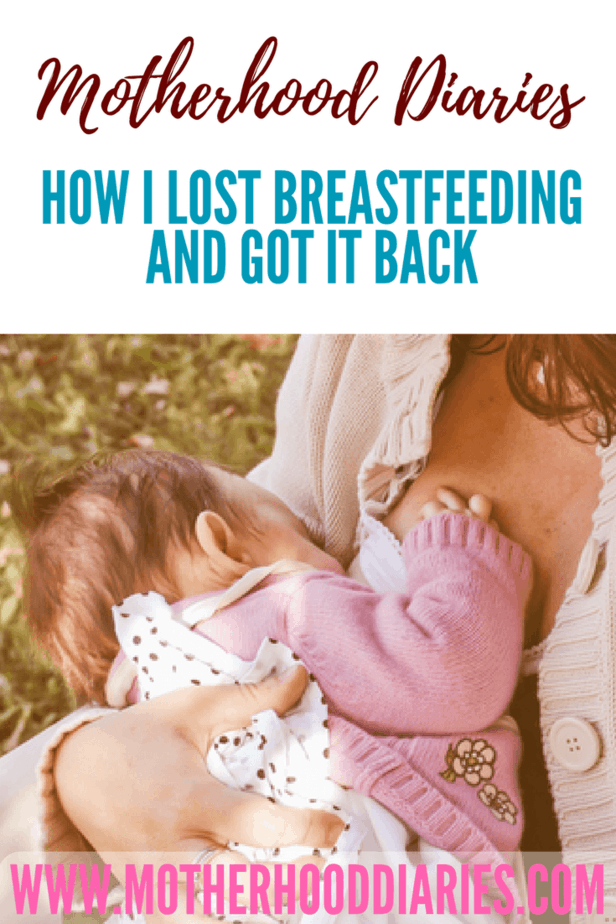









I tell my parentcraft audience that the first few weeks of feeding and caring for a new born is the hardest work they will ever do. When they have delivered and I visit them I ask if I prepared them for the experience and they always say “NO, it is much, much harder than you said.”
Thank you for a truthful story Jennifer, I found your struggle quite uplifting. I stopped feeding my first baby when he was 3 months old and bitterly regret stopping to this very day.
You will be able to look back at this small episode in your life and feel very proud. Well done.
http://www.painfreelabour.blogspot.co.uk