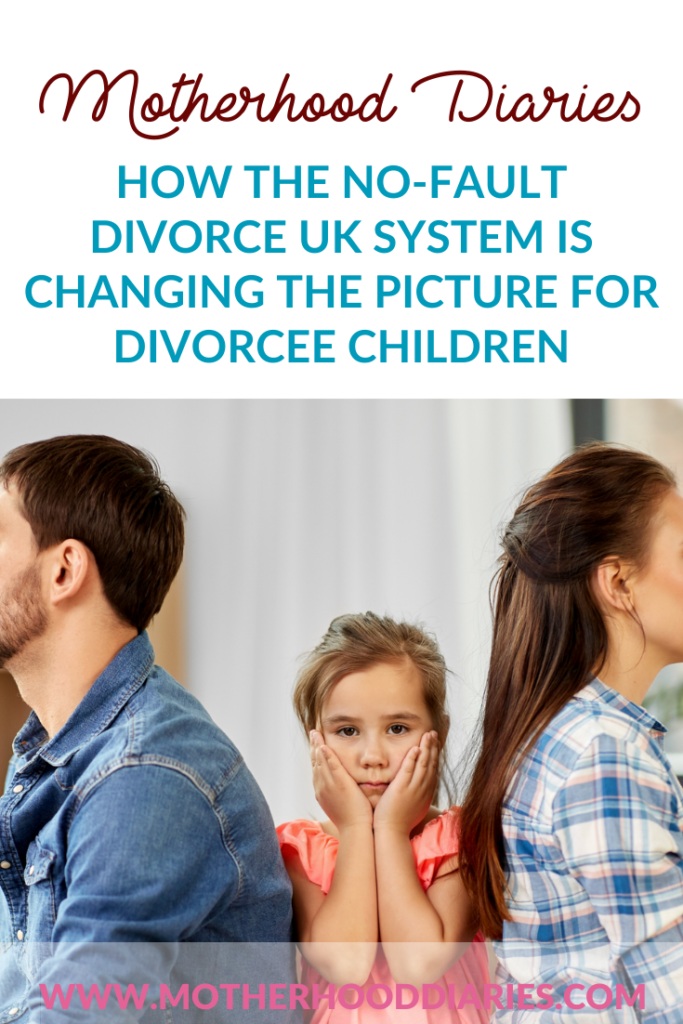
How the no fault divorce UK system is changing the picture for divorcee children
No-fault divorce will eliminate the need to blame one spouse for a divorce, but how will this affect the children of divorced couples?

The UK has a system of divorce that requires one spouse to prove the other acted in a way that caused the breakdown of the marriage. That said, with no fault divorce, there’s no need for proof, and divorce can be granted by consent alone.
This new system hasn’t been introduced yet but will likely become law by autumn 2021. The question is, how will this new no fault divorce system affect the children of divorcees?
Today, we’re going to give you a brief overview of no fault divorce and how it’s different from the current system. We’ll also dive into how this will affect the children of divorced couples, before giving you some advice on whether you should wait for the law to come in before you get divorced.
What is no fault divorce?
As we mentioned in the introduction to this post, no fault divorce is a new system of divorce that allows couples to end their marriage without proving one spouse is at fault. Under the current divorce system in England and Wales, one spouse must file for divorce, and accuse their partner of misconduct if they want to dissolve the marriage. There are three reasons you can use to end your marriage:
- Unreasonable behaviour
- Adultery
- Desertion
Once the spouse has filed for divorce, their partner needs to respond, and if they disagree, the person who filed the proceedings will need to provide proof of their initial claim of misconduct. If they can’t provide this evidence, the court might rule that the two must live apart for two or five years until they are able to get divorced.
After several cases of people being forced to stay with a partner because they weren’t able to prove misconduct, the government created a no fault divorce bill. This has now made it through its parliamentary journey and is ready to be passed into law.
This new bill means that, instead of blaming your partner for misconduct to end a marriage, a couple can claim ‘irretrievable breakdown’ as the reason the marriage is ending. Then, they can get a divorce without having to suffer any painful separation periods.
How will no fault divorce change the picture for children?
So, now that we’ve covered the main difference between no fault divorce and the current system, it’s time to discuss what impact this type of divorce/family law will have on children. This section will serve as a sort of no fault divorce pros and cons debate. There are two primary views on whether the new bill is a good or bad idea for children…
Pro – Removes the toxic environment of fault-based divorce
Instead of parents having to blame each other for the breakdown of their marriage, no fault divorce can end it amicably and quickly. This prevents any long, drawn-out arguments over whose fault the divorce is, and just the general tension caused by them having to stay married any longer than they want to. It also avoids the parents coercing the child to take sides; no blame means no sides to take.
The less fighting between the couple, the less their children will be subjected to it. Ultimately, although their parents will be divorced, at least the child didn’t have to witness the breakdown and further resentment caused by their parents being stuck in a toxic marriage.
The Justice Secretary, MP Robert Buckland, said: “The institution of marriage will always be vitally important, but we must never allow a situation where our laws exacerbate conflict and harm a child’s upbringing. By sparing individuals the need to play the blame game, we are stripping out the needless antagonism this creates so families can better move on with their lives.”
Buckland’s sentiments were mirrored by Aidan Jones, the CEO of relationships charity, Relate, who told The Independent newspaper:
“Our current divorce laws encourage increased animosity between parting couples because they are led to decide who is ‘at fault’ and why. This can be difficult to navigate – especially when there’s already a lot of bad feelings and conflict between partners,” he says. “Even when things have been relatively amicable up until that point, the process of having to apportion blame can turn things sour pretty quickly.”
Aidan Jones, CEO of Relate
Relate also released research showing that conflict between parents damages children more than anything else during a divorce. This suggests that no fault divorce is a more compassionate system than the current one.

Con – More children will have divorced parents
Keeping in mind that conflict between parents damages children more than anything else during a divorce, the avoidance of divorce itself is the aim of those who disagree with no fault divorce.
One thing that the current divorce system has in its favour is that it tries to encourage married couples to stay together. The marriage has to have undergone grave misconduct for a divorce to be granted, as most other things are considered small enough for the couple to recover from.
With no fault divorce, couples will be able to get divorced on a whim over a minor disagreement or issue, which could lead to more children having divorced parents.
Also, with divorce proceedings happening at a higher speed, there isn’t much time to discuss how the parenting will be organised after the divorce. Because of this, the child might be dragged through a painful child custody battle.
This sentiment was expressed in a letter written to the Telegraph by several MPs who asked the government to focus their attention on helping couples reconcile instead of introducing no fault divorce. The MPs also claimed that enacting the no fault divorce bill would be poor timing, as COVID-19 has already made couples more fragile and on the verge of filing for divorce.
One of the MPs, Fiona Bruce, said of the bill:
“This bill is a bad bill. It sends out the wrong message at the wrong time. No-fault divorce is really state-approved unilateral divorce.
“Ministers like to say that it is all about the divorce process and not about marriage. They are wrong. The removal of fault sends out the signal that marriage can be unilaterally exited with no available recourse for the party who has been left.”
Fiona Bruce, MP
Should you wait for no fault divorce to happen?
The Divorce, Dissolution and Separation Bill made it through the House of Commons on 17th June. It’s now on its way to receive Royal assent, and will need to have additional amendments made to it by the House of Lords.
Unfortunately, for those of you waiting for no fault divorce to be passed, the bill will not come into force until autumn 2021. So, it may be a waiting game for those wanting to part ways without a cause.

So, is it worth waiting until next year for no fault divorce to pass?
If you’re in a marriage that isn’t working, and you’re sure that you’re going to get divorced anyway, it might be worth filing for divorce now. Especially if you have children who have to watch the breakdown of your marriage over the next year, why not nip it in the bud.
However, it’s a good idea to make sure you have evidence of misconduct, or a partner who won’t contest the misconduct, before you file for divorce. If you don’t have this, you’ll have to wait at least 2 years to get divorced anyway, so you might as well wait for the no fault divorce bill to be passed.
Change is inevitable
Today, we’ve managed to cover what no fault divorce is and how it differs from our current system. We’ve also delved into the two sides of the coin on how it will affect children, and shared some advice on whether you should wait a year for the bill to be passed into law.
Depending on whether you believe no fault divorce will cause more divorces or not changes the way this new bill affects divorcee children. If the level of divorce doesn’t go up too much, then no fault divorce was the right choice. However, if it goes up a lot it, could mean that many more children end up with divorced parents than under the previous system.
The main thing to remember is that this bill has now been passed and will be put in place in 2021. We have to hope that the benefits of reducing the pain of divorce for children outweighs the possible increase in divorce rates.
Hopefully this post has shed some light on the topic of no fault divorce. Leave a comment down below if you have any insight into the topic, and thanks for reading!
*Collaborative feature post*