

38 weeks pregnant – pelvic pain and pressure has started
Are you pregnant? Grab your free pregnancy pack now – details inside!
I saw my midwife and she told me that, at 38 weeks plus 2 days, I am 3/5th palpable, which means I’m 2/5th engaged! I had to go home and check what that actually meant, but basically, it means that the baby’s head is split into fifths and so 2/5th of the baby’s head is in my pelvis, which means 3/5th still isn’t. So, the pelvic pain and pressure have definitely started.
She also reckons that the baby is going to be about 7 1/2 pounds, which is great because I thought I was going to give birth to a ten-pound baby! She advised me to buy some pineapple and raspberry leaf tea to speed the process along, so I’ve had my first cup and the tea is gorgeous! I’m flitting back from constipation to diarrhoea so I’m hoping this tea will help regulate things a bit!
By the time I finished my midwife appointment, I was famished and polished off two chicken, bacon and egg sandwiches. My pregnancy appetite has definitely increased since Boxer has dropped down!
If you can identify the early pregnancy symptoms after ovulation day, it’s pretty much the same regarding that initial period pain feeling you get. I have started to feel period-like pains in my lower back and around my tummy. They’re very weak and I don’t feel like I’m going into labour yet, but it’s definitely a new feeling. I can only place them as Braxton Hicks contractions as they can’t be the actual contractions. Whatever they are, they’re definitely getting stronger! My pelvis still hurts too, but the midwife says that is good – it means the pelvis is stretching to let the baby in.
I am also feeling very large and uncomfortable. My belly is a massive round ball and when I sit down I feel like I’m squashing the baby! Most of the time I’m on my hands and knees to keep the baby in the right position, plus it takes pressure off my back, which hurts a lot now. I wonder if this is the start of labour. I read up on the early signs of labour to find out whether my body is gearing up for childbirth.
The time from the second trimester to now has literally zoomed by and I can’t believe I’m almost at the end!
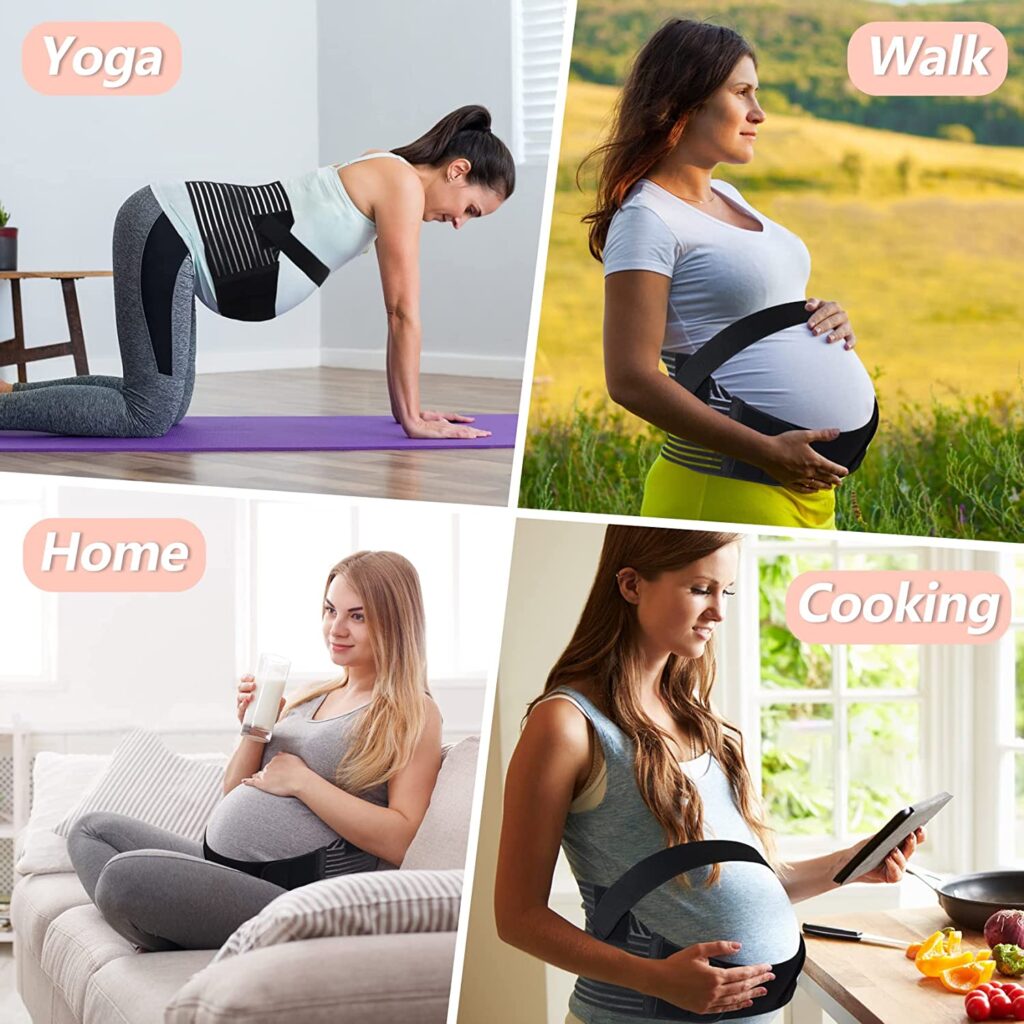
- Relieve back pain and support the growing belly
- Correctly distribute the weight around your hips and pelvis, so your belly gets a good support
- Breathable and lightweight
- Has enough stretch and compression to reduce bladder pressure
- Multifunctional for pregnancy and postpartum
- Can also be used as a pelvic belt to tighten your enlarged pelvis caused by pregnancy.
- Has a convenient adjustable belly band to make it easier to take on and off by yourself
- Adjust according to your trimester period
- Ease pelvic pain!
38 weeks pregnant – labour signs and pelvic pain and pressure
I have also created an infographic (below) that goes through 38 weeks pregnant signs of labour in more detail. Click on the image below to print it out or pin it to your Pinterest board.


Save £35 SnuzCurve Pregnancy Support Pillow here*
Braxton Hicks contractions
Well, I am definitely getting something! The twinges and the period-like pains must fall into that category.
Diarrhoea
Well, to be honest, I wake up in the morning and have to go straight away, and in the last couple of days, I’ve had to go twice a day!
Bloody show/extra discharge
Only twice in the past week, I have seen a tiny amount of discharge that has a pinkish tinge. Once right at the beginning and once on Friday. I don’t think this means anything as they were quite small and significant. Remember vaginal discharge is normal, but if it is stained with a pinkish tinge, this could signify a bloody show and might be the start of labour signs at 38 weeks pregnant.
🍼 Create Your Perfect Baby Shower Wish List on Amazon Today! 🍼
Burst of energy/nesting instinct
I haven’t really had the urge to spring-clean the house yet. I’m really hoping I do soon as the house needs to be cleaned properly, but I just don’t have the energy to do that at the moment – I sit on my bum all day and type. I keep meaning to walk every day but it is sub-zero temperatures outside and it’s snowing. Really, it’s hibernation weather… I am trying to incorporate exercise so I feel a little bit healthy, especially with all the sugary snacks I’m eating!
The baby drops down
This sign I definitely have. My bump has quite visibly dropped down and I can definitely feel the baby’s head sitting in the pelvic region. The pressure in my pelvis alone is proof enough that there’s an 8-pound baby (or thereabouts) sitting in there!
The cervix starts to open
No idea about this one. I haven’t had an examination yet, but I’m hoping it thins out in time for the birth.
Your waters break
Unless they broke when I was on the loo, I don’t think this has happened to me yet, but I’ve been told that the waters don’t necessarily have to break before labour begins. The waters can break during labour, so I’m not really looking out for this one.
So, right now I am displaying 3 (well 3 1/2 if I count the discharge) out of the 7 signs, so I have a feeling I’ve got about a week left.
Maybe more!
Do you know your due date? Check out our due date calculator now!
FAQ
38 weeks pregnant – pelvic pain, hard to walk – what do I do?
Other questions I received were ’38 weeks pregnant – lower back pain and pelvic pressure, what do I do?’ and ‘As a pregnant woman who is in the beginning of her 38th week, how could I identify that the baby has come down?’
The pelvic pain may be coming from your baby sitting lower down in your pelvis at this stage. This dropping of the baby, otherwise called lightening or engagement, can occur a few weeks before your baby is born, which is why you might notice the extra pressure. This pelvic pressure may even make it difficult for you to walk. If you’re experiencing extreme pelvic pain, speak to your doctor to rule out any other issues. Wearing a supportive belly band can help provide much-needed support.
Can you breastfeed while you’re 38 weeks pregnant?
Yes, you can breastfeed while you’re 38 weeks pregnant. This practice is known as tandem nursing when you breastfeed your older child while being pregnant with your next child. I did it twice. Breastfeeding during pregnancy is generally considered safe for most women. However, it’s essential to be mindful of a few considerations:
1. Nutritional Needs: Pregnancy and breastfeeding simultaneously can increase your nutritional needs. Maintaining a well-balanced diet to support both your body’s demands and your growing baby’s needs is crucial. Make sure you’re eating enough calories and getting a wide variety of nutrients.
2. Uterine Contractions: Nipple stimulation from breastfeeding can cause mild uterine contractions. For most pregnancies, these are not a concern and are generally considered normal. However, if you have a high-risk pregnancy or a history of preterm labour, you should discuss breastfeeding during pregnancy with your healthcare provider to ensure it’s safe for you.
3. Comfort: As your pregnancy progresses, breastfeeding might become physically uncomfortable due to the growing belly, tender breasts, and changes in nipple sensitivity. Finding comfortable breastfeeding positions and adjusting as needed can help manage this discomfort.
4. Milk Supply Changes: During pregnancy, you may notice changes in your milk supply. Many women experience a decrease in milk production, especially during the fourth and fifth months of pregnancy. Additionally, the taste of breast milk can change due to hormonal fluctuations, which might affect your nursing child’s interest in breastfeeding.
5. Communication With Healthcare Providers: It’s important to communicate with your healthcare provider about your intention to continue breastfeeding during pregnancy. They can offer personalised advice and monitor your health so that both your pregnancy and breastfeeding journey go smoothly.
What is the treatment for pelvic pain at 38 weeks pregnant?
Pelvic pain or pressure is common during this stage of the pregnancy but there are some ways to manage it. Start doing pelvic exercises, relax with your hips elevated to take the pressure off your pelvis or take a warm bath. You can also apply a heating pad to your back for twenty minutes. Make sure you take at least a twenty-minute break before you apply the heat pad again.
38 weeks pregnant – sharp pains down below
Another question I received was ’38 weeks pregnant – groin pain when walking. What can I do?’
You may start to experience cramping at 38 weeks in pregnancy in your lower back and crotch pain as you approach labour. Your joints and muscles are now shifting and stretching to prepare for birth so these are signs of labour coming imminently!
Are the sharp pains in cervix a sign of labour?
A similar question asked was ‘What are the types of pain during pregnancy?’ and ‘Is it normal to have cramps at 37 weeks and 5 days pregnant?’
Lightening pain can be the first sign of labour. Some women can even feel their cervix dilating, so if you’re experiencing cervix pain, regular contractions and consistent backache, coupled with any liquid discharge, you might be in the early stages of labour.
Why is crossing your leg harmful for pregnancy?
Sitting with your legs crossed won’t harm your baby but it may cause swelling in your ankles or cause leg cramps. If you do find your legs are swelling and your feet are cramped, elevate your legs on a stool or sit with both feet on the floor.
Do women experience back pain during pregnancy?
A similar question asked was, ‘Why is back pain or discomfort common during pregnancy?’
According to Jana Abelovska (Head Pharmacist) at clickpharmacy.co.uk, back pain is very common during pregnancy, especially during the last trimester. The ligaments in your body naturally stretch and become softer which can put a strain on your lower back and pelvis, and this causes back pain.
Is chiropractic care safe for pregnant women?
Chiropractic care during pregnancy can be a safe way to promote comfort, relieve stress and minimise back pain. However, it is always important to speak to your GP and get advice before you take on any kind of treatment and find someone who specialises in pregnancy before you opt for chiropractic care.
In pregnancy what does 2 cm dilated and 70 effaced mean?
A similar question asked was, ‘What should I do if I am 38 weeks pregnant and 2 cm dilated?’
As you approach your due date, your healthcare provider might start talking about dilation and effacement. These are important terms that help us understand how your body is preparing for childbirth. Let’s break down what they mean in a clear, non-technical way.
When we say you’re “2 cm dilated,” we’re referring to the opening of your cervix. The cervix needs to open from 0 to 10 cm to allow for the baby to be born. Being 2 cm dilated means that your cervix has begun to open, indicating the early stages of labour.
Effacement is about the thickness of your cervix. Initially, your cervix is thick and firm, but as labour approaches, it starts to thin out and soften. This is what we mean by “effacement.” Being “70% effaced” means that your cervix has thinned out to 70% of its original thickness. It’s a crucial step towards getting your body ready for the birth process.
So, hearing that you’re 2 cm dilated and 70% effaced is a sign that your body is making progress towards childbirth. These changes, including effacement, are essential for creating a path for your baby to be born. It’s a natural and important part of the labour process, showing that things are moving in the right direction.
What is having a posterior sunny-side-up baby birth like?
A sunny side up or posterior position means the baby’s head is more likely to get wedged against the pubic bone. When this happens, the pressure is placed on your spine and sacrum and causes a longer and more painful delivery.
Is the TENS unit safe to use during pregnancy?
If applied correctly the TENS machine can be used safely but you mustn’t use it over certain areas in the body which may induce labour contractions like the web space of the thumb, all around the lower half of the leg and ankle and the top of the shoulders. If labour contractions are stimulated then studies show they will stop if the TENS machine is turned off again. Check out this leaflet from Oxford Health for more information on safe use of TENS machines during pregnancy.
38 weeks pregnant – symptoms not to ignore
- A headache that won’t go away
- Vision changes
- Severe swelling in your hands and face
- Pain in your right upper abdomen
- Your waters breaking
- Dizziness
- Significant vaginal bleeding
- Fever
- Trouble urinating or painful urination
- Vomiting or severe stomach cramps
- A marked decrease in or absence of foetal movements
Contact your doctor straight away for further medical tests if you experience any of the above.
Haven’t packed your hospital bag yet? Here’s a checklist – quick, you’re running out of time!
A fun fact – The baby weighs about 7 to 7.5 pounds, and is likely to be between 19 and 21 inches long!
The science part
As your body gears up for the arrival of your baby, it undergoes several crucial changes, thanks in part to a hormone known as relaxin. Produced by the placenta and ovaries, relaxin plays a vital role in preparing your body for childbirth. It works by relaxing the ligaments in the pelvis and softening the cervix, which are key steps towards enabling the cervix to dilate and efface effectively.
This natural process, facilitated by relaxin, is essential for making the birth canal flexible enough for your baby’s passage during delivery.
Your baby at 38 weeks

Your baby at 38 weeks
- Your baby is the size of a marrow
- They are at full term and can come at any time now
- The organs are now all fully formed and ready for life in the outside world
- Your baby has likely moved down and their head is engaged.
- Your baby is still swallowing your amniotic fluid, which is heading to their intestines and which will
result in their first bowel movement (meconium). - Their lungs are still maturing and producing more surfactant, which is a substance that prevents the air sacs in the lungs from sticking to each other once the baby starts to breathe oxygen.
Your pregnancy signs and symptoms
- You are probably getting impatient to meet your baby now, and feeling quite a bit of discomfort carrying your big lump of joy around. Not long to go now!
- Try to make the most of your last few days before the baby arrives. Get as much rest as you can before the baby comes and takes sleep away from you!
- Are you experiencing leaky breasts? That’s liquid gold called colostrum which your baby is ready to feed on when they greet you. Colostrum contains lots of antibodies that protect your newborn. Consider wearing medically reviewed nursing pads in your bra to protect your clothes
- You may experience an increase or frequent urination as your baby presses down on your bladder. It’s important to not stop hydrating, even though it’s a nuisance to keep going to the loo now!
- You may experience some heartburn or indigestion now that the baby has squashed your organs, You may even experience indigestion too. Prop your head up with a pillow so you’re not fully lying down, to help ease symptoms.
- Nausea may still make its presence known. While commonly associated with the first trimester, nausea can persist or return in the late stages of pregnancy for some women. This late-pregnancy nausea can be down to hormonal fluctuations, the pressure of your growing uterus on your stomach, or even a pre-labour symptom for some. If you’re experiencing nausea at 38 weeks, small, frequent meals and staying hydrated can help manage this discomfort. Ginger tea or ginger biscuits are also known to soothe an upset stomach.
- If you haven’t already, it’s very important to start exercising your kegel muscles or more commonly known as pelvic floor muscles, so you can retain strength and bladder control after birth.

Dealing with common discomforts at 38 weeks pregnant
As we near the end of pregnancy, our bodies undergo a variety of changes to prepare for childbirth. Apart from the pelvic pain and pressure many of us feel, there are a few other discomforts you might encounter:
- Lightning Crotch: This sharp, sudden pain in the pelvic area can catch you off guard. It feels like a quick zap and is caused by your baby’s movements and position, pressing against the nerves in your pelvis. Though startling, it’s a common experience as your body prepares for labour.
- Symphysis Pubis Dysfunction (SPD): Some of us might feel more than just pressure; we might experience deep pain in the front of the pelvis. SPD happens when the ligaments that keep your pelvic bone aligned become overly relaxed – thank relaxin, the hormone that’s helping your body get ready for birth. This can make walking or turning in bed painful.
- Round Ligament Pain: If you’re feeling sharp pains or a dull ache on one or both sides of your lower abdomen, it might be round ligament pain. This occurs as the ligaments supporting your uterus stretch to accommodate its growing size. It’s a normal part of pregnancy but can be uncomfortable.
If you’re experiencing any of these symptoms and they’re causing significant discomfort or concern, it’s important to discuss them with your healthcare provider. They can offer strategies to manage the pain and check to ensure everything is progressing normally with your pregnancy.
Remember, every pregnancy is unique, and these symptoms are just some of the ways our bodies tell us they’re preparing for the big day. Always consult your healthcare provider with any concerns you have during these final weeks.
Your next steps
- It’s just a waiting game now for those hormones to release and kick start contractions, so you can get your baby out when you’re giving birth
- Watch out for early signs of labour, including losing your mucus plug which is one of the first signs that active labour is here
- If you haven’t done so already now is the time to think of baby names for your little one!
- Continue with your pelvic floor exercises and start right NOW if you haven’t done so already – you’ll thank yourself later.
- Keep an eye on your contractions if you feel they have started. If they last more than 30 seconds and are coming every five minutes then make a call to your hospital – your baby is coming!
- If you have any aches, pains, bloody show, or if your water breaks speak to your health professional who can provide medical advice on what to do next.
Note: These are just general ideas of how you and your baby are getting on. Don’t forget that every baby develops differently. If you are concerned about your baby’s development, please consult your doctor or midwife.

*Illustrations by Charlotte Watkins.
*Post contains affiliate links








2 Comments