Cats and newborns: how to introduce your cat to your baby
Bringing a new baby home is an exciting but nerve-wracking experience for parents, especially if you already have a furry family member to consider. Cats and newborns can live together safely with proper preparation, patience, and a focus on positive associations. While cats are independent creatures, a new baby can disrupt their environment and routine. Here’s everything you need to know to help your cat adjust to life with a baby and ensure your family’s safety and happiness.
Preparing your cat for the arrival of a new baby
Before your baby arrives, prepare your cat for the changes that are about to happen. Cats thrive on routine, and sudden shifts in their environment can lead to stress or behavioural issues. Here’s how you can make the transition smoother for both your cat and your newborn:
Create a safe space for your cat
Set up a quiet, safe place where your cat can retreat if they feel overwhelmed. Use scratching posts, cat trees, and cosy bedding to make this space inviting. This “safe place” will help your cat feel secure and less likely to act out. It’s important to establish this area before the baby arrives so your cat becomes familiar with it.
Gradually introduce baby-related changes
Start making changes in your home before your baby’s arrival. Introduce baby gear like a crib, changing table, and baby toys so your cat can get used to the new environment. Play baby sounds at a low volume so your cat gets used to the noises of a newborn. This desensitisation process helps to reduce the shock when the baby arrives.
Use positive associations
Help your cat associate the baby’s presence with positive experiences. For example, give your cat treats or affection whenever they’re near baby-related items like the baby’s room or toys. This will build positive connections and reduce anxiety. If your cat learns that baby-related items bring rewards, they’re more likely to feel calm and comfortable around the new arrival.
Train your cat early
Teach your cat to stay away from the baby’s sleeping areas, like the crib or bassinet. You can use baby gates or cat deterrents to set these boundaries. Cats love to explore high places, so ensure the baby’s space is secure. If necessary, place cat-safe barriers around the baby’s sleep area to prevent unwanted exploration.
When the baby arrives
Once your baby arrives, your cat will notice the new sounds, smells, and movements. Here’s how to manage this important introduction:
Introduce your cat and baby slowly
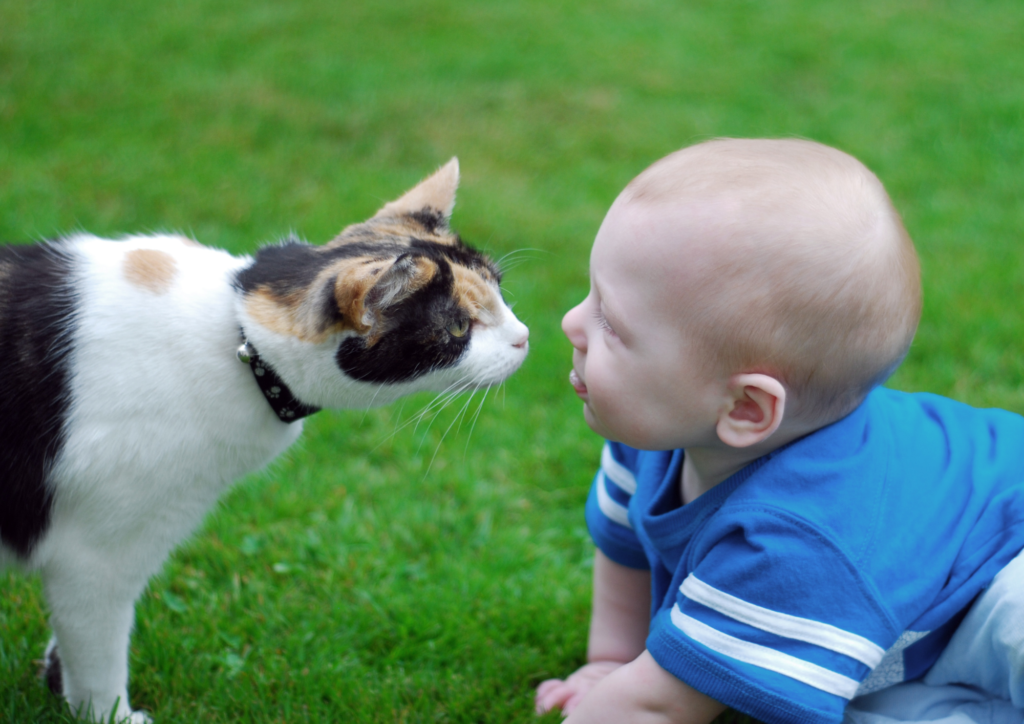
Allow your cat to smell your baby’s blanket before introducing them in person. When you’re ready, supervise the first interaction. Let your cat observe the baby from a distance and reward calm behaviour. The more gradual the introduction, the less likely your cat is to feel threatened.
Supervise all interactions
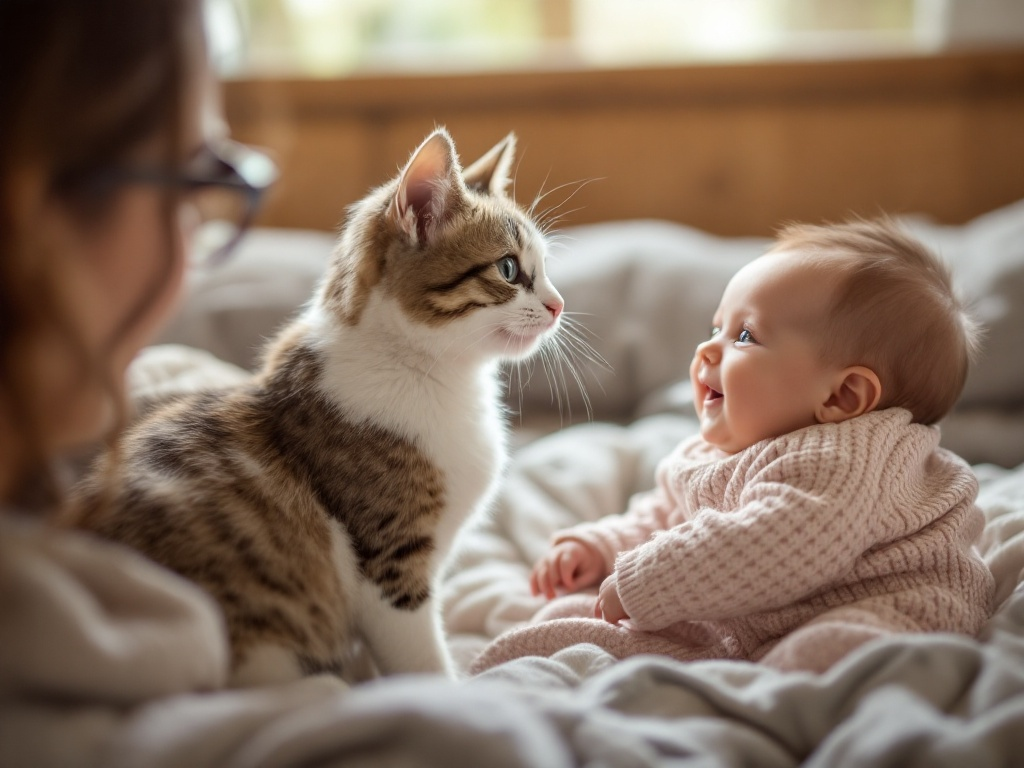
Never leave your cat alone with a newborn. Cats are naturally curious, and while it’s unlikely that they’ll harm a baby, it’s always better to be safe. Supervised interactions build trust between your cat and baby. Cats are more likely to be curious than aggressive, but close monitoring will prevent any potential issues.
Maintain your cat’s routine
Cats love predictability. Keep feeding, playtime, and litter box cleaning schedules consistent. Maintaining your cat’s routine will reduce stress and help them adjust to the new family member. This consistency also prevents jealousy, as cats are less likely to feel neglected when their daily needs are met.
Provide mental stimulation
To prevent boredom and destructive behaviour, offer plenty of interactive custom cat toys, scratching posts, and playtime. Cats love feather wands, laser pointers, and puzzle feeders. Keeping your cat mentally engaged reduces the likelihood of stress-related behaviours, like scratching furniture or marking territory.
Can cats and newborns live together safely?
Yes, cats and newborns can live together safely if you follow proper precautions. It’s a myth that cats intentionally harm babies, but they can accidentally scratch or lie too close to a baby’s face. Here’s how to ensure safety for both your baby and your cat:
- Keep Sleeping Areas Separate: Ensure that your cat does not have access to your baby’s crib or bassinet. You can use crib nets or covers if necessary.
- Keep the Litter Box Clean: Cats use litter boxes for hygiene, but ensure they’re cleaned frequently to avoid the risk of toxoplasmosis, which can affect pregnant women and infants.
- Use Safe, Non-Toxic Cleaning Products: Babies have sensitive skin, so use safe cleaning products for baby toys, blankets, and surfaces. Avoid products that may irritate your cat’s skin or nose.
Myths vs. facts about cats and newborns
Myth 1: Cats smother babies
- Fact: This is a persistent myth, but cats do not intentionally smother babies. Cats may be attracted to the warmth of a baby’s crib or bassinet, but they don’t seek to harm babies. You can prevent access by using crib nets or covers.
Myth 2: Cats are dangerous to babies
- Fact: Cats are not inherently dangerous to babies. Proper supervision, hygiene, and training ensure safe interactions. Cats are usually curious and prefer to observe rather than interfere with a baby.
Myth 3: Cats will ignore the baby
- Fact: Cats often show curiosity towards new family members. While some cats might stay away, others may become affectionate. Introducing your cat to the baby properly can encourage positive bonds.
Myth 4: Cats will get jealous of the baby
- Fact: Cats thrive on routine and familiarity. If you maintain your cat’s feeding, playtime, and affection schedule, jealousy is unlikely. Cats are more likely to feel secure with a consistent routine.
According to Dr. Sarah Ellis, a cat behaviourist:
“Cats can adapt well to changes in their environment if those changes are introduced gradually. A positive introduction between a cat and a baby is essential for their long-term relationship.”
Experts recommend setting up safe spaces for cats and using rewards-based training to establish positive associations.
FAQs about cats and newborns
1. Are cats OK with newborn babies? Yes, cats and newborns can live together safely with proper introductions and supervision.
2. Can my cat be next to my newborn? It’s best to supervise interactions and not leave your baby unattended with your cat.
3. Is it good to have a cat when you have a baby? Growing up with pets can benefit children’s social and emotional development.
4. Can I introduce my cat to my newborn? Yes, introduce your cat slowly and ensure positive associations with the baby’s presence.
5. Do cats and babies get along? Yes, cats and babies can have a strong bond with proper training and supervision.
6. Do cats smother newborns? It’s a myth that cats intentionally smother babies. However, always supervise your cat around a sleeping baby.
7. Can newborns be around cats? Yes, as long as there is supervision and proper hygiene practices.
8. How can you tell if your cat is adjusting well to a new baby in the household? If your cat eats, sleeps, and plays as usual, they adjust well. If they’re hiding or showing aggression, they may be stressed.
9. Can cats and babies live together? Yes, they can coexist peacefully with both supervision, preparation, and safe spaces.
10. How do I keep my baby safe from my cat? Keep the baby’s sleep space cat-free, use positive associations, and always supervise interactions.
Final thoughts
Cats and newborns can live together harmoniously, but it takes planning, patience, and awareness. By preparing your home, maintaining your cat’s routine, and supervising all interactions, you’ll create a safe, happy environment for everyone. Just like any family member, your cat’s needs should be considered alongside your baby’s. Take these steps to build a positive, long-lasting relationship between your cat and your little one.
*Collaborate feature post*