12 crucial vaccinations that every child must have
According to the Centers for Disease Control (CDC), vaccines prevent the death of 4 million children annually. Yet, there is still opposition against vaccines because of misinformation and religious beliefs. The COVID-19 pandemic didn’t help boost immunisation numbers, either. Because of lockdowns all over the world, the number of zero-dose children or children who have yet to receive a single dose of vaccine from the below list of vaccinations which fight against childhood diseases stood at 18.1 million in 2021.
Fortunately, subsequent vaccination drives decreased the number to 14.3 million the following year. While this is a significant improvement, the number still represents the millions of children at unnecessary risk because whatever reason they weren’t vaccinated.
Your baby’s vaccinations protect them and others from harmful diseases, so it’s important to stick to the immunisation schedule offered by your healthcare provider. But, which vaccines are given in childhood? When should these be administered? To give you an idea, here’s a comprehensive child and adolescent immunisation schedule by age.
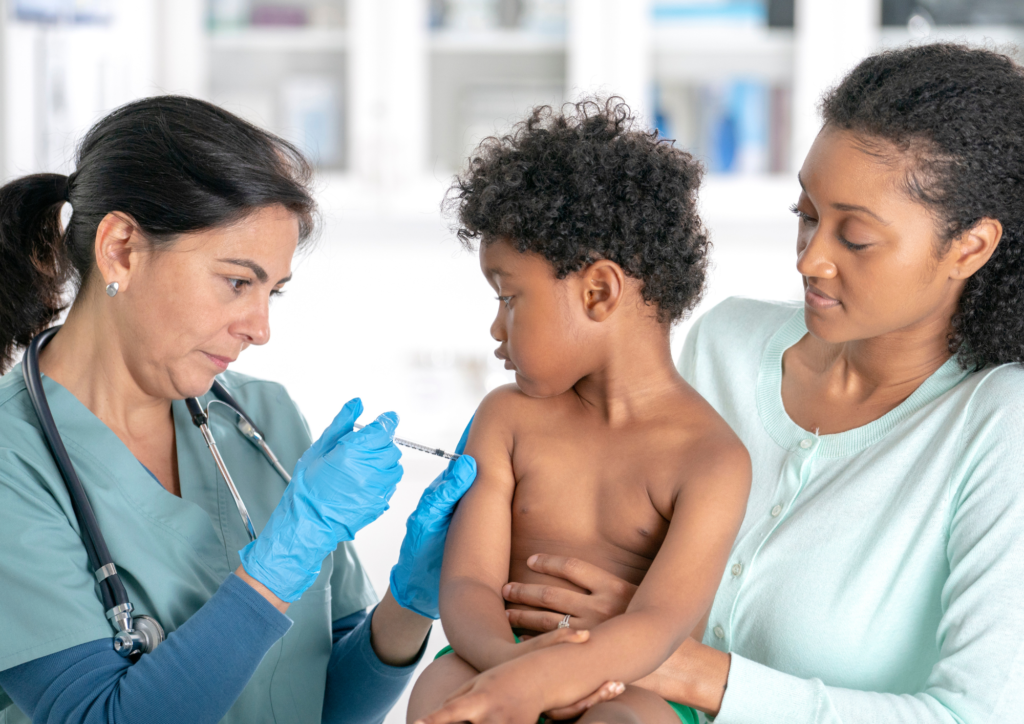
1. BCG (Bacillus Calmette-Guérin) or the Tuberculosis Vaccine
In the battle against tuberculosis, the BCG vaccine is the best defence for children. Given at your paediatric clinic to protect against this airborne bacterial disease, BCG has proven instrumental in regions where tuberculosis remains a threat.
In these parts of the world, the vaccine is administered right after birth or any time after birth until the baby turns 6 months old. By building a robust defence early on, children are protected from the devastating impact of tuberculosis.
2. DTaP (Diphtheria, Tetanus, and Pertussis)
The triple threat of diphtheria, tetanus, and pertussis requires a powerful defence, and that’s precisely what the DTaP vaccine provides.
- Diphtheria: This is a pretty nasty infection that affects the throat and can cause breathing problems. It’s contagious and can be quite serious, especially for kids.
- Tetanus: You might know this one as ‘lockjaw’. It’s caused by a toxin released by bacteria, often entering the body through cuts or wounds. It can lead to really painful muscle stiffness all over the body.
- Pertussis (Whooping Cough): This one causes severe coughing fits and it’s very contagious. It’s especially dangerous for babies, who can have a hard time eating, drinking, or even breathing when they catch it. The acellular pertussis vaccine specifically targets pertussis. It’s called “acellular” because it contains purified components of the pertussis bacteria, not the whole bacteria itself. This makes it different from older pertussis vaccines that used the whole cell of the bacteria.
It’s typically administered in a series of doses during infancy and early childhood, starting at 2 months of age. Subsequent doses are given at 4 months, 6 months, 15-18 months, and 4-6 years.
3. OPV (Oral Polio Vaccine)
In the quest for a polio-free world, the oral polio vaccine (OPV) (inactivated poliovirus vaccine) plays a starring role. Polio or poliomyelitis is caused by the poliovirus, which primarily spreads through contaminated water or food. In worst-case scenarios, polio can result in paralysis. Thanks to widespread vaccination efforts, the incidence of polio has significantly decreased globally, bringing the world closer to eradicating this debilitating disease.
The OPV is typically administered in multiple doses as part of routine childhood immunisation. The first dose is often given at 2 months of age, followed by additional doses at 4 months, 6-18 months, and a booster dose around 4-6 years of age. This schedule may vary based on local health guidelines.
4. IPV (Inactivated Polio Vaccine)
Complementing OPV, the inactivated polio vaccine (IPV) adds another layer of protection against this crippling disease. This dual approach strengthens immunity, emphasising the global commitment to wiping out polio and securing a healthier future for generations to come.
The recommended schedule for IPV may vary by country, but a common schedule includes doses at 2 months, 4 months, 6-18 months, and a booster dose around 4-6 years of age.
5. HiB (Haemophilus influenzae Type B)
Haemophilus influenzae type b (Hib) is a bacterium that can cause severe diseases, including meningitis and pneumonia. The HiB vaccine stands as a guardian against this bacterium and is often administered at 2 months of age, followed by additional doses at 4 months and 6 months.
6. PCV (Pneumococcal Conjugate Vaccine)
Respiratory infections pose a significant threat to children worldwide. For diseases caused by Streptococcus pneumoniae, the pneumococcal conjugate vaccine or PCV acts as a potent shield.
The vaccine is administered starting at 2 months of age, with additional doses given at 4 months and 6 months, and a booster shot around 12-15 months.
7. RV (Rotavirus Vaccine)
Diarrhoeal illnesses are often underestimated but they can have severe consequences for young children. Through the help of the rotavirus vaccine (RV), parents can help their children avoid severe cases of diarrhoea and allow children to thrive without the burden of preventable diseases.
RV is administered to infants in a series of doses, which begins at 2 months of age and is followed by additional doses at 4 and 6 months
8. Varicella (Chickenpox Vaccine)
Chickenpox was once considered a rite of passage but is now preventable with the varicella vaccine. It not only spares children from itchiness and discomfort but also prevents potential complications associated with the virus.
Varicella is administered to children in two doses, with the first dose recommended at 12-15 months of age and the second dose at around 4-6 years of age.
9. MMR (Measles, Mumps, and Rubella)
The combined power of the MMR (measles, mumps, rubella) vaccine addresses three viral adversaries—measles, mumps, and rubella. As measles sees a resurgence in some regions, the MMR vaccine remains a formidable weapon in the world’s healthcare arsenal. This 3-in-1 immunisation eliminates these threats through the first dose given around 12-15 months of age and the second dose at 4-6 years of age.
10. Hepatitis A Vaccine
The hepatitis A vaccine stands as a guardian of liver health. This vaccine is typically administered in a two-dose series, with the first dose recommended around the age of 1, and the second dose administered 6 to 18 months later for long-term immunity.
11. Hepatitis B Vaccine
Early protection against hepatitis B pays dividends throughout a lifetime. The hep B vaccine vaccine prevents chronic liver infections and is usually given in a series of doses. The first is given at birth or shortly after, followed by additional doses at 1-2 months and 6 months of age as part of the routine childhood immunisation schedule.
12. Flu (Influenza Vaccine)
As seasons change, so do the threats posed by the flu and the annual influenza vaccine becomes a seasonal defense for children. The vaccine protects from the potentially serious complications of this common yet formidable virus.
Childhood vaccinations are an investment in the future and a commitment to safeguarding the well-being of our children and the generations that follow. As a parent, you are responsible for ensuring your child receives their vaccine as scheduled to protect them from serious childhood diseases that can claim lives and futures.
FAQ
What is the full list of vaccinations every infant and baby should have in their lifetime?
Other questions asked were:
- What is the childhood immunisation schedule?
- How many vaccines do children get?
- How many vaccines does a child have?
- When should my child get immunised?
- Are there vaccines at 3 years old?
- What are routine child vaccinations?
- Are there immunisations at 7 years old?
- What vaccinations do they give children?
- Do you have a baby vaccination chart or a schedule of infant vaccines?
Below is a full list of vaccines for children by age:
| Age | US Vaccinations | UK Vaccinations |
|---|---|---|
| Birth | Hepatitis B | BCG (if at risk), Hepatitis B (if at risk) |
| 2 months | Hepatitis B, DTaP, Hib, Polio, PCV, RV | 6-in-1 (DTaP/IPV/Hib/HepB), PCV, RV, MenB |
| 4 months | DTaP, Hib, Polio, PCV, RV | 6-in-1 (DTaP/IPV/Hib/HepB), PCV, MenB |
| 6 months | DTaP, Hib, Polio (3rd dose between 6-18 months), PCV, RV, Hepatitis B | 6-in-1 (DTaP/IPV/Hib/HepB), PCV (3rd dose) |
| 12 months | MMR, PCV, Hib, Hepatitis A | Hib/MenC, MMR, PCV, MenB |
| 15-18 months | DTaP, Hepatitis A | MMR (1st dose), MenB |
| 4-6 years | DTaP, IPV, MMR, Varicella | 4-in-1 (DTaP/IPV), MMR (2nd dose) |
| 11-12 years | Tdap, HPV, MenACWY | HPV, 3-in-1 (Td/IPV), MenACWY |
| 13-18 years | MenACWY (booster) | MenACWY (booster) |
Notes:
- DTaP: Diphtheria, Tetanus, Pertussis
- IPV: Inactivated Poliovirus
- Hib: Haemophilus Influenzae Type b
- PCV: Pneumococcal Conjugate Vaccine
- RV: Rotavirus Vaccine
- MMR: Measles, Mumps, Rubella
- Varicella: Chickenpox
- Tdap: Tetanus, Diphtheria, Pertussis (adolescent and adult formulation)
- HPV: Human Papillomavirus
- Hepatitis A/B: Liver infection vaccines
- MenACWY: Meningococcal ACWY vaccine
- MenB: Meningococcal B vaccine
- Hib/MenC: Combined Haemophilus Influenzae Type B and Meningococcal C vaccine
- 6-in-1: DTaP/IPV/Hib/HepB is a combined vaccine for Diphtheria, Tetanus, Pertussis, Polio, Hib, Hepatitis B
- 4-in-1 (DTaP/IPV) and 3-in-1 (Td/IPV) in the UK are booster vaccines for Diphtheria, Tetanus, Pertussis, and Polio.
This table provides a general overview of the child vaccination chart. The actual table of scheduled vaccines can vary slightly based on individual health needs and updates in vaccination policies. Always consult with a health care provider for the most new immunisation schedule table.
How do I find out what vaccines my child has had?
Finding out what vaccines your child has had is pretty straightforward. Here’s how you can do it:
- Check the Immunisation Record: When your child gets vaccinated, the healthcare provider usually records each vaccine in an immunisation record or a baby book. It’s a small booklet or card where all the vaccine details are noted down – like the name of the vaccine, the date it was given, and the batch number.
- Ask Your Doctor: If you can’t find the record or if you’re not sure it’s complete, the best thing to do is to contact your child’s doctor or healthcare provider. They keep medical records, including a history of vaccinations.
- School or Childcare Records: Sometimes, schools and childcare centres require vaccination records for enrollment. They might have a copy or a record of the vaccines your child has received.
- Online Immunisation Registries: In many countries, there are online systems where vaccination records are kept. You can access your child’s immunisation history through these systems, often using a personal identification number or health card number.
- Contact Previous Healthcare Providers: If you’ve moved or changed doctors, contact the previous healthcare providers. They should be able to provide you with records of the vaccinations administered while under their care.
Remember, it’s important to keep the vaccination record in a safe place and bring it to each medical appointment. This helps ensure your child’s vaccinations and immunisation programme are up to date.
How many vaccines does a child get in their lifetime?
The number of required vaccines a child receives in their lifetime can vary depending on where they live and their specific health needs. However, in general, a child might receive around 14 to 16 different types of vaccines by the time they’re a teenager. These vaccines are often given through multiple doses at different ages, which can add up to quite a few shots over the years.
For example, a child might get multiple doses of vaccines like DTaP (which covers diphtheria, tetanus, and pertussis), polio, MMR (measles, mumps, and rubella), and others during their first few years. Some vaccines, like the flu vaccine, are given yearly, while others, like the HPV vaccine, are added when they get a bit older.
So, while the specific number of shots might differ, it’s not unusual for a child to receive around 20 to 30 shots by the time they reach their late teens, including booster doses for some vaccines. These vaccines play a crucial role in keeping them protected against various diseases throughout their childhood and into adulthood.
What are the optional vaccines for children?
Optional vaccines for children can vary depending on the country and its specific health guidelines. However, there are a few vaccines that are often considered optional in many parts of the world. Let’s take a look at some of them:
- Rotavirus Vaccine: This vaccine protects against rotavirus, which causes severe diarrhoea in babies and young children. While highly recommended, it’s optional in some places.
- Varicella Vaccine (Chickenpox): Many countries include this in the routine schedule, but in others, it’s optional. It protects against chickenpox.
- Influenza Vaccine (Flu Shot): This annual vaccine is often recommended for everyone, including children, but it’s usually considered optional.
- Meningococcal Vaccines: These vaccines protect against meningococcal disease, which can lead to meningitis and bloodstream infections. They’re often recommended for adolescents and during outbreaks but might be optional in routine child immunisation schedules in some countries.
- Human Papillomavirus (HPV) Vaccine: Aimed at older children, this vaccine protects against the HPV virus, which can lead to certain types of cancers. It’s becoming more common but is still optional in many places.
- Hepatitis A Vaccine: This vaccine is recommended in some countries, especially where hepatitis A is more common, but in other countries, it’s optional.
- Travel Vaccines: These are specific vaccines recommended when travelling to certain areas. They include vaccines for diseases like yellow fever, typhoid, and Japanese encephalitis.
It’s important to remember that “optional” doesn’t mean “not important.” These vaccines are still very effective at preventing diseases. The decision often depends on factors like the prevalence of the disease in the area, the child’s health, and the advice of healthcare providers. Always best to chat with a doctor to make the right choice for your child’s health.
Where can I get my child’s immunisations?
Getting your child’s immunisations is pretty straightforward, and you have a few options depending on where you live. Here are the most common places:
- Paediatrician or Family Doctor: This is the most commonplace. Your child’s regular doctor can administer most, if not all, of the recommended vaccines. It’s also a great way to keep all your child’s medical records in one place.
- Local Health Clinics: Many communities have health clinics that offer immunisations. These can be run by the government or local health organisations. They’re often a good choice if you don’t have a regular doctor or if you’re looking for a more affordable option.
- Hospitals: Some hospitals have immunisation services, especially in larger cities. They might have specific days or clinics for vaccinations.
- Pharmacies: In some countries, pharmacies offer certain vaccinations, like the flu shot. This can be a convenient option since you don’t usually need an appointment.
- School-Based Programs: Some places offer vaccines through schools. This is often for vaccines recommended for older children, like the HPV vaccine.
- Travel Clinics: If you’re travelling and need specific vaccines for your trip, travel clinics are the place to go. They specialise in travel-related health care.
No matter where you go, it’s always a good idea to bring your child’s immunisation record with you, so you can keep it updated. And if you’re unsure where to go, a call to your local health department or a quick chat with a healthcare provider can point you in the right direction.
When shouldn’t my child be vaccinated?
There are certain situations when it might not be the right time or it could be unsafe to vaccinate your child. Here are some common scenarios:
- Feeling Unwell: If your child is moderately or severely ill, it might be best to wait until they’re feeling better. A mild cold or a low fever usually isn’t a problem, but a more serious illness can mean it’s better to postpone the vaccination.
- Allergic Reactions: If your child had a severe allergic reaction to a previous dose of a vaccine, or to a component that’s in the vaccine, they might not be able to get more doses of that vaccine. It’s really important to tell your doctor about any allergies your child has.
- Certain Medical Conditions: Kids with certain medical conditions might need to avoid some vaccines or get them at a different time. For example, children with weakened immune systems (like those undergoing chemotherapy) may need to wait for some vaccines.
- Age Restrictions: Some vaccines are only given at certain ages. For instance, newborns don’t get the measles vaccine — they wait until they’re a bit older.
- Pregnancy (in Teens): Some vaccines, like the HPV vaccine, are recommended for older children or teenagers. If a teen is pregnant, some vaccines may need to be delayed until after the baby is born.
It’s always best to talk to your doctor about any concerns or special circumstances before deciding on vaccinations. They can give you the best advice based on your child’s health history and the latest medical guidelines. Remember, vaccinations are a key part of keeping your child healthy, but there are times when it’s better to wait.
What vaccines would I have had as a child?
The vaccines you would have received as a child largely depend on when and where you grew up, as vaccine schedules can vary by country and have changed over the years. However, I can give you an idea of the most common childhood vaccines that have been widely used around the world for several decades. Here’s a general list:
- DTP/DTaP/DT: Protects against Diphtheria, Tetanus, and Pertussis (whooping cough). The exact name can vary (DTP, DTaP, or DT) depending on the formulation.
- Polio Vaccine (OPV or IPV): This vaccine protects against polio, a disease that can cause paralysis. OPV is the oral polio vaccine, and IPV is the inactivated polio vaccine.
- MMR: Protects against Measles, Mumps, and Rubella. It’s usually given in two doses at different ages.
- BCG: Mainly given in countries where tuberculosis (TB) is more common. It protects against severe forms of TB in children.
- Hepatitis B: Many countries include this in their routine schedule for newborns or young children to protect against the Hepatitis B virus.
- Hib (Haemophilus influenzae type b): This vaccine protects against a bacteria that can cause meningitis and other serious infections.
Depending on where you grew up, there could have been additional vaccines on your schedule, like the Varicella vaccine for chickenpox, or a vaccine against Rotavirus, which causes severe diarrhoea in young children.
If you’re curious about your vaccination history, the best place to look is your health records or immunisation card. If you don’t have access to those, your family doctor or local health department might be able to help. Remember, these records are important for understanding your health history and ensuring you’re protected against certain diseases.
Is there an adult immunisation schedule?
Yes, there is an adult immunisation schedule! Just like kids, adults also need vaccines to stay healthy. The specific vaccines recommended for adults can depend on factors like age, overall health, travel plans, and vaccines you had as a child. Here’s a general idea of what’s typically recommended:
- Influenza (Flu) Vaccine: This is recommended every year for all adults. The flu virus changes often, so getting the vaccine annually is the best way to stay protected.
- Tdap or Td Booster: Adults should get a tetanus and diphtheria booster (Td) every 10 years. If you’ve never had the Tdap vaccine, which also protects against pertussis (whooping cough), you should get it once in place of the Td booster.
- HPV Vaccine: If you didn’t get the HPV vaccine as a teenager, it’s often recommended for adults up to age 26, and in some cases, up to age 45, based on individual health circumstances.
- Shingles Vaccine: Recommended for adults over 50, this vaccine protects against shingles, a painful rash caused by the same virus that causes chickenpox.
- Pneumococcal Vaccine: This vaccine, which protects against some types of pneumonia, is recommended for all adults over 65, and younger adults with certain health conditions.
- Hepatitis B Vaccine: If you didn’t get this as a child, or if you’re at increased risk for hepatitis B, you might need this vaccine.
- Travel Vaccines: Depending on where you’re travelling, you might need additional vaccines, like those for yellow fever, typhoid, or others.
- Other Special Cases: Based on your health, job, or lifestyle, you might need other vaccines, like those for meningitis, hepatitis A, or measles, mumps, and rubella (MMR), especially if you didn’t get them as a child.
It’s always a good idea to check with your healthcare provider about what vaccines you might need. They can give you the most accurate advice based on your personal health history and lifestyle. Remember, staying up to date with vaccines is a key part of staying healthy as an adult!
*Collaborative feature post*