

Child car safety upgraded: How to be R129 compliant now
In recent years, the realm of child car seat safety has been undergoing a transformative shift, especially when it comes to the protection of our youngest passengers. Child car seats are an essential requirement when travelling with kids, from birth up to 12 years old. So, as cars become equipped with smarter technology, so too do the devices designed to keep our children safe during transit.
When it comes to child safety, especially on the roads, regulations must continually evolve to reflect research advancements. Thus, Regulation 129, more commonly known as R129, emerged in the EU, which the UK initially adopted and continued to recognise post-Brexit.
The advancement brought out R129 compliant car seats with latest i-Size car seat safety. So, for parents, guardians, and caregivers, adhering to the new R129 car seat regulations is not just about following the new rules; it’s about ensuring that our precious cargo is given the utmost protection every time we hit the road.
In this article, we’ll demystify the latest R129 compliant car seat safety laws and explain why it’s so pivotal in keeping your child safe, giving you peace of mind for every journey ahead.
The origin of being R129 compliant and the shift from past regulations
Before R129, child car seats were certified under the older R44 regulation, which was based primarily on a child’s weight. Over time, as more research became available and technology evolved, it was clear that a new, more rigourous standard of safety was necessary. Thus, the R129 standard was introduced to address the various limitations of R44 and to bring forward a more comprehensive approach to child safety in vehicles.
The objective of being R129 compliant – features of an R129 compliant car seat
The primary objective of the R129 standard in the UK and across Europe is to enhance child safety during transit. By introducing the i-Size certification, focusing on size rather than weight, and setting stricter testing criteria, R129 makes sure children are better protected on the road.
But, it’s not always so easy.
Having been through literally dozens of car seats in the last twelve years, I still feel some anxiety when buying and fitting a new car seat for my growing children.
So, how do we know if we’re being R129 compliant?
Alongside popular parenting media sites like Mother & Baby, First Time Mums and The Mum Club, Graco, a company which have kept children safe in Graco car seats for over 60 years, asked parents about the car seat safety standards and their experience with travelling by car with their children.
The results showed that 81% First Time Mums followers admitted to feeling nervous about taking their very first car journey with their baby, with 40% feeling anxious about this massive milestone.
Only 25% of Mother & Baby readers feel confident they knew what the different car seat safety standards mean and two thirds of parents consider buying a new car seat as their child grows.
But some members at The Mum Club were confused about the current standards and rely heavily on retailers to reassure them the car seat they’re using is up to date. They also depend on leading manufacturers to provide the very best car seat protection for their little one.
How to check if your seat is compliant when you’re not an expert
Car seat safety protocols are confusing, so Graco are aiming to cut through the noise and not only explain the differences in car seat standards, but they will tell you what to look for, when to purchase and how to find more personalised advice.

S.A.F.E journeys with Graco
Graco have devised the below memorable acronym, using the word S.A.F.E for parents and carers, so they can be R129 compliant with the new safety improvements. More information on Safe Journeys can be found on their website, The Graco Village. The acronym consists of:
S – Size of your child
Unlike the R44 which used the child’s weight as the primary criterion for car seat suitability, R129 shifted the focus to the child’s size (height). Size is a more reliable measure as children of the same weight can vary significantly in height, which affects how the seat belt fits and functions. Manufacturers will still indicate a recommended age and remind you to check the height to see if they are still suitable for the seat they are in.
A – Advanced Side Impact Protection
It is now standard that all R129 car seats must have side impact testing. R129 car seats have improved reinforced frames to protect your child during a collision.
F – Fitting Formulas
One major component of the R129 is the introduction of the ‘i-Size’ certification, which means i-Size seats are designed to be more universally compatible with vehicles and provide clearer guidance for parents on whether a particular car seat fits their vehicle correctly.
Fitting formulas ensure your car seat fits your car safely. Follow manufacturer guidelines and visit high street experts to make sure you have the right seat for your car and that it is secured properly.
E – Extended rear facing
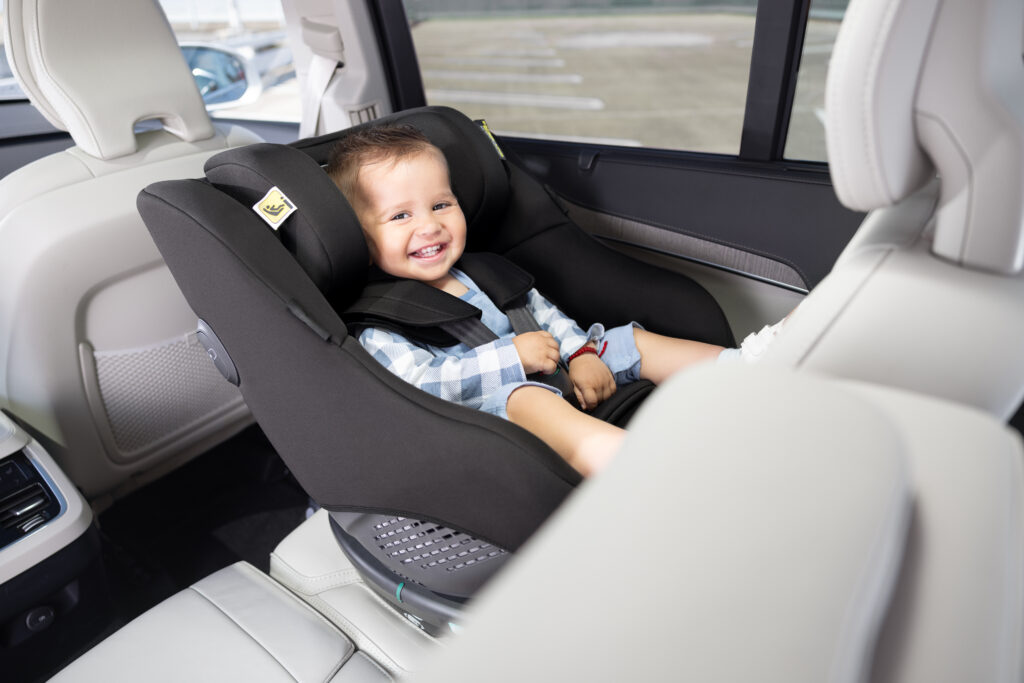
Your child should be in a rear facing car seat until they are at least 15 months old. Graco recommends rearward travel until four years old (when you can then move to forward facing and booster seats) for the best protection to your child’s neck and spine. Research shows that rear-facing seats offer better protection for a child’s head, neck and spine in case of a collision.
For more information on Graco’s car seat products, check out their car seat buying guide here.
R129 car seats at a glance
| Child’s height | Approx. age | Restraint type |
|---|---|---|
| 40-75cm | Birth up to 15 months | Rearward facing |
| 76-105cm | Approx. 15 months to 4 years | Rearward and forward facing |
| 100-145cm | 3.5 to 12 years | Forward facing |
Upgrading to an R129 Compliant seat
R44 car seats will be phased out from shops in the UK by September 2025, so it’s worth considering upgrading your car seat imminently to make sure you’re in line with the new regulations. Here are some tips to upgrading your car seat to an i-Size R129 compliant car seat:
Measure your child
Since i-Size regulations are height-based, you should know your child’s current height, so you can choose the correct car seat measurements.
Check your vehicle compatibility
i-Size car seats need to be used with cars equipped with Isofix anchorage points. Most cars manufactured after 2007 have them, but it’s always best to check your car’s manual or contact the manufacturer.
Set a budget
R129 compliant car seats come in a range of prices, from budget to premium. Determine how much you’re willing to spend, keeping in mind that more expensive doesn’t always mean safer. However, additional features might offer more convenience.
Research and choose a brand/model
Look for trusted brands and read reviews from other parents. Ensure the chosen seat meets the R129 standard by looking for the i-Size logo or checking the product specifications and car seat sizes (including the R129 compliant safety rating). You can find a range of R129 compliant car seats from Graco here.
Where can you buy R129 compliant car seats?
You can look at specialist retailers who specialise in baby car seats for their range of i-Size car seats. Staff in these stores are often trained to give advice on choosing and fitting car seats.
Online retailers can offer a variety of i-Size seats or you can buy direct from the manufacturer itself.
Professional fitting
If you’re unsure about fitting the seat yourself, many retailers offer a fitting service. They’ll demonstrate how to fit the seat correctly.
Some local authorities or organisations offer car seat checking events where professionals can advise on the fitting.
Register your car seat
Registering you car seat means you are notified of any product recalls or safety notices.
Dispose of or recycle your old seat
If your old car seat is still safe to use (i.e. not involved in any accidents or not expired) then you can consider donating it.
If it’s no longer safe, then some reycling centres accept car seats. Check with your local council for guidance on disposal.
Stay updated
Safety standards and recommendations are constantly evolving, so it’s a good idea to stay informed about child car seat safety, even after buying your new R129 compliant car seat.
Lastly, always remember to regularly check the fit of the car seat and the harness on your child, especially as they grow. A correctly fitted seat is crucial for safety.
FAQ
What does R129 approved mean?
Other questions asked were:
- What does R129 compliant mean?
- What is R129 compliant car seat?
- What is R129 compliant?
- What is the UN R129 standard?
As mentioned above, the R129 regulation, commonly known as “i-Size”, is a European standard introduced to enhance the safety of child car seats. When a car seat is R129 approved, it means it meets the safety requirements set out in this regulation. You can find more details above, but here is a summary of the primary features and implications of the R129 approval:
- Height-based sizing: Unlike the previous ECE R44/04 regulation which categorised seats by weight groups, the ECE R129 i-Size is primarily height-based. This aims to make it easier for parents to determine the appropriate seat for their child, focusing on the child’s length rather than weight.
- Mandatory rear-facing: Under R129, young children (up to at least 15 months old) must be seated in rear-facing car seats. This is because research shows that rear-facing seats are safer for young children, especially in the event of frontal collisions.
- Using Isofix installation: R129 seats use the Isofix system, which connects the child seat directly to the car’s chassis using built-in anchor points. This reduces the risk of incorrect installation, which is a common problem with seatbelt-installed seats.
- Improved side impact protection: R129 introduced enhanced requirements for protection against side impacts, which are a significant cause of injury in car accidents.
- Clearer labelling: The new standard seeks to simplify labelling and make it easier for parents to understand, including clear indicators of the height and age range for which the seat is suitable.
- Standardised testing: To be R129 approved, child car seats undergo rigorous testing in more varied crash tests, including more realistic side-impact tests.
- Inclusion of Q-dummies: R129 testing incorporates the use of Q-dummies, which are the latest generation of crash test dummies. These dummies provide more detailed data, especially concerning head injuries.
To sum up, “R129 approved” means the child car seat meets the latest safety standards set out by the European regulation, ensuring improved safety features and clearer guidance for parents and caregivers.
*This post is sponsored by Graco but all thoughts are 100% my opinion. All images are taken from Graco’s website*











One Comment