If you’re pregnant, grab your free pregnancy pack now – details inside!
You are in your last few weeks of pregnancy, and you may be asking yourself, ‘How do I induce labour’ because you’re probably feeling a bit uncomfortable now. But, if your cervix is far back and there is no early sign that labour is on its way, then you may start to think of ways to induce labour naturally. But what are natural ways to induce labour quickly?
Below is a list and infographic of some guaranteed ways to induce labour naturally, as well as some old wives’ tales that are fun to try and some which may be best avoided.

Walking
The motion of being upright while walking might help bring on labour as the gravity and movement will encourage your baby to place themselves in the correct position for birth, which is by your cervix. The gentle pressure of the baby’s head can stimulate your body to release oxytocin, which is a hormone that encourages contractions to start.
Make sure to take it easy during walking and don’t overdo it. The general rule of thumb is to maintain a conversation while you’re walking. If you can’t then you’re doing too much.
Also ensure you’re wearing the right walking shoe so you don’t end up with any unnecessary pain.
Here are some great walking shoes from Amazon*



Slow down and relax more
Getting labour started may be a tense process, but nothing will progress if you try too hard or you’re feeling worried. Relax, by getting some fresh air, having a bath, taking a nap or reading a book. Click here for an A-Z guide of relaxation techniques (and infographic) that you can also use to kick-start labour too.

Yoga – deep squatting
Squatting during labour is very effective because it helps to open your pelvic outlet by 10 per cent. But, when you’re inducing labour yourself, then squatting creates more room for the baby to move down into the birth canal, as well as decrease your labour time by 11 minutes!
Visualisation
Visualisation is a relaxation technique when you’re in labour, but it can also be used to psychologically trigger contractions. Draw a picture in your mind or on paper of what is going on in your body. Feel your cervix open and visualise the baby coming through. You can also look at pictures of a baby coming down and through the pelvis, but if you can imagine the process, then you’re helping your body to understand what it needs to do. It’s a very effective tool when you’re unsure of what will happen in the immediate future. Even using a picture or video of a flower opening can be a useful visualisation technique as well.
Eating curry or spicy foods
This one is an old wives’ tale, although some people swear by spicy food to induce labour. You can try it, but if you have a full stomach when you go into labour, you may feel sick and even throw up. Like the pineapple, too much spicy food irritates the bowels which may be why it feels like it can bring on labour. Just be careful not to overdo it, or you’ll end up with heartburn or indigestion.
Nipple stimulation
Some women massage their nipples to bring about the release of oxytocin, which is the natural form of Pitocin. Oxytocin brings on contractions, which can induce labour. Again, be careful with this technique as it has been known to lead to strong uterine contractions which can last for a long time and can cause the fetal heart rate to slow down. Most practitioners do not recommend nipple stimulation to bring on labour.
Do you know your due date?
Check out our due date calculator here!
Taking castor oil or evening primrose oil
Again most practitioners do not recommend this technique because it can cause nausea, diarrhoea and sometimes vomiting, which can also lead to dehydration. Some women have mentioned that castor oil can help with constipation and when labour has stalled. After castor oil, women stated they could relieve their bowels and their labour progressed, leading to birthing their baby.
A recent study showed, however, there was no evidence of a difference between castor oil and placebo treatment, when related to instrumental delivery, meconium-stained liquor or an Apgar score of less than seven at five minutes. It’s best to err on the side of caution and leave this natural induction technique out.
Having sex/orgasm
Sex is one of the most popular ways to start labour. Semen contains natural prostaglandins, which is a hormone that is involved at the beginning of labour. After sex, elevate your hips to help the sperm stay on the cervix so that it can help to thin and dilate it.
Few women in late pregnancy are in the mood for sex, however, so simple foreplay can help too. Studies show that the female orgasm can open the cervix up to two centimetres. But don’t do it for too long as overstimulation can have counterintuitive effects.
Eating a pineapple
Like curry, eating a pineapple has very similar effects, in that the reason they are considered foods to induce labour is they irritate the bowels, so one hopes it will trigger the uterus to contract too.
This is an old wives’ tale and one I tried to no avail. But, pineapples are healthy and contain an enzyme called Bromelain which may be labour inducing. Try other tropical fruits like mango, kiwi and papaya as they contain traces of the enzyme too and might be considered labour inducers.
How much pineapple should you eat to induce labour?
Don’t overdo it or you’ll end up on the toilet!

Drink red raspberry leaf tea
Raspberry leaf tea is known to be a uterine tonic that also has benefits after birth too, including re-contracting the uterus back to its normal state, helping with bleeding, aiding breastmilk production and general recovery after childbirth. Women also drink raspberry leaf tea (as did I) believing it may help with shortening the length of labour. Studies have shown that there is no difference during the first stage of labour (contractions), but the second stage of labour (the pushing part) was shorter. There was also a significant reduction in using instrumental delivery as well. It is recommended to drink raspberry leaf tea after 12 weeks for low-risk pregnancies. But, as with anything, don’t overdo it!
You can find Red Raspberry Leaf Tea on Amazon here*

Organic Red Raspberry Leaf Tea, Dried Cut and Sifted, All Natural, Raw from Germany, Support Immune System, Non-GMO, No Gluten, 2.2 Pound – Buy from Amazon here*


Earth Mama Organic Raspberry Leaf Tea Bags for Labor Tonic and Menstrual Support, 16-Count (3-Pack) – Buy from Amazon here*
Massage/acupuncture
Trained massage therapists work on certain acupressure points (which are normally avoided during pregnancy) to help kick-start labour. A massage helps because it relaxes and calms the body, as well as eases any tension and worries. Make sure your therapist is specially trained, as certain oils cannot be used during pregnancy.
Acupuncture can help to bring on labour in overdue women, but only a few studies support this technique. However, one randomised controlled trial did show that acupuncture helped induce labour in 88% of pregnant mums. Acupuncture works by inserting needles into specific parts of the body, to stimulate the energy of a particular organ or system.
Other pregnant women have sworn by therapies like reflexology and shiatsu, but, again, they all help to calm and relax the body down. So as long as you’re with a trained professional, there is nothing wrong with going for a gentle treatment to rest before the storm of parenthood.

Blowing up balloons
Nope, your eyes don’t deceive you. Apparently blowing balloons builds pressure in the abdomen which apparently gets labour going. Again there is no evidence to show this, but it’s worth a shot as it’s not harmful and it could be quite fun–especially if you’re around a party on your due date!
Membrane sweeping by a midwife
Not my favourite of the bunch, I have to say, as membrane sweeping or membrane stripping can be uncomfortable. It’s not entirely natural either, but it is drug-free. Your midwife sweeps the membranes to separate them from the cervix via a vaginal exam.
Some spotting/bleeding may occur as a result afterwards, and it has been known for women to have irregular contractions after a sweep, which may or may not progress into labour. This method should be your last resort as it is invasive and not entirely natural.
Plus, you want to avoid any unnecessary bacteria in your vagina and your cervix as much as possible to prevent infection to you and your baby. Speak to your midwife/consultant first so they can provide medical advice about whether a sweep is suitable for you right now.
Thinking about getting pregnant (so soon)?
Arm yourself with our free starter kit to maximise your chances of getting pregnant as soon as you’re ready!
FAQ
How do hospitals induce labour?
If you’re being induced then you’ll go into the maternity unit and the midwife will start contractions by inserting a tablet (pessary) or gel into your vagina. The process of induction may take a while though, particularly if the cervix needs to be softened with pessaries or gels.
The process is not painful but you may feel some slight discomfort. You may be kept in hospital if you have prostaglandins and if you’re having your waters broken.
One study promotes nature’s plan and a normal birth by advising that unless there is a clear medical indication induction of labour will do more good than harm, nature beats science hands down.
Remember that inducing labour is artificial so there are some side effects, like intervening with the body’s natural processes to break the amniotic sac, taking medication or both. It can also lead to foetal distress and labour may take longer. Speak to your healthcare professional about the risks that come with induction and ask yourself whether induction is really needed to ensure the baby is delivered safely.
How do birthing balls help induce labour?
Sitting on a birthing ball in neutral wide-legged positions prepares the body for labour by increasing blood flow, opening the uterus and encouraging cervical dilation.
One randomised controlled study even found that labouring women with an epidural who used a peanut-shaped exercise ball had a significantly shorter length of labour and a higher likelihood of spontaneous vaginal birth. There were also no harmful effects identified to the mother and baby. The researchers think these changes may be down to the potential opening of the pelvis. So it may be worth requesting a peanut ball or birthing ball during labour and getting one to bounce on in the lead up to birth.
Here are some birthing balls you can buy from Amazon*
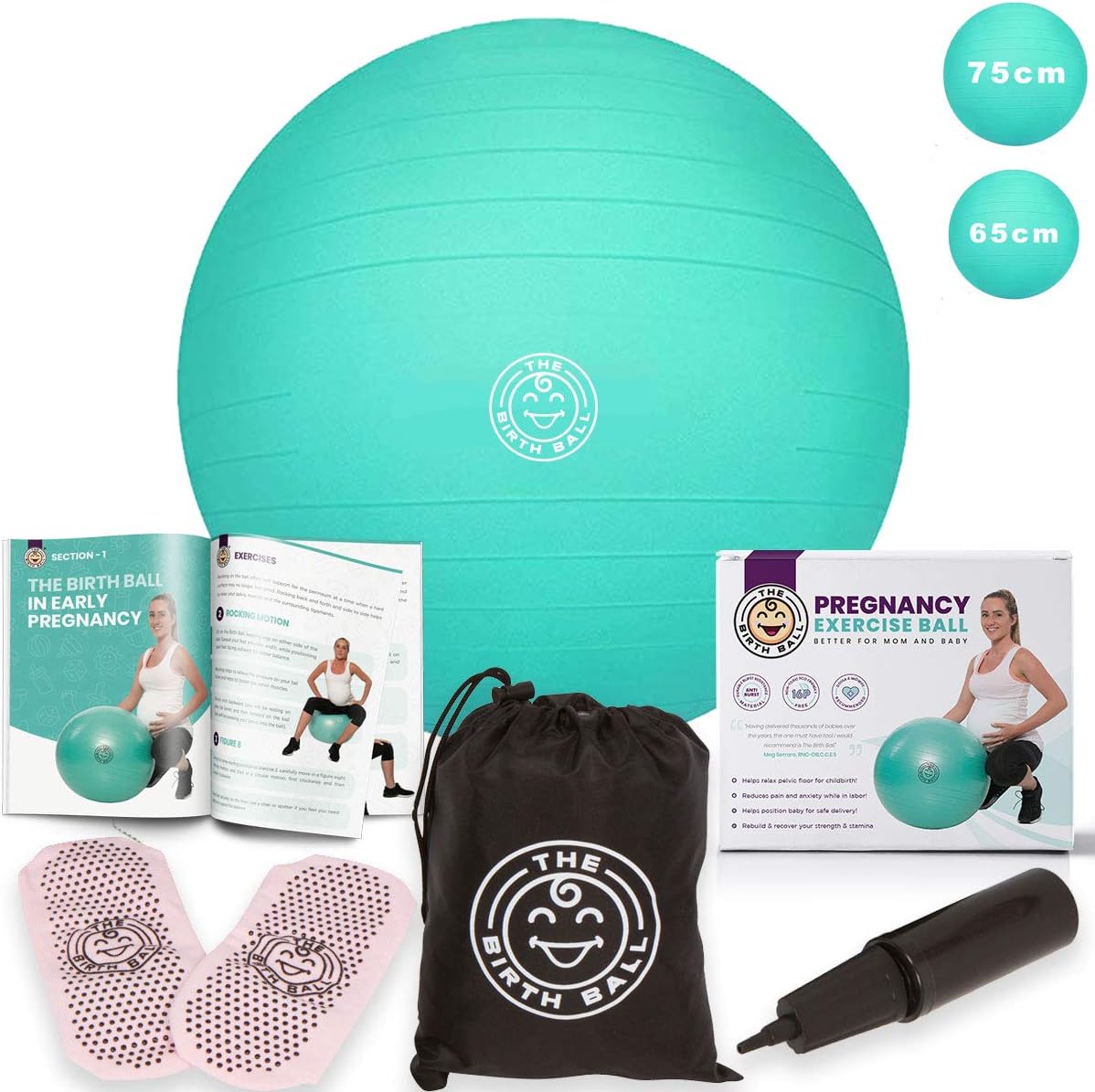

Gaiam Kids Peanut Balance Ball, Orange – Buy from Amazon here*

Why does intercourse induce a pregnant woman to give birth?
Intercourse can trigger the release of oxytocin, a hormone that helps your contractions start. Semen may also help to soften/ripen the cervix ready for it to open when labour starts. Semen has a high number of prostaglandins which are chemicals to help relax tissues in the cervix.
How to induce labour at 34 weeks?
The baby is still considered pre-term at this stage so I would consider natural induction methods carefully. Start by walking to places and staying upright but to avoid pre-term delivery I would start slowly at this stage.
How can you safely induce labour at 35 weeks pregnant?
Again, your baby is still considered preterm so start thinking about gravity-friendly methods like walking and bouncing on a birthing ball but try not to actively induce labour yet.
Is it safe to try to naturally induce labour at 36 weeks?
Another question asked was, ‘Is it safe to induce labour at 36 weeks pregnant?’
It is safe to start thinking about helping labour along at this stage, with walking probably being one of the best places to start. Relax and take it easy and labour will start when your body is relaxed and ready.
Is it safe to use castor oil at 36 weeks to induce labour?
According to the University of Texas Southwestern Medical Center castor oil can cause uterine contractions and irritation, but this could more down to digestive issues rather than actual labour.
One study did conclude that castor oil may induce labour within 24 hours if a woman is 40 weeks pregnant.
Studies are mixed in concluding whether castor oil has labour-inducing properties but none of these studies examined issues of safety for mum and baby. So it’s best to speak with your healthcare professional and ask them for their advice before using castor oil to induce labour.
Can walking induce labour at 37 weeks?
Walking is a great way to draw the baby down into the pelvis because of gravity and swaying your hips. The pressure of the baby may then prime your cervix for labour and help labour progress if you’ve started contractions.

How to induce labour naturally at 38 weeks?
Try the methods above and see if they work for you. But, more importantly, take it easy. The body needs a calm and relaxed environment in which to start labour.
Is it safe to induce labour at 38 weeks pregnant?
You may be offered an induction if your waters have broken at this point or a membrane sweep to kickstart labour. Both of these, unless medically necessary, are not natural ways to induce labour. So I would speak to your healthcare professional and get advice before considering.
Why would a doctor choose to induce my labour if I’m 38 weeks pregnant?
If you have any health conditions, i.e. gestational diabetes or pre-eclampsia then your doctor may advise labour induction as being pregnant may become a danger to your baby. Speak to your doctor and ask them why they are inducing labour at 38 weeks.
How can I go into labour at 39 weeks?
Similar questions were asked:
- How to induce labour naturally at 40 weeks?
- How can you induce labour at 41 weeks pregnant?
Now is the time to start trying the above methods and helping your body get ready for birth. Walking and using a birthing ball are my chosen methods!
Can you ask your doctor to induce labour?
You can but you need to ask yourself why. Is there a medical need for labour to start or are you just feeling uncomfortable? As mentioned above, artificial induction may bring with it side effects like longer labour. So unless medically necessary I would try the natural techniques first.
Why don’t some women go into labour naturally?
Some babies are overdue (my first was 1 week late and my second was 2 weeks and 1 day late!) Some women break their waters with no active labour in place. It is unclear why some women go into labour naturally and some don’t.
Dr Laekisha Richardson an OB-GYN says that it is possible to never go into active labour.
“If a woman has not gone into labour by 41 or 42 weeks, most doctors will elect to induce them to prevent the risk of a stillbirth… they may actually go into spontaneous labour, but there is a higher chance of having a bad outcome.”
Dr Laekisha Richardson, OB-GYN
What makes the Bradley method effective for natural childbirth? How is it better than the Lamaze method?
Dr Robert A Bradley developed the Bradley Method in the 1940s which is based on the idea that childbirth is a natural process. You simply increase self-awareness and learn how to deal with the stress of labour by tuning in to your own body. The emphasis is on normal, relaxed abdominal breathing and the loving support of a coach, which is usually the woman’s partner.
The Lamaze technique was also developed in the 1940s by Dr Fernando Lamaze and it focuses on the role of midwives in childbirth. It is one of the more popular techniques used in labour.
Both techniques focus on health and wellbeing to maximise a smoother delivery for mother and baby but the differences lie in pain management. The Bradley Method focuses on deep breathing and relaxation methods while the Lamaze method focuses on tools to help mother and partner conserve energy and ease discomfort as giving birth is a physical activity that requires both concentration and energy. Lamaze also focuses on deep breathing and pleasant memories.
The right method for you depends on your approach to childbirth. Your birthing journey is unique so you will naturally flock to a method that makes more sense for you.
Deep breathing and relaxation are key to helping labour progress as the body will go into survival mode and stall labour if you are scared and adrenalin is running high. Find a way to maximise those feel-good chemicals in the body. I found hypnobirthing to be one of the most effective ways for me and I ended up with a positive VBAC after two caesareans.
How can black cohosh pills help induce labour?
Women have been using plants and herbs to induce labour for a long time but are they all safe? Black cohosh is a herb that many women use for menopausal symptoms and it is possible it can induce labour but there isn’t much research on its effects in pregnancy and breastfeeding. Some studies show that black cohosh can trigger contractions, while other studies can’t see a clear link.
Do not try this at home by yourself. More studies need to show a clear safety link between taking black cohosh and inducing natural labour first before it is deemed safe to use.
I know it’s not long for you now, and you’re feeling quite uncomfortable, but it’s important to let your body do what it naturally wants to do. The above ways are not proven ways to go into labour overnight or even ways to go into labour tonight! Bt they may help you find ways of inducing labour naturally, only if your baby ready to come out. If they’re not ready, then they’re just not ready.
Try the above natural ways to bring on labour tentatively. If you’re feeling rushed through pressure from friends and family, remember that it’s your body and it’s your right to take things at your pace.
Good luck!
If you’re pregnant, grab your free pregnancy pack now – details inside!